Skip to content
  • Home
  • Subscribe / donate
  • Events calendar
  • News
    • Local
    • National
    • Israel
    • World
    • עניין בחדשות
      A roundup of news in Canada and further afield, in Hebrew.
  • Opinion
    • From the JI
    • Op-Ed
  • Arts & Culture
    • Performing Arts
    • Music
    • Books
    • Visual Arts
    • TV & Film
  • Life
    • Celebrating the Holidays
    • Travel
    • The Daily Snooze
      Cartoons by Jacob Samuel
    • Mystery Photo
      Help the JI and JMABC fill in the gaps in our archives.
  • Community Links
    • Organizations, Etc.
    • Other News Sources & Blogs
    • Business Directory
  • FAQ
  • JI Chai Celebration
  • JI@88! video

Recent Posts

  • Sharing her testimony
  • Fall fight takes leap forward
  • The balancing of rights
  • Multiple Tony n’ Tina roles
  • Stories of trauma, resilience
  • Celebrate our culture
  • A responsibility to help
  • What wellness means at JCC
  • Together in mourning
  • Downhill after Trump?
  • Birth control even easier now
  • Eco-Sisters mentorship
  • Unexpected discoveries
  • Study’s results hopeful
  • Bad behaviour affects us all
  • Thankful for the police
  • UBC needs a wake-up call
  • Recalling a shining star
  • Sleep well …
  • BGU fosters startup culture
  • Photography and glass
  • Is it the end of an era?
  • Taking life a step at a time
  • Nakba exhibit biased
  • Film festival starts next week
  • Musical with heart and soul
  • Rabbi marks 13 years
  • Keeper of VTT’s history
  • Gala fêtes Infeld’s 20th
  • Building JWest together
  • Challah Mom comes to Vancouver
  • What to do about media bias
  • Education offers hope
  • Remembrance – a moral act
  • What makes us human
  • המלחמות של נתניהו וטראמפ

Archives

Follow @JewishIndie
image - The CJN - Visit Us Banner - 300x600 - 101625

Tag: COVID-19

ימים טובים

ימים טובים

בדיקה שלילית לקורונה ונסיעה לוויקטוריה
(רוני רחמני)

בימים אלה של המגפה שלא מרפה מחיינו החלטתי שהגיע הזמן לעשות בדיקה לגלות באם חליתי בקורונה. הבדיקה נעשית במהירות לאחר תהליך רישום קצר במבנה של מערכת הבריאות המקומית, שאגב נמצא במרחק של פחות מעשר דקות הליכה מביתי בדאון טאון ונקובר.

הרגשתי כמעט בוודאות שהתוצאות הבדיקה יהיו שליליות ולא טעיתי. האחות הכניסה מקלון מצופה בצמר גפן עמוק לנחיר השמאלי של האף שלי וההרגשה הייתה מאוד לא נעימה. היא ספרה עשר שניות והוציאה את מקלון הבדיקה לרווחתי. לאחר מכן עזבתי את המקום במהירות והמתנתי בדריכות לצואות הרשמיות. כעבור בערך כעשרים וארבע שעות קיבלתי הודעת אס-אם-אס ממערכת הבריאות כי תוצאת בדיקת הקורונה שעשיתי היא שלילית. לאחר מכן בנוסף קיבלתי שיחת טלפון מעובדת מערכת הבריאות שאשררה את הודעת האס-אם-סם ואמרה לי שוב שתוצאות של הבדיקה שליליות.

שמחתי מאוד לדעת שלמרות שלמעלה משנה של מגפה, הצלחתי לשמור על עצמי ולהימנע מלהיבדק בחיידק הנורא הזה. יש לזכור שנושא הקורונה הוא מאוד רגיש עבורי, בעיקר כיוון שאבי נדבק בחיידק ולאחר כשבועיים נפטר ממנו. אבי בן התשעים ואחת היה חולה ונחלש מאוד בחודשים האחרונים. בסוף חודש ינואר השנה הוא אושפז בבית החולים איכילוב שבתל אביב שלא רחוק מבית הורי. בבית החולים הוא נדבק בקורונה ולאחר כשבועיים נפטר מסיבוכים קשים. הרגשתי מקרוב את הנזקים האיומים שמגפת הקורונה עושה לנו, לחיינו, לקרובים כמו גם לרחוקים. אני לצערי לא יכולתי לעזוב את ונקובר ולהגיע להלווייתו שהתקיימה בבית הקברות האזרחי של קיבוץ מעלי החמישה שליד ירושלים, בגלל שקשה היה מאוד לטוס מכאן בעת הזו. לפחות שתיים-שלוש עצירות בדרך ואני הייתי צריך אז בנוסף לקבל אישור מיוחד ממשלת ישראל להגיע להלוויה. לאחר מכן היה עלי להיכנס לסגר באיזה שהיא מלונית בישראל למשך כשבועיים ימים. ובחזרה לקנדה הייתי צריך לעבור הליך סיוטי דומה. החלטנו לכן במשפחתי שלא אטוס. זו הייתה החלטה קשה אך מתבקשת בימים אלה.

לאחר שכאמור בדיקת הקורונה שלי הייתה שלילית הדפסתי את התוצאות במקרה ומישהו יזדקק לראות את המסמך מקרוב. מבחינתי קיבלתי אור ירוק לצאת לחופשה קלה במחוז שלי בריטיש קולומביה, לאחר חודשים ארוכים של שהייה בבית. מצאתי דיל טוב וזול לעיר הבירה של המחוז ויקטוריה, וטסתי לשם לשלושה לילות בסך הכול. לקחתי מלון בדאון טאון ויקטוריה במיקום מצוין וגם לא היה יקר מדי. הגעתי ביום חמישי אחר הצהריים ועזבתי בחזרה לוונקובר בראשון בבוקר. הטיסות אגב בוצעו במטוסי הים הנוחתים במים, כך שפגשתי מעט נוסעים בטרמינלים הקטנים בוונקובר ובוויקטוריה, וגם בטיסות עצמן.

photo - I visited the Bateman Gallery near the County House
ביקרתי בגלריית באטמן הקרובה לבית הפרלמנט של המחוז

בוויקטוריה סידרתי לעצמי סדר יום עמוס בכל שלושת ימי השהות שלי בעיר היפה והשקטה הזו. עם הנחיתה ביום חמישי אחר הצהריים, הלכתי ברגל מהמלון לגלריה לאמנות שבעיר. התרשמתי מעבודות סיניות ויפניות במיוחד. בערב אכלתי במסעדה המקומית הצופה אל המים.

בשישי בבוקר יצאתי לבקר במוזיאון הימי הקרוב לית המלון. לא התרשמתי יותר מיד ממה שראיתי ולאחר מספר דקות עברתי לגן החיות לחרקים שדווקא מאוד עניין אותי. לראשונה ראיתי מול עיני עשרות חרקים ממינים שונים בתוך בתי זכוכית גדולים. חלקם נחים בעצלות והחלק האחר לא מפסיק לנוע. ההסברים מהמדריך המקומי היו מאלפים.

לאחר מכן ביקרתי בגלריית באטמן הקרובה לבית הפרלמנט של המחוז. הוצגו שם תערוכות של צילומים וציורים של נופים ובעלי חיים. היה מאוד מעניין ומרשים לצפות בהן.

ההמשך יבוא.

Format ImagePosted on April 14, 2021April 22, 2021Author Roni RachmaniCategories עניין בחדשותTags corona test, coronavirus, COVID-19, death, mourn, travel, Victoria, בדיקה לקורונה, וויקטוריה, להתאבל, לנסוע, מוות, קורונה
Shalhevet annual gala

Shalhevet annual gala

Shalhevet Girls High School will honour Shelley Rivkin at its gala on April 11. (photo from Shalhevet)

On April 11, at its annual gala, Shalhevet Girls High School will honour Shelley Rivkin as a Guardian of the Flame.

“Every year, we honour a Jewish woman who is passionate and dedicated to the Jewish community,” Vivian Claman, president of the Shalhevet board, told the Independent. “Shelley personifies the kind of woman we inspire our students to become – independent thinkers and leaders in their communities. Shelley not only works hard for the Jewish community but for the Vancouver community, as well.

Rivkin is the third woman to be so honoured by Shalhevet. Anita Silber was the first, in 2019, and Sarah Berger was recognized last year.

Rivkin is vice-president of planning, allocations and community affairs for the Jewish Federation of Greater Vancouver. She is an adjunct professor of social work at the University of British Columbia and at Langara College, and she is a member of British Columbia’s Multicultural Advisory Committee.

“My parents were a significant influence,” said Rivkin about her choice of career and her participation in community. “My mother was a social activist and early feminist who introduced me to many of the ideas that contributed to my decision to go into social work, while my father was deeply connected to Jewish values and traditions. Both believed in the value of volunteer work and had me volunteering for a variety of causes from an early age.

“My Jewish education at Schara Tzedeck and involvement in both NCSY and BBYO also provided me with a deeper understanding of Judaism and Jewish life that I have carried with me throughout my career.

“There have also been some amazing women who have inspired me along the way,” she noted. “The late Rosemary Brown, who I had the privilege of meeting when I was in university, really opened my eyes to the barriers and obstacles that many women were facing and continue to face in our society.”

Rivkin’s specific areas of responsibility at Jewish Federation include community planning, local grants distribution, Jewish education, partner agency relations and community security. While she was hired in 2007, she had volunteered with the organization for a couple of years before that.

“In 2005, I was asked to chair the poverty coalition,” she explained. “This connection brought me closer to the work of Jewish Federation and, as I took on more volunteer responsibilities, I became more intrigued by the work that Federation did on a daily basis. In 2007, Federation went through a restructuring process to move toward a closer alignment between central planning and financial resource development. A new senior position was created, and [then-Federation head] Mark Gurvis asked me to apply. This was an opportunity to connect my Jewish values to my day-to-day work.

“The most rewarding aspects of the job are when you can move from project inception to project completion,” she said. “The most recent example was the establishment of the Food Security Task Force in 2017. I was responsible for staffing the task force. The task force released their report in late 2018. The report had an important impact in raising awareness about the depth of food insecurity in our community. Through the hard work of Jewish Family Services and many generous donors, we have seen the implementation of one of the key recommendations of that report, the establishment of an integrated food hub. This has been very rewarding.”

Rivkin feels strongly about the benefits of a Jewish education.

“I am setting up an endowment with the Jewish Community Foundation that I hope that Shalhevet supporters will contribute to,” she said. “Over time, the interest earned on the capital can enable Shalhevet to support special projects that are not covered through their general operations.

“I am setting this up because I believe strongly that young Jewish women should have full access to quality general studies and Judaics education. As an Orthodox woman myself, I am committed to ensuring that young Orthodox women living in Vancouver have the best educational opportunities available.”

Currently, Shalhevet has 14 students enrolled for the 2020-2021 school year, and they anticipate around the same number of students for the next year, Meira Federgrun, head of school, told the Independent. “What we lack in student numbers, we definitely make up in enthusiasm and involvement,” she said.

About how the school has been coping with COVID-19, Federgrun shared, “As with all schools in B.C., Shalhevet had to craft a safe return-to-school document that was approved by the Ministry of Education before the start of the school year last September; we have been doing full-time, in-person learning since then. We have sanitizing products available throughout the school and high-touch surfaces, as well as equipment, are sanitized several times a day. Our staff and students wear masks in all areas of the school, including the main room and classrooms, and remove them to eat or drink.

“Because Shalhevet is a small school,” she said, “our entire staff and student body is considered one cohort, so we are fortunate in that we don’t have to worry about a lot of the restrictions and traffic flow that larger schools with multiple cohorts have. As a result, we’ve been able to provide our students with as ‘normal’ a daily school experience as possible.”

The annual gala is the only way the school raises money. “It’s our once-a-year fundraiser,” said Claman. “It’s also a way to bring awareness of Shalhevet’s great contribution to the community and its importance in maintaining a thriving Orthodox community.”

Part of the virtual celebration will be a piece performed by the Israel Philharmonic Orchestra, which was organized by Danielle Ames Spivak, chief executive officer of the Friends of the Israel Philharmonic Orchestra.

It will include “an introduction from [Irit Rub] the director of KeyNote, the musical education department of Israel Philharmonic, talking about the relevance of education and music,” said Claman. “Every year, we offer some form of entertainment, like comedians, a magician, etc., but we had to find something that would be conducive to online entertainment.”

Also part of this year’s gala, said Claman, “For the first time ever, we will be showing a video taking an inside look at Shalhevet.”

For her part, Rivkin said, “I am so grateful to the Shalhevet community to be honoured this way. It has been so uplifting for me to know about this honour, especially following such a challenging year.”

Format ImagePosted on April 2, 2021March 31, 2021Author Cynthia RamsayCategories LocalTags coronavirus, COVID-19, education, fundraiser, gala, Guardian of the Flame, Jewish Federation, Meira Federgrun, Orthodox, philanthropy, Shalhevet, Shelley Rivkin, Vivian Claman, volunteerism
Dance-opera closer to final

Dance-opera closer to final

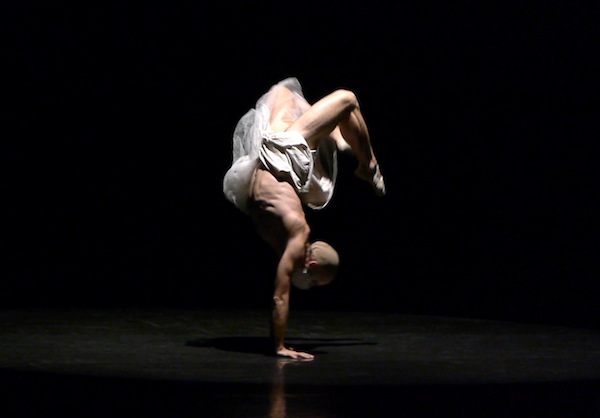
Ted Littlemore is one of seven dancers in the latest iteration of Idan Cohen’s Orfeo ed Euridice, which will be available online April 6-13. (photo by Flick Harrison)

The first article the Jewish Independent published about choreographer and opera director Idan Cohen was about his reimagining of Christoph Willibald Gluck’s opera Orfeo ed Euridice. Much progress has been made in the few years since, and excerpts from the contemporary dance work will be streaming on demand April 6-13.

Cohen was a relatively recent arrival from Israel back in 2018. As artistic director of Ne. Sans Opera and Dance, which he established here in 2017, he has become a prominent part of the Vancouver arts scene. He is currently artist-in-residence at the Dance Centre, which describes Cohen’s approach to this 18th-century opera as one that interprets

“Orpheus not as a god, but as an artist – a human who looks at the complex and sometimes violent history of Western, classical opera and dance with eyes wide open, the dancing body serving as a living example of human strength and fragility.”

In the myth, poet and musician Orfeo mourns the death of his wife, Euridice, and tries to get her back from the Underworld. It is an effort fraught with challenges, not unlike creating a new artistic work.

“Staging an opera is a monumental task, and it is really exciting to have an audience who has been following this production from its inception,” Cohen told the Independent. “Alongside the Dance Centre’s residency, we were given a grant from the Canada Council for the Arts, through the Piercey family – the Sheila Kathleen Piercey Fund – which enabled us to continue and present this final phase of the research, leading to the full production in 2022.

“For the past few months,” he said, “I have been rehearsing with Leslie Dala as the music director and with seven incredible dancers and five opera singers. We are presenting almost 40 minutes of a piano reduction of the score, played live by Leslie, and the singers, as a dance-opera. So you’ll get to see and listen to a live opera that is also a dance performance.”

In 2019, Ne. Sans presented Trionfi Amore, as a part of the research for Orfeo ed Euridice. That production featured Ted Littlemore, Kate Franklin and Jeremy O’Neill. For this April’s production, they are joined by dancers Hana Rutka, Rachel Meyer, Aiden Cass and Stephanie Cyr.

“The wonderful counter-tenor Shane Hanson is singing Orfeo and the chorus singers are Heather Pawsey, Tyler Simpson, Heather Molloy and William Grossman,” said Cohen. Costume designer and stylist is Evan Clayton, while Littlemore pulls double duty – not only performing, but in charge of the makeup and masks.

The number of people involved now brings its own challenges, given the continuing pandemic.

“The Dance Centre’s residency enabled us to rehearse in large spaces that allowed for our relatively big group to remain socially distanced at all times,” said Cohen. “Following COVID-19 protocols meant that we needed to be wearing masks and that the performers could not touch. I tried to look at these not as obstacles but as creative opportunities and I am very proud of what we’ve managed to achieve.”

Ever the one to look on the bright side of things, Cohen added, “It was wonderful to gather musicians and dancers and create. There’s nothing quite like it, and I hope that the result will be as pleasurable to our audience as it was to us.”

The April streaming, which will have been pre-recorded, includes a discussion with Cohen. Tickets are on a sliding scale, and can be purchased from thedancecentre.ca/event/idan-cohen.

Format ImagePosted on April 2, 2021March 31, 2021Author Cynthia RamsayCategories Performing ArtsTags coronavirus, COVID-19, dance, Dance Centre, Idan Cohen, Ne. Sans, opera, Orfeo ed Euridice

Can we learn from COVID?

Spring and the holiday of Passover are all about renewal and hope. This year, as our elders begin receiving the coronavirus vaccines and our economy appears to be recovering from the most critical disruption in living memory, things seem promising. We anticipate fleeing our bondage of social isolation and being transported to a land, if not of milk and honey, at least to a place of mixing and hugging.

We have (hopefully) learned a great deal. There have been many opportunities to benefit from the disruption in our lives. At the individual level, we may have learned new skills or crafts – like cross stitch or baking sourdough! – or used the time to study new fields or languages. On the collective level, we have learned that the entire world, regardless of governance, religion, language and every other difference, could mobilize (albeit not equally well) to respond to a crisis.

We also learned that, when necessary, many governments and societies could rise to the occasion (again, with different levels of competence) to save lives. Billions of dollars were “found” to save potentially devastated economies and support businesses and households. Scientists and medical professionals cooperated across boundaries to search for vaccines and to care for the ill. Ordinary people – not just first responders and others in the direct line of care but grocery clerks and those who provide services previously taken for granted – became heroes of the moment.

As the months dragged on, divisions emerged. People and their governments sometimes differed on the best responses, or any response at all. A cohort emerged questioning everything, from the best ways to stop the spread of the virus to the very existence of the virus that has infected more than 100 million and killed more than 2.5 million.

As we hopefully approach the beginning of the end of this extraordinary era, let us remember its beginning – not the fear of the unknown that engulfed us, but the unity the world seemed to exhibit in coming together to confront a danger that knows no borders.

Imagine the challenges we might be able to face and resolve if we could mobilize the world the way we did in those earliest moments of the pandemic. Can we come together to finally confront the climate emergency, which could be every bit as fatal as an unchecked virus if not addressed? Can we unite to overcome racial divisions and inequality? Can we even marginally close the chasm between richest and poorest in Canada and across the planet?

The incredible hurdle that was thrown across our civilization’s path a year ago showed our capacity for coming together when the stakes were high enough.

There are a lot of areas where the stakes are high. Can we take the lessons we’ve learned over the past 12 months and apply them there?

Posted on March 19, 2021March 18, 2021Author The Editorial BoardCategories From the JITags anti-racism, climate crisis, coronavirus, COVID-19, equality, inclusion, Judaism, lifestyle, Passover, racism

Change can be a good thing

One of my twins is always looking for something new to learn online. For awhile, he was fascinated by a Massachusetts service dog project, where Great Danes are trained to provide support to those with balance and mobility impediments. He found this amazing service dog program through the website explore.org. It has live cams of animals all over the world. While we’re not traveling anywhere, my kid is bird watching, seeing service dogs, polar bears, and more. When we least expect it, he rushes up with his iPad and demands that I admire a nesting owl, or that his biologist dad identify an animal he’s never seen before.

This kind of intellectual curiosity is something I’m excited to see. Open-ended questioning about the world and how it works is a special kind of Jewish exploration. This intensity and enthusiasm is how we delve into studying Torah and Talmud, or how we engage with the world in general.

Passover is an obvious time to think about questions and how we approach and answer them. Our families have been telling the Exodus and “Once we were slaves and now we are free” story for thousands of years! Still, our questioning can’t just stick to the Four Questions and be done. Sometimes, even with good intentions, we get hung up on the rote narrative of the seder. We know we have to get through it. We start at the beginning and head to the end. It’s a yearly ritual routine, punctuated by matzah, lots of other foods, wine, and, in normal times, family and guests.

When we were first married, I once attended a smaller seder with some of my husband’s family. I was excited and nervous to engage over the Haggadah’s ideas – but it didn’t turn out as I expected. The family was committed to getting through the ritual traditionally and to the food part. They looked uncomfortable when I tried to talk about ideas or ask questions. In retrospect, I realized I knocked them off their game. There was a seder routine – and I wasn’t following theirs.

My other twin is also learning. He’s not into the animal live cams. Instead, he comes up with questions about school projects. He brainstorms and makes suggestions, even when they’re not welcome. The remote learning teacher suggested he limit his research on one social studies project to their “class time” online rather than do more research later.

Of course, the minute he logs off, I help him look up his questions and learn – whenever he wants. His teacher maybe wants to slow down the group learning, or avoid making more social studies lesson plans, but feeding intense curiosity with knowledge helps enthusiastic learners blossom. In my experience, putting somebody off when they want to learn more feels negative and does the opposite.

For many people, the pandemic has knocked them off their game. Losing regular routines may have felt negative. As people anticipate getting vaccinated, they talk more about which things they miss the most and long to do when things return to “normal.” For another view, I recently read a CBC news article that quoted David Eagleman, a neuroscientist.

Eagleman suggested that, in fact, the pandemic might be good for people’s brains, because the huge lifestyle changes we’ve experienced have forced us off our “path of least resistance.” We’ve been forced to be more flexible and innovate. This can be positive for our brain health. In some cases, forcing our brains to adapt may result in positive growth and changes in our work or home lives.

In a Jewish context though, when we consider our ritual routines, we must balance the comfort of what’s familiar with the opportunity to learn. Questioning and continuing to grow intellectually are valuable, particularly during Passover.

In the talmudic tractate of Pesachim, on page 105a, there’s a discussion about when to say certain blessings such as the Kiddush. Should we interrupt a meal in the middle to do Kiddush? Rav Hamnuna the Elder says, “You don’t need to do this, because Shabbat establishes itself.” In other words, our holidays, like Shabbat or Pesach, will happen whether we are ready or not. We must automatically rise to the obligations associated with them. So, yes, we do a lot of things by rote and habit.

Even so, the next page, Pesachim 106, teaches that there are times where leaders must do things extemporaneously, or work to learn more to figure out what to do. A good leader both continues with the routines and remains able to ask questions, be flexible and learn.

It’s too early for me to conclude whether our freeform research online this year has helped my twins become lifelong learners. (I hope so!) I don’t know if observing animals via live cam will result in a career like field biologist or even a hobby like bird-watching. Whatever they choose, creating a routine-based learning environment that encourages and cultivates questioning, improvisational thinking and flexibility may go a long way towards helping them succeed later on.

It’s true, as Rav Hamnuna the Elder explains, that holidays happen whether or not we’re ready for them. As Rabbi Sari Laufer explains on My Jewish Learning’s explanation of Pesachim 105, “Kiddush doesn’t make Shabbat begin, we make Kiddush because Shabbat has begun.” Yet, once our holidays begin, it’s our obligation to engage with them, to learn and to question.

“Due to the pandemic” is a phrase we’ve heard too often, usually in relation to cancelations or programs offered exclusively online. Perhaps we might add a positive “due to the pandemic” twist. We’re forced to be more flexible thinkers in our ritual routines, too. We can question why we always did them this way. In the end, we might be all the better for that brain jostling and chance for intellectual inquiry.

My family and I wish you a wonderful, thoughtful, questioning Passover, full of joy this year, however different it may be from your usual routines. Chag sameach.

Joanne Seiff has written regularly for CBC Manitoba and various Jewish publications. She is the author of three books, including From the Outside In: Jewish Post Columns 2015-2016, a collection of essays available for digital download or as a paperback from Amazon. Check her out on Instagram @yrnspinner or at joanneseiff.blogspot.com.

Posted on March 19, 2021March 18, 2021Author Joanne SeiffCategories Op-EdTags coronavirus, COVID-19, education, family, Judaism, learning, lifestyle, parenting, Passover, seder
Angels deliver despite COVID

Angels deliver despite COVID

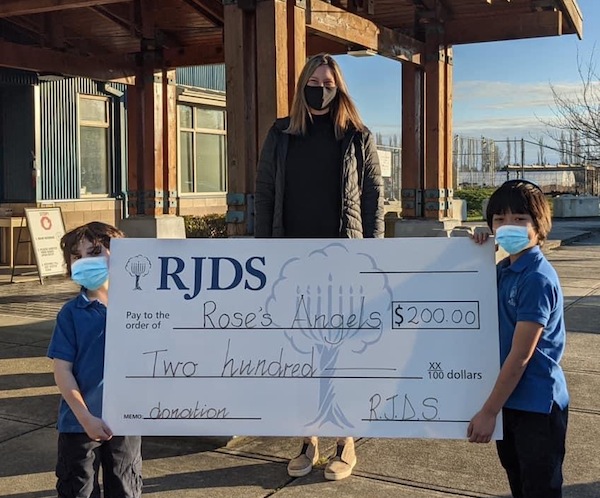
Outside Richmond Jewish Day School, Courtney Cohen accepts a donation to Rose’s Angels, which was collected by RJDS students and staff. (photo from Rose’s Angels)

This past February, the eighth annual Rose’s Angels event took place, although it looked very different from that of previous years, due to COVID-19.

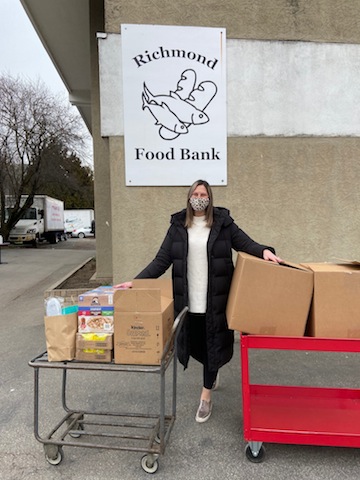
photo - Courtney Cohen outside the Richmond Food Bank, delivering donations
Courtney Cohen outside the Richmond Food Bank, delivering donations. (photo from Rose’s Angels)

Rose’s Angels, which is under the umbrella of the Kehila Society of Richmond, was founded in memory of Courtney Cohen’s grandmothers, Rose Lewin and Babs Cohen. It was established after Courtney Cohen and family friend Lynne Fader came together to discuss how to best honour the grandmothers, while giving back to the community – Rose Lewin and Babs Cohen were both very philanthropic and instilled this value in their families. Since its inception in 2013, Rose’s Angels has donated more than 6,000 care packages to not-for-profit organizations within the City of Richmond.

With the pandemic impacting not-for-profits around the city, Cohen and Fader knew it was essential to push forward and fundraise for donation items and monetary gifts for recipient agencies. Gift cards, slippers, non-perishables, toiletries and feminine hygiene products were among the donations received from the community.

“We adapted and innovated this February’s event to allow for volunteers to still play an integral role,” said Cohen. “Volunteers assisted with pickup and delivery of the bulk donation items to our recipient agencies. Volunteers are an essential part of Rose’s Angels and we truly appreciate their support and dedication year after year.”

photo - A donation of hygiene products
A donation of hygiene products. (photo from Rose’s Angels)

Rose’s Angels donated to 12 Richmond not-for-profit agencies servicing those most vulnerable. Among these agencies were Turning Point Recovery Society, Light of Shabbat (Chabad of Richmond), Richmond Family Place, Tikva Housing, Richmond Food Bank, Pathways Clubhouse, and Nova Transition House (Chimo Community Services).

“Although we were unable to host our large community care-package event in person this February, our community came together in another wonderful way,” said Cohen. “People donated generously and this allowed us to purchase specific items that were both needed and wanted by our recipient agencies.”

She added, “We look forward to 2022, when we can have our amazing volunteers together again to safely assemble the Rose’s Angels care packages.”

For more information about Rose’s Angels, or to make a donation, contact Cohen or Fader at the Kehila Society of Richmond, 604-241-9270, [email protected] or via kehilasociety.org.

Format ImagePosted on March 19, 2021March 18, 2021Author Rose’s AngelsCategories LocalTags coronavirus, Courtney Cohen, COVID-19, Kehila Society, Lynne Fader, philanthropy, Richmond Jewish Day School, RJDS, Rose’s Angels, tikkun olam, volunteerism
Spreading joy on Purim

Spreading joy on Purim

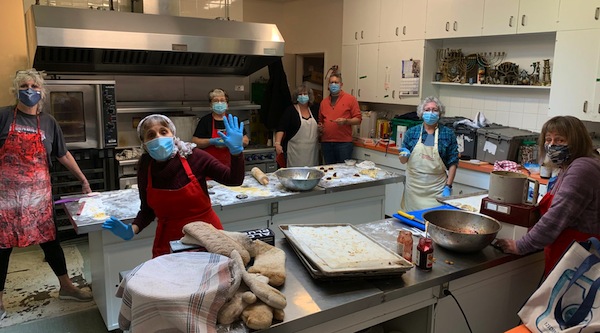
In the kitchen, left to right, are Stacey Kettleman, Leah Reghatti, Francie Steen, Deborah and David Freedman, Shelley Ail and Linda Rothberg. (photo from Beth Tikvah)

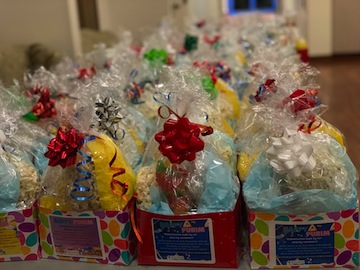
This Purim, Beth Tikvah Congregation packaged more than 240 holiday bundles, delivering one to every member household – spreading not only joy, but raising funds for the synagogue’s preschool and Hebrew school.

“As we enter the month of Adar, our tradition teaches, we must increase joy,” explained Rabbi Susie Tendler, the congregation’s spiritual leader. “The talmudic statement (Ta’anit 29a) is not specific about whose joy we are increasing, rather that it is incumbent upon us to spread joy and cheer, brightening these dark days. Communities around the globe have certainly been wrestling with how to deepen connections and spread joy this past year. Beth Tikvah decided to take the wisdom of our tradition and do so through festive and colourful mishloach manot, Purim packages, that went to every member family living in British Columbia.”

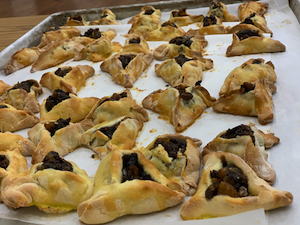
photo - More than 1,000 hamantashen were baked and more than 240 mishloach manot delivered
More than 1,000 hamantashen were baked and more than 240 mishloach manot delivered. (photo from Beth Tikvah)

The effort was multigenerational. There were the volunteers in the kitchen, who made more than 1,000 hamantashen. B’nai mitzvah families and the congregation’s youth groups (USY and Kadima) helped assemble the packages. There were the volunteers who counted, sorted and put the finishing touches on the packages, and those who picked up and delivered the packages all over Richmond and Vancouver. And, of course, the whole endeavour would not have been possible without those who funded it.

photo - More than 240 mishloach manot were delivered
The finished packages. (photo from Beth Tikvah)

In addition to all the congregants who ordered the mishloach manot and volunteered in various ways, Isha L’Isha was a sponsor of the initiative, Leanne Hazon supported the program “relentlessly during all hours of the day,” Alon Sabi designed the ordering system, and BT program manager Yvette Sabi created the boxes.

“For me,” said Tendler, “particularly during COVID, the opportunity to hang a bundle from someone’s door, ring the bell, and then step back three metres or so, and wish someone a happy holiday personally was splendid. However, the joy did not stop there. We received an outpouring of communications from people testifying to the joy and surprise felt from these packages which, in turn, deepened the joy felt by all of the volunteers. It is true, sometimes the little things bring the biggest smiles, and one smile significantly sparks another smile.

Format ImagePosted on March 19, 2021March 18, 2021Author Beth Tikvah CongregationCategories Celebrating the HolidaysTags Beth Tikvah, coronavirus, COVID-19, Judaism, mishloach manot, Purim, Susie Tendler, synagogue
A tree-lined memorial

A tree-lined memorial

Left to right: Rabbi Dov Bakst, presidential advisor, Yitzhak (Buji) Herzog and Rabbi Shlomo Raanan at the March 4 launch of the Ayelet Hashachar initiative to create a promenade in Kiryat Shmona to commemorate Jewish COVID victims from around the world. (photo from IMP)

“What is the main defining characteristic of the COVID-19 era?” asks public activist Rabbi Shlomo Raanan. “The coronavirus brought about separation and disconnect. It separates between countries, divides communities and splits families. It’s about being lonely and alone. My goal is to foster connection. Every Jew has an intrinsic connection to Israel. Let’s help them develop that connection and make it grow.”

Raanan’s organization, Ayelet Hashachar, has recently launched an initiative to foster connection with Diaspora Jewry: a promenade in Kiryat Shmona to commemorate Jewish COVID victims from around the world. More than 100 olive trees will line the kilometre-long walkway. Each tree will represent a different Jewish community from across the globe, serving as a vehicle to commemorate members who passed away from the coronavirus. Visitors to the site can learn about the communities and members who succumbed to COVID by standing next to the tree and getting the story on a dedicated app via a QR code. Each community will have its own mini-site, featuring eulogies, historical anecdotes and any extra information the community wishes to include, for a bona fide living memorial.

“Throughout the years, Diaspora Jewry has always been there for Israel,” said Raanan, explaining what inspired him to reach out to Diaspora communities and provide this free service. “We felt that the time had come for us, here in Israel, to show them our solidarity and support during this very challenging time.”

The significance of the location of the commemorative promenade is not limited to the views of Mount Hermon that Kiryat Shmona affords. Israel’s northernmost city is no stranger to bereavement – its very name commemorates eight people, including hero Joseph Trumpeldor, who were killed, in 1920, while defending the area. More recently, the proximity of Kiryat Shmona to the Lebanese border has made it a frequent target for terror and rocket attacks.

Kiryat Shmona is a symbol of Jewish determination and tenacity. Off the beaten track, it needs to invest twice the effort to make itself relevant to the centre of the country. Despite the hardships associated with leading a border city, Mayor Avihay Shtern has been making strides to promote development and attract residents. The growing food-tech industry and the establishment of large academic institutions are examples of those efforts.

“I am proud and gratified to have this opportunity to reach out to Diaspora communities and commemorate their COVID victims,” said Shtern. “There are many memorials, but I’ve yet to see one honouring those who succumbed to the pandemic, even though we’re almost a year in, and it’s taken such a heavy toll globally.”

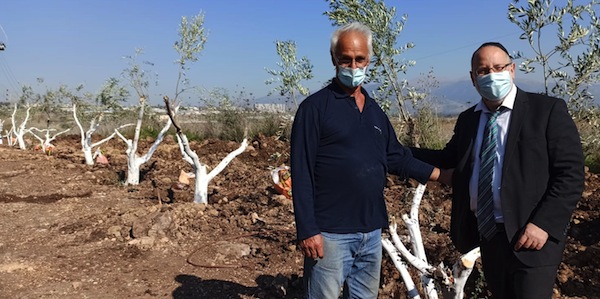
photo - Kiryat Shmona Mayor Avihay Shtern, left, with Rabbi Shlomo Raanan
Kiryat Shmona Mayor Avihay Shtern, left, with Rabbi Shlomo Raanan. (photo from IMP)

Shtern noted that the walkway, to be named “the Path of Life,” will serve as “a living history lesson” for local residents, as well as the many visitors and tourists who flock to the Upper Galilee. “I think it’s important for us to remember, and for the children of the future to know, what happened during this period. The coronavirus will soon disappear, but we must never forget those who were lost to the disease.”

A grand opening ceremony for the promenade was held on March 4, with the participation of the mayor, Raanan, senior public figures, as well as Jewish Agency chair Isaac (Bougie) Herzog.

Each tree, a story

Raanan sees special significance in planting trees as commemoration. “There is a beautiful verse in the book of Job: ‘For a tree has hope; if it is cut it will again renew itself and its bough will not cease.’ Trees signify revival, particularly olive trees,” he said. “They are a perfect metaphor for the Jewish people. Even when it looks lifeless, the olive tree still retains vitality deep inside. Olive trees are also very adaptive; they survive tough periods and can live for thousands of years. It’s certainly appropriate that the olive tree is the symbol of the state of Israel.”

Raanan welcomes community leaders and members who wish to have their community represented by a tree on the promenade. His staff of web developers will prepare the relevant text and visual material at no charge.

“The coronavirus separated people from their loved ones, often forcing victims to die alone,” he said. “This memorial accomplishes the opposite, bringing communities together and uniting people.”

Raanan has other plans to connect Diaspora Jewry with Israel, as well.

Parallel to the commemoration project in Kiryat Shmona, he is offering interested communities the opportunity to plant not just one tree but an entire olive orchard. “There are vast tracts of land across Israel that are neglected…. Communities can plant their own orchards in areas of national importance – the Galilee, the Negev, the Jordan Valley,” he said.

Of established projects, Raanan’s Chavrutah program was started more than two decades ago, with the aim of encouraging dialogue between secular and religious Israelis. The program now features close to 20,000 people studying in partnerships, in Israel and abroad.

Ayelet Hashachar’s goal in all its projects is to heal the divisiveness of Israeli society by working to eliminate mistrust between sectors, thereby breaking stereotypes and encouraging mutual respect.

For more information about how to have a community featured in the Path of Life commemoration project, email [email protected] or call 97-252-617-6222.

– Courtesy International Marketing and Promotion (IMP)


Format ImagePosted on March 19, 2021March 18, 2021Author Sharon Gelbach IMPCategories IsraelTags Avihay Shtern, Ayelet Hashachar, coronavirus, COVID-19, Diaspora, Israel, Kiryat Shmona, memorial, olive trees, Path of Life, Shlomo Raanan
When we unmask matzah

When we unmask matzah

(photo from pngkey.com)

Imagine that you are sitting at your kitchen table, sewing masks for your family so that you can go outside. There are no more masks left in stock in any store near you so you are left to make them on your own. Suddenly, as you attach a button to the fabric, you hear loud shouting outside. You run to your door and cautiously peek out to see what has caused all the uproar.

You are confronted by an extraordinary sight: people are filling the streets, singing, dancing and embracing. You put on your unfinished mask and venture a little closer, but still six feet away, and ask one of the revelers what happened. She replies: “They found a cure for coronavirus. It is going to be available immediately. Everyone who is sick will immediately recover, and a vaccine will protect the rest of us.”

You stuff your half-finished mask into your pocket and join the revelry, rejoicing that the coronavirus nightmare has come to an end.

When you come back into your home the next day, you carefully place your mask on the mantel. In later years, when visitors ask why you have a piece of fabric with one button and a rubber band featured prominently in your living room, you tell them your story of how you found out that you were saved from the coronavirus pandemic, and how the fear and anxiety completely dissolved. Every time you look at that piece of fabric, you remember that your situation can change in an instant, that fear and loss can be replaced by comfort and hope.

This story may seem like wishful thinking, but it is the story we tell at our seder every Passover. Our ancestors were slaves, oppressed and fearful. They suffered and thought their suffering would never end. And then everything changed.

We recite at the seder: “This matzah – why do we eat it? To remind ourselves that, even before the dough of our ancestors in Egypt had time to rise and become leavened, the King of Kings, the Holy One Blessed be He, was revealed and redeemed them.” In less than the time it would take to bake a loaf of bread, our ancestors’ lives were totally transformed. The mightiest empire in the world was defeated by the slaves’ G-d. They became free people, about to leave their land of oppression for their own land. The bread that they had started baking in captivity became the bread that they would always associate with their liberation.

We can relate to this experience of life-altering moments in our personal lives. Think of a moment when you received a phone call or met someone and your life immediately changed. Sometimes, yes, the phone call or encounter brought sorrow or pain. But, sometimes, it brought new opportunities for joy or freedom that you never expected, and your life was never the same. Maybe, the day after despairing you would ever find a soulmate, you met the person with whom you would spend the rest of your life. Or perhaps you were at a professional crossroads and an opportunity came your way out of the blue.

Of course, the mask sitting on your mantel is not a simple thing to contemplate. It invites much more than joy. Your thoughts are so complex when you look at it. On one hand, it symbolizes recovery and deliverance and, sometimes, when asked about it, you tell about the magical moment when you learned that a cure had been found. But, other times, you recall the dark days of the virus, the many people we lost, the overwhelmed emergency rooms, our crumbled illusions that our technological competence could protect us from epidemic.

The matzah, too, is complex. The Talmud, in Pesachim, suggests that matzah is called lechem oni because it is bread that invites much discussion: “lechem she’onim alav devarim harbeh,” “bread about which we answer many things.” There is so much to say about it because it brings up so many conflicting thoughts and emotions. It reminds us of our slavery in Egypt, when we had no control over what happened to us or to the people we loved. And it also reminds us that our lives can turn around in an instant, in less than the space of time that it takes for dough to rise. It is at once both liberating and deeply unsettling. It gives us hope and it frightens us. It forces us to acknowledge that we have but an illusion of control.

At our Pesach seder, we model to the next generation how to respond to a world that is beyond our control. We try to create structure and order (seder). We acknowledge our vulnerability (“ha lachma anya” – “this is the bread of our affliction”). We help others in need, feeding them and including them at our table (“kol difchin yetei veyechol” – “all who are in need, come eat with us”).

We fight against oppression (the episode of the five rabbis in Bnei Brak). We express gratitude for all the good we have in our lives (“Dayenu”). We delve deeply into these questions and reaffirm the possibility of redemption (“and, even if we are all wise, it is still incumbent upon us to tell the story”) and share our wisdom with our children (“vehigadeta l’vincha” – “and you shall tell your children”).

We commit ourselves to building a redeemed world (“l’shana haba’ah beyerushalayim” – “next year in Jerusalem”). And, as we eat our matzah, we acknowledge with faith and humility, that we never know what will come next.

Aliza Sperling teaches Talmud at the Yeshivat Maharat/Yeshiva Chovevei Torah Beit Midrash Program and directs Svivah’s HerTorah, an inclusive and open women’s learning community. She serves as a Shalom Hartman Institute research fellow and a Wexner faculty member, and articles by Sperling and other institute scholars can be found at shalomhartman.org. This article was originally published on blogs.timesofisrael.com.

Format ImagePosted on March 19, 2021March 18, 2021Author Aliza Sperling SHICategories Celebrating the HolidaysTags coronavirus, COVID-19, Judaism, Passover, Shalom Hartman Institute, slavery
Israel’s corona experience

Israel’s corona experience

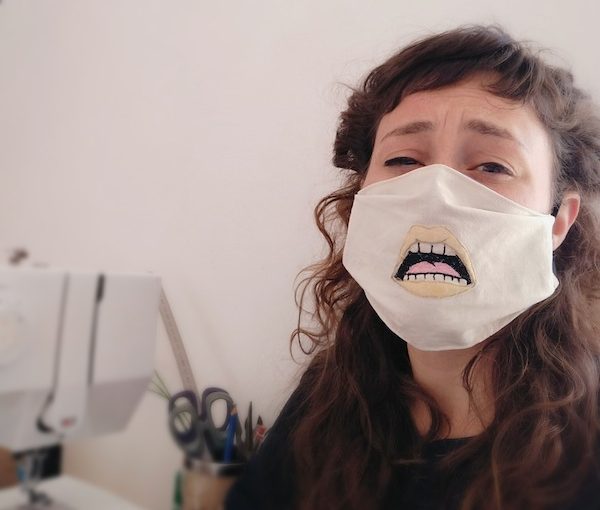
A Stitches by Orli mask, modeled by the designer Orli Fields.

A little over a year ago, Israeli radio news reported that Dr. Li Wenliang, an eye doctor in Wuhan, China, had tried to warn people that there were too many sick in his region. The report caught my attention because it stated that the doctor had been silenced by Chinese authorities.

When the coronavirus outbreak first became newsworthy, Israelis – from the prime minister on down – were sure we wouldn’t be seriously encumbered by it. We were in the mood to confidently assist others. I remember a man in front of me at the grocery checkout, turning around to ask if I knew why he was buying so many packages of toilet paper. When I said no, he told me he was sending toilet paper to family and friends in the United Kingdom.

In an unexpected turn of events, however, the virus became not just a key topic of discussion, but the manager of our daily lives. Over the long months of 2020, family visits and events were severely curtailed. In Israel, for religious and non-religious alike, Jewish holidays are always occasions for get-togethers, but not so this past year.

Some friends and acquaintances have become so nervous about catching the virus, they no longer want to converse, even outdoors, at a safe distance and from behind a mask. Fearing the spread of the pandemic, government officials, in turn, have put the kibosh on live cultural events.

Many people have learned to work from home and some have managed to re-create themselves, opening new businesses, such as those involving logistics, shipping and delivery. For example, a tour guide who used to lead groups through the colourful Mahane Yehuda Market now prepares and delivers baskets of shuk food items. Notably, during the pandemic, some lucky artists and galleries have found more of a demand for their work. Possibly this is due to the fact that people are home so much, staring at the walls, as it were. Yet, most artists-musicians, singers, actors and all the crews that keep theatres and other cultural facilities running have found themselves without work and without significant governmental bailout grants. All tolled, thousands of people have been laid off or have become unemployed altogether.

Whether because we were in lockdown or because we were anxious about being in situations where we might be exposed to people who have the virus, we have perfected online shopping to the level of an art. But some of us have also taken advantage of the farmers who are selling their produce directly to clients rather than through the now-quiet public markets.

We have learned to see ourselves as others see us, that is, in tiny boxes on Zoom. Some cultural institutions – such as the National Library of Israel, the Zionist Confederation House, Beit Avi Chai, Yad Izhak Ben-Zvi and others – have been broadcasting lectures and even some festivals on Zoom. I know one lecturer whose delivery has actually improved over Zoom.

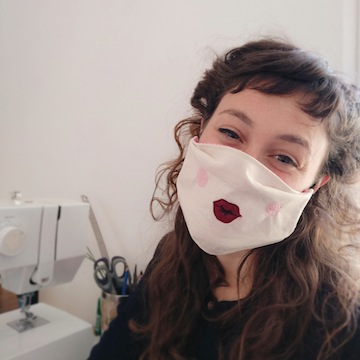
photo - Another Stitches by Orli mask, also modeled by the designer Orli Fields
Another Stitches by Orli mask, also modeled by the designer Orli Fields.

Not only have we learned that we can talk and be understood with a mask over our nose and mouth, I have heard that there are people who, being self-conscious of their teeth and mouth, are now more confident in public because they are wearing a mask.

And masks have changed over the course of the pandemic. In Tel Aviv especially, you will see people wearing designer masks, even while most of us are dressing more simply. In my neighbourhood, for instance, the vast majority of people wear sweatpants and sweatshirts (called “training” in Hebrew) on a daily basis. Teenagers wear indoor-outdoor pajamas; sometimes, they venture outside in their slippers.

The pandemic has brought out lots of dark humour, something Israelis have always been good at. And people have become more cynical about government proclamations. As but one example, the “last lockdown we will have” has happened four times already.

The coronavirus has aided in dividing Israel even more, as certain segments of the population are singled out for their non-adherence to government policy, but are not held accountable for their non-compliance. As one doctor candidly told me, “healthcare decisions are hampered by political considerations.”

Until this pandemic, many discharged Israeli soldiers would travel to southern Asia or to South America to “clear their heads.” With the spread of corona, however, travel has no longer been a safe option, so, in the past year, some soldiers who finished their compulsory service decided to immediately enrol in colleges and universities.

Altogether, the pandemic has caused tremendous financial and emotional stress. We have learned that corona is the loneliest hospitalization and death. But government budget problems have left social service agencies and nonprofits with little or no funding to continue their work of easing the tension, so the psychological damage continues to spread, untreated.

On the brighter side, people have picked up new hobbies, such as gardening or building terrariums. Baking has become a big thing, too. Working on jigsaw puzzles is another activity going through a revival. There seems to be more appreciation of nature, as well, as people have been going out for walks or picnics near their homes as a way to cope. And there has been a significant rise in the number of people adopting dogs, which may help reduce or prevent stress disorders during the pandemic. (While the number of abandoned pets has not dropped in Israel, it has not increased.)

It is generally acknowledged that doctors, nurses and other hospital staff are on the frontlines of the pandemic, so they were the first to receive coronavirus vaccinations. However, there is no shortage of vaccines in Israel and two things happened just recently: “pop-up” inoculation stations opened, to accommodate both citizens and non-citizens, so that, basically, anyone who walks in with an ID can get one; and Israel’s prime minister began talking about vaccine diplomacy – selling or giving vaccines to other countries.

The few pluses of 2020 notwithstanding, however, I doubt most Israelis, if not all, would object to having skipped the past year.

Deborah Rubin Fields is an Israel-based features writer. She is also the author of Take a Peek Inside: A Child’s Guide to Radiology Exams, published in English, Hebrew and Arabic.


Format ImagePosted on March 5, 2021March 4, 2021Author Deborah Rubin FieldsCategories Op-EdTags coronavirus, COVID-19, Israel, lockdown, masks, Orli Fields, politics, vaccinations

Posts pagination

Previous page Page 1 … Page 3 Page 4 Page 5 … Page 17 Next page
Proudly powered by WordPress