Skip to content
  • Home
  • Subscribe / donate
  • Events calendar
  • News
    • Local
    • National
    • Israel
    • World
    • עניין בחדשות
      A roundup of news in Canada and further afield, in Hebrew.
  • Opinion
    • From the JI
    • Op-Ed
  • Arts & Culture
    • Performing Arts
    • Music
    • Books
    • Visual Arts
    • TV & Film
  • Life
    • Celebrating the Holidays
    • Travel
    • The Daily Snooze
      Cartoons by Jacob Samuel
    • Mystery Photo
      Help the JI and JMABC fill in the gaps in our archives.
  • Community Links
    • Organizations, Etc.
    • Other News Sources & Blogs
    • Business Directory
  • FAQ
  • JI Chai Celebration
  • JI@88! video

Recent Posts

  • Story of Israel’s north
  • Sheltering in train stations
  • Teach critical thinking
  • Learning to bridge divides
  • Supporting Iranian community
  • Art dismantles systems
  • Beth Tikvah celebrates 50th
  • What is Jewish music?
  • Celebrate joy of music
  • Women share experiences 
  • Raising funds for Survivors
  • Call for digital literacy
  • The hidden hand of hate
  • Tarot as spiritual ritual
  • Students create fancy meal
  • Encouraging young voices
  • Rose’s Angels delivers
  • Living life to its fullest
  • Drawing on his roots
  • Panama City welcoming
  • Pesach cleaning
  • On the wings of griffon vultures
  • Vast recipe & story collection
  • A word, please …
  • מארק קרני לא ממתין לטראמפ
  • On war and antisemitism
  • Jews shine in Canucks colours
  • Moment of opportunity
  • Shooting response
  • BC budget fails seniors
  • Ritual is what makes life holy
  • Dogs help war veterans live again
  • Remain vital and outspoken
  • An urgent play to see
  • Pop-up exhibit popular
  • An invite to join JWest

Archives

Follow @JewishIndie
image - The CJN - Visit Us Banner - 300x600 - 101625

Tag: books

Community milestones … Lubavitch seders, JCC Jewish Book Award nominees

Community milestones … Lubavitch seders, JCC Jewish Book Award nominees

Ezra Shanken, executive director of Jewish Federation of Greater Vancouver, and Rabbi Chalom Loeub, chaplain of Chabad Jewish Student Centre, Vancouver, help with the delivery of seder meals. (photo from Lubavitch BC)

Lubavitch BC had its largest communal seder ever, with more than 1,000 participants. Families in Vancouver, Richmond, Surrey, Langley, Coquitlam, Burnaby, the North Shore and other areas of the province, enjoyed a complete seder with all the trimmings. And now is the time to say thank you to everyone who made this happen.

Firstly, Rabbi Yitzchak and Henia Wineberg, Rabbi Schneur and Shainy Wineberg, Rabbi Dovid and Chaya Rosenfeld thank Chabad of Richmond and the Community Kollel for partnering with Lubavitch BC to ensure that this project reached the largest number of people; Maple Grill, FortyOne Catering, Miriam Sklar and Lizzy Vaknin for their help with the organization and logistics; Sklar and Meir Jerbi for their help with packing and distribution; David and Diana Benjamin, Ezra Shanken, Glenn Berlow and numerous others for their help with the deliveries; and Rabbi Falik and Rebbetzin Simie Schtroks for coordinating the Langley and Surrey pickups and deliveries.

This project was not easy to accomplish in a short time. Extra amounts of matzah, wine, Haggadot, seder plates and Kiddush cups had to be sourced; ingredients and merchandise had to be purchased; and 1,000 meals had to be cooked and packed under the strict protocols of health and safety during COVID-19. Dozens of heartfelt notes of appreciation were received from members of the community, who shared how the project allowed them to have a wonderful Pesach under these difficult circumstances.

* * *

A program of the JCC Jewish Book Festival, the Western Canada Jewish Book Awards celebrate excellence in writing on Jewish themes and the achievements of authors from Western Canada. The shortlist for the 2020 honours was recently released. The winners were to be announced at a ceremony April 23, but that celebration has been postponed till later in the fall. The nominees are as follows.

  • The Nancy Richler Memorial Prize for Fiction: Daniel Goodwin (The Art of Being Lewis), Alex Leslie (We All Need to Eat) and Rhea Tregebov (Rue des Rosiers).
  • The Pinsky Givon Family Prize for Non-Fiction: Allan Levine (Seeking the Fabled City), Naomi K. Lewis (Tiny Lights for Travellers) and Heidi J.S. Tworek (News from Germany).
  • The Diamond Foundation Prize for Children/Youth: Jackie Mills (Little Synagogue on the Prairie), Ellen Schwartz (The Princess Dolls) and Harriet Zaidman (City on Strike).
  • The Lohn Foundation Prize for Poetry: Alex Leslie (Vancouver for Beginners), Dave Margoshes (Calendar of Reckoning) and Tom Wayman (Helpless Angels).
  • The Kahn Family Foundation Prize for writing on the Holocaust: Olga Campbell (A Whisper Across Time), Susan Garfield (Too Many Goodbyes) and Martha Salcudean (In Search of Light).
Format ImagePosted on April 24, 2020April 24, 2020Author Community members/organizationsCategories LocalTags books, JCC Jewish Book Festival, Jewish Community Centre, Lubavitch BC, Passover, tikkun olam, Western Canada Jewish Book Awards

Words of praise for libraries

We have a lot of interesting Jewish educational opportunities in Winnipeg, where I live. If you made a big effort, you could be busy learning, attending lectures, events and classes much of the time. It might be possible to find something to do nearly every day of the week, but most of us don’t or can’t.

Maybe you can’t get out due to health issues or because you’re the caretaker for others. Perhaps it’s just too dark and cold right now, and you aren’t all that keen about going out after dinner. (I hear you!) There are many reasons to say no, we can’t manage something.

The last few weeks, I’ve found myself in this situation. Someone in my household got sick, or I did. The weather was just too cold. I wanted to hibernate. I wasn’t sure the car would start or the event cost too much or … you get the picture.

However, I found a solution that has really enriched this season. There were some books on Jewish topics that friends suggested online, and even a book written by someone I knew. I couldn’t afford to buy them all, nor did I know yet that I wanted to own them. This is where the public library is an amazing resource. I had all the books delivered to one library, where they sat on the holds shelf with my last name on them.

When I checked them out, I worried that I would not be able to finish them in time. Maybe I was being overambitious. Not to worry, it turns out. Most of the books were finished long before they were due – they were that good.

What were they? Well, now that I’ve read these books, I’m happy to make a couple recommendations! The first was Sacred Treasure – The Cairo Genizah: The Amazing Discoveries of Forgotten Jewish History in an Egyptian Synagogue Attic. Genizahs are where some Jewish communities stored their old (both holy and mundane) documents for many centuries. Written by Rabbi Mark Glickman, who I studied with at summer camp as a teenager, this book was the Jewish equivalent to an Indiana Jones story. I love reading about Jewish social history and, to be honest, it made Shabbat and several sick days absolutely a joy. I told all my friends I was geeking out on the genizah book!

The second book I loved was The Unorthodox Match by Naomi Ragen. Ragen is a beloved American-Israeli novelist, and this book didn’t let me down. It was both a love story and a realistic account of how some Chassidic and ultra-Orthodox communities operate. There’s a great divide. These groups both encourage ba’alei teshuvah (those who “return” to more traditional Judaism), but they also ostracize them, as not being the same as those who were raised from birth in these communities. The novel emphasizes the differences between what Judaism teaches about accepting converts and strangers and how communities actually act, sometimes alienating those who seek to be included.

After reading these books, I was struck by how I was able to enrich my Jewish learning simply by using the library and the couch when it was so cold out. Yet, if cities like mine cannot figure out their finances, it’s possible that some of our public libraries (along with wading pools, swimming pools, arenas, etc.) will soon be closed due to budget cuts.

We can choose to read at home and learn more about Jewish topics this way, but only if the public libraries remain open and they can afford to buy these books. We may complain about our taxes, but we are given a great gift when we can access these literary “riches” for free.

Canadian winters are long. I count myself lucky that, when I couldn’t go out, I was able to sit by the fire and read and learn this winter. If we want that learning option to be available, we all have to commit to doing our share to keep libraries (and all the other benefits of a tax-paying society) open and thriving.

Joanne Seiff has written regularly for CBC Manitoba and various Jewish publications. She is the author of three books, including From the Outside In: Jewish Post Columns 2015-2016, a collection of essays available for digital download or as a paperback from Amazon. Check her out on Instagram @yrnspinner or at joanneseiff.blogspot.com.

Posted on March 6, 2020March 4, 2020Author Joanne SeiffCategories Op-EdTags books, education, geniza, history, libraries, lifestyle, Mark Glickman, Naomi Ragen
Compassion over hate

Compassion over hate

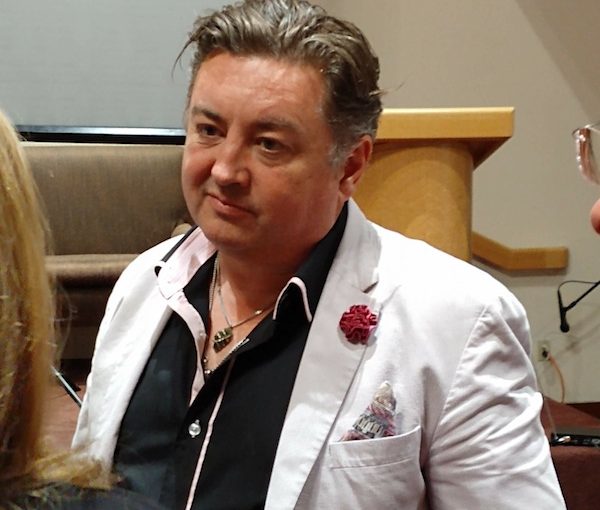
Tony McAleer, who helped found the organization Life After Hate, spoke at Congregation Beth Tikvah last month, along with fellow Life After Hate member Brad Galloway. (photo by Pat Johnson)

A former leader in Canada’s far-right white nationalist movements says targets of white supremacist extremism should not be expected to “hug a Nazi.” But, as difficult as it may be, seeing the humanity in everyone and finding compassion for people who lack compassion may be key to reducing the problem of racist extremism.

Tony McAleer was a member of the so-called White Aryan Resistance and his early embrace of technology and the internet helped propel that movement into the digital age. He later helped found the organization Life After Hate and now works with others who want to leave the neo-Nazi movement. He shared his personal history at Beth Tikvah synagogue, in Richmond, on Sept. 8. He has also spoken at other synagogues and venues in recent weeks.

“While we condemn the activities, while we condemn the ideology, we don’t condemn the human being,” McAleer said of his organization’s strategy. “It’s coming from that place of compassion.… The hardest thing to do in the world is to have compassion for people who don’t have compassion. We do that as harm reduction – hurt people hurt people, and we can bring them back from that place of hurt so they don’t do it anymore.”

McAleer grew up in a stable, comfortable Dunbar home, which contradicts some stereotypes, he said. He attended private Catholic school but lost respect for authority figures when he caught his father with a woman who was not McAleer’s mother.

“Can anyone remember the day when God fell off the pedestal?” he asked. His grades fell, his behaviour deteriorated and he was regularly sent to the principal’s office for canings.

“When I look back on it, I don’t think that I’ve ever felt more powerless than I did in that office time after time after time after time,” he said. “It didn’t make my grades go up. I continued to tune out.… I went from listening to Elton John and Queen to the Clash and the Sex Pistols. I was angry and the music I listened to was angry. It eventually led me down the road into the punk scene and later into the skinhead scene. And, in the skinhead scene, I found an outlet for my anger.”

Ideology is secondary, at best, as an attractant to racist groups, he said.

“What we find in the young men and women who are drawn to these movements is there’s an underlying rage, underlying vulnerability that makes the ideology so seductive,” he said. “I want to be very clear here. I’m not for a minute blaming anything I did on my childhood. Everything I did I chose to do and I take accountability for that and I always will. I work for Life After Hate, do things like this to pay back for that.”

He shares the story of his early life as an explanation, not as a justification, he said.

“What I found in the movement, what I found from being a skinhead – I found a sense of power, a sense of purpose, a sense of meaning,” McAleer said. “I got power when I felt powerless. I got attention when I felt invisible and I got brotherhood, camaraderie and acceptance when I felt unlovable.… Those are the vulnerabilities that make the ideologies so seductive. If you have those in a healthy way, the ideology doesn’t make sense to you. But, for somebody craving those things, the ideology becomes something powerful, a false seduction.”

When he was 21 years old, McAleer’s girlfriend gave birth to a baby girl.

“For the first time, I connected to another human being. Up until that point, I was completely cut off from my heart, I was completely dehumanized,” he said. “I believe that the level to which we dehumanize other human beings is a mirror reflection of how internally disconnected and dehumanized that we are.”

That began the transformation. He had a son months later and was soon a single father being assisted by his mother who, he said, “never gave up on me.”

“It’s safe to love a child,” he said. “They see the magnificence in us when we can’t see it ourselves when we look in the mirror…. The more I can connect to my humanity, the more I can connect to the rest of humanity. I couldn’t connect to the rest of humanity because I couldn’t connect to myself.”

Though he was heavily involved in antisemitism, it wasn’t about Jews, he said.

“I was projecting my crap and I had a vehicle to project it onto – the Jewish people – and that’s what I did.”

The compassion Life After Hate promotes must be accompanied by healthy boundaries and consequences, he said.

“It doesn’t mean we let people off the hook. It doesn’t mean we don’t hold people accountable,” he said. “We do hold them accountable. It’s like tough love. But we need to see the humanity, even in someone whose heart is filled with hate. I don’t think we can afford to dehumanize anybody regardless of how inhuman their behaviour. I believe that nobody is irredeemable. It’s tough work.”

Brad Galloway, who is also a member of Life After Hate, joined McAleer at the event. Also a former white supremacist, Galloway is now completing a degree in the school of criminology and criminal justice at the University of the Fraser Valley. He researches extremism and participates in interventions with members of hate groups to help them leave the movements.

Galloway too came from a middle- to upper-class home. After a fairly typical adolescence and a period of struggling to find his identity, he ran into a childhood friend who was involved in the white power movement.

“I was looking for an identity,” said Galloway. “I was looking for something to belong to, something that I can call my own. He gave me the chance. We’ll give you brotherhood, we’ll back you up, we’ll be there for you … some sort of pseudo-support network which never, never came to fruition. They never provided any of those things for me.”

photo - Brad Galloway
Brad Galloway (photo by Pat Johnson)

Like McAleer, it was fatherhood that made Galloway realize his extremism was putting his family at risk.

He also reflects on compassion he received from police and others during his time in the far-right.

“Why do these people care about me?” he wondered, adding that he began to recognize that individuals who were kindest to him were often members of the very cultural groups he demonized. After a gang brawl where Galloway was nearly killed, he saw compassion in action.

“I ended up in a hospital and I’m lying on the table and a doctor walks in and he’s an Orthodox Jew. I’m lying there with a swastika shirt on, blood all over me, thinking this guy should not help me. I do not deserve to be helped at all right now…. I felt like I was a terrible person and I didn’t feel I deserved this person’s time,” said Galloway. “He did not mention anything about me. He just did his job as a doctor and provided me exactly what I needed. That moment made me start to think about all these different times when minority communities had been good to me.”

Since the racist rally in Charlottesville, Va., in 2017, Life After Hate has been inundated with requests for help. About 300 new cases have opened, about half of which are people trying to leave the movement, the other half family seeking help to extricate their loved ones.

Cpl. Anthony Statham, one of two members of the RCMP’s B.C. Hate Crimes Unit also spoke, outlining the legal strategies employed to fight extremism.

McAleer’s book, The Cure for Hate: A Former White Supremacist’s Journey from Violent Extremism to Radical Compassion has just been released by Arsenal Pulp Press.

Format ImagePosted on October 11, 2019October 11, 2019Author Pat JohnsonCategories LocalTags antisemitism, Beth Tikvah, books, Brad Galloway, lifestyle, racism, The Cure for Hate, tikkun olam, Tony McAleer, white supremacism
Awards all round

Awards all round

Each year, the Eric Hoffer Award presents the da Vinci Eye (named after Leonardo da Vinci) to books with superior cover artwork. Cover art is judged on both content and style and, among this year’s winners is Olga Campbell’s Whisper Across Time: My Family’s Story of the Holocaust Told Through Art and Poetry (Jujabi Press). The book is still being considered for category, press and grand prizes.

Whisper Across Time also won the Ippy Award for independent self-published authors. Campbell’s book was selected as one of the 2019 Independent Publisher Book Awards’ Outstanding Books of the Year under the freedom fighter category. Campbell planned on attending the May 28 gala event in New York.

(For a review of the book, see jewishindependent.ca/a-story-told-in-art-and-poetry.)

* * *

Julia Ivanova’s National Film Board documentary Limit is the Sky saw its Toronto première on May 2 in the retrospective of the largest documentary film festival in North America, Hot Docs. Ivanova is one of only three directors from British Columbia who have received a Focus On retrospective at Hot Docs since 2002 – the others are John Zaritsky and Nettie Wild.

photo - Julia Ivanova
Julia Ivanova (photo from NFB)

Ivanova, the director, cinematographer and editor of Limit is the Sky is a Russian-Canadian filmmaker. She came to Canada at the age of 30, became a filmmaker in Vancouver and captured Canada from within but with the ability to look at the country from a distance. She has made documentaries for the NFB, CBC, Knowledge Network, played Sundance and won many awards for her films.

The screening of Limit is the Sky, the NFB film about the Fort McMurray boom-bust-fire circle and the winner of the Colin Low Best Canadian Feature Award at DOXA 2017, commemorates the third anniversary since the worst wildfire and the worst natural disaster in Canada’s history devastated the capital of the oil sands. (See jewishindependent.ca/diverse-doxa-festival-offerings.)

The Hot Docs Focus On retrospective of her work includes the world première of her new film, My Dads, My Moms and Me, a film about the joy and turmoil of parenting in the modern family, including same-sex partners, surrogates, adoption and combinations that break the old conventions. The film follows three families, filmed twice, 12 years apart – in 2007 and in 2019.

* * *

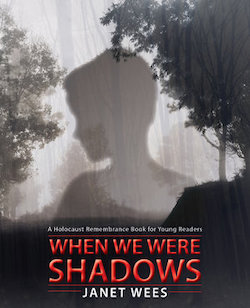
image - When We Were Shadows book coverMore than 250,000 children participated in the Ontario Library Association’s annual Forest of Reading program and have helped choose the best Canadian authors and illustrators. On May 14 and 15, thousands gathered at the annual Festival of Trees, an annual rock concert of reading, hosted at the Harbourfront Centre, where winners of the 2019 Forest of Reading program were announced. Among the books awarded honours was When We Were Shadows by Janet Wees, published by Second Story Press. (For more on Wees and the book, visit jewishindependent.ca/saved-by-dutch-resistance.)

* * *

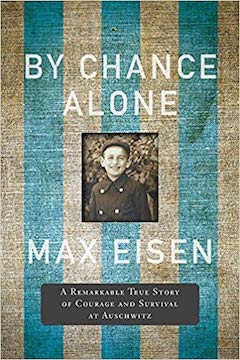
By Chance Alone: A Remarkable True Story of Courage and Survival at Auschwitz by Max Eisen (HarperCollins) won Canada Reads 2019. The book was championed by TV host and science broadcaster and author Ziya Tong, and was chosen by the five panelists as the book for Canadians to read in 2019. This year’s title fight asked the question: What is the one book to move you?

image - By Chance Alone: A Remarkable True Story of Courage and Survival at Auschwitz book coverAfter four days of debate in front of live audiences, Tong and By Chance Alone survived the final vote to be crowned this year’s winner. The runner-up was Homes by Abu Bakr al Rabeeah and Winnie Yeung (Freehand Books), which was defended by Simple Plan drummer Chuck Comeau. Audiences can catch up on all of the debates on demand on CBC Gem or by downloading the Canada Reads podcast from CBC or iTunes.

“Before 2016, I don’t remember seeing swastikas, but these days I see them often – in the news and on social media. But here’s something even more shocking: one in five Canadian young people have not even heard of the Holocaust. They don’t know what it is, ” said Tong.

This year’s debates took place March 25-28 and were hosted by actor, stand-up comedian and host of CBC Radio’s Laugh Out Loud, Ali Hassan.

Format ImagePosted on May 31, 2019May 30, 2019Author Community members/organizationsCategories NationalTags art, books, Canada Reads, CBC, documentaries, Holocaust, Janet Wees, Julia Ivanova, Max Eisen, memoir, National Film Board, NFB, Olga Campbell, Ontario Library Association

The great matzah ball debate

What food eaten during Pesach causes the most debates? If you guessed matzah balls, you’re right. Should they be hard or light? Big or small? What secret ingredient should be added to them?

From where did matzah balls, or kneidlach, originate? German Jews had a dumpling that they put into their soup called knodel. From this came the Yiddish term kneydl, singular, or kneydlach, in the plural. In Czech, it is known as knedliky. Dumplings have been in Central European cookery since the Middle Ages and then they came to Germany and Eastern Europe later.

So, just how many ways are there to make matzah balls?

Joan Nathan, a friend of mine, who has written a number of cookbooks and is considered a maven of American Jewish cooking, proposes adding chicken fat or vegetable oil plus seltzer, club soda or chicken broth, to make them light and airy. In Jewish Cooking in America, she also relates that some matzah balls, originating in Lithuania, use chicken fat or vegetable shortening and contain a filling made of onion, oil or chicken fat, matzah meal, egg yolk, salt, pepper and cinnamon. The filling is then placed in the middle of the matzah ball before they are cooked in salt water. After cooking in salt water, they are baked 30 minutes then placed in the soup for serving. Joan also has a recipe for matzah balls made in the southern United States, using pecans. In my research, I discovered that some Louisiana Jews add green onions and cayenne pepper.

In her cookbook Quiches, Kugels and Couscous: My Search for Jewish Cooking in France, Joan explains that, in France, matzah balls are called boulettes de paque, krepfle or kneipflich. They are the size of walnuts and not fluffy. They are made from stale bread or matzah soaked in water and dried, and they contain rendered goose fat, vegetable oil or beef marrow, eggs, water or chicken broth, matzah meal, salt, pepper, ginger and nutmeg.

In The New York Times Passover Cookbook, edited by Linda Amster, among the recipes for matzah balls is one by Mimi Sheraton, Times food critic at the time, who used chicken fat and cold water. Another is from Joan’s cookbook Jewish Holiday Kitchen, and she uses ginger and nutmeg. The winning recipe for the first Matzah Bowl contest in New York at the time the Times cookbook was published used vodka and club soda. A low-fat, low-salt version is made with egg whites and vegetable oil. Another style, which is airy, is made with beef marrow, instead of chicken fat, plus nutmeg.

Refrigeration and the temperature of the liquid seem to be key common denominators in many recipes.

Nina Rousso, an Israeli, in her book The Passover Gourmet, uses beaten egg yolks, lukewarm water, melted margarine, salt, parsley, matzah meal and stiffly beaten egg whites folded in. The mixture is refrigerated two hours before making.

In Passover Lite, Gail Ashkenazi-Hankin, an American, combines egg yolks, onion powder, salt, pepper, matzah meal, water and beaten egg whites and chills the mixture 30 minutes.

Zell Schulman, the American author of Let My People Eat, says the key to making light, melt-in-your-mouth, floating matzah balls is to beat egg whites until stiff then fold into the yolks with salt, pepper, cinnamon, matzah meal and optional parsley and refrigerate 15 minutes. A second version combines matzah meal with only the beaten egg whites until they hold peaks, plus parsley, cinnamon, grated carrot and oil, but no egg yolks.

Susan Friedland, the American author of The Passover Table, combines whole eggs with seltzer, salt, pepper, matzah meal and schmaltz, which she refrigerates for one hour. The schmaltz adds the flavour.

Marlene Sorosky, American author of Fast and Festive Meals for the Jewish Holidays, provides a recipe using ground almonds, ginger and chopped parsley. She chills the matzah balls for one hour.

Edda Servi Machlin, whose family has 2,000-year-old roots in Italy, says her family serves a mix between Italian Passover soup and Ashkenazi chicken soup. Her matzah balls are made of chopped chicken, egg, broth, olive oil, salt, pepper, nutmeg and matzah meal. The batter is refrigerated one hour before making.

Other Italian Jews, who call the matzah balls gnocchi di azzaima, add onions or mashed potatoes to the dough or grated lemon rind.

An aside: In 2001, Ariel Toaff, a professor at Bar-Ilan University, who is the son of Rome’s chief rabbi, came out with a book called Mangiare alla Giudia (Eating the Jewish Way). He devotes a chapter to Passover traditions, and writes that matzah was so popular that the Catholic authorities banned Jews from selling matzah to non-Jews and banned Christians from eating it.

Italian bakers also baked different kinds of matzah: plain for intermediate days, shmurah matzah for the sederim, and matzah made with white wine, eggs, sugar, anise and goose fat for those with more rich tastes.

Jews of Italy even developed sfoglietti or foglietti, a kosher-for-Passover pasta made with flour and eggs, which was then quickly dried and baked in a hot oven and served in soup or with a sauce.

Joyce Goldstein, an American fascinated by Italian Jewish cuisine, describes, in Cucina Ebraica, a combination of ground chicken, egg, matzah meal, salt, pepper and cinnamon, which she refrigerates before cooking in soup, but she does not say for how long.

Sonia Levy, a native of Zimbabwe, wrote a cookbook of her community, called Traditions. She describes luft kneidlach, light matzah balls, made with matzah meal, water, salt, nutmeg, cinnamon or ginger, eggs and oil. These must be refrigerated at least half a day. She adds that you can also make a pit with a finger and insert chopped meat that has been mixed with fried onions and spices. Another Zimbabwe version uses egg, cold water, chicken fat, salt, pepper, ginger and matzah meal.

Ruth Sirkis, an Israeli, in A Taste of Tradition, says “air” matzah balls have eggs, matzah meal, salt, chicken soup and chicken fat and are refrigerated two hours.

Another version, by Anya von Bemzen and John Welchman in Please to the Table: A Russian Cookbook, has walnut balls for soup, which are made by the Georgian Jews using ground walnuts, onion, egg, matzah meal, oregano, salt, pepper and a froth egg white.

A couple of last pieces of matzah ball trivia. In 2008, a New York kosher delicatessen held its annual matzah ball-eating competition to raise money for a shelter for the homeless. The winner ate 78 matzah balls in eight minutes. Although not in the Guinness Book of World Records, a few years ago, the largest matzah ball was measured at 17.75 inches across and weighed more than 33 pounds.

And, lastly, among some ultra-Orthodox Jews, matzah balls are not eaten because they expand when they cook, and they consider this reaction a form of leavening.

Regardless of the style of matzah balls you prefer, just make plenty for your guests!

Sybil Kaplan is a journalist, lecturer, book reviewer and food writer in Jerusalem. She created and leads the weekly English-language Shuk Walks in Machane Yehuda, she has compiled and edited nine kosher cookbooks, and is the author of Witness to History: Ten Years as a Woman Journalist in Israel.

Posted on April 12, 2019April 10, 2019Author Sybil KaplanCategories Celebrating the HolidaysTags books, cooking, culture, history, matzah, Passover
Story of love and second chances

Story of love and second chances

Judy McLellan as Lady Russell and Roger Monk as Sir Walter Elliot in Metro Theatre’s production of Persuasion. (photo by Tracy-Lynn Chernaske)

Who hasn’t wished for at least one do-over, a second chance? Who hasn’t made the mistake of following bad advice, even if it was well-intended?

In Jane Austen’s Persuasion, Anne Elliot falls in love with naval officer Captain Frederick Wentworth and they become engaged, but, based on the counsel of a family friend, Anne breaks off the engagement. Jewish community member Judy McLellan plays Lady Russell – the purveyor of that counsel – in Metro Theatre’s upcoming production of Persuasion, which runs until April 20.

“Lady Russell was a very close friend of Anne’s mother, who died, and she had taken the role of surrogate mother to Anne since that time,” explained McLellan. “She is very protective of Anne and felt that Anne was too young to get married, especially to a man who, at that time, had no money and no real position in society. This is why she now sees Mr. Elliot [Anne’s cousin] as a much more desirable match for Anne.”

Persuasion was adapted for the theatre by British playwright Timothy Luscombe. The Metro Theatre production is directed by Joan Bryans. McLellan, who was part of the cast of Metro’s Calendar Girls, which the Jewish Independent quite enjoyed (jewishindependent.ca/calendar-girls-now-at-metro), auditioned specifically for the role of Lady Russell. “Got a call back and then Joan offered me the role, which I was very excited to accept,” said McLellan.

Pride and Prejudice was McLellan’s “first venture into Jane Austen.”

“Loved it,” she said. “Went on to read the rest!”

About Persuasion, she said, “It’s a wonderful period piece of mid-19th century. The characters are diverse and interesting, and very reflective of society at that time. But, above all, it’s a love story, which, after all the trials and tribulations, comes to a delightful happy ending. Who wouldn’t enjoy that?!”

For tickets to Persuasion, visit metrotheatre.com.

To raise funds for building up-keep, Metro Theatre is holding a silent auction during the run of Persuasion for a painting by Tracy-Lynn Chernaske. “By tying together appropriate colours and soft textures, the painting reflects suggestions of [Jane] Austen’s historical multi-location story line, full of ships, seaside beaches, grand old manors and tidy cottages.” The opening bid is set at $300 and the winner will be announced on closing night. Bidding ballots, the artist’s bio and more information can be found at metrotheatre.com/show-persuasion-2019.

Format ImagePosted on April 5, 2019April 2, 2019Author Cynthia RamsayCategories Performing ArtsTags books, Jane Austen, Judy McLellan, Metro Theatre

Dig more deeply into identity

The Torah portions at this time of year, in Leviticus, are sometimes described as a hard sell. Leviticus’s detailed narrative about what is pure and safe, what’s diseased or leprous, and how priests can tell the difference isn’t light reading. It can be hard to interact with this kind of text.

At the same time, these details saved us as a people on numerous occasions. Keeping things clean, considering what was healthy, diseased or spoiled – historically, these things may have protected us from scourges like the Black Death. Analyzing the details of something difficult and complicated helps us find greater truths or safety, which are not always obvious from the outside, just as we continue to wrestle with diseases or challenges we don’t understand today. Whether it’s something described in Leviticus or a new kind of virus, smart people have to work to figure these things out.

In order to keep myself “working” and intellectually active, I do lots of reading and thinking about things I encounter. However, I don’t have much time to do this while juggling my household, kids, dogs and work responsibilities. I listen to audiobooks while I do household tasks. This gives me a chance to think about something bigger than, for instance, chopping salad or changing bedding. We all have a lot of boring waiting, obligations and chores to get through. Engaging my brain and listening to a book makes me feel a lot better about this grunt work.

I used to think I had to finish everything I started, but if it’s too violent or scary, I now shut it off. I recently found a new category of book to “shut off.” It doesn’t have an easy label, like “mystery” or “non-fiction.” Maybe it should be called “superficial.” Here’s what I mean.

I was listening to a memoir that contained recipes. In itself, this was a quirky choice for an audiobook, but I like food and cooking. Beyond that, the premise was larger. The author had been editor of a publication that had gone out of business. The memoir was supposed to describe how she found new direction through her cooking. I don’t write mean book reviews, even when I’ve been asked to review something, but I just can’t recommend this book.

I got very nearly to the end when I had to give up. Why? The primary reason was that the author is described, in her biography, as a Jewish person. However, her book rhapsodized about the food she made for Christmas and Easter and, even further, about the true glory of pork and shellfish. OK, I figured, maybe her husband isn’t Jewish. But I did more research. He was.

I could live with the idea that this writer didn’t keep kosher. Heck, lots of Jews don’t. I could even live with the idea that she’d decided, for whatever reason, to celebrate Christian holidays, if only there had been some explanation of why. She rhapsodized about matzah brei (but why?!) and yet she didn’t tell her readers why she ate it in the springtime. After awhile, I even started to feel cranky about how she used way too much butter in every recipe. Time to shut it off!

At its heart, I told myself that, while using the majority culture’s touchstones, like Christmas and Easter, might make a book more saleable, it seemed like a betrayal far worse than cooking with non-kosher foods. When I thought about it longer, I concluded that the whole thing was vacuous. She’d never actually explained how the cooking had helped her heal or get over such a big professional loss. At that point, it didn’t matter how the book ended. I was done.

Awhile back, I had a writing gig on a national platform. My proud husband boasted about it to our Montreal friends. The articles paid less than what I published locally and were poorly edited, but my earnest “voice” came through. That seemed OK. Then the editor told me that she would only get in touch again after she assessed how my previous posts had done. (The ones that, while earnest, had been poorly edited.) I never heard back. I guess they weren’t successful in her eyes. Instead, I saw parenting posts on that platform that celebrated Jewish writers who extolled how they proudly chose to be secular or why they weren’t comfortable investing in their religious or cultural identities.

All around us, hate crimes are rising. Minorities – like Jews – are being harassed. Just because it hasn’t happened to you yet doesn’t mean it won’t. So, why not ask Jewish writers to dig deeper and figure out what that identity actually means? When the Gestapo killed Jews during the Second World War, they didn’t ask, “Are you assimilated? Secular? Do you celebrate Christmas?” No. Why not embrace or at least learn about your real background?

I felt angry. My time is so limited that I hate wasting these spare moments on reading something so intellectually lazy. In between raising kids and walking dogs, figuring out our taxes (in two countries) and the rest of life’s details, well, I might as well get more sleep instead. If an entire memoir, written by a well-known figure, sounds so tone deaf, it bothers me that she makes a living selling these books.

Worse, my articles might have been seen as too earnest, too religious and too detail-oriented, and were tossed in favour of someone who was happy to express his apathy and ignorance about his Judaism. It’s like the (non-Jewish) editor said, “Well, gee, we want the Jewish perspective, but only if it isn’t too Jewish.”

Leviticus is a hard slog. Yet, every year, we go through all of the five books of Moses and we try to dig deeper to find something new. There are many commentaries on Leviticus. Some explain it, and others try to give modern examples for how to relate to its narrative. These are all worthy intellectual exercises, much like choosing to listen to books while doing mind-numbing chores.

What’s not worth it? Let’s not waste time on empty-headed accounts from people who determinedly embrace their ignorance. If you want to stay committed to your identity – Jewish, political or other – keep learning and growing so you can express it with pride.

Joanne Seiff has written regularly for CBC Manitoba and various Jewish publications. She is the author of three books, including From the Outside In: Jewish Post Columns 2015-2016, a collection of essays available for digital download or as a paperback from Amazon. See more about her at joanneseiff.blogspot.com.

Posted on March 29, 2019March 27, 2019Author Joanne SeiffCategories Op-EdTags books, identity, Judaism, lifestyle, philosophy
Milestones … Shapira, Or Shalom, Baumel Joseph, Respitz & Krug

Milestones … Shapira, Or Shalom, Baumel Joseph, Respitz & Krug

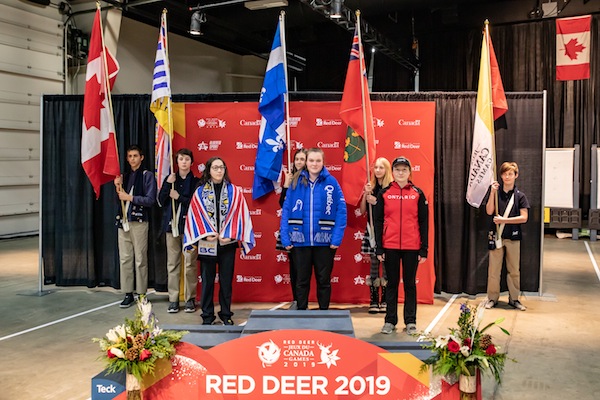
Adi Shapira brought home a silver medal for British Columbia in the 2019 Canada Winter Games. (photo by Peter Fuzessery Moonlight Canada)

From Feb. 15 to March 3, Red Deer and central Alberta hosted the 2019 Canada Winter Games. Among those taking home a medal was Adi Shapira.

Winning the silver in the archery recurve, individual female event, Shapira said in a Team BC article, “It is an amazing reward for all the training I have been doing and it is just an amazing accomplishment.”

photo - Adi Shapira prepares for a shot
Adi Shapira prepares for a shot. (photo from Team BC)

According to the Canada Winter Games website, Shapira, “who had taken up archery following a school retreat in grades 8 and 9, fought hard in the gold medal match, but Marie-Ève Gélinas, came back to win the gold for Quebec.”

Shapira, 16, is part of the SPARTS program at Magee Secondary School, which is open to students competing in high-performance athletics at the provincial, national or international level, as well as students in the arts who are performing at a high level of excellence. Last November, she won the qualifying tournaments against other female archers ages 15 to 20 to represent the province of British Columbia in the February national games.

* * *

photo - The 2019 Stylin’ Or Shalom fashion models
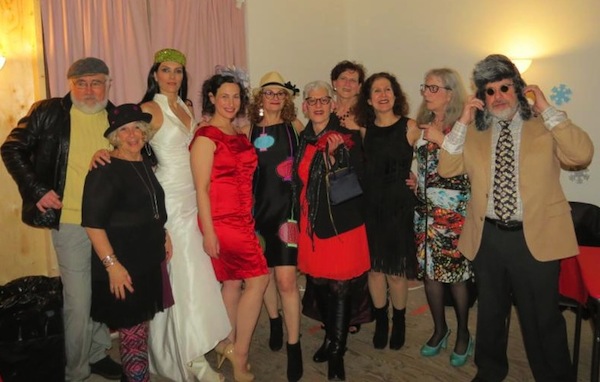
The 2019 Stylin’ Or Shalom fashion models. (photo from Or Shalom)

Stylin’ Or Shalom on Feb. 20 was not just a beautiful evening: the event raised $1,600 for Battered Women’s Support Services so that they can continue their important work.

Models for the fashion-show fundraiser were Ross Andelman, Avi Dolgin, Val Dolgin, Carol Ann Fried, Michal Fox, Dalia Margalit-Faircloth, Helen Mintz, Ana Peralta, Avril Orloff and Leora Zalik. About 50 people attended and, between cash donations and purchases from the My Sister’s Closet eco-thrift store, this year’s show raised about $600 more than did the inaugural Stylin’ Or Shalom event held in 2017. In addition, many people brought clothing donations, which will be sold at the store, generating further funds for the organization.

* * *

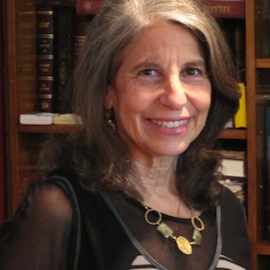
The Association for Canadian Jewish Studies has announced that Dr. Norma Baumel Joseph is the 2019 recipient of the Louis Rosenberg Canadian Jewish Studies Distinguished Service Award. Joseph brings together the highest standards of scholarship, creative and effective dissemination of research, and activism in a manner without rival in the field of Canadian Jewish studies, as well as being a respected voice in Jewish feminist studies more broadly.

photo - Dr. Norma Baumel Joseph
Dr. Norma Baumel Joseph

Joseph’s scholarship is remarkable for her mastery of both traditional rabbinic sources and anthropological methods. Her work on the responsa of Rabbi Moses Feinstein, including an award-winning article published in American Jewish History 83,2 (1995), is based on a close reading of some of the most technical and difficult halachic texts. Her mastery of these sources is also apparent in articles on women and prayer, the mechitzah, and the bat mitzvah. She has used her knowledge of halachah in her academic work on Jewish divorce in Canada, including an article in Studies in Religion (2011) and is a collaborator in a recently awarded grant project, Troubling Orthopraxies: A Study of Jewish Divorce in Canada.

As a trained anthropologist and as a feminist, she realizes that food is also a text and she has made important contributions to both the history of Iraqi Jews in Canada and to our understanding of the history of food in the Jewish community. Her Social Sciences and Humanities Research Council of Canada (SSHRC)-funded research has resulted in recent essays such as “From Baghdad to Montreal: Food, Gender and Identity.” Her ongoing reflections on Jewish women in Canada, first appearing as early as 1981 in the volume Canadian Jewish Mosaic, are foundational texts in the study of Jewish women in Canada.

Joseph has chosen to disseminate her research and wisdom in a variety of ways. Her undergraduate and graduate students at Concordia praise her innovative student-centred teaching. Recently, she instituted a for-credit internship at the Alex Dworkin Canadian Jewish archives, which has been beneficial to both the student and the archive. She is in demand as a lecturer in both professional and lay settings. Her work in film has reached a wide audience. In Half the Kingdom, a 1989 NFB documentary on Jewish women and Judaism, she explores with sensitivity the challenges – and rewards – of being both a feminist and an Orthodox Jew. She served as consultant to the film, and was a co-author of the accompanying guidebook.

Since 2002, Joseph has also committed herself to public education by taking on the task of writing a regular column on Jewish life for the Canadian Jewish News. Her views are based on a deep understanding of Judaism and contemporary Jewish life and are worthy of anthologizing.

Joseph is a founding member of the Canadian Coalition of Jewish Women for the Get and worked for the creation of a Canadian law to aid and protect agunot. As part of her Women for the Get work, she participated in the educational film Untying the Bonds: Jewish Divorce, produced by the Coalition of Jewish Women for the Get in 1997. She has also worked on the issue of agunot, as well as advocated for the creation of a prayer space for women at the Western Wall among international Jewish organizations.

Joseph helped in the founding of the Institute for Canadian Jewish Studies at Concordia, and convened the institute from 1994 to 1997, when a chair was hired. She was also a founder and co-director of Concordia University’s Azrieli Institute for Israel Studies. In 1998, she was appointed chair of the Canadian Jewish Congress National Archives Committee, and has remained in the position since then, under the new designation of chair of the advisory committee for the Alex Dworkin Canadian Jewish Archives (CJA). In this capacity, Joseph has been a forceful and effective advocate for protecting and promoting the preservation of Canadian Jewish archival material and for appreciating the professionalism of the staff. She has lent her time and experience to multiple meetings and interventions at various crucial junctures in the recent history of the CJA, during which she has balanced and countered arguments that would have led to the dissolution or extreme diminishing of the archives as we know it. Her work on behalf of the archives has drawn her into diverse committees and consultations. Notably, she contributed her expertise to the chairing of a sub-committee convened by Parks Canada when their Commemorative Places section was in search of Canadian Jewish women-related content. Her suggestions made during the 2005 meetings have resulted in several site designations over the course of the past 12 years.

Joseph has had a unique role in Canadian Jewish studies and Canadian Jewish life, and is richly deserving of the Louis Rosenberg Award.

* * *

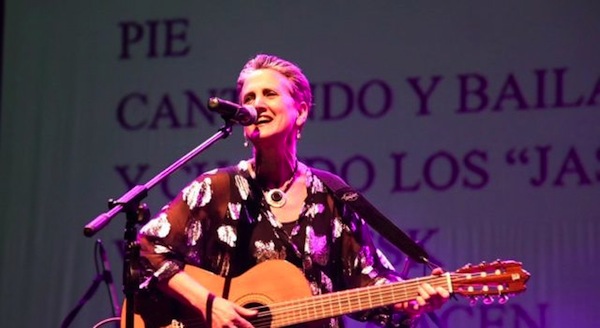
photo - Janie Respitz of Montreal won the prize for best interpretation of an existing Yiddish song at the final Der Idisher Idol contest in Mexico CityIn February, Janie Respitz of Montreal won the prize for best interpretation of an existing Yiddish song at the final Der Idisher Idol contest in Mexico City. She performed “Kotsk,” a song about a small town in Poland, which was the seat of the Kotsker rebbe, the founder of a Chassidic dynasty in the 18th century. The win included $500 US.

Respitz holds a master’s degree in Yiddish language and literature and, for the past 25 years, has performed concerts around the world. She has lectured and taught the subject, including at Queen’s University and McGill University, and is on the faculty of KlezKanada, the annual retreat in the Laurentians.

Respitz was among nine finalists, both local and foreign, who were invited to perform at Mexico City’s 600-seat Teatro del Parque Interlomas before a panel of judges and a live audience.

The competition is in its fourth edition, but Respitz only heard about it last year. She submitted a video of her performing “Kotsk” in September and received word in December that she was in the running.

A Yiddish song contest in Mexico City may seem odd, but the city has a large Jewish community, many with roots in eastern Europe, much like Montreal. The winner for best original song was Louisa Lyne of Malmo, Sweden, who’s also a well-established performer of Yiddish works.

– Excerpted from CJN; for the full article, visit cjnews.com

* * *

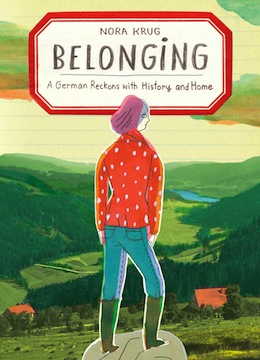
On March 14, at the New School in New York, the National Book Critics Circle (NBCC) announced the recipients of its book awards for publishing year 2018. The winners include Nora Krug, who was given the prize in autobiography for Belonging: A German Reckons With History and Home (Scribner). “Krug creates a stunningly effective, often moving portrait of Krug’s memories and her exploration of the people who came before her,” said NBCC president Kate Tuttle.

image - Belonging book coverKrug’s drawings and visual narratives have appeared in the New York Times, Guardian and Le Monde diplomatique. Her short-form graphic biography Kamikaze, about a surviving Japanese Second World War pilot, was included in the 2012 editions of Best American Comics and Best American Nonrequired Reading. She is the recipient of fellowships from the Maurice Sendak Foundation, Fulbright, the John Simon Guggenheim Memorial Foundation, the Pollock-Krasner Foundation, and of medals from the Society of Illustrators and the New York Art Directors Club. She is an associate professor at Parsons School of Design in New York and lives in Brooklyn with her family.

The National Book Critics Circle was founded in 1974 at New York’s legendary Algonquin Hotel by a group of the most influential critics of the day. It currently comprises 750 working critics and book-review editors throughout the United States. For more information about the awards and NBCC, visit bookcritics.org.

Format ImagePosted on March 29, 2019March 27, 2019Author Community members/organizationsCategories Local, WorldTags ACJS, Adi Shapira, archery, art, Association for Canadian Jewish Studies, books, Canada Winter Games, Janie Respitz, music, National Book Critics Circle, NBCC, Nora Krug, Norma Baumel Joseph, Or Shalom, sports, tikkun olam, women, Yiddish
PJ Library extends program

PJ Library extends program

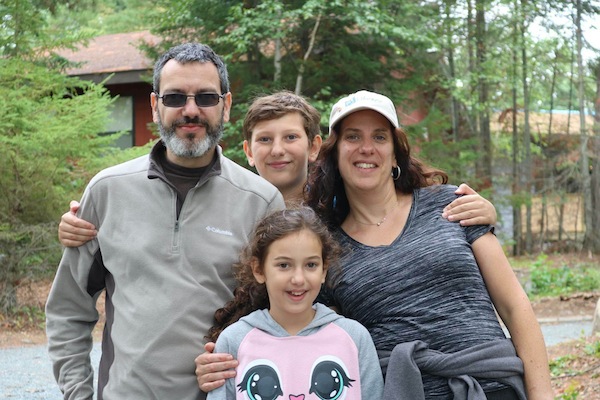
Florencia Katz and family. (photo from Florencia Katz)

PJ Library, which provides Jewish children with free Jewish-themed books and CDs, has expanded its program and now serves readers up to 11 years old.

Available in Jewish communities across North America, PJ Library is supported by local Jewish federations and many other donors. In Winnipeg, the program is in its 10th year, and Florencia Katz has been coordinating it since 2011. As a mom of two, she has experienced firsthand the impact the books have on her kids.

Eventually, Katz’s children aged out of the PJ Library program, which is for kids ages 6 months to 8 years old. But now, with the new program, PJ Our Way, Katz’s younger child, Tali, can once again enjoy the perks of PJ.

“PJ Our Way is the next chapter of PJ Library, for kids ages 9 to 11,” explained Katz. “Kids throughout the United States and Canada are eligible to enrol in the program from the day they turn eight-and-a-half until the day before their 12th birthday.

“The Harold Grinspoon Foundation, with the generous support of PJ Alliance Partners, provides PJ Our Way subscriptions at no cost to families or partner communities.”

PJ Our Way is considered the next chapter of PJ Library because it follows the same goals of the original program: engaging families and children in Jewish values, content and, ultimately, community.

PJ Our Way offers tweens the possibility of engaging online – allowing them to choose their own book, write book reviews, blog and more.

“My children and family have enjoyed the PJ Library program for years and, as avid readers, my kids were quite sad to stop receiving books at home once they aged out from PJ Library,” said Katz.

“My daughter, Tali, currently 10-and-a-half, was over the moon when I told her that she can now sign up to PJ Our Way. On the morning of the launch of PJ Our Way in Canada, before going to school, we signed up as one of the first sign-ups in Winnipeg, and maybe all Canada.

“As a parent, I am excited that, through this amazing program, my daughter will have the opportunity to keep reading quality Jewish-themed literature. The possibility that this program offers to engage online to choose the book, watch and read reviews, and submit their own reviews makes [it] attractive and exciting for this demographic.”

Tali was excited to pick her first book and spent some time on the PJ Our Way website, reading reviews and the synopses of all the available books, before choosing.

After narrowing her choice down to two books, she asked her mom for help deciding which to pick. After reading each book summary herself, Katz went to the parent section of the site to read more about the Jewish concepts and values and about the positive role models featured in each book. This helped her suggest which book her daughter might enjoy the most.

“Besides the synopsis and the concepts and values section provided for parents, there is also a section called Talk it Over, which suggests a question to discuss with your child after reading the book,” said Katz.

“I will definitely check all the information out and make a point of including it into our conversation about the book if it comes up. I will also suggest to my child to write a review of the book after she is done, so other kids can read it, the same as she read reviews when she picked the book. I want this experience to be enjoyable and fun, so I will not put any pressure or make it feel like a school task.”

Katz said the more Tali reads and learns about Jewish culture and tradition, the better equipped she will be to make her own decisions on how to live her Judaism when she grows up.

Candice Tenenbein, another parent who is part of the Winnipeg PJ Library initiative, is also very excited to have her older son, Jacob, 9, be part of PJ Our Way.

“Every month, our boys eagerly await their newest PJ Library arrivals,” said Tenenbein. “Both of our boys are avid readers. Recently, we were becoming sad that our older son, Jacob, was graduating out of this program. When we heard from Katz that PJ Our Way is now available in Winnipeg, we immediately signed up! We love that the books are exciting and fun to read, and that they all have a Jewish connection.

photo - Candice Tenenbein and family
Candice Tenenbein and family. (photo from Candice Tenenbein)

“In our home, we celebrate Shabbat and all the Jewish holidays. These books and the online portion will add more layers to raising our children to be more knowledgeable about, and proud of, their Jewish heritage.”

Tenenbein is also looking forward to her sons spending time on their iPads in a more educational and productive manner, instead of just watching videos. PJ Our Way offers a safe and protected online environment.

At the Tenenbein house, all family members read the books provided by PJ Library, as they love to discuss their favourite parts of each one and share their thoughts of how the books impacted them.

“Jacob is especially excited that his friends will also be joining PJ Our Way,” said Tenenbein. “The kids are planning to choose the same books each month, so they can have their own book club.

“Growing up, my mother, may she rest in peace, instilled in us a love of reading and a pride in our Jewish heritage. Now, as a mother myself, I understand how truly important opportunities are which provide for our kids to understand what the religion means to them and their daily lives.

“This is especially important in today’s environment, where antisemitism and its newer anti-Israel BDS face are becoming more prevalent. My husband and I are grateful for the excellent education our children receive at Gray Academy [in Winnipeg]. PJ Library and PJ Our Way are excellent supplements for helping foster and strengthen these feelings in our children.”

Jacob is also excited about going online and becoming part of a larger community of Jewish peers. He is looking forward to being able to share his thoughts about each book and read what others have to say.

“He cannot wait to begin blogging once he reads his latest PJ Our Way book!” said Tenenbein.

These days, getting paper mail is not common, so PJ kids receiving a free gift in the mail, addressed just to them, is a unique and individual part of the experience. The online aspect then allows them to connect with other Jewish kids who are reading the same books as them. For more information, visit pjourway.org.

Rebeca Kuropatwa is a Winnipeg freelance writer.

Format ImagePosted on February 22, 2019February 21, 2019Author Rebeca KuropatwaCategories BooksTags books, children, Judaism, literacy, parenting, PJ Library
Pelman participates in Word

Pelman participates in Word

Barbara Pelman (photo from Word Vancouver)

Among the writers being featured at this year’s Word Vancouver, which runs Sept. 26-30, is Victoria-based poet Barbara Pelman.

Pelman’s latest collection, narrow bridge (Ronsdale Press, 2017), is her third book of poetry. Its title comes from Rabbi Nachman of Breslov’s famous advice (at least in Jewish circles): “All the world is a narrow bridge – the important thing is not to be afraid at all.” Other than in one poem, however, called “Öresund,” where she tells herself, “I will not fear,” Pelman doesn’t come across in her writing as fearful.

“I’m delighted that I don’t come across as fearful,” Pelman told the Independent, “as I am full of fear, and certainly before each visit to my family in Sweden, I imagined everything that could go wrong and how incompetent I am. And was amazed that I survived intact.

“Generally, I tend to be a worrier (‘a misuse of the imagination’) but fight this negativity all the time. The tension, which I hope comes across, is between a general optimism and belief that, ‘in the long run’ … things sort themselves out. So, I tend to take on things that might terrify me, like art classes or solo trips to Berlin or train rides through Europe, and sign up, so there’s no going back. Not, however, bungee jumping or skydiving.

“When I have to deal with adversity – a separation and divorce, primarily – I talk and I write,” she said. “Both are clarifying agents. The poems in this book put forward a lot of my difficulty in being in the present, without wishing to be elsewhere. As in the first poem, ‘Gentle Reader’ – the desire to desire only what you have, and not what is somewhere else.”

On the family front, at least, Pelman’s journeys have become shorter since the book was published. Her daughter, who had been living in Sweden for three years, moved to Vancouver this summer, meaning that Pelman’s grandson is also now that much closer. He features in more than one poem – “Still Life with a Small Boy” is especially poignant. In it, he and his bubby, Pelman, are out having a hot chocolate and croissant. “Heads together, bending into each other. / They are a world. Outside, the world breaks. / She cannot read the news while she is with him, / tries to be calm, listen while he tells her / his new red bike helmet makes him safe.”

The collection is divided into three sections and includes some poems that Pelman has published before. Her previous books of poetry are One Stone (Ekstasis Editions, 2005) and Borrowed Rooms (Ronsdale Press, 2008), and she also has produced a chapbook, Aubade Amalfi: The Marcello Poems (Rubicon Press, 2016).

“This book had three iterations, each time being sent back by the publisher with suggestions – too much of Marcello and the adorable grandson, for example,” she said of the decision-making process for what would make it into narrow bridge. “So, I rejigged the poems, took out a lot of them, put in more recent ones, and relied on Russell [Thorburn] to put them in order. He sees an organic pattern of the poems, sometimes based on image or theme. I trust his choices, only changed a few.”

The poems in narrow bridge include many with Jewish themes.

“Most of my childhood centred around the synagogue, not in a hugely observant fashion, but, as my father was choir leader at the Beth Israel, I often went to services with him,” Pelman said about the place of Judaism and Jewish culture in guiding her work or approach to life. “Now, as a member of Congregation Emanu-El [in Victoria] and ‘den mother’ for the Calling All Artists project, I am interested and involved in learning Hebrew, chanting Haftorah, and generally intrigued by the culture and traditions of an ancient people.

“Moreover, and this is what I think is really wonderful, poetry and study of Torah have many similarities. Hebrew is a language that I think is embedded in metaphor, and studying Torah is the kind of layering analysis that I am used to in studying poetry. Layer upon layer of meaning and ambiguity. Rabbi Harry Brechner considers art as ‘mishnah’: another way to interpret, to find meaning that is relevant to us personally and globally.”

In narrow bridge, Pelman explores kabbalistic ideas, her own family history and relationships, as well as biblical ones (the poem “Isaac” is powerfully evocative). In at least two poems, she explores the concept of “thisness” – notably in the poem of that name, where, she writes, “Happiness, fed from detail: the thisness of things, / resting in the eye of the beetle, the creak of the board / she leans against, the cold air pricking her ears.” And several poems have to do with the spaces or pauses between, for example, a heartbeat or a pendulum’s swing; those moments that happen all the time but that we rarely acknowledge or even notice.

Aging features prominently, as well. And, while some poems are wistful – such as “Suitcase in the Closet,” where recollections of past travel suffice – others are almost calls to arms. “A woman over seventy should open her travel account, / run her fingers over the globe, and choose / She should trade her sensible shoes for sandals, / her Gucci bag for backpack, her datebook for weather reports,” begins the poem “Go,” a favourite in this collection, though this reader is still a couple of decades shy of 70.

As for how her style or subject matter has changed since her first collection, Pelman said, “I have continued to work with various poets in workshops and retreats, and continue to learn a great deal from poet friends and reading. I think my poems have become shorter, a bit more compressed. I am aware of the musicality of the poem – the cadence, the pacing, the rhythm. But the struggles are still there: how to get started, how to edit, how to know when a poem is done. I have a huge file on my computer, called ‘Working On.’

“And my subject matter has changed as my life has changed,” she said. “The first book dealt with the divorce and finding a new identity; the second book included the death of my father; this book is about travel, and daughters, and grandsons, and the new life of retirement. About balance. But there are still hummingbirds in the hawthorn tree. Jasmine and tulips. Old lovers and mothers.”

Pelman is at Word Vancouver on Sept. 30, 1:20 p.m., in the Suspension Bridge tent at Library Square Conference Centre, one of three poets participating in “Another Taste of Poetry.” She also joins two other poets in Ronsdale’s Fall Poetry Showcase at Dunbar Public Library on Nov. 7, 6:30 p.m.

For more about Word Vancouver – where Jewish community members Mark Winston and Claire Sicherman will also share their work, at 1:20 p.m. and 2:30 p.m., respectively on Sept. 30 in the Alma VanDusen Room at Library Square – visit wordvancouver.ca. The interim manager of the festival this year is community member Bonnie Nish.

Format ImagePosted on September 21, 2018September 20, 2018Author Cynthia RamsayCategories BooksTags Barbara Pelman, books, Judaism, poetry, Victoria, Word Vancouver

Posts pagination

Previous page Page 1 Page 2 Page 3 Page 4 Next page
Proudly powered by WordPress