Skip to content
  • Home
  • Subscribe / donate
  • Events calendar
  • News
    • Local
    • National
    • Israel
    • World
    • עניין בחדשות
      A roundup of news in Canada and further afield, in Hebrew.
  • Opinion
    • From the JI
    • Op-Ed
  • Arts & Culture
    • Performing Arts
    • Music
    • Books
    • Visual Arts
    • TV & Film
  • Life
    • Celebrating the Holidays
    • Travel
    • The Daily Snooze
      Cartoons by Jacob Samuel
    • Mystery Photo
      Help the JI and JMABC fill in the gaps in our archives.
  • Community Links
    • Organizations, Etc.
    • Other News Sources & Blogs
    • Business Directory
  • FAQ
  • JI Chai Celebration
  • JI@88! video

Recent Posts

  • Sharing her testimony
  • Fall fight takes leap forward
  • The balancing of rights
  • Multiple Tony n’ Tina roles
  • Stories of trauma, resilience
  • Celebrate our culture
  • A responsibility to help
  • What wellness means at JCC
  • Together in mourning
  • Downhill after Trump?
  • Birth control even easier now
  • Eco-Sisters mentorship
  • Unexpected discoveries
  • Study’s results hopeful
  • Bad behaviour affects us all
  • Thankful for the police
  • UBC needs a wake-up call
  • Recalling a shining star
  • Sleep well …
  • BGU fosters startup culture
  • Photography and glass
  • Is it the end of an era?
  • Taking life a step at a time
  • Nakba exhibit biased
  • Film festival starts next week
  • Musical with heart and soul
  • Rabbi marks 13 years
  • Keeper of VTT’s history
  • Gala fêtes Infeld’s 20th
  • Building JWest together
  • Challah Mom comes to Vancouver
  • What to do about media bias
  • Education offers hope
  • Remembrance – a moral act
  • What makes us human
  • המלחמות של נתניהו וטראמפ

Archives

Follow @JewishIndie
image - The CJN - Visit Us Banner - 300x600 - 101625

Tag: books

טראמפ צריך ללמוד היסטוריה

טראמפ צריך ללמוד היסטוריה

נשיאה לשעבר של ארצות הברית, ביל קלינטון, מגיע לוונקובר לקדם את ספרו החדש ‘הנשיא נעדר’, שיצא לאור בימים אלה. עם קלינטון יתארח הסופר ג’יימס פטרסון, שהוא שותפו בכתיבת הספר.

טראמפ צריך ללמוד היסטוריה: טען קנדה שרפה את הבית הלבן בזמן שזו הייתה בריטניה

נשיא ארצות הברית, דונלד טראמפ, מוכיח שוב שהוא אינו יודע היסטוריה וכרגיל מעוות עובדות לצרכיו האישיים והפוליטיים. הפעם מדובר באירוע שקרה רק לפני כמאתיים שנה אותו טראמפ הזכיר, וטעה בעובדות. בשיחת טלפון כועסת עם ראש ממשלת קנדה, ג’סטין טרודו, שהתקיימה בסוף מאי, במסגרת מלחמת הסחר בה פתח הנשיא האמריקני, אמר בין היתר טרודו: האם אנו קנדה מהווים סיכון לביטחון הלאומי לארה”ב כפי שאתה אומר, כדי להצדיק את המכסים שהטלת על הסחורות שלנו? טראמפ השיב בשאלה: האם לא אתם שרפתם את הבית הלבן במלחמת 1812? טראמפ קצת התבלבל כיוון שהכוחות הבריטים הם ששרפו את הבית הלבן ב-1814 במסגרת מלחמת 1812, לאחר שהאמריקנים התקיפו את אזור יורק באונטוריו, שהיה אז מושבה בריטית.

טראמפ שוב הפך את עצמו לבדיחה באמצעי התקשורת האמריקניים, ששאלו שוב ושוב כיצד הידידה הקרובה ביותר קנדה, מהווה סיכון לביטחון הלאומי של ארה”ב?

הנשיא לא נעדר: ביל קלינטון מגיע לוונקובר וידבר על ספרו החדש ועל צפוי שגם על הנשיא הנוכחי

נשיאה לשעבר של ארצות הברית, ביל קלינטון, מגיע לוונקובר לקדם את ספרו החדש ‘הנשיא נעדר’, שיצא לאור בימים אלה. עם קלינטון יתארח הסופר ג’יימס פטרסון, שהוא שותפו בכתיבת הספר. פטרסון והנשיא לשעבר ידונו ארוכות בספר החדש, באופן כתיבתו והחיבור היחודי ביניהם. נראה שהשניים יעסקו במישרין או בעקיפין גם בנשיא השערורייתי הנוכחי של ארה”ב, דונלד טראמפ, שניצח את אשתו של ביל הילרי קלינטון, בבחירות שהתקיימו לפני כשנה וחצי. צפוי שגם לקהל הרחב תהיה אפשרות לשאול שאלות בנושאים שונים. האירוע היחודי יתקיים במרכז הקונגרסים של ונקובר (באולם הבולרום המערבי), ביום שישי ה-29 בחודש, החל משעה 4.05 אחר הצהריים. נותני החסות: תחנת הטלוויזיה גלובל בי.סי, עיתון הוונקובר סאן ועיתון סטאר – מטרו ונקובר. שבוע קודם לכן ב-22 ביוני, יתקיים אירוע עם קלינטון בלבד במרכז התערוכות של טורונטו (באולם בינפילד סנטר), החל משעה 7.30 בערב. נותן החסות עיתון הטורונטו סטאר. מחירי הכרטיסים לכל אחד מהאירועים: 99 דולר, 159 דולר, 249 דולר והיקר שבהם לווי.איי.פי 1,895 דולר.

הספר ‘הנשיא נעדר’ (בהוצאת אלפרד קנוף וליטל ובראון) הוא מותחן בידיוני שעוסק בחטיפה של נשיא ארה”ב, אך כולל גם תכנים אמיתיים מעניינים שכוללים מידע על מה “קורה מבפנים” ומאחורי הקלעים בבית הלבן, בליווי מתח ודרמה למכביר. מדובר ברומן הראשון של קלינטון, שכאמור אותו הוא כתב ביחד עם פטרסון האמריקני, הנחשב לאחד מהסופרים המצליחים ביותר בעולם, ומטבע הדברים לאחד ממוכרי הספרים הגדולים בעולם. פטרסון הגדיר את העבודה עם קלינטון: “שיא הקריירה שלי והגישה לסינון מיד ראשונה תרמה באופן ייחודי לכתיבת הספר הזה”.

קלינטון (בן ה-71) שימש נשיאה הארבעים ושתיים של ארה”ב, במשך שתי קדנציות מטעם המפלגה הדמוקרטית. קודם לכן הוא שימש מושל מדינת ארקנסו. שיעורי התמיכה בקלינטון (הפופולריות שלו בקרב הציבור) היו גבוהים מאוד, גם עם סיום תפקידו. על הקדנציה השנייה שלו העיבה פרשת מוניקה לווינסקי, אך קלינטון ניצל מניסיון ההדחה של חברי המפלגה הרפובליקנית. בימים האחרונים שודר ראיון עם קלינטון ברשת אן.בי.סי האמריקנית, בו הוא ציין כי אינו חייב התנצלות ללווינסקי. הוא הוסיף כי גם בעידן הנוכחי (של ‘המי טו’) הוא לא היה מתפטר. לדבריו הוא הודיע באופן פומבי על כך שהוא מצטער על מעשיו אך לא דיבר עם לווינסקי.

Format ImagePosted on June 13, 2018June 8, 2018Author Roni RachmaniCategories עניין בחדשותTags Bill Clinton, books, Donald Trump, history, James Patterson, United States, ארצות הברית, ביל קלינטון, ג'יימס פטרסון, דונלד טראמפ, היסטוריה, ספרים
Preserving written word

Preserving written word

Pinkas Kehillat Frankfurt am Main contains records of the membership dues and other payments made by the members of the Frankfurt community between 1729 and 1739. It also contains copies of records from the 17th century. The pinkas contains 384 leaves and is written in German in Hebrew letters. (photo from National Library of Israel)

Many know that Shavuot, which we just marked, commemorates the receiving of the Ten Commandments. Less well appreciated, however, is that this holiday is the Jewish people’s beginning as the People of the Book. In this regard, it should come as no surprise that, within two weeks of Shavuot, throughout Israel, we celebrate Book Week, Shavuah Hasefer. But enough about new books.

Since the 1970s, in a tucked-away corner of the National Library of Israel, a small, skilled team conserves and restores the books and documents, not just of the Jewish people’s long and complicated heritage, but those of Muslims and Christians.

Timna Elper heads this department, which currently comprises four full-time and one part-time staff. Until I visited them, I did not understand how challenging it is to physically preserve a written legacy – archival materials face a battery of foes, such as fungus, insects and rodents.

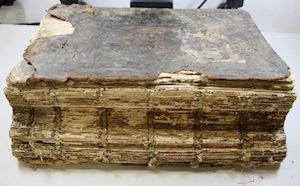
So, here is an admission: I naively believed the term bookworm just meant someone who loves to read books. While this does describe a certain kind of person, bookworms are actually an enemy of old books. Moreover, bookworms aren’t even worms – they’re the larvae of several species of beetles. And they have their preferences; that is, they generally leave newer books alone. If unchecked, they start their voracious dining on the spines of older books, moving on to feast on the pages. The sad result leaves books riddled with small holes and badly frayed covers and edges.

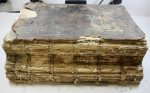
photo - Pinkas Kehillat Frankfurt am Main before conservation efforts at the National Library of Israel
Pinkas Kehillat Frankfurt am Main before conservation efforts at the National Library of Israel. (photo from National Library of Israel)

The repair work carried out in Elper’s department is, in a number of ways, similar to work done in hospitals. As in a medical facility, staff members must be highly trained in a number of fields. In the case of the library, we are talking about knowledge of fibres and textiles, entomology, chemistry, etc. To avoid contagion, sanitation is constantly checked: the library, for instance, closes during Passover and Sukkot in order to carry out fumigation of the entire facility. Tests are routinely carried out for fungal and insect damage. Temperature and humidity are monitored. Special care is taken to avoid stacking books too tightly, as this could endanger their physical stability when removed from their shelves. Attention is also paid to lighting (and not just sunlight), as improper or excessive lighting likewise harms books.

As for surgical procedures, library staff members carefully choose the materials for the restoration process, so that the book will accept, rather than reject, the repairs. The staff has to match the materials composing the old texts, be they parchment, animal skin or paper. However, no staff person is engaged as a scribe, as the department does not deal with restoring the text, no matter how faded or distorted it may be.

Along the way, the staff learns a lot about the old books. They learn about the community from which a text originated. They learn about the building of a book and what might have been involved in producing it. They explore questions that deal with the book’s content, as well as its cover. Was the book covered immediately or later in its life? Was the cover added where the book was written or was it put on in another country? And, if it was added in another country, what does this tell us about cooperation between historic Jewish communities?

Sometimes, to complete the restoration process and return the book for use, the staff employs specially developed machines, such as the Leafcaster, a machine that was developed by the department’s first director, Esther Alkalai. The Leafcaster helps strengthen a page by adding pulp to it.

Once the restoration is complete, the materials are available for study or for exhibition. To a degree, this action puts the texts at risk for contamination or physical damage. Thus, when the National Library loans rare items for temporary display, the restoration and conservation lab goes into full swing with a complicated process of ensuring the articles travel safely. The condition of the items is meticulously inventoried before they leave the library and when they are returned. In addition, a staff person from the lab accompanies the items in order to review the state of the pieces with the receiving institution and to help make sure that the loaned materials are being shown in a way that will not cause harm. When the exhibit closes, a staff person returns to the hosting facility to safely bring the valuable books and manuscripts back to the library. The library also makes special security and customs arrangements. An agreement is signed stating that the loaned articles will all be returned to Israel.

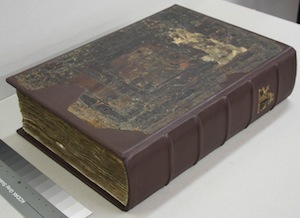
photo - Pinkas Kehillat Frankfurt am Main after conservation efforts at the National Library of Israel
Pinkas Kehillat Frankfurt am Main after conservation efforts at the National Library of Israel. (photo from National Library of Israel)

The restoration process is expensive, and the waiting list for repairing these treasures is in the thousands. While there are donors willing to underwrite the cost of digitizing archival material, few people are willing to contribute to the cost of the restoration.

Elper would love to have people adopt archival material, so that it could undergo restoration at the National Library of Israel. Such a program, she said, has been instituted at the British Library and other institutions. Reportedly, at the British Library, the funds raised through its Adopt a Book program have supported the conservation of thousands of items – books, manuscripts, maps, photographs, stamps and works of art on paper. The possibilities are numerous; one of Elper’s suggestions is to approach different ethnic communities or individuals to adopt or sponsor the repairs needed on an article from their community of origin.

Asked what was the library’s most difficult project to date, Elper said all projects have their challenges. While difficult was not her choice of word, she admitted that preparing for the arrival of a large external (out-of-the-library) archival collection required painstaking attention to removing any known contaminants and, stage-by-stage, safely transporting these acquisitions to the National Library’s archives.

Among the most satisfying projects for the team, Elper said when asked, was the preparation for the recent exhibit at New York University’s Institute for the Study of the Ancient World, called Romance and Reason: Islamic Transformations of the Classical Past. The library lent the institute exquisitely scripted and illustrated manuscripts dealing with the story of Alexander the Great.

The repair of items (donated and purchased) creates a living testimony of history. It is the hope of the National Library of Israel that these rare and cherished books will receive even more attention when the library moves to its new facility in 2020.

As a closing note: if you have old books you love, keep them away from direct light and, to protect them from dust and other grime, store them in archival-quality, acid-free envelopes. Don’t do as yours truly had been doing, keeping them in various Ziploc bags. In closed plastic bags, the books have limited ability to breathe.

Deborah Rubin Fields is an Israel-based features writer. She is also the author of Take a Peek Inside: A Child’s Guide to Radiology Exams, published in English, Hebrew and Arabic.

Format ImagePosted on May 25, 2018May 24, 2018Author Deborah Rubin FieldsCategories IsraelTags books, history, Israel, libraries, restoration

JI gets Rockower, Shore a WIBA

The Jewish Independent is among the winners of this year’s American Jewish Press Association Rockower Awards for Excellence in Jewish Journalism. The awards were presented at the AJPA annual conference, held in conjunction with the Jewish Federations of North America’s General Assembly in Los Angeles, Nov. 13-15.

The JI won first place for excellence in editorial writing for a trio of opinion pieces: “Let’s talk about Nini …” (Feb. 26, 2016), “Much more yet to learn” (Oct. 7, 2016) and “Inspired by Standing Rock” (Dec. 9, 2016). Placing second in the same circulation category (14,999 and under) was Intermountain Jewish News, based in Denver, Colo.

About the Independent’s “Let’s talk about Nini …” submission, the AJPA’s Rockower jury commented that it demonstrated “great writing, clear intent and galvanized a call to action in support of Jewish Federation’s decision to host an Israeli singer with controversial political views. Readers took heed.”

The editorial “Much more yet to learn” was about the need for Holocaust education and “Inspired by Standing Rock” connected the story of Chanukah, “of standing for one’s beliefs (and existence) and triumphing in the end,” with that of the protesters in North Dakota, who stood up against the U.S. government’s plans to run an oil pipeline through a cemetery and under a water reservoir near the Standing Rock Sioux Reservation.

***

Jewish community member Paul Shore of Whistler won this year’s Whistler Independent Book Awards (WIBA) non-fiction prize for his memoir Uncorked, set within the rampart walls of a village in Provence. Farida Somjee of Vancouver won the WIBA fiction prize for her novel The Beggar’s Dance, set in the streets of coastal Africa.

The winners were announced by WIBA organizers Lynn Duncan and Kilmeny Denny at the Whistler Writers Festival’s improvisational Literary Cabaret at the Maury Young Arts Centre. Two-time winner of the Stephen Leacock Medal for Canadian Humour Terry Fallis said, “It is wonderful to see talented, up-and-coming, independent authors recognized. It is a challenging process to start out on your own and work to have your creativity discovered.”

“In Uncorked, Shore’s use of the game of pétanque as a point of entry to address areas of personal alienation is a great literary and narrative choice,” said J.J. Lee, one of the judges for the non-fiction award, and CBC radio host, author and Governor General’s Literary Award finalist. “This memoir made me laugh; especially Paul’s foil Hubert, who is a star. And its funny and illuminating stories contain a soul that is touching, too!”

[For the Independent’s review of Uncorked, click here.]

Posted on November 24, 2017November 23, 2017Author The Editorial BoardCategories LocalTags books, journalism, newspapers, non-fiction, Paul Shore, Rockower

Looking for nominees … the nominated and the winners

The Centre for Judaism of the Lower Fraser Valley is looking for nominations for its annual Lamplighter Award, which honours a young person who has performed an outstanding act of community service.

Candidates must be between the ages of 6 and 18 and submission of potential recipients must include two references describing the child’s community service. The chosen lamplighter will receive the award during Chanukah at an evening ceremony at Semiahmoo Shopping Centre.

“Chanukah celebrates the victory of light over darkness and goodness over evil,” said Simie Schtroks. “This is a most appropriate opportunity to motivate and inspire young people to make this world a brighter and better place. By filling the world with goodness and kindness, that light can dispel all sorts of darkness.”

To nominate a candidate for the award, contact Schtroks as soon as possible at [email protected].

* * *

This summer, David Granirer received a Meritorious Service Medal from the Governor General of Canada. The award recognizes a deed or activity that has been performed in a highly professional manner, or according to a very high standard: often innovative, this deed or activity sets an example for others to follow, improves the quality of life of a community and brings benefit or honour to Canada.

Granirer is a counselor, stand-up comic and mental health keynote speaker. Granirer, who himself has depression, has taught stand-up comedy to recovering addicts and cancer patients, and founded Stand Up for Mental Health, a program teaching comedy to people with mental health issues, in 2004. He has trained Stand Up for Mental Health groups in partnership with various mental health organizations in more than 50 cities in Canada, the United States and Australia. His work on mental health is featured by media worldwide and has garnered several awards.

Granirer also teaches Stand-Up Comedy Clinic at Langara College, and many of his students have gone on to become professional comics.

* * *

This year’s Mayor’s Arts Award for Community Engaged Arts went to Earle Peach. A singer, songwriter, composer, conductor, arranger, teacher and performer, Peach leads four choirs in the city and hosts a monthly community coffee house in Mount Pleasant. He teaches privately, and records musicians for demos and albums. He performs with Barbara Jackson as a duo called Songtree and also has a band called Illiteratty.

The emerging artist honour went to Ariel Martz-Oberlander, a theatre artist, writer and teacher. As a Jewish settler on Coast Salish territories with diasporic and refugee ancestry, her practice is rooted in a commitment to place-based accountability through decolonizing and solidarity work. She divides her time between theatre and community organizing, and specializing in creative protest tactics on land and water.

Martz-Oberlander is a facilitator with the True Voice Theatre Project, producing new shows by residents of the Downtown Eastside and vulnerably housed youth, in collaboration with the Gathering Place and Covenant House. Her most recent work, created with support from the LEAP program, won a research and development prize from the Arts Club. Martz-Oberlander is also the associate producer for Vines Festival, presenting accessible, free eco-art in Vancouver parks. Good art is accountable to the community, raises up voices rarely heard and is vital to repairing our world.

* * *

On Oct. 3, the Koffler Centre of the Arts announced the four winners of the 2017 Vine Awards for Canadian Jewish Literature, all of whom were on hand at the award luncheon at the Park Hyatt Hotel in Toronto.

Winners in two of the categories are based in Vancouver. Miriam Libicki won the non-fiction award for Toward a Hot Jew (Fantagraphics Books Inc.), which the jury described as, “An admirably complicated response to being a woman and a Jew in our time, a thrilling combination of memoir, journalism and art.” And Irene N. Watts and Kathryn E. Shoemaker took the prize in the children’s/young adult category for Seeking Refuge (Tradewind Books), which the jury described as, “A superb graphic novel dramatizing the Kindertransport, a powerful story enhanced by firsthand experience and beautiful black-and-white illustrations.”

The other winners were Peter Behrens’ Carry Me (House of Anansi Press) for fiction and Matti Friedman’s Pumpkinflowers (McClelland & Stewart) for history.

The history shortlist included Max Eisen’s By Chance Alone (Harper Collins Publishers) and Ester Reiter’s A Future Without Hate or Need: The Promise of the Jewish Left in Canada (Between the Lines). Runners-up in the fiction category were Eric Beck Rubin’s School of Velocity (Doubleday Canada) and Danila Botha’s For All the Men (and Some of the Women) I’ve Known (Tightrope Books). In non-fiction, Sarah Barmak’s Closer: Notes from the Orgasmic Frontier of Female Sexuality (Coach House Books), Judy Batalion’s White Walls (Berkley/Penguin Random House) and David Leach’s Chasing Utopia (ECW Press) were runners-up, while Deborah Kerbel’s Feathered (Kids Can Press) and Tilar Mazzeo and Mary Farrell’s Irena’s Children (Margaret K. McElderry Books) were on the children’s/young adult short list.

* * *

In September 2017, local community member Dr. Arthur Wolak was elected for a three-year term to the board of governors of Gratz College, a private liberal arts college in suburban Philadelphia. Founded in 1895, Gratz is the oldest independent and pluralistic college for Jewish studies in North America. Accredited by the Middle States Commission on Higher Education, Gratz is also recognized by Israel’s Ministry of Education and Culture. Through its undergraduate and graduate programs, Gratz educates students to become effective educators, administrators and community leaders.

Posted on October 27, 2017October 25, 2017Author Community members/organizationsCategories LocalTags activism, Ariel Martz-Oberlander, Arthur Wolak, books, Centre for Judaism, David Granirer, Earle Peach, Gratz College, Irene Watts, Kathryn Shoemaker, Lamplighter Award, Mayor’s Arts Award, mental health, Meritorious Service, Miriam Libicki, Simie Schtroks, tikkun olam, Vine Awards
Decembers of my childhood

Decembers of my childhood


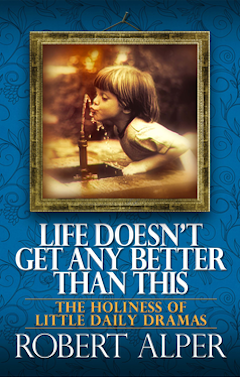
This story comes from the book Life Doesn’t Get Any Better Than This: The Holiness of Little Daily Dramas (Read the Spirit, 2015).

***

My father used to take showers with the lady next door.

It was all pretty kosher. We rented half of a “duplex” house at 89 University Avenue in Providence, and the Winn family occupied the other half. “Duplex” means different things in various places; in Providence, a “duplex” was a house with two separate entrances and two mirror-image units. Ours had three floors and a basement suitable for Cub Scout den meetings.

book cover - Life Doesn’t Get Any Better Than ThisThe way the house was designed, the bathrooms on the second floor shared a common wall, tub alongside tub and toilets back to back. The insulation was fairly thick, but subdued sounds could get through, and soon after the Winn family moved into 91 University Avenue, my father and Ruth Winn discovered that they observed similar morning shower routines. The muffled knocking back and forth on the tiles at 7:15 a.m., then a cute neighborhood joke, is now a piece of family folklore.
My mother and Ruth became friends immediately; 40 years later and 400 miles apart, they still dearly love each another. Laughter is what started it all off, but it was a hurricane called Carol that really brought us all together.

For eight days, Providence was without electricity, and neighbors drew closer to one another. Cold food went into the Keoughs’ old gas refrigerator at 85 University Avenue, while our battery-operated radio was the source for news and entertainment. The Winns’ vast quantities of sporting equipment helped everyone pass the time until that late afternoon when we were sitting on our porches and my mother suddenly yelled, “The lights are on!” Everyone rushed inside.

The bonding held.

The Winns’ oldest son Cooper David Winn IV and I were classmates, though never best friends. Still, we spent lots of time together, as neighboring kids do, and some of the most memorable moments occurred around the December holidays. Chanukah at my house. Christmas at his house.

Mutual envy.

For me, Chanukah generally meant one gift from my parents per night, but factoring in additions from grandparents, other relatives and friends, I averaged 16 to 20 each season. Not bad. I would even feel a bit on the smug side as I walked to school in the morning reporting to Cooper on the prior night’s take.

That is, I felt smug until early Christmas morning, when I would race over to the Winns’ side of the house to inspect the mountains of presents, the massive quantities strewn about the living room, such a volume of stuff that even the recognition in later years that the haul included a suspiciously large amount of underwear and socks could not make me rationalize away my jealousy.

The feeling of Chanukah has remained with me: our old tin menorah and the look, the smell, the soft, smooth texture of its candles, sometimes dripping their orange wax across my fingers. There were the traditional songs, the latkes and applesauce, and our one decoration, “Happy Chanukah,” printed on colorful paper dreidels and placed across the dining room entryway. The sign was worn, faded, but it was our tradition, and for eight days it transformed the room into a chamber of happy expectation.

Most of my presents were modest. I loved to make Revell models of antique cars, and so something like a Stanley Steamer one night might be followed by a Stutz Bearcat the next. Another year it was accessories for my small American Flyer train set: one night it might be a new caboose, and another night a little building to place near the tracks. I remember categories of gifts, but the particulars have long faded.

Except for two presents that I’ve never forgotten.

The first was a 26-inch English bicycle. It arrived on the year when I went for the gold in the “eight small presents or one big present” option game. Friday was the designated night and, as soon as the candles were lighted and the songs sung, I dutifully complied with the “Close your eyes tight” directive. The waiting seemed to go on forever as I listened to my father’s grunts and a bumping noise coming up the cellar steps. When he approached the dining room, I heard the rhythmic, metallic sound of a spinning tire, and knew that my yearlong series of unsubtle hints had been acknowledged.

Later we went to synagogue and, before the service began, I stood in the foyer for what seemed like hours, watching as every person entered, brushing the snow off their coats and stomping their boots. I scanned the arrivals, looking for Joey or Sammy or Ricky or anyone else I knew. “Guess what! I got an English bike!”

Other Chanukahs, though, were not as festive. My parents constantly struggled financially, one of the consequences of my father’s checkered career and made worse, later, by the albatross of medical bills from my sister’s long illness.

My father was always involved in the paper business. During the eight years when we lived on University Avenue, he worked for at least six different companies in waste paper, paper chemicals and wholesale tissue. Each position would begin with optimism and end with him returning home one night carrying his electric typewriter.

He always bounced back, always landed another job somewhere, somehow. Yet the process was draining, and the weeks or months between paychecks grim. One of those dark periods coincided with Chanukah.

I knew things were tough that season. We didn’t starve, but everything had to be cut back as we tried to make do on the salary my mother earned fitting women into corsets at the Peerless Department Store. “I know it’s hard,” she would say, “but some day our ship will come in.” I believed her. Sometimes I could even visualize “our ship,” a small speck on the horizon slowly, surely heading right for us.

“Our ship,” burdened with riches, was still far out to sea when Chanukah began. This year, I knew, would not be like other years. The grandparents and a few of my parents’ friends came through, but, my parents explained, I would need to understand that they just couldn’t afford presents this time. Just this year. Next year will be better.

Chanukah overlapped Christmas, fortuitously. The Winns were busy with their preparations, so I didn’t see much of Cooper. I was glad school was already on vacation; there was no need to report to friends on my Jewish version of an empty stocking.

That Christmas morning I didn’t rush next door.

On the final night of Chanukah, my parents surprised me with a gift. It was a small one, they warned. Nothing very special. But I’d been so understanding of what was happening that they wanted me to have it. I felt a slight twinge of guilt over their sacrifice as I accepted the little package.

Inside the box was a plastic model for my collection, a replica of a Chris Craft cabin cruiser. Probably cost about $2.95. I glued it together the next day and, for years, until I went off to college, the little boat sat on a shelf in my bedroom. It was far from being my fanciest model. Long discarded, the thought of it means more to me now than it ever did back then.

When I look back on all those Decembers of my childhood, those often wonderful days of mystery, anticipation, celebration, I know for a fact that I received many dozens of presents over the course of the years. They form an indistinct blur. After all, a long time has passed.

In truth, of all those gifts, I can actually remember only two. Only two. One was 26-inch English bicycle. Shiny black, three-speed, with a headlight powered by a generator that spun alongside the tire and its own silver air pump latched to the frame.

The other was a plastic model boat.

Rabbi Bob Alper (bobalper.com) is a full-time stand-up comic, performing internationally.

Posted on December 16, 2016December 15, 2016Author Rabbi Bob AlperCategories Celebrating the HolidaysTags books, Chanukah, gifts, memoir
Lovin’ from the oven

Lovin’ from the oven

A young Dawn Lerman with her grandmother, Beauty (photo from Dawn Lerman via JNS.org)

In her memoir My Fat Dad, New York Times wellness blogger and nutritionist Dawn Lerman (@dawnlerman) shares her food journey and that of her father, a copywriter from the Mad Men era of advertising. Lerman spent her childhood constantly hungry, as her father pursued endless fad diets from Atkins to Pritikin, and insisted the family do the same to help keep him on track. As a child, Lerman felt undernourished both physically and emotionally, except for one saving grace: the loving attention of her maternal grandmother, Beauty. Below is an adapted excerpt from My Fat Dad, in addition to a recipe for a healthier version of a Chanukah staple.

***

When I lived in Chicago, Jewish holidays were spent either at my Grandma Beauty’s house or my Bubbe Mary’s house. My grandmothers lived near each other on Chicago’s north side. I saw Beauty every weekend, but I would only see Bubbe Mary, my father’s mother, on occasional holidays. While my grandmothers had a lot in common – they were both amazing cooks – they were also very different.

book cover - My Fat DadBeauty adored me, but Bubbe Mary did not seem to have much time to see me. Also, Beauty was all about being healthy, using a lot of fresh fruits and vegetables in all her dishes. Bubbe Mary was all about recreating the dishes that made her feel closer to Old World traditions she left behind in Romania.
Every year at Chanukah, the whole family was invited to Bubbe Mary’s for a traditional Jewish dinner. She even included my mom’s parents, Beauty and Papa. What I loved most about holiday gatherings at Bubbe Mary’s house was seeing my first cousins, whom I adored but rarely ever saw – and listening to both grandmothers speak Yiddish. I never knew what they were saying, but something about the sound of the dialect combined with intense hand gestures and the aromas of the Jewish food left a lasting imprint.

Bubbe Mary grew up in Romania and traveled by boat to the United States when she was 13. She traveled with some of her sisters and brothers, but many family members were left behind.

Bubbe Mary used schmaltz to cook everything – from matzah balls to latkes to chicken livers. Everything was fried with schmaltz, which she kept in a glass jar above her stove. For Chanukah, she often went through a whole jar. She fried and grated so many potatoes for the latkes that her knuckles would bleed. She made sure if you were eating at her home there was plenty of food, and you would not leave without a full belly and a doggy bag.

The most memorable Chanukah at Bubbe Mary’s was when I was 8, the last one before my family moved to New York, and one of the last times I ever saw her.

Read more at jns.org.

Format ImagePosted on December 16, 2016December 15, 2016Author Dawn Lerman JNS.orgCategories Celebrating the HolidaysTags books, Chanukah, food
Chanukah gifts aplenty

Chanukah gifts aplenty

Shlomo and Hagar Yekutieli’s tablecloths feature many different designs, including Chanukah and other holiday motifs. (photo from shlomohagar.com)

As Chanukah appears on the horizon, our thoughts inevitably turn to two things: gifts, and fatty foods. If you’ve distributed all the socks, dreidels and menorahs in years past and are all out of ideas, rest assured, there’s more out there. Lots more.

Light it up

Most families are going to need Chanukah candles as the festival approaches, so a gift of decorative candles never has time to get stale. If your pet peeve is Chanukah candles that drip hard-to-remove wax all over your countertops, you’re not alone. A good alternative is Safed Candles’ dripless Chanukah candles at $9.95 for a box of 45 (traditionsjewishgifts.com). Another option: Rite Lite Judaica sells eco-friendly, hand-dipped multicolored beeswax Chanukah candles ($17.99) or regular hand-dipped candles at $15.04 without the eco-friendly label.

Decorate with it

Vancouver couple Shlomo and Hagar Yekutieli manufacture beautiful tablecloths decorated with Jewish motifs, among them menorah designs. Using 100 percent cotton fabric and a combination of vegetable and regular dye, the pair has been crafting cloths from their home for the past 26 years. They have designs for all the Jewish holidays, as well as waterproof sukkah hangings. Prices start at $35 and go up to $180 depending on the size of the table. For information, visit shlomohagar.com or call 604-603-4629.

Just for laughs

Cafepress.com is a website with a variety of cute gift ideas for Chanukah, some of them bordering on ridiculous. There are T-shirts that say “I Wanna be a Maccabee ($22+), baby clothes that ask “Got gelt?” and $23 baseball jerseys with the words “Blowing the shofar can get you only so far.”

Play it

Who needs Monopoly on Chanukah when you can play the Maccabee Adventure Game? (amazon.com, $29) In this board game, players must lead a band of Maccabees to find enough oil to light the menorah, trying to avoid the roaming remnants of the Seleucid Empire on the way. The game comes with instructions in Hebrew and English and offers around 45 minutes of entertainment for up to four players age 8 and older.

Read it

image - Hershel and the Hanukkah Goblins book cover
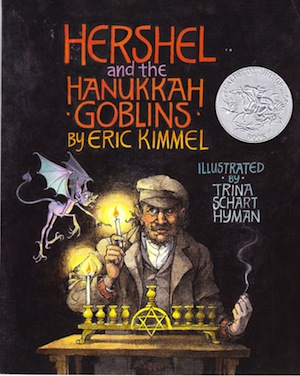
Read about Hershel of Ostropol, who gives a Jewish village the gift of celebrating Chanukah by taking care of some nasty goblins that haunt the synagogue.

Chanukah is all about kids, so if you’re stuck for a gift for the special children in your circle, look no further than Eric Kimmel’s Hershel and the Hanukkah Goblins (Scholastic, 1990, scholastic.com, $3.71 paperback). In this story, Hershel of Ostropol gives a Jewish village the gift of celebrating Chanukah by taking care of a series of nasty goblins that haunt the old synagogue, blow out Chanukah candles, throw potato latkes on the floor and break dreidels.

Illustrated by the careful hand of Trina Shart Hyman, the goblins are mesmerizingly hideous and the story of their defeat is at once scary, defiant, courageous and humorous as they are shown to be cowards, easily fooled by Hershel’s tricks. This book is a must for any Jewish kids’ bookshelf, a text that gets pulled out year after year and captivates kids as young as 3 and as old as 8.

Make it

A great resource for Chanukah crafts for kids is Crafting Jewish by Rivky Koenig (Mesorah Publications, 2008, artscroll.com, $26.99). Featuring a chapter for each of the Jewish holidays, the Chanukah section has seven crafts and two recipes, as well as ideas for a doughnut and ice cream party where everyone makes his/her own dessert combinations. The crafts are varied and include creating a glowing glass menorah, making dreidel-stamped gift wrap, crafting clay dreidel charm jewelry and building a Chanukah tray made from a large picture frame. The activities are beautifully explained, with a list of needed items, an estimated duration for the craft and a picture on the opposite page showing the finished product as inspiration. If there’s a crafty kid in your house, this book will be well used.

Lauren Kramer, an award-winning writer and editor, lives in Richmond, B.C. To read her work online, visit laurenkramer.net.

Format ImagePosted on November 21, 2014November 19, 2014Author Lauren KramerCategories Celebrating the HolidaysTags books, Chanukah, Eric Kimmel, games, gifts, Lights, Maccabee, Rivky Koenig, T-shirts, tablecloths, Trina Shart Hyman, Yekutieli
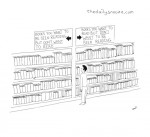
This week’s cartoon … Feb. 28/14

This week’s cartoon … Feb. 28/14

For more cartoons, visit thedailysnooze.com.

Format ImagePosted on February 28, 2014May 2, 2014Author Jacob SamuelCategories The Daily SnoozeTags books, Jacob Samuel, thedailysnooze.com

Posts pagination

Previous page Page 1 … Page 3 Page 4
Proudly powered by WordPress