Skip to content
  • Home
  • Subscribe / donate
  • Events calendar
  • News
    • Local
    • National
    • Israel
    • World
    • עניין בחדשות
      A roundup of news in Canada and further afield, in Hebrew.
  • Opinion
    • From the JI
    • Op-Ed
  • Arts & Culture
    • Performing Arts
    • Music
    • Books
    • Visual Arts
    • TV & Film
  • Life
    • Celebrating the Holidays
    • Travel
    • The Daily Snooze
      Cartoons by Jacob Samuel
    • Mystery Photo
      Help the JI and JMABC fill in the gaps in our archives.
  • Community Links
    • Organizations, Etc.
    • Other News Sources & Blogs
    • Business Directory
  • FAQ
  • JI Chai Celebration
  • JI@88! video

Recent Posts

  • Sharing her testimony
  • Fall fight takes leap forward
  • The balancing of rights
  • Multiple Tony n’ Tina roles
  • Stories of trauma, resilience
  • Celebrate our culture
  • A responsibility to help
  • What wellness means at JCC
  • Together in mourning
  • Downhill after Trump?
  • Birth control even easier now
  • Eco-Sisters mentorship
  • Unexpected discoveries
  • Study’s results hopeful
  • Bad behaviour affects us all
  • Thankful for the police
  • UBC needs a wake-up call
  • Recalling a shining star
  • Sleep well …
  • BGU fosters startup culture
  • Photography and glass
  • Is it the end of an era?
  • Taking life a step at a time
  • Nakba exhibit biased
  • Film festival starts next week
  • Musical with heart and soul
  • Rabbi marks 13 years
  • Keeper of VTT’s history
  • Gala fêtes Infeld’s 20th
  • Building JWest together
  • Challah Mom comes to Vancouver
  • What to do about media bias
  • Education offers hope
  • Remembrance – a moral act
  • What makes us human
  • המלחמות של נתניהו וטראמפ

Archives

Follow @JewishIndie
image - The CJN - Visit Us Banner - 300x600 - 101625

Festival unites sparks of light

Festival unites sparks of light

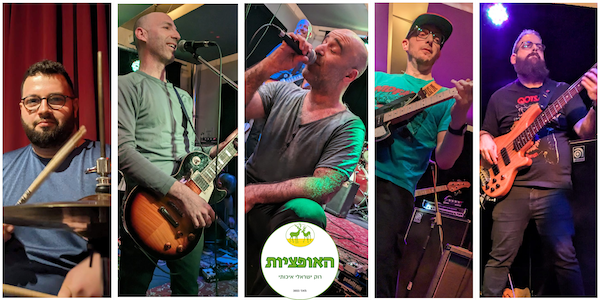
The Options Israeli music cover band closes the Festival of Israeli Culture on May 26. (photo from the JCC)

This year’s Festival of Israeli Culture takes place May 21-26, with the main event at the Jewish Community Centre of Greater Vancouver the afternoon of Lag b’Omer, May 26.

Falling on the 33rd day of the counting of the Omer, between the second night of Passover and Shavuot 49 days later, Lag b’Omer is a celebration amid tragedy. It commemorates the end of a plague that is said to have killed 24,000 of Rabbi Akiva ben Yosef’s students during the Bar Kochba rebellion against the Roman Empire in the second century. Only five students survived, one of whom was Rabbi Shimon bar Yochai, the sage who wrote the Zohar, among other things. Jewish tradition states that, after Rabbi Shimon offered his last kabbalist teaching, he died, on Lag b’Omer, having requested that his death not be mourned. For Rabbi Shimon, death means a soul has taken its place with God.

Among the traditions of Lag b’Omer are bonfires (perhaps in remembrance of fires the Bar Kochba rebels lit to relay messages), weddings, a boy’s first haircut, singing and dancing.

“I felt that it is so sensitive to be celebrating when there is such a complex and sad situation going on in Israel,” Nomi Zysblat, organizer of the annual JCC festival this year, told the Independent. “But, after researching the meaning of Lag b’Omer, I really see it as our community coming together with our individual sparks of light, a way of staying together, of communicating, a collective medura [bonfire or campfire] of strength and warmth.”

This year’s festival will be on the quieter side.

“We thought about this a lot,” said Zysblat. “Is it OK to ‘celebrate’? Is it safe? After many conversations, we decided that we need a gathering, we need to feel safe, we need to remember and we also need to be proud. We aren’t having a huge event, it’s going to be slightly more intimate … more gatherings and community enjoyment rather than huge events, both for the general feeling and also for security reasons. We aren’t flaunting but are also still wanting to enjoy being together.”

On May 21, there will be a dance party, kibbutz-style, at the Anza Club (tickets, $15). The night will be hosted by DJ Guy Hajaj, who will showcase modern and alternative Israeli music.

“He’s had a show for 10 years on Israeli radio and also a popular music blog, among other things,” explained Zysblat. “He DJs at events in Israel throughout the year but has been based in Vancouver for six years.”
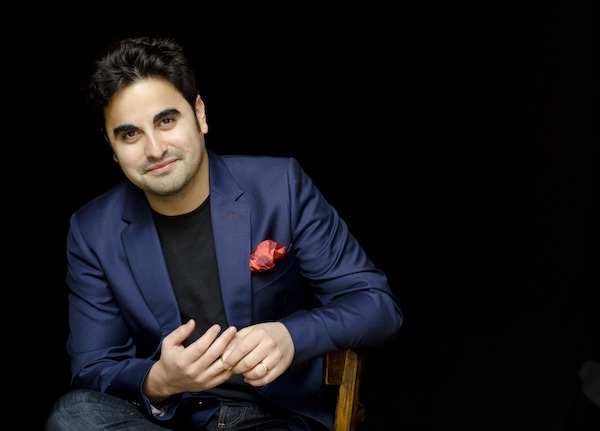
photo - On May 23, Moshe Bonen performs a sing-along-style show with festival organizer Nomi Zysblat
On May 23, Moshe Bonen performs a sing-along-style show with festival organizer Nomi Zysblat. (photo from the JCC)

On the afternoon of May 22, the JCC parking lot will become an arts space where kids/teens can participate in a collaborative mural project led by Zohar Hagbi, a local Israeli artist. And, on the evening of May 23, the JCC atrium will come alive with music in a sing-along-style show led by musician and former Israeli radio broadcaster Moshe Bonen with Zysblat (tickets, $10, include a glass of wine).

“I have a music degree from Berklee College of Music in Boston and used to write and perform my own folk/rock music back in the day,” said Zysblat. “But, my favourite thing in the world to do when I was living in New York was to go up to the Bronx to Moshe’s loft and sing while he played his grand piano. He is an amazing player and accompanist.”

Zysblat’s professional background is both in music management and in the food industry. She started her own company 12 years ago – Paletas, which makes and sells natural popsicles. She got the idea while living in New York, discovering the icy Mexican treat at a grocery store. 

“After she brought the idea to the restaurant where she worked as a cook in Brooklyn and created unique desserts for the restaurant’s menu, she realized that it could be a lot of fun to make them in Israel,” it says on the company’s website. “Naomi went on a trip to Mexico to learn from local paleteros, their method and tradition, and get inspiration for special and different flavours, then came back and opened her small business here in Tel Aviv.”

“I was born in Jerusalem to Canadian-born parents – my dad was from Calgary and my mom is from Vancouver,” Zysblat told the Independent. “We grew up visiting our grandparents and aunts and uncles and cousins every summer in Canada so it’s like a second home to me. I even spent a few sabbatical years my parents took here in Vancouver, and attended school here. I knew this was an experience I wanted for my kids as well and, after Oct. 7, realized there’s no better time to come here. My husband Adi always loved BC because he was a mountain biker and beer brewer, so it was a win-win.”

It’s not surprising then that a nature walk is also part of this year’s festival. On the morning of May 25 at Central Park in Burnaby, there will be a walk led by young community madrichim (leaders). The terrain is suitable for all ages and abilities. There will be songs, stories, snacks.

At the festival’s main event at the JCC on May 26, there will be food trucks (Planted and Meet2Eat), a marketplace (jewelry, glass work, flower arrangements, photography, home decor, Israeli popsicles and jachnun, a Yemenite Jewish pastry), DJ’ed Israeli music, Israeli dance shows (troops from across Metro Vancouver, including Or Atid youth dancers), a drum circle, wine-tasting, arts and crafts, a gaga pit, face-painting, and dance, art and hummus workshops. In the Zack Gallery, the Tikun Olam Community Art Installation is already on display. The day closes with a performance by the Options, a group of local Israelis who cover Israeli rock and other songs. 

For more information, visit jccgv.com/ event/festival-of-israeli-culture. 
Format ImagePosted on May 10, 2024May 8, 2024Author Cynthia RamsayCategories Music, Performing Arts, Visual ArtsTags arts, culture, Festival of Israeli Culture, Israel, JCC, Jewish Community Centre of Greater Vancouver, Lag b'Omer, Nomi Zysblat

Innovators coming fast

The annual Jewish Family Services (JFS) Innovators event has evolved from the traditional luncheon format into an evening cocktail reception. The decision comes as the organization prepares to celebrate the 18th (chai) anniversary of the event, reflecting on nearly two decades of innovative initiatives and community impact.

Naomi Gropper Steiner z”l, Hildy Barnett z”l and Kristina Berman founded the first Innovators and this year’s gathering will reflect on JFS’s journey over the past 18 years. From its Home Support Program and Thriving Seniors to strategic partnerships and poverty alleviation initiatives, JFS remains committed to meeting the changing needs of the community and is dedicated to creating lasting impacts and fostering a more resilient and inclusive society.

Join new Innovators

Chaired by Candice and Todd Thal, this year’s Innovators is set against the backdrop of the Vancouver skyline. Taking place May 28, 6-9 p.m., the event will unfold at the D6 Bar and Lounge, within the JW Marriott Parq Vancouver. The culinary offerings will include kosher options.

The night’s program will spotlight various JFS’s initiatives. Other highlights will include Fund-a-Need, to support JFS’s programs, hosted by Vancouver’s “man about town,” Fred Lee. Master of ceremonies will be actress Christina Chang, who has appeared in several television shows and movies, and is currently playing the role of Dr. Audrey Lim on the ABC show The Good Doctor, which has shot in Vancouver over the past seven years.

Tickets for Innovators 2024 are available through the event’s website: trellis.org/jfsinnovators2024. For more information about the event or JFS, contact 604-637-3306 or [email protected]. 

– Courtesy Jewish Family Services

Posted on May 10, 2024May 8, 2024Author Jewish Family ServicesCategories LocalTags fundraising, Innovators, Jewish Family Services, JFS, tikkun olam
Klezcadia a June highlight

Klezcadia a June highlight

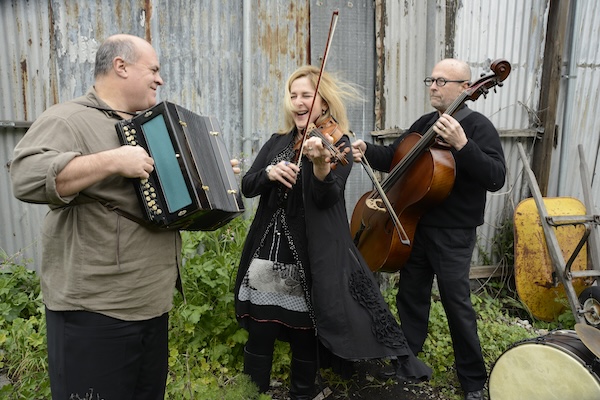
Veretski Pass – Joshua Horowitz, left, Cookie Segelstein and Stuart Brotman – will be joined by clarinetist Joel Rubin to present the world première of music from their new album, Makonovetsky’s Scion. (photo from Klezcadia)

Victoria will host Klezcadia, a hybrid klezmer and Yiddish culture festival showcasing a West Coast lineup of musical mastery and mavenry. Running June 4-9 in-person and online, there is no charge to attend.

According to festival director Laura Rosenberg, Klezcadia intends to position Victoria as a focal point for klezmer and Yiddish cultural tourism. In conjunction with the music, the six-day event will present classes, workshops, lectures, demonstrations and open rehearsals conducted by artists, language faculty and other guests.

“Klezcadia’s audiences can expect cutting-edge performances – including three world premières – by some of the world’s leading klezmer artists. Additionally, participants at any level of experience will have opportunities to attend classes, workshops and presentations by these same artists and their Yiddish-language colleagues,” Rosenberg told the Independent.

“Our guiding principle is to make the safe in-person attendance experience and the virtual attendance experience as equivalent and rich as current technology allows, as well as to give the same level of respect to all attendees,” she said.

Some of the featured artists will be Veretski Pass, a Bay Area trio that will perform with clarinetist Joel Rubin; Vancouver musician Geoff Berner; and Jeanette Lewicki in her new show as Pepi Litman, an early 20th-century Yiddish theatre drag star.

Comprised of Cookie Segelstein (violin), Joshua Horowitz (19th-century button accordion) and Stuart Brotman (bass), Veretski Pass offers a wide mix of East European influences. Reuniting with Rubin, they will present the world première of music from Makonovetsky’s Scion, their new album for the Borscht Beat label. 

Berner, a singer, songwriter, accordionist, novelist and political activist, will stage the première of Second Fleet, the Yiddish song cycle he recently co-wrote with Canadian writer Michael Wex, author of the bestseller Born to Kvetch, a humorous and scholarly look at the Yiddish language.

Lewicki will transmit the spirit of Litman, the original “drag king” of Yiddish theatre, in another première. The Pepi Litman Project will examine the time when a groundbreaking performer literally “wore the pants,” led her own touring troupe, turned taverns into theatres, and tested societal boundaries with her satire. Litman toured Europe and reportedly North America, too, singing, in male garb, at spas, inns and private homes in small towns and large cities alike. 

Some of the talks and workshops on offer at the festival are The Barry Sisters: America’s Yiddish Swingsters, with Andy Muchin, the host of the Sounds Jewish radio show on PRX; Yiddish Through Song Lyrics, with Seattle-based Marianne Tatom, a Yiddish teacher and klezmer musician; and Yiddish Through Conversation, with Sasha Berenstein, a multi-instrument musician and fellow with the Yiddish Book Centre’s Yiddish Pedagogy Program. 

On June 5, Christina Crowder of the Klezmer Institute will speak about the Kiselgof-Makonovetsky Digital Manuscript Project, an international endeavour connecting participants with the work of important klezmer musicians from the late-19th and early-20th centuries.

The festival will take a walk on the vilde side on June 8 with what organizers describe as “musical mash-ups, klezmer-adjacent adventures, song parodies, unusual instruments” and offering the forecast “you never know what will pop up in this clearing in the klezmer/Yiddish jungle.” The evening will feature Seattle neo-vaudevillian Mai Li Pittard, as well as local klezmer bands Kvells Angels and the Klezbians. A new klezmer ensemble, Kvells Angels, gave a concert last fall at the University of Victoria in which they performed works previously unavailable to musicians. The Klezbians, meanwhile, are a well-known band of “chutzpah-licious” musicians, and the group goes back many a year.

Victoria’s Congregation Emanu-El, under whose auspices Klezcadia is being produced, will host the finale concert at the Cameron Bandshell, located in Beacon Hill Park. The closing concert will be a gift to the city in celebration of the congregation’s 160th anniversary. 

Festival organizers have made a concentrated effort to ensure that all participants enjoy a safe experience. The hybrid environment, they stress, will prioritize the well-being of immunocompromised and high-risk participants, for both those onstage and in the audience. Indoor activities will include protective protocols, such as supplemental air purification, required masking and daily onsite COVID testing. 

“Klezcadia was inspired by deep listening to an online meeting of immunocompromised and high-risk musicians and Yiddish-language enthusiasts in early 2023,” Rosenberg said. “During the first two years of the pandemic, they had finally felt included in the klezmer/Yiddish community, since everyone’s only option was to gather online.”

The same groups felt marginalized again when most festivals returned to unmasked, in-person formats. Through dialogue with these groups, Rosenberg realized, Victoria had a chance “to become a host community for an inclusive form of cultural tourism.”

Rosenberg said her 45-year arts administration career came in handy when building a music festival from the ground up; she had already done so with two other festivals. It has been a year’s worth of full-time work to plan the format, bring in the artists and teachers, scout venues, initiate community engagement and, importantly, raise the money.

Locals seem eager for the festival to start. “I am optimistic based on expressions of pride I have heard from Victoria residents, on how quickly Klezcadia’s in-person registration reached capacity and on the eagerness of local tourism-sector businesses to be included in our visitors’ guide,” Rosenberg said.

People from more than a dozen countries have signed up to view events streamed online.

For more information, visit klezcadia.org. 

Sam Margolis has written for the Globe and Mail, the National Post, UPI and MSNBC.

Format ImagePosted on May 10, 2024May 22, 2024Author Sam MargolisCategories Music, Performing ArtsTags Congregation Emanu-El, culture, health, Klezcadia, klezmer, Laura Rosenberg, Victoria, Yiddish
Reflections on April mission

Reflections on April mission

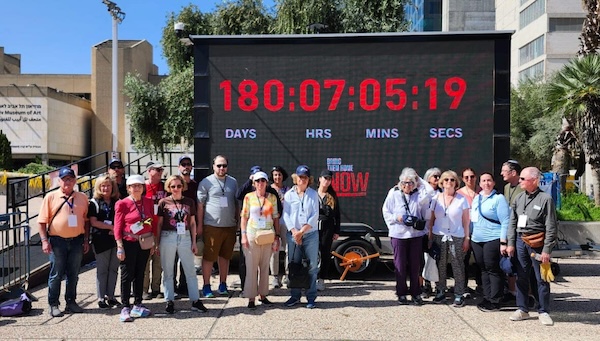
JNF Canada, Har El and Beth Israel mission participants in Hostages Square in Tel Aviv. (photo from Lorraine Katzin)

About 20 volunteers – from Vancouver, Edmonton and Toronto – went on the JNF Canada Bearing Witness Mission to Israel April 1-8. Organized by Jewish National Fund Canada, Congregation Har El and Congregation Beth Israel, the trip was led by BI’s Rabbi David Bluman and JNF Edmonton executive director Jay Cairns. On his Facebook page, Cairns thanks JNF Pacific executive director Michael Sachs, BI Senior Rabbi Jonathan Infeld and Bluman “for spearheading this important mission.” Among the volunteers were Har El members Lorraine Katzin and Karen Shalansky, who shared some of what they experienced with the Jewish Independent.

Some first impressions
(Lorraine Katzin)

Stepping onto the El Al plane from Los Angeles to Tel Aviv reminded me of the olden days of flying – a blanket, pillow, headphones and a bag with a toothbrush, toothpaste and eye mask. Two meals were served and, during the flight, you could help yourself to snacks, sandwiches and drinks.

Walking through Ben Gurion International Airport, you see photos of the hostages still in captivity. When we went through the foreign passport area, it was chilling – we were literally the only people passing through passport control. There were no tourists. Our hotel was quiet as well.

Walking on the promenade in Tel Aviv to Jaffa on our arrival, it felt as if there were no war – people were out on the beach, swimming, playing beach bats, foot volleyball, and jogging.

Tuesday, April 2, was our first full day of touring. We started at Kibbutz Kissufim in the south. We heard stories of the murders and saw the devastation made by the Hamas terrorists. One of the stories that haunts me is that of the chief fireman whose only child, his daughter, and her husband were shot to death in their safe house, then their home was burnt down. Searchers only knew by finding a nose ring and bracelet in the ashes that the bodies had been burnt. 

We were very close to Gaza and could hear artillery every now and again, which was scary. At the site of the Nova music festival, there was a memorial of photographs: 364 people were killed there by Hamas, 44 hostages were taken.

On Wednesday, we toured Adi Negev-Nahalat Eran, which is a village for children with disabilities, which JNF supports. Karen and I volunteered at the therapeutic farm, cleaning the goat pen and washing the tortoises. That day we were also taken to the car cemetery, where you see two burnt ambulances, as well as burnt and bullet-holed cars numbering more than 1,000. In Sderot, we saw where the police station used to be – the building was taken over by Hamas terrorists and then an Israeli tank destroyed the building, killing the terrorists inside.

photo - A burnt-out Magen David Adom ambulance in the car cemetery near the Gazan border, where burnt and bullet-holed vehicles numbering more than 1,000 are being kept for further investigation
A burnt-out Magen David Adom ambulance in the car cemetery near the Gazan border, where burnt and bullet-holed vehicles numbering more than 1,000 are being kept for further investigation. (photo from Lorraine Katzin)

The first few days of the mission, I found it difficult to sleep, the images and stories kept going through my head.

On Thursday, we picked lemons and went to Rachashei Lev Israel Children Cancer Centre, another JNF project. We also visited Hostages Square.

Friday included a visit to Western Canada House, a No2Violence shelter for women and children fleeing domestic violence, the building of which was funded by JNF Canada supporters in Vancouver and Winnipeg. [For more on Western Canada House, see jewishindependent.ca/a-new-refuge-from-violence.] We also went to the ANU Museum of the Jewish People, which had on display models of different shuls in Europe and the United States, a replica of the Codex Sassoon and an Oct. 7 exhibit. After stopping at the Carmel Market, we went back to Hostages Square for Kabbalat Shabbat, which was very moving.

Saturday, we went to the beach in the morning and walked around Tel Aviv in the afternoon. That night, we had a survivor come speak to us and it happened to be Shalev Biton, who had come to speak at Har El and elsewhere in Vancouver a few weeks prior. Amazingly, he remembered me!

On another night, we heard from Jacqui and Yaron Vital, parents of Adi Vital-Kaploun, who was murdered on Oct. 7. Jacqui, who is a Canadian, was in Ottawa visiting family when the Oct. 7 Hamas terror attacks happened. Adi, her husband and two children lived on Kibbutz Holit in the south and Yaron had come to visit; he was put up in a room in a vacant house opposite his daughter’s. Adi texted her husband, who had gone on a hike, warning him not to return home. Adi was killed, and her two children and a neighbour were kidnapped but let go at the Gaza border, by some miracle. Yaron survived, as the terrorists had determined which homes had how many people and who had dogs, which were shot first, but the room Yaron was in was usually vacant, so went unchecked by the terrorists.

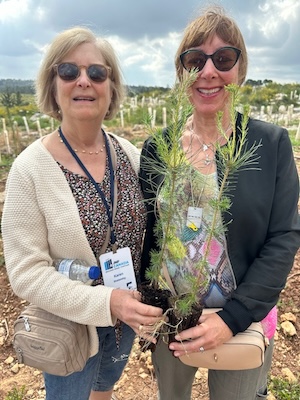
photo - Karen Shalansky, left, and Lorraine Katzin tree planting
Karen Shalansky, left, and Lorraine Katzin tree planting. (photo from Lorraine Katzin)

On Sunday, April 7, we went JNF tree planting. We visited the Black Arrow Memorial, where, from the lookout, you can see Gaza. There, we were given a briefing by retired colonel Kobi Marom, whose opinion was that the Palestinian Authority should be enlisted to run Gaza. We then traveled to the Israel Defence Forces base at Nahal Oz for lunch with the soldiers – these 19-, 20- and 21-year-olds going into Gaza are truly amazing! The soldier I sat with, his name was Daniel and he was from Eritrea. We were so close to Gaza that we could see convoys of food trucks going through the Rafah Border Crossing.

Monday, our last day, we went to Jerusalem to two places that JNF supports: the Jerusalem Hills Therapeutic Centres, which provides services for at-risk children, and the Glassman PTSD and health centre at Herzog Hospital. We then visited the market and went for a walk down Ben Yehuda Street, the Kotel and the tunnels, and had dinner at Piccolino restaurant before heading to the airport. We were joined by Jewish Federation of Greater Vancouver executive director Ezra Shanken and Rabbi Jonathan Infeld from Congregation Beth Israel.

Israel trip highlights
(Karen Shalansky)

I went to Israel to show my support in its time of need, as well as to hear the views of Israelis and their feelings toward the war. Through our many experiences, I felt I accomplished my mission.

Listening to the diverse perspectives of our guide, the young soldiers and guards on our bus, my 31-year-old cousin who made aliyah right after high school and is now fighting in the reserves, Lorraine’s Israeli friends, a retired colonel and others, I heard varying opinions on many topics. For example, should Israel invade Rafah, should there be a ceasefire, should the release of the Israeli hostages be the No. 1 priority, should there be an election, who should oversee Gaza after the war? While there was always more than one answer to every question, there were consistent feelings among everyone we met of resilience, strength and perseverance – that this war is another of many, and that Israel will carry on. As well, everyone we met was both amazed that we came during war and so happy that we had made the effort. That happiness alone made Lorraine and I feel that this trip was worthwhile. 

Some highlights of the trip for me were:

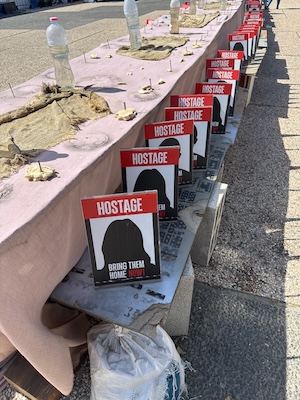
1) Visiting Hostages Square in Tel Aviv for Kabbalat Shabbat. This is a square that has Shabbat tables set up for both the released hostages (with blue tablecloth and wine glasses) and for the hostages still being held (with dirty water and stale pita). There was a wonderful band playing, with a singer, and, at one point, there was a chance for people to stand up and say something. Lorraine was our spokesperson and announced that we were on a trip from Canada to support Israel. Several Israelis came up to us afterwards to shake our hands and welcome us. When the band sang Lecha Dodi, a few people got up to dance the hora, including Lorraine and me. 

photo - In Hostages Square, there are two tables set up: one for the hostages who have been released (left) and one for those still being held in Gaza (right)
photos - In Hostages Square, there are two tables set up: one for the hostages who have been released (left) and one for those still being held in Gaza (right)
In Hostages Square, there are two tables set up: one for the hostages who have been released (left) and one for those still being held in Gaza (right). (photos from Lorraine Katzin)

2) Visit to Shlomit settlement in the southern Negev. This was a religious settlement that JNF helped build. As an aside, JNF has been very active in rebuilding bomb shelters and kibbutzim that were destroyed on Oct 7. At Shlomit, we heard from Dana, a mother of six children, about how her husband and four other men went to a neighbouring kibbutz to fight the terrorists. While the men were successful in killing all five terrorists, her husband, unfortunately, was shot dead. Dana said she wanted her children to remember her husband as a hero, and to foster a sense of hope, not hate. In this inspirational talk, she kept emphasizing that we can’t live with hate, only with love and hope. 

3) A talk from a trauma psychologist at the Glassman centre. While post-traumatic stress has risen substantially in Israel, this psychologist told us a story of an army unit that recently returned from a three-month stint in Gaza. Prior to going home, the unit visited one of the soldier’s grandmothers, who was a Holocaust survivor. The attacks by Hamas on southern Israel have been equated to a second holocaust, but, upon asking the grandmother’s views, she said “no,” the attacks were nothing like the Holocaust. We have a country and a people that will fight for us now, whereas in 1940 we had nobody, she said. She concluded: we are never alone again, as long as there is an Israel. 

Format ImagePosted on May 10, 2024May 8, 2024Author Lorraine Katzin and Karen ShalanskyCategories IsraelTags Beth Israel, Har El, Israel, JNF Canada, JNF Pacific, kibbutzim, mission, Oct. 7, terrorism

Expectations for behaviour

Our neighbourhood has narrow sidewalks lined by hedges. When my dog and I take our daily walks, we step to the side at a driveway or front walk so that another pedestrian can pass. My dog sits patiently, sometimes even when I don’t prompt her. Over the years, through the lives of several dogs, we (the dogs and I) have received compliments because of how well behaved the dogs are. I say thank you. The next question is, “How did you do it? I can’t get my dog to do that!” My response is always the same. We’ve been taking these walks every day for years. We practise! Usually, the passerby shakes their head, as if I am just not letting on my secret – but I have. Consistency is everything in reinforcing behaviour.

In the Babylonian Talmud, Tractate Bava Metzia 60a, the rabbis discuss sales practices. While Rabbi Yehudah disagrees, the rabbis conclude that a shopkeeper is allowed to offer children toasted grains and nuts for free. By doing so, he accustoms the children to see him for their shopping, rather than going to other shopkeepers. Also, the rabbis suggest, it is OK to offer things for sale at a “below market” price, that is, on sale, in order to attract customers. These are, in effect, ancient – and approved – business marketing guidelines that reinforce desired behaviours. In this text, there are also suggestions for what is not acceptable and why.

Festive holiday meals sometimes give us time to think about what’s acceptable in our homes, too. One invites friends and family over, or goes to other homes, and that’s when you can see all sorts of different families, with different guidelines about what’s acceptable. I find myself observing all this with interest. This is one way we learn about other ways of doing things. It’s also a chance to reevaluate how we run our homes. What could we do better? What isn’t acceptable in one home may be fair game in another.

As an adult, I observe all this but my children, just like those attracted by toasted nuts in Bava Metzia, react fast when they see things that are tempting or considered “out of bounds.” For instance, my kids love additional opportunities to eat treats. However, kids also notice when things go awry.

More than once, we’ve had a young holiday guest have a colossal meltdown. We all know that kids can lose it, especially during atypical situations, in others’ houses, later in the evening, etc. However, my kids feel strongly about times when the kid (or family) shows disrespect to us. After all, it’s our house. Having a child fall apart due to exhaustion or overstimulation happens. Having a kid yell at us is different, and my kids are rightfully upset when another child snaps or is rude when I express concern or want to keep them from getting hurt. My family pointed out that I, as a grown-up, am responsible for everybody’s safety in my house – of course, I have to say something when a situation looks dangerous. 

Earlier this year, our household was unsettled not only due to an extended outburst, but because no one apologized for it. Some parents apparently think that we, as holiday meal hosts, should tolerate and absorb a tantrum. For days afterwards, I fielded my kids’ comments as I stung with frustration. We spend many hours cleaning, setting the table and making multi-course celebratory meals. We take great care. Why go to all this effort for guests who don’t model basic respect for their kids in another person’s home?

By comparison, another set of family friends stayed over during a holiday. They were having breakfast in our kitchen with my kids when I came into the room. Their teenager had raspberries topping each finger (something I don’t allow my kids to do) but also, hadn’t washed their fruit. I rushed to wash the fruit, while the teenager said she was “immune” to whatever was on it. Her mom immediately jumped in. This mom insisted the teenager thank me for washing the fruit and correcting the possibly unsafe situation.

In this interaction, my kids saw the parent modeling an expected behaviour. They looked relieved. Those daily dog walks, often with kids, offer plenty of time to reflect on what we see. My twins, at the cusp of teenagerhood, now have firm ideas of how boundaries work, what respect and kindness mean, even in difficult situations. They know when parents correct things or when things go off the rails.

Watching the student encampments unfold at universities has been a chance to review those boundaries. When is it OK to protest? Why? It’s important to learn how one’s behaviours affect others and how they have lifelong ramifications. We’re seeing these issues play out in real time. 

In our house, we’ve discovered new growth. Reinforcing consistent upright, respectful and kind interactions is annoying sometimes. Saying “careful!” every day because I worry about someone’s safety can be a drag. Yet, just like the dog sitting at the street corner, my household has reinforced certain behaviours. We say thank you when someone works hard to take care of us. We worry about others’ safety. We apologize when things go wrong.

Recognizing how we should behave with others is a crucial part of living in a functional community. Watching the university encampments from afar and their conflicting messages of hate towards the Jewish community and Israel makes me worry about how we will proceed in the future. The media coverage of these protests makes me question what the protesters’ parents modeled. What are these parents thinking now? The chants by some of the students make me wonder if their version of community considers Jews or Israelis eligible for membership.

I’m heartened to see when my hard work pays off as a parent, holiday meal host or dog owner. Yet, I’m worried about what it means when our boundaries or expectations aren’t respected, too. Being yelled at in my own home at a holiday meal wasn’t a good harbinger of the future. Our tradition sets some expectations for behaviour in the marketplace and at home. Even as we interpret these traditions differently, how we consistently model behaviour will determine our children’s and our society’s future. Consistently reminding one another of how to behave as responsible community members may result in a better, safer future for all of us. 

Joanne Seiff has written regularly for the Winnipeg Free Press and various Jewish publications. She is the author of three books, including From the Outside In: Jewish Post Columns 2015-2016, a collection of essays available for digital download or as a paperback from Amazon. Check her out on Instagram @yrnspinner or at joanneseiff.blogspot.com.

Posted on May 10, 2024May 8, 2024Author Joanne SeiffCategories Op-EdTags Judaism, lifestyle, respect, Talmud

Brosectomies a new trend

It’s not the stag party many young men might think of, but coming together with buddies to get vasectomies is a new trend Vancouver’s Dr. Neil Pollock thinks is a good thing.

In a Global News segment recently, four high school pals from Maple Ridge had lunch then headed into Pollock’s office for four vasectomy procedures. The lighthearted approach to the minor surgery with big implications is part of a phenomenon in which men are taking responsibility for family planning, said Pollock.

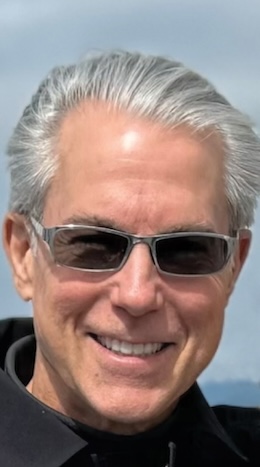
photo - Dr. Neil Pollock
Dr. Neil Pollock (photo from Pollock Clinics)

“The brosectomy is a larger trend that’s been increasing in popularity over the last few years,” he said. “We did not coin the term. We noticed an increasing amount of people reaching out to book group appointments with their friends, and our team loved the idea. We wanted to support the group by making the appointment fun, comfortable and memorable.”

Any surgery is stress-inducing and men may be squeamish about this one in particular, even though it is quick, painless and easy.

“The brosectomy transforms a potentially anxious appointment into something fun,” said Pollock, who is a familiar face in the Jewish community. “It is understandable for a guy to feel anxious about getting a vasectomy. In addition to concerns about pain and recovery, many men are influenced by stigmas surrounding men’s sexual and reproductive health. Some worry that a vasectomy will strip them of their manhood, or affect their performance in the bedroom, neither of which are accurate, of course.”

A brosectomy turns it into an adventure.

“Friends can support each other leading up to the procedure, and during the recovery period afterwards,” he said. “It creates a positive, safe environment for men to discuss their sexual and reproductive health.”

In contrast with other forms of birth control, a vasectomy makes a lot of sense, Pollock argues.

“A vasectomy offers males the opportunity to demonstrate care and concern for their partner’s best interests by accepting the responsibility of birth control in the relationship,” he said. “We consider a vasectomy the ultimate form of birth control. It is safe, effective and, when performed by experienced physicians, can be done in under five minutes, with extremely high success rates.”

Vasectomy techniques have advanced significantly in recent years, said Pollock, and the minimally invasive technique his office uses features no needles, scalpels, cautery or metal clips. They are much simpler than a parallel birth control operation for women.

“When compared to a vasectomy, tubal ligations are much more invasive and pose a higher risk for serious complications,” Pollock said. “Birth control pills, on the other hand, are a temporary solution and affect hormonal balance, with many users experiencing nausea, headaches, cramps, weight gain and challenges with their menstrual cycle and libido. On top of physical and sexual complications, hormonal changes can also result in emotional instability or mood swings.”

In a brosectomy, the friends arrive together but the vasectomies take place separately.

“The procedures take place back to back, not in one room,” Pollock clarified. “We haven’t gotten that request yet!”

With each procedure taking only a few minutes, the group of four were in and out of Pollock’s clinic in less than an hour.

“We sent them for lunch beforehand, gave them their custom muscle shirts with their faces and ‘Brosectomy 2024’ splashed boldly over front and back, and then performed the procedures,” said Pollock. “Afterwards, the group headed home to begin their recovery. They celebrated with a barbecue steak dinner and a scotch.”

“I didn’t really want to do it alone,” said the ringleader of the foursome who, as Global News put it, took “a trip for the snip.”

Anxieties are natural, Pollock said, and talking with professionals is key to addressing them.

“If you’re worried about getting a vasectomy, or your sexual health in general, we encourage you to talk with people you trust,” he said. “Discussing and addressing your sexual health is important. Pollock Clinics is always here to help.” 

Posted on May 10, 2024May 8, 2024Author Pat JohnsonCategories LocalTags family planning, Men's Health, Neil Pollock, reproductive health, sexual health, vasectomy
Food fosters connection

Food fosters connection

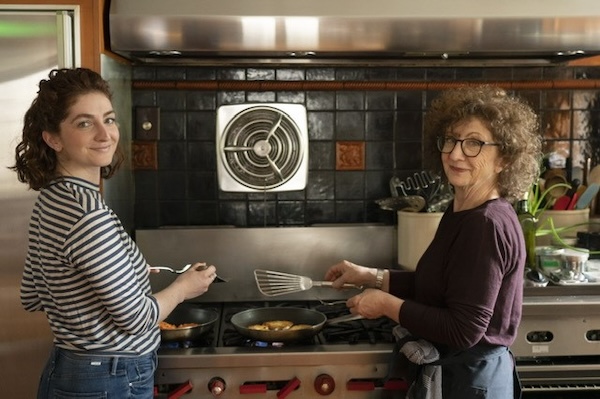
The mother-daughter duo of Bonnie Stern, right, and Anna Rupert brought this year’s L’dor V’dor lecture series to a flavourful conclusion last month. (photo from Bonnie Stern)

The mother-daughter cooking duo of Bonnie Stern and Anna Rupert brought the 2023-24 L’dor V’dor (From Generation to Generation) lecture series, hosted by Victoria’s Kolot Mayim Reform Temple, to a flavourful conclusion last month.

Emceed by former CBC television personality Anne Petrie, the hour-long presentation, Don’t Worry Just Cook: A Delicious Dialogue on Intergenerational Jewish Cuisine, shared their family’s culinary path, from Stern’s start as a chef to Rupert’s early childhood kitchen experiences as a 3-year-old making pies with her brother, through to the present.

“I always wanted my kids to feel comfortable in the kitchen and to want to be there, to help out or do whatever they wanted to do,” said Stern in a talk that explored the deeply tied relationship of Jewish food to culture and family.

“My mom would give us jobs in the kitchen when we were little,” said Rupert. “There was always a job for us if we wanted to participate, such as painting cookies, filling cookies or grating potatoes.”

In Stern’s view, cooking is a life skill – a person isn’t obligated to pursue a career in the culinary arts, but it is important for a person to know about food and to be able to cook. She added that her kids were fussy eaters, so the idea was, if they participated in the kitchen, they would eat what they made.

“Food without a story is just calories,” said Stern. And there were plenty of gastronomic tidbits to be told, often relating to the evolution of how variations on cooking are incorporated into family recipes.

For example, Stern’s mother had a technique for browning brisket at the end of the cooking process, rather than the beginning. And, at the current family dining table, as recognition of dietary intolerances became more widespread, there is a greater need to know how to prepare such items as gluten-free bread for a meal. Another way in which their family dinners have evolved is the move towards a contemporary buffet – guests are invited to move around and interact, creating even greater connections and more interaction than meals shared together in other ways.

More broadly, Stern explained how cuisine within a family alters when people move to another place. “It’s almost impossible to reproduce something the same way it was somewhere else. You don’t have the same equipment, the same ingredients or the same recipe. In the end, things change a little bit,” she said.

The topic of the diversity of Jewish cuisine arose. Both Stern and Rupert accentuated the myriad different dishes Jews have served up that go well beyond traditional Ashkenazi notions of matzah ball soup, blintzes and apple cake. Nowhere is that more true, they say, than in Israel, where cuisines from Jews around the world have converged in a land that has produced many talented and inventive chefs unafraid to take risks.

Some of the variations on traditional Jewish themes (mentioned in the talk and also found in their cookbook) were to do with Hanukkah dishes, specifically latkes served with guacamole and Middle Eastern sweet potato latkes, which may include hot sauce, cilantro and cumin.

Stern has studied and taught cooking around the world, written 12 cookbooks, hosted three nationally broadcast food shows and is a frequent television and radio guest around the country. She is also the founder of the eponymous Bonnie Stern School of Cooking in Toronto. Rupert, in her professional life, is a speech pathologist and researcher. 

Together, Stern and Rupert wrote Don’t Worry, Just Cook: Delicious Timeless Recipes for Comfort and Connection. With a foreword by Israeli-born chef Yotam Ottolenghi, the book goes beyond simply writing down recipes, to telling stories, giving lessons and sharing tips to improve readers’ skills and experiences in the kitchen. Rupert said she used to dream that the two would have a cooking show together. The publication of the book, in its own way, brought that desire to fruition.

Rupert credits the success of the book to her mother, whose vast amount of expertise as a cooking teacher allows her to anticipate questions a reader might have when following a recipe and offer productive advice and workarounds for potential hazards.

“Food has a unique way of connecting us to our roots and bringing generations together. We are excited to share our passion for Jewish cuisine and the joy it brings to families,” Stern said.

“Food and cooking are ways to find comfort, and definitely ways to connect with other people,” added Rupert. 

Sam Margolis has written for the Globe and Mail, the National Post, UPI and MSNBC.

Format ImagePosted on May 10, 2024May 8, 2024Author Sam MargolisCategories LocalTags Anna Rupert, baking, Bonnie Stern, cooking, Kolot Mayim

Ways to tackle anxiety

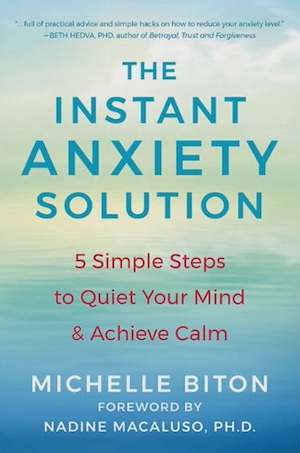
“Our thoughts are influenced by our core belief system. Our opinions are shaped from things we have seen and heard in the past and those opinions affect what we see. The problem is our thoughts are not always necessarily true,” writes Michelle Biton in her new book, The Instant Anxiety Solution (Hatherleigh Press).

“Our own thoughts and beliefs often cause us more anxiety than the actual emotion itself,” she writes. “And sometimes our beliefs are faulty or inaccurate. In order to get to the facts, it’s important to question your thoughts and not always believe everything you think.”

But this is jumping ahead to Step 5 of Biton’s five-step program ALARM, which starts with ways in which we can get our bodies “out of ‘the acute stress’ stage and into a calmer state so you can think properly” (activating the parasympathetic nervous system). It moves to labeling what you’re feeling, then acknowledging that emotions are temporary. Step 4 is about how to remember to avoid building narratives around your thoughts and emotions, and Step 5 is how to move forward and take action.

image - The Instant Anxiety Solution book coverOriginally from Vancouver, Biton is a Los Angeles-based coach, author and health educator. She has a master’s in holistic nutrition, a bachelor’s in psychology and a certificate in kinesiology, health and fitness studies. Her reasons for writing The Instant Anxiety Solution are personal.

“I had been trying to deal with anxiety as if it was logical, but anxiety is not logical. It’s primal and cannot be rationalized. My best friend helped me realize that, in order to manage mine and my daughter’s anxiety, we were going to have to look it in the eye and go through the discomfort of it,” writes Biton. “Going through the anxiety was the only way out of the vicious cycle.”

Biton’s own experiences with anxiety inform her approach. “You are re-learning ingrained patterns and behaviours that will take time to unlearn,” she acknowledges, “so be easy on yourself and give yourself time to go through the process.”

The Instant Anxiety Solution comprises a foreword by marriage and family therapist Nadine Macaluso; an introduction in which Biton lays out some of her reasons for writing the book; an overview of what anxiety is and its effects; a chapter for each of the ALARM steps; a brief conclusion; many exercises readers can do to learn how to better manage anxiety; and 20-plus blank pages for the purposes of journaling.

There are many causes of anxiety, including biological makeup, learned behaviour, lack of sleep, trauma, not eating properly, financial difficulties.

“When we get triggered by an event, our amygdala gets activated, causing the impulsive fight or flight response, and the prefrontal cortex, the logical thinking part of the brain, shuts off,” writes Biton. Our bodies focus on one thing: survival. The sympathetic nervous system is activated, “causing your heart rate, breathing and blood pressure to rise dramatically…. You’ll likely even feel shaky and nauseous.

“Many people make the mistake of trying to problem solve when anxiety hits, but it is absolutely impossible to do,” she writes. We can’t think until we have calmed down, and Biton offers many ways to shock the body out of its anxious state, such as splashing cold water on our face or putting a cold pack on the back of our neck; intense exercise, like a sprint to the end of the block or some push ups; and humming or singing.

There are ways a person can semi-instantly calm themselves, but the crux of tackling anxiety is self-awareness and, for that, there is no quick fix. Biton offers advice on how to identify and deal with feelings, but a main takeaway is to train ourselves to not act in those first moments. Apparently, an emotion lasts seven minutes max, then runs out of steam. It’s “the additional energy that is added in the form of our ‘extra’ thoughts and emotions that we ‘attach’ to the original emotion that keeps the feeling alive and the suffering occurring,” writes Biton.

“Do not act on impulse,” she warns, “you will only regret it afterwards.” But don’t numb yourself either. If you feel like crying, cry. Notice and acknowledge your emotions without judgment. When you’re calm, you can figure out what is really going on, consider both sides of the situation – what happened or was said and your reaction. 

We all have pain, she notes: “It is how we ‘react’ to the pain that determines our ‘suffering.’” Suffering, she says, is a sign that you’re not accepting the here and now. Some clues that you might be fighting against reality are that you’re feeling bitter or resentful, or you’re regularly unhappy or frustrated.

“A major reason that many of us suffer from anxiety today is because we have ‘felt unheard’ or ‘dismissed’ in our lives,” she writes. “We were told that we ‘weren’t good enough’ or that we ‘shouldn’t feel a certain way.’ This negative environment taught us not to trust ourselves, and not to trust our emotions. As a result, we have a lot of self-doubt and anxiety.

“On top of that, many of us project fears from the past into the future. Very rarely do we go into a situation without the ‘baggage’ and ‘opinions’ that we have carried from past experiences.”

Biton believes it possible to “become unstuck from the past.” The advice and exercises in The Instant Anxiety Solution may not result in instant results, but they do offer tangible steps to a solution. 

For more information, visit michellebiton.com.

Posted on May 10, 2024May 10, 2024Author Cynthia RamsayCategories BooksTags anxiety, health, mental health, Michelle Biton

טרודו עלול להפסיד את הבחירות הבאות

קנדה נחשבת אחת המדינות הטובות בעולם, מכל בחינה. היא מדורגת בצמרת מדד הפיתוח האנושי של האו”ם, יש בה מערכת בריאות מעולה ובחינם, תוחלת חיים גבוהה במיוחד, מדיניות רווחה נדיבה, פערים כלכליים קטנים יחסית למערב, כלכלה עשירה ומתקדמת, היא לא סובלת מעימותים ביטחוניים או איומי טרור, ורוב אזרחיה, רוב הזמן, יכולים ליהנות מחיים טובים ושלווים

אם זאת סקר שנערך לאחרונה בקרב הקנדים מצביע על חוסר שביעות בולט של הקנדים מארצם. 67% מהנשאלים הסכימו עם האמירה כי “הכל מרגיש מקולקל במדינה כרגע”. הסיבה המרכזית היא השיטה הכלכלית: הזינוק ביוקר המחיה ובשיעור האינפלציה הם הגורמים שמשפיעים ביותר עליהם ועל משפחתם. הרבה קנדים סבורים שהממשלה לא יכולה לשפר את המצב, כשכל משיב שני אמר כי הוא זועם על הדרך בה המדינה מנוהלת. אלה לא התוצאות שלהן קיווה ראש ממשלת קנדה, ג’סטין טרודו, כשנבחר מחדש בספטמבר 2021 לארבע שנים נוספות

כשנבחר לראשונה ב־2015, בגיל 44 בלבד, כפרזנטור פוטוגני של דור מנהיגים ליברלי חדש, לצד דמויות כמו עמנואל מקרון בצרפת, ג’סיקה ארדרן בניו זילנד וסאנה מרין בפינלנד, הבטיח טרודו להקטין את הפערים באמצעות רפורמות כלכליות שיפחיתו את יוקר המחיה, יקטינו את פער השכר המגדרי, ויקלו על הנטל של מעמד הביניים. “הדעיכה של מעמד הביניים הקנדי לא צריכה להיות מוסברת למי שחיים אותה מדי יום”, אמר אז, ובצדק, כשתקף את שלטון השמרנים ארוך השנים

אולם מאז כניסתו ללשכת ראש הממשלה המשיכו הפערים לגדול, יוקר המחיה זינק, ומעמד הביניים המשיך להישחק. אלה הן מגמות שאיפיינו את רוב המדינות במערב בעשור האחרון, אבל את הקנדים זה פחות מעניין: הם קיבלו ראש ממשלה חדש, מלהיב ומבטיח, והם חיים במדינה עשירה שדומה יותר למודל הסקנדינבי היציב מאשר למודל האמריקאי הכאוטי

טרודו וממשלתו אמנם הצליחו להביא הישגים כמו תוכנית לאומית לתמיכה בילדים, שחילצה מעוני כמיליון ילדים קנדים מאז 2015, לפי נתוני הממשלה, אולם כשל מלהעניק להוריהם שקט כלכלי

49% מהעובדים סבורים כי מצבם הכלכלי נעשה “הרבה יותר גרוע” בשנים האחרונות, לעומת 28% שחשבו כך ב־2019, לפי מחקר מתמשך שעורך אתר הניתוחים “השיחה” בשיתוף אוניברסיטת טורונטו וחברת המחקר אנגוס ריד. זה מתחיל להזכיר יותר את המודל של השכנה האמריקאית מדרום, מעוז הפערים הכלכליים, מאשר את המודל הקנדי, שנשען על יסודות סוציאל־דמוקרטיים

במהלך 2022 טיפס אי השוויון בקנדה לשיא כל הזמנים ופער ההכנסה הפנויה של משקי הבית עלה ל־47%, לפי נתוני לשכת הסטטיסטיקה המרכזית במדינה. חישוב הפער נעשה בהשוואה בין 40% העליונים לעומת 40% התחתונים בעשירוני ההכנסות. הפער הממוצע של 47% הוא הגבוה ביותר שנרשם מאז החלו המדידות. המגמה המשיכה להחריף ובתחילת 2023 נרשם קצב הגידול המהיר ביותר בפערי ההכנסות, הנובע בעיקר משילוב של אינפלציה גבוהה, שהגיעה ל־3.5% בנתוני ינואר, וזינוק בערך נכסי הנדל”ן, שמשפיע במיוחד על מעמד הביניים ומטה

מחירי הדיור בקנדה גובים בעשור האחרון מחיר יקר במיוחד ממשקי בית, בדגש על משפחות צעירות שמנסות לרכוש את ביתן הראשון: המחירים טיפסו ביותר מ־50% מאז נכנס טרודו לתפקיד ב־2015. זה הרבה יותר מאשר במדינות כמו ארצות הברית ובריטניה, שגם בהן זינקו המחירים

השחיקה בהכנסה הפנויה של הקנדים והמשך הגידול בפערים יוצרים חוסר אמון בשיטה. שיעור הקנדים שסבורים שהמדינה שלהם משתנה מכלכלה של מעמד ביניים לכלכה של אליטה קטנה בראש ושאר האנשים בתחתית זינק תוך ארבע שנים מ־29% ל־41% כיום, גם זה מזכיר יותר את המודל האמריקאי המושמץ

Posted on May 8, 2024April 29, 2024Author Roni RachmaniCategories עניין בחדשותTags cost of living, dissatisfaction, economy, housing prices, income gap, inflation rate, Justin Trudeau, national child support program, ג'סטין טרודו, חוסר שביעות, יוקר המחיה, כלכלה, מחירי הדיור, פער הכנסה פנויה, שיעור אינפלציה, תוכנית לאומית לתמיכה בילדים
Heroic survival at kibbutz

Heroic survival at kibbutz

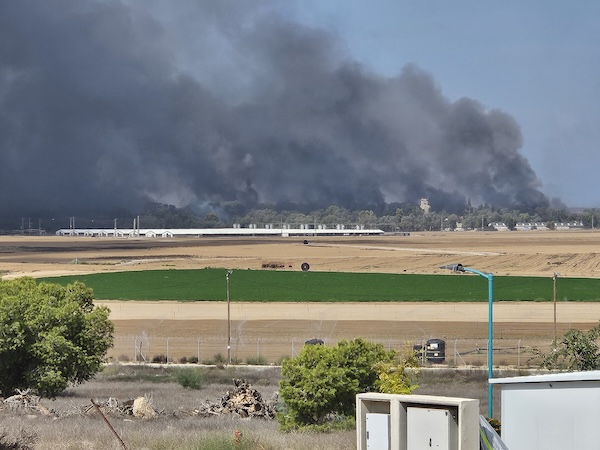
A photo Dekel Agami took Oct. 7, 2023, of Kibbutz Nir Oz in flames. (phot by Dekel Agami)

On Oct. 7, Kibbutz Magen, from which residents can see the Gazan city of Khan Yunis, was infiltrated by dozens of terrorists from Gaza. While two of the approximately 400 kibbutzniks were murdered and two seriously injured, a more horrific outcome was avoided, thanks to the heroic acts of a small squad of kibbutz civilian defenders, who held off the terrorists during a seven-hour gun battle.

A member of that response team was in Vancouver last week, sharing his story.

Kibbutz Magen is a kilometre away from Kibbutz Nir Oz, a village with a similar population, but which suffered exponentially more tragic outcomes that day – 46 Nir Oz residents were murdered and 71 taken hostage.

One reason for the less catastrophic death toll in Magen is that the terrorist infiltrators blew apart the perimeter fence a good distance from the kibbutz’s residential area. But the heroism and tireless response of Magen’s civilian emergency squad played a big role.

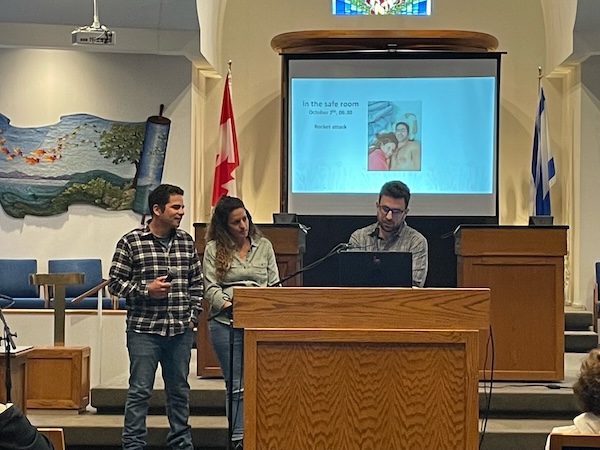
photo - Dekel Agami, left, and his partner Nufar Gal-Yam, share their Oct. 7 experiences with Vancouver audiences April 14. Itai Bavli, right, a University of British Columbia academic, grew up with Agami on Kibbutz Magen, near the Gaza border
Dekel Agami, left, and his partner Nufar Gal-Yam, share their Oct. 7 experiences with Vancouver audiences April 14. Itai Bavli, right, a University of British Columbia academic, grew up with Agami on Kibbutz Magen, near the Gaza border. (photo by Daphna Kedem)

Dekel Agami, who grew up on the kibbutz, and his partner, Nufar Gal-Yam, who grew up in Sde Boker, the kibbutz most noted as the home of David Ben-Gurion, had moved in together on Kibbutz Magen on Oct. 4.

Since both had grown up in southern Israel, close to Gaza, the red alerts on Oct. 7 did not disturb them unduly. Around 7 a.m., Agami, an Israel Defence Forces veteran who served in the special forces, headed out with his weapon to meet other members of the security squad, a group of civilians and off-duty soldiers ranging in age from 20 to 70. He quickly realized this was not a routine day.

As he walked to meet his colleagues, Agami saw figures near the kibbutz border. The first one he encountered was wearing an Israel Defence Forces uniform – as numerous terrorists were that day – and so he did not shoot.

He came across the head of his security team, Baruch Cohen, who had been shot in the leg. As Agami was delivering first aid, an anti-tank missile hit the vehicle they were next to. Agami does not know how they survived.

In the event of an emergency, civilian and off-duty military personnel on kibbutzim are expected to manage on their own for 20 to 30 minutes until the arrival of the IDF. On Oct. 7, the dozen emergency squad members in Kibbutz Magen battled 30 to 40 terrorists on their own from 7 in the morning until 2 in the afternoon.

The terrorists breached the fence at a location relatively remote from the residential area of the kibbutz, giving the defenders a small tactical advantage. Fighting soon moved to the terrorists’ targets, the kibbutz’s homes, and, after providing first aid to Cohen, Agami fought the terrorists from one of the houses. The kibbutzniks successfully flushed the infiltrators back to the fence, where some of them fled – maybe back to Gaza, possibly off to murder easier prey.

During the fighting, Agami took a photo of nearby Nir Oz, where multiple plumes of smoke were rising in an ominous foreshadowing of their potential fate. The photo went viral in Israel.

“When I took this picture, I thought we were next,” Agami said to an audience at Temple Sholom on the evening of April 14. He and Gal-Yam also spoke at the weekly rally earlier that day, outside the Vancouver Art Gallery.

When the IDF finally made it to Kibbutz Magen, about 2 p.m., they killed the remaining terrorists. Then the larger trauma began to dawn on Agami and his fellow kibbutzniks.

Agami’s two daughters from a previous relationship were with their mother at a moshav a few kilometres away. During the battle, he didn’t worry about them – partly because, he said, he “couldn’t go there” but more because it never crossed his mind that the battle he was engaged in was part of a much larger crisis. When he finally did get in touch, he found out the three were safe.

The Magen fighters were too occupied keeping the terrorists at bay – Agami alone expended 15 magazines, about 450 bullets – to check their phones to see what was going on elsewhere. They did, though, have cellular connectivity, which was not the case in many kibbutzim. The terrorists were strategic, first targeting army bases and bringing down communications systems.

As the smoke cleared midafternoon on Oct. 7, several stunning realities came to light.

Three wounded residents – Cohen, Nadav Rot and Avi Fleisher – had been transported by the kibbutz doctor to a nearby community, from which they were helicoptered to hospital. Fleisher did not survive. Cohen would eventually have his leg amputated. No one – including those who made the journey – understand how they made it to safety. The terrorists had taken control of all the roads in the region, killing every Israeli they encountered. Even the military had not breached the area by the time the medical transport got through.

The exhausted kibbutz defenders soon discovered that what they had experienced was a comparatively small part of the worst terror attack in Israel’s history. In just a hint of the depths of preparation that went into the attacks, the fleeing terrorists left behind not only weapons, flashlights and food for an extended siege, but even supplies of blood for infusions.

Agami and Gal-Yam were brought to Vancouver by Itai Bavli, a postdoctoral fellow and lecturer in public health at the University of British Columbia. He and Dekel grew up together in Magen.

The friends estimate that 60 alumni of their regional high school died on Oct. 7. Including those killed in the subsequent war, they estimate 100 of their circle of friends are dead, including Bavli’s stepbrother, Tamir Adar, who lived in Nir Oz.

Agami downplays his heroism, but Bavli is emphatic.

“He saved my family,” Bavli said.

Gal-Yam, who is expecting a baby in July, just completed a five-month call-up as a major in the IDF. She and Agami are now in temporary accommodations on her home kibbutz of Sde Boker. Agami spent five months relocated in Eilat.

“It’s like some area after a hurricane,” Gal-Yam said of the chaos at Kibbutz Magen, which was founded in 1949 and is one of the oldest communities adjacent to the Gaza Strip.

She has since returned to her day job, but everything has changed, she said.

“It seems unimportant to do again whatever it was I was doing before Oct. 7,” she said, noting that creating a normal routine is impossible. “Nothing is normal now. I’m not normal. I’m a completely different person. We are living completely different lives than before. Nothing is the same. Nothing at all.”

The Israeli visitors demurred from making predictions about the political or military ramifications of events.

“Some people are going to have to give answers after all this will be over,” Gal-Yam said.

The length of time the hostages have been in captivity – more than six months – is something that was unimaginable on that first, terrible day, she said. “Not a person in Israel thought it would take more than six months to bring them home,” she said. “This is a reality none of us expected.”

An audience member asked how they view residents of Gaza now.

Bavli reflected on how, before Hamas took over the Gaza Strip, workers from Gaza came to their kibbutz, even staying overnight.

“People from Gaza worked on our kibbutz and were treated as family,” he said. “We wanted to have them as neighbours, to find political solutions, to find a way to live together.

“We don’t have anything against people from Gaza,” he said. “What broke our hearts was, at Kibbutz Nir Oz, the first wave [of infiltrators on Oct. 7] was Hamas, but the second wave was just people who came to steal. But they also killed people. That’s what broke our hearts, confused us.”

For the future, Bavli sees the willingness of Gazans to live in peace as key.

“Hopefully,” he said, “there are enough good people there to find a way to live together.”

Format ImagePosted on April 26, 2024April 26, 2024Author Pat JohnsonCategories IsraelTags Dekel Agami, Israel, Itai Bavli, Kibbutz Magen, Nufar Gal-Yam, Oct. 7, survivors, Temple Sholom, terrorism

Posts pagination

Previous page Page 1 … Page 88 Page 89 Page 90 … Page 667 Next page
Proudly powered by WordPress