Skip to content
  • Home
  • Subscribe / donate
  • Events calendar
  • News
    • Local
    • National
    • Israel
    • World
    • עניין בחדשות
      A roundup of news in Canada and further afield, in Hebrew.
  • Opinion
    • From the JI
    • Op-Ed
  • Arts & Culture
    • Performing Arts
    • Music
    • Books
    • Visual Arts
    • TV & Film
  • Life
    • Celebrating the Holidays
    • Travel
    • The Daily Snooze
      Cartoons by Jacob Samuel
    • Mystery Photo
      Help the JI and JMABC fill in the gaps in our archives.
  • Community Links
    • Organizations, Etc.
    • Other News Sources & Blogs
    • Business Directory
  • FAQ
  • JI Chai Celebration
  • JI@88! video

Recent Posts

  • Sharing her testimony
  • Fall fight takes leap forward
  • The balancing of rights
  • Multiple Tony n’ Tina roles
  • Stories of trauma, resilience
  • Celebrate our culture
  • A responsibility to help
  • What wellness means at JCC
  • Together in mourning
  • Downhill after Trump?
  • Birth control even easier now
  • Eco-Sisters mentorship
  • Unexpected discoveries
  • Study’s results hopeful
  • Bad behaviour affects us all
  • Thankful for the police
  • UBC needs a wake-up call
  • Recalling a shining star
  • Sleep well …
  • BGU fosters startup culture
  • Photography and glass
  • Is it the end of an era?
  • Taking life a step at a time
  • Nakba exhibit biased
  • Film festival starts next week
  • Musical with heart and soul
  • Rabbi marks 13 years
  • Keeper of VTT’s history
  • Gala fêtes Infeld’s 20th
  • Building JWest together
  • Challah Mom comes to Vancouver
  • What to do about media bias
  • Education offers hope
  • Remembrance – a moral act
  • What makes us human
  • המלחמות של נתניהו וטראמפ

Archives

Follow @JewishIndie
image - The CJN - Visit Us Banner - 300x600 - 101625

How Jews are indigenous

How Jews are indigenous

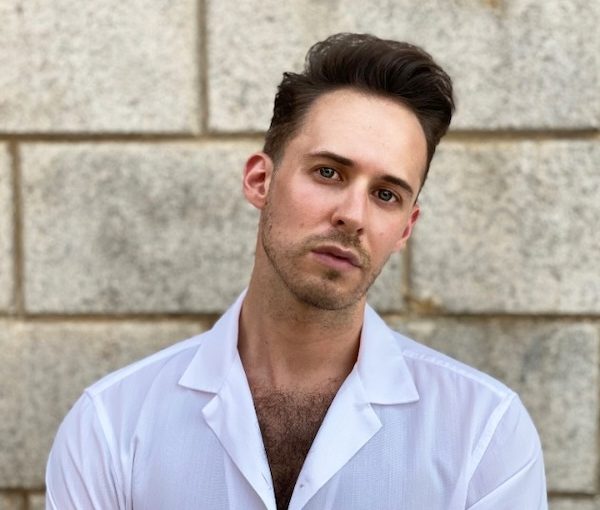
Last month, Ben M. Freeman spoke about his latest book, The Jews: An Indigenous People, as part of Kolot Mayim Reform Temple’s 2024/25 speaker series. (PR photo)

Ben M. Freeman, founder of the modern Jewish Pride movement, spoke from his home in London, England, about his work and ideas in a Zoom webinar on Jan. 12. Titled Building Jewish Pride and Recognizing Jewish Indigeneity, the virtual event was hosted by Victoria’s Kolot Mayim Reform Temple.

The author of Jewish Pride: Rebuilding a People and Reclaiming our Story: The Pursuit of Jewish Pride, Freeman’s latest, The Jews: An Indigenous People, will be released this month.  

Freeman began by calling into question the perception that indigeneity implies people who have lived on the land and are primitive or oppressed.

“I have great issue with that because the idea of those things being inherent is to destroy the great diversity of the indigenous experience,” he said.

The United Nations, he explained, set up seven criteria used to determine the indigeneity of a people to a particular land. Freeman, in his writings and talks, argues that Jews are indigenous to the land of Israel even by the UN’s criteria.

“[The UN] also created rights for indigenous people: the ability to have self-determination, the ability to practise your own religion, have your own language, all of these different things. But, again, many of them are still rooted in this idea that indigenous people are inherently oppressed,” he said.

“We’re not here to say that indigenous people have not experienced oppression. That would be ludicrous. Many indigenous groups do experience that, but we can’t necessarily say these things are inherent….”

To view certain groups as only victims, he contended, strips them of agency.  Freeman would define an indigenous people, rather, as a group whose collective identity begins in one specific land, and it is in that land they remain rooted either physically, spiritually or culturally.

“This is their home and is where they originated, developed and continue to be fixed through a connection to the environment and natural resources, living systems, culture and practice as a people, irrespective of their sovereignty in the land,” he said.
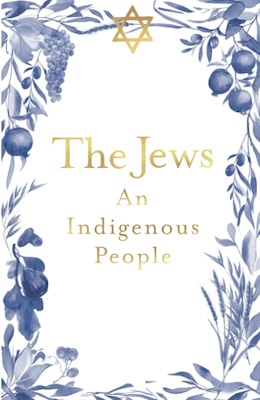
image - The Jews book coverThis definition, Freeman believes, not only applies to Jews in Israel but also refers to the experiences of the Maori in New Zealand and First Nations in Canada, and other peoples in other countries.

From his perspective, Jews were a small group of tribes that developed into a civilization over time. The Torah played a large part as it codified Jewish civilization by taking practices that already existed, reshaped some of them and retold some of the stories, creating a culture that contains religion.

“Almost all the practices were rooted in the land. Pesach was two different festivals: one was a matzah festival and one was a sacrifice festival. Rosh Hashanah, our new year, was the beginning of the agrarian year. Shavuot is an agricultural holiday,” Freeman said. 

“One of the odd experiences of being Jewish is that we exist in this cognitive dissonance almost because we will describe ourselves officially in many ways as a religion, but then we have so much of our practice rooted in land.”

Freeman also put forward that a distinguishing characteristic of Judaism is that, unlike Christianity, it can be a religion but not exclusively a faith or creed.

“Christianity has creed. My partner is a Christian and I sometimes ask him, ‘Could you be a Christian without believing in Jesus?’ And he’s like, ‘no.’ We don’t have that,” said Freeman. “That’s why you can have atheist, secular or agnostic Jews who are part of Am Yisrael. There is nothing we have to believe to be Jews.”

Freeman went on to discuss Jewish pride, which, for him, bears three central tenets. The first is to encourage and empower Jews to reject the shame of antisemitism – to wear one’s Jewishness as a badge of honour.

The second point is to repudiate non-Jewish definitions of Jewish identity.

“I just feel it’s so egregious to me that non-Jews think they have a right to tell us what it means to be Jewish or any aspect of that experience. This is my identity. I will tell you what it means to be a Jew,” he said.

The third tenet is for Jews to go on a journey to explore their identity through a Jewish perspective. “We have to be able to say this is who we are,” he said, “but we have to humbly accept that takes time. We need to be doing real work to investigate our Jewishness and then, most importantly, [do it] through a Jewish lens.”

Freeman is scheduled to travel to Canada in March to discuss The Jews: An Indigenous People, with appearances in Toronto, Windsor and Edmonton. His schedule may include stops in Ottawa and Vancouver, as well.

Next up in the Kolot Mayim 2024/25 lecture series, on March 2, 11 a.m., is Jonathan Bergwerk, author of the Audacious Jewish Lives books, who will speak about Jewish innovators who changed the world. Go to kolotmayimreformtemple.com to register. 

Sam Margolis has written for the Globe and Mail, the National Post, UPI and MSNBC.

Format ImagePosted on February 14, 2025February 13, 2025Author Sam MargolisCategories BooksTags Ben M. Freeman, identity, indigeneity, Jewish Pride, Kolot Mayim
Whimsical “wood friends”

Whimsical “wood friends”

“Jug Band” by Anita Colman, whose work is on display at the Cedar Hill Recreation Centre in Victoria through March 3. (photo from Anita Colman)

The distinctive, colourful characters that artist Anita Colman creates out of driftwood and various objects she discovers around Victoria are currently on display in hallway showcases at the Cedar Hill Recreation Centre in Victoria through March 3.

Her “wood friends,” as she dubs them, constitute a wide assortment of critters – from avians to insects, canines to felines. There are birds nested on a woman’s head, a jug band and a dog with a beanie. There is also a unicyclist and a schoolboy riding a pogo stick. 

photo - “Unicyclist and Pogo Stick Boy” by Anita Colman
“Unicyclist and Pogo Stick Boy” by Anita Colman. (photo from Anita Colman)

Colman grew up in Montreal and studied fine arts at Concordia University. After graduation, with what she jokes were “no applicable skills,” she worked building fences, painting houses and selling produce at an outdoor market.

“Then, in 1980, a friend and I went on an epic road trip from Montreal to the San Francisco Bay and I ended up staying,” she told the Independent.

With a penchant for cartooning, Colman, while getting settled in the United States, freelanced for several greeting card companies, including American Greetings, Marcel Schurman Fine Papers, Andrews McMeel and Hallmark Cards, among others.

One day, Hallmark contacted her to say that they wanted her to work in-house at their headquarters in Kansas City.

“As a single parent at the time, a steady income with a health plan was an offer I couldn’t refuse,” she said. “I’ll never forget the day we landed at the Kansas City International Airport in August. As soon as we exited the airport, we were hit with a blast of hot, humid air. It was an inferno. All I could think was, ‘What have I done?’”

At Hallmark, she was part of Shoebox, an alternative humour studio, where she illustrated not only myriad cards but books and calendars, and designed logos and fonts. Her artwork also was applied to stickers, school supplies, mugs, T-shirts, and dog and cat bowls.

The company, Colman recollected, had a farm where artists would go for what she called “creative renewal.” 

“The barn had a fully equipped woodshop and welding area. That’s where I learned woodworking. We built crazy birdhouses and robots that moved and lit up,” she said.

“There was also a small woodshop for artists at headquarters. It was located beside the model shop, where carpenters built displays for shows, etc. I learned a lot from them. Any free time I had was spent in the woodshop.”

photo - Anita Colman’s creations are on display in Victoria
Anita Colman’s creations are on display in Victoria. (photo from Anita Colman)

As a humour artist, Colman said she was continually developing different characters and critters. Now she does the same with wood. 

“The elements of design are the same – line, form, texture, colour. Driftwood already has texture and shape that can look like a nose, ears or tail.”

Accompanying Colman on her hunts for items to turn into art is her rescue dog Bean.

“He’s my sidekick,” she said. “He comes along when I walk the beach looking for good wood or browse ReStore, Value Village and hardware stores with an eye out for objects I can incorporate in my pieces. Bean’s always on the lookout for treats and makes out pretty good.”

The whimsical wooden creations have become an increasingly familiar sight in the capital city. Last fall, they were exhibited at the library in Victoria’s Commonwealth Place. In January, Colman was featured in a CTV News Vancouver Island report by Adam Sawatsky, which showed her, along with Bean, scouring a Victoria beach for things that could be incorporated into her work.

“Some people like shopping for shoes, I like shopping for junk,” she said.

Bean, too, is a recipient of Colman’s artistic flair. In the CTV report, he was seen clad in a denim vest with flames and a dragon embroidered into the back; his hair was molded into a mohawk to make him look “like a tough little dude.”

photo - Anita Colman creates distinctive characters, a wide assortment of “wood friends,” including dogs
Anita Colman creates distinctive characters, a wide assortment of “wood friends,” including dogs. (photo from Anita Colman)

Colman’s display at the recreation centre is part of a Family Arts Exhibition organized by the District of Saanich. One of the images the municipality’s website is using to promote the event is Colman’s woodwork of a cat ballerina. Other artists whose work will be shown are Tanya Bub, Randy Barron and Susan Wright. 

In the midst of the exhibition, the recreation centre will host a Family Arts Festival on Feb. 17 (Family Day) from 11 a.m. to 3 p.m. in what the municipality is billing as “a celebration of imagination, creativity and discovery.” Among the activities will be mini-quilt design, tin foil sculpture and LEGO robotics.

Colman’s finished products are not for sale. They can, however, be viewed on her website: anitacolmanart.weebly.com. 

Sam Margolis has written for the Globe and Mail, the National Post, UPI and MSNBC.

Format ImagePosted on February 14, 2025February 13, 2025Author Sam MargolisCategories Visual ArtsTags Anita Colman, art, Saanich, Victoria, woodworking
Community a work highlight

Community a work highlight

Marcie Flom leaves the Jewish Community Foundation after 21 years, to pursue the next chapter of her professional life. (photo from Jewish Federation)

“I just want to say that I have been blessed to have had the opportunity to serve this community for as long as I have, and I want to acknowledge all the support of the staff and volunteers I have had the pleasure of working with,” said Marcie Flom, whose last day as executive director of the Jewish Community Foundation of Greater Vancouver was Dec. 27. “Community work is a team effort, and we are very fortunate in the Vancouver community to have a wealth of talented and passionate volunteers and professionals who care deeply and contribute wholeheartedly to its success.”

Flom leaves her post after 21 years.

“It is always good to leave on a high note and I achieved my personal goal of stewarding the Jewish Community Foundation over the $100 million mark,” she said. “There is a very strong and competent team in place at the Foundation and Federation and exceptional lay leadership in the Foundation governors under chair Howard Kallner.

“With all that in place, it is the perfect time for me to move on to pursue the next chapter in my professional life. I’m planning to continue my work with donors and families to assist them with their philanthropy – it’s the piece of life’s work that brings me the greatest joy and fulfillment.”

Flom joined the Jewish Federation of Greater Vancouver in 2004, when she was recruited by then-new executive director of Federation Mark Gurvis, who now serves as chief executive officer of the Ronald S. Roadburg Foundation, for the role of Foundation director. (The Foundation was founded in 1989 as the endowment program of Federation and has developed from there.)

“I had spent most of my career in the not-for-profit sector working in the arts, first for the National Ballet of Canada in Toronto and then for the Vancouver Playhouse Theatre Company,” said Flom. 

This experience in marketing and development is one of the reasons Gurvis reached out to her.

“I was a new mother and consulting at the time, and I felt strongly that I wanted to raise my daughter in the community,” said Flom about why she accepted the Foundation position. “It was also a challenging time in Israel, and I thought it was the perfect time to use my experience for the benefit of the community here and in Israel. It was an excellent role for me, and I saw a great deal of potential for growing the Foundation and raising my daughter in a caring community.”

Flom’s role at the organization also grew.

“After a few years as Foundation director,” she said, “the Federation recognized that it needed a more donor-centric and holistic approach to working with donors to match their interests to fill gaps in community services and to meet emerging needs. I had the relevant experience in marketing and fundraising to integrate those functions operationally into a new philanthropic model which addressed financial resource development across the organization.

“I moved into a VP role, which was largely operational. With the level of operational experience and knowledge that I cultivated, I was positioned to serve in greater capacity, culminating in my most recent role, with oversight of the community engagement and local and overseas allocations processes. It was the perfect role as I wrapped up my time with Federation, the integration of revenue and the distribution and granting of charitable funds. I also managed the allocation of our communities Israel Emergency Funds alongside chair Stephen Gaerber and the director of Federation’s Israel office, Rachel Sachs. I cannot begin to express how meaningful and impactful that process has been for me personally during one of the darkest periods in the history of the country.”

Federation is currently recruiting a senior development professional to fill the vacancy Flom’s departure leaves. Not an easy task.

“One of the things that stands out most about Marcie is her people-first approach,” wrote Ezra Shanken, Jewish Federation chief executive officer since 2014, in his weekly Shabbat message last November, when he announced Flom’s decision. “She has mentored many of our staff over the years, and has built authentic and long-lasting relationships with partners and donors who speak of her impeccable integrity, her strategic approach, and her genuine care for community.”

Shanken wrote that it was with “mixed emotions that we share that Marcie will be stepping down from her role with us at the end of this year. We will miss her, but she is ready to start a new chapter in her career, and we are excited for her.”

Among the highlights of her time at the Foundation, Flom said, “Of course, participating actively in our community’s growth and seeing the funding directly impact capacity across community has been incredibly rewarding, but I am also so grateful to have had the opportunity to work with so many community members to help them achieve their philanthropic goals through association with Federation and through their funds at the Foundation. That aspect of my work has always been a true pleasure, and it was only possible because of the many trusted relationships I have with the people I have worked with across our community, including lay leaders and the professionals. Those are treasured and greatly valued.”

There were challenges over the years, notably COVID and Oct. 7.

“I also distinctly remember the financial crisis of 2008,” said Flom. “Isaac Thau was chair of the Foundation’s investment committee at the time, the markets were significantly down and there was tremendous pressure related to portfolio performance. Isaac fondly recalls it as ‘the time that we couldn’t walk through the JCC lobby without wearing a helmet.’ It was challenging for sure, but the Foundation closed the year with a moderate loss compared to others like the Vancouver Foundation and, in the end, the way we navigated that time helped to build our reputation.”

That reputation no doubt helped the Foundation reach the milestone of more than $100 million in assets under management. 

“The growth is attributable to the strategic plan but, more importantly, the trust and confidence the Foundation has built in our community,” Flom affirmed. “The governance and committee structure in place, the passion, knowledge and expertise of our volunteers, particularly at the governor and investment committee tables, have all built confidence so more and more community members and charitable organizations are turning to the Foundation to manage their assets and assist them with their philanthropy.”

The Foundation distributes more than $3 million annually to “a broad range of charitable organizations and areas of service across community through its unrestricted grant program and from donor-advised and -designated funds,” she said. “The Foundation works with fund holders to meet new and emerging needs in the community, support organizations and their program delivery, and to provide legacy support for organizations to carry out their important work in perpetuity.” 

Format ImagePosted on February 14, 2025February 13, 2025Author Cynthia RamsayCategories LocalTags endowments, Jewish Community Foundation, Jewish Federation, Marcie Flom, philanthropy
“We will dance again”

“We will dance again”

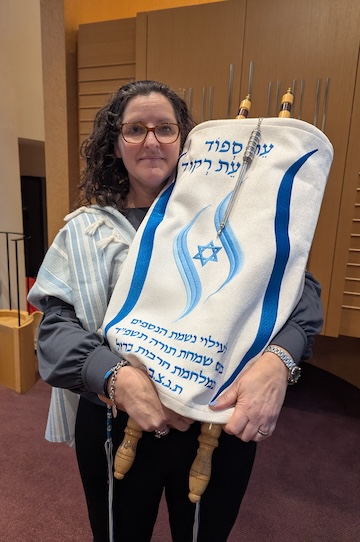
Rabbi Susan Tendler at Beth Tikvah’s aron hakodesh, where two Torahs feature covers memorializing heroes lost in the latest war. (photo by Pat Johnson)

On Simchat Torah, Jews worldwide celebrate the completion of the annual Torah reading and the beginning of another cycle. The day of rejoicing, which across centuries has been marked with often ecstatic festivities, is a time of dancing and spiritual uplift. How, though, do Jews celebrate this day after Oct. 7? The mass murders and litany of horrors perpetrated on Simchat Torah 5784 cast a pall over the occasion.

Rabbi Susan Tendler of Richmond’s Beth Tikvah Congregation expressed the emotional challenge of marking the festive holiday in the changed world.

“I can get through Oct. 7,” she said, “but how am I supposed to joyfully sing and dance on Simchat Torah?” 

Last summer, a friend was headed to Israel and told Tendler about the Simchat Torah Project. The friend was going to attend a ceremony at the Kotel, the Western Wall, with family members of individuals killed on Oct. 7 and in the ensuing war. At the ceremony, specially crafted Torah covers would be transferred to individuals from around the world, who would carry them back to their congregations.

Each cover has the name and date of death of the person it commemorates. So far, 635 Torah covers have found homes in 525 congregations in 287 cities in 31 countries. Two of those are in Beth Tikvah’s ark. Another is at Congregation Schara Tzedeck in Vancouver.

The project is inspired by ancient and modern words. King Solomon declared: “There is a time for everything under the heavens … a time to mourn, and a time to dance.” More recently, Israelis, in defiance of the enemy’s determination to break their national spirit and in emphatic solidarity with those murdered at the Nova music festival, declare, “We will dance again.”

For Tendler, the resonance was crystal clear. With most of the other congregational rabbis in Metro Vancouver, she was part of a trip to Israel in December 2023, which included an emotional visit to the Nova site, where 364 young people were murdered and crimes against humanity were perpetrated, including torture and rapes.

At the same time, in Tel Aviv, the exhibition commemorating the Nova festival pogrom was just opening and everywhere the rabbis saw the defiant declaration, “We will dance again.”

When Tendler heard about the Simchat Torah Project, it was the answer she had been seeking.

“I thought, that’s the pathway for me to be able to breathe and dance again on Simchat Torah,” she said. “On Simchat Torah, as we lifted up the sefer Torah, we would symbolically be lifting up those human beings and enabling them to dance again.” 

The rabbi’s family and another family, Mindy Zimmering and Allan Seltzer, purchased a Torah scroll in honour of the bat mitzvah of Daniella Sadoff, the daughter of Tendler and her husband Ross Sadoff. The Beth Tikvah community united to provide a home for a second cover.

photo - Rabbi Susan Tendler holds one of two Torahs featuring memorial covers from the Simchat Torah Project
Rabbi Susan Tendler holds one of two Torahs featuring memorial covers from the Simchat Torah Project. (photo by Pat Johnson)

One of the covers honours the life of Itamar Shemen, a 21-year-old medic in the Israel Defence Forces who fell in battle on Dec. 23, 2023. He was also a volunteer for Magen David Adom and was known to spend his days off volunteering to help the emergency responders. 

The other cover is dedicated to Ermias Mkurio, a 19-year-old known for his leadership and constant smile. He died a national hero on May 10, 2023.

The Torah covers note the date of death and not the date of birth because, as Tendler describes Jewish tradition, it is the totality of a life that is marked on a yahrzeit.

“We’ve done nothing when we come into this world,” she said. “But the day of our death is about the culmination of the life we’ve lived and our deeds and our legacy.”

The two Torah scrolls – blue lettering on white cloth – stand in Beth Tikvah’s aron hakodesh. 

On Simchat Torah, it was these two Torahs that the community lifted first and foremost.

“We wanted to make sure that these were the ones that were lifted the highest and that sense of connection, that sense that it’s up to us to ensure that these individuals are still rising and still connected and that their lives were not for want or that they are quickly forgotten but instead they are still impacting us and they are still dancing and they are still teaching us,” she said.

“The symbolism of having brought out the scrolls and people going and kissing them was incredibly emotional,” she said. “Watching people, knowing that these are very much in memory of people who have fallen for the state of Israel, recognizing what we are doing, and having these individuals symbolically pass around the congregation, and people finding holiness and treating them with holiness and respect, reaching out to kiss them, to interact, to engage with them, recognize them, and knowing that, no, they’re not here, but symbolically they are with us, and we are grateful and we are moved and we are humbled by your service, by the sacrifice of your life, that you’re still here with us and we are going to continue to keep your memory alive, brought many of us to tears.” 

Format ImagePosted on February 14, 2025February 13, 2025Author Pat JohnsonCategories LocalTags Beth Tikvah, commemoration, Judaism, Oct. 7, Simchat Torah, Simchat Torah Project, Torah scrolls
JWest takes next steps

JWest takes next steps

An artistic rendering of JWest’s new Jewish Community Centre of Greater Vancouver, as seen from 41st Avenue. (image from Federation)

JWest has submitted the development permit application to the City of Vancouver for the first building of the planned community hub, the new Jewish Community Centre of Greater Vancouver (JCC) at the corner of 41st Avenue and Willow Street. 

The design for a six-storey community centre is now being reviewed by the city after consultation with city planners. Rezoning for the site was approved in 2018 and includes a new JCC, a new King David High School and residential towers. Once completed, the hub will provide both housing and amenities for the expanding Oakridge neighbourhood.

The new JCC will be a 200,000-square-foot, state-of-the-art, multigenerational community centre on what is currently the JCC parking lot. The centre will include expanded childcare, services for seniors, arts and cultural spaces, and amenities for all Vancouver residents. More than 20 not-for-profit organizations are expected to call the centre home. In particular, the Vancouver Holocaust Education Centre, the largest Holocaust-based museum in Western Canada, will double in size to meet the growing demand for anti-racism education.

This is Phase 1 of the two-phase project. Phase 2 will include mixed-use rental housing, with units offered at or below market value and open to Jews and non-Jews.

While JWest is a community-led initiative that is Jewish at heart, it will benefit everyone. At $450+ million, it is also the most extensive project in the history of the Jewish community in Western Canada. And fundraising is proceeding apace, with keystone grants from the Government of Canada, the Government of British Columbia, the Diamond Foundation, the Al Roadburg Foundation, the Ronald S. Roadburg Foundation, and dozens of community-minded individuals and families bringing the vision into reality. The plan is to break ground within 13 months.

For more information, go to jwestnow.com. For philanthropic opportunities, contact Emily Pritchard at JWest ([email protected]). 

– Courtesy Jewish Federation of Greater Vancouver

Format ImagePosted on February 14, 2025February 13, 2025Author Jewish Federation of Greater VancouverCategories LocalTags development, fundraising, JCC, Jewish Community Centre of Greater Vancouver, JWest, KDHS, King David High School
Learning about aging

Learning about aging

On Jan. 12, Dan Levitt, seniors advocate of British Columbia, spoke at the Jewish Seniors Alliance’s winter symposium. (photo from JSA)

On Jan. 12, Jewish Seniors Alliance, with Kehila Society of Richmond and the Peretz Centre for Secular Jewish Culture, presented the winter symposium titled The Future of Aging. The featured speaker was Dan Levitt, seniors advocate of British Columbia.

Jeff Moss, executive director of JSA, opened the afternoon event and Toby Rubin, co-executive director of Kehila Society, offered some remarks, including that Kehila is always happy to be a co-presenter with JSA.

Gyda Chud, representing the Peretz Centre, told a few stories about the Levitt and Gofsky families (Dan Levitt’s parents) and their history with the Centre. Levitt’s great-grandparents, Rose and Abe Smith, were among the founders of the Peretz. Chud spoke of her mother, Gallia, who is 100 years old – she lives by and instils the values of diversity, inclusion, social justice and advocacy. Chud also mentioned that she had been Dan Levitt’s preschool teacher at the Peretz Centre, where the symposium was held.

Tammi Belfer, chair of JSA, reminded everyone of the organization’s commitment to all the seniors of British Columbia, and thanked everyone for working to enhance the quality of life for all seniors.

Levitt, who is an honorary member of JSA, then educated the 125 attendees about the situation of seniors in this province. He began by giving an example from his time at a home in Mission. The story involves giving plants to seniors on one floor of the facility and telling them that they were responsible for the plants’ upkeep. Plants were also given to residents on another floor, but they were told that the staff was responsible for their care. The residents who were given the responsibility had plants that flourished, whereas the plants on the other floor died. Given purpose and responsibility, said Levitt, people will rise to the challenge.

Levitt continued with some statistics: there are presently 1.1 million seniors in British Columbia and, by 2036, there will be 1.6 million. More than 90% of seniors live independently, but the fastest growing segment of this cohort is over 85 years old, and one in three of them will need care. 

In his travels across the province, Levitt has heard from seniors about age discrimination in the workplace, often related to the regulations of employment, such as losing long-term disability and group insurance coverage after age 65. Many were concerned about the cost of driver’s licence renewal medical forms, which can vary from about $80 to $250, depending on the doctor’s discretion.

Levitt’s office is planning on holding a panel on transportation that will look at the needs of seniors. Some of the concerns are the distances between bus stops and the availability of HandyDART services.

There are many challenges ahead, said Levitt, noting that there are 6,500 people in British Columbia waiting for a publicly-subsidized long-term care bed. Home support, which would enable many seniors to “age in place,” is expensive here – these services are free to users in Ontario and Alberta. There is a need for more advocacy, he said. Support is also needed for caregivers, so they are not lost to other jobs. Combating ageism is also important.

Some other problems include the seismic upgrading needed in many care homes and digital access for seniors. The future must include help at home, with aid in reminders regarding medications, and help with technology. There needs to be age- and dementia-friendly places like they have in Bruges, Belgium.

Recommendations from Levitt and the Office of the Seniors Advocate include improving SAFER (a rental help program for seniors, the rates of which are inadequate); free home support; the funding of shingles, RSV and enhanced flu shots; and developing cross-ministry synergy for seniors’ issues.

After a lively Q & A session led by Chud, Ken Levitt, Dan’s father, who is a longtime board member of JSA, said a few words of appreciation. Larry Shapiro, JSA past chair, presented Dan Levitt with a gift and Moss thanked him. Refreshments followed, and the audience lingered and talked with Levitt before leaving with more knowledge and confidence than when they arrived. 

Shanie Levin is a Jewish Seniors Alliance Life Governor. She is also on the editorial committee of Senior Line magazine.

Format ImagePosted on February 14, 2025February 13, 2025Author Shanie LevinCategories LocalTags aging, BC seniors advocate, Dan Levitt, health care, JSA, policy, seniors
Action and prevention 

Action and prevention 

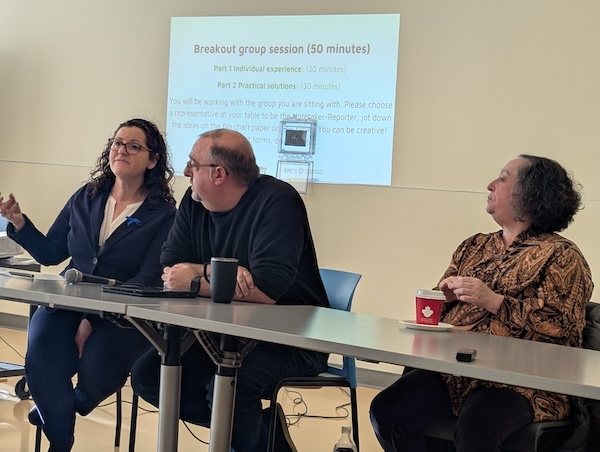
Rabbi Susan Tendler, left, Lonnie Belfer and Lynne Fader were panelists at a dialogue on antisemitism in Richmond Jan. 26. (photo by Pat Johnson)

Communities need to be more proactive and less reactive toward antisemitism – to focus less on what to do after an anti-Jewish hate crime occurs and to prevent them from happening in the first place. 

That was one of the recommendations at a meeting on antisemitism convened by Richmond Multicultural Community Services Jan. 26. Panelists were Rabbi Susan Tendler of Beth Tikvah Congregation, Lynne Fader, co-executive director of the Kehila Society of Richmond, and Lonnie Belfer, a program manager in skills training for employment programs, experience and disability support services.

Panelists and participants noted that expressions of concern by officials in the community are not always backed up by actions.

“In the days in particular after Oct. 7, it meant a lot to many of us that the RCMP was there,” said Tendler. However, during one instance when police were called, the response time proved not as immediate as the police had assured the congregation it would be.

Likewise, legislation and other steps “look really great on paper,” she said. The City of Richmond adopted the International Holocaust Remembrance Alliance Working Definition of Antisemitism and the provincial government is making Holocaust education mandatory in secondary schools across the province. But these are not silver bullets to the problem, she said. 

“In the four-and-a-half years that I’ve lived here, I’ve noticed a change that’s scary to see,” said Tendler. 

She tells clergy from other religions that Jewish congregations pay for private security and they acknowledge that such an expenditure would gut some of their budgets.

“The province has tried to offer some more grants and make them accessible to ensure that we all do feel safe but, again, it’s a shame that that’s the situation in which we all live,” she said.

Fader’s father was a cab driver in East Vancouver and taught his kids to “never roll over and never stay quiet,” she said.

She recalled minor and more significant incidents of antisemitism across her career and was critical of elected officials who are visible for PR opportunities but absent when substantive action is needed.

“I do hold our politicians accountable because in my opinion they’ve done nothing and they’ve allowed hatred in all our communities to grow because they are more worried about photo opportunities,” she said.

Fader endorses restorative justice, which was the approach taken when some young people were caught after spray-painting swastikas on Beth Tikvah’s building. The perpetrators were brought to meet a family in the congregation and to hear the family’s Holocaust survival experiences.

“There are huge systemic issues, not just in Richmond, not just in BC, not just in Canada, but globally, on antisemitism, racism and all the rest,” Belfer said. “That needs to be addressed.”

However, he is hopeful. 

“There are issues, but there are wonderful people in this community who are doing wonderful things,” he said. “It’s unfortunate when I look around the room that I see so few non-Jewish people in the room because we know the problem. We face the antisemitism.” 

Breakout groups developed tangible steps the community could take to address antisemitism and enhance multicultural well-being. These included having the City of Richmond hold a multicultural day at which cultural communities provide food and entertainment, and taking the show on the road, bringing cultural communities out of their own congregations and community centres and meeting in less familiar territory.

Community-building grants are available from the city, said one participant, “but there are too many hoops to jump through to get them.”

Doors Open Richmond is an annual program where religious and cultural groups welcome non-members to their facilities, but participants said Jewish institutions are challenged both by the fact that the event takes place on Saturdays as well as Sundays, and because security concerns largely preclude Jewish participation.

One participant stressed that approaches to antisemitism are generally reactive.

“You’ve had hate speech thrown at you, what do you do?” he asked. “The question isn’t what do you do after, it’s how do you prevent it from happening? There needs to be more forward motion in how to stop it from occurring versus what you do after you’ve been beaten up on the street.”

Alan Hill, inclusion coordinator at Richmond Multicultural Community Services, facilitated the event, which took place at City Centre Community Centre. He explained that the panel was part of a larger series funded by Heritage Canada to build bridges and connections. Other events have focused on Indigenous leaders, Ukrainian refugee groups, youth groups, the Filipino community, Islamophobia, gender perspectives, the experiences of women, and a Black History Month event. A symposium on anti-Asian hate is coming up. In March, all groups will come together to review experiences and consider next steps. 

Format ImagePosted on February 14, 2025February 13, 2025Author Pat JohnsonCategories LocalTags antisemitism, Beth Tikvah, Kehila Society, Lonnie Belfer, Lynne Fader, Richmond, Richmond Multicultural Community Services, Susan Tendler
Some miracles from tragedy

Some miracles from tragedy

Dr. Gil Troy spoke of being inspired by Ben Mizrachi and other young Jews, who he described as Zionist lions. (screenshot)

Vancouver’s Ben Mizrachi died a hero saving others at the Nova music festival on Oct. 7, 2023. On that terrible day, and since, a new generation of Zionist lions has emerged, exemplifying the heroism that Mizrachi and so many others epitomized.

This, according to the American-Canadian-Israeli academic and author Dr. Gil Troy, is one of many miracles that have risen from the tragedy.

Troy, an American presidential historian and McGill University professor who lives in Jerusalem, knew Mizrachi well. One of Troy’s sons participated in an Israeli program with the Vancouverite. 

“They became close, close friends,” said Troy. “He was one of those kids who walked into the door and straight into your heart. He was really part of our family.”

On Oct. 7, Mizrachi, who was a trained medic, and his friend Itai Bausi, went back into the festival site and saved the lives of others before being murdered themselves.

“What I learned from his heroism was, yes, the Israeli government failed that day,” Troy said. “Yes, the IDF failed that day. But Zionism was vindicated that day. Zionism raised a generation of lions. Zionism raised a generation of Bens and Itais, who fought back, and that was the real miracle of Oct. 7. What saved Israel was Israelis. What saved Israel was Zionism, which taught them to defend themselves, which taught us the value of defending ourselves, which taught us the language of defending ourselves, which sometimes is with words and sometimes is with arms and sometimes with our bare hands.”

Troy was speaking Feb. 2 at Schara Tzedeck Synagogue. As a professor used to daily interactions with North American college students, Troy has witnessed Jewish young people undergo an awakening on and after Oct. 7. People who had never been deeply invested either in Israel or in their own Jewish identity realized they were the object of the terrorists’ wrath.

“This is happening to me. I’m being targeted. This wasn’t just anti-Zionism. This was antisemitic anti-Zionism,” Troy said of how he characterizes the realization among Jewish students. “So many young Jews had an awakening, had their Herzl moment, had their ’67 moment, had their reawakening.”

Rather than hide from their Zionism, Troy said, Jewish young people are recognizing its centrality and resisting others’ attempts to separate their Jewishness from their Zionism. 

“At Columbia University, 600 Jewish students signed a statement saying Zionism is central to our identity,” said Troy. “Zionism is who we are.”

The signatories called out those who would define for Jews the acceptable parameters of their Jewishness and Zionism – and they called out anti-Zionist Jews in language deliberately formulated to stick it to their ideological heart, accusing them of being “colonized” by antisemitic forces.

“We’ve seen, from coast to coast in Canada … Jewish students stand up and say, this shall not stand. This is not acceptable,” Troy said. “We’re watching new chapters in Zionist history being written. And we’re seeing it in Israel too.”

This is not easy, he acknowledged. The challenges are enormous. Jews on campus and elsewhere are being betrayed by the very groups who should be counted on as allies, he said. 

“Too many of my women colleagues – not all, but too many feminists either decided that it didn’t happen or that we deserved it, or that rape is resistance,” said Troy. “I can’t make this stuff up. They showed at that moment that their hatred for Israel trumped, if I can use that verb, their commitment to fighting gendered violence. That’s how deep the hatred goes.”

Troy calls this the “triple double-cross.” Activists threw Jews under the bus, threw liberalism under the bus and threw their own core ideals under the bus, he said.

The fight of which Jewish students are at the vanguard is not just a fight for Jewish security, Troy contended. 

“Who waves the American and Canadian flags at rallies and who burns them?” he asked. “Who disrupted shopping malls and the Toronto mayor’s ice-skating party? Who showed a hatred for Canada, again and again and again? The fight against this academic intifada is not just a fight for Israel and Zionism and Judaism, which should be enough, but it’s also a fight for Americanism and Canadianism and liberalism and for academic values.” 

In the face of all the hatred seen in Canadian streets and on campuses in the past year-and-a-half, he said, it could be easy to spin into despair.

“But, you know who doesn’t allow me to despair? Our students,” Troy said. “We’ve seen such heroism. We’ve seen zeal on their part, a gleam in their eye, pride.”

The inspiring courage of young Canadian Jews is mirrored in a million ways, he said. Reserve soldiers living abroad or traveling around the world came to the rescue after Oct. 7.

“Two hundred thousand Israelis flew home,” he said. Many non-Israeli volunteers mobilized as well. “So many of you, since Oct. 7, instead of running away, came toward us – either physically or spiritually and financially, which was part of the language of love.

“There has been something mystical happening here,” he continued. “For all that high price we paid, Israel is now safer than it was Oct. 6 and the United States and Canada and the world is safer than it was on Oct. 6.”

Amid all the darkness, including the tragic loss of his son’s friend, Troy sees inspiring resilience and determination. 

“Every moment since that funeral I’ve had Ben on my shoulder, inspiring me and inspiring us to fight like lions and to save the state but also to make it better,” said Troy. “Because Zionism is about defending the state when necessary but building, rebuilding and being rebuilt by it always. That’s the power of the story. That’s our good fortune amid all our grief.” 

Format ImagePosted on February 14, 2025February 13, 2025Author Pat JohnsonCategories LocalTags Ben Mizrachi., Gil Troy, Hamas-Israel war, Oct. 7, Zionism
US long interested in Mideast

US long interested in Mideast

A photograph of Gen. Lewis Cass taken by Mathew Brady, circa 1860-65. In 1837, Cass dropped the anchor of the USS Constitution off Jaffa. (photo from US National Archives and Records Administration)

President Donald Trump’s unconventional proposal on Feb. 5  to annex the Gaza Strip isn’t the first time the United States has expressed territorial ambitions in the Middle East.

In 1837, Gen. Lewis Cass (1782-1866) dropped the anchor of the USS Constitution, “Old Ironsides,” off Jaffa. (Until British dynamite cleared the rock-strewn harbour in the 1920s, rowboats connected the port with the ships anchored offshore.) Together with several US Navy officers, Cass proceeded inland, planning to survey the uncharted Dead Sea – the lowest point on earth – but the poorly equipped mission was a failure. Ill from sunstroke and dehydration, the sailors barely managed to return to their vessel alive.

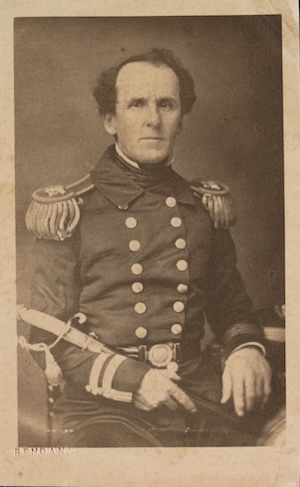
A decade later, Lieut. William Francis Lynch (1801-1865) of the US Navy led a better-provisioned 17-man expedition to explore the Jordan River and Dead Sea. Camels hauled the prefabricated boats specially manufactured of copper and galvanized iron overland from the Mediterranean Sea to Lake Kinneret (Sea of Galilee). Lynch then ventured down the Jordan River, which is a creek by most standards. In tandem, a party proceeded on land. The mission mapped the Jordan’s hitherto unknown 27 rapids and cascades. Though it is only 100 kilometres from the freshwater Lake Kinneret to the Dead Sea, the Jordan River’s winding course was 322 kilometres long. Lynch described the Jordan as unsuitable for navigation, calling it “more sinuous even than the Mississippi.”

photo - Lieut. William F. Lynch, circa 1861-62. In the mid 1800s, Lynch led a 17-man expedition to explore the Jordan River and Dead Sea
Lieut. William F. Lynch, circa 1861-62. In the mid 1800s, Lynch led a 17-man expedition to explore the Jordan River and Dead Sea. (photo from Naval History and Heritage Command Photograph Collection, NH 367)

While advancing “the cause of science,” Lynch was also at “the service of American commerce with the region.” He reported “an extensive plain, luxuriant in vegetation and presenting … a richness of alluvial soil, the produce of which, with proper agriculture, might nourish a vast population.”

While Congress shelved Lynch’s report recommending colonization, it helped spark the United States’s fascination with the Holy Land – and led to the establishment of American colonization projects in Jaffa and Jerusalem.

At Tel Aviv’s south end is a cluster of wooden clapboard buildings straight out of New England known as the American Colony. The story begins shortly after the American Civil War: on Aug. 11, 1866, 157 members of the Palestine Emigration Colony – including 48 children under the age of 12 – set sail from Jonesport, Me., for Jaffa on the newly built, three-masted vessel USS Nellie Chapin.

George Jones Adams (1811-1880), leader of the 35 New England families, hoped to develop the Land of Israel in preparation for the biblically prophesized return of the Jews. This would hasten the second coming of the Christian messiah. Adams had been a follower of the Mormon Church, but quit the religion following the assassination of Mormon founder Joseph Smith in 1844. Most of the congregants of the Church of the Messiah that Adams founded lived in Maine.

Departing the United States, Adams stated: “We believe the time has come for Israel to gather home from their long dispersion to the land of their fathers. We are going [to Jaffa] to become practical benefactors of the land and people, to take the lead in developing its great resources.”

Proto-Zionists, their purpose was not to missionize but to assist the Jewish people in returning to their ancestral land. However, though equipped with the latest agricultural tools, 22 pre-fab houses and religious fervour, the colonists’ mission was doomed. Arriving in Jaffa, they learned that Adams had not yet purchased the land on which they planned to settle. Instead, they pitched their tents on the beach near a cemetery where the victims of a recent cholera epidemic were buried. Within six months, 22 of the 157 settlers, including nine children, were dead.

Disease was not the settlers’ only problem. After finally buying the property for their neighbourhood, the first outside of Jaffa’s Ottoman ramparts – Tel Aviv would only be founded 43 years later, in 1909 – the pioneers quickly learned that farming in the arid Middle East was nothing like agriculture in rainy New England.

Facing starvation and soaring mortality, Adams sought solace in alcohol. Within two years after their arrival, all but two dozen or so members of the American Colony had returned to the New World. Their buildings were sold to newly arrived German evangelical Christians. Known as Templars, the Germans developed seven colonies across Palestine until being arrested by the British in 1939 as Nazi sympathizers. They were deported  to Australia or sent back to the Third Reich in prisoner exchanges.

Among the Americans who remained was Rolla Floyd (1832-1911), a pioneer of Israel’s tourism business. In 1869, he opened the stagecoach service from Jaffa to Jerusalem on the newly paved road. The journey from the coast to the mountains took 14 hours: today’s high-speed train covers the same distance in 29 minutes, with a stop at Ben-Gurion Airport.

The Maine settlers were not forgotten, thanks to Reed Holmes: in 1942, the historian met an elderly woman who had been 13 when the Nellie Chapin dropped anchor. After four decades of research, Holmes published The ForeRunners. Around the same time, he organized a tour of Israel. Among the participants was Jean Carter, a licensed contractor from Massachusetts. Touring the former American Colony, she was aghast to learn that the decrepit, historic wooden houses were about to be torn down.

Raised in a Protestant church, Carter had a master’s degree in Jewish studies and was fluent in Hebrew. She persuaded the Israeli government to declare the former colony a heritage site, received a promise that any structure that could be preserved would be spared demolition, and got the Tel Aviv municipality to erect a plaque on the beach where the Maine colonists had landed.

Holmes and Carter fell in love and eventually married. In 2002, they purchased Wentworth House – one of the remaining American Colony buildings. With the help of specialists in 19th-century building preservation techniques from Maine, the couple spent two years restoring the ruin and removing later additions. Today restored as the Maine Friendship House, it houses a museum about Jaffa’s American Colony.

The Holmes, who live in Peace Valley, Me., were honoured in 2004 by the Maine Preservation Society – the first time the group recognized a project outside of New England.

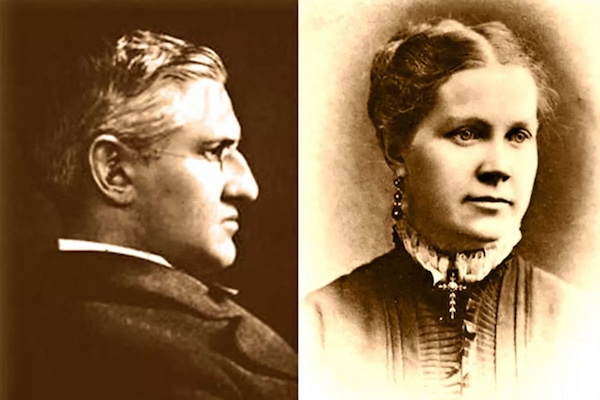
Unrelated to Jaffa’s American Colony is a Jerusalem settlement of the same name. The eponymous luxury hotel where foreign journalists like to belly up to the bar was founded in 1881 as a commune – Israel’s first kibbutz – by members of a Protestant utopian society led by Horatio Spafford of Chicago (1828-1888), who penned the Evangelical hymn “It Is Well With My Soul.”

Spafford and his wife Anna (1842-1923), together with a group of 14 adults and five children, expected Jesus’s second coming imminently. While waiting, the members of the pietistic settlement of Yankees and Scandinavians served the Holy City’s many destitute by opening soup kitchens, hospitals, orphanages and other charitable ventures.

photos - Horatio Gates Spafford and Anna Spafford, circa 1873. In 1881, a Protestant utopian society led by Horatio Spafford founded the American Colony in Jerusalem
Horatio Gates Spafford and Anna Spafford, circa 1873. In 1881, a Protestant utopian society led by Horatio Spafford founded the American Colony in Jerusalem. (photos from Manuscript Division, Library of Congress)

Much of that charity was funded by the American Colony Photo Department, which became the community’s primary income. Many of those early images fall into the category of Orientalism, for which the West had a seemingly insatiable appetite. But part of that artistic achievement was due to fortuitous timing – the colony’s photographers began operating at a time when tourism to the Holy Land, especially from America and Europe, was beginning en masse.

Moreover, “with the advent of halftone printing in the 1880s, images were now becoming more accessible to the public via printed matter – books, magazines and newspapers – where they were now reproduced alongside text,” notes Tom Powers in his 2009 work Jerusalem’s American Colony and Its Photographic Legacy. (Before that, photographs could only be pasted into books by hand, as individual prints.)

A third factor was getting off to a good start, thanks to plain luck. The first sizeable project of the American Colony documentarians was the1898 state visit of Imperial Germany’s Kaiser Wilhelm II and Empress Augusta Victoria to the Holy Land.

Interested in seeing the American Colony Photo Department’s 22,000 historic photographs archived at the Library of Congress in Washington, DC? Visit loc.gov/pictures/collection/matpc/colony.html. 

Gil Zohar is a writer and tour guide in Jerusalem.

Format ImagePosted on February 14, 2025February 13, 2025Author Gil ZoharCategories IsraelTags American Colony, colonialism, history, Israel, photography, United States

מדינה במשבר

אירוע השבעה באוקטובר הנורא גרם לטראומה קשה מאוד אצל ישראלים רבים. ישראל מעולם לא חוותה אירוע כל כך קשה שגרם נזק נפשי גדול לתושבי המדינה שנמצאת במשבר שהולך ומתעצם

חלק מהישראלים מנסה לחזור לשגרת היום יום ויש אחרים המתסכלים החוצה אל מה שקורה בעולם. יש שרוצים לעזוב את ישראל ועל פי נתונים רשמיים כבר למעלה משמונים אלף עבור לגור בחו”ל. בפועל המספר צפוי להיות גדול יותר. אחרים רוצים לתפוס קצת מנוחה בחו”ל למספר ימים וכידוע נסיעה לחו”ל היא אחד התחביבים הידועים של הישראלים. המשבר הנוכחי יצר אף תופעה חדשה של ישראלים המלכלכים על העולם שלא עצר מלכת, או שמחפשים נקודות תורפה במדינות שנות – כדי לטעון שהחיים ישראל טובים יותר. ישראלים אלו שותפים לרגשי התעמולה הלאומנית שתפחו לאור השבעה באוקטובר. לא מפתיע כי בעת שראש ממשלת ישראל מפעיל מכונת רעל כנגד כל מי שמתנגד לו, יש אזרחים שמפעילים מכונת רעל כנגד כל דבר שהוא לא ישראלי בהן  מדינות בעולם. כידוע הנשק הטוב ביותר לפתור בעיות מבית הוא להתקיף את האחרים הזרים

לאחרונה מספר ישראלים שלחו לי לינקים על קנדה ונקודות התורפה שלה. כמו הומלסים, מהגרים, פשע ואנטישמיות. אכן האנטישמיות מרימה ראש במדינות רבות בעולם כולל קנדה וזו תופעה חמורה ביותר. אך לא פחות חמור הוא שישראלים ויהודים בעולם מתעלמים לחלוטין מהסיבה לאנטישמיות בגל הנוכחי. הם מציינים כי העלייה באנטישמיות הנוכחית החלה לאור השבעה באוקטובר. אך “שוכחים” את מעובדה לא פשוטה שעדיף להתעלם ממנה, במסגרת מסע הלאומניות השוטף את ישראל ויהודי העולם. והיא: שההרג של עשרות אלפים אזרחים חפים מפשע בעזה, הוא זה שהביא לאנטישמיות הקשה שאנו חווים כיום. אין שום הצדקה לאנטישמיות נגד עם שאיבד כמחציתו בשואה, אך עם שאיבד את מחציתו בשואה, לא יכול לאפשר הרג של אזרחים ברצועת עזה, כולל נשים וילדים רבים

על מנת להסביר עוד יותר עד כמה כיום הישראלים הם לאומניים אזכיר כיצד הם מתייחסים “ודואגים” לילדי עזה המסכנים שאף אחד לא יכול להאשימם במעשי השנאה הבלתי אנושית של החמאס ושאר ארגוני הטרור. סיפרתי לידידה ישראלית שגרה שנים בארה”ב על מופע של זמרת אמריקאית ידועה שהופיעה בחודש שעבר בוונקובר. אמרתי לשמאוד נהנינו בהופעה. ומה היא אמר בתגובה: אני שמחה שנהניתם בהופעה אך אני פחות שמחה שהוצאת כסף על כך, והזמרת תתרום חלק מההכנסות לילדי עזה. נדהמתי מהתגובה הזו והחלטתי שלא להגיב. זאת, למרות שכמעט עניתי לידידתי כי צה”ל ידאג לכך שעוד מעט לא ישארו ילדים חיים בעזה כך שאלה לא יזדקקו עוד לתרומות

מספר ישראלים שלחו לי דברי ביקורת קשים על ראש הממשלה “הנורא” של קנדה, ג’סטין טרודו, שגרם לנזק גדול למדינה. הופתעתי שפתאום הישראלים הפכו למומחים בנושאי קנדה. מכל מקום טרודו סוף סוף הודיע בימים האחרונים על התפטרותו וחבל שלא עשה זאת קודם. לגבי הישראלים: הם האחרונים שיכולים לבקר ראשי הממשלות של מדינות אחרות. ומדוע? כי במשך כשבעה עשרה שנה עומד בראש ממשלת ישראל, בנימין נתניהו הנוכל. הוא הרס כל חלקה טובה במדינה אותה הפך לבובת הסמרטוטים שלו. נתניהו הוא אחראי הראשי והראשון למחדלי השבעה באוקטובר ולרבים רבים מתחלואות מדינת ישראל בעשורים האחרונים. מי שלא הצליח להחליפו שלא יחפש ללכלך על מדינות אחרות בעולם ועל המנהיגים שלהן. הלאומניות הישראלית לא תוביל את הישראל להצלחה

Posted on February 5, 2025January 14, 2025Author Roni RachmaniCategories עניין בחדשותTags antisemitism, Canada, Gaza, Israel, nationalism, Netanyahu, Oct. 7, Trudeau, אנטישמיות, בנימין נתניהו, ג'סטין טרודו, הלאומניות, ישראל, עזה, קנדה, שבעה אוקטובר

Posts pagination

Previous page Page 1 … Page 57 Page 58 Page 59 … Page 667 Next page
Proudly powered by WordPress