Skip to content
  • Home
  • Subscribe / donate
  • Events calendar
  • News
    • Local
    • National
    • Israel
    • World
    • עניין בחדשות
      A roundup of news in Canada and further afield, in Hebrew.
  • Opinion
    • From the JI
    • Op-Ed
  • Arts & Culture
    • Performing Arts
    • Music
    • Books
    • Visual Arts
    • TV & Film
  • Life
    • Celebrating the Holidays
    • Travel
    • The Daily Snooze
      Cartoons by Jacob Samuel
    • Mystery Photo
      Help the JI and JMABC fill in the gaps in our archives.
  • Community Links
    • Organizations, Etc.
    • Other News Sources & Blogs
    • Business Directory
  • FAQ
  • JI Chai Celebration
  • JI@88! video

Recent Posts

  • Story of Israel’s north
  • Sheltering in train stations
  • Teach critical thinking
  • Learning to bridge divides
  • Supporting Iranian community
  • Art dismantles systems
  • Beth Tikvah celebrates 50th
  • What is Jewish music?
  • Celebrate joy of music
  • Women share experiences 
  • Raising funds for Survivors
  • Call for digital literacy
  • The hidden hand of hate
  • Tarot as spiritual ritual
  • Students create fancy meal
  • Encouraging young voices
  • Rose’s Angels delivers
  • Living life to its fullest
  • Drawing on his roots
  • Panama City welcoming
  • Pesach cleaning
  • On the wings of griffon vultures
  • Vast recipe & story collection
  • A word, please …
  • מארק קרני לא ממתין לטראמפ
  • On war and antisemitism
  • Jews shine in Canucks colours
  • Moment of opportunity
  • Shooting response
  • BC budget fails seniors
  • Ritual is what makes life holy
  • Dogs help war veterans live again
  • Remain vital and outspoken
  • An urgent play to see
  • Pop-up exhibit popular
  • An invite to join JWest

Archives

Follow @JewishIndie
image - The CJN - Visit Us Banner - 300x600 - 101625

Arts enhance inclusion

Arts enhance inclusion

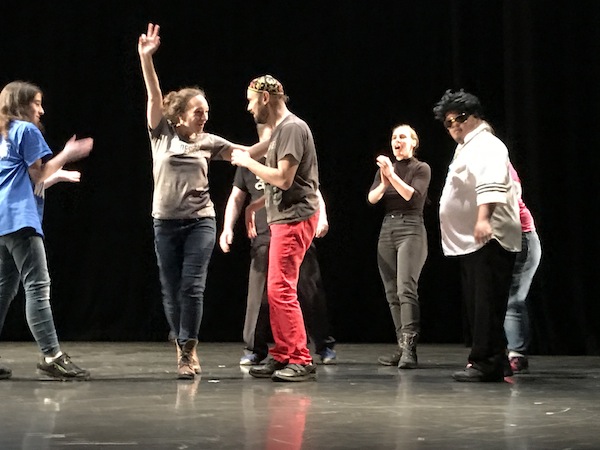
Matthew Tom-Wing, right, dressed as Elvis, was one of the participants in the 2019 Chutzpah! Festival finale. His mother, Elizabeth Tom-Wing, recalled it as a “standout moment for our community and for our son!” (photo from JCC)

February is Jewish Disability Awareness and Inclusion Month (JDAIM). It offers a wonderful time to look back at some of our community achievements in fostering inclusion at the Jewish Community Centre of Greater Vancouver; in particular, the 2019 Chutzpah! Festival’s Inclusion Project.

Mary-Louise Albert was artistic and managing director of Chutzpah! and the Rothstein Theatre for 15 years. Before she retired, she and I had many spirited conversations about the importance of creating access for local community members in all areas of Jewish communal life and at the JCC, which is the home of the festival and the theatre, and where I am the coordinator of inclusion services.

We believed that the arts are an important avenue for personal growth and skills development, and that they also bolster visibility and foster true belonging. We hoped that the JCC’s inclusion services and Chutzpah! could collaborate in some way and, through our conversations and Mary-Louise’s vision and expertise, the Chutzpah Inclusion Project crystalized.

After months of planning, in November 2019, members of the local community took to the Rothstein stage to participate in a first-ever Inclusion Project performance – an evening of dance and comedy with international inclusion advocate Pamela Schuller and professional dancers Troy Ogilvie and Rebecca Margolick. The event was the finale of the 2019 Chutzpah! Festival and a highlight of Albert’s final year with Chutzpah!

In preparation to take to the stage, participants had a yearlong introduction to theatre, including low-barrier and free classes with a specialist through the JCC’s Theatre Lab program. Participants attended many local productions through the JCC’s social club, and spent hours rehearsing and co-creating with Ogilvie, Margolick and Schuller over a series of workshops that would not have been possible without community partners and friends.

The 2019 performance received a standing ovation from the audience. The feeling of solidarity and acceptance between the audience and the performers was palpable. What was most amazing, Elizabeth Tom-Wing recalled, is that her son had the opportunity to “train and perform on stage with the professional dancers, along with his friends, and close off the three-week-long 2019 Chutzpah! Festival.” She recalled it as a “standout moment for our community and for our son!”

This project demonstrated that artists of mixed ability and skill can create a powerful and moving performance. Moreover, it reminds us that it is only through equity and action that belonging can be fostered. As diversity, equity and inclusion strategist Arthur Chan explains: “Diversity is a fact. Equity is a choice. Inclusion is an action. Belonging is the outcome.”

Leamore Cohen is inclusion services coordinator at the Jewish Community Centre of Greater Vancouver.

Format ImagePosted on February 26, 2021February 24, 2021Author Leamore CohenCategories Performing ArtsTags Chutzpah!, disability awareness, diversity, equity, inclusion, JCC, JDAIM, Mary-Louise Albert, theatre
Waldman thrives

Waldman thrives

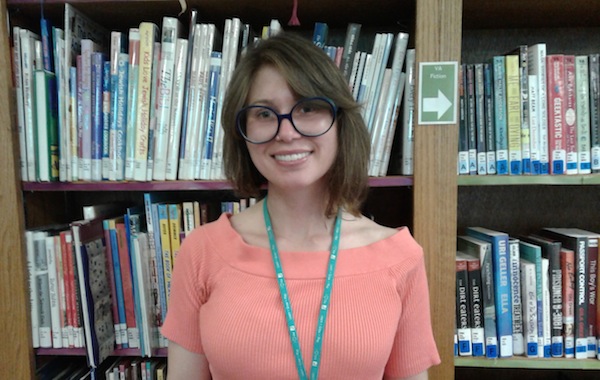
Aviva Rotstein, full-time coordinator of the Isaac Waldman Jewish Public Library, is only the fourth person to head the facility. (photo from Waldman Library)

In a time of reduced social interaction, people have turned to books, videos, audiobooks and other pursuits to entertain and enrich. Libraries have had to find ways to deliver their services while maintaining strict protocols around cleaning and maintaining distancing.

For the Isaac Waldman Jewish Public Library, the last year has been a period of adapting to changing public health directives, and finding new ways to provide services to members and the public. Having marked its 25th anniversary in recent years, the library, located in the Jewish Community Centre of Greater Vancouver, like so many other agencies worldwide, turned on a dime to meet readers’ needs.

Aviva Rotstein had just taken over as interim library coordinator after the retirement of longtime librarian Helen Pinsky in December 2019. She became permanent coordinator in May. Guided by provincial rules and in coordination with the JCC, Rotstein and the library responded rapidly.

Like most of the world, the library shut down completely in March 2020, but continued providing access to ebooks and audiobooks online. New members joined specifically for these resources, said Rotstein.

In May, the library started offering curbside pickup and drop-off services, as well as launching a delivery service to Vancouver residents, later expanded to Richmond. By late summer, the library was open by appointment. It is now back to regular hours of 10 a.m. to 6 p.m. Monday to Thursday, and Sundays 10 a.m. to 1 p.m. Families are especially welcome on Sundays and kids’ storytimes can be arranged by request.

Cleaning protocols remain vigilant, with hard cover books and items like DVDs sanitized on return and other items sequestered before being recirculated.

Rotstein assumed the leadership of the library at this extraordinary time and she is one of a surprisingly small number of individuals – four, to be precise – who have headed the facility.

Talk of a Jewish public lending library began seriously almost 30 years ago. The first meeting of the JCC’s ad hoc library committee took place Oct. 29, 1991. The minutes include a brief synopsis of the Jewish community’s libraryscape. There were existing small libraries in synagogues and schools, as well as a Jewish Resource Centre, run by Betty Nitkin and aimed at educators, and a small Jewish library with no budget, run by Rita Weintraub.

While the Waldman Library is, to many visitors, a central part of the JCC experience, it was not a foregone conclusion when the building was being redeveloped in the early 1990s. Larry Barzelai, a family doctor who was on the board of the JCC, chaired the library committee.

The redevelopment of the community centre was the impetus for the push to get a permanent library, he said.

“We had to convince them that the library was a good thing to have,” Barzelai recalled. “My friend Karl Taussig was quite supportive of the library from day one. He was president of the JCC at that time.”

There were concerns about the economic viability of the project and the idea was not secured until Weintraub obtained the enthusiastic support of philanthropist Sophie Waldman. Waldman’s late husband, Isaac, was good friends with Weintraub’s husband, Marvin. Waldman saw the library project as a fitting tribute to her husband, who, she said at the time, “had a deep interest in education and agreed with Ahad Ha’am that the future survival of the Jewish people depends on learning through the richness of our literary heritage.”

With the library’s viability assured, any hesitation on the part of the JCC board dissipated.

“They were totally on side by the time the new JCC was built and the library took a prominent place in there,” said Barzelai.

After years of planning, the library opened with a literary splash on Nov. 15, 1994. Renowned Israeli author Amos Oz spoke on “Israel through its literature” and Rabbi Dr. Yosef Wosk affixed the mezuzah. (Wosk succeeded Barzelai as chair of the library board.)

The first librarian was Eric Pellow, who served a number of months until Karen Corrin began a 20-year run at the head of the library. Corrin had just finished library school when she was hired, but her previous work experience was ideally suited to the role. She had worked with the Vancouver Volunteer Centre (now Volunteer Vancouver) and, since the Waldman Library’s vision was to engage volunteers, Corrin’s combination of experience and skills was deemed an ideal fit.

From the start, she said, the Waldman Library was surprisingly unique. At conferences of the Association of Jewish Libraries, Corrin discovered there were very few community centres that had a public library independent of a school or as part of the local Jewish federation.

Corrin credits Rita Weintraub, who passed away last year, as the mobilizing force behind the project.

The purpose of the library was a matter of discussion and the first years were a time of learning, as new technologies in the world generally and libraries in particular were burgeoning.

“When I went to library school, it was just the beginning of the internet,” said Corrin. “When I got to the library, it was card catalogue … there was no computer system and that had to be developed.”

Figuring out what the community wanted in a Jewish public library was paramount, she continued. It was decided that it should be a lending library that is also a meeting place for everybody in the community – religious, secular, academic and avocational, all ages and interests, including resources in English and Hebrew.

“It is not an Orthodox library or Reform library, it’s a Jewish library,” said Corrin. “It meets the needs of the whole community.”

Like Corrin, Helen Pinsky had also just completed library school when she was tapped to lead the Waldman Library.

Pinsky was a lawyer who, after the last child took off to university, decided to make a shift herself and returned to study. Library people, she determined, were more her type.

“Lawyers were smart people who wanted to show off their smarts and were Type A and librarians were smart people who were curious and were Type B,” she said. “Going to university was a hoot in your 50s, oh my God. I was the bubbe of the group.”

While still a student, Pinsky spoke to Corrin about volunteering. She ran some storytime programs and filled in for other volunteers at the library. She completed her program in spring 2011 and then took the summer off.

“Come September, I decided one day that I’d better brush off my resumé and start thinking about actually doing something with this degree that I had just earned in May,” Pinsky recalled. “So I went to my computer and I found this very old copy of my resumé and was just looking at it and the phone rang and it was Karen, who said, hi Helen, have you graduated from library school yet? She said, congratulations. How would you like a job?”

Pinsky filled in while Corrin took a leave of several months, then worked as library assistant until Corrin retired in 2015. Pinsky retired on Dec. 31, 2019.

Reflecting on the meaning of a Jewish public library, Pinsky said, “I think it plays the role of any public library and then some. What is a public library to a community? It’s a place for gathering, it’s a place for learning, it’s a place for connecting, with knowledge, with information, with resources and with people.”

Rotstein, the latest in a short line of library leaders, is the first to have childhood memories of the place.

“When I was a child, I came into this library,” she said. “It’s very familiar.”

In addition to her long personal connection to the library, Rotstein sees the place in the context of a much larger connection.

“I think we provide a link to Jewish thought and imagination from the Jewish past and the present,” she said. “We offer a low barrier to participation as much as we can, and we strive to be an accessible and welcoming place for everyone. We try to uphold the Jewish value of learning and knowledge.”

Format ImagePosted on February 26, 2021February 24, 2021Author Pat JohnsonCategories LocalTags Aviva Rotstein, coronavirus, COVID-19, Helen Pinsky, history JCC, Karen Corrin, Larry Barzelai, Waldman Library
Kirman Library spans the arts

Kirman Library spans the arts

The Kirman English and Yiddish Library at the Peretz Centre for Secular Jewish Culture is available for anyone in the community to access. (photo from Peretz Centre)

“Books are humanity in print” – Barbara Tuchman

The Kirman English and Yiddish Library at the Peretz Centre for Secular Jewish Culture was set up in 1976 by Paula and Shaya Kirman, members of the Peretz Institute – as it was then known – and dedicated Yiddishists. The two main purposes in establishing the library were, first, to collect and preserve the books that were scattered in different places in the community, and, second, to make these books available to the whole community in a lending library.

Paula Kirman, who worked as a cataloguer at the University of British Columbia library, volunteered many hours to set up a card catalogue and shelve the Peretz library in an organized way. Eventually, she resigned from her volunteer position because of a perceived lack of support from the Peretz Institute’s board of directors.

In 1999, in preparation for the construction of the Peretz Centre’s present building (in the same location the institute had been since the 1960s), the library books and card catalogue had to be boxed and removed. With the completion of the new building in 2000-2001, the organization was renamed the Peretz Centre for Secular Jewish Culture and the words of I.L. Peretz, considered by many as the “father” of modern Jewish culture, were prominently displayed above the entrance foyer: “A people’s memory is history; without a history, a people can grow neither wiser nor better.”

Sporadic attempts to restore the library were made, but, when Al Stein returned to Vancouver and joined the centre’s board of directors in 2001, much of the library was still in boxes and Kirman’s card catalogue was in disarray. Stein volunteered to lead the effort to restore the library, if the board would support it in two ways: vote for funding for new shelving and support Stein’s effort to obtain a grant from the Jewish Community Foundation of Greater Vancouver to hire a library technician and digitize the entire library, including the Yiddish books.

The grant proposal was successful. A newly graduated library technician, unfamiliar with Yiddish, was contracted and many hundreds of hours were spent properly transliterating each Yiddish book and journal title, digitizing the entire collection in accordance with the latest electronic library standards, relabeling each book, arranging for electronic hosting of the library catalogue, supervising the installation of new shelving and then, finally, shelving the books and journals in an organized fashion.

Thanks to large and small donations of both English and Yiddish books from individuals, from the Winnipeg Jewish Library and from the Isaac Waldman Jewish Public Library at the Jewish Community Centre of Greater Vancouver, as well as a small number of purchases, the Kirman Library of the Peretz Centre now contains nearly 4,000 books and journals and is almost at capacity. The collection includes titles by kabbalists, rabbis, atheists, historians, politicians, musicians, artists, humourists, and those who wrote fiction, plays and poetry – in other words, the entire spectrum of Jewish creativity, encompassing all the arts.

Most of the collection is now in English and is a unique treasure trove of information and pleasure for the casual reader and the scholar. Two collections are of note. The late Dr. Gersh Winrob donated his English-language collection of Holocaust literature, memoirs, history and analyses, certainly one of the largest in the community. And the late poet Miriam Waddington donated part of her library, mostly English-language literature and essays, with a bit of Yiddish poetry.

The Peretz Centre is a proud member of the Yiddish Book Centre, now the largest Jewish cultural organization in the United States.

The Peretz’s library catalogue may be searched from any computer via the Peretz Centre website, peretz-centre.org: click the Kirman Library tab and then the Catalog link. The library ID is Kirman Library. No password is needed.

Books and periodicals can be borrowed for a $10/year fee. Four items may be borrowed at a time, for a period of four weeks, which may be renewed if no hold has been placed on the item. And the library may be used whenever the Peretz office is open, so call ahead before coming down, or for more information about library policy in general, such as its overdue or lost items policy, or to obtain a library card: 604-325-1812, ext. 1, or [email protected].

If you have any specific questions or comments about the library, or wish to make a donation to it, Stein can be reached at 604 731-1193 or [email protected].

Format ImagePosted on February 26, 2021February 24, 2021Author Peretz CentreCategories LocalTags Al Stein, art, fiction, Gersh Winrob, history, Judaism, Kirman Library, Miriam Waddington, poetry, theatre, Yiddish

BI hosts Zoom scholar series

On Feb. 16, Congregation Beth Israel welcomed the first of four renowned Jewish scholars in a made-for-Zoom series, The BI Scholars. Canadian-born Dr. Henry Abramson, dean of Touro College in New York and a specialist in Jewish thought and history, kicked off the series with a talk entitled Becoming the People of the Byte: The Internet, Talmud and the Future of the Jewish People.

photo - Dr. Henry Abramson launched The BI Scholars series on Feb. 16
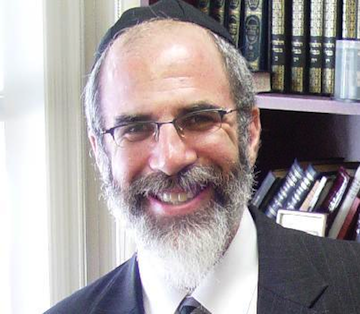
Dr. Henry Abramson launched The BI Scholars series on Feb. 16. (photo from Beth Israel)

His discourse looked at how Jews, over time, and to this day, use and relate to new information technology, and how it changes our modes of learning and disseminating texts. Abramson explained that Jews are generally early adopters of technology, beginning in the second century CE when, under the guidance of Judah Ha-Nasi, we moved from an oral tradition to the documentation of the Mishna in manuscript form, a big change that encountered significant resistance along the way. This was followed by the era of the printing press and, now, digital technology.

These communications technologies allow for significant democratization, and Abramson pointed out the value of the internet in that learning is available to all, whereas “treasured texts were previously not accessible to 50% of the Jewish community – namely, women.”

However, technology also presents dangers in terms of knowing the authenticity and authority of texts. It is our job, said Abramson, “to discover what we can trust and what we can discard.”

One of the female scholars about whom Abramson speaks is Ilana Kurshan, who has completed a remarkable feat of Talmud study – finishing the whole Talmud in seven-and-half years, Daf Yomi, a page a day. Kurshan will speak at the March 9 instalment of the Zoom series about her award-winning memoir If All the Seas Were Ink, which takes readers on a guided tour of the Talmud, while detailing her personal stories of love, loss, marriage and motherhood.

It is, indeed, one of the most unique Talmud commentaries ever written, as she explains: “The memoir is secondary. The way I happened to write this commentary on the Talmud is through my life.”

During her years studying the Talmud, Kurshan, a rabbi’s daughter from Long Island, N.Y., came to discover the terminology to understand her own daily experiences. “Talmud speaks to the human dimension of experience and, in many ways, that does not change,” she said. According to Kurshan, you cannot divorce the human experience from one’s own experience. “Just as the Talmud is a commentary on life, my life became a commentary on Talmud.”

On April 20, Dr. Benjamin Gampel, the Dina and Eli Field Family Chair in Jewish History at the Jewish Theological Seminary, will speak on the topic Riots, Inquisitions and Expulsions, and the Emergence of the Sephardic Diaspora. Gempel is a specialist in medieval and early modern Jewish history.

The series ends with Yuri Vedenyapin from McGill University, whose topic is The Adventures of a Yiddish Teacher. An actor and a singer-songwriter, his areas of academic interest include Yiddish language and culture.

All BI Scholars Zooms start at 7:30 p.m. To register, visit bethisraelvan.ca/happenings/adult-programs/bischolars.

Posted on February 26, 2021February 24, 2021Author Beth IsraelCategories LocalTags BI, daf yomi, education, Henry Abramson, Ilana Kurshan, Judaism, lifestyle, philosophy, Talmud, technology

Canadian Jewish art?

Does Canada have Jewish art? What defines Jewish art? University of Calgary art professor Jennifer Eiserman will address those questions on March 7, at 11am. The Zoom event is the fifth in Kolot Mayim Reform Temple’s 2020-21 Building Bridges lecture series.

photo - Prof. Jennifer Eiserman
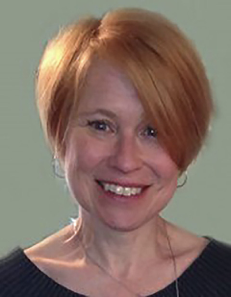
Prof. Jennifer Eiserman (photo from art.ucalgary.ca)

With a wealth of visual support, Eiserman will introduce the rich esthetic traditions that inform contemporary Jewish art in Canada. The artists to be discussed include Sorel Etrog and his contribution to Canadian Modernism, the figurative work of printmaker Betty Goodwin, and the Jewish fantastical creatures of sculptor David Altmedj, who represented Canada at the Venice Biennale in 2007. Sylvia Safdie’s video installations of flowing water, sand, light and sound advance the traditional concerns of Canadian art with landscape and nature more commonly associated with the Group of Seven.

Growing up in Montreal, Eiserman experienced firsthand the national influence that the Saidye Bronfman Centre had in disseminating Canadian Jewish art. She spent her childhood in Montreal and her adolescence in Alberta’s Cypress Hills. She did her bachelor’s (art history) and master’s (education through the arts) at McGill University in Montreal, and a bachelor of fine arts (visual art) at the University of Regina. Her PhD, one of the first ever to use studio art as its method of inquiry, is from the University of Calgary, where she is now associate professor in the department of art. Her current research is in North American contemporary Jewish art and community-based Jewish art.

Eiserman is also a successful practising artist. She uses mixed media, crochet, watercolour painting, installation and public art projects to explore issues related to Jewish theology, philosophy and identity. Eiserman explains that her work is “what I call ‘visual midrash,’ my artistic response to sacred Jewish texts.”

For more information on and to register for Eiserman’s talk, visit kolotmayimreformtemple.com. For coverage of the Jan. 3 lecture of the Building Bridges series, click here.

Posted on February 26, 2021February 24, 2021Author Kolot MayimCategories Visual ArtsTags art, Canada, Jennifer Eiserman, Judaism, painting
The first of several stories – JMABC @ 50

The first of several stories – JMABC @ 50

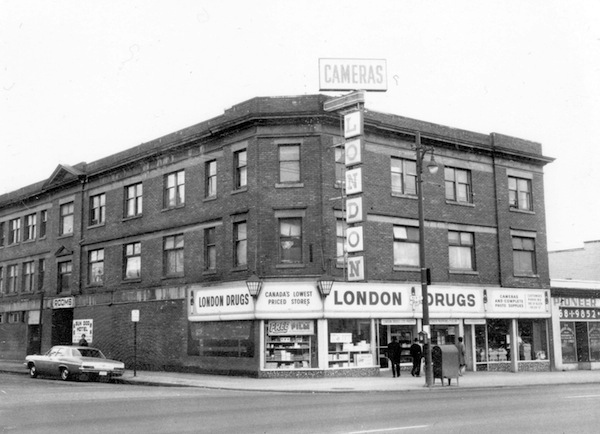
The first London Drugs was located at 800 Main St. The drugstore chain was started by Sam Bass in 1945. (photo from City of Vancouver)

In the 163 years that Jewish people have been living in British Columbia, they have experienced a great many things, and our community history is comprised of millions of stories. It is the ongoing work of the Jewish Museum and Archives of British Columbia to collect, preserve and share these stories.

This year, 2021, is a special one for the museum and archives – it’s the organization’s 50th anniversary. To mark the occasion, the JMABC will be releasing a special commemorative book. The volume is being designed as a keepsake to share with your children and grandchildren, or whichever young people you care about and whom you want to share your story with. It will provide a survey of our community’s rich history, fostering a connection between generations present and the past.

Dozens of community organizations are contributing their own organizational histories. Families and individuals are also invited to participate, either by contributing their family history or by nominating someone who has made a significant impact on the community, the region, or the world through their work, volunteer work, or philanthropy.

Full details about nominating or contributing are available at jewishmuseum.ca/fifty-years. Let the museum know who you think should be included.

Over the next several months, we’ll be publishing profiles of families and individuals to give you a taste of what you can expect in the anniversary publication. In this article, we share the story of Sam Bass, an innovative entrepreneur who left a lasting impact on the local Jewish community, the city of Vancouver and Canada as a whole.

Bass was someone who was never satisfied with the status quo. His restless creativity and business savvy made him an innovator of the modern drugstore. Born in 1915 on a Winnipeg farm to immigrant parents from Kiev, Ukraine, Bass received a diploma in pharmacy in 1939 from the faculty of pharmacy at the University of Manitoba. Following graduation, Bass enlisted, as a pharmacist, in the Royal Canadian Air Force for the Second World War. After the war, he decided to move to California; however, his planned brief stopover in Vancouver turned into permanent settlement.

Shortly after his arrival here in 1945, Bass purchased the old Schoff Drug Store at the corner of Main and Union streets. His first order of business was to change the name to London Drugs, named after London, England, the home of Canada’s then-king, King George VI.

Bass implemented the policy of a low-percentage markup on prescription drugs, he drastically increased the hours for dispensing prescription drugs (9 a.m. to midnight) and opened his store on Sundays. These actions flew in the face of existing conventions that drugstores only sold drugs during regular office hours at an industry-wide agreed-upon dispensing fee.

Bass’s new business model was extraordinarily successful, attracting customers from all over the city. He fought for years to defend his right to offer customers good-quality products and low prices. He went to the extent of advocating his position to the Supreme Court of Canada by appearing before a commission implemented by the federal government to investigate the cost of drugs. The commission eventually proposed five recommendations, three of which were found in Bass’s brief.

He shook up the pharmacy market in yet another important way, offering more than just pharmaceutical and medical items at a time when all stores offered exclusively specialized stock. Soon after the first London Drugs opened, Bass bought a full inventory of cameras and sold them at a discounted price. The gamble was a success and, to this day, cameras and home electronics remain cornerstone items at London Drugs. The practice has now become commonplace, with many large stores selling a wide diversity of products.

This tendency towards innovation gave London Drugs a competitive advantage and brought the company growing profitability. Over the next 20 years, Bass expanded the company to locations throughout the Lower Mainland. In 1968, after 23 years of ownership, he sold London Drugs to an American firm, the Daylin Corp., remaining on as London Drugs’ president until 1976, and overseeing further expansion. In 1976, the company was sold to the H.Y. Louis Group and, today, its stores number 78 across Western Canada.

Bass and his wife Muriel were very involved in the Jewish community and their family has continued their legacy. The Muriel and Sam Bass Family Fund continues to make contributions to Vancouver’s Jewish community following Sam Bass’s death in 1990, and Muriel Bass’s death in 2003.

Sam Bass’s life as a local entrepreneur stretched far beyond his personal success as a business owner. His legacy is represented by the widespread success of London Drugs across Western Canada. Its stores still reflect the business model that he revolutionized more than a half-century ago.

Format ImagePosted on February 26, 2021April 21, 2022Author Jewish Museum and Archives of British ColumbiaCategories LocalTags history, JMABC, Sam Bass
Community milestones … Rosenblatt, Klein, Cohen Weil

Community milestones … Rosenblatt, Klein, Cohen Weil

Dr. Cirelle Rosenblatt (photo from pesachonthemountain.com)

The Stroke and Brain Injury Assistance Organization (BINA), based in New York, awarded Dr. Cirelle Rosenblatt their Brain Injury Leadership Award on Jan. 24.

Created in 2003, BINA provides guidance and support to thousands of stroke and brain injury survivors and their families. Dr. Rosenblatt has been involved with BINA since its early days.

Dr. Rosenblatt has worked as a neuropsychologist for more than 25 five years in a wide range of rehabilitation medicine settings. She is a sought-after expert in neuropsychological evaluation and therapy.

Dr. Rosenblatt trained and worked at leading facilities in the United States prior to moving to Vancouver with her family in 2003.

She founded and is currently the clinical director of Advance Concussion Clinic (ACC). Located in Vancouver and Surrey, ACC is British Columbia’s only dedicated concussion clinic. She also serves as a consultant to national and Olympic snow athletes and teams, and other professional and competitive athletes.

Mazal tov to Dr. Cirelle Rosenblatt!

* * *

photo - Alison Klein
Alison Klein

Alison Klein was selected to participate in the CBC Hot Docs Podcast Career Accelerator, which took place during the CBC Hot Docs Podcast Festival (Jan. 27-29). She was one of 70 emerging Canadian audio creators chosen for their innovative Canadian podcasts. Alison’s show, The Self Advocate, was created to provide a forum to talk to people with cognitive disabilities who advocate for themselves. It can be heard on Co-op Radio 100.5 FM or coopradio.org, and is available on Spotify and other podcast providers.

* * *

photo - Ayelet Cohen Weil
Ayelet Cohen Weil (photo from Louis Brier Foundation)

The board of directors of the Louis Brier Foundation recently announced the appointment of Ayelet Cohen Weil as the new executive director of the foundation. With more than 12 years of experience working in Jewish community organizations, both in British Columbia and in Israel, Cohen Weil brings an impressive background in nonprofit management, fundraising, strategic planning, community relations and development.

Prior to joining the foundation on Feb. 1, Cohen Weil held the position of associate director of community engagement at the Jewish Federation of Greater Vancouver, as well as manager of women’s philanthropy and manager of major gifts for Jewish Federation’s annual campaign. Her previous experience includes working in academia at the Interdisciplinary Centre Herzliya, as well as serving as managing director of Hillel BC. She holds a master’s degree in public policy, conflict resolution and mediation, with international mediation certification and distinction from Tel Aviv University.

The Louis Brier Foundation has a broad perspective and commitment in fulfilling its mission statement, and raising funds to maintain and foster the well-being, care and happiness of the seniors of the Snider Campus, site of the Louis Brier Home and Hospital and the Weinberg Residence.

“This year, one like no other, and after more than 12 years of working in Jewish communal life and being exposed to the many facets of the fabric of our community, I have been pondering upon the vitality in embracing, more than ever, the value of caring warmly and worthily for our seniors, the ones who built our community for us in the first place,” said Cohen Weil. “They are the living examples of our aspirations: the builders, the thinkers, the visionaries, the creators.

“I started working with the young generation in my years in Hillel and then at Federation across the community…. I truly wish to impress upon the younger generation how important this is for immediate family members and for the kavod we owe to our elderly. I would love to raise even more the profile of the centrality of this foundation in our community across all generations. This, for me, is thinking of the fabric of our Jewish community … in its full cycle and in its entirety. This is what excites me the most – to hopefully be able to contribute and create a large impact where it’s mostly needed after what we have experienced in 2020 with the COVID-19 pandemic…. To now be part, as well, of ensuring that the physical, mental and spiritual needs of our Jewish seniors are met so that they have a life of dignity, fulfilment and happiness, which they so much deserve…. Anything that would bring an extra smile, a feeling of comfort and warmth to Jewish seniors in our community is never too much, and I am incredibly excited and humbled for this opportunity.”

Format ImagePosted on February 26, 2021February 24, 2021Author Community members/organizationsCategories LocalTags Alison Klein, Ayelet Cohen Weil, BINA, brain injury, Cirelle Rosenblatt, COVID-19, health, Louis Brier Foundation, podcasts, seniors, stroke, The Self Advocate
Looking for Sklut family

Looking for Sklut family

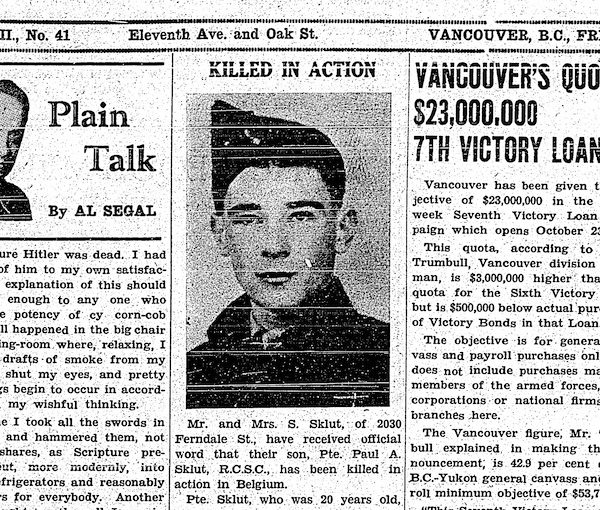
In looking through the Jewish Independent’s archives, after reading this article, this photo of Pte. Paul Sklut was found.

A Belgian tour guide and historian, Niko Van Kerckhoven, wrote to me recently. Van Kerckhoven, 50, and his teenaged son, regularly visit the graves of the Canadian soldiers who were killed liberating his town, called Wommelgem, during the Battle of the Scheldt, which was the Canadian campaign in the area surrounding the crucial port of Antwerp in fall 1944. It cost more than 6,000 Canadian casualties to take it, including that of Jewish volunteer Pte. Paul Sklut.

Van Kerckhoven has found photos of nearly all of the Canadian “boys” whose graves he visits, but not Sklut’s. As he wrote to me, “I’m quite desperate. You are pretty much my last chance for a picture!”

Sklut was the son of Russian-Jewish parents, and the family lived on Ferndale Avenue in Vancouver. It was a short walk to Britannia High School, where he was in the cadet corps, before he graduated.

Sklut’s name was often mentioned in the Vancouver newspapers, for he played competitive tennis, and also gave piano recitals at a venue on Granville Street.

Sklut was studying at the University of British Columbia when he was called up. He had just turned 19 on April 15, 1943. His two brothers, Harry and Donald, were already in uniform, with the army and the Royal Canadian Air Force, respectively. Sklut qualified as an infantry signaller in Kingston, Ont., then shipped out for England in July 1944. He was sent to France on Sept. 11, 1944, attached to the Calgary Highlanders. He was sent into action on Sept. 26. Twelve days later, he was dead.

“Many of them were just arriving here in Europe when they were thrown in this terrible battle of the Scheldt. I know the area well,” Van Kerckhoven wrote. “Many of the replacements died due to lack of training and experience. They really were used to plug the gaps in the infantry, although they were specialists by trade.”

Sklut was wounded on Oct. 8, 1944, and brought to a Canadian medical station that the Royal Canadian Army Medical Corps had set up inside one of the 19th-century forts near Antwerp, known as Fort 2, in Wommelgem. Military records confirm this happened.

Canadian medical personnel with the 18th Canadian Field Ambulance received Sklut at 13:00 hours. He was in really bad shape: he’d already lost his right leg at the knee, and his left leg and knee were fractured. He also had shell wounds in his chest and abdomen.

By 14:00 hours, Sklut was evacuated to the 21st Canadian Field Dressing Station and, then, still in shock, they took him to the Ninth Canadian Field Dressing Station, where he died at 16:30 hours. He was 20 years old.

Locals buried Sklut with other foreign soldiers, about 40 of them, mostly Canadians, in the civilian area of the Candoncklaer Hospital Cemetery in Wommelgen. Later, their bodies were reinterred at the Commonwealth War Graves cemetery in Bergen-op-Zoom, across the border in Holland.

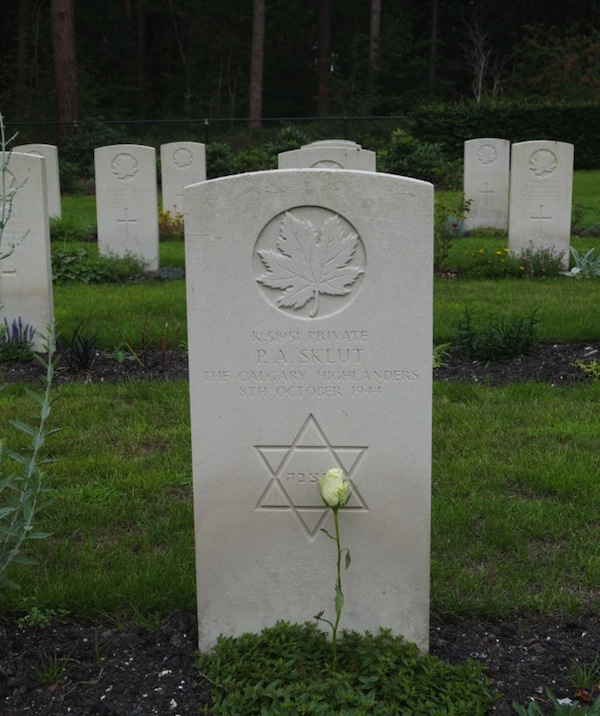
photo - Grave of Pte. Paul Sklut in the Bergen-op-Zoom war cemetery, in Holland
Grave of Pte. Paul Sklut in the Bergen-op-Zoom war cemetery, in Holland. (photo from Niko Van Kerchkoven)

That’s where my Belgian correspondent visits Skult’s grave. Van Kerckhoven is a member of his local historical society in Wommelgen, known as De Kaeck. He would like to find the Sklut family to tell them their relative has not been forgotten; he is also looking for a photo of Sklut.

Contact me through my website, ellinbessner.com, if you are able to help this man as he continues to carry out a mitzvah, although I am not sure he is aware of what that word means. (I will explain it.)

 Ellin Bessner is a Canadian journalist based in Toronto. She is the author of a new book about Canada’s Jewish servicemen and women who fought in the Second World War, called Double Threat: Canadian Jews, the Military and World War II, which was published by University of Toronto Press (2019). She also contributed a chapter to Northern Lights, published by the Lola Stein Institute (2020); it is the story of the contribution of Canada’s Jewish community to the country’s military record from 1750 to today.

Format ImagePosted on February 26, 2021February 24, 2021Author Ellin BessnerCategories WorldTags Belgium, Canada, commemoration, history, Jewish Western Bulletin, Niko Van Kerckhoven, Paul Sklut, Second World War

Combat online hate

Since the beginning of the pandemic, we have been confronted by two viruses: COVID-19 and, in its wake, the rampant spread of online hate.

As much of the world has been forced indoors, our time on the internet using social media has increased, which has advantages. We have found new ways to engage, stay in touch with our loved ones, and maintain and transform our connections to our workplaces and the world.

But the same technologies that have allowed us to keep connected have also served as springboards for the spread of online hate and conspiracy theories, which form the perfect Venn diagram of antisemitism. Since the pandemic broke, we have witnessed the emergence of ludicrous conspiracy theories accusing Jews of being responsible for the spread of COVID-19 or of profiting from the havoc. As a community that has consistently encouraged compliance with public health measures, we may be tempted to dismiss these outlandish conspiracy theories as nonsense. It is a type of nonsense, however, that spreads quickly and remains a cause for great concern.

Recent history has taught us that what begins online as the absurd mutterings of a few haters can, and too often does, turn into real-world violence. What we witnessed in Pittsburgh, Christchurch and Halle can certainly happen again. The threat is even greater today because people are spending more time online while also under considerable financial and emotional stress, a combination that makes people even more susceptible to messages hate-mongers are peddling.

Curbing online hate has been a priority for the Jewish community – and, therefore, for the Centre for Israel and Jewish Affairs – for nearly a decade. Since the beginning of the pandemic, we have remained on high alert, monitoring the emergence of antisemitic and hateful activity and bringing it to the attention of law enforcement and social media platforms.

Recently, we launched Stop the Transmission! (cija.ca/stop-the-transmission), a campaign powered by CIJA and funded by Canadian Heritage through the Anti-Racism Action Program. The campaign has provided practical tools and tips to hundreds of thousands of Canadians to identify and slow the spread of conspiracy theories, misinformation and deliberate disinformation.

We have also engaged directly with social media giants and are proud to have collaborated with our colleagues at the World Jewish Congress to urge Facebook to ban Holocaust denial, one of the most pernicious forms of Jew-hatred, from their platform, an action they took earlier this year.

We continue to call on social media companies to adopt the International Holocaust Remembrance Alliance definition of antisemitism, the most widely accepted definition in use today, including by the Government of Canada, who adopted it as formal policy in its 2019 Anti-Racism Strategy. In response to the global collective effort of our community, Facebook’s chief operating officer, Sheryl Sandberg, said “the IHRA’s working definition of antisemitism has been invaluable – both in informing our own approach,” and that Facebook would “continue to refine” its “policy lines as speech and society evolve.”

A continuing aspect of our work is advocating for governments to advance policies to address online hate directly. Federally, we continue our call for a national strategy on online hate that includes clear, harmonized and uniform regulations that apply to platforms and providers operating in Canada, as well as an independent regulator to enforce them. You can help by visiting notonmyfeed.ca and taking action.

CIJA is also working with Canadian Heritage to host the Action Summit to Combat Online Hate, scheduled for April 14-15. You can pre-register at cija.ca/action-summit. The summit will feature discussions with experts, law enforcement, industry leaders and community groups like ours. The goals are to create greater understanding of the issue and develop concrete actions to address it.

Even once the pandemic is over, our migration to the digital world will endure. We, therefore, must stay committed and united in our efforts to combat antisemitism and other forms of hatred online.

Judy Zelikovitz is vice-president, university and local partner services, at the Centre for Israel and Jewish Affairs.

Posted on February 26, 2021February 24, 2021Author Judy ZelikovitzCategories Op-EdTags anti-racism, antisemitism, Canadian Heritage, Centre for Israel and Jewish Affairs, CIJA, coronavirus, COVID-19, Facebook, online hate, Stop the Transmission!

Youth during the pandemic

Eleven months into the global COVID-19 pandemic and the statement, “we are living in unprecedented times,” has become commonplace and cliché. But, truth is at the root of this clichéd phrase. Finding and feeling our way through this new reality has been fraught with stark and opposing responses; from being immobilized and stuck, to being re-inspired and productive. As an educator and counselor who has been working with tweens, adolescents and adults in the community, I have witnessed both responses, or states of being, which are completely understandable and interchangeable as minutes turn into hours, as hours turn into days, as days turn over into weeks, and weeks turn into months.

For the purpose of this article, I want to focus on how the tweens and adolescents I work with have acknowledged that, while living life through COVID-19 is extremely tough, they have found, as the late Maya Angelou phrased it, “rainbows in the clouds” during this period. It is important to acknowledge the challenges youth face, such as experiencing restrictions to peer group interactions and experiencing the change of their schooling to remote learning. Further, an important yet more general challenge youth have faced is that the developmental stage these tweens and adolescents are in is typically punctuated by healthy detachment from their families and, in turn, usually is a period where more independence is fostered. This has been halted, interrupted and/or confused, as COVID-19 has demanded that youth are at home with their parents and families.

My overarching teaching and therapeutic philosophy is to meet the individual where they are. I try to listen to their spoken and unspoken language without handing out a quick fix. I am interested in how individuals, especially tweens and adolescents, connect with themselves as their lives have slowed down, as they have retreated to bedrooms, and in-person interactions and experiences have reverted to screens and the virtual world.

To facilitate a way into the interiority of my clients, I use the modalities of expressive arts therapies, contemplative writing and mindfulness practices. In the sessions I hold with them, they commiserate on how life is for them; grieving the smaller and larger losses and disappointments they have experienced; they freely use the session to rant and complain, and share their fears and anxieties. I then work with them in various creative and expressive modalities, which has enabled them to clarify, settle, discover and deepen a connection to their mind, body and heart.

Conducting expressive art exercises on secured video has been a poignant and immediate process. Using the shared-screen option, tweens and adolescents have been able to create and present their creations in real time. Expressive art therapies have encouraged self-discovery and enabled youth to access a range of emotions and insights that many of them did not even know they were experiencing. Engaging in exercises such as “what is in my heart?,” “draw a place,” “shape of me” (for which they can attach photos) have lowered stresses and anxieties, assisted in attention span and focus, and created an emotional uplift and emotional awareness. In these stressful, highly anxious times, expressive arts therapies have assisted greatly in calming, centring and linking youth to both their interior selves and the larger landscape of their lives, despite the uneasy and ongoing pandemic landscape.

Contemplative writing is a compassion practice that encourages one to write whatever the mind has to offer. It is a modality that helps to access who we are, what we need and what we want. It is an embodied practice that allows connection of one’s head, heart, body, breath and the page. Individual contemplative writing sessions have enabled youth to listen fully to themselves and the stories they need to tell and share. It has enabled youth to be listened to and, furthermore, to understand their own insights and often non-realized thoughts. I often tell my clients: tell your stories, I will hold your words and the spaces between them. The modality of contemplative writing has allowed youth to gain confidence and feel empowered, as they accessed and used their own voices, and overall experienced a sense of agency through their writing, telling and sharing of stories.

Throughout my sessions, in conjunction with expressive arts therapies and contemplative writing, I often employ various mindfulness practices. The general aim of mindfulness is also to connect with oneself. For tweens and adolescents, who are used to, even in COVID-19, a fast-paced, pop-up, manic existence with multiple devices in reach of their hands and gazes, mindfulness offers a sharp departure. The frenzied pace of day-to-day life often increases anxiety and depression in young people. It needs to be said that, often, the anxiety and depression is more of a low-grade malaise that we are unaware of until we begin to practise mindfulness.

Generally, mindfulness involves slowing down, delving into a deeper breath, noticing and following through into various practices to relax the mind and body. With tweens and adolescents, I also invoke the senses, encouraging them by carrying out exercises that use guided imagery and engagement of the five senses. This sensory engagement includes holding and touching various objects and taking time to peel and eat (taste) an orange. In the slowing down, in the distillation to being in the moment, in the focus of breath awareness and sensory awareness, I have found youth to become more relaxed, receptive and connected. Once they have practised mindfulness, it serves as a useful and cushioning tool whereby youth are able to calm and centre themselves as they navigate their day-to-day lives.

Dr. Abby Wener Herlin holds a doctorate degree from the University of British Columbia. She is the founder of Threads Education and Counselling and works with tweens, adolescents and adults. She carries out themed social justice and creative arts and writing workshops for students, teachers and schools. She is available for therapeutic sessions and contemplative writing workshops. She can be reached at [email protected] or via threadseducation.com. This article was originally published on health-local.com.


Posted on February 26, 2021February 24, 2021Author Dr. Abby Wener HerlinCategories Op-EdTags adolescents, children, COVID-19, expressive arts, health, mindfulness, therapy, tweens, writing, young adults

Posts pagination

Previous page Page 1 … Page 226 Page 227 Page 228 … Page 662 Next page
Proudly powered by WordPress