Skip to content
  • Home
  • Subscribe / donate
  • Events calendar
  • News
    • Local
    • National
    • Israel
    • World
    • עניין בחדשות
      A roundup of news in Canada and further afield, in Hebrew.
  • Opinion
    • From the JI
    • Op-Ed
  • Arts & Culture
    • Performing Arts
    • Music
    • Books
    • Visual Arts
    • TV & Film
  • Life
    • Celebrating the Holidays
    • Travel
    • The Daily Snooze
      Cartoons by Jacob Samuel
    • Mystery Photo
      Help the JI and JMABC fill in the gaps in our archives.
  • Community Links
    • Organizations, Etc.
    • Other News Sources & Blogs
    • Business Directory
  • FAQ
  • JI Chai Celebration
  • JI@88! video

Recent Posts

  • Eby touts government record
  • Keep lighting candles
  • Facing a complex situation
  • Unique interview show a hit
  • See Annie at Gateway
  • Explorations of light
  • Help with the legal aspects
  • Stories create impact
  • Different faiths gather
  • Advocating for girls’ rights
  • An oral song tradition
  • Genealogy tools and tips
  • Jew-hatred is centuries old
  • Aiding medical research
  • Connecting Jews to Judaism
  • Beacon of light in heart of city
  • Drag & Dreidel: A Queer Jewish Hanukkah Celebration
  • An emotional reunion
  • Post-tumble, lights still shine
  • Visit to cradle of Ashkenaz
  • Unique, memorable travels
  • Family memoir a work of art
  • A little holiday romance
  • The Maccabees, old and new
  • My Hanukkah miracle
  • After the rededication … a Hanukkah cartoon
  • Improving the holiday table
  • Vive la différence!
  • Fresh, healthy comfort foods
  • From the archives … Hanukkah
  • תגובתי לכתבה על ישראלים שרצו להגר לקנדה ולא קיבלו אותם עם שטיח אדום
  • Lessons in Mamdani’s win
  • West Van Story at the York
  • Words hold much power
  • Plenty of hopefulness
  • Lessons from past for today

Archives

Follow @JewishIndie
image - The CJN - Visit Us Banner - 300x600 - 101625

What makes people happy?

What makes people happy?

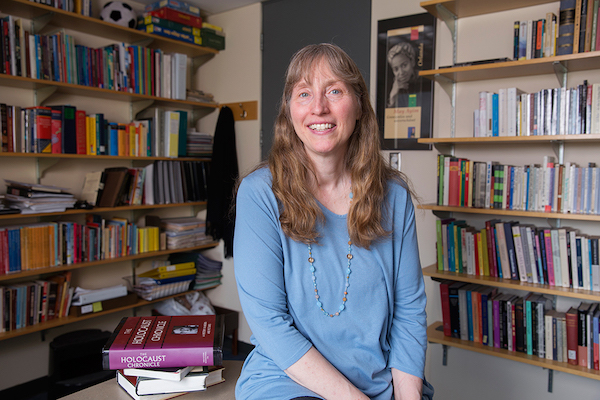
Simon Fraser University Prof. Lara Aknin (photo from SFU Communications & Marketing)

There are several paths to finding happiness, according to Prof. Laura Aknin. “But a central theme that rises above the rest is that a lot of happiness comes from our relationships with other people, and how we help and give to others.”

Aknin will deliver the talk A Reality Check, for Good: A Talk on Happiness via Zoom on Feb. 22.

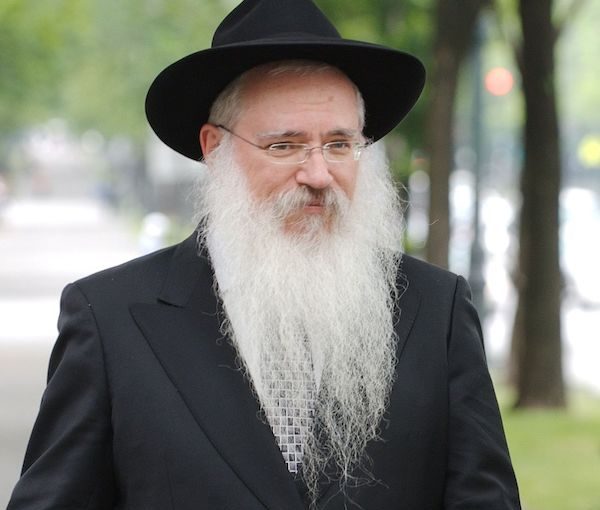
“Guest speaker Lara Aknin is a distinguished associate professor of psychology at Simon Fraser University, and director of the Helping and Happiness Social Psychology Lab at SFU,” said Rabbi Yechiel Baitelman, director of Chabad Richmond. Born and educated in Vancouver, Aknin became interested in social psychology and human emotions while studying as an undergrad and graduate student at the University of British Columbia. According to Aknin, “Human emotions colour our existence, and bring meaning to a lot of what we do.”

Among Aknin’s research interests are well-being, happiness, social relationships, prosocial behaviour and altruism. She established the Helping and Happiness Social Psychology Lab, which studies the predictors of happiness and what makes people happy, the emotional consequences of kind and generous behaviour, and the well-being outcomes of specific spending choices. The lab also looks at how people can increase their happiness.

“Happiness is broadly universal, yet religious people tend to report higher levels of happiness,” said Aknin, when asked how happiness relates to Judaism. “One of the major lessons emerging from our helping and happiness lab and our study of well-being is that it’s not just what we do for ourselves, it’s what we do for others. When we help others and give to others, that’s when we find happiness.”

While not overtly connected, it appears that happiness aligns with Judaism’s emphasis on giving tzedakah and doing mitzvot.

“Helping others is a pretty clear and reliable path to experiencing greater well-being,” confirmed Aknin.

While acknowledging that religion is not her specific area of research, Aknin said, “The notion, or central message that giving to others, whether it be G-d or other people in your community or beyond is a meaningful source of finding joy, reward, value and meaning in life, is certainly aligned with the evidence in the literature.”

A fundamental concept in Judaism is the importance of serving G-d with joy.

“The emotional rewards of giving are a psychological universal, not just particular to the Jewish faith, but it might align with many of the teachings of the Jewish faith and others,” said Aknin. “Researchers see this not just in North America, but in rich and poor countries around the globe. We see it in kids under the age of 2 … we see it in ex-offenders. People experience emotional rewards when they engage in kind behaviour. Many religious principles regularly espouse the value and virtue of giving to others … these ideas have been around for centuries, but the evidence is now documenting the importance of this.”

The topic of helping and happiness resonates with people.

“At some level,” said Aknin, “our intuition says that giving to others is emotionally rewarding but, in real life, people are spending more on themselves – out of necessity, for things like paying their bills, [but] we often overlook opportunities [to give] and would be better off spending the money in our pocket on someone else, rather than on an extra coffee.”

Is it always about our own sense of well-being or is happiness a byproduct of something more altruistic? Is it selfish, for example, to donate clothes to a homeless shelter because it makes us feel good? Is it wrong to have a sense of well-being when we give to others?

“Those questions are central to the work that I do,” Aknin said. “It’s important to distinguish what the motives are for giving in the first place, versus how do you feel afterwards. There’s no question that there are emotional benefits for the giver, and that donating one’s time or money to others promotes well-being and increases life satisfaction. Sometimes, people give to feel good but, by and large, people are giving because they think it’s the right thing to do, and they want to help the person in need. Feeling good about it afterwards isn’t a bad thing. On the contrary, I think that’s a beautiful feature of human behaviour. It serves a purpose to help inspire us to do it again. It’s indicative of a care for humanity. Feeling indifference after giving would be more surprising.”

Aknin said happy people tend to have strong social relationships, they tend to be individuals who donate. and they tend to be relatively comfortable with where they are in life, not only financially, but also proud of what they’ve accomplished. Happy people also tend to live in a safe environment, she said, so being able to trust your neighbours is important.

Aknin is working on a commission that’s studying the trends around happiness and physical/mental health. Findings show that, during the COVID-19 pandemic, most people’s physical and mental health has suffered.

“Negative emotions are up, mental distress is up, depression and anxiety are up. Yet, despite all that, there is still some resilience and stability,” she said. The pandemic has given people time to evaluate their lives, and there is still much stability to be seen.

Aknin said some behaviours that are “protective,” such as exercise, make us feel better. “But people still feel better when they’re helping others,” she said.

According to Aknin, most people are happy, because “we’re very adaptive”; even though we think we aren’t, we are.

When asked if she’s happy doing what she’s doing, Aknin replied: “Yes, there’s great meaning and purpose in what I do.”

To register for Aknin’s Feb. 22, 8 p.m., talk, go to chabadrichmond.com/happiness.

Shelley Civkin is a happily retired librarian and communications officer. For 17 years, she wrote a weekly book review column for the Richmond Review. She’s currently a freelance writer and volunteer.

Format ImagePosted on February 12, 2021February 11, 2021Author Shelley CivkinCategories LocalTags Chabad Richmond, happiness, Lara Aknin, lifestyle, science, SFU, Simon Fraser University

What’s in a definition?

The International Holocaust Remembrance Alliance, in 2016, adopted a so-called Working Definition of Antisemitism. Given the complexity and pervasiveness of this ancient bigotry, the statement itself is remarkably succinct at a mere 38 words.

It reads: “Antisemitism is a certain perception of Jews, which may be expressed as hatred toward Jews. Rhetorical and physical manifestations of antisemitism are directed toward Jewish or non-Jewish individuals and/or their property, toward Jewish community institutions and religious facilities.”

It is innocuous and hardly debatable. Where controversy has arisen is in the accompanying 11 examples, seven of which make reference to Israel. Examples provided of antisemitic manifestations include: accusing Jews as a people, or Israel as a state, of inventing or exaggerating the Holocaust; accusing Jewish citizens of being more loyal to Israel, or to the alleged priorities of Jews worldwide, than to the interests of their own nations; applying double standards by requiring of Israel a behaviour not expected or demanded of any other democratic nation; drawing comparisons of contemporary Israeli policy to that of the Nazis; and holding Jews collectively responsible for actions of the state of Israel.

Opponents of the definition, including a majority of Vancouver’s city council, which voted against adopting the definition in 2019, claim it could stifle free expression in the form of criticism of Israel – this despite the fact that the definition self-defines as “non-legally binding.” In a world where any individual with access to a computer has more power than even the most powerful figures in history to disseminate their views to a global audience, it is notable that “Zionists” are imagined to have the power to control what others think, do and say. The criticism is perhaps, ironically, a manifestation of the problem itself.

To their credit, the new U.S. administration has said it “embraces and champions” the definition. The previous administration also endorsed the definition. (Canada and 28 other countries, as well as scores of cities and other jurisdictions and organizations have similarly endorsed it.) But the Trump administration’s support was a component of a broader politicization of ostensible support for the Jewish community. By allowing Israel’s right to exist in peace to become a partisan tool, we risk polarizing politicians and the public, driving supporters to their corners on a topic where less polarization should be encouraged.

If there are problems inherent in the terminology, it is perhaps in the chutzpah of attempting to define it at all. It is almost universally acknowledged that antisemitism is uniquely capable of metastasizing as required by the perpetrator. It is, above all, a pathology of the antisemite, with more to do with the eye of the beholder than with Jewish people themselves. Antisemitism is very often (if not always) a projection of someone’s (or some society’s) own problems directed toward an empty vessel in the form of “Jews.” Note that antisemitism is most rampant in the places where Jews are fewest – or nonexistent.

Antisemitism differs from other prejudices and bigotries as well in the typical responses it engenders. We have unlearned a tendency to deflect blame for misogyny back onto its victims; we do not accept that violence against women is in anyway justified by, say, what a victim was wearing. We recognize racism as a flaw of it perpetrators and we do not accept that racism against people of colour is based on the behaviour or innate characteristics of the victims. Homophobia is a pathology of the homophobe; it is not nurtured or provoked by LGBTQ+ people. Yet how many times do we see people respond to antisemitic violence or words with a variation on the question: What did the Jews do to deserve it?

Last week, that formulation was hinted at by a Democratic member of the U.S. Congress, Rep. Andy Levin, of Michigan. “Injustice anywhere is an injustice everywhere,” Levin said during a webinar. “Unless Palestinian human rights are respected, we cannot fight antisemitism.”

This false equivalency and conflation – coming from a Jewish elected official, no less – is a picture-perfect illustration of why the IHRA was created.

As the new administration in Washington begins repairing the unprecedented social and economic damage done to the country over the past four years, it is encouraging to see one of its first acts being an explicit and enthusiastic commitment to the battle against antisemitism.

Posted on February 12, 2021February 11, 2021Author The Editorial BoardCategories From the JITags antisemitism, free speech, IHRA, International Holocaust Remembrance Alliance, United States, Vancouver

Celebrate Jewish power

I watched inauguration day with great emotion, for numerous reasons, including the fact that a Black Indian woman is in the White House for the first time in history. I was equally excited not only about the corollary fact that there is a second gentleman for the first time in history, but that he is a Jew – the first in history to enter the White House. And yet, I noticed that the very same media outlets celebrating

Kamala Harris’s mark on history failed entirely to mention her husband’s mark on history. If Doug Emhoff were of African, East Asian, Middle Eastern or Latino descent (as, for the record, a critical mass of Jews are), I believe it would have been another story entirely.

Case in point: there was fanfare over the fact that Alejandro Mayorkas, appointed to head of Homeland Security, is the first Latino and the first immigrant to fill the position. There was nary a peep, however, about the fact that he is also the first Sephardi Jew in American history to serve in a cabinet. Given the fact that Sephardi Jews are invisible not only in the American mainstream but even in the Jewish mainstream, his appointment is a significant milestone.

But still, silence.

I believe this silence is rooted in the deeply embedded, twisted and, for the most part, unexamined brand of racism against Jews – namely, that Jews are rich, all-powerful and controlling the world. Over the millennia, across the globe, this ideology has been used to fuel and justify anything from discrimination to genocide of Jews – ironically underscoring the lack of Jewish power, given how easy it has been to beat down and upend Jews, no matter what leadership positions or financial assets we may have accumulated under our collective belt.

Despite the many obstacles to Jewish power and wealth, in this country as elsewhere, Jewish accomplishment in either realm is typically put under a microscope, resented and/or derided. At best, it is envied, with an undertone that Jews don’t deserve it, and that there is something dirty or sinister about Jewish money and power.

Take a personal example from the late 1980s, when I was a student at Columbia University, and Professor Griff from Public Enemy came to campus: speaking to a packed audience, he launched a pointed attack on Jews – among other things, referring to the school as Columbia Jewniversity. This, despite the fact that a scant 50 years prior, Jews were barred admission at Columbia and throughout the Ivy League, simply for being Jews.

Another example: Hollywood routinely comes under attack as being run by Jews, instead of getting recognized and celebrated as a hallmark of Jewish creativity and survival. And yet, as documented in the film Hollywood: An Empire of Their Own, Jewish immigrants created the industry from the ground up, specifically because, as Jews, they were barred from the spectrum of other professions in America.

“RichJewish” mindlessly rolls off people’s tongues like one word, and people routinely ascribe supernatural business powers to anyone with Jewish blood. But how many are aware of the historic racism and persecution behind each of these ideas? While the particulars varied according to time and place, in Christian- and Muslim-dominated societies alike, throughout the millennia, Jews were prohibited from owning land, banned from most or all established professions, and barred entry into schools from elementary to university levels. Jews thus were forced into entrepreneurship and innovation, in the interest of survival, leveraging whatever scraps or cracks in the system that were available at the time.

Of particular note, for centuries in Christian Europe, Jews deliberately were banned from all professions except that of the despised userer – effectively forcing Jews into a “dirty business,” then punishing Jews for it, through genocide. While times have changed, the image of the crooked Jew persists, if only through a vague sense of distaste or mistrust.

As a colleague once noted, “Religion creates culture.” While we live in a predominantly secular society today, American ideas and values are shaped by a primarily Christian legacy, including the embedded notion that Jews are all-powerful. So, it’s understandable, albeit questionable, that most Americans could not comprehend the significance of the first Jew in the White House or the first Sephardi Jew in the cabinet.

I, however, did. So, after watching Harris and Emhoff walking down Pennsylvania Avenue, with Ella Harris in tow, sporting a classic JewFro, I took matters into my own hands and wrote a song, “Jew in the White House,” blending an ancient Iraqi Jewish prayer with original music and lyrics, celebrating Emhoff’s stamp on history. It was telling that a number of Jewish friends – in real life and on social media – were distinctly uncomfortable with my song airing on YouTube, afraid that calling attention to a Jew in power might stir the rancour of racists and lead to a wave of anti-Jewish violence. After all, Proud Boys and QAnon ideology is rooted in classic tropes of Jews running the world, so why add fuel to the fire?

Exactly my point.

At its best, Jewish power is conditional, tenuous and fragile. It is neither handed over nor readily available to Jews. It is not a privilege. It is hard-won – the outcome of scrappiness and sacrifice over the course of generations, in the face of overwhelming odds. And it is high time that we not only recognize it as such, but full-on celebrate it.

Loolwa Khazzoom (KHAZZOOM.com) is an Iraqi-American Jewish musician, writer and educator. Her work has been featured in top media, including the New York Times, Marie Claire and Rolling Stone. This article was originally published by jewthink.org.

Posted on February 12, 2021February 11, 2021Author Loolwa KhazzoomCategories Op-EdTags Alejandro Mayorkas, antisemitism, Doug Emhoff, history, United States

Rejoice or slog? You choose

Over the past two weeks, we’ve dealt with one of the worst household chores during Canadian winter: car repair. We’ve got two old cars. No, I don’t mean gorgeous restored antique cars, stored lovingly in a garage. We’ve got two cars that sit out in the back lane parking area in all kinds of Manitoba weather. We don’t have a garage.

The “younger” car is already 16 years old. This car, inherited from a family friend long ago, was having issues. We needed a new engine or a new car. Shopping for a new car during a pandemic didn’t seem wise. My husband opted for the engine.

While the car waited for its new engine to be installed at the auto repair shop, we had cold weather, as one does during Manitoba’s winter. Nobody at the garage plugged in the block heater or kept the car warm. Three thousand dollars later, while the new engine worked fine, the battery froze. The car had a good 10 kilometres of trouble-free driving back to our house before the battery died entirely. I spent a few days fielding Canadian Automobile Association calls and driving back and forth to the repair shop, accompanied by our kids – at home for remote school – and my husband.

On Jewish topics, well, we’ve just read the Shirat Hayam (Song of the Sea) Torah portion, which is in parashat Beshallach, Exodus 13:17-17:16. This is where we celebrate miracles, like crossing the Sea of Reeds, but not only that. It also details how G-d gave the people water, quail and manna, too. There were a lot of amazing gifts offered to the Israelites. There’s a message of hope here, and of life beyond the drudgery they encountered in Egypt, if they can see it.

There’s also an interesting confluence in that those who study Daf Yomi (a page of Talmud a day) are working through Pesachim right now. This is the tractate where the rabbis debate a lot of rules around Passover. As I learned from both the Torah portion of the week and Talmud, I saw a similarity that gave me pause.

The Israelites escaping from Egypt were in a time of great upheaval, including a plague that had just struck down all of the Egyptian firstborn. The rabbis in Tractate Pesachim are also in an unsettling time – the Temple in Jerusalem was long gone, and they were trying to understand how the Pesach sacrifices were done at the Temple and apply that ritual to a new vision of Jewish life.

Meanwhile, we’re in the middle of a pandemic, with more upheaval, trying to find our way through unrest and difficulties. It’s 2021, Passover is coming, and this will be yet another Zoom holiday, full of unexpected experiences.

When faced with all this, we have choices. We can, of course, complain and grumble, as the Israelites did in the desert, in Exodus 16:2-3. We sure have heard complaining during the COVID-19 pandemic, even among people lucky enough to have food, safety, warm housing and stable income.

In Exodus, Moses told the people that enough manna would be provided each day and how to gather it. The Israelites didn’t believe it, and some of the food got maggots because they didn’t follow the rules. Our Canadian public health officers have been leaders. They have told us how to stay safe and well and, sure enough, (surprise!) some of us haven’t followed the rules and have gotten into trouble.

Finally, we get to that whole “dead car in winter” routine. Could I draw a parallel here between our poor car and Pharaoh’s chariots, maybe? No. Instead, I saw the message the Israelites offered when they crossed the Sea of Reeds. “Who is like you, O Holy One, among the ones who are worshipped?” There is an expression of hope, joy and grateful acknowledgement there.

The thing is, our cars do a lot for us, getting us to work, school and the grocery store. This is essentially the plodding that is just a part of our lives, whether we complain or acknowledge it or not. We can find that drudgery everywhere, in schoolwork, in chores and in our careers. However, we can make a choice here, too.

In Tractate Pesachim, as the rabbis go through every part of Passover, they pause on page 68. In that pause, they reflect on what they are doing in studying Torah. Rabbi Elliot Goldberg, in his introduction to page 68 on the My Jewish Learning website, points it out: “Every 30 days, Rav Sheshet would review what he had learned over the previous month and he would stand and lean against the bolt of the door and say: Rejoice my soul, rejoice my soul, for you I have read scripture, for you I have studied Mishnah.”

In all good Jewish texts, there is a counterargument. Here, the Gemara responds: “But didn’t Rabbi Elazar say: If not for the Torah and its study, heaven and earth would not be sustained, as it is stated: If not for My covenant by day and by night, I would not have set up the laws of heaven and earth. (Jeremiah 33:25)

In other words, study isn’t just a slog. It benefits and nurtures us, and that causes us to rejoice. Also, Jewish tradition and Rabbi Elazar say that our study and work and, therefore, our Jewish action and rituals, uphold the world and keep it running as we know it.

We can see the car dying and its subsequent repairs as a struggle, and it is. We can also rejoice at how long the car has served us, how nice it is to have a break outside, even if it’s to drive back to the shop.

I won’t lie. It would be wonderful if, like manna, a new car appeared instead, but, since that isn’t happening right now, I need to rejoice in what does appear – a new engine, a free replacement battery and an opportunity to pause in the middle of the slog to see how lucky we are. The car died in our back lane, not on a highway. We were warm inside the house, and able to pay for repairs.

We need these ancient narratives – the Shirat Hayam story, rejoicing in freedom and full of hope, as well as the Pesachim reminder about the joys of study. They serve as a much-needed attitude adjustment. In the midst of a truly scary pandemic, in sickness and death, many of us are very lucky souls. It would benefit us to remember it. If a dead car battery or an engine replacement is the worst thing happening to us? We’re lucky indeed.

Joanne Seiff has written regularly for CBC Manitoba and various Jewish publications. She is the author of three books, including From the Outside In: Jewish Post Columns 2015-2016, a collection of essays available for digital download or as a paperback from Amazon. Check her out on Instagram @yrnspinner or at joanneseiff.blogspot.com.

Posted on February 12, 2021February 11, 2021Author Joanne SeiffCategories Op-EdTags gratitude, joy, Judaism, liefstyle, Pesachim, Talmud
Welcome, newcomers

Welcome, newcomers

A screenshot of the recent BeyachadBC welcome event’s main room.

The types of immigration that Vancouver’s Jewish community is experiencing right now differ from those of 10 or 20 years ago. Community leaders recognized that these different demographics call for changed approaches in the way the community welcomes and integrates newcomers.

On Jan. 20, a virtual event took place, representing the launch of a new community partnership called BeyachadBC – beyachad means “together” in Hebrew. No fewer than 80 devices tuned in to join the event, many with more than one participant.

BeyachadBC is really an evolution of Shalom BC, Gesher Welcoming Services and other initiatives over the years meeting the needs of new community members, said Ayelet Cohen Weil, who, as associate director, community engagement, at the Jewish Federation of Greater Vancouver, spearheaded development of the group. (On Feb. 1, Cohen Weil began a new role, as executive director at the Louis Brier Jewish Aged Foundation.) Operating under the auspices of Federation, BeyachadBC was created with the Jewish Community Centre of Greater Vancouver, Jewish Family Services (JFS), Aleph in the Tri-Cities, Mamatefet and Women’s Empowerment (WE). The latter two groups are organizations primarily of Israeli-Canadian women, WE to network for career opportunities and Mamatefet to support mothers, especially of newborns.

Cohen Weil undertook consultations, including roundtables with community professionals who work with newcomers and with people who have experienced what newcomers face.

For many years, Vancouver has been one of North America’s fastest-growing Jewish communities. Breakout rooms at the virtual event included sessions in Spanish, Portuguese, Hebrew and English. The largest group was of Israelis, followed by those from Spanish-speaking Latin America. About equal numbers of participants joined the English and Portuguese breakout rooms. A couple of decades ago saw waves of immigrants from the former Soviet Union and, while there are still a number of new Canadians who originated in the FSU, almost all of those are now arriving via Israel, having spent years there. They communicate primarily in Hebrew, making Russian-language services less necessary than they were a few years ago.

Another noticeable change from the past is that many of the newcomers are arriving with work at the ready, not landing here in hopes of finding a career path. A sizeable number of immigrants from Israel and elsewhere have been drawn here by jobs at Amazon’s Vancouver hub, for example.

The different character of newcomers means that, rather than requiring some of the basic needs that earlier migrants required – housing assistance, social services – many are now seeking professional networking and connections for their families. (New arrivals who do require those additional services are, of course, served by various organizations, including Federation and JFS.)

When the pandemic is over, in-person social gatherings will take place with opportunities for mingling in each participant’s preferred language. Meanwhile, those who want it can be paired with a longer-established family based on criteria they determine, such as the ages of kids in the family or the professional track of the parents.

Of course, there is no one at the airport directing Jewish newcomers to BeyachadBC. Identifying Jewish immigrants is a matter mostly of word-of-mouth. This was aided by the fact that Cohen Weil’s portfolio at Federation also included regional community development. Given the cost of housing in Vancouver, many Jews are settling in the Tri-Cities or other suburban areas of Metro Vancouver. While geographic diffusion is a challenge long addressed by Federation, BeyachadBC plays an added role in reducing isolation and encouraging inclusion by explicitly targeting newcomer families outside the traditional “Jewish neighbourhoods” of the city.

BeyachadBC is envisioned as a service for those who have arrived in the past three years. “But I can tell from the faces that I saw, they were from the last year mostly,” Cohen Weil said. “They had to be newcomers during COVID, which created another layer of difficulty and challenges.”

Another fact struck Cohen Weil – there were young couples, families with kids, single young adults, seniors and middle-aged participants on the Zoom event.

She knows herself what it is like to live in different places. Cohen Weil arrived in 2005 as a student at the University of Victoria, having grown up in Mexico and having served as a volunteer in the Israel Defence Forces. She worked at Hillel in Victoria beginning in 2008 and returned to Israel in 2012 to continue her education before returning to Vancouver in 2017. Returning with a husband and a 10-month-old daughter was an entirely different experience that came with many challenges, even though she had connections and friendships from the past.

A more typical experience might be that of Yael Mayer, an individual and family therapist and a postdoctoral research fellow in the faculty of medicine at the University of British Columbia. She came to Vancouver five years ago, after her husband, an engineer, took a job here. Having left an established counseling career in Israel, Mayer was in a new country, at home, with two kids, including a 6-month-old baby.

“It’s very lonely and very hard to start everything again, to build a career again, to find a network,” she said. She set about cofounding Mamatefet and then founding WE because she realized that many women were in a similar boat. “Like me, there were many, many Israeli women who come here with academic backgrounds, with a lot of experience, and they struggle to rebuild their life here.”

If BeyachadBC had existed just five years ago, she said, her landing here might have been softer. “I think it could have been really different because BeyachadBC will provide a platform to easily connect and find information about different topics, about education, about synagogues, about activities, about social life,” she said. “It is all centred in one place, in one resource.”

Mayer was inspired by the initial BeyachadBC event, an enthusiasm she believes was shared by many based on the fact that everyone who signed up to attend actually showed up – and then stayed for the entire event. Registrations were coming in even after the event began.

“The beautiful thing about it is it really answers a need in our community and I think it is a very special project,” she said. “It identifies the common needs of the Jewish community but, at the same time, it also allows people to maintain some of their culture and their language so, in this way, it connects but it also makes everybody feel like they belong there. That’s the beautiful way that this project is built.”

The central clearinghouse for resources is beyachadbc.com and, Mayer added, while the site is intended for newcomers, longtime residents are also encouraged to explore it because assistance and social connections are welcome among the entire community, new arrivals and B.C.-born alike.

Format ImagePosted on February 12, 2021February 11, 2021Author Pat JohnsonCategories LocalTags Ayelet Cohen Weil, Beyachad, immigration, Jewish Federation, newcomers, Yael Mayer

A childhood spent in hiding

Alex Buckman, a child survivor of the Holocaust, shared the story of his harrowing childhood years during a moving online event Jan. 27. The program, marking International Holocaust Remembrance Day, was the second annual such event organized by the Bayit in Richmond.

Buckman is the president of the Vancouver Child Survivors Group and has shared his experiences with thousands of students as a Vancouver Holocaust Education Centre (VHEC) survivor speaker.

“I was born on Oct. 31, 1939, in Brussels, Belgium,” he told more than 100 people who attended virtually. “My family was Jewish. I was 7 months old when Nazi Germany invaded Belgium on May 10, 1940. Everything changed for Jewish people in Belgium.”

He recalled how, at the age of 4, he was escorted by a strange woman, as they traveled through the night, sleeping in forests and foraging for food. After days of walking, they arrived at an orphanage. He would only discover years later that his parents were sent to Auschwitz.

At the orphanage, he met up with his cousin Annie but was told that they were to refer to each other as siblings.

When Nazis would come for inspections, Jewish boys were hastily sent into a cellar. “They told us again to be very quiet, then they shut the two wooden doors, replaced the carpet and furniture,” he said. “In the cellar, we were very cold and scared and we peed our pants. We saw large things running around us. They told us later that they were rats. The first time this happened I was 4 years old…. It seemed like we were in that cellar for a very long time. Soon, we heard every footstep over our heads. We heard men screaming loudly in a language that we did not understand. We were scared. We did not know what was going on. They told us that we should not cry but we were scared children so we cried.

“Suddenly, we heard the pushing of the furniture and they opened two wooden doors and we saw the light,” he continued. “They asked us to come out but we did not want to go out. We told them that we had peed our pants [so] they promised that they would give us a warm bath. This happened too many times from the age of 4 to 6-and-a-half.”

Annie’s mother, Alex’s Aunt Becky, was sent to the women’s concentration camp Ravensbrück. When each new train of prisoners would arrive, Becky would run through the crowds of arriving women calling the name of her sister, Devora.

“A young girl came close to Becky and said, I knew Devora but she is dead,” Buckman recounted. “Becky asked her: how did you know Devora? The young girl replied, I am from Belgium and I used to babysit her son, Alex. Becky thanked her and cried. Becky looked at the sky and prayed. She said, if I survive this, one day, and find Alex, I will raise him as my son.”

When liberation finally did come, it took time for the surviving family to find one another. Alex and Annie waited in the orphanage as one child after another was claimed by family. Alex tried to reassure his cousin, whom he believed to be his sister.

“I would tell her that our parents would come soon,” he said, “but, like Annie, I did not know what happened to our parents and why they were not coming for us. The orphanage kept all the children for another six months, hoping that our parents would come and pick us up. But no one came for us.”

The remaining children were transferred to a Red Cross facility in Brussels. Eventually, they were reunited with Annie’s parents, who Alex assumed were also his own. It was another cousin who, in an act of revenge for a childhood spat, blurted out the truth to Alex that his parents were dead.

Buckman went on to share his experience in April 2010 as a survivor-participant in the March of the Living, a program that brings Jewish youth to Poland and then on to Israel to explore firsthand the history of the Holocaust and its survivors who helped build Israel.

“It is almost impossible to describe the feeling I felt entering that camp, Auschwitz,” Buckman said. “On both sides of the camp there were shoes. As I passed the shoes, I caressed the little pair of shoes. The students were crying, but we had to continue.… We saw a mountain of glasses all tangled together.

“We finally walked in a shower room and I closed my eyes,” he said. “I was thinking of my mother and her sister.… We were told that the women panicked when they did not see the water come down from the showers. They ran toward the walls and scratched them with their fingernails. When I heard this, I turned and caressed the wall, feeling the scratches made by Jewish women prisoners. I wondered, were those scratches made by my mother? I would never know.

“In that room, I finally said, au revoir, Maman.”

At the commemoration, Richmond Mayor Malcolm Brodie, accompanied by four city councilors, spoke and read a proclamation.

All four Richmond MLAs were present, with Kelley Greene, MLA for Richmond-Steveston, reading a proclamation from the premier. Finance Minister Selina Robinson also addressed the event, as did Steveston-Richmond East Member of Parliament Kenny Chiu, who spoke of his own visit to Auschwitz.

The Bayit’s Rabbi Levi Varnai noted that this year’s event, which represents the 76th anniversary of the liberation of Auschwitz-Birkenau, also fell on erev Tu b’Shevat, the new year of the trees.

“The marriage of these two days is chilling,” said the rabbi. “Man is compared to the trees of the field, our tradition tells us. The six million souls murdered in the Holocaust were like individual human trees, each had the potential to grow, to flourish, and to bear fruit of the generations. They were obliterated, but one thing remained that can never be destroyed: their roots.

“The roots of the Jews who perished in the Holocaust goes back 3,300 years to Mount Sinai. What gives Holocaust survivors the sustenance to keep going? What motivates future generations of Jews to double down on life? It’s not just the memory of those who passed away, it’s also the memories of hundreds of generations who came before them, the generations who struggled and prevailed against all odds…. As we remember today the six million souls who left us, we can also remember the millions of souls who came before them and the millions who will come after.

“Today, we mourn. Tomorrow, we plant and renew,” said Varnai.

The Bayit’s International Holocaust Remembrance Day program was co-presented with partners including the Centre for Israel and Jewish Affairs, the VHEC, the Kehila Society of Richmond and the Jewish Federation of Greater Vancouver. The program was emceed by Bayit president Keith Liedtke.

Earlier in the day, a national virtual commemoration took place, organized by the Friends of the Simon Wiesenthal Centre in partnership with the VHEC and other groups across Canada. Survivors, including Vancouver’s Serge Haber, lit memorial candles. Heather Dune Macadam, author of the book 999: The Extraordinary Young Women of the First Official Jewish Transport to Auschwitz, spoke with Michael Berenbaum, a writer and professor and director of the Sigi Ziering Institute: Exploring the Ethical and Religious Implications of the Holocaust.

Posted on February 12, 2021February 11, 2021Author Pat JohnsonCategories LocalTags Alex Buckman, child survivor, CIJA, Holocaust, IHRD, International Holocaust Remembrance Day, Jewish Federation, Kehila Society, Serge Haber, VHEC

What’s up in gerontology?

At the second program of the season in the Jewish Seniors Alliance Snider Foundation Empowerment Series, a few Simon Fraser University graduate students shared their research interests with the 70-plus participants who tuned in via Zoom on Jan. 15.

Jointly sponsored by the JSA and Sholem Aleichem Seniors of the Peretz Centre for Secular Jewish Studies, the Gerontology Research Panel: Eager to Share our Interests and Help our Community – What’s Up With Seniors event featured master’s students Lindsay Grasso and Kishore Seetharaman, and PhD student in gerontology Eireann O’Dea.

Grasso became interested in exploring the impacts of separating couples in long-term care settings when her own family experienced it. She said this problem of separation will become more severe as more couples age together. Current long-term care settings separate couples, depending on each partner’s individual needs.

The effects of dementia on couples is profound and, often, one partner ends up as the caregiver for the other, she said. When the point is reached that institutional care is required, being together would alleviate a lot of the pain, believes Grasso, who has received a grant to look into the long-term effects of separating couples, as well as the effects on visiting spouses, when only one partner is in care. In both scenarios, there is the loss of a shared life, shared memories and the beginning of mourning. It is important to continue the relationship through visiting, sharing activities and eating together, she said. The healthier spouse would need to monitor care and advocate for their partner. For her research, Grasso will be conducting in-person interviews with couples, and will also meet with staff to review their understanding of the issues surrounding separation.

The second presenter, Seetharaman, has a background in architecture and is interested in planning and designing dementia-friendly neighbourhoods, especially in Metro Vancouver.

Worldwide, 70% of dementia-affected adults live at home, so dementia is more than an individual health issue, it is a community issue. Communities must be more inclusive, he said. He would like them to focus on eliminating stigma, raising awareness, social engagement, accessibility to services, improving planning and design of public spaces and support given to caregivers.

In terms of design, he said, familiarity and easy recognition are important. Signs should be clearly visible and easy to read. Distinctive landmarks are helpful for finding the way, he added. There is some work being done in Vancouver in this area but it is not clear as yet how it will be implemented. Seetharaman would like to create a body of knowledge for designers. He is hoping to interview both dementia patients and public servants.

O’Dea is looking into volunteerism and cultural generativity. She became interested in these topics as an undergraduate, when she was volunteering at the Jewish Community Centre of Greater Vancouver and its L’Chaim Adult Day Centre. There, she encountered seniors who were volunteering with other seniors, and she is looking into the benefits on health and sense of purpose in life, as they move away from former roles. The strengths and capabilities of these older adults motivated other seniors to become involved, she noted, adding that each person’s aging process is unique.

O’Dea already has interviewed a number of senior volunteers regarding their motivation. She said many spoke of being motivated by the values of tzedakah (charity) and tikkun olam (repairing the world), and the passing on of Jewish culture. These responses led her to the exploration of cultural generativity, i.e., the desire or need to keep cultural identity alive and pass it down to future generations. This is especially relevant to ethno-cultural minorities, she said, and O’Dea will be researching four minorities: Jewish, Chinese, South Asian and Iranian. She will be studying the effects on both the volunteers and the members of the communities.

During the Q&A session, there were queries about dementia villages; the design and cost of facilities for couples in long-term care; and retention and recruitment of volunteers. The City of Vancouver is apparently looking into an age-friendly action plan that could include persons with dementia.

JSA co-president Gyda Chud reminded everyone about the evaluation questionnaire, then Shanie Levin, program coordinator for JSA, thanked the presenters. The entire program, including the PowerPoint images, is available via the JSA website, jsalliance.org.

Shanie Levin is program coordinator for Jewish Seniors Alliance and on the editorial board of Senior Line magazine.

Posted on February 12, 2021February 11, 2021Author Shanie LevinCategories LocalTags culture, dementia, Eireann O’Dea, gerontology, health, Jewish Seniors Alliance, JSA, Kishore Seetharaman, Lindsay Grasso, minorities, science, seniors, Sholem Aleichem Seniors
Importance of food security

Importance of food security

Plans are for Jewish Family Services to open a food centre in the Mount Pleasant neighbourhood this year. (photo from jewishvancouver.com)

The Tu b’Shevat More Than a Bag of Food program – a day of giving, of cooking and of education on food security in the age of COVID-19 – concluded with a panel discussion on the importance of good food, supply chain challenges, and the ensuing impacts and issues facing the Vancouver Jewish community.

The Jan. 28 program was presented by Congregation Beth Israel and Jewish Family Services (JFS), and the discussion event featured Mara Shnay, founding member and chair of the JFS client advisory committee; Cindy McMillan, director of programs and community partnerships with JFS; Dr. Eleanor Boyle, an educator and writer on food and health; Krystine McInnes, chief executive officer of Grown Here Farms, a company that supplies more than 1.5 million families with produce in Western Canada; and Dr. Tammara Soma, assistant professor at the School of Resource and Environmental Management at Simon Fraser University.

Moderator Bernard Pinsky began by highlighting the connection of the Jewish community and providing food. “Feeding the needy is an act of chesed,” he said.

“For people who are food insecure, it is not about having enough for food,” explained Shnay. “It is about not having enough money for anything – to buy a new pair of shoes, to replace a phone, to go to the dentist or to take one’s kids to the movies, and it is about living in that kind of poverty. In Vancouver, housing security is inextricably linked to food security. The income of many JFS clients is less than their rent,” she emphasized.

COVID-19 has exacerbated the circumstances of many JFS clients, particularly seniors, who are at higher risk of contracting the disease and, therefore, should refrain from using public transport or going to stores. Consequently, shopping has become increasingly expensive for them.

McMillan said the food needs within the Jewish community more than doubled in the past year, with children comprising 20% of those seeking food services. The number of Jewish families and seniors living in poverty has been rising for several years in the Lower Mainland, well before the pandemic started, she added.

To help combat the challenge, JFS will open an as-yet-unnamed food centre in the Mount Pleasant neighbourhood in the spring of 2021. “There will be a community kitchen, a place for social gathering, opportunities for general food knowledge, cooking classes, meals and a warehouse with increased storage for dry goods and perishables,” said McMillan.

The centre will also have a market-style food pantry for people to choose their food according to their customs and cultures, and the offerings will extend to outlying communities in the Greater Vancouver area through a pop-up van. The centre’s emphasis will be on supplying healthy food in a dignified manner to those in need, she explained.

Boyle spoke of food security in a wider sense – “We have food security when everyone is confident they can put adequate, healthy food on the table,” she stated.

There are systemic problems in Canada, she pointed out, as the country exports half the food it produces. “Food is treated like any other consumer good, like cars or shoes. It is run largely by private industry and, for business, social good is not a priority, profit is,” Boyle argued.

She advised involving government in the food industry, as is done in other sectors, such as education, transportation and health. More money, she suggested, should go to those who have trouble buying food, perhaps in the form of guaranteed income. The federal government could also pay farmers to grow certain amounts of healthy foods, like lentils, which would be available at below-market rates to everyone. This would in turn enhance food security and health for everyone with no stigma attached to buying this food; rich and poor would be paying the same price at the grocery checkout, said Boyle.

“There needs to be a shift from big agriculture to a more diversified local system,” she continued. “We created these current systems, and they should work for us. Change can happen. We will need to face down climate change and make food systems more sustainable,” she said, urging support for local food that is sustainably produced, as well as for people to waste less food and to eat a more plant-based diet.

McInnes elaborated on Boyle’s points by listing a number of problems in the supply chain, the agriculture and retail sectors, and government policy. “We are in a game in which corporate interests win and farmers lose, and consumers don’t understand that they are playing the card of the unwitting party that made it all happen,” she claimed.

Reeling off some concerning figures, McInnes reported that 85% of the space in grocery stores is controlled by four or five companies, that retail mark-up of local produce is 150% to 200% on average and that 92% of Canadian farmers do not have a succession plan.

Soma, meanwhile, spoke of food as spirituality and food as a right. She questioned, from an ethical perspective, the policies of big agriculture, which, for example, kills male chicks because they cannot produce eggs.

“Food as a right is not a secular concept, it is an act of spiritual justice to promote equity,” said Soma. “Food is a means of building relationships and a means of showing that you care and love someone.”

She added, “Without food security, we will not have peace and we will not have unity. The further the distance between the food and the one who eats it, the more the waste. There is a loss of connection.”

To watch the food security panel discussion or the Hilit Nurick and Rabbi Stephen Berger cooking session that took place earlier on Jan. 28 (and to download their red lentil soup recipe), visit bethisraelvan.ca/event/tubishvat5781.

Sam Margolis has written for the Globe and Mail, the National Post, UPI and MSNBC.

Format ImagePosted on February 12, 2021February 11, 2021Author Sam MargolisCategories LocalTags Beth Israel, economy, education, Eleanor Boyle, ethics, food security, Jewish Family Services, JFS, justice, Krystine McInnes, Mara Shnay, Tammara Soma
Protecting children’s rights

Protecting children’s rights

Dr. Jennifer Charlesworth, British Columbia’s representative for children and youth, presented the Dean’s Distinguished Lecture and the Janusz Korczak Medal for Children’s Rights Advocacy on Jan. 27. (photo from the Office of the Representative for Children and Youth)

The University of British Columbia’s faculty of education presented the Dean’s Distinguished Lecture and the Janusz Korczak Medal for Children’s Rights Advocacy on Jan. 27, International Holocaust Remembrance Day. Dr. Jennifer Charlesworth, British Columbia’s special representative for children and youth, gave the talk and the medal was awarded to Dr. Kimberly Schonert-Reichl, an applied development psychologist at the University of Illinois, Chicago.

Born Henryk Goldszmidt, Janusz Korczak (1878-1942) was a Polish-Jewish pediatrician, journalist and educator. His advocacy for children is still recognized today through his writings, which served as a basis of the United Nations Convention on the Rights of the Child.

Prior to the Second World War, Korczak was the director of an orphanage in Warsaw. Although he was offered freedom during the Holocaust, he chose to stay with his orphans when they were forced to board a train to the Treblinka extermination camp in 1942. He, members of his staff and more than 200 children were murdered.

Korczak considered children as partners, equal to adults, insisting that there are no human rights without children’s rights. His pioneering work and enduring legacy were felt throughout the recent event. In the words of B.C. Lt.-Gov. Janet Austen, who introduced the main speaker, “Korczak was an extraordinary man who reimagined the relationship between children and adults. A man of great personal courage and a revolutionary thinker, he understood, whoever saves one child, saves the whole world.”

Charlesworth began her talk on Korczak’s connection to the contemporary era by encouraging the Zoom audience to “think of how far ahead of his times Korczak was in suggesting that each child must be respected. He was rejecting the ideas of his time. His commitment to children is awe-inspiring.”

According to Charlesworth, the first indisputable right of a child is to articulate their own thoughts. Those working with children need to nurture the capacity to listen and understand, to be curious and receptive. Further, practitioners have “to place child’s rights at the centre of their practice, to have both ears open to a child’s voice.” Too often, she said, the individual voices of children can be lost in operational systems.

Charlesworth spoke about advocacy and highlighted the fact that those who work with children will have a significant impact on their lives. Korczak’s advocacy for children, she said, “set the bar very high.”

Adults should want to help children realize their potential, and the relationship between adults and children should never result in the appearance of a struggle for rights. Charlesworth emphasized that, without prioritizing youth voices, there would be no Greta Thunberg, the Swedish environmental activist, or Katherine McParland, co-founder of the B.C. Coalition to End Youth Homelessness.

“We are living in a time of great change and uncertainty. Children and youth sense this, too, and we stand to learn a lot from them as well,” Charlesworth said.

Writer and child survivor Lillian Boraks-Nemetz, a board member of the Janusz Korczak Association of Canada (JKAC), which partnered on the event, drew further on the prescience of Korczak’s work and its continued importance. “Today’s children do not have the same sense of normalcy and routine as before COVID-19,” she said. “At times like these, my thoughts turn to Korczak and a child’s right to education, respect and love.”

Afterwards, JKAC president Jerry Nussbaum and Charlesworth presented this year’s award to Schonert-Reichl, an expert on social and emotional learning, whose nearly four-decade career has been dedicated to children’s rights and well-being. Formerly an educator in British Columbia, she was at the forefront of the province’s revitalized education curriculum, which is often heralded internationally for its advancements in social and emotional learning.

“I am so honoured,” she said upon receiving the award. “And to be in a group where so many are advocating for children’s rights.”

The evening also saw the giving of the Janusz Korczak Graduate Scholarship in Children’s Rights and Indigenous Education to Cayley Burton, a third-year master of arts student in early childhood education at UBC and an instructor in the Indigenous Early Childhood Education Program at Native Education College. Her thesis delves into gender-inclusive teaching practices for preschool children through LGBTQ+ picture books.

“It’s an inspiring, overwhelming honour to have Dr. Korczak’s name associated with the advocacy work that I do alongside and on behalf of young children who are marginalized in Canada,” Burton said.

Sam Margolis has written for the Globe and Mail, the National Post, UPI and MSNBC.

Format ImagePosted on February 12, 2021February 12, 2021Author Sam MargolisCategories LocalTags children, children's rights, health, Holocaust, human rights, Janusz Korczak, Janusz Korczak Association, Jennifer Charlesworth, Kimberly Schonert-Reichl, Lillian Boraks-Nemetz, survivor, UBC, University of British Columbia
What constitutes recruiting?

What constitutes recruiting?

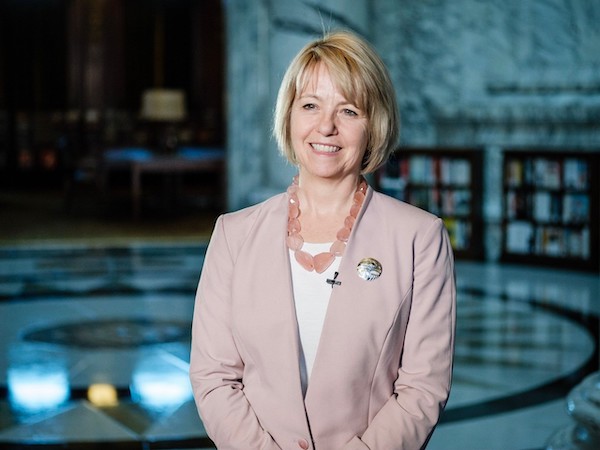
Galit Baram, consul general of Israel in Toronto and Western Canada, says the allegations of recruiting are unfounded. (Consul office photograph)

Last October, a coalition of foreign policy and Palestinian solidarity organizations delivered a formal complaint to David Lametti, justice minister and attorney general of Canada, alleging that Canadians are being recruited for the Israel Defence Forces. Accompanied by an open letter signed by more than 170 supporters, the complaint seeks an investigation into the actions of Israeli diplomats and consular officials, among others.

Under Canada’s Foreign Enlistment Act, it is illegal for foreign militaries to recruit Canadians in Canada. In 2017, at least 230 Canadians were serving in the IDF, according to the army’s statistics. The coalition, composed of Just Peace Advocates, Palestinian and Jewish Unity, and the Canadian Foreign Policy Institute, alleges that Israeli consular officials have invited Canadians to speak with IDF recruiting officers at the consulate and have sent IDF soldiers to speak at Canadian high schools. In a written statement to the Canadian Jewish Record, which was cited in an Oct. 28 article online, Galit Baram, consul general of Israel in Toronto and Western Canada, said, “Any allegations against Israel in this matter are unfounded.”

The complaint drew some attention. Montreal-based newspaper Le Devoir reported on it in a front-page article on Oct. 19, under the headline “Israel criticized for recruiting on Canadian soil.” The article pointed to a recruiting invitation posted on the website of the Israeli consulate in Toronto in November 2019. “An IDF representative will conduct personal interviews at the consulate. Young people who wish to enlist in the IDF or anyone who has not fulfilled their obligations according to the Israeli Defence Service Law are invited to meet with him,” read the post, which included contact information to schedule appointments. Further investigations by Le Devoir yielded similar recruiting invitations from 2014 and 2018.

Baram said the invitations were directed only to Israelis. “In Israel, the law requires compulsory service,” she stated. “Every Israeli, male or female, must serve in the Israel Defence Forces. Israeli citizens living abroad are obligated to settle their status with the Israeli authorities.” According to the Foreign Enlistment Act, foreign representatives can recruit their own citizens in Canada, so long as the recruits are not also Canadian.

Baram acknowledged that recruiting officers may be sent to large Israeli communities to conduct interviews, citing Toronto as an example. According to the 2016 Census, however, roughly four out of five Israelis in Toronto are dual citizens, and approximately 3,125 Israelis in Toronto are not Canadian. When invited to clarify to which group the invitations were sent, the consulate declined.

photo - John Philpot, a Montreal-based lawyer, is spokesperson for a coalition claiming that Canadians are being recruited for the Israel Defence Forces
John Philpot, a Montreal-based lawyer, is spokesperson for a coalition claiming that Canadians are being recruited for the Israel Defence Forces. (photo from english.khamenei.ir)

The coalition’s concerns extend beyond Israeli or dual citizens, however. “Any suggestion that all Israel does is recruit their own citizens who have to do their military duty is complete nonsense,” said John Philpot, a Montreal-based criminal-defence lawyer and coalition spokesperson. The Devoir article reported on a visit by an IDF colonel to a Toronto denominational school “to talk about his experiences as a new recruit and as a senior commander.” On the same day the complaint was filed, The Canada Files published an article by Yves Engler, a Montreal-based writer and signatory to the letter, documenting what Engler considers to be extensive promotion of the IDF in Toronto Jewish day schools.

As one example, he pointed to a talk by Seth Frieberg, an IDF “lone soldier,” in January 2020 at TanenbaumCHAT, a Toronto Jewish high school and Frieberg’s alma mater. Lone soldiers are foreign recruits to the military without immediate family in Israel. Frieberg joined the Israeli army in 2013 and served 14 months as a paratrooper. In an interview last October, he credited his time at the Eretz Hatzvi Yeshiva in Jerusalem, where he spent a year after high school, for partly driving his decision to enlist. His teachers spoke highly about Eretz Yisrael, the biblical land of Israel, and the importance of living there. He said he felt a greater connection to Israeli Jews, to the country, and was drawn to and admired the soldiers. He returned to Canada to complete an undergraduate degree at Western University and joined the IDF the following year.

The roots of his idea, however, began before his gap year. He was also motivated by a family history with the Holocaust and a course at TanenbaumCHAT. Two of his grandparents were Holocaust survivors, one of whom, his grandmother, was active in Holocaust education. “She’d always talk about that, so I think I had this idea in my mind about the horrors of the Holocaust,” he said. In his Grade 12 history course, a connection was made between the Holocaust and Israel: he took from it the idea that “had Israel been there during the time of the Holocaust, [it] probably wouldn’t have happened.” In this and other ways, Frieberg said, he relies on Israel. “In the worst sense … if anything bad happened to Jews or myself in Canada, I always have Israel to go to.” He reasoned he should do something for Israel in return: “And that could be charity, volunteer, or going to the army.”

As part of TanenbaumCHAT’s IDF Day, the annual event at which Frieberg spoke, students wear olive-green IDF T-shirts, matching clothing, and sell baked goods with green icing to raise money for the military. By Frieberg’s estimates, he spoke to 80 students about his experience in the IDF, including patrolling the Lebanese border and West Bank, searching for three kidnapped youth, and operations in Gaza. Did his talk inspire others? He said, “You’d have to ask them…. I was just there to tell them my story.”

Last year’s events were organized under the leadership of Israelis and former IDF soldiers Ariel and Lee Kestecher Solomon. Ariel, the school’s Israel engagement shaliach, or emissary, was a commander in the IDF and volunteers with the Jewish Agency for Israel. According to the agency’s website, Israeli emissaries are sent to Jewish communities abroad for two to three years “to strengthen and deepen the mutual connection between Israel and members of the community.”

In his Canada Files article, Engler characterizes these activities – IDF Day, talks by lone soldiers, fundraising for the military, and former soldiers with extended placements in Jewish day schools – as enticement to join the IDF. When invited to comment, Renee Cohen, TanenbaumCHAT’s principal, did not respond to multiple requests.

photo - Kolby Hanson, post-doctoral fellow at the U.S. Naval War College in Rhode Island, co-wrote a study of 25 countries that recruit non-citizens
Kolby Hanson, post-doctoral fellow at the U.S. Naval War College in Rhode Island, co-wrote a study of 25 countries that recruit non-citizens. (photo from kolbyhanson.com)

Why countries like Israel might recruit foreign citizens is a puzzle that caught the attention of Kolby Hanson, post-doctoral fellow at the U.S. Naval War College in Rhode Island. In a 2019 paper for Security Studies, he and co-author Erik Lin-Greenberg categorized the 25 countries that recruit non-citizens into three distinct groups. In an interview in October 2020, Hanson explained that countries either recruit for specific expertise or for sheer numbers to fill ranks, or, like Israel, “within narrow ethnic or commonwealth networks that are more symbolic programs.” As with India, Israel “[uses] the rules around their recruitment to make some statement about who they are and what the nation’s identity is.” Israel recruits foreign Jews for its military to assert its identity as a Jewish state and to establish deeper ties to Jewish communities abroad.

“Someone might grow up and say, ‘My cousin served in the IDF and that makes me feel like I’m really connected to Israel,’ or whether you know someone who came back after serving in the IDF,” said Hanson. Countries that recruit for symbolic reasons tend to have other programs, like expedited citizenship (as Israel has for Jews), to reinforce these ties.

The IDF itself is likely aware of the legal sensitivities around recruitment of Canadians. Hanson described an unusual exchange in an interview with Canadian IDF soldiers: “When we used the word ‘recruitment,’ we had a couple of people get tetchy…. They pounced on it and said, ‘No, no, it’s not recruitment. The IDF allows people to serve, but they don’t try to get people to.’”

In Canada, crossing the line into active recruitment is a legal issue. Unfortunately, it is not clear where exactly the line is. The Foreign Enlistment Act does not define recruitment, nor, according to Tyler Wentzell, doctoral student in law at the University of Toronto, is there case law.

A serving military officer and lawyer by training, Wentzell has published several articles on foreign recruitment and the history of the act. In an October 2020 interview, he said cases have been tried for recruiting for criminal or terrorist organizations, but not for the military of a sovereign state, for which the term would likely be interpreted differently.

“If you’re actually sworn into [a foreign] military in Canada, that definitely crosses the line,” he said, as would undertaking the stages of an intake funnel, including physical fitness and aptitude testing and evaluation. But, at earlier points, like attracting prospects, the line blurs. Is putting a Mountie on promotional material for Canada recruiting for the RCMP, asked Wentzell, or using a national symbol to promote the country? To complicate matters further, recruiting is also “a cultural sense that changes over time,” as with evolving Canadian attitudes towards high school rifle ranges and cadet corps.

In an October 2020 interview, Petty Officer Gian Barzelotti, a recruiter for the Canadian Armed Forces, described where he draws the line when recruiting in Canadian high schools. To students in Grade 10 or older, he advertises the benefits of joining the military, including a paid co-op program in which students can earn high school credit. With younger students, he emphasized, the CAF does not recruit. “We do talk about the military and who we are and what we do for Canada,” he said, but not about programs and benefits nor intake. “You’re not saying, ‘Go down this path and you’ll end up being in the military.’”

Tzofim Garin Tzabar, however, does just that. A branch of the Israeli Scouts that is 70% funded by the Israeli government and the Jewish Agency for Israel, Garin Tzabar describes itself as the “Israeli lone soldier IDF program.” Its online promotional video advertises an “unbelievable three months of one unforgettable absorption process,” “at least 20 new friends,” “a family for life,” and that 30% of its participants are accepted to the IDF’s officer and commander stream. It also lists an office in Toronto.

Likewise, in June 2020, Nefesh b’Nefesh, an Israeli absorption organization, advertised a webinar entitled “Joining the IDF” on the website of the UJA Federation of Greater Toronto. According to the event listing, the webinar featured “everything you need and want to know about joining the IDF,” including the lone soldier program, the structure of the military, preparatory Hebrew programs, and post-secondary degrees relevant to the IDF. Last year, Nefesh b’Nefesh facilitated the absorption of 390 lone soldiers from North America to Israel. Although the UJA Federation did not endorse the webinar, it did promote it on its website.

In practice, it seems the Canadian government has never done more than slap an offending party on the wrist. During the Vietnam War, said Wentzell, the U.S. army accidentally placed a recruiting ad in a Canadian magazine. “There was a great deal of correspondence back and forth saying, ‘Hey, could you lay off this?… The response was pretty consistently, ‘Yep, sorry.’”

The government maintains an interest in keeping Canadians out of foreign militaries and conflicts. Wentzell illustrated this by way of a Canadian who served in the 1948 Arab-Israeli war: “What happens when Benjamin Dunkelman gets in trouble on the other side of the planet? Do we get him home? Do we owe him anything? These were still live issues.” For the 200-plus Canadians serving in the IDF today, they still are.

“If Canada said to the Israeli consulate, ‘Stop all recruiting,’ [and] went to the schools and said, ‘You cannot have meetings where Israelis invite you to join the army’ … that would be a good step forward,” said Philpot.

To Philpot and the coalition, these acts are part of a “whole series of evidence” that point to IDF recruiting, including an event held by Deborah Lyons, Canadian ambassador to Israel. In January 2020, she hosted 33 Canadian IDF lone soldiers at her residence in Jerusalem to thank them for their service. “We at the embassy are very proud of what you’re doing. It’s really quite incredible,” she said. Philpot said all of this points towards recruitment.

Shortly after the complaint was filed, Lametti responded to questions in an unrelated press conference. He reiterated that Canadian law applies to foreign diplomats but referred calls for an investigation to the police and the public prosecution service. “I will leave the decision to the institutions we have in Canada to monitor the situation,” he said. In mid-November, the RCMP confirmed it was reviewing and assessing the evidence submitted.

Kevin Keystone is a Toronto-based freelance writer, editor and researcher. His writing has been published in the Literary Review of Canada, the Jewish Independent and Good Old Boat.

Format ImagePosted on February 12, 2021February 11, 2021Author Kevin KeystoneCategories NationalTags Canada, Galit Baram, IDF, Israel, Israel Defence Forces, John Philpot, Kolby Hanson, law, recruiting

Posts pagination

Previous page Page 1 … Page 215 Page 216 Page 217 … Page 650 Next page
Proudly powered by WordPress