Skip to content
  • Home
  • Subscribe / donate
  • Events calendar
  • News
    • Local
    • National
    • Israel
    • World
    • עניין בחדשות
      A roundup of news in Canada and further afield, in Hebrew.
  • Opinion
    • From the JI
    • Op-Ed
  • Arts & Culture
    • Performing Arts
    • Music
    • Books
    • Visual Arts
    • TV & Film
  • Life
    • Celebrating the Holidays
    • Travel
    • The Daily Snooze
      Cartoons by Jacob Samuel
    • Mystery Photo
      Help the JI and JMABC fill in the gaps in our archives.
  • Community Links
    • Organizations, Etc.
    • Other News Sources & Blogs
    • Business Directory
  • FAQ
  • JI Chai Celebration
  • JI@88! video

Recent Posts

  • Sharing her testimony
  • Fall fight takes leap forward
  • The balancing of rights
  • Multiple Tony n’ Tina roles
  • Stories of trauma, resilience
  • Celebrate our culture
  • A responsibility to help
  • What wellness means at JCC
  • Together in mourning
  • Downhill after Trump?
  • Birth control even easier now
  • Eco-Sisters mentorship
  • Unexpected discoveries
  • Study’s results hopeful
  • Bad behaviour affects us all
  • Thankful for the police
  • UBC needs a wake-up call
  • Recalling a shining star
  • Sleep well …
  • BGU fosters startup culture
  • Photography and glass
  • Is it the end of an era?
  • Taking life a step at a time
  • Nakba exhibit biased
  • Film festival starts next week
  • Musical with heart and soul
  • Rabbi marks 13 years
  • Keeper of VTT’s history
  • Gala fêtes Infeld’s 20th
  • Building JWest together
  • Challah Mom comes to Vancouver
  • What to do about media bias
  • Education offers hope
  • Remembrance – a moral act
  • What makes us human
  • המלחמות של נתניהו וטראמפ

Archives

Follow @JewishIndie
image - The CJN - Visit Us Banner - 300x600 - 101625

Author: Shelley Civkin

Cookin’ old school meatloaf

As if the pandemic weren’t enough, I’m supposed to think of something tantalizing and healthy to cook every night? Right. Roger that. My motto is: go with the tried and true. Or, given the times we’re in: go with the tired and true. Translation: something my mom used to make in the 1960s and ’70s. Something delicious but notoriously unhealthy.

Let’s face it, back then, the general public didn’t know bupkas about heart-healthy diets, Keto or low cholesterol. Not even doctors’ families. Nobody measured their BMI (body mass index) at the gym, because no one went to the gym. No one had their goal weight etched in their brain. It was a kinder, gentler time. Albeit with lots more spontaneous and fatal heart attacks and strokes. But still.

Back to the task at hand. It was a dark and stormy afternoon. I was tired. Really tired. Of cooking. But we have to eat. So, I did what any self-respecting accidental balabusta would do: I pulled out my mother’s old National Council of Jewish Women Cookbook. It’s a miracle that it isn’t falling apart after all these decades doing yeoman service. As I was searching for something simple and doable within 30 minutes, I happened upon a dog-eared page. One my mother had probably marked for good reason. Which is ironic, since the standing joke in my family was this – as soon as my mom cooked anything that my dad loved, she never made it again. We’ve speculated on the rationale for years. Was it intentional? Happenstance? Payback for something? Maybe it had to do with the electric can opener my dad gave mom for her birthday one year; or was it their anniversary?

The dog-eared recipe, thankfully, was – drum roll, please – Meatloaf. Yes, Virginia, you heard correctly, Meatloaf. I capitalize it because, well, it deserves the recognition. There is no problem in this world that can’t be solved by a good meatloaf. (Alright, maybe athlete’s foot and world wars, but, otherwise….)

In sync with the majority of the recipes in that cookbook, it called for an envelope of onion soup mix, undoubtedly a staple in those days. Chip dip – sour cream and onion soup mix. Spinach delight – onion soup mix. Apricot chicken – onion soup mix. Being a culinary rebel (ha!), I decided to go rogue and omit the onion soup mix. I had to draw my own line in the sand. And I swapped Panko for breadcrumbs. This recipe makes a moist, dream-of-a-1960s dinner. Once again, you’re welcome. You may be excused from the table.

MEATLOAF

2 lbs ground beef (extra lean)
1 1/2 cup soft breadcrumbs (or Panko)
2 eggs
1/2 to 3/4 cup water
1/3 cup ketchup (or, as they called it in the ’60s, catsup)

Preheat the oven to 350°F. In a large bowl, combine all the ingredients and place the mix into a greased loaf pan. (I covered the top with more ketchup – I know, very radical). Bake for approximately one hour.

It doesn’t get much easier than this. Seriously. Both Harvey and I kept cutting little pieces off, to even out the end. We were insatiable! We easily ate half of this two-pound loaf in one sitting, and polished off the rest the next day in sandwiches. What can I say? We’re dyed-in-the-wool carnivores.

To switch it up a little, and marry old school to multicultural, I also made Greek lemon potatoes. While I could eat meat and potatoes every night of the week, I don’t. And don’t go getting all judgy on me, either – there was broccoli in attendance.

The Greek lemon potatoes were a new thing for me (the making part), and I only made the Greek kind because I had a bunch of fresh rosemary leftover from baking focaccia the day before. (It was delicious!) Plus, we had a truckload of lemons in the fridge getting overripe from neglect (scurvy in our future?). I have to say, the potatoes were simple and simply delicious. Again, Harvey declared them “guest-worthy.”

GREEK LEMON POTATOES
(from recipetineats.com)

2.5 lbs potatoes (about 4 large russets)
1 1/2 cups chicken broth
1/2 cup olive oil
1/3 cup fresh lemon juice
5 cloves garlic, minced (I used 4)
2 tsp salt (I used 1 tsp)
dash of pepper
1 tbsp dried oregano (I used 2 tbsp fresh rosemary instead)

Preheat oven to 400°F. Peel the potatoes and cut into semi-thick wedges. Place in a roasting pan with all the other ingredients; toss well. Roast covered with foil for 40 minutes. Remove foil and turn the potatoes. Roast for another 25 to 30 minutes until the liquid is mostly absorbed by the potatoes. If you like your potatoes a bit crispy, leave them in for another five minutes or so.

They end up super-moist, soft, lemony and fabulous. Oh yeah, and garlicky. Harvey said they were even better than the ones at Apollonia, our favourite Greek restaurant. It was hard to refrain from eating the whole darn batch, but we showed the teensiest bit of restraint. After all, we wanted some left over for the next day. They’re like potato candy, if you will. Except better.

Sometimes, the most obvious recipes are the best. I often consult that Council cookbook. Who better to advise on such Jewish delicacies as honey-glazed cocktail franks, deviled tongue canapes and fruited rice salad? I rest my case.

There’s no question that the NCJW of Canada does many admirable things to enhance the community through education, social action, furthering human welfare and more. Far be it from me to make it sound like all they did was produce a cookbook. But, thank you, NCJWC for having done so – the meatloaf alone is worth the price of admission. And, of course, kol hakavod for all the great work you do.

Shelley Civkin, aka the Accidental Balabusta, is a happily retired librarian and communications officer. For 17 years, she wrote a weekly book review column for the Richmond Review. She’s currently a freelance writer and volunteer.

Format ImagePosted on January 15, 2021January 13, 2021Author Shelley CivkinCategories LifeTags Accidental Balabusta, comfort food, cooking, coronavirus, COVID-19, health, NCJW, recipes

Fruits for the holiday

The holiday of Chamisha Asar b’Shevat or Tu b’Shevat is not mentioned in the Torah but makes its first appearance in the Talmud, where it is called Rosh Hashanah l’Ilan (New Year of the Tree).

Jewish literature of the sixth to 11th centuries identifies Tu b’Shevat as the day on which the fate of the trees and fruit is decided. The holiday gets its name from when it occurs. “Tu” is an acronym for the Hebrew letter tet, which in the Hebrew system of counting is nine, and the letter vav, which is six, thus adding up to 15, the day on which the holiday falls in the month of Shevat.

The date was chosen when the rabbinic schools of Hillel and Shammai (from the time of the Second Temple) argued about the dates. Hillel said it fell on the 15th of Shevat; Shammai said it began on the first. Hillel’s opinion prevailed because it was thought that, by the later date, the winter rains in Israel were almost over.

Tu b’Shevat links Jews to the land of Eretz Yisrael. In the time of the Second Temple, on the 15th of Shevat, Jewish farmers would estimate their obligatory tithes for tax collectors, as well as other contributions that Jewish law required. In effect, Tu b’Shevat was the beginning of the new fiscal year.

Part of the celebration is a seder with certain foods.

In her book The Jewish Holiday Cookbook, Gloria Kaufer Greene mentions that the drinking of four cups of wine at the seder symbolizes the changing of seasons. She suggests that the first cup is chilled, dry, white wine, to symbolize winter. The second cup of wine is pale, perhaps a rosé, and signifies spring and the early thaw. The third cup of wine is deeply coloured, like a dark rose, and represents the late spring and the blossoming trees. The fourth cup of wine is rich and red and stands for the fertility of summer.

In between drinking, one eats fruit in order of “ascending spirituality.” After the first cup of wine, one eats fruit with inedible coverings, like almonds, avocado, banana or melon, to represent the body covering the soul. After the second cup, one eats fruit with pits, such as plum, prune, date, apricot, olive or carob, to symbolize the heart being protected. After the third cup of wine, one eats fruit that can be eaten in its entirety, such as berry, apple, pear or fig, because they are closest to the pure spiritual creation.

In Encyclopedia of Jewish Food, the late Rabbi Gil Marks lists different ethnic dishes for the holiday, including borleves, Hungarian wine soup; salata latsheen, Moroccan orange salad; dimlama, Bulgarian vegetable and fruit stew; savo, Bukharian baked rice and fruit; gersht un shveml, Ashkenazi barley with mushrooms, fruit strudels and fruit kugels; and schnitzelkloese, German fried dumplings with fruit. Food customs associated with Tu b’Shevat are fruits and nuts connected to Eretz Yisrael, such as the seven species mentioned in Deuteronomy 8:7-8 – barley, wheat, figs, dates, grapes, olives and pomegranates.

Here are a couple of my fruit recipes. The first is one that a friend gave me about 40 years ago.

CREAMY FRUIT SALAD
6-8 servings

2-3 cut up apples
1-2 peeled, cut-up oranges
2-3 cut-up bananas
1/4 cup coconut
1/4 cup chopped nuts
3/8 cup sour cream or 3/4 cup lemon yogurt
1 1/2 tbsp sugar or whipped cream
1/8 cup orange juice
3/8 cup vanilla yogurt
raisins (optional)

Combine apples, orange and bananas in a bowl. Add coconut and nuts. Combine sour cream or lemon yogurt, sugar or whipped cream, orange juice and vanilla yogurt. Pour over fruit and refrigerate.

I have altered this recipe at times and use pareve whipping cream to make it pareve, leaving out the sour cream/yogurt.

HOT SPICED FRUIT
4 servings

6 peaches, pears or apricots, halved
1/2 cup red wine
2 tbsp sugar
dash cloves
1/8 tsp cinnamon
dash cardamom
3/4 tsp grated orange peel

Combine wine, sugar, cloves, cinnamon, cardamom and orange peel in a saucepan. Add fruit and cook 15-20 minutes. Drain and reserve liquid. Chill fruit. Serve with vanilla ice cream. Spoon sauce on top.

Sybil Kaplan is a journalist, lecturer, book reviewer and food writer in Jerusalem. She created and leads the weekly English-language Shuk Walks in Machane Yehuda, she has compiled and edited nine kosher cookbooks, and is the author of Witness to History: Ten Years as a Woman Journalist in Israel.

Posted on January 15, 2021January 13, 2021Author Sybil KaplanCategories Celebrating the HolidaysTags baking, cooking, history, Judaism, recipes, ritual, seder, Tu b'Shevat
קנדה חסמה רכישה סינית של מכרה זהב בארקטיקה

קנדה חסמה רכישה סינית של מכרה זהב בארקטיקה

(photo: TMAC Resources via nunavutnews.com)

ממשלת קנדה חסמה את החברה המולאמת הסינית שאנדונג מרכישת מכרה זהב במדבר הארקטי בקנדה. זאת במסגרת החלטתו של ראש הממשלה, ג’סטין טרודו, לעמוד איתן אל מול ההשפעה הגוברת של סין על המדינה ובייחוד על האזורים הצפוניים שלה.

מדובר בהחלטה השנייה של טרודו שהטיל וטו על עסקה ביוזמת סין מאז שנכנס לתפקידו לפני כשלוש שנים. בכך הוא נסוג באופן חלקי ממטרת מדיניות שהציב בתחילת דרכו לטפח קשרים כלכליים אדוקים יותר עם סין.

הווטו עשוי לפגוע ביחסים בין המדינות, שהם בלאו הכי מתוחים לאחר שקנדה עצרה את סמנכ”ל הכספים של וואווי, מנג וואנגז’ו, שהיא גם בתו של המייסד. וואנגז’ו נעצרה בוונקובר לפני שנתיים בחשד לפיהם חברת וואווי, הפרה את הסנקציות הבינלאומיות האמריקניות נגד איראן. לאחר מכן סין עצרה שני קנדים בהאשמות שהפרו את חוקי ביטחון המדינה, וטרודו תיאר את המעצרים כנקמה על מעצרה של המנכ”לית מווואווי.

שאנדונג (מהחברות גדולות בעולם לכריית זהב) רצתה לרכוש את חברת טמאק, אשר בבעלותה מכרה שנמצא כמעט מאתיים ק”מ ק”מ צפונית למעגל הארקטי, תמורת כמאה וחמישים מיליון דולר.

בכירים לשעבר בקהילייה הצבאית והביטחונית הקנדית יצאו נגד העסקה. הם טענו שהיא תעניק לסין גישה גדולה מדי לאזור הארקטי, אזור בעל רגישות בגלל חשיבותו הגדולה כנתיב מסחר ומקור למינרלים בעלי ערך.

על פי החוק בקנדה, הממשלה צריכה לבדוק כל רכישה בידי ישות חיצונית השייכת למדינה כשלהי, ויש ל הזכות לבלום עסקאות כאלה על בסיס שיקולי ביטחון לאומי.

בשגרירות סין באוטווה הגיבו כי על קנדה לספק סביבת שוק הוגנת וללא אפליה ליוזמות מכל המדינות, כולל סין. כל פוליטיזציה או התערבות בתירוץ של ביטחון לאומי היא שגויה, אמרה עוד בשגרירות.

בפעם הראשונה שממשלתו של טרודו הטילה וטו על עסקה עם סין הייתה לפני כשנתיים. אז קנדה בלמה את הרכישה של קבוצת אקון ע”י חברת סי.סי.סי.סי מתוך שיקולים של ביטחון לאומי.

ההחלטה לגבי שאנדונג משקפת החשיבה מחדש של ממשל טרודו בנוגע למדיניות מול בייג’ינג. דיפלומטים בדימוס וחוקרי מדיניות חוץ מתלוננים, שקנדה התמקדה זמן רב מדי בהגנה על אינטרסים מסחריים כמו יצוא מזון, כורים ושירותים פיננסיים, ולא הצליחה לראות שהתוקפנות של סין כמעצמה בעולם תחת שלטונו של הנשיא, שי ג’ינפינג, המגיעה הרבה מעבר לזה.

על כולנו להיות מעט יותר חכמים בהבנת הכלים שהממשלה הסינית מוכנה להשתמש בהם, שאינם לפי הנורמות אליהן אנו רגילים מול בעלות ברית החושבות כמונו, אמר טרודו.

שר החוץ של קנדה, פרנסואה־פיליפ שמפאן, הבטיח מדיניות חדשה לגבי סין אבל הזהיר מפני אימוץ גישה לוחמנית, כפי שהציעו כמה מיריביו הפוליטיים הניציים של טרודו. בואו לא ניגרר לפיתוי של רטוריקה קשוחה וחסרת אחריות אשר לא תייצר תוצאות של ממש, אמר.

אם תשים קנדה קץ לפרשת הסגרת וואנגז’ו זה עשוי לתת לה את כוח ההינף לדרוש מסין יותר. עורכי הדין שלה דיברו עם בכירים במשרד המשפטים האמריקאי בשבועות האחרונים, לגבי הסכם על פיו היא תודה בחלק מן ההאשמות נגדה. בתמורה התובעים יסכימו לדחות ואולי אחר כך לבטל את כתב האישום, אם היא תשתף פעולה.

עסקה בנושא וואנגז’ו עשויה לגרום לסין להחזיר לקנדה את שני העצורים הקנדיים, מזה כשנתיים. מייקל קובריג, דיפלומט קנדי שהיה בחופשה ומייקל ספאבור, איש עסקים קנדי. מעצר שניהם נחשב כאחד הגורמים להאצת השיחות בנושא של וואנגז’ו מול ארה”ב.

Format ImagePosted on January 6, 2021January 5, 2021Author Roni RachmaniCategories עניין בחדשותTags Arctic, Canada, China, gold mine, Huawei, Meng Wanzhou, Shandong, trade, ארקטיקה, וואווי, מאנג וואנז'ו, מכרה זהב, סחר, סין, קנדה, שאנדונג
Justice slams the UN

Justice slams the UN

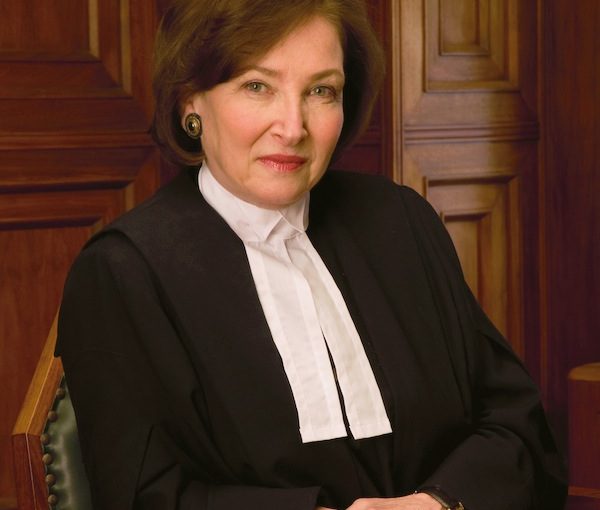
On Dec. 9, the Honourable Rosalie Silberman Abella, a justice of the Supreme Court of Canada, delivered the inaugural Elie Wiesel Lectureship in Human Rights. (photo by Philippe Landreville)

The Honourable Rosalie Silberman Abella, a justice of the Supreme Court of Canada, last week delivered an emotional, scathing indictment of the world’s failures to live up to the promise of post-Holocaust human rights protections.

Abella, a daughter of Holocaust survivors who herself was born in a displaced persons camp in Germany, in 1946, delivered the inaugural Elie Wiesel Lectureship in Human Rights. She spoke Dec. 9 on the 72nd anniversary of the United Nations’ adoption of the Convention on the Prevention and Punishment of the Crime of Genocide and the day before the 72nd anniversary of the adoption of the Universal Declaration of Human Rights. The promise of those documents – and the justice represented by the Nuremberg trials of Nazi war criminals – has been betrayed and ignored, she said.

“These were the powerful legal symbols of a world shamefully chastened,” Abella said in the streamed virtual presentation. “But although Nuremberg represented a sincere commitment to justice, it was a commitment all too fleeting.”

As the West’s triumph over fascism gave way to conflict with communism, Germany transformed in the diplomatic imagination from an enemy conquered to a potential ally to be wooed, she said. Britain issued a communiqué to all Commonwealth countries to abandon prosecutions of Nazi war criminals.

“The past was tucked away and the moral comfort of the Nuremberg trials gave way to the moral expedient of the Cold War,” Abella said.

As the fight against communism eclipsed the fight for justice over past crimes, expedience led Western countries to welcome Nazi scientists and others to contribute to the military-industrial strategy – even as Jewish victims of Nazism, like Abella and her parents, sat stateless in DP camps.

To Abella, Nuremberg represented an acknowledgement of the failure of Western democracies to respond when they should have and could have.

“And so, the vitriolic language and venal rights abuses unrestrained by anyone’s conscience anywhere in or out of Germany turned into the ultimate rights abuse: genocide,” she said.

Some justice did in fact emerge in the aftermath of Nuremberg and remarkable progress has been made in some quarters, she said. “But we still have not learned the most important lesson of all – to try to prevent the abuses in the first place. All over the world, in the name of religion, domestic sovereignty, national interest, economic exigency or sheer arrogance, men, women and children are being slaughtered, abused, imprisoned, terrorized and exploited with impunity.… No national abuser seems to worry whether there will be a Nuremberg trial later because usually there isn’t. And, in any event, by the time there is, all the damage that was sought to be done has been done.”

Abella reflected on the preoccupation among jurists with the rule of law, noting that the atrocities of the Nazi era all took place legally under German laws. She said we should be focused on “the rule of justice, not just the rule of law.”

Itemizing the myriad genocides that have occurred since 1945, including ones happening now, Abella decried a lack of global will to confront atrocities before they occur.

“Clearly what remains elusive is our willingness as an international community to protect humanity from injustice,” she said, launching a broadside against the failures of the United Nations.

“It can hardly be said to have been the avatar of human rights we hoped it would be when it was created,” she said. “We changed the world’s institutions and laws after World War II because they had lost their legitimacy and integrity. Are we there again? Not so much because our human rights laws need changing, but because a good argument can be made that our existing global institutions, and especially the UN’s deliberative role, are playing fast and loose with their legitimacy and our integrity.”

She acknowledged the successes of some UN agencies, such as UNICEF, but lamented the body’s failures to meet its core objectives.

“The UN had four objectives: to protect future generations from war, to guard human rights, to foster universal justice and to promote social progress,” she said. “Since then, 40 million people have died as a result of conflicts all over the world. The UN eventually reacted in Libya and wagged its finger at Syria, but I waited in vain to wait to hear what it had to say about Iran, Venezuela and China, for example. Isn’t that magisterial silence a thunderous answer to those who say things would be a lot worse without the UN? Worse how? I know it’s all we have but does that mean it’s the best we can do? Nations debate, people die. Nations dissemble, people die. Nations defy, people die. We need more than the words and laws of justice. We need justice.”

Abella acknowledged the need to address climate change but suggested a moral climate crisis is upon us.

“We have to worry not only about how the climate is changing the world but how the moral climate is creating an atmosphere polluted by bombastic anti-intellectualism, sanctimonious incivility and a moral free-for-all,” she said. “Everyone is talking and no one is listening. We are rolling back hard-fought human rights for minorities, immigrants, refugees, workers and women.

Abella approached global justice through the eyes of a single family. Her parents were married in Poland on Sept. 3, 1939, the day the Nazis rolled over the border and as the Second World War began. Her parents spent four years in concentration camps. The brother she never knew was murdered at the age of two-and-a-half. The only survivors of her extended family were her parents and one grandmother.

“My life started in a country where there had been no democracy, no rights, no justice,” she said, struggling to maintain her composure. “No one with this history does not feel lucky to be alive and free. No one with this history takes anything for granted and no one with this history does not feel that those of us who are alive have a duty to wear our identities with pride and to promise our children that we will do everything humanly possible to keep the world safer for them than it was for their grandparents, a world where all children regardless of race, colour, religion or gender can wear their identities with dignity, with pride and in peace.”

Her own existence is a statement of the resilience of human hopefulness, she said.

“In an act that seems to me to be almost incomprehensible in its breathtaking optimism, my parents and thousands of other survivors transcended the inhumanity they had experienced and decided to have more children,” she said. “I think it was a way to fix their hearts and prove to themselves and the world that their spirits were not broken.”

Abella dedicated her lecture not only to Elie Wiesel, the late Nobel Peace Prize laureate, but also to Irwin Cotler, who introduced her prior to her presentation and who Abella called Wiesel’s “spiritual heir.”

Cotler, a former Canadian justice minister, is the founder and chair of the Raoul Wallenberg Centre for Human Rights, which sponsored the lecture along with faculties of law at McGill University and the Université de Montréal, the Lord Reading Law Society and the International Bar Association’s Human Rights Institute.

Cotler, who last month was appointed Canada’s special envoy on preserving Holocaust remembrance and combating antisemitism, noted that Abella was the youngest person ever appointed to the Canadian judiciary, at age 29.

“She was the first refugee ever appointed to the judiciary and she was the first Jewish woman ever appointed to the Supreme Court of Canada,” Cotler said, noting that he was the justice minister who nominated her to the highest court. “She has been a remarkable trailblazer. A quintessential Renaissance jurist, public intellectual, educator and judge.”

Among Abella’s recognitions, Cotler noted, are 39 honorary doctorates.

To watch the lecture, click here.

Format ImagePosted on December 18, 2020December 16, 2020Author Pat JohnsonCategories NationalTags Elie Wiesel, genocide, Holocaust, human rights, justice, Raoul Wallenberg Centre, Rosalie Silberman Abella, survivors, UN, United Nations
Honouring history amid virus

Honouring history amid virus

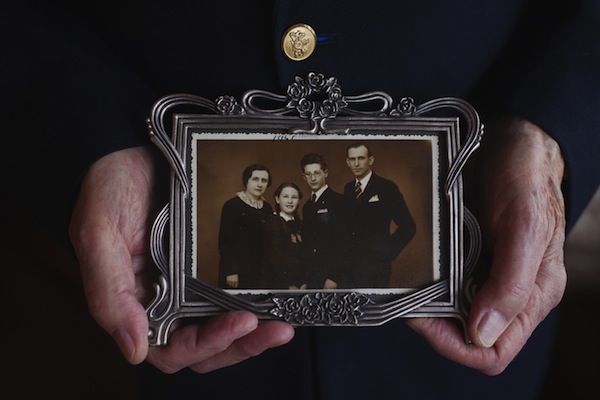
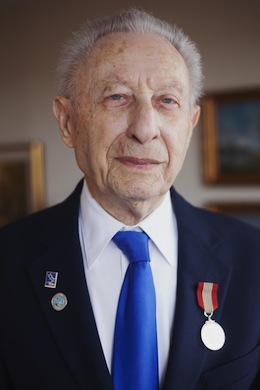
Leslie Vértes shares a family photograph. Vértes is one of the survivors featured in the Montreal Holocaust Museum exhibit Witnesses to History, Keepers of Memory. (photo from Montreal Holocaust Museum)

Collective memory has always played an important role in Jewish life and traditions. For thousands of years, Jews have celebrated holidays, mourned loss and memorialized history together as a people. And, most often, we have done so in person.

We say Kaddish as a community, celebrate a bris among a gathering of peers and family and come together every year to retell over dinner the story of the exodus of the Jewish people from ancient Egypt. The 20th-century philosopher and historian Isaiah Berlin noted, “All Jews who are at all conscious of their identity as Jews are steeped in history.” The late Lord Rabbi Jonathan Sacks expressed it another way: “Memory for Jews is a religious obligation.”

This past year has presented huge challenges for those institutions that strive to educate the public about history in general and, specifically, the Holocaust. During the pandemic, many museums and educational centres have been forced to choose alternative venues to connect with their members and the larger community. On Yom Hashoah and Kristallnacht, organizations across the world turned to recordings and interactive discussions in their effort to remind people that the Shoah’s messages remain relevant, even if their institution’s doors were temporarily closed.

Finding ways to continue that education and connection on a daily basis has required some creative thinking, said Sarah Fogg, who serves as the head of marketing, communications and PR for the Montreal Holocaust Museum. The museum, which was founded by Holocaust survivors, had been planning to launch a special photographic exhibit this year, highlighting the lives and wartime experiences of 30 survivors from the Montreal area.

“[The exhibit] was something that we had dreamt of for a really long time,” said Fogg. The museum had planned to narrate each of the stories visually using a triptych of personal images and the sharing of an artifact that the survivors had preserved: a father’s cap that he was required to wear at Auschwitz, a woman’s prayer book, an irreplaceable but tattered passport to freedom. But how could such stories be presented in the midst of a pandemic?

“The pandemic completely forced us to change, to rethink, to overhaul the plan we had for the exhibit,” said Fogg, who admitted there was a sense of urgency to the exhibit’s launch. Some of the speakers are now in their 90s and have already retired as volunteers. Plus, 2020 marked the 75th anniversary of the liberation of the concentration camps (and the 41st anniversary of the museum’s founding). This year, 2020, was the ideal time to launch the exhibit.

photo - Leslie Vértes
Leslie Vértes (photo from Montreal Holocaust Museum)

“[The online presentation] is the result of many brainstorming sessions where we discussed … how we could present this exhibit in a way that is different to other portrait exhibits that have happened around the world,” said Fogg. “And so, the ‘triptych’ as we have been calling it, the three photos, was really the result of wanting to showcase more than one portrait of the survivor and really wanting to showcase their uniqueness and their personalities.”

Fogg said it was in the middle of one of the photography sessions that the staff suddenly realized what was needed to translate this photographic essay to an online presentation. It was the survivors’ own accounts of why their personal artifacts held irreplaceable significance. It was also the story of how they had survived and how it had transformed them, once they began their new lives in Canada.

“So often when we talk about the stories of Holocaust survivors, the narrative tends to end when they leave Europe,” Fogg said. “But there is so much more to talk about.” Many of the survivors, who were children or young adults when they arrived in Montreal, went on to raise a family. All became volunteer speakers through the museum and other organizations in order to educate people about the Holocaust. Some became published authors and teachers. All, Fogg said, became inspiring leaders of their community.

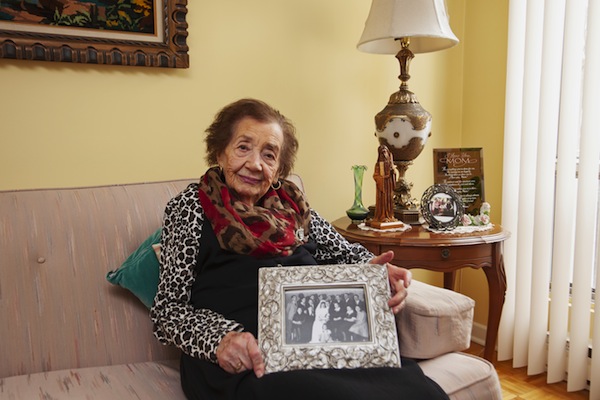
photo - Margaret Newman Kaufman with her wedding photograph
Margaret Newman Kaufman with her wedding photograph. (photo from Montreal Holocaust Museum)

“If I had to summarize what the lesson or the inspiration would be for viewers, it’s resilience. I mean, not only are they incredible survivors who escaped the Holocaust, but they come to Canada, they build new lives, they start careers, they make families and they find happiness again. They are this embodiment of resilience.”

Taken on their own, the artifacts tell dozens of unique and often heart-rending stories about the Holocaust. But they are also testimony to the survivors’ remarkable ability to draw meaning, purpose and even beauty from the darkest of memories. Sarah Engelhard’s black-and-white snapshot tells the story of her first Passover in Canada. Ted Bolgar’s touching account gives renewed significance to friendship and the value of a precious tea set. Marguerite Elias Quddus’s last memory of her father, as he was arrested, is embodied in a bitter-sweet tale about his forgotten eyeglasses.

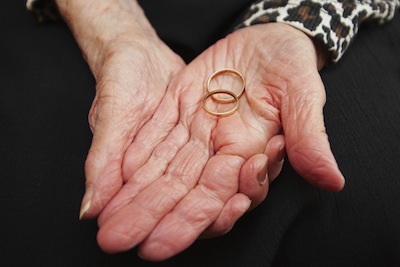
photo - Margaret Newman Kaufman displays her wedding rings
Margaret Newman Kaufman displays her wedding rings. (photo from Montreal Holocaust Museum)

Following the Second World War, Montreal became a second home for thousands of Holocaust survivors, some who saw it as a temporary port of refuge, and many who stayed to make it their home. The museum was opened in 1979 by members of the Association of Survivors of Nazi Oppression as a means to educating the public about the dangers of antisemitism and racism. More than four decades after its founding, the museum’s legacy still continues to be relevant, Fogg said. And, like the testimonies and artifacts that illumine these stories, the message it carries is an intensely human and important one.

“You know, we’re not talking about numbers or figures, we’re talking about Ted, Leslie, Liselotte and Daisy. These are real people that we love and care about and they are real people whose families and lives were torn apart by the Holocaust,” said Fogg. “And so, I think we can make a parallel to situations today, where real people are continuing to be impacted and devastated by genocide.

“I think what’s beautiful about the exhibit and working with survivors is that they are real people. What better way to understand history and especially difficult, complex and painful history than to hear it from such wonderful and caring and generous individuals,” she said. “They are the best educators and we are so lucky to learn from them, and we’re so lucky that they wanted to be a part of this exhibit.”

The museum’s effort to reach virtual audiences during the pandemic does appear to be working. Fogg said that, since its launch in September, the exhibit has not only been seen by viewers around the world, but has won three international awards for its visual presentation and design. The pandemic may have temporarily limited the world’s physical ability to connect, but it hasn’t stopped innovation or the heartfelt effort to care about others.

To see the Montreal Holocaust Museum’s exhibit, Witness to History, Keepers of Memory, visit witnessestohistory.museeholocauste.ca.

***

Montreal Jewish history in brief

The first Jews in the Montreal area were Sephardim serving in a British regiment. One was Aaron Hart, whose son would later be elected to the legislature to represent the Trois-Rivières area.

By the early 19th century, Ashkenazim from Eastern Europe had begun to trickle in and, by the early 20th century, more than 7,000 Jews had made their way to Montreal, most fleeing antisemitism in the Russian Empire and Europe. Many would arrive to find that prejudice and discriminatory policies weren’t exclusive to distant geography. The election of Ezekiel Hart to the legislature would later inspire a resolution to ban Jews from serving in office. It take another 60 years before a law would be enacted that would give Jews in Lower Canada the right to self-representation.

By the 1930s, Montreal’s Jewish population had increased to 60,000, making it the largest Jewish hub in the country. Many worked in the growing garment industry or owned stores and restaurants in the city. A smaller number moved to the country to become farmers and use skills they brought with them from the old country.

Distrust toward Jews and the growing number of Jewish refugees looking desperately for a new home before and after the Holocaust made immigration to Canada virtually impossible in the early 1940s. It took the efforts of organizations like the Canadian Jewish Congress to push for changes to immigration laws and open doors to refugee families. By the early 1950s, another 9,000 Jewish refugees eventually made their way to Montreal’s port. By the 1970s, those numbers had swelled again, reaching close to 120,000.

Today Montreal’s Jewish community is much smaller, for many reasons, including out-migration from the 1970s to 1990s. But the early Jewish pioneers, those who arrived in Montreal in the 18th and 19th centuries, are not only credited with building new businesses and opportunities for a growing city, but for planting the seeds for Canada’s diverse Jewish community.

Jan Lee’s articles and blog posts have been published in B’nai B’rith Magazine, Voices of Conservative and Masorti Judaism, Times of Israel, as well as a number of business, environmental and travel publications. Her blog can be found at multiculturaljew.polestarpassages.com.

Format ImagePosted on December 18, 2020December 16, 2020Author Jan LeeCategories NationalTags coronavirus, COVID-19, history, Holocaust, Leslie Vértes, Margaret Newman Kaufman, memory, Montreal, Montreal Holocaust Museum, museums, Sarah Fogg, survivors
Complexities of Poland’s past

Complexities of Poland’s past

Andrzej Mańkowski, Poland’s consul-general in Vancouver, shared some reflections on his country’s history with the Jewish Independent, including about the Ładoś Group, which tried to help Jews escape the Nazis by the issuing of fake passports. (photo from Andrzej Mańkowski)

The wartime actions of Poland and its people provide a prime example of the human capacity for good and evil. Many Poles today proudly point out that there are more of their compatriots recognized in Yad Vashem’s Garden of the Righteous Among the Nations than there are heroes of any other nationality. By contrast, the work of Polish-Canadian historian Jan Grabowski and a team of researchers in Poland chronicles in great detail the collaboration by Polish officials and ordinary citizens in assisting the Nazis in the goal of executing the “Final Solution” in that country.

Poland’s government prefers to focus on the more positive fact. So sensitive and contentious is the history that, in 2018, Poland passed – then, in the face of international outrage, rescinded – a law that criminalized expressions of Polish complicity in the Holocaust. At the time, Israel’s President Reuven Rivlin acknowledged that many Poles had aided Jews during the war era, but also that “Poland and Poles had a hand in the extermination” of Jews during the Holocaust.

Poland’s consul-general in Vancouver spoke to the Jewish Independent last week and shared some personal reflections on his country’s history – including how his own grandfather was murdered in Auschwitz.

Andrzej Mańkowski wanted readers of the Independent to know of a recently discovered story of a group of Polish diplomats in Switzerland who provided faked passports to help Jews flee Europe.

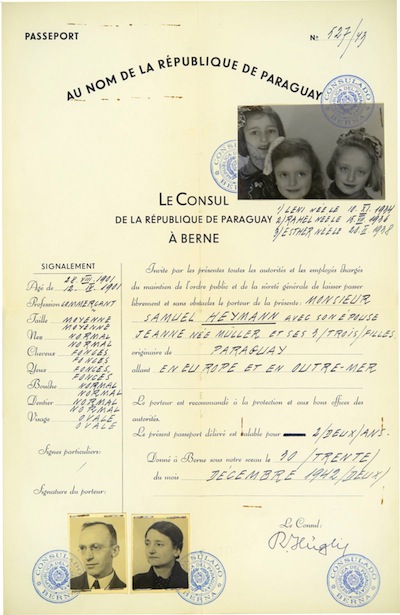
Called the Ładoś Group, after Aleksander Ładoś, the Polish envoy in Bern from 1940 to 1945, the six individuals included four Polish diplomats, one of whom was Jewish, and two representatives of Jewish organizations that conspired with the officials. The RELICO Assistance Committee for the Jewish Victims of the War, established by the World Jewish Congress, and the Agudat Yisrael worked with Ładoś and his colleagues.

In addition to Ładoś himself, three other Polish diplomats were members of the group: Stefan Ryniewicz, Konstanty Rokicki and Juliusz Kühl. The two members of Jewish organizations in Switzerland who rounded out the group were Abraham Silberschein of RELICO and Chaim Eiss of Agudath Israel.

Beginning in 1941 (or possibly earlier) until the end of 1943, the six men illegally purchased passports and citizenship certificates from Latin American countries, primarily Paraguay. The documents were sent to Jews in nations under German occupation, where possessing them increased chances of survival.

“Many of those passports came too late to save people,” Mańkowski said. “The recipients or the holders of the passports ended up in Auschwitz in spite of already having the false passports in their hands.”

As many as 10,000 forged passports may have been obtained, but most reached their intended recipients – primarily German and Dutch Jews, as well as some Polish Jews – too late. Of about 3,200 passports issued to individuals whose names are known, it is estimated that about 800 individuals – approximately 25% – survived the war.

Mańkowski’s own family history is deeply impacted by the horrors of the Nazi era. His grandfather, Emeryk Mańkowski, fled Ukraine after the 1917 Bolshevik revolution and settled in central Poland, where his wife’s family owned land. Part of that land was forested and, during the German occupation, Nazi officials discovered a radio communications device in the forest on the property. Unable to identify the owner of the contraband device, they arrested 10 members of the local intelligentsia – including Emeryk Mańkowski – and sent them to Auschwitz as a warning to the rest of the population.

At the time, Polish inmates were permitted 100 zlotys per month from their family. During the second month of his incarceration, Mańkowski’s family had their monthly stipend returned, with a message telling them that the prisoner was no longer present in the camp.

“The German Nazi bureaucracy was so precise and honest to send back money after killing the victim,” said his grandson, the consul-general.

image - As many as 10,000 forged passports may have been obtained, but most reached their intended recipients too late. Of about 3,200 passports issued to individuals whose names are known, it is estimated that about 800 individuals survived the war
As many as 10,000 forged passports may have been obtained, but most reached their intended recipients too late. Of about 3,200 passports issued to individuals whose names are known, it is estimated that about 800 individuals survived the war. (image from Andrzej Mańkowski)

While Poles suffered at the hands of the Nazis, Mańkowski acknowledges the magnitude is incomparable. Three million Polish Jews died during the Holocaust and, during the same period, three million non-Jewish Poles also died, he said. This represented about 10% of the larger Polish population, but 90% of the Jewish population. After the war, he said, a Polish family of 10 would have a relative missing from their holiday table. A Polish Jew from a family of 10 would be alone.

The consul lamented that Poles and Jews have incompatible narratives.

“We have two separate histories,” he said, citing the visits by Israeli students to the memorial sites of the Shoah in Poland. “These groups of Jewish youths from Israel walk around in Warsaw and see only ghetto, only death all around. They never see us, living Poles. They are coming with bodyguards, they are insulated from Poles.”

The controversy around the now-rescinded law proscribing discussion of Polish complicity led to a major diplomatic eruption with Israel, and Polish Prime Minister Mateusz Morawiecki acknowledged that it was not any respect for civil liberties or historical veracity that led to the reversal, but international pressure.

“Those who say that Poland may be responsible for the crimes of World War II deserve jail terms,” Morawiecki said at the time. “But we operate in an international context and we take that into account.”

Chrystia Freeland, then Canada’s minister of foreign affairs, wrote on Twitter that Canada is “concerned by the potential impact on free speech” of the Polish law and urged that country to “ensure open discussion and education about the horrors of the Nazi death camps.”

The consul emphasized that the law didn’t apply to scientific publication, research or artistic activity, as these fields were excluded from the jurisdiction of this law.

World attention has focused on Poland in recent years not only because of concerns around free expression and inquiry into Holocaust-era history. Poland has been called the worst country in the European Union for gay rights. Expressions of hate speech are leveled against LGBTQ+ Poles by individuals at the highest levels of government. There is a lack of legal protections for sexual minorities and criminal charges have been laid against individuals exhibiting Pride flags. Dozens of Polish communities have declared themselves “LGBT-free zones.”

Mańkowski acknowledged that Poland is a conservative country. Last month, a new abortion law was promulgated, banning abortion in almost all cases.

“It’s a question of some conservative attitudes and opinions on the part of Polish society,” he said. “We are quite conservative, that’s true…. It’s a hot discussion within Polish society and, if you follow polls and opinion research, you will see the real judgment of Polish society and maybe the political system is not following the tendencies of the changing trends.”

Format ImagePosted on December 18, 2020December 22, 2020Author Pat JohnsonCategories WorldTags Andrzej Mańkowski, Auschwitz, history, Holocaust, human rights, LGBTQ+, Poland
Thoughts on Bahrain

Thoughts on Bahrain

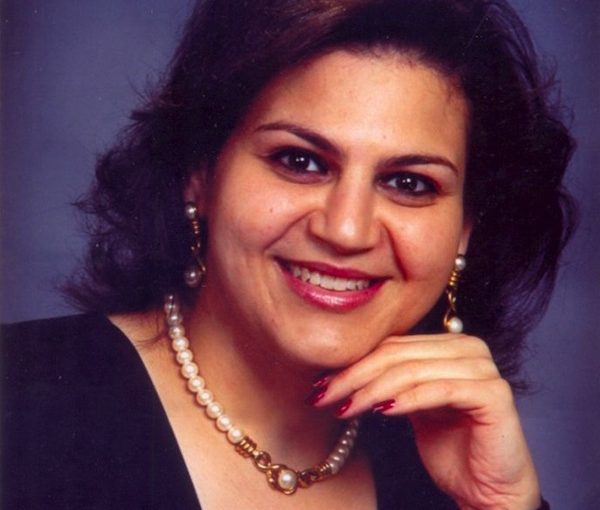
Nancy Khedouri, a member of the National Assembly of Bahrain. (photo from bahrainthisweek.com)

Nancy Khedouri, a Jewish politician, writer and businesswoman from Bahrain, provided insight into the history of the Jewish community in the small Gulf state and its recent normalization agreement with Israel, signed in September. She spoke at a Nov. 29 Zoom talk organized by Canadian Friends of the Hebrew University and moderated by Ambassador Ido Aharoni.

A member of the National Assembly of Bahrain since 2010, Khedouri is also the author of From Our Beginnings to Present Day, a history of the Bahraini Jewish community, which started at the end of the 19th century.

“Bahrain was known as a place that always embraced people of various religious and cultural backgrounds. The Jews of Bahrain were always allowed to practise their religion freely,” said Khedouri, a third-generation Bahraini and descendant of Iraqi Jews.

The Jewish community in Bahrain totaled close to 2,000 people a century ago. From the 1940s through the 1960s, many Jews left the country on their own volition; they were never expelled, she pointed out. These days, their numbers are rather small, with roughly a half-dozen resident families, or about 40 individuals, covering all age groups. Most Jews living in Bahrain now came from Iraq.

“Overall, the Jewish people worked in various professions, tobacco, olive oil, electronics, some were in the record business – both my grandfathers were involved in the leasing of cinemas. Some of those here today work in the money exchange business. We have integrated very well in the texture of society. We are highly respected,” she said

One famous member of Bahrain’s Jewish community in the 1940s was a midwife known as Um-Jan, in Arabic, whose story influenced a popular 2020 Arabic television series Um Harun. When the community was larger it had a shochet (ritual slaughterer), and it still maintains a Jewish cemetery.

These days, Jewish traditions and festivals in Bahrain are taught and celebrated at home. Bahrain’s synagogue, located in country’s capital, Manama, is not presently in use. Established in the 1930s, the shul was funded by a Jewish pearl trader from France who wanted to create a place of worship for local Jews. At that time, he entrusted a community member with the responsibility of looking after the title deeds of the property. The synagogue is currently under renovation, and the hope is to have it reopen by Purim.

On the question of the tolerance shown towards Jews in Bahrain, Khedouri highlighted the “open-mindedness” of the ruling family and Islam, “a religion that teaches coexistence, peace and respect for one another. They have embraced the true values of being Muslim.” She pointed out that other religions live in peace in Bahrain: in addition to the synagogue, Bahrain houses churches and the only Hindu crematorium in the Gulf.

Aharoni remarked on the prominent role women seem to have in Bahraini society and public life. “Bahrain took pioneering steps to empower women. We have reached advanced stages,” said Khedouri. “We have had women as ministers and leading roles through the years.” Khedouri’s cousin, Houda Nonoo, served as Bahrain’s ambassador to the United States from 2008 to 2013.

Since the 1950s, women have joined the workforce and, since the 1960s, have started companies, said Khedouri. They joined the police force in the 1970s, she continued. And, now, Bahraini women constitute a high percentage of those employed as doctors. Nonetheless, there is still room for improvement, she said.

On the newly formed ties with Israel, Khedouri commented, “We must remember that Israel never posed a threat to the Gulf countries or the region. Seven decades of lost opportunity is a long time. Everyone met the new agreement with great excitement. We believe both countries will benefit. Israel will benefit by having a great trading partner.”

She expects joint collaborations in many aspects. There are opportunities, she said, in technology, in cinema, arts and tourism. In Manama, much preparation is underway for the arrival of Israeli tourists to the country. A number of hotels and supermarkets are offering kosher menus and products.

Khedouri lauded outgoing American president Donald Trump and his son-in-law and senior advisor Jared Kushner for being instrumental in bringing about a peaceful arrangement with Israel. Bahrain followed the United Arab Emirates in normalizing ties with Israel; afterwards, Sudan and, later, Morocco established deals with the Jewish state. These agreements collectively have been referred to as the Abraham Accords.

Bahrain’s political system is a constitutional monarchy with two legislative chambers. Its Council of Representatives is elected while its Consultative Council (or Shura Council), on which Khedouri sits, is appointed by the king.

Sam Margolis has written for the Globe and Mail, the National Post, UPI and MSNBC.

Format ImagePosted on December 18, 2020December 16, 2020Author Sam MargolisCategories WorldTags Bahrain, Canadian Friends of the Hebrew University, CFHU, history, multicultural, Nancy Khedouri, politics, women
Make history inclusive

Make history inclusive

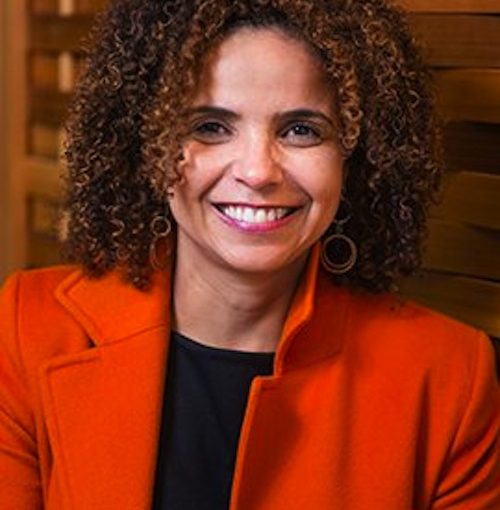
Dr. Elizabeth Shaffer (photo from ischool.ubc.ca)

The expression of history matters. This issue, previously confined mainly to academic discourse, has been thrust into the public sphere as never before. In this year of upheaval and change, a spotlight seemed to follow the systemic racism exhibited by police forces across North America. Along with widespread protests about police behaviour came a wave of questions and action about how we choose to convey our collective history. Monuments toppled around the world, raising questions about how and why certain people are memorialized in our national consciousness and whose story is missing.

In Vancouver, the Jewish Museum and Archives of British Columbia is at the forefront of this dialogue, pushing the agenda of inclusion and trying to make sure that the stories of as many members of our community are heard and recorded. The museum, which was founded as the Jewish Historical Society of British Columbia, has been engaged for decades in collecting the oral histories of Jews from the spectrum of Jewish life – the stories that provide a greater context to what it means to be Jewish in this place.

This year, at the Jewish Museum’s annual general meeting on Nov. 18, the keynote speaker contextualized the importance of having a variety of voices and experiences shape our collective understanding of history. Dr. Elizabeth Shaffer, executive director of the University of British Columbia’s Indian Residential School History and Dialogue Centre and assistant professor at the UBC School of Information, spoke to a group of well over 100 people via Zoom.

Shaffer highlighted issues of social justice, marginalization, accountability and collective remembering. Each of these topics is thought-provoking on its own, but, grouped together, the picture she painted was more than the sum of its parts. Shaffer discussed why certain monuments are problematic. She said the protests that took place this summer across the globe created a robust dialogue about “who counts.” Increased understanding that our current narrative is depicted from the perspective of the colonizer has shown the need for viewpoints of “othered people” to be included.

While Shaffer’s primary focus is on reconciliation and how museums and archives should be reimagining their roles in terms of the Indigenous population of Canada, she presented a broad call to examine practices and positionality vis-à-vis marginalized people. She suggested that museums need to collaborate with communities more and that technology has presented us with unique opportunities to do so. Social media has democratized the recording of history, allowing more citizens to contribute to the dialogue in ways never seen before. The challenge for museums and archives will be to decide how to thoughtfully filter and present this information.

“Under-documented communities do not trust museums because they are not represented,” said Shaffer. She suggested that participatory archives, which are by their nature democratic, holistic and citizen-focused, would help fill in the gaps and provide a broader representation of our history. She said, “Archival records hold power … they hold the collective and individual memory, and shape who is included and who is not.”

The recognition that museums and archives are not neutral is an important part of this work. These are some of the challenges facing the archives and museums, as greater transparency and community participation make our institutions of memory “safe and non-oppressive spaces” and repositories of an inclusive history.

Shaffer called on museums and archives to be agents of change, to be actively anti-racist and to dismantle the oppressive practices that have excluded marginalized narratives. One suggestion she had pertaining to the importance of transparency is documenting the way the story is told. She said there are deep-rooted challenges in the long game, but she has seen an interest in the museum community to do things better.

“Humility as an institution is key,” said Shaffer. “We need to reflect and evolve and have the courage to act when change needs to be made.”

In response to a question from the audience, Shaffer endorsed the practices of the JMABC, as it fulfils its mission and mandate. She encouraged the community to support other organizations as well. “Cross-pollination enriches everyone,” she said.

For more information on the JMABC, visit jewishmuseum.ca.

Michelle Dodek is a freelance writer, chef and longtime community volunteer in Vancouver. One of her current involvements is as a board member of the Jewish Museum and Archives of British Columbia.

Format ImagePosted on December 18, 2020December 16, 2020Author Michelle DodekCategories LocalTags history, inclusivity, Jewish museum, JMABC, memory
Christmas Carol goes online

Christmas Carol goes online

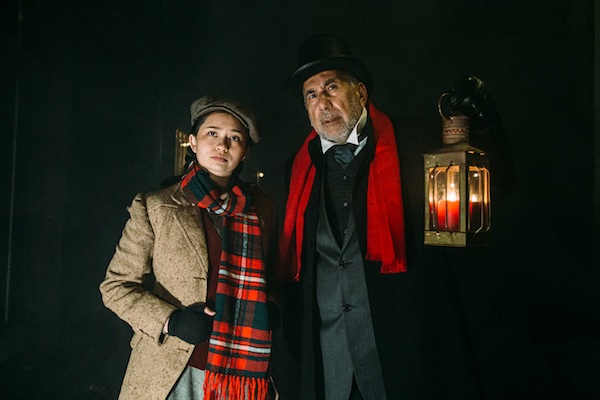
David Adams as Scrooge and Scotia Browner as Tiny Tim in Metro Theatre’s production of A Christmas Carol – The Radio Play. (photo by Nicol Spinola)

Metro Theatre was all set to provide socially distanced, safety-first live performances of A Christmas Carol – The Radio Play this month. But then the provincial restrictions on gatherings came down, and the struggling theatre company had to cancel its in-theatre run. But the production team used what holiday spirit it had to film the show and an online version will be available for viewers to watch from Dec. 21 through Jan. 3.

“We are fortunate to have our talented friends Nico Dicecco and [playwright] Erik Gow film the show and put together a beautiful digital stream of it that is available by donation,” stage manager Kat Palmer told the Independent.

Palmer has had a few shows canceled since the pandemic hit. “Right at the beginning of COVID,” she said, “I was in rehearsals for a sweet little concert Wendy Bross Stuart put together called With a Song in My Heart. I was also looking forward to Hello Dolly! at Theatre Under the Stars. And, most importantly, my company, Raincity Theatre, was gearing up for our production of Cabaret. Obviously, intimate, site-specific theatre is not possible during COVID.”

But A Christmas Carol – The Radio Play was created with COVID-19 protocols in mind. The theatre is a large space, enough for patrons to be distanced from one another. “Even the set was designed to keep actors more than six feet apart at all times,” said Palmer. In rehearsals, every cast member arrived masked and wore their mask until they were in their show spacing, she said. For the stage show, they were ready with two understudies, prepared to go on, lest “any actor wake up with any sort of tickle in their throat.”

But those plans went for naught when, last month, large public gatherings were prohibited and the show, which was to open Dec. 3, was delayed to organize the online version.

“It is no surprise that COVID has deeply impacted our arts community,” said director Chris Adams. “The Metro Theatre is a not-for-profit theatre company that relies on ticket sales to get by. Once a thriving arts hub in a former movie-house, Metro has been hit hard by COVID restrictions that have seriously impacted their revenue. The Metro also rents out their space to schools and dance companies over the quieter spring/summer months but, due to our new reality, that was also impossible this year. The Metro Theatre is at risk of closing its doors.”

Nonetheless, the show is also raising money for the charity Backpack Buddies.

“When Charles Dickens published A Christmas Carol in 1843, charitable giving soared overnight,” said Palmer. “The story has forever changed how we celebrate the holiday season and reminds us of the importance of generosity. It is in this spirit that the Metro always selects a charity to support each year at Christmas.

“Early in the show, we meet Abigail – an orphan who speaks of food insecurity. It is shocking to find parallels between children today and the Dickensian era. British Columbia has one of the highest child poverty rates in Canada, with 20% of children living below the poverty line. The Backpack Buddies program provides backpacks of food to children in need so that they do not go hungry over the weekend.”

A Christmas Carol – The Radio Play is an original work by writer Gow, based on the Charles Dickens novel, of course.

“With Christmas Carol, there is an expected order that ghosts appear. Erik has decided to shake it up,”

said Adams. “There are also some scenes that do not appear in the book that add an extra level of character development.”

The radio play stars David Adams as Ebeneezer Scrooge, who meets all the characters in A Christmas Carol, “from Bob Cratchit to Jacob Marley, but with only six actors creating and voicing over 40 of the beloved characters,” reads the play’s description. Joining David Adams “on stage” will be Roger Monk, Jill Raymond, Chris Ward, Emilia Michalowska and Scotia Browner. The COVID covers were Jim Stewart and Courtney Shields, who is also the assistant director of the production.

“All of our actors have created a character for their narrator in addition to playing every character in the piece,” said Palmer. “For the majority of our performers, they play four or five characters each. For the simplicity of the storytelling, David plays Scrooge but has also created a very unique and distinct character for his narrator. While David has played many Jewish characters, like the Merchant of Venice, Tevye and Fagin, he is not Jewish himself. Although, he has had to learn some Yiddish for roles from time to time.”

As for being a Jewish person working on a Christmas play, Palmer said, “At this time of year, I sometimes feel like Scrooge. I despise the commercialism of the holiday season, how it seems to consume the entire month of December and don’t get me started on cheesy Christmas movies. But, as a Jewish person working on this show, it is easy to see Jewish values on every page of the script. Yes, A Christmas Carol takes place at Christmas but, in many ways, A Christmas Carol is really a story of teshuvah, tzedakah and tikkun olam…. It’s a story that celebrates kindness, charity and human transformation – ideals that all parents hope to instil in their children – ideals that have deep roots in Jewish tradition. Don’t we all want to believe even the worst among us has a core of goodness?”

The filmed version of A Christmas Carol – The Radio Play is available by donation at metrotheatre.com.

Format ImagePosted on December 18, 2020December 16, 2020Author Cynthia RamsayCategories Performing ArtsTags A Christmas Carol, Backpack Buddies, Chris Adams, coronavirus, COVID-19, Kat Palmer, Metro Theatre, Scrooge, theatre, tikkun olam

Cautiously optimistic

The good diplomatic news keeps coming. Morocco and Israel have announced that they will begin normalizing bilateral relations. This comes on the heels of similar announcements between Israel and the United Arab Emirates, Bahrain and Sudan. There are rumours of more announcements to come.

More than 10% of Israel’s population has family roots in Morocco, adding to the emotional impact of the latest announcement.

In a year that has strained credulity in so many ways – few of them cheery – these diplomatic moves have been a bright spot. Even some longtime international observers and commentators are dumbfounded by the speed of the developments. For decades, the conventional wisdom of Middle East watchers has been that Arab recognition of and peace with Israel rests on a resolution of the Palestinian issue. Bypassing that step is a massive about-face for the countries that have made nice with Israel, and it is galling to the Palestinians and their representatives.

In most cases, the thaw in relations is a de jure recognition of de facto relations that have been in progress for years. Under-the-radar visits and economic ties have existed between Israel and some of these states long before they were officially acknowledged and celebrated. Bringing these relations out in the open was eased by a little self-interest, with a degree of cajoling and likely backroom dealing from the U.S. president and his administration.

The incentives for Arab and Muslim states to warm the cold shoulders they have given Israel include realities of geopolitics – countering the regional designs of Iran and Turkey – as well as the basket of inducements presented by the Americans. For example, the latest announcement – between Morocco and Israel – involves American recognition of Moroccan sovereignty over disputed territories of Western Sahara and American promises of billions of dollars of investments in the Moroccan economy.

Similarly, the American-brokered relationship between Israel and Sudan hinged on Sudan’s removal from the U.S. list of state sponsors of terrorism (contingent on Sudan’s provision of $335 million in compensation for victims of the Sudanese-related terrorist bombings against American interests and citizens).

The UAE and Bahrain agreements also had carrots attached. In exchange for their acquiescence, the UAE may obtain valuable American F-35 fighter jets.

All the states launching fresh relations with Israel open the opportunity for potentially lucrative deals with Israeli businesses and investors. In other words, the diplomatic thaw is not a consequence of a sudden awakening to the benign presence of what has been known by most of these states until recently as the “Zionist entity.” The trading of economic and military incentives – as well as the seemingly nonchalant abrogation of self-determination for the people of Western Sahara – suggest as much self-interest as affection for Israel.

The diplomatic isolation of Israel that began at the moment of its rebirth in 1948 was founded primarily on the rejection of the idea of Jewish self-determination – at least in the Jewish people’s ancient and modern homeland. The opposition to Israel’s existence was not premised on economic or diplomatic reasoning but, to a much greater extent, on anti-Jewish animus.

Israel’s isolation represented an abandonment of self-interest on the part of Arab and Muslim countries. Ghettoizing their own economies from the economic powerhouse of the region has been harmful to all people in the region. None have been harmed more than the Palestinians themselves, who have something to gain materially from good neighbourliness with Israel.

The series of announcements on diplomatic relations are not a result of any altruism. At least in part, they came about through old-fashioned horse-trading, including some morally questionable trade-offs, such as the forgiveness of terrorism and an internationally contentious occupation of a foreign territory, and weapons sales.

After 72 years of nearly universal rejection of Israel by its neighbours, a thaw motivated by self-interest is still a thaw. And it’s something about which to be cautiously optimistic. But it’s only a start, and there is much to be done to build the region into one that’s united in peace. It might be naive, but we still cling to the hope of Isaiah that all those weapons will eventually be exchanged for ploughshares and pruning hooks that, one day, the world over, “nation shall not lift up sword against nation; neither shall they learn war anymore.”

Posted on December 18, 2020December 16, 2020Author The Editorial BoardCategories From the JITags Bahrain, economics, Israel, military, Morocco, peace, politics, Sudan, trade, UAE, United Arab Emirates, United States

Posts pagination

Previous page Page 1 … Page 238 Page 239 Page 240 … Page 667 Next page
Proudly powered by WordPress