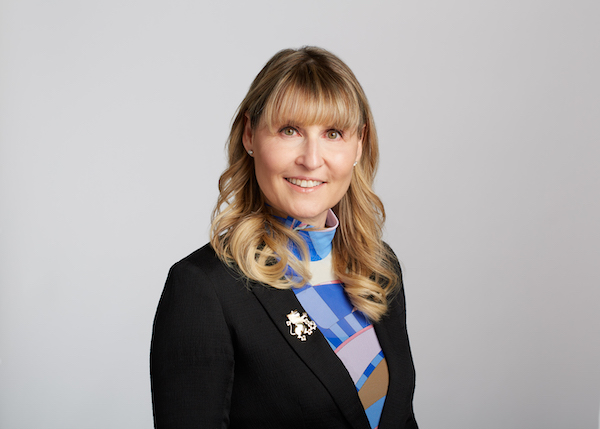
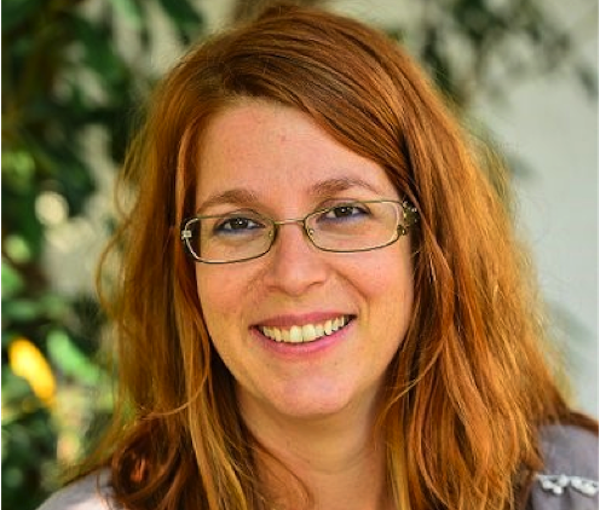
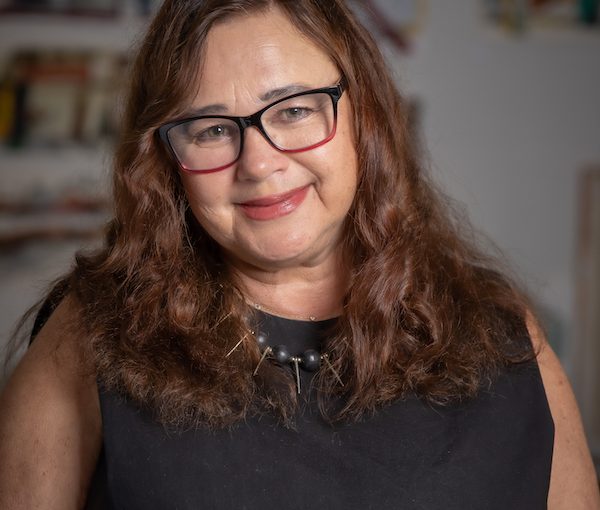
Lana Marks Pulver, Jewish Federation of Greater Vancouver annual campaign chair. (photo from JFGV)
The Jewish Federation of Greater Vancouver’s annual campaign is entering the homestretch with an ambitious set of goals. This year, the theme is “strengthened by where we have been, inspired by where we can go.”
“The goal for this year’s campaign is both quantitative and qualitative,” campaign chair Lana Marks Pulver told the Independent. “We aim to raise a minimum of $9.5 million, and we want to strengthen the culture of gratitude within the Federation organization, that affects all constituents, including donors, volunteers and staff.”
As has often been said in the past 21 months, these are times like no other in recent memory. The pandemic has touched us all, yet, for some, the campaign points out, it has “caused a cascading effect of challenges.”
“The goals haven’t shifted due to the pandemic, but the needs have certainly increased because of it. Therefore, we hope to raise more than our financial target to ensure all our partner agencies survive the current uncertainty in which everyone is operating and all community needs are being met,” Marks Pulver said.
“The past year-and-a-half was extremely tough on our community and our partner agencies. However, with the incredible show of support from donors and volunteers, our community proved to be resilient. Our partner agencies were able to survive the uncertainty and continue to provide their much-needed services because of the support from Jewish Federation and our donors.”
Groups within the community that were already vulnerable have faced more challenges. Among the groups Federation is helping are low-income individuals, the elderly and youth struggling with mental health concerns.
Well before COVID-19 hit, the region was one of the most expensive places in the world in which to live and it has become increasingly unaffordable; many, as a result, are left with hard choices regarding paying for rent, bills and food. Meanwhile, most seniors in the community are eager to reconnect socially and spiritually after extended separations from their families and communities.
Increasing numbers of youth, too, are contending with anxiety and depression as they encounter isolation from their peers and continued disruptions to their routines. At one local Jewish school this past year, the demand for counseling services doubled. In light of such statistics, Federation has formed a committee of local professionals and volunteers to develop a comprehensive approach to assist both youth and their families.
The basic plan involves employing a community mental health professional to offer counseling at community locations; collaborating with other mental health organizations in supplying professional development to those working directly with children and youth; and encouraging youth to take leadership roles in raising awareness among their peers about the importance of accessing appropriate support.
The pandemic has had a negative impact on youth mental health globally, including in Federation’s partnership region in Israel. The Mervo’ot HaHermon Regional Council has witnessed a rise in troubling behaviour among youth, especially those whose routines and social opportunities have been disrupted and who may not have supportive adults in their lives. Demand for services in the Israeli municipality has grown by 35%, according to Federation. Because of the need, and based on a successful pilot program in the spring of 2021, Federation is helping efforts to enhance counseling services and create new educational and social programming, in the hope that early intervention will lead the youth in this region along a healthier path.
Marks Pulver concedes that, while there are hurdles to overcome in organizing a campaign in the midst of a pandemic, the community response has been unflaggingly supportive.
“Typically, the campaign goes hand-in-hand with community gatherings,” she said. “A big part of campaign is the opportunity to connect with other community members at events. The pandemic has prevented us from having these gatherings in person and, instead, we have resorted to virtual ones. However, people are ‘Zoomed out’ and tired of the online events; therefore, making it more challenging to get people together.
“Recent experiences, however, have demonstrated the strength of our community and how we come together to help others in a time of need,” she stressed. “This show of support, both financially and with volunteerism, is beyond inspiring and I, personally, am incredibly grateful to be part of this community, that steps up and makes a difference.”
Marks Pulver, who has served as women’s philanthropy chair at Federation and was major donors chair for the past few years, sees her role as campaign chair as a natural progression and feels honoured to lead this year’s effort.
“I am proud to be serving alongside women chairs of both Federation and the Jewish Community Foundation. I believe you get out of life what you put in, and it is this belief that inspires me to volunteer. I also thoroughly enjoy working with others in the pursuit of helping others, and feel grateful for the opportunity to be able to make a difference.”
Everybody talks about the weather, but nobody does anything about it, goes an old saying often attributed to Mark Twain. This was funnier a century ago, when humans were unaware that, in fact, our behaviours are altering the weather and the climate. The ring of truth now is that gatherings like the United Nations Climate Change conference in Scotland this week, despite all the good intentions, may very well end up changing almost nothing.
To confront the dangers we face, not just governments but every organization, business and household on the planet will need to change the way we operate. The volume and type of foods we consume, the methods of transportation we employ, the consumer goods we purchase and discard, the ways we build our homes, the very expectations we have of what defines the “good life” – all these things will need a fundamental reconsideration.
Almost all nations and people acknowledge the problem and our individual and collective roles in it. But the steps needed to effectively combat climate change are often viewed as a step too far.
Look at Greta Thunberg, the Swedish environmental wunderkind. To visit North America, she traveled on a carbon-neutral sailing ship that took 14 days to reach the American shore. By contrast, attendees at the Glasgow huddle almost all arrived by air, some on private jets. Outrage at the hypocrisy is muted because most of us understand the balance of options. The world’s top government officials and scientists cannot afford, say, two weeks on a sailboat to attend a few meetings. On a much smaller scale, each of us makes similar choices based on a range of considerations every day.
The profit motive is, in many ways, how we got into this mess. Since the beginning of the Industrial Revolution, maximizing profits has often come hand-in-hand with destroying the environment – dumping refuse into waterways rather than disposing of it appropriately, exploiting non-renewable resources, encroaching on animal habitats to expand human settlement, manufacturing products with deliberately short lifespans to ensure a perpetual market for the commodities. This is not nearly a comprehensive accounting.
Is it too much to imagine that the human motivation that got us into this mess can get us out? Could capitalism save the planet? Given the litany of optimistic promises made and broken by governments around the world on this issue, trusting in businesses may be no more or less misplaced than relying on the basket of government into which we have put the eggs of our collective future.
Israel, the “Startup Nation,” seems to be an incubator for private sector climate solutions, which often involve partnerships with academia.
In one instance, Aleph Farms is creating synthetic beef that, according to a study, “reduced the carbon footprint by 92%, water footprint by 78% and land footprint by more than 95%, compared with conventional ways of producing meat.” That said, reducing or eliminating any kind of meat in our diets is a better environmental solution.
Another firm, Wiliot, has developed a smart tag – a label, basically – that can be placed on any transportable item, sending signals to a designated recipient to know whether the shipment (fresh produce, say, or pharmaceuticals) is getting to the right place at the right time at the right temperature. In addition to reduced spoilage and the lessons the comparatively simple device can provide on shipping more efficiently, the product makes it easy to measure exactly the carbon footprint of any item transported.
Beewise is a computer-assisted, automated process to ensure that bees are provided with the ideal habitat, nourishment and security needed to thrive, massively reducing the number of bee colonies lost every year due to pesticides, global warming, disease and other threats.
EcoPeace Middle East brings together Jordanians, Palestinians and Israelis to create shared water solutions, recognizing that human-created borders have no meaning in the climate conversation.
These are a tiny sampling of a universe of ecological initiatives taking place in Israel, primarily in the private sector. Closer to home, environmental activism is flourishing, too. There are climate activists like those in Extinction Rebellion, which is a very visible group that does not shun controversy, and there are far more activists working quietly toward climate justice. Individual members of the Jewish community are among the activists and communal agencies that are, to varying degrees, active on the issue.
Interesting, too, is the role of the private sector here. West Coast Reduction Ltd., a multi-generational family business owned by the Diamond family, is combining business with environmental improvement. Serving restaurants, butchers, farms, feedlots and supermarkets, WCRL collects byproducts and food waste, then transforms them into components for animal feed and renewable energy, among other things.
Realizing that what is good for the environment can also be good for the economy may be key to realistic solutions to the climate crisis. “Going green” is not all about sacrifices without immediate benefit. It can create jobs, manufacture new products and technologies and draw a new map for a sustainable economy.
Developing carrots as well as sticks is crucial because, in a democracy, convincing people to give up things we take for granted can be political suicide. For our governments to be successful in this fight, they need to know that voters are prepared to accept the steps. For businesses to be successful in this endeavour, they need to know that we will pay a little (or a lot) more for products that do not destroy our habitat and imperil our future.
This brings the onus back to us. Individually and collectively, it is we who will determine whether government and business will do what is necessary to combat climate change. Each of us makes dozens of choices every day that affect the situation we are in. We vote. We shop. We drive and fly. We walk and cycle. We recycle. We….
Whatever our leaders decide in Glasgow this week, the success or failure will depend on the response of the people who sent them there: us.
Canada recently made several important commitments to the Jewish community, with plans to target hate and fund initiatives to educate and fight antisemitism. While good news, for some of us, these also feel like vague promises. Many of us have felt vulnerable because of our Jewish identities. It has gotten worse recently, with a sharp rise in both physical violence and hate online.
This fall, I signed up for a virtual program run by the Jewish Federation of Winnipeg, featuring Rabbi Matt Liebl in conversation with Centre for Israel and Jewish Affairs (CIJA) chief executive officer Shimon Koffler Fogel. The event was called Antisemitism in Canada: Pushing Back against Hate. The conversation was intellectual and insightful but, when it ended, I was unsatisfied. The overall message was that perhaps 80% of the antisemitic events in Canada were due to ignorance. To fix this, we must educate people. So, I asked a question during the Q&A period. It was something like, “What resources are available to us, as we go forth to educate, both online and in the Canadian context?”
The answer didn’t meet my needs, although it wasn’t wrong, either. Koffler Fogel responded by first saying that the internet (Facebook, etc.) had no borders, so we needed better Canadian policy and international law around hate online. Second, he suggested that “we” older folks had no real power to stop this antisemitic stuff on social media, but that, if it was possible to enlist some 17-year-old influencers, they could help.
Right, I’m just a middle-aged nobody. I’m no big name social media influencer. However, as a Gen Xer, I’ve lived with email since its infancy. I’ve been on the web for more than half my life. I’ve also been the target of hate online, as well as through the (far more retro) postal service and telephone. Some might say this is because I write on Jewish topics, but I’m just not that famous. Right after I moved to Canada, my Winnipeg house was egged on Chanukah when somebody saw the menorah in the window. I wasn’t even writing Jewish articles here yet, and I doubt the people who egged my house had read any of the ones published in the United States.
I could produce a list of bad experiences that occurred before moving to Canada, and these had nothing to do with being “public” about my Jewish identity. Yet, too much has happened since moving here in 2009. Recent attacks on social media this spring and summer, including being harassed and banned by a Canadian knitwear designer who strongly supported Palestinian issues, weren’t my first Canadian antisemitic experiences. I’ve mostly kept this to myself, even though the harassment was scary and painful. These attacks were directed towards me because I’m Jewish and spoke up for Israel’s right to exist. I was harassed even though I don’t vote in Israel and don’t always agree with Israel’s policies. Being Jewish and speaking out was enough.
The October anniversary of the Pittsburgh Tree of Life shootings reminded me of what greeted my family that awful Sunday morning in 2018. My kids and I went to a playground near where a lot of Jewish families live. It was easy to see an enormous swastika and other hate graffiti on the side of the nearby swimming pool building. The senior citizens, many of them Jewish, living across the street in apartment buildings, could see those hate symbols, too.
When my twins were done playing, I walked them, one holding each hand, indoors to the pool front desk to report the swastika graffiti. I then drove home and spent way too long trying to report what was obviously a hate crime to the police, the B’nai Brith and one of my editors at the time. The worst part was hearing, “Well, did you take photos?” The answer was no. I didn’t have a third hand to let go of my kids and take photos, which would have signaled to them how very distressed I was. It was another chance to feel isolated, vulnerable and angry. Not only did I experience the hate but, apparently, I should have documented it (to prove it existed) and take on the task of reporting it multiple times. The graffiti was cleaned up but, for me, the hateful message lingered.
After the virtual CIJA/Jewish Federation event, there was a follow-up note with a couple of links. One offered an entire page of antisemitism resources to read. Another link was “Report an antisemitic incident.” While I deeply appreciated the form online as being easier than what I’ve gone through previously when trying to report hate, the form didn’t say where the submitted information went. It didn’t suggest what supports were available. It didn’t say who would read submissions or when. I contacted the Winnipeg Jewish Federation to ask that this be added to the site but haven’t received a reply.
For me, the worst part of dealing with hateful messages, graffiti, assault or social media attacks is feeling alone and unsafe. Maybe most antisemitism comes from ignorance. That doesn’t make it any less hurtful or intimidating.
So, what are solutions? Yes, we need to educate others and invest in better laws and in security for Jewish institutions. We also need to invest in ourselves. Advocacy organizations and community institutions should be part of the solution. Give everybody useful tools and information for how to combat hate – because we never know who will need it next.
Also, let’s follow up and support those in our community who have faced hateful incidents. We may never erase all the hate in our midst, but our communities can offer better security, kindness, counseling or, heck, a (COVID-safe!) hug to those who experience antisemitism.
We need non-Jewish allies, too. Intellectually, I know that these incidents – graffiti, the egg on my window and even reporting a threatening email to the police – were not a big deal. These incidents can shake us up anyway. If those affected by hate crimes feel afraid, isolated and vulnerable, we can help by showing up for one another more consistently. There’s safety in numbers. Next time somebody submits one of these antisemitic incident forms, here’s hoping a friend in the community follows up, too. We can deal with the after-effects when we’re not alone. We can do that for one another. It’s time to try.
Joanne Seiffhas written regularly for CBC Manitoba and various Jewish publications. She is the author of three books, including From the Outside In: Jewish Post Columns 2015-2016, a collection of essays available for digital download or as a paperback from Amazon. Check her out on Instagram @yrnspinner or at joanneseiff.blogspot.com.
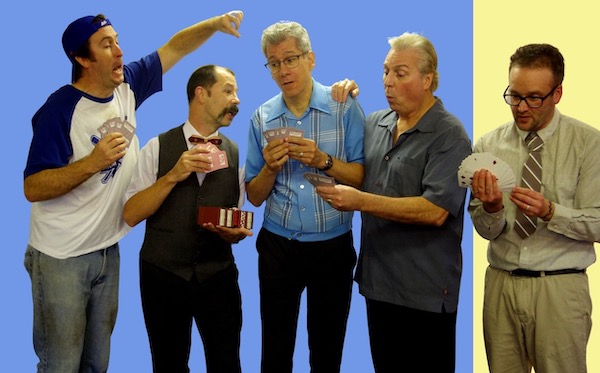
Left to right: Rob Stover, Kimball Finigan, Adam Abrams, Michael S. Weir and Adrian Maxwell in Metro Theatre Vancouver’s The Odd Couple. (photo by Tracy-Lynn Chernaske)
Neil Simon’s famous comedy The Odd Couple opened Oct. 30 on the Metro Theatre Vancouver stage. It runs until Nov. 14.
We meet divorced sportswriter Oscar Madison (played by Rob Stover) as his buddies arrive for their weekly poker game. One of the friends welcomed into Oscar’s messy abode is news writer Felix Unger (played by Adrian Maxwell), who is also divorced, but exists on the opposite end of the neat-and-tidy spectrum. The fact that the men are opposites in so many ways does not prevent Oscar from inviting Felix – who is so depressed it worries Oscar – to move in. Of course, they drive each other nuts.
Jewish community member Adam Abrams plays Roy, a regular at Oscar’s Friday night poker games, in the Metro Theatre production, which is directed by Catherine Morrison.
Abrams has been a part of the local theatre scene for more than 20 years, including many musical theatre productions. “I also played Richard in North Van Community Players’ The Trouble With Richard,” he told the Independent. “A personal favourite was portraying Abraham Goldstein, builder of the Sylvia Hotel, in Kol Halev Performance Society’s Two Views from the Sylvia, back in 2017. That was my last time on the stage, and it’s so great to be back, as part of the return of live theatre, after such a long and trying time for all of us.”
He said that, in real life, he is more like Felix than Oscar.
“My wife Christine will vouch for that – and would readily admit to being much more of an Oscar!” said Abrams. “When Felix is fussing over his London broil dinner or imploring Oscar’s guests to use a coaster, I very much see myself, the chef of the family and the one who is always keeping things tidy. After years of sharing a home, Christine and I have negotiated a much more successful arrangement than anything seen in the play. But our relative household peace has depended on us both accepting each other’s style to some degree.”
As for the character he plays in the show, Abrams said, “I like Roy, though he is somewhat crankier and more blunt than I’d be. He’s a voice of reason for Oscar, imploring him to do what’s right – stop gambling, and pay his debts. No surprise, as he’s Oscar’s accountant!
“My favourite scene in the show is the date with the Pigeon sisters, Oscar’s upstairs neighbours,” added Abrams. “The conflicting attitudes to divorce – a mere inconvenience to the sisters, pure heartache to Felix – and how he both derails Oscar’s hopes for the evening and endears himself to the sisters, is a delight. And, while it’s hilarious, there’s an undercurrent of true emotion that I find touching even as I’m laughing, which I do every time I see it!”
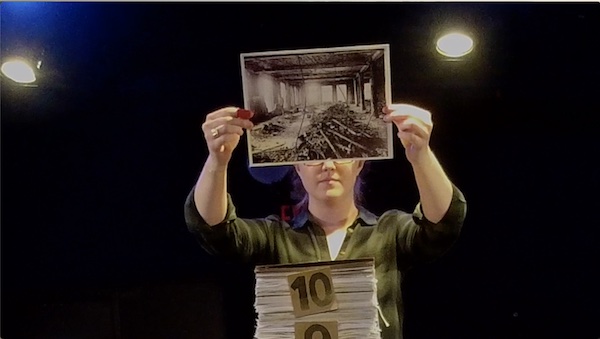
Surplus Production Unit’s Briony Merritt. (photo by Alex McLean)
No matter how well we document history, it matters little unless people are aware of it. Two very different productions at this year’s Chutzpah! Festival, which began this week, were born of personal discoveries of documents from the past – in one case, a trial transcript; in the other, Yiddish compositions. The artists’ unique interpretations help ensure that important aspects of our culture are not forgotten.
Halifax-based Surplus Production Unit, under the direction of Alex McLean, performs A Timed Speed-Read of the Triangle Shirtwaist Factory Fire Trial Transcript on Nov. 21 and 22 at the Jewish Community Centre of Greater Vancouver, in the Wosk Auditorium. Montreal’s Josh “Socalled” Dolgin performs music from his album Di Frosh with a local quartet at the JCC’s Rothstein Theatre Nov. 19 in a concert that will also be livestreamed.
“I had never heard of the Triangle Shirtwaist fire until 2010, when I was doing research for an MA in Toronto,” McLean told the Independent. “I was totally fascinated by the case and got especially swept up in the extensive trial transcript.”
Triangle Shirtwaist Company owners Max Blanck and Isaac Harris were put on trial for manslaughter after a fire at their factory on March 25, 1911, killed 146 people – mostly women and girls – in part because one of the exit doors was locked.
“I think the gender politics were what initially stood out to me – it was an all-male jury, the case hinged on the discrediting of female witnesses, and it was all taking place at a time when women weren’t able to vote in either Canada or the United States. I also knew that this was a time when the labour movement was massive globally and that the Ladies Garment Workers Union had waged its major strike just a couple years earlier. The way that this all reads as subtext in the trial transcript was fascinating to me. I knew that I wanted to work with the material somehow, but wasn’t sure how.”
In 2011, during the 100th anniversary year of the fire, McLean saw an interview with Charles Kernaghan, director of the Institute for Global Labour and Human Rights, who mentioned the Hameen factory fire in Dhaka, Bangladesh. “And then there was the Tazreen factory fire in 2012 and then the collapse of the Rana Plaza building in Dhaka in 2013,” said McLean. “It all made the record of what happened in New York in 1911 hauntingly relevant.
“Somewhere around this time,” he said, “I got a small grant to create a verbatim script from the transcript. I started work on it but it felt lifeless, like a bad ‘historical drama.’ So, I gathered a few actors who I knew and trusted and who were interested in the material. We started playing around with ways to approach the material that felt honest and the current production grew from there.”
McLean believes “it is endlessly worthwhile to think about the hidden costs in our global economy and the conditions under which so many of the products we consume are created.” At the same time, he added, “I was very aware that my life – like those of my colleagues – was radically different from the lives of the people in the trial transcript. None of us are immigrants, none of us are Jewish or Italian (as were almost all of the Triangle victims). As middle-class Canadians in the 21st century, I felt that we had to acknowledge the gulf between us and those New York factory workers in 1911. We had to build this distance into the structure of the show, and so this idea emerged that we would actually sit the trial transcript on the stage and the performance would be a group of people engaging with this historical record, rather than trying to represent it realistically. This felt like the only way we could approach the material respectfully.”
Briony Merritt, left, Kathryn McCormack and Richie Wilcox bring A Timed Speed-Read of the Triangle Shirtwaist Factory Fire Trial Transcript to the Chutzpah! Festival Nov. 21-22. (photo by Alex McLean)
Throughout the trial, said McLean, “witnesses, especially women, were treated with palpable disrespect. Max Steuer, the lawyer defending the factory owners, repeatedly tried to cast suspicion on witness testimony. This came to a head in his cross-examination of Kate Alterman, the ‘star witness’ for the prosecution. Knowing that Alterman’s English wasn’t great, Steuer had her repeat her testimony multiple times to make it appear rehearsed. This ultimately worked for him.
“There’s also a fascinating class dynamic at play: Steuer and his clients, Isaac Harris and Max Blanck, were themselves Jewish immigrants who had worked their way up in New York’s garment district. While at times they appear callous towards the victims and survivors, there is also this sense that they come from the same place. The prosecutor, on the other hand, comes across as much more of a patrician and, at times, this results in condescension. To him, the victims are helpless little girls, while the defence tries to portray them as streetwise conspirators plotting their revenge. Their actual messy humanity gets lost in the crossfire.”
Justice was not served by the trial, nor other legal measures, but there were positive changes that resulted from the tragedy.
“Part of what the case revealed was that workplace safety regulations at the time had no teeth, so the silver lining was that a host of new laws were introduced,” explained McLean. “Frances Perkins, the first woman to serve in a U.S. cabinet, actually witnessed the Triangle Shirtwaist fire and described it as a pivotal moment in her life. She became secretary of labour under FDR [Franklin D. Roosevelt] and was a major player in ushering in the New Deal.”
In terms of lessons learned, however, “we seem doomed to continually forget the inequality that animates our world,” he said. “Going to work under dangerous conditions seems like a reasonable choice to many people in impoverished conditions. As long as those conditions exist, workplace tragedies are likely to occur.”
He added, “There’s a fascinating historian of the Triangle Shirtwaist fire, Michael Hirsch, who argues that it’s a mistake focusing anger and blame on the factory owners. He uncovered the names of several bodies that were unidentified in 1911, and he makes a yearly pilgrimage to the victims’ graves…. To me, Harris and Blanck do appear negligent, but acknowledging systemic imbalances is also important. Economic inequality has proven a difficult problem to solve, but that doesn’t give us the right to forget about it. My sense is that we need a new New Deal today.”
A love of Yiddish music
Josh Dolgin has many artistic interests and musical styles – from composing to photography to puppeteering, from hip-hop to musicals to Yiddish music. As different as they may be, Dolgin said, “all the passions stem from an attraction to ‘realness,’ to things that just deeply move me, spark inspiration, speak to my soul.”
For him, the 2018 album Di Frosh “was a kind of return to a pure, more ‘traditional’ Yiddish music, even though it’s a project of ‘new’ music. I had experimented with using Jewish music sounds in contemporary ways,” he explained, “sampling, mixing, collaborating and fusing to create hip-hop, rap and funky pop music. In so doing, I became rather immersed in the form – in klezmer, in Yiddish folk, art, theatre music, cantorial sounds from the synagogue and Chassidic music – by collecting old records looking for sources. Listening to all that music, I eventually fell in love with the source material … I wanted to play and sing it! I eventually started learning the songs as a pianist, as an accordionist and singer. I wanted to just perform that music, without mixing it, without adding beats, just to play and sing it as is.
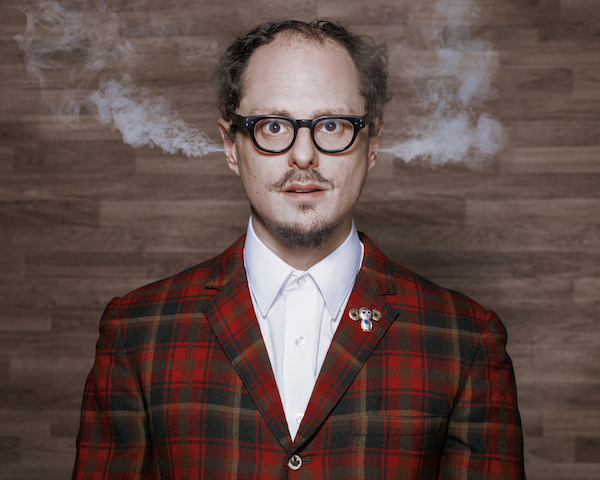
Josh “Socalled” Dolgin performs Yiddish music from his album Di Frosh with a local quartet Nov. 19 in a concert that will also be livestreamed. (photo from Chutzpah! Festival)
“In the meantime, I started getting into four-part harmony singing and collecting choral arrangements, then directing choirs at synagogues and music camps. That love of harmony mixed with my love of singing Yiddish songs and I thought, hmm, it would be cool to present this repertoire in an almost classic style, maintaining all that beautiful real harmony from arrangements from the ‘time.’ Some friends and I created new arrangements based on old sources – all the arrangements are ‘new,’ this repertoire for string quartet never existed before, so it’s ‘new’ music, but it’s more traditional than my fusion/pop experiments.”
Dolgin went to Hebrew school and was raised Jewishly. But, while he “adored” the “holidays and rituals and foods and songs,” he said, “I never was very inspired by the religious aspect of my cultural history, or the establishment ritual practice. When I started to find old records of Yiddish music looking for samples to make hip-hop music, I had stumbled on a part of my cultural identity that I could take pride in, that spoke to me, something I had never been exposed to with the more ‘mainstream,’ ‘modern,’ ‘reform’ version of Judaism I had experienced as a child.”
Musically, he started piano lessons at a young age and “was bribed and forced to keep at it, until I finally was allowed to study ‘jazz,’ i.e., not classical music. Then I got into the ‘rap music’ of my peers, and wanted to participate in that, to make a current music from today. I started looking into studio production techniques, sampling, using drum machines and computers to sequence and combine sounds and compose. Finding the Yiddish sounds and repertoire gave me a voice in hip-hop culture.”
Dolgin has always been one to seek out things that were “off the beaten path” and “a bit more hidden.”
“That led me as a teenager, in the days before the internet, to develop a real love of Brazilian music and funk, by digging and exploring,” he said. “The digging required to find sounds to sample in hip-hop led me unearth … a whole universe of Yiddish music and culture. I never heard Yiddish growing up! I had no idea! It was so fun to discover these treasures of my own cultural history, these sounds, modes, rhythms, poems and songs that were developed by my Eastern European ancestors. I dug around and really got into trying to find as much as I could, and that was more fun for me than having a whole repertoire handed to me on a silver platter.”
Dolgin chose his favourite songs for Di Frosh, ones “that weren’t the same top five Yiddish ‘chestnuts’ that everyone has already sung. Even though it’s not at all a well-known repertoire, there are a few songs that keep coming up, and they’ve been sung and presented enough, thank you very much. I wanted cool, rare repertoire. These could be things I heard from old records, or things I found as piano and choral arrangements on paper that could be brought to life in new arrangements.
“I thought it would be nice to have a range of repertoire from the various sub-genres of Yiddish music, from theatre music, from folk song, from Chassidic song, from postwar things, Holocaust songs, and even some ‘originals’ from contemporary Yiddish writers. Those ‘high concept’ factors were at the back of my mind when putting the program together, but it was mostly just a very subjective process of picking my favourite songs, the songs that blow my mind lyrically, harmonically or melodically.”
He went through another selection process when he was asked by a bass player from Vienna to do some Yiddish songs with a big band. Dolgin said he picked “out a whole new repertoire of more Yiddish songs I was interested in presenting, sent charts and recordings to them and they created arrangements for an actual 19-piece big band! I showed up in Salzburg and, after one rehearsal, performed with them to a sold-out jazz festival audience – it was magical! We have since done the show several times, including this summer with the Toronto Jazz Orchestra for the Ashkenaz Festival.”
They were about to travel with the show in Germany and Austria when COVID struck; the plan is now for a spring tour. During the lockdowns, said Dolgin, “I did manage to write quite a few more arrangements of Yiddish songs for string quartet, so hopefully a Frosh 2 is possible.”
The best part of this project, he said, has been “meeting new string quartets around the world and bringing this new repertoire to them, and then bringing the music to new audiences who may not be too familiar with these songs, with these sounds.
“After recording the music to make the Di Frosh record, with the amazing Kaiser Quartett based in Hamburg,” said Dolgin, “I’ve since presented this music all around the world with ‘local’ quartets: in Vienna, in London, in Venice, New York, Toronto, Montreal, Boston, Paris…. I’m very excited to be in Vancouver and meet Elyse Jacobson and the musicians she will put together for this program.
The Chutzpah! Festival opened Nov. 4 and runs until Nov. 24. For tickets and the full lineup, visit chutzpahfestival.com or call 604-257-5145.
Body Line of Thought (BLOT) examines “our microbiome as a collection of organisms in perpetual transformation.” (photo by Ionut Rusu)
Vanessa Goodman (Action at a Distance) and Simona Deaconescu (Tangja Collective) explore aspects of our humanity in their dance and art. Their collaborative Body Line of Thought (BLOT) is a four-video installation that “aims to strip the body of social meanings and rethink it as an interconnected system.”
BLOT runs Nov. 24-28, 1-4 p.m., at KW Studios as part of the Dance Centre’s 13th biennial Dance in Vancouver.
“In BLOT, we are interested in examining our microbiome as a collection of organisms in perpetual transformation,” explained Goodman. “The human body contains trillions of microorganisms, that outnumber human cells by 10 to one. Each person’s bacterial composition acts as an ersatz fingerprint: when two people touch, they exchange parts of this identity. With each point of contact we essentially ‘infect’ each other with bacteria. We incorporate these themes of communication and contamination on a physical level. We are interested in the banality and the danger of such exchanges.
“One of the main focuses of BLOT is centred around bacteria being an agent of infection and salt becoming a cleaning and restructuring force in our bodies,” she continued. “We are not scientists, but we are fascinated by how these basic elements of our biological makeup can drastically inform our mental and physical health. Both salt and bacteria transform organic material, and we are drawn to transformation within our work. We are interested in applying these relationships to our art practice, and this has allowed us to create a new space to explore conceptually and physically.”
Without salt, “senses are dulled, muscles can’t fire, and nerves cease to function,” Goodman said. “In BLOT, salt acts as a conductor for our creativity. We explore salt as a staging material and incorporate many of its tactile qualities across various mediums, providing a textural through-line between visuals, sound and movement. We try to reframe the banality of sweat, a ubiquitous element of every dance, as a thematic focus instead of a mere byproduct.”
As part of their research, Goodman and Deaconescu went to Portugal, where they were in residence with Bio-Friction at Cultivamos Cultura. There, said Goodman, “we learned how to cultivate our own bacteria in agar dishes and studied this information and imagery to build BLOT.
“Our work in dance and art aims to speak not only about widely discussed issues but also about the unseen life that shapes our body and connects it with the outside world,” she said. “We seek reciprocity in our practice, parallel to that of a healthy immune system: to become stronger, one must first be vulnerable and exposed.” (BLOT includes nudity.)
BLOT was presented as a three-video installation at Left on Main last year, via 20 personal Zoom performances. Its creators, Goodman and Deaconescu (who is also a filmmaker), connected when they were both choreographers at Springboard Danse Montréal in 2019.
“During this intensive working period, we realized how many artistic interests we share,” said Goodman. “We both use a deconstructed vernacular that flirts with pop culture and is mediated by the lens of conceptual and physical landscapes. We are interested in looking at the body as a biological technology that can be altered by its environment, which is especially relevant today.”
Dance in Vancouver features many ticketed and free events at various locations. This year’s festival was co-curated by Australia-based Angela Conquet with Michelle Olson and Starr Muranko of Vancouver’s Raven Spirit Dance. Some performances, films and events will also be available online. For tickets and information, visit thedancecentre.ca/event/dance-in-vancouver-2021.
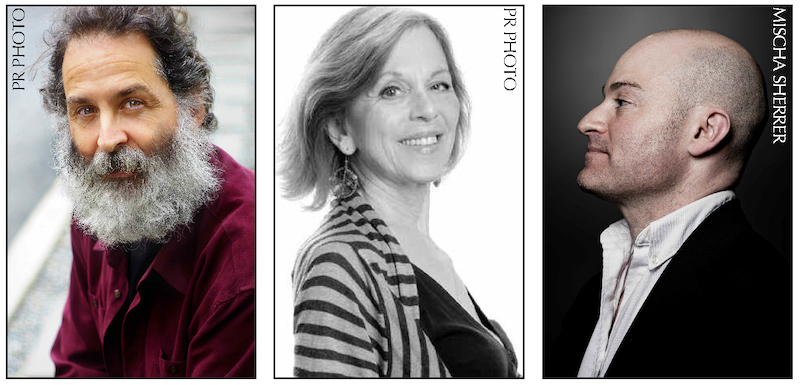
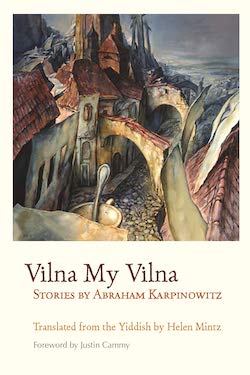
Stephen Aberle, Nicola Lipman and Geoff Berner will perform stories from Vilna My Vilna: Stories by Abraham Karpinowitz, as translated by Helen Mintz, as part of Western Gold Theatre’s Virtual Gold series.
Vilna My Vilna: Stories by Abraham Karpinowitz (Syracuse University Press, 2016) is a collection of 13 short stories and two brief memoirs by Abraham Karpinowitz (1913-2004), translated from Yiddish into English by local storyteller Helen Mintz.
Thanks to Mintz, “more of us can now visit Karpinowitz’s Vilna – a city full of colourful characters, both real and not, and share in a small part of their lives.” (jewishindependent.ca/vilna-the-place-its-people) And, thanks to Western Gold Theatre, even more people will be able to visit Karpinowitz’s Vilna this Chanukah.
When Vilna My Vilna was published, actor Stephen Aberle both helped present the book and interviewed Mintz at the JCC Jewish Book Festival.
“As part of the presentation, Helen and I read excerpts from several of the stories. I was struck immediately by how engaging and naturally theatrical these stories and characters were, and I’ve been thinking ever since that a dramatic rendition would be a great thing,” Aberle told the Independent. “Then, earlier this year, Tanja Dixon-Warren, Western Gold Theatre’s artistic director, approached me with the idea of curating one of their Virtual Gold series around Chanukah time. I immediately thought of Vilna My Vilna as the perfect material for such a project, pitched it to Tanja, and she loved the idea, as did Helen. So, I set about to recruit my luminously wonderful co-presenters, Geoff Berner and Nicola Lipman, to be part of it all.
“When Helen and I first began talking about some kind of performance of these stories, we thought of Geoff and it just clicked perfectly. His ‘klezmer-punk’ material and presentation and his beautiful selection and rendition of Yiddish songs provide exactly the flavour to suit these rather gritty stories,” said Aberle. “And I had got to know Nicola through working together on the development of a wonderful new play by Manami Hara, Courage Now (coming soon to a theatre near you – but that’s another story) about Chiune Sugihara, the Japanese diplomat who helped thousands of Polish and Lithuanian Jews escape the Nazis.”
Lipman was “another perfect fit,” said Aberle. “And here we are!”
Western Gold Theatre will release individual video recordings of the selected stories, one at a time, throughout Chanukah, said Aberle, “and Geoff will frame each of them with some of his stirringly beautiful Yiddish music – an intro and an ‘extro,’ if you like – thematically linked to the content of the story. I won’t say a lot more except to add that, when Geoff and I were talking about which songs to do where, what connections to make and so forth, I think we both found it haunting and moving. Chills.”
Deciding which of the short stories to include in the production wasn’t easy.
“I have pages and pages of notes about the stories, characters, settings, arc of the narrative and so forth,” said Aberle. “In the end, I felt like a lot of my choosing was helped along by the format: we’ll be recording ourselves reading over Zoom, so we need to keep things fairly simple, with not too many characters and not too much complex action. I chose stories where the scenes tend to involve one or two characters at a time, so the performers can dig in and work off each other.
“I also tried to choose a variety of themes and moods. The stories are written against the backdrop of the writer’s awareness of what was to come: the Nazi annihilation of Vilna’s Jewish community. We have to be true to that bleak awareness; at the same time, there’s a lot of joy and humour. I tried to make choices to honour the depth and balance Karpinowitz brings to his work.”
Of the stories to be presented, the production’s press release highlights “Vilna Without Vilna,” describing it: “A Vilna native (a pickpocket in his youth, now grown up and respectable) comes back to visit his home city and finds that not a trace of what he remembers remains.”
In “The Folklorist,” a “researcher into Yiddish folklore finds himself professionally drawn to the Vilna fish market – and personally drawn to one particularly expressive fishwife.” And “Chana-Merka the Fishwife” picks up this story, “continuing the adventures of the Vilna fishwife and the school of Yiddish Institute scholars who swim after her.”
Finally, “Tall Tamara” recounts how a “Vilna prostitute and her friend find their way out of the brothel and into very different lives.”
The performances will all be online.
“Theatres are just starting to re-reopen up to in-person performances, but, for this project, we’re sticking to video presentations,” said Aberle, thanking Dixon-Warren and Western Gold “for their vision in creating the Virtual Gold series.”
“When the pandemic shut things down,” he said, “they decided they weren’t going to let it stop their work. They also decided it was important to provide opportunities to artists from a diverse spectrum of communities. And to make all the presentations free! That all takes courage and generosity of spirit.”
For those who watch the Virtual Gold series, Aberle said, “I think I can pretty much guarantee there will be laughs; there may be a few tears. It’s an honour to help share these works so more people can get to know them.”
The stories from Vilna My Vilna will be posted throughout the week of Chanukah, Nov. 28-Dec. 6, at westerngoldtheatre.org/virtual-gold. The full name of the series is Look! Listen! and Learn! Virtual Gold, and the Learn! segment will feature a video interview with Mintz about Vilna, Karpinowitz and being a translator, which will be posted on the Virtual Gold page, as well as on Western Gold Theatre’s YouTube page.
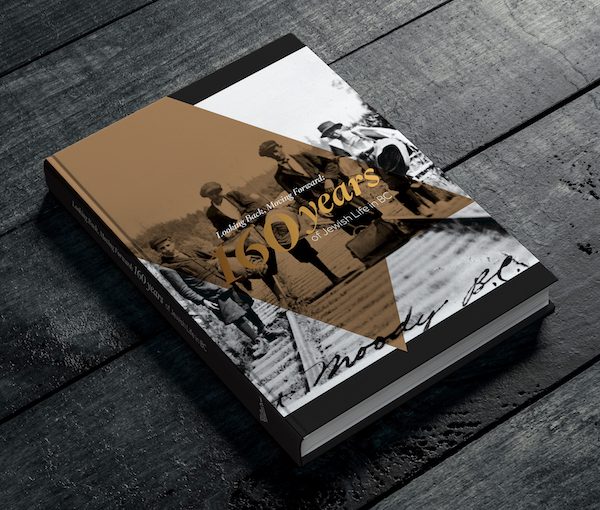
Jewish Museum and Archives of British Columbia releases its new publication Looking Back, Moving Forward after its AGM on Nov. 16.
The Nov. 16 annual general meeting of the Jewish Museum and Archives of British Columbia (JMABC) is the culmination of the museum’s 50th anniversary year of celebrations. The special occasion will not only feature Dr. Morton Weinfeld, Chair in Ethnic Canadian Studies at McGill University and author of numerous books on Canadian Jewry, but also the release of the new JMABC publication Looking Back, Moving Forward: 160 Years of Jewish Life in BC.
Taking place at Congregation Beth Israel, the 6 p.m. AGM will be followed by a reception at 7 p.m. and the keynote address. Weinfeld’s most recent publication is a revised and updated version of his book Like Everybody Else but Different: The Paradoxical Success of Canadian Jewry. His virtual presentation will highlight the unveiling of the JMABC’s Looking Back, Moving Forward.
Local historian Cyril Leonoff, who passed away in 2016, established what has become the JMABC with a group of volunteers in 1970. In his research on the B.C. Jewish community, he combed ship manifests and discovered that the first Jews to arrive in the province came to participate in the Gold Rush, in 1858.
The museum’s new book is a testament to the variety and tenacity of Jewish life all over British Columbia. The publication comprises interviews, archival research and community contributions from more than 200 B.C. Jewish community members and it includes more than 400 photos.
Organized into four sections, the book begins with a collection of essays on the history of Jewish life in various regions of the province. This section is followed by short descriptions of historic, modern and new Jewish agencies and organizations that serve(d) the social, cultural, political and religious interests of the Jewish community. Short biographies of notable B.C. Jewish figures from all areas of public and communal life make up the third part of the book. And, finally, a family-sponsored section gives some personal descriptions of a variety of families within the community.
A central mission of the JMABC is to raise awareness of the importance of everyday artifacts to the overall picture of Jewish history in British Columbia. Photos of a family barbecue or a trip to the beach, flyers, letters and other such memorabilia personalize history. Over the years, the museum has created exhibits, films, books and other research material, making its archives as accessible to the public as possible.
The JMABC is hoping to ride the wave of enthusiasm and support from the past year of 50th anniversary activities, as it continues its role as both keepers and disseminators of history within the community and as ambassadors of the Jewish community to broader B.C. society.
Copies of Looking Back, Moving Forward: 160 Years of Jewish Life in BC are now on sale through the JMABC website at a 10% discounted price up until Nov. 16. After the AGM, the price will increase to $50 in general and to $100 for the limited edition hardcover version.
Kolot Mayim Reform Temple in Victoria welcomes back Rabbi Gila Caine, spiritual leader of Temple Beth Ora in Edmonton, to speak on the topic Toratah/Her Torah: Women Rabbis Revealing the Goddess in Torah.
The Nov. 7, 11 a.m., lecture on Zoom kicks off a six-part series of talks called Building Bridges: Celebrating Diversity in Jewish Life. The community is invited to listen and learn from Indigenous, Black, Asian, feminist and differently-gendered and differently-abled advocates who are working to make our world a better place.
As a people who have experienced the devastating impact of antisemitism and hatred, Judaism commits us to the responsibility of tikkun olam (repairing our world). In that spirit, Kolot Mayim’s series of speakers will lead attendees on a journey to deepen their understanding of these contemporary issues and how they can support those who do not feel included.
Kolot Mayim’s Rabbi Lynn Greenough describes the series as “an opportunity to build bridges – bridges that enable us to link to what is and what can be, to step beyond our own particular experiences.” The Hebrew word for bridge is gesher, she explained, pointing to the song, “Kol Ha’Olam Kulo,” “the whole world is a very narrow bridge; the important thing is not to be afraid.”
In the series opener, Caine will explore how, throughout the millennia, rabbinic tradition, and especially written tradition, was composed from within a man-focused and -experienced perspective. Now, after around half a century of ordaining women, there is a growing corpus of documented writing flowing from within woman’s experiences and interpretations of Torah and life. In her talk, Caine will read a few Torah commentaries written by (women) rabbis from North America and Israel, as examples of weaving together rabbinic and women’s experience into something new.
Born and raised in Jerusalem, Caine graduated Hebrew University with a master’s in contemporary Judaism and received her rabbinic ordination at the Hebrew Union College-Jewish Institute of Religion’s Israeli program in 2011. Her rabbinic thesis explored liturgical, spiritual and ceremonial aspects of birth in Jewish tradition and contemporary practice.
Stemming from that, as well as her years as a volunteer at a rape crisis centre, Caine is one of the founders of the Israeli rabbinic women’s group B’not Dinah, creating a female and feminist rabbinic tradition of healing after sexual trauma. She now serves as rabbi at Temple Beth Ora and her Building Bridges talk is co-sponsored with her shul.
Other speakers in the 2021/22 series are:
Carmel Tanaka, founder and executive director of JQT Vancouver (Jewish Queer and Trans Vancouver) on A Day in the Life of a Queer, Neurodivergent, Jewpanese Millennial (Dec. 5);
Rivka Campbell, executive director of Jews of Colour Canada, on Harmony in a Divided Identity: A Minority Within a Minority (Jan. 9);
Joy Ladin, poet, author and first openly transgender professor at a Jewish institution, on Jonah, God and Other Strangers: Reading the Torah from a Trans Perspective (Feb. 6);
Reverend Hazan Daniel Benlolo, director of the Shira Choir, Spanish & Portuguese Synagogue, Montreal, on The Power of Music: In Honour of Jewish Disability Awareness and Inclusion Month (Feb. 13); and
Patricia June Vickers, Indigenous artist and independent consultant, and Rabbi Adam Cutler, senior rabbi of Adath Israel Congregation in Toronto, on An Indigenous and Jewish Dialogue on Truth and Reconciliation (March 20).
Kolot Mayim has been active for 20 years and this is the fourth year that the synagogue is offering this speaker series. Talks are free and held on the scheduled Sundays from 11 a.m. to 12:15 p.m. PST. To register, visit kolotmayimreformtemple.com.
Esther Rausenberg, Eastside Arts Society’s artistic and executive director. (photo by Adam P.W. Smith)
The Eastside Arts Society welcomes art enthusiasts to celebrate the 25th anniversary of the Eastside Culture Crawl Visual Art, Design & Craft Festival in-person and online over two consecutive weekends, Nov. 12-14 (preview by appointment) and Nov. 18-21. The event’s landmark edition will offer arts patrons an enhanced opportunity to fully customize their experience and visit the studios of 400+ artists.
“As we look back on the past 25 years of the Eastside Culture Crawl, we are incredibly proud of the strong, resilient and inspiring visual arts community we have helped to support,” said Esther Rausenberg, artistic and executive director of the Eastside Arts Society, who is a member of the Jewish community.
“Through our annual Culture Crawl celebration,” she said, “we have not only boosted the careers and livelihoods of countless artists who enrich our city through creative vitality, but we have provided an essential outlet for the public to experience artistic expression and creative connection. The 25th annual Culture Crawl presents a special opportunity to acknowledge, pay tribute to and showcase the extraordinary talents and accomplishments of the visual arts community, while looking forward to an even brighter future ahead with the development of the Eastside Arts District.”
To maximize the Crawl experience and open accessibility for all patrons in Metro Vancouver and beyond, the Eastside Arts Society has created further improvements to its digital presence, including a newly designed and user-friendly website, an artist livestream schedule, appointment booking software and increased access to artists through 360° virtual studio tours.
For those visitors who wish to attend in-person, the Culture Crawl features two options. Based on overwhelmingly positive feedback from 2020, when studio appointment bookings were created for the first time, this year’s event will once again provide a preview weekend Nov. 12-14, reserved for appointments only, cultivating an intimate, interactive experience for both artists and guests. For those Culture Crawl enthusiasts wishing for a more traditional event experience, open studios will return for the event’s main weekend Nov. 18-21.
The Eastside Culture Crawl presents unparalleled access to visual artists practising a variety of different art forms, including painting, sculpture, pottery, photography, jewelry, glass art, furniture, and more. Visit culturecrawl.ca for all the festival details.