

Many Jewish Canadians face unique mental health hurdles right now, and many of the professionals they depend on to help them are themselves struggling with related challenges.
The trauma that has affected Jews in recent years – from the horrors of Oct. 7 to the global explosion of antisemitism societally and in the personal lives of diaspora Jews – has created unprecedented needs in the mental health sector. Professionals in the discipline, including Jewish psychiatrists, psychologists, counselors and social workers, are often dealing personally with some of the same issues their clients are confronting.
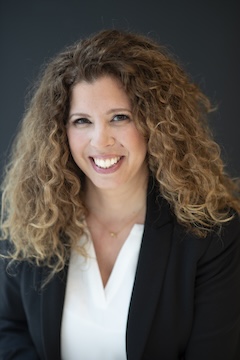
Dr. Rotem Regev is a Vancouver psychologist with a private practice specializing in trauma, as well as expertise in therapist training, especially addressing practitioner burnout. Burnout in the profession was exacerbated by COVID. Then came Oct. 7.
Within days of the terror attacks, Regev’s inbox filled with requests from Jewish clients, and from therapists. Non-Jewish clinicians approached her about how to counsel their Jewish clients.
She assembled a webinar for non-Jewish practitioners about the intersectionality of trauma and Judaism, called How to Help Your Jewish Client in this Unprecedented Time.
There were 70 non-Jewish therapists in the first webinar.
“At one point, pretty early on, my Jewish therapist colleagues came to me and said, why is this only for non-Jewish therapists? We need to know what to do,” she recalled.
After other collective traumas, like the 9/11 terror attacks or Hurricane Katrina, counselors may have shared trauma with their clients. After 10/7, though, the antisemitism that swept the world meant many clients – and practitioners – did not feel safe seeking the help they needed.
“We can’t turn to our professional colleagues for consultations,” she heard from fellow practitioners. “We feel silenced. We’re unwelcome in places. And then I said, OK, this is unprecedented. There’s nothing about this in the literature. We need to document our experiences.”
Regev sent out questionnaires to more than 250 mental health practitioners in British Columbia who are Jewish. From the responses and her subsequent research, she coined the term “compounded traumatic reality.”
“It’s not only a shared traumatic reality, but it is compounded by the extra layer of antisemitism,” she said. Her paper on the subject was published last month (Nov. 11) in the peer-reviewed Journal of Human Behaviour in the Social Environment.
Regev’s career has taken a decided shift. She created the International Centre for Collective Resilience, which trains mental health professionals in culturally responsive, trauma-informed care around these specific issues. In that capacity, she developed the CHAI Method™ for clinical practitioners to balance the needs of their clients with their own connection to the trauma.
The CHAI Method™ is a four-part framework that begins with “Connect,” where individuals recognize what is happening, followed by “Honour,” which acknowledges identity and lived experience, particularly in an environment where others invalidate these experiences. “Activate” moves the practitioner into culturally responsive strategies and setting appropriate boundaries. “Integrate” transforms the experience into lasting capacity for both the practitioner and their client.
Regev has already delivered trainings in the CHAI Method™ at McGill and Concordia universities in Montreal and will offer it in Vancouver on Feb. 8 and 9.
Eventually, she said, the training could be adapted for healthcare providers – physicians especially are facing profound challenges right now, Regev said – as well as educators, clergy and others who are not accredited mental health providers.
Regev was born and raised in Israel, though she spent several teenage years in Vancouver while her mother was doing a master’s and a PhD in psychology here. She returned to Israel, did her army service, but moved to Vancouver permanently at age 28.
Israelis and diaspora Jews are having parallel but different experiences, she said. While many diaspora Jews lost loved ones on Oct. 7 and in the subsequent war, that experience is almost universal among Israelis. The experience with antisemitism in the diaspora, on the other hand, is not something Jews in Israel live with. Above all, she said, Israelis are having a shared experience with their entire society. For two years, it has been impossible to escape the reality, if for no more apparent reason than the ubiquity of hostage posters and memorial placards everywhere in the country. Jews in the diaspora, no matter how connected they may be to their Jewish community, are nonetheless surrounded by non-Jews living a completely different reality.
For diaspora Jews, finding a mental health practitioner capable of addressing their unique needs has come down to word-of-mouth. Regev hopes there will be a systematization, perhaps a database of professionals accredited in her CHAI Method™, which will provide assurances to clients that the counselor they are engaging with is prepared to consider the specific contemporary experiences of Jews.
There is plenty to be done, Regev said, and she has been balancing these new responsibilities with her clinical and training work, taking on tasks that currently have no dedicated infrastructure or funding behind them. She is seeking financial backing to support her initiatives.
To register for the February seminar or for further information about Regev’s work, visit icfcr.ca. In addition to training, she is also available as a speaker.



