Skip to content
  • Home
  • Subscribe / donate
  • Events calendar
  • Business Directory
  • FAQ
  • News
    • Local
    • National
    • Israel
    • World
    • עניין בחדשות
      A roundup of news in Canada and further afield, in Hebrew.
  • Opinion
    • From the JI
    • Op-Ed
  • Arts & Culture
    • Performing Arts
    • Music
    • Books
    • Visual Arts
    • TV & Film
  • Life
    • Celebrating the Holidays
    • Travel
    • The Daily Snooze
      Cartoons by Jacob Samuel
    • Mystery Photo
      Help the JI and JMABC fill in the gaps in our archives.
  • Community Links
    • Organizations, Etc.
    • Other News Sources & Blogs
  • JI Chai Celebration
  • JI@88! video

Recent Posts

  • Legal help for students
  • Revisiting myth of Lilith
  • Wrong person rebuked
  • Canada’s mixed messages
  • Questions for museum
  • Symposium on antizionism
  • Making soccer political
  • CJPAC lauds Pulver’s impact
  • City recognizes Vrba’s legacy  
  • Organ donation saves lives
  • Theodore’s March premiere
  • A healing Shabbaton
  • Supplying healthy food
  • A chime of metal tags
  • Yellowknife seder a first
  • Ishai energizes, unifies
  • A Lag b’Omer to remember
  • Expanding the healing
  • Hannah Senesh – a unique hero
  • Community milestones … May 2026
  • Sharing her testimony
  • Fall fight takes leap forward
  • The balancing of rights
  • Multiple Tony n’ Tina roles
  • Stories of trauma, resilience
  • Celebrate our culture
  • A responsibility to help
  • What wellness means at JCC
  • Together in mourning
  • Downhill after Trump?
  • Birth control even easier now
  • Eco-Sisters mentorship
  • Unexpected discoveries
  • Study’s results hopeful
  • Bad behaviour affects us all
  • Thankful for the police

Archives

Follow @JewishIndie
image - The CJN - Visit Us Banner - 300x600 - 101625

Images

Khazzoom has new EP

Khazzoom has new EP

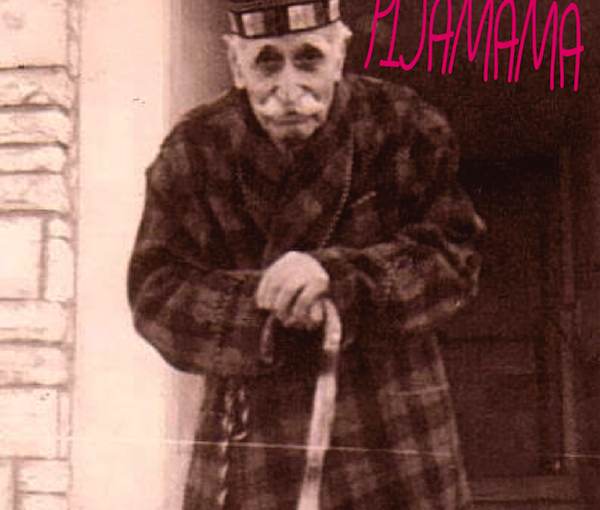
The cover of Iraqis in Pajamas’ new album, Pijamama, features Loolwa Khazzooom’s grandfather, Abraham Khazzoom.

The multifaceted, multicultural and impossible-to-pigeonhole Loolwa Khazzoom is back, along with her band, Iraqis in Pajamas, with a studio-produced album, Pijamama, that was released on July 16.

The new album by the Seattle-based musician honours her mother, E.J., who passed away on July 16, 2019, and who encouraged Khazzoom to pursue her music. Khazzoom credits E.J. with demonstrating that we all have “the ability to radically transform ourselves and our relationships – and to stop the crushing boulder of intergenerational trauma – when are willing to face and go through the darkness together.”

A photo of Khazzoom’s grandfather, Abraham Khazzoom, who she describes as “the original Iraqi in pajamas,” graces the album’s cover. The band’s name, she explained, derives from an uncomplimentary reputation Iraqi expatriates had in the Israeli city of Ramat Gan for putting on their pajamas when they had arrived home and the work of the day was completed.

The EP features Khazzoom on vocals and bass, Robbie Morsehead on drums, Cali Hackmann on keyboard and backup vocals, and Alden Hackmann on guitar. The melodies and lyrics were written by Khazzoom. Pijamama showcases three songs.

“Mahalnu” explores the  Jewish practice of asking forgiveness ahead of Yom Kippur. It then raises the question of what happens when someone asks for forgiveness, without changing their behaviour, especially in the case of violence. “What is the difference between forgiveness of you and erasure of me?” Khazzoom asks.

“The Fixer,” a declarative prayer, advocates the rejection of compensating for another person’s not doing necessary work in a relationship. The chorus, “ashir shir hadash” (“I will sing a new song”), comes from “Ezer Musarai,” an Iraqi Jewish song for Purim, which inspired Khazzoom as a child.

“Fireball” looks at being a caregiver in spite of emotional violence. The lyrics proclaim: “You can be downright vicious / Throwing a fireball / At the one who cares most about you / The one who is always there for you….”
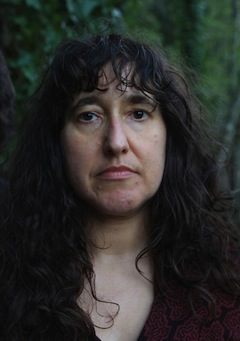
photo - Loolwa Khazzoom
Loolwa Khazzoom (photo from Iraqis in Pajamas)

Khazzoom has had a varied career. Among other things, she has been an educator, writer and health coach, all of which share, she says, the central principle of individual and collective healing. Ultimately, Khazzoom says she “ditched her power suit and Powerpoint in favour of combat boots and cat glasses to offer bold songwriting as the catalyst for deep and heart-centred conversation.”

The connections between her diverse activities have been subjects she has long contemplated.

“I have been keenly aware of interconnectedness since I was very young, partly because I was highly sensitive and thinking about things deeply, and partly because my identities were a crisscross of those considered at odds or even at war with each other – making it obvious to me that many social constructs and divisions were false,” Khazzoom explained.

“My songs reflect this awareness – explicitly or implicitly connecting dots between things that most people don’t initially recognize as being related to each other, and inviting listeners to rethink their notions and paradigms.”

Khazzoom said she likes to play with this crisscross of identities. For example, people may react one way if she tells them she is Iraqi, and another way if she tells them she is Jewish.

“People generally like shortcuts or scripts in determining what to think about someone, instead of doing the work of getting to know someone, with all the complexity and nuance involved…. I am the same person, yet an entirely different set of assumptions are projected on to me. Standing at the intersection of identities and experiences, I can poke fun at the absurdity of it all,” she said.

Khazzoom refers to her music as “conscious rock,” a way of exploring all our emotions, especially those that allow us to be loud in a healthy way.

“As a collective, we fear intense emotions like rage and grief, and we suppress those feelings in ourselves and others, leading to astronomical levels of addiction and a host of other social and personal ills,” she said. “I believe that all of our emotions are a gift, a GPS system of sorts, pointing us in the direction of that which is true and good, and I find it tremendously liberating, healing and transformative, to express the spectrum of emotions in healthy and constructive ways.”

Khazzoom’s songs are written in English, Judeo-Arabic and Hebrew, and blend Iraqi Jewish prayers, alternative rock and personal storytelling about subjects ranging from cancer, racism and mental illness to national exile.

For more information, visit iraqisinpajamas.com. To participate in the evolution of Loolwa’s work, from poem to spoken word performance to song, go to patreon.com/khazzoom?fan_landing=true.

Sam Margolis has written for the Globe and Mail, the National Post, UPI and MSNBC.
Format ImagePosted on August 27, 2021August 25, 2021Author Sam MargolisCategories MusicTags alternative rock, health, Iraqis in Pajamas, Loolwa Khazzoom, Pijamam, prayer, storytelling, world music, Yom Kippur
Community milestones … Okanagan, Belzberg, Klein & the JI

Community milestones … Okanagan, Belzberg, Klein & the JI

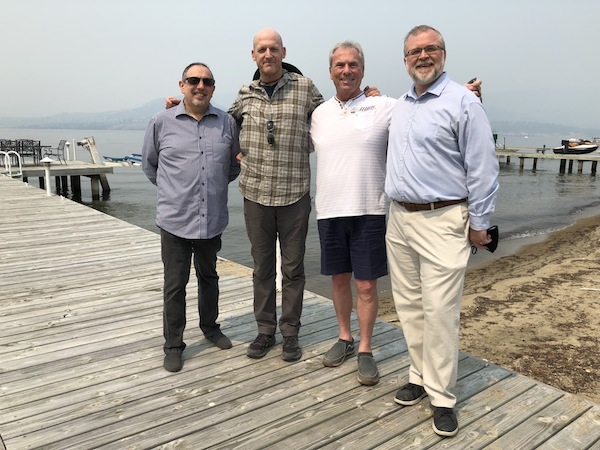
On the dock where they officiated the conversion ceremony are, left to right, Rabbi Alan Bright (Montreal), Rabbi Tom Samuels (Kelowna), Rabbi Jeremy Parnes (Regina) and Cantor Russell Jayne (Calgary). (photo from Steven Finkleman)

The Okanagan Jewish community in Kelowna recently completed a formal conversion ceremony.

Ten months of formal study, with weekly Tuesday evening Zooms, culminated in a long weekend of events July 14-17. There was a bet din (rabbinical court) and mikvah (ritual bath) in Lake Okanagan and the Shabbaton weekend included Friday night and Saturday morning services. Each of the students participated in the Torah service on Shabbat.

photo - The rabbis supervise the mikvah ceremony on Lake Okanagan
The rabbis supervise the mikvah ceremony on Lake Okanagan (photo from Steven Finkelman)

The dedication of these students who have chosen Judaism as their faith was remarkable, as was the dedication of the clergy during the teaching process.

Twelve people participated in the course, run as a Conservative conversion under the directorship of Rabbi Alan Bright of Shaare Zedek Synagogue in Montreal; Rabbi Jeremy Parnes of Beth Jacob Synagogue in Regina and Cantor Russell Jayne of Beth Tzedek Congregation in Calgary joined in the teaching. The OJC was so lucky to have all three clergy in Kelowna for the conversion ceremony, as well as Elizabeth Bright, who officiated at the women’s mikvah, along with the OJC’s Rabbi Tom Samuels. The occasion was the first time ever that four clergy were present in the OJC sanctuary at the same time.

Thank you to all the students and teachers who were involved in this event. Further information can be found at ojcc.ca.

* * *

photo - Fran Belzberg (photo from jewishvancouver.com)
Fran Belzberg (photo from jewishvancouver.com)

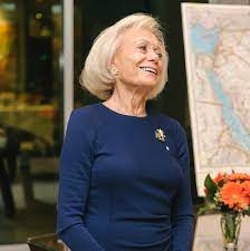
Sixteen people will be appointed to the Order of British Columbia, the province’s highest form of recognition, Lt. Gov. Janet Austin, chancellor of the order, recently announced. Among them is Jewish community member Fran Belzberg.

Since arriving in British Columbia more than 40 years ago, Belzberg has championed numerous causes, from health care and medical research to education and nurturing the next generation of Canadian leaders. After her husband of 68 years, Samuel, z”l, died in 2018, Belzberg continued their family’s lifelong legacy of community leadership. Now in her mid-90s, her commitment remains unwavering.

In 1976, Belzberg co-founded the Dystonia Medical Research Foundation (DMRF), with the mission to advance research, promote awareness and support the well-being of those affected by the disease. Forty-five years later, she is still actively involved in the foundation.

In the early 1990s, Belzberg was instrumental in the establishment of the Think Aids Society to advance research and funding, and raise awareness for HIV/AIDS. In 1995, she was awarded the Order of Canada in recognition of her numerous achievements. In 2003, the Government of Canada partnered with the Belzberg family to create Action Canada, a joint initiative to inspire and support young Canadians and future public policy influencers.

As a champion of education, Belzberg and family have made transformational impacts to the University of British Columbia and Simon Fraser University. In 2016, Frances and Samuel Belzberg were honoured by SFU with the President’s Distinguished Community Leadership Award “for their many years of philanthropy and commitment to education, leadership and equality.”

* * *

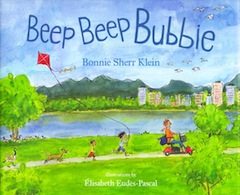
image - Beep Beep Bubbie book coverBonnie Sherr Klein’s children’s book, Beep Beep Bubbie, illustrated by Élisabeth Eudes-Pascal and published by Tradewind Books, has been selected to be a PJ Library choice in 2022. PJ Library is a philanthropy that sends free, award-winning books that celebrate Jewish values and culture to families with children from birth through 12 years old. Now, many of these families will meet a grandma who introduces her grandchildren to the adventures they can share in a scooter, including an intergenerational march for the climate. (See jewishindependent.ca/shabbat-with-bubbie.)

* * *

The American Jewish Press Association’s annual conference took place virtually in June. Its 40th Annual Simon Rockower Awards, recognizing excellence in Jewish journalism, took place virtually as well, on June 24. The Jewish Independent took away three honours this year, for work done in 2020.

image - AJPA Rockower 1st place medalIn its division – weekly and biweekly newspapers – the JI once again won first place for its coverage of Zionism, aliyah and Israel. The three-part series by Kevin Keystone – “Hike challenges one’s views” (Sept. 11), “Seeking to understand views” (Sept. 25) and “Contemplating walls” (Oct. 9) – recounts some of Keystone’s experiences on Masar Ibrahim Al-Khalil, the Path of Abraham the Friend, in the West Bank, which he visited in 2019.

image - AJPA Rockower 2nd place medalIn most categories, awards were given out in each of three divisions: weekly and biweekly newspapers; monthly newspapers and magazines; and web-based outlets. However, for excellence in editorial writing, all entries (which comprise three articles each) competed as one large group, and the JI editorial board – Basya Laye, Pat Johnson and Cynthia Ramsay – came in second. The JI won for the set of editorials “Blessings in bad times” (Aug. 28), “Racism is a Jewish issue” (June 12) and “When is never again?” (Jan. 31). The first is about the communications technologies that have made COVID restrictions less isolating; the second asks our community to consider our complacency and complicity in upholding racist systems; and the third reflects on the fragility of democracy and civil order.

image - AJPA Rockower honourable mention medalAnother award that was considered as one large division was that of general excellence – best newspaper. In this category, the JI received an honourable mention (or third place). The judges commented about the paper: “Diverse content, from news to cultural writing, including unique reporting on Jewish media in Canada. Fun and easy to read.”

All of these articles and other award-winning content can be found at jewishindependent.ca. Thank you to all of our readers and advertisers for your support – we are proud to share these honours with you.

Format ImagePosted on August 27, 2021August 25, 2021Author Community members/organizationsCategories LocalTags AJPA, American Jewish Press Association, Beep Beep Bubbie, Bonnie Sherr Klein, conversion, Fran Belzberg, Jewish Independent, JI, journalism, milestones, OJC, Okanagan Jewish Community, Order of British Columbia, PJ Library, Rockower
Caring for cemetery

Caring for cemetery

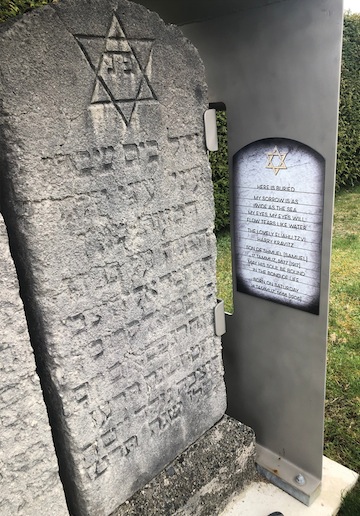
In the Jewish Cemetery at Mountain View, a shroud was erected to protect the Kravitz family headstones. (photo from Schara Tzedeck Cemetery Board)

Responsible for three Jewish cemeteries in the Lower Mainland, the Schara Tzedeck Cemetery Board recently completed several projects.

Unable to restore two of the most interesting headstones at the Jewish Cemetery at Mountain View, a large metal shroud was erected for protection over the Kravitz family headstones. Designed by Bill Pechet and donated by the City of Vancouver and Saul Goldberg, a cousin of the family, this has added a unique decorative feature in the cemetery, as well as essential protection from the elements.

photo - A translation of the Kravitz family headstones has been added
A translation of the Kravitz family headstones has been added. (photo from STCB)

The Kravitz/Goldberg family has been traced back to the 1800s and has four members buried in this pioneer cemetery. Leah Deslauriers, Saul Goldberg’s daughter, provided a family history that completed missing pieces of information about the family. Translation of the poetry on the headstones was completed by Daniella Givon and mounted in weatherproof panels inside the shroud.

With the protection in place for these headstones, this site already has become a highlight for visitors on their walking tours.

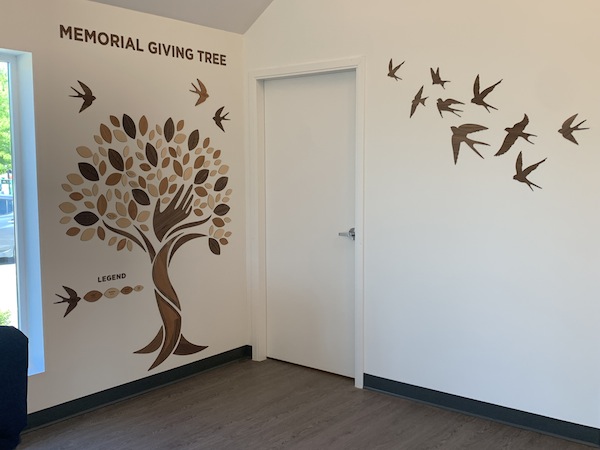
Inside the new Schara Tzedeck Funeral Chapel in Surrey is a beautiful Memorial Giving Tree. Designed and created by Eclipse Awards, this tree made of maple, cherry and walnut woods is prominently displayed at the entrance to the new chapel. It will contain engravings that members of the community may purchase to memorialize their loved ones buried in Surrey. The tree can contain up to 100 elements to be inscribed, ranging from small leaves to birds.

photo - Memorial Giving Tree at Schara Tzedeck Funeral Chapel in Surrey
Memorial Giving Tree at Schara Tzedeck Funeral Chapel in Surrey. (photo from STCB)

Years ago, the elders of the community were asked to place headstones on unmarked graves. Today, the Chesed Shel Emet Fund, fulfils that mandate. This past year, more than 50 headstones were placed on gravesites where there were no headstones. In some cases, there were no families to do so and, in many cases, there was a financial inability to have a marker.

The Schara Tzedeck Cemetery Board, under the executive director Howard Jampolsky, board chairs Jack Kowarsky and Arnold Silber, and funeral director Joseph Marciano, works to ensure that all members of the community not only have a dignified burial, no matter what their financial situation is, but also works to initiate projects that serve the community and help maintain the beauty of its cemeteries.

This past year, other projects have included a new irrigation system, the establishment of a water/well in New Westminster and the ability to manufacture burial caskets on-site. The cemetery board and the Chevra Kadisha also produced an informative video on tahara (the process of preparing people for burial), which may be seen on the website cemeteryboard.com.

For more information on these and other projects, contact Jampolsky at 604-733-2277, ext. 204.

– Courtesy Schara Tzedeck Cemetery Board

Format ImagePosted on August 27, 2021August 25, 2021Author Schara Tzedeck Cemetery BoardCategories LocalTags art, Bill Pechet, Chesed Shel Emet Fund, City of Vancouver, Daniella Givon, Eclipse Awards, Howard Jampolsky, Kravitz family, Memorial Giving Tree, Saul Goldberg, Schara Tzedeck Cemetery, Schara Tzedeck Funeral Chapel
Building connection to Israel

Building connection to Israel

Grade 2 and 3 students of the B.C. Regional Hebrew School in Coquitlam with teacher Shifra Rabiski. (photo from Lubavitch BC)

In time for the upcoming school year, Lubavitch BC, in partnership with the Jewish Federation of Greater Vancouver, is launching a new curriculum for B.C. Regional Hebrew Schools. There is a need to engage Jewish children with a connection and pride for Israel and its central role in the Jewish past, present and future, and B.C. Regional Hebrew Schools has developed a program that does exactly this. Israel Quest is an immersive curriculum that enables children to form attachments to the Holy Land on practical, emotional and spiritual levels.

Using educational tools such as virtual reality, topography, theatre, filmmaking, STEAM activities and more, students relive the journey of the Jewish people in the land of Israel, from the time Jews entered the land, led by prophets and kings, until the untimely destruction of the Holy Temples. They discover the secret to the Jewish people’s eternal survival as a nation with tools established to keep Judaism thriving in the Diaspora.

Of the new program, Rabbi Dovid Rosenfeld, director of the Hebrew schools, said, “Education is at the core of everything. What we teach children in their formative years creates an indelible impact and foundation for their entire adult lives. And not only are the students themselves transformed, but the positive impact of their learning extends to their families, friends, classmates, communities and beyond.”

B.C. Regional Hebrew Schools is an affiliate of the Chabad Children’s Network (CKids), which has chapters in 26 countries and engages 25,000 children each year. Currently operating in three locations throughout British Columbia, it is gearing up for another year of Hebrew and Judaic learning, starting Sept. 1. Online registration is available at lubavitchbc.com/hebrewschool. More information can be found by calling 778-878-2025.

– Courtesy Lubavitch BC

Format ImagePosted on August 27, 2021August 25, 2021Author Lubavitch BCCategories LocalTags Diaspora, Dovid Rosenfeld, education, Hebrew School, Israel, Jewish Federation, Lubavitch BC
Comedy tour now on

Comedy tour now on

Left to right, comedians Andrew Packer, Jacob Balshin and Che Durena are currently on the JNT Comedy Tour, which takes them to small towns around Alberta and British Columbia until Sept. 6. (photo from David Cyr Photography / JNT Comedy Tour)

The JNT Comedy Tour, known for presenting the “highest” level of comedy in Canada from coast to coast, returned for their fourth edition Aug. 18. Featuring stand-up comedians Andrew Packer, Che Durena and Jacob Balshin, the tour comprises live shows in 19 communities across Alberta and British Columbia, and runs until Sept. 6.

Packer is an international headlining comedian and creator of JNT Comedy; his credits include performances at JFL42 (Just for Laughs), JFL Northwest and Edinburgh International Fringe Festival. Durena came runner up in SiriusXM’s Next Top Comic and he has headlined shows at JFL42 and appeared on JFL All Access on Comedy Central. Balshin, who is a member of the Jewish community, was named Toronto’s Best Upcoming Comedian at the I Heart Jokes Awards in 2018, and was nominated for Breakout Comic of the Year in 2020; his comedy has been featured on SiriusXM and CBC’s LOL.

The trio brings the tour into British Columbia Sept. 1, to Kimberley, with actor Sarah Stupar joining them. They then head to Creston Sept. 2 and Crawford Bay Sept. 3, before returning to Alberta for the tour’s last show.

If you happen to be traveling the province early next month, check out linktr.ee/jntcomedy for tickets and show times.

– Courtesy JNT Comedy Tour

Format ImagePosted on August 27, 2021August 25, 2021Author JNT Comedy TourCategories Performing ArtsTags Alberta, British Columbia, comedy, Jacob Balshin, JNT Comedy Tour
Instiling Jewish values

Instiling Jewish values

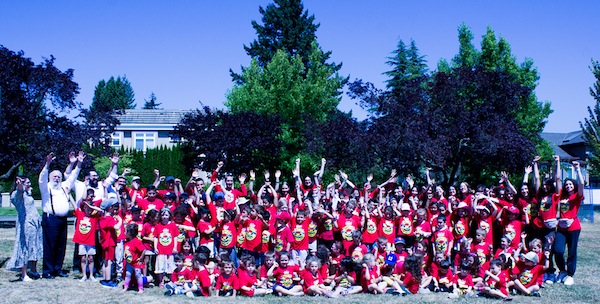
The 46th summer season of the Phyliss and Irving Snider Camp Gan Israel of British Columbia ended with tears, hugs and good resolutions. (photo from CGI)

Tears, hugs and good resolutions capped off a unique camp experience in Vancouver on an emotionally charged Friday, Aug. 13, as campers, staff and parents said farewell at the end of the 46th summer season of the Phyliss and Irving Snider Camp Gan Israel of British Columbia (CGI).

Despite two years of unprecedented challenges facing camps and schools due to COVID-19, co-director Rabbi Dovid Rosenfeld said CGI continued to grow. And he anticipated registrations to keep climbing, as families experience firsthand the positive effects of a Jewish summer camp experience. In the words of parent Danica David, “In one week, Camp Gan Israel took my son from a frightened child determined to hide his Judaism at public school, to a proud Jew who wears a kippah and takes pride in his davening prowess!”

photo - When asked which activity was their favourite, campers had a hard time narrowing it down
When asked which activity was their favourite, campers had a hard time narrowing it down. (photo from CGI)

“Our staff are the real secret to our success,” said co-director Chaya Rosenfeld. “They approach this job as a personal mission: to bring the warmth and love of Judaism to every child through a fun and impactful camp experience. We see each child not just as a camper, but as a special member of the tribe. We love everyone equally because inside we are all the same, defined by our Jewish soul.”

For the six weeks of camp, every activity of every day was imbued with Jewish energy and content. In addition to daily learning that brought home the message of camp, there were crafts, carnivals, shows, games and songs, all with Jewish themes that reinforced the concept of unconditional love (Ahavat Yisrael) and Jewish values. Campers were encouraged to search within themselves to find the sparks of holiness that lie within each person and object, thereby bringing more light and goodness into the world.

When asked which activity was their favourite, campers had a hard time narrowing it down. “I loved everything!” said Rose C., a 9-year-old camper who commuted from Langley every day. “But the water activities and hot lunch were my favourites!”

Other campers pointed to the art classes (which were led by professional artists) as their highlight of the summer, while still others were enthusiastic about the weekly shows that were performed over the summer, including The Magic of Yeeri, Cinemazoo Petting Zoo, Juggling with Matt and In the Company of Fairies.

photo - Camp Gan Israel kids
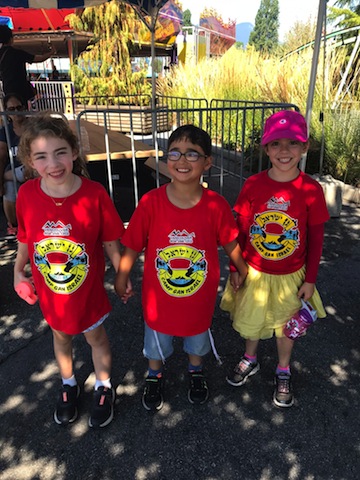
Camp Gan Israel kids (photo from CGI)

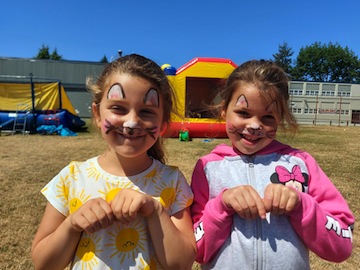
“The carnivals were the best!” said Sarah F. “I loved the face-painting, bouncy castles and races.”

A definite highlight was the trip to Playland, where campers from the youngest 3-year-olds to the oldest teen campers got to spend a day on the rides.

To end off the summer, CGI’s Rabbi Rosenfeld introduced the CGI Mitzvah Campaign. Campers chose one mitzvah that they learned at camp that they would focus on throughout the year. Submitting 10 reports to the camp office on how they’re doing in practising the mitzvah nets them a prize, carrying the camp experience of fun and Jewish values into their home and throughout the year.

“The best part of camp for me was my surroundings,” said counselor-in-training Eliana R., age 10. “I was surrounded by warmth, happiness and laughter between everyone. That’s what elevated it from just a normal, basic camp to an extraordinary experience. I can’t wait to go next year!”

For more photos of CGI, visit @vancouvercgi on Instagram. Email [email protected] for more information.

– Courtesy Camp Gan Israel

Format ImagePosted on August 27, 2021August 25, 2021Author Camp Gan IsraelCategories LocalTags Camp Gan Israel, CGI, Chaya Rosenfeld, Dovid Rosenfeld, education, education antisemitism, summer
BGU studies health tweets

BGU studies health tweets

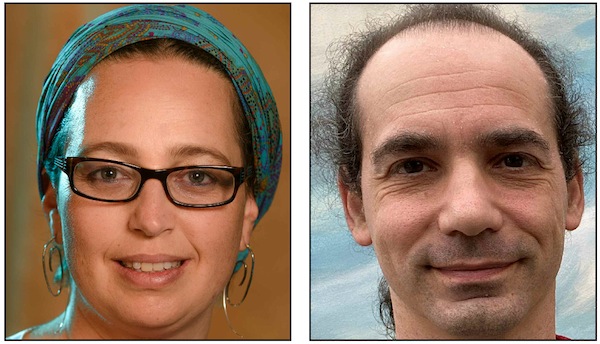
Dr. Odeya Cohen (photo by Dani Machlis/BGU) and Dr. Rami Puzis (photo courtesy)

Ben-Gurion University of the Negev (BGU) researchers discovered patterns of significantly decreased joy, increased sadness, fear and disgust among healthcare professionals (HCP) in the largest social media study to track emotional changes and discourse during the COVID-19 pandemic.

In the study, a multidisciplinary BGU team analyzed more than 53,000 HCP tweets from followers of several hundred Twitter accounts of healthcare organizations and common HCP points of interest. The most significant topics HCPs discussed during the pandemic were COVID-19 information, public health and social values, medical studies, as well as daily life and food. Approximately 44% of their discourse was about professional topics during the entire 2020 year.

The research indicates data-driven approaches for analyzing social media networks are helpful as a method for exploring professional health insights during both routine clinical situations and emergencies. The study will be published in the Journal of Medical Internet Research. A preprint is already available online. It was funded by the BGU Coronavirus Taskforce and by an Israeli Ministry of Science and Technology coronavirus research grant.

“Our findings, which track increasing sadness and decreasing joy, should be a warning to health organizations of the importance of better mental health support to help HCPs cope with the emotional consequences of the pandemic,” say Dr. Rami Puzis of BGU’s software and information systems engineering department (SISE) and Dr. Odeya Cohen of the department of nursing. “Most interestingly, HCP tweets expressed greater levels of fear just prior to pandemic waves in 2020. This indicates that many HCPs, beyond those working in epidemiology, observed, and were adequately qualified to anticipate pandemic development.”

Puzis goes on to say, “This suggests that decision-makers could benefit from investing additional resources into listening to the broader HCP community to track and anticipate bottom-up pathways for developing health crises.”

– Courtesy Canadian Associates of Ben-Gurion University of the Negev

Format ImagePosted on August 27, 2021August 25, 2021Author CABGUCategories IsraelTags Ben-Gurion University, COVID-19, healthcare, Israel, mental health, Odeya Cohen, Rami Puzis, science, Twitter
About the Rosh Hashanah cover art

About the Rosh Hashanah cover art

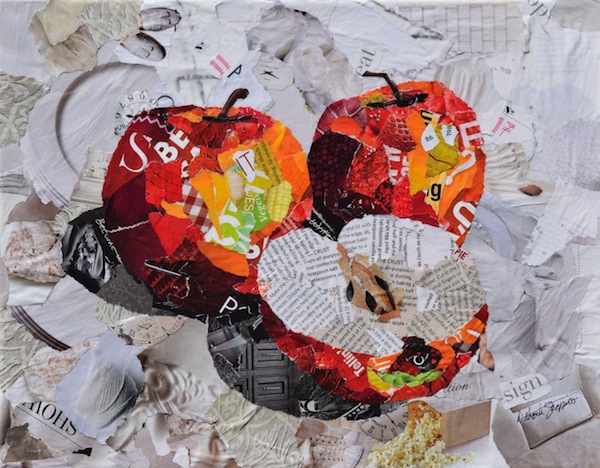
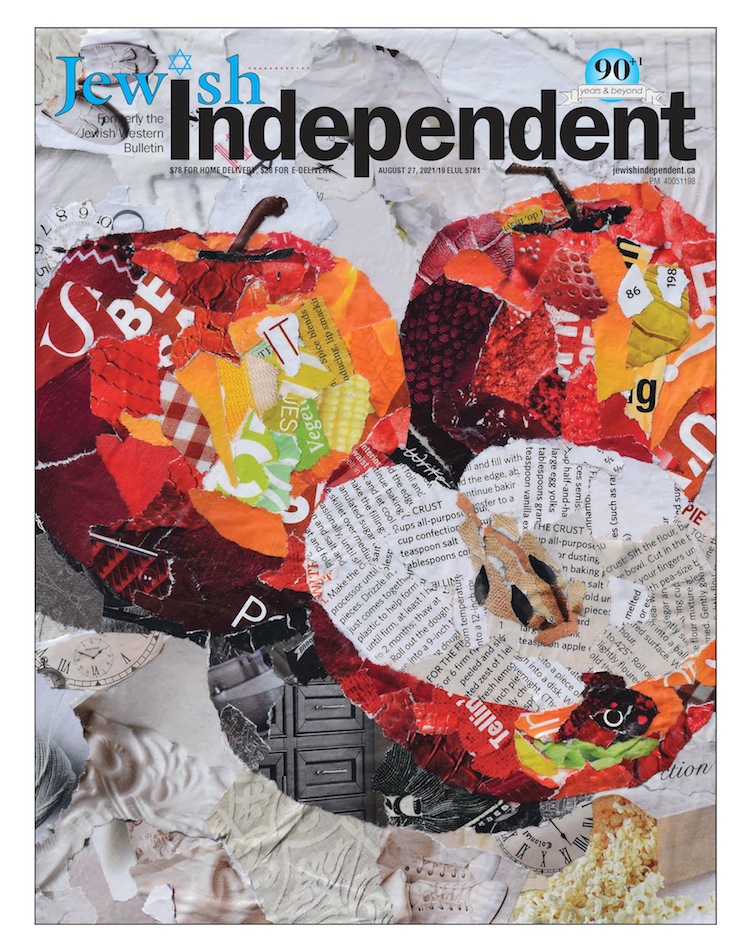
image - JI Rosh Hashanah issue 2021 cover with art by Deborah ShapiroDeborah Shapiro is a self-taught, award-winning artist from Akron, Ohio, who creates collages from bits of magazine paper – no paint is used. Her subjects include nature scenes, animals and still life images. Many of her pieces have words and added meaning, as with the apple collage that graces the cover of this special issue of the Jewish Independent. You will find parts of apple pie recipes within the cut part of the apple. Apples, of course, are one of the symbols of Rosh Hashanah, representing, as we dip them in honey, our wishes for a sweet new year.

Shapiro began her art career later in life, after the age of 50, following a jaw surgery.  Her mother gave her magazines as she recovered and Shapiro used them as paint to create paper paintings. Prior to that, she was a videographer for more than 35 years. To see more of her creations, visit deborahshapiroart.com or facebook.com/deborahshapiroart.

Format ImagePosted on August 27, 2021August 25, 2021Author The Editorial BoardCategories Celebrating the HolidaysTags apples, art, collage, Deborah Shapiro, Rosh Hashanah
Returning to our holiday tables

Returning to our holiday tables

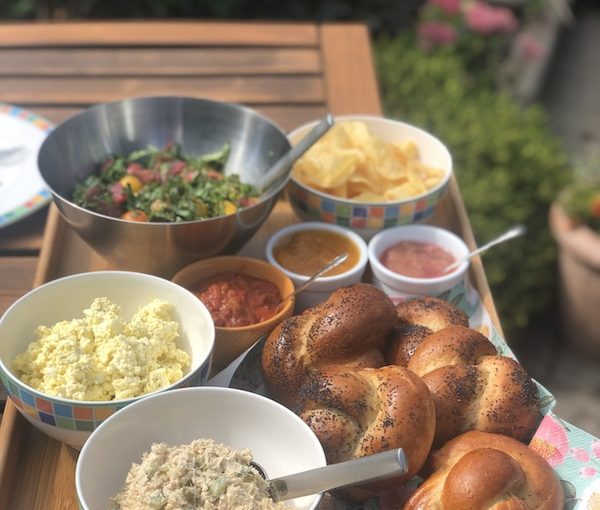
Planning ahead can help minimize touch points and help keep a small gathering safe. (photo by Michelle Dodek)

We all remember the days when we gathered family, friends and maybe some strangers together at our holiday table to celebrate Rosh Hashanah. For me, it feels like a distant memory but I know I loved preparing loads of food for all of us to enjoy together. And I’m looking forward to doing it again this year, albeit outside, under cover of a tent my brother luckily bought before his eldest daughter’s bat mitzvah (and has subsequently used for the bat mitzvah parties of his two younger daughters and other gatherings, particularly since COVID hit).

Dinner in my family has always a “family style” affair, where dishes are passed from one to the next and then left on the table for anyone to help themselves to seconds or thirds. Lunch on the first day of Rosh Hashanah, which is the main event in my home (aka “the Big Lunch”), has been, for the more than 20 years I’ve hosted it, a giant buffet.

For some people, reverting back to the way things were may be an easy mental step. For others, in an environment with unvaccinated children, immunocompromised loved ones and a newfound awareness about germ transmission, things will not go back to the way they were pre-pandemic. Not yet, given the latest mask mandate, and maybe not ever.

What to serve and how to serve it has always been a challenge in my family. How do we make sure everyone is comfortable with the food choices and the way they are presented? We have a few parameters since we are kosher and have those with nut allergies, dairy sensitivities, oral allergy syndrome, a few vegetarians and others who are just plain particular. Inviting upwards of 40 people, usually closer to 75, always presents some logistical fun, especially with environmental concerns ruling out disposables. All of these challenges have created an environment where thinking creatively about food is a necessity. My formal training as a chef has helped with this process.

The two parts to making sure your guests are at ease this holiday season are choosing a delicious menu (as usual) and presenting the food in a way that features as few touch points as possible. Menus can go one of two ways: traditional or modern. For traditional foods, I will defer to your family’s minhag (tradition). Some families and cooks take great pleasure in their annual interaction with time-honoured recipes. I treasure my baba’s potato knish recipe and relish the prospect of circling my challah and topping it with another small, braided crown the way my mom showed me when I was a little girl.

As a vegetarian, however, I have never presented a full array of traditional Ashkenazi foods to celebrate any holiday. Pickled tongue? Not a chance. In fact, I felt like a bit of a bad Jewish mother when my daughter was 5 years old and leaned over to me at my mother’s yontif table as the soup was served and whispered, “Chicken in soup! Weird!” My soups are seasonal, bright vegetable soups like butternut squash or carrot ginger.

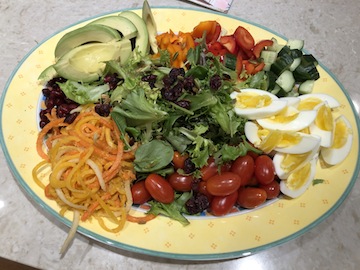
photo - Composed salads are colourful and tasty
Composed salads are colourful and tasty. (photo by Michelle Dodek)

The farmers market produce that looks most appealing is what guides my menu. I feel strongly that bringing the bounty of our local harvest to my celebration of a spiritual new year is integral to our connection with where we are and how we live. That topic, however, is for another article.

Let me suggest, if you wish to bring your offerings into 2021 and still have your food choices reflect the symbolism of our tradition, try a couple of approaches.

First, look to Israeli cuisine. The mash-up of all Jewish traditions from Austria to Addis Ababa give many tasty options that will become new staples at your family gatherings.

Second, many Sephardi foods focus on beautiful vegetables and fruits that were not available to people living in Eastern Europe. However, living as we do today, we have access to almost every possible kind of produce. Invest in a few good cookbooks, like those of Adina Sussman, Jana Gur, Einat Admony or Yotam Ottolenghi for ideas on how to up your game with some vegetable forward, delicious, holiday-worthy food.

As far as ways to serve your food, here are some options to consider in order to be considerate of your guests in this special year of our emergence from pandemic holiday isolation.

Option 1: “Modified Family Style aka Downton Abbey,” using family members as the serving staff. For this option, the cook enlists the help of a few willing family members, (in my case, my teenaged children, my sisters and my brother). Each helper is given the responsibility to serve a dish, going from guest to guest, giving a description of the delicacy and spooning out an appropriate amount. While efficient, this does lend itself to the possibility of green bean almandine on Bubbie’s shoulder or salad in Grandpa’s lap.

Option 2: “Plated Dinner aka Eat What’s On Your Plate aka Sweat Away, Host.” This is the restaurant-style plate that hasn’t been so common at home since the Starbucks revolution in dining, where everyone has to have everything their way. In this model, everyone gets the same thing, in approximately the same amounts. Similar to a restaurant but without choosing your order. This results in more food waste, because, although it hasn’t been dropped on Grandpa’s lap, some of dinner will no doubt be pushed to the perimeter of the plate and left for the compost. It also requires, as suggested in the third version of the name, for someone to toil in the kitchen to make every plate and be on call if someone wants seconds of quinoa pilaf and doesn’t have the good fortune of sitting next to a toddler who has pushed all of that mixed grain thing to the edge of her plate. One can enlist the help of volunteers to assist with the plating to speed things up and, most certainly, some people will be needed to take the finished plates to the table, but the onus of refills will almost certainly fall to the person in charge of the kitchen.

Option 3: “Staffed Buffet” is probably the easiest, depending on the set up of your house. In this iteration of food service, a couple of people serve the buffet of food to the guests as they walk by with their plates. This eliminates having everyone touch the serving utensils. It requires fewer helpers than Option 1 and is more customized than Option 2. The catch is that your house needs to be set up to accommodate a group of hungry Jews traipsing along – and staying patient long enough with their family members who are acting as servers – to get all of their food. One major recommendation is, to avoid a stampede or major butting in line, do not serve any version of smoked salmon. For some reason, the sight of thinly sliced orange fish causes many Jewish people to act like Americans at Walmart on Black Friday.

Good luck with your holiday entertaining. Keeping things small this year to ease back into the intimacy of entertaining is also probably a great idea. Remember to say a hearty Shehechiyanu with your assembled guests for, if the pandemic has taught us one lesson, it is never to take being with our loved ones for granted. Shana tova.

Michelle Dodek is a longtime contributor to the Jewish Independent and a balabusta. She shares her love of cooking and entertaining through culinary classes, both in person and on Zoom.

Format ImagePosted on August 27, 2021August 25, 2021Author Michelle DodekCategories Celebrating the HolidaysTags cooking, coronavirus, COVID-19, entertaining, lifestyle, Rosh Hashanah
Being a Jewish woman

Being a Jewish woman

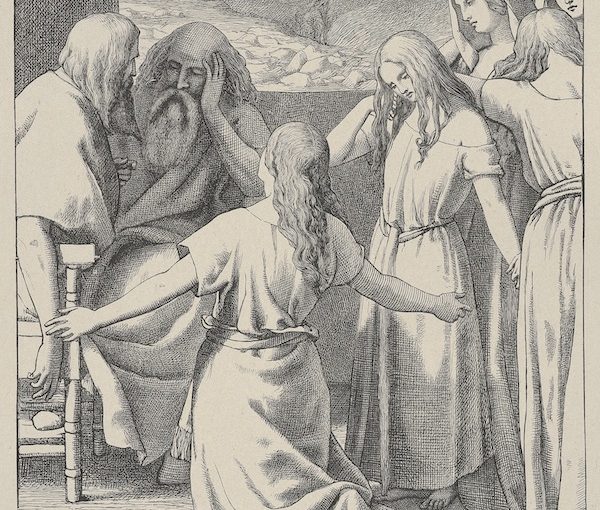
The Daughters of Zelophehad by artist Frederick Richard Pickersgill, engraver Dalziel Brothers, 1865-1881. (photo from metmuseum.org)

“A cobbler passed by the window of Rabbi Levi Yitzhak, calling out: “Have you nothing to mend?!” The rabbi began to cry: “Woe is me! Rosh Hashanah is almost here and I have not yet mended myself!” (Zichron Ha Rishonim)

According to Rabbi Kruspedai, in the name of Rabbi Yohanan, three books are opened on Rosh Hashanah: one for the wholly righteous, one for the wholly wicked and one for most of us, those in between. The wholly righteous are inscribed and sealed in the Book of Life; the wicked in the Book of Death; and the rest of us are held suspended until Yom Kippur, when we are judged worthy or unworthy. The zodiacal symbol for the Hebrew month of Tishri is, fittingly, a balance – the scales of justice.

When Creation was established, but still incomplete, humans had an important role – to fill the earth with life and to sustain life at the highest level (Genesis 1:28). We became a partner with the Creator in tikkun olam, perfecting the world.

Women are not relegated to a minor position in this task. As Rosh Hashanah approaches, Jewish women reflect on their role, knowing that they have more to do than merely bake honey cakes, send out Shana Tova cards and light candles.

Since coming to live in Israel five decades ago, I have felt the need for a deeper, more spiritual aspect. Every type of Jewish woman is represented in Jerusalem, from the ultra-Orthodox matron to the professional modern religious woman; from the Reform woman rabbi to the completely secular woman who sees any kind of ritual as nonsense. Each has her convictions and will act on them accordingly.

Having begun my life as a fairly assimilated Jewess, I fall somewhere in the middle. I consider myself a modern, observant woman, although I fall short of my daughters, who cover their hair and have studied Talmud, Mishnah and Jewish philosophy at a level of commitment to Judaism I probably will never attain. Yet, I am not totally ignorant, nor have I been left entirely unaffected by the feminist movement. I do believe that the Torah was given by G-d at Mount Sinai and one may not change it even one iota. But neither am I satisfied to fulfil the prayer of the pious father at his daughter’s birth in the Middle Ages: “May she sew, spin, weave and be brought up to a life of good deeds” – especially as the first three skills are completely beyond me!

I want to find a comfortable spiritual niche for myself within the framework of halachah (Jewish law). I have no desire to don tallit or tefillin to make a feminist statement, yet I know there are possibilities that exist for the Jewish woman that give her a place beyond catering to the family’s gastronomic needs when the Days of Awe come round. Many opponents of orthodoxy contend that women are not honoured in Judaism, despite the deep reverence for Sarah, Rebecca, Rachel and Leah. My namesake, Dvora, the judge and prophetess, is also greatly honoured for her political, moral and religious leadership.

There are contemporary Orthodox women who have widened the halachic barriers by challenging practices of separate synagogue seating, and questioning the right of women to be called to the Torah and to be counted in the minyan (traditionally, the minimum 10 men required for communal worship). These privileges do not unduly attract me – if they did, I would attend a Conservative or Reform synagogue. I am not even tempted to join a halachically permitted women’s “minyan” – I rather enjoy my silent communion with G-d and don’t feel it necessary to see everything that is going on. G-d hears Jewish women’s pleas, as He did in the case of the childless Sarah, Rachel and Hannah and the landless daughters of Zelophehad.

I don’t yearn for religious parity with men. Not everything in life can be equal or fulfilled at every given moment. Demands for personal gratification and unreal expectations can destroy relationships in the secular sphere also. Blu Greenberg, a pioneering Orthodox feminist and writer, has defined “time, energy, a measure of sacrifice and generosity of spirit” as the enemies of instant gratification and believes that one is only free within an ethical and moral structure.

With the approach of the High Holy Days, there are women who are searching for a role that will be neither insignificant nor undervalued. We are sifting through the perspectives of Jewish values, what we can welcome and what we can reject.

We will attend synagogue and listen to the shofar as men and women are obligated to do, and try to observe the period of penitence that ends with Yom Kippur. There are also tehinnot (petitional prayers; in Yiddish, tkhines) for women, written in Yiddish in Bohemia and published in Germany, Russia and Poland in the 18th century, which I would like to find and have translated. They emphasize G-d as a loving father rather than as a stern judge; the merit of the matriarchs; and define rewards in terms of pious and virtuous children. They represent a kind of folk literature, mirroring the daily life and concerns at that time in the ghetto. As it is known that many of the tehinnot were composed by women – a rare phenomenon – I think they are appropriate prayers to be added by women to the traditional ones at this time.

Mainly, I think, we should sustain our belief that women, as well as men, are made in G-d’s image. For me, being a Jewish woman largely defines who I am and what I am called to do. Our sages tell a story that, when the Torah was first given, G-d told Moses to teach it first to the women. I believe the reason – that is still valid today – was that women were the architects of the next generation, and their acceptance of it would determine whether or not future generations would continue the covenant. Surely, there is no more significant role as we approach the New Year and the Day of Judgment. May we all be inscribed for a good year.

Dvora Waysman, originally from Melbourne, Australia, has lived in Jerusalem for 50 years. She has written 14 books, and the film The Golden Pomegranate was based on her novel The Pomegranate Pendant. She can be contacted at [email protected].

Format ImagePosted on August 27, 2021August 25, 2021Author Dvora WaysmanCategories Celebrating the HolidaysTags identity, Judaism, Rosh Hashanah, tikkun olam, women, Yom Kippur

Posts pagination

Previous page Page 1 … Page 138 Page 139 Page 140 … Page 494 Next page
Proudly powered by WordPress