Skip to content
  • Home
  • Subscribe / donate
  • Events calendar
  • Business Directory
  • FAQ
  • News
    • Local
    • National
    • Israel
    • World
    • עניין בחדשות
      A roundup of news in Canada and further afield, in Hebrew.
  • Opinion
    • From the JI
    • Op-Ed
  • Arts & Culture
    • Performing Arts
    • Music
    • Books
    • Visual Arts
    • TV & Film
  • Life
    • Celebrating the Holidays
    • Travel
    • The Daily Snooze
      Cartoons by Jacob Samuel
    • Mystery Photo
      Help the JI and JMABC fill in the gaps in our archives.
  • Community Links
    • Organizations, Etc.
    • Other News Sources & Blogs
  • JI Chai Celebration
  • JI@88! video

Recent Posts

  • SFU honours Gloria Gutman
  • Lifting people’s spirits
  • Wedding a ray of light
  • Indigeneity and Zionism
  • Rule of law broken: councilor
  • Football and its roles
  • The burden of defence
  • Fish Café returns after fire
  • All right in what goes wrong
  • Nuns & mermaids at TUTS
  • Camp offers holiday retreat
  • Students and mentors inspire
  • Once-in-a-lifetime trip
  • 100 dancers, one heart
  • Money for the sciences
  • What “Jewish food” means
  • Have a cookie, schnitzel too
  • Federation now across BC
  • Israel fighting for its existence
  • Deal strengthens Iran
  • Patriotic belonging diminishes
  • A campaign to engage
  • Upstanders’ first live event
  • Responding to Carney
  • Having your own home
  • Music a family tradition
  • Musical to warm heart
  • Community milestones … June 2026
  • Sharing her passion for Israel
  • Or Shalom reopens its doors
  • JFS from past to future
  • Need holistic approach
  • Sharing stories, advice
  • Journalist shares fears
  • Skills to live together
  • Road to independence

Archives

Follow @JewishIndie
image - CJN box ad Rockowers 2026

Tag: mental health

Staying calm amid bad news

Worn out by recent events? Me, too. For most of my work, I write things in advance to meet a deadline, but I can’t predict the future. Like Jewish balabustas (Yiddish for a woman who manages her household) throughout time, one way I cope is through working harder – by multitasking and planning ahead. I bake challah and meals in batches and freeze the extra. Why? So I can also work, take kids to medical appointments or even stop everything so I can sit down to help with math homework in those crucial moments before dinner.

Yet, we have a hard time calmly planning ahead when things feel out of control. Rising antisemitism, murders and crimes in the world affect us, as do natural disasters both locally and farther afield. These experiences can cause us to feel a sense of “trauma fatigue.” This can also be called “compassion fatigue,” and some say it particularly affects those in helping professions, like first responders, mental health and medical professionals, and social workers. However, it’s not limited to those people. Even bystanders to an event, who perhaps see footage on social media, on TV or in the newspaper, can be affected. Kids can be affected, too. We’re not immune to what this experience does.

Many react with a sort of post-traumatic stress syndrome. There may be an increased sense of panic or “fight or flight” feelings of adrenalin. Some people cannot sleep, or sleep too much. They have flashbacks to bad incidents that occurred, as well as physical symptoms. They may feel disassociated from themselves or others, and may feel less compassion for others in general. There are lots of symptoms associated with this. I’m not an expert.

However, I realized one morning as I walked my dogs that I felt weary and emotionally drained. It’s awful to hear about shootings of people at prayer, hate crimes and massive natural disasters like flooding. There are only so many times you can feel heartsick about these types of events before it takes a toll.

A recent New York Times editorial was an apology for an antisemitic cartoon that they printed. The editors acknowledged the creep of numbness and a lack of judgment when it printed this cartoon and when it came to recent anti-Jewish incidents. This numbness mirrored the New York Times’ and other newspapers’ historic failure to address the widespread rise in antisemitism in the 1930s and 1940s. The current editors pointed out the danger in this, apologized for one editor’s poor choices and the paper’s lack of oversight.

We’re all coping with a sort of numbness when it comes to the news cycles and increasingly frequent events. It’s hard to respond with equal amounts of compassion after every shooting or traumatic world disaster. What can we do to relieve this?

The following list is partial and includes both Jewish and general responses to stress.

  1. Shut off social media. Whether you’re Sabbath observant or not, find ways to silence your phone, newsfeed or other notifications for a few hours or days. Shut off the noise on occasion and step away from the news and alerts. It will calm your fight or flight instinct.
  2. Get outside. Take the ear buds out. Take a walk or run. Bring the dog, family, a friend or just your thoughts. Listen to the birds, squirrels, wind or the traffic. Give yourself a chance to exercise, be out in nature and smile at neighbours. See the world at a slower pace.
  3. Read a book. Escape fiction is not just for the beach. Find something engrossing to read and lose yourself in it for awhile. If fiction isn’t your thing, learn something new with non-fiction. Study Jewish texts, geography, geology or whatever interests you. Give yourself time for your mind to do something other than freak out.
  4. Practise deeds of loving kindness. Try every day to do something for others. It can be a thank you note, helping a friend or holding a door open for a stranger. Donate money or food to the food bank, volunteer or simply help clean up at home, work or synagogue. This is a Jewish way of keeping the world afloat.
  5. Prayer and meditation can help us remain calm and boost our health. Everyone differs on this topic. Some religious people feel prayer “protects” the faithful. Others are skeptical but hedge their bets. Even atheists can be aided with repetitive words or activities that help tune into this part of the brain. However you see this, it’s hard to refute the scientific evidence that being part of a religious community or meditating on your own can make a substantial difference to our health and well-being.
  6. Speak out. We can’t control much – not natural disasters or the actions of others. We can, however, work for what’s right. Judaism has a long history of social activism. While we may disagree in our opinions, we can still choose to advocate for what we believe. We feel less helpless when we talk with others who share our views and try to make positive change.
  7. Seek out support. It’s natural to feel anxious. This is a good time to seek out others at your congregation, community centre, workplace or school and talk about how you’ve been feeling. Talk to a therapist or a rabbi. Find time for friends, family and community members who care about you.

These are only some things that might help. It’s just a start, but, as the rabbis say, “The world stands on three things: Torah, prayer/service and deeds of loving kindness.” It’s true that life isn’t boring these days, but I’m wishing for a bit of boring. Here’s to enjoying some safe, quiet and calm, and peaceful, warm days ahead. Be well.

Joanne Seiff has written regularly for CBC Manitoba and various Jewish publications. She is the author of three books, including From the Outside In: Jewish Post Columns 2015-2016, a collection of essays available for digital download or as a paperback from Amazon. See more about her at joanneseiff.blogspot.com.
 

Posted on May 10, 2019May 9, 2019Author Joanne SeiffCategories Op-EdTags Judaism, lifestyle, mental health
Israeli crisis line volunteers

Israeli crisis line volunteers

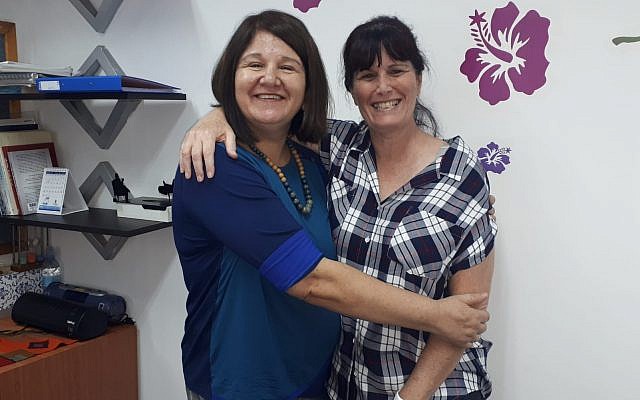
Ety Siton, left, director of the Kfar Saba branch of ERAN, also oversees the Toronto volunteers. She is pictured with Sigal Almog, co-founder of Toronto’s ERAN project. (photo from ERAN)

Finding enough volunteers in Israel for the night shift of the country’s emotional crisis hotline, ERAN, proved difficult. So, its chief executive director, David Koren, came up with the idea of looking for Israeli volunteers living in North America to help cover this time period.

ERAN is a confidential service, offered over the phone or the internet, which provides free, anonymous emotional support to people in Israel of all ages, in Hebrew, Russian, Arabic and English.

Sigal Almog and Galya Sarner, both former Israelis living in Toronto, were at a conference in Washington, D.C., in 2017 when they heard of Koren’s mission. They sent out a call for volunteers through their network, and further recruited two social workers, Anat Gonen and Sabina Mezhibovsky, to co-found and open a chapter of ERAN in Toronto last year.

“Right now, in Toronto, we have 16 volunteers,” Gonen told the Independent, adding, “We have around 85 volunteers in the four North American branches. I think they are answering, each month, around 800 calls. So, that is 800 calls that, before we had those volunteers in North America, were unanswered, because nobody was there at night.”

“Just think about the message behind it,” said Sarner. “It’s unbelievable, probably saving the lives of so many in need who couldn’t get help, because not enough volunteers were there to give them the minimum support they were asking for.”

All four Toronto co-founders knew of the ERAN helpline prior to becoming involved with it in Canada, though none had used it themselves.

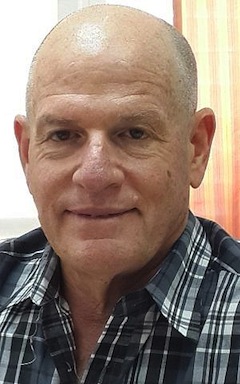
photo - David Koren, chief executive director of ERAN
David Koren, chief executive director of ERAN. (photo from ERAN)

“ERAN is part of daily life in Israel,” said Sarner. “It’s a very distinguished project and, when we heard from Koren that he was looking to expand his global networking and to work with the North American community, we didn’t think twice. We knew we’d do whatever it took to launch the branch of ERAN in Toronto.”

Almog, who was also at the 2017 conference, recognized that this was a great opportunity to connect with and help people in Israel from Toronto. Nearly 80 former Israelis came to the initial information session in the city and, after screening them all, the branch accepted around 20 volunteers, who went on to get special training from ERAN and then started taking calls from Israel.

Volunteers do not need to have any particular degree, but they do need to possess specific skills.

“You need to be able to have some kind of empathy and self-awareness to know how to listen, [and to] understand and have a conversation in Hebrew, Russian, Arabic or English,” said Gonen. “One of the things we also found to be a struggle is that some of the people, especially those who’ve been here many, many years, can’t write in Hebrew. This is also a requirement, as they need to write a report in Hebrew. But, mostly what we need are people who are able to listen, to try not to give advice, and to be able to commit to the process,” to take a number of shifts per month.

“Whenever a volunteer answers the phone, they are told to say, ‘Eran, Shalom’ … keeping it very neutral, as, for some people on the line, it’s not a great evening…. It actually can be a pretty bad one,” said Sarner.

When a person in an emotional crisis dials 1201 from anywhere in Israel, they will be connected to a trained volunteer, who will try to direct them to those who can best help them; for example, a soldier with another soldier, or a Holocaust survivor with someone knowledgeable about the issues survivors face.

North American volunteers are taking shifts between 5 and 9 p.m., and 9 p.m. and 1 a.m., EST. Each volunteer signs into the ERAN system from their own computer and takes calls in their home.

“They have to be at home, because they have to be in a quiet room, a closed room, so nobody can hear the conversation they’re having and nobody interferes with what they say,” said Gonen.

Though the volunteers are in Toronto, they are trained to keep that fact out of the conversation. This way, explained Gonen, the caller is more likely to feel comfortable with them, thinking they are in Israel and able to identify with their struggle.

Running the Toronto chapter has been challenging, as the branch does not receive financial support from ERAN Israel or from the Toronto Jewish community. But, they have received some support from private donors and the Schwartz/Reisman Centre (in Vaughan, Ont.) provides space for ERAN volunteer training.

“We don’t have any kind of money that comes from ERAN Israel and everything we do here we pay for from our own pockets,” said Gonen. “The training … Sabina and I are volunteering to do every month. And, when we meet, all four of us will bring snacks for the meeting or things like that, because we want to make sure people feel appreciated for doing this. So, we’re looking for donations to help us run the branch.”

“We’re looking to expand support from our sponsors, because we did receive very touching sponsorships, mainly in the beginning, during the time of the initial training,” said Sarner. “But, in terms of the monthly meeting, it takes place at Schwartz/Reisman JCC. We’re very lucky to have the support of the JCC, but we definitely need to expand and find more sponsors and donors.”

The feeling shared by the co-founders and volunteers is that of gratitude to be able to have a direct impact on the lives of Israelis in Israel.

“We give a lot to ERAN,” said Almog. “We work many volunteer hours, but I feel like each one of the volunteers gets so much out of it. It’s brought a lot of meaning to our lives here, as Israelis who live outside of Israel.

“The volunteers just told us last week, someone who went to Florida and didn’t participate in the last training, that she really missed ERAN. It has become very meaningful in the lives of each one of us.”

“Anything you do in life,” Sarner added, “you have to do with love – with love and respect – and the respect we have among the four of us, it means so much to me. In Toronto, from the volunteers to the sponsors and the support of the community at large, it makes it even more meaningful to me. It has touched my heart and soul to be part of such an important initiative.”

ERAN is always looking for more North American volunteers and would like to open a chapter in Vancouver. For more information, visit app.etapestry.com/onlineforms/SchwartzReismanCentre/ERAN.html.

Rebeca Kuropatwa is a Winnipeg freelance writer.


Format ImagePosted on May 3, 2019May 1, 2019Author Rebeca KuropatwaCategories WorldTags David Koren, ERAN, Galya Sarner, Israel, mental health, Sigal Almog, suicide, Toronto, volunteering
Let’s talk mental health

Let’s talk mental health

Michael Landsberg will deliver the talk Darkness and Hope: Depression, Sport and Me on Feb. 13, as part of Jewish Family Services’ Family Life Education Series. (photo from JFS)

Michael Landsberg is a Canadian sports journalist and former host of Off the Record for TSN. He is also a passionate advocate for removing the stigma around mental illness, and will be coming to Vancouver next month to deliver the talk Darkness and Hope: Depression, Sport and Me. A Jewish Family Services (JFS) Family Life Education event, the talk will be held at Congregation Beth Israel on Feb. 13, with all proceeds going to support JFS mental health initiatives in the community.

Landsberg, who suffers from depression and generalized anxiety disorder, has in recent years been an ambassador for Bell Let’s Talk, an initiative that raises awareness and encourages dialogue about mental health. In 2013, his documentary, Darkness and Hope: Depression, Sports and Me, was nominated for a Canadian Screen Award for best history or biography documentary program or series. The Canadian Alliance on Mental Illness and Mental Health has named Landsberg one of its Champions of Mental Health. Landsberg is known for his Twitter hashtag #sicknotweak, which encourages discussion around mental health and creates a forum for those needing help.

“We’re thrilled and delighted to have Michael Landsberg come and do a talk at Beth Israel,” said Alan Stamp, clinical counseling director at JFS. “He has become an ambassador and a pioneer for mental health. He took a risk coming out about his struggles, [and] for him to come out and share his experiences is quite captivating. What he does best of all is he addresses stigma and, when someone in his role can speak out, it helps to lessen the suffering of the one in five Canadians – which is a conservative estimate in my opinion – who experiences a mental health concern over their lifetime.”

In Vancouver, Landsberg will be doing a one-hour talk with a question-and-answer period afterwards. He spoke to the Jewish Independent about helping people struggling with mental health issues.

“In general, sports mimics life,” he said. “When I speak about life and the stigma around mental health, I know we’re not as far ahead as we think we are. I don’t think we’re nearly as far ahead as we would want to believe. We’ve been working hard and it’s way better, yet I hear from people in the sports world all the time who are still in the closet, or they’re feeling shame.”

A major focus of Landsberg’s work is combating the idea that mental illness is a sign of weakness or is something “self-inflicted.”

“That is the arrogance of mental health,” he said. “Mentally healthy people sometimes believe that they would have been able to overcome the illness – they don’t understand the reality that people with mental health issues face, and how unchosen and beyond their control it can actually be. I try to educate the non-sufferer to better understand what mental illness is, and that it is like any other illness, no different from a physical ailment.”

There are a number of reasons why both Stamp and Landsberg feel sport is a good entry point for this discussion.

“I’m a huge believer that the best way to break people of the stigma is to find really strong people, like Clara Hughes, who have struggled with this, to talk about it,” said Landsberg.

Hughes, a Canadian cyclist and speed skater who has won multiple Olympic medals in both sports, has struggled with depression. “If [Hughes] was close at the end of the race, she would win. If you find that even a person of that strength and accomplishment can suffer from depression, it changes your perspective,” said Landsberg. “Everyone with depression feels that they are not understood, [but] when you hear someone else talk about it, then you know we all feel some things in common, and … that is incredibly empowering. Real-life examples are great.”

Landsberg has also partnered with firefighters who suffer from mental health issues, encouraging them to share their stories.

Landsberg and Stamp believe that reaching youth is key to changing the future, and sports can be key in doing that.

“We have to help younger people to understand that mental health concerns are a natural part of being alive,” said Stamp. “We have to do that much younger, like 6 or 7 years old. They need to know that when you feel distress, there is a way out.

“We have to start with language,” he said. “How do we describe somebody who is struggling? Children can be injured by the labels we use … we should be teaching youth and adults how to be listeners, how to approach someone and see if they need help. Having some education around a mental health problem is tremendously impactful. We need to be kinder, gentler and more empathic in our dealings with people.”

Tickets to hear Landsberg speak are $10 and are available from jfsvancouver.ca or 604-257-5151.

Matthew Gindin is a freelance journalist, writer and lecturer. He is Pacific correspondent for the CJN, writes regularly for the Forward, Tricycle and the Wisdom Daily, and has been published in Sojourners, Religion Dispatches and elsewhere. He can be found on Medium and Twitter.

Format ImagePosted on January 25, 2019January 24, 2019Author Matthew GindinCategories LocalTags healthcare, Jewish Family Services, JFS, mental health, Michael Landsberg, sports
World without prisons?

World without prisons?

Prof. Liat Ben-Moshe teaches disability studies at the University of Toledo. (photo from Liat Ben-Moshe)

University of Toledo assistant professor Liat Ben-Moshe moved to the United States in 2002 to do her doctorate in disability studies at Syracuse University, as the field was not offered in Israel at the time.

Ben-Moshe describes the field as one “that looks at disability as an identity and a culture.”

“So,” she said, “we read things about mad culture – ‘mad’ as in ‘crazy’ – deaf culture and a variety of disability histories, disability laws and social movements related to disabilities … as well as representation [of] people with disabilities and disability, in general, in films and in literature.”

Ben-Moshe is a member of and has been a leading voice in the disability community. She works to educate anyone who will listen about disability rights, to change the outlook.

“We are not asking for charity,” said Ben-Moshe. “We are asking for what is rightfully ours, like an increase in disability stipends and things of that nature. At that time, there was also no kind of formulated disability law.” Now, there is, and there are both similarities and differences between such laws in Canada, the United States and Israel, she said, noting, “They are all rights-based laws, discrimination-based laws.”

As Ben-Moshe was developing her understanding of disability law and how society began looking differently at people with disability, she started seeing correlations between how people with disabilities were being treated in institutions and how prisoners were being treated.

Society has dismantled many large institutions for people with mental and intellectual disabilities. “People don’t really understand how massive these institutions were,” said Ben-Moshe. “Some of them housed 3,000 people with intellectual disabilities in the heyday.

“Closures of these facilities came out of a desire to really change the way that we understand what disability means and how to react to it on a social level,” she explained. “We don’t need to be segregated in order for the civility to be viable in our communities. And the reason I’m connecting it to the prison arena is because there has been – and, today, for sure – a vibrant, although quite small, social movement that advocates for the closure of prisons…. By that, I mean prison abolition.”

Ben-Moshe contends that people should not be locked away as punishment.

“It’s really a radical framework – to understand how we can react to each other differently and how we can respond to harm that’s done to us differently … without segregation, without locking people away,” she said. “When you take this [locking up] idea of out of sight, out of mind, [something] that only exacerbates the root of the harm, you can see a lot of connections between this [non-segregating] framework and the framework of deinstitutionalization.”

Just as some people thought that deinstitutionalization could not work, there are those who don’t believe that decarceration is achievable. But Ben-Moshe said we can learn from how deinstitutionalization took place in most American states and in Canada, and how well it has worked, in general.

“How do we learn from it, as a historical precedence?” she said. “A lot of my work is about bridging those two ideas – frameworks and social movements.”

Ben-Moshe mentioned the 128-page ebook called Are Prisons Obsolete? by Angela Davis (Penguin Random House, 2003). In it, says the description online, Davis argues that “American life is replete with abolition movements and, when they were engaged in these struggles, their chances of success seemed almost unthinkable. For generations of Americans, the abolition of slavery was sheerest illusion. Similarly, the entrenched system of racial segregation seemed to last forever, and generations lived in the midst of the practice, with few predicting its passage from custom…. Davis expertly argues how social movements transformed these social, political and cultural institutions, and made such practices untenable.”

There is no short answer to the question of how to abolish prisons. But, according to Ben-Moshe, the answer has to come from communities. The prison abolition movement in the United States, she said, is led by the black feminist movement and, in Canada, it is led by indigenous groups, as these communities are most impacted by the prison system.

Insofar as the movement’s success in both countries, Ben-Moshe said, “I’d say, definitely, there is, in Canada, a pretty vibrant prison abolition movement. As it is in the U.S., it’s pretty varied. Some of it does come from the indigenous perspective. For example, the idea of sentencing circles.

“In many indigenous communities, there has never been a prison. So, we don’t necessarily need to go back in time to see what it means to live in a world without a prison. We can talk to the indigenous people who have never bonded to this idea of prison. Not to romanticize it. I mean, harm has been done in those communities, but how did they deal with it? That’s definitely something that’s going on in Canada, as well.”

Ben-Moshe pointed to the somewhat new concept of using ankle bracelets, as opposed to imprisonment, as a misguided move. The way she sees it, by doing this, instead of reducing incarceration, the prison walls become endless.

“These are for-profit things that people who are incarcerated have to pay for,” said Ben-Moshe. “And what we see is that people who would have not even been incarcerated before now get ankle bracelets.”

In the same way that disability can’t exist in a place with no barriers, prisons can cease to exist if people are taught how to better work within society’s limits.

“If everyone spoke sign language, those who are deaf wouldn’t even be categorized as disabled, because they would just be a linguistic minority,” said Ben-Moshe. “Disability is not something in people. It’s something in the interaction between people and their environment.

“In disability studies, we talk about ‘ablism’ (able-ism), which is oppression that people with disabilities face. But, I also connect that to racism, sexism and other forms of oppression, to say that we’re always living simultaneous forms of privilege and oppression.”

Rebeca Kuropatwa is a Winnipeg freelance writer.

Format ImagePosted on September 7, 2018September 6, 2018Author Rebeca KuropatwaCategories WorldTags decarceration, deinstitutionalization, disability, mental health, prison reform
Love your uniqueness

Love your uniqueness

Pamela Schuller will share her story at FEDtalks Sept. 16. (photo from JFGV)

On Sept .16 at Vancouver Playhouse, as part of FEDtalks, Pamela Schuller, an internationally known disability and mental health advocate and professional stand-up comedian, will share her story. Her aim? To inspire attendees to remember and cherish what makes them unique.

Schuller divides her time between being running a Jewish teen mental health initiative in New York City and traveling the world, using her own experiences to discuss inclusion and the importance of embracing differences and disabilities.

“I tell my story of growing up with a severe case of Tourette syndrome (TS) and obsessive compulsive disorder (OCD) … and how, over time, I learned how to be more than OK with those things,” said Schuller. “I learned to love them and embrace them, and found that they add positive, incredible things to my life when I allow them to.”

According to the website tourette.ca, TS is “a neurodevelopmental or brain-based condition that causes people who have it to make involuntary sounds and movements called tics.” And, according to the Canadian Mental Health Association (cmha.ca), OCD is “a mental illness … made up of two parts – obsessions and compulsions. People may experience obsessions, compulsions or both, and they cause a lot of distress.”

Growing up in America’s Midwest, Schuller felt she stood out as the oddball kid with TS. Her mom had a hard time raising her. And, as her mom struggled, so did Schuller – dealing with having TS, as well as with numerous trips to the hospital for broken bones and depression. It took a boarding school environment for Schuller to be able to come out of her shell.

“I’d always felt like I was something my community had to work through, that I was a nuisance,” Schuller told the Independent. “But, at this boarding school … well, I’m not going to tell the whole story … I’ll save that for when I’m in Vancouver. But, I can tell you that the school knew that, if I was going to pull myself out of this space of feeling worthless, I’d need to have something about myself that I loved. So, their goal was to help me find one thing about myself that I loved. And we used that to catapult me into realizing that the one thing I love about myself translates into other areas of my life. And that, maybe, I don’t love this thing despite TS, but maybe, in actuality, TS adds to this thing that I love.”

Schuller speaks openly about being depressed before experiencing this mental shift, and of not having wanted to be a part of this world.

“To be honest, I think it’s a journey that doesn’t stop,” she said. “I still have days where it feels like having TS is bad, embarrassing or painful. And I have to remind myself that it’s OK and that there are still things I love about myself … and that, a lot of them, I learned because of TS.

“The first thing I learned that I love about myself was my sense of humour. But, it took some time to channel that sense of humour from snarky and sarcastic … to a more channeled sense of humour.

“Then, over time, I started talking seriously, not using humour, about what it means to love differences, to love the most challenging thing about yourself, the thing you struggle with the most.

“A few years ago, I realized that stand-up and talking about disabilities don’t have to be separate. So, I combined them into a talk, with humour and storytelling.”

A few years ago, Schuller earned a master’s degree in child advocacy and policy, with an emphasis on creating inclusive communities.

She believes that much of celebrating differences is about believing it is possible – that, whatever you bring to a community, you can be a part of that community.

Stand-up comedy serves as a sort of therapy for Schuller. “When I’m on stage, it’s not that my TS calms down … but, even on a tough day, I’m reminded that I love my brain,” she said. “And my brain allows me to do stand-up and have TS.

“That reminder allows me to see other things about me that I love. I think I’ve always seen the world from a different point of view, in part, because of TS. Comedy allows me to point those things out and, in a way, speak without being judged.”

Schuller encourages people to find the one thing that makes them incredible and unique.

As far as what people can expect to get out of her talk, Schuller said, “It doesn’t matter if you have a disability or not, the message is pretty universal. So, you can expect to laugh, to think about things and, maybe, sometimes, to cry, because feelings come up.

“Some of these conversations are tough. We’re all afraid of what we don’t know or maybe we don’t feel so great about ourselves or what we bring into this world. I think, by pairing humour with some of these messages and storytelling, it makes people think – about themselves and how they treat others, how they treat people in their community and what their community is doing.

“I walk into teen communities and I have everyone laughing and thinking,” she said. “And, when I finish, the teens line up to talk to me, share with me or ask questions. So, I think that my goal is to not be preachy, but to be a conversation starter.

“Typically, when communities bring me, they’ll have me perform for everyone. Then, I’ll do workshops, classes and programs. I’ve been working with communities around being inclusive for years, professionally, sharing ideas and talking about the tension points in your community around inclusion and how can we come up with some ideas that might help that.”

Schuller and her family have realized that, sometimes, the things they struggle with the most can also be their greatest strengths.

“It doesn’t mean I don’t still end up in the hospital from broken bones, from TS, but, even in those tough moments, as a family, we’re able to find humour … and to find those moments where, we’re like, ‘OK, this is so amazing … how cool that we’re learning this, doing this or experiencing this.’”

For tickets to FEDtalks ($36), visit jewishvancouver.com.

Rebeca Kuropatwa is a Winnipeg freelance writer.

Format ImagePosted on August 24, 2018August 22, 2018Author Rebeca KuropatwaCategories LocalTags annual campaign, comedy, FEDtalks, Jewish Federation, mental health, Pamela Schuller, philanthropy
Growth, change at Yaffa

Growth, change at Yaffa

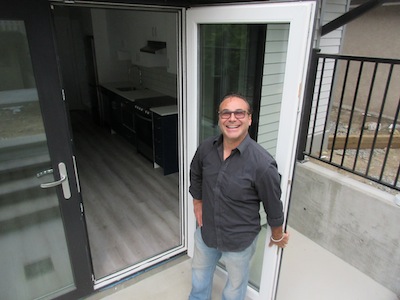
Avie Estrin at Vancouver Yaffa Housing Society’s new laneway house. (photo by Pat Johnson)

Fred Dexall used to live in a group home in Kerrisdale. “I didn’t like it there,” he recalls. “The problem is they were very unfriendly. Everybody [kept] to themselves.”

When the Vancouver Yaffa Housing Society opened the first home for members of the Jewish community with mental health issues, in 2001, Dexall was the first resident. He remains there today.

“I’m happy here,” he said. There is more freedom to do one’s own thing than in the “dictatorial” group home he left, he said. Plus, the residents enjoy a Jewish lifestyle, celebrate the holidays, have Shabbat dinners on Fridays, attend the Bagel Club on Mondays and participate in other aspects of Jewish communal life. Every day, volunteers shuttle kosher meals from the kitchen at the Louis Brier Home and Hospital for Yaffa residents.

“Some of us have other disabilities besides mental illness,” said Drexall. “I have epilepsy and it’s all looked after.”

The organization is in the midst of a significant expansion. The house where Dexall has lived for 17 years is operated by Yaffa under a lease from the Vancouver Resource Society, a nonprofit providing accessible housing to people with disabilities, which owns the home in a quiet south Vancouver residential neighbourhood.

In 2010, Yaffa bought the house next door, welcoming more residents. Now, a sparkling new two-storey laneway house has just been completed behind the second home and renovations are taking place on the two houses to further increase capacity. Yaffa also has five units in a 51-unit building in Dunbar, which offers more intensive 24/7 care for residents. In an agreement with the Coast Foundation, B.C. Housing and the City of Vancouver, Yaffa has perpetual lease of these five spaces in return for funding a kosher kitchen in the facility.

Avie Estrin, the president of the society, is carrying on a family tradition. His parents, Aaron and Tzvia Estrin, were among the founding members of the Vancouver Yaffa Housing Society and Aaron was pivotal in raising the capital to launch the residential facility and purchase the second home. Their collective passion comes from firsthand recognition of the need. Avie Estrin’s brother, Marc, is a resident.

“I think it was front and centre for us because we had the awareness that many people – most people – simply aren’t privy to,” said Avie Estrin. “You see what people go through and the reality is, there was no other option. Remarkably, even though mental illness has been around forever, there was simply nothing in the Vancouver Jewish community to address it. Montreal had Jewish mental health housing facilities, Toronto had facilities. Vancouver had nothing.”

An ad hoc group of families came together to form the Vancouver Yaffa Housing Society, with no organizational support at the outset.

“We had to do something and it was meeting after meeting after meeting in somebody’s private home and, ultimately, they did make it happen,” said Estrin. “Once it got a little bit of momentum, then there was a little bit more attention. It got the ball rolling, but those first few years were very much uphill.”

Now, the facilities house 13 people. With the completed laneway house and upcoming renovations to the unfinished basement in the second house, the organization will welcome five more residents.

With 13 people in the south Vancouver homes, plus five in Dunbar, that makes 18, Estrin noted, “which is chai, which, again, is quite significant to us.”

photo - Avie Estrin outside of Yaffa’s new laneway house
Avie Estrin outside of Yaffa’s new laneway house. (photo by Pat Johnson)

Estrin said that, even with this expansion, the organization is only making a dent in the demand. With a rule of thumb that 10% of the population has a mental illness and half of those are acute, the Vancouver Jewish community, he estimates, probably has about 1,200 people who would meet Yaffa’s criteria for residency, which is based on DSM-IV Axis 1: “Schizophrenia, manic-depressive, things like that,” Estrin said.

He acknowledges the organization’s limits.

“We are doing what little we can,” he said, “and you might say, ‘well, it’s a little,’ but I would respond by saying something is better than nothing.” With the increase in capacity to 18, he reframed his response: “At this point, I would suggest to you that more is better than something.”

One of the other things the renovation project will ameliorate, Estrin hopes, is the gender imbalance. Because the nature of Yaffa House is a collective living model, there have been logistical challenges in mixing genders.

“By happenstance, we’ve become kind of an all-guys facility as things stand right now and it’s not because there are less women out there who are affected. There is an equal number of them,” he said. As the redevelopment continues, plans will incorporate accommodations for women, adjacent to the men’s accommodations, but with added privacy.

To complete the development and to support daily operations, Estrin is making a call for support, not only financial – though he stresses that is most welcome – but also for volunteers who can fill various capacities either as members of the board or in helping out at the homes.

For more information, visit yaffahouse.org.


Format ImagePosted on June 22, 2018July 2, 2018Author Pat JohnsonCategories LocalTags affordability, Avie Estrin, housing, mental health, Yaffa Housing
Record-breaking Courage

Record-breaking Courage

The 2018 Courage to Come Back Award recipients, left to right: Suzanne Venuta (mental health), Josh Dahling (addiction), Ingrid Bates (medical), Jim Ryan (physical rehabilitation) and, in front, Alisa Gil Silvestre (youth). (photo by Norman Tam)

photo - The event was chaired by Lorne Segal, pictured here with his wife, Mélita
The event was chaired by Lorne Segal, pictured here with his wife, Mélita. (photo by Alex Law)

A record $3.1 million was raised at the 20th anniversary Courage to Come Back Awards on May 10 at the Vancouver Convention Centre. The event was chaired by Lorne Segal, president of Kingswood Properties Ltd., and more than 1,800 people gathered to celebrate the extraordinary stories of triumph over adversity of the five awards recipients. Funds raised will go directly to Coast Mental Health to support those living with mental illness.

This year’s recipients were Josh Dahling (addiction), Ingrid Bates (medical), Suzanne Venuta (mental health), Jim Ryan (physical rehabilitation) and Alisa Gil Silvestre (youth). Venuta captured the essence of the evening: “If there’s only one thing you remember from my speech tonight, may it be this: that connections save lives. It did mine. Connections are what hold hope together and hope allows us to dream.” For more inspirational stories, visit couragetocomeback.ca/2018-recipients.

Each year, Coast Mental Health (coastmentalhealth.com) provides services to more than 4,000 people living with mental illness so they can find a meaningful place in their communities – a place to live, a place to connect and a place to work.

Format ImagePosted on June 8, 2018June 6, 2018Author Coast Mental HealthCategories LocalTags Coast Mental Health, Courage to Come Back, fundraising, health, Lorne Segal, mental health, philanthropy
Leading Canadians in environment, music, mental health

Leading Canadians in environment, music, mental health

Liliana Segal with Green Chair Recycling’s 2017 Canada’s Volunteer Award.

Green Chair Recycling, founded by Liliana Segal, was recognized in 2017 as a business leader in British Columbia and the north by Canada’s Volunteer Awards. The awards, given by the Government of Canada, were presented in a ceremony held in Ottawa on Dec. 5, International Volunteer Day, to individuals and businesses across the country who contribute to and strengthen their communities.

The awards booklet noted, “Vancouver-based Green Chair Recycling is helping to keep waste of out landfills one event at a time. They work with their clients to create zero waste events, where 95% of event waste is recycled. They work with over 3,000 volunteers who are green ambassadors to track waste at their events, provide education outreach and give free presentations to any interested group. Their volunteers also run free educational field trips to landfill and recycling facilities to show students the reality of landfills and to learn how recycling happens in their communities.”

* * *

The Centre for Addiction and Mental Health (CAMH) is Canada’s largest mental health and addiction teaching hospital, as well as one of the world’s leading research centres in its field. CAMH Difference Makers – 150 Leading Canadians for Mental Health was a national movement that started in 2017. Its purpose is to encourage people to speak freely about mental illness because CAMH sees how these conversations help break down the stigma that prevents people from getting the care they need.

In April of last year, guided by a national committee of leading experts and advocates, CAMH launched a cross-Canada call for nominations of people influencing change in the area of mental health and giving us new reasons for hope. It invited Canadians to nominate a person with lived experience, a caregiver or family member, a health professional, a researcher, an advocate, a philanthropist – anyone making a difference in small or big ways; in local or international circles; in public or private lives. Nominations were open until July 1, and more than 3,700 names put forward.

Among the 150 selected as Leading Canadians for Mental Health were members of the B.C. Jewish community. In alphabetical order, they were David Granirer, Dr. Gabor Maté and Lorne Segal.

David Granirer

It’s hard to laugh when it seems the entire world is crumbling around you. That is what makes Granirer’s approach to dealing with depression so noteworthy. When he experienced depression as a teenager, Granirer saw his condition as something shameful. Today, he realizes shame is as bad as the illness itself.

As a staff member at the Vancouver Crisis Centre, Granirer began to use humour at work to help trainees get through stressful days. This led to a growing passion for stand-up comedy and to eventually founding Stand Up for Mental Health. The program teaches stand-up comedy to people living with mental illness to help them build confidence and break down stigma. Through Stand Up’s 500 shows so far – performed to mental health organizations, government, corporations, the military, schools and correctional facilities – Granirer has helped thousands see mental health in a different light. Through his unique program, Granirer helps people understand not only do we need to shed shame, but that a smile, a laugh and happiness can exist alongside the challenges of mental illness.

Dr. Gabor Maté

When Maté retired from medicine, he turned from using his insights on addiction, early childhood development and trauma to support society’s most marginalized, to inviting growing audiences in Canada and around the world into new dialogues on compassion. He is internationally known for his work on the mind/body unity in health and illness, on attention deficit disorder and other childhood developmental issues, and his breakthrough analysis of addiction as a psychophysiological response to childhood trauma and emotional loss. He is the author of four best-selling books published in 20 languages on five continents, including When the Body Says No: Exploring the Stress-Disease Connection and the award-winning In the Realm of Hungry Ghosts: Close Encounters With Addiction. His TED talks, YouTube videos and international speeches have helped focus attention on the mental health and trauma issues that underlie addiction. Maté shows humility and compassion, giving a sense of hope that, in a world where many people are shut down, defensive and fearful, there is a guiding light ahead and a new world of possibility.

Lorne Segal

Segal, a business leader and philanthropist, has been involved with Coast Mental Health’s Courage to Come Back Awards since their inception in 1998. At that time, the stigma surrounding mental illness was even more of a barrier to public engagement than it is today. During his almost two decades with the awards, including serving as chair for the past 12 years, he has helped transform the event into one of British Columbia’s premier mental health campaigns. Under Segal’s tenure, the number of guests has tripled to 1,500, with the awards also reaching more than a million people through television, print and other media. Segal has been instrumental in inspiring more than $15 million in support for mental health programs such as housing, employment and other support services to more than 4,000 people annually living with mental illness. His decision to start supporting the event at a time when mental health wasn’t popular was quite simple. He saw an issue that affected many and wanted to do something about it. Not only has he been successful in this, he has helped spread greater awareness and support for mental health in British Columbia.

* * *

image - Ruckus CD coverToronto-based band Beyond the Pale’s latest CD, Ruckus, reviewed in the Jewish Independent Sept. 15, 2017, was nominated for two Canadian Folk Music Awards last year, for World Music Group of the Year and Instrumental Group of the Year. While the band didn’t win a 2017 award, it has been nominated now for eight CFMA honours, and won four.

“Six of the 12 songs on Ruckus are originals, while the others are arrangements of traditional melodies,” noted the JI’s review (jewishindependent.ca/the-complexities-of-ruckus). “All of the musicians either composed an original piece or participated in the arranging. They are a tight ensemble who play around with tempo and style with such ease that the complexity of what they’ve created isn’t what you’ll first notice. And that’s what makes their music so good.”

Format ImagePosted on January 26, 2018January 24, 2018Author Community members/organizationsCategories NationalTags Beyond the Pale, David Granirer, Gabor Maté, Green Chair Recycling, Liliana Segal, Lorne Segal, mental health, music

Looking for nominees … the nominated and the winners

The Centre for Judaism of the Lower Fraser Valley is looking for nominations for its annual Lamplighter Award, which honours a young person who has performed an outstanding act of community service.

Candidates must be between the ages of 6 and 18 and submission of potential recipients must include two references describing the child’s community service. The chosen lamplighter will receive the award during Chanukah at an evening ceremony at Semiahmoo Shopping Centre.

“Chanukah celebrates the victory of light over darkness and goodness over evil,” said Simie Schtroks. “This is a most appropriate opportunity to motivate and inspire young people to make this world a brighter and better place. By filling the world with goodness and kindness, that light can dispel all sorts of darkness.”

To nominate a candidate for the award, contact Schtroks as soon as possible at [email protected].

* * *

This summer, David Granirer received a Meritorious Service Medal from the Governor General of Canada. The award recognizes a deed or activity that has been performed in a highly professional manner, or according to a very high standard: often innovative, this deed or activity sets an example for others to follow, improves the quality of life of a community and brings benefit or honour to Canada.

Granirer is a counselor, stand-up comic and mental health keynote speaker. Granirer, who himself has depression, has taught stand-up comedy to recovering addicts and cancer patients, and founded Stand Up for Mental Health, a program teaching comedy to people with mental health issues, in 2004. He has trained Stand Up for Mental Health groups in partnership with various mental health organizations in more than 50 cities in Canada, the United States and Australia. His work on mental health is featured by media worldwide and has garnered several awards.

Granirer also teaches Stand-Up Comedy Clinic at Langara College, and many of his students have gone on to become professional comics.

* * *

This year’s Mayor’s Arts Award for Community Engaged Arts went to Earle Peach. A singer, songwriter, composer, conductor, arranger, teacher and performer, Peach leads four choirs in the city and hosts a monthly community coffee house in Mount Pleasant. He teaches privately, and records musicians for demos and albums. He performs with Barbara Jackson as a duo called Songtree and also has a band called Illiteratty.

The emerging artist honour went to Ariel Martz-Oberlander, a theatre artist, writer and teacher. As a Jewish settler on Coast Salish territories with diasporic and refugee ancestry, her practice is rooted in a commitment to place-based accountability through decolonizing and solidarity work. She divides her time between theatre and community organizing, and specializing in creative protest tactics on land and water.

Martz-Oberlander is a facilitator with the True Voice Theatre Project, producing new shows by residents of the Downtown Eastside and vulnerably housed youth, in collaboration with the Gathering Place and Covenant House. Her most recent work, created with support from the LEAP program, won a research and development prize from the Arts Club. Martz-Oberlander is also the associate producer for Vines Festival, presenting accessible, free eco-art in Vancouver parks. Good art is accountable to the community, raises up voices rarely heard and is vital to repairing our world.

* * *

On Oct. 3, the Koffler Centre of the Arts announced the four winners of the 2017 Vine Awards for Canadian Jewish Literature, all of whom were on hand at the award luncheon at the Park Hyatt Hotel in Toronto.

Winners in two of the categories are based in Vancouver. Miriam Libicki won the non-fiction award for Toward a Hot Jew (Fantagraphics Books Inc.), which the jury described as, “An admirably complicated response to being a woman and a Jew in our time, a thrilling combination of memoir, journalism and art.” And Irene N. Watts and Kathryn E. Shoemaker took the prize in the children’s/young adult category for Seeking Refuge (Tradewind Books), which the jury described as, “A superb graphic novel dramatizing the Kindertransport, a powerful story enhanced by firsthand experience and beautiful black-and-white illustrations.”

The other winners were Peter Behrens’ Carry Me (House of Anansi Press) for fiction and Matti Friedman’s Pumpkinflowers (McClelland & Stewart) for history.

The history shortlist included Max Eisen’s By Chance Alone (Harper Collins Publishers) and Ester Reiter’s A Future Without Hate or Need: The Promise of the Jewish Left in Canada (Between the Lines). Runners-up in the fiction category were Eric Beck Rubin’s School of Velocity (Doubleday Canada) and Danila Botha’s For All the Men (and Some of the Women) I’ve Known (Tightrope Books). In non-fiction, Sarah Barmak’s Closer: Notes from the Orgasmic Frontier of Female Sexuality (Coach House Books), Judy Batalion’s White Walls (Berkley/Penguin Random House) and David Leach’s Chasing Utopia (ECW Press) were runners-up, while Deborah Kerbel’s Feathered (Kids Can Press) and Tilar Mazzeo and Mary Farrell’s Irena’s Children (Margaret K. McElderry Books) were on the children’s/young adult short list.

* * *

In September 2017, local community member Dr. Arthur Wolak was elected for a three-year term to the board of governors of Gratz College, a private liberal arts college in suburban Philadelphia. Founded in 1895, Gratz is the oldest independent and pluralistic college for Jewish studies in North America. Accredited by the Middle States Commission on Higher Education, Gratz is also recognized by Israel’s Ministry of Education and Culture. Through its undergraduate and graduate programs, Gratz educates students to become effective educators, administrators and community leaders.

Posted on October 27, 2017October 25, 2017Author Community members/organizationsCategories LocalTags activism, Ariel Martz-Oberlander, Arthur Wolak, books, Centre for Judaism, David Granirer, Earle Peach, Gratz College, Irene Watts, Kathryn Shoemaker, Lamplighter Award, Mayor’s Arts Award, mental health, Meritorious Service, Miriam Libicki, Simie Schtroks, tikkun olam, Vine Awards
Magic to amaze and educate

Magic to amaze and educate

Partial proceeds of Randy Charach’s Oct. 14 show at the Rothstein will be donated to the Canadian Mental Health Association. (photo from Randy Charach)

Anyone who has seen Randy Charach perform will swear he can read people’s minds. He certainly is attuned and sensitive to his audience, and those brave and lucky enough to become part of his high-energy, humour-filled show, which he will be bringing to the Rothstein Theatre Oct. 14, at 7 and 9 p.m.

“It has been five years since I’ve done a public show in Vancouver,” Charach told the Independent. “Most of my work is in the United States, as a corporate speaker and entertainer. The performances I’ll be doing at the Rothstein Theatre on Oct. 14th is my newest show. I’ll be blending my life’s work as a comedian, mentalist, magician and hypnotist. I’m looking forward to providing a memorable experience for my Vancouver audience.”

According to the press material, Charach has been entertaining people since he was 5 years old, “inspired by his uncle, a Las Vegas magician.” He has performed around the world, including on major television networks and even in film. A certified practitioner of neuro-linguistic programming and a certified hypnotist, Charach invites people to join him on stage: “As the excitement grows, the crowd watches in amazement as other audience members enter a hypnotic state and become stars of the show.”

“I love to amaze people,” said Charach about what he enjoys most about performing. “The art of magic has been a passion since childhood, and something I see as analogous to life. As a society, we constantly thrive to have our expectations met. When we are surprised, delighted and amazed, we often become elated. This feeling occurs in performance, in personal interactions and in business. When we surprise people, we become memorable.

“I write of this in my latest business growth book on Amazon, Client Centric,” he said. “I teach it in the book and at my corporate presentations, All Business is Show Business and All Life is Show Business. When we continue to amaze others by exceeding their expectations, it’s not magic, but it works like magic. This is an example of how art imitates life and my analogy of how magic is present in all our lives.

“Performing magic has evolved for me to the point where I have taken my interpretation of the art to a new level. While on stage, I am in a heightened state of consciousness, which I am unable to replicate any other way. Magic is present in every aspect of my life, and it pleases me to share it during my performances.”

Despite this love of entertaining, Charach said there were years when he didn’t perform at all.

“My decision to return to the stage,” he said, “was made at a group event hosted by Rabbi Yechiel Baitelman of Chabad in Richmond. The rabbi stated we must share our talent with others. It was at that moment I looked at my wife Chana and said I would be performing again. I suppose it’s in my blood. Entertaining and educating is part of my life’s purpose.”

Partial proceeds of the Oct. 14 show will be donated to the Canadian Mental Health Association.

“Mental illness is prevalent in our society, and I don’t feel this condition receives the attention it requires,” said Charach. “I’ve personally dealt with depression over the years, and am aware I am not alone. I do my best to raise awareness and plan to do more. I hope the stereotypes, prejudice and discrimination stop.”

For more information, videos and to reserve your seats at one (or both) of the Oct. 14 shows at the Rothstein, visit randytickets.com or call 1-800-838-3006. Tickets are $36 (plus service charge).

Format ImagePosted on October 6, 2017October 5, 2017Author Cynthia RamsayCategories Performing ArtsTags CMHA, magician, mental health, Randy Charach, tikkun olam

Posts pagination

Previous page Page 1 … Page 7 Page 8 Page 9 Page 10 Next page
Proudly powered by WordPress