Skip to content
  • Home
  • Subscribe / donate
  • Events calendar
  • Business Directory
  • FAQ
  • News
    • Local
    • National
    • Israel
    • World
    • עניין בחדשות
      A roundup of news in Canada and further afield, in Hebrew.
  • Opinion
    • From the JI
    • Op-Ed
  • Arts & Culture
    • Performing Arts
    • Music
    • Books
    • Visual Arts
    • TV & Film
  • Life
    • Celebrating the Holidays
    • Travel
    • The Daily Snooze
      Cartoons by Jacob Samuel
    • Mystery Photo
      Help the JI and JMABC fill in the gaps in our archives.
  • Community Links
    • Organizations, Etc.
    • Other News Sources & Blogs
  • JI Chai Celebration
  • JI@88! video

Recent Posts

  • Federation now across BC
  • Israel fighting for its existence
  • Deal strengthens Iran
  • Patriotic belonging diminishes
  • A campaign to engage
  • Upstanders’ first live event
  • Responding to Carney
  • Having your own home
  • Music a family tradition
  • Musical to warm heart
  • Community milestones … June 2026
  • Sharing her passion for Israel
  • Or Shalom reopens its doors
  • JFS from past to future
  • Need holistic approach
  • Sharing stories, advice
  • Journalist shares fears
  • Skills to live together
  • Road to independence
  • Cutting grass with scissors
  • Zionism as a solution
  • Deceit, desire & the divine
  • Reclaiming sacredness
  • Creative project ideas
  • Summer squares and cobbler
  • Thou shalt … summer commandments
  • Legal help for students
  • Revisiting myth of Lilith
  • Wrong person rebuked
  • Canada’s mixed messages
  • Questions for museum
  • Symposium on antizionism
  • Making soccer political
  • CJPAC lauds Pulver’s impact
  • City recognizes Vrba’s legacy  
  • Organ donation saves lives

Archives

Follow @JewishIndie
image - CJN box ad Rockowers 2026

Tag: memoir

Running in the human race

I am still running in this race. For those of us who are older, it seems to take much of our strength to show up every morning and run the course. It seemed easier when we were younger, full of the energy of youth. We have forgotten what it was like when we were discovering who we were, who we were going to be. Surely, that was a struggle, even if it was a different one than we face today as older people.

There are mysterious things about this race. Who are the winners? What does winning mean? The rewards don’t necessarily go to those who arrive soonest at the finish line. Maybe it is more like a relay race, in a family sense. Lots to think about.

I have a grandson, more than one, in fact. All of them are fully engaged in finding their way in the foot race in which all of us living on this planet are engaged. As are my granddaughters. Seeing the challenges they face, the stories they tell me about what they are doing and what they are planning, bring memories of my own beginnings. I see how competitive the world they are inhabiting is. I see how some of them are so conscious that their every move, every decision they make, everything they do, right or wrong, is recorded, and will affect their future possibilities. These children, in their mid-teens and early 20s, are struggling with perspectives we did not awake to until we were 10 or 15 years older. How about that kind of pressure!

I think of the path I have followed, growing up in Winnipeg, moving away to make my fortune, seeking to put my own personal mark on the journey I was taking. I was so determined that I had to be the only architect of the life I was building. Was I foolish not to be a seeker of advice? I threw myself recklessly into that life, confident that, come what may, I could overcome any obstacle to my desires that might appear in my path.

I never worried about missteps. I never worried about making wrong decisions. My life was a tabula rasa, a blank slate to be shaped as I wished. Of course, my grandchildren probably think that whatever they are doing is right, too. Many of the decisions we make in the days of our beginnings have a dramatic impact on our future.

I am not complaining. I have had a glorious life. I may not have realized all the potentialities – I have not conquered like an Alexander, created language like a Shakespeare, envisaged shapes like a Moore, painted visions like a Picasso. But, like most of us, I have delivered some blessings for my fellow human beings, and I am content.

I have seen the mountains of America, Europe and Africa, and their valleys. The waters of Canada and Brazil have roared before my eyes, and in my ears. I have had a good share of the delightful places and times the world has to offer. And I had the chance to spend some of my life with the woman of my dreams.

On my travels, during the race I have run, I have learned how fortunate we are, and what real misery is. I know what the view from Dublin is like, and have witnessed the views from New York, Washington, London, Paris, Rome, Johannesburg, Cape Town, Hong Kong, Singapore, Sydney, Khartoum, Cairo, Vientiane, Bangkok, Dakar, Ougadougou, Buenos Aires and Rio de Janeiro. These were some of the places I lived in and visited.

Like many of us, I did not make the most of my potentialities as a consequence of my decisions. One day, I heard Neil Young say, in a television interview with Charlie Rose, that our pasts are like an overcoat. When we put the coat on, it tells the world who we are. Or the world chooses to see us as we appear wearing the overcoat of our past.

Sometimes, we wish we could shed our past and take a new direction. I’ll tell you a secret. We don’t need to do that. We can be new people any day we choose. The past we wear like an overcoat, that we have the choice of shedding, can inform the choices we want to make, but it doesn’t have to limit who we are today, and will be tomorrow.

I am not the economist that I was, the manager of people that I was, the public relations speaker and writer that I was, the researcher and marketing consultant that I was, the real estate broker, the financial advisor, the whatever I had to be. Now, in beautiful Vancouver, I write stories and poetry. I have played with clay until the faces jumped out at me. I meddle in the stock market. I try to talk to my kids often. I try to be present for my Bride. We try to make our home a friendly place.

Today, I try to be a better husband, a better friend, a better parent; some things, perhaps, that were lacking quality in my past. I am still running the race. It is sometimes a little tiring, and I have to exercise to build my stamina – but I hope to run it well, right to the end. 

Max Roytenberg is a Vancouver-based poet, writer and blogger. His book Hero in My Own Eyes: Tripping a Life Fantastic is available from Amazon and other online booksellers.
Posted on November 8, 2024November 7, 2024Author Max RoytenbergCategories Op-EdTags family, generations, history, lifestyle, memoir, reflection
Who holds power over you?

Who holds power over you?

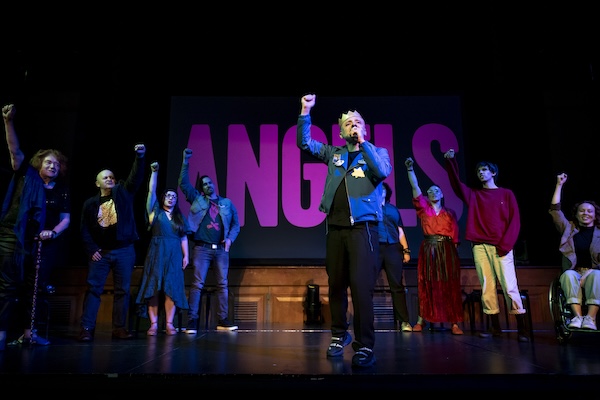
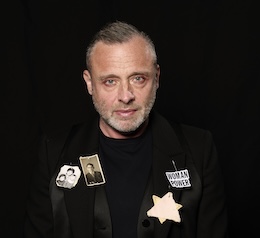
Jeremy Goldstein, centre, and volunteer participants in the Newcastle, Australia, performance of Truth to Power Café earlier this month. Members of the Vancouver community will participate in the event here on Nov. 3. (photo by Cassandra Hannagan)

“Who has power over you and what do you want to say to them?” This is the question at the centre of Jeremy Goldstein’s Truth to Power Café, which he will present – with the help of local community members – Nov. 3 at the Rothstein Theatre as part of the Chutzpah! Festival.

“As with all our events, we invite participants to sign up to the project through a combination of open call and personal invites, which we send out in close collaboration with our presenter, who, in this case, is the wonderful Chutzpah! Festival,” explained Goldstein. “We don’t normally confirm the line-up until a week or two before the performance, so it’s a little early to say what people will speak about, but we’re looking for Vancouverites willing to engage in a process of compassionate truth-telling. When we combine this with my own memoir, told through poetry, image, film and music, it makes for fantastic theatre.”

The deadline was earlier this week for local community members of all ages, experiences and backgrounds to apply to be a part of the event. Selected participants will present a short monologue related to the question of who has power over them and what they want to say to that person, whoever it may be, a parent, sibling, boss, politician, neighbour, friend. In a 2022 Total Theatre Magazine article, Goldstein wrote, “Participants’ voices are heard and understood through the political and philosophical beliefs of Harold Pinter and his Hackney Gang.”

“Nobel Prize-winning playwright Harold Pinter wrote about power and occupation. His inner circle, the Hackney Gang, were a group of working-class lads who met in 1947,” Goldstein explained to the Independent. “They knocked about London’s East End in the 1950s, where they took on the bullies and fought with antisemitic fascists. The gang included my late father, Mick Goldstein, and the late poet/actor Henry Woolf, who became known as the ‘King of the Avant Garde,’ and with whom I co-created the show directed by Jen Heyes.

“For 60 years, the Hackney Gang held firm in their belief of an independent media and in speaking their truth to power,” said Goldstein. “They remained on the side of the occupied and the disempowered and their allies. These are the people we invite to appear in the show with me.

“Ultimately,” he added, “the show has become a love letter to the memory of my father Mick, and his friends of 60 years, Henry Woolf and Harold Pinter.”

Goldstein started Truth to Power Café eight years ago.

“Back in 2016, I was presenting New York’s queen of the underground and former Andy Warhol Factory superstar Penny Arcade at Soho Theatre in London,” he said. “I wanted to stage a pre-show event so I opened up my address book and invited 24 Londoners to respond to the question, ‘Who has power over you, and what do you want to say to them?’ Over four nights, I saw the theatre come alive with raw and compassionate truth-telling and was compelled to make a show out of it.”

But there were unexpected challenges.

photo - Jeremy Goldstein brings his Truth to Power Café to the Chutzpah! Festival Nov. 3
Jeremy Goldstein brings his Truth to Power Café to the Chutzpah! Festival Nov. 3. (photo by Cassandra Hannagan)

“Two weeks before the first night, my face became numb and the doctors told me I had a stage 4 lymphoma,” shared Goldstein. “At the time, I didn’t know if I would live, let alone make it to the Soho Theatre performances. Eighteen months and a stem cell transplant later, I was cured and premièred the show at Festival 18, the arts and culture program for the Gold Coast Commonwealth Games in Australia.

“I’ve been on the road with it ever since, playing everywhere from poor working-class mining communities in the north of England to remote townships in the Australian outback to Queer Zagreb in Croatia and on to Lincoln Centre in New York – Truth to Power Café is a genuine global hit.”

Since it began, the show has had some 800 diverse participants taking part in eight countries.

“Some participants are established writers, artists and community activists, whereas others have never spoken up in public before, let alone centre-stage, under lights in their local theatre, sharing intensely personal life stories in front of their friends and family,” said Goldstein. “I’ve become a vessel through which these stories are told. It’s a very privileged position to be in and I don’t take it for granted. I want people taking part to have a positive experience, so I’m very aware of people’s well-being as part of the process leading up to each performance, and into the show itself. I check in with everyone after the show. Many of our participants have become my friends.”

He is well aware of how confronting power can put a person in a vulnerable position.

“The basic rule in life is don’t rock the boat or to tell a white lie to keep the peace, so whether you choose to speak from the personal, political, professional or even all three, speaking truth to power can put you at risk,” he said. “We, therefore, make the show in a safe space or, in the words of one our recent participants, Ed Wright: ‘To talk truth to power, to find our own power, we need to be able to feel safe. To have our power returned to us when it has gone missing, we need to know we have been listened to.’”

The question being asked – “Who has power over you and what do you want to say to them?” – is meant to challenge ideas of power and give voice to people who don’t normally have a chance to speak out, said Goldstein.

“People from marginalized communities tend to talk about progressive change, whereas those with privilege and power want to maintain the status quo and have more power,” he said. “We live in the post-truth age of the demagogue, where fake news is the new norm. In politics, the oppressed often have to fight for the right to simply say what they are experiencing and, in personal relationships, that artificial barrier is also in place. If you have an approach to allowing the conversation to happen, the chances of change occurring are much higher.”

The Nov. 3 Chutzpah! show is Truth to Power Café’s Canadian première and its 60th performance.

“It’s extremely rare to have two significant milestones back-to-back,” said Goldstein, “so I can’t wait to celebrate this with the good people of Vancouver.”

Chutzpah! runs Nov. 1-10. For the full lineup and tickets, visit chutzpahfestival.com or call 604-257-5145. 

New this year for the Chutzpah! Festival: Jewish Community Centre of Greater Vancouver members receive discounted ticket prices and concession purchases at the theatre. Select Student/Senior/JCC Member tickets and ChutzPacks and bring your membership card to the theatre.

Format ImagePosted on October 11, 2024October 9, 2024Author Cynthia RamsayCategories Performing ArtsTags Chutzpah!, Chutzpah! Festival, memoir, storytelling, Truth to Power Café

Virtuoso musician, impresario

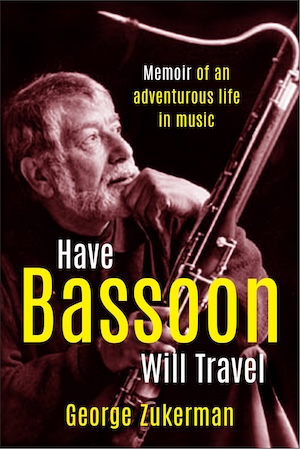
The reasons why Wendy Atkinson, who owns Ronsdale Press, wanted to publish Have Bassoon Will Travel: Memoir of an Adventurous Life in Music by the late George Zukerman, are the reasons people should read it. Zukerman had a long and impressive solo career as a bassoonist, was a pioneer in organizing concerts and tours, and gave remote communities across Canada the rare chance to hear classical music performed live. 

“She recognized that his anecdotes capture a vital period in Canada’s musical history and are vivid reminders of the lengths musicians will go to tour our vast country,” reads the afterword. “George’s memoirs go beyond simply capturing a life. He expanded the cultural reach of classical music in Canada; no small feat and Canada is better for it.”

image - Have Bassoon Will Travel book coverHow Zukerman’s memoir came to be is an example of the communities he created in his life. When he died Feb. 1, 2023, in White Rock, the manuscript had been written, but it took several volunteers – each with their own connections – to bring it to publication quality and get it printed. After reading Have Bassoon Will Travel, you will know why they did it. Not only was Zukerman a world-class musician and impresario, but he was a world-class human being: humble, funny, innovative, hardworking, fairness-driven, adventuresome, the list goes on.

Zukerman was born in London, England, on Feb. 22, 1927. Well into the book he talks about how he never liked his name, George – his parents, both American citizens living abroad, named him after the United States’ first president, George Washington. His middle name, Benedict, was in honour of 17th-century Jewish philosopher Baruch (Benedict) Spinoza, who was expelled by his community for his ideas. Zukerman also discusses his surname, the spelling of which differs across family thanks to the North American melting pot. There is something to be said about living up to one’s name, and Zukerman certainly was a leader in his fields of music, both as performer and impresario; he certainly forged his own path, uplifting the place of the bassoon in the orchestral world, creating opportunities for fellow musicians to perform and bringing classical music to the remotest of areas; and he lived in several places and traveled, mostly for work, around the world.

It is incredible how much of life is directed by (seeming) happenstance. Zukerman’s first encounter with the bassoon was at 11-and-a-half years of age. It was an accidental meeting, as his older brother showed him around the London prep school Zukerman was about to attend.

“We wandered past the windows of a basement chapel and glanced down to where an orchestra was rehearsing,” writes Zukerman. “A row of tall pipes seemed to reach for the ceiling. I could see and hear very little through the moss-covered stone walls and grimy opaque windows of the old school, and I wondered what on earth these strange-looking instruments were. My brother, already in Form IV, authority on much, including most musical matters, declared them to be bassoons, and the piece in rehearsal the annual Messiah. We walked on to explore my new school, and any awareness that I would spend my life playing that instrument would have been uncannily prescient. The bassoon remained buried deep among early memories.”

His next encounter was as random. As the Second World War began, the family – less Zukerman’s journalist father, who joined later – left London for New York City. There, Zukerman attended the newly established High School of Music and Art. 

“By way of an audition,” he shares, “I played [on the piano] my one and only party piece (a simple Beethoven sonatina). To my surprise as much as anyone else’s, I was admitted to the class of 1940! Dare I suspect that my acceptance had as much to do with short pants and an English accent as with any evident musical skill?”

On the first day of school, the kids were told to pick an instrument. “No British prep school could have readied me for such democratic and independent action, so I hesitated,” writes Zukerman. “On all sides of me, the pushy American kids ran furiously and grasped what they could most easily identify. The violins, clarinets, flutes, trumpets, cellos and drums disappeared into groping hands. When I finally reached the shelf, all that remained was an anonymous black box. I lifted it gently and carried it toward a teacher standing nearby. ‘Excuse me, Sir,’ I asked timidly, ‘but what is this?’

“He looked down, and a broad smile covered his face. ‘Why, you are our bassoonist!’ he declared.”

With faint remembrance of the tour with his brother, he thought, “Was I now going to play such an instrument?”

Indeed, he was, and to eventual great acclaim, both as part of orchestras and as a soloist. But, as you can imagine, bassoonist was not exactly a living-wage career, at least not in Zukerman’s time, and his parallel career arose from a need for more work. Having learned during his time with the St. Louis Sinfonietta in the 1940s about community concerts – where money was raised in advance through subscriptions rather than individual ticket sales, and no contracts were signed until the money to pay for everything had been raised – Zukerman, who was by then living in Vancouver, brought the idea to Canada. His offer to an American company to be their representative here declined, Zukerman decided to do it on his own. 

“Canada was coming of age, and Canadian communities were ready to make their own concert plans and to welcome Canadian groups and soloists, even if at the time they were equally unknown,” he writes. “Within a decade, Maclean’s magazine would write that I had successfully outsmarted the Americans at their own game.”

It is fascinating to read of Zukerman’s efforts to expand the reach of classical music in Canada and other countries – he visited the Soviet Union eight times between 1971 and 1992, as performer and concert organizer, and brought Soviet musicians to Canada to tour. Decades earlier, he spent a year-plus in Israel, part of the nascent Israel Philharmonic. He was also part of the Vancouver Symphony Orchestra in its early days, and of the Vancouver Jewish community – Abe Arnold, publisher of the Jewish Independent’s predecessor, the Jewish Western Bulletin, had a small but notable impact on Zukerman’s life.

Have Bassoon Will Travel is a truly engaging read. The way in which Zukerman writes is like how he would have spoken, though likely more concise and organized. The effect is that we the reader are having a chat with him, reminiscing. We get a feel for what life was like back in the day for a musician and entrepreneur. We feel nostalgia for a time many of us never experienced personally.

Posted on October 11, 2024October 10, 2024Author Cynthia RamsayCategories BooksTags autobiography, bassoon, business, entrepreneurship, George Zukerman, history, impresario, Israel Philharmonic, memoir, music, travel, Vancouver Symphony Orchestra

A harrowing survival story

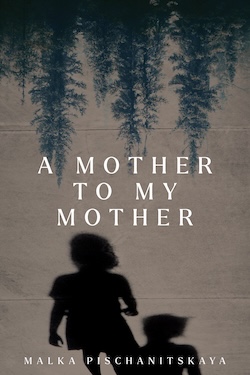
Almost every Holocaust survivor’s narrative involves some combination of extraordinary coincidence, righteous humanity amid dystopia or a series of chance events that astonishingly result in survival against all odds. The number of such flukes in the life of Vancouver woman Malka Pischanitskaya may convince readers of the author’s conclusion that survival was her destiny.

image - A Mother to My Mother book coverPischanitskaya’s memoir, A Mother to My Mother, is one of the latest releases in the Azrieli Foundation’s Holocaust Survivor Memoirs Program. Begun in 2005, the program has now published scores of firsthand testimonies of Canadian Holocaust survivors, many in both official languages, and all of them available free of charge to educational institutions.

Pischanitskaya’s Ukrainian Jewish family knew its share of misery before the emergence of Nazism and war. Her father abandoned her mother before Malka was born, in 1931, and she was raised in grinding poverty by her grandmother and great-aunt while her mother worked in a nearby village and saw Malka some weekends. 

The Stalinist-induced Ukrainian famine of the 1930s killed between three and five million people. The Nazi invasion of the Soviet Union, and its perpetration of the “Holocaust by bullets,” killed 1.5 million Jews, mostly shot at close range and buried in mass graves.

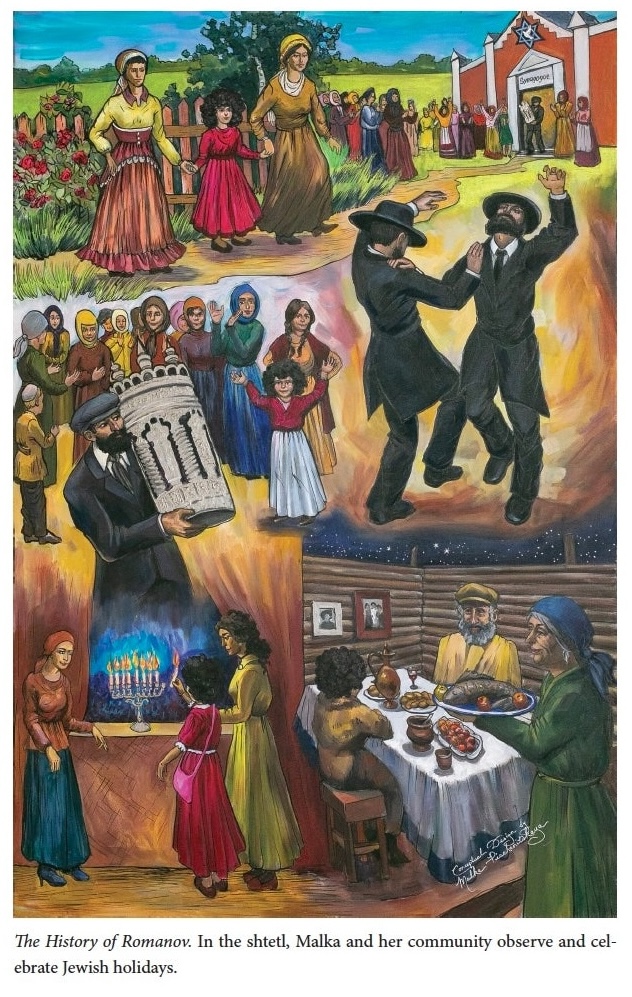
Young Malka’s earliest life, despite hardships, was not without happy memories of Jewish holidays and the changing of the seasons. These are tempered with stark recollections. Without electricity or anything but firewood for heat, she recalls Ukrainian winters so cold the ink at school would freeze solid.

image - A page from Malka Pischanitskaya’s memoir A Mother to My Mother, which includes paintings that she created for a 2019 exhibition
A page from Malka Pischanitskaya’s memoir A Mother to My Mother, which includes paintings that she created for a 2019 exhibition.

After the Nazi invasion of Poland and the beginning of the war, in 1939, five refugee families from Poland arrived in Romaniv (alternatively: Romanov). 

“I have often wondered how much my community found out from these refugee families about what was happening under the Nazis in Poland and whether this made them more aware of the disaster that was to come,” writes Pischanitskaya. 

What was to come was beyond imagining – which may help explain why Malka and her family remained in Romaniv when some other Jews fled further east into the Soviet Union.

“We were not ready – there had been no mental preparation for this moment – so we did not accept the offers to escape,” she writes.

Soon, the Nazis arrived and young Malka witnessed Jews being killed in the streets. The randomness of those murders was replaced with methodical mass executions. The story, starkly told, is predictably shocking, and differs significantly from what happened further west. Rather than ghettos and concentration camps, the Holocaust in the east was typified by summary roundups and mass killings of entire communities, usually in adjacent forests. 

On Aug. 25, 1941, Ukrainian police gave Romaniv’s Jews 30 minutes to congregate in the centre of town.

“Those who were unable to walk had been taken out of their homes on stretchers,” she writes, disabusing Jews of the desperate idea they were being assembled to perform forced labour.

“We walked toward the beautiful park located a couple kilometres from the centre of town,” writes Pischanitskaya. “The crowd of close to 2,000 walked with visible sadness, expressions of disbelief.

“Men were rounded up, separated from their families, and then marched deeper into the forest where, previously, pits both massive and deep, had been dug. Women, children and the elderly were forced into rooms in the military building. Crowded in, there was hardly space to stand. Windows were locked. No fresh air; no water; no washrooms. People screamed, fainted, losing their minds; children were scared and restless.

“One by one, several groups of Jewish people were taken to slaughter. While we were kept in the building, waiting our turns, the heavy ring of machine gun fire instilled extreme fear and terror in all. The slaughter of the Jews from the Romaniv community continued from early morning until dusk – the sun had faded from our lives forever.” 

Then: the first of the miracles that spared the life of Malka and her mother.

“Eventually, mothers with children were let go from the building,” she writes. “Perhaps the murderers were tired from their orgy of death and torture, or perhaps there was no room in the pits for the rest of us, but those who had to remain were slaughtered. We left them, still alive, when we had the chance to run for our lives.”

Here, Pischanitskaya catalogues the names of the many family members killed that day. She goes into grim detail about what witnesses reported from the pits.

Thus began years of hiding – and a succession of near-misses, any one of which would likely have been fatal.

The relationship that gives the book its title, of young Malka mothering her mother, is a story of a parent so paralyzed by events that she becomes almost incapacitated. Malka’s astonishing and perilous actions to ensure their survival form the bulk of the book. She begs door to door in the villages where they hide, often receiving small portions of food. At one home, she sees her own portrait on the wall, apparently pillaged from Malka’s family home after they fled – an uncanny and grotesque coincidence.

When, after the war, they returned to Romaniv, “Almost nothing remained except for memories.”

“Adult survivors went to the mass graves to pray for and memorialize their loved ones, and to bear witness,” writes Pischanitskaya. 

Of all the people who survived and showed up alive after the war was Malka’s “so-called father,” as she calls him, a man whose sadistic cruelty Malka and her mother would have been better off without.

In a twist, the mother who had been “a dependent child” transformed into a courageous woman who pursued Polish and Ukrainian police for war crimes.

Like so many survivors, Pischanitskaya demonstrated improbable resilience, marrying, becoming a teacher, becoming a mother, escaping the Soviet Union, migrating to Canada and raising a successful family that continues to contribute to Vancouver’s Jewish and broader community. 

A Mother to My Mother is illustrated with harrowing, moving paintings that Pischanitskaya created for an exhibition titled Romanov: A Vanished Shtetl, which was presented at the conference of the World Federation of Jewish Child Survivors of the Holocaust and their Descendants, held in 2019 in Vancouver.

To order a copy of A Mother to My Mother in print or ebook format, or any other survivor memoir, visit memoirs.azrielifoundation.org.

Posted on September 20, 2024September 18, 2024Author Pat JohnsonCategories BooksTags A Mother to My Mother, art, Azrieli Foundation, history, Holocaust, Malka Pischanitskaya, memoir, painting, Ukraine

Pinsky pens family memoir

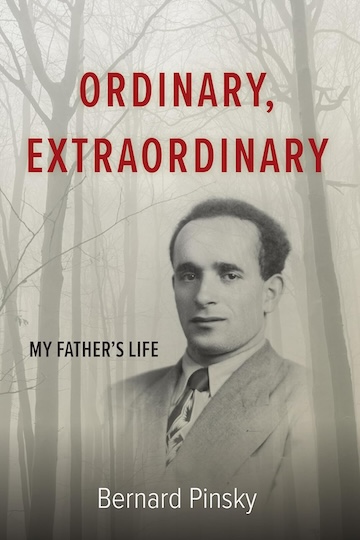
In his ambiguously titled book Ordinary, Extraordinary: My Father’s Life, Vancouver lawyer and community leader Bernard Pinsky shares the biography of Rubin Pinsky. As the pages turn, the reader realizes that ordinariness and extraordinariness really do describe the tale of a life that veers from historically monumental to surprisingly, and gratefully, commonplace. 

image - Ordinary, Extraordinary book coverAt 1 p.m., Jan. 28, Pinsky will officially launch the book, in honour of International Holocaust Remembrance Day, at a prologue event to the Cherie Smith JCC Jewish Book Festival. He will present in conversation with Marsha Lederman.

Pinsky’s book is based on videotaped testimonies that his father, Rubin, gave in 1983 and 1990 to the Vancouver Holocaust Education Centre (which is co-presenting the Jan. 28 event), as well as family memories and what is clearly intensive research.

Rubin was born (probably) in 1924, about 100 kilometres north of Pinsk in what is now Belarus but was then Poland. Pinsky sets the stage beautifully, evoking shtetl life, where the smallest of the children slept atop the bakery oven in the tiny home after his father, Baruch, had baked challah and cakes during the day to eke out a meagre living.

After the German occupation, the Nazis quickly identified the men in the Jewish community who had leadership qualities and said they were needed for an important mission in a nearby area. They were marched just out of earshot and mass murdered. In a later selection, Baruch, his wife Henya and 10-year-old Rachel were marched off and never seen again.

Rubin and his sister Chasia were deemed useful for forced labour and spared the executions. Older brother Herzl had earlier been conscripted into the Red Army.

Every survivor narrative includes a series of unimaginable interventions, coincidences and happenstances, often made possible by acts of incredible daring by the survivor. Through a series of audacious escapades – they weighed off what appeared to be likelihood of certain death with the faint hope of survival – Rubin, Chasia and a few others escaped a selection process and fled to the forest. They lived off berries, roots, tree bark and what small game they could capture. In one instance, Rubin slew a timber wolf in a competition for the same rabbit. 

The group connected with a diffuse but apparently well-organized network of Jewish and other partisan fighters. Despite the challenges of mere survival, Rubin and Chasia participated in anti-Nazi actions that included cutting telephone lines, destroying railway tracks and undermining the establishment of Nazi garrisons.

Typhus swept through the Jews in the forest. In the winter of 1943/44, Rubin was delirious with fever and expected to die. In one of the terrible choices people were forced to make in such situations, the partisan cadre decided to leave him behind to save the group. Chasia refused to go. The two siblings hid in a ditch and, to the best of her ability, she nursed him back to comparative health.

Each of these unlikely survival stories makes one wonder how many similar stories did not have the relatively happy ending Rubin’s did, how many survivor testimonies or second generation narratives were never written because the fever did not break, or the hero did not take a risk on a faint hope, or any of a million chance escapes or saving miracles did not occur in time.

In July 1944, the forest in which Rubin and Chasia had hid, fought and barely survived was liberated by the Soviet army. Concentration and death camps were repurposed into displaced persons camps after the war and Rubin and Chasia were in Bergen-Belsen. Chasia left and searched for three weeks, eventually finding Herzl and bringing him with her to Bergen-Belsen, where the three surviving members of the family were reunited.

Zionists tried to recruit them to go to Palestine, but Rubin knew that would be a continuation of the conflict, uncertainty and fighting he wanted to put behind him. 

“Rubin therefore made up his mind,” writes Pinsky. “He needed a skill or trade in demand in America. He and Herzl made a pact. They would study together, each in a different trade, and go together to the New World. They would help each other and never be separated again.”

The story of how Rubin and Herzl (in the New World, he would be known as Harry) were able to migrate to Canada is another example of chutzpah – an hilarious drama of subterfuge – that has to be read to be believed. Chasia, whose marriage in the DP camp did not last, joined them soon after.

Rubin married Jenny Moser in 1951 and they would have three children: the author, Bernard, his older sister Helen and younger brother Max – all now mainstays of the Vancouver Jewish community. Rubin’s life in Canada was that of a hardscrabble entrepreneur – and not without its seemingly miraculous near-misses and fortunate endings.

As an appendix, Pinsky shares writings from a 2012 family roots trip back to Gzetl, where a dedicated teacher is keeping alive the memory of Gzetl’s Jews.

Pinsky’s memoir is indeed a story both extraordinary and ordinary, of what human resilience can summon in a world turned upside-down – and how the strength developed in unimaginable adversity can carry a survivor through challenges when life becomes, in comparison, ordinary. 

Register for the event at jccgv.com/jewish-book-festival/events.

Format ImagePosted on January 12, 2024January 11, 2024Author Pat JohnsonCategories BooksTags Bernard Pinsky, family, history, Holocaust, Jewish Book Festival, memoir, survivors

Double book launch

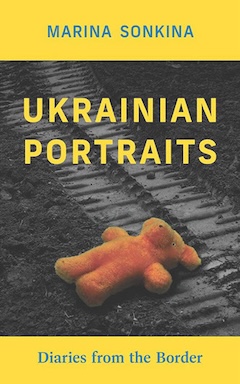
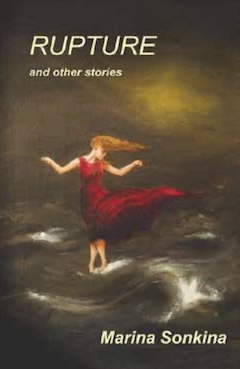
image - Ukrainian Portraits book coverJoin writer Marina Sonkina in celebrating the release of her two new books: Ukrainian Portraits: Diaries from the Border and Rupture and Other Stories. About Ukrainian Portraits, she writes: “At the end of March of 2022, I traveled to the Ukrainian-Polish border to volunteer at a refugee evacuation centre. Much as I tried to prepare myself psychologically, what I encountered face-to-face didn’t fit any of my expectations: I saw a disaster on a massive scale. I went to volunteer as someone who speaks Russian, Ukrainian and other languages; someone who had been a refugee herself.

image - Rupture book coverI soon realized that what the Ukrainian refugees needed most (apart from practical advice) was to talk about their experiences. They needed to be heard.”

The double book launch takes place Sunday, Dec. 10, 1:30 p.m., in the Aceman Seniors Lounge at the Jewish Community Centre of Greater Vancouver. Nibbles and light refreshments will be provided.

– Courtesy Marina Sonkina

Posted on November 24, 2023November 23, 2023Author Marina SonkinaCategories BooksTags Marina Sonkina, memoir, short stories, Ukraine
A hippie homesteader in B.C.

A hippie homesteader in B.C.

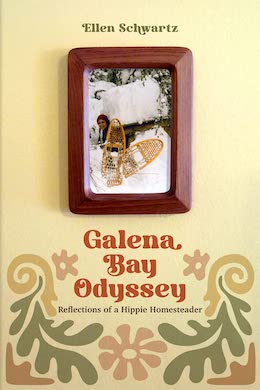
“When I came to Galena Bay, I had been afraid of many things,” writes Ellen Schwartz in Galena Bay Odyssey: Reflections on a Hippie Homesteader (Heritage House Publishing Company, 2023). “Of the physical work I would have to do. Of trying new things I have never done before, like gardening and building and raising animals. Of living in isolation. One by one, I had attempted these things, and I had survived. I had even mastered some of them. Those fears had fallen away.”

This paragraph comes as Schwartz is atop a hill, “too scared to move,” and her skis start sliding. She survives the “ungraceful and disastrous” run, even pushes through a second one. But she can’t keep her vow to never to do that again because, in the 1970s, she lived in such a far-flung place that skiing was a necessary mode of transportation, not just a leisure activity.

It is easy to see why Schwartz chose to write a memoir about this period of her life. Born into a middle-class family – her father an internist-turned-cardiologist, her mother a teacher before becoming a stay-at-home mom to Schwartz, her younger sister and brother – and raised in New Jersey, Schwartz went to university in Chicago. There, she did all you might expect a young person with the new freedom of being on their own to do. And then some, as it was the late 1960s. She writes openly about her experiences with drugs and having sex for the first time: “I figured Ned was The One. I imagined that we’d go through our four years [at school] together and eventually marry.” That didn’t happen. Nor did Schwartz go on to lead the conventional life she imagined for herself at the time.

Instead, she went to join a close friend at a farming commune in Pennsylvania, the members of which ultimately wanted to move to British Columbia. Not intending to stay longer than summer break, Schwartz fell in love with one of the commune’s founders and, well, ended up in British Columbia with Bill, who would become her husband. The group didn’t last long, but the Schwartzes are still together, though no longer in Galena Bay, which is in the West Kootenays. They now live in Burnaby.

The young urban-raised couple faced many challenges homesteading, and Schwartz has many stories of taking on the unknown, whether it be camping along the route across the continent to British Columbia, building their own cabin (including chopping down their own trees), growing their own food, raising a child in a remote area (their second would be born in Vancouver), etc., etc. Not to mention finding work that would sustain them physically (keep them housed, clothed and fed), if not spiritually. She shares the details of her hippie days matter-of-factly, with humour and with the perspective of reflection. For example, after recounting her parents’ muted reaction to her and Bill’s homemade home, she offers potential reasons for their lack of enthusiasm.

image - Galena Bay Odyssey coverSchwartz’s unique history encapsulates the overarching idealism of many in her generation. Her grandparents were “impoverished Jewish immigrants who had fled the hardships and pogroms of Lithuania and Poland” to give their kids a better life in the United States, so their grandchildren also were well set up for material success. The grandchildren – Schwartz and her peers – had an idea but no real understanding of the sacrifices that had been made to achieve the comfortable lifestyle they rejected, because of the racial and social inequality they saw around them, the environmental degradation and the war in Vietnam.

“Bill and I, part of the first wave of baby boomers, were in the privileged position of having enough education, enough wealth and enough leisure to be able to criticize our parents’ lifestyle,” she writes late in the memoir. “We were well-off enough to be able to turn our backs on materialism. We were prosperous enough to indulge in idealism and, idealistically, to define an entire new set of values. (At the time, I didn’t appreciate the irony.)”

But her desire to make the world a better place was – and is – genuine and remains a guiding force. Schwartz, who was a teacher for many years, began her subsequent career writing educational material. We find out in her memoir that the first fiction story she sold was released in 1980. She is now a celebrated children’s author, with almost 20 books to her credit directed towards younger readers, ranging from picture books to novels for teens to a couple of non-fiction publications. She is also a freelance writer and editor.

Galena Bay Odyssey is a wonderful glimpse into an integral part of Schwartz’s life. It also offers insight into North American hippie culture and the strength and ingenuity required to live in an out-of-the-way place like Galena Bay. That the “action” takes place in British Columbia will make the memoir of even more interest to local readers.

Format ImagePosted on July 21, 2023July 20, 2023Author Cynthia RamsayCategories BooksTags British Columbia, Ellen Schwartz, environment, Galena Bay Odyssey, history, homesteading, immigrants, memoir, social commentary, writing

A life of light and of shade

The quality of our lives seems to contain alternating waves of good and bad, hard and soft, light and shade. If we are lucky enough to appreciate that this is the nature of existence, we can bear much better with the shady parts of our lives. We can have faith that, whatever challenges we are facing, no matter how painful, the good times will roll around again. And the good times can be so good, so full of richness, pleasure, joy, lightness and brightness, that they are worth the price we may ultimately have to pay for the good fortune we have the luck to be earning.

The dilemma is that sometimes we do not realize that what we are passing through are the bright times, the good times, the best times. That often comes only with retrospection.

I remember that I left home at the age of 18 to spend a year of work and study in Israel. I did not think to ask for the permission of my parents, I just made my plans and informed them of those plans. I never thought to do otherwise, and I was never questioned. I saved up the money I needed from the odd jobs I performed as I wended my way through my high school years. I applied for the assignment, gathered my pennies and off I went, traveling across the globe.

I was a part of a group, but I felt very much alone. I remember that, being alone, on the ship sailing across the ocean, my mind brimming full of speculations about the nature of the world. I wrote incessantly about that on every scrap of paper I could find.

I have some of those scraps in a file I have kept to this day. So much of it, seems to me today, to be a load of nonsense. The gist of it was that I was a solitary sailor afloat on the sea of life and that life was incredibly sweet. I was full of wants. I wanted to find a true companion. I wanted a country of my own. I wanted to save the world. I was going to do it all myself if I had to. At the time, I could read it all in the palm of my hand, and it was all going to happen. I was totally free from obligations, except those that I chose to lay upon myself – and included in those was responsibility for creating the perfect world. All of us are heroes in our own eyes, and we have to try as hard as we can to live up to that image of ourselves.

How was that not the most superlative moment of my life to that date? I had not the merest clue as to the nature of the importance of those moments in my existence. I was unconsciously writing an agenda for my life.

I am no different from others, and all of you have had those moments in your lives, those moments whose importance is only appreciated by you with the passage of time and the gleanings of experience.

I remember holding a child of mine in my arms, and feeling like I would burst with joy. I remember when I was leaving my first job, hearing that my superiors were frantic about who they could find to fill the hole I was leaving. I remember when I realized that I had succeeded in resolving a dilemma that would yield years of success at a seemingly impossible task that I had taken on. I remember the instant when I recaptured the love of my heart after 50 long years of disappointment when I had not found the companionship I longed for. I remember the moments when I began to understand what elements of my behaviour prevented my Bride from feeling the depth of my love for her. All these events, which cast other parts of my life in the shade where they belonged, I could only truly appreciate in retrospect. The thrill they yield when I recall them I relive over and over again. So it must be for so many of you, when you recall your own experiences.

Surely there are lessons to be learned by sentient beings from these experiences. Don’t they help us, when we find ourselves in periods when there is shade all around us, know that the moments we hope for and will cherish all the days of our lives will surely arrive for us if we carry on? Just as day follows night, won’t our turn at good fortune arrive if we put in the necessary effort to survive what may seem to us to be the worst of times, and if we are lucky enough to have the good health and fortune to do so? Isn’t that the secret, that we try, and try again, to confront the challenges we face, and we never, never, give up?

Max Roytenberg is a Vancouver-based poet, writer and blogger. His book Hero in My Own Eyes: Tripping a Life Fantastic is available from Amazon and other online booksellers.
Posted on July 7, 2023July 6, 2023Author Max RoytenbergCategories Op-EdTags aging, gratitude, lifestyle, memoir, memory, mental health
Grandfather’s prayers

Grandfather’s prayers

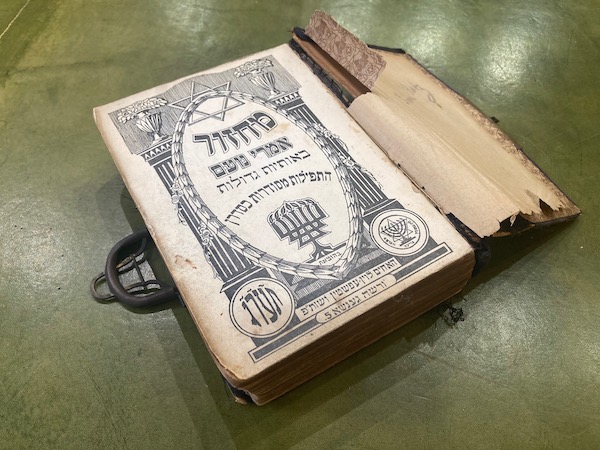
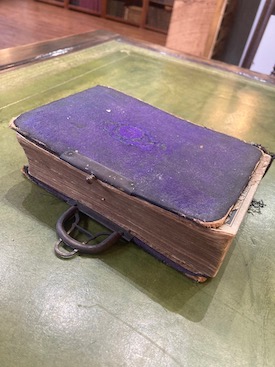
The author’s family Machzor, which was printed in Warsaw in 1913, was most likely owned by her grandfather. (photo by Shula Klinger)

Growing up, I was never taken to shul. I never saw my parents pray, read religious texts or attend any Jewish community events. I saw my maternal grandfather’s tallit case once or twice; I don’t know if he attended shul regularly. These ritual items were simply family artifacts, not elements of our daily lives.

At school, I went to Shabbat with a school friend and muddled through, not knowing the customs. I went to Jewish assembly twice a week and learned the Shema – sort of – from the other girls. With an Israeli father who spoke fluent Hebrew, I didn’t know where I fitted in. Religious Jews weren’t “our people.” My father’s religion was Zionism, not Judaism. I was English, but, at the same time, I wasn’t.

My mother passed away in 2020. As I went through her belongings, I was startled to find a Machzor (prayer book for the High Holidays) that had belonged to – I presume – her father, Dr. Bernard (Boris) Stein. It was coming apart and not just from age; it had clearly been well-used.

This was a deeply moving discovery for me. It told me that my family had once kept the High Holidays, that my ancestors did attend services and were indeed part of a spiritual community.

The prayer book’s worn, shabby velvet has been repaired more than once. Once bound in a rich purple velvet, glue marks are all that is left of the cover ornament. The buckle is mostly intact but the spine is roughly stitched together with cotton thread. This is not the work of a professional artisan; maybe it’s the handiwork of my grandfather himself. He was used to handling a needle and thread, though as a surgeon.

From the Cyrillic text in the front, I learned that the book was published by Levin-Epstein in Warsaw. Why would my grandfather, who was born in Lithuania and raised in South Africa, have owned a Polish Machzor?

According to Nathan Cohen in Warsaw: The Jewish Metropolis, Warsaw did not rise to prominence in Eastern European Jewish life until the second half of the 19th century. This was a result of the czar’s 1836 decree that closed down Jewish printing houses in the Russian empire. Only select printers in Vilna and Zhitomir were allowed to print in Hebrew characters. Warsaw, however, was outside the boundaries of this region, so the Jewish printing industry moved there instead. My family prayer book was published in 1913.

photo - Once bound in a rich purple velvet, glue marks are all that is left of the cover ornament
Once bound in a rich purple velvet, glue marks are all that is left of the cover ornament. (photo by Shula Klinger)

And what of our Machzor’s future? I don’t want to pack it up and hide it away. I want it to be a family heirloom for generations to come, and for my children to see it as they grow up. They are proud of their heritage and will also want to see that the book is well cared for.

I sought the advice of a professional. Having worked with local bookbinder Richard Smart on a Jewish Independent story about Anne Frank in late 2017, I returned with the book and a new set of questions.

Could the book be repaired? Smart said no, because “any new suede isn’t going to blend in nicely with the old … it’s very fragile.” However, he came up with another option for conserving it: building a custom box. This way, he said, “it’ll stay in one piece, but it also keeps its history of having been handled and used.” I like this approach because it prevents the book from coming to further harm, but it also preserves it as evidence of my ancestors’ religious lives.

While the book will not be in circulation, I am heartened by the knowledge that it will, at least, be safe. Even if it doesn’t form a part of my own religious practice, it won’t be discarded or tucked away like a souvenir. This Machzor will be treated in a manner that befits an ancient treasure: laid carefully in a box that is made by hand. I’m proud to be its guardian until it passes to the next generation of our family.

To see a video of Smart reaching his decision about the Machzor, visit @oldenglishbindery on Instagram.

Shula Klinger is an author and journalist living in North Vancouver.

Format ImagePosted on April 28, 2023April 26, 2023Author Shula KlingerCategories Op-EdTags family, history, Judaism, machzor, memoir, prayer book
Reflecting on life of creativity

Reflecting on life of creativity

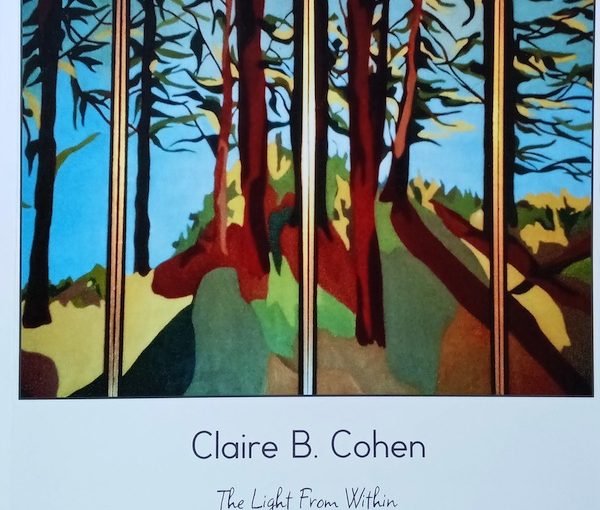
Earlier this year, Claire B. Cohen published a book of her 30-plus years as an artist. She made it for family and friends, as a record of her artistic legacy.

“Art is a powerful and a creative force of self-expression. To create art is to develop an ability to communicate visually what cannot be expressed in words.

“By creating the process of art, we change the way we see the world,” Claire B. Cohen told the Independent. “In understanding ourselves, we find areas where we feel limited. In understanding ourselves, we stand up for ourselves and can present ourselves authentically to others. An artist’s creation is unique and original to their work.”

Earlier this year, Cohen published a slim volume, mainly with images that burst from the pages, outlining her 30-plus years creating art. We glimpse the range of her work – landscapes, portraits, semi-abstracts, flowers, multimedia collages and a compartmental series, in which colourful abstract canvases were “connected sequentially in a zigzag for using piano hinges.” Flow and fun describe this series, her portraits – both colour and black and white – capture the personalities of her subjects, her landscapes and collages are bold and full of movement but also balance. The book touches on her work as an art therapist.

Originally from Israel, Cohen came to Canada in 1964. She studied fine arts at York University in Toronto and the University of Ottawa, and later earned her master’s in art therapy and counseling from U of O in 1987. She had many solo exhibits and group shows in Ottawa, and elsewhere, over the years. The book takes readers to 2006, with an exhibit list to 2009. She moved to Vancouver in 2012.

“I continued to paint after moving to Ottawa, but my move to Vancouver changed my focus, since joining my family had taken much of my time, being richly involved with newborn grandchildren,” said Cohen. “However, I still continued painting and showing new work in Vancouver galleries, as well as donating paintings to different organizations in Vancouver, such as hospitals, Louis Brier [Home and Hospital], friends, and creating more collages and multimedia-based work. I participated in group art shows and sold some to the public.”

Cohen said her reason for producing the book “was to create a place to keep all of my art as a legacy to leave to my family in remembrance of my story. COVID times were affecting my spirit, my mood was down and … the idea came about to focus on creating the book for my family and friends.”

During the pandemic, Cohen said she started to lose her connection to creativity. 

“Friends cut off from each other, as much as children and family,” she said. “I slowly lost my energy and interest, as well as the need I once had to be close to my easel. The paints, the brushes, the colours all lost their meaning and the need I had to paint slowly deteriorated.”

She began to look back at her past, which, she said, “led me to wake up from my dormancy and questions such as ‘what is my meaning of life?’ I discovered my paintings in storage and wanted to create a book.

“I reflected further on my body of work and questioned: why did I dedicate my years to painting? Was there any purpose to it? The answer eventually arrived – yes. There are many purposes to be alive, and work as an artist, investing my life in art. In my case, most of it was to leave a memory to my next generation.”

Cohen’s most recent exhibit and sale was at Britannia Community Centre in 2021. Art can be cathartic, whether one is making it or experiencing it.

“The process of creating art has a great intensity and full force of emotions that lead to a freedom and release when the piece is complete,” she explained. “Looking at these pieces that I created many years ago leads to a sense of nostalgia and a softening of that intensity. These pieces have followed me through many moves and lives, and have a story of their own that has evolved with the emotions that once created them. The language of art cannot be explained in words, the language of these emotions is form, line, colour and brush strokes.”

This language can help heal, as Cohen well knows from her art therapy practice.

“The more we know about ourselves, the more we learn to grow and develop our abilities to stand our ground,” she said.

Describing art as “a powerful and unique way to explore our creative forces,” she explained that people who participate in art therapy use the “materials to express the self and communicate visually,” composing stories. In a group setting, they “collaborate and share with others … connect and integrate parts of his/her inner self, gain confidence and reduce stress in a supportive environment, with the aid of the instructor.”

It was both a dream and a need for Cohen to do art therapy and counseling.

“I realized that art is not just for selling and decorating homes, rather it was a way to find myself, to grow and see who I am, and to help others with their healing.”

To see Cohen’s body of work, go to clairebcohen.wixsite.com/portfolio/home.

Format ImagePosted on December 23, 2022December 22, 2022Author Cynthia RamsayCategories Books, Visual ArtsTags art, art therapy, Claire Cohen, family, health, memoir, painting

Posts pagination

Previous page Page 1 Page 2 Page 3 Page 4 … Page 13 Next page
Proudly powered by WordPress