Skip to content
  • Home
  • Subscribe / donate
  • Events calendar
  • News
    • Local
    • National
    • Israel
    • World
    • עניין בחדשות
      A roundup of news in Canada and further afield, in Hebrew.
  • Opinion
    • From the JI
    • Op-Ed
  • Arts & Culture
    • Performing Arts
    • Music
    • Books
    • Visual Arts
    • TV & Film
  • Life
    • Celebrating the Holidays
    • Travel
    • The Daily Snooze
      Cartoons by Jacob Samuel
    • Mystery Photo
      Help the JI and JMABC fill in the gaps in our archives.
  • Community Links
    • Organizations, Etc.
    • Other News Sources & Blogs
    • Business Directory
  • FAQ
  • JI Chai Celebration
  • JI@88! video

Recent Posts

  • האלימות בישראל מורגשת בהרבה מגזרים
  • טראמפ עוזר דווקא לנושא הפלסטיני
  • New rabbi settles into post
  • A light for the nations
  • Killed for being Jewish 
  • The complexities of identity
  • Jews in time of trauma
  • What should governments do?
  • Annie will warm your heart
  • Best of the film fest online
  • Guitar Night at Massey
  • Partners in the telling of stories
  • Four Peretz pillars honoured
  • History as a foundation
  • Music can comfort us
  • New chapter for JFS
  • The value(s) of Jewish camp
  • Chance led to great decision
  • From the JI archives … camp
  • עשרים ואחת שנים להגעתי לונקובר
  • Eby touts government record
  • Keep lighting candles
  • Facing a complex situation
  • Unique interview show a hit
  • See Annie at Gateway
  • Explorations of light
  • Help with the legal aspects
  • Stories create impact
  • Different faiths gather
  • Advocating for girls’ rights
  • An oral song tradition
  • Genealogy tools and tips
  • Jew-hatred is centuries old
  • Aiding medical research
  • Connecting Jews to Judaism
  • Beacon of light in heart of city

Archives

Follow @JewishIndie
image - The CJN - Visit Us Banner - 300x600 - 101625

Tag: hostages

Humanizing hostages’ plight

Humanizing hostages’ plight

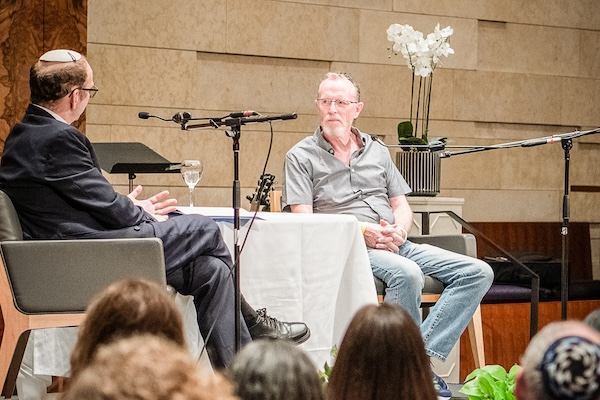
Rabbi Jonathan Infeld, left, in conversation with Thomas Hand at Congregation Beth Israel. (Adele Lewin Photography)

Emily Hand was a healthy 8-year-old girl with chubby cheeks on Oct. 7, 2023, when she was abducted by Hamas terrorists from a sleepover at a friend’s home on Kibbutz Be’eri. When she was released, 50 days later, she was a pale, gaunt 9-year-old who would not speak above the faintest whisper.

Emily and her dad, Thomas Hand, were in Vancouver this month, where the father was part of Congregation Beth Israel’s Selichot program Sept. 28. He spoke with the Independent in advance of the conversation he had with Rabbi Jonathan Infeld at the synagogue.

On Oct. 7 last year, Emily was at the home of her friend Hila Rotem-Shoshani. After the terrorists invaded the kibbutz and the murderous rampage subsided, Thomas Hand had no idea where his daughter was. It was almost midnight that evening when the Israel Defence Forces made it to Be’eri and rescued the survivors. In the chaos of the moment, Hand was told that his daughter was dead.

His immediate response was relief.

“It’s a terrible thing to say,” said Hand, “but I was more relieved and at peace that she was at peace and not being terrorized or beaten or threatened or in the hands of the Hamas.”

Eventually, it would become known that, of Be’eri’s approximately 1,100 residents, about 100 were murdered and about 50 taken hostage to Gaza. Be’eri’s surviving residents were removed to a location near the Dead Sea.

After a few days, Hand was informed that there was no evidence that Emily had been murdered. Her remains were not found and neither was any of her DNA. Hand has no explanation for how the misunderstanding occurred. His former wife, however, was found dead. (Emily’s mother died of cancer when Emily was 2.)

Now, Emily was officially missing. 

A kibbutz member mentioned to Hand that they had seen Raaya Rotem “and her two children” led away at gunpoint. Hand knew that Rotem has only one daughter – Emily’s friend Hila – and that was his confirmation that Emily had been abducted alive.

“When they told me that she was actually alive, I was in the nightmare of not knowing what the hell was going to happen to her,” he said.

It is now known that Emily, Hila and Raaya were taken to Gaza, moved from location to location for the first couple of days and then held in a house along with several other hostages.

They lived in constant terror and were given very little food – a quarter of a pita a day sometimes, though they could smell the plentiful food their captors were cooking. Their accommodations were squalid, they were watched while using the toilet and warned to remain totally silent.

Doing what he could to raise global awareness of his daughter’s situation, as well as those of the other hostages, Hand launched a campaign, beginning with a trip to Ireland. Hand had made aliyah from Ireland and Emily, as a result, is a dual citizen. Hand then traveled to the United States and appeared on American TV, further humanizing the plight of the hostages and their families.

In November last year, during the temporary ceasefire, Emily was one of 105 hostages freed. She was released along with Hila. Hila’s mother Raaya was released a couple of days later.

Hand has no clear memories of their reunion, except that he would not allow himself to believe it would happen until they locked eyes. 

“Anything could go wrong,” he said of the temporary ceasefire negotiations and promised release of the hostages. “Not until the very last second did I really believe that she was coming back, only when I saw her eyes.”

The joy of reunion was mixed with the harsh reality of what she had endured. 

“She came back a different child,” Hand said, reflecting on her transformation from an innocent 8-year-old to a much-matured child shaped by trauma. The changes were most immediately noticeable physically. “Her cheekbones were sharp, her body much thinner.”

The effects of being threatened for more than two months to remain silent did not dissipate immediately either.

“When she came back, she was whispering, just moving her lips,” he said. “Her confidence was shattered.”

Since Emily’s release, the Hands – she has an older brother, 29, and a sister, 27 – have been working to help her recover. Therapies, including horse riding, dog training, theatre and singing, have played a crucial role in rebuilding her confidence. Regular psychological support in Tel Aviv, despite being a two-hour drive, has also been essential. 

“She’s very strong, very resilient,” said her father. 

The Hand family has relocated to a semi-permanent residence near Be’er Sheva while they await the reconstruction of Be’eri, to which he is determined to return. 

“It’s been my home for over 30 years. I raised my eldest kids and Emily there,” he said. “It’s paradise. I want to go back home.”

Not all kibbutz members feel the pull to return, he acknowledged, though he estimates that 75% of the surviving members hope to rebuild there. Security, of course, is the foremost concern.

“The government needs to be different, and Hamas needs to be as weak as we can possibly make them because I need to feel safe in my own home before I would ever bring Emily back there again,” he said.

Reflecting on the international response to the crisis, Hand expressed frustration.

“Why is the UN or all the governments in the world not putting the pressure on Hamas to stop?” he asked.

To critics of Israel’s actions in Gaza, he is defiant. “We have to defend ourselves, and we will defend ourselves,” he said, “no matter what the world says or thinks.”

As Emily continues her recovery, Hand remains focused on a mission.

“Our primary concern now is getting the hostages back,” he said. 

Format ImagePosted on October 11, 2024October 10, 2024Author Pat JohnsonCategories LocalTags Beth Israel, Emily Hand, hostages, Israel, Oct. 7, Thomas Hand

A different new year

The experience of the Jewish calendar is ever-changing because, while the week’s parshah is the same every year, the people experiencing it have changed. This seems especially true for the year just passed.

Pesach held stark resonance this spring, as Jews worldwide held in our hearts the captives in Gaza and pain around the ongoing war. Every happy moment in the calendar was darkened by the shadow of Oct. 7. Every solemn moment seemed laden with deeper significance.

It is a rare Jew whose life has not changed dramatically since that day. Israelis and Jews had ripped from us a sense of historical, collective and personal security that the Jewish state was supposed to provide. While 75 years of conflict and insurrection have reminded us that Jews have never been entirely free from the hatred of others, the collective defence embodied in the state of Israel massively reduced the vulnerability experienced by previous generations. We also understand that this security has come at a cost and that the last 75 years have also been a source of suffering for our Palestinian neighbours and cousins. This is a juxtaposition we struggle with daily.

And then Oct. 7 ripped away our sense of communal security in a profound way. For Jews worldwide, it provoked what can be considered significant intergenerational trauma, recalling times when soldiers and their civilian collaborators could enter Jewish homes, perpetrate atrocities, annihilate families, separate us from our loved ones, loot our possessions, force conversions, exile and expel us, and take us captive.

Worldwide today, Jews have experienced a different, related trauma. In too many cases, Jews in Canada and elsewhere have been betrayed by our neighbours, let down by our ostensible friends and had our awareness wrenched open to the potential for abrupt changes in political climates.

This will be the first Rosh Hashanah since Oct. 7. It will be followed by the anniversary of the terror attacks, a commemoration that will be added to the black dates of Jewish history over millennia.

Day after day we hope for the return of the captives, and it will be a joyous moment when surviving hostages come back home. Between this writing and your reading, may that dream have become real. If not by then, let us hope for their redemption by the new year or certainly before the calendar turns on a full annual cycle since their capture. Every moment is a moment too long for their captivity. And every moment is a moment too long for continued war, and the destruction experienced by innocent Palestinians who are caught in it.

We can all well remember the holy days of just a few years ago when a global pandemic kept us from celebrating in person with our loved ones. For most of us, that forced separation has passed. That togetherness is reason enough to celebrate. Even so, it is precisely the idea of togetherness – when we know that so many families have been torn apart either temporarily or permanently – that adds sad resonance to our own sense of unity. 

While we mourn those who will never again celebrate with their loved ones and we hope and pray for the return of the hostages so that they can rejoice in freedom with those they love, we should also take special appreciation for the gifts of those with whom we gather.  

In Jewish fashion, the changed reality in which we find ourselves is already being woven into a sort of makeshift liturgy, as more than one article in this special issue of the paper describes. Thoughtful people have developed ways to memorialize and hold spiritual space for the hostages and all affected by this historical moment.

As we complete another cycle of the calendar, the immutable foundations of our tradition provide strength and familiarity. At the same time, as individuals and as a people, we are profoundly changed. 

Posted on September 20, 2024September 18, 2024Author The Editorial BoardCategories From the JITags hostages, Israel-Hamas war, Jewish calendar, memorial, Oct. 7, Rosh Hashanah

A solemn anniversary

The Vancouver and Victoria Jewish communities will each hold a memorial ceremony Oct. 7 to honour and remember the victims of the attacks on Israel a year ago. 

Led by the Rabbinical Association of Vancouver (RAV) and in partnership with the Jewish Federation of Greater Vancouver and many others, an evening event in Vancouver will be an opportunity for people of all ages to come together.

A special gathering for young adults will take place from 6 to 7 p.m., providing a space for reflection and connection. The main ceremony will begin at 7 p.m., and will include what is being described as a poignant tribute led by our community’s rabbis. The location of the event will be emailed upon registration. Register at  jewishvancouver.com/october-7th-memorial.

Following the ceremony, Jewish Family Services will offer “living rooms,” in both Hebrew and English, where attendees can share their thoughts and find comfort. An Israeli sing-along will also take place, with the intention of helping participants find strength in unity and to support one another.

Relatives of Oct. 7 victims will present representative stories of the heroes and victims and organizers are planning interactive elements so participants can actively memorialize. There is an intention to ensure that all the victims’ names, as well as fallen soldiers’ names, can be articulated in the course of the program. 

Politics – local or international – are to be kept out of the program. Elected officials may attend but the focus is on memorializing and honouring the dead.

While Oct. 7 created an unprecedented new world, in many ways, there is a precedent for the sort of memorial event planned, according to Beth Israel’s Rabbi Jonathan Infeld, who is head of RAV.

The Yizkor service will be the template for this commemoration, said Infeld.

“We know that the Yizkor service is something that the synagogue-going Jew can relate to, but we know that not all the members of our community go to synagogue on a regular basis,” he said. “We want to make sure that it works for everyone. Yizkor is the framework, but there will be creative pieces in it as well that will work for everyone in the community.”

As the anniversary approaches, Infeld said the community should be “thinking first and foremost of the memory of those who were murdered in this horrific, horrible terror attack.”

There are 97 hostages still being held in captivity in Gaza of the more than 240 Israelis and others kidnapped by Hamas on Oct. 7. (Four other hostages have been held since 2014/15.)

People need to be reminded of the absolute necessity to support the people of Israel at this moment, and to support fellow Jews here in Canada and around the world against the rise of antisemitism, said Infeld. “We would like to see everyone really rally together and gather together to support each other and to show our support for Israel and the Jewish people, and to comfort each other as well.”

A memorial in Victoria will take place at the same time on Oct. 7, at the Esquimalt Gorge Pavilion. Pre-registration is mandatory at jewishvictoria.ca.

On Sept. 28, as part of Beth Israel’s Selichot service, Rabbi Infeld will lead a conversation with Thomas Hand, whose daughter, Emily, was a hostage in Gaza. Emily, who turned 9 in captivity, was kidnapped along with her friend and the friend’s mother. The two girls were released in November. Hand will talk about the “spiritual, emotional and moral roller coaster” of his daughter’s captivity and eventual freedom.

Posted on September 20, 2024September 18, 2024Author Pat JohnsonCategories LocalTags commemoration, hostages, Israel-Hamas war, Jewish Federation of Greater Vancouver, Jonathan Infeld, memorial, Oct. 7, Rabbinical Association of Vancouver, RAV, terrorism, Vancouver, Victoria, Yizkor

Setting intentions, priorities

This year, the High Holidays fall later than usual, with Rosh Hashanah just a few days before the anniversary of Oct. 7, 2023 – the most tragic date in the history of modern-day Israel. 

The High Holidays offer special opportunities for reflection and renewal, reaffirming what matters most, pursuing positive change and strengthening our connections with others.

As we look back on 5784, we should examine our own actions, reflecting honestly on our challenges and successes, and seeking lessons we can take from our experiences to carry into the year ahead. It’s a time to consider which elements of our lives and our relationships with others need improvement.

This leads naturally to an opportunity to contemplate our intentions and priorities and plan for the future. It is a means of charting a course that aligns with our values and contributes to the strength of our families and our communities.

While Canada remains one of the safest places for Jewish communities, the Centre for Israel and Jewish Affairs’ advocacy – especially since Oct. 7 – has been fueled by a profound dedication to tackling the disturbing rise in antisemitism.

The alarming surge in antisemitism, both online and on the streets, has been deeply shocking. Yet, it has also driven us to forge essential connections with all levels of government, law enforcement, educational institutions and community organizations representing the majority of Canada’s Jewish population and other vulnerable minorities. 

Just as the High Holidays are arriving late this year, so too are long-awaited protections from the government. We have seen some progress, but there is much to be done to ensure “bubble legislation” (safe-access laws to protect defined areas from protests, harassment and hate) becomes common, if not ubiquitous, across Canada. Vaughan, Ont., has adopted an encouraging example, and many other municipalities have expressed serious interest in following suit, but there is still much work ahead. 

Federal online hate legislation has been in development under various ministries for years, and we are not backing down on contributing to and securing this fundamental legislation that will enhance security measures.

The accusations against Israel of war crimes from the International Court of Justice (ICJ) are both absurd and detrimental to Canada and the West’s long-standing policies aimed at achieving peace in the Middle East. If the Canadian government wants to rescue the reputation of the ICJ, it must denounce this evidence of its politicization.

Antisemitism is not a “Jewish” problem. Jew-hatred poses a grave danger to all who cherish our core Canadian values. We know from history that, wherever antisemitism is allowed to thrive unchecked, social malaise and political oppression follow. Its defeat requires a concentrated, multi-pronged approach involving many cultural, political, ethnic and faith organizations, as well as individuals from across the country. Together, we are working to combat antisemitism while building relationships with many partner groups, promoting the Canadian values of dialogue and understanding, tolerance and respect. 

As Canada’s special envoy on preserving Holocaust remembrance and combatting antisemitism, Deborah Lyons, wrote in a July op-ed in the National Post: “Jews did not create antisemitism and … it is not on them to fight it alone.”

As we approach the sad and sombre anniversary of the Oct. 7 massacre, many will join us in honouring the memories of those murdered by Hamas and in praying for the safe return of the hostages and for the restoration of peace to the region. And, if we are so blessed to have welcomed home the hostages by the time you are reading this, we’ll have more to celebrate as we begin the new year.

In the meantime, I wish you a sweet, healthy, peaceful and happy 5785. 

Judy Zelikovitz is vice-president, university and local partner services, at the Centre for Israel and Jewish Affairs.

Posted on September 20, 2024September 18, 2024Author Judy ZelikovitzCategories OpinionTags Centre for Israel and Jewish Affairs, CIJA, Hamas, hate crimes, High Holidays, hostages, Israel, Judaism, Oct. 7, reflection, Rosh Hashanah
Remembering the six

Remembering the six

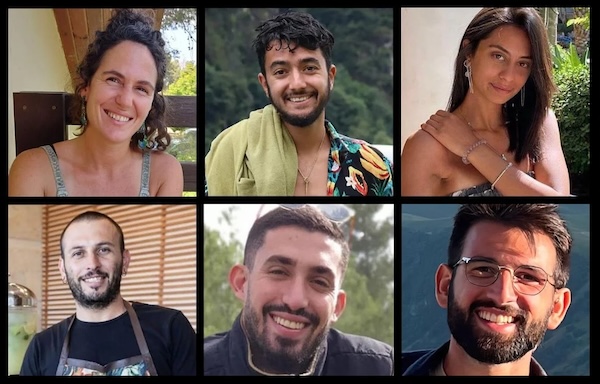
Clockwise from top left: Carmel Gat, Hersh Goldberg-Polin, Eden Yerushalmi, Alex Lubanov, Ori Danino, Almog Sarusi. (photos from internet).

This article is an edited version of a blog posted on Sept. 2, 2024.

Carmel Gat, Hersh Goldberg-Polin, Eden Yerushalmi, Alex Lubanov, Ori Danino, Almog Sarusi. The cursor has been blinking below these six names and faces.

I haven’t known where to begin because there are so many emotions swirling, yet, despite the tears of devastation and despair that come to the surface and back away again, my predominant emotions are rage and frustration.

Rage at the savage and violent ends for these beautiful men and women, and frustration that, even in Israel, many have assumed that so few hostages could possibly still be alive, that only 30 or 40 are likely still alive. Well, here we had six, who were all held in tunnels, where just oxygen is tough to find, surviving a Middle Eastern summer with practically no food or water or personal hygiene for close to a year, and they are not dead because they couldn’t survive – they did survive. They are dead because they were murdered by Hamas at close range and, although it is customary in Judaism not to say details that will hurt the families or the memories of their loved ones, due to the level of urgency of this situation for now close to a year, I feel it is crucial to state that it is known that these particular six hostages were tortured badly before they were shot.

It is important to point out the brutality of Hamas. It was an incredibly bold move for Hamas to select two young women and an American man, whose mother was on the cover of Time magazine and whose parents just gave an electrifying speech on Aug. 21 at the Democratic National Convention, as hostages to murder so savagely. This speaks volumes to me. Hamas is fearless – and why shouldn’t they be? All of the pressure for a ceasefire has been on Israel. All of the pressure for the war to end has been on Israel. How about: “Give us back our people” instead of “Bring them home now,” why not, “Send them home now”?

The tunnel these hostages were found in was located less than a mile from the tunnel in Rafah from which Farhan al-Qadi, a Bedouin-Israeli hostage, was rescued, so it is possible that the Israel Defence Forces’ proximity led Hamas to make this horrific decision, but, had the IDF been “permitted” to enter Rafah sooner and more aggressively, perhaps more could have been done to save these human beings and the rest of the hostages months ago.

The anger I feel is complicated. I traveled alone to Israel last November to write about the hostages and got so involved there that I stayed until March. It is hard being in the diaspora right now, as I am realizing more and more regularly that Jews outside of Israel aren’t understanding how Israeli Jews feel right now and what they need so badly from us. I’ve tried to communicate this through my piece about Alon Ohel which can be read at melanie-preston.com. (His mom’s words put it so perfectly.)

The vast majority of Jews in the diaspora love Israel, and so they visit and they donate and they believe that if there ever were an emergency in the world, Israel would welcome them. But this isn’t something that can be taken for granted – that Israel will always be the safest country for Jews. It has not felt that way for Israelis since Oct. 7.

If such a brutal attack can happen in Israel, and the government won’t do everything in its power to bring the hostages home alive, then Iran can perhaps win this war because Israelis will start to leave. This is something Hezbollah’s Hassan Nasrallah has said in his speeches lately. He has said Israelis will lose faith in their own government, tourism will stop and the economy will be destroyed. We already know that Iran is winning the propaganda war.

If Israelis no longer have faith in their system and feel they are not cared for as the top priority, which was happening before Oct. 7, and which many feel led to the Oct. 7 attack in the first place, then they won’t want to continue risking their lives or their children’s lives for the ideals of the Zionist state.

It is the belief of many in Israel that these six beautiful souls did not need to die, and these six are beautiful souls. I knew a lot about two of them and have spent the past days learning about the other four. My eyes are swollen from crying.

The hearts of Israelis have been shredded for close to a year, and there is still no healing in sight. Rarely do they ask for help from the diaspora, but, more than any other time in modern Israel’s history, they need us. They need all the Jews of the world putting all the pressure we can muster to get a deal done to bring the remaining hostages home alive. Anything else we need to do for the country’s security can still be done after this first priority – life – is once again prioritized.

***

I am going to start with Carmel Gat from Kibbutz Be’eri, the woman with the infectious smile, because I feel like I have gotten to know her through her friend Adam Rapoport, who took me to see Be’eri after I met him when I was writing about a different hostage who was murdered in Gaza back in January (Itay Svirsky). Adam, Itay and Carmel went to the same school.

photo - Carmel Gat
Carmel Gat (photo from internet)

Carmel was raised on the kibbutz but lived in Tel Aviv and worked as an occupational therapist.

“She was such a loving person, such a peace-loving person. She has friends who speak all languages and are from all backgrounds,” said her cousin, Gil Dickmann, on CNN. “She was always looking for ways to treat others, and to take care of them during their most horrible phases and times of their lives. We know that, in captivity, she actually took care of two youngster hostages who were with her, and she practised yoga with them and meditation with them to make sure that they came through this horrible experience OK, and … when they came back, we were so glad to hear this because this is exactly what Carmel is, and she managed to stay herself in captivity and to take care of others … that was such an amazing thing for us to hear. And, to know that after all this, after 11 months in captivity, she lost her life in such a horrible way and we missed getting her back by so little, is devastating.”

Imagine mastering a practice with such grace that you could be stolen by a terrorist group and manage to not just sustain your own light but spread it, teach it, bringing light into the darkest tunnels of horror – that is nothing short of holy work.

On Oct. 7, Carmel was in Be’eri visiting her parents, and witnessed the murder of her mother before she was ripped away from her life and taken to Gaza. Throughout her time in captivity, “Yoga for Carmel” was done all over the world, with people not knowing if she was alive or not, but choosing to send her strength through yoga.

Well, she was alive. She was alive in a tunnel. For almost 11 months. Not only was Carmel slated to be released on day one of any new deal, but she was on the list to be released at the end of November. Had the ceasefire not been broken by Hamas, she would have been out at the beginning of December.

Carmel turned 40 years old in Gaza, in May, a couple of days after my own birthday, and I felt this strong connection and kept wondering if that meant she was alive. How I wanted her to come back. How I wanted to meet this woman of strength when I returned to Israel, when I would spend more time on Be’eri. Instead, the number of dead from Be’eri has increased to 102.

May the memory of Carmel be a blessing to all who were lucky enough to have known her, and especially to the children she taught yoga to in Gaza to help them during their two months of terror. May they find someone with Carmel’s light to get them through this.

***

photo - Hersh Goldberg-Polin
Hersh Goldberg-Polin (photo from internet)

Hersch Goldberg-Polin was supposed to embark on a globetrotting backpacking trip last December, like I did at 23. The kid who loved maps and atlases, who so many Americans feel like they know, thanks to his incredible parents, Rachel Goldberg-Polin and Jon Polin.

Through the sharing of fun facts about Hersh, we have grown to love him, and creative ideas to keep his name out there included giving the name Hersh when ordering coffee at Starbucks, just to hear “Hersh!” when it’s ready.

His mother came up with counting the days of this war by ripping off a piece of masking tape every day, writing in marker the day number of captivity and sticking the piece of tape on her shirt. Her Instagram videos have discussed the process of the number changing from two digits to three, as well as how it feels when one roll of tape ends and another begins.

Hersh was seen on video being taken on Oct. 7. The video showed him being loaded onto a truck, and made clear that his arm was blown off. This was all his parents knew about their only son for a long time.

As Passover began, Hamas released a video of Hersh, in which you could see that his left arm – his dominant arm, his mom would always stress – was now a stub. In that video, he stated that he was living without sunlight, food or water, and that he would not have peace on the holiday, but hoped they would. 

Hersh’s parents spoke clearly and strongly to those involved in the hostage negotiations: Qatar, Egypt, the United States, Hamas and Israel. “Be brave, lean in, seize this moment and get a deal done to reunite all of us with our loved ones and end the suffering in this region,” said his father, with respect to all involved. His mom added: “And Hersh, if you can hear this … we heard your voice today for the first time in 201 days … and if you can hear us, I am telling you, we are telling you – we love you. Stay strong. Survive.” 

These words resonated with the hostage families and became a mantra for their loved ones. But, less than two weeks after Rachel and Jon spoke with such power and grace, they learned that Hersh came to a torturous end.

May we hold his family in the light and love that they have demonstrated to all sufferers in this conflict on both sides, since the very beginning.

May the memory of this young man, with the adventurous spirit he didn’t get to use nearly enough, be a blessing for all who knew and loved him, and for those of us who feel like we did.

***

photo - Eden Yerushalmi
Eden Yerushalmi (photo from internet)

Eden Yerushalmi was from Tel Aviv and studying to be a pilates instructor. She was bartending at the Nova festival and sent her family multiple videos as the attack began. According to the Hostages and Missing Families Forum, the final texts she sent her family that day were “They’ve caught me,” and then “Find me, okay?” These are the chilling words they were left to grapple with.

The striking photo of her at the beach always stopped me in my tracks in Israel, whenever I came across it in Hostages Square or on a supermarket window or café wall. It forced me yet again to take in the enormity of this tragedy, and to imagine something so sick and horrifying happening to someone. 

May Eden’s memory be a blessing for all who knew and loved her.

***

photo - Alexander Lubanov with his wife Michal
Alexander Lubanov with his wife Michal (photo from internet)

Alexander Lubanov was a bar manager at the Nova Festival and the father of a 2-year-old on Oct. 7. His wife was pregnant at the time and gave birth alone while he was in Gaza. Their baby is now five months old. May Alex’s memory be a blessing to his wife, his very young children and all who knew and loved him.

***

Ori Danino was escaping the Nova festival on Oct.7, but turned his car around to rescue more people. He was from Jerusalem and had five younger brothers and sisters.

photo - Ori Danino
Ori Danino (photo from internet)

He was happiest when he was out in nature and around people, and “the best partner you can imagine,” his girlfriend, Liel Avraham, told the Jerusalem Post.

Ori left the festival with his friend in separate cars, to help as many people out as possible. He phoned his friend to ask for the phone number of festival-goers they had just met. He returned to get them, and this was the last his friend heard from him. It was determined that those Ori turned around to get were also taken hostage.

May his memory be a blessing to all who knew and loved him.

***

photo - Almog Sarusi
Almog Sarusi (photo from internet)

According to the Hostages and Missing Families Forum, Almog Sarusi loved traveling around Israel in his white Jeep with his guitar. His girlfriend of five years was murdered at the Nova festival, and he stayed by her side, hoping to help her. He was captured and taken hostage into Gaza.

May Almog’s memory be a blessing to all who knew and loved him. 

Melanie Preston is a Canadian-born, American-raised, Jewish writer and traveler who discovered Israel at the age of 26, immigrated to the country and stayed for seven years. She flew to Israel alone on Nov. 16, 2023, from her home in Charlotte, NC, and was there to March of this year. She is saving to move back to Israel to continue writing about the hostages. She intends to work with the children of Be’eri at Kibbutz Hatzerim and cover the rebuilding of Kibbutz Be’eri. For more information, visit melanie-preston.com. To support her work, go to gofundme.com.

Format ImagePosted on September 13, 2024September 11, 2024Author Melanie PrestonCategories Op-EdTags Alexander Lubanov, Almog Sarusi, Carmel Gat, Eden Yerushalmi, Gaza, Hamas, Hersh Goldberg-Polin, hostages, Israel, Oct. 7, Ori Danino, terrorism
Holding faith at rallies

Holding faith at rallies

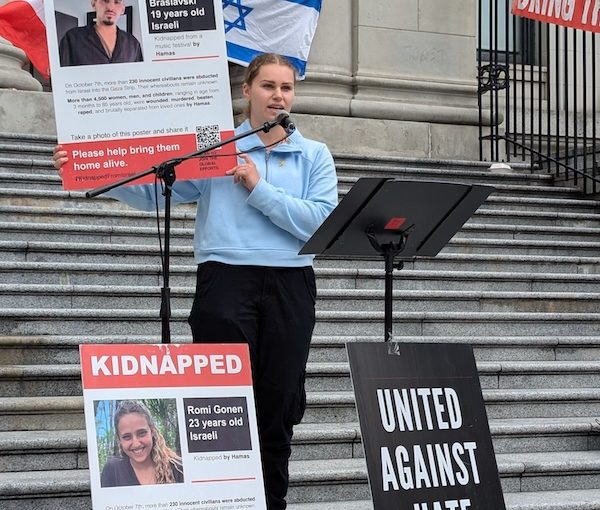
UBC student Zara Nybo, a non-Jewish ally, holds a poster of Rom Braslavski, as she speaks of his heroism before he was taken hostage to Gaza on Oct. 7. (photo by Pat Johnson)

As negotiations continued in Doha, Qatar, for the release of Israeli hostages, the weekly rallies in support of those held, their families and all Israelis continued Sunday, Aug. 18, at the Vancouver Art Gallery.

“As a university professor and as a Jew, I have been forced to witness the frontlines of a propaganda war to dehumanize and demonize Jews and to delegitimize the nation of Israel,” said Prof. Steven Plotkin, a University of British Columbia physicist.

The Hamas strategy is one of “asymmetric warfare,” he said, in which they bait Israel Defence Forces with attacks and hostage-takings, then use their own Palestinian civilians as human shields, knowing that the casualty numbers and horrible images will evoke sympathy in the West.

“And we’ve seen it,” he said. “The encampment and the protests at UBC quickly turned from advocating for the human rights of Palestinians to a call for the end of Israel.”

On campus, the messages he saw included the now familiar “From the river to the sea, Palestine will be free,” but others on the same theme, including “We don’t want your two states! Take us back to ’48” and “Resistance is justified when you are occupied.” Another common refrain, he said, is “‘Globalize the intifada.’ That means bring terrorism everywhere, including here in Canada.”

“Long live Oct. 7” was yet another slogan the professor saw on his campus. 

“Let that sink in,” he said. 

When reports of extensive sexual abuse by Hamas and other Palestinians who broke through the border on Oct. 7 became known, he said, “I saw posters at UBC that announced a discussion group for ‘the lies that Zionists spread about the sexual abuse that didn’t occur on Oct. 7.’”

Plotkin reflected back to the days after the 9/11 terror attacks in New York City, when people put up posters of their lost loved ones.

“Could you imagine what kind of person would think to tear one of those down? No one would have dreamed of it,” he said. “And now we’re seeing a world whose moral compass has completely lost its direction.”

Posters of Israeli hostages are routinely torn down at UBC, elsewhere in Vancouver and around the world. Plotkin shared a psychological hypothesis for why this desecration is so rampant.

In the identity-centred worldview of many activists, Plotkin said, morality is determined by one’s position in the hierarchy of oppression.

“The less powerful are pardoned, the more powerful must be guilty,” he said. Because Hamas is less powerful than Israel, Israel must be guilty, despite the evidence of Hamas murdering, raping and abducting Israeli civilians. 

“A hostage poster, however, throws a wrench into that framework because it forces them to cope with the idea that the people that they thought were oppressed could actually be in the wrong,” Plotkin said. “Their whole simplistic worldview of the blameless oppressed and the evil oppressor is undermined by the ugly facts contained in the posters. A hostage poster induces a cognitive dissonance and, rather than question their own worldview, it’s easier for them to see it as pro-Israel propaganda designed to elicit their sympathy for the Jews in Israel, the bad guys, and so they feel compelled to tear the poster down.”

Eyal Daniel, a Burnaby high school teacher who specializes in Holocaust and genocide studies and who is president of the Holocaust and Antisemitism Educators’ Association, spoke about how his group was denied recognition by the BC Teachers’ Federation. 

Representing close to 150 educators, the group applied to become one of the BCTF’s provincial specialist associations.

“Our application was rejected without any given reason,” he said. “Currently, there are no educational resources about the Holocaust and antisemitism for teachers in the province.”

Conversely, Daniel said, the province’s 50,000 teachers are bombarded by their union with materials promoting the elimination of the state of Israel.

The provincial government has mandated that Grade 10 students must receive Holocaust education beginning in 2025 and it is said to be working on curriculum materials. 

Despite the lack of recognition from the BCTF, Daniel’s group will continue to work “as if we had been approved,” he said.

“Therefore, these days, we are in the process of constructing a new website, developing useful, meaningful professional development opportunities for teachers, assessing and developing appropriate educational materials and working with the minister of education on the upcoming Grade 10 Holocaust education curriculum framework,” he said.

Daniel spoke of his family’s recent visit to Israel, where they visited the site of the Nova music festival.

“Stepping out of the car into the desert heat, we were immediately surrounded by the haunting silence,” he said, “but, yet, 364 voices called out from the ground: Where is the humanity? The Nova memorial site is a barren killing field where humanity ceased to exist.”

Rabbi Susan Tendler of Congregation Beth Tikvah, in Richmond, spoke of the need for dialogue.

“In civic discourse … we’re yelling more than we’re listening,” she said. “So many of us will talk about the need to listen to one another but instead we’re just angry and have an inability to actually talk to one another.”

She asked people to see the humanity of others as a starting point to dialogue.

“To be a Jew means to respect and understand that every single human being was created in the image of God,” she said. “Let us continue to work for peace in the region that so, so sorely needs healing.”

Zara Nybo, a fourth-year student at UBC, is an ally to the Jewish community, president of the Israel on Campus club, and an Emerson Fellow with the international advocacy group StandWithUs. She shared recollections of a training conference in Los Angeles from which she and scores of other campus activists recently returned. At an LA rally for the hostages, she heard profoundly moving testimonies from family members of those still held in Gaza.

“Most people around me, men, women, had tears streaming down their face,” said Nybo. “We were all holding each other in collective grief.”

The mother of Rom Braslavski spoke of how her son had been a security guard at the Nova music festival and took it upon himself to hide the bodies of murdered women, both so they would not be taken to Gaza and so that they would not be posthumously raped or mutilated, as he had seen other female bodies desecrated. Braslavski was taken hostage in Gaza.

As Nybo and her fellow students prepare for the new academic year, she emphasized the training they have undergone and the determination with which they will return to campus.

“I will tell you we are committed to this fight,” she said. 

Richard Lowy, who has provided vocal and guitar inspiration at almost every rally for months, spoke of the hope that a resolution will come through negotiation.

Event organizer Daphna Kedem recounted the rally in Tel Aviv the evening before and expressed hope that the hostages will be released soon and that the weekly rallies she has organized for 10 months will cease to be necessary.

Format ImagePosted on August 23, 2024August 22, 2024Author Pat JohnsonCategories LocalTags antisemitism, BCTF, Bring Them Home, Daphna Kedem, Eyal Daniel, Hamas terror attacks, Holocaust education, hostages, Oct. 7, rally, Richard Lowy, Steven Plotkin, Susan Tendler, terrorism, Zara Nybo
Vigil marks nine months

Vigil marks nine months

The weekly rally at Vancouver Art Gallery marked nine months since the pogrom of Oct. 7. (photo by Anna-Mae Wiesenthal)

Selina Robinson, the former BC cabinet minister whose planned speech at Vancouver’s weekly rally for the hostages was canceled over security concerns earlier this year, was the surprise speaker Sunday at the vigil marking nine months since the pogrom of Oct. 7.

“I was out here nine months ago, representing government and the Jewish community … as we mourned together the slaughter of young people, the rape of women, the death of so many innocent people perpetrated by Hamas,” Robinson said. “I took it upon myself to make sure that we did right by the Jewish community and I took that honour with great reverence and commitment. I did so at the request of [then-premier] John Horgan and then I did it at the request of [current premier] David Eby and I did it diligently, as best I could. And we watched as a government what happens when hate goes unchecked. I never thought in my life, really, that I would see this level of hatred directed toward Jews.”

photo - Selina Robinson speaks at the July 7 vigil
Selina Robinson speaks at the July 7 vigil. (photo by Anna-Mae Wiesenthal)

She lauded fellow elected officials who stand with the Jewish community and said there should be unanimity.

“On this issue, we should not be divided,” said Robinson, a former minister of finance who was minister of postsecondary education when Eby, the premier, demanded her resignation after comments she made on a webinar calling pre-state Israel a “crappy piece of land.”

She credited Jewish organizations and allies for the work they are doing, but warned of a steep road ahead.

“We have a lot of work to do, my friends,” she said. “The antisemitism that has been unleashed is going to be hard to put back in the bottle.”

Congregation Beth Israel’s Rabbi Jonathan Infeld had harsh words for Robinson’s treatment at the hands of colleagues.

“Let’s tell the truth of why Selina was kicked out of cabinet,” Infeld said. “The reason is because Selina was the one representative of the Jewish people in cabinet. Selina was the one person in cabinet, in our government, willing to stand up not for some people’s human rights but for all of our human rights. Selina was kicked out of cabinet because she was a strong woman who stood for all that our province is supposed to stand for and she was kicked out of cabinet because she is a Jewish hero.”

BC Conservative Party leader John Rustad spoke, and was joined at the rally by fellow Conservative MLA Elenore Sturko and a number of Conservative candidates standing in October’s provincial election.

“I am proud to say that I stand here with you,” said Rustad. “I stand against terrorism. I stand against Hamas and what they have done.”

The government in British Columbia needs to do more to counter antisemitism, he said. 

“People who come to this province, to live here, come here with the expectation that they will live in peace,” Rustad said. “They come with the expectation to be able to raise a family, to be able to build the future, and what we are seeing today, with the antisemitism that is happening throughout our communities, I just find completely wrong.”

Ezra Shanken, chief executive officer of the Jewish Federation of Greater Vancouver, expressed pride in the community he serves. He urged elected officials to stand with the community. 

“We remember who was there on day one and we see who’s there now and that’s something that we have to stand up for here in our province and in our country,” he said. “We need them side-by-side by us and you need to be the ones to continue to tell them at all levels of government that we need them now more than ever.”

photo - Approximately 120 hostages are still being held in Gaza, more than nine months after the Hamas attacks on Oct. 7
Approximately 120 hostages are still being held in Gaza, more than nine months after the Hamas attacks on Oct. 7. (photo by Anna-Mae Wiesenthal)

Lior Noyman, an Israeli-Canadian educator and filmmaker, expressed sorrow for victims of violence in Israel and Gaza. He warned the audience to be vigilant against expanding antisemitism.

“Leaders, teachers, parents, Canadians, I am calling to you all,” he said. “Don’t let them walk us back in time.”

Dov (David) Rosengarten, a Vancouverite who is chief of staff for donor communications at United Hatzalah, Israel’s network of 7,000 volunteer first responders, brought greetings and gratitude from Israel. 

“Your display of unwavering solidarity every weekend here continues to give us strength through this difficult period,” he said. 

Noting the nine-month period since Oct. 7, Rosengarten drew parallels with the human pregnancy term, except that these past 40 weeks have been a time of unprecedented trauma. He sees hope in news of a ceasefire plan and hopes that “these painful birth pangs will end and the citizens of Israel and the Jewish people at large, including here in Vancouver, will be reborn again. After these many painful months, these cries of sorrow will be transformed to jubilation and we will finally hold our beloved hostages and loved ones again and celebrate the victory of unity and, like with a newborn child, we will shape for ourselves a bright future full of new dreams and possibilities.” 

Format ImagePosted on July 12, 2024July 10, 2024Author Pat JohnsonCategories LocalTags Dov Rosengarten, Ezra Shanken, hostages, Israel-Hamas war, John Rustad, Jonathan Infeld, Lior Noyman, Oct. 7, Selina Robinson, solidarity, weekly rally
Oct. 7 heroes support Team Israel-Premier Tech

Oct. 7 heroes support Team Israel-Premier Tech

Oct. 7 survivors Sharon Shabo, left, and Avida Bachar lead Team Israel-Premier Tech riders in the team’s final training session before the Tour de France started on June 29 in Florence, Italy. (photo by Noa Arnon)

Three injured heroes from the Oct. 7 Hamas terror attacks came to support Team Israel-Premier Tech at the Tour de France. As well, they held signs bearing the names of hostages, some of whom are their close friends, and called for their release. Alongside them stood Israel-Premier Tech owners Sylvan Adams and Ron Baron.

“My friends from the kibbutz are suffering there. We can’t wait another moment,” said Avida Bachar. He lost his son and wife, who were murdered in their shelter in Be’eri on the morning of Oct. 7, while he himself was severely injured and lost his leg. Despite adapting to his prosthetic, Bachar insisted on riding his bike for the first time since his injury to lead the Israeli team in their final training session. “It was an immense moment, one of the most emotional of my life,” he said.

Joining Bachar was his good friend Sharon Shabo, who was seriously injured in a Hamas ambush on the morning of Oct. 7 while riding his bike, and 20-year-old Oded Gelbstein, a young combat engineer soldier who was critically wounded in Gaza and is currently undergoing rehabilitation in Florence.

“Avida and Sharon will be our great inspiration at the Tour de France,” said Adams to the team riders before the race started.

The Tour de France lasts three weeks, during which the riders cycle more than 3,400 kilometres. Twenty-two teams are taking part in the 21-stage race, which culminates in Nice, France, on July 21. 

– Courtesy Team Israel-Premier Tech

Format ImagePosted on July 12, 2024July 10, 2024Author Team Israel-Premier TechCategories WorldTags hostages, Oct. 7, resilience, survivors, Tour de France

Small wins amid gloom

The rescue of four Israeli hostages from Gaza last week and their reunions with their loved ones is a bright spot amid much dismal news – though there remain 120 hostages whose reunions with their families we dream of and hope will happen soon.

This rescue has been a source of tempered joy for Israelis and others. In a time of tragedy and despair, these moments are worth appreciating. Amid the relief, we mourn the life of the Israel Defence Forces officer who died from wounds received during the operation and we mourn the lives of the many innocent Gazans lost. Holding this tension is weighing mightily on many of us, knowing that placing hostages among civilians is a deliberate and overwhelmingly cruel strategy of Hamas.

Closer to home, we are not without bleak news, but neither are we bereft of hopefulness.

The arson attack on Schara Tzedeck Synagogue two weeks ago is deeply troubling and scary. The outpouring of support and empathy from so many is a silver lining. Clergy, elected officials, multicultural community leaders and ordinary folks have expressed solidarity with Schara Tzedeck and the broader Jewish community.

A few less monumental but hopeful items crossed our desks recently.

The Vancouver Comic Arts Festival, which had earlier canceled the participation of artist Miriam Libicki, issued an apology for their actions – and announced that “the vast majority” of individuals who had perpetrated Libicki’s banning had resigned from the organization’s board.

Suffice to say, this is not the foremost news story this year. But it is surprisingly uplifting when a glimmer of common sense emerges where intolerance had once prevailed.

Libicki had been canceled ostensibly because she had served, once upon a time, in the Israeli army. IDF service was also the excuse used when inspirational speaker Leah Goldstein, a BC resident, was canned from an International Women’s Day event in Ontario in March. 

Assertions that an artist (or performer or whoever) is being excluded because they served in a military that we see every day in the news engaged in a tragic conflict may seem legitimate, or at least not quite as blatant as, say, posting a sign that reads “No Jews allowed.” Notably, though, no such litmus test, to our knowledge, has ever been applied to any artist (or whoever) in Canada based on their service in any other national armed forces – and, given the diversity of our country, we can be pretty much assured that we have citizens who have served in many of the world’s most tyrannical and nasty, even genocidal, militaries.

Other excuses to ban Jews or pull Jewish- or Israel-related work from events, exhibits, performances, etc., have also included enough plausible deniability to steer just clear of indisputable antisemitism.

Goldstein’s cousin, local photographer Dina Goldstein (it’s sadly becoming a family affair), was recently removed from a group exhibition. In this instance, the gallery claimed financial considerations were the deciding factor.

Then there are cases where venues pull an event or performer based on security concerns, as the Belfry Theatre in Victoria did with their scheduled performance of the play The Runner. They had reason to fear violence – the theatre was vandalized amid the controversy. But cancelations based on security concerns, as valid as they may seem, give an effective veto to those who are potentially violent.

In the shadow of the Belfry decision, The Runner was pulled from the PuSh Festival in Vancouver, the stated reason being that another artist threatened to pull their work from the event if the play was mounted. 

In addition to cancelations, there is plenty to raise alarm bells about anti-Israel bias in the public education system, as well, as we are forced to outline in discouraging detail elsewhere in this issue, with the BC Teachers’ Federation making some controversial decisions. But, again, here some reason prevails, though not from the BCTF.

The Burnaby school district took what it called “immediate action” when it became known that elementary students had been given an exam question asking them to make a case for and against the existence of the state of Israel. We could fill volumes with outrage about the unmitigated nerve of a teacher thinking this was a legitimate subject for grade sixers (if it was on the exam, one can only imagine what the same educator said in the classroom) but let’s take some solace that there were reasonable people in a position of authority to respond when this became public.

In further good news in the education realm, on June 1, the University of British Columbia’s Vancouver Senate soundly rejected (by a vote of 49 to 16) a motion urging the university to cut ties with institutions in Israel.

In challenging times, it is even more necessary to acknowledge and celebrate small victories and acts of decency. It is an act of individual and communal resistance to remain hopeful and steadfast in pursuit of peace and justice. 

Posted on June 14, 2024June 13, 2024Author The Editorial BoardCategories From the JITags antisemitism, arson, BC Teachers' Federation, BCFT, cancelations, Dina Goldstein, education, Gaza, hope, hostages, IDF, Israel Defence Forces, Israel-Hamas war, Leah Goldstein, Miriam Libicki, PuSh Festival, Schara Tzedeck, The Belfry, UBC, University of British Columbia, Vancouver Comic Arts Festival
Rally highlights resilience

Rally highlights resilience

Those who gathered for the weekly rally to call for the release of the Israeli hostages take their message down Georgia Street on Sunday, March 17. (photo by Cynthia Ramsay)

After five months of attending almost every one of the weekly rallies for the Israeli hostages, I found myself Sunday on the other side of the crowd. Daphna Kedem, the organizer of these events, invited me to address the audience on March 17, alongside Rabbi Philip Bregman and Michael Lee, member of the Legislative Assembly for Vancouver-Langara.

I was speaking on nobody’s behalf but my own, although my nearly 30 years of writing for this Jewish newspaper, my being the director of Upstanders Canada, which fights antisemitism, and just generally my being a non-Jew who is a keen Zionist, were presumably the reasons I was asked to speak.

Someone whose primary role is reporter does not like to become part of the story. This is different. I am a journalist (among other things) but there are identities and values that, in my view, supersede journalistic constraints – support for democracy, for example, and free expression. Zionism covers a wide swath of opinion and experience and I fall on that spectrum. There is no point in pretending I don’t. 

Several people have requested that the Independent print the full text of my remarks. We have not done this for other speakers over the past five months, and this issue is jam-packed with news around related topics of allegations of antisemitism in the province so there is not space to run the entire speech. However, we have posted it on the paper’s website, with apologies to the dozens of speakers whose words have not been shared in their entirety over the past five months. Insider privilege, undoubtedly.

Even though the audience at these vigils is overwhelmingly Jewish, I felt my message should be aimed at non-Jewish people.

I’m also angry, and I decided to let that show. In addressing those gathered at the Vancouver Art Gallery, where the weekly rallies for the Israeli hostages are held, I observed that I was standing on the same steps where, days after the pogrom of Oct. 7, people stood and celebrated murder, rape, beheadings and kidnappings. 

“We mourn,” I said, “We grieve every single innocent life lost. We do not celebrate dead innocents. Neither do we tally up bodies in a grotesque competition where the side with the most dead wins moral victory.”

I warned that it is not only Jews and Israelis who are threatened by the behaviours of anti-Israel activists.

“The violence, coercion, intimidation and racism these people embody is a threat to Canada … to our civility, our peace, our multiculturalism and political discourse,” I said.

Maybe, I suggested, there are Canadians who don’t care if the Jewish people lose their country.

“But when they wake up and see that Canadians have lost ours … Jewish Canadians and their allies will be asking: Where were you? Where were you when we were standing up for the values that Israelis and Canadians share? Where were you when we demanded ‘bring them home’? Because, if you are not standing with Israelis against extremism … you are emboldening extremism in Canada.

“This is not about choosing between Israelis and Palestinians,” I said. “Unlike the extremists, we want peace for everyone. This is about choosing between civilization and barbarism. And we need to ask every Canadian:  Which side are you on?”

Before I spoke, Kedem shared comments made the night before at the weekly rally in Tel Aviv, with relatives of living and dead hostages urging Prime Minister Binyamin Netanyahu to do everything in his power to negotiate their release.

Kedem told the crowd that former cabinet minister Selina Robinson was to address the rally but security concerns prevented her from attending.

“I think it’s very, very sad moment for us that we can’t have a Jewish representative walk the streets of Vancouver in 2024,” said Kedem. 

Robinson sent remarks, which were read by Kamiel Kruse. Those remarks can also be read in their entirety on the Independent’s website. Robinson stressed the rally’s theme of resilience, sharing many examples of where she finds resilience.

“Resilience comes from seeing the Oct. 7 survivors of rape and torture pick up the pieces of their lives. It comes from seeing Israelis gather once again to protest their government. It comes from so many of you who have reached out with words of support, encouragement and love,” wrote Robinson.

“Resilience comes from us gathering our collective strength as we lift each other up and remind ourselves that we are not alone – that together we will find the strength – the strength to bring peace,” she concluded.

Bregman – who was the senior rabbi of Temple Sholom from 1980 until 2013 and then was executive director of Hillel BC and created the Other People, an interfaith and multicultural group that has spoken to some 7,500 students and faculty about racism and bigotry – also spoke of resilience.

He contextualized current events as part of a very long Jewish history, with almost 4,000 years of steadfastness in the face of challenges, Temple destructions, expulsions, Crusades, pogroms and worse. He spoke of his own experiences growing up with antisemitism in rural Ontario, and the firebombing of Temple Sholom synagogue, then on West 10th Avenue, on Jan. 25, 1985.

Through all this ancient and modern history, Bregman said, one thing has remained constant.

“The message is clear. We are not going anywhere,” he said. “We are here.”

Lee had just returned from Germany and a meeting of state and provincial legislators from the United States, Germany and Canada. He reflected on the extremism that is rising in places around the world.

photo - Michael Lee, member of the Legislative Assembly for Vancouver-Langara, addresses the March 17 rally for Israeli hostages
Michael Lee, member of the Legislative Assembly for Vancouver-Langara, addresses the March 17 rally for Israeli hostages. (photo by Cynthia Ramsay)

Part of the BC United party, Lee said he strives to avoid partisanship when speaking at these rallies to help ensure “that the Jewish community is not made a political football” and he assured Jewish community members that they have allies on both sides of the Legislature.

Lee called for the province to fully adopt the International Holocaust Remembrance Alliance Working Definition of Antisemitism because it would clarify discussions. Some of the commentary being heard today falls directly into at least one of the examples accompanying that definition, he said.

“Denying Jewish people the right of self-determination by calling the state of Israel a racist endeavour is an example of antisemitism,” he said.

Lee was recently shuffled into the role of opposition critic for the attorney general, a position he had held before, and he said he has called on the AG to take a stronger line in the justice system against potential hate crimes. 

“We need the attorney general to direct Crown counsel to prosecute the Criminal Code violations which are antisemitic and hate crimes incitement to public violence that are antisemitic in nature on our streets,” he said.

Lee lauded Robinson’s work in the Legislature, especially her commitment to the Jewish community.

“I am very disappointed, like so many of you, that she is not able to be here with you,” said Lee, who has spoken admiringly in the Legislature and elsewhere about Robinson. “But she is with you, you know that. Selina has always been with you. She will always be with you.”

Throughout the afternoon, Mia Mor sang and Richard Lowy joined on guitar and vocals. 

Format ImagePosted on March 22, 2024March 21, 2024Author Pat JohnsonCategories LocalTags Daphna Kedem, hostages, Israel, Israel-Hamas war, Michael Lee, Pat Johnson, Philip Bregman, Selina Robinson

Posts pagination

Previous page Page 1 Page 2 Page 3 Page 4 Next page
Proudly powered by WordPress