Skip to content
  • Home
  • Subscribe / donate
  • Events calendar
  • Business Directory
  • FAQ
  • News
    • Local
    • National
    • Israel
    • World
    • עניין בחדשות
      A roundup of news in Canada and further afield, in Hebrew.
  • Opinion
    • From the JI
    • Op-Ed
  • Arts & Culture
    • Performing Arts
    • Music
    • Books
    • Visual Arts
    • TV & Film
  • Life
    • Celebrating the Holidays
    • Travel
    • The Daily Snooze
      Cartoons by Jacob Samuel
    • Mystery Photo
      Help the JI and JMABC fill in the gaps in our archives.
  • Community Links
    • Organizations, Etc.
    • Other News Sources & Blogs
  • JI Chai Celebration
  • JI@88! video

Recent Posts

  • Or Shalom reopens its doors
  • JFS from past to future
  • Need holistic approach
  • Sharing stories, advice
  • Journalist shares fears
  • Skills to live together
  • Road to independence
  • Cutting grass with scissors
  • Zionism as a solution
  • Deceit, desire & the divine
  • Reclaiming sacredness
  • Creative project ideas
  • Summer squares and cobbler
  • Thou shalt … summer commandments
  • Legal help for students
  • Revisiting myth of Lilith
  • Wrong person rebuked
  • Canada’s mixed messages
  • Questions for museum
  • Symposium on antizionism
  • Making soccer political
  • CJPAC lauds Pulver’s impact
  • City recognizes Vrba’s legacy  
  • Organ donation saves lives
  • Theodore’s March premiere
  • A healing Shabbaton
  • Supplying healthy food
  • A chime of metal tags
  • Yellowknife seder a first
  • Ishai energizes, unifies
  • A Lag b’Omer to remember
  • Expanding the healing
  • Hannah Senesh – a unique hero
  • Community milestones … May 2026
  • Sharing her testimony
  • Fall fight takes leap forward

Archives

Follow @JewishIndie
image - The CJN - Visit Us Banner - 300x600 - 101625

Tag: Holocaust

Integration policy misguided

Integration policy misguided

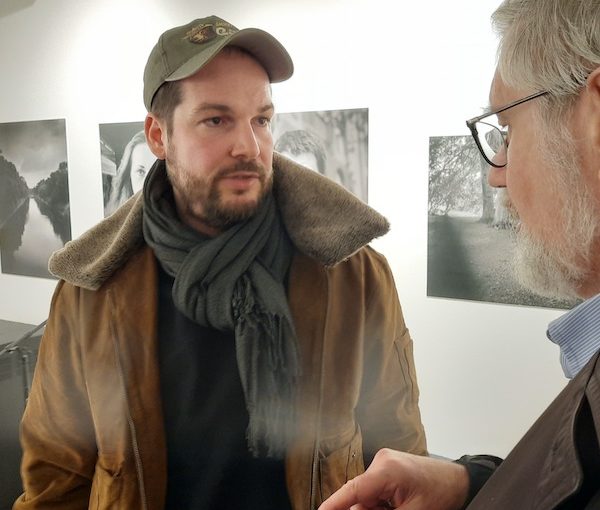
Max Czollek, left, speaks with Prof. Chris Friedrichs, after Czollek launched his new book here Jan. 19. (photo by Pat Johnson)

German attempts to create a cohesive national narrative into which newcomers must integrate is a mistake – and the role Jewish Germans play in this “Theatre of Memory” is especially problematic, according to Max Czollek, a provocative thinker who was hosted by the Cherie Smith JCC Jewish Book Festival last month.

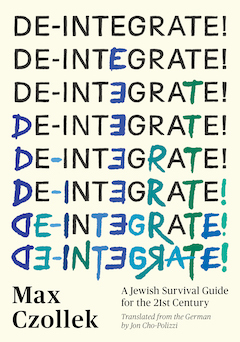
Czollek visited Vancouver Jan. 19, the only Canadian stop on a North American tour promoting the English translation of his book De-integrate: A Jewish Survival Guide for the 21st Century. He excoriated the German integration process as an ideological disaster.

“The only integration Germany has done well is the integration of old Nazis,” he said, explaining that about 99% of Nazi core perpetrators never met justice and, in fact, often succeeded in postwar Germany despite their wartime activities. By contrast, he notes in his book, those who challenged the Nazi regime were often viewed in the postwar context as politically untrustworthy: “[A]fter all, they had already revealed themselves as willing to resist the structures of the German state before.”

While the failure of the larger integration scheme is a theme of Czollek’s book, his main thesis is that Jews are being used to cover up the atrocities of the past. In the contemporary German narrative of integration, newcomers to the country are expected to assimilate into a vaguely defined “guiding culture” (Leitkultur) and not misbehave, Czollek told an audience in the Zack Gallery. But, despite that the vast majority of German Jews are migrants, too, that expectation is not imposed on them. Instead, Jewish Germans are assigned a different and unique role in a German narrative that seeks a return to a normality that was shattered by the Nazi era.

Positioning German Jews collectively as bit players in a larger narrative of redemption reduces them to a cover for the history of their own destruction, he argued: “Because, as long as there are Jews in Germany, then Germans can’t be Nazis.” He later said, “We don’t feel this is our function – making Germans feel good again.”

Czollek, who was born in East Berlin in 1987, two years before the reunification of Germany, explained the different postwar experiences of the tiny Jewish populations of East Germany and West Germany. Numerically, though, these experiences are overwhelmed by those of post-Soviet Jews: 90% of German Jews are migrants from the former Soviet Union or their descendants, he said. And these migrants (or, in the term used for their children and grandchildren, “postmigrants”) are excluded from the burdens placed on other newcomers, especially Muslims. In fact, said Czollek, Muslim immigrants play a role in this narrative, too, in which “good Germans” must now protect Jews against perceived threats from Muslims.

image - De-integrate book coverThe author looks with a particularly jaundiced eye at German Jews who subscribe to this narrative, such as those who vote for the far-right Alternative for Germany party (AfD) based on anti-Muslim and anti-immigrant policies. “Maybe the next time the mosques are going to burn first, but then the synagogues are going to be next,” Czollek said. “We know if the Muslims won’t be able to live safe in Germany, then the Jews won’t either.”

The very idea of a German “guiding culture” is flawed, Czollek argues, not only because the unification of Germany in the 19th century brought together diverse tribes and groupings into what is now purveyed as a unitary nation, but because the postwar immigration of diverse peoples has made such a unified culture unworkable. “Because, given its current state of social diversity, arriving at an ethnically and culturally homogeneous Germany would simply require ethnic and cultural cleansing,” Czollek writes.

A central flaw in the integration narrative, he argues, is that, no matter how long someone named Mohammad has lived in Germany, they will be subject to different criteria of good citizenship. Neo-Nazis who commit arson against refugee shelters or march down the street chanting “Heil Hitler” are not accused of failing to integrate into the German culture, he noted.

“[A]t what point are you no longer considered an immigrant who refuses to integrate [Integrationsverweigerer], but simply a frustrated German?” he asks.

Czollek contends that the narrative of a prevailing German culture (and integration into it) has seeped from the far-right across the spectrum. “Not a single democratic party platform neglects to centre this term in discussions of social belonging,” he writes. “No discussion panels about migration are complete without someone underscoring the importance of integration.”

Czollek argues for a live-and-let-live approach, but suggests the advocates of integration aren’t interested.

“They can eat weisswurst with sweet mustard for lunch and drink at least one litre of beer a day,” he writes. “I have no problem with that and neither do my friends. And that’s precisely the point that fundamentally separates those of us who would defend a concept of radical diversity from those proponents of German guiding culture: we want to create a space in which one can be different without fear, while the other side wants to implement cultural criteria for belonging that by necessity exclude those who don’t align with their concept.”

The original German version of Czollek’s book was published in 2018, shortly after the far-right AfD had become the third-largest party in the Bundestag. Rather than spurring a backlash against extremism, other politicians took a page from the playbook, he argues, with the parties of the right, centre and left warning of the perils of nonintegrated newcomers.

Czollek views the AfD’s rise as a symptom as much as a cause – “Suddenly things everywhere are staining Nazi brown,” he writes – and he sees a different avenue for political success in the face of the far-right surge.

“I don’t believe Germany will win the fight against the New Right without the votes of (im)migrant, postmigrant, Jewish and Muslim citizens,” he writes. “And this critical – if perhaps unfamiliar – new alliance requires strong narratives, the willingness to accept self-criticism from all sides, and a political vision for a society beyond the current integration paradigm.”

Czollek has a doctorate from the Centre for Antisemitism Research at the Technical University of Berlin, has published books of poetry, and is a co-editor of Jalta, a journal of contemporary Jewish culture. He has been involved in political and multicultural theatre in Berlin for many years but with this, his first nonfiction book (translated into English by Jon Cho-Polizzi), he burst on the scene as a contentious public intellectual. The opposition to his work evoked not just political challenges but also public efforts to discredit him based on his identity as a patrilineal Jew.

Czollek’s presentation, in conversation with Markus Hallensleben, associate professor in the department of Central, Eastern and Northern European studies at the University of British Columbia, was opened by book festival director Dana Camil Hewitt. The main festival runs Feb. 11-16.

Format ImagePosted on February 10, 2023February 9, 2023Author Pat JohnsonCategories BooksTags assimilation, Germany, governance, Holocaust, integration, Max Czollek, policy

Complexities of Berlin

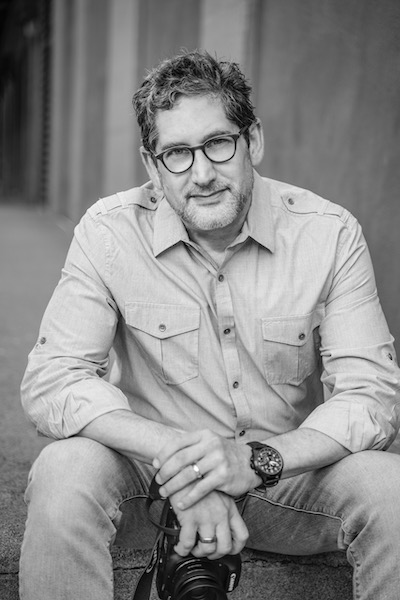
Photographer Jason Langer’s perception of Germany and its capital, Berlin, is a complicated one, and his current exhibition at the Zack Gallery, Berlin: A Jewish Ode to the Metropolis, reflects those complexities. Organized in partnership with the Cherie Smith JCC Jewish Book Festival, the exhibit is Langer’s first show in Canada.

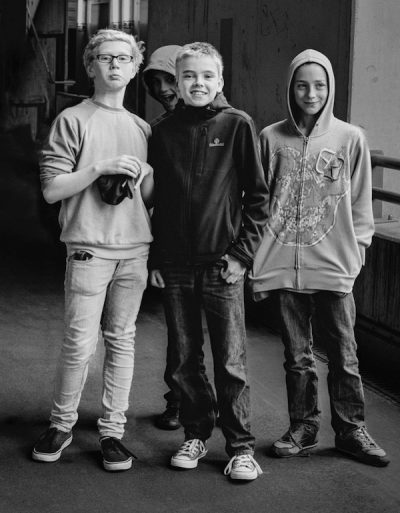
photo - "Boys" by Jason Langer, from his book Berlin
“Boys”  (photo by Jason Langer)

Langer’s newly published book, Berlin, includes 135 black and white photographs. A selection of these images forms the exhibit at the Zack, which has an emotional sophistication of its own, even though the show is being promoted as a prologue for the book festival. Both the show and the book catalogue the artist’s several trips to Berlin and his explorations of the city. They also provide visually compelling commentary on Langer’s contradictory and evolving feelings for Germany.

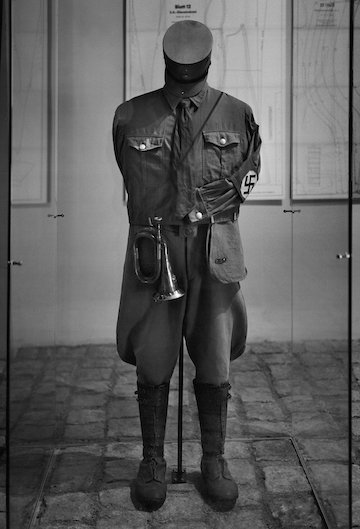
photo - A Nazi uniform in the Sachsenhausen concentration camp museum in Berlin. (photo by Jason Langer)
A Nazi uniform in the Sachsenhausen concentration camp museum in Berlin.  (photo by Jason Langer)

As in life, the then-and-now overlap and, occasionally, the juxtaposition of the past and the present are jarring in Langer’s imagery. On the one hand, Germany is the country where the Holocaust originated, the country that erased its Jewish population almost entirely and spearheaded the destruction of the Jews of Europe. On the other hand, it is a modern country of laughing kids, hardworking people and beautiful architecture, a country that acknowledges its past actions and tries to make amends to the Jews. It is a country inspiring fear, hatred, respect and admiration in varying measures.

Langer writes in an essay about his relationship with Germany and its progression from total negativity to growing understanding. When he was 6 years old, his family moved from his native United States to Israel, where he spent his formative years, until age 11, on a kibbutz.

“Every year, each children’s house would visit the Holocaust memorial, located on the kibbutz property, during Yom Kippur…. We were asked to walk silently and led into a courtyard with one building and three short walls,” writes Langer. “I remember the walls were made of large, rectangular stones, grey in colour and a bit rough and oddly shaped. We learned about how the Jews had suffered, first as slaves in Egypt and then in the Holocaust by the Germans.”

Later, as an adult, he “vaguely remembered having heard fearful stories of German people from my mother and grandmother, though my mother also made jokes about Germans, putting on a comic fake accent. She died in 2003 and I inherited her books, among other things, including a kind of illustrated encyclopedia titled The Wonderful Story of the Jews, written by Jacob Gewirtz. It was published [in 1970], not long before our move to Israel. The text refers to the Germans’ ‘unspeakable crimes’ against the Jews, as well as the ‘unending ravages of war, persecution and tyranny’ they had faced. Some of the illustrations are quite scary, showing buildings on fire and Jewish people menaced by gun-wielding Nazis. The book presents Israel as a place of refuge, the kibbutzim as almost unique.”

After being exposed to such ideas during childhood, Langer’s predominant feeling towards Germany was aversion. But then, in 2008, when he was already an established photographer, one of his friends suggested he photograph Berlin.

“He thought the city would be a good match for my sensibilities but I met his suggestion with trepidation and fear,” Langer recalled. “I harboured many preconceived ideas about Germans and Germany. I imagined Berlin as a vast, cold, unfriendly, gritty place, but, at the same time, it seemed exciting and sexy somehow.

“I decided to see Berlin for myself, keen to challenge my existing ideas and also uncover reminders of the Jewish people who had lived there, until they fled or were hunted down and killed by the Nazis.”

photo - Photographer Jason Langer’s exhibit at the Zack Gallery runs to Feb. 16
Photographer Jason Langer’s exhibit at the Zack Gallery runs to Feb. 16. (photo from Jason Langer)

In the next five years, Langer visited Berlin frequently. “From 2009 to 2013,” he said, “I made five trips for two weeks at a time. I stayed in a flat with about six people. When they were going on vacation, they would let me know, and I would fly over and occupy their rooms. They would also give me advice on where to go.”

During those visits, he took multiple photographs and strived to form a new narrative regarding his feelings and associations regarding Germany and its people.

“This work is an attempt to remember, confront and unwind my attitudes about Germans, Germany, Berlin and my Jewish inheritance; these images are part discovery, part remembrance and part fantasy,” he explained. “They’re my attempt to stand where Jewish people were rounded up and deported, to remember but also reassess. They’re an effort to confront my internal attitudes and prejudices, to look into people’s eyes and find a continuation of kindness, to be open to the happiness of contemporary life in Berlin.”

Some photographs in the gallery are full of anguish and terrible beauty, like the Holocaust Memorial, consisting of 2711 concrete slabs (stelae) of  different heights, or an ornate door of the Stiftung Neue Synagogue, built in 1865, the only synagogue in Berlin to survive the war, though its interior was burnt.

The horror of the war is also reflected in the image of an old, dilapidated shed, the “goat house,” where one Jewish family, a mother and a daughter, hid for several years to survive the Nazis’ attempt to exterminate Jews. No water, no heat, no electricity, just the women’s indomitable spirits and relentless wish to live.

Every photo has a story to tell. Many a story of heroism and tragedy. But there are other pictures, too, reflecting modern Berlin, the city of now. Laughing boys, a tired-looking woman, an anti-fascist demonstration, various streets and buildings.

Langer writes: “It was a strange mix of death and life.… There was a sense of youth, freedom and joy I felt in Berlin.… Whenever I wandered, I took it as a gift of prolonged, uninterrupted time for reflection.”

The artist’s wanderings and reflections led to the creation of the photobook Berlin.

“This book is not a document,” said Langer. “It is a dream within a dream within another dream. Berlin is immense, there was no way I could cast a wide enough net to what it’s like. Instead, I have painted a picture of then and now, pain and pleasure, some people who died long ago and those who are living and young, all from my own perspective.”

Berlin: A Jewish Ode to the Metropolis opened on Jan. 6 and will continue at the Zack Gallery until Feb. 16. For more information, visit jasonlanger.com.

Olga Livshin is a Vancouver freelance writer. She can be reached at [email protected].

Posted on January 27, 2023January 26, 2023Author Olga LivshinCategories Books, Visual ArtsTags Berlin, Cherie Smith JCC Jewish Book Festival, Holocaust, Jason Langer, photography, social commentary, Zack Gallery

Lives shaped by war

Heroism and survival took on new meaning for me after reading George Halpern’s From School to Sky: Joseph’s Tale of War and Gina Roitman’s Don’t Ask. The first is a biography of a certain time in Halpern’s father’s life, the latter is a fictional work that centres around a daughter’s search for her mother’s history during that same time period, the Second World War. Both books are featured at this year’s Cherie Smith JCC Jewish Book Festival.

Halpern takes part in the Feb. 12, 10 a.m., by-donation event A Literary Quickie, in which he and seven other authors each have five minutes to pitch their books. Roitman appears with Lynda Cohen Loigman (The Matchmaker’s Gift: A Novel) in A Day to Celebrate Human Closeness, which takes place at 2 p.m., on Feb. 14 ($18).

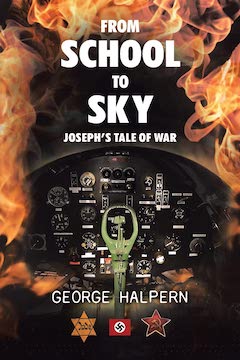
image - From School to Sky book coverHalpern’s pitch to me included only some of the actions that make his father, Joseph Halpern, a hero. In reading the book, which is based on months’ worth of interviews George did with his dad, who died in 2011, I discovered several more reasons. Joseph was a fighter pilot for the Russian Air Force (Joseph’s town, Vladimir Volynsky, was in the part of Poland annexed by the Soviet Union weeks after the war started). He was a Soviet prisoner for a spell, then trained as a special forces commando. He was captured by Nazis on a mission, but escaped. Following the war, he defected (to the Americans in Berlin), taking his Russian plane with him, but then returned to Russia to fulfil a promise he made to someone who had saved his life. He founded an orphanage, helped create the Israeli Air Force, etc., etc.

The most compelling part to me of Joseph Halpern’s story, however, is his honest appraisal of himself, his humility and his humanity, even though he wasn’t always humane. He admits his “fearless attitude would be combined with special training – including brainwashing – and I would truly believe that I was invincible.” He is open about wanting to have killed more Nazis than he did, and that he personally killed someone in an act of revenge. His complexities include the life he had to build after immigrating to Canada, caring for his kids through his wife’s struggle with mental illness, obtaining two doctorates, working with NASA, finding love again and more.

Similarly, though in a fictional setting, Roitman’s novel deals with multi-layered human beings, some of whom survive because they committed acts of which they are not proud – and they carry the guilt for the rest of their lives. As Joseph’s trauma travels beyond his own self and is passed on in some degree to his children, so does the character Rokhl’s carry over to her daughter Hannah.

Rokhl doesn’t talk much, and certainly not about her experiences during the Holocaust, in contrast to her husband, who has already passed away when the novel begins – what little Hannah knows of her heritage has come from her father. Hannah only receives her mother’s wisdom through notes that Rokhl leaves her, the last of which Hannah finds in her mom’s purse after Rokhl dies, apparently by suicide: “I am not her,” it says.

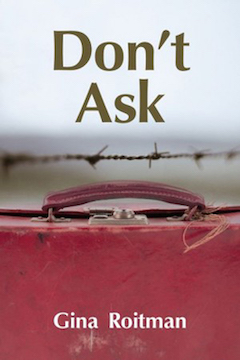
image - Don’t Ask book coverDon’t Ask traces Hannah’s attempt to figure out the mystery of that note and deal with the grief of her mother’s death, while also brokering a real estate deal between a German buyer and a Holocaust survivor who lives in Quebec and owns a tract of land in the Laurentians. Hannah’s parents immigrated to Montreal after the war; Hannah, their only child, was born in a DP camp in Germany, which they had called home. Since the Holocaust, “Her father could not say the word ‘German’ without spitting” and, in her last encounter with her mother, in which Hannah shared the news that she was traveling to Germany, her mother had threatened, “If you go, it will be over my dead body, do you hear me?”

In the guise of a budding romance between Hannah and Max, her counterpart in Germany, Roitman addresses many challenging questions about the intergenerational nature of culpability and forgiveness, of duty to one’s parents and the responsibility for building one’s own life, of nursing hatred or risking love. She does so in a fashion that sometimes pushes belief – for example, Hannah and Max are not young, yet they lack much understanding of what attraction is, and Hannah, despite her professed curiosity about her mother’s past doesn’t explore until the end of the book four boxes of her mother’s notes, which have sat in her closet for an undisclosed amount of time prior to her mother’s death. Yet, Roitman also writes in a way that makes you care about the characters and what happens to them. The story of Rokhl’s Holocaust experiences and that of Hannah’s budding relationship (and the weight of history that it and the real estate deal unearth) are enthralling and Don’t Ask is a hard book to put down until you finish it.

Posted on January 27, 2023January 26, 2023Author Cynthia RamsayCategories BooksTags Cherie Smith JCC Jewish Book Festival, fiction, George Halpern, Gina Roitman, Holocaust, Joseph Halpern, memoirs, non-fiction, Second World War
Recollecting Auschwitz

Recollecting Auschwitz

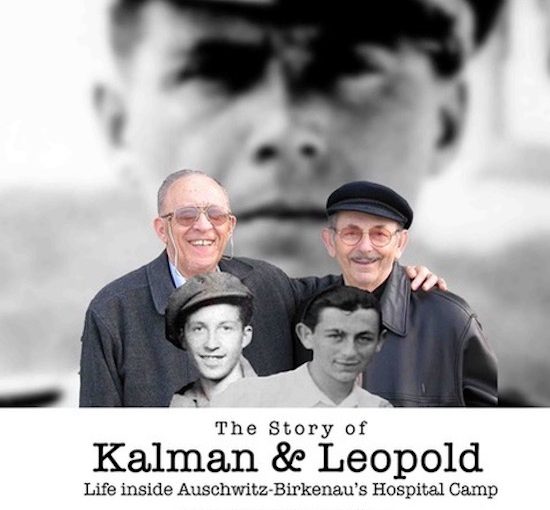
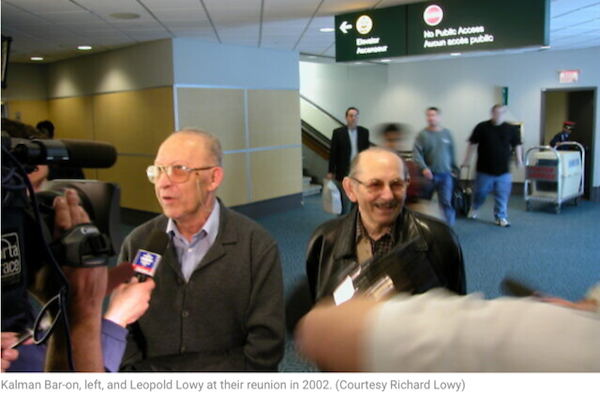
Recollections of day-to-day details at Auschwitz-Birkenau death camp by survivor Kalman Bar-on are being made public for the first time in Canada at an International Holocaust Remembrance Day presentation in Vancouver on Jan. 26 at the Rothstein Theatre.

The Story of Kalman & Leopold features previously unseen testimony, providing a unique glimpse at the Nazi atrocities committed at the extermination camp, given from the vantage point of a Jewish witness posted in a camp guard shack. The presentation takes place on the eve of the 78th anniversary of the liberation of Auschwitz-Birkenau.

The testimony of “Mengele twin” Kalman Bar-on will be revealed by Richard K. Lowy, a Jewish Canadian and the son of Holocaust survivor Leopold Lowy – another twin who was subjected to SS doctor Josef Mengele’s gruesome human experiments at Birkenau’s hospital camp during the Holocaust.

Richard Lowy was on a decade-long mission to preserve his father’s recollections as Canada’s last surviving “Mengele twin” when his efforts yielded an unforeseen link to Bar-on in Israel.

“I will try to paint this map of fear,” begins Bar-on’s testimony, “pointing out the difference between fear from the paws and boot of SS Guard Sgt. Fritsche Fritz, the palpable fear for our lives when witnessing a delivery of the next batch of walking skeletons to the crematorium, the ice-cold grab in my chest when I am lying on the stone table during the periodic medical checks of Mengele, and the ever-present knowledge that no one, but no one, will survive and emerge from Birkenau.”

“We produced Leo’s Journey (leosjourney.ca) in 2000,” writes Lowy. “The documentary was presented in Canada, part of Europe and in Israel.”

When the film played on the National Geographic Channel in Israel on Oct. 31, 2001, an astonishing thing happened, Lowy said. “Precisely 21 minutes and 17 seconds into the film, a picture of my father, Leo Lowy, was shown as a young boy. [A] man dropped his dinner and started yelling at the screen: ‘It’s my Lippa!’ Kalman Bar-On had been looking for his ‘Lippa’ for 56 years. Lippa was his hero in Auschwitz-Birkenau and saved Kalman from beating in the hospital camp’s SS guard shack.”

For (free) tickets to the Jan. 26 presentation, which starts at 6:30 p.m., visit eventbrite.com.

Format ImagePosted on January 13, 2023January 11, 2023Author Richard LowyCategories LocalTags Auschwitz-Birkenau, Holocaust, Kalman Bar-on, Leopold Lowy, memoirs, Mengele
Survivors share their stories

Survivors share their stories

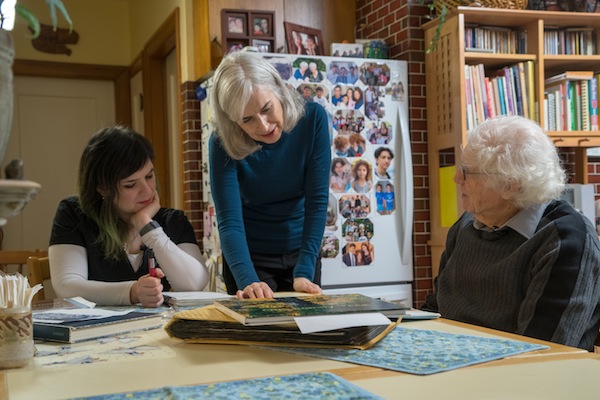
Charlotte Schallié, a University of Victoria scholar and Holocaust historian who is leading the graphic novel project, with survivor David Schaffer and graphic artist Miriam Libicki, left, at Schaffer’s home in Vancouver in January 2020. (photo by Mike Morash)

A University of Victoria project, first announced in January 2020, came to fruition this spring with the release of But I Live, a graphic novel that tells the stories of four Holocaust survivors.

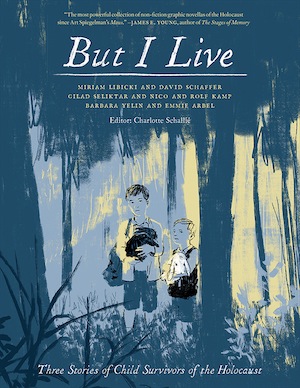
But I Live involved an international team of researchers, students and institutional partners from three continents, and brought together four survivors and three graphic artists to create an autobiographic series recounting one of the darkest periods in human history. The survivors who told their stories were Emmie Arbel (Israel), Nico and Rolf Kamp (Holland) and David Schaffer (Canada). Their stories were transformed into art by Barbara Yelin (Germany), Gilad Seliktar (Israel) and Miriam Libicki (Canada). The project was edited and organized by Charlotte Schallié, chair of the department of Germanic Slavic studies at UVic and head of Narrative Art and Visual Storytelling in Holocaust and Human Rights Education at the university.

image - But I Live: Three Stories of Child Survivors of the Holocaust book cover
But I Live: Three Stories of Child Survivors of the Holocaust was published by New Jewish Press (2022).

“Many people in North America have learned about the history of the Holocaust through survivor stories that are repeated in popular culture, which largely focus on survival in the concentration camps or experiences of hiding in Nazi-occupied territory,” said Schallié. “The three stories in But I Live complicate these mainstream narratives by exploring complex topics such as the burden of memory, the need to testify, the ripple effects of trauma and the impact of the Holocaust on descendants of survivors, for example. As historical documents, they are also important for centring the survivors’ experiences and enabling them to tell their own stories.”

Though the gravity of the crimes committed during the Holocaust is well documented, the majority of visual records were largely produced by the Nazis and their collaborators. “These are important historical sources,” said Schallié, “but a sole focus on documentation produced by perpetrators ignores the value of survivors as living knowledge-keepers.”

An objective of the project, therefore, was to turn the perspective over to the survivors. “A survivor-centred approach to gathering testimony about the Holocaust honours the integrity and humanity of the person’s lived experience, while respecting their right to tell their own story,” Schallié said.

Another consideration in the project was time – the majority of Holocaust survivors alive today were young children during the war and are now in their 80s and 90s. The importance of learning from these knowledge-keepers is increasingly vital.

“If we don’t engage them in our research now, their expertise and experience will soon be lost,” Schallié stressed.

There is, in her view, a moral obligation and duty to collect and preserve survivor testimonies. “Each voice that was marked to be silenced by the perpetrators of these atrocities matters greatly and needs to be heard and acknowledged,” she said.

An additional goal of But I Live is to interest young readers in Canada, where high schools are not mandated to include the study of the Holocaust in their curricula.

“We hope that our visual storytelling work will appeal to youths and young adult readers, and elicit within them a deep sense of empathy that leads them to think critically about the historical past and present,” said Schaille.

“Holocaust survivor stories that are presented as heroic narratives, where the storyline progresses from dark to light – or from a site of danger to one of safety – place a heavy burden and responsibility on survivors, whose life stories and memories are unlikely to conform to that model, and simplifies the reality of their lived experiences. But I Live holds space for fragmented memories, difficult emotions and the afterlife of trauma. In doing so, it complicates mainstream tropes, clichés and iconographic imagery that is sometimes misappropriated or exploited in popular culture,” she explained.

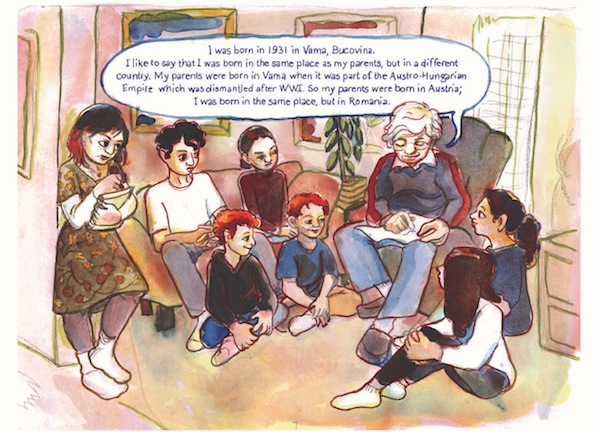
image - A panel from “A Kind of Resistance,” a graphic narrative by Miriam Libicki from interviews with David Schaffer
A panel from “A Kind of Resistance,” a graphic narrative by Miriam Libicki from interviews with David Schaffer. (image by Miriam Libicki)

The work at UVic expands on previous projects, such as the book On Listening to Holocaust Survivors: Beyond Testimony by Henry Greenspan of the University of Michigan, which focuses on survivor accounts while being mindful of the trauma such memories can evoke.

“Eliciting experiences and memories of extreme human suffering from the survivors necessitated a research process and practice that privileged their safety by minimizing the risk of re-traumatization, managing potential triggers and providing sustained support for all participating project partners,” Schallié said. “This approach ensured that we – the stewards of survivor memories – honoured what we felt was our obligation and duty to amplify the voices of the Holocaust survivors.”

But I Live was released by New Jewish Press, a division of University of Toronto Press. A German edition, Aber ich lebe, was published by C.H. Beck in July and has received positive coverage in the German broadsheets Der Tagesspiegel and Die Zeit. In November, the book received a German LUCHS-Preis for literature.

On Oct. 23, But I Live won the 2022 Canadian Jewish Literary Award for biography, presented at York University in Toronto. At the ceremony, the project was lauded for exemplifying “the power of the non-fiction graphic novel to convey the experience and aftereffects of the Shoah.… The historical essays, an illustrated postscript from the artists and personal words from each of the survivors offer a profound meditation on the past and its reach into the present.”

But I Live will be featured at the Cherie Smith JCC Jewish Book Festival here in Vancouver on Feb. 12.

Sam Margolis has written for the Globe and Mail, the National Post, UPI and MSNBC.

Format ImagePosted on December 9, 2022December 8, 2022Author Sam MargolisCategories BooksTags Charlotte Schallié, graphic novel, Holocaust, Jewish Book Festival, survivors, University of Victoria, UVic
Go see Courage Now

Go see Courage Now

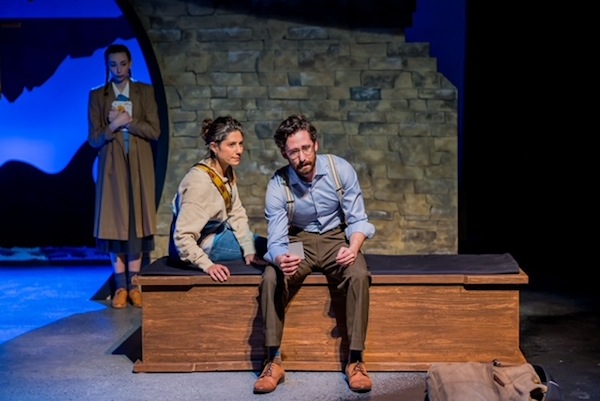
Left to right, Katherine Matlashewski (as Shayna Schneider), Advah Soudack (as Margaret Grant) and Amitai Marmorstein (as Jankl Schneider) in Courage Now, playing at the Firehall Arts Centre until Dec. 4. (photo by Youn Park)

One does not often get a chance to see a world première of a play in Vancouver. After writing my preview article on Courage Now in the last edition of the Independent, I was looking forward with great anticipation to seeing the final product. I was not disappointed.

It is a difficult story to tell but it is done with such sensitivity and style that I highly recommend seeing it. As a child of a Holocaust survivor, any story of courage and heroism arising out of that era resonates with me – this one in particular had me in tears.

From the moment you walk into the intimate Firehall Arts Centre theatre, you know you are about to see something special. The set is austere – a desk, a bench, a lattice-like trellis, an empty wall-mounted picture frame – with a pagoda-style roof and an archway backlit with vibrant colours. (Kudos to set designer Kimira Reddy and lighting designer Itai Erdal.)

To summarize the backstory, Chiune Sugihara, the Japanese consul in Kaunas, Lithuania, in 1940, against the instructions of his government, issued more than 2,300 handwritten visas in a 30-day period to save Jews trying to leave Poland and Lithuania. He was supported in his decision by his wife, Yukiko, who knew the price the family would pay for going against the government edicts. And a price was paid: career loss, humiliation and Sugihara’s self-imposed postwar exile to Russia for 16 years.

The play follows what appear to be two separate narratives that intersect in an unexpected way in the final scene. In 1986, Yukiko (playwright Manami Hara) is forced to revisit wartime when a visitor from Vancouver, Margaret Grant, born Shayna Schneider (Advah Soudack), comes for answers from Sugihara as to what happened to her father after he put her on a train out of Kaunas when she was 13 years old. She has resented her father through the years, feeling abandoned and betrayed by his sending her off alone; she is also coping with a difficult divorce and her own daughter’s hatred. Sugihara has recently died, however, and Margaret must turn to Yukiko for answers instead.

The play opens with Yukiko waking from a dream where she is visited by the ghost of her husband. Then Margaret enters her garden. She tells Yukiko, “I am a Sugihara Jew, Sempo saved my life.” The play then moves through a series of memory flashbacks, as the audience is transported back and forth between 1940 Kaunas and 1986 Japan.

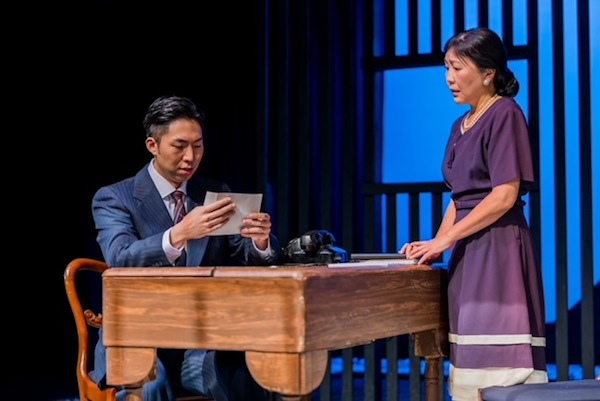
Katherine Matlashewski plays the teenage Shayna and Amitai Marmorstein plays her father, Jankl. Jankl visits Sugihara (Ryota Kaneko) to plead for visas on behalf of the thousands of Jews who have been lining up every day outside the consul’s office. In a touching and poignant scene, something as simple as a shared cup of coffee gives you a sense of the integrity and honour of these two men as they strive to do the right thing. Kaneko plays Sugihara with a quiet intensity and Marmorstein portrays Jankl with dignity. The scene where he sees Shayna off at the train station is heartbreaking – he watches his only child (his “little mouse,” as he calls her) walk away from him, tattered suitcase in hand, in a fog of smoke and the eerie sound of a train whistle in the distance.

photo - Ryota Kaneko plays Chiune Sugihara and Courage Now playwright Manami Hara takes on the role of Yukiko Sugihara
Ryota Kaneko plays Chiune Sugihara and Courage Now playwright Manami Hara takes on the role of Yukiko Sugihara. (photo by Youn Park)

In many ways, the journeys of the two women are love stories. Yukiko grapples with the grief of losing her husband, moving through the stages towards acceptance, and Margaret comes to the realization that it was her father’s love that put her on that train in 1940. Both characters become conduits for the other’s catharsis. When Yukiko shares her husband’s journal from that time, Margaret says, “My father lives in that journal.”

All five of the actors do credit to their roles in this ensemble piece but Hara and Soudack’s performances are sublime. The play is particularly effective when all five actors are on stage at the same time in the memory flashback vignettes.

My one criticism is that there is quite a bit of Japanese dialogue between Kaneko and Hara and it would have been helpful to have either a reader board translating or a program insert with translations.

Hara has penned a lovely tribute to Sugihara and I, for one, am grateful to her for her work.

Courage Now is at the Firehall until Dec. 4. For tickets, visit firehallartscentre.ca.

Tova Kornfeld is a Vancouver freelance writer and lawyer.

Format ImagePosted on November 25, 2022November 23, 2022Author Tova KornfeldCategories Performing ArtsTags Chiune Sugihara, Courage Now, Firehall Arts Centre, history, Holocaust, Japan, Manami Hara, theatre, women, Yukiko Sugihara
Reimagining together

Reimagining together

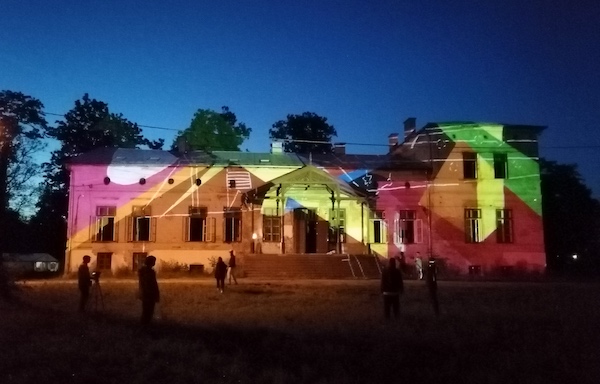
A scene from Site: Yizkor as it was performed in Sichów Duży, Poland, this past June. (photo from Chutzpah!)

Site: Yizkor is both an intensely personal work and a powerful, universally meaningful work. It is ever-changing and spans the past, present and future.

“For me, this project is a gesture of healing,” co-creator Maya Ciarrocchi told the Independent. “My goal for audiences and participants is that, through the process of shared commemoration, we may put aside our differences and look towards a reimagined future.”

Part of this year’s Chutzpah! Festival, Site: Yizkor is a collaboration between Canadian multimedia artist Ciarrocchi and American composer Andrew Conklin. It is an evolving “interdisciplinary project [that] explores the physical and emotional manifestation of loss through text, video and music.” It is an installation (of video, prints and drawings) and a performance, and includes workshops “where participants are invited to create their own Yizkor pages as a way to mourn and commemorate lost people and places.”

“Yizkor books are documents written by Holocaust survivors to commemorate the villages they lived in before the Second World War,” explained Ciarrocchi. “They capture the spirit of these places by describing the day-to-day life of their Jewish citizens. They include lists of the Jewish residents, the structure of political systems and where the best shopping could be found. They also include photographs and maps of the villages drawn from memory. They document a time and place that no longer exist but the traces of which are visible in the contemporary landscape.”

In introducing the project to workshop participants, Ciarrocchi said, “I tell them that, while Site: Yizkorexamines displacement through the lens of Yizkor, which is an inherently Jewish framework, the project is not limited to the Jewish experience. Site: Yizkor is centred on creating a space for shared commemoration and the universal experience of loss.”

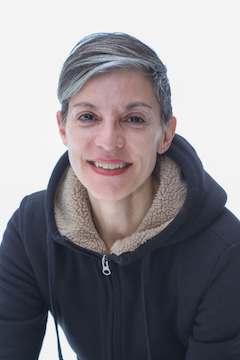
photo - Maya Ciarrocchi
Maya Ciarrocchi (photo © Joanna Eldredge Morrissey)

For the local presentation, Conklin works with a local string quartet for the performance, while Ciarrocchi creates “video projections for the performance that include references to the known and erased histories of Vancouver,” and installs the exhibit in the gallery. She leads the workshops, which include both Jewish and non-Jewish community groups, and participants “are invited to read their text as part of the performances or share them as written documents or drawings as part of the exhibition.”

Site: Yizkor has been presented in New York City and in San Francisco. In June of this year, it was presented in Poland, from where Ciarrocchi’s maternal grandfather immigrated to Canada; Ciarrocchi was born in Winnipeg.

The project began in 2018, when Ciarrocchi was a fellow in the Laboratory for Jewish Culture program in New York City. “At the time,” she said, “I was working on a series of drawings depicting former Polish and Lithuanian wooden synagogues layered with memory maps sourced from Yizkor books. As part of the project, I gave a performance lecture where I read passages from Yizkor books, accompanied by projections of my drawings, maps and photographs from Yizkor books. I concluded the performance by prompting the audience to ‘describe a vanished place of personal importance.’ I collected these texts, and they were incorporated into future performances.”

photo - Andrew Conklin
Andrew Conklin (photo from Chutzpah!)

She met Conklin around when she was in residency at Millay Arts in upstate New York. “He expressed interest in using my drawings of maps as a musical score,” she said. “We then started working on a sound/video project comprising his compositions and my animated maps and drawings.”

In 2019, Ciarrocchi was invited to attend an international meeting of interdisciplinary artists in Poland.

“The group gathered in Sichów Duży, a rural area not far from Staszów, a small town that was once an important centre of Jewish life,” said Ciarrocchi. “The site once belonged to an aristocratic family who lost their lands and titles during the Second World War. The buildings had been restored except for one and, one evening, I projected the video on its surface and played Andrew’s music from speakers inside. It was then I knew that I needed to return to this place and present the work live with musicians inside the structure. In June 2022, after three years, a pandemic and a war, I returned to Sichów with a team of musicians from the U.S., Germany and Poland. We presented Site: Yizkor inside the ruin to an audience comprised of Ukrainian refugees who were being housed on the site. The following week, we presented Site: Yizkor in another ruined manor home outside of Kraków. That iteration included dancers as well as musicians.”

It was an emotional experience.

“Gratitude and relief,” said Ciarrocchi about what she felt afterward. “Gratitude to Andrew and the incredible team of performers we assembled and to the funders who supported the work. Relief after all the planning and delays that we were finally able to bring the work to Poland. It was also exciting to see the project come together so beautifully. In many ways, my first research trip in 2019 was where I felt all the sadness and grief. This year, I was too busy to let myself go into the dark crevasses of my emotions. In 2019, though, I spent most of the three weeks I was there crying. I visited my grandmother’s shtetl, which was incredibly powerful. While sitting on the ground in the old Jewish cemetery there, I released all my grief. Poland is filled with ghosts. One does not help but feel their presence.”

It is in this context that the question asking workshop participants to “describe their dreams of the future” was added to the project.

“I added this part of the prompt in Poland,” said Ciarrocchi. “I realized that, understandably, so much of the Jewish experience there is about memory and the past. I’m two generations removed from the Holocaust and, while its effects are written into the code of my body, I am also interested in how we create something new from the residue of this loss. This also comes from these past years of the pandemic, when there has been such a huge loss of life. We’ve had to reimagine how we live now and in the future.”

The performance and exhibition of Site: Yizkor in Vancouver is the Canadian première of the work.

For a recent grant proposal, Ciarrocchi wrote about the première, “This event will also be a coming home. Site: Yizkor is rooted in research into the land and architecture of a place in relation to the known and mythological histories of my ancestors who fled Poland and Lithuania before the Second World War. My ancestors emigrated to Canada to form a new life for themselves and their descendants. On the surface, their story is one of success. My great-grandfather was a seminal figure in Winnipeg’s garment industry, and my family still benefits from his accomplishments. This story belies how the effects of trauma and displacement have persisted from their origins in Eastern Europe so many decades ago. Forming cross-cultural connections through Site: Yizkor’s performance and workshop model, first in Poland and now in Canada, irrigates ancient inherited wounds.”

Site: Yizkor is co-presented with the Zack Gallery and in partnership with the Vancouver Holocaust Education Centre, with the support of the Jewish Community Foundation. The performance takes place Nov. 19, 8 p.m., at the Rothstein Theatre, and it will livestreamed and available on demand; it will include a facilitated talkback and a reception with the artists. The exhibition and workshops take place Nov. 12-19 in the gallery. For tickets and more information, visit chutzpahfestival.com.

Format ImagePosted on November 11, 2022November 9, 2022Author Cynthia RamsayCategories Music, Performing ArtsTags Andrew Conklin, Chutzpah!, Holocaust, Maya Ciarrocchi, memorial, Poland, Yizkor
Building community bridges – memorial for genocide of Lithuanian Jews

Building community bridges – memorial for genocide of Lithuanian Jews

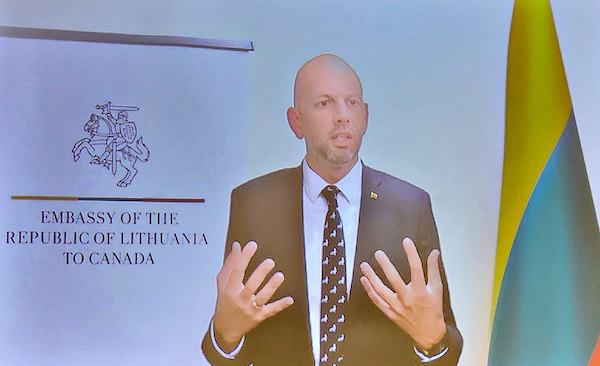
Lithuania’s ambassador to Canada, Darius Skusevičius, greets participants in pre-recorded video. (photo from Lithuanian Community of BC)

As a young teen growing up in Vancouver in the 1960s, I used to be puzzled by Remembrance Day. We were given red poppies at school to honour the soldiers who served Canada during the First and Second World Wars. But I knew my parents had also experienced war, and their families – my grandmothers, aunts, uncles, cousins, even my half-brother and stepsister – had been horribly murdered. Why were there no red poppies for them and the six million others who had died in the Holocaust? Where were their memorial parades, their wreaths?

In Vancouver’s Peretz School, which I attended a couple of afternoons a week to learn about Jewish culture, we commemorated Yom Hashoah, which was established by the Israeli government in 1959. Our commemoration was a small event, important to staff, students and families, but ignored by Canadian society in general. It was not until 2005, when the United Nations General Assembly established Jan. 27 as International Holocaust Remembrance Day, that non-Jews as well as Jews began to join in collective memorialization – or so I thought until quite recently.

In 1994, the Lithuanian Parliament established Sept. 23 as National Memorial Day for the Genocide of Lithuanian Jews. Every Sept. 23, the anniversary of the liquidation of the Vilna (Vilnius) Ghetto, commemorative activities are held at Lithuanian memorial sites, in schools and in other educational institutions. Government institutions, with the support and involvement of local Jewish communities and survivors’ groups, shape the content of these activities, and Jewish and non-Jewish Lithuanians regularly participate in them.

A few years ago, I joined the Lithuanian Community of British Columbia (LCBC), where I currently serve on the board of directors. This year, on Sept. 22, with the support of the Vancouver Holocaust Education Centre (VHEC) and generous volunteers from Lithuanian and Jewish communities, LCBC and its partners, National Memorial Day for the Genocide of Lithuanian Jews was commemorated. The event, which took place at the Peretz Centre for Secular Jewish Culture in Vancouver, was held for the first time in Canada.

Participants were welcomed by Algis Jaugelis, president of the LCBC, followed by opening remarks by Nina Krieger, the executive director of the VHEC. The ambassador of Lithuania to Canada, Darius Skusevičius, kindly provided a recorded welcome to the event, followed by a written statement from Christopher Juras, the honorary consul of Lithuania in Vancouver.

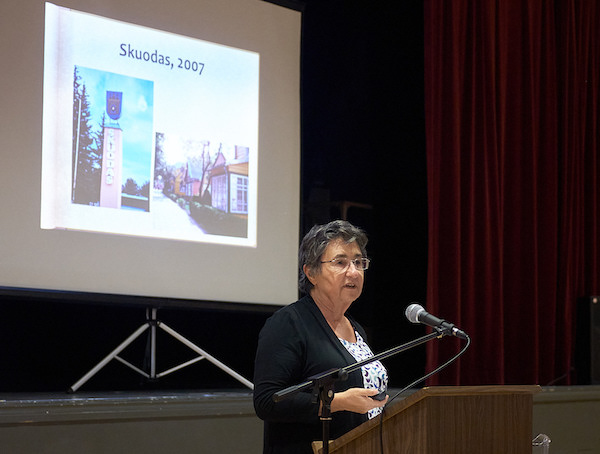
LCBC member and historian Dr. Gene Homel presented an overview of Jewish life in Lithuania from the 1300s to the present day. I gave an illustrated presentation on the Jewish community in my father’s ancestral town in Lithuania, using photos and information found in my research.

photo - Rachel Mines characterizes the lives of the Jewish residents of Skuodas, Lithuania
Rachel Mines characterizes the lives of the Jewish residents of Skuodas, Lithuania. (photo from Lithuanian Community of BC)

Helen Mintz, a Yiddish translator, read a selection from one of her translations of Abraham Karpinowitz’s short stories. Karpinowitz, the son of a theatrical family in Vilna, survived the Holocaust and later wrote several volumes of stories memorializing prewar Jewish life in Vilna.

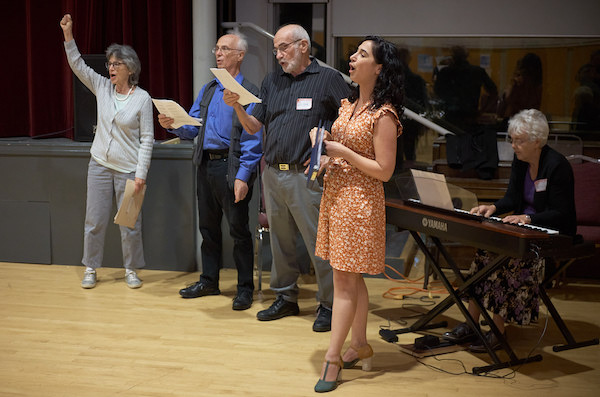
The ceremony ended with the singing of the “Partisans’ Song” / “Zog Nit Keynmol,” written by Hirsh Glick in the Vilna Ghetto, which was followed by a recording of Glick’s words translated into Lithuanian and read by high school student Giedrius Galvanauskas under the auspices of Eli Rabinowitz’s We Are Here! international educational project.

photo - The ceremony ended with the singing of “Zog Nit Keynmol.” Left to right are Celia Brauer, Alan LeFevre, Victor Neuman and Kathryn Palmer. At the piano is Cathrine Conings
The ceremony ended with the singing of “Zog Nit Keynmol.” Left to right are Celia Brauer, Alan LeFevre, Victor Neuman and Kathryn Palmer. At the piano is Cathrine Conings. (photo from Lithuanian Community of BC)

Lithuanian and non-Lithuanian participants found the remembrance ceremony both educational and emotional, and emphasized the importance of dialogue and reconciliation. According to Jaugelis, it was “an important and moving event, an opening of doors and minds, with great potential for future intercultural and bridge-building events.” Andrea Berneckas, another LCBC director, wrote, “It was such a privilege to be part of this solemn, yet beautiful and hopeful event. I look forward to being part of the Lithuanian community’s strengthening of ties by the sharing of stories and experiences.”

“I look forward to more opportunities to bring the communities together,” said Krieger. And Celia Brauer, a local Yiddishist whose parents survived the Holocaust in Latvia and Poland, summed up the general feeling: “We are far away from the original homeland, yet this event brought people closer together – which is incredibly important.”

National Memorial Day for the Genocide of Lithuanian Jews is now on LCBC’s yearly calendar of events and the next memorial will take place in September 2023.

More information about the Lithuanian Community of British Columbia can be found at lithuaniansofbc.com.

Rachel Mines, the daughter of Holocaust survivors, was born and raised in Vancouver. As a child, she attended classes at the Peretz School (now the Peretz Centre for Secular Jewish Culture) and served on Peretz’s board of directors 2015-2016. Mines, whose Lithuanian citizenship was reinstated in 2022, now serves on the board of directors of the Lithuanian Community of British Columbia.

Format ImagePosted on November 11, 2022November 9, 2022Author Rachel MinesCategories LocalTags Canada, education, Holocaust, LCBC, Lithuania, memorial, Vancouver Holocaust Education Centre, VHEC
New play honours Sugihara

New play honours Sugihara

Yukiko and Chiune Sugihara (photo from Firehall Arts Centre)

It is written in the Mishnah that, “If you save the life of one person, it is as if you save the entire world.” Chiune Sugihara saved 6,000 Jewish lives – 6,000 worlds – in the summer of 1940, despite the dangers of doing so to himself and his family.

A new play about Sugihara sees its world première at the Firehall Arts Centre this month. Written by Japanese-Canadian actor and playwright Manami Hara, Courage Now opens Nov. 19.

Contrary to his government’s strict instructions to not issue visas to Jewish refugees, Sugihara, the Japanese consul in Kaunas (Kovno), Lithuania, handwrote in a 30-day period more than 2,300 visas for Jews trying to escape from Europe via the Soviet Union to Japan. Sugihara was a husband, a father, a career diplomat, a linguist, but, above all, with his strict Samurai upbringing, he believed in respect for, and sanctity of, human life. As he said, “They were human beings and they needed help.”

Sugihara’s actions are responsible for more than 40,000 Jews being alive today. Yet, after the war, the Japanese government dismissed him from diplomatic service and treated him as a persona non grata. However, Israel has honoured his courage and his memory on three occasions – in 1985, by recognizing him as one of the Righteous Among the Nations at Yad Vashem; in 2016, by naming a street in Netanya after him; and, in October 2021, by dedicating Sugihara Square in Jerusalem.

In an interview with the Independent, playwright and actor Hara talked about the journey that led her to write Courage Now.

“About 12 years ago, my mentor from Studio 58, Jane Heyman, approached me and asked if I knew about Sugihara and I said that I did not. She told me his story, that her parents and uncle had been saved by him and that she would not be here if not for his actions. We talked about collaborating on a play. Her story and my being Japanese made it very personal for me, as I was very embarrassed by how the Japanese government treated him after 1945.”

Getting a play from conception to the stage is a long process.

“I heard that a Japanese playwright, Hiraishi Koichi, had written about Sugihara. I got a hold of his play, translated it into English and worked with Jane on it but it just did not seem dramatic enough,” said Hara. “I talked to Koichi and asked if I could adapt the play and he gave me permission. So, I researched the Jewish families who were Sugihara survivors and created more scenes. But it still did not seem to have the theatrical weight it needed to be a success so I put it away for a couple years, as I felt I had lost my vision.

“About five years ago, I traveled to Japan and had a chance to speak to Sugihara’s daughter-in-law and two of his grandchildren, which gave me a firsthand intimate look into his life and that of Yukiko, his wife. Then it dawned on me that the way to tell the story was from two female points of view, that of Yukiko and of a child survivor, Margaret. So, I went back to the story and after many years of writing drafts and workshopping, here we are.”

There are five characters in the play: Sugihara, Yukiko, a young Margaret, an adult Margaret (Jewish community member Advah Soudak) and young Margaret’s father (community member Amitai Marmorstein). Margaret is a fictional character, created from the stories of many survivors. Scenes are set up to move between the Lithuanian summer of 1940 and mid-1980s Vancouver, where an adult Margaret now lives.

Hara does double duty in this production, as the playwright and performing as Yukiko. “It is difficult to switch, wearing both hats, you feel like you have a split personality,” she acknowledged. “However, I take off my playwright hat and then I concentrate on my character in terms of what are her needs, where should I be focused and what is happening with the other characters. So, when I am on stage, I am the actor and I let the director take over from there. If he or the other actors see anything that needs tweaking or fixing, they will let me know. It is a very collaborative process. We are three weeks from opening and still finalizing many of the details.”

Hara sees her character as a spirited, stubborn, strong woman, not as stereotypically subservient, but rather as someone who also was idealistic and who was supportive of her husband in all that he did. “She knew the risk to her family and the sacrifice that would have to be made in carrying out her husband’s plan to save the Jewish refugees,” said Hara. “It is an amazing role and I am so honoured to be able to bring this story to Vancouver audiences. I hope the audience takes away that there is always hope, that there is always a way to find courage to walk towards that hope and one should never give up.”

Director Amiel Gladstone got involved in the project, having worked with Hara before.

“She was looking for the right kind of collaborative director for the show and she reached out to me because I work so much with new plays,” said Gladstone in a telephone interview with the Independent. “She told me that she had been hoping for a Jewish director…. I told her that my father was Jewish.”

As to the play, he said, “It is a memory play dealing with two women trying to piece together what happened to them years ago during those dark times. We had to create a space that includes both 1940 and present-day locations: a Japanese home and garden, a Jewish refugee apartment, the Kaunas consul office, a park, the train station, with all the locations in view at the same time. It becomes a dream world, where the actors move from set to set as they go back and forth in time. Itai Erdal’s lighting design will inform the audience as to the change in time and place.” (Erdal is also a member of the Jewish community.)

Soudack’s character, in her 50s, is going through a difficult separation and divorce. In an interview with the Independent, Soudack explained, “She realizes that she has a big hole in life, as she does not know what happened to her parents. She travels to Japan to seek out Sugihara and to ask about her father but learns that Sugihara is dead (he died in 1986) so she looks to Yukiko for answers. At the same time, Yukiko is also going back and remembering that time through her interaction with Margaret.”

Soudack had to grapple with capturing the essence of Margaret’s psychological issues, including post-traumatic stress disorder.

“She has broken pieces of memory that she wants to fit together. She has had a difficult life,” said Soudack. “It must have been terrifying to be leaving your family, everything you know and being put on a train and sent off on your own. She has a lot of anger, sadness and abandonment and betrayal issues. She does not form close loving relationships very easily, as she learned that people closest to her disappear. She has to work through all this as she seeks the truth.”

Working with Hara has been a treat, said Soudack. “It is fabulous with the playwright right there so, when a question comes up, she can give us the explanation. It is a beautiful sense of collaboration, respect, joy and appreciation of what she wrote and it is a gift to be right there with her working through this project.”

As to being a Jewish actor in this role, she said, “As a Jewish person, you grow up with the Holocaust and the plight of the Jews – it is so part of our DNA that, when you come across a story and people that you never heard of, it makes you have such gratitude and respect for these non-Jewish heroes who, in the face of so much antisemitism, still found the courage to do the right thing. If I could meet Mr. Sugihara, I would hug him, look him in his eyes and thank him for his bravery and courage.”

Courage Now runs to Dec. 4. For tickets, visit firehallartscentre.ca or call the box office, 604-689-0926.

Tova Kornfeld is a Vancouver freelance writer and lawyer.

Format ImagePosted on November 11, 2022November 14, 2022Author Tova KornfeldCategories Performing ArtsTags Advah Soudack, Amiel Gladstone, Chiune Sugihara, Courage Now, Firehall Arts Centre, Holocaust, Manami Hara, memorial

Talking with authors

The 35th annual Vancouver Writers Festival includes many members of the Jewish community among the more than 115 authors from across Canada and around the globe who will join the events on Granville Island and elsewhere Oct. 17-23.

The festival will celebrate the five shortlisted Scotiabank Giller Prize finalists; engage in conversations with Booker Prize-winner Douglas Stuart, as well as Canadian superstars Heather O’Neill, Billy-Ray Belcourt and Wayne Johnston. It’ll host conversations between emerging Canadian and American poets, novelists and memoirists, and feature flagship favourites like the Literary Cabaret, Sunday Brunch and Afternoon Tea.

The guest curator of this year’s festival is 2021 Scotiabank Giller Prize winner Omar El Akkad, who has invited a wide range of authors, including Noor Naga (Egypt), Elamin Abdelmahmoud (Ontario) and Threa Almontaser (United States) – and many others – to join him for six conversations that focus on home, identity and storytelling

Among the Jewish community members participating in the festival are Méira Cook, with her adult-young adult crossover novel, The Full Catastrophe, in Mecca, Mitzvah and Milestones, and in Wry Humour for Modern Life; Tilar J. Mazzeo (Sisters in Resistance: How a German Spy, a Banker’s Wife and Mussolini’s Daughter Outwitted the Nazis) speaks with Marsha Lederman (Kiss the Red Stairs: The Holocaust, Once Removed); Sarah Leavitt facilitates a workshop led by University of British Columbia’s creative writing department; and Guy Gavriel Kay (All The Seas of the World) takes part in Fabulous Historical Fantasy.

Lederman is one of the authors participating in the The Power of Story: Live Recording for CBC’s The Next Chapter, she hosts Generational Fiction: Stories of Lineage, History and Things Passed Down, and moderates Bestseller to Blockbuster. Actor, theatre critic and UBC professor emeritus Jerry Wasserman moderates Building Suspense, on writing thrillers, and Dr. Gabor Maté talks with Globe and Mail reporter Andrea Woo about his latest book, The Myth of Normal: Trauma, Illness and Healing in a Toxic Culture.

Festival tickets ($25) can be bought online at writersfest.bc.ca or at the event venue, starting 45 minutes prior to the performance. There are discounts offered for regular events to seniors (10%) and youth under 30 (50%).

– From writersfest.bc.ca

Posted on October 7, 2022October 5, 2022Author Vancouver Writers FestivalCategories BooksTags fiction, Gabor Maté, Guy Gavriel, health, Holocaust, Jerry Wasserman, Marsha Lederman, Méira Cook, memoir, nonfiction, Sarah Leavitt, survivors, Tilar J. Mazzeo, Writers Festival, young adult

Posts pagination

Previous page Page 1 … Page 8 Page 9 Page 10 … Page 44 Next page
Proudly powered by WordPress