Skip to content
  • Home
  • Subscribe / donate
  • Events calendar
  • Business Directory
  • FAQ
  • News
    • Local
    • National
    • Israel
    • World
    • עניין בחדשות
      A roundup of news in Canada and further afield, in Hebrew.
  • Opinion
    • From the JI
    • Op-Ed
  • Arts & Culture
    • Performing Arts
    • Music
    • Books
    • Visual Arts
    • TV & Film
  • Life
    • Celebrating the Holidays
    • Travel
    • The Daily Snooze
      Cartoons by Jacob Samuel
    • Mystery Photo
      Help the JI and JMABC fill in the gaps in our archives.
  • Community Links
    • Organizations, Etc.
    • Other News Sources & Blogs
  • JI Chai Celebration
  • JI@88! video

Recent Posts

  • Federation now across BC
  • Israel fighting for its existence
  • Deal strengthens Iran
  • Patriotic belonging diminishes
  • A campaign to engage
  • Upstanders’ first live event
  • Responding to Carney
  • Having your own home
  • Music a family tradition
  • Musical to warm heart
  • Community milestones … June 2026
  • Sharing her passion for Israel
  • Or Shalom reopens its doors
  • JFS from past to future
  • Need holistic approach
  • Sharing stories, advice
  • Journalist shares fears
  • Skills to live together
  • Road to independence
  • Cutting grass with scissors
  • Zionism as a solution
  • Deceit, desire & the divine
  • Reclaiming sacredness
  • Creative project ideas
  • Summer squares and cobbler
  • Thou shalt … summer commandments
  • Legal help for students
  • Revisiting myth of Lilith
  • Wrong person rebuked
  • Canada’s mixed messages
  • Questions for museum
  • Symposium on antizionism
  • Making soccer political
  • CJPAC lauds Pulver’s impact
  • City recognizes Vrba’s legacy  
  • Organ donation saves lives

Archives

Follow @JewishIndie
image - The CJN - Visit Us Banner - 300x600 - 101625

Tag: food

Grab a ferry, head to Buzzy’s

Grab a ferry, head to Buzzy’s

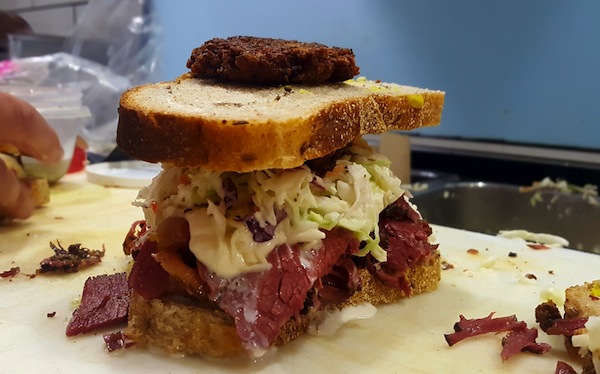
The Hungry Jew, one of the signature sandwiches at Buzzy’s Luncheonette. (photo by Adam Bogoch)

My friend, Adam Bogoch, pitched it as the “Smoked Meat Story.” Soon after that email, he would write his own review, for narcity.com, titled, “This smoked meat sandwich on Salt Spring Island in B.C. will actually change your life.” His friend and colleague, Howard Busgang, had opened a deli on the island, and not only did I need to meet Busgang, but I needed to get on a ferry and taste The Hungry Jew, one of the signature sandwiches at Buzzy’s Luncheonette.

Between the Independent’s annual summer publishing hiatus and the High Holidays, it was November before Adam and I headed to Salt Spring. The travel ran like clockwork and we were pulling up to 122-149 Fulford Ganges Rd. right in time for lunch. We shared a Hungry Jew – a Montreal smoked meat sandwich with homemade horseradish sauce, coleslaw and, I kid you not, two latkes – and the Rabinowitz, Buzzy’s take on a Reuben. They were both incredibly good, and the only reason I’ve waited this long to share the news is because I wanted to wait until better weather, when people would be more likely to take a day or weekend getaway.

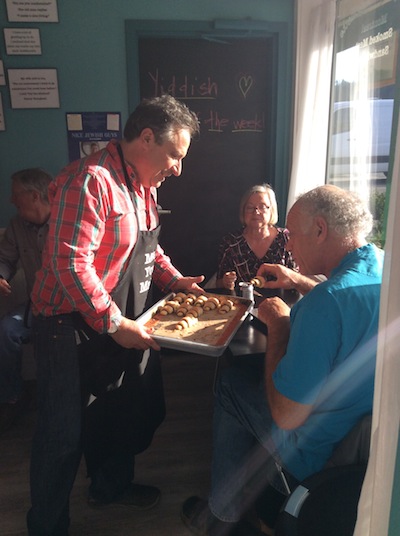
photo - Howard Busgang serves customers rugelach on a sunny November afternoon
Howard Busgang serves customers rugelach on a sunny November afternoon. (photo by Cynthia Ramsay)

Even in winter, Buzzy’s was busy. Having arrived at prime feeding time, it was hard to get Busgang to sit down and, as we talked, he was constantly distracted – in a good way – by customers.

“Tell me, I’ll get you another sandwich before you go,” he said as he finally was able to join me at a table outside for the interview.

Born and raised in Montreal, stand-up comedy took Busgang first to Toronto and then to Los Angeles, where he met his wife, Melanie Weaver, and where he lived for 28 years, before returning to Canada.

“She’s Jewish-adjacent,” joked Busgang. “She was working for a rabbi when I met her.”

The two met on a blind date, he said, brought together by a Jewish comic who knew both of them.

When he started in comedy in the early 1980s, Busgang said, “There were not a lot of comics around. It wasn’t like today where every second person does stand-up, so it wasn’t that OK a profession,” as far as his parents were concerned. “It was kind of an oddity, like maybe he’ll grow out of this kind of thing.”

Busgang attended Jewish high school, then went to McGill University before heading to Toronto.

“You know where I started?” he said. “United Synagogue Youth, USY, that’s where I started. I was emceeing all their events and that led me to go professional.”

He recalled the first time he performed at amateur night in Toronto. “They packed the place with all these people from USY who knew me. It was packed, and it was great.”

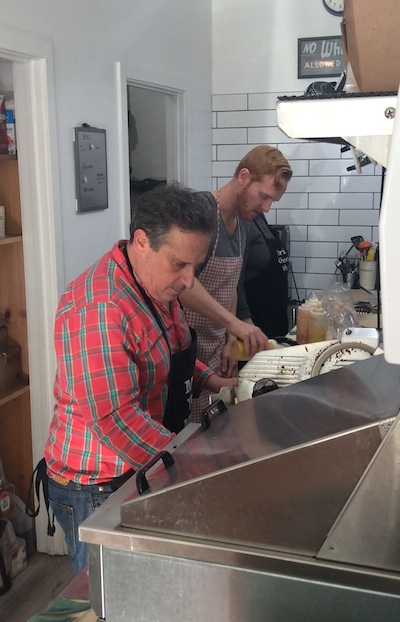
photo - Howard Busgang, left, and Adam Bogoch prepare sandwiches
Howard Busgang, left, and Adam Bogoch prepare sandwiches. (photo by Cynthia Ramsay)

So great, he said, that he was put into regular comedy shows right away, “which wasn’t so easy, by the way, because it wasn’t my friends anymore in the audience.”

When he was a stand-up comedian, Busgang did a lot of Jewish material. “I was a very Jewish comic,” he said.

In Los Angeles, he moved from stand-up to comedy writing. “I just was a little tired of the road,” he said, and performing caused him some anxiety.

“Listen, I had a respectable career, I did well, but I would constantly punish myself by asking, why am I doing this? But I think I do that with everything. I do that with this place [Buzzy’s], I do that as a writer.”

As Busgang was in the middle of saying he might just be a miserable guy, he was called back into the deli to help make a sandwich.

Weaver took his place. Her recollection was that a woman from the synagogue set up that first date.

“I was the only non-Jew in the whole place,” she said. However, Weaver was raised Jewishly, with her family observing some of the holidays, hosting seders, for example, and she taught at a Jewish camp. Born and raised in New York, she moved to Los Angeles some 30 years ago. She and Busgang have been married for about half that time.

“Howard had this property on Salt Spring our entire marriage,” she said. “And so, our entire marriage, I kept hearing ‘Salt Spring,’ ‘Salt Spring,’ and all I kept seeing was this property tax bill every month. I was, like, how good could it be? Then the elections and everything started to happen in the U.S. and it just got bad. We took a trip up here in September [2016], I fell in love and then we came in July [2017].”

A blended family, the couple has three daughters: Alexandra, 30, in Toronto; Emma, 20, in Seattle; and Hannah, 10, who was dividing her attention between helping in the deli and playing with a local dog while her mother was being interviewed.

Neither Busgang nor Weaver had any restaurant experience before opening Buzzy’s. “It’s funny,” she said. “The night before we were open, we had to learn the cash and I was almost in tears.”

The ignorance was a kind of blessing, she said. “I don’t think we knew what could go wrong, so ignorance was bliss, in this case.”

Their first day, there were lineups out the door.

“We got thrown into it, which was great,” she said. “I think if we had opened in the winter, when it was slow, it would have been a different experience.”

Busgang’s love of cooking seemed to have come out of nowhere, said Weaver. “And then he started to smoke his own meat. So, we had that in our back pocket.”

But the couple still wasn’t planning on opening a restaurant, until the location became available. “It was basherte,” she said.

In addition to Busgang’s meat-smoking skills, Weaver’s desire for a good tuna sandwich was a motivation. “So, again, why not open a deli? Not the brightest of ideas, but it worked out.”

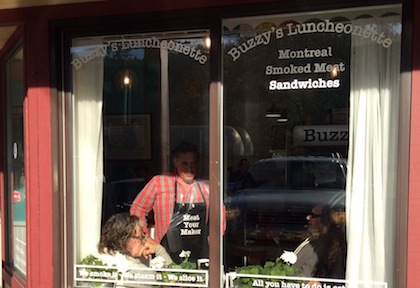
photo - Howard Busgang’s father called him Buzzy, hence the deli’s name
Howard Busgang’s father called him Buzzy, hence the deli’s name. (photo by Cynthia Ramsay)

And it’s hard work. There is only one staff member. Busgang smokes meat “around the clock,” said Weaver. “It’s like having a newborn. It’s a lot of work but the rewards – it’s a community, we’ve become part of a community and it means so much. My daughter gets to work the cash register. It’s crazy. We still can’t believe we have keys to this place.”

She said, “If we did anything right, it’s that we didn’t focus on the tourists, we focused on our people, and so we have a lot of loyalty here. I think people also come here [because] there’s a lot of cursing, a lot of bad behaviour, you can come here and just laugh, and that’s what we want. Come here, have a laugh, I’ll make you eat, you have to finish your plate or you go to your room. That was our business plan – make the community happy, hopefully make a few bucks.”

Since they opened, the menu has seen some additions; in particular, matzah ball soup and tomato soup. “We don’t want to get too big. We just want to stay like someone’s kitchen,” she said.

And the island has been very welcoming. “Someone knew that we want to make our own pickles, so they’re going to grow us cucumbers,” said Weaver as one example. “The love here,” she said, “it’s insane.”

Hannah, who had checked in a couple of times with her mother, joined the interview. In addition to sometimes working the cash, she delivers food to the Saturday market and to the bar a few doors down from the deli.

“That’s another thing,” said Weaver, “it’s a family joint.”

School runs four days a week and, while Hannah enjoys helping out, she was still getting used to living on the island. When she’s not working or at school, she’s probably at soccer or horseback riding; she had just received a paddleboard for her birthday. Though she has a couple of sandwiches named after her, her favourite is the grilled cheese.

“A lot of what we’re doing here has to do with taking the power back in our lives,” said Busgang, when he returned to the table. “It has to do with being in showbiz all those years and feeling like you had no control over anything and feeling like you’re handing over all the power to other people to validate you…. I was tired of it.”

Buzzy’s opened on June 22 last year. “Whereas, in show business, nobody wants to help you, in this business, I have so many people who want to help me.”

One of those people was William Kaminski, owner of Phat Deli in Vancouver, who Busgang described as a mentor.

“We’re not perfect but we’re figuring it out,” said Busgang.

The smoked meat he has got down to a science.

“We’re open till four o’clock and then I have to get my brisket ready for the next day, so I have to bathe the brisket,” he said. “We cure it for eight days – dry cure – and then I have to take the salt out, so we bathe it. I’m bathing a brisket right now and sometimes I sing to it. It’s very sweet. After I bathe it, then I put some rub on it and then I’ll take it home and we’ll smoke it for seven-and-a-half hours. And then it goes in the steamer for two, three hours.”

Finding rye bread was one of the early challenges.

“I knew I was in a special place,” he said, “because people would come by with bread and say, ‘Try this bread.’ They’d constantly come in and say, ‘What are you going to do about the bread?’ It became like a cause célèbre, the bread. It took me three months, and I got someone here on the island to make me an organic rye bread.”

Barb Slater makes the bread; Shigusa Saito, the knishes. Saito is now also “making a dark chocolate babka to die for,” wrote Busgang in a follow-up email. “If you’re not already dead, she’s also making us New York cheesecake, our soon-to-be-famous potato knishes, and rugelach.”

Meanwhile, Busgang – whose credits include having been a head Just for Laughs-gala writer, creating the award-winning sitcom The Tournament and writing for TV series Boy Meets World and Good Advice, among many others – is still writing, still pitching shows. Earlier that afternoon, he was slicing meat while plugged into his phone, listening to a meeting in which a producer was trying to put a deal together.

Weaver popped out to say that Busgang often has to go next door to finish his calls because the meat in the charger of his cellphone prevents his phone from charging. “There’s meat everywhere,” she said.

photo - The November sunset as seen from the ferry, en route home
The November sunset as seen from the ferry, en route home. (photo by Cynthia Ramsay)

A couple of relatively new customers stopped to say hello to Busgang and Weaver. They said they were slowly adding Buzzy’s to their list of usual places to eat.

And, said Busgang and Weaver, local Jews have discovered, by going to Buzzy’s and meeting fellow Jews, that there actually is a Jewish community on the island.

“We’re blessed to have this,” said Busgang.

As he explained the deli’s name – his father called him Buzzy – Hannah returned, offering him a taste of a new salad dressing she had created. “Daddy, just try it.”

“Interesting,” he said, “I like it.”

“It’s gross,” she corrected him.

Three generations seemed present in that moment.

As the interview came to an end, Busgang asked, “Do you want some rugelach? I gotta keep feeding you.”

Buzzy’s is open Monday to Saturday, 11 a.m.-4 p.m. Find them at facebook.com/buzzysluncheonette and then head to bcferries.com and start planning your trip.

Format ImagePosted on March 22, 2019March 24, 2019Author Cynthia RamsayCategories TravelTags Buzzy's, deli, entrepreneur, food, Howard Busgang, Melanie Weaver, restaurant, Salt Spring Island, smoked meat
A visit to Jewish Portland

A visit to Jewish Portland

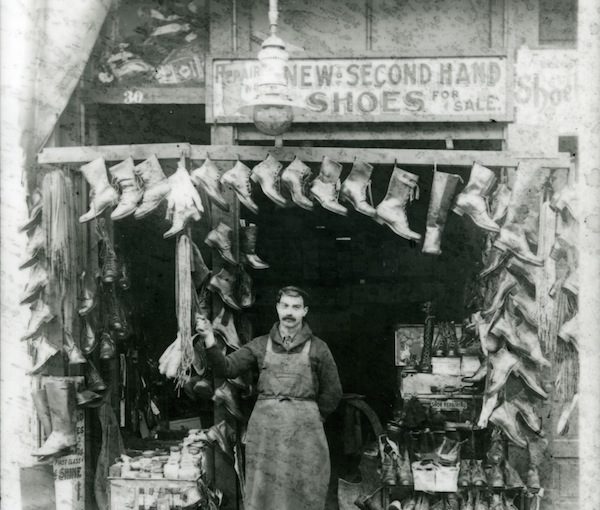
Nessim Menashe, born on the Isle of Rhodes in 1887, came to Portland in 1909. By 1914, he had established a shoe repair shop in northwest Portland, which he operated until 1921. (photo from Oregon Jewish Museum and Centre for Holocaust Education, OJM 03274)

Reading the history of the Oregon Jewish community can feel like reading B.C. Jewish history in a carnival mirror. Everything is familiar but just a little out of place.

Since the sister communities of Vancouver and Portland share both common history and common concerns about the future, there is much we can learn from each other. This is one reason why the Jewish Museum and Archives of British Columbia is excited to be hosting a trip to Portland in late May.

The three-day, two-night trip will take participants to historic sites and Jewish restaurants, and introduce them to engaging locals. Travelers will eat at Aviv, Lefty’s Café, Katchka, and Kenny & Zuke’s Deli. They will visit the Oregon Holocaust Memorial, Oregon Jewish Museum, Powell’s Bookstore, Beth Israel Historic Synagogue, Portland Art Museum, Oregon Historical Society Museum, Portland Rose Garden and Portland’s South End Jewish neighbourhood. They will also enjoy a curator-guided tour of the Oregon Jewish Museum.

As in British Columbia, it was the gold rush that attracted the first Jews to Oregon. German-born Jacob Goldsmith and Lewis May opened a general store in Portland in 1849 and helped found the Masonic Temple the following year. The community’s growth kept pace with the rapidly growing city and, in 1858, the Reform congregation Beth Israel was established. Jews had a disproportionate presence among the merchant class, with one-third of the 146 merchants on record in 1860 being Jewish. They worked in the industries of clothing, tobacco, furniture and wholesale.

Just 328 kilometres north, the Jewish population of Victoria followed a similar trajectory. The earliest arrivals stepped off boats arriving from San Francisco in 1858. They, too, established careers primarily as merchants and, in 1863, opened Congregation Emanu-El, which continues to operate today. In the 1870s, Jewish merchants began placing their bets on the future of a small encampment on the Fraser River, going by the name of Granville. These bets paid off when Granville became Vancouver in 1886, the terminus of the intercontinental railway.

The Jewish populations of Portland and Vancouver have grown dramatically over the decades since, with new arrivals from all corners of the world making their contributions. In both locations, community organizations blossomed early on, providing essential social and cultural services. Today, the Jewish population of Portland, at 50,000, is roughly double that of Metro Vancouver, thanks largely to a wave of young American Jews who were drawn to Portland in the wake of the 2008 market crash.

To learn more about the Oregon Jewish community and to experience it firsthand, join the JMABC-led trip, which departs by chartered bus on Monday, May 27, and returns Wednesday, May 29. For more information and registration, visit jewishmuseum.ca/program/portland-jewish-history-tour. The deadline to register is March 31.

Format ImagePosted on March 8, 2019March 6, 2019Author Jewish Museum and Archives of British ColumbiaCategories TravelTags culture, food, history, Jewish museum, Judaism, Portland
Meet new or favourite writers

Meet new or favourite writers

The Cherie Smith JCC Jewish Book Festival starts this Saturday night (Feb. 9) with Joshua Cohen, author of Moving Kings and ATTENTION: Dispatches from a Land of Distraction. It continues for five literary-filled days at the Jewish Community Centre of Greater Vancouver, and here’s a sampling of books you might want to add to your reading list, and authors you might like to meet.

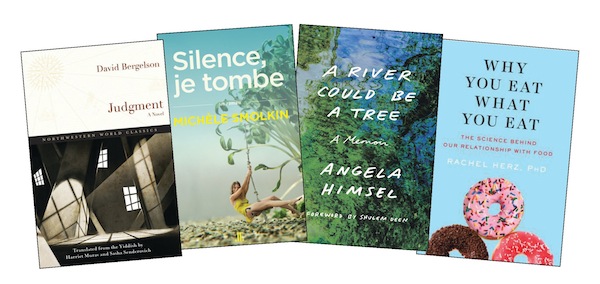
book cover - JudgmentSet in 1920, in the fictional shtetl of Golikhovke during the Russian civil war, Judgment, by David Bergelson (1884-1952), is a melancholic novel about humanity in a time of uncertainty, where different political factions are warring, each under their own ultimately meaningless banner; neighbours cannot trust one another, let alone strangers; and justice is meted out randomly by a cruel, indifferent force.

Stationed in an also fictitious abandoned monastery called Kamino-Balke, near Golikhovke, the sickly Bolshevik Filipov is in control of the area along the Ukraine-Poland border. There are smugglers who travel across the border for commercial reasons and Socialist Revolutionaries who travel across it in preparation for an uprising against the Bolsheviks. Jews and non-Jews live together in relative tolerance but political loyalties, ethnic ties and differing ideas of morality ensure a constant tension. All live in fear of being captured by one of Filipov’s agents, as guilt of a crime does not need to be proven for a person to be beaten, imprisoned and/or shot.

What makes this novel beautiful is Bergelson’s prose. Imaginative metaphors: “Large, invisible hands merrily picked up whole heaps of snow and just as merrily released them.” Animated objects: “… the coat lay there bent over, dejected, as if it had made a long, pointless, idiotic journey” and “The cannons’ muzzles – black, fat and eyeless – stared longingly in the direction of the forests around Moshne….” Humour: “Stone fences suited the inhabitants of Yanovo, for all of them were as stubborn as their stone fences: stone upon stone.” And empathy, in this case, for the undercover agent Yokhelzon, whose “eyes (which inspected everything, people said) had already taken in the horror of death – they winked joyfully, so that the horror would not show afterward.”

As should be obvious, Harriet Murav and Sasha Senderovich have done a masterful job of translating Judgment from Yiddish to English. They also provide a fascinating introduction to the novel, its historical context, the author and his other works (Bergelson was executed in 1952, on Stalin’s orders), the book’s title, form, themes and use of language.

Senderovich will be at the book festival on Feb. 10, 3:30 p.m.

***

book cover - Silence, je tombeMichèle Smolkin’s novel Silence, je tombe is a witty, philosophical novel that explores how people can become isolated from one another, including themselves. Told from the perspectives of a few protagonists, readers will likely relate to many of the feelings expressed.

The novel starts with a pregnant Tania, as she, her husband Paul and their toddler Margot are making the drive to their new home in “Manhattan, Kansas, The Little Apple,” from Vancouver. Tania’s disenchantment is obvious and she expresses her anger towards her husband – who, as a professor of philosophy, couldn’t find a job elsewhere – with vicious (and very funny) sarcasm, mostly in her thoughts, but aloud, as well. She had imagined a different life for herself – living in New York, the Big Apple, for one thing; and certainly not in the Bible Belt. As a Francophone Jew, she anticipates that fitting in might be a problem.

As the book progresses, we get to know Tania, Paul and a disturbed man named Kevin, plus a couple of other minor but important characters. Through them, we contemplate love, what attracts people to one another and what forces them apart, what happiness is, what actions might be unforgivable, how our childhoods influence our adulthoods, and, of course, the inadequacy of words for certain situations, and understanding why, sometimes, silence is the only possible response.

Smolkin’s talk – the book festival’s first-ever French-language event – will take place Feb. 10, 5 p.m. (Note: Festival program shows incorrect time.)

***

book cover - A River Could Be a TreeA River Could Be a Tree is, thankfully, not the memoir of a person who goes from believing fanatically in one religion to being swept away as unquestioningly into another, though it might seem like it would be, given some aspects of the press material. “How does a woman who grew up in rural Indiana in a fundamentalist Christian cult end up a practising Jew in New York?” asks part of the blurb on the book flap. Well, for starters, Angela Himsel seems to always have been an inquisitive person, and never an avid follower of Herbert Armstrong’s Worldwide Church of God. She was an obedient child, but is still struggling with understanding how her parents believed so much in the church doctrine that they didn’t give her sister the care that might have prevented her death at a young age.

A River Could Be a Tree is a measured, often humourous, always intelligent memoir. Himsel starts with a prologue that gives readers a very large hint as to what led her to ultimately convert to Judaism: she and her boyfriend Selig were, “just once … careless about birth control.”

But the journey to that point is long and more complicated, and Himsel takes readers through it with the benefit of hindsight, hard-won insights and a writing style that is serious, honest but unsentimental, and filled with initially unexpected levity. As but one example, a mere three paragraphs into Chapter 1, in which Himsel talks about her parents’ religious heritage, Roman Catholicism and Lutheranism, she writes about Martin Luther, that, at age 41, he “married a nun, a woman he had helped smuggle out of a convent in a herring barrel. While irrelevant to Luther’s religious beliefs, a nun in a herring barrel is always worth mentioning.”

And A River Could Be a Tree is well worth reading. Himsel will speak at the book festival on Feb. 11, 7:30 p.m.

***

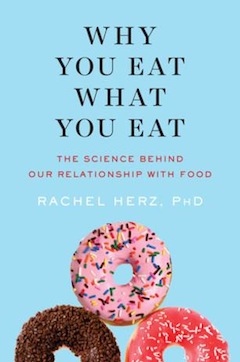
book cover - Why You Eat What You EatThere is so much information in Why You Eat What You Eat: The Science Behind Our Relationship With Food by Rachel Herz. And a refreshing aspect of the book is that it’s not written from a dogmatic, all-knowing viewpoint. Herz acknowledges that sometimes studies come to different conclusions, sometimes scientific progress means that what was once thought true is disproven, and that different people will experience food, exercise and other things differently. Readers looking for certainty might be disappointed, but those wanting to learn will learn a lot. Who doesn’t want to know, for example, why tomato juice is one of the most popular drink orders on planes? Does sugar really help the medicine go down, so to speak, i.e. reduce the effects of pain? And why can buying ethically branded or organic products make us less charitable?

But Why You Eat What You Eat is more than an amalgamation of trivia. Herz has compiled a very readable and relatively comprehensive resource that will, as the title promises, help explain why we eat what we eat; how all of our senses – taste, smell, sight, touch and hearing – affect how we experience food. And knowing these things just might make us feel better about ourselves, and make choices that would serve us better.

Herz will be at the book festival on Feb. 13, 6 p.m.

Format ImagePosted on February 8, 2019February 7, 2019Author Cynthia RamsayCategories BooksTags Angela Himsel, Cherie Smith JCC Jewish Book Festival, David Bergelson, fiction, food, French, memoir, Michèle Smolkin, non-fiction, Rachel Herz, science, translation, Yiddish
Gourmet anything but lazy

Gourmet anything but lazy

Susan Mendelson, founder of the Lazy Gourmet, shares a little about herself and her business at the launch of this year’s The Scribe. (photo by Kenneth I. Swartz)

One of Vancouver’s most successful food industry professionals shared her story recently, helping to launch this year’s edition of The Scribe, the journal of the Jewish Museum and Archives of British Columbia.

The topic of the 2018 issue is food, covering restaurants and related sectors from the early days of the community up to destinations that are still operating today. Susan Mendelson, best known around town as founder of the Lazy Gourmet, brought her thespian side to the audience at the Western Front Nov. 28, eliciting laughter as she guided the packed hall on a tour through her remarkable career.

“My mother’s mother, Grandma Faye, was a large influence in my life,” Mendelson said. An extraordinary baker and cook renowned in her small Jewish community of Quebec City, Grandma Faye took it as a challenge to keep a deep freezer filled with baking for when friends dropped by or to be ready for a tea party.

As a child, Mendelson loved to cook and bake. When the Six Day War broke out in Israel, in 1967, the family rallied to raise funds to send to Israel. Young Susan planned a bake sale in their backyard. She made all of her favourite squares and cookies and the neighbours snapped them up. Mendelson’s mother only told her years later that the cost of the ingredients was on par with what was raised that day. Thankfully, Mendelson told the audience, that wasn’t a harbinger of things to come.

Mendelson came to Vancouver to study at the University of British Columbia and gravitated to the theatre department. Her theatre professor, Larry Lillo, became a close friend. He broke the news to Mendelson that she would never be a great actress … though he really loved her cheesecake.

After third year, Mendelson took a break from school and worked in a group home for troubled teens. There, she met Deborah Roitberg, with whom she made the food for the kids in the group home. An instant friendship developed.

After traveling to Europe and Israel, Mendelson thought she would return to school and pursue social work. Around that time, Lillo had founded Tamahnous Theatre, an experimental ensemble that was becoming the resident company at the Vancouver East Cultural Centre. He hired Mendelson as house manager, which allowed her to go to school during the day and work at the Cultch, as the institution is familiarly known, at night. But the salary didn’t cover her expenses, so she began to make cheesecake to sell at intermission, later adding carrot cake and Nanaimo bars to her repertoire – “when the curtain came down at intermission, the lobby was stormed by people pushing in line to make sure that they got their piece of the cake.”

Anne Petrie of CBC radio’s afternoon show called Mendelson, having heard about the cheesecake phenomenon, and asked her to come on the program.

“I told her that I was putting myself through university with the recipe, but that I would come onto her show to tell her listeners how to make chocolate cheesecake, a recipe that my friend Miriam Gropper had given me,” Mendelson said.

Her cheeky attitude was a hit with audiences, and she was asked back. She returned for Valentine’s Day, talking about aphrodisiacs. Soon she had a regular radio gig paying $25 per appearance.

Mendelson’s boss at the Cultch started asking her to cater opening night parties. Wedding catering followed and then Mendelson was given the responsibility of catering to all the performers at the first iteration of the Vancouver Children’s Festival. She and Roitberg discussed opening a take-out food business.

“Our concept was that people would bring in their casserole dishes and platters and we would fill them with our food and they would take them home and pretend that they had made them themselves,” she said. “We would call ourselves the Lazy Gourmet, in honour of our customers who wanted gourmet food but were too lazy to make it themselves.”

Over the years, Mendelson had shared scores of recipes with radio listeners and some asked her to put them in book form. Mama Never Cooked Like This sold out and went into reprints; it was picked up by an American publisher.

To coincide with the publication of her second book, which was written for children and titled Let me in the Kitchen, the producer of the Children’s Festival, Chris Wootten, asked Mendelson to produce her own show. The best part of that experience, Mendelson recalled, was that a single dad in the audience brought his 7-year-old son and they bought the cookbook and made recipes

from it. “Six years later, I met those two,” she said. “And, seven years later, I married the dad and became stepmother to the most wonderful young teen. I was so happy that Jack and Soleil had experienced that show and that in some way we shared that amazing experience of my life.”

TV appearances followed and Mendelson was asked to write a souvenir cookbook for Expo 86.

But the trajectory was not entirely positive. After expanding the Lazy Gourmet from one store to three, the company began losing money. They eventually abandoned two of the storefronts and Roitberg left the business to raise a family.

Soon after the birth of daughter Mira, Mendelson was invited to cater a new event that was coming to Vancouver: the Molson Indy Vancouver.

“If you thought that the Children’s Festival wore me out … you can’t even imagine what that event did to me physically,” she said. “But, of course, I loved it and, by the last few years of the race, which took place on Labour Day weekend – Jack will tell you that it was our anniversary weekend that we didn’t celebrate for nine years – we were also catering the Abbotsford Airshow, which took place two weeks beforehand and, two weeks before that, we catered the Skins Game at Predator Ridge in the Okanagan.”

In addition to hard work, Mendelson credits her success to hiring people who she says are smarter and more talented than herself. A couple of years ago, she gave shares in the company to two long-term team members and moved into a part-time role. The company continues to expand, including a lifecycle catering department. “We call it womb-to-tomb catering,” she said, citing baby-namings, britot milah, b’nai mitzvah, weddings and funerals, as well as personal events. More recently, Mendelson took on catering the lunches at Vancouver Talmud Torah.

The Scribe launch also included words from Cynthia Ramsay, editor and publisher of the Independent, who has also, for the past nine years, edited The Scribe.

“When I started the job, the journal was a mix of academic essays and community-related history,” Ramsay said. “But it soon changed to become a means by which the museum could highlight its collection; the oral histories, photographs and other artifacts that it houses on the community’s behalf. We’ve done issues on the Jewish Western Bulletin, the Jewish Independent’s predecessor; on the furniture industry; scrap metal dealers; the clothing industry; on some of the community pioneers who are buried in our cemeteries all around the province; and, this year, of course, our issue is on the food and service industry.”

She credited museum staff Alysa Routtenberg, Marcy Babins and Michael Schwartz, and the publications committee, which this year included Routtenberg, Perry Seidelman, Gary Averbach, Debby Freiman, Fred Swartz and Ronnie Tessler. The JI’s production manager, Josie Tonio McCarthy, does the layout for the journals.

Seidelman, president of the JMABC, urged audience members not to throw out photographs or documents. “Give them to us,” he said.

Format ImagePosted on December 14, 2018December 12, 2018Author Pat JohnsonCategories BooksTags food, history, Jewish museum, Lazy Gourmet, Scribe, Susan Mendelson
Sweet birthday party for kids

Sweet birthday party for kids

Jordana Saks gets great joy from baking. (photo from Saks of Sweets)

“I love baking, because it’s a fun activity that allows me to be creative. More importantly, there is nothing more fulfilling than the wide-eyed smiles I see on other faces when they enjoy something that I have baked.”

Jordana Saks’ love of baking inspired her to create Saks of Sweets, which plans and leads kids’ birthday parties. “What better way to celebrate a birthday than with friends while baking, decorating and eventually eating the delicious cookies?” she asks on the business’s website.

Born and raised in Niagara Falls, Ont., Saks studied cognitive science at McGill University in Montreal, before heading to San Francisco for a year. She arrived in Vancouver about 18 months ago, and has been in love with the city ever since.

Recalling her early sweet baking impressions, Saks said, “I started baking as young as 6 years old. My mom and aunt inspired me to bake, and taught me the tricks of the trade. When the eggs in my aunt’s fridge were past the expiry date, she used to call me over to practise the art of cracking an egg.

“Every year at Chanukah, for the family party, my aunt and I would make cookies and spend hours decorating them with unique designs. In addition to this tradition, we baked at least one new recipe each month. Still, to this day, when I visit home, we get together for a baking day – trying new recipes and recreating past ones.”

When Saks was studying at McGill, she used baking as a stress reliever, leaving her and her roommate with an abundance of baked goods.

“To prevent ourselves from eating an entire cake or a couple dozen cookies, I started an Instagram account called Saks of Sweets, where I could share when and what I was baking,” said Saks. “My friends would comment on what they wanted to try. I would find out where they were studying on campus and would deliver the goods, until nothing was left of that batch.”

When she moved to Vancouver, Saks recalls listening to a podcast called Side Hustle School, with Chris Guillebeau. “The entrepreneurial wheels in my brain were turning,” she said. “I was thinking about my passions and how I could channel those into a business. And, combined with my love for baking is my love for working with children. I’ve had many experiences working with kids and have enjoyed every one of them. After sitting down for an hour at a coffee shop and thinking about how to combine these two passions, the idea for Saks of Sweets quickly emerged.”

Saks of Sweets provides in-house baking birthday parties. Saks’ clients have loved the parties because, as parents, they do not need to stress or worry about anything except for inviting the children. The rest of the planning is in the hands of Saks of Sweets and Saks leads every party, along with one helper.

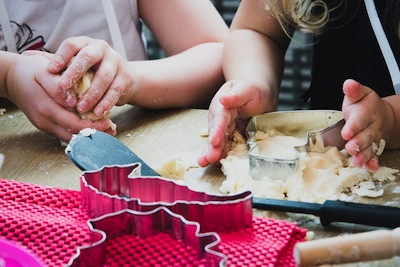
“We set up the individual baking stations, and the children will learn to roll out the Saks of Sweets shortbread cookie dough,” said Saks. “They will then choose from a wide variety of cookie cutters to create their cookies.

“While the cookies are in the oven, the children will decorate and personalize their baking aprons. Lastly, they will have a wide range of icing colours and sprinkles to decorate their unique creations. As an extra bonus, the take-home box for the cookies and the personalized aprons double as a loot bag.”

Prospective clients only need to provide a table for the rolling and decorating, and a working oven for the baking. Some parents like to provide a meal for the children, like ordering in pizza.

photo - Saks of Sweets brings the party to your children
Saks of Sweets brings the party to your children. (photo from Saks of Sweets)

For those not wanting to have the party in their own home, Saks of Sweets partners with the Jewish Community Centre of Greater Vancouver, so that people can rent the centre’s party room for the birthday celebration.

“Right now, I am doing cookie cutting and decorating, but I’d like to move more into baking other delicious things, such as cakes, cupcakes, pies and more,” said Saks. “This expansion will happen soon, when the time is right.

“When I started this business, my hope was to channel my passions into throwing a creative birthday party that makes both the children and parents happy. I wasn’t overly concerned about the business scalability or strategy, because I didn’t want to get bogged down in the details or dissuade myself from taking that first step.

“From that perspective, my hopes have been met. Each party has been extremely well received by the parents, and the children are always smiling. My only new hope is that I can throw these more often.”

Saks of Sweets is Vancouver’s only in-house baking birthday party. The business concept is all about convenience. It is meant to be stress-free for parents, so they can also enjoy their child’s party.

Saks of Sweets can accommodate most dietary restrictions or allergies and works with clients to tailor the party to any needs or wishes. “For example, in the past, I’ve had to ensure all ingredients are kosher … and I can do parties for families that are kosher,” said Saks. “Furthermore, the ingredients and the cookies are all nut-free. However, they may contain traces of nuts, due to baking utensils that may have touched nuts in the past.”

The cost for a Saks of Sweets party for 10 to 12 children is $300, and each additional child after 12 is $22. For more information, visit saksofsweets.ca.

Rebeca Kuropatwa is a Winnipeg freelance writer.

Format ImagePosted on July 13, 2018July 11, 2018Author Rebeca KuropatwaCategories LocalTags baking, business, children, food, JCC, Jordana Saks
Chef at Limmud buffet

Chef at Limmud buffet

Susan Barocas is one of 40 presenters at the April 14-15 “buffet for the mind.” (photo from Susan Barocas)

Among the many presenters at this weekend’s Limmud Vancouver is Susan Barocas, writer and filmmaker, Sephardi chef and expert on the history of Sephardi cooking.

Barocas, who was former president Barack Obama’s guest chef for White House seders, will give two presentations at this year’s Limmud. On April 14, 7:30 p.m., she will speak on Tastes Across the Centuries: The Enduring Influence of the Foods of Spain’s Medieval Jews. On April 15, 10:50 a.m., she will speak on The Long and Short of Noodles, a history of noodles from ancient China to the modern day.

Barocas lives and works in Washington, D.C., where she is an active and well-known foodie. She is a regular contributor to the Washington Post, Huffington Post, Lilith and Moment, and is a member of Les Dames d’Escoffier, a philanthropic organization of women leaders in the food, beverage and hospitality industries. She was the project director of D.C.’s Jewish Food Experience. Limmud Vancouver spoke with Barocas about her unusual career and interests.

LV: In Vancouver, you are speaking about classical Sephardi cuisine. Can you give us a little preview?

SB: I am really looking forward to talking about the food of the Jews of medieval Spain, putting it into historical context. Food played quite an important role in the Inquisition. (Hint: it goes way beyond pork!) Then, I will talk about what happened to the food of those original Sephardim and the surprising influences they have on contemporary Jewish and other cuisines. Of course, I’ll be sharing recipes, too.

LV: Can you tell us more about your heritage and its influence on your career?

SB: I grew up in a mixed household – Sephardic and Ashkenazic. On one side, my grandparents were from Russia-Poland and, on the other, from the Ottoman Empire, what is now Turkey and Macedonia, descended from Jews expelled from Spain in the Inquisition. My father and mother both cooked, so we ate both cuisines – tongue, borsht, gefilte fish and shmaltz, as well as lentils, feta and olives, baklava and stuffed grape leaves.

Over the years, I have become more and more drawn to my Sephardic heritage. It is something of a mission for me to share my view that Jewish food really is international cuisine. To think of it otherwise is to miss out on so much of Jewish culture and cuisine.

LV: You describe yourself as a home cook without formal training, and yet you’ve built a very successful professional career. How did your career develop?

SB: I’ve been cooking since I was a very young child. My first career was in nonprofit public relations. Whenever I would do a special event, food definitely got extra attention from me. When I moved to D.C. in 1993, I worked for food guru Joan Nathan for a few years. My second career included writing and producing documentary and organizational films; raising my son; and teaching a course called In Grandmother’s Kitchen at a local Hebrew high school. Next, I ran the Washington, D.C., Jewish federation’s Jewish Food Experience project. Now I am well into my third career, as a food writer, chef, caterer and teacher.

LV: How does the Jewish Food Experience bring people together?

SB: The Jewish Food Experience is an innovative project of the Jewish Federation of Greater Washington. It includes an award-winning website, jewishfoodexperience.com. The goals of JFE are to use food and culture to build Jewish identity and community, particularly with certain target audiences that research showed had the greatest needs – young professionals, families with young children and interfaith couples and families. The project has become very successful with the website and programs, bringing people together and closer to their Jewish identity in many different ways.

LV: What is your most memorable Jewish meal?

SB: My most memorable Jewish meal would have to be the seders in the Obama White House, where I served as guest chef for three years. Over time, I was able to bring some of my Sephardic food to the table, so to speak, along with the Ashkenazic dishes. Even though I was working and didn’t actually sit down to eat the meal, I still get goosebumps remembering the pleasure the president and first lady expressed about the food, and also hearing from the next room President Obama’s voice booming out “We Shall Overcome” during the seder.

Elizabeth Nicholls is a volunteer with Limmud Vancouver. Chef Susan Barocas is one of 40 presenters at the April 14-15 “buffet for the mind.” To register and for the full schedule, visit limmudvancouver.ca. The fee for the conference is $75, which includes a kosher dairy lunch. Onsite babysitting is available, along with special programming for children and teens. All sessions will be held at Congregation Beth Israel.

Format ImagePosted on April 13, 2018April 11, 2018Author Elizabeth NichollsCategories LocalTags education, food, Limmud Vancouver, Obama, Sephardi, Susan Barocas
Too much food wasted

Too much food wasted

Millions more could be fed by the same resources if our diets changed. (photo from wis-wander.weizmann.ac.il)

About a third of the food produced for human consumption is estimated to be lost or wasted globally. But the biggest waste, which is not even included in this estimate, may be through dietary choices that result in the squandering of environmental resources. In a study published in the Proceedings of the National Academy of Sciences of the United States of America, researchers at the Weizmann Institute of Science in Rehovot, Israel, and their colleagues have found a novel way to define and quantify this second type of wastage. The scientists have called it “opportunity food loss,” a term inspired by the “opportunity cost” concept in economics, which refers to the cost of choosing a particular alternative over better options.

Opportunity food loss stems from using agricultural land to produce animal-based food instead of nutritionally comparable plant-based alternatives. The researchers report that, in the United States alone, avoiding opportunity food loss – that is, replacing all animal-based items with edible crops for human consumption – would add enough food to feed 350 million additional people, or more than the total U.S. population, with the same land resources.

“Our analysis has shown that favouring a plant-based diet can potentially yield more food than eliminating all the conventionally defined causes of food loss,” said lead author Dr. Alon Shepon, who worked in the lab of Prof. Ron Milo in the plant and environmental sciences department. The Weizmann researchers collaborated with Prof. Gidon Eshel of Bard College and Dr. Elad Noor of ETZ Zürich.

The scientists compared the resources needed to produce five major categories of animal-based food – beef, pork, dairy, poultry and eggs – with the resources required to grow edible crops of similar nutritional value in terms of protein, calories and micronutrients. They found that plant-based replacements could produce two- to 20-fold more protein per acre.

The most dramatic results were obtained for beef. The researchers compared it with a mix of crops – soya, potatoes, cane sugar, peanuts and garlic – that deliver a similar nutritional profile when taken together in the right proportions. The land area that could produce 100 grams of protein from these crops would yield only four grams of edible protein from beef. In other words, using agricultural land for producing beef instead of replacement crops results in an opportunity food loss of 96 grams – that is, a loss of 96% – per unit of land. This means that the potential gain from diverting agricultural land from beef to plant-based foods for human consumption would be enormous.

The estimated losses from failing to replace other animal-based foods with nutritionally similar crops were also huge: 90% for pork, 75% for dairy, 50% for poultry and 40% for eggs – higher than all conventional food losses combined.

“Opportunity food loss must be taken into account if we want to make dietary choices enhancing global food security,” said Milo.

Milo’s research is supported by the Mary and Tom Beck Canadian Centre for Alternative Energy Research, which he heads; the Zuckerman STEM Leadership Program; Dana and Yossie Hollander; and the Larson Charitable Foundation. Milo is the incumbent of the Charles and Louise Gartner Professorial Chair.

For more on the research being conducted at the Weizmann Institute, visit wis-wander.weizmann.ac.il.

Format ImagePosted on April 13, 2018April 11, 2018Author Weizmann InstituteCategories IsraelTags Alon Shepon, food, Israel, science, Weizmann Institute
Demystifying nutrition

Demystifying nutrition

Cara Rosenbloom is trying to educate people about nutrition. In 2016, she co-authored the cookbook Nourish. (photo from Cara Rosenbloom)

When grocery shopping, how do you decide what to get when you are looking at items not familiar to you? Do you look at the ingredients? Are you drawn to packages that claim to be natural, whole food, organic?

Marketing and manipulation often go hand in hand. And it can be challenging to differentiate between products that actually offer added value and those that just say they do.

For the past 10 years, dietician Cara Rosenbloom has been running Words to Eat By, which provides nutrition education. For example, what does organic really mean in terms of food and nutrition?

When it comes to a product’s organic claims, Rosenbloom said, “I think the most important thing that people need to know about organic is that the word has nothing to do with health. An organic claim on a food does not mean it’s healthier for you. Organic is a method of farming.

“The use of the term ‘organic’ is regulated in Canada and has very clear guidelines about which foods can have that term stamped on it. It has to do with how that product – if it’s an animal, how it was raised … or, if a plant, how it was grown. But, once that organic product is used in a food product, the resulting food may not be a health food. Perfect examples are Kraft Dinner and Doritos. They now have organic versions. Those are not health foods.”

photo - Cara Rosenbloom
Cara Rosenbloom (photo courtesy)

Rosenbloom said claims that organically grown foods contain fewer chemicals are misleading. “Even foods that are grown organically still use pesticides and fertilizers. They’re just organic versions of it,” she said. “The word ‘chemical’ is not used appropriately in nutrition literature, in the way the media describes food. Many things are chemicals and aren’t bad for you. Water is a chemical! You need a degree in chemistry almost to understand how molecules are put together…. If you think organic food is just grown naturally in the sunshine, you’re wrong. Organic farmers use natural pesticides and herbicides. If you want to call those chemicals, too, then that’s fine.”

Rosenbloom writes a monthly column in the Washington Post, where she focuses on debunking myths and educating the readers about wellness, so people can make informed decisions about their nutrition.

In her interview with the Independent, she touched on how people get scared off by the “dirty dozen,” a list of fruits and vegetables believed to contain the highest amount of pesticides. In 2017, the Environmental Working Group’s dirty dozen were strawberries, spinach, nectarines, apples, peaches, celery, grapes, pears, cherries, tomatoes, sweet bell peppers and potatoes.

Rosenbloom explained that, too often, consumers avoid buying produce altogether if they can’t find organic versions. “That’s obviously the wrong message, and not what any dietician would recommend,” she said. “I wrote an article about how the dirty dozen list doesn’t hold weight in terms of pesticides. It’s a flawed list and has no scientific credibility. I educate people that organic is fine if you choose that, but not to fear fruits and veggies that are conventionally grown. The bottom line is that you need to eat fruits and veggies, whether you choose to eat organic or not, because they’re just a healthy thing in the diet.”

In that Jan. 18, 2017, Post article, Rosenbloom interviewed food toxicologist Carl K. Winter about the dirty dozen list, which, he said, “failed to consider the three most important factors used in authentic risk assessments – the amounts of pesticides found, the amounts of the foods consumed and the toxicity of the pesticides.” And, she notes, “Even the Environmental Working Group doesn’t recommend avoiding the items on its own dirty dozen list. Their website says ‘the health benefits of a diet rich in fruits and vegetables outweigh the risks of pesticide exposure. Eating conventionally grown produce is far better than skipping fruits and vegetables.’”

As for the claim that a product is natural, Rosenbloom explained that, while the organic label is closely regulated, the natural label is not. “Anything can be deemed natural,” she said. “So, it’s not something you want to count on. A lot of foods that are high in sugar, let’s say, can still say they are natural, because sugar comes from plants and that’s natural.

“The word natural doesn’t have a base definition that companies must satisfy in order to use that term on their foods,” she continued. “So, if you look at a product that says it’s natural, it doesn’t really tell you what that means. It lets you figure it out.

“We’re seeing more big companies that make processed food use the word natural – and misuse it. And this is leading to fewer consumers having any trust in the label natural.”

When it comes to vitamin supplements, Rosenbloom said more is not better. “There are certainly times when your body does need certain vitamins, but a lot of people are spending a lot of money on vitamins they just don’t need,” she said. “Then there are false promises made with things like vitamin IV drips and other popular myths.”

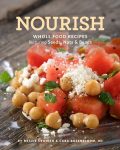
Rosenbloom has written about how to tell the difference between processed, ultra-processed and whole foods, as well as how to buy seafood that is produced in a safe, sustainable way, and much more. In 2016, she co-authored a cookbook with Chef Nettie Cronish, called Nourish: Whole Food Recipes Featuring Seeds, Nuts and Beans. It features 100 recipes, all of which are original and co-developed by the authors.

“We focused on beans, nuts and seeds in the book because these are nice sources of protein,” said Rosenbloom. “And nuts and seeds are healthy fats that are underutilized by most people in the diet, with most people relying mainly on animal-based foods for their protein. We wanted to explain that you can include seeds, nuts and beans in everyday recipes, and these 100 recipes show them how.

“It’s not solely a vegetarian cookbook,” she added. “It encourages people – wherever they are at, vegetarian or not, whoever wants to buy the book – to try out the recipes, which include meat, chicken, fish, seafood and vegetarian.

“The idea was to say, ‘Whatever you’re eating, here’s a way to add seeds, nuts and beans, to get more of those healthy ingredients into your diet.’ Take salmon, for example. It might be crusted with sesame seeds, or oatmeal might have some hemp seeds or flax seeds in it. So, we just enrich foods you eat anyway with the goodness of seeds, nuts and beans.”

Rosenbloom is on Facebook and Instagram (Words to Eat By) and her website is wordstoeatby.ca. For her latest Post articles, visit washingtonpost.com/lifestyle/wellness.

Rebeca Kuropatwa is a Winnipeg freelance writer.

Format ImagePosted on March 23, 2018March 23, 2018Author Rebeca KuropatwaCategories WorldTags Cara Rosenbloom, food, health, organic farming

A food fit for a queen

In my North American Ashkenazi house growing up, my mother always cooked arbis at Purim time. The dish is associated with Queen Esther, for whom this was supposedly a mainstay. Why? Because, some Jewish sources say, Queen Esther kept kosher in the court of her non-Jewish husband, King Ahasuerus. Eating this dish nowadays is one way in which Jews remember Queen Esther’s fortitude.

As I recall, this basic and healthy dish of cooked chickpeas took forever to cook, but it was worth it. It had a chewy, nutty kind of taste.

Arbis, like other Jewish foods, has been quite the globetrotter. For example, some Yiddish speakers refer to the dish as nahit, which, according to L.J.G. Van Der Maesen in a 1987 article, is close to the name used in Turkey, Romania, Bulgaria, Iran, Afghanistan and other adjacent former Soviet bloc countries, with arbis actually referring to another legume, peas. However, H. Gams’s 1924 legume study claims that the ancient Greek words for chickpea were orobos and erebinthos, and that these two words are related to the old German word arawiz and sound similar to erbse, the new German word for chickpea.

Besides eating arbis on Purim, traditional Ashkenazi Jews serve this dish at the Shalom Zachar, an after-dinner gathering on the first Friday night following the birth of a baby boy. There is a mourning aspect to this event, as the newborn’s soul, which had once dwelt in the heavenly realm, must now reside inside the earthly, physical body. Hence, arbis is served at this gathering as a food symbolic of the circle of life.

But a different explanation involving a play on Hebrew-Yiddish words goes like this: arbis, the Yiddish word for chickpeas, helps us remember the promise G-d made to Avraham. “I shall multiply [in Hebrew, arbeh] your seed like the stars of the Heavens.” (Genesis 22:17)

There is a Sephardi version of chickpeas, also served on Purim. Iraqi Jews call it sambusak el tawa, or chickpea turnovers. While most recipes call for adding salt and pepper to arbis, nahit or chickpeas, author Claudia Roden, in her book The Book of Jewish Food, suggests serving them as a sweet side dish with sugar or honey. Editors Anne London and Bertha Kahn Bishov also offer a sweet nahit casserole – in their Complete American-Jewish Cookbook recipe, brown sugar is added. Meanwhile, in the Jewish Vegetarian Year Cookbook, authors Roberta Kalechofsy and Rosa Rasiel recommend eating arbis as a Yom Kippur break-the-fast entree containing salt, cumin, green pepper and tomato sauce.

As we read every year, Megillat Esther opens with an assessment of the vastness of King Ahasuerus’s kingdom – it covered areas from India to Ethiopia.

Indian chickpea history goes way back: the earliest occurrence of chickpeas in India dates from 2000 BCE, at Atranjikhera in Uttar Pradesh, according to Van Der Maesen. Moreover, archeologists have discovered Bronze Age (2500–2000 BCE) chickpeas, peas, green gram and black gram inside storage jars at the Harappan site of Farmana, located in the Indian state of Haryana.

The Archeology of Africa: Food, Metal and Towns, edited by Thurstan Shaw, notes that, in the Natchabiet and Laliblea cave excavations near Ethiopia’s Lake Tana, there was evidence of chickpeas, barley and legumes. Significantly, shiro, which is made from powdered chickpeas, is a staple in Ethiopia.

In his book Ancient Canaan and Israel: New Perspectives, Jonathan Michael Golden reports that, during the Early Bronze Age, at Halif Terrace (located in Israel’s northeastern Negev), people were eating chickpeas, possibly with olive oil. Israeli archeobotanists say there was an agricultural revolution during the Neolithic period. Although not the easiest legume to cultivate – the crop can be wiped out by ascochyta blight and needs good drainage in sunny, dry, warm conditions – chickpeas became one of the early domesticated plants. Zohar Kerem, Simcha Lev-Yadun, Avi Gopher, Pnina Weinberg and Shahal Abbo offer an explanation. In a 2007 article, they claim that the cultivators of that period sensed the nutritional benefits of chickpeas. Today, scientists know that chickpeas are rich in tryptophan, an essential amino acid. They can bring about higher ovulation rates, improved infant development, a feeling of satiety, better performance in stressful situations and a lessening of depressive moods.

Indicative of how important chickpeas are to the Mediterranean diet, an international Hummus Day was inaugurated almost six years ago, on May 13. But let’s give arbis the last word: what goes around, comes around. Here’s a recipe.

ARBIS

1 pound uncooked, dry chickpeas
Cold water to cover chickpeas
Salt to taste (added during the cooking process)

Soak the chickpeas 12 to 24 hours in a pot. Drain the water and rinse the chickpeas to get rid of possible lectin, phytic acid and enzyme inhibitors. Return the chickpeas to the pot, adding enough water to cover them, plus another two inches. Total cooking time will be about two hours, but could be up to four hours, depending on what you consider tender or soft. Cook with the pot covered. Skim off the white froth, which early in the cooking might form at the top. Keep the flame low and add water as needed. After 45 minutes, add salt to taste and go back to cooking the chickpeas. When soft enough to eat, drain and spread out on a paper towel to dry. Sprinkle with salt. May be served hot or cold.

Deborah Rubin Fields is an Israel-based features writer. She is also the author of Take a Peek Inside: A Child’s Guide to Radiology Exams, published in English, Hebrew and Arabic.

Posted on February 23, 2018February 21, 2018Author Deborah Rubin FieldsCategories Celebrating the HolidaysTags arbis, chickpeas, food, history, Purim
Some treats for Tu b’Shevat

Some treats for Tu b’Shevat

(photo from pixabay.com)

Tu b’Shevat, the 15th of the Hebrew month of Shevat, begins at sunset Jan. 30. The Tu comes from the Hebrew letters tet and vav, which add up to 15, and the festival is also called the Holiday of the Trees and the Holiday of Fruit.

Tu b’Shevat is not mentioned in the Torah but in the Mishnah, the written combination of texts of Jewish oral traditions compiled in the third century CE. It is also mentioned in the Talmud, which is both the Mishnah and the Gemara, the elucidation of the Mishnah.

Beginning at the end of the 17th century, eating fruit became a custom associated with Tu b’Shevat, frequently the sheva minim, the seven fruits mentioned in Deuteronomy (Devarim), grown in Eretz Yisrael – wheat, barley, grapes, figs, pomegranates, olives and dates. It is also customary to eat nuts on the holiday. Here are some recipes to help you celebrate.

EASY ALMOND CAKE
8 servings

1 cup flour
1/2 tsp baking soda
1/4 cup soft margarine or 3 tbsp vegetable oil
1 cup sugar
1 tsp almond extract
2 eggs
1/4 cup buttermilk, yogurt or non-dairy creamer
2 tsp finely sliced almonds

  1. Preheat oven to 350°F. Grease a cake pan or a square pan.
  2. Stir together flour and baking soda.
  3. In a mixer, beat margarine or oil, sugar, almond extract and eggs. Stir in flour mixture alternately with buttermilk, yogurt or non-dairy creamer and blend.
  4. Pour into greased bake pan. Sprinkle top with almonds. Bake for 25 to 30 minutes or until a pick inserted into the centre comes out clean.

DATE NUT CAROB TORTE

1 cup chopped dates
1 cup ground nuts of your choice
1/4 cup carob powder
4 separated eggs
1/4 tsp cream of tartar

  1. Preheat oven to 375°F. Grease a cake pan.
  2. In a mixing bowl, toss dates and nuts with carob powder.
  3. Separate eggs, adding yolks to mixing bowl. Place whites in a separate bowl and beat with cream of tartar until they hold stiff peaks. Add to date-nuts-carob-egg yolk mixture and blend.
  4. Spoon into greased cake pan and place in oven for 15 to 25 minutes. Test every five minutes with a pick inserted into the centre until it comes out clean.

BAKED FIGS
8 servings

24 dried figs, with a horizontal slit part of the way in each fig
zest of 2 oranges, cut in strips
1 cup almonds
1 cup sweet wine

  1. Preheat oven to 375°F.
  2. Stuff each fig with one piece orange zest and one almond. Pack into a small baking dish that will hold them tightly in one layer.
  3. Pour wine over figs. Place another glass baking dish on top to weigh them down and to get the figs flat and covered in wine. Remove that dish, and then place the first baking dish into a second dish, then put in the oven. Bake 20 minutes.

Sybil Kaplan is a journalist, lecturer, book reviewer and food writer in Jerusalem. She created and leads the weekly English-language Shuk Walks in Machane Yehuda, she has compiled and edited nine kosher cookbooks, and is the author of Witness to History: Ten Years as a Woman Journalist in Israel.
Format ImagePosted on January 26, 2018January 24, 2018Author Sybil KaplanCategories Celebrating the HolidaysTags baking, food, Tu b'Shevat

Posts pagination

Previous page Page 1 … Page 4 Page 5 Page 6 … Page 8 Next page
Proudly powered by WordPress