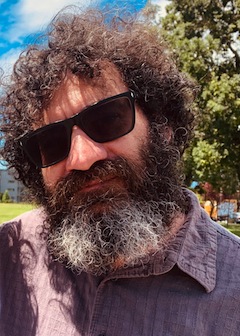
Supporting Jews worldwide

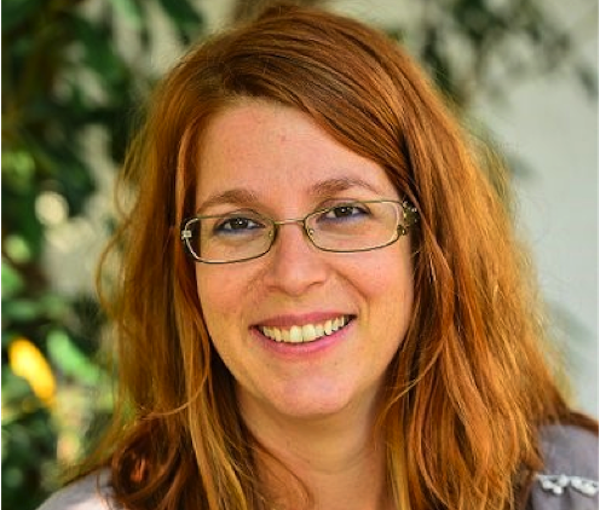
Michelle Pollock, chair of Jewish Federation of Greater Vancouver’s Israel and global engagement committee. (photo from JFGV)

For Montreal native Michelle Pollock, chair of Jewish Federation of Greater Vancouver’s Israel and global engagement committee (IGEC), love and loyalty to world Jewry were firmly established early in life – at home, school and in the community at large.

That deep affinity was further solidified after a two-month trip to Israel with her ninth-grade class. More recently, while serving as president of the Jewish Community Centre of Greater Vancouver in 2016, Pollock took a trip with her husband Neil to visit the Krakow and Moscow JCCs.

“These visits were incredibly powerful,” Pollock told the Independent. “Witnessing the young adults of these communities, discovering and exploring their Jewish heritage was beautiful. Even more inspiring was the hard work and dedication of the Polish and Russian volunteers and staff in creating welcoming spaces to facilitate this Jewish self-discovery.”

In November 2017, Pollock traveled to northern Israel as a participant on a Centre for Israel and Jewish Affairs mission. “Many of the participants on the trip were IGEC members or staff and their passion for our partnership region was infectious. I joined the IGEC soon thereafter,” she said.

A visit to Federation’s partnership region, Etzba HaGalil (the Galilee Panhandle), followed, in November 2019. That experience was multifaceted. The area is known for its physical beauty and the warmth of its residents, said Pollock, but the harsh reality of security issues and the regional challenges of jobs, infrastructure and opportunity also prevail, she noted.

“Seeing this firsthand infused me with gratitude to our Federation, which has worked so closely with the region since the mid-1990s to bring desperately needed aid and programming in a continuing effort to address the challenges faced by its residents,” Pollock said. “Jewish Federation has strategically invested funds to strengthen this region through education and social welfare programs, capital projects and regional development, and building enduring relationships between members of our community and residents of Etzba HaGalil.”

Similar to efforts locally, some of the funds to Israel have been allocated to new programs addressing youth mental health issues, violence and abuse at home, educational gaps and food security – all problems that have been compounded by the pandemic.

As for the challenges in another region in need, Far East Russia, where many Jews live in remote locations, Federation partners with the Joint Distribution Committee. The JDC is a global organization that addresses critical rescue and relief needs in more than 60 countries, including in the former Soviet Union (FSU).

“Working together with the JDC, life-saving aid is provided to over 80,000 elderly Jewish people in the former Soviet Union who struggle to survive on meagre pensions of $2 per day. They are the poorest Jews in the world, most without family or government support. Their distress and vulnerability are exacerbated by the region’s remoteness and freezing winters,” Pollock explained.

Many of these elderly Jews are well-educated and trained as doctors, lawyers, scientists and educators, she said. Having spent most of their working lives under communism, however, they were unable to accumulate savings. When the Soviet Union collapsed, along with the region’s pension and social assistance infrastructure, they were left poverty-stricken.

“Vancouver is geographically the nearest Jewish community to the Jewish communities in the easternmost part of Russia, adjacent to Siberia. As a strategic priority to strengthen Jewish life around the world, Jewish Federation (as the closest Federation) plays a very active role in supporting this region,” Pollock said. “We ensure long-term economic and social stability for Jews living overseas and in Israel by funding much-needed programs that provide a safety net for our most vulnerable people.”

These specialized programs, funded in part by the Jewish Federation of Greater Vancouver through the annual campaign, impact the lives of at-risk youth, low-income seniors and those living in economically fragile areas.

This year, Federation is funding a program directed at youth in the FSU called Active Jewish Teen (AJT). Engagement in the Jewish community, it believes, is an essential first step in making communal responsibility an inseparable part of one’s Jewish identity. Though still building momentum, AJT already has more than 3,200 members in 63 locations across seven countries.

Besides investing strategically, Federation’s IGEC has made solid connections with the groups it is serving in the FSU, said Pollock. It is also attentive to urgent needs arising in other Jewish communities around the world, helping fund operations and campaigns in South America, Ethiopia, the United States and elsewhere, she said.

Closer to home, throughout the year, Jewish Federation’s Israel and global engagement department brings opportunities for the Vancouver community to experience Israeli culture. Next year’s Yom Hazikaron (Israel’s Memorial Day) and Yom Ha’atzmaut will present opportunities for the community to come together in person.

“Building off the success of last year’s virtual Israeli Independence Day celebration, we will include more local talents and have community fun projects such as the community song and more surprises,” said Pollock, adding that there is a contingency plan in place should the COVID situation change.

Further, shinshinim, teenage emissaries from Israel, will be in town in the coming year. The shinshinim engage local young people in various activities and help foster meaningful ties between Disapora Jews and Israel.

Members of the Vancouver community have a chance to travel to Israel next summer, as well. Federation is facilitating a community mission from July 24 to Aug. 5, 2022.

“I know many of us are keen to travel and get back to Israel and this is going to be an amazing experience,” said Pollock. “At this point, we are looking for people to register their interest and there are a number of information sessions coming up.”

To learn more about the trip to Israel and to donate to the annual campaign, visit jewishvancouver.com.

Sam Margolis has written for the Globe and Mail, the National Post, UPI and MSNBC.
Ideas worth the fight

During Chanukah, we celebrate the victory of light over darkness, of the triumph of our values over the hegemonizing ideals and practices of the oppressor.

A crucial part of Jewish tradition is applying the wisdom of the past to the challenges of today. And the world is full of challenges today. One of those closest to home for some of us is the culture and climate at universities. Over the past two decades, we have witnessed growing anti-Israel activity and antisemitism on campus.

Concurrently, a new orthodoxy has emerged, which is viewed by many as an overdue reckoning and by some as ideological overreach. This shift is typified by an intolerance or rejection of ideas that are deemed intolerant or worse. Racism, sexism, homophobia, transphobia and ideological extremism have been targeted by growing numbers of students and faculty, which, on its face, is progress. Even so, issues with this evolution include who is doing the judging, as well as where intolerance of intolerance intrudes on academic growth and ideological diversity, which is the lifeblood of the institutions.

A confounding aspect of campus culture today is that, in an ideal world, anti-Jewish sentiments would be included in the panoply of censured ideas. Instead, too often, the people who are denouncing racism are carving out exceptions in this one instance, as many voices have observed. (David Baddiel’s book Jews Don’t Count was reviewed in these pages recently.)

In a curious development, it has recently been announced that a group of academics, activists and entrepreneurs are set to open a whole new university. The University of Austin, to be soft-launched in Texas next year, intends to be a petri dish for unfettered “academic freedom.”

The historian Niall Ferguson, who is one of the proponents of the new school, has written of the problem they intend to address, using some of the reductive shorthand now deployed in this larger “culture war”: “Trigger warnings. Safe spaces. Preferred pronouns. Checked privileges. Microaggressions. Antiracism. All these terms are routinely deployed on campuses throughout the English-speaking world as part of a sustained campaign to impose ideological conformity in the name of diversity. As a result, it often feels as if there is less free speech and free thought in the American university today than in almost any other institution in the U.S.”

The University of Austin appears to be a product of frustration. The state of campus discourse today is problematic in many ways. But there is a larger principle at stake. If there is a problem in the academy at large, is the solution to pack up one’s books and ghettoize into a whole new school? Around the globe, liberal values are under threat by totalitarianism on both extremes of the political spectrum from left to right. The campus environment reflects and is a contributor to the trends in society, how we relate to one another and ourselves, as well as organize our politics and affiliations. We do not have the ability (yet) to decamp to another planet because of rampant illiberalism on this one. Similarly, while we do have the capacity to segregate ourselves into alternative institutions, is that in any way going to improve the broader issue?

Ironically, the purpose of the University of Austin appears to be to create a space for uncomfortable ideas. But isn’t that precisely what they are running away from? As in so many things in life, we have a choice: flee or stay and fight.

Academia is one of the places where we address, however awkwardly and inconclusively, concerns like power, class, race, gender, legacies of colonialism and many, many more. If the voices of intellectual homogeneity on campus are determined to shelter students from disturbing topics, or to instil in them a uniform, facile response, is it the proper reaction to give them what they want?

It is understandable and tempting to abandon the institutions that betray our values or challenge our identities. It is also understandable and tempting to want to have a whole institution that reflects back our values and reinforces our identities. Neither scenario sits well within Judaism’s long tradition of debate and critical thinking. And neither scenario makes for a healthy society.

Our only reasonable response in life – and especially at supposed institutions of higher learning – is to continue engaging in the battle of ideas, however daunting and hopeless the fight might appear.

Chanukah is but one of the Jewish holidays that teach us miracles can happen – but that they don’t happen on their own. We have an active role to play in this world, and should always be looking for ways to bring light into it.

Diverse learning series

Rabbi Gila Caine (photo from Kolot Mayim)

Kolot Mayim Reform Temple in Victoria welcomes back Rabbi Gila Caine, spiritual leader of Temple Beth Ora in Edmonton, to speak on the topic Toratah/Her Torah: Women Rabbis Revealing the Goddess in Torah.

The Nov. 7, 11 a.m., lecture on Zoom kicks off a six-part series of talks called Building Bridges: Celebrating Diversity in Jewish Life. The community is invited to listen and learn from Indigenous, Black, Asian, feminist and differently-gendered and differently-abled advocates who are working to make our world a better place.

As a people who have experienced the devastating impact of antisemitism and hatred, Judaism commits us to the responsibility of tikkun olam (repairing our world). In that spirit, Kolot Mayim’s series of speakers will lead attendees on a journey to deepen their understanding of these contemporary issues and how they can support those who do not feel included.

Kolot Mayim’s Rabbi Lynn Greenough describes the series as “an opportunity to build bridges – bridges that enable us to link to what is and what can be, to step beyond our own particular experiences.” The Hebrew word for bridge is gesher, she explained, pointing to the song, “Kol Ha’Olam Kulo,” “the whole world is a very narrow bridge; the important thing is not to be afraid.”

In the series opener, Caine will explore how, throughout the millennia, rabbinic tradition, and especially written tradition, was composed from within a man-focused and -experienced perspective. Now, after around half a century of ordaining women, there is a growing corpus of documented writing flowing from within woman’s experiences and interpretations of Torah and life. In her talk, Caine will read a few Torah commentaries written by (women) rabbis from North America and Israel, as examples of weaving together rabbinic and women’s experience into something new.

Born and raised in Jerusalem, Caine graduated Hebrew University with a master’s in contemporary Judaism and received her rabbinic ordination at the Hebrew Union College-Jewish Institute of Religion’s Israeli program in 2011. Her rabbinic thesis explored liturgical, spiritual and ceremonial aspects of birth in Jewish tradition and contemporary practice.

Stemming from that, as well as her years as a volunteer at a rape crisis centre, Caine is one of the founders of the Israeli rabbinic women’s group B’not Dinah, creating a female and feminist rabbinic tradition of healing after sexual trauma. She now serves as rabbi at Temple Beth Ora and her Building Bridges talk is co-sponsored with her shul.

Other speakers in the 2021/22 series are:

  • Carmel Tanaka, founder and executive director of JQT Vancouver (Jewish Queer and Trans Vancouver) on A Day in the Life of a Queer, Neurodivergent, Jewpanese Millennial (Dec. 5);
  • Rivka Campbell, executive director of Jews of Colour Canada, on Harmony in a Divided Identity: A Minority Within a Minority (Jan. 9);
  • Joy Ladin, poet, author and first openly transgender professor at a Jewish institution, on Jonah, God and Other Strangers: Reading the Torah from a Trans Perspective (Feb. 6);
  • Reverend Hazan Daniel Benlolo, director of the Shira Choir, Spanish & Portuguese Synagogue, Montreal, on The Power of Music: In Honour of Jewish Disability Awareness and Inclusion Month (Feb. 13); and
  • Patricia June Vickers, Indigenous artist and independent consultant, and Rabbi Adam Cutler, senior rabbi of Adath Israel Congregation in Toronto, on An Indigenous and Jewish Dialogue on Truth and Reconciliation (March 20).

Kolot Mayim has been active for 20 years and this is the fourth year that the synagogue is offering this speaker series. Talks are free and held on the scheduled Sundays from 11 a.m. to 12:15 p.m. PST. To register, visit kolotmayimreformtemple.com.

– Courtesy Kolot Mayim

A time for diversity training

We’re in the month of Heshvan on the Jewish calendar. Some people call it Mar-Heshvan or Marcheshvan. (Since this is transliteration, it can be spelled either “ch” or “h.”)  It’s called mar, or bitter, because, aside from Shabbat, there are no Jewish holidays during this month.

Of course, as Canadians, we had Thanksgiving in there. However, after a long stretch of Jewish holidays, many Jewish people, myself included, quite like the idea of a month off from them. Finally, I have time to start another big project. A relatively quiet Jewish month leaves more time to do “regular” work, learning and making changes.

As a kid, I was very active in my Reform congregation. I learned to lead services and read Torah and Haftarah, and did it without hesitation after becoming a bat mitzvah. Unfortunately, though, at that time, we didn’t chant in my parents’ congregation, so I never learned how to do it. I married into a family with slightly more traditional practice among some of its members and, therefore, have been attending services with chanting now for more than 20 years.

Yet, learning to chant is a tricky business as an adult. On one occasion, I asked a rabbi if I might learn and he said of course, the congregation ran a special group class for adult b’not mitzvah. (Mostly it was women who never were able to participate in a bat mitzvah service as a child.) I said no, I’d been there and done that – complete with leading the service, a reception with custom-made omelettes, and a special dress. I just wanted to learn to chant. He had no space in his imagination for someone who just wanted to learn this skill without the lifecycle event.

I also learned that there are different kinds of trope. Chanting comes along with symbols in the text of the Torah, Haftarah, Eicha and Megillat Esther. The symbols were introduced by the rabbis as a way to mark and understand the text better. It’s like punctuation. However, as an oral tradition, chanting melodies differ according to where one lives and one’s background. There are actually many different styles of chanting trope, including smaller regional differences, as well.

The trope I’ve begun learning is an Ashkenazi one, which is perhaps appropriate to my family background. (I haven’t done a DNA test, though, so I’m going by family lore.) However, parts of my family are Western European and others have been in the United States for a long time. It’s even possible that I’m learning the “wrong” trope for my background. I’ve found that several Sephardi and Mizrahi chanting styles sound clearer and make more sense to me, perhaps because I’ve learned Modern Hebrew and I lived in Israel as a teenager. It’s actually not as simple as “Learn trope!” “Chant Torah!” although it seems this way if you’ve only lived in one specific Jewish ethnic community with unified customs and traditions.

The more you know, the more complicated things seem. The best metaphor I’ve come up with springs from an odd social media interaction I had. Someone I know only online described her harvest supper menu as including “Jewish-style brisket.”  I jokingly responded, “WHAT?! There’s only one kind? What about the many varieties I’ve had over the years? Could it be that I’ve never eaten the only ‘official’ Jewish brisket recipe?”

I said maybe this was an Eastern European/Ashkenazi recipe, or her family recipe. After all, brisket is a relatively cheap cut of meat, cooked low and slow, which is perfect to make on Shabbat, when some families do not adjust oven temperatures or turn the oven on or off.

The person insisted that this was indeed the Jewish-style brisket her family made, mostly, and that, if you Google it, this exact recipe pops up. (Hint, lots of things pop up online that don’t hold up under scrutiny.) Eventually, I suggested that perhaps this was best called a family recipe or a specific geographic recipe, and wished her bon appétit.

Geography matters in cooking meat – for instance, in a Southern barbeque recipe. That is, brisket in Texas doesn’t taste like brisket made in eastern Carolina. Nothing could be more different! The same is true for Jewish trope or chanting. They don’t sound the same because, although Jews originated, long ago, in what is now called Israel, we’re now a diverse people, from all over the world. Just as Jews don’t all look the same, we all don’t eat the same foods on holidays, or sing the same melodies for Lecha Dodi, Adon Olam or myriad other prayers.

So, I begin, with baby steps, to learn one chanting/trope tradition while acknowledging there are many others out there. Like the many brisket recipes and holiday traditions out there, knowing about diversity and traveling deepens our appreciation for what we know and enjoy, and for learning more.

In the meanwhile, I joked with a non-Jewish friend I know in “real life” that, if there is really only one Jewish-style brisket recipe, we might be in trouble. “Oh no!” she replied. “I have to figure out ‘the’ Christian brisket recipe! How have I missed it after all this time?!” We snorted together with laughter. Next, I might call a Muslim friend to ask if there just one Muslim meatball – after all, the kibbe and kofte I’ve shared over many years might not be the official kind?

The best learning for Heshvan? There might not be a single “official” version of anything. That, in itself, is a lesson in diversity that might be worth learning like trope … over and over.

Joanne Seiff has written regularly for CBC Manitoba and various Jewish publications. She is the author of three books, including From the Outside In: Jewish Post Columns 2015-2016, a collection of essays available for digital download or as a paperback from Amazon. Check her out on Instagram @yrnspinner or at joanneseiff.blogspot.com.


Tackling antisemitism

It’s no secret that antisemitism around the world has been increasing for years. As recently as Sept. 30, MLA Spencer Chandra Herbert saw his office window hit with a spray-painted red swastika. Make no mistake: there is no place for antisemitism in our world. That’s why Chabad Richmond is offering the four-week Rohr Jewish Learning Institute program called Outsmarting Antisemitism on Wednesdays Nov. 3, 10, 17 and 24 from 7:30-9 p.m.

“Join me each week as we explore the ethical impacts of history repeating itself, both within the Jewish community and beyond, by those who believe that antisemitism and hatred are accepted and encouraged practices and attitudes,” said Rabbi Yechiel Baitelman, director of Chabad Richmond.

Outsmarting Antisemitism takes on this subject directly and unapologetically, with a sense of optimism, faith and a distinctly Jewish approach.

“Through insightful source texts and fascinating case studies, this course examines the sources of this ancient scourge, along with the appropriate strategies for overcoming it. It’s time to find the confidence to fight hate with hope, and to stand tall against antisemitism,” said Baitelman.

“Upon concluding our series Outsmarting Antisemitism, you will be better equipped to campaign publicly against those who oppose both Israel and the Jewish people, and ensure we do everything possible to condition society to bring out the best in humans, rather than their more sinister elements,” he added.

Outsmarting Antisemitism will be offered both in-person and online via Zoom. Sign-in information will be provided at the time of registration. The cost to attend is $75 per person or $130 per couple, and includes the textbook.

This course  will also be offered to lawyers for B.C. Law Society accreditation on Nov. 25, Dec. 2, 9 and 16 from 7:30-9:30 p.m. and will take place in person, at Chabad Richmond, 4775 Blundell Rd. The cost is $540 including textbook and the course is applicable for eight CLE approved credits.

To register for either Richmond course, call 604-277-6427 or visit chabadrichmond.com/jli.

The JLI course is also being offered at Lubavitch Centre (604-266-1313), starting Oct. 26, and Chabad of Nanaimo (250-797-7877), starting Nov. 9.

– Courtesy Chabad Richmond

Milestones … Hart-Rappoport wedding, Canadian Jewish Literary Awards, new BGU residences

With gratitude to HaShem, mazel tov to Shmuel Hart (King David High School Class of 2016) and Reut Rappoport on their joyous and spirited wedding at Sakoya Gardens (just outside Jerusalem) on June 15, 2021. Elated parents – Alexander Hart and Kathryn Selby of Vancouver, and Rabbi Jason and Meira Rappoport of Alon Shvut, Gush Etzion, Israel – are so very proud of the newlyweds. The couple resides in Jerusalem, Israel, and both are currently studying at Hebrew University.

* * *

Now in its seventh year, the Canadian Jewish Literary Awards recognizes and rewards the finest Canadian writing on Jewish themes and subjects. This year, the awards ceremony, which took place on Oct. 17, was presented on Zoom and is available for viewing on the Canadian Jewish Literary Awards YouTube channel.

The winner in the fiction category was Nothing the Same, Everything Haunted: The Ballad of Motl the Cowboy by Gary Barwin (Random House Canada). It follows a wannabe cowboy, Motl, as he and his mother flee Vilna and the Nazis’ massacre of the Jews. The ensuing events, characters and horror are met by Motl with humorous absurdity in the face of tragedy.

Plunder: A Memoir of Family Property and Nazi Treasure (Houghton Mifflin Harcourt) by Menachem Kaiser, which tells the story of the author’s quest to reclaim a residential building his family owned in Poland before the Shoah, won for best biography.

Lisa Richter won the poetry prize for Nautilus and Bone (Frontenac House). A reimagining of the unconventional life of Yiddish poet Anna Margolin, this collection also won the 2020 National Jewish Book Award for Poetry, the first time a Canadian poet has ever received the American honour.

For children and youth literature, the winner was Osnat and Her Dove (Levine Querido) by Sigal Samuel, with illustrations by Vali Mintzi. It is based on a true story. Although girls in 15th-century Mosul were told, “Reading is for boys,” Osnat convinces her rabbi father to teach her to read. As she grows older, she asks her father to seek a groom who will allow her to study Torah, and she helps run her father’s religious school while raising her own children. After her father’s death and, later, her husband’s, Osnat becomes the school’s leader, making her the world’s first female rabbi.

For scholarship, the awardee was Survivors: Children’s Lives After the Holocaust by Rebecca Clifford (Yale University Press), which is an exploration of the life trajectories of 100 children who were 10 years old or younger at the time of their liberation in 1945. Through archives found in 12 countries, including Canada, and through personal interviews, the author follows the impact the events of the Holocaust had on their lives, and on those who educated them.

In the category of writing about the Holocaust, the winner was In the Lights of Days: The Untold Story of Women Resistance Fighters in Hitler’s Ghettos (William Morrow) by Judy Batalion. The book points out the lack of recognition and the misrepresentation of women’s roles during the war, the actions they took to fight, as well as their crucial importance.

The Canadian Jewish Literary Awards jury for 2021 was Edward Trapunski, Pierre Anctil, Rona Arato, Miriam Borden, Rita Davies, Alain Goldschläger and Adam Sol.

For more information, visit cjlawards.ca.

* * *

photo - Ben-Gurion University of the Negev student village
Ben-Gurion University of the Negev student village (photo from CABGU)

Fourteen new buildings have been added to the student village at Ben-Gurion University of the Negev (BGU) in Israel. It will allow more than 1,000 students options from studio apartments to married student housing.

“The student village lets them choose their living quarters in accordance with their personal preference,” said BGU president Prof. Daniel Chamovitz, “while everything they could need is nearby: the north campus and the conference centre, which are in development, a hotel for visiting students and faculty, stores and coffee shops … and the high-tech park, the train station and the university’s country club are just a short walk away.”

The student village offers apartments suitable for religious students and those with disabilities. Any registered student is eligible to apply for a room. The rooms come fully furnished with a smart TV, beds, closets, desks, a full kitchen, a sitting area and a solar water heater. Full maintenance service is offered, as is 24/7 security, a 24-hour service hotline, bicycle rooms, laundry rooms, and more.

“Situated in the country’s southern region, the university is known to be a destination institution,” said Mark Mendelson, chief executive officer of Canadian Associates of BGU. “This means that students who attend the university also live either on campus or in the communities in and around the university, including the city of Be’er Sheva. In addition, almost 60% of the undergraduate student body volunteers in their respective neighbourhoods, which is really something very unique to BGU and has brought outstanding community involvement to the citizens of Be’er Sheva.”

Confront challenges

Everyone could use some insight on how to confront life’s challenges. That’s why Chabad Richmond is offering a three-part online Zoom program called Inlook Outlook: Guidance from the Rebbe for Confronting Life’s Challenges on Wednesdays, Oct.13, 20 and 27, 7:30-8:30 p.m.

“This program focuses on the timely and relevant reflections and sage advice written by the Lubavitcher Rebbe, Rabbi Menachem Mendel Schneerson, throughout his lifetime, to those seeking his counsel,” said Rabbi Yechiel Baitelman, director of Chabad Richmond. “What’s fascinating is that the Rebbe’s insights and perspectives are still applicable today. The Rebbe drew from his profound grasp of Torah wisdom, and combined it with a nuanced sensitivity to each individual’s unique circumstances.”

The three-part program is “a shared dialogue around navigating change and managing stress, while defining and staying true to one’s purpose,” said Baitelman. “The Rebbe reminds us that whatever life challenges we face, we are always given the inner spiritual resources to overcome them.”

The Rebbe believed that how you think about any situation determines how you feel about it.

“By reflecting on practical advice penned to individuals during critical life-junctures, this program provides perspectives on life that begin from the inside out, starting from the soul and one’s destiny on earth. The Rebbe helped people find opportunity where others saw adversity,” added Baitelman.

Sign-in information for the program will be provided at the time of registration. Cost is $54 per person. To register, call 604-277-6427 or visit chabadrichmond.com/inlookoutlook.

– Courtesy Chabad Richmond

Heroic work continues

An important – and surprising – court decision in Poland last month is a small victory in a longer battle over the history of Polish behaviour during the Second World War.

On appeal, two Holocaust scholars had an earlier decision reversed. University of Ottawa professor Jan Grabowski and Barbara Engelking, a Polish historian of the Holocaust, had earlier been ordered to apologize to a Polish woman who brought a suit against the two, arguing that her family’s name had been tarnished by the historians’ depictions of her uncle’s actions during the war. The case was watched closely, and its appeal is significant, as it could portend how Poland’s judiciary approaches a comparatively new law that proscribes negative depictions of Polish complicity during the war.

Poland’s ruling Law and Justice party is a right-wing nationalist movement that seeks to glorify Polish heroism during that era and erase – indeed, outlaw – records that demonstrate the complicity in atrocities by individual Poles and segments of that society during the Holocaust.

Grabowski and Engelking are on the frontlines of that conflict. They head a team of researchers that produced Night Without End: The Fate of Jews in Selected Counties of Occupied Poland, a compendious 1,700-page documentation of Polish atrocities during the war. The researchers, at risk to themselves, delved into often-untouched archival records in small and remote communities across Poland. In a presentation in Vancouver three years ago, Grabowski explained that, after the war, a surprising number of Poles felt no obligation to hide or embroider their activities during that period, content that their neighbours, if not history, would judge them kindly. The researchers plumbed files that had not been opened since 1945 and discovered harrowing tales of neighbour turning on neighbour, of Jews in hiding listening as their former friends pointed out their whereabouts to the Nazis and their collaborators.

The work is monumental and is being translated into English. It also indicates the breadth and depth of Holocaust history that has yet to be even remotely explored. The big picture, certainly, is well known – to the extent that plenty of people complain that it is time to move on from the topic. But the work of Grabowski et al reminds us that, in terms of millions of stories of individuals, heroic and wicked, we have hardly scratched the surface.

This is why the Polish law, and the intent behind it, is so dangerous. The problem is not merely the suppression of what we already know to be true, it is the very tangible possibility that current scholarship will be curtailed and that potential future scholars will choose less arduous fields of study. In either case, the crucial primary research still underway could be squelched.

This urgency was underscored by the publication Tuesday of a new book, Into the Forest: A Holocaust Story of Survival, Triumph and Love by Rebecca Frankel, former executive editor of Foreign Policy magazine. Writing in the New York Times Sunday, Frankel shared the story of one family who survived the war in Poland by hiding in the forests. The “Jews of the forest,” as she calls them, are an example of a massively underexplored facet of Holocaust history. The narratives of these Jews – some of whom survived the war, many or most of whom apparently did not – are absent from most chronologies because, by definition, those who survived (or did not) by disappearing into the forests were not included in the record-keeping of the Nazis and their collaborators.

We know from opinion surveys that there is an enormous amount of ignorance, particularly among the young in North America and Europe, about the Holocaust. In a notable irony, a major survey of European societies discovered that the countries where the largest number of people believes that there is too much emphasis on the Holocaust are the same countries where ignorance of the facts is greatest. In other words, it seems that those who know the least about that history are the ones most determined to close their ears to it.

Prof. Grabowski, who was born in Poland, was evasive in his visit to Vancouver in 2018, deflecting assertions that his work is heroic. Instead, he credited the courage of the on-the-ground researchers in Poland. There should be enough admiration to go around for the researchers, historians, writers and teachers who continue the necessary work of studying and sharing knowledge of that time.

As we have seen from the past seven decades, knowledge of the past does not preclude repetitions of genocide. But ignorance will almost certainly hasten its frequency and severity.

Controversy over instructor

A proposed fall semester course at the University of Victoria has raised concerns that it will become what B’nai Brith Canada described as “a forum for antisemitism.” The concerns were sparked by inflammatory comments the course’s instructor, Dr. Shamma Boyarin, wrote on social media earlier in the year.

In a May 26 Twitter post, for example, Boyarin used an obscene verb before labeling Abraham Foxman, former president of the Anti-Defamation League, a “Zionist pig.” On June 3, he ridiculed an individual who had been the recipient of a torrent of antisemitic abuse online. This was followed the next day by a post in which Boyarin remarked, “[It’s] hard for North American Jews to admit the truth: What is happening in Israel is ethnic cleansing and slow genocide.”

An online description of the UVic course, entitled Introduction to Antisemitism, has been modified since it was first posted. At an earlier stage, the description began, “What is antisemitism? As soon as one attempts definitions, it becomes clear that even the most fundamental aspects of antisemitism are controversial.” The course’s current title is also different from the original, which was Towards an Understanding of Antisemitism. Gone, too, is a study of present-day antisemitism.

photo - Prof. Shamma Boyarin
Prof. Shamma Boyarin (photo from uvic.ca)

The changes occurred in early August after B’nai Brith, among others, raised objections to UVic about Boyarin teaching a class on modern antisemitism. The course’s subtitle on the UVic website now reads, “A Historical Survey of Key Texts and Moments from Augustine to Luther.” Its description: “What is antisemitism? The term itself was coined in the late 19th century, but when does the phenomenon begin? Is it the same or different from ‘anti-Judaism’? Should we spell it ‘anti-Semitism’ or ‘antisemitism’? Beginning with these basic questions, we will focus on the particular role Christianity has played in developing and sustaining antisemitism in Europe.”

“Moving this course away from modern antisemitism is an important first step,” said Michael Mostyn, chief executive officer of B’nai Brith Canada. “However, we are still concerned that, instead of educating students on the scourge of Jew-hatred, there is a risk, albeit a reduced one, that hostility toward Jews will instead be promoted.

“UVic must provide assurances to the Jewish community that academic freedom will not be used as cover to falsely accuse Jews, as a whole, of contributing to genocide, among other antisemitic canards,” he added.

When contacted by the Independent, UVic expressed the position that it “does not condone antisemitism” and “that it is highly committed to equity, diversity and inclusion and to social justice in its many forms.”

“We are aware that a faculty member has expressed personal views in public communications which are disturbing to people. Those views are personal. They have not been made on behalf of the university or in the context of their work,” said Karen Johnston, a spokesperson for the university.

“Canadians have a constitutional right to free speech, subject to limits under the law,” she said. “And so it cannot be the role of the university to judge or censor its employees’ exercise of free speech in their private lives. While all faculty enjoy the privilege of academic freedom, there are also limitations to this right. In this specific instance, there is no evidence at this time that the faculty member has or will exceed those limitations in teaching this course.”

The university also said it “will act on any allegation that there has been a violation of university policies against discrimination or harassment, which apply to all members of our community.”

Rob Philipp, executive director at Hillel BC, has been monitoring the situation and has spoken with Dr. Kevin Hall, the president of UVic. Philipp said, “If the course does run, we will check to see what the reading material is and what is being taught.” However, he added, while the organization is keeping on top of things, there is not much that can be done to stop the course from going ahead.

Jeff Kushner, president of the Jewish Federation of Victoria and Vancouver Island (JFVVI), said they, too, will be following the UVic course and will remain in contact with senior administration staff.

“The JFVVI does not have any serious concerns about the course material, such as we know it,” said Kushner. “Our concerns are more about the academic and emotional safety of the students enrolled in the course. In this particular case, a professor at UVic made some very objectionable comments on his private Twitter feed. We wish that he had not made such incorrect and inflammatory statements, both in his role as an academic and as a Jew.

“He has not made these comments in any official capacity, and the university has been very clear that these objectionable views are not the views of the university. Our concern is that an individual having these views, and expressing them as he has, may find it difficult to leave them at the classroom door and, through explicit statements or implicit actions, may create an unsafe learning environment for Jewish students holding views contrary to his own.”

In a letter to the university, B’nai Brith urged UVic to publish the syllabus of the revised course online, to cancel the course if it is used to attack the Jewish community in any way and to follow other universities, such as Oxford and Cambridge, in adopting the International Holocaust Remembrance Alliance Working Definition of Antisemitism to “avoid future confusion.”

Boyarin has taught at the University of Victoria since 2008 in religious studies and medieval studies, and in the English department since 2009. According to his profile at UVic, his current research and teaching interests include medieval literature (particularly the literature of Spain and the Near East), comparative literature (particularly Hebrew and Arabic), literature and religion, Jewish studies, and the religious roots of antisemitism. He has additional expertise, his profile continues, in the connections between medieval and contemporary culture, especially as they manifest in heavy metal music and white supremacist ideologies.

The Independent tried to reach Boyarin for comment, but had not heard back from him at the time of publication.

Sam Margolis has written for the Globe and Mail, the National Post, UPI and MSNBC.

Teaching Israeli teens

Want to make a difference in the lives of Israeli teens? Consider joining Israel Connect, a program where local adult volunteers connect online, one-on-one, via Zoom, with Israeli high school students who want to improve their English conversation and reading skills. This year’s program starts on Oct. 10 and is organized by Chabad Richmond, in partnership with the Israeli Ministry of Education. It entails a commitment of 45 minutes once a week.

There are currently 21 local volunteer tutors/mentors participating in Israel Connect, but more are needed. “We’re looking for volunteers who are retirees, seniors, or any adults with flexible schedules…. No previous tutoring experience is necessary and the curriculum is provided for tutors/mentors,” said Shelley Civkin, local coordinator of the program.“If you’re an adult who’s a fluent English-speaker, has basic computer skills and owns a computer with a camera, that’s pretty much all you need,” she said. “And, of course, a strong desire to help Israeli youth.”

Volunteers do not need to speak Hebrew and can tutor from home. Basic training and technical support are available if needed. Time preferences of volunteer tutors/mentors will be coordinated beforehand and sessions take place in the morning between 7 and 11 a.m. PST any day between Sunday and Thursday. “All Israel Connect asks is a minimum commitment of one school year, in order to ensure consistency for the students,” said Civkin.

“It’s a very meaningful, practical way for community members to support Israel and build bridges between Diaspora Jews and Israelis,” said Rabbi Yechiel Baitelman of Chabad Richmond. “You’ll be doing a mitzvah, while investing in Israel and its young people. Plus, good English skills will give them an advantage in accessing post-secondary education and getting better jobs. English proficiency is crucial to Israeli students, since it accounts for a third of their entrance exam marks for university.”

“Partnering with the Israeli Ministry of Education, the Israel Connect program targets teens from less advantaged neighbourhoods in Israel,” added Civkin. “Most volunteers really enjoy helping their Israeli students and develop a lasting bond with them…. This kind of one-on-one tutoring makes a huge difference in their lives, both educationally and personally. It gives them a feeling of confidence, that they can converse in English. Estimating the impact of this program on Israeli youth is, of course, speculative, but we do know for certain that it helps improves their school grades.”

The curriculum consists mainly of a tour of Israel, focusing on the wealth of historically, culturally and biblically significant cities and sites. It’s not uncommon for both the students and the tutors to learn something new about Israel at each lesson. Civkin said several tutors have visited their students on trips to Israel and keep in touch way past the end of the school year.

For more information on tutoring, contact Civkin at 604-789-5806 or civie1956@gmail.com. Anyone who would like to support the program financially, helping cover costs for aspects such as technical support and staffing, can call Chabad Richmond at 604-277-6427 or email admin@chabadrichmond.com.

– Courtesy Chabad Richmond