Skip to content
  • Home
  • Subscribe / donate
  • Events calendar
  • Business Directory
  • FAQ
  • News
    • Local
    • National
    • Israel
    • World
    • עניין בחדשות
      A roundup of news in Canada and further afield, in Hebrew.
  • Opinion
    • From the JI
    • Op-Ed
  • Arts & Culture
    • Performing Arts
    • Music
    • Books
    • Visual Arts
    • TV & Film
  • Life
    • Celebrating the Holidays
    • Travel
    • The Daily Snooze
      Cartoons by Jacob Samuel
    • Mystery Photo
      Help the JI and JMABC fill in the gaps in our archives.
  • Community Links
    • Organizations, Etc.
    • Other News Sources & Blogs
  • JI Chai Celebration
  • JI@88! video

Recent Posts

  • SFU honours Gloria Gutman
  • Lifting people’s spirits
  • Wedding a ray of light
  • Indigeneity and Zionism
  • Rule of law broken: councilor
  • Football and its roles
  • The burden of defence
  • Fish Café returns after fire
  • All right in what goes wrong
  • Nuns & mermaids at TUTS
  • Camp offers holiday retreat
  • Students and mentors inspire
  • Once-in-a-lifetime trip
  • 100 dancers, one heart
  • Money for the sciences
  • What “Jewish food” means
  • Have a cookie, schnitzel too
  • Federation now across BC
  • Israel fighting for its existence
  • Deal strengthens Iran
  • Patriotic belonging diminishes
  • A campaign to engage
  • Upstanders’ first live event
  • Responding to Carney
  • Having your own home
  • Music a family tradition
  • Musical to warm heart
  • Community milestones … June 2026
  • Sharing her passion for Israel
  • Or Shalom reopens its doors
  • JFS from past to future
  • Need holistic approach
  • Sharing stories, advice
  • Journalist shares fears
  • Skills to live together
  • Road to independence

Archives

Follow @JewishIndie
image - CJN box ad Rockowers 2026

Tag: antisemitism

A new strategy to brighten up BC

A new strategy to brighten up BC

Communities across British Columbia gathered for Hanukkah, including in Vancouver, shown here, and in Delta, Maple Ridge and Whistler. (photo by Caryl Dolinko)

At moments of heightened threat, the instinct to pull inward is natural. Jewish history gives us many reasons to do so. Too often, the dominant public stories about Jewish life are stories of persecution, expulsion and death. Our museums, memorials and education efforts rightly preserve these memories. They matter. But they are not the whole story of who we are. 

When those narratives stand alone, they can unintentionally cast Jews primarily as victims rather than as a living people defined by courage, creativity, resilience and contribution. At a time when antisemitism is rising, that framing matters – not only for how others see us, but for how we show up ourselves. 

photo - Hanukkah in Delta
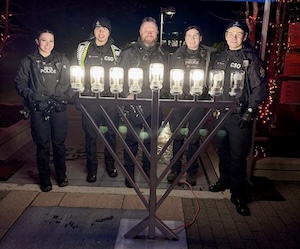
Hanukkah in Delta. (photo from Jewish Federation)

This question – how to respond without retreating – was at the heart of months of work by an antisemitism task force convened by the Jewish Federation of Greater Vancouver. Confronting antisemitism cannot rely solely on crisis response. We must, of course, put out fires when they arise. But we must also plant trees – investing in long-term efforts that cultivate allyship while celebrating Jewish life itself, strengthening joy, pride and confidence.

Bringing this approach into being at Hanukkah was not just timely, but strategic. Hanukkah tells a story that stands in contrast to narratives of Jewish victimhood. It is a story of bravery and resistance, of strength and victory against overwhelming odds, of miracles made possible through human action. It is about light that is meant to be seen – placed in windows, carried into public space.

Strong brands matter. They shape perception. They create familiarity and emotional safety. They allow people to connect through shared values and comfort. That is why the Jewish Federation chose not simply to celebrate Hanukkah this year, but to brand it. Brighten BC is a province-wide initiative designed to combat antisemitism through confident visibility and deeper integration into shared civic life. 

photo - Hanukkah in Maple Ridge
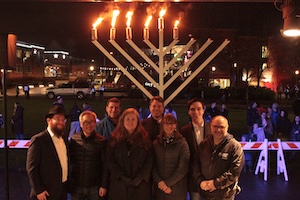
Hanukkah in Maple Ridge. (photo from Jewish Federation)

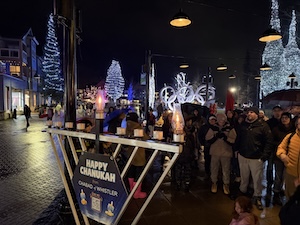
Over eight nights, nearly 70 public Hanukkah events took place across close to 30 communities throughout British Columbia, a community of about 40,000 Jews. Menorahs were lit in town squares, at local fire halls and other civic sites. Neighbours, first responders, municipal leaders and community partners gathered alongside Jewish families. The City of Vancouver proclaimed the week Brighten BC Week. Destination Vancouver listed Brighten BC celebrations on its “Attractions and Things to Do in Vancouver” webpage. Online, the campaign reached about 19,000 people through #BrightenBC. Initiatives like the Best Hanukkah Donut Contest – engaging nearly 400 participants – reinforced the campaign’s tone: joyful, human and easy to join. 

photo - Hanukkah in Whistler
Hanukkah in Whistler. (photo from Jewish Federation)

On the first day of Hanukkah, the Jewish world was shaken by the violent attack at Bondi Beach in Australia. But the tragedy did not redefine Brighten BC – it tested it. That morning, event registrations surged across the province as community members and allies chose presence over retreat. Security protocols were immediately elevated, with police and fire departments becoming operational partners to ensure gatherings could proceed safely and openly.

On the first night of Hanukkah, communities gathered across British Columbia, including at the Silber Family Agam Menorah, on the grounds of the Vancouver Art Gallery, the same site where extremists had burned the Canadian flag on the first anniversary of Oct. 7. Gathering there was not an act of provocation. It was an act of belonging. 

The Lubavitcher Rebbe taught, “A little light dispels a lot of darkness.” This Hanukkah, we didn’t just celebrate. We invited, we aligned, we showed up. We chose light – and invited others to stand in it with us. 

The next phase of this work is about identifying other widely recognized, positively associated cultural moments that can serve as platforms for shared celebration and connection – moments with strong emotional resonance, public expression and low barriers to participation. 

– Courtesy Jewish Federation of Greater Vancouver

Format ImagePosted on January 23, 2026January 22, 2026Author Jewish Federation of Greater VancouverCategories Celebrating the Holidays, LocalTags allyship, antisemitism, branding, Brighten BC, Hanukkah

Johnson awarded for human rights work

Pat Johnson has been selected by the government of Romania for the 2025 Ambassador Mihnea Constantinescu National Award for outstanding merits in combating antisemitism, xenophobia, radicalization and hate speech. He was nominated for the honour by the Jewish Federation of Greater Vancouver.

photo - Pat Johnson
Pat Johnson (photo courtesy)

The jury’s decision to award the 2025 prize to Johnson took into account the innovative nature of his activities and their long-term impact, his substantial civic commitment and contributions to public education, Romania’s Ministry of Foreign Affairs said in the announcement. 

Johnson, who readers will know, is on the editorial board of the Jewish Independent and has been part of the newspaper for almost 30 years. He is a writer and public figure with more than 30 years of experience promoting human rights and equal opportunities, combating antisemitism, discrimination and prejudice. He is the founder of Upstanders Canada, a grassroots movement to encourage Canadians (especially non-Jewish Canadians) to stand against antisemitism and anti-Zionism. Readers can follow him at pat604johnson.substack.com.

“The work this prize represents  – standing against antisemitism, hate and distortion of history – is collective, ongoing, and carried by so many people. I see this prize as encouragement for all people to keep going, to speak clearly, and to just show up,” said Johnson.

Ambassador Mihnea Constantinescu was a senior Romanian diplomat. Among many other things, he served as Romania’s chair of the International Holocaust Remembrance Alliance, and chaired the meeting that adopted the working definition of antisemitism. 

Posted on January 23, 2026January 22, 2026Author JI staffCategories LocalTags allyship, antisemitism, human rights, Pat Johnson, Romania

Killed for being Jewish 

For Jews worldwide, the hope represented by the first candle of Hanukkah was snuffed out by the horrifying mass murder at a communal Hanukkah celebration in Sydney, Australia. At press time, 15 were confirmed dead, ranging from a 10-year-old named Matilda to an 87-year-old survivor of the Holocaust, Alex Kleytman.  

There have been many antisemitic incidents and attacks in Australia in the past two years, as there have been in many places. One of the reasons this hatred is spreading is the refusal of leaders to recognize and address it specifically as Jew-hatred.

This stubborn blindness was evidenced in the words of Australia’s Prime Minister Anthony Albanese in the immediate aftermath of Sunday’s mass murder. 

“An attack on Jewish Australians is an attack on every Australian,” he said. 

This is the sort of bromide politicians bring forth in moments like these, almost entirely devoid of meaning and, more significantly, a refusal to see the incident for what it is.

This was absolutely, decidedly, emphatically not an attack on “every Australian.” It was a targeted attack on Jewish Australians and to paint it as anything else – to universalize the very anti-Jewish particularity of the violence – is to deflect attention from the reality and true nature of the problem and ensure no resolution to Australia’s crisis of antisemitism is reached.

An Australian Jewish communal leader said antisemitic incidents in the country are “off the scale,” noting a series of recent antisemitic arsons, which pile upon recent attacks on synagogues, a daycare centre and an Israeli restaurant, as well as a tragically long list of less violent incidents.

The Australian problem is a microcosm of a larger global phenomenon. Government leaders, activists, commentators, NGOs and public figures worldwide for (at least) two years have been condemning Israel in the most malevolent terms, including outright blood libels and slanders that have become so endemic as to be treated as received truth. 

The parallels between the tenor of frenzied rhetoric against Israel – including from the highest levels of government, society and media – and the unprecedented spike in antisemitic violence has seemed to spark almost no recognition of cause and effect. An alternative (and perverse) explanation seems to be that the victims of these incidents deserve it, considering their perceived complicity in Zionism.

Given the panorama of tragedy in the world and the myopic focus on the only one involving the Jewish state puts the lie to naïve assessments that there is no correlation here. Or that the Jewish victims are to blame. If overheated rhetoric toward any other identifiable group paralleled extraordinary targeted violence against members of that group (or anyone seen to be in sympathy or associated with them), almost anyone would recognize the correlation.

The Australian government, like so many others, seems to believe they can condemn Israel in the most strident, undiplomatic terms, on the one hand, and claim, on the other hand, shock and dismay – even bewilderment – when violence against Australian Jews erupts.

In the aftermath of the mass murders, Albanese committed to stronger gun laws, which are already some of the strongest in the Western world. Well, OK. But how about stronger laws and customs against antisemitic incitement? How about toning down the declarations from his own government, which some have accused of rewarding the 10/7 terror attacks by nearly instantaneously demanding and then leading a vanguard of nations to unilaterally recognize Palestinian statehood while terrorists are still in control there? How about listening to the voices of Jewish Australians who have been warning for more than two years that this sort of terror was becoming inevitable given the pitch of rhetoric?  

It will be noted extensively that the attacks were apparently perpetrated by a father and son who are reported to be migrants from Pakistan. (The father is dead. The son is in hospital with significant injuries.) It should be noted at least as prominently that the man who disarmed one of the attackers is a Syrian Muslim. If we want to paint a broad brush of blame, we must also paint with an equally broad brush of heroism, truly incredible courage and heroic action. Let us not, though, pretend that there are not dangerous strains of cultural and theological antisemitism embedded in some communities that absolutely need to be addressed much more vigorously and vociferously than they are currently being addressed. It is also true that antisemitism knows no borders and has spread to nearly every pocket of the world over the last 2,000-plus years. 

Early indications are that Australia is determined to ignore the obvious parallels between unrestrained continual damnation of Israel across society, including at the highest levels, and violence against Jews. Maybe other countries – like ours – will take heed and learn from Australia’s folly before it is too late. We hope so. Canada’s government and civil society have responded very much along the lines of Australia’s throughout these horrible two years. 

Posted on December 19, 2025December 18, 2025Author The Editorial BoardCategories From the JITags antisemitism, Australia, governance, Hanukkah, incitement, murder, terrorism

The complexities of identity

More than 16 years ago, I was accepted into a master class for writing fiction with a well-known regional author at a university near me in Kentucky. I’d written lots of non-fiction and dabbled in fiction. I thought this would be a good opportunity. Shortly after arrival, I realized that this was a fiction class that specialized in Appalachian themes. Although I was from Virginia, my background wasn’t Appalachian. I felt like an outsider. I was also the only Jewish person there. As things progressed, the author suggested we should always “write what we know!” He talked a lot. The class was a lot drier than I’d hoped.

When it was time for short writing exercises based on prompts, I let loose. I purposely wrote to fit in, creating a vignette around church. When it came time to read these pieces, everyone nodded along with my church scenario – I was fitting in, but only because I was purposely faking it. First, I’d proved to myself that “write what you know” wasn’t always necessary, because, of course, famous fantasy or science fiction authors don’t truly know the alternate worlds they dream up. Even fiction authors don’t always know how to do everything they describe in their imaginary worlds. Second, I’d faked being part of the majority religious culture and those classmates bought it.

In the afternoon, it was time to workshop pieces we’d submitted earlier. I’d submitted writing that had been favourably reviewed elsewhere. I felt somewhat confident. However, the workshop’s approach was to criticize without complimenting – and many comments didn’t even seem relevant to what I’d written. When I tried to respond, I was shushed and told I must not know how these kinds of workshops worked. Responding was bad form. I was meant to be “shamed” without recourse. I felt vulnerable and took their unhelpful comments to heart, forgetting that I’d been part of different yet successful writing workshops long before, as a teen at the University of Virginia. The day dragged on. I noted the famed author’s agitation and cigarette smoking at the breaks. I wasn’t having a great learning experience.

I returned home to spend the evening with my husband and my father-in-law, who was visiting from New York. They’d just heard of the sudden death of a close family friend in a skiing accident. I devoted my evening to them and realized that skipping day two of this workshop to be with family was more important. I sent regrets to the famous author’s class, but I mostly felt relief.

Later, I learned that the famous author, whose work was described as traditional, heterosexual rural Kentucky, and who had a wife and small kids, was going through a divorce at the time of the workshop. Later, he became happily married to a man. I wondered again about the “write what you know” and “represent your identity” advice.

This all came to mind when I recently read obituaries of Tom Stoppard and Frank Gehry. Stoppard, a great Czech/British playwright, only addressed his Jewish heritage later in life, when he learned more about what had happened to his family during the Holocaust. Gehry, born to a Polish-Jewish immigrant family in Toronto, heard Talmud from his grandfather as a child. Although Gehry claimed he was an atheist, he attributed his questioning and creativity to the rich encouragement of his childhood. Gehry changed his name from Goldberg to Gehry at the urging of his first wife, who wanted to avoid antisemitism.

I gained access to this fuller description of these creative figures not from a single write-up but from several. If I’d relied on the CBC’s account of Gehry, I’d only have known about his Judaism from his name change and antisemitism concerns; CBC never used the word “Jew” or “Jewish.” The retrospectives on Stoppard’s work came from both the CBC and Jewish publications, but Stoppard’s last name came from a non-Jewish stepfather. That man wanted him to stop using the name Stoppard when his work became too “tribal” or Jewish for his stepfather’s taste. 

Stoppard and Gehry were ethnically Jewish and had identity struggles. They and their families wrestled with who they were in a cultural climate that made it hard to be Jewish. I didn’t know either of these men or their families, but the public obituaries and descriptions brought into sharp focus that same feeling I’d had when I wrote about church activities from a first-person perspective.

I remember a family friend who changed his name to avoid quotas, to get into medical school more than 60 years ago. I’d hoped that this need for identity code-switching would no longer be so pressing when I moved to Winnipeg in 2009. For a time, this was true. I didn’t have to be so careful about saying who I was and what that meant. Now, after Oct. 7, this struggle has risen to the forefront again.

Since Oct. 7, 2023, we’ve faced options like whether to downplay our ethnoreligious identity, embrace it with joy and pride, perform it by speaking out against hate or by being a “good Jew” who doesn’t, the kind with whom many non-Jews feel most comfortable. 

This isn’t an obvious choice. Many of us code-switch daily. It’s no different than what Jews did during the Hellenizing days leading up to the Maccabees and the Hanukkah story, or the days of the European Enlightenment, when Jews were finally considered “citizens” – up to 1933 or so. 

There isn’t a “one size fits all” answer, nor is it clear that anyone would have the same answer for every situation. I often think back to that “famous author,” carefully performing as a heterosexual, married man and droning on as an expert. It may be that we’re all experts on our own identities, but it’s also necessary to name the experiences we have when we purposely or unconsciously obfuscate, struggle or react with pride when it comes to who we are. 

Some parts of our identities loom large. Other aspects of who we are may lurk in the background most of the time. We cannot examine these issues until we think about them and name them. It’s easy to tell people to “write what they know.” It’s much harder to write who we are and what we don’t know, especially when it feels unsafe. Further, just like how Gehry and Stoppard’s names changed, we, too, evolve, morph and change over time, even if we don’t know how to describe it.

Joanne Seiff has written regularly for the Winnipeg Free Press and various Jewish publications. She is the author of three books, including From the Outside In: Jewish Post Columns 2015-2016, a collection of essays available for digital download or as a paperback from Amazon. Check her out on Instagram @yrnspinner or at joanneseiff.blogspot.com.

Posted on December 19, 2025December 19, 2025Author Joanne SeiffCategories Op-EdTags antisemitism, code-switching, Frank Gehry, identity, Judaism, Oct. 7, Tom Stoppard, writing

Jews in time of trauma

Many Jewish Canadians face unique mental health hurdles right now, and many of the professionals they depend on to help them are themselves struggling with related challenges.

The trauma that has affected Jews in recent years – from the horrors of Oct. 7 to the global explosion of antisemitism societally and in the personal lives of diaspora Jews – has created unprecedented needs in the mental health sector. Professionals in the discipline, including Jewish psychiatrists, psychologists, counselors and social workers, are often dealing personally with some of the same issues their clients are confronting.

photo - Dr. Rotem Regev
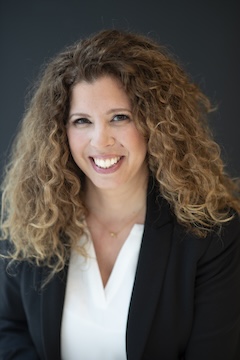
Dr. Rotem Regev (photo courtesy Rotem Regev)

Dr. Rotem Regev is a Vancouver psychologist with a private practice specializing in trauma, as well as expertise in therapist training, especially addressing practitioner burnout. Burnout in the profession was exacerbated by COVID. Then came Oct. 7.

Within days of the terror attacks, Regev’s inbox filled with requests from Jewish clients, and from therapists. Non-Jewish clinicians approached her about how to counsel their Jewish clients.

She assembled a webinar for non-Jewish practitioners about the intersectionality of trauma and Judaism, called How to Help Your Jewish Client in this Unprecedented Time.

There were 70 non-Jewish therapists in the first webinar.

“At one point, pretty early on, my Jewish therapist colleagues came to me and said, why is this only for non-Jewish therapists? We need to know what to do,” she recalled. 

After other collective traumas, like the 9/11 terror attacks or Hurricane Katrina, counselors may have shared trauma with their clients. After 10/7, though, the antisemitism that swept the world meant many clients – and practitioners – did not feel safe seeking the help they needed.

“We can’t turn to our professional colleagues for consultations,” she heard from fellow practitioners. “We feel silenced. We’re unwelcome in places. And then I said, OK, this is unprecedented. There’s nothing about this in the literature. We need to document our experiences.”

Regev sent out questionnaires to more than 250 mental health practitioners in British Columbia who are Jewish. From the responses and her subsequent research, she coined the term “compounded traumatic reality.”

“It’s not only a shared traumatic reality, but it is compounded by the extra layer of antisemitism,” she said. Her paper on the subject was published last month (Nov. 11) in the peer-reviewed Journal of Human Behaviour in the Social Environment.

Regev’s career has taken a decided shift. She created the International Centre for Collective Resilience, which trains mental health professionals in culturally responsive, trauma-informed care around these specific issues. In that capacity, she developed the CHAI Method™ for clinical practitioners to balance the needs of their clients with their own connection to the trauma. 

The CHAI Method™ is a four-part framework that begins with “Connect,” where individuals recognize what is happening, followed by “Honour,” which acknowledges identity and lived experience, particularly in an environment where others invalidate these experiences. “Activate” moves the practitioner into culturally responsive strategies and setting appropriate boundaries. “Integrate” transforms the experience into lasting capacity for both the practitioner and their client.

Regev has already delivered trainings in the CHAI Method™ at McGill and Concordia universities in Montreal and will offer it in Vancouver on Feb. 8 and 9. 

Eventually, she said, the training could be adapted for healthcare providers – physicians especially are facing profound challenges right now, Regev said – as well as educators, clergy and others who are not accredited mental health providers.

Regev was born and raised in Israel, though she spent several teenage years in Vancouver while her mother was doing a master’s and a PhD in psychology here. She returned to Israel, did her army service, but moved to Vancouver permanently at age 28. 

Israelis and diaspora Jews are having parallel but different experiences, she said. While many diaspora Jews lost loved ones on Oct. 7 and in the subsequent war, that experience is almost universal among Israelis. The experience with antisemitism in the diaspora, on the other hand, is not something Jews in Israel live with. Above all, she said, Israelis are having a shared experience with their entire society. For two years, it has been impossible to escape the reality, if for no more apparent reason than the ubiquity of hostage posters and memorial placards everywhere in the country. Jews in the diaspora, no matter how connected they may be to their Jewish community, are nonetheless surrounded by non-Jews living a completely different reality.

For diaspora Jews, finding a mental health practitioner capable of addressing their unique needs has come down to word-of-mouth. Regev hopes there will be a systematization, perhaps a database of professionals accredited in her CHAI Method™, which will provide assurances to clients that the counselor they are engaging with is prepared to consider the specific contemporary experiences of Jews.

There is plenty to be done, Regev said, and she has been balancing these new responsibilities with her clinical and training work, taking on tasks that currently have no dedicated infrastructure or funding behind them. She is seeking financial backing to support her initiatives.

To register for the February seminar or for further information about Regev’s work, visit icfcr.ca. In addition to training, she is also available as a speaker. 

Posted on December 19, 2025December 18, 2025Author Pat JohnsonCategories LocalTags antisemitism, counseling, mental health, Oct. 7, post-traumatic, Rotem Regev, trauma

Eby touts government record

More than 18 months ago, Charlotte Kates, who is identified as the international coordinator of Samidoun Palestinian Prisoner Solidarity Network, made inflammatory remarks at a rally in Vancouver. She celebrated the 10/7 terror attacks by Hamas against Israel, calling them “heroic and brave” and led the audience in chants of “Long live Oct. 7.” She referred to terrorist organizations as “resistance fighters” and “heroes.” 

After an investigation, the Vancouver Police Department recommended charges against Kates based on Criminal Code provisions against incitement of hatred. Later last year, the federal government designated Samidoun a terrorist entity.

A year-and-a-half after the police sent its report to Crown counsel, no charges have been laid. In a year-end interview with BC Premier David Eby, the Independent asked why the attorney general has not acted to either bring charges or to explain why charges are not warranted. The premier assured the paper that he would check with the office of Attorney General Niki Sharma but his office did not respond by press time. The Independent will continue to press the government on the matter.

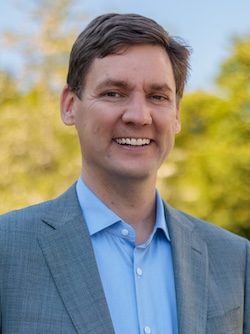
photo - BC Premier David Eby
BC Premier David Eby told the Independent: “We really have tried to be a government that takes on hate and racism from all angles.” (photo from BC NDP)

“It’s a really troubling case and it’s incredibly problematic,” said Eby, adding that he is “reluctant to weigh in too much until I know the exact status of the case.”

Speaking more broadly, Eby acknowledged the message hate crime charges send to the community.

“We believe strongly that an example is set to the broader community when someone is arrested and prosecuted for a hate crime,” he said. “We have seen some very high-profile incidents that have not met the kind of outcomes that I expect and that our government expects through the justice system. So, we’ve been working with Crown and the federal government to be able to come to better results through the criminal justice system.”

Eby touted his government’s range of antiracism initiatives.

In November, he said, the government announced a set of grants for groups targeted by hate and violence, including the Jewish community. 

“While the Jewish community has been disproportionately impacted by rising hate, they’re not the only community that has been impacted by some of the international problems we’ve seen [and] a rise in racism here in British Columbia,” he said. 

The government has committed to so-called “bubble zone” legislation, which would limit the ability of protesters to access space within a designated distance around religious and cultural institutions. Eby said the legislation is being spearheaded by Sunita Dhir, member of the legislature for Vancouver-Langara and parliamentary secretary for international credentials. 

The bubble zone concept is also in the mandate letter for Nina Krieger, the minister of public safety and solicitor general, as well as that of Sharma. A mandate letter is the direction a minister receives on appointment to cabinet outlining what the premier and the government expect them to accomplish.

“They are working on it and we hope to be able to bring forward legislation soon,” the premier said. “I know it’s important for the community. It will not be this session, though.”

In addition to security grants that address negative outcomes, Eby stressed proactive measures that confront underlying hatred and racism.

“We really have tried to be a government that takes on hate and racism from all angles,” he said, citing the introduction of mandatory Holocaust education in the Grade 10 curriculum.

It is early in the process, so Eby could not comment on responses to the new curriculum, but acknowledged that many students had already been learning about the subject even before it was mandated. The fact that he has not heard of any negative outcomes around the rollout of the curriculum suggests to him that all is going to plan.

Anti-bullying programs across the school system are also aimed at inculcating inclusive values in society.

“We have our anti-bullying initiatives that we continue to support within schools, that educate students about the importance of understanding both the differences and strengths that come from our differences in this province,” he said. “Unfortunately, Pink Shirt Day has somehow become controversial with the Conservatives, but not for us.”

Eby was referring to internal Conservative Party discord around the anti-bullying day, with at least one Conservative MLA accusing “the left” of using the day to “bully” people into wearing pink shirts. Another MLA, Elenore Sturko, who was elected as a Conservative and is a lesbian, claims she was forced out of the Conservative caucus in part because of her support for Pink Shirt Day. 

“We continue to support the idea that kids should be educated about bullying at an early age because that turns into adults who are more welcoming and understand the strength that our province draws from our diversity,” said Eby.

The government has also set up an antiracism hotline, partly because some people may be reluctant to go to police. 

“That hotline connects to community groups that are able to reach out and support people that have faced racism in the community and [are] able to respond to it,” said Eby. “This provides us with information about where these problems are happening and allows us to support community groups with outreach, to be more proactive where there are hotspots of racist activity.”

There is no single solution, the premier said.

“There really is a wide array of initiatives related to this work and, unfortunately, there has been a rise in racism and it has disproportionately impacted the Jewish community,” he said. “We’ve been working to make sure that we’re not taking just one approach, but several approaches to deal with it.”

Eby expressed greetings to the Jewish community at Hanukkah, acknowledging the challenges of this year and optimism for the future. It has been, he said, “a very challenging year for the Jewish community and for all British Columbians who believe in a hate-free province and believe in the strength that comes from our diversity.

“I am certain that 2026 and forward will be better and I sincerely hope and expect that our shared work together, between government and the Jewish community, will lead to the kind of outcomes we’re looking for, which is a safe, prosperous and welcoming province for everybody.” 

Posted on December 5, 2025December 3, 2025Author Pat JohnsonCategories LocalTags anti-bullying, antiracism, antisemitism, Charlotte Kates, criminal justice system, David Eby, government policy, Hanukkah

Keep lighting candles

We were intrigued to receive notice of the 2026 PuSh International Performing Arts Festival, which takes place in January and February. The festival has been running for more than two decades and bills itself as “a creative hub for dialogue.” 

“The 2026 PuSh festival is an invitation to the culturally fearless – to those ready to step into fresh futurities and the uncharted possibilities of live performance,” said artistic director Gabrielle Martin in the media release that landed in our inbox recently.

Curious words for a festival that last year demonstrated cowardice that redefines the term.

The controversy centred on a play titled The Runner – a one-person offering by non-Jewish playwright Christopher Morris. The story is set in Israel and has as its focus an ultra-Orthodox Jewish ZAKA volunteer who faces an ethical decision: when encountering a wounded Palestinian woman, he opts to save her rather than pursue an Israeli soldier’s body. 

The play had garnered acclaim, having won multiple awards in Canada, and was to be featured at the 2024 PuSh festival. The Belfry Theatre in Victoria had already canceled its planned 2024 run of the show after the theatre was vandalized and a public dialogue was overtaken by protesters.

The scheduled PuSh production was also targeted. Some critics complained that the play centred Jewish experience while marginalizing Palestinian voices and trauma, presumably because depicting an Israeli as a complex moral character was beyond the pale.

One Palestinian artist participating in the festival said he would withdraw his work if The Runner remained in the lineup. Organizers caved, couching their gutlessness in self-adulatory language of prioritizing artists whose perspectives were “underrepresented” given current events.

If the festival was indeed committed to “fearless” exploration, The Runner was an ideal vehicle for that sort of examination. Instead, organizers brought shame upon the arts sector, betraying the very values PuSh specifically and the arts in general are expected to advance.

Keeping up with incidents of hypocrisy these days is a game of Whack-a-Mole, but we cannot overlook the vote by the BC Green Party to adopt a so-called “Anti-Genocide Motion” at their provincial convention. The motion declares that the party will “oppose genocide, apartheid, systemic discrimination and colonial violence – at home and around the world.” 

In supporting the motion, the party’s new leader, Emily Lowan, stated that the Greens consider the recent war in Gaza to constitute “genocide” and “colonial violence.”

The motion and the leader’s full-throated support for it is especially disappointing because, under previous leaders, the BC Greens had resisted the spiral of their federal party into this sort of hyperbolic and ahistoric anti-Zionism.

We could go on. There is literally not the space in this column or in these pages to delineate the myriad causes for Jewish disenchantment these days. This, though, is not justification for despair. History has presented Jews with challenges in the past, put mildly. 

If these developments and their hypocrisy raise your heart rate, consider using that energy as fuel to build something better. The world is troubled right now, for Jews and for others, too, but it is a Jewish tradition – especially at this moment in the calendar – to light a candle rather than to curse the darkness. 

If you are expending energy complaining to your friends about these events, consider more active ways to effect positive changes. For example, you can contact the Green Party and tell them you are affronted by their adoption of a resolution that debases the term “genocide,” misrepresents events globally and foments intercultural division at home. Contact the PuSH festival and their sponsors to tell them you haven’t forgotten their illiberal folding to coercion. Support arts institutions that continue to host and produce Israeli and Jewish art and artists, and our own community arts and culture organizations, which have faced additional challenges over the last two-plus years. Whenever you are angered or disappointed, remember that action is the antidote to helplessness and hopelessness. Just one candle can illuminate the darkness and bring hope and inspire change. 

Posted on December 5, 2025December 3, 2025Author The Editorial BoardCategories From the JITags antisemitism, arts and culture, BC Green Party, Hanukkah, politics, PuSh Festival, PuSh International Performing Arts Festival

Help with the legal aspects

When Erin Brandt founded the Antisemitism Legal Helpline in January 2024, the employment and human rights lawyer had no idea how much time this volunteer position would consume. 

“The fact that we’re getting this many calls is a little terrifying,” she said. Last year, 32% of the more than 50 calls for assistance were about employment and labour issues, 29% about human rights, and the remainder were about defamation, strata or tenancy disputes, criminal matters and on-campus incidents. This year, as of early November, there had been 44 calls, with the top two concerns remaining the same, but with the order reversed: human rights (30% of calls), followed by employment and labour issues (25%).

“A lot of people don’t know about us and, therefore, aren’t calling – so this represents just a small sampling of what’s going on in BC,” she said.

The Antisemitism Legal Helpline’s operational costs are mainly funded by the Law Foundation of British Columbia, and all legal advice is provided on a volunteer basis by 30 lawyers, “mostly Jewish, but also non-Jewish who have identified as allies of the Jewish community,” said Brandt.

The helpline’s steering committee includes Brandt, Jessica Forman and Cindy Switzer; Rochelle Garfinkel is the coordinator.

Jews who have experienced antisemitism and want to inquire about the potential for legal action can call the helpline and be referred to a lawyer with an appropriate specialty. They receive a 30-minute, free legal consultation about whether there has been a legal breach and, if so, what the options are.

photo - Lawyer Erin Brandt, founder and steering committee member of British Columbia’s Antisemitism Legal Helpline
Lawyer Erin Brandt, founder and steering committee member of British Columbia’s Antisemitism Legal Helpline. (from antisemitismlegalhelp.org)

“People come to us looking for advice on whether their case has merit, and part of our job is to explain the legal system and what it looks like to pursue a complaint to conclusion,” Brandt said. “It could include sending a cease and demand letter, among other options. If an individual wants to pursue a complaint further, sometimes a lawyer may be prepared to take it on pro bono, or the case might be strong enough that it warrants seeking outside funding, from resources in the Jewish community. There are legal funds available.”

The lawyers in the roster are confident and experienced, Brandt added. “One of the things people look for is cultural competency. When they feel vulnerable or attacked, they want to speak to someone who empathizes with what they’ve been through. Our roster of lawyers is small, but strong, and if a situation comes up where the current roster can’t help, the steering committee steps in to work our networks and bring in the right lawyers.”

The US equivalent of the Antisemitism Legal Helpline is the Anti-Defamation League’s Legal Action Network, which launched in early November with a team of 40 law firms constituting some 40,000 lawyers. “This is the largest and most powerful network of attorneys in this country, united and walking in lock step in the fight against antisemitism,” said James Pasch, vice-president of litigation at the ADL. Those attorneys are not all Jewish, he added, and being Jewish was not a prerequisite for volunteering legal assistance. 

“We were looking for like-minded, talented attorneys who’d be interested in pro bono cases to fight back against antisemitism, and we’ve been heartened by the response of the American legal community. There’s an understanding that the spread of antisemitism in our communities cannot be tolerated and, when it crosses the line to horrific conduct, it’s incumbent on us to push back and fight for the rights of the Jewish community.” 

Victims of acts of antisemitism receive a call from a law firm that does a thorough intake process. After that, if there are issues that are legally actionable, they work to provide ongoing legal assistance on an individualized case basis. 

“We have to use every tool in the toolkit in the fight against antisemitism, and using the courts will be a vital tool in that fight,” he said. “We’re extraordinarily heartened and grateful that such a large swath of the legal community has decided to stand ready to provide pro bono legal assistance to the Jewish community.”

After Oct. 7, 2023, an antisemitism hotline for college students and professors was launched by the law firm Gibson Dunn, in collaboration with the ADL, Hillel International and the Brandeis Centre. While it led to 25 legal actions that resulted in settlements, criminal prosecutions and policy changes at universities, calls were coming from people outside of college campuses, too. They encompassed employment issues, denial of service and harassment of students in schools among other issues.

“The rise of antisemitism was never going to just stay siloed on campus,” Pasch noted. “We’ve seen antisemitism metastasize and spread across the United States. It was vital that we set up a system that gives the Jewish community an ability to fight back against it, tell their story and pursue legal remedies that will better protect us now and for years to come.” 

To reach the BC Antisemitism Legal Helpline, call 778-800-8917 or email [email protected]; the website is antisemitismlegalhelp.org. 

Lauren Kramer, an award-winning writer and editor, lives in Richmond.

Posted on December 5, 2025December 3, 2025Author Lauren KramerCategories LocalTags antisemitism, Antisemitism Legal Helpline, Erin Brandt, legal aid
Stories create impact

Stories create impact

Choices keynote speaker Mandana Dayani, centre, with event  co-chairs, left to right, Gail James, Briana James, Lola Pawer and Lisa Boroditsky. (photo by Rhonda Dent)

On Nov. 16, Choices once again celebrated the work of Jewish women philanthropists. This year’s theme, “L’dor Vador” (“Generation to Generation”), reflected the more than 400 people who attended the 21st annual event, which took place at Congregation Beth Israel.

“We saw so many younger, first-time attendees,” said Ricki Thal, associate campaign director at Jewish Federation of Greater Vancouver. 

The event’s four co-chairs also represented the theme: Gail James and her granddaughter, Briana James; Lola Pawer and her daughter, Lisa Boroditsky.

Briana James introduced the keynote speaker, business leader and activist Mandana Dayani. In doing so, James said “our future shines bright,” with Dayani leading the way in philanthropy and activism, fighting antisemitism and advocating on behalf of women’s rights. 

Dayani took the stage with her husband, Peter Traugott, presenting her material in conversation with him.

A Hollywood film producer with credits including HBO, Apple TV and Netflix, among others, Traugott also holds a master’s in business administration from Harvard University. He set a light-hearted tone, quipping, “This is my first at this – [being] Mandana’s ‘plus one’!” Speaking about their Jewish life in Los Angeles, where several members of the Dayani family live close by, he described a cross between Everybody Loves Raymond and My Big Fat Greek Wedding.

Traugott asked Dayani about her experiences as a new immigrant in New York. She spoke of the culture shock, the lights and traffic in New York. She also spoke, with gratitude, about HIAS (Hebrew Immigrant Aid Society), which supported her family’s flight from Iran, found her father a job as a shoe salesman and found them a place to live, where they became part of the community.

Dayani said her earliest memories of Iran are of “the morality police, the fear in everyone’s eyes.” She recalled having a gun pointed at her when she was just 4 years old. She is now 43.

Her family, who had wanted to leave Iran since the revolution in 1979, finally got a visa to Italy in 1987. They fled there, “leaving everything behind.” The experience has left her, she said, with an enduring sense of “how quickly this escalates, seeing my country taken over by lunatics.” 

Despite having to live “with no safety net, starting over and over again, with no money,” Dayani said, “I’ve never missed a Shabbat in my life…. Shabbat is everything to us.”

Dayani’s grandfather was a rabbi and the family Orthodox. She understands the sacrifices that had to be made to maintain their traditions and feels “a responsibility” to do so as well, she said. As for integrating into American life, she described watching TV to learn how to dress, speak and behave as an American. She said, “I feel very Persian. Being a Persian Jew, that’s integral to who I am.” She also describes herself as “deeply patriotic – the US saved my life.”

Dayani takes her two daughters everywhere, she said. “If I meet my heroes, they meet my heroes. If I’m going to the UN General Assembly or the White House, they come with me.”

She and Traugott are trying to raise active, responsible citizens. “We have conversations about what’s happening in the world and they’re always rooted in kindness, through the lens of compassion,” she said.

Dayani advises caution when it comes to internalizing the messages we see online. “If we cave to the algorithms, we’ll believe that everyone hates Jews and it simply isn’t true,” she said, adding, “So many people stand with us and love us. The kids are good!”

In response to a question from Traugott about her process as a storyteller, Dayani spoke about “using storytelling to create impact,” to change society in significant ways.

Dayani acknowledged that anger spurs some of her work, such as her fight against the first Trump administration’s policy of attempting to deter migrants by separating children from their parents. She recalled her fears as a child, landing in New York, not wanting to let go of her mother’s hand. “I can’t think of a worse thing you could do to the most vulnerable population in the world,” she said. This sentiment led her to travel to Texas to see the policy in action, as the disconnect was just too powerful, she said. “The country that saved me is doing this?”

Her strategy in situations like this, she said, is to “call all the women I know who are smarter than me” to together “redirect the world’s attention to what we want them to look at. Real issues. It worked.”

She explained, “We received hundreds of millions of dollars of donated advertising…. I was so moved by how everyone showed up.”

The advertising aspect – the dissemination of information – was absolutely essential, she said, noting that “20% of the pro-Hamas information being spread on social media right after Oct. 7 was disseminated by bots, not real people…. It was planned. There was spin on the day it happened.” 

When Mandani posted a video about this online within days of Hamas’s attack, the post got some 50 million views within a couple of hours. Death threats started coming in.

“I am a progressive leader and none of those people were speaking up,” she said, referring to other human rights and anti-hate activists.

Even though, as Traugott noted, Dayani doesn’t just work for a single demographic, but rather does outreach on behalf of various groups who have experienced different kinds of trauma and marginalization, she lost friends after Oct. 7 – or, as she put it, “so-called ‘thought leaders’ remaining silent because they couldn’t stand 10 negative comments” on their social media accounts. Dayani said the people she thought were her peers lacked the courage to stand up for justice when it came to Jews. 

Among many other initiatives, Dayani founded, in 2024, the Calanet Foundation for young people, to harness “the power of Jewish stories in response to the branding work done by the Palestinian contingent.” After Oct. 7, she saw “so many black squares on people’s feeds,” as a mark of Jews’ grief. She also wanted people to focus on “the desert flower growing out of a crack,” the calanet (Hebrew for anemone), which symbolizes strength and resilience. She quoted the adage “They tried to bury us – they didn’t know we were seeds.”

One of Calanet’s projects is One Mitzvah a Day, which entails expressing thanks to those who stand up against antisemitism and/or in support of Israel – “one text a day, such as expressing gratitude to Trader Joe’s for selling Israeli feta,” said Dayani, noting that 5.5 million messages have been sent since the project’s January launch. Traugott pointed out that “most of the allies weren’t Jewish.”

Dayani asked the audience to consider “the power of this room, when everyone does the work.” She said, “Just do what you’re doing today – keep showing up.”  

Shula Klinger is an author and journalist living in North Vancouver.

Format ImagePosted on December 5, 2025December 4, 2025Author Shula KlingerCategories LocalTags annual campaign, antisemitism, Calanet, Choices, Jewish Federation, Mandana Dayani, Oct. 7, One Mitzvah a Day, Peter Traugott, philanthropy, Ricki Thal, tikkun olam
Jew-hatred is centuries old

Jew-hatred is centuries old

Bar-Ilan University’s Dr. Mordechai Kedar spoke in Vancouver Nov. 17 at Temple Sholom on root causes of Jew-hatred. (from idsf.org.il)

The Enlightenment of the 18th century carried hopes for Jews that their long history of persecution would end, but the ideas of that period carried the seeds of a new form of Jew-hatred. Communism was intended to erase class and national differences, which might have eliminated discrimination toward Jews, but this ideology too carried a poisonous element. Zionism was intended as the answer to systemic discrimination against Jews. It too, though, merely sparked a variation on the ancient bigotry.

In a survey spanning centuries, one of Israel’s leading scholars of the Middle East explained the seemingly limitless justifications for Jew-hatred in Christian and Islamic civilizations.

Dr. Mordechai Kedar spoke in Vancouver Nov. 17 at Temple Sholom on root causes of Jew-hatred. Kedar is a senior lecturer in Arabic and Middle Eastern studies at Bar-Ilan University, where he has taught for more than 30 years. Kedar served for 25 years in Israeli military intelligence, specializing in Syria and regional Arab affairs.

Kedar said he prefers the term “Jew-hatred” to antisemitism because it subverts the rhetorical claim that Arabs, who are semitic, can therefore not be antisemites. 

“We don’t find anti-Jewish sentiments in India, in China, Japan and Korea,” said Kedar. “One reason is the religion. Both Christianity and Islam are religions which are derivatives of Judaism. Therefore, in order to establish their validity and their legitimacy, they must undermine the validity and the legitimacy of Judaism.”

Another reason, he said, is that there have historically been few or no Jews in those places. In addition to being theological, Kedar argues, Jew-hatred has been a xenophobic reaction to the “other.” In the absence of Jews in India or Japan, this role was filled by other others.

Traits of Jews themselves also spark antisemitism, he said. Illiteracy in Jewish communities has been almost nonexistent, said Kedar, and this has created jealousy. More recently, the disproportionate number of Jewish Nobel Prize recipients may be a point of pride for Jews, but it can serve as a red flag for those seeking reasons for resentment. Jewish success in a range of fields spurs bitterness among some who are less successful or struggle to compete.

The historical trajectory of Jew-hatred is long and winding. 

“Two hundred years ago, more or less, some countries, especially after the Enlightenment in Europe, started to give emancipation to Jews,” said Kedar. “Instead of erasing the differences between Jews and others, [this freedom] actually increased the hatred because now the Jew, the ‘other,’ invades our circles, he becomes a lawyer, he becomes an accountant, he competes with us in our court.”

When Jews in Germany abandoned traditional distinctive clothing choices, this caused a backlash among non-Jews.

“This is frightening for them because, all of a sudden, the Jew looks like us,” Kedar summarized. “Is he like me or not? All of a sudden, he wants to look like a German, sound like a German, act like a German.”

With the French Revolution, and gaining steam after 1848, the Age of Nationalism was another turning point. The collapse of empires, notably the Austro-Hungarian Empire, where as many as one-third of Europe’s Jews lived, brought unanticipated challenges for Jews. As Hungarians, Romanians and others gained both national sovereignty and greater ethnic identity, Jews were again isolated as outsiders.

“If we are Romanians, we are Christians,” Kedar said. “We speak Romanian.… We dance to the same music. We eat the same food. Who doesn’t? The Jew. He eats different food. He speaks a different language. So, he’s not one of us.”

Socialism and communism were meant to erase the differences between peoples, Kedar said, including the very concept of separate nationalities. 

“And who is leading this erasing of nationalism? The Jew Trotsky and Lenin, with his [Jewish] roots,” said Kedar. The Jew is blamed when nationalism is ascendant and when communism is pushing nationalism to the margin, he noted.

Envy and othering even undermined Zionism, which was conceived as the ultimate answer to the inescapable antisemitism experienced by the stateless Jew.

“The Zionist movement was another reason to hate the Jew,” Kedar said. “Let’s imagine that we have a little town in Romania with problems of employment, problems of poverty, problems of alcoholism as well. The Jews are starting this new theology of Zionism, to leave the country and to go to eretz Israel. ‘What, you’re going to leave us and go to a better place? We hate you.’”

Kedar spoke extensively about Islamic theological and political antisemitism, which he described as like a “layer cake.”

“Judaism was canceled 2,000 years ago by Christianity,” he said. “And Christianity was canceled 14 centuries ago by Islam. So, Judaism was canceled twice.… Since Judaism is null and void, why do we need a Jewish state if there is no Jewish religion?”

Another layer rests on the Islamic concept of dar al-Islam, the domain of Islam, he said, which holds that no land controlled by Muslims must ever fall into the hands of the infidel.

Under the Ottomans, he said, eretz Israel was under Islamic rule and should forever remain so because, “according to the belief, according to Sharia, any land in the world has only a one-way ticket to enter the House of Islam, not to get out.”

A third layer is a widespread rejection of Jews as a people or as a nation. By reducing Jews to a religious group, he said, this idea subordinates Jewish identity to national affiliation, so a Jewish Canadian is Canadian first and that is their nation. This argument succeeds in justifying dozens of Muslim states while rejecting one Jewish state based on the premise that these are not Muslim states, but Turkish, Uzbeki or other states that happen to share a religion.

A fourth layer, said Kedar, is that some Islamic thought denies Jewish connections to the land and maintains that the people who today call themselves Jews are descended from central Asian Khazars who converted to the Jewish religion.

These concepts negate a core intention of Zionism, which was to resolve the problems created by Jewish statelessness. Muslim opposition to Israel, founded on these layers of theological justification, and Western opposition to Israel, mainly taking the form of political criticisms that extend into existential rejection, have prevented the Jewish state from serving the role Zionism intended, which was in part to make Jews a people like any other. 

Rabbi Dan Moskovitz welcomed Kedar, who is associated with the right-wing in Israel, and said his congregation is a “big tent.”

“I did hear from some of you here,” said Moskovitz, “or in the community, [asking] why is Temple Sholom hosting Dr. Kedar?… As the senior rabbi of this congregation, it is my intention and mission to bring in voices, within the boundaries of the tent of the Jewish people, that represent the spectrum of Jewish thought. I tell my children all the time, you only learn when you listen to people that you don’t already agree with.”

Aron Csaplaros, BC regional manager for B’nai Brith Canada, which co-sponsored the event, introduced Kedar. He also highlighted his organization’s most recent audit of antisemitic incidents, noting they recorded 6,219 incidents of hate against the Jewish community in Canada in 2024. 

“That’s the highest number we’ve ever recorded in the more than 40 years that we’ve been tracking this data,” he said. “That comes out to an average of 17 antisemitic incidents every single day.” 

Incidents range from online harassment, threatening behaviour and vandalism targeting Jewish institutions to direct attacks against Jewish individuals, Csaplaros said. 

“It is hostility directed at people simply because they’re Jewish,” he said. “Many in our community feel less safe today than at any point in their lifetimes. Parents hesitate sending their kids to school. University students are increasingly targeted and isolated. And Jewish Canadians who have always lived openly and proudly now find themselves looking over their shoulders or questioning whether this is still the country that can offer the sense of security that they once felt.” 

Format ImagePosted on December 5, 2025December 3, 2025Author Pat JohnsonCategories LocalTags antisemitism, Aron Csaplaros, Bar-Ilan University, B’nai Brith Canada, Dan Moskovitz, history, Jew-hatred, Mordechai Kedar, speakers, Temple Sholom

Posts pagination

Previous page Page 1 … Page 4 Page 5 Page 6 … Page 45 Next page
Proudly powered by WordPress