Welcome back, TUTS!

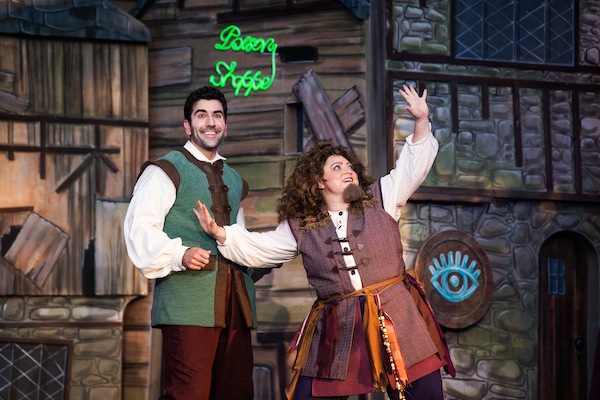
Much of the humour in Something Rotten! comes from Nostradamus (Jyla Robinson), right, leading Nick (Kamyar Pazandeh) astray with incorrect visions of the future. (photo by Emily Cooper)

Theatre Under the Stars is a fun, relaxing way to ease yourself back into theatre after the COVID hiatus. Its two productions, Something Rotten! and We Will Rock You, are happy fare that alternate nights through Aug. 27, outdoors at Stanley Park’s Malkin Bowl.

The Independent saw Something Rotten! on opening night, hoping to see Jewish community member Daniel Cardoso, who plays Jewish moneylender Shylock in the TUTS productions. However, it was understudy Simon Abraham who took on the role of the moneylender that night. He and the entire cast put on a great show.

In this comedy, set in 1595, Shakespeare is monopolizing the theatre industry and playwright siblings Nick and Nigel Bottom are trying to write a hit. They face several challenges, including being in debt to Shylock, who is willing to forgive that debt if they permit him to produce their new production. However, they initially refuse because he and they could be put to death, as Jews at the time were permitted few professions, one of which was moneylender.

Something Rotten! takes on – in very light manner – antisemitism, the treatment of the poor and the place of women in Shakespeare’s time. It also takes on these issues as they are depicted in Shakespeare’s plays and poetry.

“Shylock has been a very interesting character to explore and I extremely grateful to our director, Rachel Peake, for giving me the chance to do so,” Cardoso told the Independent in an interview before the show opened. “In researching for this part, I certainly took a cursory look at Merchant of Venice, but only so I could have an idea of who Shakespeare’s Shylock is. Because of how much Something Rotten! subverts the audience’s expectations of these well-known Shakespearean characters, there are only a few similarities between what I’m doing and what we see in Merchant of Venice. I don’t think that antisemitism is a central theme of this show, but we certainly get a view of it through Shylock.

“I also dove into what antisemitism looked like during the time of the Renaissance,” he continued, noting that Jews were “expelled from England in the late 13th century and only officially allowed to return in the mid-17th. However, it does appear that there were indeed Jewish people living in England during Shakespeare’s time and that some even fled to England from Spain and Portugal, due to the Inquisition.”

Cardoso sees parallels between Shakespeare’s time and today’s undocumented immigrants in both Canada and the United States and the refugee crises around the world. “In trying to find a way into the Shylock ofSomething Rotten!,” he said, “I found myself drawing on these modern-day examples, as well as trying to imagine what it must have been like for Jewish people in the time of the Renaissance or various other points in history. I found that, given my own connection to the community, this hit quite close to home for me. At the end of the day, he’s a smart guy who works hard and, despite the obstacles in front of him, he is able to be an equal and a friend to many of the characters in the show.”

Not such a smart guy is Nick Bottom (Kamyar Pazandeh) who, in trying to skip the hard work and best Shakespeare (Daniel Curalli), seeks out a soothsayer, Nostradamus (Jyla Robinson), who tells him that musicals are the popular theatre of the future. Nick sinks the last pennies he and his wife Bea (Katie-Rose Connors) have into a musical production with a reluctant Nigel (Vicente Sandoval), who has Shakespeare’s talent but lives in his brother’s shadow. It is only after Nigel meets Portia (Cassandra Consiglio), the daughter of Puritans, that he becomes to his own self true.

The homage to and satire of both musicals and Shakespeare makes for a lot of laughs and reference guessing – is that line or musical snippet from Annie, Evita, Rent, A Chorus Line, or more than a dozen other shows? Standout songs are “God, I Hate Shakespeare,” with the Bottom brothers’ differing views of their main competitor; “The Black Death,” a cheery ditty about the plague, the Bottoms’ first musical attempt; “Will Power,” Shakespeare enjoying his rockstar status, amid fawning, crying, screaming, fainting fans; and “Make an Omelette,” the title song of the Bottoms’ new musical. Foreseeing Omelette instead of Hamlet as Shakespeare’s best-ever play is only one of the soothsayer’s many slightly incorrect visions.

“It’s been a privilege to get to work on Something Rotten!” said Cardoso, who has been in four other TUTS productions. “It’s an extremely funny show and, if you’re a fan of either musical theatre or Shakespeare, then you’ll have a fun time at this show. And, if you like both, even better!”

For tickets to either of this season’s productions, visit tuts.ca.

Diverse allies critical

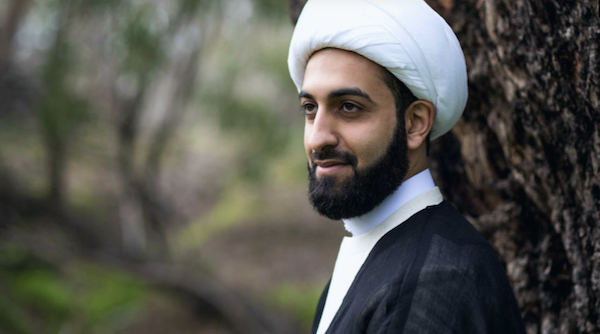
Imam Mohammed Tawhidi once preached hatred, but now is known as “the Imam of Peace.” (photo from imamtawhidi.com)

Imam Mohammad Tawhidi once preached hate towards Jews from the pulpit, and believed the very worst stereotypes about the Jewish people. He was indoctrinated by the Ayatollah’s preachers in Iran. But, today, Tawhidi is known as “the Imam of Peace” for a reason. He’s preaching coexistence and common ground for Jews and Muslims.

In late May, Tawhidi spoke at a United Grassroots Movement event at Beth Emeth Bais Yehuda, a Toronto synagogue, on how people of all backgrounds can – and should – unite against antisemitism and extremism.

An Iranian Muslim of Iraqi origin, Tawhidi sees his former peers actively engaging in hate-filled rhetoric. For example, as in years past, the politics of division and derision were widespread at the Al Quds march in Toronto earlier this year – chants included slurs against Israel and Jews.

Government officials are either incapable of preventing hatred on city streets and property, or unwilling to do so, he said. To answer problems such as these, he encouraged talk attendees to find, and bring together, as many allies as possible, to speak out and even take legal action wherever warranted.

Tawhidi’s change from preaching hatred, to becoming a friend of Israel and the Jews, did not come overnight.

First, he spoke out against ISIS war crimes in the Middle East and Africa. When he was met with condemnation from his peers, he said it opened his eyes to the radical elements that existed within his circle.

“I was still a fundamentalist, an extremist and antisemite,” he said of his views until then. “I thought I was doing this on behalf of God.”

And yet, he began thinking of how he could reconcile the slaughter of innocents in the name of Islam.

The next significant moment for the imam was when he met a Jew. Needing roadside assistance one day in England, it was a visibly Jewish man who helped him.

Later, Tawhidi was invited to a synagogue for an interfaith dialogue. Although he was skeptical, initially, of the people he was communicating with, he left the event feeling a special connection.

His decision to criticize ISIS and radical Islam and preach for peace with Israel and Jewish people was met with a severe backlash.

“I knew I would lose my community, but I also knew I would be welcomed into a new one,” he said.

If he could turn a corner, so can others, Tawhidi maintained. But if they can’t do quite that, then it’s important, he said, to at least defend the truth in public, so that the people who are on the fence or ignorant of the issues can be exposed to all sides.

It’s hopeful for us to note, he said, that the kinds of beliefs he once held are no longer normative in many parts of the Arab world. He highlighted the signatories to the Abraham Accords with Israel, which is breathing new life into modern coexistence, he said.

Further proof of the power of allies, said Tawhidi, is that he received nearly three-quarters of the vote in favour of him winning the position of vice-president of the Global Imams Council, a transnational nongovernmental body of Muslim religious leaders.

Tawhidi stresses that Islam is not a religion that hates Jews, and anything to the contrary is a perversion of the Quran.

To defend against antisemitism, he insisted that Jews and non-Jews must call it out, take legal action when merited, and bring together many communities: “Do not underestimate the power of your allies!” he said.

A staunch supporter of Israel and what he sees as Israel’s right to Judea and Samaria (the West Bank), Tawhidi said, in response to a question from the Jewish Independent, “There can be no circumstances where the Israeli government should give away any land that belongs to the Jewish people. The holy Quran has made it very clear that God, the God of Abraham, wants Jews to live in that region and for Jerusalem to be their capital. That is the teaching of my Quran, and it is clearly stated in Chapter 5, verse 20 onwards.”

As for developing allies out of those who do not support Israel, yet will speak out against antisemitism, Tawhidi said, “You can’t hate a people and you can’t hate a whole country, but I guess they have issues with certain policies of that government, so they need to provide productive and constructive criticism, so that the problems can be solved, and that solutions can be placed forward.”

However, he continued, “a blanket hate on a nation or a people does not come from a person that is worth making a friend, I don’t believe.”

Jon Wasserlauf is a freelance writer, and a political science major and law student based in Montreal.

Standing up against hatred

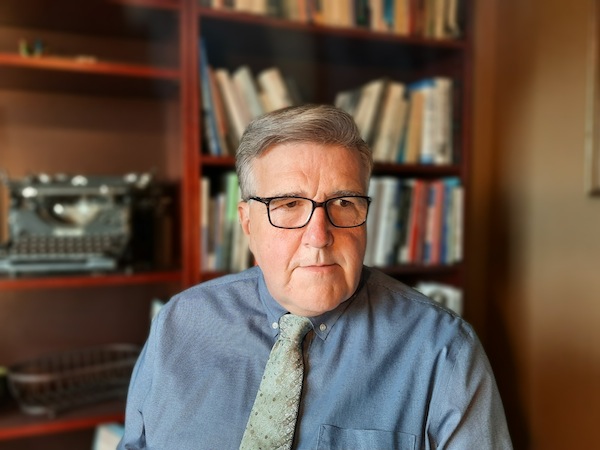
Pat Johnson, founder of Upstanders Canada. (photo by Paul Tillotson)

There has been a widening split between many progressive movements and the Jewish community in recent decades, according to Pat Johnson, the founder of Upstanders Canada. His Vancouver-based organization aims to encourage Canadians – especially non-Jewish Canadians – to stand against hatred of all kinds, but particularly against antisemitic words and deeds.

“You can make whatever justifications you want about what is wrong with Israel or criticize the government, but if a progressive movement finds itself at odds with 80% of Jewish people, then that is a sign that something is wrong with your worldview,” said Johnson, a member of the Jewish Independent’s editorial board.

“I have been watching as many people within the Jewish community became skeptical of the left – which their parents had built in this country. It is a betrayal.”

Long involved with progressive causes, such as gay rights, gender equality and interfaith dialogue, Johnson observed a rift forming amid the left and the Jewish community at the time of the Second Intifada that began in the Middle East in 2000.

“When Yasser Arafat turned to violence and the world, led by progressives, sided with the violence instead of demanding he return to the negotiating table, that is when the global left went off the rails,” he posited.

Johnson maintains that the North American left, with few exceptions, has let down the Jewish people. “If you do not believe in the Jewish people’s right to self-determination and that is the only people you do not support, then there is a problem in your movement.”

An ardent supporter of Israel, this was the genesis of his cognitive dissonance with the left. “I am a progressive Canadian and a fervent Zionist and there is nothing contradictory about that,” said Johnson, who is not Jewish. “What is contradictory is calling yourself a progressive and not supporting the Jewish people’s right to self-determination. I might not fit on the left any more but that is not because of me. It is because of them.”

The tipping point for Johnson happened in October 2018 on a return flight from Israel. On the airplane, he learned of the mass shooting at the Tree of Life synagogue in Pittsburgh. He realized then the need to launch Upstanders Canada.

“I thought somebody has to do something, I guess that someone could be me. We can’t pretend any more that this is not a serious problem in North America,” he said. “The Jewish community has always had to fight their battles themselves while progressives are standing up as allies to every socio-cultural group except Jews.”

An example Johnson uses to demonstrate this point is how many progressives have taken it upon themselves to disagree with the definition of antisemitism developed by the International Holocaust Remembrance Alliance. This, he asserts, they would not do with any other group. “When you treat the Jewish people differently than any other group in society – that is problematic,” he contended.

Antisemitism can be a “perfect prejudice,” he added, as Jews are deemed powerful by many, including those on the left. Thus, though most progressives may think antisemitism is not right and not view themselves as antisemitic, there is an element of “sticking it to the man and that the Jewish people will be just fine.”

“There is a theory that whatever happens to the Jewish people happened because they brought it on themselves and it is not something we say with any other group. Progressives will never say that any other victim of a hate crime brought that act upon themselves,” said Johnson.

A solution, Johnson believes, is for supporters of Israel to stop arguing with the people who will never agree with them. Instead, what should be done is to identify and mobilize the people who agree with Israel’s right to self-determination and don’t need convincing.

To Upstanders Canada, antisemitism is not a Jewish problem – it is a non-Jewish problem with serious implications for Jewish people. It is a problem created by non-Jewish people that needs to be confronted by non-Jewish people, said Johnson.

Upstanders Canada takes no position on issues that deserve to be resolved by Jewish people or the state of Israel, he said. Rather, it is based on the belief that Jewish people have a right to live safely and free from fear everywhere in the world.

The organization is currently building its database of allies. They welcome everyone, including those in the evangelical community and those communities in which antisemitism has surfaced, such as political parties on the left and trade unions.

In the past few months, Johnson’s letters have appeared in several newspapers across the country, reminding Canadians to be vigilant in the fight against bigotry and hatred.

Johnson has a long-standing connection to the Jewish community. In addition to being a regular contributor to the Independent, he has worked with numerous organizations: Hillel BC, Canadian Jewish Congress, the Vancouver Holocaust Education Centre and the Louis Brier Home and Hospital.

“I don’t have the short answer for how I wound up in the Jewish community, so I just say bashert [destiny],” Johnson said.

For more information, visit the website upstanderscanada.com.

Sam Margolis has written for the Globe and Mail, the National Post, UPI and MSNBC.

Journey from prison to power

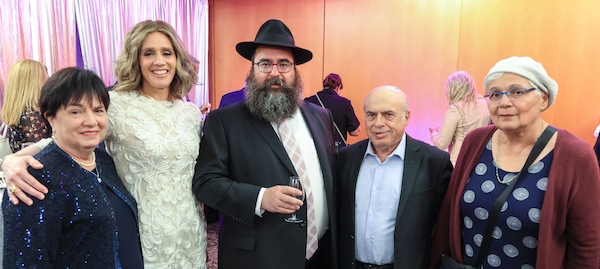
At the Freilach 25 gala on June 19, left to right, are Yocheved Baitelman, Chanie Baitelman, Rabbi Yechiel Baitelman, Natan Sharansky and Avital Sharansky. (photo by Kasselman Creatives)

Natan Sharansky, the most famous “Prisoner of Zion” and a former Israeli senior cabinet minister, shared reflections on his extraordinary life with a Vancouver audience last month.

Sharansky spoke June 19 at the Freilach 25 gala honouring Rabbi Yechiel and Chanie Baitelman on the 25th anniversary of their leadership of Chabad of Richmond. The event took place at Schara Tzedeck Synagogue.

Born in 1948 – the same year as the state of Israel – Sharansky was, like most Jews in the officially atheist Soviet Union, utterly disconnected from his Judaism. There was no brit milah, no bar mitzvah, no Jewish culture, language or tradition, he said – “What there was, was antisemitism.”

There were about 150 nationalities in the sprawling Soviet Union, each one of them identified on the fifth line of the official state identification issued to every citizen. Everyone, regardless of ethnic origin, was treated relatively equally, if not fairly, under the communist regime, with one exception. If someone said, “He has a fifth-line problem” or “the fifth-line disease,” it meant they were a Jew and, therefore, had more limited opportunities for advancement than members of the other national groups, said Sharansky.

While they had only the vaguest idea of what being a Jew meant – “There was nothing positive in this word ‘Jew,’” he said – his parents instilled in him the need to overcome the officially proscribed handicap through excellence.

“You must be the best at chess or music or whatever you’re doing,” they told him, “the best in your class, your school, your city.”

Sharansky – then called Anatoly – was 5 years old when Stalin died (on Purim). At the time, the so-called “doctor’s plot,” a Stalinist campaign to whip up antisemitism based on allegations that Jews were trying to assassinate Soviet leaders, was approaching a climax. Boris Sharansky told his two sons that the dictator’s demise was a good thing, but that they must not let on to others that they believed this.

Back at school, young Anatoly mimicked his fellow kindergarteners.

“We are crying together with all the other kids,” he said. “We are singing songs about the great leader.… You have no idea how many children are really crying and how many children are crying because their fathers told them to do it.”

This was Sharansky’s first conscious awareness of “doublethink,” the phenomenon in which Soviet citizens learned to compartmentalize what they knew from what they were supposed to know.

“You are reading what you’re supposed to read, you’re saying what you’re supposed to say, you are voting as everybody votes and you know that this is all a lie,” he recalled.

For Jews of his generation, the deracination from their heritage changed in 1967.

“The Six Day War was a big humiliation for the Soviet Union,” he said. “They had thrown in their lot with the Arabs.”

While the seemingly miraculous Israeli victory over the combined neighbouring Arab armies was notable, it didn’t change the perceptions of Soviet Jews overnight. It didn’t, for example, distract the young from their studies for university exams.

“But, over time, some things changed,” Sharansky said. “Those that loved you and those that hate you” changed their attitudes, he said. “They all look at you and say, ‘How did you Jews do it?’” Jews were upgraded, Sharansky has written. “We went from greedy, cowardly parasites to greedy, bullying hooligans.”

Soviet Jews did not consider themselves part of Israel, but at least some of their non-Jewish neighbours did. This sparked a new curiosity among Soviet Jews about their connection to Jews outside their realm and kindled pride in their identity for the first time.

Soon, smuggled copies of Leon Uris’s 1958 historical novel Exodus, about the founding of the state of Israel, found its way into circulation. The forbidden book was passed from hand to hand, not only because it was a page-turner, but because it was not the kind of book a Jew in the Soviet Union wanted sitting around the house.

Sharansky realized that the soldiers in Israel who had defeated the Arabs in 1967 were the same age as him.

“Suddenly, the university exams didn’t look so significant,” he recalled. So began a quest for identity and dissidence that would lead Sharansky to nine years in a Soviet prison, then, later, to nine years as a senior figure in Israel’s government and, later still, nine years as head of the Jewish Agency for Israel.

As Jews in the Soviet Union gained consciousness about their identity – and began their “treasonous” demands to abandon the communist state for Israel – they ignited a parallel and larger fight against Soviet tyranny. In his presentation, and more deeply in his book Never Alone: Prison, Politics and My People, co-authored with Gil Troy, Sharansky explained how he struggled with whether his fight was for his right to fully express his particular Jewish identity or whether it was a larger battle to free the millions of oppressed Soviets of all 150 or so nationalities.

At the same time, international solidarity that had begun as a tiny rally of Columbia University students in 1964 exploded into a massive global movement calling for the Soviets to free both “Prisoners of Zion” – those Jews imprisoned in gulags for openly confronting the Soviet powers – and the millions more Jews in the Soviet Union who were not free to leave the country.

As the Soviets grew more concerned about this international attention, they responded in two ways. They permitted some Jews to make aliyah – particularly middling troublemakers they preferred not to deal with – while imprisoning leaders like Sharansky, who soon became the leading face in the fight to free Soviet Jewry.

If Anatoly Sharanasky – who would rename himself Natan as his Jewishness evolved – was the face of the movement, his imprisonment required a voice to take up the mantle. This role was adopted by his wife, Natasha, who herself would become Avital as she, too, reconnected with her identity. As Avital Sharansky sat in the audience at Schara Tzedeck last month, her husband recounted her meetings with world leaders, Jewish community officials and anyone who would listen to her demands to free her husband.

Before being thrust into the roles of world-leading activists, Natasha and Anatoly – Avital and Natan – had a one-day honeymoon. They were hastily married and the next day she flew to Israel, not sure whether the Soviets would soon rescind her exit visa. She began her lobbying while he continued the activism that led him, three years later, to be sentenced to death by shooting for “high treason.”

Jews all over the world demonstrated, including a 250,000-person march on Washington in 1987. Soviet ambassadors in Western capitals were called in to explain their treatment of Jewish citizens. The U.S. Congress passed an amendment to a trade law, tying Jewish emigration and broader human rights issues to economic ties with the Soviets.

A Toronto man, Noah Landis (né Lantsevitsky), saw Sharansky on the news and did a little genealogy. Discovering a family connection, he contacted Irwin Cotler, Sharansky’s Canadian lawyer and later Canada’s minister of justice, who was able to go to then-prime minister Pierre Trudeau and demand that the government stand up for this relative of Canadian citizens being held hostage for his identity.

The ascent of Mikhail Gorbachev, with his liberalization programs of “glasnost” and “perestroika,” put the treatment of Soviet Jews further into the spotlight. In 1985, then-U.S. president Ronald Reagan met with Gorbachev in Geneva. At one point, Avital Sharansky, dressed in a prisoner’s uniform, accosted Raisa Gorbachev, wife of the Soviet leader, asking for her intervention. In private, Reagan demanded Gorbachev act on Sharansky’s case and, three months later, Sharansky was released, the first of the Prisoners of Zion to gain freedom. The day he was released from prison, Sharansky was stripped of his Soviet citizenship and flown to East Berlin, transported across to West Berlin and on to Israel, where he ended the very long day dancing at the Western Wall.

Sharansky’s attendance in Vancouver was to mark the quarter-century of commitment Rabbi Yechiel and Chanie Baitelman and their family have made to the B.C. community as Chabad shlichim in Richmond.

The rabbi said he felt “embarrassed and inadequate” at the recognition, saying, “Serving this community is not some great burden. It is in fact the greatest privilege imaginable.”

Baitelman spoke of the exponential growth Chabad of Richmond has seen in 25 years, including a huge increase in the number of educational programs delivered, meals prepared and shared, and youth activities, Hebrew classes and outreach programs initiated. The model of the late Lubavitcher Rebbe is one they try to emulate, said Baitelman.

“This is what we try to do – to ignite the soul of every Jew with the love of Torah, the love of Judaism and a passion for our Jewish traditions so that each person can realize their unique potential and fulfil the purpose for which he or she was created,” said the rabbi.

Chabad of Richmond is bursting at the seams, he said, and has begun a campaign to relocate to larger premises. On a personal level, Baitelman said he and his wife are not slowing down.

“We have no intentions of resting on our laurels, not for a minute,” he said. “Our work is only just beginning. Chanie and I pledge to work even harder, to grow this organization, to bolster our acts of chesed on behalf of this community, to increase the number of programs we have to offer.”

Shelley Civkin and Gayle Morris co-chaired the event. Steve Whiteside, president of Chabad of Richmond, welcomed guests, while his vice-president, Ed Lewin, offered closing remarks. Mark and Yolanda Babins introduced the keynote speaker.

Stand for truth – again

Last week, John Horgan sent a welcome letter to the Pacific regional office of CIJA, the Centre for Israel and Jewish Affairs. The British Columbia premier committed to fighting antisemitism, including using the International Holocaust Remembrance Alliance Working Definition of Antisemitism as a measuring stick in the ongoing fight against anti-Jewish discrimination.

The premier’s statement came on the very day that Abacus Data, an opinion research firm, released data from a survey of 1,500 Canadians. The alarming results show that a huge number of Canadians subscribe to appalling ideas.

Nearly one in five Canadians, according to the survey, believe there is a cover-up to hide the “fact” COVID vaccines kill people, while fully another 25% of Canadians think that might be true or aren’t sure.

One in 10 believe that vaccines implant a microchip to control human behaviour, and another 14% think that could be accurate.

Things go downhill from there. More than half of Canadians say that official government statements cannot be trusted – a serious allegation in a democratic society.

The poll also found that 44% of Canadians believes a “secret cabal of elites” control world events. As alarming, about 37% of respondents agreed with the statement: “There is a group of people in this country who are trying to replace native-born Canadians with immigrants who agree with their political view.”

Whenever phrases like “secret cabal of elites” are employed, informed people know exactly to whom that dog-whistle refers. And the second concept, dubbed the “Great Replacement” theory, was the motivation for the mass murder of 10 Black people in Buffalo, N.Y., last month. The “group of people” frequently accused of masterminding such alleged “replacement” are, of course, Jews. This was something that came to broader public awareness during the fatal white supremacist rally in Charlottesville, Va., five years ago, when tiki torch-bearing racists chanted “Jews will not replace us!”

It is above our paygrade to understand or explain the socio-psychological reasons why, at the first sign of crazy, attention seems inevitably to turn to Jews. (At least the caricatured Jews of the antisemites’ imaginations, a pathology that inevitably has impacts on actual Jews.)

For whatever reasons, as we noted in this space a month ago, when a society leans into conspiracies, it seems inevitable that sights turn to Jews. These poll numbers suggest Canadians are further down this slippery slope that we might have imagined.

Canadians – Jewish and otherwise – can be forgiven for feeling a sense of smugness in recent years as we have watched some seriously messed up stuff happening with our nearest neighbours. Many of us have hedged our bets, knowing that, in societies that are in some ways going off the rails – not only the United States, but parts of Europe and other erstwhile stable liberal democracies – Canada cannot be immune from some of these tendencies. And, it seems, we are not.

It is important that government officials say the right things, as Horgan did last week. Of course, that so many Canadians do not trust elected officials presumably dulls the impact of these actions somewhat, but this does not detract from the urgency of forging ahead with what we know is the right thing to do.

The answer remains, as it was when we wrote about this issue (albeit less urgently) a month ago: we must stand verbally and forcefully against misinformation and disinformation. We must recommit, every day, to liberal values of tolerance, pluralism and the quest for truth and justice. We must ourselves exercise as well as teach young people the critical thinking skills to discern truth from fiction, and how to evaluate facts. And we must challenge politicians, commentators, family and friends who promote, or justify, the sorts of ideas that, we now know, are held by far too many Canadians.

“Never again” still resonates?

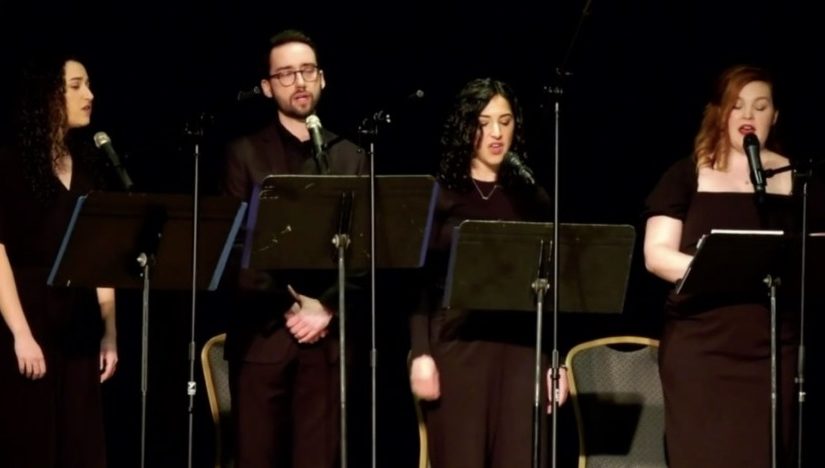
Left to right: Mia Givon, Lorenzo Tesler-Mabe, Kat Palmer and Erin Aberle-Palm. (screenshot from Kat Palmer)

Holocaust survivors and their descendants were joined by top elected officials and Jewish community leaders in a series of commemorations marking Yom Hashoah, Holocaust Remembrance Day, across Canada last week.

In Vancouver, community members gathered together at the Jewish Community Centre of Greater Vancouver April 27, while scores more watched remotely as the traditional in-person ceremony returned for the first time since the beginning of the pandemic.

Marcus Brandt, vice-president of the presenting organization, the Vancouver Holocaust Education Centre, welcomed guests and invited Holocaust survivors to light Yahrzeit candles.

“On Yom Hashoah, we join as a community to remember the six million Jews who perished in the Holocaust at the hands of Nazi Germany and its co-conspirators between 1933 and 1945,” he said. “It is also a day to pay tribute to the Jewish resistance that took place during the Holocaust.”

This year marks the 79th anniversary of the Warsaw Ghetto Uprising, which is the most notable of many acts of Jewish resistance to Nazism.

Marsha Lederman, a journalist who is the daughter of two Holocaust survivors, spoke of the importance of telling our stories.

“When I was growing up,” she said, “the Holocaust was everywhere and nowhere. As far back as I can remember, there were hints and references. My parents talked about things happening in camp. What was this camp? I knew it wasn’t like the summer camp that I went to. I knew a lot of their friends were also at these camps, but I didn’t know the details.”

At the age of 5, Marsha met a new friend whose home was filled with laughter and extended family.

“One day, when I came home from a visit at my friend’s house, I asked my mother what was really a simple, innocent question,” said Lederman. “She has grandparents, why don’t I? My poor mother. She was caught off guard and her answer was truly horrifying – at least as I remember it, because I know memory is very faulty. But, as I recall, she said I didn’t have grandparents because the Germans hated Jews and they killed them by making them take gas showers.”

This response raised more questions than answers for the young girl, not least of which was: “What did we do to make the Germans hate us so much and do they still hate us? It was a horrible introduction to the details of the tragedy of my family and it taught me another terrible lesson: be careful about asking questions because the answers could be murder.”

As a result, much of Lederman’s Holocaust education was gained “through osmosis, rather than sitting down and asking questions,” she said.

Her father died when Lederman was a young woman and, in a tragic turn of events, her mother died just as Lederman had bought a ticket to visit her in Florida, armed with a recorder to finally ask the questions she had hesitated to broach in earlier years.

“It’s taken me years to try to figure out what I could have learned in an afternoon at my mother’s kitchen table,” she said. “I have no way of knowing these things because I didn’t ask. We need to ask and we need to tell.”

Lederman explores these questions in a book being released this month, titled Kiss the Red Stairs: The Holocaust, Once Removed.

Amalia Boe-Fishman (née van Kreveld) was the featured survivor speaker at the Vancouver event. Born in the Netherlands, she was less than a year old when the Germans invaded her country. Her grandparents were soon transported to Auschwitz and murdered.

In what is an extremely rare phenomenon, Amalia, her parents and her brother all survived the war years because a Dutch Christian resistance fighter, Jan Spiekhout, and his family hid members of the de Leeuw family in a variety of hiding places over the course of years. Amalia’s mother even gave birth to another child in 1944. (That child, as well as Boe-Fishman’s oldest son, are both named Jan in honour of their rescuer.) Their survival was a statistical miracle. The Netherlands had among the lowest Jewish survival rate of any country during the Holocaust. Of 140,000 Dutch Jews in 1939, only 38,000 were alive in 1945.

Boe-Fishman recalled the day Canadian forces liberated the Netherlands – it was one of the only times in three years that she had set foot outdoors.

“It was strange and frightening outside and close to so many strangers,” she said. “The Canadian soldiers came rolling in on their tanks, handing out chocolates, everyone smiling, dancing, waving Dutch flags. Then I was told I could go home to my real family. But who were these strangers? I did not want to leave the family Spiekhout. They were my family. After all, I had not seen my real family for three years.”

In 1961, she traveled to Israel to meet members of her family who had made aliyah before the war and to reconnect with her Jewish identity. There, on the kibbutz she was staying, she met a Canadian, whom she married and they subsequently moved to Vancouver and had three children.

In 2009, Boe-Fishman and her three sons traveled to The Hague for the investiture of Jan Spiekhout and his late parents, Durk and Froukje Spiekhout, as Righteous Among the Nations by Yad Vashem.

“To be together with my children, my brother, and the grown children of the Spiekhout family, this was such a moving event in our lives,” she said.

As part of the Vancouver ceremony, Councilor Sarah Kirby-Yung read a proclamation from the City of Vancouver. Cantor Yaakov Orzech chanted El Moleh Rachamim. Lorenzo Tesler-Mabe, Mia Givon and Kat Palmer, members of the third generation, as well as Erin Aberle-Palm, sang and read poetry, accompanied by Vancouver Symphony Orchestra violinist Andrew James Brown and pianist Wendy Bross Stuart, who was also music director of the program.

The following day, a hybrid in-person and virtual event was held at the British Columbia legislature, featuring Premier John Horgan.

“On Yom Hashoah, we are challenged to ensure the words ‘never again’ are supported by action,” he said. “Over the past few years, there has been an increase in antisemitism in B.C., and the Jewish community is one of the most frequently targeted groups in police-reported hate crimes. That’s why our government will continue working to address racism and discrimination in all its forms.… Today, as we remember and honour those who were lost and those who survived, we must recommit to building a more just and inclusive province, where everyone is safe and the horrors of the past are never repeated.”

Michael Lee, member of the legislature for Vancouver-Langara, spoke on behalf of the B.C. Liberal caucus.

“Every year, we commemorate this day and remember the heroes and the Righteous Among Nations who stood up to oppose the most vile, hateful oppression,” Lee said. “We recognize the victims and survivors of the Holocaust, we make a solemn promise to never forget and never again allow such horrific actions to take place. This is a responsibility that we all must carry with us not only today but every day. It is a responsibility we must be better at upholding, as soldiers at this very moment commit war crimes once again in Europe. We have not done enough. Right here in Canada, we see another year of record rises in antisemitism. We have to do better.”

Lee called on the province to adopt the International Holocaust Remembrance Alliance Working Definition of Antisemitism.

MLA Adam Olsen represented the Green party.

“While time distances us from the horrific events, the memories and the stories remain steadfast in our mind and are carried and passed from one generation to the next,” said Olsen. “The Holocaust was an ultimate form of evil, persecution, oppression, genocide, complete disregard for human life, pushed to the most appalling degree…. The Holocaust is a stark reminder of the darkness, the wickedness, that can exist among us. However, it is also important to acknowledge that this is a story of strength, resilience and humanity and, to that, I raise my hands to all of the survivors, the Jewish community, that have ensured that the world knows and hears the stories. As difficult as it is to continue sharing them, we cannot stop hearing them or else we will fall victim to thinking that we have passed that now.”

Rabbi Harry Brechner of Congregation Emanu-El lamented the deaths of Holocaust survivors in the current war in Ukraine, “who died when they were cold, again, and hungry, again, and who died in the face of violence.”

“That never should happen and we all know that,” the rabbi said. “I don’t know how to make those big changes. I’m not a world leader. I’m the leader of a small congregation. But I think we are all leaders of our hearts and if each of us can make that difference, it’s got to have a huge ripple effect.”

Holocaust survivor Leo Vogel said that history records the end of the Holocaust in 1945. “But, for the people who lived through it and survived that horrible blight of human history, for them, 1945 is not when the Holocaust ended,” he said. “It continues to this very day to live in memories and nightmares and ongoing health problems.… The fascist attempt to eradicate the Jewish people must never be forgotten. The memory of the tortured and murdered cannot be shoveled underground as the Nazis did with the ashes. As children in the Holocaust, we were the youngest and, now, in our older years, we are at the tail end of those who can still bear witness.”

Vogel spoke of the unfathomable choice his parents made to hand him over, as a child, to a Christian family for hiding.

“Not long after that deeply painful decision to separate me from them, they were deported to Auschwitz and there they were murdered without ever knowing whether their desperate act to allow me to go into hiding saved my life,” he said. “I get cold chills when I think of the intense agony they went through in making their decision. It would have been their hope, I’m sure, that one day we would once again get together. That day never happened. Their pain must have been overwhelming. Many times, I have wondered what they said to each other and to me the night before they gave me away and, countless times, I have asked myself whether I would have had the strength to do an equal act when my children were young.”

In Ottawa, earlier on April 27, Prime Minister Justin Trudeau touted his government’s steps in fighting antisemitism, including the creation of a special envoy on preserving Holocaust remembrance and combating antisemitism, currently held by Irwin Cotler, and proposed legislation to make denying or diminishing the Holocaust a criminal offence.

“Earlier this year, our country and people around the world were shocked and dismayed to see Nazi imagery displayed in our nation’s capital,” the prime minister said, referring to trucker protests in Ottawa. “For the Jewish community, and for all communities, those images were deeply disturbing. Sadly, this wasn’t a standalone instance. Jewish people are encountering threats and violence more and more both online and in person. This troubling resurgence of antisemitism cannot and will not be ignored. The atrocities of the Holocaust cannot be buried in history.… We must make sure that ‘never again’ truly means never again.”

Shimon Koffler Fogel, chief executive officer of the Centre for Israel and Jewish Affairs, picked up on that theme, noting that the term “never again” was “born out of the Jewish experience but was always intended to be universal in its application.”

“How can we witness the atrocities visited on the Rohingya, the Uighurs or the Yazidi and claim the cry of ‘never again’ has meaning?” he asked. “How can we observe the unvarnished aggression against Ukraine and assert we have taken the lessons of the Holocaust to heart?”

He said he derives hope from the fact that Canada seems to have learned the lesson of the MS St. Louis, the ship filled with Jewish refugees that was turned away from Canada and other safe havens in 1939. Now, Canada is a place, he said, “where fleeing Syrian and Iraqi refugees can rebuild their lives, where Afghani women and girls can fulfil their dreams, where displaced, wartorn Ukrainians can find safe harbour.”

“I take great pride that Canada is so committed to Holocaust remembrance and education,” said Michael Levitt, president and chief executive officer of the Friends of the Simon Wiesenthal Centre, “A major reason is because of the survivors who, after suffering unthinkable adversity in Europe, rebuilt their shattered lives here, in our great country. Their strength, resilience and willingness to share their deeply personal and harrowing stories have been a gift and a source of inspiration to all Canadians.”

Dr. Agnes Klein, a Holocaust survivor, spoke of her family’s wartime experiences. Israel’s ambassador to Canada, Ronen Hoffman, commended Canada on adopting the International Holocaust Remembrance Alliance’s Working Definition of Antisemitism.

A day earlier, at another virtual commemoration from the Montreal Holocaust Museum, Holocaust survivor Max Smart told of his family’s harrowing Holocaust experiences.

Paul Hirschson, consul general of Israel in Montreal, compared the loss of Jewish life, with its incalculable loss of talent, in the Holocaust with the explosion of Jewish talent taking place in this century.

“Jewish talent lost was one of history’s greatest tragedies,” said the diplomat. “The talent emerging is perhaps the most exciting story of the 21st century…. Antisemitism is still widespread, also here in Canada. Montreal, where many survivors found a home, is no exception. We will defeat hate every time. Hatred will never again rob the world of Jewish talent.”

Every person has a voice

Elon Musk’s purchase of the social media behemoth Twitter, which appears probable, is raising questions about what the new management could mean to users and society at large. For Jewish tweeters and others, there are red flags.

The growth of social media of all varieties over the past 15 years has resulted in a massive change in the public dialogue. People have some ability to amplify or diminish the voices they do or do not want to hear, resulting in an unprecedented ability to self-select the information (or misinformation) to which we are exposed. The relative anonymity of the media has had additional harmful impacts, with racist, misogynistic, homophobic, antisemitic and other hateful statements being posted in volumes too massive to effectively police. The spike in antisemitic hate crimes we have seen in recent years is almost certainly a result, in part, of online antisemitism moving into the “real” world.

Since 2016, when Russian and other bad actors influenced the U.S. presidential election in favour of Donald Trump, some platforms, including Twitter, have been driven to address some of the most egregious content on their sites and abuse of the medium. Their efforts, however imperfect and inadequate, reflect an assumption that hate speech should not be accepted.

Musk’s planned purchase of Twitter (which has a number of hurdles yet to overcome) raises fears among some that his self-identification as a “free speech absolutist” may reverse the small strides Twitter has made in addressing hate speech.

If Musk, who is presumed to be the richest person on earth and who is known to be a micromanager, chooses to imprint on Twitter his vision of absolute free speech, we should expect the limited efforts to police the worst content will be diminished or eliminated.

Of course, Musk would not be the final arbiter of what is acceptable. He may be the richest person on earth and Twitter may be among the most powerful communications platforms ever known, but they are still subject to government oversight.

Among the challenges, of course, is that Twitter, like the rest of the internet, effectively knows no national boundaries. So, while the United States is lenient toward extreme speech, different countries take a different approach.

For example, Canada’s Parliament is considering two proposals to make it illegal to deny or diminish the historical facts of the Holocaust. Legislation like this – as well as existing hate crimes laws that prohibit the targeting of identifiable groups – will inevitably come up against transnational norms set by platforms like Twitter. Will social media platforms face endless legal challenges? Or will the sheer volume of offences make it impossible to challenge any but the most outrageous affronts?

Canadians have always had a different approach to free speech than our American cousins. Our Parliament, like many in Europe, recognizes limitations in the interest of national harmony. These often lead to contentious debates over where lines should be drawn. Introduce an anarchic, foreign-owned social media platform into the equation and these discussions become far more complicated.

These are difficult issues. In a perfect world, absolute free speech would be ideal, because, again in a perfect world, individuals themselves would balance their right to expression with their responsibilities as citizens of a pluralistic society. But, we do not live in a perfect world and some compulsion sadly seems necessary to prevent, say, outright incitement to murder or genocide.

Here, though, is something not difficult or complicated at all – we do not need legislation or philosophical debates around freedom in order to counter hate speech right now. In this space, over many years, we have argued that the best way to confront bad, or hateful, speech is not stifling that speech, but countering it with truth, compassion and decency. Silencing hatred (even if it were possible in the wired world) will not eliminate hatred. We are in a war of words, and more words, not fewer, should be our approach.

A magnificent case-in-point occurred in the past month.

After the student society of the University of British Columbia passed a resolution endorsing the boycott movement against Israel, Santa Ono, the president of the university, responded with a thoughtful statement condemning BDS.

Too often, destructive, hateful messages like anti-Israel boycott resolutions are met with silence, usually with the excuse that such resolutions or protests are legitimate expressions of free speech. Of course, they may well be. But this argument, which was used by UBC administrators and others in the past, misses the point. Free speech does not mean the right to have one’s opinions uncontested. As Ono’s statement makes clear, both sides have a right to have their voices heard. That is free speech.

At a time when too many campuses across North America are roiling with anti-Israel spectacles, the significance of a statement like Ono’s did not go unnoticed. In fact, the university president received a letter from another president. Isaac Herzog, the president of Israel, wrote a “Dear Santa” letter, thanking Ono for his unequivocal statement.

That Israel’s head of state would intervene to express gratitude for Ono’s statement is itself a statement of how serious the threats are from uncontested hate speech. But it also reminds us that we do not need legislation or courts to stand up – as individuals and as a community – against egregious attacks. Every person has a voice. Some use it to spread misinformation and hatred. Others use it for good.

SFU students vote BDS

On April 20, the Simon Fraser Student Society (SFSS) voted in favour of boycott, divestment and sanctions (BDS) against Israel. The motion is in support of Palestinian liberation, which it defines as resistance against Israeli “settler-colonialism” and the occupation of historic Palestine – including the West Bank, Gaza and the present-day state of Israel.

The Hillel chapter at SFU issued a statement on April 20 denouncing the motion.

“Evidently, this motion, and the student council standing in support of it are not concerned with the safety of Jewish students on SFU campus,” reads the statement. “The adoption of the policy, which passed unanimously this evening, and which violates SFU, provincial and federal law, sets a dangerous precedent for Jewish safety, freedom of association and political mobilization on campus.”

The day after the SFSS vote, another campus group also voted on a motion related to debates over Israel.

On April 21, more than 60% of the Queen’s University Faculty Association (QUFA) voted in favour of a motion that opposed the adoption of the working definition of antisemitism from the International Holocaust Remembrance Alliance (IHRA).

The IHRA working definition of antisemitism was adopted in May 2016, and states that antisemitism is “a certain perception of Jews, which may be expressed as hatred toward Jews. Rhetorical and physical manifestations of antisemitism are directed toward Jewish or non-Jewish individuals and/or their property, toward Jewish community institutions and religious facilities.”

The document also lists many examples that could fall into the broader definition of antisemitism. Among the examples are statements about Jewish people and Israel, including “denying the Jewish people their right to self-determination, e.g., by claiming that the existence of a state of Israel is a racist endeavour.”

According to the QUFA motion, this definition threatens academic freedom and intersectional anti-racist and decolonial initiatives.

“The IHRA definition of antisemitism misconstrues antisemitism to include a broad range of criticism of the state of Israel, particularly targeting

decolonial and anti-racist critiques of the policies, structures and practices of Israel,” the motion reads. “Such targeted attacks, which primarily impact racialized faculty and students, will have a negative effect on the academic freedom of our members in the classroom, in their research and in campus politics more broadly.”

Jordan Morelli, QUFA president, said in an email that the motion was brought forward by individual members of the association, as is their right according to the association’s democratic processes. He also said the vote itself was preceded by a balanced discussion in which everybody who wanted to speak was given the opportunity to do so. Morelli further added that Queen’s recently revised policy on harassment and discrimination defines antisemitism in a manner consistent with the Ontario Human Rights Code policies, and that other faculty organizations at other schools, as well as at federal and provincial levels, have expressed similar concerns with the IHRA definition of antisemitism.

Before the vote, Queen’s Hillel published an open letter signed by more than 1,600 people – current Jewish and non-Jewish students, alumni, family members and community members – asking the faculty to vote against the motion.

“This statement contributes to the erasure of Jewish history, religiosity and values. To exclude the Jewish community from impacted ‘racialized faculty and students’ does harm to multi-racial, long-established Jewish communities. It overwrites our lived reality of centuries of constant displacement, colonization, conquest and migration,” the letter reads.

The letter also says that the fears about restricting criticism of Israel and academic freedom do not follow from a “fair” reading of the definition, as Israel is not mentioned in the definition itself, but only in the follow-up examples of what may constitute antisemitism. The letter also questioned why it does not fall to Jewish groups to define their own oppression.

“It is our understanding that a fundamental principle of anti-oppression work is allowing affected communities to define their own oppression,” reads the letter. “It is not the place of any organization external to our community…. It is the Jewish community, and the Jewish community alone, who get to decide this. This double-standard is antisemitic.”

The Hillel letter did note that some of the faculty who proposed the motion are Jewish, but said their views are out-of-sync with the vast majority of Canadian Jews.

After the motion passed, Queen’s Hillel published a statement that said they were “deeply saddened,” called the vote “an utter disgrace,” especially because no actionable steps were suggested in the motion to combat growing antisemitism on campus. However, the statement also said they were “immensely proud” of the support shown across the community.

At McGill, a similar motion in support of Palestinian solidarity that was passed by more than 70% of the Students’ Society of McGill University (SSMU) was not ratified by SSMU’s board of governors. In a statement published on April 22, the board said they could not adopt the policy because it contravened numerous SSMU governing documents, including its constitution, equity policy and Quebec law.

The original version of this article was published by The CJN. For more national Jewish news, visit thecjn.ca.

StandWithUs Canada course

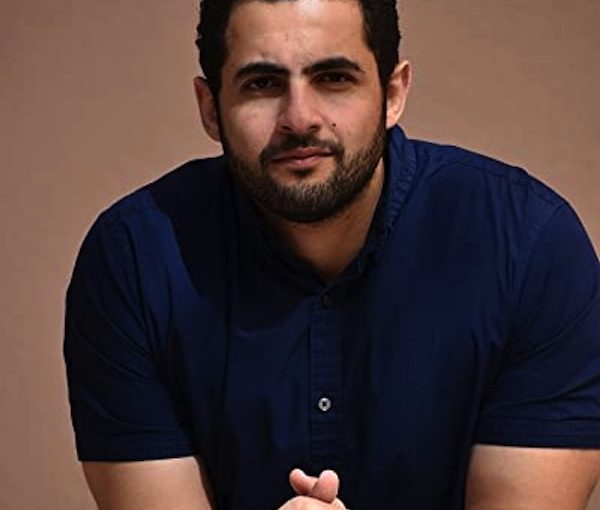
Hussein Mansour Aboubakr (PR photo)

After an almost three-year hiatus due to the pandemic, StandWithUs Canada is again holding events. On May 15, StandWithUs Canada and the Diamond Foundation are presenting the crash course Antisemitism and Anti-Zionism Today: What to Expect on Campus.

The course is a chance for high school (grades 11 and 12) and first-year university students to attend interactive sessions, hear from speakers, meet like-minded students and enjoy a free kosher dinner. Students who register and attend can also receive community service hours and a gift card.

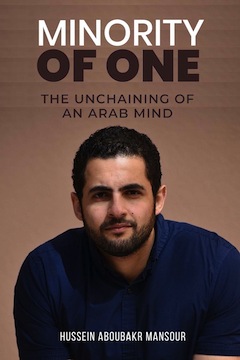
image - Minority of One book coverSpeakers include Penina Edery, high school director, StandWithUs Canada, and Aviv Attia, StandWithUs educator and Israeli speaker. Special guest speaker Hussein Mansour Aboubakr was a dissident imprisoned in his home of Cairo, Egypt, for the crime of wanting to learn more about the country and the people he was raised to hate – Israel and Jews. One of the course sessions will be Aboubakr speaking about his journey. Other sessions will include a panel of students speaking about their experiences with antisemitism and anti-Zionism in high school and university.

The Diamond Foundation is sponsoring this crash course to reach out to Vancouver high school students and their families, to help them learn the skills, get the knowledge and find out about the resources available to support Israel and fight antisemitism. Also involved in presenting the event with StandWithUs Canada are Camp Hatikvah, Masa Israel Journey, King David High School and the Jewish Federation of Greater Vancouver.

The May 15 crash course will take place at KDHS from 4 to 8 p.m. Registration is required to attend. Students can register at forms.gle/hPncontVmAC4Jfor6.

– Courtesy StandWithUs Canada

Celebrate Israel with joy

In the coming days, we celebrate the 74th anniversary of the rebirth of Jewish sovereignty in the land of Israel. By press time, we were still anticipating the first local in-person celebration in three years, a coming together that, if all goes to plan, will be cause for great joy.

Those immersed in the daily news from Israel can lose sight of the forest for the trees. We celebrate the scientific advances, the medical breakthroughs, the cultural triumphs coming out of the small but astoundingly creative Jewish state. Yet it may be only on occasions like Independence Day that we step back to observe the big picture.

The creation and flourishing of the Jewish state is a modern miracle – not only because every advancement has taken place within the context of a nation routinely under siege, but because these accomplishments would be exceptional even in the most conducive situations. There may be no other country that emerged in the postwar period of decolonization that has created a greater model for national development – lessons (like the oft-referenced act of making the desert bloom) that were widely shared with other emerging countries until after 1967, when the anti-Zionist movement snuffed out much of that international cooperation.

As a result of that anti-Zionism, our Zionism sometimes takes on a defensive tone. Young Israelis, traveling after their military service, meet young people from around the world in hostels and on hiking trails and are expected to justify their nation’s policies. Never mind Israelis, Jews in Canada and elsewhere are subjected to litmus tests to determine whether they are, by the standards of the interlocutor, a “good Jew” (anti-Zionist) or a “bad Jew.” (Of course, Zionists also engage in the good Jew/bad Jew game.)

Anti-Zionist voices dismiss claims that hyper-criticism of Israel endangers Jews in countries where mobs condemn the Jewish state in ferocious terms. These dismissals are disprovable through statistics. One could claim that the spike in antisemitic incidents in the Western world is unrelated to the precipitous rise in anti-Israel activism. But is there another case of a group of people in Canada or the United States or Europe telling people that their inflammatory rhetoric risks real-life violence only to have those concerns dismissed as a coincidence or as a trick to divert attention from alleged “war crimes”?

Aside from the physical dangers created by anti-Israel rhetoric, the insistence that none of this is aimed at Jews outside Israel is nonsense. Intent does not trump effect. The vast majority of Jews have familial, historical, religious and/or emotional connections to this land and the agitation against Israel is felt by Jews everywhere, no matter their views or feelings about Israel. Whether the mobs intend to strike fear in the Jews along the parade route is irrelevant – they do. Does this scenario constitute antisemitism? Well, if you seek the destruction of the world’s only Jewish state while striking fear in Jews worldwide and chanting “anti-Zionism is not antisemitism,” you have already demonstrated a spectacular indifference to the well-being of Jews everywhere. Does it really matter what we call that?

The trope that Israel was a consolation prize from the world to the Jews for the Holocaust is perhaps the most common misconception surrounding the history of the region. The world gave Israel nothing but a vote at the United Nations. After that, the Jews of the Levant were left to their own devices to build a state while under internal and external bombardment from neighbours.

Where the creation of the Jewish state intersects with the history of the Holocaust is in the collective global renaissance that the proclamation of the Jewish state meant for Jewish people. As the scope of the Shoah became known, Jews turned collective horror and grief into the constructive project of building a new country. Whether that was direct – fighting in the War of Independence or tilling the soil on a kibbutz – or indirect – supporting Zionist organizations abroad – this was an almost universal mobilization by the Jewish world. The agony of all the irredeemable losses of the past was channeled into reviving Jewish life in a sovereign state. Fairly or not, when Israel is attacked, it is received not, as the perpetrators insist, as “criticism of government policies,” but as an assault on the memory of all those who redirected what could have been existential collective despair into something redemptive.

As we begin the 75th year of Jewish sovereignty, let us situate the celebration in the biggest picture possible: despite all the naysaying, the war of words and the war of bullets and blades, the achievements of Israel are a source of pride for almost every Jew. Israelis, with the support of people like we who will gather at the Vogue Theatre on May 4, have made the desert bloom with agriculture, music and dance, science, medicine, high tech, art and almost every imaginable outlet of human creativity.

This is worth celebrating with unbridled joy.