Happy 74th birthday, Israel!

Like many Jewish kids who go to religious school twice a week, my understanding of Israel and its history was, well, simplistic. That changed when I was 16.

I went to live, on my own, on Kibbutz Beit HaShita for a year as part of their “American school” program. It was transformative for me in many ways. Among other things, I learned that Hebrew was a living, dynamic language, Jews were a diverse and complex people and that the land’s history was complicated. Also, I found out that, even far away from home, if, heaven forbid, something went wrong, there were, as Mr. Rogers described, helpers all around me. It was like all these strangers were distant relatives, a feeling I’d never experienced before.

I was a teenager, speaking in my third language, at a bus stop late one night in Jerusalem. I was scared I would miss the bus and not make it back to my class or back to the kibbutz. The motherly woman at the bus stop engaged me in small talk. “Oh,” she said, “You sound like you come from Beit HaShita. My cousin lives there. Don’t worry. If you miss the right bus, you can spend the night on my living room couch.” I felt alarmed at the time, but the bus arrived and I got home safely. I still remember that kind person’s offer – and it’s been more than 30 years.

For several reasons, I’ve never been back to Israel. I’ve wanted to go but life got in the way. Also, I did a lot more learning, in undergraduate and graduate school, and the complexity of the political situation felt intense. I navigated the opinions expressed in the Arabic classes I took and those of friends from all over the world. Due to antisemitism or facing someone who “hated Israel,” it sometimes felt hard to explain where I’d lived. I didn’t feel OK about some of Israel’s policy choices at times. I believed (and still do) that Palestinians deserved their own state, much the way many Israelis do, but I wasn’t Israeli so I didn’t vote there. It wasn’t my place to shift their politics. I just didn’t want to erase Israel. Yet, I also wasn’t sure if my very limited travel money should be spent on that tourism industry.

All this began to change after my twins were born. Winnipeg is a city of immigrants. Many newcomers I met in the Jewish community here spoke Hebrew and had lived for awhile in Israel, even if they were born elsewhere. After many years of only using prayer Hebrew, my brain woke up. Modern Hebrew sometimes began coming out of my mouth again. Suddenly, I was standing at the coat racks outside of the preschool classroom, trying to help a 2-year-old new to the school from Israel and, whoa, the preschooler Hebrew just came out of my mouth at a quick pace. My twins were stunned!

After the May 2021 war in Israel and Gaza, I spent time unfollowing and changing my social media habits. I wanted less hate and more nuanced news sources. Some of that news now arrives in Hebrew first, with occasional other languages mixed in. I got back in touch with my Hebrew study partner from university days, who lives in Jerusalem. When we streamed services from synagogue or made a seder, I felt more connected to those prayers about the state of Israel than I had in a long time.

The recent deaths in Israel, caused by terrorists who killed civilians, border patrols and police officers, Jews, Druze, Christians, Israelis and even Ukrainian workers, hit me hard. It felt again like I was losing cousins and friends. Even amid the isolation of pandemic times, I keenly felt the loss of these Israeli souls.

Birthdays are funny things. There are years when my own birthday comes and goes without much fanfare. I make myself a chocolate cake, some relatives or friends call, nothing much happens. I’m not much for big parties. Even before the pandemic, sometimes my early January birthdays were frigid and unremarkable. This year, though, I anticipate Israel’s 74th with a more deeply felt celebration.

I’m not likely to be part of a big event on Yom Ha’atzmaut and, for now, my travel budget remains small. Rising antisemitism in the world makes me worried though. It reminds me of how we need to ensure this safe place for future generations. I am in awe of just how much Israel has accomplished so far – in technology, education, medicine and more.

This is a year when I feel a big need to celebrate Israel and its continued existence amid adversity. Sometimes, bad things happen. Finding a space for gratitude helps remind us of what we do have – places to call home.

Happy birthday, Israel! Wishing you and all your inhabitants a happy, healthy and peaceful year to come. May you grow in mitzvot and success this year – and wishing you many, many productive years to come.

Joanne Seiff has written regularly for CBC Manitoba and various Jewish publications. She is the author of three books, including From the Outside In: Jewish Post Columns 2015-2016, a collection of essays available for digital download or as a paperback from Amazon. Check her out on Instagram @yrnspinner or at joanneseiff.blogspot.com.

Criminalize Holocaust denial?

Criminalizing Holocaust denial would draw a moral line in the sand, say two advocates for legal action, but a lawyer and Canadian-Israeli former member of the Knesset has reservations.

Michal Cotler-Wunsh, head of the Nefesh B’Nefesh Institute for Aliyah Policy and Strategy and a former Israeli parliamentarian, acknowledged free speech concerns but focused more on the need for evidence-based decision-making before criminalizing those who question historical facts around the Shoah. She also noted that the countries that have adopted criminal sanctions against those who spread historical fabrications – Germany and France, for example – are among the very places where antisemitism is at its worst.

Sacha Ghozlan, a French legal expert and former president of the Union des étudiants juifs de France (Union of French Jewish Students), dismissed free speech concerns and warned against confusing cause and correlation between antisemitism and legal proscriptions.

“I don’t think you can draw a line between rising antisemitism in its new forms and the fact that a country has developed legislation to address rising Holocaust denial,” Ghozlan said.

Dr. Carson Phillips, managing director of the Neuberger Holocaust Education Centre, in Toronto, generally agreed with Ghozlan. Holocaust denial and expressions of hatred should not be protected grounds based on free speech arguments, he said.

“I don’t see this so much as a freedom of speech,” he said. “This is really an abuse of speech.… Does the listener have to be exposed to hate speech and an abuse of free speech?”

He argued that “putting a fence around free speech” is legitimate in cases where historical revisionism can lead to expressions of hatred.

The three speakers were panelists in an event presented by the Centre for Israel and Jewish Affairs (CIJA) March 29, titled Perspectives on Criminalizing Holocaust Denial.

A private member’s bill introduced in Parliament by Saskatchewan Conservative MP Kevin Waugh would amend the Criminal Code section that prohibits inciting hatred “against an identifiable group” to include “communication of statements, other than in private conversation, that wilfully promote antisemitism by condoning, denying or downplaying the Holocaust.”

Phillips contextualized Holocaust denial as a threat to Canadian society.

“The Holocaust is often [viewed] as being one of the foundational cornerstones of modern human rights and an attack on the Holocaust is certainly an attack on Canadian values and Canadian democracy and it needs to be taken very seriously,” he said.

While he supports criminalization, he acknowledged that this is only a part of the solution.

“I am an educator,” he said, adding that education has to exist alongside legal prohibitions.

“To me, it’s not an either/or situation, it’s a combination,” he said. “I see this as really strengthening and working together.”

Legislating against Holocaust denial would send a societal message, Phillips argued.

“It’s really important to draw a moral line,” he said. “In Canada, where we are a pluralistic society with strong democratic values, I think this is one example of a way of being able to draw a moral line in the sand and being able to say there are certain abuses of free speech that will not be tolerated and for very good reasons because we know where this can lead – obviously, to the Holocaust. But also looking at it from the perspective that Holocaust denial is a form [of], and leads to, antisemitism but it is also an attack on democratic values, which we value so much within the Canadian context.”

Ghozlan said that social media companies have faced calls to pull down expressions of hatred and Holocaust denial, but have often demurred based on the free speech assurances of the U.S. Constitution.

“But it’s not freedom of speech, it’s fake news,” he said. Advocates need to “level up pressure on social media, explaining to them that Holocaust denial is not about freedom of speech but it’s about an abuse of freedom of speech,” he said.

Cotler-Wunsh, former Blue and White party member of the Knesset and Canadian-raised step-daughter of legal scholar and former Canadian justice minister Irwin Cotler, said she has always been a fighter against antisemitism. But she raised red flags around the issue of free expression and focused more narrowly on whether a prohibition on Holocaust denial would have the desired outcome.

“Does the criminalization of Holocaust denial in fact meet the goal of combating antisemitism?” she asked. Banning Holocaust denial – which is easily debunked – may simply be a feel-good act that is “low-hanging fruit” in the battle against anti-Jewish hate and might detract from the bigger responsibility to remain vigilant, contest mistruths in the marketplace of ideas and educate, rather than merely seek to silence, she said.

Canada already has fairly robust legal consequences for hate expressions and Cotler-Wunsh warned that new laws that are difficult to administer, or that sit on the books without being enforced, could have the opposite of the intended effect.

By example, she said, a recent controversy around the Holocaust represents a missed opportunity. After Whoopi Goldberg said on the TV show The View that the Holocaust “was not about race,” she was suspended from the show for a period.

“I would have argued, if anybody would have asked me, that that was a great, great missed opportunity,” said Cotler-Wunsh. It was “exactly the moment to educate the millions of viewers of that show and be able to utilize that opportunity to engage in what the Holocaust was about.”

Education, while slow, is the only answer, she contended.

“At the end of the day, education is the key and that is one of the hardest things to say because it actually is the longest process,” said Cotler-Wunsh. “There is no quick fix in education.”

Where compulsion should be exercised, she said, is on social media platforms, which she said should adopt and implement the International Holocaust Remembrance Alliance Working Definition of Antisemitism.

She worries that passing legislation against Holocaust denial might let elected officials off the hook. She imagines legislators thinking, “Oh we’ve done something. We confronted antisemitism, when in fact data and empirics may show that criminalizing Holocaust denial hasn’t actually made a dent in the rising antisemitism in Europe 30 years [after some countries criminalized it].”

Cotler-Wunsh, Ghozlan and Phillips were in discussion with Emmanuelle Amar, director of policy and research in CIJA’s Quebec office. The event was opened and closed by Jeff Rosenthal, co-chair of the national board of CIJA.

Making internet safer

(image from internetmatters.org)

On March 30, Minister of Canadian Heritage Pablo Rodriguez and Minister of Justice and Attorney General of Canada David Lametti announced a new expert advisory group on online safety as the next step in developing legislation to address harmful online content.

While online platforms play a central role in the lives of Canadians, bringing many benefits to society, they can also be used as tools to cause real and significant harm to individuals, communities and the country. Harmful content, such as hate speech, sexual exploitation of children and incitement to violence, is published online every day. There are no broad regulatory requirements in Canada that apply to platforms regarding their responsibilities in relation to such content.

The expert advisory group will be mandated to provide advice on a legislative and regulatory framework that best addresses harmful content online. The group is composed of diverse experts and specialists from across Canada: Amarnath Amarasingam, Queen’s University; Bernie Farber, Canada Anti-Hate Network; Chanae Parsons, community activist and youth engagement specialist; David Morin, Université de Sherbrooke; Emily Laidlaw, University of Calgary; Ghayda Hassan, Université du Québec à Montréal; Heidi Tworek, University of British Columbia; Lianna McDonald, Canadian Centre for Child Protection; Pierre Trudel, Université de Montréal; Signa A. Daum Shanks, University of Ottawa; Taylor Owen, McGill University; and Vivek Krishnamurthy, University of Ottawa.

The advisory group will hold nine workshops to discuss various components of a legislative and regulatory framework for online safety. They will also take part in additional stakeholder engagement, including with digital platforms. The work of the advisory group will be open and transparent. The group’s mandate, the supporting materials for each session, and non-attributed summaries of all sessions and discussions, will be published.

“We conducted a consultation last year and released the What We Heard Report earlier this year,” said Rodriguez. “It’s clear that harmful online content is a serious problem, but there is no consensus on how to address it. We’re asking the expert advisory group to go back to the drawing board. We need to address this problem openly and transparently as a society.”

Facts and figures on online violence in Canada include that:

  • 62% of Canadians think there should be more regulation of online hate speech;
  • 58% of women in Canada have been victims of abuse online;
  • 80% of Canadians support requirements to remove racist or hateful content within 24 hours;
  • one in five Canadians have experienced some form of online hate;
  • racialized Canadians are almost three times more likely to have experienced harmful behaviour online;
  • there was a 1,106% increase in online child sexual exploitation reports received by the RCMP National Child Exploitation Crime Centre between 2014 to 2019.

“Too many people and communities are victimized by harmful online content that is often amplified and spread through social media platforms and other online services,” said Lametti. “The Government of Canada believes that Canadians should have protection from harmful online content, while respecting freedom of expression.”

– Courtesy Canadian Heritage

Also on March 30, the Canadian Coalition to Combat Online Hate announced the launch of their new website, combatonlinehate.ca, providing youth, parents, educators and policymakers with strategic tools to be effective in their efforts to identify and combat online hate.

“Canadians are exposed daily to a barrage of hateful and divisive online messages that pollute social media forums with content that is antisemitic, anti-Black, anti-Asian, anti-Indigenous, misogynistic, Islamophobic and homophobic, and that promotes conspiracy theories. These posts, videos and memes are easily discoverable and readily shared, often masked by anonymity or given undue credibility,” said Richard Marceau, vice-president, external affairs and general counsel at the Centre for Israel and Jewish Affairs (CIJA). “We know that online hate can become real-life violence. Hate-motivated murders at Christchurch’s Al Noor Mosque and Linwood Islamic Centre and at Pittsburgh’s Tree of Life Synagogue stand as notable examples. It is incumbent on all of us, before it is too late, to combat online hate with the most effective tools available.”

According to a 2021 survey by the Canadian Race Relations Foundation, 42% of respondents have seen or experienced hateful comments or content inciting violence online, and younger and racialized Canadians are significantly more likely to be confronted with this hate. The same study indicated that 93% of Canadians believe that online hate speech and racism are problems, of which 49% believe they are “very serious” problems. Findings also showed that at least 60% of Canadians believe that the federal government has an obligation to pass regulations preventing hateful and racist rhetoric and behaviour online. Only 17% prefer no government involvement at all.

“We saw COVID exacerbate online hate exponentially, as stress levels and political division rose amid lockdowns. By working together, we can make the communities we are building online – and, by extension, the communities we inhabit offline – safer places for all Canadians,” said Marceau.

The website combatonlinehate.ca is organized by the Canadian Coalition to Combat Online Hate, funded by Canadian Heritage and powered by CIJA.

– Courtesy Centre for Israel and Jewish Affairs

Diverse and innovative films

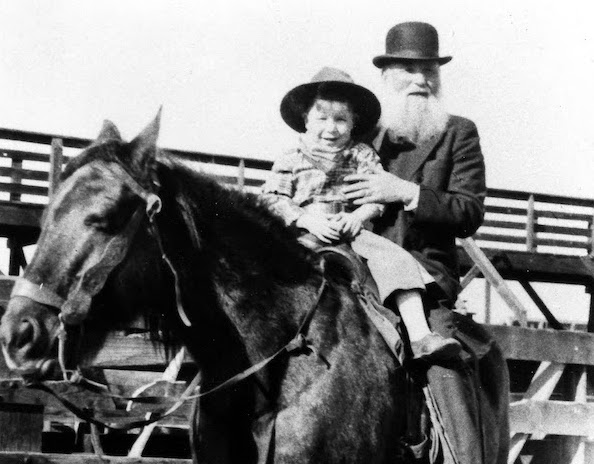
A still from Amanda Kinsey’s documentary Jews of the Wild West, a series of vignettes that shines a light on a noteworthy and usually overlooked history.

The Wild West, Jews in Germany and a surprisingly vivacious Israeli seniors home feature among the diverse films at the Vancouver Jewish Film Festival this year.

Somehow, we tend not to associate Jews with the legends that have built up around the development of the American West, a serious oversight that is in the crosshairs of filmmaker Amanda Kinsey’s documentary Jews of the Wild West.

The mythology of the Wild West is perhaps as much an invention of Hollywood as of history, so it is notable that the 1903 film The Great Train Robbery, which introduced the genre of the cinematic Western, featured Gilbert “Broncho Billy” Anderson – né Max Aronson.

The myth of the West was no less inspiring to Jews than to other Americans and dreamers from around the world. Perhaps one of the most famous names in the lore was Wyatt Earp. The film introduces us to Josephine Marcus, who fled her family in San Francisco to become an actress and ended up being Earp’s wife. Earp himself is buried along with the Marcus family in a Jewish cemetery.

The gold rush drew Jewish peddlers and merchants to the West Coast in the late 19th century including, most famously, Levi Strauss, who left the Lower East Side and, via Panama, arrived in San Francisco. His brothers sent dry goods from New York and Levi sold them up and down the coast. When Jacob Davis, a tailor, was asked by a woman to construct pants that her husband wouldn’t burst out of, he imagined adding rivets. He took the idea to Strauss and the rest is American clothing history. As one historian notes, it was a Jew who invented “the most American of garments.”

The rapid industrialization in the mining sector is where the Guggenheim family got its start and so, while the name is now most associated with Fifth Avenue, the finest address in New York City, their start was in the gritty West of the 19th century.

We meet Ray Frank, the first woman said to have preached from a bimah. Called the “golden girl rabbi,” she was not ordained, but was apparently a phenomenon that drew crowds to her sermons.

Many people will know that Golda (Mabovitch/Meyerson) Meir spent formative years as an immigrant from Russia in Milwaukee and then Denver. This footnote to her history is often considered curious and interesting, but in this film it integrates the Jewish experience of the 20th century and its roots in the American West with the development of the Jewish state – the opening up of another frontier, one might say.

The Hebrew Immigrant Aid Society, seeing the poverty in the Lower East Side, actively encouraged migration to the West. The film introduces families who have worked the land for generations, some of whom have maintained their Jewish identity and at least one of whom was raised Methodist. But, it suggests, the thriving Jewish community of Denver owes much to the failed farmers of the West who made their way to the nearest metropolis to salvage their livelihoods.

The documentary is really a series of vignettes and at times the shift from one story to another is confusing but, as a whole, Jews of the Wild West successfully shines a light on a noteworthy and usually overlooked history.

* * *

The festival features two German films that complement each other in interesting ways.

In Masel Tov Cocktail, a short (about 30 minutes) film, high schooler Dima (Alexander Wertmann) welcomes viewers into his life just as he is suspended for a week as a result of punching a classmate in the face during an altercation in the washroom. The “victim,” Tobi (Mateo Wansing Lorrio), had taunted the Jewish Dima, graphically play-acting a victim in a gas chamber, a performance enhanced by the austere, sterile setting of the restroom’s porcelain-tiled walls. So begins an interplay of victim and perpetrator that is just one of several provocative themes weaving through this powerful short.

Dima’s family, it turns out, heralds from the former Soviet Union, like 90% of Jews in today’s Germany. After the fall of the Soviet Union and the reunification of Germany, the German government actively encouraged migration of Jews to revitalize Jewish life in the country. This fact, like other statistics and tidbits, is flashed across the screen.

Juxtapositions pack a punch, including Dima’s switching between a baseball cap and a kippa, perhaps reflecting his complex identities, as well as the schism in the identities of post-Holocaust Jews more broadly in a society that struggles to assimilate the idea of contemporary, living Jews in the context of the blood-soaked soil of their state. A shift from colour to black-and-white also evokes the stark break between the present and the past.

But the present and the past are themselves in conflict as Dima recounts how other Germans react when they learn he is Jewish. Why does he only meet Germans whose grandparents weren’t Nazis, he wonders. Statistic: a survey indicates that 29% of Germans think their ancestors helped Jews during the Holocaust, while the screen text helpfully informs us the number was more like 0.1%.

Dima’s teacher, who can’t utter the word Jew and struggles to get the word Shoah out of her mouth, wants Dima to share his family’s Holocaust story with the class. The film’s implication is that Dima’s family was largely spared the trauma of the Holocaust, but he decides to play along because, “There’s no business like Shoah business.”

Dima’s grandfather is taken in by the AfD, the neo-fascist Alternative for Germany party, convinced that their pro-Israel and anti-Muslim rhetoric means that they are defenders of the Jewish people. In a moment that confounds the AfD campaigner (and causes the viewer to reflect), Dima drags his grandfather away from the campaigner while yelling: “Don’t let foreigners take away your antisemitism.”

The film is kooky, funny and light, while also serious, dark and thoughtful throughout.

That description applies to the similarly named feature film Love and Mazel Tov, which features Anne, a non-Jewish bookstore owner who has Munich’s largest selection of Jewish titles and who herself is more than a little obsessed with all things Jewish – including potential romantic partners.

“Some are into fat. Some are into thin. Anne is into Jews,” a friend explains. This turns out to be more than a romantic or erotic attraction, perhaps a disordered response to national and family histories.

Thinking she has found not only a Jewish boyfriend but a doctor at that, Anna (Verena Altenberger) courts Daniel (Maxim Mehmet), who in typical cinematic fashion lets her believe what she wants to believe until the inevitable mix-up explodes in a farcical emotional explosion – though not before an excruciating family dinner.

Parts of the film exist on a spectrum between cringey and hilarious. The film features (at least) two fake Jews who don this identity for extremely different reasons, inviting reflections on passing, appropriation and the fine line between veneration and fetishization.

Both of these films use humour to excavate deeply troubling concepts of identity and addressing horrors of the past. They approach these challenging themes in truly innovative and entertaining ways.

* * *

Understated comedy is key to the success of Greener Pastures, an Israeli film in which Dov, a retired postal worker, has lost his home after a “pension fiasco” involving the privatization of the postal service.

He is a curmudgeonly old square when it comes to marijuana, which the government has decided should be available to anyone 75 and over, but he sees a moneymaking opportunity. Dov (Shlomo Bar-Aba) enlists a network of seniors to order medicinal cannabis and mail it to him so he can distribute it to his “connection,” who shops it around to younger consumers. This “kosher kush,” guaranteed “Grade A government-approved stuff” sold in tahini bottles, brings Dov into conflict with a two-bit drug kingpin in a wheelchair and, of course, a snooping police officer.

There is romance and suspense in this madcap caper, but there is also the theme of elder empowerment, along with the laughs.

The Vancouver Jewish Film Festival runs online only March 3-13. For the full festival lineup and tickets, visit vjff.org.

When to call in, call out

Truckers and others ostensibly contesting government pandemic responses have laid siege to downtown Ottawa. In reality, the protesters seem to have a panoply of grievances, many of which manifest as antisemitic, racist, sexist and just plain obnoxious.

Those noxious traits spread across the country last weekend, as satellite protests took place in Vancouver and other cities. In Toronto, a handbill was distributed declaring that “every single aspect of the COVID agenda is Jewish,” followed by a litany of other antisemitic declarations. This is on the heels of the appearance of swastikas and confederate flags at protests, the appropriation of Holocaust imagery by anti-vaxxers and other inappropriate expressions from COVID skeptics.

The defence, such as it is, from organizers and supporters is that these cases are incidental, represent a minority within the movement and, in effect, should be ignored.

Racism, antisemitism and other forms of hatred should never be dismissed or overlooked. Ideas and images like these must be identified, isolated and removed from any movement that wants to be taken seriously by Canadians. It is no less abhorrent to march alongside people carrying a swastika flag than it is to carry a swastika flag.

Some cases, like waving the Nazi flag, are clear cut and easy to call out and condemn as antisemitism. Other cases, like (we suspect) Whoopi Goldberg’s, are more nuanced. Goldberg’s statement that the Holocaust was not “about race” set off a frenzy. As if more fuel was needed, a jokey recipe she submitted to a cookbook decades ago, called Jewish American Princess Fried Chicken, conveniently resurfaced. All of this seems to have opened a floodgate of previously muted concerns about Goldberg’s appropriation of a Jewish last name and even Jewish identity. Goldberg was called out and suspended for two weeks by her producers.

In fact, Goldberg may have been expressing some combination of contemporary “progressive” understandings of race, which sees a hierarchy of oppression based on skin colour. Before we get too self-righteous about the state of racial dialogue today, remember that a couple of generations of Jewish Americans and Canadians have spent a great deal of effort to downplay differences between ourselves and the (white) majority. There is genuine confusion about Jewishness as a religion, a peoplehood and a racialized group. While it should not always fall on minority communities to school others on issues of identity, neither should our default be to assume ill-will when confusion or ignorance remain possibilities.

While people who wave swastikas may be irredeemable, people like Goldberg – who has expressed solidarity with the Jewish community to the extent that she has said, “I just know I am Jewish” – are a different story. She may be misguided about where Jews fit into today’s conceptions of race and identity, among other things, but her flailing in the midst of the controversy suggests she is confused, not hostile.

There is an alternative to “calling out.” There is a term – “calling in” – through which the opportunity is taken to educate someone who has made an unfortunate remark, to encourage them to learn and adjust their outlook. The process has the potential for turning enemies (or perceived enemies) into allies – and it has worked wonders in countless cases.

Acknowledging intent is critical. Goldberg’s words were poorly chosen and she needs some education. People who wave swastika flags are on another level. Putting on a yellow star because you are asked to vaccinate for the health of yourself and others is contemptible. Handing out flyers blaming COVID on the Jews is as antisemitic as words get. There is a time for calling in and a time for calling out.

The organizers and supporters of the trucker protests need to call out the bad seeds among them. The legitimacy of any movement – whether it be against vaccines, for the rights of a group of people, for protection of the environment, or for whatever other cause – depends on well-intentioned members acknowledging and addressing the presence of those who are motivated by less well-intended objectives, not ignoring them.

And this brings us back to us. It is fine, indeed correct, to call out the hypocrisies of our critics and those with whom we disagree. But we have all been in conversations around the dinner table, on social media, in private messages and emails, where our friends, relatives or guests have expressed unacceptable ideas about others, including fellow Jews who look different or who practise Judaism differently. Racism exists in every community.

If we ask other groups to be vigilant about intolerance in their communities – and to be willing to “call out” or “call in” various comments and actions – we should make sure our own house is in order. We cannot demand that others do this if we do not practise it ourselves. It applies to our critics and enemies. It also applies to ourselves and our friends.

On safety, listen to your gut

Last week, I received an email, out of the blue, from a Canadian media research company. A part of its business model involves scraping writers and journalists’ internet data, putting it into a public database, and then “enabl[ing] PR professionals to identify the right contacts for their press work.” I found out about it because they approached me. They showed me information they had, which identified me solely from writing this column. They suggested that, unless I revised and improved the profile, it was about to be publicized online as they sent it.

Lots of our data is on the web. It’s not private. I’m not contesting that. I haven’t hidden my identity. However, I felt unsettled by this contact and my lack of control. First, I wondered, did this company’s mission have any benefit for me? The answer to that would be, no. I didn’t want to be barraged by press releases. Also, based on what I wrote about in the Jewish Independent, what would those PR professionals want to market? Jewish book subscriptions? Time-saving devices for Jewish moms? I was baffled – but their approach has more problematic angles as well.

The first would be ethics. I’m a writer, but I didn’t go to journalism school. I write opinion pieces, knitting patterns and, occasionally, informational articles. I have written books for knitters and fibre artists. I’m not a hard-hitting journalist. I’ve signed no official ethical code of conduct. Even so, it doesn’t do me (and most writers and journalists) much credit to assume that, if I were low on ideas, with a deadline coming, that I would rely on press releases for something to say. Essentially, those public relations professionals write press releases so that they can get free publicity or information distributed for their clients. It’s about money, buying and selling.

Now, don’t get me wrong, I’ve written a press release or two of my own. I wrote them to market a new piece or design I’d made, and I sent them to my newsletter subscribers, or editors I worked with – people who might choose to read my work or knit my design. Perhaps they’d like it. So, I am not completely above the fray here, ethically, but I was asking them to read my (low-cost or free) work. I’m not marketing the next best expensive gadget to clean the kitchen floor. In these self-distributed press releases, I suggested people check out my writing. If they liked it, to say so, and I followed up with “thank you.”

The second issue was that of the public distribution of a person’s contact information. I’ve written for Jewish publications over the last 15 years. I’ve had my share of hateful letters, emails, phone calls and threats. Although many of our physical institutions have boosted security, with security cameras, guards and police contacts, as individuals, we don’t all have the same monitoring. Heck, I don’t even earn a salary for what I do. So, in light of the rising antisemitism around us, I pick and choose carefully what to write and what I say. It’s a balancing act. I want to speak out, be proud of my Jewish identity, and also be safe.

These decisions about our personal safety are usually done behind closed doors. Mostly, it’s unconscious, a gut-level response. For example: “Does this dark shortcut look like a safe place to walk at night? Nope, let’s walk farther, along the better-lit sidewalks.”

While I thought about these issues, after a whole spate of antisemitic and racist events in North America and Europe, I was reminded of the discussion in the talmudic tractate of Moed Katan. In this tractate, the rabbis examine what it is to ostracize or excommunicate someone, usually a rabbinic colleague, in the Jewish community. The decision is a hard one, and the details vary from one case to another.

Ostracizing someone is a temporary move. The person is still allowed to study Torah, earn a living, and can seek readmission to the community once he (it’s almost always a “he” here) seeks to correct his wrong or apologize. The notion of excommunication is much more severe. The most well-known “modern” excommunication is of Baruch Spinoza, who was famously excommunicated by the Jewish community of Amsterdam.

While I’m not a rabbi, and certainly lack any level of importance like Rav Yehuda (Rav Judah HaNasi), I do feel like these lessons he offered on page 17 of Moed Katan are still useful. His message is that we cannot separate a scholar from his actions. Even someone who has conducted himself poorly and others have reported that bad behaviour can be suspect. We can choose to separate ourselves from that person.

I asked the newswire to immediately remove me from their database. Their mission didn’t align with mine. In any event, I didn’t feel safe with what they wanted to amplify about me online. It was, in a small way, my chance to distance myself, if not ostracizing or excommunicating.

The recent events surrounding the Freedom Convoy and its allies, throughout Canada, also have given me ample moments to reflect. We were out on the Winnipeg River trail last Saturday, taking a Shabbat walk with kids and dog, when we heard the trucks honking. Freedom Convoy allies protested in Winnipeg, along with displays of antisemitism. I didn’t personally see the Juden stars and swastikas, but, like Rav Yehuda, I didn’t need to. I believed the reports of fellow Winnipeggers. In my gut, things felt out of control. We climbed off the river, up the riverbank and headed home.

Our choices to publicize or keep private, to behave in an upright way or not, to separate ourselves from those whose behaviours don’t align with our values, are personal ones. The talmudic rabbis recognized these behaviours long ago. It’s also a pressing modern-day question. Do we wear things that identify us as Jews? Do we choose to keep good, upright companions around us? Do we speak out against injustice? These are sometimes unconscious steps to protect ourselves and those around us.

Rav Yehuda isn’t here to tell us how to act, but I think most of us know already. When someone approaches us, and the situation seems unsafe? Listen to your gut. We have thousands of years of struggle behind us, helping us to keep safe in perhaps dangerous, or just unknown, waters.

Joanne Seiff has written regularly for CBC Manitoba and various Jewish publications. She is the author of three books, including From the Outside In: Jewish Post Columns 2015-2016, a collection of essays available for digital download or as a paperback from Amazon. Check her out on Instagram @yrnspinner or at joanneseiff.blogspot.com.

Rabbi talks of healing

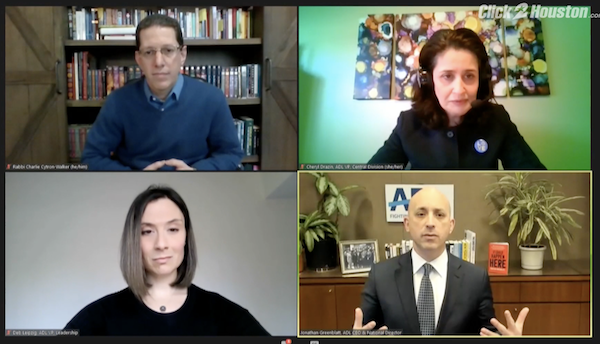
Clockwise from top left: Rabbi Charlie Cytron-Walker of Congregation Beth Israel in Texas speaks with the Anti-Defamation League’s Cheryl Drazin, Jonathan Greenblatt and Deb Leipzig. (screenshot)

Rabbi Charlie Cytron-Walker was bustling around Congregation Beth Israel, in the Dallas suburb of Colleyville, Tex., getting ready for Shabbat morning services. There was a knock on the synagogue’s door and the rabbi welcomed a stranger who was looking for shelter from the unusually cold morning. Cytron-Walker prepared the man a cup of tea and made conversation.

“There were no initial red flags,” the rabbi recalled Jan. 20, in an Anti-Defamation League web event that included the director of the Federal Bureau of Investigation. The man exhibited no signs that he would be a danger, said Cytron-Walker.

“The sense of nervousness, the darting around, those kinds of things that you might expect,” were absent, said the rabbi. “He was calm, he was appreciative, he was able to talk with me all the way throughout, look me in the eye.… I didn’t have a lot of suspicions.”

The unexpected guest was, of course, Malik Faisal Akram, an armed British man who would take the rabbi and three congregants hostage in an 11-hour standoff on Jan. 15. In the end, for all the responders mobilized and crisis negotiators assembled, the incident ended when the rabbi threw a chair at the attacker and the four hostages escaped.

Cytron-Walker explained how he put together the man’s motivations by listening to his rantings and the conversations he was having by phone. Akram was seeking the release of Aafia Siddiqui, a convicted terrorist known as Lady Al Qaeda, who is incarcerated in an American prison not far from Beth Israel synagogue. The hostage-taker apparently subscribed to antisemitic ideas, including the belief that the United States would do whatever was necessary to save the lives of Jewish hostages and that pressure by Jews could lead to his demands being met. At some point, Akram became aware of Rabbi Angela Buchdahl, senior rabbi at Central Synagogue in New York City, and demanded to speak with her during the incident.

“I don’t know how or why he chose her exactly, other than the fact that he thought that she was the most influential rabbi,” said Cytron-Walker. “And I was thinking, this guy really believes that Jews control the world.… I tried to explain to him to the best of my ability that it doesn’t work that way.”

The rabbi credited law enforcement for their response, and spoke at length about the security preparations that synagogues and other Jewish institutions take, with the support of groups like UJA Federations, the Anti-Defamation League, the Secure Community Network and the FBI.

“We had a security plan in place,” said Cytron-Walker. “All of it was helpful, and yet, one of the things that we are aware of is that no matter how good the plan is, no matter how good the security is, these kinds of things can still happen.”

Christopher Wray, director of the FBI, expressed solidarity with not just those immediately affected by the incident but the entire Jewish community.

“We understand all too well that these kinds of attacks are terrifying and that they are not only terrifying to the individuals directly and physically involved, they are also terrifying for all the members of Congregation Beth Israel and, really, for the entire Jewish community, many of whom understandably worry about other threats still out there,” Wray said. “Our joint terrorism task forces across the country will continue to investigate why this individual specifically targeted Congregation Beth Israel on their day of worship.”

Neither Wray, nor any other individual on the livestream, addressed remarks by the FBI’s special agent in charge of the case. As the hostage-taking in the synagogue was unfolding, Matthew DeSarno told media that the assailant was “singularly focused on one issue, and it was not specifically related to the Jewish community, but we are continuing to work to find motive.” His remarks have been condemned as erasing the antisemitic motivations of the terrorist.

While none of the hostages was physically harmed, Cytron-Walker spoke of the emotional recovery that he, the other hostages and the broader community are undergoing.

“It’s going to be one step at a time for us,” he said. “We are doing the best we can to heal. We’re going to have services on Shabbat evening, we’re going to have services on Shabbat morning, we’re going to have religious school on Sunday and we already had a beautiful healing service on Monday night that was so meaningful – to actually see people, to be able to hug people.… But it’s one step at a time.… I’m getting the care that I need. I’m trying to make sure that I take care of my family and, at the same time, one of those pieces that we’re going to have to get past is that sense of fear.

“There was something traumatic that happened within the congregation,” he continued, “and we know that it’s not just our congregation that feels a sense of fear. It’s something that a lot of people and a lot of Jewish people in particular, our people, are living with.… We want to be able to go to services and pray and be together because one of the most important things is to be with one another within that sense of community. That’s needed right now more than anything else.”

Jonathan Greenblatt, chief executive officer of the Anti-Defamation League, moderated the online event.

A blind view of terror

Another violent attack on a North American synagogue, this one in Texas, has undermined the feelings of security among Jewish people everywhere.

It is important to see the incident in perspective. Thankfully, the rabbi and three other hostages survived the 11-hour ordeal and the only physical casualty was the perpetrator himself. Second, although such incidents happen too frequently, it must be remembered that, in the context of the many Jewish institutions in North America, this remains a highly unusual phenomenon. Third, the community – Jewish and non-Jewish – locally and internationally condemned the attack and celebrated the escape of the hostages. This differs from situations we have seen in other times and places in which those in power – police, political leaders, the general public – were either complicit or indifferent. A service of healing two days after the incident brought a thousand people of many religious and demographic backgrounds together in response. Police, interfaith leaders and elected officials were united in their expressions of condolence and solidarity.

As Rabbi Charlie Cytron-Walker noted in a presentation with the Anti-Defamation League (click here for story), Jewish community organizations benefit from the (sadly necessary but well-developed) security protocols created and implemented in partnership with Jewish organizations and law enforcement officials. These precautions are familiar to anyone who has set foot in a Jewish institution in recent decades. The visible presence of security can be a reassurance but also is a reminder of the potential for such an attack for people entering a synagogue for services or a Jewish community centre for a workout or sending their children to a Jewish day school. However, another byproduct of this increase in security and comfort for some Jews is the discomfort and lack of safety these protocols elicit in racialized Jews and others who experience more harm from policing. The answer to the problem of a lack of security cannot only be addressed by ever-increasing security, be it walls, cameras, guards, or bollards.

It is perhaps one of the most enduring cognitive disconnects that, while almost any Jew has, at least in the back of their mind, the potential for attack, whenever such an incident does take place, a seemingly opposite reaction occurs among some non-Jewish observers.

In the Texas case, it was exemplified by Matthew DeSarno, the FBI agent in charge of the case, who, in the midst of the crisis, told media that the perpetrator “was singularly focused on one issue, and it was not specifically related to the Jewish community, but we are continuing to work to find motive.”

Even without knowing the details of the individual perpetrator or his motivations, the idea that an official would insist that an attack on a synagogue is unrelated to the Jewish community is jaw-dropping. Unfortunately, it is a common response.

The most celebrated example was after terrorists in Paris targeted a kosher supermarket in 2015, when then-U.S. president Barack Obama condemned those who “randomly shoot a bunch of folks in a deli in Paris.” If the Islamist terrorists who perpetrated the attacks on multiple Jewish targets that day didn’t know that Hypercacher was a kosher supermarket with a primarily Jewish clientele, it was an incredibly lucky coincidence for them.

This refusal to see explicit attacks on Jews as explicit attacks on Jews may be a psychological phenomenon beyond our realm to unravel. Yet there seems to be some socio-psychological need to search for any alternative explanation than plain old antisemitism when a synagogue or other Jewish institution is attacked.

To be kind, perhaps it is wishful thinking. Decent people might search for a rationale that alleviates the fear that the oldest prejudice is as alive today as ever. More realistically, there is a web of conscious and, probably more commonly, unconscious biases that blind people to the blatantly obvious.

As we learned more about the perpetrator, we discovered that he subscribed to a form of conspiracy thinking that sees Jews as having unparalleled power – in this case, the ability to induce the American government to release an imprisoned terrorist. Nevertheless, because the perpetrator was using Jews as an avenue meet his objectives, rather than being motivated solely by a desire to attack Jewish people, the FBI agent eliminated antisemitism as a motive – a truly confounding perspective from a law enforcement official standing outside a synagogue where Jews were being held hostage.

This reaction happens too frequently to be dismissed as a coincidence. There is something baked into the Western imagination that makes denial and deflection the default response to an attack on Jewish people.

One explanation may be that the very ideas that the Texas assailant held – that Jews are inordinately powerful – although rarely expressed so crudely, is actually held by a large swath of the general public, perhaps leading people to conclude that, no matter what befalls an individual Jew or two, “the Jews,” as a people, still hold all the cards or will be just fine.

Other obfuscations dismiss clear and unequivocal attacks on Jews as mere “political statements” on Middle East affairs. Interestingly, those who sometimes explicitly blame Israel or Israeli policies for overseas antisemitic incidents are playing into another familiar and ancient trope about Jews: whatever befalls them, they have brought upon themselves.

It is never bad advice for Jews to be vigilant about our individual and collective security and each violent attack is a timely reminder. But what we need to see are more non-Jews, especially those in positions of authority, addressing the blindness they have as individuals and institutions to what is, to Jewish eyes, absolutely obvious.

Sadly, not a new experience

Some of us are likely struggling to recover from the hostage-taking event at Congregation Beth Israel in Texas, along with pandemic stress. Perhaps most stressful is that we know a synagogue invasion could happen anywhere, during any service. Most of us figure out where the exits are when we go to synagogue, a Jewish community centre or other Jewish institution. We know the history. We need to be on guard when we gather.

On Jan. 15, we streamed our local congregation’s services to our Winnipeg living room and watched a kid my children knew from elementary school lead services. He was becoming a bar mitzvah. Jewish life continues despite the pandemic.

Antisemitism and traumatic events continue, too. When I realized what was happening in Texas, thanks to Jewish social media, it was hard to look away, even though it was Shabbat. Initially, non-Jewish news reports said there was an “apparent hostage-taking event.” This language was used despite the event being livestreamed. Why wasn’t it “real” from the beginning? Even after the hostages were freed, alive, thank G-d, the FBI didn’t immediately use the word antisemitism or hate.

There was no immediate answer from the FBI on why this person chose a synagogue during Shabbat services. There was a rush in some quarters to discuss why Islamophobia is wrong. Even as the hostage-taker identified his cause as aligned with that of Dr. Aafia Siddiqui, a convicted felon who was outspoken in her antisemitism at her trial, others (including the synagogue president and the FBI) suggested this was a random event. Some articles said the hostages were “detained” – somehow implying they were at fault by being at synagogue on a Saturday morning.

When Jewish leaders, as well as President Joe Biden, Vice-President Kamala Harris and Prime Minister Justin Trudeau spoke about this as an antisemitic act of terrorism, it wasn’t a narrative immediately embraced elsewhere. I found this unsettling. The feeling – of pointing out an issue but not being believed or heard – felt all too familiar. Language and how we tell our stories can twist our understanding of events, and this experience already seemed to be depicted in a way that didn’t ring true.

Certainly, the hostages will be debriefed, the hostage-taker’s family and history will be examined. We’ll learn more about what his motivations might have been. However, my instincts follow that of many Jewish people, as Rabbi Rick Jacobs, Union for Reform Judaism president, told MSNBC, “There’s no doubt that the underlying whole premise … was antisemitism,” he said, “The hostage-taker didn’t go to McDonald’s, didn’t go to some random place, and that is part of the story of antisemitism, to single Jews out.”

Remembering similar recent experiences hasn’t helped. Since the May 2021 war in Israel and Gaza, I’ve spent time reminding myself that I’m not crazy, and that I studied a lot of Middle East history as part of my long-ago undergraduate degree and graduate work. I knew that some of the narratives being touted online about the Israel/Palestine conflict were incorrect and badly mangled interpretations of the relevant history. I was particularly upset by the idea circulating on social media that Israelis were simply “white colonizers” subduing a brown people. This narrative didn’t reflect our thousands of years of history in Israel, nor did it account for the detail that, in fact, more than 50% of Israeli citizens are people of colour.

I recently studied a text in the Babylonian Talmud, Megillah 29A, which brought these issues to mind. It explored where Jews could find the Divine Presence in Babylonia. Rabbis were discussing how to find a holy place in the Diaspora after the destruction of the Temple. Rabbi Abaye says the Divine Presence visits the ancient synagogue in Huzal and the synagogue that was destroyed and rebuilt in Neharde’a. From there, two different stories are told about when the Shechinah, the Divine Presence, made itself known in Neharde’a.

Abaye died in 337 CE. So, we know that nearly 1,700 years ago, synagogues existed where Jewish people went to pray and study, and some of them were ruins that were rebuilt. Our need for holy places of gathering in the Diaspora is not new. Further, according to the stories on this page of Talmud, these places didn’t always feel safe. Sometimes, even the Divine Presence herself, the Shechinah, dropped by and that was frightening – never mind modern-day hostage-takers with guns.

A bit farther down on the page, Rabbi Eleazar haKappar, a late tannaitic rabbi (who lived roughly around 220 CE) suggests that, one day, in the future, all the synagogues and study halls in Babylonia will be transported and reestablished in Israel. Even then, there was a longing for return to Israel. Archeology shows us that Rabbi Eleazar haKappar was a real person, a colleague of Judah HaNasi, who likely spent most of his life in Katzrin. There is a door lintel originally from his beit midrash, his house of study, in the Golan Museum. Found in a mosque in the Golan Heights, its inscription says, “This is the Beit Midrash of Rabbi Eleazar haKappar.”

I felt reassured by reading about the Babylonian synagogues and the longing for Israel that was felt so long ago. Our religious connection to Israel is old. It’s in every synagogue service, every Passover seder, and deep within the Talmud. Our stories are tied to Israel. Despite others’ “versions” of history, the Jewish connection to Israel cannot be made into just a 19th-century European political movement.

Also, like the rabbis, I believe that those who are inclined to do so can feel the Shechinah within ourselves and in our synagogues. Jews and allies prayed world over for the safety of the hostages at Congregation Beth Israel. It would also take the hostages’ training and bravery and the intervention of police and FBI. Many people, including Rabbi Angela Buchdahl in New York, called 911 in the effort to try to help things turn out OK.

The trauma of this experience will linger with the Jewish community of Colleyville, Tex., for a long time. A man with mental health issues was offered shelter in a synagogue and given a cup of tea by Rabbi Charlie Cytron-Walker. That man became an armed hostage-taker. He took Jews as hostages. That rabbi and his congregants bravely handled the situation. The rabbi threw a chair at the right moment – and then, this man died there.

We’ll surely learn more detail over time. Meanwhile, we continue to be on our guard. Our congregations are holy because we come to be inside them. Sometimes, the Shechinah is there, too. This is the powerful story of the synagogues in Huzal and Neharde’a.

The text reminds us that we must keep track of our Jewish identity and narrative. Journalists who call Jews “apparent” hostages or say that Jews were “detained” in their own place of worship and an FBI spokesperson who doesn’t mention antisemitism? This isn’t our narrative. We can’t let it become the history that matters.

We’re People of the Book. We’re a people with a long, well-documented history. This ages-old written and oral history, and even archeological evidence, gives us confidence to believe in who we are and our story. Our words and the way we use them matters, so we must choose carefully. No story is perfect, we are only human. Even so, we should be the ones to tell it and guard it for future generations.

Joanne Seiff has written regularly for CBC Manitoba and various Jewish publications. She is the author of three books, including From the Outside In: Jewish Post Columns 2015-2016, a collection of essays available for digital download or as a paperback from Amazon. Check her out on Instagram @yrnspinner or at joanneseiff.blogspot.com.

Horn co-launches book fest

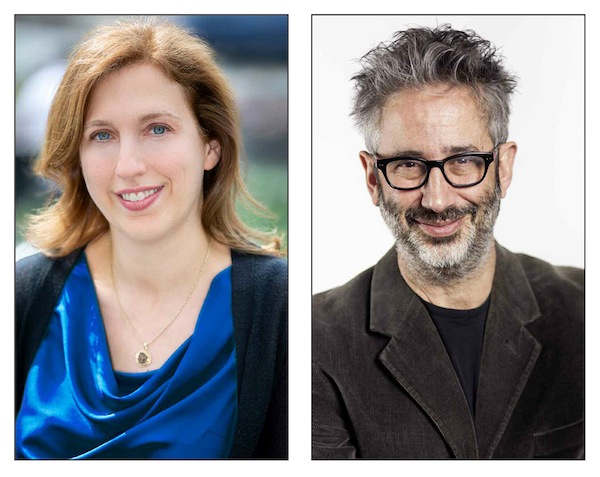
Dara Horn and David Baddiel open the Cherie Smith JCC Jewish Book Festival on Feb. 6. (photos from JBF)

Early in her new book, People Love Dead Jews: Reports from a Haunted Present, Dara Horn reflects on a controversy at the Anne Frank House museum in Amsterdam, where an employee who wore a kippa to work was told by his employers to hide it under a baseball cap because it might interfere with the museum’s “independent position.”

“The museum finally relented after deliberating for four months, which seems like a rather long time for the Anne Frank House to ponder whether it was a good idea to force a Jew into hiding,” writes Horn.

The snappy summation is typical of the author’s approach: biting wit in the face of affronts of various dreadfulness. And the affronts pile up, supporting the incendiary thesis of the title.

Horn discusses the world’s interest in Anne Frank’s story, including the insistence on repeating the line from her diary, “I still believe, in spite of everything, that people are truly good at heart.” Leaving aside the fact that Frank wrote these words before she experienced how truly evil at heart some people can be, Horn writes, the line provides a “gift of grace and absolution from a murdered Jew (exactly the gift that lies at the heart of Christianity).”

Horn, who is part of the Feb. 6 launch event for the 2022 Cherie Smith JCC Jewish Book Festival, is a novelist with a PhD in Yiddish and Hebrew comparative literatures. Her take on contemporary antisemitism is suffused with her understanding of how Western audiences expect “coherence” and often an uplifting ending to the stories in our literature or other entertainment.

“Holocaust novels that have sold millions of copies both in the United States and overseas in recent years are all ‘uplifting,’ even when they include the odd dead kid,” she writes. “The Tattooist of Auschwitz, a recent international mega-bestseller touted for its ‘true story,’ manages to present an Auschwitz that involves a heartwarming romance. Sarah’s Key, The Book Thief, The Boy in [the] Striped Pyjamas, and many other bestsellers, some of which have even become required reading in schools, all involved non-Jewish rescuers who risk or sacrifice their own lives to save hapless Jews, thus inspiring us all.”

These uplifting stories, she points out, make up a large chunk of Holocaust-related literature, yet illustrate phenomena that were almost nonexistent during the Holocaust: non-Jews risking their lives to save Jews.

“Statistically speaking, this was not the experience of almost any Jews who endured the Holocaust,” she writes. “But for literature in non-Jewish languages, that grim reality is both inconvenient and irrelevant.”

She summarizes: “Dead Jews are supposed to teach us about the beauty of the world and the wonders of redemption – otherwise, what was the point of killing them in the first place?”

On the subject of non-Jewish rescuers, Horn goes into an extensive exploration of the life of Varian Fry, an American man who worked for the Emergency Rescue Committee, a group of American intellectuals that, beginning in 1940, distributed emergency American visas to endangered European artists and thinkers. What they envisioned rescuing was not so much the individuals themselves, but the very concept of European civilization, which they correctly believed to be in mortal danger from the Nazis. But, rescuing a culture’s greatest artists, writers and thinkers and sequestering them to safety in America, Horn posits, is itself “a sort of eugenics.”

For someone with an explicit distaste for disproportionate attention to rescue stories, Horn devotes a significant chunk in the middle of the book to what amounts to a biography of Fry. As the reader starts wondering how this fits into the larger thesis, Horn points out how the veneration of the more universal European culture for which Fry and his colleagues risked their lives was not extended to the particular Jewish culture that was the expressed target of the Nazis.

“Fry tried to save the culture of Europe, and for that he should be remembered and praised,” Horn writes. “But no one tried to save the culture of Hasidism, for example, with its devotion to ordinary, everyday holiness – or Misnagdim, the opposing religious movement within traditional Eastern European Judaism, whose energy in the years before the war was channeled into the rigourous study of musar, or ethics. Entire academies devoted to the Musar Movement were destroyed, their books burned out of the world, their teachers and leaders and scholars murdered – all the things that everyone feared would happen to the vaunted culture of Europe. No rescue committee was convened on behalf of the many people who devoted their lives and careers to … the actual study of righteousness. For them, there were no Varian Frys.”

Horn notes that, in the 1990s, there was a burgeoning of Holocaust museums and exhibitions all over the United States, including the opening of the United States Holocaust Memorial Museum in Washington, D.C.

“The idea was that people would come to these museums and learn what the world had done to the Jews, where hatred can lead. They would then stop hating Jews.

“It wasn’t a ridiculous idea, but it seems to have been proven wrong. A generation later, antisemitism is once again the next big thing, and it is hard to go to these museums today without feeling that something profound has shifted.”

She suggests that the lesson some people take from these exhibitions is the opposite of what was intended. The idea of the museums is that everyone should learn the depths to which humanity could skin sink, she writes.

“But this has come to mean that anything short of the Holocaust is, well, not the Holocaust. The bar is rather high.”

Therefore, when people are shot in a synagogue in Pittsburgh or San Diego, this is “not the Holocaust” and, presumably, nothing to get too concerned about in the greater scheme of Jewish victimization. Harassing Jewish college students is not the Holocaust. Lobbing missiles at sleeping children in Israeli cities is not the Holocaust. Even hounding ancient Jewish communities out of entire countries and seizing their assets is not the Holocaust. Horn does not mention Martin Niemöller, but she seems to be suggesting that, if “they” are coming for “the Jews,” most people will not speak up until it reaches something akin to the Holocaust, which we may have unwittingly recast not as the endpoint of hatred and antisemitism but as the stick by which the world measures threats to Jewish people.

An antisemitic attack in Jersey City, N.J., provides Horn with insights into how mainstream audiences try to make sense of antisemitic violence.

New Jersey’s flagship newspaper, the Star-Ledger, noted that “the attack that killed two Orthodox Jews, an Ecuadorian immigrant and a Jersey City police detective has highlighted racial tension that had been simmering ever since ultra-Orthodox Jews began moving to a lower-income community.”

Horn points out a few of the factual and logical inconsistencies in the media’s coverage, including that the assailants had never lived in Jersey City, so they weren’t reacting to any state of tension there. Moreover, the community that was attacked was accused of “gentrifying” a “minority” neighbourhood.

“This was remarkable, given that the tiny Hasidic community in question, highly visible members of the world’s most consistently persecuted minority, in fact came to Jersey City, fleeing gentrification, after being priced out of long-established Hasidic communities in Brooklyn,” she writes.

The book concludes rather unexpectedly, not with recipes for solving the contemporary crisis or explicit calls to action, but rather with reflections of her experience with Daf Yomi, the page-a-day, seven-and-a-half-year journey through the Babylonian Talmud. She provides a lovely and succinct explanation of Rabbinic Judaism.

“Until the year 70 CE, Judaism had been centred at the ancient temple in Jerusalem, where worship was mediated through priests offering sacrifices,” writes Horn. “After the Romans destroyed this temple and exiled the people, there was no particular reason for this religion, or even simply this people, to survive in any form. But on the eve of this temple’s destruction, one sage, Rabbi Yochanan ben Zakkai, had himself smuggled out of the besieged city of Jerusalem in a coffin, after which he convinced the Roman general Vespasian to allow him to open an academy for Torah scholars in a small town far from Jerusalem. Both Rabbi Yochanan ben Zakkai and Judaism faked their own deaths in order to survive this cataclysm. The small cadre of scholars in that small town reinvented this religion by turning it into a virtual-reality system, replacing temple rituals with equally ritualized blessings and prayers, study of Torah, and elaborately regulated interpersonal ethics. The sages frantically arguing about when and how to recite which prayers are survivors and descendants of survivors, remnants of a destroyed world. They are anxious about remembering every last detail of that lost connection to God, like mourners obsessing over the tiniest memories of a beloved they have lost. One might expect that this memory would eventually fade, that people would ‘move on.’ Instead the opposite happens. Once the process of memory becomes important, the details do not fade but rather accrue – because the memory itself becomes a living thing, enriched by every subsequent generation that brings new meaning to it.”

Without batting readers over the head, Horn seems to be advocating what Jews have always done – finding meaning, comfort and guidance by interrogating ideas and arguing across centuries with the greatest minds of the tradition. She may be, as she says, “part of a ridiculously small minority that nonetheless played a behemoth role in other people’s imaginations,” but her Daf Yomi practice reminds her that she is far from alone.

“I turn the page and return, carried by fellow readers living and dead, all turning the pages with me,” she concludes.

Horn will be joined at the virtual festival opening Feb. 6, 1 p.m., by David Baddiel, whose book Jews Don’t Count shares themes and emotions with Horn’s. Baddiel’s book, like others in this (sadly) flourishing genre, was reviewed in these pages recently (jewishindependent.ca/ tackling-the-hatred-head-on). They will be in conversation with Marsha Lederman, Western arts correspondent for the Globe and Mail.

For the full book festival schedule, visit jccgv.com/jewish-book-festival.