Skip to content
  • Home
  • Subscribe / donate
  • Events calendar
  • News
    • Local
    • National
    • Israel
    • World
    • עניין בחדשות
      A roundup of news in Canada and further afield, in Hebrew.
  • Opinion
    • From the JI
    • Op-Ed
  • Arts & Culture
    • Performing Arts
    • Music
    • Books
    • Visual Arts
    • TV & Film
  • Life
    • Celebrating the Holidays
    • Travel
    • The Daily Snooze
      Cartoons by Jacob Samuel
    • Mystery Photo
      Help the JI and JMABC fill in the gaps in our archives.
  • Community Links
    • Organizations, Etc.
    • Other News Sources & Blogs
    • Business Directory
  • FAQ
  • JI Chai Celebration
  • JI@88! video

Recent Posts

  • Sharing her testimony
  • Fall fight takes leap forward
  • The balancing of rights
  • Multiple Tony n’ Tina roles
  • Stories of trauma, resilience
  • Celebrate our culture
  • A responsibility to help
  • What wellness means at JCC
  • Together in mourning
  • Downhill after Trump?
  • Birth control even easier now
  • Eco-Sisters mentorship
  • Unexpected discoveries
  • Study’s results hopeful
  • Bad behaviour affects us all
  • Thankful for the police
  • UBC needs a wake-up call
  • Recalling a shining star
  • Sleep well …
  • BGU fosters startup culture
  • Photography and glass
  • Is it the end of an era?
  • Taking life a step at a time
  • Nakba exhibit biased
  • Film festival starts next week
  • Musical with heart and soul
  • Rabbi marks 13 years
  • Keeper of VTT’s history
  • Gala fêtes Infeld’s 20th
  • Building JWest together
  • Challah Mom comes to Vancouver
  • What to do about media bias
  • Education offers hope
  • Remembrance – a moral act
  • What makes us human
  • המלחמות של נתניהו וטראמפ

Archives

Follow @JewishIndie
image - The CJN - Visit Us Banner - 300x600 - 101625

Reflections on being a rabbi

Reflections on being a rabbi

Rabbi Hannah Dresner recently retired as Or Shalom’s spiritual leader. (photo from Or Shalom)

On Nov. 30, the Or Shalom community comes together to celebrate Rabbi Hannah Dresner’s nine years of service to the shul. Dresner retired as Or Shalom’s spiritual leader on Oct. 31. 

Daniel Siegel, one of Or Shalom’s founding rabbis and one of Dresner’s ordaining rabbis, calls her “a gift to the Jewish Renewal movement, Or Shalom and the greater Jewish community.”

The Jewish Independent interviewed Dresner earlier this month.

JI: What were your childhood influences that eventually led you to becoming a spiritual leader?

HD: I grew up in a spiritually oriented home, with my father a close friend and student of Abraham Joshua Heschel and, in his own right, a scholar of Hasidism. I was always attracted to the perspectives of the Hasidic masters, as they were presented to me – centring on holiness to be found in all people, places and things….

My maternal grandfather, a product of German Modern Orthodoxy, although not at all of the Hasidic or Neo-Hasidic milieu, helped to concretize this idea of a sacred physical world by teaching me and my sisters blessings to be recited in all situations – most memorable, the blessings he taught us in his garden as we watched morning glories unfold or picked first raspberries or encountered snails under the soil.

But I did not take this sensibility in a religious direction, rather I became an artist, mining what you might say is a secular devotion to the nexus between matter and spirit. 

JI: Was there a turning point where you knew that you wanted to become a rabbi?

HD: When I had children of my own, I began to recognize the importance of Jewish community and worked to found a lay-led chavurah in which to raise them, creating a spiritual laboratory that allowed for experimentation with modes of prayer and expressions of Jewish ritual. I did not think of this as leading to a professional shift, but, looking back, I was developing the very tools that have allowed me to succeed as a community rabbi. It was over 20 years later that I began to move toward the rabbinate.

There was no turning point, rather, a gravitation toward more and more serious study of the Hasidic masters and toward strengthening and broadening my capacity in areas of meditation, prayer, song practice, and writing on matters of Torah. Next thing I knew, I had morphed my ad hoc studies into matriculation in a rabbinical program that would lead to ordination.

JI: What are some of your happiest memories at Or Shalom?

HD: I will carry with me so many happy memories of Or Shalom, from my delight in teaching students first encountering Judaism, to the inception of our Zusia Bet Midrash, 90 community members studying Talmud led by the head of Svara: The Queer Yeshiva, to decorating our sukkah with plastic recyclables alongside our little ones, experiencing the community’s joy in mastering and singing the wordless melodies of the Hasidim, our Shabbat Soul evenings, to the ovation that followed my sermon for Rosh Hashanah of 5784 – in which I challenged the community to broaden our definition of who is a Jew to accept anyone born to one Jewish parent, regardless of gender. 

What made these memories particularly happy was the collaborations of which they were born, collaborations with so very many Or Shalom members. It has absolutely taken a village.

JI: What were some of your greatest achievements?

HD: Although it was certainly not what I anticipated dedicating myself to, one of our great achievements during my tenure was our handling of the challenges of creating virtual community during COVID. Perhaps it is because of my background in theatre direction and production that this challenge, though certainly daunting and exhausting, was an adversity I was suited to mastering – in collaboration with very talented lay leaders and a score of dedicated volunteers. 

Together, we produced state-of-the-art Zoom services and hybrid High Holiday experiences, in addition to beautifully conceived adult education programming. Some of our most intimate classroom experiences have been virtual and we upped the ante on arts-based programs – from writing workshops and singing circles to studio arts experiences, laptop lids tilted down so that we could see one another’s hands at work.

Arts programming, in general, solidified as a part of the Or Shalom ethos, with art historically-based classes and visual art as response to textual learning, to our Koreh program of readings by Or Shalom writers, to season upon season of our Lights in Winter concert series. The journal e-Jewish Philanthropy has written about our arts focus and Or Shalom.

The revamping of our Gemilut Chesed committee and delivery of care for Or Shalom members needing assistance has been a highlight, including our Nechama program, which offers a listener to a mourner for the 11 months of grieving.

Of course, an achievement is our ratification of all-gender Jewish descent, a step beyond patrilineal descent.

And, as an outgrowth of this achievement, is the inception of our new chevra kadisha, to offer Jewish burial rites to anyone our communal chevra cannot serve. Details of the Or Shalom chevra kadisha will unfold even as I retire.

Perhaps overarching and underlaying all of this has been the success of our Or Shalom Dialogue Project, which, over time, revealed important needs in the community, particularly longings for inclusion, and which has allowed us to converse about difficult subjects, including the variety of our thoughts and feelings regarding Israel and Palestine.

JI: What were some of the challenges? 

HD: COVID was a challenge. The war in the Middle East continues to be a deep and terrible challenge. To some degree, fear of change has been a challenge, although I well understand that resistance to change is an expression of loss – sometimes loss of something precious.

Finances have been a challenge. And space has been a challenge. Now, with our renovation project, Or Shalom will expand to provide offices for all our employees and our first classrooms. It is hard to believe our child, youth and adults programs have been so vital and vibrant without a single dedicated classroom in our building.

JI: What do you see as your lasting influence over the Or Shalom community?

HD: I hope it can be said that I have both deepened and broadened Or Shalom, cultivating brave space for profound experiences and repeatedly looking to our margins to see who else must be embraced, companioned and brought to the centre of community.

JI: What, in life, brings you the most joy?

HD: Song and silence among spiritual friends, making art, knowing people for a long, long time, growing flowers, cooking from the garden, walking in the city and in the forest and in the meadows and on the shore.

JI: Do you have some advice for the Jewish people about getting along in this difficult time? 

HD: My advice for the trying time we live in is to cultivate lack of certainty, to be both curious and courteous, never to let go of joy, folding our sorrows into our joys, and to believe in our powers of restoration and renewal.

JI: Is there anything else you would like to add? 

HD: Have the holy audacity to pull your chair up to the table! If you don’t, decisions that affect you will be made by others.

You can read some of Rabbi Hannah Dresner’s writings at myjewishlearning.com. 

Cassandra Freeman is a journalist and improviser who lives in East Vancouver.
Format ImagePosted on November 29, 2024November 28, 2024Author Cassandra FreemanCategories LocalTags Hannah Dresner, Jewish life, Judaism, Or Shalom, reflections
Vibrant start to new year

Vibrant start to new year

Visiting Rabbi Cantor Russell Jayne (of Beth Tzedec Congregation, Calgary) was in Kelowna for a September Shabbaton. (photo from the OJC)

The Okanagan Jewish Community may be small, but it’s got a strong, involved congregation that makes an impact on the region.

On Sept. 14, the OJC hosted the first Okanagan multifaith community event, organized by the Kelowna General Hospital Spiritual Care Committee. Numerous faith-based organizations throughout the valley are part of this supportive, open-minded learning collective. The goal of the new group is to discover what unites us and what distinguishes us as citizens, and to promote peace and understanding across religious and cultural lines.

* * *

The OJC enjoyed another Shabbat with Rabbi Cantor Russell Jayne from Calgary, Sept. 20-21. This was the start of the community’s visiting rabbi series for the new year and Jayne shared his historical knowledge, philosophical insights and voice from the bimah, and delighted community members with beautiful melodies at the Kaffehaus event on the Saturday evening. 

* * * 

On Oct. 6, Harley Kushmier and Maureen Mansoor organized an Oct. 7 commemorative film and discussion evening, which was solemn, moving and enlightening.

* * * 

photo - The Okanagan Jewish Community’s break fast meal Oct. 12
The Okanagan Jewish Community’s break fast meal Oct. 12. (photo from the OJC)

The OJC’s High Holidays were very much community-driven again this year.

Evan Orloff led the services and the community is grateful that he has the heart and knowledge to serve as a lay leader. 

OJC president Laura McPheeters lent her musical talents to the services and Adam Tizel sounded the shofar. The Torah was read by Josh Golden and Steven Finkleman. The community break fast meal was organized by Josh Golden and Abbey Westbury.  

* * *  

The OJC Sisterhood hosted a luncheon on Oct. 23 with guest speaker Taylor Backman of the RCMP. His presentation about security during this period of heightened antisemitism was timely. Backman has offered to come speak to the community again in the spring.

The next Sisterhood luncheon is scheduled for Dec. 12, and there will be a reprise of last year’s popular Hanukkah gift exchange.

* * * 

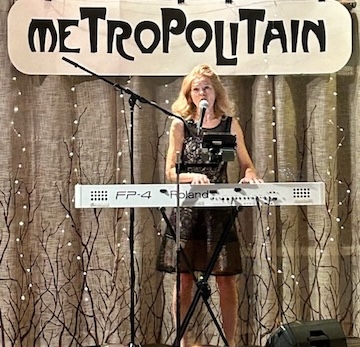
photo - Kelowna musician Patricia Dalgleish joined the OJC earlier this month for the Parisian-themed Café au J
Kelowna musician Patricia Dalgleish joined the OJC earlier this month for the Parisian-themed Café au J. (photo from the OJC)

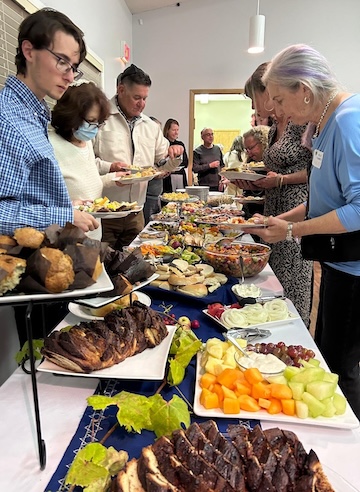
The first weekend in November brought Rabbi Jeremy Parnes from Regina. As ever, he graced the bimah with thoughtfulness, charm, and a strong focus on community and healing. That Saturday evening, OJC members took a virtual field trip to the Seine with the Parisian-themed Café au J! Amid the croissants and crêpes, Kelowna songstress Patricia Dalgleish took to the stage with French ditties and crowd favourites that had everyone singing along.

* * *

Looking ahead, the OJC is excited to welcome Rabbi Matthew Leibl from Winnipeg for its December Shabbaton weekend. Social events will take place on those nights, as well. The community’s annual Hanukkah party, the Sisterhood’s Christmas Eve Chinese food dinner, themed Kaffehaus nights, and many other get-togethers are planned in the coming months. 

– Courtesy Okanagan Jewish Community

Format ImagePosted on November 29, 2024November 28, 2024Author Okanagan Jewish CommunityCategories LocalTags Hanukkah, Jewish life, Judaism, Kaffehaus, Okanagan, Rosh Hashanah
A Learning Stones memorial

A Learning Stones memorial

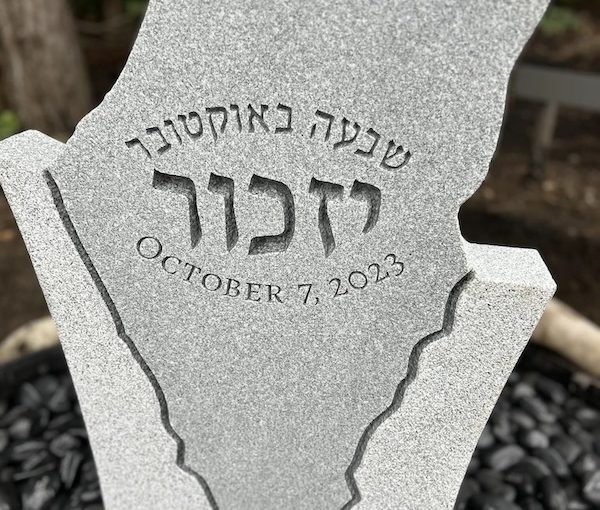
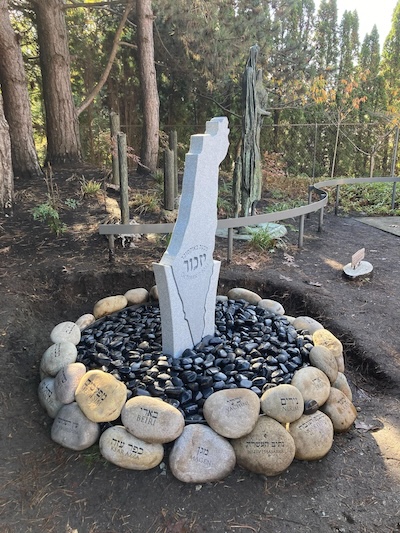
A newly created monument in the garden of Temple Sholom Synagogue commemorates the victims of Oct. 7, 2023, and the Israeli civilians, soldiers and foreign nationals who have lost their lives since that day. (photo from Temple Sholom)

There’s a newly created monument in the garden of Temple Sholom Synagogue – a serene and contemplative space. It’s not a cemetery, as you might expect, but a place to remember the horrific events of Oct. 7, 2023, and the tremendous loss of Israeli civilians, soldiers and foreign nationals who have lost their lives since that day. The project, envisioned by Temple Sholom Senior Rabbi Dan Moskovitz, draws on the Jewish tradition of placing stones when visiting the graves of the deceased and the “stumbling stones” of Berlin. The monument stands adjacent to the Temple’s Holocaust memorial. The proximity of the two is its own heartbreaking reminder of Jewish loss and tragedy

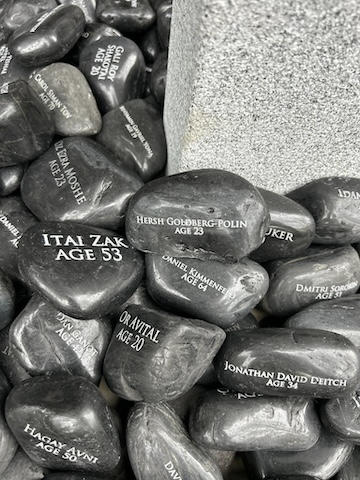
The new monument is surrounded by 33 large boulders, each inscribed with the name of a town or kibbutz attacked on Oct. 7; there is also one for the Nova Music Festival. Encircling the monument’s base lie some 1,658 small black stones, each one bearing the name and age of a victim.

The act of placing stones on a grave signifies that the person’s soul is remembered and honoured. It reflects the belief that the soul continues to exist in the afterlife and that the memory of the deceased remains alive in the hearts of the living. In this case, Rabbi Moskovitz’s intention was to make sure his community remembers those killed not as one massive number but as individual Jews. Every individual had a unique life story, just as each stone is unique. 

It was this topic that the rabbi talked about in his Kol Nidre sermon only days after the one-year anniversary of the Oct. 7 attacks. A reminder that we must keep the memory of every person who died on that horrible day alive. All members of the congregation were asked to take home a small black polished stone inscribed with the name and age of a victim of the Hamas attacks and the Israelis killed in the war since then.

photo - The Oct. 7 memorial draws on the Jewish tradition of placing stones when visiting the graves of the deceased and the “stumbling stones” of Berlin
The Oct. 7 memorial draws on the Jewish tradition of placing stones when visiting the graves of the deceased and the “stumbling stones” of Berlin. (photo from Temple Sholom)

Congregants were asked to research the name engraved on their stone(s); learn their story, their plans, and to even write a message on the stone if they so wished. They were then requested to bring their stone(s) back to the synagogue by Simchat Torah, when the monument would be dedicated. Moskovitz anticipated that the one-year anniversary that falls on the Jewish holiday, marred by the attacks, would be a time of sorrow, reflection and memory as the community gathered for what is otherwise a joyous holiday.

The sermon had a profound impact both in person and online. People wrote back from as far away as Thailand and the majority of synagogue members picked up a rock on their way home.

Inspiration for the monument came from when Moskovitz was a teenager. He recalls wearing a metal bracelet with the name of a Soviet refusenik, a Jew who was denied permission to emigrate to Israel. When the names of the hostages were gradually released, the rabbi said: “The idea struck me that we must hold on to the names of the hostages, share them and never let the world forget their torment and danger. I also wanted to do something to help raise money for the families and all of those in Israel forever changed and impacted by Oct 7. And so began the production and distribution of 10,000 bracelets engraved with the name of each hostage, their age and where they were taken from in a project called Till They All Come Home.”

As the anniversary approached, Moskovitz used the basis of the bracelet project to inspire the memorial stones. Temple Sholom Sisterhood provided the funding for the rabbi to purchase 1,000 pounds of stones and commission a five-foot-tall monument for the synagogue garden. Each stone was personally engraved by the rabbi and his family and the project took more than a month. Every victim was researched on the internet and often the entire family grieved as they reflected upon the age of the victim and the personal stories.

“Chana Kritzman’s was the first stone I picked up,” said Barb Halparin, a Temple Sholom congregant. “Its shape, a glistening black tear drop, attracted my attention. Chana’s age, 88, was etched below her name and I felt the immediate kinship of senior womanhood. Googling Chana’s name only intensified my sense of identification with her. I learned that, as a founding member of Kibbutz Be’eri, Chana had established the kibbutz library, where she ‘raised her children and grandchildren on a love of books, reading, and the art of storytelling.’

“I’ve been an avid reader all my life, and I earned my BA in English literature. I value my membership in the Isaac Waldman Library, and my favourite gift to my grandchildren is a book.”

Kritzman was shot by Hamas invaders while being evacuated from her home. She fought for her life in hospital for two weeks before succumbing to her wounds.

Halparin expressed how reading about Kritzman, her life, her love of words, her senseless, suffering death was a deeply emotional experience for her, as was placing her stone beside the memorial’s larger rock dedicated to Kibbutz Be’eri.

“It felt like I was in some small way bringing her home,” she said. “When Rabbi Moskovitz introduced the stumbling stone concept, I was deeply touched and eager to participate in such a meaningful project of remembrance.”

Another Temple Sholom member, Reisa Schneider, said: “One of the stones I took home was of Tair David, who was 23 years old when she and her sister Hodaya, age 26, were murdered by Hamas terrorists at the Nova music festival on Oct. 7, 2023. They were from the town of Beit Dagan. Their father, Uri, spent 30 minutes on the phone with them. He could hear blasts of gunfire nearby; he instructed them to lie on the ground, hold hands and breathe. Their connection was cut; he never heard from them again.”

On Instagram, their sister Liza wrote that Tair was “just like her name, a child of light, with a smile that could be seen for miles and a presence that is hard to hide.” 

“I found it interesting, maybe even coincidental, that the name of the person who I was expected to remember meant light,” said Schneider. “We gave our middle daughter the Hebrew name Orah, which also means light. Additionally, my maiden name is Smiley. I have tried to keep the name alive by smiling authentically and frequently. I have happily and intentionally passed that quality on to my daughters and grandchildren. I plan to honour Tair’s memory by bringing light into this broken world and by continuing to smile, despite these challenging times.”

photo - The Oct. 7 monument in the garden of Temple Sholom
The Oct. 7 monument in the garden of Temple Sholom. (photo from Temple Sholom)

Synagogue member Louise Krivel wrote: “After hearing Rabbi Moskovitz’s amazing sermon on Yom Kippur and learning about the over 1,600 rocks that his family had engraved in memory of the victims of Oct. 7 and beyond, I felt a tremendous sense of responsibility to honour the memory of the individuals whose rocks our family had been given.

“I researched each one and reached out to a couple of Israeli families via Facebook to advise them of our synagogue’s memorial and to let them know what Rabbi Moskovitz had been responsible for creating.” 

Yoni Znati, the father of Matan Znati, a 23-year-old Nova festival-goer, who died protecting his girlfriend, was one of those grieving family members Krivel contacted. He responded that he was very excited to hear about the memorial. He appreciated it very much, requested photos and hopes that, one day, he can meet Krivel so that he can tell her more about Matan.

“I can’t think of a more meaningful way that we as a congregation could honour the victims of Oct. 7,” Krivel shared. “I am so proud of Rabbi Moskovitz and his family and our congregation for creating this meaningful and beautiful memorial. Am Yisrael Chai.”

These are just three brief stories that Temple Sholom congregants researched from the horrific attack of Oct. 7 and those killed during the year since.

It’s after Simchat Torah. I am standing in the memorial garden. It’s now flooded with the rocks. Inside the synagogue, there’s a bat mitzvah. I can faintly hear the lively sounds of playfulness and laughter.

There will always be moments of celebration and sadness. As Kohelet (Ecclesiastes) reminds us, “To everything there is a season, and a time for every purpose under heaven.” 

Jenny Wright is a writer, music therapist, children’s musician and recording artist.

Format ImagePosted on November 29, 2024November 28, 2024Author Jenny WrightCategories LocalTags Barb Halparin, Dan Moskovitz, learning stones, Louise Krivel, memorials, monuments, Oct. 7, Reisa Schneider, stumbling stones, Temple Sholom
Jweekly a model of success

Jweekly a model of success

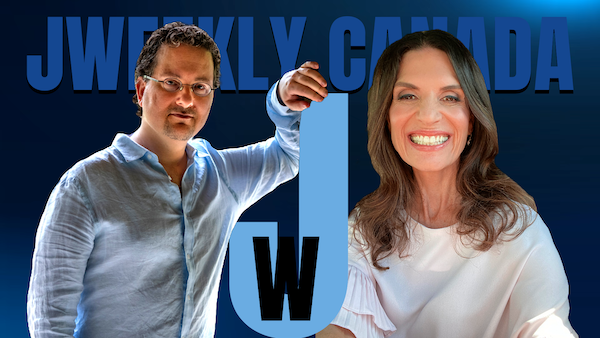
Ieden Wall and Susan Minuk’s contrasting styles balance JWeekly Canada perfectly. (photo from JWeekly Canada)

JWeekly Canada made its Season 5 debut in September, becoming the longest-running Jewish TV talk show in Canada.

Friends and colleagues warned Ieden Wall – the show’s creator, co-host, writer, director and executive producer – that he might be making a mistake by signing on with Omni TV, the multicultural TV channel owned and operated by Rogers Sports and Media. Wall, however, insisted that traditional cable TV, based in a North American major market, is a lemon with a surprising amount of juice to be squeezed out of it – if one plays their cards right. 

The data seem to support caution. Approximately 42% of adults now opt for streaming services, with 35% accessing streaming content through their TV sets and 7% using personal devices. Roku predicts that this trend will persist and that an estimated 75% of all Canadian households will cut the cord by 2026.

But JWeekly Canada, which Wall co-hosts with Canadian journalist Susan Minuk, has made lemonade.

Rogers Sports and Media runs Hudson & Rex on its CityTV platform in the same Saturday primetime slot as JWeekly Canada. It is hard to image that JWeekly Canada could compete digitally with the heavily marketed hit, which airs on Omni’s sister station. And, by all accounts, its budget of $9,000 per episode should not allow it to compete. Yet it does – JWeekly Canada reaches some 100,000 viewers a week and more than half a million viewers a month. The half-hour program airs three times per week on television, is posted on a handful of social media channels and streams on JWeekly’s website.

JWeekly Canada has found its audience.

Cable TV reaches 97.3% of the over-55 population but only 29% of the 18-34 demographic in Canada each week. Wall highlighted what he considers an overlooked statistic in a 2024 Statista survey: 79.6% of Canadians between the ages of 45-54 watch cable TV within their primetime leisure window. 

“There is a surprisingly large subsection of men and women in their mid-to-late 40s who search out desirable content on cable TV during their nightly leisure window,” Wall said. “This group was crucial in us building our core audience.”

While Wall shares the JWeekly Canada screen with Minuk, the two seldom appear together. Their contrasting styles balance the production perfectly. Minuk is the soft-spoken interviewer and Wall is the playful provocateur. Together they offer up a little something for everyone it seems. 

JWeekly Canada is a Jewish-themed talk show, but with broader appeal. It has avoided being ethnocentric, offering content that smiles with Jewish pride, while still welcoming a multitude of cultures. To emphasize this point, JWeekly Canada’s current audience is only 31% Jewish. 

When asked about the show’s diverse viewers, Wall said, “Listen, our guests are some of the most intriguing and accomplished people in our country. The fact that they are Jewish is ancillary to the merit of their talent and success.

“If you are talking to a genius scientist who just invented a revolutionary heart procedure, which augments human arteries with lizard skin, it doesn’t matter if he/she happens to be Chinese, Indian or Jewish. Right? Great TV is great TV.”

The show’s format is a hybrid of in-studio interviews, conducted by Wall and Minuk, and Wall’s field segments. His daring and quirky remote pieces have allowed JWeekly Canada to reach outside Omni TV’s boomer demographic and attract a younger audience. 

His recent incarnation is the creation of a Jewish AI system called Chat JPT. In this segment, Wall tries out a pre-market Jewish AI system designed by Dr. Shecky Kravitz. Wall develops an unlikely friendship with Hershel, one of the platform’s avatars, and quickly finds out that letting his all-knowing avatar tag along for daily activities is both a blessing and curse. Well, probably more of a curse. 

In JWeekly Canada’s second season, Wall did 12 segments from a residential elevator at a luxury highrise. He called the segment “The Elevator Show.” For it, he put an elevator on “service,” took it to a floor of his choice and did on-the-spot interviews. Residents from the building gathered outside the open cabin, on bridge chairs, to watch. It was pretty darn cool.

“I have always considered Ieden to be ingenious,” said talk show legend Dini Petty. “I really hope Ieden finds the financial resources and marketing support he deserves because his ideas are truly pioneering.”

Wall has plans to come to Vancouver in the spring for a three-part documentary series called Solid Gold, about the life and times of 19th-century businessman Louis Gold, who settled here from the US with his family and helped build the city. Wall’s vision is to document the rich Jewish history in all major cities across Canada.

And he is hoping to soon reach more BC Jews with JWeekly Canada. With increased viewership from West Coast Jewry online, Rogers Sports and Media is considering running the program on its Omni Pacific Channel next September. In the meantime, the program is streamed and podcast every week on jweekly.ca. 

Louis Mann is a retired psychotherapist living in Boston. He grew up in the Bathurst Manor district of Toronto and continues to take an avid interest in Jewish causes in Toronto and throughout Canada.

Format ImagePosted on November 29, 2024November 28, 2024Author Louis MannCategories TV & FilmTags entertainment, Ieden Wall, Jewish life, journalism, JWeekly Canada, Susan Minuk, television

Changing roles, duties

Pharmacist Ted Mah headlined the first session of this year’s Empowerment Series, which is presented by Jewish Seniors Alliance with the help of the Phyliss and Irving Snider Foundation.

The Oct. 29 talk on Zoom was called Make Friends With Your Pharmacist. Mah spoke about the roles and responsibilities of pharmacists, which now include supporting people’s health and well-being, in addition to filling prescriptions and other duties.

Mah graduated from the University of British Columbia in 1995 and began his career at a Safeway Pharmacy in Victoria. After five years, he was promoted to management and, for seven years, operated the Safeway Pharmacy at City Square in Vancouver. Currently, he is the manager of the Safeway location on Arbutus in Vancouver.

The Zoom started with a few words about Jewish Seniors Alliance by Gyda Chud, a former co-president of JSA and also chair of the program committee. Chud spoke about JSA’s theme of “Seniors Stronger Together” and its three guiding principles of “Outreach, Education and Advocacy” and how they can empower us.

Mah said he enjoyed his training at UBC. In his fourth year, when he did an internship at a hospital, he became very aware of the positive impact that pharmacy can have on patients when the rules and procedures are properly followed. 

According to Mah, Safeway Pharmacies have a central distribution venue, where the preparation of medications is handled by robots to reduce the possibility of human error in the counting of pills. In all the stores’ pharmacies, audits are done regularly to ensure proper care and count of medications, including narcotics. Expired medications are disposed of.

Most pharmacies can make blister packages of weekly medications available upon request. Plastic see-through pouches are also available, labelled with the name of the medication, dose and time of day that it should be taken. For people with visual impairments, there is a chip and a machine that will read out the contents of the bottle.

There have recently been many changes in what pharmacists are permitted to do to assist patients and save time for physicians. Pharmacists can now administer more vaccines than they were able to in the past; for example, they can now give polio shots. They can also prescribe medication for many minor ailments without a doctor’s prescription: these include antihistamines for seasonal allergies, nasal steroids, antibiotic eye drops, contraceptives, and medications that help with skin conditions including eczema, dermatitis, diaper rash and bacterial infections. As well, pharmacists can prescribe topical creams for such problems as toenails, dandruff, oral cancer and cold sores, yeast and urinary tract infections, shingles, and a host of other ailments.

The Empowerment session Q&A included a question about renewing ongoing prescriptions without consulting a doctor. Mah said this would depend on something called “adaptation,” which includes the renewal itself, as well as changing the dose, formulation or other aspects of a 

prescription. A pharmacist can generally do these things, however, a doctor can order that a prescription not be adapted. 

Another question concerned the new mRNA vaccine for COVID, which, at this point, should be given annually, like the flu vaccine. There were also several questions about supplements, such as vitamins or calcium.

Mah said pharmacists can do medication reviews by appointment. This could include a discussion of supplements, such as how they interact with various medications. Information about people’s prescriptions is entered into PharmaNet, the province-wide data network.

Mah said drugs that a person is no longer using should be returned to a pharmacy in a Ziploc bag for disposal. For syringes, one should pick up a special container from the pharmacy.

Another question concerned psychotropic drugs, and also the tolerance of various drugs for different age groups, especially seniors. Mah said this is a question for a physician but added that, when a new drug is prescribed, it is usually only enough for 30 days at most, in case there is a negative reaction.

Other questions concerned taking a flu shot and COVID shot together, which is fine to do, and how long one should wait after having a COVID shot to have a booster – apparently three months is now OK.

Pharmacists must engage in regular professional development to maintain their licences, said Mah, who added that there is a current shortage of pharmacists in British Columbia because their new roles and responsibilities have increased the demand for their services.

Tamara Frankel, a member of the program committee and a board member of JSA, thanked Mah for his participation and for all his helpful information. The event was co-sponsored by the Peretz Centre for Secular Jewish Culture. 

Shanie Levin is a Jewish Seniors Alliance Life Governor. She is also on the editorial committee of Senior Line magazine.

Posted on November 29, 2024November 28, 2024Author Shanie LevinCategories LocalTags Empowerment Series, health care, Jewish Seniors Aliance, JSA, pharmacy, Ted Mah

A teacher to be remembered

David Laugharne, who was a teacher at Maimonides Secondary School, King David High School’s predecessor, passed away in 1994. Thirty years later, his memory and his impact on the school continue to be honoured, including an award in his name given to a KDHS student each year. This year, the David Laugharne Science Award went to Hannah Karasenty Saltoun.

photo - A painting of former Maimonides/KDHS teacher David Laugharne in 1975
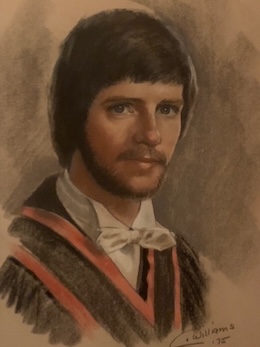
A painting of former Maimonides/KDHS teacher David Laugharne in 1975. (photo from Elizabeth Laugharne)

Laugharne is credited for boosting the science department at the high school. In the words of Rabbi Mordechai Feuerstein, a co-founder of Maimonides, who wrote to Laugharne in May 1994, “Your serious and sustained efforts really got the science department off the ground and recognized not only within the community, but throughout BC and, of course, in the Canada-Wide Science Fair, as well.

“It will be a long time, if ever, before another science teacher at Maimonides takes our school to the heights which you reached.”

Feuerstein added that Laugharne would be remembered at the school for, among other things, introducing it to the computer age, the artwork he contributed to many school events and his willingness to lend a helping hand whenever needed.

The rabbi also praised Laugharne for being a teacher that cared for students from both a professional standpoint and as a friend prepared to take a personal interest.

“You have always been a sensitive, caring person, David. I have always known the Almighty blessed you with ability – the ability to encourage and inspire, and the talent and sensitivity needed to work with young people,” wrote Feuerstein.

At the conclusion of his letter, Feuerstein shared that the board of governors at the school had decided to present a David Laugharne Science Award each year.

“This award will be given to the student who most exemplifies all the qualities you so caringly tried to instill in students, who you gave of yourself at Maimonides.

“It is a small token of the deep gratitude felt by all of us at Maimonides from the board level, through the administration, down to the students for whom you opened a world of learning. You have touched the lives of us all.”

Naomi Frankenburg, who was the president of Maimonides Secondary School in 1994, remembered Laugharne as an easy person to know and like and the first person on the staff with whom she developed a true friendship.

In a letter to Laugharne’s mother, Elizabeth, Frankenburg cited the work David had done as an important reason for her taking on the position to lead the school.

“My first visit to the school, before I had any formal connection to it, was a visit to the science fair and, like everybody else, I was most impressed. So much so that when I was urged to accept the presidency, the high standard of general studies and, especially, science, was a major factor in encouraging me to accept.”

Keith Thibodeau, a school administrator who worked with Laugharne at Collingwood School in West Vancouver at the time of its inception in 1984, remembered his colleague as someone who gave very generously of his time and talents to make the school ready for its opening day.

“He showed insight, organizational skills and leadership. He worked well with others and his sense of humour frequently eased times of tension and stress,” Thibodeau wrote.

Of Laugharne’s time at Maimonides, Thibodeau said, “His ability to teach competently in a number of subject areas, his willingness to be flexible, his astute skills in timetabling, general organization and finally his constant enthusiasm and devotion were crucial factors in the successful development of the school.”

On June 17, 1994, during the final assembly of the year at Maimonides, Gallit Amram spoke about Laugharne, saying that he was “an incredible teacher.”

“One never realizes what a great thing one has until it is gone, and that is very like the situation we have here,” she said. “Now that Mr. Laugharne is no longer with us, we can appreciate what a great person he was. It’s unfortunate that only when someone passes away do we realize how important he is to us.”

Laugharne’s success in bringing out the best in his students was also featured in a Feb. 27, 1992, article in the Jewish Western Bulletin (the predecessor of the Jewish Independent). Aside from science, Laugharne also taught drama and the story notes his goals of encouraging students to be creative and innovative.

The Greater Vancouver Regional Science Fair also presents a David Laugharne Award each year to a project that “incorporates new technology into the design, implementation or presentation of the work.” In 2024, the award was given to Jora SN for DeviceAble, a novel, hands-free computing app for people with disabilities. 

Sam Margolis has written for the Globe and Mail, the National Post, UPI and MSNBC.

Posted on November 29, 2024November 28, 2024Author Sam MargolisCategories LocalTags David Laugharne, education, King David High School, Maimonides Secondary School, memorial, science
Whimsical, huggable toys

Whimsical, huggable toys

Lea Bilot with some of her bearded gnomes. (photo from Lea Bilot)

Some artists find their niche, their preferred way of expression, early in life. For others, it takes longer, sometimes decades, to discover their creative outlet. Lea Bilot belongs to the second category. 

For the past few years, Bilot has been knitting and selling her whimsical stuffed toys at fairs and craft markets around Greater Vancouver.

“I was born in Vilnius, Lithuania. That was where I grew up and got married,” she told the Independent. Later, her family immigrated to Israel, where they lived for 26 years. They came to Canada in 2015, following their adult children.  

photo - Every one of Lea Bilot’s creations has its own expression
Every one of Lea Bilot’s creations has its own expression. (photo from Lea Bilot)

“I was never artistic before,” she said. Though perhaps she was, without realizing it. Creativity doesn’t usually spring out of nowhere. It surely shimmered inside her all along, finding unconventional channels among the demands of hard work and three growing children.  

“When we came to Vancouver, my husband and I started flipping houses,” she said. “We did it for a few years, but then COVID happened. Everything stopped. I didn’t know what to do. My husband found a job, but I was bored out of my mind.” 

She searched for an avenue to apply her fertile imagination.

“We went to our community centre once, and there was a craft fair there. I liked the knit toys someone was selling, but I thought: I could do better. And the idea stuck.”  

Never having made a knit toy before, Bilot did some research on the internet.

“I don’t speak good English,” she said. “So, I contacted a friend in Israel and asked if she could find me some books in Russian on the subject. She did and sent them.”

Bilot read all the books and then began to experiment.

“At first, I knitted some children’s clothing, but I don’t do that anymore,” she said. “Now, I concentrate on toys. I don’t copy what the books say either. I improve on them, make changes. I might use legs from one toy, hats from another, whatever fits my vision. Sometimes, I just follow my muse. Or I might find something new on the internet. There are several groups on Facebook, and we share information. We also help each other, when one of us hits a snag.”

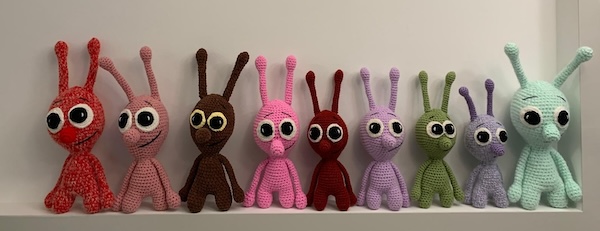
Lea Bilot also makes other creatures, such as aliens
Lea Bilot also makes other creatures, such as aliens. (photo from Lea Bilot)

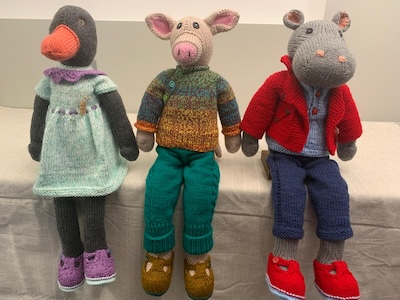
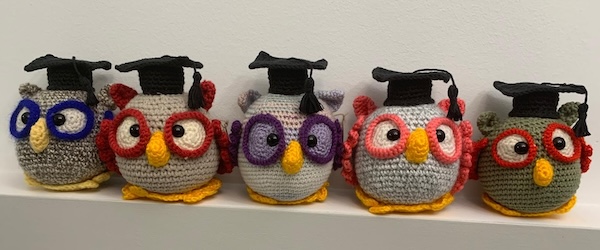
The variety of toys Bilot creates is astounding. Her output includes some common animals – dogs, cats, bears and rabbits – as well as owls in graduation hats, aliens with antennas and gnomes with beards. Each one has its own expression; no two are identical. For the winter holiday markets, she makes colourful Christmas trees with legs and hats, and snowmen decorated with buttons.

“I don’t knit snowmen – I make them from socks,” she said. “And, for my Christmas trees, I started to crochet. I’ve only been doing it for a few months.”  

She derives her ideas from everywhere.

“I once saw a man on the street with a big bushy beard. He was a short and fat older man, and his beard was white. I thought: that is my gnome.”       

Her home is half living space, half workshop.

“I have so much yarn now, I need to put it somewhere I can easily access,” she explained. “I put all my clothing in cardboard boxes, and my yarn into my dresser’s drawers.”

Most of her yarn is acrylic.

“Some children are allergic to wool. They like to hug their toys, kiss them, sleep with them. I have to use acrylic for the toys,” she said. “And I buy only expensive yarn: from Denmark, from Turkey, from Lithuania. I don’t use cheap local yarn – it doesn’t last long. Children put their toys to hard use. The toys need to be washable and durable.”   

photo - Lea Bilot’s handmade owls
Lea Bilot’s handmade owls. (photo from Lea Bilot)

From design to execution to sales, Bilot enjoys every step of the toy-making process.

“I love making them. Sometimes, when I want to finish one, I wouldn’t sleep for half the night. It is such a joy making all those details – skirts, boots, glasses – and coming up with new concepts, new patterns.”

She loves selling the toys as well.

“People don’t always buy them, but, whenever they pass my table, they smile. Women, children, even men – they all smile. Children are very well behaved, too. They would handle my toys, hug them – I make them soft and extremely huggable – but they don’t demand that parents buy them, don’t throw fits. It’s always a pleasure to be around them. That’s why I don’t offer my toys to any stores. I want to witness those smiles.”

Bilot sells her toys several times a year at craft fairs at community centres, schools and even universities.

“There are websites for artisans like me,” she said. “They list all the fairs. I would drive to those fairs first, see what they are selling, what the conditions are, before applying to them as a vendor for the next time. My husband helps, he drives me around. And my daughter helps with the application process.”

When asked if she gets any income out of her full-time toy-making hobby, Bilot laughed. “I cover the price of yarn,” she said, “and a bit above it, but not much. Mostly, I do it for the fun of it.” 

To see Bilot’s creations and be ready when she next tables at a market, visit instagram.com/leas_knittings. 

Olga Livshin is a Vancouver freelance writer. She can be reached at [email protected].

Format ImagePosted on November 29, 2024November 28, 2024Author Olga LivshinCategories LocalTags arts and crafts, gifts, knitting, Lea Bilot, toys

Two great books for giving – Tali and the Toucan & Oy, Santa!

Honestly, I think adults would benefit from reading children’s books, even if they don’t have kids. Generally, the books impart good messages, like how to overcome challenges or be proud of who you are, and their illustrations are works of art. The two I reviewed for this issue of the Jewish Independent are prime examples.

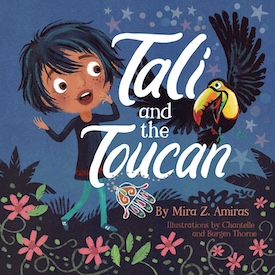
image - Tali and the Toucan book coverTali and the Toucan by writer Mira Z. Amiras and illustrators Chantelle and Burgen Thorne (Collective Book Studio) is set in San Francisco. The young protagonist, Tali, longs to tumble, swing and cartwheel like other kids, and she would love to take martial arts. But she is debilitated by fear – that the world will shatter, that she will break into a million pieces, that she will get hurt. Then, one night, she has a dream. At first, it’s kind of a scary dream, with a storm raging, chickens flapping about. One chicken makes it to the roof, pecks a hole in the window glass, and transforms into a toucan. The colourful-beaked bird teaches Tali how to tumble and soar in the sky. She awakes with new spirit and courage, no longer feeling like a chicken but like a toucan, ready to fly – and fall – with the other kids.

While not spelled out in the story, at the end of the book, there’s a note that explains that Tali’s fear of the world shattering “is taken from Jewish teachings that the world is indeed broken and that our job, called in Hebrew tikkun olam, is to put it back together again – starting with ourselves.” In addition to the “hamsa she wears – an amulet common to peoples of the  Middle East worn to protect children – her dreams lead her to conquer her fears, begin her tikkun and follow the path of Aikido, the Japanese martial art of nonviolence that teaches harmony, mutual assistance and peaceful resolutions to conflict.”

Other than the fact that Tali wants to do martial arts, the text of Tali and the Toucan doesn’t touch upon ideas like multiculturalism, cooperation or what a well-functioning society looks like, but rather expresses these concepts through the artwork. There’s a lot to look at in the illustrations and they beautifully capture Tali’s emotional journey.

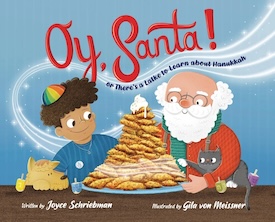
image - Oy, Santa! book coverOy, Santa!, or There’s a Latke to Learn about Hanukkah by writer Joyce Schriebman and illustrator Gil von Meissner (Intergalactic Afikoman) also expresses so much with its artwork. Whereas Tali’s hamsa makes an appearance on almost every page of her book, different kinds of light run through Oy, Santa! – white swirls full of stars, hanukkiyot with candles lit, strings of Christmas lights and exploding fireworks. While Tali and the Toucan only hints at multiculturalism and doesn’t explicitly talk about Judaism, Oy, Santa! puts both topics front and centre.

On Christmas Eve, young Oliver Overstreet writes an email to Santa: “I know you’re busy making toys, so I won’t write much. But I’m Jewish. And that means you don’t have to come down my chimney on Christmas Eve. I just wanna make sure you know.”

And so begins a delightful – and educational – email exchange between Oliver and Santa, who assures Oliver that he knows that both Oliver, and Oliver’s friend Ibrahim, do not celebrate Christmas. Oliver rails at Santa’s signoff, wishing Oliver a “Happy Chrismukkah!”

“Dear Santa,” he writes. “I know you’re still very busy. But please don’t write Chrismukkah. That’s not my holiday. I celebrate HANUKKAH. And Hanukkah and Christmas are different….” Oliver goes on to explain the story of Hanukkah and some of the fun ways the holiday is celebrated.

Santa and Oliver talk about many things in subsequent emails, from elves getting time off to celebrate whatever holidays are in their culture, to miracles and how reindeers fly, to whether it’s acceptable to put ketchup on latkes, and more. The conversation even gets a little heated, but – spoiler alert – Oliver and Santa work things out.

Oy, Santa! is a wonderful read, with lots of humour, fun illustrations, and great takeaways about identity, diversity, culture, civil discourse and friendship. 

Posted on November 29, 2024November 28, 2024Author Cynthia RamsayCategories BooksTags children's books, Collective Book Studio, Hanukkah, Intergalactic Afikoman, tikkun olam

המשבר הגדול של מדינת נתניהו יגיע עוד יגיע

לאחרונה דיבר עם חבר מישראל דוד שטויר, כאשר בגילו המתקדם (שבעים פלוס) כבר חווה הכל במדינה. אני הכרתי את דוד בחודשים הראשונים שלי בתהליך התאקלמות בוונקובר, אליה עברתי בחודש פברואר 2005

דוד חזר וציין בפני שאני הייתי “נביא” שראה לאן פני ישראל מועדות והוא עד היום מצטער שלא עזב כמוני את המדינה בה גדלנו, למען עתיד טוב יותר לו ולילדיו. לאור המשבר הקשה בישראל ילדיו של דוד כבר הספיקו לעזוב את ישראל. ולכן שאלתי אותו מה עוד “מחזיק” אותו בישראל? הוא ענה לי כי בתו הצעירה שהשתחחרה לאחרונה ההצבא, נקראה לשירות מילואים דחוף בן מספר חודשים בחיל האוויר. לאחר שתשחרר הבת מהמילואים היא קרוב לוודאי תעבור ללמוד בחו”ל. אז גם הוא יעזוב סוף סוף את ישראל

דוד אומר כי כבר למעלה מחמישים אלף ישראלים עזבו לאחרונה את ישראל. לדבריו מספר העוזבים צפוי אף לגדול לאור המשבר הגדול שישראל נמצאת בו, והוא צפוי להחריף. תשמע רוני הוא אמר לי נחרצות: ישראל היום נשלטת על ידי משפחת פשע הלוא היא משפחת נתניהו. הם עושים מה שהם רוצים, ובעלי התפקידים לצדו של נתניהו הם נוכלים וחסרי כישורים. נתניהו יצר פילוג בעם שאי אפשר לתקנו כך שאי אפשר לגשר בין “הביסיסטים” למתנגדיו של נתניהו

כשאמרתי לדוד כי הכיצד יכול ראש ממשלת ישראל להחזיק בן כלומניק בפלורידה (יאיר נתניהו) שאפילו לא עובד, והמדינה מממנת את שירותי הביטחון שלו שעולים הון ובתקופת מלחמה? דוד קטע את דברי בחריפות: רוני זה כסף קטן לעומת מיליארדי השקלים שנשדדים מקופת המדינה על ידי נתניהו וחבורתו, בין היתר לטובת החרדים שאפילו לא משרתים בצבא.ווהוא (נתניהו) עוד טס מטוס מפואר שעלה מיליארד שקל

לאחר השיחה עם דוד ישבתי וחשבתי לעצמי על ישראל ועתידה ובמחשבותי הצטיירה תמונה עגומה מאוד. אלו שחושבים שבקרוב יפרוץ תהליך שלום חדש בין ישראל למדינות ערב ובעיקר עם סעודיה, חיים בחלום. סעודיה הודיעה כבר מפורשות! שכל תהליך שלום עימה חייבה לכלול פתרון גם לפלסטינים – והוא הקמה מדינה עצמאית עבורם. הימים שישראל תעשה הסכמי שלום בדמות הסכמי אברהם, ללא פתרון הבעייה הפלסטינית עברו מן העולם

יש בישראל כיום שמהללים את נתניהו כביכול על הצלחותיו מול החמאס והחיזבאללה, בזמן שהם שכחו את הכשלונותיו הרבים, שהביאו למחדלי השבעה באוטובר. וכן ויתור על החטופים כדי שיוכל להמשיך ולשבת על כיסא המלך. מבחינתי זה כמו להגיד שלגודלה מאיר היו הצלחות רבות במלחמת יום כיפור מול המצרים והסורים, תוך התעלמות מאחריותה למחדל הנוראי של התקפות הפתע של צבאות האויב על ישראל

בכל מדינה מתוקנת ראש ממשלה היה מתפטר מיד לאחר מחדלי השבעה באוקטובר, ונעלם מהציבור לעולמים, אך כמובן עומד למשפט העם במסגרת ועדה חקירה ממלכתית. אך את נתניהו הנוכל נורמות ויושר אינן תכונות המאפיינות אותו למרות שהוא דורש זאת מאחרים

נתניהו אחראי להעברת מיליארדי דולרים לחמאס מקטאר, והוא אחראי לפגיעה קשה ברשות הפלסטינית. נתניהו חיזק אפוא את הקיצונים בפלסטינים (חמאס) והחליש את המתונים יותר (הרשות). נתניהו אחראי גם על עיבוי והוספת ההתנחלויות בשטחים הכבושים שרק מרחיקים את ישראל מפתרון הסכסוך הממושך עם עולם הערבי והשגת שלום

בתקופת שלטונו הארוכה בת שבעה עשרה השנים של נתניהו, ישראל נחלשה מבפנים בצורה משמעותית. המדינה הפכה למושחתת, יותר דתית משיחית, יותר קפיטליסטית והרבה פחות הומנית

Posted on November 20, 2024October 22, 2024Author Roni RachmaniCategories עניין בחדשותTags Hamas, Israel, Netanyahu, Palestinians, peace, settlements, Vancouver, התנחלויות, וונקובר, חמאס, ישראל, נתניהו, שלום

?מדוע אינני חוזר לגור בישראל

אני גר בוונקובר כבר למעלה מתשעה עשרה וחצי שנים ואין לי שום תוכניות לחזור לישראל. הסיבות לכך רבות וברורות מבחינתי. ובעיקר: אינני מוכן לחזור אחורה למציאות כה מורכבת וקשה שכפי שליוותה אותי במרבית חיי בישראל

במלחמת ששת הימים הייתי בן שמונה ואני זוכר כיצד אימי הגיעה לבית הספר כדי לקחת   אותי למקלט של סבא הסמוך לביתנו במרכז ירושלים

מייד לאחר המלחמה הסביר הפרופסור ישעיהו ליבוביץ’ כי כיבוש השטחים בעקבות המלחמה יהיה אסון מבחינת ישראל, ישחית את המדינה ואף יסכן את עתידה. אז עדיין לא הבנתי על מה הוא מדבר. אך כשאשר התבגרתי קלטתי עד כמה דבריו של פרופסור ליבוביץ’ היו ונשארו נכונים עד עצם היום הזה

במלחמת יום כיפור עת הייתי בן ארבע עשרה ההורים היו כרגיל בנסיעה בחו”ל. אחי ואני נשארנו בבית כאשר נשמענו להוראות להפעיל האפלה בשעות הערב. לאחר מספר ימים ההורים הצליחו למצוא טיסה ולחזור מארה”ב לישראל

במלחמת לבנון הראשונה נקראתי לצאת למילואים בלבנון. הייתי בסך הכל פקיד בפלוגת הנדסה, איך כיוון שהם נאלצו לצאת לשטח בלבנון גם אני הצטרפתי אליהם. אנו שרתנו באזור ציר מזבושה תחת אחריותו של המגד בני ברבש. אחרי כחודש מילואים השתחררתי הביתה

לאחר המלחמה נסעתי לטיול מהנה באירופה ומאז ננטע אצלי לראשונה הרצון לעבור ולגור בחו”ל. פשוט לממש חלום ולגור באחת ממדינות המערב

בין לבין חיינו בישראל פיגועים רבים שלצערי הפכו לשגרת חיים. מי שחי בישראל מכיר מלחמות, פיגועים והרבה הרבה ימים לא שקטים. כך היה וכך יהיה

בראשית שנות השמונים התחלתי להבין סוף סוף שאחזקת השטחים הכבושים לא מאפשרת לפלסטינים להקים מדינה עצמאית משלהם. ובמקביל מסכנת את ביטחונה של ישראל. כבר אז ראיתי שישראל מחולקת לשני מחנות ברורים: תומכי השלום והחזרת השטחים ותומכי החלום של ארץ ישראל השלמה שהאמינו שזה דווקא יגביר את הביטחון במדינה. אני כאמור נימנתי על מחנה השלום שלאורך השנים הלך והתכווץ לצערי. לעומתו מחנה של המתנחלים ותומכיהם הלך וגדל. אז התחלתי להרגיש פחות ופחות שייך לישראל

במלחמת המפרץ הראשונה כבר גרתי בתל אביב. לא אשכח לעולם את הלילה הנורא ההוא ביום חמישי בסביבות שתיים לפנות בוקר. צפיתי אז בחדשות בטלוויזיה שתיארו את מהלכי ארה”ב בעיראק ואז נשמעה הסיסמה “נחש צפע” ולאחריה הופעלה אזעקה. אז הופיעה השקופית “בשל התקפת טילים על ישראל הופעלה אזעקת אמת”. ואכן נפל טיל מעיראק בשכונת התקווה, שבקו אווירי קרובה הייתה לביתי במרכז תל אביב. שמעתי היטב את הדי הפיצוץ ונכנסתי ממש לחרדה נוראית. אז אמרתי לעצמי כי הכתובת היא על הקיר ויום אחד יגיעו הטילים האמיתיים מאיראן שהכוונה לטילים אטומיים. הבנתי אז שעלי לעזוב את ישראל ולצערי רק לאחר ארבעה עשרה שנים עשיתי זאת

תוך מספר דקות יצאת את ביתי ונסעתי בטירוף לביתו של חבר כדי שלא להיות לבד. למחרת החבר עזב את תל אביב ונסע למשפחו באילת. ואז החלטתי לנסוע לבית הורי בירושלים, ששם שההיתי בכל תקופת המלחמה. בכל פעם שנשמעה “האזעקה” ממש נכנסתי לחרדה בחרדה ושהייתי עם הורי בחדר האטום

לאחר רצח ראש הממשלה יצחק רבין באמצע שנות התשעים הרגשתי עוד יותר כמה אני לא יכול להשתייך עוד לישראל. אז גם החל לככב בנימין נתניהו האחראי לגל ההסתה נגד רבין. הפכתי לזר בה ועדיף להיות זר בחו”ל. לאחר עשר שנים עזבתי לוונקובר

Posted on November 13, 2024October 22, 2024Author Roni RachmaniCategories עניין בחדשותTags Israel, Land of Israel, occupied territories, peace, Vancouver, war, Yeshayahu Leibowitz, ארץ ישראל, וונקוב, ישעיהו ליבוביץ, ישראל, כיבוש השטחים, מלחמה, שלום

Posts pagination

Previous page Page 1 … Page 66 Page 67 Page 68 … Page 667 Next page
Proudly powered by WordPress