The JWest capital campaign’s goal of raising $161 million is only possible with the generous spirit and foresight of community members who rally to this generationally important project. Daniella Givon and Bernard Pinsky’s gift is an example of bringing the future JWest campus closer to reality.
Bernard Pinsky and Daniella Givon’s gift is an example of bringing the future JWest campus closer to reality. (photo from Bernard Pinsky and Daniella Givon)
Both joined the Jewish Community Centre of Greater Vancouver (JCC) immediately after settling in Vancouver in 1979. Givon, who grew up in Israel, found friendship and community by joining Israeli folk dancing and becoming involved with Canadian Hadassah-WIZO. Pinsky, a lawyer who grew up in Winnipeg, got to know the JCC by working out in its gym. He noticed how JCC activities and just being around the JCC brought community members together in meaningful ways that sparked and fostered increased community participation.
“I realized that the JCC is a critical connector and gateway to deeper involvement in the Jewish community,” he said.
Pinsky began his local volunteer work with the Canadian Jewish Congress in 1981 and, over the ensuing 44 years, served in leadership roles for many Jewish organizations, including the Jewish Federation of Greater Vancouver, the Centre for Israel and Jewish Affairs’ national board and Beth Israel Synagogue. Today, he is board chair and director of the Ronald S. Roadburg Foundation, one of the lead donors to JWest.
Givon served as Vancouver regional president for Canadian Hadassah-WIZO and took leadership roles in the Jewish Museum & Archives of British Columbia and the Cherie Smith JCC Jewish Book Festival.
Pinsky and Givon, children of Holocaust survivors, continue a legacy of community involvement in their respective families. Givon was inspired by her mother’s many years of leadership in the parent-teacher association of her Israeli school and her grandfather’s participation as a board chair of his moshav’s governing council. Pinsky recalled how his grandfather headed the Zionist Federation of Manitoba, among other leadership positions.
“It’s inconceivable to me to imagine our community without a JCC, and our building is tired,” Givon noted. “A tired, crowded building attracts a limited number of people.”
Pinsky agreed that the JCC is in need of replacement.
“Right now, things are squeezed into pre-set spaces that restrain increased participation,” he noted. “The new JWest will have more space for Jewish organizations, flex spaces for more programming and an expanded daycare. We’ll be able to offer more programs that attract young families, which is a crucial way to build for the future.
“And it’s not just the Jewish community that uses and will continue to use this important facility,” he said. “Former BC premier Christie Clark sent her son to the JCC daycare. I became friends with Terry Yung, who is a current MLA, and his wife, Sarah Kirby-Yung, a city councilor, because we met at the JCC. They’ve been very connected to and helpful for the Jewish community.”
With just $19 million left to raise to achieve the $161 million target, JWest is poised to break ground in early 2026.
JWest recently submitted its development permit application with a new JCC as pictured here. In line with the guiding principle of responsibly using community funds, the design maximizes efficiency, with an increased number of multi-purpose spaces. For example, the JCC auditorium and theatre have been combined and will feature a state-of-the-art, automated, retractable seating system. Operating as a campus, the JCC and King David High School will be more integrated, with greater cross-sharing of spaces.
Visit JWestnow.com to learn more and share the link to get others excited about the project. The newly updated site includes a detailed look at the project and construction timeline, fresh renderings of the JCC, a list of the donors to date, news articles and information on the project team.
Margaux Wosk, left, receives a Community Award from BC Lt.-Gov. Wendy Cocchia (photo from BC Achievement Foundation / Don Craig, photographer)
On May 1, Premier David Eby and Walter Pela, chair of the BC Achievement Foundation, named the recipients of the 22nd annual Community Award. The program, presented by BC Achievement – an independent foundation that honours excellence and inspires achievement throughout the province – recognizes extraordinary British Columbians who build better, stronger and more engaged communities. This year’s recipients included Jewish community member Margaux Wosk.
Wosk is an advocate, artist, designer and entrepreneur who champions disability justice and neurodivergent inclusion.
As president of BC People First, they provide leadership to elevate disabled voices and advocate for meaningful change across the province. Their work breaks down barriers, fosters pride and amplifies underrepresented perspectives through creativity, advocacy and education.
Through their business, Retrophiliac, Wosk designs communication tools and products by and for disabled, LGBTQIA2+ and neurodivergent individuals – empowering others to express themselves, reduce stigma and build community. They also founded the We Belong market, which highlighted neurodivergent and disabled entrepreneurs, and were featured on AMI’s Our Community episode for their advocacy and small business endeavours.
An emerging leader, Wosk spoke on Parliament Hill at the Disability Without Poverty rally and has collaborated with People First of Canada, McMaster University and Curiko on accessibility and small business development. Their artwork – featured in York University’s Mental Health Literacy Guide for Autism, to which they also contributed – reflects their commitment to advocacy through creativity. Several of their products are available from the Museum of Vancouver on their open MOV platform.
“The recipients of this year’s Community Award remind us that the strength of British Columbia lies in the compassion, creativity and commitment of its people,” said Eby. “Whether they’re leading grassroots initiatives or mentoring future changemakers, these individuals exemplify the power of community and the impact of selfless service. Their efforts uplift us all and set a powerful example for what we can achieve together.”
“This year’s program shines a spotlight on emerging leaders alongside long-standing changemakers,” said Pela. “Each recipient demonstrates what’s possible when individuals step up with purpose and heart. Their contributions strengthen our communities and remind us that leadership isn’t defined by title or age – it’s defined by impact, generosity and vision.”
The Community Award recipients are selected by an independent jury panel, whose 2025 members include Mayor Suzan Hewat of Kaslo, Mayor Sarrah Storey of Fraser Lake, and past recipients Herman Ho of Vancouver, Meeka Morgan of Ashcroft and Upkar Singh Tatlay of Surrey.
This year’s award recipients were recognized in a formal presentation ceremony held in Victoria on May 7 in the presence of BC Lt.-Gov. Wendy Cocchia.
Each awardee will receive a medallion designed by Robert Davidson. They will also be celebrated through the online campaign #shinethelightbc, to commemorate their inspirational achievements positively impacting British Columbians.
For more information about the BC Achievement Foundation or Community Award program, visit bcachievement.com.
* * *
Rabbi Dan Moskovitz
Rabbi Dan Moskovitz was honoured with the doctor of Jewish nonprofit management, honoris causa, from Hebrew Union College at its 2025 Graduation Ceremony in Los Angeles.
Moskovitz has served as senior rabbi of Temple Sholom since July 2013. Before joining Temple Sholom, he was associate rabbi at Temple Judea in Los Angeles for 13 years. He is also a past chair of the Reform Rabbis of Canada and was on the steering committee for Canadian Reform Judaism. Moskovitz is the author of numerous articles and publications, including The Men’s Seder (MRJ Press), an experiential journey through the Passover seder for Jewish men.
“As we continue our celebration of both emerging and established leaders through thisseason of ordination and graduation, we take special pride in awarding honorarydegrees to graduates whose professional journeys exemplify our mission and values,” said Dr. Andrew Rehfeld, president of Hebrew Union College. “Through their vision, service and enduring impact, they define how bold leadership can shape a vibrant Jewish future.”
* * *
The fifth edition of the Western Canada Jewish Book Awards, presented by the Cherie Smith JCC Jewish Book Festival in Vancouver, took place May 13 at the Jewish Community Centre of Greater Vancouver. There were winners in six awards categories.
Helen Pinsky presented the Nancy Richler Memorial Prize for Fiction to Dave Margoshes for his novel A Simple Carpenter. Set in Middle Eastern “Holy Land” in the early 1980s, against the backdrop of the civil war in neighbouring Lebanon, the protagonist is a Christ-like character trying to live a low-key life in Israel/Palestine. Part biblical fable, part magic realism and part thriller, A Simple Carpenter is a meditation on memory and identity, religious faith and doubt, the yearning for a messiah, and the perennially tangled, fraught state of Arab-Israeli relations.
Bernard Pinsky presented Prof. Richard Menkis with the Pinsky Givon Family Prize for In a “Land of Hope”: Documents on the Canadian Jewish Experience, 1627-1923, which Menkis edited with Prof. Pierre Anctil. The collection prioritizes diverse Jewish voices that express the multiple realities of the Canadian Jewish experience. Organized chronologically, from the arrival of the first Jewish migrants to New France, to Jewish Canadian experiences during and shortly after the First World War, this volume includes sources never before published.
Robert Matas presented the Cindy Roadburg Memorial Prize for memoir/biography to former federal cabinet minister and senator Jack Austin who wrote, with Edie Austin, Unlikely Insider: A West Coast Advocate in Ottawa. The memoir is a reminder of the value of public service as a force for economic progress, social justice and nation-building. As a British Columbian, Austin worked to ensure that BC’s perspectives and interests mattered in Ottawa; as someone who came from a disadvantaged background, he is sensitive to the need to make the country a place of fairness and opportunity for all.
The Diamond Foundation Prize for writing for children and youth was presented by Daniella Abramowich to Ellen Schwartz for Schwartz’s Friends to the Rescue, illustrated by Alison Mutton. Inspired by a true story, and told in two different time periods, the book takes place in Fossa, Italy, a small mountain village that offered refuge to Jews during the Holocaust. When the village suffers a devastating earthquake 65 years later, the Jewish refugees whom the town had helped travel to Fossa to return the favour.
Rhea Tregebov received the Betty Averbach Foundation Prize for poetry from Leanne Averbach for the book Talking to Strangers. In it, Tregebov mourns, praises, prays, regrets, summons, celebrates and bears witness with artistry and tenderness. Talking to Strangers was also awarded the Canadian Jewish Literary Award for poetry in 2024.
The Kahn Foundation Prize for writing on the Holocaust was presented by Saul Kahn to Marie Doduck for her memoir A Childhood Unspoken. Mariette was only 5 years old when the Nazis invaded her hometown of Brussels, Belgium, in 1940. She and her siblings were scattered across the city and countryside, hiding with non-Jews and in convents and orphanages or working for the resistance. Mariette emerged from the war quick-thinking, independent and ready to start a new life in Canada. As she navigated to a new identity as Marie – an industrious and resourceful community member, mother and advocate for children’s rights – Mariette, the silent child, found her voice.
Jurors for the 2025 Western Canada Jewish Book Awards were Miranda Burgess, Susanna Egan, Elisabeth Kushner, Roger Nash, Norman Ravvin and Harriet Zaidman.
Daniella Givon, chair of the awards committee, introduced the evening and Dana Camil Hewitt, director of the JCC Jewish Book Festival, concluded the awards celebration.
* * *
Jessica Kronis
Jessica Kronis is the new director of the Jewish Community Foundation. She brings a wealth of experience from Toronto’s philanthropic sector and a deep commitment to mission-driven work. From her leadership at ACCESS Community Capital Fund to her role with Hillel at Florida International University and helping launch the Nova Exhibition in Toronto, Kronis has consistently built strong programs and meaningful connections.
The Jewish Community Foundation plays a vital role in building a strong, sustainable future for our community. Through endowments, legacy gifts and other forms of planned giving, it helps ensure support for community institutions and responds to emerging needs. The foundation closed the fiscal year with $108 million in assets, surpassing the $100 million milestone. This achievement reflects both the trust our fundholders place in the foundation and the oversight of its investment committee, whose guidance has kept the investment strategy focused, effective and responsibly managed.
* * *
Dr. Siamak Boroomand
Dr. Siamak Boroomand has been appointed as King David High School’s new deputy head of school. He will be taking over the position from Alex Monchamp, KDHS’s deputy head of school for the past 24 years, who is moving on to new ventures.
Boroomand brings more than 20 years of experience as an educator and leader in Canadian Accredited Independent Schools (CAIS) institutions across Canada. A proud British Columbian, he graduated from St. George’s School and earned his teaching certification from Simon Fraser University. He began his career teaching chemistry and math at Southridge and Meadowridge schools before relocating to Ontario.
For the past 15 years, Boroomand has been a leader at Branksome Hall, an all-girls International Baccalaureate school in Toronto. There, he served as a science and math teacher before moving into administrative roles, including assistant head of middle school, assistant head of operations and, most recently, assistant head of grades 9-10, where he supported 220 students and their families.
Boroomand will be moving back to Vancouver with his wife, Bonnee, son Aaron and daughter Kayla. He steps into his role at KDHS in August.
* * *
The Ronald S. Roadburg Foundation has awarded a $350,000 multi-year grant to support the new USY (United Synagogue Youth) Lower Mainland Community Director initiative. This funding will subsidize the program’s growth through 2029 and aims to foster deep Jewish engagement for teens through enriching programming, mentorship and community involvement.
The initiative is a collaborative effort between multiple synagogues in a geographic area to serve teens. In the Lower Mainland, the three main participating Conservative congregations are Congregation Beth Israel (Vancouver), Congregation Har El (West Vancouver) and Beth Tikvah Congregation (Richmond). Launched in September 2024 with the hiring of Shayla Brewer as the Lower Mainland’s first community director, the program has already seen growth in local and international USY participation by teens.
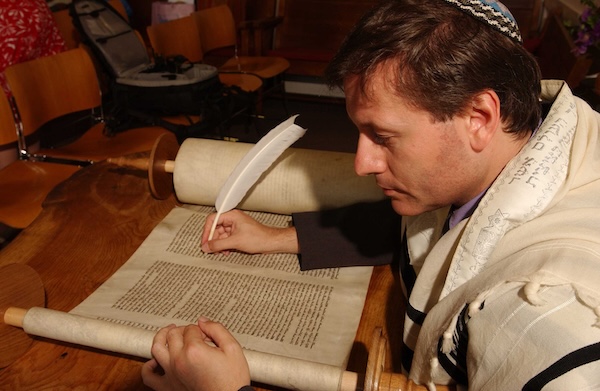
Scribe Marc Michaels concluded Kolot Mayim Reform Temple’s 2024/25 Kvell at the Well series with the talk Torah Tales: Adventures in Scribal Art. (photo from Marc Michaels)
On April 6, Marc Michaels spoke about his experiences as a Jewish scribe (sofer, in Hebrew) in the final webinar of the 2024/25 Kvell at the Well series. Titled Torah Tales: Adventures in Scribal Art, the event was organized by Victoria’s Kolot Mayim Reform Temple.
Based in London, Michaels has been writing Torah scrolls, Megillat Esther, ketubot and the scrolls inside mezuzot and tefillin for more 30 years. He is a Cambridge scholar, earning a PhD in Jewish manuscripts from University of Cambridge’s faculty of Asian and Middle Eastern studies.
A Jewish scribe writes and restores holy works using quills, parchment and special inks, all the while following a strict set of rules, explained Michaels. Indeed, there are many, many rules, which Michaels came back to through the course of the talk.
The scribal art, he said, goes far beyond calligraphy and requires a detailed knowledge of Jewish law and a relatively high level of religious observance.
Michaels provided a recipe for the special ink a scribe might use, which includes gum arabic, gallnuts (from oak trees), iron sulfate and water. The gallnuts are crushed to form tannic acid, mixed with the other ingredients and cooked on an open flame until a residue is left. The larger lumps of gallnuts are strained out and the mixture is left for six months to turn black and be used as ink.
For quills, Michaels believes that a swan’s quill is too soft and a goose quill too hard and prefers a turkey quill. “As Goldilocks would say, it is just right,” he said.
Quills, Michaels warned, must be adjusted in such a way to limit the risk of a scribe sneezing because, if that happens on parchment, it is impossible to remove. Scribes shifted to quills on the move to Europe, he said. Beforehand, they used reeds – which were used to write the Dead Sea Scrolls.
“We switched to quills because that’s what the Christians were using and they were getting a much finer, nicer point on their calligraphy,” he said.
A large part of a scribe’s job is repairing scrolls. Returning again to the rules, he said, “It only takes one letter to be wrong, and that means maybe the ink has come off or it’s broken or whatever, for the whole scroll to be pasul (invalid).”
If a scroll is deemed pasul, Michaels told the audience, then it must be placed in the ark with an indicator to show it’s invalid, such as arranging its belt outside of its mantel. Jewish law states that it must be repaired within 30 days, but, he said, it may take much longer.
Among the Torah scroll repair horrors presented by Michaels were gauze that joined seams together, stains from tape that had to be scraped out, and a patch that was sewn onto the scroll.
Typical repairs, he said, are not so extreme and mostly involve fading and broken letters, which require much overwriting. On occasion, whole columns no longer exist, having been completely rubbed away by time. Sometimes, members of a congregation might mark the scrolls with a pencil or ballpoint pen. In one slide Michaels displayed, someone had drawn a flower onto the scroll.
In his career, Michaels has also encountered incorrect spellings, deletions and Hebrew characters that were mistakenly joined together. Missing words, mixed-up letters and omitted characters from various Torah scrolls were shown to the Zoom crowd as well.
“And then you get wear and tear, dirt, holes, rips and things like that. You have to be very careful. You can patch a Torah, but you’re not allowed to do half patches,” he said.
What’s more, accidents can happen, especially when lifting the Torah during times when one side is much heavier than the other, ie., at the start and at the end of the yearly reading cycle. In one example, a Torah was torn through columns, thus the columns had to be removed and rewritten in the style of the original scribe.
Perhaps topping the list of Torah misadventures is the case Michaels came across of a young person studying for her bat mitzvah and the family dog chewed through a section of the Torah.
“It was literally the best excuse for not learning a bat mitzvah portion – the dog ate my portion,” Michaels joked.
“I had to do an emergency fix because there wasn’t enough time. I repaired it in the style of the original scroll, but only part of it, which you’re not normally supposed to do except in the case of an emergency – and this was a massive emergency. Because the parchment was much older than the shiny new parchment, I coated it with Yorkshire Tea. And it worked.”
A prolific author, designer and presenter, Michaels designed the prayer book for the Movement for Reform Judaism and has written numerous books and articles on scrolls, the Bible and art; he wrote the children’s book The Dot on the Ot. Michaels is currently working with Kolot Mayim to restore a Torah scroll.
Sam Margolishas written for the Globe and Mail, the National Post, UPI and MSNBC.
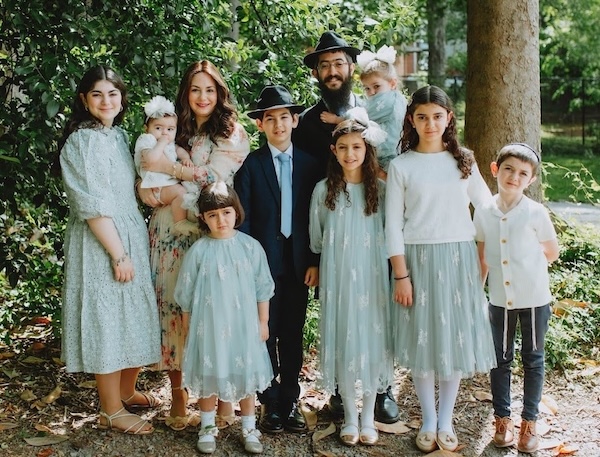
Shifra Sharfstein and her husband, Shlomo, run Georgia Tech Chabad House with the help of their children. (photo from Shifra Sharfstein)
My parents invited countless people into their home over the decades and fed them on Shabbat and Passover. Little did we know that their acts of kindness would inspire one of their grandchildren to bring Shabbat dinners to hundreds of Jewish students at Georgia Tech in Atlanta each year.
Shifra Sharfstein grew up in Vancouver until she was in Grade 7, going to school at the local Chabad House and also learning about Judaism with her parents, Tzvi and Nomi Freeman, and grandparents, Joyce and Bernie Freeman.
“We went every Wednesday night for a special dinner,” Shifra recalled. “Grandma would spoil us with our favourites each week. She would read us a book and chat with us. She would listen to us talk and let us help make desserts in the kitchen. It was a space that was just all love, pure unconditional love.”
Shifra also gives credit to her grandfather, who supported my mom’s efforts to bring what seemed like the entire Jewish community into our house to feed them.
My mother grew up in India and her parents were from Iraq. Shifra remembers the Sephardi tomato soup with potatoes and meatballs, which took Mom a whole day to make.
“My cousin Ariella and me would talk all night about how much we loved that soup!” she said.
When Mom passed away, Shifra compiled a recipe book for family and friends called With Love from Joyce.
She remembers Mom’s international food.
“Baked Alaska coming out of the oven with cold ice cream inside always seemed like magic,” she said. (And then there was the cherry pie, which I can still taste.)
She remembers gathering together with her cousins before every Jewish holiday, making hundreds of hamantashen.
“I do the same with our college students, today,” she said.
Shifra runs Georgia Tech Chabad House with her husband Shlomo, and with the help of their eight children.
“I could go on forever talking about how much my grandmother and grandfather inspire me,” she said. “Whenever I’m in the kitchen for awhile, especially the week before Pesach, which is grandma’s yahrzeit, I feel her there with me. Sometimes, the powerful work we do is overwhelming, especially when we’re helping students deal with tragedy, and I close my eyes and see Grandma’s smile and feel the beautiful love she had channeled through me, her granddaughter.”
Recently, the couple threw a dinner for 500 Jewish students and dedicated it to the memory of Shifra’s grandparents. It was the first time so many people had dined there.
“Thank G-d we have lots of help and an amazing community of beautiful Georgia Tech students!” she said. “But we keep it all homemade at Chabad and I always incorporate Grandma’s flavours in it.”
Shifra said she also was inspired by the way her grandparents had so many guests who were welcomed like family.
“Grandma always said that what mattered was that we all got along,” Shifra explained. “She told us stories of Jews from different backgrounds and how what was most important is that we all came together, no matter our differences, with love … she truly loved every Jew with zero judgment. I think I absorbed that from her. She looked past the outside and saw that each person has a beautiful soul. She taught me how to do the same and I truly try to make that my focus every time I meet someone new.”
Shifra considers herself a feminist, running the Chabad House they live in and taking care of her children side by side with her husband. She is an accomplished speaker, as well.
“Knowledge is power,” she said. “I grew up being taught to always ask questions. My father and mother spent time learning with me as a young girl in Vancouver and the more I learnt and [the more] I asked, the more I realized how much I could accomplish.”
She added that she is inspired by the late Lubavitcher Rebbe’s teachings about women.
“As a Chabad leader, I know my Rebbe taught me that Jewish women in leadership have a unique power as nurturers who can change the world with love,” she said. “It’s the same message [now] and I intend to take it with me and change my part of the world with that feminine loving touch.”
Chabad Georgia Tech has seven Jewish classes each week, a weekly BBQ, social events, events where they counsel students and, of course, the highlight of their week is Shabbat, with anywhere between 80 and 130 students who come and then stay, chatting late into the night after dinner.
All this activity has had an impact. For example, there have been three weddings in the last 14 years and, right now, another couple is engaged to be married.
Shifra says their success is due, as well, to their dedicated team of students, who run many of the events. There are about 1,000 Jewish students on campus.
Cassandra Freeman is a freelance journalist and improv comedy performer living in Vancouver.
When we moved to Canada for my husband’s academic job in 2009, we had work permits. Mine stated I couldn’t work with children or do farmwork. I’d previously been a teacher, but, with this work permit, I only taught adults. I volunteered at friends’ farms, but these skills couldn’t offer income. I did a few Jewish community events, leading family services, for instance, but I didn’t want to jeopardize my status.
I felt all the upheaval was worthwhile. We lived in a college town in Kentucky before moving to Canada. We drove 121 kilometres each way to attend a congregation with a rabbi. The town we lived in had about 20 Jewish families and a lay-led small Reform congregation. While my husband’s professor job was good, I’d lacked job prospects there. It was lonely without much of a Jewish community. When my husband was offered a Canada Research Chair in Manitoba, moving north made sense.
We’re law-abiding folk. We followed all the visa requirements. However, when trying to get Canadian permanent residency, the process required a chest X-ray. Pregnant with twins in 2011, I had to wait until after I gave birth. This stalled things. Meanwhile, we never thought committing a crime was a good choice while in Canada on a visa or a residency permit. (Or now, as citizens.)
Canadian permanent residents have all the rights of citizenship except voting and running for public office. If you’re convicted of a crime, permanent residency can be revoked. At each stage, whether work permit, permanent residency or citizenship, it’s important to obey the laws of the place you’re living in.
Later, as a permanent resident, I pitched book ideas to publishers at a Winnipeg library event. The publisher asked if I was a citizen. If not, they said they couldn’t read my manuscript. Their government funding was “only for citizens.” Afterwards, I researched it and emailed the publisher – Canadian presses can publish eligible permanent residents’ work using the same government funding. I received no reply.
By then, I realized my non-citizen experiences were normal and considered acceptable. Citizenship means something. Those born in Canada often don’t understand their privileges. Newcomers will mention their credentials and the hard effort it took to enter Canada. Canada loves successful, educated immigrants. Yet, upon arrival, those credentials often aren’t recognized, meaning we’re not eligible to do the same work here. It might take years to requalify the “Canadian” way.
I recalled all this when the US government began to detain foreign university students before deporting them. The outcry has been fast and furious. How dare immigration take Mahmoud Khalil away from his pregnant wife? Yet, as a parent, I thought, “Why would anyone on a visa or residency permit risk illegal behaviour? They might be forced to abandon their family!”
Perhaps protesting international students never reviewed their visa terms. In the United States, green card holders aren’t allowed to try to change the government by illegal means. Those who trespassed on or vandalized university campuses, threatening resistance in support of groups deemed terrorists by both the United States and Canada, took big risks.
Some US international students knew they’d violated their visa regulations. Some students “self-deported.” A Cornell graduate student, Momodu Taal, left the United States on his own.
Cornell University emphasizes that actions have consequences and that, with privilege, comes responsibility. I heard this repeatedly during my undergraduate years at Cornell. However, when a Columbia University grad student, Ranjani Srinivasan, left the United States for Canada, CBC’s headline read, “Grad student who fled US says claims about her alleged support of Hamas are ‘absurd.’” Why did Srinivasan flee if the allegations were absurd and didn’t violate the law?
Long ago, my husband attended graduate school in Britain. As an American, he had to register his identity and contact information at the local police department. Though he didn’t break any laws, the trek to the station and the US passport stamped “ALIEN” were a sobering reminder of status.
It isn’t popular to take responsibility for one’s actions. Even expecting law enforcement to enforce the laws against some illegal activity isn’t common. Hate crimes against Jewish Canadians soared out of control in 2024. According to a recent B’nai Brith Canada audit, few cases are prosecuted. According to 2023 statistics, 72% of these types of hate crimes went unsolved.
Perhaps those fleeing the United States have seen this statistic. It’s now common in North America to protest on city streets, waving Hezbollah or Hamas flags. Protesters use words like “intifada” and “resistance” while claiming this is a right to free speech. These words and the actions that followed resulted in the deaths of thousands whose identities differed from the Islamist groups who“resisted.” Sometimes, Jews in Israel (or Canada) are the targets. Targets include Israeli Druze, Christians or Bedouin, too. In neighbouring Syria, minority groups targeted by Islamists are slaughtered, but without Canadian news coverage comparable to the Israel/Gaza conflict.
As but one example of many incidents across the country, it’s apparently legal to protest and yell “baby killers,” an antisemitic trope, outside of the Winnipeg Jewish community centre. That same building complex contains a daycare, school and programming for the elderly. In April 2025, protesters claimed they did this because two Israeli soldiers came to speak about their experiences on Oct. 7, 2023, and their military service in Gaza.
But, wait a moment, Canadian soldiers who speak about their military service in Afghanistan don’t face protesters. Do protesters stand near mosques when a relevant guest speaks, to protest violent upheavals in Syria, Nigeria or Sudan? No, it’s only about Israel, where half the world’s Jewish population lives. Protesters openly spout hatred against Canadian Jewish citizens, about 1% of the Canadian population, but not other minorities.
Immigrants, like foreign students, don’t get all the rights of citizenship. Citizenship is a “membership” and has its privileges. Freedom of expression isn’t absolute in either the United States or Canada. In both countries, discrimination, hate speech, incitement to violence and defamation are illegal.
Canadians must remember the responsibilities that accompany the privileges. Let’s enforce Canada’s laws against hate. Behaving properly towards one another and treating all Canadians as worthy of respect are Canadian values. Hate speech, and valorizing terrorist groups and their flags, aren’t.
Joanne Seiff has written regularly for the Winnipeg Free Press and various Jewish publications. She is the author of three books, including From the Outside In: Jewish Post Columns 2015-2016, a collection of essays available for digital download or as a paperback from Amazon. Check her out on Instagram @yrnspinner or at joanneseiff.blogspot.com.
As a member of the Jewish community, I’ve come to recognize a powerful truth: when crisis strikes, we show up. That’s who we are.
It’s not performative. It’s not for headlines. It’s rooted in Jewish values that demand action – to heal the world (tikkun olam), to care for the stranger (ve’ahavta et hager) and to take responsibility for one another (arevut hadadit).
So, when tragedy struck our Filipino neighbours at the Lapu Lapu festival in Vancouver, the Jewish community responded – as we always strive to do, with compassion. Our community mobilized within hours. Not just with condolences, but with coordinated, tangible action. A dedicated fund was quickly established for affected families. We partnered with Filipino BC, the United Way, the Archdiocese of Vancouver, the City of Vancouver and other local organizations to ensure a compassionate, coordinated response.
These aren’t symbolic gestures – they are meaningful efforts to help a community recover, rebuild and feel supported in its darkest moment. And it’s not the first time our community has responded like this – not even close.
We’ve shown solidarity with Indigenous communities through Truth and Reconciliation events, advocating for justice, supporting families of missing and murdered women, and bringing in speakers.
After the Quebec mosque shooting, we stood with our Muslim neighbours, condemning Islamophobia, and supported Syrian and Afghan refugees with sponsorship, fundraising, housing, and provided immigration help.
In response to George Floyd’s murder and rising anti-Asian hate, we participated in rallies, spoke out and called for systemic change in policing.
We’ve actively supported LGBTQ+ rights by participating in Vancouver’s Pride Parade and advocating for policies against discrimination.
In the wake of floods and wildfires, we provided aid, opened our homes and joined environmental campaigns for climate justice.
From Haiti to Ukraine, and East Africa to Nepal, our community has raised money and supported global aid efforts to provide humanitarian relief to those affected.
We don’t burn flags, we build bridges. We don’t chant hateful slogans, we extend hands in solidarity. We don’t destabilize, we stabilize, support and stand together. That is the spirit that lives within the Jewish community here in Vancouver. In moments of crisis, we don’t disappear – we show up.
That is the spirit embedded in Jewish life. These values are part of who we are. They guide us – especially in moments of pain and need. We act when it matters most.
That’s why I’m proud to be Jewish. Proud to be part of a people whose instinct is to act with compassion – no matter who is in need. Tzedakah, tikkun olam and arevut hadadit are not just words we recite. They are the path we walk. That’s who we are.
Lana Marks Pulver is board chair, Jewish Federation of Greater Vancouver.
In times of rising antisemitism and violence, fear is valid. When the world feels like it’s unraveling, anchoring yourself in a deeper sense of purpose can be healing. (screenshot)
Fear is not a weakness. It’s a deeply human response to a real or perceived threat. In times of rising antisemitism and violence, fear is valid. But we must not let it be the only voice in the room.
By acknowledging the fear – whether of violence, isolation or helplessness – we reduce its power. At the same time, we also make space for other emotions, such as courage, care and resilience, to emerge.
There are many things we can do to help us overcome the foreboding atmosphere of negativity and fear that is knocking at our door. Focusing on what we can do, gives us a sense of agency when we might otherwise feel helpless and alone.
There is the physical aspect of fear. It is important to be aware of what is happening as you notice you are feeling anxious, by staying present and being grounded. The brain often races into the future during fear: What if this happens to my community? My family? Me? This kind of “catastrophic thinking” pulls us out of the moment and floods our bodies with stress hormones.
It is important to know how to manage physical symptoms as they come up. Have you ever practised mindful breathing or meditation? Going to the beach and being aware of the beauty of our surroundings is a way to relax the constant noise that comes with stressful thinking. It is important to stay informed, but we often tend to keep scrolling for more information when there might not be anything else available. Learn how to say “dayeinu,” it is enough for today.
Build connection, not isolation
Fear thrives in silence. One of the most powerful antidotes to fear is community; connecting with people who understand your pain and can help hold it with you. It is important to build community to fight isolation. Ask yourself:
• Who in my life can I be vulnerable with?
• Is there a synagogue, support group or mental health resource I can lean on?
• Can I be that presence for someone else?
There is strength in the simple act of saying, “You’re not alone.” It may be that your reaching out to ask for help will in fact help someone else.
Not everyone will be on the front lines of activism – and that’s OK. But each of us has a role to play in healing the world, even in small ways:
• Check in on someone who may be afraid or isolated.
• Wear your Jewish identity with pride – a Magen David, a kippah – if it feels right to you.
• Educate others, kindly and clearly, when misinformation spreads.
• Support Jewish organizations and security efforts.
Courage doesn’t always roar. Sometimes, it whispers, “I will keep showing up.”
When the world feels like it’s unraveling, anchoring yourself in a deeper sense of purpose can be healing. Ask yourself where you can make an impact. Do you have a particular skill that may make a difference to individuals or an organization? Judaism has a rich tradition of resilience, moral clarity and hope. Pirkei Avot 2:5 reminds us that, “In a place where there are no leaders, strive to be that leader.” In other words, act with integrity, even when others do not. This is real courage and takes strength and commitment.
Judaism teaches us to choose hope
Our tradition teaches us to choose hope, again and again. Hope isn’t naïve. It’s an act of spiritual resistance. It’s choosing to believe, even with trembling hands, that goodness still exists and that we are its agents. When you are with friends and family, celebrate moments of kindness. Remind one another of stories, not only of loss, but of survival and joy.
Living Jewishly, publicly and proudly, in today’s world takes immense strength. You are not alone in your fear – nor in your resolve. Fear may visit, but it doesn’t get to move in and take over. Our world needs as many of us to be positive ambassadors as we need those fighting antisemitism on the front lines. As Mahatma Gandhi once expressed it, “be the change you wish to see in the world.”
Shelley Karrel is a registered clinical counsellor in Vancouver; you can reach her at karrelcounselling.com.
It is raining today in our area of Vancouver. I am specifying our area because things could be very different in other areas of our metropolis, with the variety of climatic zones it presents on the shores of our western sea.
My Bride and I are enjoying the solitude of our own company. Our various familial connections are pursuing their affairs in different parts of the planet. We are in our 90s (thereabouts), tolerating various aches and pains that time has made us heir to. Nevertheless, I am suddenly aware that we have achieved our personal paradise.
I am aware that we are surrounded with an unending list of things in our world that need corrective action. Our world can report a litany of tragic stories that require happy endings, some that personally touch us deeply, many we are aware of from afar. We know there are things to be done, some that may even require concerted action on our part.
But, at this very moment, I am overwhelmed by a feeling that those in my immediate circle are safe and secure, and I am grateful. I can look around me and see the place where I live. It may need tidying, but it is pleasing to my eye. We have pictures of our loved ones, past and present, and they cover almost every possible vacant space.
There are many beautiful things that we have collected over the years arrayed where they have found places to stand. The fridge is full to bursting and we doubt that we will be able to consume it all before we will have to discard some of it. We have money in the bank for the bills this month and as far out in time as we can imagine.
In our long history, we know that there have been many times, many places, where the scene before us was very different. Despite the whirling of issues in our minds, the horrors we know exist even around the corner, we have a place and time that is, for us, a paradise.
I remember when I endured a space that spoke to me only of finding the means to escape. I know that my Bride has faced conditions, physically and emotionally, that taxed the limits of her strength. Somehow, we’ve managed.
There were times when our offspring were off in unknown places beyond our capacities to intervene on their behalf as we would have liked. We have had personal relationships that have tried us beyond the limits we thought we could bear, and we survived them.
My Bride and I have been together for 20 years. Despite my solitary nature, she persisted nevertheless, until we were ultimately able to be open to each other as to our mutual vulnerabilities and forge a loving relationship. We glory in that every day.
We remember our triumphs, those accomplishments of which only we ourselves may be aware, jobs well done. Our present makes our contemplation of our past so much easier. And those past experiences make our present – the people, the place, the time – more like the paradise it is.
Max Roytenbergis a Vancouver-based poet, writer and blogger. His book Hero in My Own Eyes: Tripping a Life Fantastic is available from Amazon and other online booksellers.
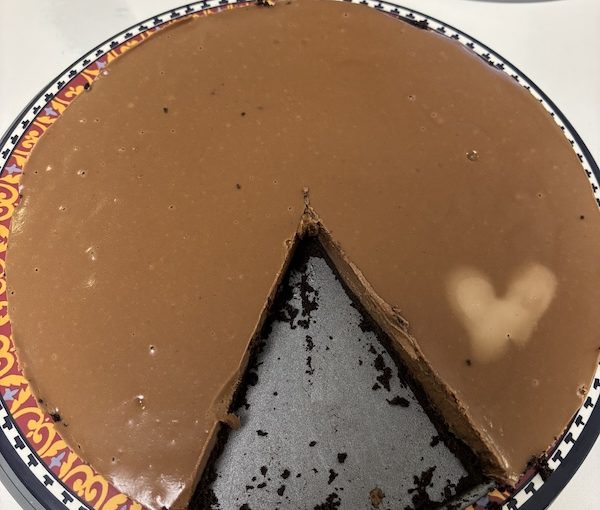
Semi-Vegan Mini Fake Marry Me Cheesecakes, adapted from joyfoodsunshine.com. (photo by Shelley Civkin)
It seems that smashing food is having a moment. And I don’t mean smashing as in the British term for fabulous. I mean literally smashing. Like smashed baby potatoes, which are, in fact, smashing.
The fun thing about smashing various foods is that it’s a way of cooking that’s eminently forgiving. You can incorporate all kinds of spices or marinades and it’s pretty much bulletproof. Full disclosure: I’ve been eating way too many starchy foods lately, and not nearly enough Canada’s Food Guide choices. Enter yummy broccoli, stage right. This particular recipe is taken from Kalejunkie (Nicole Modic). I tweaked it a bit and plan on tweaking it even more next time. I might substitute summer savoury herbs for garlic, or add a bit of sesame oil. Whatever you try, I’m sure you (and your guests) will love it.
LEMON PARMESAN SMASHED BROCCOLI (adapted from Kalejunkie)
1 large crown of broccoli 1/3 cup grated Parmesan cheese 1/4 cup olive oil 1 lemon juiced 1 tsp garlic powder 1 tsp coarse kosher salt 1/2 tsp ground black pepper
• Preheat oven to 425˚ F.
• Wash broccoli and cut it up into small florets, including part of the stems. Put into microwave-safe bowl, add a bit of water and microwave until soft but not mushy. Drain the water off and let the broccoli dry on a paper towel.
• Prepare the lemon vinaigrette by whisking the ingredients together in a small bowl. Set it aside.
• Line a baking sheet with parchment paper, and spread the broccoli florets evenly across parchment. Then, using the bottom of a solid drinking glass, smash the broccoli down until it’s as flat as possible. Repeat with each floret.
• Once the florets are smashed, brush the lemon vinaigrette evenly across all the florets. Then add a generous sprinkle of the grated Parmesan cheese on top of each floret.
• Bake the broccoli in the oven for approximately 20-25 minutes, until the edges of the broccoli are crispy and the cheese has melted. The time will depend on your oven, so keep an eye on them.
Lemon Parmesan Smashed Broccoli, adapted from Kalejunkie. (photo by Shelley Civkin)
The recipe says that leftovers can be stored in an airtight container in the fridge for up to one week, but I guarantee you there won’t be any leftovers. Not a chance. These are so good that I’ve passed them off as appetizers, midday snacks and side dishes. My husband and I polished off an entire head of smashed broccoli before dinner the other night. I never knew healthy food could be this good. This coming from the Queen of Junk Food.
Once you feel all high and mighty for having just consumed a full head of smashed broccoli, feel free to blow it all by sampling some mini no-bake chocolate cheesecakes – or fake cheesecakes, as I call them. Any way you parse it, there is no cheese in these, yet they’re not fully vegan either.
Called mini because they’re made in mini-muffin pans, you can actually make these in a regular six-to-eight-inch springform pan if you so choose. It won’t come out like a two- or three-inch New York-style cheesecake, but I never promised you a rose garden, either.
I didn’t try making them in a mini-muffin pan because I didn’t know if I’d be able to get them out of the liners easily. Plus, I only have one mini-muffin pan. Maybe next time. Like pretty much everything I cook and bake, these are easy to make and require few, if any, exotic ingredients. I found this recipe online at joyfoodsunshine.com by Laura.
SEMI-VEGAN MINI FAKE MARRY ME CHEESECAKES (adapted from joyfoodsunshine.com)
2 cups Oreo cookie crumbs (about 27 cookies, crushed) 1/4 cup butter, melted 1/2 cup coconut cream 6 tbsp maple syrup 1 cup roasted unsalted cashews, soaked in boiling water 1/4 cup butter, melted 1/2 cup semi-sweet chocolate chips (or unsweetened chocolate), melted 1 tsp vanilla extract 1/4 tsp sea salt
• First, boil 2 cups of water. Place the cashews in a glass container and pour boiling water over them until they are completely covered. Let soak for at least one hour.
• Line and grease a mini-muffin pan or grease a 6”-8” springform pan. Set aside.
• Using a food processor or blender, crush the cookies until they become fine crumbs. Mix melted butter and cookie crumbs together until well combined.
• Drop 1 tablespoon portions of the cookie crumb mixture into each well of the mini-muffin pan. Use your fingers to press the crumbs evenly around the bottom of each well. Repeat with each until all the cookie crumb mixture has been used. Put the mini-muffin pan in the freezer so the crust can harden.
• Drain the cashews. Put all the ingredients – in the order listed – into a high-powered blender. Turn on low, gradually increasing to high speed. Blend until all ingredients are combined and the mixture is smooth (about 1 minute).
• Remove mini-muffin pan from freezer and make sure crumb crust is hardened. Add 2 tablespoons of chocolate filling to each muffin well. Smooth with your fingers and press the air out of each well. Refrigerate for at least 4 hours or, better yet, overnight. Top with extra melted chocolate chips, if desired.
If you use a 6”-8” springform pan instead of mini-muffin pans, your cheesecake will still turn out fine, except it won’t have the height of a regular cheesecake. It will only be about an inch-and-a-half high.
In hindsight, I should never have told my husband I was making cheesecake because, the moment he took that first bite, his nose crinkled up, his eyes narrowed and he declared (with no small measure of distaste): “Wait, this isn’t cheesecake!”
I proceeded to (accidentally) call it vegan cheesecake, which really revved up his wrath. Then I corrected myself, because neither chocolate chips nor Oreo cookies are vegan – when you track their lineage, their ancestors have both a face and parents. Fine. Guilty as charged.
I also fed him this bogus cheesecake after chilling it for only three-and-a-half hours, when I should have waited until the next day, so the filling had time to firm up. Make no mistake, this was no kind of version of thick New York cheesecake. But neither was it pudding. That’s why I went with calling it fake cheesecake, following the recent trend of fake news.
Update: Within 24 hours, my husband had willingly helped me scarf down the remaining fake cheesecakes with no further resistance. I’ll let you do the math.
Shelley Civkin, aka the Accidental Balabusta, is a happily retired librarian and communications officer. For 17 years, she wrote a weekly book review column for the Richmond Review. She’s currently a freelance writer and volunteer.
בחודשים האחרונים לא מעט ישראלים שעברו לקנדה עקב המלחמה, בעקבות אירועי השבעה באוקטובר, חוזרים בחזרה לישראל. קנדה הפעילה תוכנית מיוחדת עבור הישראלים עקב המלחמה, ואיפשרה להם לקבל רישיון עבודה לשלוש שנים. לאחר מכן יתאפשר להם במקרים מסוימים לקבל תושבות קבע ואזרחות. כמה עשרות אלפי ישראלים ניצלו אפשרות זו ועברו לקנדה בשנה וחצי האחרונות. מרביתם מטבע הדברים עברו לגור בטורונטו שבה יש את הריכוז הגדול ביותר של יהודים וישראלים בקנדה
עתה המצב התהפך ורבים מישראלים אלה חוזרים הביתה לאחר שלא הצליחו להתאים את עצמם למגורים קבועים בקנדה. זאת, בעיקר כיוון שלא תכננו נכונה מראש את החיים הצפויים להם במדינה הקנדית. לפי הערכה כחמישים אחוז מאלה שעברו לקנדה בגלל השבעה באוקטובר יחזרו בסופו של דבר לישראל
רוב הישראלים שחוזרים לישראל אמרו לעצמם נעבור לקנדה ואז נזרום, וזאת כמובן לא תוכנית טובה. רובם הבינו רק בדיעבד שלא תהיה להם אפשרות להישאר בקנדה מעבר לשלוש השנים של קבלת רישיון העבודה. אם הם היו קוראים מידע לפני המעבר או מבררים באתרים ייעודיים, הם היו חוסכים לעצמם עשרות או מאות אלפי שקלים. ישנם גם ישראלים שגילו בדיעבד שבמקום שבו הם נחתו בקנדה – הם לא יוכלו לקבל תושבות ואחרי ששכרו בית, רשמו את הילדים לבית הספר ומצאו עבודה, הם נאלצים לעבור לגור באזור אחר.
ישנם מקרים קיצונים יותר של ישראלים שלצערם לא הצליחו למצוא עבודה, ונאלצו לבקש מחברי הקהילה היהודית עזרה במגורים ומזון. במקרים כאלה הומלץ להם לחזור מייד לישראל, להתארגן מחדש ולנצל את רישיון העבודה שלהם בעתיד
קבוצות הפייסבוק מהוות מקום בו אפשר לשאול ישראלים אחרים את כל השאלות שמטרידות אתם לפני המעבר, אך הבעיה מתחילה כשמקבלים עשר תשובות שונות ורובן אינן נכונות ואף מטעות. כשמתכננים מהלך כזה מורכב, חובה לקבל תשובות מקצועיות, המתאימות למצב האישי של השואל ולא להסתמך על מידע שניתן מאנשים, שחלק מהם היגרו לפני שנים רבות כשמערכת ההגירה היתה שונה והתנאים בקנדה היו שונים. ישנם גם יועצים מטעם עצמם ובעלי אינטרסים כלכליים, שמסתובבים בקבוצות השונות ומחלקים עצות בחינם – גם במקרה הזה חינם עלול לעלות הרבה כסף בטווח הארוך
חלק מסוים מאלפי הישראלים שהגיעו לקנדה ארזו מזוודה, ובהחלטה של רגע הזמינו כרטיס טיסה ועברו. ישנם צעירים, ששמעו מחברים שעברו לקנדה ללא שום תכנון מראש. אך לאחר כמה חודשים בקנדה הבינו שמכיוון ואין להם אפילו תעודת בגרות ולכן יהיה להם קשה לקבל את תושבות הקבע, ועל כן חזרו לישראל
יש ישראלים שחזרו לישראל מקנדה למרות שקיבלו רישיון העבודה והתחילו לעבוד, אך לאחר כמה חודשים הבינו שהחיים בקנדה אינם נוצצים כפי שדמיינו. הם הרגישו מנותקים מהמשפחה והחברים והתקשו להתאקלם בתרבות החדשה. אחרי מספר חודשים, החליטו לחזור לישראל ולהתחיל את חייהם מחדש
המעבר לקנדה כולל גם הסתגלות לשוני תרבותי נרחב. רבים מהישראלים גילו כי התרבות הקנדית שונה באופן משמעותי מזו הישראלית. הקנדים ידועים ברוגע שלהם לעומת הפלפליות הישראלית. כמו כן, הנורמות החברתיות וההתנהלות היומיומית בקנדה שונות מהותית מאלו שבישראל. ישראלים רבים חושבים שכמו בישראל הם יתארחו בבתי חברים וגם ילדיהם יוזמנו על ידי החברים שלהם לאחר יום הלימודים ולחלופין. אך זה לא קורה, כיוון שבקנדה קובעים פגישות חברתיות כולל בין ילדים, מספר ימים או אפילו שבוע מראש, ואין מקום לספונטניות הישראלית