Skip to content
  • Home
  • Subscribe / donate
  • Events calendar
  • News
    • Local
    • National
    • Israel
    • World
    • עניין בחדשות
      A roundup of news in Canada and further afield, in Hebrew.
  • Opinion
    • From the JI
    • Op-Ed
  • Arts & Culture
    • Performing Arts
    • Music
    • Books
    • Visual Arts
    • TV & Film
  • Life
    • Celebrating the Holidays
    • Travel
    • The Daily Snooze
      Cartoons by Jacob Samuel
    • Mystery Photo
      Help the JI and JMABC fill in the gaps in our archives.
  • Community Links
    • Organizations, Etc.
    • Other News Sources & Blogs
    • Business Directory
  • FAQ
  • JI Chai Celebration
  • JI@88! video

Recent Posts

  • New rabbi settles into post
  • A light for the nations
  • Killed for being Jewish 
  • The complexities of identity
  • Jews in time of trauma
  • What should governments do?
  • Annie will warm your heart
  • Best of the film fest online
  • Guitar Night at Massey
  • Partners in the telling of stories
  • Four Peretz pillars honoured
  • History as a foundation
  • Music can comfort us
  • New chapter for JFS
  • The value(s) of Jewish camp
  • Chance led to great decision
  • From the JI archives … camp
  • עשרים ואחת שנים להגעתי לונקובר
  • Eby touts government record
  • Keep lighting candles
  • Facing a complex situation
  • Unique interview show a hit
  • See Annie at Gateway
  • Explorations of light
  • Help with the legal aspects
  • Stories create impact
  • Different faiths gather
  • Advocating for girls’ rights
  • An oral song tradition
  • Genealogy tools and tips
  • Jew-hatred is centuries old
  • Aiding medical research
  • Connecting Jews to Judaism
  • Beacon of light in heart of city
  • Drag & Dreidel: A Queer Jewish Hanukkah Celebration
  • An emotional reunion

Archives

Follow @JewishIndie
image - The CJN - Visit Us Banner - 300x600 - 101625

A musical tribute to Denburg

A musical tribute to Denburg

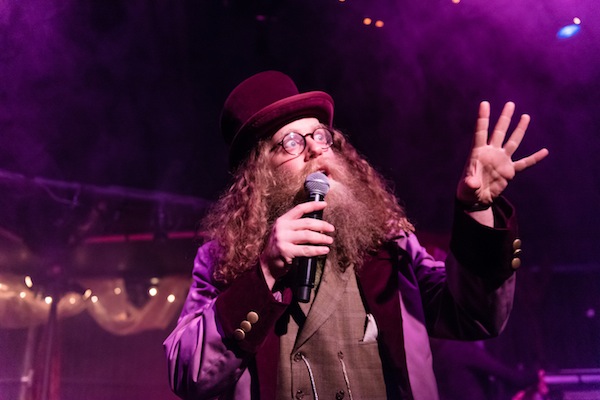
Moshe Denburg’s music will be featured in a tribute concert by the Orchid Ensemble on Nov. 10 at the Annex. (photo from Orchid Ensemble)

The Orchid Ensemble is giving composer Moshe Denburg a most appropriate gift for his 70th birthday – a concert.

The Nov. 10 tribute at the Annex will feature Denburg’s music, as well as the world première of a new work inspired by the melody of one of his first recorded songs. Denburg has collaborated with the Orchid Ensemble over the years and has been a driving force in intercultural music in Canada, including being the founder of the Vancouver Inter-Cultural Orchestra, in 2001.

On the Orchid Ensemble’s tribute program are the three pieces Denburg wrote for the group’s Road to Kashgar (2001), which was nominated for a Juno Award; “El Adon” (2009), a four-movement work that will be performed consecutively as a suite for the first time (one movement being a world première); “Petals of the Flame” (2012), which will be performed with flamenco dancer Michelle Harding; and the North American première of “In Midstream” (2010), a solo zheng (Chinese zither) work performed by Dailin Hsieh.

The icing on the cake, so to speak, will be the performance by the ensemble – Lan Tung (erhu/Chinese violin), Hsieh (zheng) and Jonathan Bernard (percussion) – of “And Gather Our Dispersed from the Ends of the Earth,” by Denburg’s nephew, composer Elisha Denburg.

“I haven’t heard it yet, so I can’t say much about it at all!” said the elder Denburg. “As he has said, it is based on a musical melody of mine, which I set to the liturgical text ‘Gather our dispersed from the ends of the earth….’ This song appears on one of my first albums, and was recorded in New York City in the mid-’70s with a certain well-known ensemble there called the Neginah Orchestra. For many years, it received regular airplay on Kol Israel Radio. I am really looking forward to hearing what Elisha did with it. I will plug him here – he is a composer of depth and originality.”

The younger Denburg’s music has been commissioned, performed and recorded across Canada, as well as in the United States. The award-winning composer has collaborated with numerous artists and his music has aired on CBC Radio 2. Essential Opera commissioned him, with librettist Maya Rabinovitch, to create a one-act chamber opera, titled Regina, about the first female rabbi, Regina Jonas, who was ordained in 1935.

About how his uncle’s melody inspired him, Elisha Denburg told the Independent, “It is a song that invokes very specific and special memories for me, singing around the Shabbat table with him and my family when I was young. It also espouses a key Jewish value: the strength of community. This is why I always try to incorporate it into my chanting whenever I help lead Rosh Hashanah services at my synagogue in Toronto (First Narayever Egalitarian Congregation). In composing a new work for intercultural trio, inspired by this melody, I am attempting to give back to him and our community the musical and spiritual gifts I have been so fortunate to receive in my life so far.”

In looking back at his professional life and how his composing has evolved, Moshe Denburg said, “At the beginning, I was mainly a songwriter and melodist, though I did take it seriously and I still consider a good song and a well-formed melody to be a real achievement. However, over the years, I delved much more deeply into the art of composition, and by that I mean writing for larger forces (like orchestras) and utilizing a broader musical language.”

Denburg has been creating music for almost all of his 70 years; his first composition coming before he was 10 years old. “As a child,” he said, “I improvised melodies, even at the age of 4 or 5. I believe it was when I was 8, I improvised a melody to the words of the synagogue prayer ‘Hashiveinu Hashem eilecha …’ (‘God, bring us back to you …’), and it stuck. It was very cantorial, as this, being the son of a rabbi, was my first influence and inspiration – the modes of synagogue prayer.”

The interest in world music came later. “For many of my generation,” said Denburg, “this connection with and attraction to the music of other cultures started in the 1960s, with the Beatles and others, who were incorporating non-Western instruments – tabla and sitar, for example – into their works. It was a great new stream to draw upon, in order to create something new and exciting. I still think of intercultural music-making as having unlimited potential, with a much larger palette of sounds, and a noble endeavour and homage to everyone’s humanity.”

Retirement is not in Denburg’s plans. He said, “There are three prongs to my musical life, which continue unabated:

“1. Tzimmes, my Jewish music ensemble, is back in the studio, working on some tracks both old and new. Some tracks were begun in 2005-06 and have sat on the back burner for many years. Some pieces are newly composed and arranged. I hope to release them, perhaps as an album or perhaps singly online, over the next year or two.

“2. The Vancouver Inter-Cultural Orchestra (VICO) continues to be a going concern and, though I have stepped back from being hands-on in the organization, I am still involved creatively, contributing compositions and participating in a variety of concert and recording projects.

“3. Apart from the VICO, I am still a composer for hire. In fact, Lan Tung, the leader of the Orchid Ensemble and my musical colleague of many years, recently initiated a project that would see me, funding permitting, commissioned to write for another intercultural ensemble of hers, the Sound of Dragon Ensemble.”

In addition, Denburg has at least two “bucket list” items: “Writing a large-scale work of many movements for the full Vancouver Inter-Cultural Orchestra (25-30 players); continuing to record my works, both Jewish and intercultural.”

For tickets to And Gather Our Dispersed from the Ends of the Earth – Moshe Denburg Tribute Concert at the Annex on Nov. 10, at 4 p.m., visit mosheorchid.brownpapertickets.com.

Format ImagePosted on November 1, 2019October 30, 2019Author Cynthia RamsayCategories MusicTags composers, Elisha Denburg, intercultural, Judaism, Moshe Denburg, Orchid Ensemble
AvevA plays at Chutzpah!

AvevA plays at Chutzpah!

AvevA and her band perform at the Rickshaw Theatre Nov. 14. (photo from Chutzpah!)

“I’m really looking forward to performing for a new audience in Vancouver, and to seeing Vancouver for the first time,” Israeli-Ethiopian singer-songwriter AvevA Dese – who goes by her first name – told the Independent.

The Rehovot-based musician will perform at the Rickshaw Theatre Nov. 14 as part of the Chutzpah! Festival. She will be coming with a band: Noam Israeli (drums), Nadav Peled (guitar) and Itamar Gov-Ari (keyboard). While in North America, the group will also perform in New York and Los Angeles.

Though AvevA has been singing since she can remember, she started songwriting in her teens. Her participation, in 2012, on the Israeli reality TV show The Voice led her to Rimon School of Music, in Ramat Hasharon, a suburb of Tel Aviv. This, in turn, led the musician – who mainly listened to American soul music when she was a kid – to explore her roots. While AvevA was born in Israel, her parents made aliyah in 1984, having escaped civil war and famine in Ethiopia by making the weeks-long journey to a refugee camp in Sudan, from where they were brought to Israel as part of Operation Moses.

“It was a process, trying to get in touch with my roots, my heritage,” she said. “As a child, I wasn’t interested in my heritage because I felt I had to choose either I’m Ethiopian or I’m Israeli. So, I chose Israeli because I wanted to fit in.

“Growing up, I understood that I can be both, but I wasn’t eager to learn and know about my Ethiopian roots – that acutely started through music. When I was at Rimon School of Music, I started singing in an ensemble called Afro-Pop, where the music we played was mostly African music, and I fell in love with it. That same year, I was invited to perform with the Idan Raichel Project, where I performed an Ethiopian song for the first time. I started collaborating with Ethiopian writers, I’ve visited Ethiopia three times in the last four years, and I’m still learning more each day.”

AvevA’s discography includes the EP Who Am I, which was released in November 2016, and the LP In My Thoughts, released in March of this year. “I’m now working on some new songs that I can’t wait to release,” she said. “I hope it will happen in 2020.”

AvevA said she generally begins composing on the guitar. “I’ll start jamming and, when I find something that I like, I just go with it and try to complete that idea into a song.” However, she added, “A song can change a lot in the process of recording and working with a producer. For example, my song ‘Won’t Let You’ wasn’t written before I started working with the producer Isaac DaBom. I had a whole different song that he didn’t think was good enough, so he asked me to rewrite it and that’s how I wrote ‘Won’t Let You.’”

AvevA sings in English and Amharic (the national language of Ethiopia), and some of her songs use Ethiopian scales.

“Ethiopian music is primarily based on a five-tone scale system, known as a pentatonic scale, and the Western scale generally consists of seven notes,” she explained.

AvevA said she feels no pressure to be a “poster girl” for Israel’s openness to diversity. “I don’t feel that pressure,” she stressed. “I share my story and the way that I see things. In Israel, like in any other place, there are beautiful sides and there are ugly sides.”

B.C.-based Leila Neverland, in her trio Mountain Sound, opens for AvevA on Nov. 14, 8 p.m. For tickets to the concert – Rickshaw Theatre is a 19+ venue – and other Chutzpah! shows, visit chutzpahfestival.com.

Format ImagePosted on November 1, 2019November 1, 2019Author Cynthia RamsayCategories MusicTags AvevA, Chutzpah! Festival
Finding hope during war

Finding hope during war

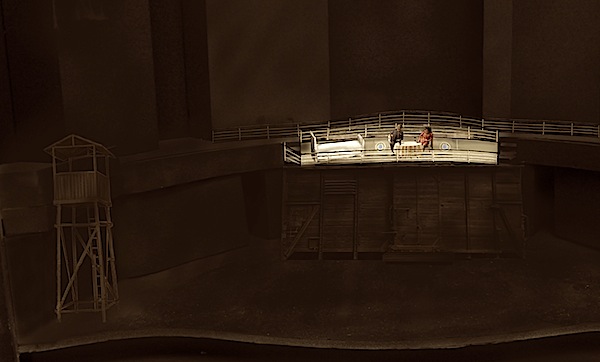
Laura Reynolds and David Volpov in The Wars, which opens Nov. 7. (photo by Javier R. Sotres)

Timothy Findley’s award-winning novel The Wars, adapted by Dennis Garnhum for the stage, comes to University of British Columbia’s Frederic Wood Theatre Nov. 7-23. Directed by Lois Anderson, it will be performed by UBC Theatre and Film’s graduate class of 2020, among whom is Jewish community member David Volpov.

Volpov takes on the leading role of Robert Ross, who is described as “a tender-hearted idealist who shares a strong bond with his wheelchair-bound sister” and “trades his comfortable Canadian life for the harsh world of trench warfare in World War I.”

“What I find challenging about playing Robert is imagining the play as a series of events, with each event slowly transforming him into a new person,” Volpov told the Independent. “At first, he’s a shy city boy who comes from a wealthy family. Over the course of the play, he becomes a confident lieutenant, who’s gained a lot more life experience. It’s not until he escapes his domestic life and goes to war that he truly discovers who he is. He discovers more about his sexuality, his morality around war and his will to live.

“As well as being a war story, the play is also a coming-of-age story. Finding those moments of change has been a rewarding experience because Robert is such a complicated character to crack. Even though he’s so young, he has so much trauma and weight that he carries with him to France. It feels like a big step for Robert every time he grows or learns something, or pushes past his comfort levels.”

Volpov is in his final year of the bachelor of fine arts acting program at UBC. As a writer, his plays include The Minimum-Wage Dame and Ten Years Later. His acting credits include Promethean Theatre Company’s productions of Of Mice and Men and Saint Joan.

“I love working with Promethean because we’re a small group of friends who are passionate about theatre,” he said. “We come together and discuss what stories we want to tell, what stories we think are important to tell. Then we go ahead and tell them. There’s nothing high-brow about it.”

Volpov’s appreciation for storytelling comes in part from his parents.

“My parents were Jewish immigrants from the former Soviet Union – my mom from Latvia and my dad from Belarus. Having grown up persecuted for being Jewish, they found it important to pass on their life stories to me, and that I understood what it meant to be Jewish,” he explained.

Growing up in Richmond as a secular Jew, he said, “It wasn’t until I was a teenager and spent one summer at Camp Tel Yehudah in Upstate New York that I felt connected to my heritage. The camp was oriented on teen leadership, so each camper chose a global issue which they were passionate about, researched it and created an activism action plan.

“The issue I chose to dive into was gun safety,” he said. “My group and I created a policy plan that we got the chance to take to Washington, D.C. We met with senators’ aides and representatives of the NRA [National Rifle Association] and the Brady Campaign. It was very important to be able to speak with people on both sides of the issue and still be able to have a healthy discussion. The experience impacted me a lot because it was the first time that I felt like I had a voice about something I was passionate about, something that felt so personal to me. That’s one thing that really helped in my acting from then on. Before that, I knew how to read and play someone else’s script, but that was when I learned how to make someone else’s text feel like it was my own.”

Considering the text of The Wars, Volpov said that one of the reasons Findley wrote about the First World War “is because that was the war that changed everything. It marked the first use of chemical weapons in war and the first time that the senselessness of war was widely reported. World War I marked a point where the world shifted to a much more cynical outlook, where the chaos of the world was realized.

“Presently,” he said, “we’re living in a similarly cynical time, in a new age of increasing isolationism – of Brexit and [Donald] Trump, and the climate crisis, too. The message that the play applies to the First World War can also apply to today: even when we’ve lowered our faith in our leaders and in humanity, we can always hold onto hope and lean on meaningful connections to others to get by.”

He added that “these connections take precedence over mere survival. The play is so life-affirming because it’s all about finding hope and joy even during the hardest times.”

For tickets to The Wars, call 604-822-2678 or email [email protected].

Format ImagePosted on November 1, 2019October 30, 2019Author Cynthia RamsayCategories Performing ArtsTags David Volpov, theatre, Timothy Findley, UBC, war

Choosing love not hate

On Sunday, vigils were held in many cities to commemorate the 11 worshippers killed at Tree of Life Synagogue in Pittsburgh on Oct. 27, 2018. The shooting was the deadliest attack on Jews in American history.

As we have mourned and taken greater measures toward protecting ourselves, we have, mainly, not let fear paralyze us or isolate us from our neighbours and the larger world. We have continued to live Jewishly, whatever that means to each one of us; whether it’s helping those less fortunate, lobbying for sound government policies, going to synagogue or simply being kind to the people we encounter in our day.

In Vancouver, community members and others could join two collective moments of remembrance on Sunday: the Jewish Federations of North America’s Pause with Pittsburgh, which included the livestreaming of a public memorial service, and a service at Congregation Beth Israel, organized by the Rabbinical Association of Vancouver with the Centre for Israel and Jewish Affairs, the Jewish Community Centre of Greater Vancouver, Hillel BC and the Jewish Federation of Greater Vancouver.

Over the weekend, Jews were also encouraged – as they were in the wake of the tragedy last year – to #ShowUpForShabbat, an initiative of the American Jewish Committee, calling for us “to honour the victims and raise our collective voice for a world free of antisemitism, hate and bigotry.”

Beth Israel’s Rabbi Jonathan Infeld, who grew up in Pittsburgh, told News 1130, “There are still many people who are frightened and worried about what took place a year ago…. There are people who are concerned about coming to synagogue and people who are concerned about antisemitism. Especially on holidays, one of the messages I deliver is that, unfortunately, antisemitism is on the rise in the world. But we have to remain strong, to have the courage to come to synagogue, and to not allow attacks like this to prevent us from being who we are and to deprive us of the benefits that come from being in a sacred space.”

Infeld also noted, “One of the aftermaths of the attack is that people in Pittsburgh didn’t feel this was an attack just on a synagogue, they felt it was an attack on Pittsburgh…. We have to understand an attack on any sacred space is an attack on an entire community, so we need to stand together as one community with the message that love is stronger than hate.”

While the situation is not as bad as elsewhere in the world, the number of hate crimes and the incidences of antisemitism in Canada, including in British Columbia, have increased worrisomely. Love has a long row to hoe. Not only to give us the courage to speak up in the face of prejudice, but also to confront and temper our own. Not only to make us self-assured enough to make space for those with whom we agree and for whom we care, but also for those with whom we disagree and whom we dislike. Not only to inspire us to dream of a better world, but to give us the imagination and resourcefulness to bring those aspirations into being.

Love can only be stronger than hate if we choose to make it so.


Posted on November 1, 2019October 30, 2019Author The Editorial BoardCategories From the JITags #ShowUpForShabbat, antisemitism, Beth Israel, CIJA, hate crimes, Hillel BC, JCC, Jewish Federation, Jonathan Infeld, memorial, Pause with Pittsburgh, Pittsburgh shooting, racism

The knowledge that we die

Shabbat, Oct. 26
B’reishit, Genesis 1:1-6:8
Haftarah, Isaiah 42:5-43:10

One Yom Kippur, a rabbi was warning his congregation about the fragility of life.

“One day, everyone in this congregation is going to die,” he thundered from the bimah.

Seated in the front row was an elderly woman who laughed out loud when she heard this.

Irritated, the rabbi said, “What’s so funny?”

“Well!” she said, “I’m not a member of this congregation.”

Membership and affiliation aside, the most important lesson we learn in life is that one day it will end: one day we are going to die.

This is the great lesson and gift of the parashah B’reishit, with its iconic tale of Adam and Eve in the Garden of Eden.

Amid all the lush greenery, flowing rivers and natural beauty of the garden, at its centre stood two trees. All of the trees and their fruits were permitted to human beings as food, except for the Tree of All Knowledge and the Tree of Life. We read: “God Eternal then commanded the man, saying, ‘You may eat all you like of every tree in the garden – but of the Tree of All Knowledge you may not eat, for the moment you eat of it you shall be doomed to die.’” (Genesis 2:16-17)

When they eat from the Tree of All Knowledge, the knowledge they get is that, one day, they are going to die. Before the forbidden fruit, they didn’t even know death was part of the equation. Now they know and it scares them – to death. They like the garden: life there is beautiful, they don’t want it to end and, standing right next to the Tree of All Knowledge, is the answer to their anxiety – the Tree of Life. One bite from that fruit and they will live forever. This terrifies God. We read: “God Eternal then said, ‘Look, the humans are like us, knowing all things. Now they may even reach out to take fruit from the Tree of Life and eat, and live forever!’ So the Eternal God drove them out of the Garden of Eden to work the soil from which they had been taken.” (Genesis 3:22-23)

God kicks them out of the garden – not as punishment, but as a blessing. If they think they will never die, then how will they truly live? If you have eternity, then there is no urgency for anything; with unlimited tomorrows, everything can wait.

The German existentialist Martin Heidegger, in his masterwork Being and Time, taught this: he said that, in order to truly live authentically, we have to confront death head-on. In other words, knowing that I am going to die is what allows me to truly live. Heidegger wrote: “If I take death into my life, acknowledge it and face it squarely, I will free myself from the anxiety of death and the pettiness of life – and only then will I be free to become myself.”

But, as Ernest Becker wrote in his Pulitzer Prize-winning masterwork The Denial of Death, even though we objectively know that we are all going to die, we don’t actually believe what we know to be true.

Becker’s work is important because of his astute observation that our obsession with not dying actually gets in the way of our fully living.

We are so focused on outwitting, outlasting and outplaying death, staying in our own Garden of Eden, that we make amazingly selfish choices in life. We set up what Becker calls “immortality systems” – non-rational belief structures that give way to the belief that we are immortal.

For example, we try to buy immortality by accumulating possessions and wealth, as if our things will somehow protect us when death comes knocking. We take on heroic roles in our business or our household: we think that, if we make ourselves indispensable, death can’t touch us. “I can’t die this week; I have a sales meeting on Thursday.”

Judaism suggests a different approach to death and to life. Rather than deny death, Jewish tradition instructs us to embrace it. Judaism teaches that we should live each day as if it is our last because we don’t know, it very well may be (Babylonian Talmud, Shabbat 153a).

Imagine, as God does in this parashah, if human beings directed all the energy they focus on not dying toward the more sacred goal of truly living. How would you fill each moment of every day if you truly knew and understood that you will never get that moment back once it has passed; that it is gone forever?

The psalmist declares: “The span of our life is 70 years or, given the strength, 80 years … and they pass by speedily and we are in darkness; teach us to count our days rightly, that we may attain a wise heart.” (Psalm 90:10, 12)

The wise person, our rabbis teach, counts each day and makes each day count. Knowing that our days are numbered helps us clarify our priorities and our purpose. Our most precious possession is not money or things: you can always get more of those. No, our most precious and finite possession is time.

Henry David Thoreau wrote: “I went to the woods because I wished to live deliberately…. I wanted to live deep and suck out all the marrow of life, to put to rout all that was not life, and not, when I had come to die, discover that I had not lived.” (Walden, reissue edition, Princeton University Press, 2016)

When Adam and Eve are kicked out of the garden, the Torah records the very first thing they do. “And Adam knew his wife Eve and she bore him a son.” (Genesis 4:1) They have a child: the very realization of “I’m not going to live forever” is answered with our best attempt at immortality – progeny.

And so, a final question remains. Where is the true paradise? Is it in the Garden of Eden where no one ever dies and time is limitless? Or is it East of Eden, outside the garden, where every moment is precious, every decision is life-changing and the fruit, sometimes bitter, compels us to appreciate the sweet?

Rabbi Dan Moskovitz is senior rabbi at Temple Sholom and author of The Men’s Seder (MRJ Publishing). He is also chair of the Reform Rabbis of Canada. His writing and perspective on Judaism appear in major print and digital media internationally. This article originally appeared on reformjudaism.org.

Posted on November 1, 2019October 30, 2019Author Rabbi Dan MoskovitzCategories Op-EdTags dying, Ernest Becker, Henry David Thoreau, lifestyle, Martin Heidegger, philosophy, psalms, Reform Judaism, Talmud, Torah
Fighters return to kibbutz

Fighters return to kibbutz

Stacking the banana bunches in the wagon required a type of superpower. (photo from Victor Neuman)

In this eight-part series, the author recounts his life in Israel around the time of the 1973 Yom Kippur War. The events and people described are real but, for reasons of privacy, the names are fictitious.

Part 6: War Comes Home

My first inkling of how fighting is done in this region of the world came in 1969, when I was working on the pipeline near Arad. Our crew was encamped at a motel and so were some Israeli soldiers. At that time, there were infiltrators crossing from Jordan into Israel and planting bombs wherever vehicles were likely to pass. Tourists like myself were warned to hitch rides while standing on the paved part of the road – never the soft shoulder. Similarly, the cars picking you up never pulled over; they simply stopped in the travel lane and waited.

The Israeli patrols were setting up ambushes in wadis in the area. When they came back to the motel to warm up, I talked with them about what they were doing.

As darkness came, the soldiers drove out to a wadi that showed signs of human activity, positioned themselves and waited. It was damn cold, they told me, especially when you had to remain still for a long time. Their jackets and leggings kept most of their bodies warm but their hands became very cold. You can’t properly operate a weapon with gloves on.

“So, what did you do to keep your hands warm?” My question got laughter in response.

“Shall we tell him?”

“Yes, who cares? Tell him.”

“Well, if you must know, we all sit around with our hands in our crotch. That’s the only way to keep them warm.”

Still the greenhorn, I asked them if they had any luck or taken any prisoners. Again, they looked at each other – in more seriousness this time.

“It’s dark and you can’t see what they have in their hands even when their hands are in the air. We just kill them all.”

I had no more questions.

Now, it was 1973 and the war had been going on for two weeks. The tide had turned. Syria had been pushed back from the Golan and Egypt had been cut off in the Sinai. To the relief of all of us on the kibbutz, Jordan’s only contribution to the war had been to send some soldiers to fight alongside the Syrians. There was no Jordanian third front in the war.

A trickle of kibbutz members – mainly the older reservists – began returning from the front lines. One of them was a good friend and a fellow banana worker named Moti.

Moti’s talent in the fields showed itself during our time of kateef (cutting, or harvesting). Moti received the bunches and quickly stacked them in the wagon, usually about eight rows high. His superpower was being able to do this in a way that the row would not collapse before the next row shored it up. I tried it once and produced a banana avalanche. It was one of those things that is funny in hindsight – at the time, we had to empty the whole wagon and start over. Time was wasted, bananas were bruised, Lev was pissed.

Moti told me he hadn’t been on the front but had heard stories from those who were. They told him that they had retaken outposts that were overrun in the first days of the war. They found Israeli soldiers tied to the four corners of their bunk with their bellies cut open. I asked him if he had seen any of this; he told me he hadn’t. They were just stories he had heard, but he believed them.

Having Moti back was like old times. Moti, Lev and I were all back in the bananas, along with a number of tourist-volunteers. We were able to properly tend the fields again and we wished to think that life was returning to normal.

Still, the war came home whenever someone else came back on furlough and brought their stories. Next to return were Tzvie and Ari – good friends who, in peacetime, worked the fields together and, in wartime, shared a tank. Just before the war, they had completed their three years of military service and were off on a tour of Europe. No one on the kibbutz could afford to do such things, so the kibbutz rewarded everyone who completed their army stint with an all-expenses paid trip to Europe. It was a once-in-a-lifetime chance to see the world before settling down and all the kibbutz kids dreamed of their time abroad.

Tzvie and Ari were two weeks into their trip when the news reached them that Israel was under attack. Ari wanted to carry on with the tour, arguing that the war would be over before they got home, but Tzvie would have none of it. He told Ari that he would go insane if he were walking around Europe while his country was at war and he became so agitated that Ari agreed to return.

One of the war stories they shared was that, on one of their forays, their tank was hit by a wire-guided missile – a portable device enabled the operator to fire the missile and control it in flight by means of a wire that played out as the missile flew on its path. The Egyptian army had many of these missiles and they took a deadly toll on Israeli tanks in the opening days of the war.

When Tzvie and Ari’s tank was hit, it was immediately disabled and the entire crew had to abandon it quickly. With the enemy nearby, they couldn’t exit from the top of the tank so they dropped the hatch at the bottom and escaped using their tank’s track-and-wheel assembly as cover. They were tripping and stumbling over anti-tank wires from an earlier battle but managed to haul their guns and a box of ammunition to a nearby hill. They were grateful to be alive but less so when they realized they had brought the wrong ammunition; it was compatible with one of the tank’s machine guns but none of the weapons they were carrying. In despair, they hunkered down and waited to be attacked. Then they began to notice how quiet it was. In fact, there was no one around but them. They came down from the hill to investigate and found that their tank had actually hit a land mine.

Ari said of the experience, “Yes, it was scary, but at least our job is driving a tank. It’s worse to be a paratrooper. There they tell you that, if your chute doesn’t open, point yourself head down toward the ground. That way they can reuse your boots.”

At this point, Ari and Tzvie smacked each other on the back and laughed their heads off. Seeing our cue, we all laughed as well.

Now I had the whole range of it. War, murderous and savage. War as slapstick.

(Next Time: The Ceasefire)

(Previously: “Learning the lay of the land”; “When Afula road went quiet”; “Tending the banana fields in war”; “Weapon training begins”; “Near tragedy on guard”)

Victor Neuman was born in the former Soviet Union, where his family sought refuge after fleeing Poland during the Second World War. The family immigrated to Canada in 1948 and Neuman grew up in the Greater Vancouver area. He attended the University of British Columbia and obtained a BA and MA with majors in English literature and creative writing. Between 1968 and 1974, he made two trips to Israel, one of which landed him on a kibbutz at the time of the 1973 Yom Kippur war. Upon his return to Canada, he studied Survey Technology at BCIT and went on to a career of designing highways for the Province of British Columbia and the firm of Binnie Civil Engineering Consultants. When he retired, he reconnected with his roots in creative writing and began writing scripts for Vancouver Jewish Folk Choir concerts and articles for the Jewish Independent. Neuman and his wife, Tammy, live in southeast Vancouver and enjoy the company of friends, their extensive extended family and their four sons.

Format ImagePosted on November 1, 2019November 6, 2019Author Victor NeumanCategories IsraelTags Diaspora Jews, history, Israel, kibbutz, memoir, Yom Kippur War
טרודו ניצח שוב את השמרנים בבחירות

טרודו ניצח שוב את השמרנים בבחירות

כיוון שהמפלגה של ג’סטין טרודו זכתה במרבית המושבים ברפלמנט, הוא זה שיקבל ראשון את המנדט להרכיב שוב את הממשלה החדשה. (רוני רחמני)

האם הוא עשוי בטפלון? שאלו הפרשנים באולפני החדשות לאור ניצחונו של ג’סטין טרודו – ראש הממשלה היוצא מטעם המפלגה הלברלית, בבחירות הכלליות בקנדה, שנערכו ביום שני בשבוע שעבר. זאת לאור מספר פרשות בהן נקשר שמו בשנה האחרונה. בהן: טרודו הואשם בכך שניסה להסדיר תביעה נגד חברת תשתיות הגדולה ממחוז קוויבק אס.אן.סי לוולין. להגנתו אמר ראש הממשלה כי ניסה בסך הכל למנוע פיטורי אלפי עובדים של החברה באם היא תעקור לחו”ל. כן פורסמה תמונה בה נראה טרודו מחופש לשחור עת היה מורה בבית ספר. טרודו התנצל על כך מספר פעמים. לכן העלו מספר פרשנים את הסברה שהוא יובס בבחירות הארבעים ושלושה במספר. אך לא כך אצל טרודו. אמנם המפלגה הליברלית הפסידה את הרוב בפרלמנט בבחירות, והיא ירדה ממאה שבעים ושבעה מושבים למאה חמישים ושבעה, מתוך שלוש מאות שלושים ושמונה מושבים. אך כיוון שהמפלגה של טרודו זכתה במרבית המושבים ברפלמנט, הוא זה שיקבל ראשון את המנדט להרכיב שוב את הממשלה החדשה. מדובר הפעם בממשלת מיעוט כי דרושים מאה ושבעים מושבים לממשלה הנשענת על רוב. אם יצליח טרודו לצרף לממשלתו את המפלגה הדמוקרטית החדשה מהשמאל, שנפגעה קשות בבחירות וירדה משלושים ותשעה מושבים לעשרים וארבעה, הוא יבטיח לעצמו ממשלה יציבה הנשענת על רוב ברור בן מאה ושמונים ואחד מושבים.

מפלגת השמרנים בראשות אנדרו שיר, ניהלה קמפיין מלוכלך ואישי נגד טרודו בארבעים ימי מערכת הבחירות. שיר לא התבייש להמציא סיפורים על טרודו ולטעון דברים כנגדו שלא היו ולא נבראו. ומה לא יעשו השמרנים כדי לנצח. שיר אף הגדיל לעשות וטען באחת מעצרות הבחירות האחרונות כי אם הוא ינצח בבחירות, יפעל לקיים חקירה נגד טרודו בפרשת אס.אן. סי לוולין. ציבור מאזיניו הנאמן צעק לעבר שיר:”נעל אותו”, “נעל אותו”, “נעל אותו”. זאת בדיוק כפי שצעקו תומכי המועמד לנשיאות בארה”ב דונלד טראמפ, כאשר הציע לבצע חקירה נגד הילרי קלינטון בפרשת האימיילים שנעלמו. הדימיון לא מפתיע אפוא כאשר מדובר בשמרנים. המפלגה של שיר הגדילה אמנם את כוחה משמעותית בפרלמנט לעומת הבחירות הקודמות, מתשעים וחמישה מושבים למאה עשרים ואחד מושבים, אך נכשלה נמרצות בכוונתה להרכיב את הממשלה הבאה.

המנצחת הגדולה בבחירות האחרונות היא המפלגת הבדלנים ממחוז קוויבק שהגדילה את כוחה משמעותית לעומת הבחירות הקודמות. מעשרה מושבים לשלושים ושניים מושבים. המפלגה הבדלנית הודיעה כי הורידה מסדר היום שלה את הרצון להגשים את החלום ההיסטורי ולהיפרד מקנדה. כל שהמפלגה מבקשת עתה זה הוא לדאוג לאינטרסים של המקומיים בקוויבק. ובין היתר למנוע את בניית צינור נפט במחוז להעברת נפט ממחוז אלבטרה.

לאור תוצאות הבחירות להערכת מספר פרשנים: קנדה כיום מפוצלת הרבה יותר מבעבר. לדעת חלק מהם זה מה שקורה בהרבה מדינות במערב כיום, אך בקנדה הפיצול נחשב עדיין למתון יותר. במחוז קוויבק שולטת המפלגה הבדלנית, במרכז המדינה שולטת המפלגה הליברלית ובמערב קנדה (במחוזות סיסקצ’ואן ואלבטרה) מפלגת השמרנים. הפרשנים חושבים שטרודו יהיה חייב לגלות מנהיגות אמיתית כדי לאחד את כל הכוחות תחתיו. יש המאמינים שהוא המנהיג הנכון במקום הנכון והוא יצליח לעשות זאת. מכל מקום בנאום הניצחון שלו אמר טרודו כי הוא ראש הממשלה של כל קנדה, והוא יפעל לטובת כל האזרחים בין אם בחרו בו או לא. וטוב שכך.

Format ImagePosted on October 30, 2019October 23, 2019Author Roni RachmaniCategories עניין בחדשותTags Andrew Scheer, Canada, elections, Justin Trudeau, אנדרו שיר, בחירות, ג'סטין טרודו, קנדה
The broader impacts of war

The broader impacts of war

Vancouver Peace Poppies co-founder Teresa Gagné at the White Poppy Memorial in 2018. (photo by Diane Donaldson)

A local group is hoping to broaden the scope of Remembrance Day as more than an occasion to honour the brave men and women who have died while serving for their country. Through the distribution of white poppies, the Vancouver Peace Poppies (VPP) movement strives to extend the focus on Nov. 11 to all those who have suffered as a result of military conflicts.

Teresa Gagné, who co-founded VPP with Denis Laplante in 2008, stresses that the group intends no disrespect towards soldiers. Instead, they wish to bring more awareness to the toll warfare has on the whole population, whether it be the loss of life or other trauma experienced. Beyond representing the victims of war, civilian and military, the white poppy, according to VPP, also challenges the beliefs, values and institutions that create the view that war is unavoidable.

“I have always had respect and sympathy for veterans, who put their life, health and family on the line to serve,” Gagné said. “I believe they deserve recognition and support, but, for years, I was uncomfortable wearing a red poppy, because of the undercurrent of promotion and recruitment for present and future wars that I detect in many public events around the topic of supporting veterans. The white poppy attracts questions, and gives me a chance to explain the nuances of my support.”

A 2016 study by Alexandre Marc, a specialist in conflict and violence for the World Bank, brought to light the overwhelmingly disproportionate number of casualties among non-combatants as opposed to combatants in recent decades. According to some reports, civilians constitute 90% of wartime fatalities, a ratio that has existed since the mid-1950s.

What’s more, Marc’s research points out that global poverty is increasingly concentrated in countries affected by violence and that prolonged conflict keeps countries poor.

Gagné and Laplante have been active in the peace movement since their teens. Their 2008 launch of VPP began by distributing handmade white poppies as a way to promote discussion and a broader focus for Remembrance Day. The following year, while still a “kitchen table” operation, they imported 500 cloth poppies from Britain. VPP now sends out more than 5,000 poppies across Canada annually.

Since 2016, VPP has partnered with the B.C. Humanist Association to host Let Peace Be Their Memorial, an annual Remembrance Day wreath-laying ceremony that includes peace songs, short presentations and poetry. This year, the Multifaith Action Society is also a co-host. The event poster highlights, “The time and location of the ceremony has been chosen to avoid any appearance of competition with, or disrespect for, veteran-focused events.”

Holocaust remembrance

As in previous years, this year’s ceremony at Seaforth Peace Park on Nov. 11, 2:30 p.m., will include a special wreath laid in memory of Holocaust victims.

Two members of the Vancouver Jewish community, Marcy Cohen and Gyda Chud, are engaged in the local movement. In 2017, Cohen attended her first Let Peace Be Their Memorial and then sought to get others in the community involved.

photo - Henry Grayman and Deborah Ross-Grayman with the Holocaust wreath at the memorial last year
Henry Grayman and Deborah Ross-Grayman with the Holocaust wreath at the memorial last year. (photo by Diane Donaldson)

“I was far more affected emotionally than I anticipated,” said Cohen of the occasion.

After learning of the history, values and focus of VPP, Chud recently joined the committee, and seeks to profile their work in the larger Jewish community. She represented Pacific Immigrant Resource Society (PIRS), a local refugee service group, in laying the refugee wreath in 2017 and 2018.

“The memorial serves as a powerful and compelling call to action for everything we can and must do to create a more peaceful world,” said Chud.

Last year’s Holocaust wreath was laid by Henry Grayman and Deborah Ross-Grayman, both children of Holocaust survivors. Having each experienced the intergenerational effects of trauma, the couple, both therapists, are facilitators for the Second Generation Group, an organization in Vancouver comprised of children of Holocaust survivors sharing their experiences among peers.

The people laying the Holocaust wreath at this year’s Let Peace Be Their Memorial have yet to be announced.

Poppies’ history

The red poppy widely worn today first appeared in 1921 on what was then called Armistice Day. In 1926, the No More War Movement, a British pacifist organization, came up with the idea for the white poppy and, in 1933, the Co-Operative Women’s Guild in the United Kingdom sold the first white poppies as a means of remembering that women had lost husbands, sons and fathers during wartime.

The wreaths that Vancouver Peace Poppies and other groups make, a mix of white and red poppies, highlight the amount of civilian suffering. VPP also distributes white poppies in schools in an effort to teach students that wars mostly kill non-military people, pollute the environment and send the message that violence as a means to settle disputes, even for adults, is acceptable.

VPP hands out its poppies by donation to increase awareness of its cause and not as a fundraiser. Poppies cost $1.25 each, of which 95 cents goes to the Peace Pledge Union, a pacifist organization based in London, England, which, since 1934, has advocated for nonviolent solutions to global problems. A $1 or $2 donation allows VPP to provide subsidized poppies for classroom use and free poppies to disadvantaged groups.

For poppies and more information, visit peacepoppies.ca or call 604-437-4453.

Sam Margolis has written for the Globe and Mail, the National Post, UPI and MSNBC.

Format ImagePosted on October 25, 2019October 23, 2019Author Sam MargolisCategories Celebrating the HolidaysTags conflict, Gyda Chud, Holocaust, Marcy Cohen, memorial, peace, Remembrance Day, Teresa Gagné, war
Presenting our stories

Presenting our stories

Tamara Micner performs her one-woman play Holocaust Brunch this weekend at Chutzpah! (photo by Sophie le Roux)

“In recent years,” playwright Tamara Micner told the Independent, “I feel there’s been increasing discussion about inherited trauma in indigenous communities and in other minority communities, such as Japanese- and Chinese-Canadian communities. For me, it’s been valuable to remember that, sadly, we as Jews are not alone in inheriting collective trauma. In fact, I also know white, Christian Canadians who have it, too. The tsures we carry is unique in some ways, but we’re definitely in good company.”

Micner, who now lives in London, England, will be returning home to Vancouver for a couple of weeks to perform her new one-woman show, Holocaust Brunch, at the Chutzpah! Festival. It is one of two theatre works that will see their Canadian première at this year’s festival; the other is The Diary of Anne Frank LatinX, directed by Stan Zimmerman, who is based in Los Angeles.

While The Diary of Anne Frank was mounted by Fighting Chance Productions last year (jewishindependent.ca/glimpse-of-life-in-the-annex), Zimmerman’s production features only Latinx actors. This is what makes this version of the play – written by Frances Goodrich and Albert Hackett Based and adapted by Wendy Kesselman – unique.

“I chose to use Latinx actors for the characters in the attic,” Zimmerman told the Independent, “after seeing a CNN report about a Jewish woman in L.A. who arranged to hide a Latina mom and her daughters after her husband was suddenly deported by ICE [U.S. Immigration and Customs Enforcement].

“Contrary to initial media reports – that went worldwide – we are not replacing the Nazis with ICE agents [in the play]. We are performing a word-for-word production of the script that Natalie Portman starred in on Broadway in 1997. I’m not saying the situation is exactly the same as the Second World War, but there are parallels – parallels that we can hopefully learn from. Only then can we live by Elie Wiesel’s famous phrase, ‘Never again.’”

photo - Emiliano Torres and Genesis Ochoa in The Diary of Anne Frank LatinX, which will be at Chutzpah! Nov. 6-9
Emiliano Torres and Genesis Ochoa in The Diary of Anne Frank LatinX, which will be at Chutzpah! Nov. 6-9. (photo by Elvira Barjau)

Some Jewish community members were concerned about Zimmerman’s casting choice.

“Initially,” he said, “I had a few Jewish friends question my decision to cast Latinx actors in the play. For them, it was more about not wanting to tarnish the legacy of Anne Frank. But, when they saw that we were honouring her memory, they understood the power of this production. I took to heart the insightful words of a young Anne Frank from her diary – ‘Our lives are all different, and yet the same.’”

The concept of “different yet the same” is one of the reasons that Micner was interested in telling the stories of Bluma and Isaac Tischler, who have both passed away. Born in Poland, they “met in medical school in Tajikistan during the war, and went on to become renowned Vancouver doctors.”

“I have known the Tischler family since 1987, when their daughter Yael and I did What Do I Do When I’m Two? together at the JCC,” said Micner, referring to a program at the Jewish Community Centre of Greater Vancouver. “Our parents and grandparents have also known each other for many years.”

That said, Micner explored some of her gaps in understanding, through creating Holocaust Brunch.

“Growing up,” she said, “I felt there was a disconnect between ‘the Holocaust story’ I was taught, which focused on Western Europe and camps, and my own family’s story, which was about living in Eastern Europe (Poland) and surviving the war in the Soviet Union. The Tischlers’ story has those parallels as well, and it feels important to me to talk about a kind of Holocaust story that I haven’t seen told in wider culture, and that some non-Jews I know have never even heard.”

Micner is no stranger to writing plays based on people she knows.

“I have created shows in the past that are inspired by my own family,” she said. “Holocaust Brunch is partly about another family’s story, and started with the Tischlers offering me part of their family’s story to tell in a piece of theatre. I take that offer very seriously as an act of trust and a responsibility, as the creator and performer of the piece. We’ve had several conversations along the way about the central questions and themes of the piece as it has taken shape, and they have seen the show as it has evolved.”

One of the central aspects of the work is looking at trauma from a third-generation perspective.

“I am indeed part of the ‘third generation,’ and Holocaust Brunch explores what it’s like living as a descendant of Holocaust survivors, two generations removed from that history and trauma,” said Micner. “It’s certainly based on some of my experiences and, inevitably, incorporates aspects of other people’s experiences based on conversations I’ve been part of, books and articles I’ve read, and so on. There are many of us who are thinking and talking about these issues.”

In contrast, Zimmerman witnessed a lack of discussion and knowledge about the Holocaust and, specifically, The Diary of Anne Frank.

“I was quite shocked,” he said, “when the 15-year-old actor playing Anne told us that she did not know who Anne Frank was before auditioning for our production. As a Jew, I grew mad to learn that Anne’s diary is no longer required reading in the California school system. I decided then that it was vital to get as many student groups as possible to see this play, with this cast.”

And it hasn’t been only the cast and audiences who have learned something from the play.

“Although I was a good student at my temple’s Sunday school,” said Zimmerman, “being involved in this play opened my eyes to so many stories about the Holocaust that I never knew before. These important lessons were gained by visits to several museums and meeting many survivors and hearing their stories firsthand.”

He added, “As many of our survivors pass, it is important for us as artists to find creative ways to keep Anne’s story alive.”

One of the ways in which Micner creatively tells her story is with humour. Describing Holocaust Brunch as a “dark comedy,” Micner explained, “I think there’s a history of Ashkenazi Jews using comedy to look at hard things – the oppression we’ve suffered, displacement, antisemitism, poverty and so on. Holocaust Brunch is certainly engaging with that tradition,” she said. “I think there’s also a history of Ashkenazi humour being self-deprecating – as in, making fun of ourselves – and, one of the things I’ve been interested in, is looking at where that comes from and what it would mean for us not to be the butt of our own jokes. Holocaust Brunch is using comedy to look at communal trauma, and how we might be able to heal from that. The show also uses humour to explore stereotypes and assumptions that some non-Jews have about Jews. I think laughter helps us open up and look at hard places.”

For his part, Zimmerman would like audiences who come to see The Diary of Anne Frank LatinX “to feel like they literally stepped into the shoes of these characters – just like the actors have. Then we can all have this highly emotional and very visceral experience that can only be achieved communally with live theatre.”

Holocaust Brunch runs this weekend in the JCCGV’s Wosk Auditorium, Oct. 27, 1 p.m., and Oct. 28, 7 p.m. The Diary of Anne Frank LatinX, co-presented with Howard Blank of Point Blank Productions, is at the Rothstein Theatre Nov. 6, 8 p.m.; Nov. 7, 8 p.m.; Nov. 8, 1 p.m. and 8 p.m.; and Nov. 9, 2 p.m. For tickets to these and other Chutzpah! shows, visit chutzpahfestival.com.

Format ImagePosted on October 25, 2019October 23, 2019Author Cynthia RamsayCategories Performing ArtsTags Anne Frank, Chutzpah! Festival, Holocaust, memoir, Stan Zimmerman, Tamara Micner, theatre

Vibrant democracies

On Monday, Canada and Israel each embarked on a new adventure in governance. Here at home, Justin Trudeau’s Liberal party had a surprisingly robust showing in the federal election, winning the irrefutable right to form a minority government, or to form a coalition of some description.

The Liberals’ relatively strong showing – 157 seats to Andrew Scheer’s 121; just 13 short of a majority – opens the door for a government with Jagmeet Singh’s New Democrats holding a balance of power. Just a few days before the election, polls suggested a race so tight, and with the Bloc Quebecois and NDP taking so many seats, that any configuration to reach the magic 170 number would have required not two parties, but three. That complicated scenario was averted, leaving the Liberals free to face the House with either a formal agreement with the NDP or a tacit knowledge that the now-fourth party is in no financial position to return hastily to the election battlefield.

In Israel Monday, President Reuven Rivlin called on Blue and White leader Benny Gantz to attempt to form a government after incumbent Binyamin Netanyahu failed to do so after the second inconclusive election this year. Gantz has said he hopes to form a “liberal unity government,” but that is as challenging as Netanyahu’s failed effort to coalesce a majority. He may be hoping that, if Netanyahu is indicted in the coming days, Likud under a new leader might be a viable partner – or perhaps some MKs unfettered from Netanyahu’s long years of leadership will break away and form a faction to join Gantz. Another plan has Gantz propping up Netanyahu unless and until Netanyahu is charged, at which point Gantz would stand up as prime minister, which seems a strange compromise with a tarnished leader. As usual in Israeli politics, there are a vast number of moving parts.

Multiple moving parts is less typical of Canadian politics, where our tendency toward majority governments typically sequesters any moving parts in the all-powerful Prime Minister’s Office. Not so during a minority Parliament, when individual MPs on all sides are able to wield power in ways they can only dream of in a majority scenario.

In what must be a jagged pill for the once and future prime minister, Jody Wilson-Raybould, whose testimony about Trudeau’s treatment of her was the single most detrimental arrow in Trudeau’s reelection armour, was herself reelected as an independent in Vancouver Granville. A large number of Jewish British Columbians, now, are represented in Parliament by an individual who belongs to no party. This will be fascinating to watch in many respects, not least how she pursues politics from the opposition benches as the SNC-Lavalin affair continues to percolate.

Other sidebars in the result include the scuttled effort by a leading anti-Israel figure to re-enter Parliament. Svend Robinson, who, during 25 years in Parliament, was one of Canada’s most vociferous voices against Israel, threw his hat back in the ring but came up short in Burnaby North-Seymour – being narrowly defeated by the incumbent Liberal despite this being ground zero in the battle over the Liberals’ Trans Mountain pipeline expansion.

More notably, Maxime Bernier, leader of the nascent People’s Party, lost his own seat in Quebec. His party made effectively no impact anywhere, sending the hopeful sign that messages of populist xenophobia that seem to be resonating elsewhere in the world still fall largely on deaf ears, at least electorally, here.

Canada will almost certainly have an easier time forming a government than Israel will but, in both cases, the drama plays out against the backdrop of healthy, vibrant, disputatious democratic systems. No matter what the outcomes, we should be thankful for that.


Posted on October 25, 2019October 23, 2019Author The Editorial BoardCategories From the JITags Andrew Scheer, Benny Gantz, Binyamin Netanyahu, Canada, elections, governance, Israel, Jagmeet Singh, Jody Wilson-Raybould, Justin Trudeau, politics, SNC-Lavalin

Posts pagination

Previous page Page 1 … Page 282 Page 283 Page 284 … Page 651 Next page
Proudly powered by WordPress