Skip to content
  • Home
  • Subscribe / donate
  • Events calendar
  • News
    • Local
    • National
    • Israel
    • World
    • עניין בחדשות
      A roundup of news in Canada and further afield, in Hebrew.
  • Opinion
    • From the JI
    • Op-Ed
  • Arts & Culture
    • Performing Arts
    • Music
    • Books
    • Visual Arts
    • TV & Film
  • Life
    • Celebrating the Holidays
    • Travel
    • The Daily Snooze
      Cartoons by Jacob Samuel
    • Mystery Photo
      Help the JI and JMABC fill in the gaps in our archives.
  • Community Links
    • Organizations, Etc.
    • Other News Sources & Blogs
    • Business Directory
  • FAQ
  • JI Chai Celebration
  • JI@88! video

Recent Posts

  • Hateful messages intensify
  • Creating entrepreneurs
  • Wrong choice to host Piker
  • Attack on Jewish kids
  • Multiple benefits of a break
  • Dialing up the perfect thriller
  • Empowerment & more
  • Songs in war of peace
  • Successful trip to Cuba 
  • Tackling antizionism head on
  • Thinking of leaving Canada?
  • Kindness as a matter of fact
  • Personal stories, vital lessons
  • Connecting generations
  • Vancouver to Vienna
  • Recipes a form of resistance
  • Community milestones … February 2026
  • Generations … It’s all yours!
  • נתניהו לא מתבייש להאשים את ביידן באחריות להרג חיילים ברצועת עזה
  • Last hostage home
  • New bill targets hate crimes
  • Concerning actions
  • Recipes not always required
  • Survivor urges vigilance
  • Seniors profoundly affected
  • Farm transforms lives
  • Musical legacy re-found
  • A range of Jewish literature
  • A concert of premieres
  • Variety telethon on Feb. 22
  • Victoria club’s many benefits
  • Avodah dedicated to helping
  • Artists explore, soar, create
  • Life’s full range of emotions
  • Community needs survey closes March 29
  • Jerusalem marathon soon

Archives

Follow @JewishIndie
image - The CJN - Visit Us Banner - 300x600 - 101625

Tag: composers

Writing music for life

Writing music for life

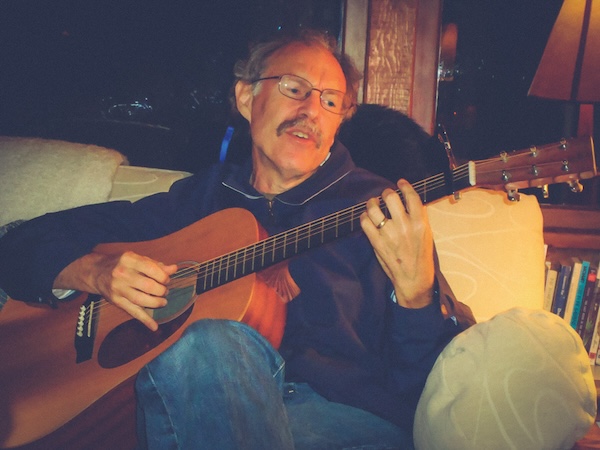
Composer Ari Kinarthy writes music using interactive hardware and software systems that form sounds from movements. His story is told in the documentary Ari’s Theme, which will screen at Hot Docs in Toronto, then be available on TELUS originals. (photo from Salazar Film)

Ari’s Theme, about Victoria composer Ari Kinarthy, will make its world première this spring at Toronto’s Hot Docs Film Festival. Directors Jeff Petry and Nathan Drillot said the idea for the documentary came from an article about Kinarthy in the Jewish Independent, which was published in April 2020.

Petry and Drillot, who run Salazar Film, a production company located in Vancouver, were intrigued and inspired by Kinarthy upon discovering his method for composing music. By using interactive hardware and software systems that form sounds from movements, Kinarthy can use the movements he makes with his wheelchair to produce music that is recorded into multimedia platforms. For example, movements closer to the recording device create lower notes and movements further away result in higher notes.

“As we learned more about Ari’s story, we thought about how interesting it would be to work with a composer like Ari, who has a very particular life experience, and ask him to compose music about the most impactful moments, dreams and experiences of his life and let us create cinematic scenes around them,” Petry said.

Petry and Drillot pitched the project to TELUS originals, which supports local documentaries by independent filmmakers in British Columbia and Alberta, with the objective of bringing films on various social topics to wider audiences.

“As the filmmaking relationship between Ari and ourselves developed, it turned into a really deep collaboration, and other themes we hadn’t expected started to grow and evolve,” said Petry. “Ari showed a lot of strength and vulnerability in creating this film with us and, for this, we are really honoured by his trust.”

Kinarthy, now in his 30s, has used a wheelchair since childhood because of type-2 spinal muscular atrophy, a condition that continues to weaken his muscles. Kinarthy is profoundly cognizant of his mortality and Ari’s Theme delves into his desire to tell his story, as he endeavours to create a new composition inspired by some of the most meaningful moments in his life.

“This film has been nothing short of a gift from God,” Kinarthy said. “The ability to install my music in a visual project is already amazing, and my dream, but to have that project be a complete portrayal of my life is truly special. I have always wanted a way to not only inspire others but to have my memory, or legacy, encapsulated so that I live on beyond my body.”

Kinarthy said he enjoys the challenge of creating grand symphonic music of the sort John Williams writes – the kind composed for a hero. There have been times in his life, he said, when he has had to fight like one.

For Kinarthy, the process of working on the film was a journey from stress to happiness. 

“Looking back and reflecting on my past, myself, and my life was challenging and rewarding. I have been through a lot and I got to write music about key moments,” he said.

“Working with Salazar was a wonderful experience,” he added. “The studio was always very understanding of my situation and gave me tons of flexibility to write how I write. They were also very helpful in helping me articulate my thoughts. The directors and I became close during the process of the film, and I am so glad I got to meet them. I will never forget them.”

Petry and Drillot have several documentaries to their credit, including Becoming Sumo, the story of Ōsunaarashi Kintarō, the world’s first Arab Muslim professional sumo wrestler; Handsome and Majestic, a short film about a teenage transgender boy growing up in Prince George; and Wizard Mode, a feature-length movie (eventually acquired by Netflix US) about Robert Gagno, a world champion pinball player.

Over the past decade, Petry and Drillot have filmed around the world, from Nunavik to Bolivia, to the Democratic Republic of Congo. They received Juno and Grammy nominations for best full-length music documentary for their work with Canadian indie rock duo Tegan and Sara. 

Despite some problems, which were recently reported in the entertainment media, it appears the show will go on for Hot Docs Canadian International Documentary Festival, now in its 31st year. In late March, director Hussain Currimbhoy stepped down for personal reasons, according to the festival. Ten other members of the programming team also left, for undisclosed reasons.

Ari’s Theme will first screen in Toronto on April 30, followed by another festival screening on May 2. After its Hot Docs run, the film will be available on TELUS Optik TV Channel 8 and online at TELUS originals.

To read the article that sparked the idea for Ari’s Theme, visit jewishindependent.ca/no-barriers-to-music. To view the documentary following its showing at Hot Docs, go to watch.telusoriginals.com. 

Sam Margolis has written for the Globe and Mail, the National Post, UPI and MSNBC.
Format ImagePosted on April 12, 2024April 10, 2024Author Sam MargolisCategories Music, TV & FilmTags Ari Kinarthy, composers, documentary, Jeff Petry, Nathan Drillot, Salazar Film, TELUS originals
Many invaluable contributions

Many invaluable contributions

Harley Rothstein has just released a three-CD compilation of Jewish music and secular folk songs. (photo from harleyrothstein.ca)

A little over a year ago, my friend and musical colleague Harley Rothstein – cantor, songwriter, folk singer – shared with me his freshly minted three-CD compilation of both Jewish music and secular folk songs. The recordings, several years in the making, are Modim: Songs of Spirit and Gratitude; Songs of Love and Humanity: Folk Songs of Fifty Years, Volume I; and Songs of Love and Humanity: Folk Songs of Fifty Years, Volume II.

Before getting into more “nuts and bolts,” let me say something well understood by all hardworking creatives: the life of an artist is, in a very real sense, an act of service to the community in which they live. This contribution to the community is what stands the test of time, and Harley Rothstein is undoubtedly one such indefatigable contributor, an artist who has dedicated himself to serving the community in which he lives, and sharing his work unselfishly. The compilation under discussion here is only the most recent of the many invaluable gifts of music Harley has given us over the years.

As many readers may know, Harley is a scion of the philanthropic Rothstein family; indeed, his parents are the benefactors of the Norman and Annette Rothstein Theatre. So, he comes by “service to the community” quite honestly.

Harley Rothstein has been singing since the age of 6, and he learned to play the guitar at age 18. Since then, he has played and performed folk songs in many locales – from Vancouver’s Bunkhouse coffeehouse in 1965 to the Princeton Traditional Music Festival from 2016 to 2019, and numerous other venues and occasions in between. He was inspired by a trip to New York’s Greenwich Village coffeehouses in 1965 and to the Berkeley Folk Festival in 1966. 

Harley also played in rock bands in the late 1960s, taught elementary music and university-level music education from 1975 to the early 1990s, and sang for 10 years in the 150-voice Vancouver Bach Choir. He studied Jewish liturgical music with several cantorial teachers and has led congregations in synagogue services for 40 years. Harley has led many sing-alongs at political and social gatherings.

Harley’s musical contributions to local Jewish life have included years of performing, teaching and mentoring others who wish to lead services. He regularly conducts services at Or Shalom and Beth Israel, and has recorded a seven-CD set of instructional recordings, which are on the Beth Israel website.  

Now to the music at hand. On Modim: Songs of Spirit and Gratitude, Harley’s meticulous work makes accessible a raft of songs for the Jewish community, for prayer and for simple enjoyment. There is a variety of offerings – a klezmer song, two songs in Ladino, and two Israeli folk songs from the 1950s. The majority of the songs are prayers from the siddur, set to music composed by pioneer songwriters such as Shlomo Carlebach and Debbie Friedman, as well as contemporary songwriters including Hanna Tiferet Siegel, Myrna Rabinowitz, David Shneyer, Jeff Klepper and Dan Freedlander, plus five of Harley’s own compositions. Harley notes: “I focus on these because all of these writers have inspired a whole new repertoire of contemporary Jewish spiritual music.”

Indeed, the music of the synagogue has been transformed by contemporary songwriters, like Harley, who, over the past generation or so have introduced the melodic and harmonic sensibilities of North American folk song into congregational song. Harley’s compositions reflect this line of creative work, and are part of a revival, for many, of a Judaism that is closer to the people, enabling all attendees to participate in services in a meaningful way. This folk music thread serves as a common sinew running through the entire three-album project. 

The Songs of Love and Humanity: Folk Songs of Fifty Years recordings are a unique compilation of folk music that, I hope and expect, will help a younger generation become aware of the significant thoughts and hopes of their forebears. This in itself, apart from being an authentic and loving look back upon the artist’s personal musical history, makes the project irreplaceable. I salute Harley for his singular dedication.

The two CDs of folk songs are comprised of numerous pieces, 32 in all, which cover a truly large sweep of folk music history. Being Harley’s contemporary, I recognized many of these songs, but there were some that I was not aware of, or only dimly so, such as those that make up the track “Union Medley,” for example, and the rare gem “Toy Gun,” a 1960s antiwar song. There are classics by Woody Guthrie (“Blowing Down the Road”; “Hard Travelin’”), Bob Dylan (“Don’t Think Twice It’s All Right”; “I Shall Be Released”) and Pete Seeger (“God’s Counting On Me God’s Counting On You”). And other heroes of folk music are well represented – Tom Paxton, Ian Tyson, Gordon Lightfoot and Stan Rogers, among others. It’s a heady mix of work and labour songs, spirituals, political songs from the 1960s and Canadian songs. Harley says, “the unifying theme was that each song has been important to me in my career of over 50 years. This is why I refer to the recordings as a ‘legacy project.’”

Regarding the production elements, I really loved the focus on voice as foreground, unfettered by excessive tech. The songs are thus presented as primary and the accompaniment is just that, in support. It is also evident that these songs have been loved by the artist for many years, and one can hear this in his renditions. On Modim: Songs of Spirit and Gratitude, check out Harley’s own settings of “Yosheiv B’seiter” (“Dwelling in the Shelter of the Most High”), “Luley He’emanti” (“Mine is the Faith”) and the titular piece “Modim” (“We Give Thanks to You”). On Songs of Love and Humanity, I was delighted by his renditions of “Pack Up Your Sorrows,” “Follow the Drinking Gourd” and “Blowing Down the Road,” among many others. Throughout the recordings, Harley’s lyric baritone voice is always a pleasure to listen to.

Included with each CD is an informative booklet, with texts and backgrounders for all the songs. To find out more about the recordings, how to purchase them digitally or in hard copy, visit harleyrothstein.ca. 

Moshe Denburg is a Vancouver-based composer, bandleader of the Jewish music ensemble Tzimmes, and the founder of the Vancouver Inter-Cultural Orchestra (VICO).

Format ImagePosted on April 12, 2024April 10, 2024Author Moshe DenburgCategories MusicTags composers, folk music, Harley Rothstein, history, Judaism, labour songs, liturgical music, prayer
Help fund Gary documentary

Help fund Gary documentary

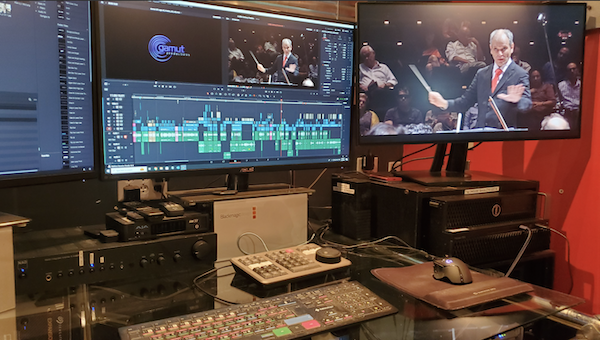
The costs of completing the documentary A 20th Century Passion include editing time, colour correction and sound mix. (screenshot)

A GoFundMe campaign has been launched to bring to the big screen a documentary about the late Peter Gary, a Hungarian-born composer, Holocaust survivor and resident of Victoria.

The online fundraising effort to complete A 20th Century Passion was started by filmmaker David Malysheff and Gary’s widow, Judith Estrin. Their goal is $35,000.

Gary passed away in 2016, the same year his oratorio A 20th Century Passion premièred in Jerusalem. The work spans the period from the First World War to the Nuremberg trials, including his experiences living in and surviving three years in three different concentration camps.

Gary had a message, the campaign organizers say, which was to stamp out hate. Over the years, he delivered this message to tens of thousands of students throughout Canada.

“The message of the oratorio is to remember history, that hate is ugly and brutal and should be stopped. It is a love piece in honour of Peter’s mother, who was brutally murdered by the Nazis while Peter spent three years in death camps,” Estrin said.

“Like all classical oratorios, it is tragic – this one deals not with the life of Jesus but with the six million murdered Jews. Because Peter had to deal with the murdered bodies of children, he dedicated the piece to the murdered 1.5 million Jewish children,” she said.

While Gary wrote the oratorio over a period of many years, revising it right up to time of his death, it was mostly written during 1970s and 1980s. Barak Tal, the conductor who led the work in Jerusalem, spent time with Gary at his home, going over every note.

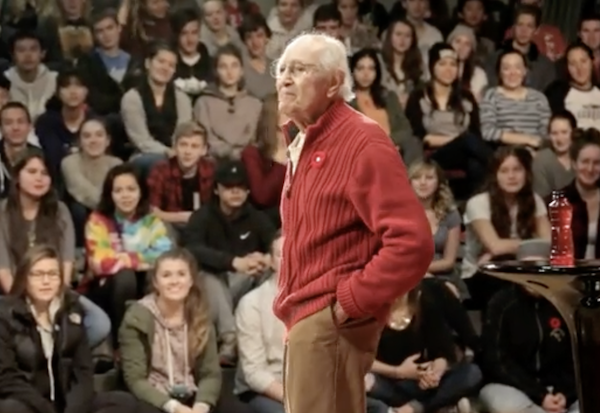
The documentary explains how the oratorio came to fruition, using the Jerusalem performance as the score beneath the narrative. The film also shows Gary speaking to high school students about his experiences.

Malysheff, who has been a cinematographer for The Nature of Things, Us and Them and The Fifth Estate, described the film as a passion project – one for which he has not received any payment in the seven years since he began working on it. The costs of completing the film, including editing time, colour correction, sound mix and more, have led Estrin and him to appeal to the public for support.

The importance of A 20th Century Passion at this time cannot be overstated, Estrin said. “With antisemitic hate crimes and acts up just since Oct. 7, the message to stamp out hate, to go in peace, is more critical than ever,” she said. “The world has lost its moral compass, and this piece is about the hope that [people] will remember what horror the 20th century held for the world. We are facing an enemy who wants to annihilate all Jews. Once they are done with us, they will come for everyone else.”

screenshot - The documentary shows Peter Gary, a Holocaust survivor, speaking to high school students about his experiences
The documentary shows Peter Gary, a Holocaust survivor, speaking to high school students about his experiences. (screenshot)

The filmmakers also point out that a significant number of North Americans born after 1981 cannot name a single concentration camp or ghetto and think that fewer than six million Jews were killed during the Holocaust. An alarming percentage of young people, they added, hold the opinion that the Jews caused the Holocaust.

Gary was born in 1924 into an artistic family that included famed Hungarian musicians, such as conductor Eugene Ormandy and pianist Lili Kraus. Through his mother’s encouragement, he began his musical training on the piano before the age of 5.

Deemed a musical “wunderkind,” Gary was admitted at the age of 9 to Budapest’s Franz Liszt Academy of Music, where he studied advanced choral and orchestral composition, as well as conducting, under the tutelage of Bela Bartok, Zoltan Kodaly and Leo Weiner.

In 1940, Gary’s education stopped when both he and his mother were arrested by the Nazis. His father was away on a business trip, which allowed him to escape into hiding. Gary spent the next years in concentration camps before he was liberated from Bergen-Belsen by the British on his 21st birthday.

Following the war, Gary moved to Paris to resume his musical studies at Sorbonne University. He received a doctorate in musicology there in 1949.

Gary then immigrated to the United States and, for a brief time, worked in the music department at MGM. In 1963, he took a year off to compose a ballet suite that was performed in France. During his life, he composed more than 20 orchestral pieces, which have been performed in the United States, Canada, Germany, Holland, France and Scotland.

The film runs approximately 90 minutes. Malysheff and Estrin would like it shown at Jewish film festivals and in schools. They have a curriculum for secondary schools that uses the libretto as text. To date, the oratorio has been translated into Hebrew, French and German.

The Jerusalem performance of A 20th Century Passion is available on YouTube. More on Gary can be found at jewishindependent.ca/help-passion-to-israel and jewishindependent.ca/holocaust-survivor-peter-garys-oratorio.

To donate to the documentary’s fundraising campaign, visit gofund.me/d335a5f8. All who send in a contribution will receive a screen credit for being part of the message of the film.

Sam Margolis has written for the Globe and Mail, the National Post, UPI and MSNBC.
Format ImagePosted on November 10, 2023November 9, 2023Author Sam MargolisCategories TV & FilmTags A 20th Century Passion, composers, David Malysheff, Holocaust, Judith Estrin, oratorio, Peter Gary, Victoria
Making musical amid COVID

Making musical amid COVID

Anton Lipovetsky is among the professional artists working with Studio 58 to develop Monoceros: A Musical. (photo by Dahlia Katz)

In the face of a pandemic and all its associated restrictions, the show is going on at Langara College’s Studio 58 – albeit in a very different way. Monoceros: A Musical runs through the end of March and features the contributions of two Jewish community members: writer Josh Epstein and composer/lyricist Anton Lipovetsky.

In contrast to other Studio 58 productions, Monoceros is seen as a “development lab,” an opportunity for the creators to tweak the piece, while allowing students to work on a new musical and learn about the process. The production is not a performance in a traditional sense, as the public will not be able to come and watch it. Ordinarily, shows are performed in Langara’s 100-seat theatre, but this is the first time Studio 58 has created a production outdoors – because of the risks of singing inside.

photo - Josh Epstein
Josh Epstein (photo from Studio 58)

Adapted from a Suzette Mayr novel by Epstein and his business partner, Vancouver writer/director Kyle Rideout, Monoceros tells the story of Faraday, a high school wallflower who dreams of becoming a famous veterinarian. When Ethan, a classmate known for wearing a unicorn outfit, dies unexpectedly, Faraday sets off on a quest to fulfil Ethan’s last wish.

“The book starts with one of the most powerful chapters I’ve ever read,” Epstein told the Independent. “I was engaged from the first sentence, my heart was drawn to every word. I, too, lost my best friend much too early and I felt very connected to this book. We were about to turn the book into a film, for which we had funding, but, at the same time, we felt a musical bursting out of it and attached Ben Elliott and Anton to write the music. We fell so in love with the musical that we halted the film for now to keep working on the piece. Our show tackles difficult subject matter but in a fresh, humorous way, daring the audience to go on a wild adventure and to listen.”

“I read the book and I loved it. It was heartbreaking and brutal and honest – the kind of book that really stays with you after you read it,” said Lipovetsky. “We decided to centre the story more on a singular character, Faraday, and her quest to bring unicorns to Calgary in honour of the student who passed away. Her quest challenges who she is as a person and she discovers herself along the way.”

Putting on a production in 2021 is “completely wild,” said Epstein, an award-winning actor, writer and producer. “Until the day we started, we had no idea if it would actually happen. Now, here we are with a full tent city built by Studio 58, a rock concert sound setup and an incredible creative team that includes one of Canada’s top directors, Meg Roe, and Lily Ling (Hamilton’s musical director) – who was only available to us because Hamilton is on hiatus.”

Epstein emphasized that, “while the show’s path has been altered by COVID-19, the team has used the time to strengthen the script and score, as well as attach some of the best people around [to the project]. Above all, the process is very safe and we’re having fun being able to work together, if only from a masked distance.”

“Acting, singing and connecting with your collaborators while most of your face is covered is not easy. The students are doing a wonderful job,” Lipovetsky said. “And rehearsing outdoors during early March in Vancouver can be challenging – but sometimes it’s magical. There are moments where the students’ voices soar in beautiful harmony and the sun will come out above us and I’ll feel real joy. I have missed making music and theatre so much and I’m grateful to get to do it even under these strange circumstances.”

In addition to the staff and faculty who are involved, Studio 58 has 10 professionals working with the students, 14 student performers, and many other students helping with technical requirements. One of the top theatre schools in Canada, with the only conservatory-style program in Western Canada, the professional theatre training program at Langara is in its 55th season. It typically produces four main-stage productions a season, ranging from dramas, to comedies, to musicals.

Monoceros is commissioned and supported by Toronto’s Musical Stage Company and funded by the Aubrey and Marla Dan Foundation. The show has an elaborate development road planned out that will include workshop productions in British Columbia and Ontario – culminating in Toronto – before continuing to other stages.

Epstein, whose work has taken him around the world, is currently writing an original feature for Paramount with Rideout. Lipovetsky is an acclaimed composer, lyricist, performer and teacher, and he is currently an artist-in-residence in the Musical Stage Company’s Crescendo Series.

For more information about Studio 58 and its programs, visit langara.ca/studio-58.

Sam Margolis has written for the Globe and Mail, the National Post, UPI and MSNBC.
Format ImagePosted on March 19, 2021March 19, 2021Author Sam MargolisCategories Performing ArtsTags acting, Anton Lipovetsky, composers, film, Josh Epstein, Langara College, Monoceros, musical theatre, Studio 58, Suzette Mayr, writing
A musical tribute to Denburg

A musical tribute to Denburg

Moshe Denburg’s music will be featured in a tribute concert by the Orchid Ensemble on Nov. 10 at the Annex. (photo from Orchid Ensemble)

The Orchid Ensemble is giving composer Moshe Denburg a most appropriate gift for his 70th birthday – a concert.

The Nov. 10 tribute at the Annex will feature Denburg’s music, as well as the world première of a new work inspired by the melody of one of his first recorded songs. Denburg has collaborated with the Orchid Ensemble over the years and has been a driving force in intercultural music in Canada, including being the founder of the Vancouver Inter-Cultural Orchestra, in 2001.

On the Orchid Ensemble’s tribute program are the three pieces Denburg wrote for the group’s Road to Kashgar (2001), which was nominated for a Juno Award; “El Adon” (2009), a four-movement work that will be performed consecutively as a suite for the first time (one movement being a world première); “Petals of the Flame” (2012), which will be performed with flamenco dancer Michelle Harding; and the North American première of “In Midstream” (2010), a solo zheng (Chinese zither) work performed by Dailin Hsieh.

The icing on the cake, so to speak, will be the performance by the ensemble – Lan Tung (erhu/Chinese violin), Hsieh (zheng) and Jonathan Bernard (percussion) – of “And Gather Our Dispersed from the Ends of the Earth,” by Denburg’s nephew, composer Elisha Denburg.

“I haven’t heard it yet, so I can’t say much about it at all!” said the elder Denburg. “As he has said, it is based on a musical melody of mine, which I set to the liturgical text ‘Gather our dispersed from the ends of the earth….’ This song appears on one of my first albums, and was recorded in New York City in the mid-’70s with a certain well-known ensemble there called the Neginah Orchestra. For many years, it received regular airplay on Kol Israel Radio. I am really looking forward to hearing what Elisha did with it. I will plug him here – he is a composer of depth and originality.”

The younger Denburg’s music has been commissioned, performed and recorded across Canada, as well as in the United States. The award-winning composer has collaborated with numerous artists and his music has aired on CBC Radio 2. Essential Opera commissioned him, with librettist Maya Rabinovitch, to create a one-act chamber opera, titled Regina, about the first female rabbi, Regina Jonas, who was ordained in 1935.

About how his uncle’s melody inspired him, Elisha Denburg told the Independent, “It is a song that invokes very specific and special memories for me, singing around the Shabbat table with him and my family when I was young. It also espouses a key Jewish value: the strength of community. This is why I always try to incorporate it into my chanting whenever I help lead Rosh Hashanah services at my synagogue in Toronto (First Narayever Egalitarian Congregation). In composing a new work for intercultural trio, inspired by this melody, I am attempting to give back to him and our community the musical and spiritual gifts I have been so fortunate to receive in my life so far.”

In looking back at his professional life and how his composing has evolved, Moshe Denburg said, “At the beginning, I was mainly a songwriter and melodist, though I did take it seriously and I still consider a good song and a well-formed melody to be a real achievement. However, over the years, I delved much more deeply into the art of composition, and by that I mean writing for larger forces (like orchestras) and utilizing a broader musical language.”

Denburg has been creating music for almost all of his 70 years; his first composition coming before he was 10 years old. “As a child,” he said, “I improvised melodies, even at the age of 4 or 5. I believe it was when I was 8, I improvised a melody to the words of the synagogue prayer ‘Hashiveinu Hashem eilecha …’ (‘God, bring us back to you …’), and it stuck. It was very cantorial, as this, being the son of a rabbi, was my first influence and inspiration – the modes of synagogue prayer.”

The interest in world music came later. “For many of my generation,” said Denburg, “this connection with and attraction to the music of other cultures started in the 1960s, with the Beatles and others, who were incorporating non-Western instruments – tabla and sitar, for example – into their works. It was a great new stream to draw upon, in order to create something new and exciting. I still think of intercultural music-making as having unlimited potential, with a much larger palette of sounds, and a noble endeavour and homage to everyone’s humanity.”

Retirement is not in Denburg’s plans. He said, “There are three prongs to my musical life, which continue unabated:

“1. Tzimmes, my Jewish music ensemble, is back in the studio, working on some tracks both old and new. Some tracks were begun in 2005-06 and have sat on the back burner for many years. Some pieces are newly composed and arranged. I hope to release them, perhaps as an album or perhaps singly online, over the next year or two.

“2. The Vancouver Inter-Cultural Orchestra (VICO) continues to be a going concern and, though I have stepped back from being hands-on in the organization, I am still involved creatively, contributing compositions and participating in a variety of concert and recording projects.

“3. Apart from the VICO, I am still a composer for hire. In fact, Lan Tung, the leader of the Orchid Ensemble and my musical colleague of many years, recently initiated a project that would see me, funding permitting, commissioned to write for another intercultural ensemble of hers, the Sound of Dragon Ensemble.”

In addition, Denburg has at least two “bucket list” items: “Writing a large-scale work of many movements for the full Vancouver Inter-Cultural Orchestra (25-30 players); continuing to record my works, both Jewish and intercultural.”

For tickets to And Gather Our Dispersed from the Ends of the Earth – Moshe Denburg Tribute Concert at the Annex on Nov. 10, at 4 p.m., visit mosheorchid.brownpapertickets.com.

Format ImagePosted on November 1, 2019October 30, 2019Author Cynthia RamsayCategories MusicTags composers, Elisha Denburg, intercultural, Judaism, Moshe Denburg, Orchid Ensemble
Proudly powered by WordPress