Skip to content
  • Home
  • Subscribe / donate
  • Events calendar
  • News
    • Local
    • National
    • Israel
    • World
    • עניין בחדשות
      A roundup of news in Canada and further afield, in Hebrew.
  • Opinion
    • From the JI
    • Op-Ed
  • Arts & Culture
    • Performing Arts
    • Music
    • Books
    • Visual Arts
    • TV & Film
  • Life
    • Celebrating the Holidays
    • Travel
    • The Daily Snooze
      Cartoons by Jacob Samuel
    • Mystery Photo
      Help the JI and JMABC fill in the gaps in our archives.
  • Community Links
    • Organizations, Etc.
    • Other News Sources & Blogs
    • Business Directory
  • FAQ
  • JI Chai Celebration
  • JI@88! video

Recent Posts

  • Zionism wins big in Vegas
  • Different but connected
  • Survival not passive
  • Musical celebration of Israel
  • Shoppe celebrates 25 years
  • Human “book” event
  • Reclaiming Jewish stories
  • Bema presents Perseverance
  • CSS honours Bellas z”l
  • Sheba Promise here May 7
  • Reflections from Be’eri
  • New law a desecration
  • Resilient joy in tough times
  • Rescue dog brings joy
  • Art chosen for new museum
  • Reminder of hope, resilience
  • The national food of Israel?
  • Story of Israel’s north
  • Sheltering in train stations
  • Teach critical thinking
  • Learning to bridge divides
  • Supporting Iranian community
  • Art dismantles systems
  • Beth Tikvah celebrates 50th
  • What is Jewish music?
  • Celebrate joy of music
  • Women share experiences 
  • Raising funds for Survivors
  • Call for digital literacy
  • The hidden hand of hate
  • Tarot as spiritual ritual
  • Students create fancy meal
  • Encouraging young voices
  • Rose’s Angels delivers
  • Living life to its fullest
  • Drawing on his roots

Archives

Follow @JewishIndie
image - The CJN - Visit Us Banner - 300x600 - 101625

Stories that explore the mind

Stories that explore the mind

A husband competes with his oldest daughter for his wife’s affections, a man ponders whether he is more attracted to a 10-year-old girl or her divorced older sister, a woman has an abortion she didn’t necessarily want, a young man violently rebels against his abusive father. Jonah Rosenfeld tackles difficult subject matter in his short stories, with no compulsion to solve any particular problem or correct behaviours, but to explore the thoughts and feelings of his characters, and thereby offer insight into parts of humanity that we may shy away from contemplating. English readers can now access these stories and ideas, originally conceived in Yiddish, thanks to a newly published translation by Langara College’s Rachel Mines.

The Rivals and Other Stories (Syracuse University Press, 2020) comprises 19 of Rosenfeld’s stories. Born in Chartorysk, Russia (now, Chortorysk, Ukraine), the prolific writer lived from 1881 to 1944, immigrating in 1921 to New York, where he was a major contributor to the Forverts. In total, he wrote 20 volumes of short stories, a dozen plays and three novels. Rosenfeld’s “stories provide a corrective to the typical understanding of Yiddish literature as sentimental or quaint,” writes Mines in the book’s press materials. “Although the stories were written decades ago for a Yiddish-speaking audience, they are surprisingly contemporary in flavour.”

The first Rosenfeld story Mines read, in Yiddish, was The Rivals (Konkurentn), six or seven years ago. “I’d only been studying Yiddish for a few years at that point and was reading to improve my language skills,” she said. “I was so impressed with the story that I decided, just for practice, to translate it into English. Later on, I found out that an English translation had already been published in [Irving] Howe and [Eliezer] Greenberg’s A Treasury of Yiddish Stories, but, by then, I was hooked on both Rosenfeld and Yiddish translation.”

Mines was a Yiddish Book Centre Translation Fellow in 2016 and The Rivals was her translation project during that fellowship year. “I’d already translated several stories before that, but 2016 was when everything started coming together in terms of improving my skills as a translator,” she said.

The project was her own idea, not work assigned by the Yiddish Book Centre, although the centre did support it.

“I should also mention,” she added, “that Vancouver is a veritable hotbed of Yiddish translation (who knew?), with a number of active translators, all of whom have been helpful at various times. Helen Mintz, in particular, was a huge inspiration and support. Her book of translations, Vilna My Vilna, a collection of Abraham Karpinowitz’s short stories, was published (also by Syracuse UP) in 2017. Helen and I spent several years together on Skype, regularly workshopping each other’s translations and helping each other out with advice and information. We’re still doing that, in fact.”

It is his exploration of the psyche that attracts Mines to Rosenfeld’s work.

“I’m interested in psychology – always have been – and particularly in people’s unconscious, and sometimes counterintuitive, reasons for thinking and behaving the way they do. So Rosenfeld’s insight into the darker corners of the human mind was an instant draw. I should say that his stories stand up very well to many current theories of human thought and behaviour. For example, the protagonist of The Rivals is a classic malignant narcissist – he ticks all the boxes. It’s interesting to note that Rosenfeld’s story was first published in 1909, several years before Otto Rank’s and Sigmund Freud’s theories of narcissism came out. Rosenfeld was an intuitive psychologist, and a very perceptive one.

“Another reason Rosenfeld’s stories appeal to me is that they work very well in a 21st-century, multicultural setting,” she said. “I’ve taught a number of the translations to first-year students at Langara, and students are attracted by his stories’ takes on immigration, women’s rights, male-female relationships, generational conflict, culture clash – this list goes on. Clearly, these ideas are as relevant today as they were when the stories were first written.

“Finally, I like Rosenfeld’s attitudes to his characters, even the less admirable ones. He seems interested in and sympathetic to their dilemmas; as an author, he doesn’t judge or blame his characters – he leaves that up to his readers. I like that Rosenfeld is more interested in exploring his character’s situations and psychology than he is in blaming or moralizing.”

Mines, who is retiring this year, taught in the English department at Langara College since 2001. One of the department’s main offerings has been a first-year class on the short story, she said. “Around the time I started translating, I started introducing stories with a Jewish theme to my classes. A bit to my surprise, despite coming from non-Jewish backgrounds, my students found the stories interesting and engaging, so I gradually added more and more stories with Jewish content. The last few years, I’ve been teaching Rosenfeld’s stories exclusively. My students love the stories and readily identify with (or at least understand) the characters and their predicaments. We’ve had many lively discussions!”

In an introductory chapter to The Rivals, Mines poses several questions she hopes keen PhD students or other researchers will take on, including where Rosenfeld’s place might be in the American literary canon. With the disclaimer that she is “just a lowly translator,” Mines said, “But, if pressed for an answer, I’d have to say it’s Rosenfeld’s psychological insights. He’s not entirely unique – other Jewish and/or American authors of his time were psychologically astute and wrote compelling character studies. But Rosenfeld went a bit beyond, in that his stories are almost Greek tragedies – his protagonists fail in their quests (for love, belonging, security, etc.) not because of external forces, but because of some internal, self-defeating habit of thought that they may not be consciously aware of. Rosenfeld isn’t the only author to explore this type of psychological dichotomy, but he does so very consistently.”
Format ImagePosted on September 11, 2020September 10, 2020Author Cynthia RamsayCategories BooksTags Jonah Rosenfeld, Langara College, psychology, Rachel Mines, translation, Yiddish
Autograph book resurfaces

Autograph book resurfaces

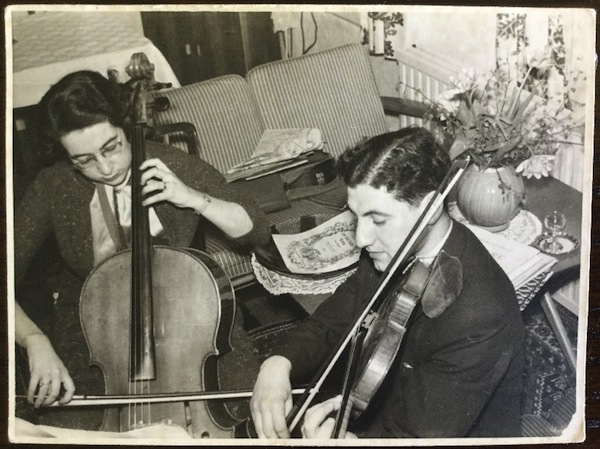
Susi and Mænni Ruben, Copenhagen, 1960s. Mænni Ruben’s autograph book, compiled in Theresienstadt, is the focus of a new online exhibit launched by the Victoria Shoah Project. (photo from Victoria Shoah Project)

The Victoria Shoah Project has launched a virtual exhibit of an autograph book compiled by Mænni Ruben, a Danish violinist and graphic artist held prisoner at Terezin (Theresienstadt) concentration camp outside of Prague.

The 1945 Theresienstadt Autograph Book Exhibit features panels and the 40-page book itself, which is replete with signatures, sketches and aphorisms from Ruben’s friends and acquaintances who were also incarcerated at Terezin.

The book records the closing period of the war as survivors were being liberated. It is a story not only of the horrors of Nazism, but of long-lasting friends, and the music and art that united them during dreadful times.

Ruben died in 1976 in Copenhagen. Though he never lived in or visited Canada, the book remained with his widow, Susi, who remarried after his death and settled in Victoria. Upon her passing, in 2018, the book came into the hands of Rabbi Harry Brechner of Victoria’s Congregation Emanu-El. He subsequently showed it to member Janna Ginsberg Bleviss, who became the coordinator of the exhibit project.

“When the rabbi showed the book to me last year, I could see right away that it was special and should go to a museum. It is in remarkable condition for being 75 years old and is a tremendous addition to Holocaust studies,” Ginsberg Bleviss said.

“I was fascinated by the book – who were these people and what happened to them? Reading the pages filled with optimistic greetings, illustrations and pieces of music was like finding a hidden treasure, waiting to be opened. I wanted to discover who these people were and hear their stories,” she added.

“This virtual launch [which took place Aug. 20] is meant to honour both Mænni and Susi, and the memory of those whose lives intersected in space and time in the Theresienstadt camp. None of the artists, musicians, composers or rabbis who wrote in the book are alive, but we can sense their lives through their traces here,” said Dr. Richard Kool, a member of the Victoria Shoah Project.

A number of panels show the powerful drawings of artist Hilda Zadikow, whose husband, sculptor Arnold Zadikow, died at Theresienstadt. One depicts the coat of arms of Terezin under a Magen David made of barbed wire. Another features three sad, grey sketches of the camp itself. In a third, there is a happier scene of colourful opera figures.

Her inscription in the autograph book reads, “Your old friend Hilda Zadikow wishes you all the best and delight in beauty.”

A poignant message comes from Rabbi Leo Baeck, an intellectual and leader of the German Jewish community and the international Reform movement, who wrote: “What you forget and what you don’t forget, that is what decides the course of your life will take.”

Pianist Alice Sommer Herz, the subject of the 2007 book A Garden of Eden in Hell and the 2013 Oscar-winning documentary The Lady in Number 6, was another prisoner at the camp. Sommer Herz, who died at age 110 in 2014, wrote in Ruben’s book: “In memory of music at Theresienstadt and in strong hopes of a better future.”

And a touching note comes from Miriam Pardies, someone Ruben seems to have known only in passing: “We know each other only from having greeted each other in a friendly way, but that too is a good memory,” she writes in the book.

“There is a huge educational value to these pieces for students learning about the Holocaust, or for researchers who want to continue exploring the stories of these most interesting people during an important time at the end of the Second World War,” remarked Brechner.

Ruben and his family were sent to Theresienstadt in 1943. A place where the Nazis kept prominent Jews, the camp housed musicians, intellectuals, artists, religious leaders and hundreds of children. In 1944, the inmates performed a concert for German visitors and the visiting International Red Cross – the performers were forced to act as though life at the camp was normal.

Losing his father at the camp, Ruben returned home after the war. A few years later, he met his wife. They married and both played in the Copenhagen Youth Orchestra – she on cello and he on violin. Mænni Ruben also worked as a graphic designer and Susi Ruben as a fashion designer; they were together for 24 years.

After her husband died, Susi Ruben’s company sent her to Israel, where she met Dr. Avi Deston. They married in 1978 and went to South Africa for 13 years, where Deston taught physics at the University of Transkei. On his retirement, they came to Victoria, in 1992.

The autograph book will be donated to the Canadian Museum for Human Rights in Winnipeg for their Holocaust gallery. To view the virtual exhibit, go to terezinautographbook1945.ca.

Sam Margolis has written for the Globe and Mail, the National Post, UPI and MSNBC.

Format ImagePosted on September 11, 2020September 10, 2020Author Sam MargolisCategories BooksTags Canadian Museum for Human Rights, Harry Brechner, history, Holocaust, Janna Ginsberg Bleviss, Mænni Ruben, preservation, Richard Kool, Susi Ruben, Terezin, Theresienstadt, Victoria Shoah Project
Cemeteries get an upgrade

Cemeteries get an upgrade

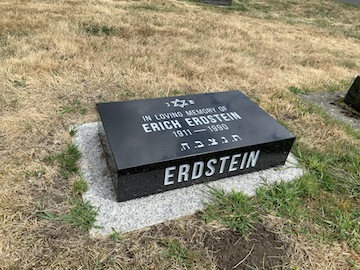
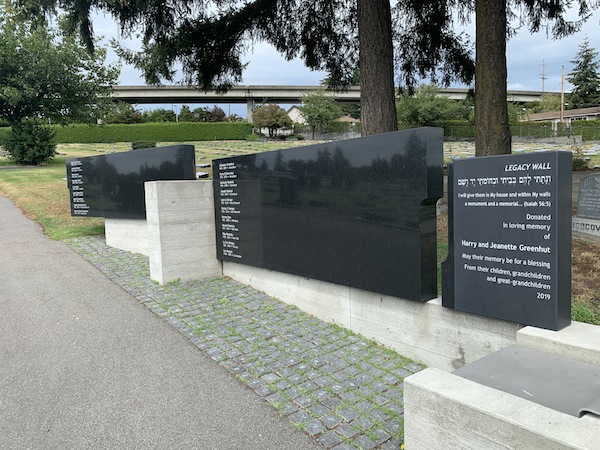
The new black granite memorial wall at Schara Tzedeck Cemetery in New Westminster allows people to memorialize loved ones buried in other cities. (photo from Schara Tzedeck)

What’s new at the cemetery? Not a question one tends to ask, but the Schara Tzedeck cemeteries in New Westminster and Surrey have seen some significant upgrades and additions in recent months.

At the New Westminster cemetery, which saw its first burial in 1929, 50 graves that did not have headstones have received permanent markers. More than 100 others will ideally also see stone markers added in the coming years as the cemetery board’s Chesed Shel Emet Fund is replenished.

There are plenty of reasons why a grave might not have a permanent headstone, according to Howard Jampolsky, executive director of the Schara Tzedeck Cemetery Board.

“Sometimes, somebody had no family, maybe they were destitute, alone in the world,” he said. “Sometimes, the families just don’t have money; sometimes, one spouse dies and they get a headstone and the other spouse dies and there is no one to put the headstone.”

Whatever the reasons, the graves, some dating back to the 1950s, had temporary markers.

The Chesed Shel Emet Fund was set up primarily with donations from cemetery board members, Jampolsky said, and the first batch of 50 headstones was purchased for these unmarked graves and placed in the last few months.

photo - One of 50 headstones placed on graves that, until now, had only temporary markers
One of 50 headstones placed on graves that, until now, had only temporary markers. (photo from Schara Tzedeck)

“We were hoping to do a big unveiling ceremony, where all the graves would be unveiled and we would invite the community,” he said. But COVID intervened. He hopes such a ceremony will occur in the future.

The headstones cost about $525 each and the board is welcoming donations from the community to the fund so they can proceed with placing more stones.

Also at New Westminster, a new black granite memorial wall has been created to commemorate people who are buried in other places.

“Sometimes, someone lives in Vancouver their entire life and they die and get buried in another place, maybe they’re sent to Toronto or Israel or somewhere else,” Jampolsky said. “This is an opportunity to memorialize somebody who lived in the city and contributed to the city’s life and they don’t have a headstone here. The other possibility is people who have parents or family buried in other places where they live and don’t have the ability to go and visit. If you want to come on the yahrzeit, you can come and put a rock on top of that.”

The New Westminster cemetery also has seen a green irrigation initiative recently completed.

“We spend a lot of money irrigating our green grass here, a lot of water,” he said. “We used potable city water.”

They have now drilled a well and are also capturing rainwater, which is pumped through the irrigation system. Not only is this better for the environment, Jampolsky said, but the $150,000 cost will be recouped in about eight years at current water rates. He sees the greening initiative as in keeping with Jewish burial tradition, which is respectful of the land, rejects concrete casings and does not include embalming.

In other significant news, the Surrey cemetery, which had its first burial about a dozen years ago, now has a chapel. Until now, funerals at the Surrey site were graveside only. A sad irony is that the pandemic has meant that, after the first couple of funerals in the new chapel, services had to be again curtailed to graveside only, and with limited attendance.

The $500,000 structure was completed in late 2019 and reflects the philosophy of the board, Jampolsky said, that all members of the community be treated equally. Those being buried in New Westminster had funerals in a chapel, while those in Surrey did not. The new Surrey chapel was funded within the existing budget, but, if a community member wanted to contribute to the chapel, Jampolsky said, naming opportunities could be considered.

“The other thing we’re doing in Surrey is spending more time and effort and money to make Surrey look a lot nicer,” he said. “We are doing more landscaping work, we’re planting flowers and doing things that make it look very, very nice. We’re putting a lot of effort into that property.”

The Surrey cemetery contains about 2,000 plots while the much older New Westminster site has about 10,000. While approximately 5,000 of the New Westminster plots are filled, Jampolsky acknowledges that he can’t accurately predict how long the cemetery has before it is full.

“It really depends,” he said. There are about 80 burials annually in New Westminster. That would suggest about 60 years before it is full. But the community is growing quickly, so perhaps it would be only 50 years. At the same time, a plot may be purchased and not used for decades, he said. If a young family purchased plots today, it is reasonable to assume some burials might not occur until the 22nd century.


Format ImagePosted on September 11, 2020September 10, 2020Author Pat JohnsonCategories LocalTags burial, environment, headstones, Howard Jampolsky, Judaism, New Westminster, philanthropy, Schara Tzedeck Cemetery, Surrey, tikkun olam
Helping Israel’s lone soldiers

Helping Israel’s lone soldiers

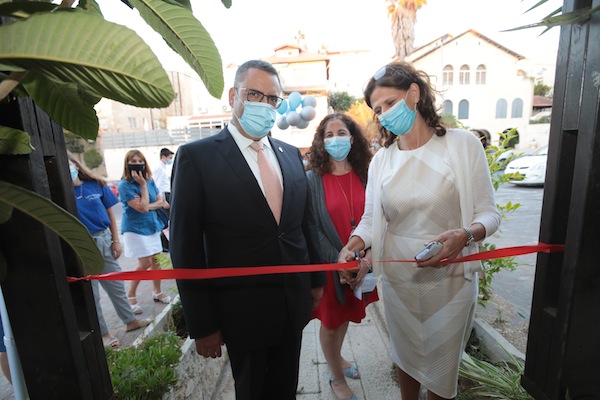
MK Michal Cotler-Wunsh, right, with Michal Berman, chief executive officer of the Lone Soldier Centre in Memory of Michael Levin, and Jerusalem Mayor Moshe Leon at the inauguration ceremony in August of a new home for female lone soldiers in Jerusalem. (photo by Yossi Zamir)

Michal Cotler-Wunsh was an 18-year-old new immigrant from Canada when she enlisted for the Israel Defence Forces some 30 years ago. Unlike most of her fellow recruits, she had no home to go to on weekends.

“I was a ‘lone soldier,’ without close family in Israel. There was no real framework that supported us – but much has changed since then, as this matter has become more acute,” she said.

Now a Knesset member (as a representative of the Blue and White coalition faction led by Benny Gantz), Cotler-Wunsh has taken up the welfare of the more than 6,300 lone soldiers lacking family in the country: immigrants, volunteers, orphans and youths estranged from their families.

“In retrospect, serving in the army was the most amazing exposure to Israeli society in many ways,” said Cotler-Wunsh, whose father Irwin Cotler was Canada’s minister of justice and attorney general from 2003 to 2006. “I did a squad leaders course and served in a very ragged anti-tank base at Nitsanim. The company slept in tents and went on marches in the dunes.”

The army gave her rent support and, on weekends, she stayed in a room in a Jerusalem apartment. “I lived with an elderly man who usually went away on weekends, so I was alone in the apartment,” she said. “To this day, I have connections with people from the Machane Yehuda market, especially the owner of the marzipan shop and the Tzidkiyahu delicatessen. These two would prepare boxes of food for lone soldiers at the end of Friday business, and we would get to Jerusalem after everything was already closed, go through the market and take the boxes of food prepared for Shabbat. To this day, I don’t forget them and they don’t forget me.”

Beyond material needs, she recalled the psychological hardship of being far from home.

“I know how important it is for lone soldiers to have their parents accompany them,” said Cotler-Wunsh, who served in the days before digital communication. “One aspect that has changed is parents’ involvement in day-to-day matters. Nowadays, it’s possible to convey to the lone soldiers’ parents a reality that they do not understand – and there’s no chance that they will understand – but they’re very concerned about. This communication calms both them and the lone soldier throughout their military service.”

“Lone soldiers need somewhere to live, a hot meal on Friday night … things other soldiers take for granted,” Michal Berman, chief executive officer of the Lone Soldier Centre in memory of Michael Levin, a nonprofit organization that looks after their welfare.

The LSC, established in memory of an American immigrant soldier killed in the 2006 Second Lebanon War, currently operates nine apartment homes, offering low-rent housing to about 100 soldiers in Jerusalem, Petach Tikva, Herzliya and Ramat Hasharon, as well as social clubs catering to about 1,000 soldiers in Tel Aviv, Jerusalem and Be’er Sheva. Only financial restraints are preventing the opening of more facilities and programs.

Beyond the social-psychological aspects, soldiers’ needs are often prosaic. “They need basic things like clean underwear, a toaster, somebody to look after them when they are sick,” Berman explained. “We have hundreds of volunteers who cook and do their laundry for them – many of them former lone soldiers or others immigrants.”

The organization’s staff also provide advice on how to navigate Israel’s bureaucracy, and attend military ceremonies, taking the place of their parents who cannot be there. “They say this means the world to them,” Berman said.

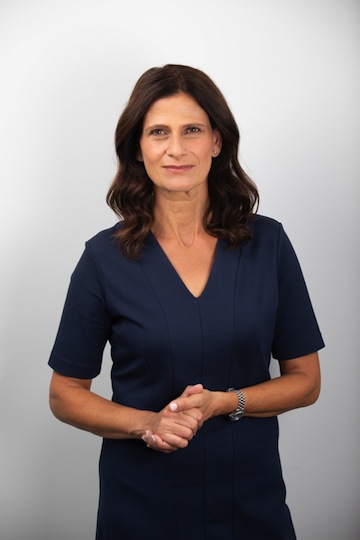
photo - MK Michal Cotler-Wunsh
MK Michal Cotler-Wunsh (photo by Avishai Finkelstein)

“The difficulties continue beyond their army service,” noted Cotler-Wunsh, who returned to Canada after studying law at the Hebrew University of Jerusalem. “After 13 years in Israel and with a small baby, for the first time in my life I missed my family. I was pregnant with my second child and also wanted to do a second degree, at McGill University, and took the opportunity to be close to my parents.”

She returned to Israel 10 years later with four children and pursued a legal career that led her to the Knesset, where she has taken up a host of social issues, including the welfare of lone soldiers before, during and after their service.

“Nowadays, when they do have a support system, the loneliness hasn’t disappeared – it’s just been postponed. It’s harder when you’re used to an all-embracing system then, suddenly, to find yourself really alone. In any case, getting out of the army is a shock. For a lone soldier, it’s even harder to go from a hierarchic system to being an independent citizen who has to make decisions that will affect their life. That’s part of the reason why so many young Israelis go traveling after their army service.”

Over the High Holidays, the LSC is launching a global crowdfunding campaign to help lone soldiers get through the toughest time of their lives. For more information, visit charidy.com/lsc.

Daniel Ben-Tal was a lone soldier serving as a paratrooper before becoming a journalist. Over three decades he has penned hundreds of articles in a host of journals and websites around the world. Formerly an editor at the Jerusalem Post and the English version of Haaretz, he is now an Israel-based freelance writer, editor and translator.

Format ImagePosted on September 11, 2020September 10, 2020Author Daniel Ben-TalCategories IsraelTags army, IDF, Israel Defence Forces, lone soldiers, Michal Cutler-Wunsh, philanthropy
Dogs aiding recovery

Dogs aiding recovery

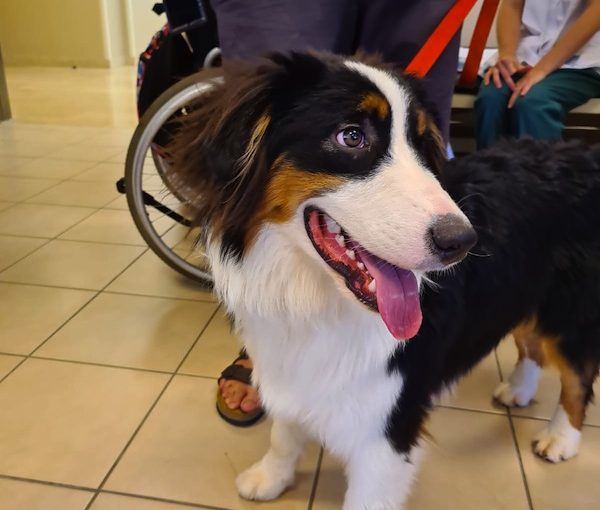
Sheba is a trained physiotherapy dog. One of the patients he’s helping at Sheba Medical Centre is Nathaniel Felber, who suffered a head injury in a terror attack in December 2018. (photo from IMP)

Nathaniel Felber is an Israel Defence Forces soldier who suffered a critical head injury in a terror attack in December 2018. He has been slowly recovering, against all odds. After being in a coma for several months, he was moved to Sheba Medical Centre, where he’s been receiving intensive rehabilitation. After a brief setback following brain surgery last May, Felber has made remarkable progress, and a lot of the credit goes to Sheba – not only the hospital but its namesake, a trained physiotherapy dog.

“The dog relates to Nathaniel in a nonjudgmental way, happily accepting the food that Nathaniel offers or any other attention,” said Judi Felber, who has been at her son’s side almost constantly since the attack that upended their lives.

Prof. Israel Dudkiewicz, who heads Sheba’s orthopedic rehabilitation program, has noted a marked improvement in compliance, strength and endurance in patients like Felber, when performing physical therapy exercises with the dog.

“The dog takes attention away from the pain and difficulty of the exercise, enabling the patient to try to do more and to do it better,” explained Dudkiewicz. “I’ve watched patients who ordinarily wouldn’t be able to stand for just two or three minutes, but, when they pet the dog, they can be standing for 30 minutes and more without even realizing it.”

Felber builds strength and balance in his legs by standing and petting Sheba. He also throws a ball for the dog to retrieve, a game that repeatedly flexes his elbow, but without the tedium of the standard physio exercises for the same purpose. When brushing Sheba, Felber must exert enough pressure to run the brush through the dog’s fur, but not too much that would cause him pain.

The Felbers made aliyah from Silver Spring, Md., about 14 years ago, settling in Ra’anana with their three children and a dog. “Nathaniel loved our dog, and I think that interacting with Sheba the dog is very healing for him,” said his mother.

Dudkiewicz is delighted with Felber’s positive response to Sheba, as well as the responses of patients working with therapy dogs in general.

“We have seen dramatic improvement in patients performing physical therapy with dogs from both a physical and emotional perspective,” he said. “We aim to incorporate this as another treatment tool, such as hydrotherapy and other nonconventional therapies, for patients who can benefit from it.”

At just seven months old, Sheba is still a puppy, but his performance thus far points to a successful future. Dogs used in physical therapy must undergo a yearlong, rigorous training period. The staff must likewise be trained how to integrate the dog into their rehab programs. In the course of training, the dogs are tested periodically to see that they’re up to scratch. Dudkiewicz explained that different dogs are trained for different types of patients and their abilities. The cost of each dog, including training, is more than $30,000, meaning that its implementation in the department must be limited; however, Dudkiewicz said the results certainly justify the financial outlay.

“Neurorehabilitation is slower than anything else I’ve ever experienced,” said Judi Felber. “Nathaniel is not walking, or talking, or eating even independently – yet. But I try to focus on the positive: he’s responding to people, to us, his family. He’ll turn his head and give us his hand. He can nod yes and no and show us the number of fingers that we ask. We’ve still got a long way to go, but I’m hopeful.”

– Courtesy International Marketing and Promotion (IMP)

Format ImagePosted on September 11, 2020September 10, 2020Author Sharon Gelbach IMPCategories IsraelTags animal therapy, health, IDF, Israel Defence Forces, Judi Felber, Nathaniel Felber, Sheba Medical Centre, terrorism
Hike challenges one’s views

Hike challenges one’s views

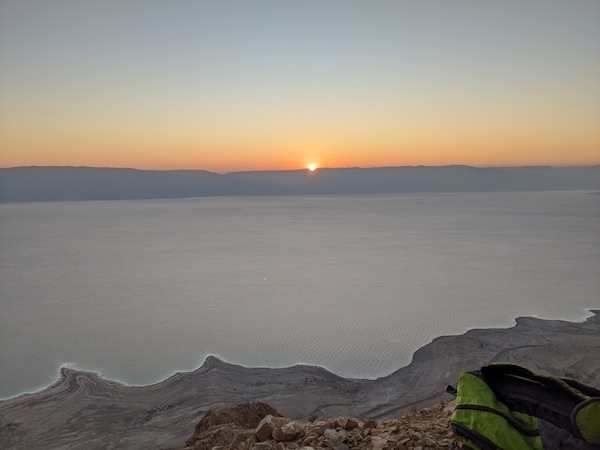
Sunrise at the Dead Sea. (photo from Kevin Keystone)

In this three-part series, the author recounts some of his experiences on Masar Ibrahim Al-Khalil, the Path of Abraham the Friend, which he visited in 2019. The articles have been adapted from a few of the letters he wrote home to family. The events and people described are real but, for reasons of privacy, the names are fictitious. To read Part 2, click here; for Part 3, click here.

I’m writing this from a rooftop deck in the small community of Arraba, about 15 kilometres from the West Bank’s northern border. We walked two days to get here along the Masar Ibrahim Al-Khalil, the Path of Abraham the Friend, a 330-kilometre trail from Rummanah in the north to Bayt Mirsim in the south. We’re here as part of a guided tour with the Siraj Centre; for 15 years, Siraj has organized walking, cycling and hiking experiences in Palestine.

Tonight, all eight of us will be staying at this villa. It’s unusual for a host to have so much room, but the Hassan family specially renovated their home to accommodate large groups. Noor, her husband and their five children have been hosting hikers on the Masar for five years. Throughout the hike, we’ll stay in homes like this, as well as hotels, guesthouses, Bedouin tents, and even a night in a cave.

Dusk has arrived; the evening view is clear and beautiful. The sun has set over the peaks and valleys of the West Bank, the lights of Palestinian villages and Israeli settlements shimmer around us. Beyond the hill ahead of me, backlit with shades of peach, rose and grey, lies Israel, Netanya and the Mediterranean Sea. A half-moon rises above.

The villages and settlements may seem quiet and peaceable, but are walled off from one another with concrete and hostility. The sea beyond means, for some, Europe, North Africa and its opportunities; for others, impassable waters. What is this place? How did we get here?

* * *

Five of us will walk all 25 days from Rummana to Bayt Mirsim: Felix and Thomas, Quebecois hiking companions in their 40s and 50s; Oliver and Eve, two 50-something activists from the United Kingdom; and myself, a 30-something freelance writer from Toronto. The remaining three will walk one to two weeks: John, a real-estate project manager who hiked Everest for his 60th birthday; and Sue and Howard, a retired teacher-principal duo from California. Neil, a young British doctoral student, hopped off yesterday and will be back for short stints in the coming weeks. Ines, an older Swede, walked with us for just the day.

After the hike, I plan to visit a friend in Beirut. In light of the protests against the government, I shared my reservations with Ines, who lived in Lebanon for two decades. “I lived in Beirut through the civil war,” she said, smiling. “You’ll be fine.”

If not all of us are quite so hardcore, we’re all mostly hikers. Sue and Howard walked 1,000 miles on the Camino de Santiago, Spain’s well-traveled Catholic pilgrimage-turned-hiking trail. I walked the Camino, but at half their age and half as far. Felix and Thomas are also Camino veterans: we all seem to have an affinity for long-distance trails in places of importance and meaning.

We are and aren’t here for the hiking. We’ve come to see Palestine for ourselves and hear directly from Palestinians. For my part, it felt like something of a responsibility. Like many Diaspora Jews, I have supported the state of Israel, either directly or indirectly, and benefited from it. I went on Birthright, the two-week, all-expenses-paid tour designed to build affinity and political support between young Jews and the state. I’m familiar with that side of the story – but after 50 years of occupation and a seemingly never-ending conflict, something didn’t quite fit for me.

Before I left for the Masar, I asked my rabbi for a blessing. In synagogue, she prayed that I would come here “with eyes wide open” and return home “with eyes opened wide.” It’s a prayer I share.

On the Camino, in Spain, locals are largely inured to tourists; here, on the Masar, tourists are rarer. Every local we pass waves hello, is happy and surprised to see us, stops us and wants to give us coffee. Yesterday, we were stopped often by olive-pickers – it’s the season for it. Enthusiastically, they beckoned us over to the stone borders of their groves, where we sat and shared thimbles of coffee spiked with cardamom. As we walked through towns and villages, small children yelled, “Hello! Hello!” and waved to us, their parents replying to our greetings of salaam aleykum (peace be upon you) with wa’ aleykum salaam (and peace upon you) and ahlan wa sahlan, you are welcome here. In these moments, of which there are many, I’m buoyed by unimpeachable hospitality.

This is, however, different from the Camino in other ways. I walked 40 days on the Camino and rarely thought about politics; here, every day is political. I never felt awkward about being Jewish on the Camino – except once, when I asked a local barkeep at a tavern called La Judería if there were any Jews left in the town. He laughed and said: “Not since the Inquisition.” Here, my being Jewish is something I keep to myself, to avoid assumptions about my politics. It’s different when you carry so little on your back and so much in your head. The walking is both easy and hard: mercifully, I have no blisters, but I’m still uncomfortable.

In the evening, after a home-cooked meal, we sipped sweet sage tea in the Hassans’ living room and listened to their story. Noor sat beside her husband Yusef, who spoke to us in Arabic while their son, Rayan, a young man with kind eyes and short hair, translated. If memory serves, Rayan was studying in the United States, which explained his excellent English.

Two years ago, Rayan’s brother, Nader, attended a rally at his university in support of Palestinian political prisoners on hunger strike. Five weeks before we arrived, Israeli soldiers entered the home where we were now staying, at 2 a.m., and arrested him. Nader was taken to prison without charge, where he’ll likely remain without trial for up to seven months. At the end of his time, he could be released; or, he could be detained again for another seven months, without explanation. According to his family, this cycle can repeat indefinitely. The practice is both common and permitted under Israeli military law, which is still in effect in the West Bank, 53 years after the Six Day War.

Noor was quiet, eyes downcast, hands folded in her lap. This was a mother who had lost her son, taken in the middle of the night, who wasn’t sure if or when she would see him again. As I understood from them, adults over 18 are restricted from visiting prisoners: they plan to send their teenage son, Malik, to visit Nader and bring offerings of the family’s love and hope.

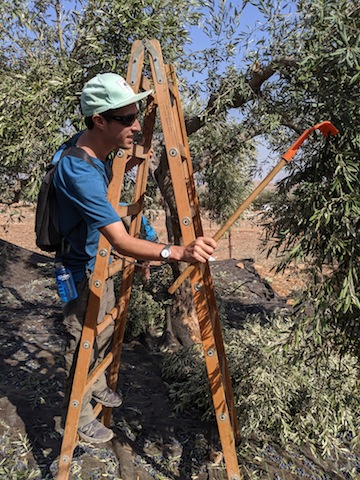
photo - Raking trees in an olive orchard, somewhere between Duma and Kafr Malik, West Bank, Palestine
Raking trees in an olive orchard, somewhere between Duma and Kafr Malik, West Bank, Palestine. (photo from Kevin Keystone)

In the short time we’ve been here, we’ve learned of the various ways in which Israel makes life nearly impossible for Palestinians: checkpoints; control over water, electricity, building and agricultural permits; the separation wall; demolition of homes and olive groves; restricted movement internally and internationally; arrest and imprisonment without trial; and, of course, the endless encroachment of settlements, which have been deemed illegal under international law by the United Nations Security Council and the International Court of Justice.

History, of course, is relevant to the present and, here, one can feel the weight of it, but it’s difficult to find a version that isn’t heavy with narrative. A briefing yesterday began with, “When Israel occupied Gaza and the West Bank in 1967….” That’s true, but Israel occupied the territories as an outcome of the Six Day War, which raises questions of how it started and who provoked it. (The answer, as with most things Israel and Palestine, is hotly debated and too extensive to rehash here.) Yesterday, we didn’t talk about the Six Day War, nor the nuances of what came before it. The conflict doesn’t justify the occupation, but to leave out relevant context, to drop the “why” behind the “what,” I’m not sure that’s helpful, either.

On Birthright, we visited an Israeli military base. One of our trip’s soldiers was a pilot in the air force; in the common room, rows of flat, black, airplane-shaped medallions were pinned to a wall. Someone asked what they were. “Those are enemy aircraft,” the pilot said. “Each one marks a plane we shot down.”

The group erupted in applause. I froze, horrified. It reminded me of the story we tell at Passover, when the Heavenly Hosts rejoiced at the drowning of the Egyptians in the Red Sea. “My creatures are perishing,” God silenced them. “And you sing praises?”

* * *

It’s dark now. Stars are appearing in the night sky. Crickets chirp and trucks rumble low in the distance, no doubt carrying goods along labyrinthine backstreets to avoid Israeli-controlled roads, or the possibility of a checkpoint rejection or closure. So much time and life wasted. Tomorrow, we walk. It’s day two, I’m not sure where this road will lead. But all I can do is keep walking.

Kevin Keystone is a Toronto-based freelance writer, editor and researcher. When not hiking long-distance trails, he can be found reading, spending time with friends and family, or with his beloved partner, Aaron. His writing has been published in the Literary Review of Canada, the Jewish Independent and Good Old Boat.

Format ImagePosted on September 11, 2020October 8, 2020Author Kevin KeystoneCategories IsraelTags education, hike, Israel, Israeli-Palestinian conflict, Masar Ibrahim Al-Khalil, Palestine, Path of Abraham the Friend, peace, politics, separation wall, Siraj Centre
Building community in Israel

Building community in Israel

Monthly hikes are one of the many activities offered by the English Speakers Residents Association. (photo from ESRA)

The reasons for making aliyah are many, however, some of the big questions holding back potential olim (immigrants), especially those who are 50+ and are already settled, may include the following: “My Hebrew is almost nonexistent; what am I going to do with myself when I get to Israel?”

One of the ways to help solve these concerns is to join the English Speaking Residents Association (ESRA). My wife, Ida, and I are good examples. We made aliyah in June of 2016 from Toronto when we were in our early 60s. We had two immediate priorities: to find an English-speaking community to live in and to get involved in Israel by finding meaningful volunteer opportunities. Fortunately, we found ESRA.

ESRA was founded some 40 years ago. It has about 2,700 members in 21 different chapters in north, south and central Israel, stretching from Eilat to Nahariya and beyond. The members come from North America, the United Kingdom, South Africa, Australia, New Zealand and elsewhere. The programming, all of which takes place in English, encompasses social activities, outings (when conditions permit), educational mentoring and tutoring programs, charitable and welfare activities and volunteering. In addition, and because of COVID-19, a majority of the social activities, talks, visual tours and cooking classes have been and will continue to be presented on Zoom.

ESRA is not just for those planning on making aliyah. Many people living abroad want to be able to see and hear about Israel generally and/or participate in English-language programs and ESRA’s calendar features talks on a range of topics, from finance, current events, history, the environment and entertainment, as well as clubs, such as bridge, photography and knitting. These programs are accessible around the world and, of course, people can join in ESRA programs when visiting Israel – the group’s monthly hikes have recently restarted.

For more information on ESRA, visit esra.org.il.

 – Courtesy English Speakers Residents Association

Format ImagePosted on September 11, 2020September 10, 2020Author Jack Copelovici ESRACategories IsraelTags aliyah, Diaspora, English Speaking Residents Association, ESRA, Israel, olim
Want to be a therapist?

Want to be a therapist?

Avrum Nadigel’s latest book, which he co-authored with the late Dr. David Freeman, is aimed at people contemplating a career in family therapy. (photo from Avrum Nadigel)

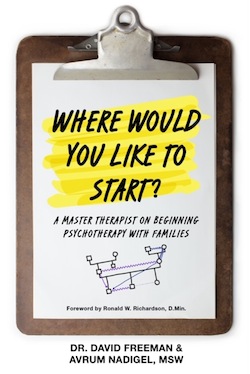
Therapist Avrum Nadigel’s latest book hit the shelves this month. Co-authored with the late Dr. David Freeman, Where Would You Like to Start: A Master Therapist on Beginning Psychotherapy with Families is structured as a conversation or interview between veteran therapist Freeman and then-newish therapist Nadigel.

Nadigel is a family marriage therapist based in Toronto. Originally from Montreal, where he had worked for the Jewish community for years, he moved to Vancouver for a spell. It was here that he met Freeman (who passed away in 2010).

Freeman had brought in various therapists to speak on marriage, love and respect at different events. Attending these lectures, Nadigel found what the therapists had to say “redundant and I didn’t find it very helpful for me. I had a pretty severe case of fear of commitment, and they all rambled on about the same thing. But, when David spoke, it blew my mind.”

About a year after hearing Freeman speak, Nadigel met, online, the woman who would become his wife, Dr. Aliza Israel. “She is from Vancouver, but was staying in Toronto at the time,” said Nadigel. “Now, we’re married and have three kids. And that all started because of David’s talk in Vancouver. David’s talk introduced me to a type of therapy called family systems theory.’”

Nadigel read many books on the topic, including Freeman’s, which made Nadigel rethink his previously held suppositions about relationships and marriage. “I changed the way I practise with my own clients,” he said.

Nadigel moved to Toronto when he was accepted into a residency there. He started up a private practice and began to look for someone to mentor him. At his wife’s suggestion, he reached out to Freeman in Vancouver, who, although semi-retired, was happy to supervise Nadigel via Skype.

Nadigel recalled some of the game-changing ways in which Freeman changed his way of thinking.

“When I was single, if I felt anxious or not good in a relationship, I was taught that this meant there was something wrong,” said Nadigel by way of example. A relationship “should be lovely, giving and with good communication, but, as soon as I get anxious, I bolt. Then, David comes around and goes … ‘Perhaps your own internal states of anxiety have nothing to do with the people you’re dating, but with your own internal struggle itself.’ It really changed how I saw discomforting feelings in intimate relationships. It helped me sit with them longer.”

Thinking about his eventual marriage to Israel, Nadigel said, “I often think back to that time and think, ‘How did all this work?’ Maybe, it was one part luck, one part theory and one part having a good therapist in my corner.”

In addition to Freeman’s counsel, Nadigel has done much study on family systems, notably he did post-graduate training with the Western Pennsylvania Family Centre, which teaches Bowen family systems theory, as formulated by the late Dr. Murray Bowen, a psychiatrist and founder of the theory.

Recalling his conversations with Freeman, Nadigel said, “David was very worried about two things. Number one, that people were focusing too much on hacks and behavioural changes, and that the system was much more powerful than that … and that the system would often, not always, but often, thwart any attempts the individual would try to make the change. So, he was very concerned that there were so few therapists offering a larger perspective about human suffering.

“The second thing he was very worried about – I think this is because he was a grandfather at the time of his death, he had two grandkids – was about the disconnect from wise elders in society. I think that’s really coming home to roost right now, the fact that we have the hashtag on Twitter, where it says, ‘BoomerRemover.’

“Some people are thinking that, well, it’s good about this coronavirus – it’s going to kill off all the old people and there’ll be more condos. I don’t know what the hell they are thinking but we really do see the elderly as an inconvenience in a lot of cases, and David thought this creates an impoverished culture – that, when you think of traditional society, it’s the elders who share life lessons that can only be acquired over time, through adversity and history. You can read a book, but it’s very different if an elder tells you what it was like to survive the Blitz in Britain. And David thought that young people in their marriages were impoverished, because of their lack of connection.

“So, with those two things,” said Nadigel, “I thought, maybe, if I can somehow convince David to write another book, I could be the young green therapist and he could be the senior guy. He could speak to me and motivate the next generation of therapists.

“I thought to myself that it should be snappy and quick.… I threw him the idea and I think the same day he got back to me and said he thought the format’s viable – except that, in this case, it would be Skype calls between a young therapist and a senior therapist…. We quickly started working on this once a week.

“Then, David had the manuscript and was going on vacation,” said Nadigel. “We had a few more chapters to write; he really liked where the book was going. Then, I got an email from him, a very brief email, which was odd, because he was much more verbose. It just asked if I could call him.

“I thought, that doesn’t sound good, that maybe he was going to say the book sucks. I called, and it was his now-widow [Judith Anastasia], who answered, and she said, ‘Avrum, I’m sorry to tell you, but David died of a heart attack while we were cycling in Croatia.’ I couldn’t believe it. It was a crazy summer. My dad died, my son was born and David died.”

image - Where Would You Like to Start book coverSeveral years later, with Anastasia’s blessing and to honour Freeman’s memory and work, Nadigel started to complete their book.

“The book gives you a taste of a master therapist, to experience the wisdom and thinking he brought to thousands of families and couples he’s worked with over 40 years,” explained Nadigel. “And, once you finish the book, you might feel it’s your responsibility now to go and further your training in this area.

“David’s life work was helping people understand that, if you want to do well with your own personal goals and struggles and gridlock, you have to understand what you’re up against,” said Nadigel. “And you don’t do that by just talking about your neurotransmitters and serotonin and dopamine, or meditation…. It’s about certain ways of the here and now, that you either distance or connect through relationships that are happening right now – that are happening with your mother, your father, your sister, your aunt, your cousin. The work is staring you right in the face right now.”

Family system coaching, consultation or therapy, said Nadigel, is based on “the theory and the road map of going back and reworking through some of the gridlock in your family. And those people who are successful at doing something and thinking differently [about] their problems with their relationships – siblings, spouse, kids, whatever – [are] bringing those successes to every relationship. And that does not happen in the clinician’s office.

“Also, this type of therapy understands that human beings don’t get into problems because of their thinking – they get into problems because they are flooded with feelings…. It tries to promote good thinking to balance out strong feelings, toward being a little more strategic in how you conduct yourself in your relationships.”

And Nadigel himself is an example of how the approach can work.

“I’ve often thought that, if I was reading about this book, the interesting angle I always found … is that I was a punk rock alternative musician in Montreal. I was commitment-phobic and really saw marriage and family, marriage considerably, as the death knell of all that’s good in life – [that it’s] boring and sucks the nectar out of a good life. Then, David comes along in Vancouver and he just creates a profound paradigm shift in me, and I have come to a wildly different understanding. I’ve become a marriage therapist myself, a father, all this kind of stuff, so a pretty fundamental transition.

“I was one of these people that, once upon a time, really had a strong distaste for the very thing I’ve embraced,” said Nadigel. “It really is all credit to this one little talk in Vancouver in the JCC. There’s hope there. It doesn’t take years and years. It could be a 50-minute talk.”

Nadigel has created a blog and podcast to support the new book. To access it, visit nadigel.com/start. Electronic and hard copy versions of Where Would You Like to Start are available at amazon.ca.

Rebeca Kuropatwa is a Winnipeg freelance writer.

Format ImagePosted on September 11, 2020September 10, 2020Author Rebeca KuropatwaCategories BooksTags Avrum Nadigel, David Freeman, mental health, psychology, relationships, therapy

Community stronger

Rosh Hashanah is a time of new beginnings, a time to reflect on a year gone by and on the new year ahead. As is often the case with new beginnings, it is also a time of uncertainty. Last Rosh Hashanah, we wished one another a sweet year, unsure of the future but hopeful of things to come.

As we herald the arrival of this new year, we do so understanding that we control far less than we had thought. Normally, the uncertainty that comes with a new start is imbued with hope for the possibilities ahead. This year, however, it is uncertainty itself that dominates. As 5780 draws to a close, we have learned that we must seek what we can rely on: the strength of our community and our resolve to face these unprecedented challenges together.

In 5780, the challenges were many, and our community met them with an empowering, inspiring and united response.

When urgent help was needed, social service agencies and not-for-profits mobilized, delivering food, providing services remotely and offering support to those who needed it most. Jewish federations shifted their focus to emergency fundraising campaigns to meet the immediate needs of agencies on the frontlines, ensuring that the changing needs of our most vulnerable were met.

When COVID-19 hit, Jewish Federation of Greater Vancouver immediately released $505,000 in emergency funds to meet these urgent needs and continues working with donors to generate additional funds for community recovery. CIJA advocated for the inclusion of not-for-profits in government support programs, such as the Canada Emergency Wage Subsidy, and helped ensure that Jewish schools were eligible. Volunteers mobilized by the thousands, responding to calls for assistance, helping the many seriously impacted by COVID-19.

Our community was tested in other ways, as antisemitism, the crafty shapeshifter that is always on the move, found new outlets during the pandemic. With Statistics Canada reporting a rise in antisemitic incidents through 5780, our community from coast to coast continued to unite, offering support where it was needed most. Indeed, this was the year we learned the many ways we could help and, for far too many, how to reach out to ask for help ourselves.

As we renew our talk of new beginnings at the conclusion of a year defined by uncertainty, many wonder: how can we plan for the year ahead?

For 5781, we must change our approach and, instead of planning according to dates on a calendar, look at our character for the coming year. As Rabbi Adin Steinsaltz z”l, wrote, “This does not mean, however, that, on Rosh Hashanah, one should make plans for the whole year. That would be impossible…. What one should do on this day is form a general picture of what ought to be the character and direction of this year.”

For 5781, we can accept the uncertainty of what is to come and focus on the knowledge that we can rely on the tested strength of our community. And that continued strength is up to us. We can commit to volunteering our time and, if we can, donating our money. We can commit to finding creative ways to give back and offering support to those experiencing hardship. Instead of planning large events or travel, we can plan to lean on our community when in need and support it every way we can. We can plan to check in on those who are vulnerable, to be more understanding of ourselves and others, and to be more present when given the gift of company among our loved ones.

As we reframe what planning looks like for 5781, it can be difficult to determine how best to dedicate our efforts. There are many good causes that need our help. Instead of being overwhelmed, be reassured that, for whatever assistance you can offer, there is a worthy cause, organization or initiative looking for someone just like you. Federations are great starting places. Check out your local campaign and learn what their various service agencies and not-for-profits are doing.

Though much of the past year has been uncertain, Rosh Hashanah presents us with a chance to start anew. We can still hope for and work toward a better tomorrow. The coming year will be defined not by our individual wishes and schedules but by our collective character and commitment to our community. Planning for uncertainty may seem counter-intuitive, but history has shown that we have the capacity to come together and overcome even the darkest of times. As we look ahead to 5781, amid all the unknowns, one thing remains certain: our community will continue from strength to strength.

Judy Zelikovitz is vice-president, university and local partner services, at the Centre for Israel and Jewish Affairs.

Posted on September 11, 2020September 10, 2020Author Judy ZelikovitzCategories Op-EdTags Centre for Israel and Jewish Affairs, CIJA, coronavirus, COVID-19, Rosh Hashanah

More positives than expected

We often use the High Holidays for self-reflection. Consider, we’re urged, the year that has passed and the future. For me, the pandemic and its uncertainty has made me less focused on the year to come. Instead, I’ve been taking a positive accounting of things I’ve experienced this year – and it’s actually quite a lot.

First, there’s been more time for our family to do Jewish learning and “attend” synagogue at home. It’s been easy to turn on Saturday morning services or a special lecture or a concert and expose the family to more Jewish content. The internet has made us feel welcome everywhere. This a huge leap ahead of what we often got out of “business as usual,” pre-pandemic.

Learning in general has changed. As someone who used to teach, I was wary of homeschooling. To be fair, I’ve met some very bright kids who’ve been homeschooled. I’ve also met some odd folks, so focused on their (often evangelical) religious views that it got in the way of making other connections. As but one example, once, I drove with my husband to visit a local farm that advertised sheep fleeces for sale. I’m a hand spinner, and we thought the drive would be fun. I met a large family living in a series of rundown buildings and trailers, wearing an interesting assortment of “traditional” clothing. These isolated, homeschooled evangelical kids led me into a trailer full of both wool and wasps, all eagerly telling me about their visions of the end-times. I left with some wool, but only because my husband and I couldn’t find any other way to politely extricate ourselves.

I’d been scared that, if I ever homeschooled my kids, it would become claustrophobic, bad for the kids and hard for me to catch a break. This was the case when remote schooling started in March. Getting the kids onto the online school meetings and keeping things afloat with a poor internet connection and somewhat spotty assignments from teachers was awful.

When school ended, we were relieved. I kept doing some learning with them each morning, though. Reading, math, cursive, Duolingo (online language learning for Hebrew), art, architecture and design, music and science/STEM learning have kept us busy, along with long walks, playing outside, swimming and more. Sure, I don’t have much alone time. Time for work (or even work to do!) has been limited, but that’s OK, in the circumstances.

Our kids are supposed to go back to school in person this fall, and we’ll see how long that lasts. I don’t dread homeschooling as much now. Setting our own agenda resulted in kids who may be more socially isolated, but they’ve learned a lot. They read better now in two languages, and their math has improved.

Disconnecting from the school-extracurricular activities-synagogue cycle hasn’t been bad either. Those demands came with a lot of pressure. The need to keep up, fit in, afford it and get there on time is stressful. It is easier to practise piano, play soccer in the yard or turn on the services via Zoom than to get to everything in person. Further, there’s no weird social interaction with other families about what we’re wearing, or just how hip we are. (We’re so not hip.)

Making things ourselves has been a mostly good, too – lots of cooking and other activities. Last fall, I started using my sewing machine, after years off. I took sewing lessons as a kid but never gained confidence. Pre-pandemic, I’d sewn myself a few things and remembered how to do this. Returning to it has been a great gift. I’ve figured out making masks, fixing and making clothing. Better still, because of the pandemic, I’ve been able to shop for supplies online and support small businesses selling sustainable or deadstock fabrics. I didn’t have time to go shopping for this stuff in person before the pandemic. Now, most everything is online. I can make plans for kid pajama pants, and dresses and pants for myself, in the future.

We’ve enjoyed some amazing concerts, held outdoors on our block. A talented musician/producer neighbour with a big front porch invites guests to come set up chairs and blankets, social distance and enjoy. Musicians perform for donations, and we all benefit. We’ve heard baroque, classical, flamenco, jazz, old-time and folk. If we sometimes can’t get outside as a family to hear it, the music floats up into our second-storey windows when the wind blows the right way.

Art has blossomed, not only in our family’s projects, but at the “little free art box,” which is run by an artist in the area. Much like a Little Free Library, one can open the box, take art or put art inside for others. We’ve shared kid watercolours and my handspun yarn, and received gorgeous charcoal sketches, pen and ink, and other delights. We’ve traded and celebrated the skills of others nearby. Our diverse community is rich with talent.

None of these small positive things can compensate for the many deaths and illnesses of COVID-19, nor the economic devastation to so many businesses and workers. The downsides this year have been huge. However, last night, I watched as my kids created a caravan on the blanket spread on the grass. We were listening to live music, as my mind leapt to the text I’d been learning from Daf Yomi (a page of Talmud a day). The rabbis are trying to explain how to make a temporary boundary around a caravan as one traveled and camped on Shabbat. They mentioned using saddles and camels, and debated how much space each person might need.

The blanket caravan consisted of several toy trains and hard plastic rhinos and elephants, lined up nose to tail in a circle. The tractate Eruvin is about boundaries – what boundaries make it safe to carry on Shabbat? In the time of coronavirus, I was transported to a different kind of caravan and boundary. Our families have “circled the wagons.” We’ve been forced to stay put and look inwards – but also to be outdoors. What value can be found in these new enforced boundaries? What positive things can come from those necessary restrictions? In our house, we can say that art, music, handmade creations and learning can be celebrated as we finish 5780 and begin 5781. It’s been a valuable time, even as illness, hardship, fear and sadness danced at the edges of every day’s newscast.

From my (socially distanced) house to yours – may we all have a happy and sweet new year, full of creation, positivity and, most importantly, good health.

Joanne Seiff has written regularly for CBC Manitoba and various Jewish publications. She is the author of three books, including From the Outside In: Jewish Post Columns 2015-2016, a collection of essays available for digital download or as a paperback from Amazon. Check her out on Instagram @yrnspinner or at joanneseiff.blogspot.com.


Posted on September 11, 2020September 10, 2020Author Joanne SeiffCategories Op-EdTags coronavirus, COVID-19, gratitude, High Holidays, Judaism, lifestyle, Rosh Hashanah

Posts pagination

Previous page Page 1 … Page 250 Page 251 Page 252 … Page 664 Next page
Proudly powered by WordPress