Skip to content
  • Home
  • Subscribe / donate
  • Events calendar
  • News
    • Local
    • National
    • Israel
    • World
    • עניין בחדשות
      A roundup of news in Canada and further afield, in Hebrew.
  • Opinion
    • From the JI
    • Op-Ed
  • Arts & Culture
    • Performing Arts
    • Music
    • Books
    • Visual Arts
    • TV & Film
  • Life
    • Celebrating the Holidays
    • Travel
    • The Daily Snooze
      Cartoons by Jacob Samuel
    • Mystery Photo
      Help the JI and JMABC fill in the gaps in our archives.
  • Community Links
    • Organizations, Etc.
    • Other News Sources & Blogs
    • Business Directory
  • FAQ
  • JI Chai Celebration
  • JI@88! video

Recent Posts

  • Story of Israel’s north
  • Sheltering in train stations
  • Teach critical thinking
  • Learning to bridge divides
  • Supporting Iranian community
  • Art dismantles systems
  • Beth Tikvah celebrates 50th
  • What is Jewish music?
  • Celebrate joy of music
  • Women share experiences 
  • Raising funds for Survivors
  • Call for digital literacy
  • The hidden hand of hate
  • Tarot as spiritual ritual
  • Students create fancy meal
  • Encouraging young voices
  • Rose’s Angels delivers
  • Living life to its fullest
  • Drawing on his roots
  • Panama City welcoming
  • Pesach cleaning
  • On the wings of griffon vultures
  • Vast recipe & story collection
  • A word, please …
  • מארק קרני לא ממתין לטראמפ
  • On war and antisemitism
  • Jews shine in Canucks colours
  • Moment of opportunity
  • Shooting response
  • BC budget fails seniors
  • Ritual is what makes life holy
  • Dogs help war veterans live again
  • Remain vital and outspoken
  • An urgent play to see
  • Pop-up exhibit popular
  • An invite to join JWest

Archives

Follow @JewishIndie
image - The CJN - Visit Us Banner - 300x600 - 101625

Get $5 off Ahed’s Knee admission at VIFF

Get $5 off Ahed’s Knee admission at VIFF

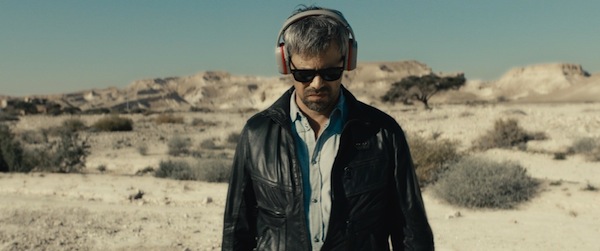
A still from Ahed’s Knee, which screens at Vancity Theatre March 25, 26 and 28. The movie – which won the Jury Prize at last year’s Cannes Film Festival – is about a celebrated Israeli filmmaker named Y, who arrives in a remote desert village to present one of his films at a local library. Struggling to cope with the recent news of his mother’s terminal illness, he is pushed into a spiral of rage when the host of the screening, a government employee, asks him to sign a form placing restrictions on what he can say at the film’s Q&A. Told over the course of one day, the film depicts Y as he battles against the loss of freedom in his country and the fear of losing his mother.

For $5 off the ticket price, use the promotional code VIFFKNEE22 at goviff.org/aheds-knee.

– Courtesy Vancouver International Film Festival

Format ImagePosted on March 25, 2022March 24, 2022Author VIFFCategories TV & FilmTags Ahed's Knee, Israel, movies, politics, Vancouver International Film Festival
Community milestones … Pikuah Nefesh Award, community food program, Klein-Thompson wedding, Jerusalem Talmud

Community milestones … Pikuah Nefesh Award, community food program, Klein-Thompson wedding, Jerusalem Talmud

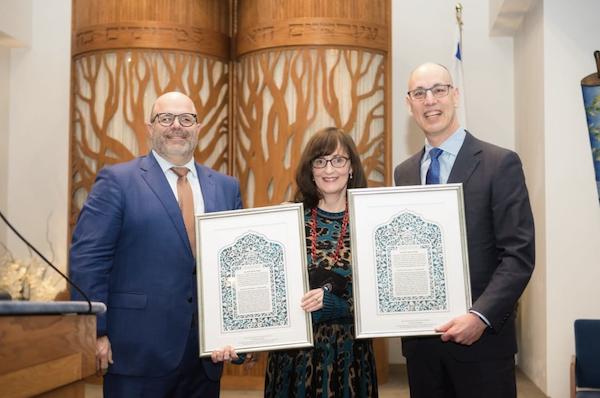
Rabbi Dan Moskovitz, left, Dr. Patricia Daly and Dr. Eric Grafstein (photo from Temple Sholom Twitter)

On Feb. 26, Temple Sholom awarded community members Dr. Patricia Daly and Dr. Eric Grafstein with the Pikuah Nefesh Award (to save a life) for their leadership and dedication to our community throughout the pandemic. Mazel tov to both of them! You can watch the presentation on the synagogue’s YouTube channel, along with the evening’s concert featuring Israeli cellist Amit Peled performing “Journeys with my Jewishness.”

* * *

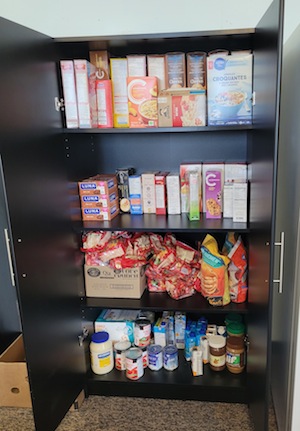
The community cupboard and fridge at Richmond Jewish Day School.

The pilot of the new Richmond Jewish Day School (RJDS) and Kehila Society of Richmond food program to enhance students’ access to healthy and nutritious food is now in progress. With start-up funds provided by Jewish Federation of Greater Vancouver and TD Bank, once a week, JFS Vancouver delivers hot meals to RJDS at no cost to the students or their families. In addition, the funds were used to purchase a community fridge and pantry cupboard that will be kept stocked by JFS, Kehila and the Richmond Food Bank. Students and their families can access healthy snacks, dry goods, fresh produce and meals, during school hours.

* * *

photo - Aden Klein and Nikki Thompson
Aden Klein and Nikki Thompson (photo from their families)

Denise and Wayne Thompson and Gerri and David Klein are thrilled to announce the engagement of their children, Nikki and Aden. A fall wedding is planned.

* * *

photo - Paul and Pamela Austin
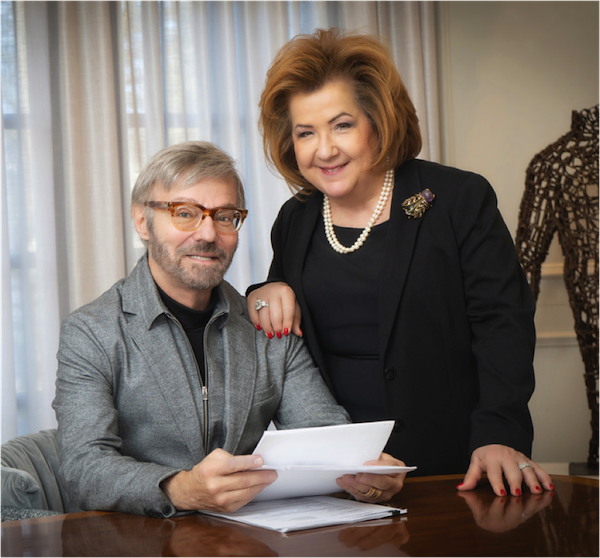
Paul and Pamela Austin (photo from CFHU)

The Canadian Friends of the Hebrew University recently announced a transformative gift to establish the Pamela and Paul Austin Research Centre on Aging at the Centre for Computational Medicine at the faculty of medicine of the Hebrew University of Jerusalem.

The Pamela and Paul Austin Research Centre on Aging will implement an approach to combating disease by integrating computational data analysis into medical research and practice, and by preparing the next generation of computation-science-trained doctors and researchers. It will bring together leading researchers to leverage the power of data-driven analyses, applying computational methods to study and help combat a variety of age-related diseases, including Alzheimer’s and Parkinson’s; pain; psychiatric disorders; genetic disorders; congenital impairment; immune and inflammatory diseases; cardiovascular aging, and the effects of aging on cancer, osteoarthritis, pulmonary disease and metabolic disease.

The Centre for Computational Medicine and its research programs are specifically designed to enable data information flow and collaborative interdisciplinary research efforts with the most advanced equipment and a disease modeling unit, all in proximity to a major medical centre.

Globally, the number of people over the age of 60 is soon expected to outnumber children under the age of 5. As life expectancy rises, so does the prevalence of age-associated diseases, posing a central challenge to healthcare systems worldwide. The gift from the Austins will go beyond the centre, establishing scholarship opportunities for students and an annual lecture.

* * *

A new edition of the Jerusalem Talmud is now available in Sefaria’s free library of Jewish texts – available on sefaria.org and the Sefaria iOS and Android apps.

The Jerusalem Talmud, also known as the Talmud Yerushalmi or Palestinian Talmud, is the sister text to the better-known Babylonian Talmud. It was compiled in Israel between the third and fifth centuries from oral traditions. Like the Babylonian Talmud, the Jerusalem Talmud is a textual record of rabbinic debate about law, philosophy, and biblical interpretation, structured as a commentary on the Mishnah. However, a language barrier (it is written in a different dialect of Aramaic), reduced elaboration, and complex structure can make it difficult to study.

The new Jerusalem Talmud on Sefaria includes:

  • Complete English translation,
  • Fully vocalized text to assist learners in reading the distinctive Aramaic dialect,
  • Extensive interlinking to the Bible, Babylonian Talmud and other works, providing connections that help with understanding the work and placing it in context,
  • Topic tagging, so searches on Sefaria will surface references from the Jerusalem Talmud,
  • Six of the standard Hebrew commentaries included in the Vilna edition of the Talmud available and linked on Sefaria, including Korban HaEdah, Penei Moshe, Mareh HaPanim and others,
  • Standardized organization of the different published formats of the Jerusalem Talmud so readers can more easily find their place in the text.

The only fully extant manuscript of the Jerusalem Talmud was set down by Rabbi Jehiel ben Jekuthiel Anav in 1289, which formed the base for the first printing in Venice by Daniel Bomberg in 1524. Sefaria has manuscript images from both of these editions visible in the resource panel, to see the original format of the texts alongside the modern, digital version.

The English translation of the Yerushalmi was completed in 2015 by Heinrich Guggenheimer, a mathematician who also published works on Judaism. He spent the last 20 years of his life working on translating the Jerusalem Talmud. With his blessing, Sefaria approached his publisher, de Gruyter GmbH, who agreed to partner on this open access version of Guggenheimer’s historic work. Guggenheimer passed away on March 4, 2021, at the age of 97.

Format ImagePosted on March 25, 2022March 24, 2022Author Community members/organizationsCategories LocalTags Aden Klein, Canadian Friends of Hebrew University, CFHU, Eric Grafstein, Jerusalem Talmud, Jewish Vancouver, JFS Vancouver, Kehila Society, Nikki Thompson, Patricia Daly, Paul and Pamela Austin, philanthropy, Pikuah Nefesh Award, Richmond Food Bank, Richmond Jewish Day School, RJDS, Sefaria, TD Bank, Temple Sholom

Experiences shape identity

I recently studied the Pardes story in Tractate Chagigah of the Babylonian Talmud. This story is a complicated, mystical journey. The Mishnah starts by asking what extremely sensitive topics are difficult and, therefore, should only be taught in small groups. The presence of G-d is one of those topics. In the Pardes (literally “Orchard”) narrative, four rabbis go in search of G-d’s presence. It’s a life-changing event. Only Rabbi Akiva comes out alive and intact. Ben Azzai dies. Ben Zoma “was harmed” – this is interpreted to mean that he lost his mind. Elisha Ben Abuya becomes acher, or other, a heretic who is forever changed by his experience.

This narrative stuck with me, particularly the stories about Elisha Ben Abuya, who, although still respectful and learned, remains forever “othered” by his experience. He’s unable to be included, or to properly reconnect or embrace communal Jewish life again.

When I was 14, I decided I wanted to become a rabbi. For years, this was my goal. I was actively involved in my congregation. My mom, a Jewish professional, started a Jewish nursery school, and then went on to become a director of education and, finally, a temple administrator/executive director. That building and community were like my house. I knew it inside and out. The rabbi’s family was extended family to me. We had picnics and cookouts, I played with their kids. I knew that Jewish professionals were people I loved. It made becoming a rabbi seem attainable.

I lived in Israel for a year in high school. I went to and worked at Jewish camps, studied Hebrew and Near Eastern studies in university, taught religious school and Jewish music and served on a religious school committee. I helped lead services. Then, in my last year of university, I interviewed at not one, but two rabbinical schools. I started with the Reform Movement’s Hebrew Union College (HUC). I later interviewed at the Reconstructionist Rabbinical College (RRC).

I wasn’t accepted. Looking back, with a lot more interview experience, I can easily see that the interview process was flawed. The committee asked illegal, uncomfortable questions. The process didn’t judge me on my academic skills, Jewish involvement or merits. I was told, after the “try again next year” rejection, that I needed counseling. (Not career counseling, but just vague “counseling.”) Since my family was closely tied to the Reform movement, I heard later that, in that cohort, the competition for women to be accepted was much harder than it was for men. Many more women applied than men did, and there were reportedly quotas. At the time, women hadn’t reached parity in the field. The seminary didn’t want to accept more than 50% women.

Later, I watched several people, including a guy I had dated in university, get into rabbinical school and become a successful rabbi. He had lower academic grades and less Hebrew proficiency than I did.

RRC’s interview was much more respectful. I appreciated it, but they suggested that they weren’t sure I was Reconstructionist. They also rejected my application, again with an invitation to resubmit later, when I was “sure.”

Losing the life goal of becoming a rabbi was a difficult identity shift. I focused on what I had wanted out of the rabbinate: Jewish learning, chances to teach and lead services, build community and write about Jewish topics. I pursued a master’s in education and started teaching. I moved, got a dog, and got engaged … all serious commitments. It meant I wouldn’t suddenly be reapplying to rabbinical school and flying off to spend a year in Israel. I didn’t want to put off my life any longer to face rejection again.

On social media, I recently watched a long-time teacher transition out of the classroom to another kind of consultancy work. It was a flashback moment. More than 20 years ago, I was a high school teacher. I also taught religious school and tutored kids for b’nai mitzvah. Teaching was a huge part of who I was as a person. However, I wasn’t sure that my position was ideal. I still wanted to study more. I decided to go back to graduate school. This coincided with getting married. When I returned to get a religious studies degree, it felt like I’d lost any sense of authority, despite having a master’s degree and teaching experience.

In the graduate program, I earned a tiny stipend as a teaching assistant. Nobody cared that I already knew how to teach. While I did learn a lot, mostly on my own, I had the bad luck to enter a program that was splintering. A lot of faculty left, including my advisor. Without an advisor, I finished with only a second master’s degree, and went back into an educational administration job. I continued moving for my husband’s academic career, becoming a shape-changer in terms of my freelance work life.

I’m now in mid-career and, while I’m not a rabbi, I achieved some of my goals. I study more, have taught some, and I write about Judaism. That said, reading about Elisha Ben Abuya’s “othering” as a result of his experiences really struck home. Many of us have had these life-altering shifts of identity. Sometimes, it is individual, like a teacher’s career change or a divorce or the death of a loved one. Sometimes, like the millions fleeing war in Ukraine, Syria or Afghanistan, it’s a complete departure from life as they knew it. It can be soul-crushing. Some die, like Ben Azzai. Some are unable to maintain their sanity, like Ben Zoma.

One’s career or life can change gently, but often it’s sudden, like in war or with a swift rejection. Sometimes, it is a sapling or “shoot,” a hope for new direction, cut down, as Ben Abuya’s experience relates. Our lives shift. We change identities and directions. However, through all this, Jewish traditions can offer us a story or a metaphor from which we can learn or with which to identify.

Elisha Ben Abuya’s story is a tough and sad one. It also offers solace. I suspect more of us have had this gut-wrenching experience than we want to admit. Acher/Ben Abuya was public about his angst and struggle – and his community did try to help. Perhaps there’s a lot to be gained through processing and acknowledging our hardest experiences, even if, in Acher’s situation, his relief and resolution came only long after he died.

Joanne Seiff has written regularly for CBC Manitoba and various Jewish publications. She is the author of three books, including From the Outside In: Jewish Post Columns 2015-2016, a collection of essays available for digital download or as a paperback from Amazon. Check her out on Instagram @yrnspinner or at joanneseiff.blogspot.com.

Posted on March 25, 2022March 24, 2022Author Joanne SeiffCategories Op-EdTags Elisha Ben Abuya, identity, Judaism, lifestyle, Pardes, Talmud

A rediscovered novella

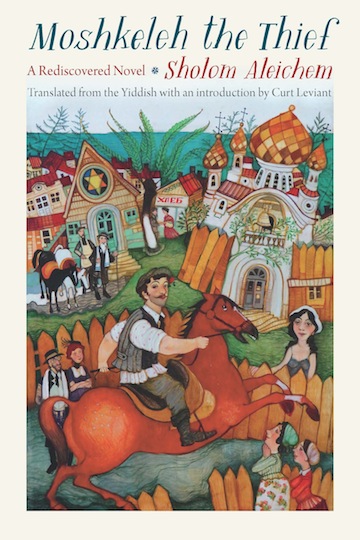
Moshkeleh Ganev, a forgotten novella by Sholom Aleichem, was recently resurrected from obscurity by gifted translator Curt Leviant.

image - Moshkeleh the Thief book cover

Missing from the standard edition of Sholom Aleichem’s collected works, which was published after his death, Leviant came across a brief citation of the story in a Yiddish literary quarterly published in Israel, while doing research on another project at the Hebrew University library. Leviant went on to translate it into English and Moshkeleh the Thief was published in 2021 by University of Nebraska Press.

The story stands out as a lively and endearing picture of shtetl life in Russia’s Pale of Settlement. Sholom Aleichem himself wrote in 1903 that the work celebrated a phase in his career when he had, he said, “really begun to write,” and was not merely “fooling around.”

I read Moshkeleh at a rapid clip as soon as it was mailed to me by Leviant, unable to stop due to the inescapably arresting character of the narrative. Sholom Aleichem has the ability to keep readers riveted to his stories, as though we are living in the community he is describing. His narratives are always very much alive in this sense.

Tsireleh, the attractive daughter of Chaim Chosid, a wine-cellar manager (a marginalized role for many Jews of that time, whose sights were set on more prestigious occupations), was, for me, a pivotal character in the tale for several reasons.

Unlike Chava in Tevye the Dairyman, Tsireleh was another variation on the Sholom Aleichem theme of a daughter whose involvement with non-Jews (Chvedka) posed a challenge to a sense of Jewish identity. The nine Tevye stories were authored over several years, starting in 1894. Moshkeleh was first serialized in a Warsaw Yiddish paper in 1903, when five of the Tevye stories had already been published; the remaining four were published after 1904. So, thematic strands interwoven in the lives of characters like Chava and Tsireleh that were important to the author may have overlapped. For example, Tsireleh comes close to the same threat to tradition in her relationship with Maxim Tchubinski, a non-Jew, and her elopement with him to a Christian monastery, but is whisked away by Moshkeleh at the 11th hour.

It is tempting to think that, despite Tsireleh’s nascent feminism, she was a pushover for any man who declared his love for her in passionate terms, as did both Maxim and Moshkeleh. But one can also see her elopement with the latter – even though he is a horse thief fated for deportation – as an enduring commitment to the faith of the family she left behind in her drive toward independence. Far from being overly impressionable in matters of the heart, there remained a silent commitment to the Jewish faith, unlike Tevye’s Chava.

Also unlike Chava, Tsireleh was a contrarian from the get-go, who longed for a different life than the one she felt she was saddled with as Chaim Chosid’s daughter. She had earlier rebelled against the yet-to-be role of subservient wife, becoming pregnant and going on to appropriate the domesticity envisioned for her sisters, not to mention all the young women in the shtetl. Her own metaphor was not becoming a clucking hen who sits on her eggs until they hatch, only to repeat the process several times over. She rebelled against the idea of marrying at too young an age to experience the world in a different way, and rebelled against the thought of having to marry a suitable man from a respectable family. She promised herself she would build her life differently. Eloping with a non-Jew like Maxim Tchubinski on a Pesach night was a dramatic example of why, unlike other characters in the novel, she wasn’t cut from an ordinary mold.

Yet her elopement with Moshkeleh does show an enduring commitment to her Jewish faith. Perhaps Tsireleh was for Sholom Aleichem a character representing themes he wrestled with when it came to communities in which opportunities for assimilation were an ever-present temptation – or threat.

David Begelman, PhD, is a psychologist in New Milford, Conn.

Posted on March 25, 2022March 24, 2022Author David BegelmanCategories BooksTags Curt Leviant, Moshkeleh Ganev, Moshkeleh the Thief, Pale of Settlement, Sholom Aleichem, storytelling, translation
The excitement of holidays

The excitement of holidays

As meaningful and fun as most of the Jewish holidays are, there’s a lot of running around, cleaning, cooking and other preparation that generally goes into them. Three recently published children’s books – two about Passover and one on Shabbat – capture the joys of the holidays, and the craziness that can sometimes precede them.

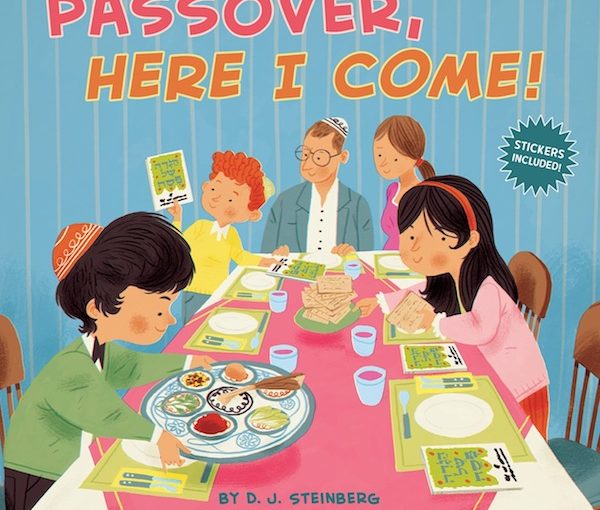
Passover, Here I Come!, written by D.J. Steinberg and illustrated by Emanuel Wiemans was put out this year by Grosset & Dunlap. It’s a compilation of short poems, all related to Passover, from “Scrub-A-Dub-Dub!” preparations to “Bye-bye, Bread!” and “Hello, Matzoh!” it goes through pretty much every aspect, including the Passover story, what’s for dinner and the search for the afikomen.

“Made by Me!” is about making up the seder plate, and all the plate’s items and their symbols are noted alongside the illustration. For the poem “Our Magic Table,” the drawings and words again combine to wonderful effect. We see the tables from set-up to guest-filled, and the typesetting, leaving gaps between the letters forming the words “g r o w s   a n d    g  r  o  w  s,” communicate the truly magic nature of a Pesach table that does seem to fit an enormous number of people, when we’re lucky to have many friends and family join in our celebrations.

Steinberg’s verse and Wiemans’ drawings work well together, simultaneously entertaining and teaching. The basics of Passover are all covered in Passover, Here I Come! which even includes a recipe for Mom’s Matzoh Brei after the four-line poem “World’s Best Breakfast.”

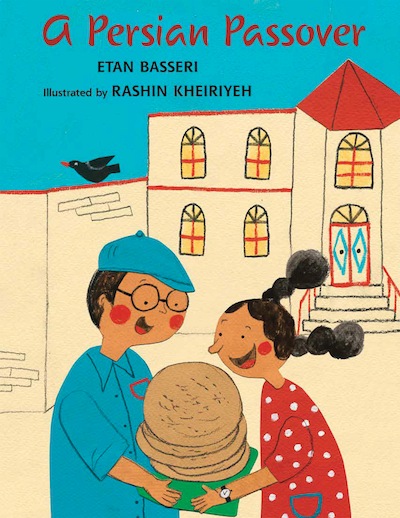
A Persian Passover (Kalaniot Books) by Etan Basseri with illustrations by Rashin Kheiriyeh, also contains a recipe – for hallaq, which is Persian-style charoset. In addition, the end of the book features a brief description of Passover and what goes on the seder plate, a glossary of Persian and Hebrew words used in the story, and a couple of paragraphs on Jews in Persia, known today as Iran, though, notes Basseri, “the culture and main language of this region is still called ‘Persian.’”

image - A Persian Passover book cover

Set in Iran in the 1950s, A Persian Passover follows siblings Ezra and Roza, who are helping their family get ready for the holiday. Everyone is put to work and Roza is finally old to enough to accompany older brother Ezra to the synagogue, where families bring their own flour “to be mixed, rolled and baked into soft, delicious matzah.” Though older, Ezra is not necessarily wiser and he’s still a kid, with energy to burn. Not having learned from an earlier collision with a neighbour – as he ran a lap around the house, being timed by Roza – Ezra once again asks Roza to measure how fast he can run to the next street corner, freshly baked matzah in hand.

“But he didn’t see the rut in the road up ahead. ‘Oof!’ yelped Ezra as he tripped and fell. Splat! went the bag of matzah as it dropped into a puddle.

“‘The matzah!’ they exclaimed together.

“‘That was all the matzah we had for the week. Now it’s gone. What will we tell Mama and Baba?’ asked Roza.” (The glossary notes that baba means dad in Persian.)

Ezra and Roza set out to find replacement matzah before the seder starts, and we meet more of the neighbourhood folk. Hopefully, it won’t be too much of a spoiler to know that the kids succeed – not only receiving kindness, but also showing kindness to others along the way.

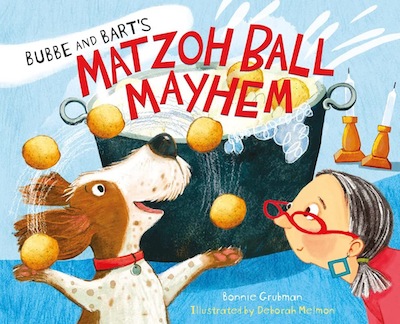
The last book that recently came out has to do with matzah, but not with Passover, which is why it’s included in this brief roundup even though it’s about Shabbat. Good for year-round reading, Bubbe and Bart’s Matzoh Ball Mayhem, written by Bonnie Grubman and illustrated by Deborah Melmon, was published by Seattle’s Intergalactic Afikoman last November. Created by two dog lovers, it begins, “This is Bubbe’s story. Believe me that it’s true. Her puppy loved each Friday night like Jewish puppies do.

image - Bubbe and Bart’s Matzoh Ball Mayhem book cover

“When Bubbe made her matzoh balls, Bart was at her feet, waiting for a ball to fall, and not some doggie treat.”

While Bart’s begging doesn’t achieve the desired result, he does get to eat all the matzah balls he’s able to catch. Bubbling away in the pot on the stove, the matzah balls grow so large that they blow off the lid and zoom all over the room. Not to be held back by “a better lid, and some very sticky tape,” the balls continue to fly. And we get to count them as they do. (Another spoiler alert: Bart gets to eat an awful lot of matzah.)

Eventually, with a little magic, calmness is restored and dog and house are cleaned up in time for Shabbat dinner with the family.

Bubbe and Bart’s Matzoh Ball Mayhem ends with a couple of paragraphs about Shabbat, “a very special day of the week,” and a short glossary.

Format ImagePosted on March 25, 2022March 24, 2022Author Cynthia RamsayCategories Books, Celebrating the HolidaysTags Bonnie Grubman, children's books, D.J. Steinberg, Deborah Melmon, education, Emanuel Wiemans, Etan Basseri, Iran, Judaism, matzah, Passover, Persia, Rashin Kheiriyeh, Shabbat
PJ Library resources

PJ Library resources

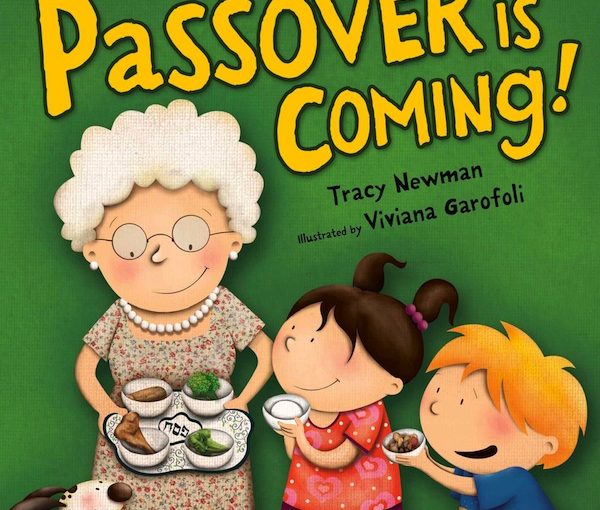
One PJ Library holiday offering is Passover is Coming by Tracy Newman and Viviana Garofoli.

Long a trusted resource for Jewish families in more than 35 countries around the world who receive their free books each month, PJ Library offers fresh reading, audio stories and tasty treats for families celebrating Passover this year, April 15 to 23.

Hundreds of thousands of children are receiving new books this month, each providing a carefully curated selection of age-appropriate reading related to Passover. New this year, families will also receive a colourful illustrated “Matzah Mania” fold-out that includes recipes for homemade matzah, matzah trail mix, and matzah pizza lasagna, along with ideas for serving a seder grazing board. The keepsake fold-out includes culturally inclusive information about seder traditions, and the Four Questions of the seder, which are printed in English and Hebrew.

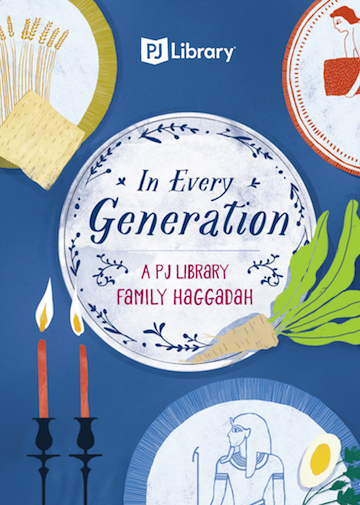
image - In Every Generation Haggadah cover English
PJ Library’s Haggadah is available in five languages, including English and French. As well, PJ Library has many other Passover resources, such as children’s books about the holiday.

In the PJ Library program, which was created by the Harold Grinspoon Foundation, families who sign up may receive free books for children from birth through age 8. For kids ages 9 and up, PJ Our Way allows kids to select and review books on their own each month.

In April, two new Passover-themed episodes of the PJ Library Presents podcast network will launch. These new podcasts bring Jewish traditions, culture, holidays and values to life through audio storytelling. On April 4, Kiddo Learns about Passover will be the latest Afternoons with Mimi audio story, and Humpty Dumpty and the Passover Feast will be the newest tale in the Beyond the Bookcase series. Families may listen to the award-winning podcasts on all major streaming sources, and more information is at pjlibrary.org/podcast.

image - image - In Every Generation Haggadah cover FrenchPJ Library has become one of the leading sources for family-friendly Haggadot, with its illustrated In Every Generation: A PJ Library Family Haggadah. Since 2018, the organization has shipped more than 675,000 individual Haggadot to more than 110,000 PJ Library families for free. (For non-subscribers, the printed Haggadah is available for purchase via Amazon.) PJ Library also offers a digital version that can be downloaded in five languages: English, Spanish, Portuguese, Russian and French. This Haggadah is filled with songs, blessings and explanations and is available as a free printable PDF from pjlibrary.org/haggadah.

This year, PJ Library has updated its Passover hub – pjlibrary.org/passover – with new book lists and dozens of fresh ideas and resources for families, including stories and songs, games, activities and recipes.

– Courtesy PJ Library

Format ImagePosted on March 25, 2022March 24, 2022Author PJ LibraryCategories Celebrating the HolidaysTags children's books, Haggadah, Judaism, parenting, Passover, PJ Library
Weddings to stop plagues

Weddings to stop plagues

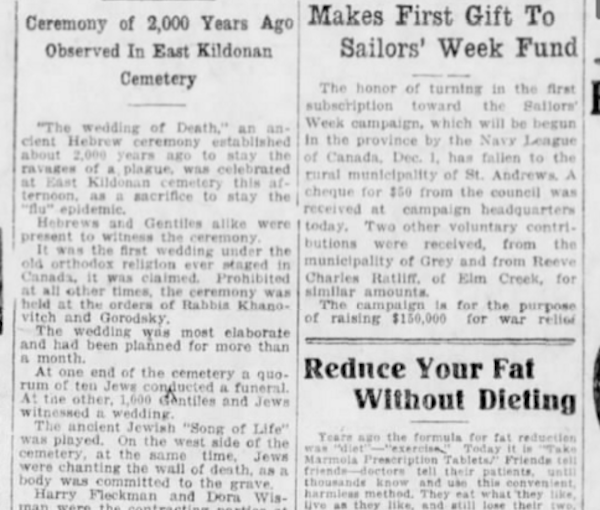
According to the Nov. 11, 1918, Winnipeg Tribune, Rose Schwartz and Abraham Lachterman were married in a plague wedding in Winnipeg, Man. More than 1,000 people attended, Jews and non-Jews.

Relatively early in the evolution of the coronavirus pandemic, in March 2020, there was an unusual wedding in Israel. The ceremony took place in Bnei Brak’s Ponevezh Cemetery. The bride (kallah) and groom (hatan), both orphans, had not previously known each other. Even in the ultra-Orthodox community, where there is a range of arranged to forced marriages, such an event – a black (shvartse) or plague (mageyfe) wedding – is extremely rare.

Written accounts of plague weddings date back almost 200 years, to eastern Europe. In these accounts, one learns that “targeted” couples were people who were orphaned, homeless, or had physical or intellectual challenges. In these scenarios, the community contends it is doing a favour to these brides and grooms, as it assumes that the couple has only a slim chance of marrying otherwise.

Had this contemporary couple under the wedding canopy been free to choose, or had they been coerced or something in between? Were they promised something to get them under the chuppah? Maybe they were gifted, respectively, their wedding dress and suit? There again, however, these outfits could have come from a wedding gemach, a charity warehouse from which people borrow items of clothing. Or perhaps, as was customary in earlier times, some well-to-do community member offered to “set up house” for them.

One thing is clear: even though it wasn’t their families who sat down and discussed terms, this was an arranged marriage. The couple had been picked to stop the ravages of the coronavirus. In a way, they were a sacrificial appeasement to G-d, who was thought to have brought on the pandemic.

The wedding was purposely not conducted in a synagogue, in a wedding hall or in someone’s house. The reasoning was that the community hoped that the souls of those interred in the cemetery would reward this act of marrying two orphans and intercede to block the evil decree. Perhaps, G-d would be induced to have pity on the couple and, by extension, halt the spread of disease.

The first record of a plague wedding goes back to 1831, in Russia, during a cholera pandemic. Another written reference to this type of ceremony dates to 1849, in Krakow, Poland. Another publication, from the early 20th century, deals with stories about Rabbi Elimelekh Weisblum of Lizhensk, who apparently arranged such a marriage in 1785, during a cholera outbreak. Some historians argue that the tradition is older still. In any case, the ritual became firmly entrenched in the Jewish communities of the Russian Empire during the 1892 cholera outbreak. (See Jeremy Brown’s comprehensive article, “The plague wedding,” at traditiononline.org/plague-weddings.)

Over time, the ceremonies became more elaborate. Hanna Wegrzynek writes of “several instances” where part of the cemetery was demarcated, symbolically closing off the affected area, so to speak. Some ceremonies were accompanied by feasts and dancing.

Brown notes that Eastern European Jews who resettled in the United States early in the 20th century brought the plague wedding custom with them. Across the country, during the Spanish flu epidemic (in which my own maternal grandfather almost died), desperate Jewish communities married off dozens of young couples. One of the most celebrated and widely reported plague weddings took place between Harry Rosenberg and Fanny Jacobs in October 1918 at a cemetery near Cobbs Creek in Philadelphia. The event was attended by more than 1,000 people. Unfortunately, genealogical research suggests that neither Harry nor Fanny survived the Spanish Flu, dying along with 50 million others.

In November 1918, Rose Schwartz and Abraham Lachterman were reportedly married in a similar ceremony in Winnipeg, Man.

Yizkor, or memorial, books of Jewish communities wiped out in the Holocaust record a number of black weddings. And three of the most famous 20th-century Yiddish and Hebrew writers make reference to plague weddings.

In 1945, I.B. Singer wrote about a cemetery wedding in his short story Gimpel the Fool: “It so happened that there was a dysentery epidemic…. The ceremony was held at the cemetery gates, near the little corpse-washing hut. The fellows got drunk. While the marriage contract was being drawn up I heard the most pious high rabbi ask, ‘Is the bride a widow or a divorced woman?’ And the sexton’s wife answered…. ‘Both a widow and divorced.’ It was a black moment for me. But what was I to do, run away from under the marriage canopy?”

S.Y. Agnon mentions such a wedding in his 1945 Only Yesterday –  “and they’ve already held a wedding for two orphans on the Mount of Olives to stop the plague.”

This past summer, Jerusalem’s Khan Theatre performed a dramatic adaptation of I.L. Peretz’s 1909 short story In the Time of Pestilence, in which there is a discussion about orphans marrying during an outbreak. The theatre company performed the work at Hansen House, the site of a former hospital for people suffering from Hansen’s disease (also called leprosy).

Since the 1800s, when the first plague wedding was reported, there have been a number of global pandemics. In chronological order, they include cholera, bubonic plague, measles, Russian flu, Spanish flu, Asian flu, HIV/AIDS, SARS and COVID-19. (See “Pandemics That Changed History,” at history.com/topics/middle-ages/pandemics-timeline.)

Even though plague weddings don’t seem to be at all effective in stopping outbreaks of diseases, for the guests, at least, the ceremonies could be seen as a means of escape, for a short time, from worry and despair.

Deborah Rubin Fields is an Israel-based features writer. She is also the author of Take a Peek Inside: A Child’s Guide to Radiology Exams, published in English, Hebrew and Arabic.

Format ImagePosted on March 25, 2022March 24, 2022Author Deborah Rubin FieldsCategories LifeTags cemetery weddings, history, Judaism, pandemics, plague weddings

קוביד, ההורים נפטרו, מזג אוויר משוגע ומלחמה באוקראינה

בשנתיים האחרונות חוויתי אירועים קשים שכמעטו ולא היו כדוגמתם לאורך כשנות חיי, בישראלועתה בקנדה. כשאני חושב על מה שעבר עלי מאז חודש מרץ לפני שנתיים בדיוק, זה נראה לי הזוי- ממש מדע בדיוני

קודם כל החלה אז במרץ אלפיים ועשרים מגפת הקורונה לצבור תאוצה בכל העולם. תחילה שמענועל כך בסין ולא חשבנו כי המגפה יכולה להתפשט גם למערב ובעצם לכל העולם. אני זוכר היטב אתהנסיעה שלי לישראל לבקר את הורי בתל אביב, בסוף מרץ לפני שנתיים. מצד אחד הם רצו לראותאותי מצד שני חששו שמה אדביק אותם בקוביד, כיוון שטסתי מונקובר, עצרתי למספר ימים בברליןוהמשכתי משם לתל אביב

מאוד שמחתי שהצלחתי לראות את ההורים וכרגיל לשון אצלם בבית. לא שיערתי אז שזו שתהיהבעצם, הפעם האחרונה שאראה אותם פיזית. אבי כבר דעך מכל הבחינות, התקשה ללכת ואףהזיכרון שלו כבר לא היה טוב. לאחר זמן מה הבנו שהוא לקה בדמנציה

באותו שבוע קצר בתל אביב נפגשתי עם מספר חברים טובים עמם אני שומר על קשר שנים רבות, למרות שאני גר בוונקובר כבר שנים רבות. כן הספקתי באותם ימים בתל אביב אף להצביע בבחירותהכלליות בישראל, תוך תקווה להחליף את ראש הממשלה הנצחי של ישראל, בנימין נתניהו. זה לאקרה אז אלא רק לאחר כשנה

הביקור בישראל ישאר בזכרוני לזמן ארוך כי כאמור זו הפעם האחרונה שבה ראיתי את הורי

אני חזרתי לוונקובר בדיוק שבוע לפני שהשמיים נסגרו והופסקו הטיסות למספר חודשים. המגפההחריפה והחיים שלנו השתנו מקצה אל קצה. מי היה מאמין שתופעה מוזרה ולא מוכרת זו תימשךשנתיים תמימות. כל שגרת החיים השתנתה, הפסקנו לצאת למקומות ולצרוך תרבות, נצמדנולטלוויזיה, רכשנו מסכות, חומרי חיטוי לידיים ועוד מוצרים התקפים לעיתות של מגפות

עסקים רבים נפגעו קשות מהמגפה בהם מקום העבודה שלי – חברה המספקת הלוואות למי שלאיכול להשיג אותן באחד הבנקים המסחריים, בשל קרדיט גרוע. בזמן החופשי שנותר בידי והוא היהבשפע התחלתי לצעוד מדי יום שעות ארוכות ברחבי העיר ונקובר והסביבה. מכוני הכושר היוסגורים ולכן החלטתי שאני חייב להיות פעיל כדי לשמור על כושר סביר, וההליכות עשו את שלהן

בתחילה ראיתי איך ונקובר הפכה לעיר מתה, ולאט לאט לקראת הקיץ היא החלה קצת להתעורר, אם כי לא באופן שאני רגילים לו. למזלנו מחוץ בריטיש קולומביה נפגע פחות מהמגפה לעומתאזורים אחרים בקנדה, כך שהצלחנו לשמור על חיים שפויים פחות או יותר

בגלל המצב הקשה של החברה באני אני עובד נאלצנו לפנות לבית המשפט לקראת סוף שנתאלפיים, ולבקש הגנה מפני נושים. אני נרתמתי לעזור להנהלת החברה ושוחחתי ארוכות עם בעליאגרות החוב שלנו, כדי לעודד אותם לחתום על הסכם חדש, שיאפשר את המשך קיום החברה. אכןזה קרה ויצאנו לדרך חדשה, באישור בית המשפט, חברה רזה יותר, עם הרחבה פחות חובותועובדים, ועתיד שנראה טוב יותר

במקביל לקראת סוף אלפיים ועשרים מצבו הבריאותי של אבי הידרדר מיום ליום וחששנו ממהשעתיד לקרות. הוא נפל כל הזמן, הפסיק לקחת כדורים, זכרונו בגד בו, ומצבו החמיר. במהלךחודש בפרואר אלפיים עשרים ואחד הוא נאלץ להתאשפז בבית החולים איכילוב הסמך לביתו. שדםלצערנו נדבק גם בקוביד וידענו שהסיום מתקרב. הוא החזיק מעמד כשבועיים עד שנכנע למגפההקשה הזו. בגיל תשעים וארבעה חודשים הוא נפטר

אני לא הצלחתי להגיע להלוויה בגלל מגבלות הקוביד וראיתי את האירוע הקשה הזה באמצעות זום. לא היה זה פשוט לראות איך קוברים את אבא שלי כל כך מרחוק, באמצעות מסך המחשב

הורי היו נשואים שבעים ואחת שנים והיה מאוד קשה לאמא להתרגל לכך שאבא כבר לא איתנו. למרות החשש הכבד של אחי ושלי, אמא לאט לאט חזרה לעצמה ופיתחה לעצמה שגרת חייםחדשה ללא אבא. כנראה שהרצון האדיר שלה לחיות הוא שהוביל אותה. אמא למרות שמלאו להתשעים ושתיים המשיכה להיות מאוד פעילה מבחינה ספורטיבית, חברתית ותרבותית. האופיהאופטימי שלה עזר לה רבות, להמשיך ולחיות לבד. היא הצליחה לקבל עובדת זרה פיליפיניתשתעזור לה בעבודות הבית, וכדי שלא תרגיש בודדת בלילות. ניהלתי לא מעט שיחות טלפון עםאמא ושמחתי שהיא חוזרת לעצמה, צוחקת, נפגשת עם החברות שלה ועם בני המשפחה השונים. היא בחרה בחיים והחיים והכל נראה מתנהל כשורה

כאן בוונקובר עברנו אשתקד את הקיץ החם ביותר בתולדות בריטיש קולומביה ובעצם בקנדה. החוםהיה בלתי נסבל ולצערנו מאות קשישים וחולים נפטרו. אני לשמחתי יש לי מזגן בבית כך שיכולתילהמשיך בשגרת החיים הרגילה ולעבוד כרגיל. רק בערבים הייתי מוציא את האף החוצה

במהלך חודש נובמבר אשתקד חטפנו כאן מכה נוספת ממזג האוויר: כמות אדירה של שטפונותשגרמו נזק אדיר למחוז, הנאמד בכארבעה מיליארד דולר. כבישים, גשרים, בתים ותשתיות רבותנעקרו ממקום כמו אבנים של דומינו שנופלות אחת אחרי השנייה

אני נערכתי לנסיעה לישראל לבקר את אמי בסוף חודש נובמבר. בגלל תקנות הקוביד הקשות בכלמדינה, הכנתי מסמכים רבים, הצלחתי לקבל את החיסון השלישי של פייזר לפני הזמן ונרשמתילבצע בדיקות קוביד בוונקובר ובתל אביב. שבוע לפני הנסיעה נדהמתי לדעת שווריאנט חדש שלהקוביד – אומיקרון משתלט על העולם. אמי התקשרה אלי בבהלה והציעה לי לבטל את הנסיעה. ואכן זה מה עשיתי כי ידעתי שאחרת אאלץ לשהות בבידוד בחלק גדול של הנסיעה. זה היה מאודמעציב שאינני יכול לטוס ולבקר את אמא שהתאלמנה כתשעה חודשים קודם לכן

בינתיים החורף הגיע גם הגיע לוונקובר ולשם שינוי גם הוא היה קשה ביותר. לא זכור לי כבר הרבהשנים קור נוראי כזה ושלג ללא הפסקה

ואז נחתה עלי מכה נוראית נוספת: בראשית חודש פברואר אחי התקשר אלי בדחיפות והודיע לי כיאמא אושפזה בבית החולים ומצבה חמור ביותר. היא נחנקה מחתיחת תפוח בסלט שאותו היאאכלה. במשך עשרים דקות שהתהה ללא חמצן, כך שהבנו שנגרם למוחה נזק אדיר שאין לא תקנה

יצאתי בטיסת חירום לישראל והספקתי לראות את אמא מחוברת לכל הצינורות שבעולם באיכילוב. למחרת הגעתי לבית החולים מוקדם בבוקר ונתבשר לי שהיא נפטרה. אני זה שנאלצי לבשר לאחילשאר בני המשפחה על מותה של אמא. היה קשה להשתתף בהלוויה ולאחר מכן לשבת שבעהולקבל ניחומים, מבני משפחה, חברים וידידים רבים

אמא ואבא נקברו באותו יום בדיוק הפרש של שנה. בקיצור: איבדתי את הורי בתוך שנה תמימהאחד

לא הספקתי להתאושש ממותה של אמא ואז נחתה על כולנו מכה קשה חדשה: ולדימיר פוטיןהחליט שהוא רוצה לעצמו את אוקראינה ופתח במלחמה נוראית ומיותרת

אני מקווה שאחרי שנתיים הזויות אלה אוכל קצת לזכות בשקט ובשלווה וללא שום אירועים חריגים. זה כבר הספיק לי

Posted on March 16, 2022March 14, 2022Author Roni RachmaniCategories עניין בחדשותTags business, COVID, death, environment, health, Israel, parents, Ukraine, war, אוקראינה, בריאות, הורים, ישראל, מוות, מלחמה, סביבה, עסק, קוביד
A roadmap to remembering

A roadmap to remembering

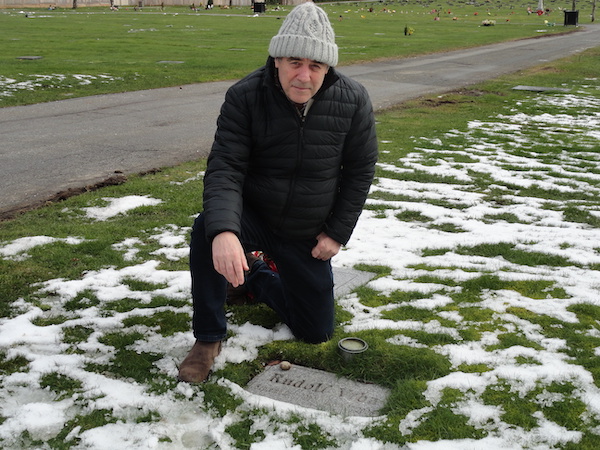
Alan Twigg, author of Out of Hiding: Holocaust Literature of British Columbia, at the gravesite of Rudolf “Rudi” Vrba, who died in 2006. (photo from JCC Jewish Book Festival)

Fittingly for a man who has dedicated his life’s work to the written word, Alan Twigg has compiled a fascinating bibliography. Out of Hiding: Holocaust Literature of British Columbia is one of two books to be launched in a JCC Jewish Book Festival epilogue event on April 5. The other is Sounds from Silence: Reflections of a Child Holocaust Survivor, Psychiatrist and Teacher by Dr. Robert Krell, to whom Twigg’s book is dedicated.
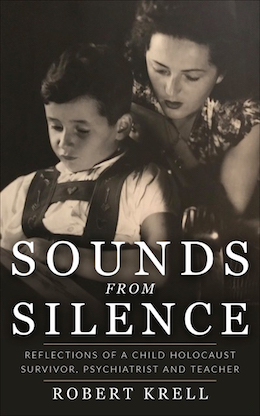
image - Sounds from Silence book cover“More than anyone in Canada, Robert Krell has continuously carried the torches of healing, investigation and discourse about the Shoah since the 1970s to counteract ever-encroaching racism, denial and wilful ignorance,” writes Twigg, whose book is also dedicated to the late publisher and editor Ronald Hatch, who died last November. Hatch and his wife Veronica co-managed Ronsdale Press, which published Out of Hiding.

Among other things, Twigg is the founder of the BC BookWorld newspaper, The Ormsby Review (now called The British Columbia Review), the ABCBookWorld reference site, the Literary Map of BC and the Indigenous Literary Map of BC, as well as many of the province’s literary prizes. He has published 20 books and made seven literary documentaries.

Twigg wrote Out of Hiding with the help of many, including, notably, Yosef Wosk, who wrote the book’s afterword, in which Wosk discusses various kinds of hiding – from one’s mission, from persecution, in dreams, in silence, from truth. Wosk notes that the perpetrators of the Holocaust also tried to hide: “The Nazis engaged in fraud, deception and secrecy on a massive scale,” he writes.

“The secrecy was complete and, to a large extent, effective,” he adds. “The very monstrosity of the crime made it unbelieveable. In fact, the Nazis speculated that the unimaginability of their Aktionen would work in their favour.” But this expectation “was frustrated by the Allied victory. [What remained of] Nazi archives were opened, contemporary Jewish documents were discovered, and facts were ferreted out by courts and scholars. Moreover, by 1942, the Free World had gradually learned the truth, albeit not always complete and precise.”

Wosk concludes, “There is much to remember and even more to know as the Holocaust comes out of hiding.”

And this is one of the reasons Twigg compiled this collection.

“I am not a Jew. I am not a German. I simply believe it is the responsibility of everyone on the planet to know more than just a little about the Holocaust,” begins Twigg in the foreword. “It is our collective responsibility to teach our children – with details – about why the Shoah is unique among the many genocides.”

He points out: “No other political regime has ever systematically murdered at least 1.5 million babies and children.”

As well: “Never before or after has a modern, industrial state mobilized all of its resources to systematically commit murder at least six million times in about eight years (from Kristallnacht in 1938 to 1945) and no other government has established a separate killing ground to murder approximately 50,000 women (at Ravensbruck, north of Berlin).

“No other regime has so thoroughly and consistently degraded its victims,” writes Twigg. “Estimates vary but the United States Holocaust Memorial Museum claims Germans created 980 concentration camps, 30,000 slave labour camps, 1,150 Jewish ghettos, 1,000 prisoner-of-war camps and 500 brothels where women were sex slaves.” And yet, Holocaust education surveys have shown that most people would struggle to name one or two camps, other than perhaps Auschwitz.

Twigg believes that, “if the most-heinous, most-planned and most extensive genocide can be deep-sixed by mankind, all genocides thereafter can be shrugged off as natural – as inevitable as forest fires, plagues, droughts, locusts or tidal waves.” If that happens, he argues, then genocide becomes “someone else’s problem.” As for something the magnitude of the Holocaust, he writes, “Most certainly it can happen again.”
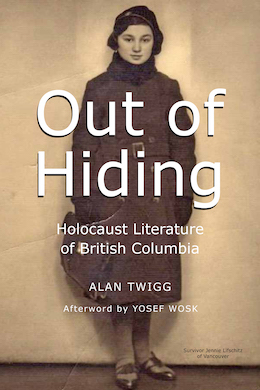
image - Out of Hiding book coverOut of Hiding is an intensely personal project for Twigg. He describes the book as “a roadmap back to places and experiences that must never be forgotten, offering a wide range of perspectives from the Holocaust-related books of British Columbian authors.” In total, he covers some 160 books in four sections. Some authors have written, edited or otherwise helped bring into being more than one memoir, novel, report or study; some of the people discussed are the subjects of the publications, rather than the writer.

Part One features relatively long expositions on Rudolf Vrba, Robert (Robbie) Waisman and Krell.

Twigg considers Vrba – who lived in Vancouver for the last few decades of his life – the “most important author of British Columbia.”

Writes Twigg in Out of Hiding, “Historian Ruth Linn estimates there were about 500-700 attempts to escape from Auschwitz-Birkenau, and most failed. Some 75 of these attempts were made by Jews; only five Jews made it successfully to freedom. The most significant of these five was Rudolf ‘Rudi’ Vrba, the main author of the most authoritative report on the true nature of the concentration camps, co-authored with co-escapee Alfred Wetzler.”

The Vrba-Wetzler Report, dated April 25, 1944, “finally revealed to the Allies the true nature and extent of the Holocaust.”

Twigg provides a biography of Vrba and some of what he learned from him as a friend. He also shares that Vrba, who died in 2006, was buried in a “seldom-visited cemetery, known to few people, where there is only a simple headstone.”

The April 5 event will include a video of Wosk chanting a Jewish blessing for Vrba at the graveside – something that apparently has not been done before.

Both Waisman and Krell are discussed in as much depth as Vrba, from their brief childhoods before the Holocaust through to recent history, sharing some of their writings and accomplishments, giving readers a sense of who they are and why their contributions are so vital.

Part Two offers shorter personal summaries on dozens of authors and publications. This section includes Lillian Boraks-Nemetz, Claudia Cornwall, Peter Hay, David Lester, Robert Mermelstein, Heather Pringle, Peter Suedfeld, Mark Zuehlke and many others. It features survivors of the Holocaust, as well as researchers, educators, journalists, graphic artists and editors who have studied the Holocaust, members of the Second or Third Generation, and a few non-Jews.

Part Three features an eclectic mix of 26 writers/artists, including Olga Campbell, Esi Edugyan, Jean Gerber, Rabbi Marvin Hier, Nikolaus Martin, Isa Milman, Norman Ravvin, Colin Upton and others.

Part Four:  One Doctor, Two Rabbis comprises three essays. The first is on Dr. Tom Perry, who served with the U.S. Army Medical Corps in the Second World War, and “took a series of rarely seen photos that his widow Claire Perry donated to the Vancouver Holocaust Education Centre in 1994 along with a five-page letter he wrote to her from ‘somewhere in Germany,’ describing his feelings and impressions of Buchenwald.” The letter is included in this section – and it is a powerful testament, though words don’t capture the horror as much as do his photographs.

The second essay, “Lulek’s Story,” flows from a well-known photo taken by Tim Gidal on July 17, 1945, in a refugee compound near Haifa – front and centre is Israel Meir “Lulek” Lau, holding a Buchenwald banner. Rabbi Meir Lau, who became Ashkenazi chief rabbi of Israel, was the youngest survivor of Buchenwald and his story is moving and inspirational.

Wosk’s afterword rounds out the collection with his thought-provoking reflections on hiding.

“Soon all witnesses will be gone,” concludes Twigg in his author’s statement. “The Holocaust must not be relegated to being merely the psychic preserve of Jews and Germans.”

The double-book launch event is presented with the Vancouver Holocaust Education Centre and takes place at the Rothstein Theatre. Admission is free but registration via jccgv.com/jewish-book-festival/events or at eventbrite.ca is required. To read a discussion of Krell’s Sounds from Silence, visit jewishindependent.ca/a-child-survivor-reflects.

Format ImagePosted on March 11, 2022March 10, 2022Author Cynthia RamsayCategories BooksTags Alan Twigg, Holocaust, JCC, JCC Jewish Book Festival, literature, Robert Krell, Vancouver Holocaust Education Centre, VHEC, Yosef Wosk
Peace hopes still alive

Peace hopes still alive

Barak Ravid (photo from Twitter)

An end to the Israeli-Palestinian conflict may be nowhere in sight, but the Israeli-Arab conflict may be coming to an end, says a leading Israeli diplomatic journalist.

Barak Ravid spoke virtually Feb. 20 in a presentation organized by the Jewish National Fund of Canada. Ravid, who reports for Axios from Israel, was formerly with Ha’aretz, where he worked for a decade as diplomatic correspondent and columnist, and is also a familiar face on Israeli TV. He was interviewed by Cynthia Ramsay, publisher and editor of the Jewish Independent.

Ravid spoke about his new book, Trump’s Peace: The Abraham Accords and the Reshaping of the Middle East, which is currently available only in Hebrew but should be out in English this summer.

Ravid acknowledges that Trump is a controversial figure and that the book’s title has received some pushback. “Peace is not the first thing that comes to mind when you say the word Trump,” he said. “I chose that name because it happens to be true.”

The author maintains that the Abraham Accords and the expanding normalization between Israel and Arab states would not have occurred under any other president.

“At the end of the day, Trump’s policies in the region closed down the trust gap that was open between the U.S. and the Israeli government … a gap that was opened during Obama’s term in office,” he said. “Whether it was warranted or not doesn’t matter. The gap was there. Trump’s policies in the region, mainly on Iran, closed down the gap and brought Israel and the Arab countries closer together.”

Trump’s decision to appoint his son-in-law, Jared Kushner, to deal with peace in the Middle East was key, according to Ravid. In interviews with Israelis and Arabs for his book, Ravid found that both sides viewed the appointment as proof of how central this issue was for Trump and served as an assurance that, when they spoke to Kushner, they were speaking to the president.

The ultimate reason the Abraham Accords were cinched, said Ravid, is that Trump did what he always claimed as his strength – he made deals. In return for normalizing relations with Israel, each party to the accords got something they wanted.

“For the United Arab Emirates, it was the arms sales, the sales of the F-35 fighter jets,” he said. “For Bahrain, it was an upgraded trade deal [with the United States]. For Sudan, it was removing them from the [U.S.] state department’s terrorism list. For Morocco, it was the U.S. recognition of Moroccan sovereignty over the Western Sahara…. Without those tangibles, those countries would not necessarily agree to take those steps.”

Ravid contends that Trump is not the only leader who deserves credit – Binyamin Netanyahu, who was Israeli prime minister at the time, was pivotal to the success. Ironically, he noted, the decision by most Arab politicians in Israel to reject the accords led Mansour Abbas to break away from the Joint (Arab) List and form a new party, Ra’am, whose participation in the new coalition government ultimately brought Netanyahu’s reign to an end.

“For the first time in history, an Arab party is a part of the coalition in Israel,” Ravid said. “In a strange way, the Abraham Accords enabled this change in Israel where Jews in Israel feel more comfortable towards Arabs and Arabs feel more comfortable joining the coalition and, therefore, Netanyahu’s biggest foreign policy achievement created the political conditions to get him out of office.”

It has long been an assumption that peace between Israel and Arab states would come only after a resolution of the Palestinian issue. When Netanyahu earlier tried to bypass the Palestinians and make friends in the neighbourhood, he was publicly shunned, said Ravid. But he kept plugging away behind the scenes, building relations in the region.

“It’s hard to go from zero to 100 in one step,” said Ravid. “You need to get to a situation where you narrow this gap and Netanyahu managed to take Israel and the Arab world from zero to, let’s say, 70. So, when the decision for the Abraham Accords came, the Arab countries didn’t have to go zero to 100, they needed to go 70 to 100.”

A third crucial contributor – who Ravid said deserves perhaps the most credit and who wants the least recognition – is the Crown Prince of Abu Dhabi, Sheikh Mohamed bin Zayed, the de facto leader of the United Arab Emirates. Bin Zayed has been trying to modernize his nation and he saw normalization with Israel as advantageous to his project. At the time, Netanyahu was threatening to annex about 30% of the West Bank into Israel. According to Ravid, bin Zayed saw a way to manoeuvre.

“He decided to be the most vocal opponent of annexation,” Ravid said. Bin Zayed told the Trump White House that, if Netanyahu dropped the annexation initiative, he would be ready to sign a peace deal with Israel.

For the White House, the annexation issue was a huge headache, said Ravid, and bin Zayed’s offer solved that problem while delivering a generational diplomatic breakthrough at the same time.

The big question is, what’s next? What about Saudi Arabia?

“That’s the crown jewel,” Ravid said. U.S. President Joe Biden sent his national security adviser, Jake Sullivan, to Riyadh and received a list of demands from Crown Prince Mohammed bin Salman Al Saud. All the demands were on the United States, not Israel, including that the Saudi monarch be invited to the White House.

Bin Salman has been an international pariah since the Washington Post commentator and Saudi dissident Jamal Khashoggi was murdered and dismembered in the Saudi consulate in Istanbul in 2017. The U.S. Central Intelligence Agency concluded that bin Salman ordered Khashoggi’s killing.

“Biden will have to take a very hard decision if he wants to move ahead with the Abraham Accords,” said Ravid, walking the fine line between rewarding a foreign leader who American intelligence has dubbed a murderer of a journalist and seeking to advance peace in the Middle East. But, if it works, the dominos will almost certainly fall into place, said Ravid.

“If Saudi comes in, then Indonesia comes in, then Kuwait comes in, then Oman comes in, then Muslim countries in Africa join, Pakistan,” he said. “It’s literally the end of the Arab-Israeli conflict – while the Israeli-Palestinian conflict will continue, obviously.”

In this regard, Ravid said, “The Palestinians decided to boycott the Trump administration in December 2017 after Trump announced he is recognizing Jerusalem as the capital of Israel and moving the embassy there. While I can understand Palestinian frustration and anger, and it makes complete sense to protest, the decision to boycott Trump until his last day in office, I think, was counterproductive to their goals, and didn’t get them anything in the end.”

On the flip side, Ravid argued, Netanyahu’s annexation of a big chunk of the West Bank would have put another nail in the coffin of the two-state solution.

“I think the Abraham Accords, even though the Palestinians won’t admit it, saved the two-state solution, at least for now,” said Ravid. “Some people think it’s gone already, but if you think the two-state solution is still alive, the reason it’s still alive is that the UAE normalized relations with Israel and stopped Netanyahu from annexing the West Bank.”

Bernice Carmeli, president of JNF Canada Pacific Region, opened the event, and Michael Sachs, executive director of JNF Pacific Region, closed it. Lance Davis, chief executive officer of JNF Canada thanked Ravid.

Format ImagePosted on March 11, 2022March 10, 2022Author Pat JohnsonCategories BooksTags Abraham Accords, Barak Ravid, Israel, Israeli-Arab conflict, Israeli-Palestinian conflict, Jewish National Fund of Canada, JNF Pacific Region, Middle East, politics, Trump's Peace, two-state solution

Posts pagination

Previous page Page 1 … Page 178 Page 179 Page 180 … Page 662 Next page
Proudly powered by WordPress