Skip to content
  • Home
  • Subscribe / donate
  • Events calendar
  • News
    • Local
    • National
    • Israel
    • World
    • עניין בחדשות
      A roundup of news in Canada and further afield, in Hebrew.
  • Opinion
    • From the JI
    • Op-Ed
  • Arts & Culture
    • Performing Arts
    • Music
    • Books
    • Visual Arts
    • TV & Film
  • Life
    • Celebrating the Holidays
    • Travel
    • The Daily Snooze
      Cartoons by Jacob Samuel
    • Mystery Photo
      Help the JI and JMABC fill in the gaps in our archives.
  • Community Links
    • Organizations, Etc.
    • Other News Sources & Blogs
    • Business Directory
  • FAQ
  • JI Chai Celebration
  • JI@88! video

Recent Posts

  • Sharing her testimony
  • Fall fight takes leap forward
  • The balancing of rights
  • Multiple Tony n’ Tina roles
  • Stories of trauma, resilience
  • Celebrate our culture
  • A responsibility to help
  • What wellness means at JCC
  • Together in mourning
  • Downhill after Trump?
  • Birth control even easier now
  • Eco-Sisters mentorship
  • Unexpected discoveries
  • Study’s results hopeful
  • Bad behaviour affects us all
  • Thankful for the police
  • UBC needs a wake-up call
  • Recalling a shining star
  • Sleep well …
  • BGU fosters startup culture
  • Photography and glass
  • Is it the end of an era?
  • Taking life a step at a time
  • Nakba exhibit biased
  • Film festival starts next week
  • Musical with heart and soul
  • Rabbi marks 13 years
  • Keeper of VTT’s history
  • Gala fêtes Infeld’s 20th
  • Building JWest together
  • Challah Mom comes to Vancouver
  • What to do about media bias
  • Education offers hope
  • Remembrance – a moral act
  • What makes us human
  • המלחמות של נתניהו וטראמפ

Archives

Follow @JewishIndie
image - The CJN - Visit Us Banner - 300x600 - 101625

Drop in Jewish learning?

Participation in Jewish supplementary education in North America has decreased by nearly half in 15 years, according to a new study from a New York-based organization. But a brief survey of Vancouver after-school and weekend education programs suggests local kids are bucking the trend.

The report from the Jewish Education Project, formerly the Board of Jewish Education of Greater New York, is the first comprehensive continent-wide assessment of supplementary Jewish education since a 2008 report by the AVI CHAI Foundation.

Supplementary education – that is, after-school and weekend options offered mostly by congregations – is how most Jewish children get their formal Jewish learning. Despite this, little research has been done on the strengths and weaknesses of the sector, according to the report, titled From Census to Possibilities: Designing New Pathways for Jewish Learners, which was conducted with Rosov Consulting.

According to the study, total enrolment in supplementary schools has decreased at least 45% since 2006-2007. “While not so different than in 2006, only 16% (less than 2,000 students annually) of those ever enrolled in a supplemental program remain in a formal educational environment by senior year in high school,” notes the report. The number of schools has decreased at least 27% since 2006-2007.

Although the report surveyed Canadians, the American numbers overwhelmingly swamp nuances in the Canadian Jewish experience. An informal whip-round of a few local supplementary education providers by the Independent produced a far rosier picture. Most who responded to the paper’s inquiries have not only bounced back from the pandemic’s challenges but are doing better than ever.

Congregation Beth Israel’s Rabbi Jonathan Infeld said all post-pandemic programming is attracting more people than ever before, including growth in Hebrew school numbers.

“Despite the fact that 85% of our children attend Talmud Torah, our Hebrew school is thriving and growing,” he said. “A lot of that I believe has to do with the hard work and efforts of Rabbi [David] Bluman and the teachers, as well as solid Hebrew and Jewish education. It is well known that children leave the BI Hebrew school having learned real knowledge and with a strong and positive Jewish identity.”

Engaging young people in unique and hands-on ways is among the reasons for the success, Infeld suggested, noting the congregation’s involvement with the new Jewish Community Garden.

“At Beth Israel, we provide Jewish education in motion, where Jewish children are able to learn while literally getting their hands dirty in the garden,” he said. “This is an exciting addition to the scene of supplementary Jewish education in Vancouver that has already begun to teach Jewish children important Jewish values of protecting our environment, food security, gratitude for the food we eat and the land of Israel.”

Jen Jaffe, school principal at Temple Sholom, also reports great post-pandemic engagement. Over the last 10 years, she said, Temple Sholom School has more than doubled enrolment, reaching almost 200 students. More than 30 teenage madrichim are set to help in the classrooms this year.

Temple Sholom successfully navigated the pandemic, she said, through online learning. The convenience of that mode has not been abandoned just because it’s safe to gather again.

“Now, although back in person, we also offer midweek Zoom Hebrew classes for our Grade 4 to 7 students who find the convenience appealing,” said Jaffe.

The school’s continued growth has led to a second session of Sunday classes.

Schara Tzedeck has not resumed supplementary education since the pandemic and the congregation’s formal youth education has traditionally been limited so as not to detract from Jewish day school opportunities like Vancouver Hebrew Academy, said Rabbi Andrew Rosenblatt.

“Hating on Hebrew school has been fashionable at least since Philip Roth published his short story ‘The Conversion of the Jews’ in 1958,” the Jewish Education Project report notes. Despite this cultural trope, a recent survey found that 87% of kids surveyed like or love their experience with Jewish education.

While part-time Jewish schooling has been seen as an easier, more affordable form of Jewish education, the report notes that it is not cheap, requiring, as it often does, synagogue memberships in addition to possible other expenses.

Broader trends toward secularization that are affecting most religious communities in North America are reflected among Jews.

“Overall, about a quarter of U.S. adults who identify as being Jewish (27%) do not identify with the Jewish religion,” says the report. “They consider themselves to be Jewish ethnically, culturally or by family background and have a Jewish parent or were raised Jewish, but they answer a question about their current religion by describing themselves as atheist, agnostic or ‘nothing in particular’ rather than as Jewish.”

Many families tend to be looking for a cultural approach to Jewish identity, which emphasizes history, language and peoplehood over prayer and worship. Another aspect to note is the ethnic diversity of Jewish communities, with that diversity increasing among younger age cohorts.

“Successful educational programs welcome Jews of Colour, all family members from homes where more than one religion is practised, and all who wish to be part of the community regardless of gender identity, sexual orientation, class or ability,” write the authors.

According to the report, effective teachers have “transitioned from ‘a sage on the stage’ to a ‘guide at your side.’”

Maggie Karpilovski, executive director of the Peretz Centre for Secular Jewish Culture, is bullish on Jewish education but said institutions need to heed the warnings of this report. Her organization is trying new things both in terms of content and delivery, with one of their popular offerings a province-wide online program. They are also explicitly reflecting the diversity of families who may be intermarried, LGBTQ+ or otherwise seeking something that reflects their values.

“We are also adding an additional program that’s focused on Israeli culture because we are seeing that segment of the population growing quite a bit and they don’t fit the mold of the traditional synagogue,” she said of young Israeli-Canadians and Canadian-born kids of Israeli parents.

If anyone needed a reminder, the report should convince them that rote language learning and proscriptive religious training are out.

“The traditional brick-and-mortar Hebrew school is no longer working for a lot of families and families are looking for alternatives,” said Karpilovski. “Young people are so worldly nowadays. They are concerned about climate change, they are concerned about racism and discrimination. They are concerned about what’s happening in their world and Jewish education that takes that into consideration, that contextualizes

Judaism and Jewish life within the context of the world, has more success and holds more interest to modern families and kids.”

The Jewish Education Project report may carry bad news, but Karpilovski sees it as a chance for renewal.

“We need to be engaging young people in the design and delivery of educational programs because they are the ones who are going to tell us what is relevant and they are the future of this,” she said. “So, I really hope that this report opens the door for us to pay attention, to ask more insightful questions and to invite young people and their families to participate in the development of what Jewish education is going to evolve into over the next decades.”

The report, with more information, is available at pathways.jewishedproject.org.

Format ImagePosted on August 18, 2023August 17, 2023Author Pat JohnsonCategories LocalTags Beth, Israel, Jewish Education Project, Peretz Centre, Schara Tzedeck, supplementary education, Temple Sholom

The first step is the to-do list

Yesterday, I shared my to-do list with a friend via email. She responded with “Ahh! I’m tired just reading this!” What I didn’t mention is that I had to do all this plus other chores, thrown in, which I had either forgotten to write down or were such household habits that I didn’t list them. For many caregivers who work and manage households, this sounds familiar. It’s the list that is the first step. Write it down. Name the obligation. Then release yourself from trying to remember it all. Finally, cross it off the list later.

This isn’t a new phenomenon. Studies have shown how much of this organizational and emotional labour falls to women. For example, a recent National Public Radio piece from the United States covered research by economists, which showed that women (mothers) were almost always contacted by schools first, no matter which parent was designated as the “first contact” on the emergency form. The social media chatter that followed remarked on how female medical residents or surgeons, working hours away from their children’s schools, were still called first even though the primary caretaker was the father. In the study itself, one economist described the mental load of planning ahead for “if the school called” and how women’s workload could be managed in such situations. She noted that, even though her husband was the vice-president of the Parent Teacher Association, the school always called her first.

In economic terms, women then self-select for lower paying, more flexible work simply to manage these challenges, resulting in lower income and fewer opportunities for career growth. Societal obligations placed mostly on women create a lifelong effect on earning power and household income.

This morning, as I bake bread, make chicken broth in two slow cookers, write this article and air out the house with fans because of an unexpected drop in temperatures due to a rainstorm, I time everything to fit into the hours between when I drop kids off at 9 a.m. and pick them up at noon for their half day of camp. This is, of course, not a specifically Jewish problem, but aspects of it are in our house.

We have twin 12-year-olds, with both kids doing b’nai mitzvah lessons at the same time. These kids come with different challenges. Like all learners, they may need different supports to master chanting trope. Amid the meltdown tears last night, it became clear that what was necessary was for each kid to have 15 minutes to practise separately every day with me. As the crying continued – and I include myself in the crying – my partner tried to help.

This is when you might wonder why all this falls to me, and you’d be right to ask. My partner told us that the year before his bar mitzvah involved a lot of crying. He was so overwhelmed that he quit playing drums at school, because he couldn’t manage both things. His mother had been given no Jewish education. She couldn’t read Hebrew and didn’t know the prayers. His father worked late every day, coming home at 11 p.m. My twins’ dad was truly on his own, with a cassette tape. He never learned the trope and struggled with short-term memory issues. Mastering his bar mitzvah portion took him a long time. As an adult, he never gained some of these prayer skills. A demanding job means now is not the time for him to catch up. The obligation’s all mine.

We’ve now been married for 25 years and I just learned last night about this tough path my husband took towards bar mitzvah. By comparison, I had supportive parents with some Jewish literacy, plus we attended services regularly. I was self-directed as a learner. Mastering everything for my bat mitzvah was interesting and challenging but not a struggle. I continued learning through university and graduate school and beyond, as I continue to study Talmud when I can. We chose a bilingual Hebrew/English elementary school for our kids partially because it would make bar mitzvah study easier for them.

Few people see what my lists of work and household obligations look like. I tell even fewer people about fitting in 20 minutes of Daf Yomi, a page of Talmud every day. When I mention the Talmud study, I’ve been asked why I bother. The minutiae of discussions of Jewish law that rabbis conducted so long ago is of no interest to most. Sometimes, if the person wants to know why, I explain that I learn things about Jewish tradition, history and daily life from these debates.

I also admit to myself that I find some reassurance in these pages. Although the specifics might have been different, life’s minutiae is pretty much the same. The rabbis struggled over multiple daily tasks, relationships and household concerns in many of the ways I do. They sweated the details, even if they didn’t do them all personally.

If everything works out, in June 2024, my kids will step up to the bimah (pulpit) and become bar mitzvah boys, which is a huge lifecycle event. Between now and then, practising with them will be another part of my to-do list. Good study habits mean you do a little every day until, suddenly, you learn something new. Just like my lists, nothing is insurmountable if you name it, take it step by step, and cross it off the list when the task is complete.

Like many women, I get bogged down by the minutiae. I wish I could share more of the household labour and emotional load. Even men who try to assume more of these tasks have to struggle against the societal expectations our culture wields. Step by step, we make change in our lives, our lists and our expectations for one another. It’s not a sprint. You can’t cram the night before to pass this exam. Life is a series of chores, moments, obligations and, well, joys.

Early this morning, I leashed up the dog while I sang the first Haftorah blessing aloud. I try to put the melody into the twins’ heads while donning my shoes and raincoat as I head out. Each step makes a difference to hopefully hit one very big milestone ahead.

Joanne Seiff has written regularly for CBC Manitoba and various Jewish publications. She is the author of three books, including From the Outside In: Jewish Post Columns 2015-2016, a collection of essays available for digital download or as a paperback from Amazon. Check her out on Instagram @yrnspinner or at joanneseiff.blogspot.com.

Posted on August 18, 2023August 21, 2023Author Joanne SeiffCategories Op-EdTags culture, Judaism, lifestyle, parenting, social commentary, Talmud, women

מדיניות ההגירה של קנדה – חלק ראשון

בתקופה שבה מדינות מתועשות בכל העולם מתמודדות עם ירידה בילודה והזדקנות כוח העבודה, קנדה מהמרת על כך שהגירה תצליח למנוע הידרדרות של הכלכלה. לאוכלוסיית קנדה, אחת המדינות הדלילות ביותר בתושבים בעולם ביחס לשטחה, נוסף מדי שנה מספר תושבים השווה לתושבי סן פרנסיסקו. באחרונה היא עברה לראשונה את רף הארבעים מיליון תושבים, והצמיחה צפויה להימשך בקצב מהיר ככל שיגיעו למדינה עוד ועוד מהגרים, פליטים וסטודנטים

עבור ממשלתו של ג’סטין טרודו, ניסוי ההגירה המסיבי הזה הוא גם דרך להרחיב את שוק העבודה, בזמן שהתחרות על עובדים מקצועיים נהיית קשה יותר. הניסוי הזה גם משקף את השאיפה של קנדה לטווח הארוך להרחיב את הנוכחות הבינלאומית שלה ולצאת מהצל הכבד של שכנתה ארה”ב, שבה חיים פי שמונה יותר אנשים, והתמ”ג שלה גדול כמעט פי שתיים עשרה

עכשיו, כשאנשים נכנסים לקנדה בקצב חסר תקדים, היא מתמודדת עם אתגר מיידי: כיצד לעודד את הצמיחה באזורים הכפריים שזקוקים נואשות לדם חדש, תוך מזעור הפגיעה במרכזי הערים העמוסים באנשים

לכאורה, היתרונות הכלכליים ברורים מאליהם. הגידול באוכלוסייה הגביר את גיוסי העובדים והצריכה, ועזר לכלכלה לעמוד איתנה בפני שורה של העלאות ריבית שביצע הבנק המרכזי של קנדה, עד כדי כך שהחודש נאלץ הבנק המרכזי לחזור להדק את המדיניות המוניטרית לאחר הפסקה. ואולם בקנדה, ששוק הנדל”ן שלה היה במשך תקופה אחד הלוהטים בעולם, התוכנית של הממשלה גררה ביקורת על כך שהעלאת יעדי ההגירה רק מגדילה את התמ”ג, בלי להעלות את רמת חייהם של התושבים

התמ”ג הריאלי לנפש בקנדה כמעט שלא השתנה בעשור האחרון, וצפוי ליפול מהשיא שרשם אשתקד, על פי תחזית הבנק המרכזי של קנדה. הצמיחה בפריון לא זזה, וההכנסה הפנויה לא עומדת בקצב עליית מחירי הבתים. אפילו כלכלנים בולטים שתומכים בהגירה אומרים עכשיו שקנדה הרחיקה לכת

לא הגיוני להגדיל מהר כל כך את האוכלוסייה בפרק זמן קצר כל כך, אומר דיוויד דודג’, לשעבר בכיר בבנק המרכזי של קנדה, שעבד לפני כמה עשורים במערכת שממנה התפתחה תוכנית ההגירה הנוכחית. המהירות של השינוי הזה מגדילה את העלויות ומפחיתה את הפריון שנוסף משום שאין מספיק זמן לאנשים להסתגל

ממשלתו של טרודו הציבה יעד של הוספת חצי מיליון תושבי קבע מדי שנה. עם זאת, בשנה שעברה, סטודנטים זרים, עובדים זמניים ופליטים היו קבוצה גדולה אף יותר ממהגרי הקבע, מה שהביא את סך הכניסות של מהגרים לשיא של מיליון. קנדה רשמה גידול שנתי של כשלושה אחוזים באוכלוסייה, המהיר ביותר בקרב הכלכלות המפותחות, וכזה שנרשם דווקא במדינות מתפתחות

בקנדה התושבים מסבירי פנים כלפי מהגרים יותר מבמדינות אחרות, הודות למסגור ההגירה כמדיניות כלכלית ובזכות הגיאוגרפיה המבודדת יחסית, שמגבילה הגירה לא חוקית. מאז אלף תשע מאות שישי ושבע, קנדה נשענת על מערכת שבה מהגרים מקבלים ניקוד על פי גיל, השכלה, הזדמנויות תעסוקה בקנדה וידע באנגלית ובצרפתית, מה שמאפשר לה לנצל עובדים בעלי כישורים מקצועיים

אבל עד כה, ההגירה הייתה בעיקר לערים המאוכלסות ביותר של קנדה שבהן צמחו קהילות אתניות גדולות, שמושכות אליהן מהגרים חדשים שמחפשים לשמר תחושת שייכות במדינה החדשה. זה חיזק עוד יותר את הביקוש לנדל”ן בערים שכבר סבלו קודם לכן ממחסור בבתים, העלה את החסמים בפני בעלות על בתים ודחק מיליונים מהשוק, מה שפגע הן במהגרים והן בתושבים מקומיים במיוחד הצעירים שבהם

Posted on August 9, 2023July 26, 2023Author Roni RachmaniCategories עניין בחדשותTags aging workforce, Canada, economic policy, immigration, הגירה, הזדקנות כוח העבודה, מדיניות כלכלית, עובדים זרים, קנדה

תשע שנים מלאו לעבודתי בחברת פרווגרסה

בחודש יוני מלאו תשע שנים לעבודתי בחברה הפיננסית פרוגרסה. החברה מספקת הלוואות לי שיש לו קרדיט גרוע ולכן לא יכול לקבל הלוואה מהבנק. מרבית הלקוחות מגיעים מחברות הגבייה בקנדה, שמציעות לחייבים לקבל הלוואה כדי להסדיר את חובם. אז גם יש להם אפשרות לשפר את הדקריט ואם יתמידו בכך, הם יוכלו לקבל הלוואות מבנקים שהם כידוע הרבה יותר זולות

אם כן במחצית מחיי כאן בוונקובר אני עובד בפרוגרסה שהפכה לחלק בלתי נפרד מחיי. בשבע השנים האחרונות אנ משמש מבקר החברה (על תקן מנהל) ושש השנים האחרונות אנו עובד מהבית (ללא קשר למגיפת הקוביד)

עלי מוטלת האחריות לבדוק שהכל מתנהל כשורה, שהעובדים במחלקת התפעול מנפיקים הלוואות כראוי ובהתאם למדיניות מחלקת הסיכונים. במקביל אני בודק בקביעות את רשימת הלקוחות שלא עומדים בתשלומים מסיבות שונות, וכן אני בודק אם התשלומים בוצעו נכונה על ידי מחלקת הכספים בתיקים הלוואות השונות. ישנן עוד משימות שונות שאני אחראי עליהן מדי יום, בהתאם למה שמתרחש בחברה

לחברה כמו פרוגרסה יש זכות קיום לאורך שרבים בקנדה חייבים כספים שאינם יכולים לשלם את חובם בזמן. הבנקים מעינים אשראי רק ללקוחות עם קרדיט טוב ורבים רבים לא יכולים ליהנות מכך, כיוון שהקרדיט שלהם נמוך. לכן הם נאלצים לקבל הלוואות מחברות בסב-פריים כמו החברה שלנו. וכידוע הלוואות כאלה הרבה יותר יקרות הלוואות מבנקים

המצב הכלכלי הקשה במשק הקנדי רק מגביר את זרם הלקוחות הפונים לקבל הלוואות סאב-פריים. ומצד שנים בכלל המצב במשק ויוקר המחייה הגבוה לרבים אין אפשרות לשלם את תשלומי ההלוואות הזמן. תופעה זו צפויה רק להחריף בחודשים הקרובים

הבנק המרכזי של קנדה העלה את הריבית ברבע אחוז לרמה של כמעט חמישה אחוזים. מדובר ברמה הגבוהה ביותר מזה עשרים ושתיים, ותוך שהוא מפתיע את השווקים שצפו שהריבית תישאר ללא שינוי, זאת אחרי בכל המדינות מדובר על רמות הריבית הגבוהות ביותר מזה עשור לפחות. לפני שנה אף אחד בעולם לא האמין שזו תהיה סביבת הריבית העולמית כעבור שנה בלבד אבל העולם המערבי מנסה להילחם באינפלציה. וכלי הנשק העיקרי שלו דומה העלאות ריבית

אבל האם זה סוף ההעלאות – כנראה שלא. הריבית כנראה תמשיך לעלות כאשר הבנק המרכזי של קנדה רמז שגם אם הוא יבצע הפוגות בהעלאת הריבית, זה לא אומר שהעלאות הריבית ייפסקו

האינפלציה בקנדה עומדת נכון לאפריל האחרון על כארבעה אחוזים גבוהה כמובן מתחום היעד אבל נמוכה באופן יחסי זו הרמה הנמוכה ביותר מזה תשעה עשר חודשים. האינפלציה במדינה כבר הגיעה שיותר משונה אחוזים ומאז היא בירידה. אינפלציית הליבה (ללא מזון ואנרגיה), המשקפת טוב יותר את הביקוש בתוך קנדה, יורדת כבר חמישה חודשים לכארבעה אחוזים

העלאת הריבית של בנק אוף קנדה כנראה שאיננה האחרונה, זאת על רקע העליות בשוק הדיור והאינפלציה הבסיסית הדביקה, אומר דר’ גיל בפמן, הכלכלן הראשי של בנק לאומי. לדבריו בההודעת הבנק צויין שצמיחת הצריכה ברביע הראשון הייתה חזקה באופן מפתיע. ההודעה ציינה את המשך הביקוש החזק לעבודה וגם שהביקוש העודף במשק נראה מתמשך יותר מהצפוי. על רקע זה הבנק המרכזי התריע מפני מצב שבו האינפלציה יכולה להיתקע באופן מהותי מעל יעד לש שני אחוזים. הבנק ציין כי ההחלטה על ההעלאה התבססה על הדעה כי המדיניות המוניטרית לא הייתה מגבילה מספיק בכדי להחזיר את ההיצע והביקוש לאיזון ולהחזיר את האינפלציה ברציפות ליעד של שני אחוזים

Posted on July 26, 2023July 7, 2023Author Roni RachmaniCategories עניין בחדשותTags Bank Leumi, Gil Bufman, inflation, interest rate, loans, Progressa, בנק לאומי, גיל בפמן, האינפלציה, הריבית, לוואות, פרווגרסה
Treatise on war, peace

Treatise on war, peace

Left to right: Tom Pickett, Advah Soudack, Kate Besworth and Karthik Kadam in Bard on the Beach’s production of Shakespeare’s Henry V, which runs to Aug. 13. (photo by Tim Matheson)

Bard on the Beach rarely presents Shakespeare’s history plays. The last time Vancouver audiences were treated to one of the House of Lancaster trilogies was in 2011. Like Julius Caesar, currently playing on the Mainstage, Henry V is a timely production, based on world events. Unlike Julius Caesar, which is set in modern times, director Lois Anderson has envisioned the setting for Henry V as an indeterminate time in a wartorn future.

In Henry V, there is a device Shakespeare often used – a play within a play. A traveling troupe of nine actors, seeking shelter from a raging storm, suitcases in hand, arrives in an apocalyptic time to present their version of Henry V. Their ultimate message: make love, not war.

When Henry IV died, his 16-year-old son, Prince Hal, ascended to the throne of England. His father had, on his deathbed, made it clear to his son that, to take on the crown responsibilities, he had to give up his profligate lifestyle and his association with the lower-class tavern set, including his mentor Falstaff. Once on the throne, and taking government matters seriously, Henry V is surrounded by ambitious advisors who encourage him to invade France as part of the ongoing Hundred Years War between the two countries. Reluctant at first, the arrival of an emissary at his court with a “gift” of tennis balls (analogous to a slap in the face) from the cocky French Prince, the Dauphin, convinces Henry to go to war.

On the battlefield, Henry comes of age, transitioning from an impressionable youth to a fierce leader of men. Although vastly outnumbered, the English are ultimately successful in the 1415 Battle of Agincourt, spurred on by Henry’s rousing now-iconic call to arms: “We few, we happy few, we band of brothers; for he today that sheds his blood with me shall be my brother.”

As part of the boy-to-man transition, Henry takes a hard line with his tavern pals, who have also joined the fight for king and country – condemning one to death for stealing a loaf of bread and eschewing the pleas for reconciliation from a dying Falstaff.

The audience is guided through the story by a narrator, the Chorus, who welcomes us to “the show” and provides numerous asides that give context and meaning to what is happening on stage, both in the action and in Henry’s mind (manifested by flashbacks to his carefree days of youth).

All the cast, save for the eponymous lead, play multiple roles and Anderson has chosen to always keep the actors on stage. When not involved in a scene, they sit off to the side. Costume changes take place right in front of the audience. The intimate Douglas Campbell Theatre allows for this up-close-and-personal action.

The women in this production are standouts. Jewish community member Advah Soudack not only acts, doing double-duty portraying Mistress Quickly (one of the tavern denizens) and the emissary Mountjoy, but also has a chance to show off her vocal skills with a haunting solo. Newcomer Marlee Griffiths is simply delightful as the French princess Katharine, especially as she practises English with her maid. Emilie Leclerc is both the narrator and French Queen Isabelle, and makes her Bard debut with a strong performance.

Kate Besworth plays Henry V in a gender reversal. Anderson’s vision encompasses the insecurity and angst of a teenager suddenly placed in charge of a country at war, who must make decisions with far-reaching consequences. Yet that same youth can be painfully shy when it comes to wooing, winning and wedding Princess Katherine (a strategic alliance that helps broker peace between the warring nations). Diminutive Besworth ably portrays these two sides of Henry’s character.

Among the male actors, Billy Marchenski is a tough Exeter; Craig Erickson, Henry IV; Tom Pickett, the King of France; and Karthik Kadam, the Dauphin. Munish Sharma gets to play with the role of portly Falstaff.

However, the real stars in this rendering are the designers. Kudos to all of them, starting with Jewish community member Amir Ofek in charge of the set design. In the program notes, he writes, “Director Lois Anderson and myself reimagined this production as an immersive audience experience that starts from the moment you enter the performance space.” He certainly accomplished this goal. When you step through the front tent flap, you are transported into a futuristic sepia-and-earth-tone world, chairs haphazardly stacked, looking like they are about to fall over (a metaphor for the chaos of the world), and an inner tent made of burlap sacks stitched together (scavenged from various local coffee shops), all atop a cracked, parched dirt floor. You really do feel like you are in a tent in the middle of a battlefield. The chairs are used to represent everything from beds to thrones to canons to barricades to weapons.

Mara Gottler’s costumes reflect the “anytime and no time” design mandate she was given and lend themselves to the quick on-stage changes. She wanted to “convey a visual narrative of war and love,” and accomplishes this with different colour palettes for the French and English courts and the tavern gang. Sophie Tang’s lighting, together with Joelysa Pankanea’s musical score, complete the effect. Original songs for the troupe add a novel layer to the production and choreographer/fight director Jonathan Hawley Purvis deserves a mention for the clever battle scenes.

Anderson’s vision is certainly a treatise on the evils – and inevitability – of war, yet still holds out a glimmer of hope for redemption through love.

Henry V runs until Aug. 13. For tickets, visit bardonthebeach.org or call the box office, 604-739-0559.

Tova Kornfeld is a Vancouver freelance writer and lawyer.

Format ImagePosted on July 21, 2023July 20, 2023Author Tova KornfeldCategories Performing ArtsTags Advah Soudack, Bard on the Beach, Shakespeare, social commentary, theatre
Tishby headlines JNF event

Tishby headlines JNF event

Noa Tishby, right, responds to a question from Danielle Ames-Spivak at the Jewish National Fund of Canada Pacific Region’s Negev event June 29. (photo by Robert Albanese)

The Jewish National Fund of Canada (JNF) Pacific Region hosted its annual Negev event on June 29 at Congregation Beth Israel. The first in-person iteration of the Vancouver gathering since the pandemic, the evening’s emcee, Howard Jampolsky, vice-president of JNF Pacific Region, noted that the event drew a record number of first-time attendees.

The evening featured Noa Tishby, an Israeli actress, producer, writer, and activist against antisemitism and the delegitimization of Israel. Funds raised went to support Carmel Farms, a horseback riding ranch in northern Israel catering to children and young adults with special needs, and Vancouver’s Southlands Therapeutic Riding Society (STaRS), which provides similar programming locally. A video was shown about the farm in Israel and Ann Thomson, board president of STaRS, spoke at the event.

There were several activities before the main part of the evening’s program. Mike and Lisa Averbach, event co-chairs, offered welcoming remarks, sharing that they had a son on the autism spectrum and know firsthand the good work that STaRS does. After Benjamin Jacobson led the audience in O Canada and Hatikvah, Shannon Gorski, president of the JNF Pacific Region board, spoke, as did Nathan Disenhouse, board president, and Lance Davis, chief executive officer, of JNF Canada.

Disenhouse presented past-president Bernice Carmeli with the President’s Pin, commending her leadership, especially during the pandemic, and he gave the Lifetime Achievement Award to “one of the greatest friends JNF has ever had,” Ruth Freeman, for her commitment to JNF Canada over more than three decades. Harvey Dales was presented with the Bernard M. Bloomfield Medal for his dedication to the Jewish community, including decades to JNF.

photo - Harvey Dales speaks at the JNF Negev event after being honoured with the Bernard M. Bloomfield Medal for his dedication to the Jewish community
Harvey Dales speaks at the JNF Negev event after being honoured with the Bernard M. Bloomfield Medal for his dedication to the Jewish community. (photo by Robert Albanese)

Michael Sachs, executive director of JNF Pacific Region, presented the Educators Award, honouring the commitment of the community’s educators during the pandemic, to representatives from the four Jewish day schools: Myra Michaelson (Vancouver Talmud Torah), Anna-Mae Wiesenthal (King David High School), Lisa Altow (Vancouver Hebrew Academy) and Bat Sheva Michaeli (Richmond Jewish Day School).

photo - Michael Sachs, executive director of JNF Pacific Region, presented the Educators Award to representatives from the four Jewish day schools, left to right: Myra Michaelson (VTT), Anna-Mae Wiesenthal (KDHS), Lisa Altow (VHA) and Bat Sheva Michaeli (RJDS)
Michael Sachs, executive director of JNF Pacific Region, presented the Educators Award to representatives from the four Jewish day schools, left to right: Myra Michaelson (VTT), Anna-Mae Wiesenthal (KDHS), Lisa Altow (VHA) and Bat Sheva Michaeli (RJDS). (photo by Robert Albanese)

In the fireside chat-style interview, Tishby was joined by her close friend and Vancouver Jewish community native, Danielle Ames-Spivak, who is executive vice-president and chief executive officer of the American Friends of the Israel Philharmonic. The two discussed Tishby’s background, rising antisemitism in North America, and the future of Jewish pride and Zionism in today’s political landscape.

Tishby – who was Israel’s first-ever special envoy for combating antisemitism and delegitimization – is a prominent voice in the media for fighting antisemitism and defending Israel. While she chose this task, she said it has put a target on her back. But she was appalled by the misrepresentation of Israel in the United States and enraged by the strong – “insane” was the word she used – opinions about a country Americans have little knowledge about.  And so, about her activism, she said, “To me, it was a very easy choice.”

Tishby views her work as “what is supposed to be the low-hanging fruit,” and she finds it surprising when people label her as brave for defending the only democracy in the Middle East. “The safety and security of the state of Israel is not a Jewish or Israeli issue,” she said. “It is an international security and Western values issue.”

Tishby’s 2021 book Israel: A Simple Guide to the Most Misunderstood Country on Earth is intended to provide a digestible resource for Israel supporters in need of more knowledge in order to defend the country in discussions or debates. In addition to taking on the responsibility of explaining the complexities of Israel in a clear and relatable manner, Tishby shared that she often sees herself as “part author, part activist and part therapist.” With the peril of rising antisemitic attacks, the Jewish community is stressed, she explained – “people need to vent.”

When Ames-Spivak asked from where Tishby drew her strength, the activist attributed it to her upbringing. “When you grow up in Israel, you live a very particular life,” surrounded by political tension and neighbouring threats, she explained. Under these conditions, Tishby said she has become highly functioning under pressure, which allows her to fight antisemitism daily on social media. An example of her work is a video highlighting the hypocrisy of the BDS movement, which promotes boycotting, divesting from and sanctioning against Israel. The video showcases Tishby talking about various Israeli innovations commonly used in everyday life that people would have to forego if they followed BDS – a list that includes so many things, from cherry tomatoes to cellphone chips.

At the JNF event, Tishby addressed the influence of social media, noting that supermodels Gigi and Bella Hadid, who have millions of followers, hold “extraordinarily anti-Israel views” and mobilize their followers accordingly. “Numbers-wise, we’re behind,” she said about social media activism against antisemitism.

And what is antisemitism, according to Tishby? Firstly, she emphasized how one cannot separate anti-Zionism from antisemitism. “The connection of Jewish people and the land of Israel is unbreakable,” she said, noting that Zionism is not a political movement, but rather a part of the ethnoreligious identity of the Jewish people. “Our entire religion is indigenous and connected to a place – Israel,” she said.

“What’s been happening over the past few years is swapping ‘the Jew’ with ‘the Zionist,’” she explained. Throughout history, Jews have often been scapegoats for societal problems. Tishby asked, “Today, what is the worst thing to be?” She named three things: racist, white supremacist and colonialist. So, these days, Israel – and, by extension, the Jewish people as a whole – are blamed for being racist, white supremacist and colonialist.

She pointed again to BDS, whose advocates often use the language of apartheid in an attempt to dismantle Israel. “Every country in the world has issues, yet Israel is the only one whose existence is being questioned,” she said, explaining that, when BDS activists use terms such as ethnic cleansing and colonialism, the Jewish community is reminded of an extensive history of antisemitic rhetoric. “We’ve heard this before, and we know where this can lead,” she said.

Ames-Spivak drew attention to the fact that there were elected officials in the audience who had advocated for the adoption of the International Holocaust Remembrance Alliance (IHRA) definition of antisemitism. She asked Tishby why this definition is so important.

The IHRA definition is a key parameter to understanding antisemitism, said Tishby. It highlights the prejudice and anti-Zionism that antisemitism entails, she explained. In her opinion, it is crucial to adopt the IHRA definition at all levels of government.

Tishby described antisemitism as “a shapeshifting conspiracy theory.” It’s not just “punching down,” considering Jews as lesser than, but “it’s also punching up” and a “conspiratorial thing,” which sees Jews as having disproportionate wealth and control over the media, for example. Antisemitism is the oldest form of hate that is still being practised and, oftentimes, tolerated, she said.

Directly addressing the college students in the audience, Tishby said, “Instilling in the younger generation how miraculous the state of Israel is is my life’s work.” Calling them “the most important people in the room,” she highlighted that 50% of college students feel the need to hide their Jewish identities on campus. She urged this age group to not only educate themselves about the history of Israel, but to “find out why being Jewish is great.” She believes that, by doing so, a person becomes unassailable.

Ames-Spivak concluded the discussion by asking Tishby about the future of Jewish pride and Zionism. In response, Tishby reminded the audience of the unbreakable strength of Jewish traditions and values – even in an uncertain or hateful world, she said, women will continue to light candles on Shabbat.

“I’m very hopeful,” she said, noting that, to this day, Israel’s existence and prosperity defies the odds. “The greatest innovation of Israel is Israel.”

Alisa Bressler is a fourth-year student at Queen’s University in Kingston, Ont. She is an avid reader and writer, and the online director of the arts and culture publication MUSE Magazine. Bressler is a member of the Vancouver Jewish community, and the inaugural Baila Lazarus Jewish Journalism Intern.

Format ImagePosted on July 21, 2023July 20, 2023Author Alisa BresslerCategories LocalTags Israel, Jewish National Fund, JNF Pacific Region, Negev event, Noa Tishby

Pill-popping for peace?

Antisemitism, dubbed “the longest hatred,” has seemed impervious to challenge. It is a social problem that shifts to meet demand, allowing perpetrators to tailor it to fit their “need.” What if there were a pill you could prescribe to “cure” a person of antisemitism? There may be.

It seems almost like an April Fool’s joke or a Purim spoof, but the timing isn’t quite right. Rob Eshman, senior contributing editor to the Forward, published a piece last weekend suggesting there may indeed be a pharmaceutical answer to this age-old problem.

MDMA, the understandably needed short form for the drug methylenedioxymethamphetamine – aka “Ecstasy” or “Molly” – has been popular for some time, primarily with people who enjoy what the U.S. National Institutes of Health calls its effects of “sympathomimetic arousal, sensual enhancement, feelings of euphoria, and emotional closeness to others.”

Like most good things, of course, this drug comes with a wide range of unwelcome side effects. But the trade-offs have been deemed worthy enough that the drug has been used in Israel since 2019 to combat post-traumatic stress disorder, Eshman writes, and the U.S. Food and Drug Administration is expected to approve it for some uses in the next couple of years.

Israel’s use of MDMA for PTSD is far from the only Jewish connection the author found. The drug was first synthesized more than a century ago by Alexander Shulgin, a California pharmacologist whose Jewish family fled Russia, and who has been called “the zeyde of psychedelics.”

Last month, science journalist Rachel Nuwer (also Jewish) published the book I Feel Love: MDMA and the Search for Connection in a Fractured World, in which she shares the story of a white supremacist who was integral to the 2017 hate rally in Charlottesville, Va. After treatment with MDMA, the individual renounced his racist orientation and declared “Love is the most important thing.”

If there is a chance that an ingestible element (currently a banned substance in Canada, the United States and most places) could address a major scourge of civilization – not just antisemitism but all forms of hatred – do we not owe it to ourselves to allocate resources to investigating the pros (and cons)?

A variety of research is ongoing, of course, including an annual Jewish Psychedelic Summit, where medical, religious, psychology and other experts discuss psychedelics and Judaism. (It’s a virtual affair, so one can only imagine the hospitality suites if it were in-person.)

The application of plant medicines and synthetic drugs to combat what we generally deem a social problem may seem dubious – and researchers say it probably wouldn’t work if the recipient isn’t predisposed to change. However, the idea may not be as outrageous as it sounds. We recently ran an article about the late psychotherapist Dr. Theodore Isaac Rubin, whose landmark 1990 book Anti-Semitism: A Disease of the Mindposited that bias against Jews could in many instances be considered a mental disorder. We have long accepted, welcomed even, pharmaceutical responses to treatable mental issues. Why not this one?

Of course, anything that changes brain chemistry or neurobiology should be approached with immense care – more care, for example, than we have demonstrated in wildly embracing over the past several decades the new technologies that have been shown to shorten our attention spans and alter the functioning of our brains, as we discussed in this space last issue.

At the same time, we would be foolish to ignore the potential for something that could ameliorate some of the worst characteristics of the human experience. Think back at the horrors that might have been alleviated had we been able to slip a “love potion” into the water glasses of history’s most evil figures.

Some experts, Eshman explains, are looking into the role MDMA could play in addressing the Israeli-Palestinian conflict. While we work on other avenues for the changes needed to bring more love and justice to the challenges inherent in that conflict, if there is a glimmer of hope that a chemical solution exists for some of the most destructive features of our species, we would be fools to dismiss it.

Posted on July 21, 2023July 20, 2023Author The Editorial BoardCategories From the JITags Alexander Shulgin, Israeli-Palestinian conflict, MDMA, mental health, methylenedioxymethamphetamine, psychedelics, PTSD, Rachel Nuwer, Rob Eshman, science, Theodore Isaac Rubin
The courage to be oneself

The courage to be oneself

The ensemble of Theatre Under the Stars’ The Prom has energy and talent. Jewish community member Cadence Rush Quibell is third from the right. (Emily Cooper Photography)

This summer, Theatre Under the Stars (TUTS) has brought two stories of individuality and bravery to Stanley Park – The Prom, which opened July 11, and Roald Dahl’s Matilda: The Musical, which opened the following night. Both opening night shows began with a welcome chant from members of the Coast Salish people, who explained the Indigenous history of the park.

At the opening of Matilda, there was hardly an empty seat.

“My mummy says I’m a miracle,” sang the chorus of bright-eyed children as the curtains rose. It is soon revealed that the parents of the show’s heroine – gifted 5-year-old Matilda – do not share this feeling. Matilda’s mother even calls the day of her child’s birth the worst day of her life.

The story follows Matilda’s struggle to embrace her intelligence and natural courage, despite her crude, TV-obsessed parents, who constantly put her down. She begins to find her place at her school, whose motto is “children are maggots,” pushing past the frightening Miss Trunchbull and towards her personal solace of literature and imaginative storytelling.

Matilda seamlessly conveys its titular character’s frustration and joy. Notably, the set consisting of huge books is a clever signal of the constant comfort Matilda finds in books, and how storytelling is what ultimately leads her to a happy ending.

The show’s energetic ensemble executes intricate choreography and vocals with ease. The ensemble is united and contains an array of younger and older performers, which comes in handy to tell the story of “When I Grow Up.”

Siggi Kaldestad brings talent beyond her years to the role of Matilda, providing a solid and confident backbone for the entire production. Kaldestad is a triple threat, and her sweet yet dynamic performance of “Naughty” offers the proof. Paula Higgins, playing the angel-esque teacher, Miss Honey, brought lovely vocals to the character’s journey of self-confidence and connection. Another standout was Jyla Robinson playing Miss Trunchbull – her physical comedy and terrifying demeanour served well in bringing the famously nasty character to life.

While the narrative of Matilda largely centres around its main character, it truly was an ensemble production, where many supporting characters shone. This was also true for TUTS’s production of The Prom.

The Prom opens on the failing careers of four eccentric, selfish Broadway actors – Dee Dee Allen (Caitriona Murphy), Barry Glickman (Greg Armstrong-Morris), Angie Dickinson (Amanda Lourenco) and Trent Oliver (Matthew Valinho). Seeking a cause that will allow them to regain relevance, they choose to help Emma, a lesbian student in Edgewater, Ind., take her girlfriend to prom, despite the parent-teacher association having canceled prom to prevent that from happening. Emma is under scrutiny in her town of apparent homophobes – the worst being the unsuspecting mother of her girlfriend – and the crew of Broadway has-beens is determined to spread tolerance to people they view as closed-minded hicks and come out as heroes. Chaos follows, yet so do lessons of acceptance and generosity.

Murphy and Armstrong-Morris are masterful performers with powerful stage presences who ably transform their characters from self-absorbed and out-of-touch to caring and relatable. Armstrong-Morris’s “Barry is Going to Prom” reveals intriguing dimensions to the well-established spunk of his character, and Murphy’s “It’s Not About Me” is a true showstopper. The power duo is joined by Lourenco’s Angie, who is classy and entertaining to watch, as well as Valinho’s hilarious and cheeky Trent Oliver.

These eccentric personalities are well-balanced by Anna Pontin’s earnest and mature portrayal of Emma. Pontin brings a warm vocal tone and a comfortable stage presence to this emotionally complex role. Emma’s love interest, Alyssa Greene, is brought to life with an equally beautiful voice and authenticity from Brianna Clark. Whether it’s Valihno’s standing back flip in “Love Thy Neighbour,” or Murphy’s soulful belt in “The Lady is Improving,” this cast truly shines.

photo - Anna Pontin, right, plays Emma, and Brianna Clark is Emma’s love interest, Alyssa, in Theatre Under the Stars’ production of The Prom
Anna Pontin, right, plays Emma, and Brianna Clark is Emma’s love interest, Alyssa, in Theatre Under the Stars’ production of The Prom. (Emily Cooper Photography)

The Prom’s ensemble has solid energy and talent, while sometimes wavering in transitions between scenes. It was wonderful to see Jewish community member Cadence Rush Quibell among them (jewishindependent.ca/finding-their-place-in-theatre). The choreography is upbeat and sincere, especially in the show’s finale, “It’s Time to Dance.” The script is hilarious, and its message is uplifting and heartwarming; it is clear that The Prom preaches inclusion for the LGBTQ+ community and beyond, welcoming anyone who seeks the courage to be themselves – similar to the messages of Matilda.

This season of TUTS allows young, local talents to shine, featuring many children and adolescent-age performers between the two productions. They should all be commended for the dedication and professionalism that is often clear in TUTS productions.

Both Matilda and The Prom drive the classic musical theatre message that no one is alone, even when the world appears to have turned its back. While Matilda is ignored by her parents, she connects with Miss Honey; while Emma is shunned by her town and family, she is embraced by the Broadway performers.

Further, both productions inspire embracing individuality in the face of judgment or constraints, whether it be ridiculous parents or the outdated beliefs of an entire community. The message that you can control your own story is entrenched in both productions. When the students revolt against Miss Trunchbull in the glorious “Revolting Children,” it is loud-and-proud self-determination. When Emma stands up for herself, it is a more subdued demonstration, yet no less genuine. Her intimate, acoustic guitar performance of “Unruly Heart” proves equally effective in allowing its heroine to regain control over her narrative.

Don’t miss The Prom and Matilda this summer. Visit tuts.ca for showtimes and tickets.

Alisa Bressler is a fourth-year student at Queen’s University in Kingston, Ont. She is an avid reader and writer, and the online director of the arts and culture publication MUSE Magazine. Bressler is a member of the Vancouver Jewish community, and the inaugural Baila Lazarus Jewish Journalism Intern.

Format ImagePosted on July 21, 2023July 20, 2023Author Alisa BresslerCategories Performing ArtsTags Cadence Rush Quibell, Matilda, musicals, The Prom, Theatre Under the Stars, TUTS

Walk for empowerment – Aug. 13

In Canada, one woman is killed in a violent act every 48 hours. The spike in domestic violence that began during the pandemic is not diminishing and instead continues to increase. It has increased in Canada by 27% since 2019.

In Israel, the situation is just as critical. In the first year of the COVID-19 pandemic, 20,140 domestic violence complaints were lodged with police, an increase of 12% from the previous year, and, in 2022, the rate of femicide in Israel increased by 50%. In the first five months of this year, 16 women have been murdered.

Join CHW (Canadian Hadassah-WIZO) Vancouver Centre for the CHW Vancouver Walk on Sunday, Aug. 13, from 10 a.m. to noon at Jericho Beach. This annual event raises funds in support of CHW’s SOS – Starting Over Safely – summer campaign to empower victims of domestic violence.

The CHW Vancouver Walk is an opportunity for the community to come together and make a difference. By participating in this event, you will not only support essential programs that empower women to break the cycle of violence, but also raise awareness about the issue of domestic abuse.

The programs supported by this cause are WIZO services for domestic abuse survivors, Michal Sela Forum in Israel and Franny’s Fund in Canada. These programs will:

  • provide help for parents and families in need of an urgent response,
  • provide women and their children with specially trained protections dogs,
  • provide women and their children with the basic essentials to start over safely,
  • provide awareness materials to help women recognize the signs of abuse,
  • fund respite summer camp experiences for at-risk youth,
  • provide access to critical resources, including legal counsel and therapeutic counseling services, and
  • assist with social and personal support to help break the cycle of violence.

CHW encourages everyone to come to Jericho Beach, where the event will kick off promptly at 10 a.m.  To donate and to register to walk, jog or run, go to chw.ca/vancouver-walk (free for kids under 18). Strollers and dogs are welcome. No matter how you choose to participate, your presence and support will make a meaningful impact. Together, we can create a safer and more secure environment for those affected by domestic abuse.

Also, save the date: on Aug. 22, CHW will launch a 27-hour online crowdfunding campaign. Funds raised that day will be matched three more times by a loyal community of donors, the Matching Heroes, so please visit chwsos.ca sometime during those 27 hours and donate.

– Courtesy CHW

Format ImagePosted on July 21, 2023July 20, 2023Author CHWCategories LocalTags Canada, Canadian Hadassah-WIZO, domestic violence, fundraising, health, Israel, SOS, Starting Over Safely, tikkun olam, women
A hippie homesteader in B.C.

A hippie homesteader in B.C.

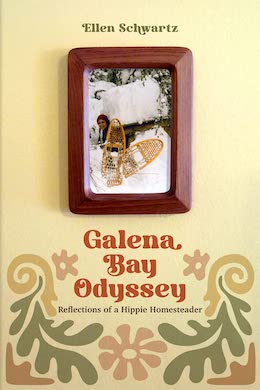
“When I came to Galena Bay, I had been afraid of many things,” writes Ellen Schwartz in Galena Bay Odyssey: Reflections on a Hippie Homesteader (Heritage House Publishing Company, 2023). “Of the physical work I would have to do. Of trying new things I have never done before, like gardening and building and raising animals. Of living in isolation. One by one, I had attempted these things, and I had survived. I had even mastered some of them. Those fears had fallen away.”

This paragraph comes as Schwartz is atop a hill, “too scared to move,” and her skis start sliding. She survives the “ungraceful and disastrous” run, even pushes through a second one. But she can’t keep her vow to never to do that again because, in the 1970s, she lived in such a far-flung place that skiing was a necessary mode of transportation, not just a leisure activity.

It is easy to see why Schwartz chose to write a memoir about this period of her life. Born into a middle-class family – her father an internist-turned-cardiologist, her mother a teacher before becoming a stay-at-home mom to Schwartz, her younger sister and brother – and raised in New Jersey, Schwartz went to university in Chicago. There, she did all you might expect a young person with the new freedom of being on their own to do. And then some, as it was the late 1960s. She writes openly about her experiences with drugs and having sex for the first time: “I figured Ned was The One. I imagined that we’d go through our four years [at school] together and eventually marry.” That didn’t happen. Nor did Schwartz go on to lead the conventional life she imagined for herself at the time.

Instead, she went to join a close friend at a farming commune in Pennsylvania, the members of which ultimately wanted to move to British Columbia. Not intending to stay longer than summer break, Schwartz fell in love with one of the commune’s founders and, well, ended up in British Columbia with Bill, who would become her husband. The group didn’t last long, but the Schwartzes are still together, though no longer in Galena Bay, which is in the West Kootenays. They now live in Burnaby.

The young urban-raised couple faced many challenges homesteading, and Schwartz has many stories of taking on the unknown, whether it be camping along the route across the continent to British Columbia, building their own cabin (including chopping down their own trees), growing their own food, raising a child in a remote area (their second would be born in Vancouver), etc., etc. Not to mention finding work that would sustain them physically (keep them housed, clothed and fed), if not spiritually. She shares the details of her hippie days matter-of-factly, with humour and with the perspective of reflection. For example, after recounting her parents’ muted reaction to her and Bill’s homemade home, she offers potential reasons for their lack of enthusiasm.

image - Galena Bay Odyssey coverSchwartz’s unique history encapsulates the overarching idealism of many in her generation. Her grandparents were “impoverished Jewish immigrants who had fled the hardships and pogroms of Lithuania and Poland” to give their kids a better life in the United States, so their grandchildren also were well set up for material success. The grandchildren – Schwartz and her peers – had an idea but no real understanding of the sacrifices that had been made to achieve the comfortable lifestyle they rejected, because of the racial and social inequality they saw around them, the environmental degradation and the war in Vietnam.

“Bill and I, part of the first wave of baby boomers, were in the privileged position of having enough education, enough wealth and enough leisure to be able to criticize our parents’ lifestyle,” she writes late in the memoir. “We were well-off enough to be able to turn our backs on materialism. We were prosperous enough to indulge in idealism and, idealistically, to define an entire new set of values. (At the time, I didn’t appreciate the irony.)”

But her desire to make the world a better place was – and is – genuine and remains a guiding force. Schwartz, who was a teacher for many years, began her subsequent career writing educational material. We find out in her memoir that the first fiction story she sold was released in 1980. She is now a celebrated children’s author, with almost 20 books to her credit directed towards younger readers, ranging from picture books to novels for teens to a couple of non-fiction publications. She is also a freelance writer and editor.

Galena Bay Odyssey is a wonderful glimpse into an integral part of Schwartz’s life. It also offers insight into North American hippie culture and the strength and ingenuity required to live in an out-of-the-way place like Galena Bay. That the “action” takes place in British Columbia will make the memoir of even more interest to local readers.

Format ImagePosted on July 21, 2023July 20, 2023Author Cynthia RamsayCategories BooksTags British Columbia, Ellen Schwartz, environment, Galena Bay Odyssey, history, homesteading, immigrants, memoir, social commentary, writing

Posts pagination

Previous page Page 1 … Page 123 Page 124 Page 125 … Page 667 Next page
Proudly powered by WordPress