Skip to content
  • Home
  • Subscribe / donate
  • Events calendar
  • News
    • Local
    • National
    • Israel
    • World
    • עניין בחדשות
      A roundup of news in Canada and further afield, in Hebrew.
  • Opinion
    • From the JI
    • Op-Ed
  • Arts & Culture
    • Performing Arts
    • Music
    • Books
    • Visual Arts
    • TV & Film
  • Life
    • Celebrating the Holidays
    • Travel
    • The Daily Snooze
      Cartoons by Jacob Samuel
    • Mystery Photo
      Help the JI and JMABC fill in the gaps in our archives.
  • Community Links
    • Organizations, Etc.
    • Other News Sources & Blogs
    • Business Directory
  • FAQ
  • JI Chai Celebration
  • JI@88! video

Recent Posts

  • Sharing her testimony
  • Fall fight takes leap forward
  • The balancing of rights
  • Multiple Tony n’ Tina roles
  • Stories of trauma, resilience
  • Celebrate our culture
  • A responsibility to help
  • What wellness means at JCC
  • Together in mourning
  • Downhill after Trump?
  • Birth control even easier now
  • Eco-Sisters mentorship
  • Unexpected discoveries
  • Study’s results hopeful
  • Bad behaviour affects us all
  • Thankful for the police
  • UBC needs a wake-up call
  • Recalling a shining star
  • Sleep well …
  • BGU fosters startup culture
  • Photography and glass
  • Is it the end of an era?
  • Taking life a step at a time
  • Nakba exhibit biased
  • Film festival starts next week
  • Musical with heart and soul
  • Rabbi marks 13 years
  • Keeper of VTT’s history
  • Gala fêtes Infeld’s 20th
  • Building JWest together
  • Challah Mom comes to Vancouver
  • What to do about media bias
  • Education offers hope
  • Remembrance – a moral act
  • What makes us human
  • המלחמות של נתניהו וטראמפ

Archives

Follow @JewishIndie
image - The CJN - Visit Us Banner - 300x600 - 101625

True crime wraps up festival

They both made headlines in their day, and then were more or less forgotten. A social climber who ends up convicted of killing his wife in one instance, an inventor-turned-money launderer in the other. Two very different men living in different eras who achieved the wealth and lifestyle they sought, then lost it all in spectacular fashion.

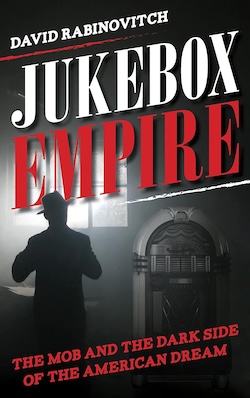
Historian Allan Levine and filmmaker David Rabinovitch close the Cherie Smith JCC Jewish Book Festival on Feb. 15, 8 p.m., at the Jewish Community Centre of Greater Vancouver with the event Jewish True Crime Stories, moderated by SM Freedman, who spent years as a private investigator in Vancouver before becoming a bestselling author of psychological thrillers. Levine will talk about his latest book, Details Are Unprintable: Wayne Lonergan and the Sensational Café Society Murder (2020), and Rabinovitch will talk about : The Mob and the Dark Side of the American Dream (2023), his first book.

Both true crime publications have a similar structure. They both have a cast of characters at the beginning, followed by a prologue or preface, then the narrative proceeds chronologically, beginning with each protagonist’s origin story, and following the circumstances and decisions that led to their headline-grabbing lives. Both books have extensive notes and bibliographies. Levine and Rabinovitch each read more than a thousand pages of court transcripts and related documents, like witness testimonies and letters, as well as newspapers of the day. These types of resources, written as events were unfolding, allow both authors to tell their stories with an immediacy that propels readers along. In both books, it feels as if what we’re right in the midst of what is happening.

image - Details Are Unprintable book coverFor Levine, the idea of exploring Toronto-born opportunist Wayne Lonergan’s conviction for the Oct. 23, 1943, murder of his wife, Patricia Burton Lonergan, the daughter of a wealthy German-Jewish family in New York City, came from reading a 1948 Cosmopolitan article by Raymond Chandler. The renowned detective fiction writer listed Lonergan’s case as #9 in his list of the “10 greatest crimes of the century.” There have been a couple of novels based on the case and, writes Levine, “Over the years, the story of the murder, with the requisite number of theories about Lonergan’s sexual identity, has been told and retold in countless tabloid newspapers and magazines and remains a favourite topic of crime and mystery bloggers.”

Lonergan’s bisexuality plays an important part in the story, including his initial alibi, and Levine adds social context in this and other instances, such as describing the mores of the café society into which Lonergan married. Levine takes the tabloid aspect out of the telling, in that he seems to have harnessed the facts and his conclusion as to Lonergan’s innocence or guilt seems solid.

image - Jukebox Empire book coverRabinovitch’s ability to step back and tell the story of Wolfe Rabin in an apparently unbiased way is even more impressive, given that Rabin is his uncle. Granted, Rabinovitch never met Rabin, but still, family is family. 

“How did my father’s brother, raised in an immigrant Jewish family in a remote Canadian prairie town [Morden, Man.], become a jukebox tycoon, a crony of gangsters and the mastermind behind an audacious and complex international money-laundering scheme?” writes Rabinovitch. “My investigation would reveal his world and a tale of jukeboxes, money laundering and organized crime.”

Rabin was a smart, creative and resourceful person. “He invented the car radio. He was a wartime profiteer. He designed the first jet-age jukebox. He was an international bonds trader,” writes Rabinovitch. “Wolfe and his sexy wife Trudy were a glamorous couple.”

But, early in his career, Rabin makes a deal with the proverbial devil, a mobster, and it’s a deal that makes him rich at first. But a competitor – fellow Manitoban David Rockola – successfully sues for patent infringements in the late 1940s, putting Rabin out of business and in need of money to pay back his criminal investors. It is fascinating to read of the mob connections to the jukebox industry, an industry that pulled in millions a week because, as Rabinovitch writes, “Even at the nadir of the Depression, anyone could afford a nickel for a song.”

And Rabin’s story becomes even more incredible after his jukebox business fails. In pursuit of much-needed cash, he becomes involved with stolen bonds, in what the U.S. Department of Justice called “the largest money-laundering scheme in history.” Eventually, the law does catch up with Rabin and some of his associates. Jail time is served. But Rabin’s biggest secret was only revealed long after his death in 1967, after Rabinovitch completed the draft of this book. It is one of the sadder elements of Rabin’s story. Despite all his achievements, there is much Rabin missed out on in his quest for wealth. 

The Cherie Smith JCC Jewish Book Festival runs Feb. 10-15. For tickets, visit jccgv.com/jewish-book-festival.

Posted on February 9, 2024February 8, 2024Author Cynthia RamsayCategories BooksTags Allan Levine, David Rabinovitch, Details Are Unprintable, history, JCC Jewish Book Festival, Jukebox Empire, the mob, true crime, Wayne Lonergan, Wolfe Rabin
“Moses” does standup at JFL

“Moses” does standup at JFL

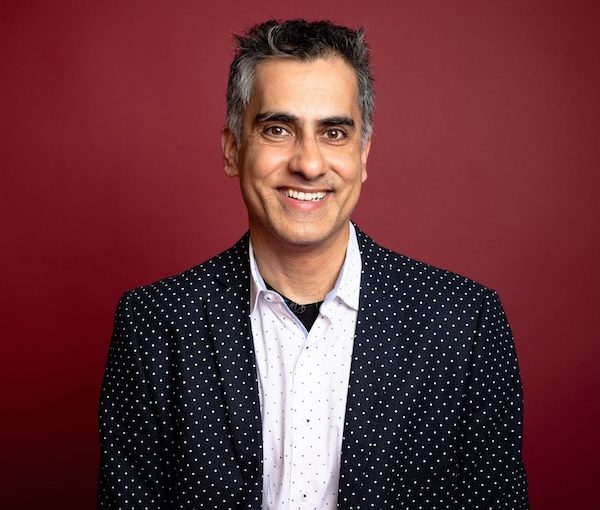
Samson Koletkar, dubbed the “world’s only Indian Jewish standup comedian, performs Feb. 15 as part of Just for Laughs Vancouver. (photo from Just for Laughs Vancouver)

This year’s Just for Laughs Vancouver features several members of the Jewish community, including Samson Koletkar, aka Mahatma Moses. He comes as part of Desi Comedy Fest – On Tour, which takes place at the Biltmore Cabaret Feb. 20, 9 p.m.

Koletkar is a co-founder of the Desi Comedy Fest with fellow San Francisco Bay Area comedian Abhay Nadkarni, who also hails from India. The biggest South Asian comedy festival in the United States, it is described as “celebrat[ing] subcontinental diversity with punchlines that transcend boundaries.”

Desi Comedy Fest isn’t Koletkar’s only entrepreneurial venture. He has a background in technology and also started Comedy Oakland, which “features funny, diverse, industry pros alongside up-and-coming comedians at various venues across Oakland,” according to its website.

Koletkar, who claims to be the “world’s only Indian Jewish standup comedian,” spoke with the Jewish Independent earlier this week.

JI: How does one go from being a techie to a standup comedian? Are there overlaps in skill sets? Do you still work in both areas or are your entrepreneurial endeavours your focus?

SK: I have tried a few things in my life, and standup started the same way. It seemed like a fun thing to do, I gave it a try and, the first time I was on stage, I was hooked. There is definitely an overlap from my tech life into standup – bulletproof logic in my jokes. If I am making a point, and I like to make many, there is no room for bugs, the jokes have to be tested thoroughly and any gaps in logic have to be fixed.

Standup has also helped make my day job easier with the ability to inject humour during tough situations. One of my ex-bosses actually made me realize the value of my standup comedy at work – he used to invite me to the tough customer meetings because invariably I would make the room laugh and the meetings got much easier after that.

JI: What were you like growing up – have you always seen the world with a humourous eye?

SK: I think so. I have always had this urge to crack a joke. There were a lot of inappropriate ones at inappropriate times, but isn’t that how we all learn, by making mistakes? Now, every time I meet parents who think their kids are funny, the one thing I advise them is to accommodate their kids’ misspeaks, and keep that funny bone intact. More often than not, the only mistake we as comedians make is saying out loud what everyone is thinking but politely holding back.

JI: When did you move from Mumbai to the San Francisco Bay Area?

SK: I took the first opportunity I got to move as far away from my parents as I could and, at the age of 24, I moved to the Silicon Valley in October 2000. I felt like the needle that burst the Y2K bubble.

JI: When did you first perform standup?

SK: Late 2005, but then jumped all in in January 2006.

JI: What led you to start Comedy Oakland?

SK: Standup is the one art form you can’t practise in your garage. You need a live audience. After grinding through three years of empty open mics and sub-par independent shows, I decided I could either sit and complain about how poorly some shows were produced, or try to do it myself. That led to Comedy Oakland, in May 2009, starting with one show on Friday nights. My goal was to create a space where comedians needed to only bring good jokes and audience experience was optimized for the art.

Just before the pandemic, I used to run 250+ shows (five shows a week), featuring 400+ comics entertaining 12,000-13,000 [person] audiences every year. In 2024, 15 years running, I am back to five shows a week at three venues in Oakland. These venues are 40 to 90 seaters.

JI: When you envisioned the Desi Comedy Fest, did you think it would become as huge as it is?

SK: I don’t think it is huge enough yet. Yes, the fest has grown from its early days, but we have a long way to go, and partnering with JFL is a big step in that journey. What I knew was that it was going to be fun, and it continues to be one of the most fun shows every year in my calendar.

JI: In what ways have you experienced racism and antisemitism, how do you handle such incidents and how do they impact you?

SK: Those stories are more fun to hear in my standup than they are to read, although they only form a small part of my routine because racism and antisemitism are a small part of my life. The world has a lot more good than bad in it and I don’t let the bad overshadow the good. An optimistic comedian – go figure! But, yes, they do impact me, not only when it happens to me but when I see it happen to others. So, some of my content is driven out of that and I tend to focus on the logical hypocrisy/fallacy of it.

JI: You’ve had much success. What are one or two things that you’d still like to achieve or do professionally?

SK: When my joke offends someone in America, it’s “Go back to where you came from.” When my joke offends someone in India, it’s “Go to Pakistan.” I want to tell an offensive joke in every single country in the world, just to see where they send me next, sort of like The Offensive Joke World Comedy Tour!

JI: If there is anything else you’d like to add, please do.

SK: Come watch a show, nothing gives me more happiness than seeing you laugh!

***

Desi Comedy Fest – On Tour also features Alisha Dillon, Amar Singh and UK Shah. For the full Just for Laughs Vancouver line-up and tickets, visit jflvancouver.com. 

Format ImagePosted on February 9, 2024February 8, 2024Author Cynthia RamsayCategories Performing ArtsTags comedy, Desi Comedy Fest, Just for Laughs, Mahatma Moses, Samson Koletkar, standup
Lanyi’s live Canadian debut

Lanyi’s live Canadian debut

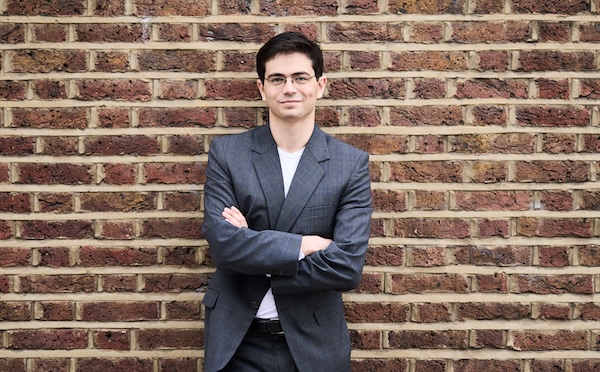
The Vancouver Recital Society hosts London, England-based pianist Ariel Lanyi on March 3. (photo © Kaupo Kikkas)

“Art is there to remind us that there is something bigger and greater than the present moment, something that will remain long after we are gone, which is worthy of our devotion and commitment,” pianist Ariel Lanyi told the Independent in a recent interview. Lanyi will perform an afternoon concert at Vancouver Playhouse March 3.

Hosted by the Vancouver Recital Society, Lanyi will play works by Ludwig van Beethoven (1770-1827), Frédéric Chopin (1810-1849) and Max Reger (1883-1916). In a Facebook post, the London, England-based pianist noted his pleasure at working on Reger’s Variations and Fugue on a Theme by Bach, calling it an “underrated masterpiece of the late-Romantic era” that he couldn’t wait to bring to the stage in 2024.

“Max Reger had a problem: writing fugues was too easy for him. He could jot down fugues with the same ease that Picasso could scribble drawings. Hence, his music sometimes falls into a trap of gratuitous polyphony. However, when he put his heart and soul into a work, as he did with the Bach Variations (which he considered to be his finest work), the result is worthwhile,” Lanyi explained to the Independent. “We hear a multitude of styles in this work – at times, we hear the world of Brahms and his traditional harmonic language; at times, we enter the post-Wagnerian sphere, and we even get a glimpse of more decadent music that was yet to be written. Still, it hangs together organically, and comes to a rousing ending, as all threads convene and the piano truly emulates the sound of the organ. 

“The reason this work is underrated and underplayed is quite obvious,” he added. “People tend to avoid Reger, and it takes a Herculean effort to learn this work. However, I earnestly believe that it is a masterpiece of piano literature.”

Last spring, Lanyi was awarded the Prix Serdang, which is given to young pianists at the beginning of their careers who excel in musicianship and artistic vision. The head of the selection panel, Austrian pianist Rudolf Buchbinder, said of Lanyi: “His playing is precise, nuanced and virtuosic, but he is no superficial virtuoso. What sets him apart is his ability to delve deeply into the music and to establish a connection with it. He doesn’t simply play the notes, he lives the music, seeks to capture its essence, and reflects it with extraordinary intensity, sensibility and expressive maturity.”

If one reads Lanyi’s posts and blogs, one gets a hint of the research that he puts into his performances, which have garnered critical acclaim. In addition to the Prix Serdang, Lanyi won third prize at the 2021 Leeds International Piano Competition. Also in 2021, he was a prize winner in the inaugural Young Classical Artists Trust (London, England) and Concert Artists Guild (New York) International Auditions, as well as being a finalist in the Arthur Rubinstein International Piano Master Competition. Other honours for the 26-year-old pianist include first prize at the 2018 Grand Prix Animato Competition in Paris and first prize in the 2017 Dudley International Piano Competition in the United Kingdom.

Born in Jerusalem, Lanyi studied piano at the Conservatory of the Jerusalem Academy of Music and Dance and moved to London in 2015 to study at the Royal Academy of Music. He remained in the city after graduating in 2021. Last month, he was among those selected by the Royal Academy for a 2023-2024 associate honour, which will be conferred in April: the award recognizes former students who have made “significant contributions to the musical landscape.”

Lanyi has performed around the world, both as a soloist on his own and with orchestras, and as a chamber musician. When he plays concertos or chamber music, he said of his preparation, “I always make sure to study the full score, in order to grasp the music from all points of view, not just through the prism of my individual part. When playing alone, obviously, this doesn’t apply.”

Among the highlights listed on Lanyi’s website for this season is the VRS concert next month. In 2021, during COVID, the recital society shared Lanyi’s Virtually VRS recorded performance on its YouTube channel. The March concert will be his live debut in Canada. In addition to the Reger composition, it will feature Beethhoven’s Sonata No. 30 in E Major, Op. 109; Chopin’s Mazurkas, Op. 59; and Chopin’s Polonaise-Fantaisie in A-flat major, Op. 61.

“Beethoven’s Sonata Op. 109 is a work that has been in my repertoire for quite awhile,” Lanyi told the Independent. “It was the first of the late Beethoven sonatas I worked on as a teenager, so coming back to it now feels enormously gratifying, as my idea of it has evolved in the years since. (It is also, if I remember correctly, the first work for piano to have ever moved me to tears.) The first two movements are concise and contrasting – from the relative serenity of the first movement to the fearful obsessiveness of the second. The third movement begins and ends with a hymn of gratitude and, in between, we are taken on a comprehensive journey through six distinct variations, each inhabiting its own world, deviating from the theme in the most fascinating ways while retaining the same epicentral connection to it.

“The two Chopin works in this program – the Op. 59 Mazurkas and the Polonaise-Fantaisie, Op. 61 – both stem from the composer’s late period, which is characterized by harmonic and structural exploration we seldom find in his earlier works. The mazurkas are elegant and poignant at the same time – in the midst of mellifluous music, Chopin finds ways to express intense distress with bold, dissonant harmonies, often left exposed. The Polonaise-Fantaisie is among his most symphonic works, I find. He never wrote any symphonies and, in my view, some of the late works make up for that by using the piano orchestrally. In the slow middle section of the Polonaise-Fantaisie, we almost hear a foretelling of Bruckner in the long, interwoven lines, which lead to the most unexpected places.”

Lanyi said he doesn’t have any specific formula for choosing performance repertoire.

“Usually, I have an idea of one or two central works I want to include in a program, and look for works which will complement them in a balanced way,” he said. “In the case of this program, the Reger has been on my mind for many years, so I was looking to combine it with works which aren’t as heavy.”

Lanyi’s March 3 performance takes place at 3 p.m. and is followed by a talkback. For tickets, visit vanrecital.com/concert/ariel-lanyi-2. 

Format ImagePosted on February 9, 2024February 8, 2024Author Cynthia RamsayCategories MusicTags Ariel Lanyi, Beethoven, Chopin, piano, Reger, Vancouver Recital Society, VRS

2024 public speaking contest

The Jewish Federation of Greater Vancouver’s Public Speaking Contest has been happening annually in Vancouver since 1989 and is open to students in grades 4 to 7. The registration deadline for this year’s event – which takes place March 7, 7 p.m., at the Jewish Community Centre of Greater Vancouver – is Feb. 26.

For the contest, students are asked to prepare a speech of three minutes or less, choosing from a variety of topics connected to Judaism and Israel. Speeches are delivered on the evening of the contest in front of an audience, with two judges who assess the speeches based on content and presentation. 

Prizes are awarded to the top three speeches in each age group. While there are winners in every section, participation is valued above everything else, and all participants receive a prize and a certificate. 

Those students who are Hebrew-speaking or interested in the Hebrew language are encouraged to deliver their speech in Hebrew. Hebrew speeches have their own grouping and are judged on effort and content, not on their level of Hebrew fluency. 

The contest is a great learning experience, good preparation for bar or bat mitzvah, and a skill increasingly needed in our present political climate. For a flavour of the contest, there is a film on YouTube, posted by Larry Barzelai, which was commissioned for the 13th anniversary of the contest in 2018. Barzelai established the contest in memory of his father, a few years after his brother established one in Hamilton, Ont. (See jewishindependent.ca/young-speakers-deliver.)

The topics for the Public Speaking Contest are:

1. Talk about one person from either Tanach or the Talmud and highlight one important life lesson we can learn from them.

2. What makes a piece of art or music Jewish? Is it Jewish just because the person who created it is Jewish or does it have to have something Jewish embedded into it (i.e. a Jewish symbol, tradition or value)?

3. If you were to create a TikTok highlighting the Vancouver Jewish community what would it be about?

4. There are many different ways for Israelis to serve their country. Select one way Israelis do this and discuss why it is important to the country.

5. What is in a name? Talk about your name, what it means and why your parents chose that name.

6. We all have experience where we are the only or one of the only Jewish people. Talk about what it is like to be the only or one of the only Jews in your school, in one of your afterschool activities or at camp.

7. You are planning a trip to Israel. Name one place in Israel that you would like to visit and explain why you would like to visit that place.

8. Rambam (Maimonides), in his eight levels of tzedakah, says the highest form of giving is to enable someone to support themselves. Why do you think this is the highest form of tzedakah?

9. We have a continuing concern about climate change and the environment. What does the Torah say about caring for the land and how can we integrate Jewish values with environmental protection?

10. Topic of your choice.

For more information about the contest, contact Lissa Weinberger at [email protected]. To register, visit jewishvancouver.com/psc2024. 

– From jewishvancouver.com

Posted on February 9, 2024February 8, 2024Author Jewish FederationCategories LocalTags Israel, Judaism, Larry Barzelai, public speaking, youth
Show Your Heart

Show Your Heart

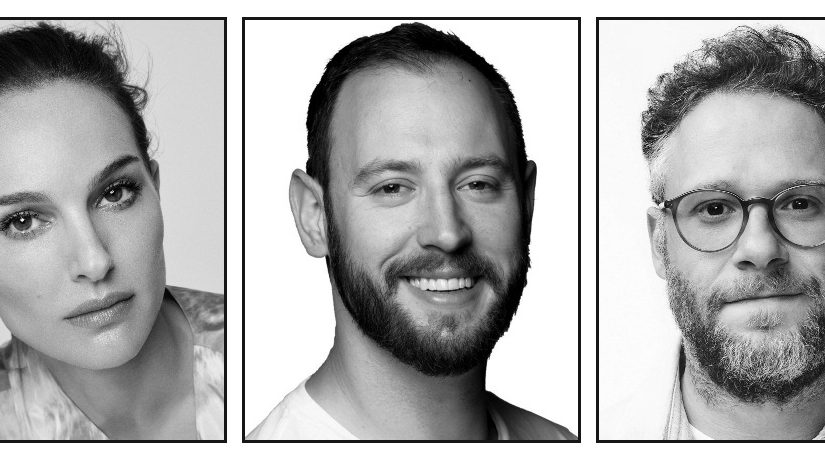
Natalie Portman, Evan Goldberg and Seth Rogen (photos from Variety)

On Feb. 25, 1-5:30 p.m., the 58th annual Variety Show of Hearts Telethon will be broadcast on Global BC. The fundraising event will feature celebrity guests, including appearances by Natalie Portman, Evan Goldberg, Seth Rogen and others, as well as musical performances by renowned artists. Viewers will hear directly from the children and families that have been supported by Variety and the impacts the organization has had on their lives.

“Variety is committed to stepping in for families who need urgent support and specialized care when there is nowhere else to turn,” said Andrea Tang, chief executive officer of Variety BC. “The essential programs, services and resources made possible by our generous donors not only transform daily realities for children – they change the trajectory of their future and positively affect entire communities across the province.”

Every donation made during the Variety Show of Hearts campaign will be matched, allowing donors to make twice the impact in a child’s life. Donors who join Variety’s monthly giving program or make a one-time donation of $169 or more will receive a limited-edition poster of Robert Bateman’s “Northern Reflections – Loon Family.” This artwork was commissioned in 1981 by the Government of Canada as a gift for HRH the Prince of Wales (now King Charles III) on his wedding.

To donate, visit variety.bc.ca or call 310-KIDS (5437) toll-free. To make an automatic $25 donation, text the word KIDS to 45678.

A full list of Variety Show of Hearts guests and performers can be found online at variety.bc.ca.

– Courtesy Variety

Format ImagePosted on February 9, 2024February 8, 2024Author VarietyCategories LocalTags children, Evan Goldberg, fundraiser, healthcare, Natalie Portman, Seth Rogen, Show of Hearts, telethon
A way to support Israel

A way to support Israel

Raquel Benzacar Savatti, chief executive officer of Israel Bonds Canada. (photo from Israel Bonds Canada)

The phones at Israel Bonds Canada have been ringing off the hook since Oct. 7, according to Raquel Benzacar Savatti, chief executive officer of the organization that sells bonds for the Israeli Ministry of Finance in this country.

Canada has always shined in terms of its large base of retail purchasers of Israel Bonds, Savatti told the Independent earlier this month. That base has grown substantially.

“Jews to Israel are like firefighters to a burning building. When that building is on fire, they run towards it. When Israel is in trouble, Jews in the diaspora run towards it,” Savatti said. 

Israel Bonds can be purchased online and Savatti noticed that many new accounts were opened in October.

“The volume was incredible – people I have not heard from in years, people I have never heard from before, young people. We always asked, how are we going to capture the next generation? This was it,” she said. “People understand it’s a very direct way to show their support of Israel.”

Savatti stressed that Israel Bonds is looking to engage as much as it can with the community in Vancouver and beyond. She praised the work of Ross Sadoff, executive director of the organization for British Columbia, noting that a lot of people in the province reinvested after their bonds reached maturity in recent months.

“We have to be together in our support of Israel and for each other. We have to have hope…. Israel has historically proven that after any conflict it has come out stronger and more innovative. I firmly believe we are going to see more of that when this is over,” she said. 

Savatti underscored that the war has caused economic devastation in Israel, yet the country still has to operate and, ultimately, rebuild. The majority of Israel’s budget comes from taxpayers and there are a lot of people not working right now. Concurrently, there are challenges with sustaining the farming sector, the shuttering of businesses, the need to house evacuees and missing tourism dollars as a result of the war.

More than $50 billion has been invested through Israel Bonds by people from all over the world since its inception in 1951, creating a direct connection with Israel for many in the diaspora. In 2023, Israel Bonds had set a global goal of $1.5 billion US – by the end of the year, the amount exceeded $2.7 billion US, the bulk of which arrived after Oct.7. In Canada, more than $130 million US was sold last year and the goal for 2024 is $120 million US, though needs could change.

“I am so proud of us as a country,” Savatti said. “We punch so high above our weight given the size of our Jewish community. Per capita, we do better than any other country.”

The bonds are loans to the state of Israel to be used as it sees fit. When a particular bond – there are several to choose from – reaches maturity, the loan is repaid with interest. In the 73-year history of Israel Bonds, the country has never defaulted on the payment of the principal or interest of its debt.

In February 2021, with Savatti as CEO, Israel Bonds (officially Canada-Israel Securities) became a registered broker-dealer.

“This decision to become regulated came under the behest of the government of Israel,” Savatti said. As such, anyone who sells Israel Bonds must take the Canadian Securities Course, which would allow them to serve in an advisory capacity regarding investments as well.

“Whatever investments are being made by the purchaser, we, as the bonds organization, want to make sure they are suitable,” Savatti said. “We are not advising on a full portfolio, only on how Israel Bonds could work in that portfolio.”

For example, a person can invest in a given Israel Bond as part of a Registered Retirement Savings Plan, a Registered Education Savings Plan, a Tax-Free Savings Account and even a First Home Savings Account, depending on the goals of their portfolio. A person can select a variety of bonds with different dates of maturity.

“They really suit everybody and still make very good bar and bat mitzvah gifts,” Savatti said.

Of the types of bonds on offer, there is, for example, the eMazel Savings Bond, which is only available online; it starts at $36, with a maturity of five years. The Jubilee and Maccabee Bonds last as long as 15 years, with a $25,000 Cdn and $5,000 Cdn minimum, respectively.

Savatti has been connected with Israel Bonds since 2001. Before becoming CEO in 2016, she was the director of women’s and synagogue positions, divisional director, human resources manager, and chief customer officer. She was also the executive director of Ezer Mizion, an Israel health support organization, in Canada for two years.

For more information, visit israelbonds.ca or call 1-866-543-3351. Questions can also be put to Sadoff in the BC office, at 604-266-7210 or [email protected]. 

Sam Margolis has written for the Globe and Mail, the National Post, UPI and MSNBC.

Format ImagePosted on February 9, 2024February 14, 2024Author Sam MargolisCategories NationalTags Diaspora, investing, Israel Bonds, Israel Bonds Canada, Israel-Hamas war, Oct. 7, Raquel Benzacar Savatti
Why pick segregated funds?

Why pick segregated funds?

Segregated fund products can offer greater peace of mind for those looking to participate in the market but wanting the reassurance of insurance guarantees to help them sleep better at night. (photo from pxhere.com)

Looking for an investment option that can help you sleep at night? Segregated fund products can guarantee you’ll get back some or all of the money you invest.

Segregated fund products, available exclusively through insurance companies, provide the growth potential of market-based investments with the benefits of an insurance contract. They first came into popularity more than 25 years ago, when interest rates began to fall and conservative investors turned to them as a secure alternative to guaranteed investment certificates (GICs). They continue to provide a safe way to grow your assets while providing you with some protection from market downturns.

Are segregated funds a good investment?

Ninety-eight percent of Canadians surveyed as part of the 2015 Retirement Now report said it’s important to have some form of guaranteed income in retirement. At the same time, Canadians are living longer than ever before and many are underestimating their longevity and are underfunding their retirement.

Segregated fund products can offer greater peace of mind for those looking to participate in the market but wanting the reassurance of insurance guarantees to help them sleep better at night. They’re particularly suitable for those who are:

• Seeking enough return on their investments to reach savings goals.

• Looking for a broad range of quality investment options.

• Building their savings but looking for protection against market downturns.

• Seeking insurance benefits, including prompt estate settlement and guarantees.

• Looking for guaranteed income for life.

Segregated funds vs alternative investments such as mutual funds

Segregated fund products have some similar features to mutual funds in that they can hold a range of assets and enable you to benefit from holding a diverse mix of investments. They differ in that they offer the following unique benefits:

• Maturity guarantee: Even if the value of your investment declines, you are still guaranteed to get back 75% to 100% of the money you have deposited, less any withdrawals, in either 15 years or at age 100, depending on the type of product you have selected.

• Death benefit guarantee: Segregated fund products offer a 75% or 100% death benefit guarantee that can protect the value of your estate. The greater of your market value or death benefit will bypass probate and flow directly to your beneficiaries, depending on the type of product you have selected.

• Potential creditor protection: Small business owners and entrepreneurs can benefit from the fact that, under provincial insurance legislation, segregated fund products may offer protection against creditors in the event of a bankruptcy.

Segregated fund products also provide a variety of investment options to meet the needs of people in specific life stages:

• Competitive fees: In the past, segregated funds have typically been more expensive than mutual funds. But some of today’s segregated funds come with lower maturity and death benefit guarantees and carry management fees not much higher than standard mutual funds.

• Lock in market gains: Some segregated fund products provide the option of resetting the maturity guarantee up to several times a year. If your funds go up in value, you can lock in a higher guarantee.

• Guaranteed income options: Looking to fund your retirement? Some segregated fund products are designed to function like an annuity and provide you with a guaranteed income for life.

• Naming beneficiaries on non-registered accounts so that it bypasses the estate and goes straight to the beneficiaries. This is a good tool for estate planning and to avoid any wills variation issues.

• Designate an irrevocable beneficiary who needs to sign off on any account withdrawals or changes. Owner retains control while providing a gift to children or grandchildren. 

Philip Levinson, CPA, CA, is an associate at ZLC Financial, a boutique financial services firm that has served the Vancouver community for more than 70 years. Each individual’s needs are unique and warrant a customized solution. Should you have any questions about the information in this article, visit zlc.net or call 604-688-7208.

Disclaimer: This information is not to be construed as investment, legal, taxation or account advice, nor as an offer to sell or the solicitation of an offer to buy any securities. It is designed only to educate and inform you of strategies and products currently available. The views expressed in this commentary are those of the author alone and are not necessarily those of ZLC Financial. As each situation is different, please seek advice based on your specific circumstance.

Format ImagePosted on February 9, 2024February 8, 2024Author Philip LevinsonCategories LocalTags investing, segregated funds, ZLC

טרודו: יש להבטיח את שלומם של היהודים בקנדה לאור העלייה באנטישמיות

ראש ממשלת קנדה, ג’סטין טרודו, נועד עם מפקד משטרת טורונטו על רקע העליה החדה במספר האירועים האנטישמיים בקנדה. טרודו ציין כי הוא דן עם מפקד משטרה להבטיח את שלומם של היהודים בעיר ולפעול בכל דרך נדרשת כדי להתמודד עם השנאה על כל ביטוייה

בנוסף, נפגש טרודו עם מנהיגים בקהילה היהודית בטורונטו המודאגים מהעליה בהיקף האנטישמיות בעקבות מתקפת חמאס והג’יהאד האיסלאמי נגד ישראל בשבעה באוקטובר. ובעקבותיה המלחמה הקשה שישראל מנהלת בעזה שהביא למותם של עשרות אלפי אזרחים בהם נשים וילדים רבים. טרודו אמר לראשי קהילה היהודית כי הוא מודה להם על שהביעו בכנות את הכאב, הזעם והיגון שלהם. “אני מקשיב לכם. אני רוצה שתדעו שיש לנו מחויבות בלתי מעורערת לכם ולישראל כמדינה יהודית ודמוקרטית”

טרודו הוסיף: “אני רוצה שתדעו, כי אני נמשיך להיות ממוקדים במאבק באנטישמיות ולהבטיח שאתם וכל היהודים בקנדה יהיו בטוחים מפני אלימות אנטישמית. זו פעולה שכולנו, ובפרט קנדים שאינם יהודים, חייבים לעשות ביחד”

מאז אוקטובר נרשמה עליה חדה באנטישמיות בקנדה, ובכלל זה דווח על שני אירועי ירי ושני אירועי השלכת בקבוקי תבערה לעבר מוסדות יהודיים במונטריאול, חבלה וניסיון להצית סופרמרקט בבעלות יהודית בטורונטו, ונדליזם בחנות ספרים בבעלות יהודית בטורונטו, ניפוץ שמשות של מכונית שעליה דגל ישראל מצפון לטורונטו, התנכלות והשמעת ביטויים אנטישמיים כלפי יהודים שיצאו מבית כנסת מצפון לטורונטו

טרודו, ציין כי הוא אינו מביע תמיכה בתביעה שהגישה דרום אפריקה בבית הדין הבינלאומי נגד ישראל בטענה שהיא מבצעת רצח עם ברצועת עזה. בשיחה עם עיתונאים אמר טרודו, כי תמיכתה של קנדה בבית הדין הבינלאומי ובהליכים שהוא מנהל אין משמעותה שקנדה תומכת בהנחה שבתביעה שהוגשה על ידי דרום אפריקה

ואילו שרת החוץ של קנדה, מלאני ג’ולי, ציינה כי קנדה ממשיכה לגנות בחריפות ובאופן חד משמעי את מתקפת הטרור של חמאס על ישראל. לדבריה, חמאס היא ישות טרור מוכרזת שממשיכה לקרוא במפורש לחיסול יהודים ולהשמדת מדינת ישראל. לישראל הזכות להתקיים ולהגן על עצמה מפני התקפות טרור בהתאם לחוק הבינלאומי. בהגנה על עצמה, ועל ישראל לכבד את המשפט ההומניטרי הבינלאומי. ג’ולי: “קנדה נותרה מודאגת עמוקות מהיקף המשבר ההומניטרי בעזה ומהסיכונים המתמשכים לכל האזרחים הפלסטינים. יש להגביר ולשמור על גישה הומניטרית בטוחה וללא הפרעה. קנדה תומכת במאמצים בינלאומיים דחופים לקראת הפסקת אש בת קיימא. זה לא יכול להיות חד צדדי. על חמאס לשחרר את כל בני הערובה, להפסיק להשתמש באזרחים פלסטינים כמגנים אנושיים ולהניח את נשקו”

גם שרת החוץ ציינה כי התמיכה הבלתי מעורערת של קנדה במשפט הבינלאומי ובבית הדין הבינלאומי אין משמעותה שהיא מקבלת את הנחת היסוד של התביעה שהגישה דרום אפריקה. “אנו נעקוב מקרוב אחר ההליכים בתיק של דרום אפריקה בבית הדין הבינלאומי לצדק”, אמרה עוד ג’ולי

על פי אמנת רצח העם של האו”ם משנת אלף תשע מאות ארבעים ושמונה, הפשע של רצח עם דורש כוונה להרוס או להרוס חלקית קבוצה בגלל הלאום, האתניות, הגזע או הדת שלה. עמידה ברף הגבוה הזה דורשת ראיות משכנעות

שרת החוץ הקנדית הזהירה מפני סכנת האנטישמיות. “עלינו להבטיח שהצעדים הפרוצדורליים במקרה זה לא ישמשו לטפח אנטישמיות והטרדה של שכונות יהודיות, עסקים ואנשים פרטיים. במקביל, נמשיך לעמוד נגד האיסלאמופוביה והרגשות האנטי-ערביים. קנדה נותרה מחויבת בתוקף להילחם בדעות קדומות, שנאה וקיצוניות אלימה”

Posted on January 30, 2024January 30, 2024Author Roni RachmaniCategories עניין בחדשותTags 1948 United Nations Genocide Convention, antisemitism, Canada, Hamas, International Court of Justice, Islamophobia, Israel, Justin Trudeau, Mélanie Joly, Toronto, איסלאמופוביה, אמנת רצח העם של האו"ם משנת אלף תשע מאות ארבעים ושמונה, אנטישמיות, בית הדין הבינלאומי, ג'סטין טרודו, חמאס, טורונטו, ישראל, מלאני ג’ולי, קנדה
Rallies help keep hope alive

Rallies help keep hope alive

Jewish Federation of Greater Vancouver chief executive officer Ezra Shanken addresses those who gathered at the Vancouver Art Gallery Jan. 14. (photo by Pat Johnson)

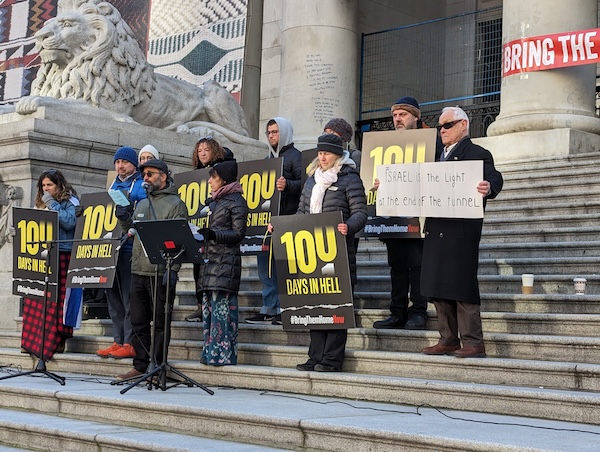
Vancouverites gathered Jan. 14 to mark the 100th day since the Oct. 7 terror attacks and to demand the release of hostages. The weekly vigils – which have taken place since the day after the attacks with the exception only of two weeks during the December holidays – continue to gather hundreds, with police escorts accompanying marchers through downtown streets after speeches outside the Vancouver Art Gallery.

“This is the moment for leaders of the world to take a stand against terrorism, to call on Hamas to release the hostages,” said event organizer Daphna Kedem. “Where are you, world leaders? You stay silent while girls are held in tunnels and Hamas are abusing women of all ages. Where are you? [There are] 136 hostages: 17 women, two children, 15 men and women over the age of 65, 94 men and youngsters, eight foreigners. We will not rest until they are all back.”

Kathryn Zemliya spoke of the commitment she made to Israel when she became a Jew by choice 17 years ago.

“Israel is the Jewish homeland,” she said. “Israel is also the birthplace and source of our Jewish faith. Our religious holidays reflect all the seasonal changes in the state of Israel and we celebrate those throughout the year.”

Her commitment to Israel, she said, is also a very personal one. 

“Israel is one of a very few handful of Middle Eastern countries where people are not punished as criminals simply because of their sexual orientation or gender identity,” said Zemliya. “For me, this is tremendously important. There are lots of places in the world where I could not travel with my family, where I could not travel with my wife, but I know that I would always be welcomed in Israel.”

She called for justice and defined what that justice would look like.

“Justice requires that we listen to and believe those who have given testimony of rape, brutality and torture that they have experienced or witnessed at the hands of terrorists,” she said. “Justice requires that we recognize and care for those who have been displaced from their homes due to conflict on all fronts in Israel because the war is not happening just in Gaza. Justice requires that we recognize and care for those who have lost family members, who have been traumatized and who, because of their life circumstances, are retraumatized daily by this terror. My hope is that we will see this justice soon and in our time, that is what we pray for.”

Rabbi Hannah Dresner, senior rabbi at Or Shalom Synagogue, and Rabbi Arik Labowitz, assistant rabbi, addressed the crowd.

“We are here to console one another through the power of gathering in such a difficult time,” said Dresner. She noted that the week’s Torah portion featured the demand by the Israelites to the tyrant of their time to let their people go. “We, likewise, are commanded by everything we know to be decent, to demand of the tyrant of our time, let our people go.”

Labowitz spoke of “waves of grief, fear and deep concern for the existential realities of our precious home in the land of Israel.”

“We are all heartbroken by the loss of life, the ever-deepening chasm and the generations of repair that will be required to heal from this moment in our shared history,” he said. “We know that the Jewish people have a heart that is bigger than any malicious attempts against us. The love and support that has come together to repair the fabric of Israeli society, of our local communities and of each of our hearts, is made up of the strength whose origin is in the plight of our ancestors to be free people in a land of our own, a land where our people were sovereign for centuries and a land that we returned to after 2,000 years of exile.”

photo - Rabbi Arik Labowitz, assistant rabbi of Or Shalom, standing next to his colleague, Rabbi Hannah Dresner, the congregation’s senior rabbi. The two spoke at the Jan. 14 rally marking 100 days since Oct. 7
Rabbi Arik Labowitz, assistant rabbi of Or Shalom, standing next to his colleague, Rabbi Hannah Dresner, the congregation’s senior rabbi. The two spoke at the Jan. 14 rally marking 100 days since Oct. 7. (photo by Pat Johnson)

Adi Keidar, who moved to Vancouver from Israel in 2000, shared the lesson she has learned since Oct. 7.

“Life, I used to think, matters to all,” she said. “But these past 100 days, I am sad to say, I’m wrong.”

Evil exists, she said, but must not be allowed to be the dominant voice. 

Ezra Shanken, chief executive officer of the Jewish Federation of Greater Vancouver, acknowledging the day’s below-freezing temperatures, said of the hostages: “The least we can do is stand here in the cold if they live in the cold depths of the tunnels.

“Let them know that, even in the coldest days of the year, we will stand out here and we will stand with them because we know that they need it,” he said, urging attendees to “keep showing up.”

Kedem, who has organized the events week after week, read aloud the names of the 136 hostages.

107 days

A week later, the King David High School community was front and centre at the Jan. 21 rally. Students of the Jewish school sang and spoke at the gathering, which ended in a downpour of rain as the group marched through city streets.

“You’re a link in a chain that has been growing stronger for thousands of years,” event organizer Daphna Kedem told the students.

Erica Forman, a 2022 alumna of King David, and brother Max Forman, a Grade 12 student, spoke of the strength they gathered during this time of unprecedented antisemitism from their respective communities at the University of British Columbia Hillel and at King David.

Rutie Mizrahi, parent of a Grade 12 student, spoke of her uncle and aunt, Oded and Yocheved Lifshitz, who were abducted from their home in Kibbutz Nir Oz Oct. 7. Yocheved, 85, was among the first hostages released, after 17 days in captivity, because her captors believed she was near death.

The captors underestimated her aunt, Mizrahi said, and she has survived, despite arriving back in Israel appearing to be about half the weight she was when kidnapped. Yocheved had been rolled in a carpet and driven away on a motorcycle, but not before she saw her 83-year-old husband being savagely beaten outside their home. She did not believe he could have survived, but another hostage, freed later, confirmed that Oded was alive in Gaza but, without his blood pressure medication, had repeatedly fainted and was then taken to a hospital. 

“The odds that we will see him back alive are close to zero,” Mizrahi said.

King David’s head of school Russ Klein said he is grateful his father, Emerich Klein, a Holocaust survivor who passed away earlier in 2023, is not witnessing the hatred in the world since Oct. 7.

“He instilled in us the need for Israel,” the principal said. “Only Jews, he said, would take care of Jews. I spent much of my time growing up not believing him. As I found with so many things as I got older, I learned my father was right.”

Klein called the school assembly on Oct. 10, when students and faculty gathered to mourn the Hamas murder of alumnus Ben Mizrachi, 22, and the other victims of the pogrom, the hardest moment of his career.

He urged people of all ages to inform themselves of facts to better engage in the discussion around events in Israel and Gaza, specifically directing attendees to resources released recently by the Jewish Federation of Greater Vancouver, an online toolkit called “The Power of One” and a messaging guide called “Real Peace Now.” Both are available at jewishvancouver.com. 

Format ImagePosted on January 26, 2024January 24, 2024Author Pat JohnsonCategories LocalTags antisemitism toolkit, Daphna Kedem, hostages, Israel-Hamas war, Jewish Federation, KDHS, King David High School, Oct. 7, rally, terrorism

Exploring ideas, worlds

“If there is one thing we learn during difficult times, it’s that community plays a crucial role, fostering unity, resilience and offering emotional support,” writes Dana Camil Hewitt, director of the annual Cherie Smith JCC Jewish Book Festival, in her introduction to this year’s event, which will once again bring community members together to share stories and conversations – and in a difficult time.

The festival opens Feb. 10 with playwright, journalist and author Michael Posner in conversation with Alan Twigg, founder and editor for 33 years of BC BookWorld, about Posner’s three-volume biography of musician, composer and poet Leonard Cohen. The opening night includes a live musical performance with Harriet Frost and Martin Gotfrit, which illustrates perfectly how the influence of books extends beyond the printed page.

The world around us and how it shapes who we are, and vice versa, is front and centre in the Feb. 11 festival event Essays as Life Stories, featuring Vancouver’s Yosef Wosk and Hamilton’s Gary Barwin.

Traveling beyond the world

image - Naked in a Pyramid book coverIn his new book, Naked in a Pyramid: Travels & Observations, scholar, rabbi and philanthropist Yosef Wosk brings readers along on his extraordinary journeys throughout the world. But this is no Rick Steves guidebook. There are no hotel recommendations or Top 10 must-see lists. Far from it. Rather than inspiring wanderlust, in fact, some of Wosk’s adventures will make the reader happy to be home in an easy chair experiencing vicariously rather than accompanying him on these not-always-alluring quests. 

Wosk acknowledges that travel for him is not about R&R but always about adventure, challenging himself to discover not only the world but his place in it. Travel, for him, is “more of an intuitive imperative, a pilgrimage to the ends of the earth so that I might know both the planet and myself better.”

To these ends (literally), Wosk has traveled to both the north and the south poles. His reflections on being – within a little more than a year of each other – at the figurative top and bottom of the planet, lead to fascinating metaphysical contemplations. He is also provoked to contest mundane assumptions when he sees, at the South Pole, an upside-down globe. Why, he realizes he has never contemplated, should north be on top?

Wosk does not just see stuff, or even experience it, like an ordinary traveler, but finds himself transported beyond even the remote locales he visits to some supernatural planes. Near the North Pole, for example, he alarms travel-mates by laying down, albeit densely insulated, on the frozen Arctic ground “like some marooned sapien seal.” Becoming one with the planet’s most northerly extremity, he recalls, “I was seized by this unanticipated epiphany of transcendent unity.” 

The intensity with which he lives the places he encounters makes for a fascinating read and those of us who lack his depth of connection with the ethereal may feel pangs of jealousy, if not inferiority, at failing to experience as profoundly.

He visits Venice, the birthplace of Marco Polo – well, one of the reputed birthplaces – and finds resolve from the “Master of Travelers, the one who dared.” But Venice, as magnificent as it is, seems to be among the least remarkable of Wosk’s destinations.

“I have explored caves and caverns in Israel, Thailand and deep within the Rock of Gibraltar where Neanderthals lived for over 100,000 years, and also entered the coastal caves along the cerulean Na Pali coast in Kauai,” he writes. “Gazing into the luminous waters of the Blue Grotto in Capri, one of the most enchanting islands on the planet, one senses its womb of wonders.”

Claustrophobia is a recurring theme (for the reader, if less so the writer), with reminiscences of crawling on his back into a sarcophagus, descending into the bowels of a Soviet-era nuclear-powered Arctic icebreaker, or meditating (naked) in the subterranean hollows of the pyramid that gives the book its title. 

The book is deeply personal, including revealing insights into his deepest thoughts, as well as the sorts of travel nightmares to which anyone can relate, such as being stuck together with a sulky travel companion who he had considered a potential love interest, but who turns out to be the roommate from hell. He seems to recognize that his well-intentioned psychoanalyzing of her behaviour may not have been the remedy he had hoped.

His sense of being an outsider is not merely social but otherworldly.

“I have always felt like a fool, somewhat awkward in an unfamiliar world – as if I have just awakened from a distant dream and been planted, like Adam, in a strange Garden of Gaia. I spent most of my life as an unrepentant pilgrim, exploring often exotic and embarrassing sensations of mind, body and soul.” 

He openly admits that some of these sensations are enhanced by herbal or chemical assistance.

“On a beach off the road from Pafos to Limassol, in southern Cyprus, a friend and I took LSD at the fabled birthplace of Aphrodite,” he writes. “The beach was gravel and the waters rough but as the long, foaming waters born of the massive surf around the Rock reached the shore, one could easily imagine the earth being impregnated by the semen-bubbled surf and picture the goddess of love emerging from the sea.”

The book is about travel, but Wosk also covers voyages more broadly defined, such as the process of moving through life itself, including the reflection that a great rabbi imparted to him.

“One of my teachers, Zalman Schachter-Shalomi, used to tell us that you don’t have to wait until you’re dead to die; that one can be involved in a succession of deaths and rebirths, that there is non-mortal death and resurrection while still alive,” writes Wosk.

In a harrowing experience while illicitly climbing the Egyptian pyramid of the title, he seems to have exactly this sort of non-mortal death, which may well have been entirely mortal had things turned any further awry.

Wosk has rubbed shoulders (or, more accurately, minds) with greats like Buckminster Fuller, Marshall McLuhan and Joseph Campbell. He worked at the right hand of Nobel laureate Elie Wiesel as his teaching assistant and calls the late humanitarian author “one of the most influential mentors in my life.”

If Wosk sometimes seems a figure remote from the ordinary human, he yanks himself back down to earth in numerous segments, such as explaining how he overcame his intimidation at applying for Harvard’s divinity school. He eventually conquers his resistance and completes the graduate school application in the mechanic’s anteroom while his car is being serviced nearby. Even by the standards of a vegetarian, which he is, Wosk’s culinary tastes are decidedly and literally down to earth. (Favourite food? The potato.)

He refers modestly to his extensive philanthropy, which includes the Beit Wosk Community Centre, in Ashkelon, Israel, and the Dena Wosk School of Performing Arts at the Jewish Community Centre of Greater Vancouver (named for his late mother), but elides hundreds of other contributions over the years.

He pays tribute to his late father Morris (“MJ”) and late uncle Ben, who arrived as children in this country. The brothers did odd jobs before starting a business collecting and repairing used pots and pans, which they shined up and sold around town using a horse and buggy. From this, they graduated to a storefront and later a furniture chain. Eventually, the brothers reshaped the city’s skyline with some of Vancouver’s most recognizable high-rise residential towers. To say the family came a long way from rural Ukraine is an understatement. MJ Wosk is estimated to have donated $50 million to a variety of causes.

It is difficult to sum up this book as this or that genre. While one section is an extended poem, much of the rest reads as prose poetry. Moreover, it is travel journal, philosophy treatise, theological tract and memoir of a person who curates and collects not just fascinating objects (which he does) but ideas, experiences and memories. Perhaps the book could be best described as an exhibition, a retrospective of a just a few of the intangible treasures Wosk has amassed in a lifetime that seems more unique than every life, by definition, is.

As fellow thinker John Ralston Saul said of this book, “He brings us a life intensely lived.” To appreciate how intensely, one really needs to immerse oneself in these pages.

 – Pat Johnson

Exploring language’s many facets

Gary Barwin’s Imagining Imagining is reflective, sentimental, intellectual and absurd. His facility with the English language is remarkable and he is more well-read than most of us, but there are various levels of understanding of any text, and everyone will take away something of value from this imaginative and mind-expanding collection of essays.
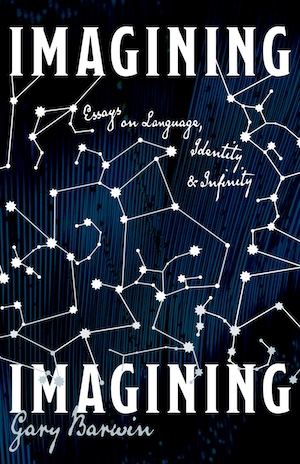
image - Imagining Imagining book coverThe multiple-award-winning author of some 30 books, including the bestselling Yiddish for Pirates, Barwin is also a musician, composer and artist. He draws upon all his varied skills and interests in his imaginings. He begins with reflections on the Hebrew alphabet, where the Book of Genesis says the world began: “the earth was without form and void until God gave shape or reality to it, all with words. With the letters that form the Hebrew alphabet.” He talks of the letters’ sounds and shapes, even illustrates the letter shin with an extra arm on the left that looks like it is topped with a crown, the image of which appears on the tefillin box that Orthodox Jews place on their forehead for morning prayers. According to a kabbalist text, there is a letter missing from the Hebrew alphabet and some think this four-armed shin might be it. “So, the thinking goes, we might already know what it looks like. But we don’t know what new sound it might make, this new sound that might heal the universe.”

While lauding language and its potential as a cause for hope, Barwin warns that language can also lull and trick us. “We must always look very carefully at language. At its beauty, its mystery. Its power to make us think and feel things. Its power to make and remake the world,” he writes.

If it’s not obvious already, Barwin is a big thinker. And he has a big vocabulary. Imagining Imagining might be a book to read as an ebook, for easy access to a dictionary. For the most part, however, his skill as a writer means that we get the gist if not the whole idea, that our curiosity is piqued and we continue to revel in our own thoughts long after we finish reading an essay.

Those who have read Barwin’s novels will know that he has a great sense of humour, and there are many smiling, even laugh-aloud, moments in these essays. One essay is entirely devoted to humour, and it’s fascinating – and funny. In it, he shares his favourite poem, “Modern Poem,” written by Martin Laba: “one, two, / three, four, / five, you idiot.”

“I like it because we can empathize with the feeling of having read something, perhaps a modern poem, something that is so hard to understand, that appears to be saying something willfully inaccessible or that appears so entirely pointless that it seems to be deliberately trying to make you feel like an idiot,” writes Barwin. “I like the poem because of the nice twist, the surprise at the end, the shock of recognition. Oh yes, I know poems like this. And I know that feeling.”

There are many shocks of recognition in Imagining Imagining, as there are shocks of non-recognition. Barwin is a smart, accomplished person and his views on things – from Hebrew letters, to insomnia, to ampersands, to his grandfather’s moustache, and more – will have you thinking about yours in new ways. For example, that chapter on humour stresses the immense value in laughter, not the least of which is that it “gives us an alternative to despair,” it allows us “the ability to frame our experience.”

“Through humour, we are able to stand outside what’s happening and look at it philosophically. Through humour, we find a way to engage, to think about what is happening and still have agency,” writes Barwin.

Engagement, community, the interconnectedness of all things. Barwin challenges readers to think outside the box, to reconsider what is a box, whether a box can ever truly exist. Speaking “mostly but not entirely metaphorically,” Barwin asks about the need for (cell) walls, “don’t things morph into one another, if only eventually? The same is true of concepts and abstractions. One person’s manbun is another’s mantra. Is it true that someone’s pain is my pain and it is only the self and society which create reasons to keep them at a distance? I want my thinking and feeling to reflect the fundamental unipanrhizomatubiquity between/of things.”

After reading Imagining Imagining, you should have a notion of what “unipanrhizomatubiquity” means, even though Prof. Google doesn’t. That feeling of getting it, not getting it, is an unsettling sensation perhaps, but it’s one that propels questions, discovery. That makes what seems impossible potentially possible. That makes reading – and so many other things – exciting and worthwhile.

– Cynthia Ramsay

For the Cherie Smith JCC Jewish Book Festival, guide visit jccgv.com/jewish-book-festival. 

Posted on January 26, 2024January 24, 2024Author Pat Johnson and Cynthia RamsayCategories BooksTags essays, Gary Barwin, JBF, JCC Jewish Book Festival, Jewish Book Festival, travel, writing, Yosef Wosk

Posts pagination

Previous page Page 1 … Page 100 Page 101 Page 102 … Page 667 Next page
Proudly powered by WordPress