Skip to content
  • Home
  • Subscribe / donate
  • Events calendar
  • News
    • Local
    • National
    • Israel
    • World
    • עניין בחדשות
      A roundup of news in Canada and further afield, in Hebrew.
  • Opinion
    • From the JI
    • Op-Ed
  • Arts & Culture
    • Performing Arts
    • Music
    • Books
    • Visual Arts
    • TV & Film
  • Life
    • Celebrating the Holidays
    • Travel
    • The Daily Snooze
      Cartoons by Jacob Samuel
    • Mystery Photo
      Help the JI and JMABC fill in the gaps in our archives.
  • Community Links
    • Organizations, Etc.
    • Other News Sources & Blogs
    • Business Directory
  • FAQ
  • JI Chai Celebration
  • JI@88! video

Recent Posts

  • New rabbi settles into post
  • A light for the nations
  • Killed for being Jewish 
  • The complexities of identity
  • Jews in time of trauma
  • What should governments do?
  • Annie will warm your heart
  • Best of the film fest online
  • Guitar Night at Massey
  • Partners in the telling of stories
  • Four Peretz pillars honoured
  • History as a foundation
  • Music can comfort us
  • New chapter for JFS
  • The value(s) of Jewish camp
  • Chance led to great decision
  • From the JI archives … camp
  • עשרים ואחת שנים להגעתי לונקובר
  • Eby touts government record
  • Keep lighting candles
  • Facing a complex situation
  • Unique interview show a hit
  • See Annie at Gateway
  • Explorations of light
  • Help with the legal aspects
  • Stories create impact
  • Different faiths gather
  • Advocating for girls’ rights
  • An oral song tradition
  • Genealogy tools and tips
  • Jew-hatred is centuries old
  • Aiding medical research
  • Connecting Jews to Judaism
  • Beacon of light in heart of city
  • Drag & Dreidel: A Queer Jewish Hanukkah Celebration
  • An emotional reunion

Archives

Follow @JewishIndie
image - The CJN - Visit Us Banner - 300x600 - 101625

Category: Arts & Culture

Chutzpah! opens on Nov. 12

Chutzpah! opens on Nov. 12

Lorin Sklamberg, left, Sasha Lurje and Craig Judelman close the 10-day festival of comedy, music, theatre, dance and storytelling on Nov. 23 with Yiddish Songs of Social Change. (photo from Chutzpah! Festival)

The Chutzpah! Festival returns for its 25th anniversary with a mix of festival favourites and new discoveries in a lineup of performances Nov. 12-23, showcasing music, theatre, comedy, dance and storytelling through a multicultural Jewish lens.

“This Chutzpah! Festival is one of collaboration and celebration, combining past artistic managing director Jessica Gutteridge’s vision and my own,” said the festival’s new artistic managing director, Shayna Goldberg. “Chutzpah!’s legacy over the last 25 years has been to share diverse work from a multitude of Jewish perspectives, and the offerings this year are just as thrilling and exciting as any other. For 10 days this November, come and experience the best of what Canadian and international artists have to offer.”

photo - Israeli-American comedian Modi Rosenfeld brings his Pause for Laughter Tour to Vancouver on Nov. 12 to open the festival
Israeli-American comedian Modi Rosenfeld brings his Pause for Laughter Tour to Vancouver on Nov. 12 to open the festival. (photo from Chutzpah! Festival)

The festival opens Nov. 12, 8 p.m., at the Vogue Theatre with Modi Rosenfeld, presented in partnership with MRG Live. The Israeli-American comedian brings his Pause for Laughter Tour here for the festival. 

Erik Angel, also an Israeli-American comedian, brings his project Comedy for Peace to Chutzpah! on Nov. 22, 7:30 p.m., at the Rothstein Theatre. Aimed at uniting communities through humour and mutual understanding, Comedy for Peace brings together stand-up comedians – Jewish, Christian, Muslim – for a show of “no politics. just laughs.” Joining Angel will be Ashley Austin Morris, Natan Badalov and Zara Khan. (See jewishindependent.ca/comedy-can-unite-and-heal.)

Chutzpah presents the West Coast debut of 8 Gays of Channukah: The Musical (Canada) at the Rothstein Theatre Nov. 13, 7:30 p.m. Blending Broadway-style musical numbers with comedy, drag artistry and Jewish joy, eight stories are brought to life by show creators Gila Münster, Sarah Freia and Yan Simon. The show includes an opening act by a local artist and there will be an 8 Gays of Channukah Shuk, featuring the work of local artisans, where you can pick up some gifts for the holidays.

Lea Kalisch’s Shtetl Cabaret (Switzerland/United States/Canada) is a night of collaborations featuring Tobias Moss and local Vancouver artists including Mike Braverman and Jason Overy. This show, which takes place Nov. 19, 7:30 p.m., at the Beaumont Studios (19+ venue), presents Jewish music, from forgotten melodies to original songs, and mashups from rap to rumba and folk to feminism. 

Yiddish Songs of Social Change (United States/Germany/Latvia), presented by the Golden Thread Septet, explores Yiddish music as a tool for and reflection of social change, and features Lorin Sklamberg and Sasha Lurje, with arrangements by Craig Judelman. Judelman has arranged the Yiddish and English songs in a style that reflects the context of the songs themselves and honours the centuries-old tradition of using all these influences to inform the creation of new Yiddish music. In addition to the performance on Nov. 23, 7:30 p.m., at the Rothstein, Sklamberg, Lurje and Judelman will lead a free workshop about Yiddish music and dance that same day, at 2 p.m. Come explore both traditional and contemporary versions of Yiddish music and learn how you can dance along.

Back by popular demand, Chutzpah! and Vancouver Opera present Ne. Sans Opera & Dance’s Take This Waltz: Celebrating the Music of Leonard Cohen (Canada/Israel). This operatic and contemporary dance performance inspired by Canadian singer-songwriter Leonard Cohen was originally presented in 2022 as a Chutzpah! Plus event. Created by local choreographer Idan Cohen and bass-baritone Daniel Okulitch, it features Okulitch alongside dancer/musician Ted Littlemore and a virtuoso live ensemble of strings and accordion. Take This Waltz is at the Rothstein Theatre Nov. 15 and 16, 7:30 p.m. (See jewishindependent.ca/celebrating-leonard-cohen.)

On Nov. 20, 7:30 p.m., at the Rothstein Theatre, Chutzpah! presents the North American premiere of Common Place (Australia/Israel) by power-duo dancer/choreographer Omer Backley-Astrachan and multiple-award-winning dancer Jana Castillo. Common Place is a physical exploration of belonging and togetherness, delving into shared action, collaboration and synchronization. 

Deb Williams returns to Chutzpah! with the Flame, an evening of storytelling, on Nov. 17, 7:30 p.m., at the Rothstein Theatre. The Flame is a grassroots series where real people share their personal, true stories in front of an audience under Williams’s direction. This edition will feature a multicultural group including Karen Segal, Dhana Musil and others. Williams will also host an in-depth weekend workshop prior to the event (Nov. 15 and 16, at the Post at 750) to help storytellers hone their craft. 

On Nov. 18, 7:30 p.m., at the Rothstein, Chutzpah! presents I’m Not a Comedian … I’m Lenny Bruce (United States), a one-man show exploring the life and battles of one of the most groundbreaking comedians of all time, Lenny Bruce. Created and performed by Ronnie Marmo and directed by Tony Award-winner Joe Mantegna, this show threads Bruce’s original comedic bits with insights from his writings. 

Other workshops and talkbacks with festival artists, facilitated by members of the Vancouver arts community, will run throughout the festival. Visit the festival website for updates and registration information.

Most single tickets for Chutzpah!’s live performances are offered at a pay-what-you-will price, with the levels at $18, $36, $52 and $70 (+ gst/sc). I’m Not a Comedian … I’m Lenny Bruce is $40 (students/seniors), $54 (general) and $72 (VIP) (+gst/sc). ChutzPacks are also available, for $136: see four different regular-price shows of your choice. Tickets for Modi can be purchased through admitone.com/events. For tickets to any of the performances and more information about any of the events, visit chutzpahfestival.com or call 604-257-5145. 

– Courtesy Chutzpah! Festival

Format ImagePosted on September 26, 2025September 24, 2025Author Chutzpah! FestivalCategories Performing ArtsTags Chutzpah!, comedy, dance, storytelling, theatre
Both personal & cosmic

Both personal & cosmic

Eric Goldstein and Jenny Judge are different in their backgrounds and creative philosophies, in their media and techniques, but they have two characteristics in common: their images are abstract, and strings drive their artistic perceptions. (photo by Jenny Judge)

A string is a simple, utilitarian object. Usually, it connects things, but rarely is it associated with beauty. However, String Theory, the current two-artist exhibition at the Zack Gallery, definitely brings beauty to gallery patrons.

The artists participating in the show – Jenny Judge and Eric Goldstein – are different in their backgrounds and creative philosophies, in their media and techniques, but they have two characteristics in common: their images are abstract, and strings drive their artistic perceptions.

Judge has been an installation artist for decades.

“I received a BFA in sculpture and printmaking in 1983 and completed an MFA in sculpture in 1991,” she told the Independent. “I often integrate a variety of craft-based material and processes in my installations, and I have exhibited them in Canada and abroad, but I have never exhibited my drawings before this show. I’ve been drawing for a long time, but my drawings were never the focus of my art. They were for clearing my head, as was my writing, which is also essential to my practice. Both helped me understand my own concepts better. I guess it is time for my drawings to be in the foreground of a show.”

photo - Jenny Judge
Jenny Judge (photo by Mads Colvin)

Like her installations, Judge’s drawings have depth, displaying multiple layers of texture and meaning.

“The heart of these drawings is transition, the two different sides coming together, connected by lines or strings,” she explained. “Light versus dark. Old age versus youth. Northern hemisphere versus southern. Sky versus water. My family lives in Canada and New Zealand, and I’m often traveling from there to here and back. My drawings help me to make sense of these transitions.”

All her pieces in the show are a wash of muted paint in the background overlaid by a network of strings and nodes in faintly contrasting colours. The web of strings and their junctions is complex and delicate, the lines gossamer-thin, reflecting the artist’s contemplation of belonging to the emotional and physical landscape of both Canada and New Zealand. 

“My drawing are like landscapes,” she said. “There is even a horizon line in most of them, the line where two different worlds meet, the areas of constant shifting and negotiations. But there is much more to the story I want to tell. That’s why I paint in the abstract style. A simple landscape is just that – a landscape, a forest or a mountain. But an abstract picture always leaves room for interpretation. Everyone can come up with their own story.”  

Like her images, Judge’s titles are also open to interpretation: “Crossing,” “Striations,” “Pass Through,” for example.

“They underscore my feelings of not always knowing where I am in time and space, of always seeking connections,” she said.     

Inspired by the concepts of meeting points, of confluence and repetition, Judge also sees parallels between her compositions and knitting.

“I learned to knit from my mother when I was 10. I remember sitting with her as we talked, knitted and counted stitches. I still enjoy knitting. When you knit, you have one string of yarn and you repeat the same pattern over and over again. And, suddenly, you have something else: a scarf or a sweater. That’s what I do when I draw. I repeat endless variations of the same pattern until something meaningful emerges,” she said.  

Another link between her drawings and her knitting is the tool she employs. She draws with a bamboo skewer (very like a knitting needle), dipped in acrylic ink. “It is a very domestic item,” she said. “But it has a sharp point, sharper than any brush. It allows me to draw very thin lines. I build those webs of lines over one another, rows and layers, until I’m satisfied with the result. Sometimes, it takes several layers until the whole starts making sense. Of course, it takes a long time to draw all the lines I visualize for even one painting.”

Perhaps the length of time it takes her to create her pieces contributes to the fact that she doesn’t take commissions. “I tried,” she said. “But I didn’t like the clients’ constant demands. I don’t create art for the money.”     

Goldstein, however, does take commissions and he relishes seeing his pieces in people’s homes.

“I create mixed media collages,” he said. “I use coloured fibres, gold foil, glass, paint, plaster.”

While Judge’s web-like pictures imply multiple dimensions, Goldstein’s fibre string collages tend to one-directional geometries, either horizontal or vertical, their colour patterns cheerful and dazzlingly bright. The gold foil and the glass fragments provide even more pizzazz to his deceptively simple compositions. “I build my canvasses like an architect builds a building,” he said. 

Goldstein came to the visual art from the movie industry. Over the past three decades, he has been the director of photography for more than 75 film projects, from Hollywood features to documentaries. Creating gorgeous, highly decorative fibre collages for the last 15 years has provided him with a different outlet for his artistic vision. 

“I’m inspired by nature, by the West Coast landscape,” he said. “Not as it appears on the surface. Instead, I want to capture how it feels to experience it – often chaotic, often incomprehensible. I try to convey feelings. As a mixed-media artist, I delve into the intricate, visual storytelling of people and the world around us.”  

The pieces Goldstein presents in this show have rather mundane titles, in contrast to the elaborate poetry of the images themselves. “I call my paintings ‘Poetic narratives with kinetic energy,’” he said. 

One of the paintings, “View of the Bay,” is a symphony of blue, where glass tiles twinkle among the strings like windows on the far shore. “No Curtains Needed,” on the other hand, is a subtler image, hinting at an open window and a playful light. The artist offers a short description for every canvas, and this one reads: “The absence of curtains allows for unfiltered light to dance freely upon the walls. It creates a sense of freedom and awe. Reminding us to let go of our barriers, both physical and cerebral, so we can.” 

One of his most notable pieces in the exhibit – the white and blue “What Remains” – feels like a scream of the artist’s soul.

“The colours are the deconstructed Israeli flag,” he said. And his description of the image reads like a part of a poem: “This is my way of bearing witness to the horror unfolding in Israel and Gaza. It expresses my profound sense of conflict and loss of a meaningful identity. This piece isn’t about right or wrong or even resolution; it’s about holding space for complexity, for grief and empathy, and hope that something sacred remains.”  

Goldstein exhibits a lot, and his works are in demand. “Next month, I’ll have a show at the Queen Elizabeth Theatre,” he said. “I’ll have 12 paintings there.”

Judge and Goldstein didn’t know each other before Sarah Dobbs, the gallery curator, decided that their works were complementary. “Together,” she said, “Judge and Goldstein show that both our lives and the universe are shaped by invisible threads – of memory, matter and meaning. String Theory is … about the poetic links between the personal and the cosmic, reminding us that everything is connected.” Both artists agree.  

String Theory is at the Zack Gallery until Sept. 22. To learn more, check the artists’ websites: ericgoldsteinart.com and jennyjudge.com. 

Olga Livshin is a Vancouver freelance writer. She can be reached at [email protected].

Format ImagePosted on September 12, 2025September 11, 2025Author Olga LivshinCategories Visual ArtsTags artwork, drawing, Eric Goldstein, exhibits, Jenny Judge, mixed media, painting, Sarah Dobbs, sketching, string theory, Zack Gallery
Problematic work in exhibit

Problematic work in exhibit

“Delible (poppy, watermelon, wheat, walnut, blackberry)” is on display at the Art Gallery of Greater Victoria until Oct. 26, as part of the Architectures of Protection exhibition. (photo by Toni Hafkenscheid, courtesy Susan Hobbs Gallery)

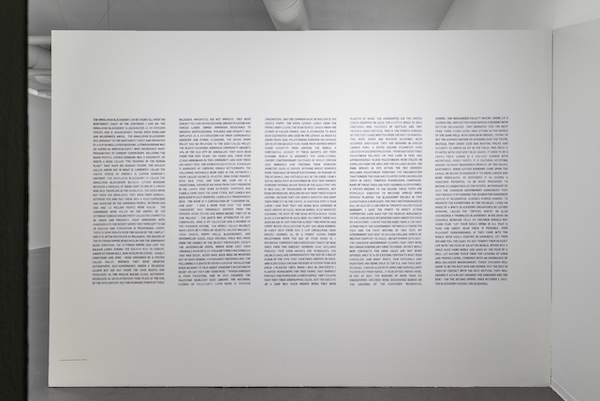
Beth Stuart’s “Delible (poppy, watermelon, wheat, walnut, blackberry)” is part of the Architectures of Protection exhibition, which opened at the Art Gallery of Greater Victoria (AGGV) on May 24 and ends Oct. 26.

In each of the five “Delible” pieces, a black ledge has replicas of food items on top of it and a length of black mesh suspended below. Stuart used plaster, iron oxide pigment, dyed silk, steel and Sumi ink to create the works. The replicas are casts of halved walnuts, pizza crusts, poppy hulls, blackberries and watermelon seeds. According to the artist, each original mold was made from the source itself, except for the watermelon seeds, which were cast from clay originals.

On a wall leading to the five pieces, there is a several-square-foot textual display featuring more than 1,600 words, written entirely in capital letters, with the thoughts seeming to randomly jump from one topic to another; there are no paragraphs, but the words cover five columns. The text, an integral element of the overall artwork, was hand-stenciled by Stuart and relates to the physical pieces. 

photo - Beth Stuart’s “Delible (poppy, watermelon, wheat, walnut, blackberry)” installation comprises a wall of text and five structures
Beth Stuart’s “Delible (poppy, watermelon, wheat, walnut, blackberry)” installation comprises a wall of text and five structures. (photo by Mike Andrew McLean, courtesy Art Gallery of Greater Victoria)

The text begins with mention of the Himalayan blackberry, an invasive species in British Columbia, and then moves to Luther Burbank, an American botanist, horticulturist and eugenicist, before discussing the Armenian Genocide (1915-16) and Canada’s residential schools.

In the middle portion of the textual display, Stuart describes what she sees as the plight of Gazans and the attitudes of certain Israelis.

“AS I WRITE, THERE HAS BEEN NO AID OF ANY KIND FOR ALMOST TWO MONTHS AND EVERY WATER DESALINATION PLANT HAS BEEN BOMBED,” Stuart writes. “IN EARLY 2024 THERE WAS A CLIP CIRCULATING FROM ISRAELI CHANNEL 14, OF A PUNDIT SAYING EVERY PALESTINIAN OVER THE AGE OF FOUR YEARS IS A POTENTIAL TERRORIST AND A NECESSARY TARGET OF WAR. SINCE THEN TWO KNESSET MEMBERS HAVE DECLARED PUBLICLY THAT EVEN INFANTS ARE TERRORISTS. THE DELIBLES BAGS ARE APPROXIMATELY THE SIZE OF A BAG OF FLOUR OF THE TYPE THAT SOMETIMES ARRIVES IN GAZA, AND ALSO COULD CONTAIN THE BODY OF A FOUR-YEAR-OLD CHILD.”

Stuart then talks about tree-planting, which she apparently did in university, then writes: “THIS IS THE FOURTH VERSION OF THIS TEXT I HAVE WRITTEN OVER THE PAST 20 MONTHS. THIS WEEK THERE ARE MASSIVE WILDFIRES NEAR OCCUPIED JERUSALEM. THEY ARE BURNING IN AYALON CANADA PARK, A SEVEN SQUARE KILOMETER PARK LOCATED IN OCCUPIED PALESTINE. THERE HAD BEEN THREE PALESTINIAN VILLAGES ON THIS LAND IN 1948. AND APPROXIMATELY 10,000 PALESTINIANS WERE KILLED OR EXPELLED FROM THE AREA AND THE VILLAGES RAZED.”

She talks more about “THE ORGANIZATION THAT FUNDED THE PARK” without naming it and then raises the issue of the Canadian government’s involvement with Israel and, specifically, its military.

“BETWEEN OCTOBER 7TH 2023 AND THE FIRST WRITING OF THIS TEXT, MY GOVERNMENT HAD SENT 30 MILLION DOLLARS WORTH OF MILITARY SUPPORT TO ISRAEL,” she writes. “ON SEPTEMBER 10TH 2024 THE CANADIAN GOVERNMENT CLAIMED THAT THEY WERE NO LONGER SENDING ANY ARMS TO ISRAEL. IN FACT, WHILE CONTRACTS FOR ARMS SALES ARE NOT BEING OFFERED, ONLY 12% OF EXISTING CONTRACTS HAVE BEEN CANCELLED, AND MANY PARTS, RAW MATERIALS AND MUNITIONS ARE BEING SOLD TO THE U.S. AND THEN SENT TO ISRAEL. CANADA ALSO BUYS ARMS AND SURVEILLANCE TECHNOLOGY FROM ISRAEL.”

The text moves into Stuart’s comments on residential schools before she concludes with the sentence: “FOR THE SECOND SPRING SINCE OCTOBER 7, 2023 THE BLACKBERRY HEDGES ARE BLOOMING.”

To at least one member of the Victoria Jewish community, Stuart’s work is an example of “artfully coded antisemitism – all the more reprehensible for its coyness.”

“In itself, ‘Delibles’ are very beautiful, evocative works,” Maurice Yacowar, a professor emeritus (English and film studies) of the University of Calgary, wrote in a letter to the art gallery that was also sent to the Independent.

“What renders the work problematic is the full-wall text – in spectral grey – that accompanies the sculptures,” Yacowar said. 

He said,“As a whole, the work contrasts the self-renewal of nature’s produce with humans’ murderousness. Unfortunately, the art is undermined by the artist’s ignorance and prejudice in its Palestinian references.”

He said Stuart misrepresents Israel and its media by choosing to reference a news outlet “that even in Israel is considered extremist.” And, he argues,“She omits the Oct. 7 context. A Hamas spokesman flatly stated, ‘There are no civilians in Israel’ – ie., only targets in war.”

Stuart’s exhibit does not include the word “Hamas.”

In a statement to the Independent, the AGGV said:

“The gallery is aware that some members of the community disagree with the subject matter of a current work of art on display. We are always interested to hear how the public, and our members, respond to our exhibitions. We also embrace learning, new ideas and critical perspectives.

“At the AGGV, we respect the artists and curators who work with us to create exceptional exhibitions. As an arts institution, our role is to amplify artists’ voices and create space for conversation and learning. We encourage an exchange of ideas that results in meaningful dialogue and understanding through art.”

The Architectures of Protection exhibition, in the synopsis posted by the AGGV, is supposed to reflect “on ideas and modes of protection and refuge – with regards to oneself, to community, knowledge, culture, identity and land. What are these spaces and practices? What is protection for some and not for others? 

Together, in the wake of the COVID-19 pandemic and in the current global social and political climate, the artworks in Architectures of Protection direct critical attention towards systems and structures that shape and impact everyday and sacred environments and encounters, alongside individual and collective relationships with the land.”

The exhibit also features the artwork of Dana Claxton, Jessica Karuhanga, Emilio Rojas and France Trépanier. 

Sam Margolis has written for the Globe and Mail, the National Post, UPI and MSNBC.

Format ImagePosted on September 12, 2025September 11, 2025Author Sam MargolisCategories Visual ArtsTags AGGV, antisemitism, Art Gallery of Greater Victoria, artwork, Beth Stuart, Canada, First Nations, Gaza, genocide, global politics, Israel, sculpture
VIFF’s mixed offerings

VIFF’s mixed offerings

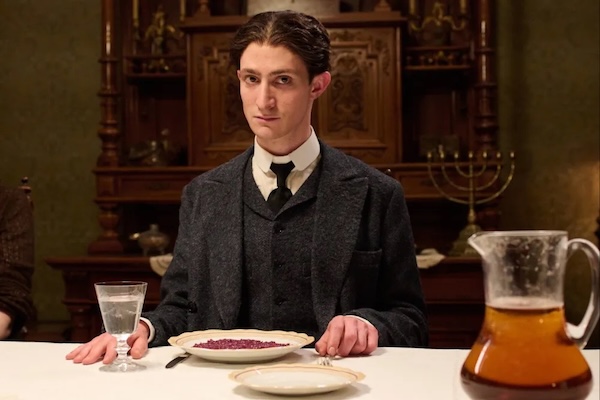
Franz stars newcomer Idan Weiss. (photo from lene Film Production)

As it does every year, the 2025 Vancouver International Film Festival, which runs Oct. 2-12, has offerings of particular interest to the Jewish community. Below are the synopses (less some of the hyperbole) from the festival’s website of the three films featuring Jewish content, as well as the three films about Israel, all of which are from Palestine and other countries – there are no films from Israel in this year’s festival. The Jewish Independent, which has been a media partner of the festival for more than 20 years, has chosen to sponsor Franz.

Franz

You don’t need to have read Kafka to know what “Kafkaesque” means – the idea that the world is a nightmare, a sick joke at your expense, continues to resonate a century after the writer died. Franz Kafka’s “uneasy dreams” have inspired filmmakers like Orson Welles, David Lynch, Michael Haneke, Terry Gilliam and Roman Polanski, to name a few, and now director Agnieszka Holland has delivered a biopic that’s Kafkaesque and then some.

Holland blends scenes from Kafka’s life as a German Jew in Austro-Hungarian Prague with dramatizations of his short stories and – at the film’s most surreal – documentary footage of Kafka’s present-day tourist economy (“Who will join me for a Kafka burger?”). Franz (2025) is densely layered but lively, starring newcomer Idan Weiss, whose tragicomic presence suggests a persecuted clown somewhere between Charlie Chaplin and Adrien Brodie.

Franz is in German and Czech with English subtitles, and runs 127 minutes. It screens Oct. 7, 8:45 p.m., at Vancouver Playhouse, and Oct. 11, 3:30 p.m., at Granville Island Stage. (18+)

Orphan

photo - Bojtorján Barabás in Orphan
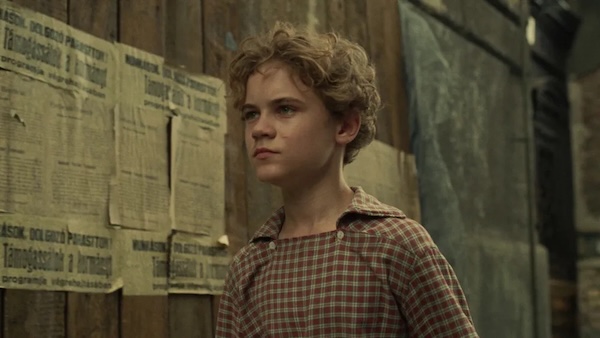
Bojtorján Barabás in Orphan. (photo from Pioneer Pictures/Good Chaos)

Orphan (2025) is set in communist Hungary in the late 1950s. Conceived during the war and brought up by his mother, Andor (Bojtorján Barabás) is convinced his father will return one day. Instead, another man emerges to stake his claim to both mother and child. Berend (Grégory Gadebois) is a butcher and a gentile and, even worse, a divorcee. Appalled, Andor is determined to save his mother from this brute.

The latest film from Son of Saul director László Nemes builds Andor’s world from the inside out, through the child’s troubled eyes. This personal vision grants us access to the wider history unfolding on the edge of the frame, which Andor barely comprehends: the fallout from the Holocaust, the crushing grip of the communist state. 

Orphan is in Hungarian with English subtitles, and runs 132 minutes. It screens Oct. 2, 8:45 p.m., at Fifth Avenue Cinema (19+) and Oct. 4, 6:30 p.m., at International Village 9. (18+)

Cover-Up

photo - Cover-Up is about journalist Seymour Hersh
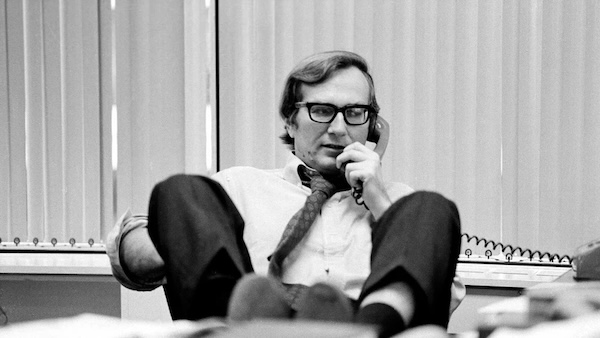
Cover-Up is about journalist Seymour Hersh. (photo by Praxis Films)

Cover-Up (2025) pulls viewers into the uncompromising ethos of journalist Seymour Hersh. From exposing the My Lai massacre to unraveling CIA abuses and Abu Ghraib atrocities, Hersh has spent decades dragging concealed histories into the light – often at great personal and political cost. In this portrait, Oscar-winning filmmaker Laura Poitras (Citizenfour) and Emmy-winning Frontline producer Mark Obenhaus trace Hersh’s process. “I barely trust you guys,” Hersh quips, establishing a candid and often thorny dynamic between subject and directors.

Cover-Up is a meditation on source protection, moral clarity and the imperative to report when it’s needed most. Its story bridges past and present: Hersh is still reporting, now turning his gaze toward Gaza.

Cover-Up has a content warning for graphic violence. It screens at Fifth Avenue Oct. 11, 5:45 p.m. (19+), and at International Village 10 on Oct. 12, 3:45 p.m. (18+) 

Divine Intervention

Palestinian Elia Suleiman is at the height of his powers with this series of deadpan, interconnected, absurdist vignettes about Palestinian life on either side of an Israeli military checkpoint. Mutely following the travails of two lovers – one who lives in Nazareth, the other in Ramallah – as they navigate the wall between them, Divine Intervention (2002) is surreal, satirical and biting in its political criticism. It’s both sad in its vision of the world but also warm in its humour.

All but forgotten from the mainstream filmgoing consciousness, Jacques Tati’s innovations with form and tone have been repurposed by filmmakers as varied as Roy Andersson, Aki Kaurismäki, Ulrich Seidl and, perhaps most of all, Wes Anderson. But Suleiman’s method of feeding the Tati-esque through the prism of Palestinian experience creates something completely new that walks a line between melancholy and absurdity. And what an amazing soundtrack!

Divine Intervention is in English, Arabic and Hebrew with English subtitles, and runs 92 minutes. It screens Oct. 6, 8:45 p.m., at VIFF Cinema, and Oct. 12, 3:45 p.m., at the Cinematheque. (18+)

Palestine 36

Set during the 1936 Palestinian uprising against British colonial rule, this historical drama follows an ensemble of characters. Yusuf (Karim Daoud Anaya), a peasant, straddles two worlds – the city of Jerusalem and his farming village. Denied fair wages, a Jaffa port dockworker (Saled Bakri) joins the rebel movement. Elsewhere, a widowed mother (Yafa Bakri) stashes away an heirloom gun in hopes of defending her family from the British military’s raids.

Shot on location and interspersed with archival footage, the film boasts an international cast, including Hiam Abbas, Jeremy Irons and Liam Cunningham. Palestine 36 (2025) is the third feature from writer-director Annemarie Jacir to be selected as the Palestinian entry for best international feature at the Academy Awards.

Palestine 36 is in Arabic and English with English subtitles, and has a running time of 118 minutes. The film is at Fifth Avenue Oct. 9, 9 p.m., and Oct. 10, 11:45 a.m. (19+)

With Hasan in Gaza

Three unearthed MiniDV tapes from 2001 offer a time capsule of life in Gaza before devastation. What begins as a search for a former prison mate leads to a road trip from the north to the south of Gaza, accompanied by Hasan, a local guide whose fate remains unknown. As the camera moves through Gaza’s streets and landscapes, it captures fleeting moments of everyday life: vendors, schoolchildren, shopkeepers, relatives and strangers, all going about their days in a place that, today, has been forever altered.

In With Hasan in Gaza (2025), Palestinian filmmaker Kamal Aljafari transforms forgotten footage into a time capsule. What was once ordinary is now precious, even endangered. “It is a film about the catastrophe and the poetry that resists,” Aljafari writes.

With Hasan in Gaza is in Arabic with English subtitles, and runs 106 minutes. It screens Oct. 10, 3:30 p.m., at VIFF Cinema and Oct. 12, 6:30 p.m., at International Village 8. (18+) 

– from viff.org

Format ImagePosted on September 12, 2025September 11, 2025Author from viff.orgCategories TV & FilmTags fiction, film, Israel, movies, Palestine, Vancouver International Film Festival, VIFF

Writers fest starts soon

image - Among Ghosts book coverhe 38th annual Vancouver Writers Festival takes place on Granville Island Oct. 20-26. Among the 130-plus local and international authors at 87 events are several members of the Jewish community. A glance through the lineup finds, in order of appearance, Rachel Hartman, Marsha Lederman, Guy Gavriel Kay, Katherine Ashenburg, Jill Yonit Goldberg, Eve Lazarus, Sam Wiebe and Jerry Wasserman. There are, no doubt, others.

Hartman, author of the bestseller Seraphina, comes to the festival with Among Ghosts, which has a found-family theme set in a vibrant fantasy world. She participates with other writers in Paranormal Activity: Ghost Stories for YA (grades 8-12) on Oct. 21, 1 p.m., at Granville Island Stage ($12).

image - October 7th book coverLederman talks with Linden MacIntyre about his latest work of nonfiction, An Accidental Villain, on Oct. 21, 6 p.m., at the NEST ($27), and she is in conversation with Elamin Abdelmahmoud on Oct. 22, 5:30 p.m., at the Revue Stage ($27), about her own new book, October 7th: Searching for the Humanitarian Middle. October 7th is a collection of Lederman’s columns for the Globe and Mail, which have been a real-time archive capturing a period of deep division and trauma.

image - Written on the Dark book coverKay, the internationally bestselling author of Tigana, All the Seas of the World and A Brightness Long Ago, talks about his latest fantasy novel, Written on the Dark, which is set in a magical version of medieval France, replete with ambitious royals, assassins and invading armies. He also talks about his overall body of work with moderator Robert J. Wiersema on Oct. 24, 8 p.m., at the Revue Stage ($27).

image - Margaret’s New Look book coverAshenburg, author of Margaret’s New Look, published her first fiction book at the age of 72. She will join two other writers in the session called Wisdom, Age & Beauty, which takes place Oct. 25, 5 p.m., at Waterfront Theatre ($27). She also participates with several other writers in the Afternoon Tea on Oct. 26, 3:30 p.m., at Performance Works ($50), which includes high tea delicacies, including a signature glass of sherry.

image - After We Drowned book coverThe Soundtrack of Life panel, on Oct. 25, 8 p.m., at the Revue Stage ($27), includes Jill Yonit Goldberg with her book After We Drowned, a haunting coming-of-age story with a fierce feminist subplot set in 1984 to the music of Tina Turner, Madonna and Stevie Nicks.

image - Beneath Dark Waters book coverOn Oct. 26, 10:30 a.m., at Performance Works ($40), Lazarus joins six other authors of nonfiction in an event described as TED Talk meets café social, with a morning snack included. Lazarus explores a forgotten tragedy in Beneath Dark Waters, an account of the 1914 sinking of the Empress of Ireland.

The Crime Scene on Oct. 26, 7 p.m., at Waterfront Theatre ($27) is moderated by Jerry Wasserman and the authors featured include Sam Wiebe, whose The Last Exile finds PI Dave Wakeland at the centre of gang warfare on the streets of Vancouver.image - The Last Exile book cover

In addition to Lederman’s October 7th, there are a couple of other Israel-related books included in the program, the first directly, the second only tangentially.

Palestinian-Canadian author Saeed Teebi is one of the writers joining Blood in the Pen: Stories, Crises, Repair and the Writer on Oct. 21, 8:30 p.m., at Granville Island Stage ($27), and he will be in conversation with Adel Iskandar on Oct. 22, 8:30 p.m., at Waterfront Theatre ($27). Teebi is also one of the writers featured in A Doctor, a Lawyer and a Journalist Walk into a Literary Festival, on Oct. 23, 8:30 p.m., at Waterfront Theatre ($27). He describes his memoir You Will Not Kill Our Imagination as exploring “what it means to be a Palestinian in this moment, the effects of the genocide on Palestinian art and imagination, and that to even claim a belonging to the land from a country thousands of miles away is an act of subversion.”

Queer Stories on the Map on Oct. 23, 8 p.m., at Revue Stage ($27) includes Ziyad Saadi, whose reimagining of Mrs. Dalloway, Three Parties, follows a Palestinian refugee who plans to come out to his entire family at his birthday dinner party.

For more information about festival events and to purchase tickets, visit writersfest.bc.ca. 

– from Vancouver Writers Festival program

Posted on September 12, 2025September 11, 2025Author from Vancouver Writers Festival programCategories BooksTags Israel, Oct. 7, Palestine, Vancouver Writers Festival

Shoah’s generational impacts

Robert Krell did not identify as a Holocaust survivor until the age of 41. His evolving realization about his own experience mirrors a larger trend in the understanding of child Holocaust survivors. As a psychiatrist, academic and leading Holocaust educator, Krell has been at the forefront of this evolution.

image - Emerging from the Shadows book coverIn a new book, Emerging from the Shadows: Child Holocaust Survivors, Their Children and Their Grandchildren, Krell brings together a number of his lectures and presentations, as well as contributions from other scholars and survivors, to explore the multigenerational impacts of the Shoah on families.

Krell discusses a “hierarchy of survival” consensus that prevailed for decades after 1945, in which concentration camp survivors were perceived as the “real” survivors, followed by hidden adults, partisans, those who fled and others.

“Children caught up in the horrors were dismissed as ‘too young to be able to remember,’” he writes.

Krell was one of those children.

There were dark portents from the beginning of his life. When Krell was born, on Aug. 5, 1940, the Dutch hospital of his birth was already occupied as an SS headquarters.

After successive waves of neighbours and family had been relocated “to the east,” never to be heard from again, the Krell family was ordered to appear for deportation. Instead, they went into hiding.

Young Robbie was given up at the age of 2 by his parents, Emmy and Leo Krell. He was hidden by a Dutch Christian family, Albert and Violette Munnik, who he would come to know as “Vader” and “Moeder,” and their daughter (his “sister”) Nora.

The Munniks remained in Krell’s life until they passed, attending his university graduation, wedding and other simchas. They would eventually be honoured as Righteous Among the Nations at Yad Vashem.

“My days in hiding were the best that any hidden child could have had,” Krell writes.

This raises questions for him as a survivor and as a psychiatrist. “From where, then, derived my feeling that something enormous and hideous had occurred? From where came this unsettled feeling of whatever it is that haunts me still? Perhaps from the separation. Perhaps from the fear of discovery or the anxieties of the adults around me. Perhaps from my silence, the absence of ordinary play, the wish not to be disturbing or noticed.”

These feelings, which much later he would discover were common among people who, as children, had experienced similar things, drove him personally and professionally.

Krell’s self-realization that he was not only a second-generation survivor – the son of survivors – but a survivor himself, struck him at the 1981 World Gathering of Jewish Holocaust Survivors, in Jerusalem. It was a realization that others were coming to concurrently.

Later that decade, the seminal book Love Despite Hate: Child Survivors of the Holocaust and Their Adult Lives, by Sarah Moskovitz, signaled the beginning of a new understanding, and the identity of child survivors as a distinct category of survivors.

In 1991, the groundbreaking ADL/Hidden Child Conference, in New York City, attracted 1,600 participants, mostly child survivors. Krell summarizes the conversations that happened there as: “Thank God, I thought I was crazy. But you were crazy with the same issues. So perhaps we are normal.” 

With Prof. Peter Suedfeld, former head of the University of British Columbia’s department of psychology, Krell conducted research into younger survivors and their children. They identified four paradoxes that were common in the families they investigated.

Survivor parents often expressed great pride in their children, but the perspective of the children was that they always fell short of fulfilling parental expectations and were often unaware of their parents’ pride.

Second, while children felt they had been provided with most of the material things, they reported feeling that they had missed out on receiving a set of values. This was belied by the evidence, Krell writes. “But it appears that, despite parental preoccupation with work and security, many second-generation survivors did absorb humanistic values for which the parents, of course, claim credit.” 

The third paradox is that “though therapy groups of second-generation survivors emphasize complaints about earlier parenting, noting a relative lack of empathy for their problems, the same group members point out to each other their obvious humaneness, achievements and exceptional personal qualities.”

The fourth paradox has to do with the parental viewpoint that withholding information about their Holocaust experiences was crucial for the normal development of their children. “But from the point of view of the children, that past life was shrouded in an elusive mystery that prevented them from understanding the components of life in play from the Holocaust background,” Krell writes.

“Despite the overwhelming complexity of lives lived in the shadow of the Holocaust, it is remarkable that the havoc wreaked on Jewish children has not irrevocably crippled the next generations,” he notes, adding that 93% of Jewish children in Nazi-occupied Europe were murdered. “It is itself a miracle that so many of the remnants of surviving children and our sons and daughters have contributed so much. Let us be proud of that.” 

Second-generation children learned quickly not to ask questions that could spur tears or other responses in their parents. Krell notes that some parents would ask why their children had not seemed interested in their Shoah experiences. In many cases, he urges members of the second generation to designate their children – the grandchildren of the survivors – to investigate the family history.

“They return with names, places of origin, descriptions of life (and of death), stories of defeat and loss, and of courage and heroism,” he writes. “They are enriched forever by knowing, for they are alive because their grandparents, against all odds, made it.”

Krell’s life has had multiple encounters with horrific history. In 1961, he was visiting Israel and his aunt got them seats in the courtroom of Adolf Eichmann’s trial.

In 1969, he was on TWA Flight 840 out of Rome when the plane was hijacked by the Popular Front for the Liberation of Palestine. The plane and its hostages spent several days in Damascus before being freed in Athens, after which he flew on to Israel.

“So, by age 30, I was a Jew who had survived two deadly enemies,” he writes.

Krell became an academic and a clinician, the director of child and family psychiatry at the UBC Health Sciences Hospital and director of residency training for 10 years. He was founding president of the Vancouver Holocaust Education Centre, on whose board he remains an active member.

Krell is the author of 11 books, two dozen book chapters and many journal articles. His interests include the care of aging survivors of massive trauma. His memoir, Sounds from Silence: Reflections of a Child Holocaust Survivor, Psychiatrist and Teacher, was published in 2021, in which year he was also inducted into the Order of Canada. He and his wife Marilyn have three daughters and nine grandchildren.

Emerging from the Shadows includes lectures and speeches from Krell, as well as writings from Vancouverite Ed Lewin, Robert Melson, Harry Penn, R. Gabriele S. Silten, Leo Vogel and Zev Weiss. 

In an epilogue, Krell reflects on the Oct. 7 terror attacks through the eyes of a Holocaust survivor.

Whereas the Nazis made some efforts to hide from the world their atrocities, the Hamas terrorists perpetrated their brutalities in broad daylight and livestreamed them online. 

“It was done in daylight, recorded and distributed! How shall we ever rest again, given such knowledge?” he asks. “How shall a Jewish child/adolescent deal with this? And who can heal this fresh wound when the old wounds had only just begun to close after three or four generations?”

His conclusion: “May I suggest that we remain moral, courageous, and worthy of being a ‘a stiff-necked people,’ strong, proud, and determined.” 

Posted on September 12, 2025September 11, 2025Author Pat JohnsonCategories BooksTags child survivors, Emerging from the Shadows, history, Holocaust, Oct. 7, reflections, research, Robert Krell

Power Metal a reality check

Clean cars humming down quiet streets. Solar panels shimmering on rooftops. A world powered by sunlight and wind, freed from the smoke and pollution of oil rigs and coal plants. The age of carbon, we’re told, is drawing to a close, and a cleaner, greener future is within our grasp. But what if that future lies on foundations just as dirty – and just as deadly – as the fossil fuel era we’re striving to leave behind?

In Power Metal: The Race for the Resources That Will Shape the Future (Riverhead Books, 2024), investigative journalist Vince Beiser delivers an exposé that cuts through the promising façade of the green revolution. As a seasoned journalist and with the narrative drive of a storyteller, Beiser reveals the secret supply chains behind today’s electric cars, wind turbines and solar panels – chains marked by extraction, exploitation and environmental ruin.

The materials at the heart of this transformation – lithium, cobalt, nickel and rare earth elements – are mined in staggering volumes. However, this increase in extraction comes at a cost that far exceeds dollars and cents, according to Beiser.

From the salt flats of Chile to the cobalt mines of Congo, from scrapyards in Canada to geopolitical flashpoints in China and Russia, Beiser introduces readers to a cast of characters who live on the frontlines of the resource race: child labourers sifting toxic waste for cobalt, Indigenous communities resisting mining on their ancestral lands, and powerful nations jockeying for control of tomorrow’s metals.

Beiser also brings to light the often-overlooked complexity of this electro-digital age, where minerals once obscure – like rhenium, crucial for jet engines, or rare earths that enable smartphones – have become linchpins of modern life. The race to secure these metals has sparked environmental havoc, political upheaval and rising violence worldwide, he contends.

In Power Metal, Beiser refuses to streamline or sensationalize. This is not a diatribe against technology, nor a rejection of the urgent need for clean energy. Rather, it’s a sobering reality check. As Beiser bluntly states, “There’s no such thing as clean energy.” The machines themselves may be green, he points out, but the systems that create them remain deeply flawed, still reliant on a resource-hungry, extraction-driven model that mirrors the very industrial forces we hoped to transcend.

If we are serious about building a sustainable future, Beiser argues, we must rethink not just how we power our lives, but how we source, use and value the raw materials that underpin our modern world. Simply swapping gas tanks for batteries is not enough, he says. We face a difficult question about what we’re willing to sacrifice – and which injustices we must confront – in pursuit of the green dream, he contends.

Power Metal challenges readers to rethink the green energy revolution. Beneath the promise of clean power lies a hidden world of environmental damage and human cost. Beiser doesn’t offer easy answers – but he shows why understanding this complex reality is essential if we want a truly sustainable future. For anyone ready to see beyond the surface, Power Metal is an essential, eye-opening read. 

Uriel Presman Chikiar is a student at Queen’s University and serves as executive vice-president of external relations at Hillel Queen’s.

Posted on September 12, 2025September 13, 2025Author Uriel Presman ChikiarCategories BooksTags environment, green revolution, investigative journalism, Power Metal, technology, Vince Beiser
Traveling as a woman

Traveling as a woman

Caryl Eve Dolinko, author of A Woman’s Guide to World Travel, has been to 93 countries and counting. (photo from caryldolinko.com)

Caryl Eve Dolinko’s A Woman’s Guide to World Travel literally covers everything you need to know when traveling, from choosing where to go through to reacclimatizing when you get back home. Anyone, but especially women, about to take their first international trip should have this book handy. For people who have been a few places, and even for seasoned travelers, Dolinko’s latest also has snippets of history, many short, informative travel stories, an interesting perspective – and likely at least one point you’ve not thought of before.

Dolinko, who is a member of the Vancouver Jewish community, has been exploring the world for more than 40 years. She has been to 93 countries and counting. She has journeyed on her own and with others, as a young person and as an older person, as “a working professional, a mother with kids, as a straight and gay woman, and a daughter caring for an elderly parent.”

image - A Woman’s Guide to World Travel book coverA Woman’s Guide to World Travel, published by Whitecap Books earlier this year, is Dolinko’s third travel book, but the first as sole author. She co-wrote both The Complete Guide to Independent Travel (self-published) and The Globetrotter’s Guide: Essential Skills for Budget Travel (Red Deer Press), with Wayne Smits. The latter was a Canadian bestseller, notes Dolinko.

In the 25-plus years since The Globetrotter’s Guide came out, much has changed.

“The world’s population has almost doubled from over 4 billion in the early 1980s when I started to travel, to just over 8 billion today, putting a strain on finite resources,” writes Dolinko. “Many tourist attractions are now overused, overrun and exploited as a result of global tourism’s exponential growth. I believe it is past time for us to reconsider how we travel and become more aware of the impact we have.”

Her own approach to travel has changed since she started, at age 18, with a planned four-month trip to Europe that turned into “an epic eight-year odyssey.”

“When I first started traveling around the world in 1982, there was very little information available, especially for women, as very few were traveling the world alone,” she writes. “The internet didn’t exist, and neither did smartphones, digital cameras, selfies, social media, travel and hotel apps, GPS or texting. Lonely Planet was just starting to publish travel books and National Geographic was about the only magazine that showed exotic places around the world. Travel guides and literature were written with men in mind and, with so few women traveling, there was no need to address our particular issues and concerns. Only a small selection of useful advice was available to address women’s needs.”

That situation continues to change, with some studies estimating that “women are the primary decision-makers for travel in households, influencing up to 80% of all travel decisions. That’s a tremendous amount of buying power and it has influenced the tourism industry to change to meet our needs,” points out Dolinko, whose guide takes readers through some of the history leading to this development.

She briefly highlights six women “who dared to travel in their day,” starting with Ida Pfeiffer, who was born in Vienna in 1797. While Pfeiffer’s “travel stories and books inspired future generations of adventurers … her ethnocentric views frequently led her to be critical and intolerant of other cultures,” writes Dolinko. “As a result, she could be a harsh traveler, lacking the ability to appreciate other cultures on their own terms.”

Dolinko places great emphasis on what can be learned from other cultures, and stresses the importance of traveling with humility, not just for our own education, personal growth and safety, but for the benefit of the people and communities we encounter.

“Through our spending habits, we have the power to influence local economies and cultures, so it’s crucial to make informed decisions and be mindful of our impact,” she writes. “By supporting local businesses and organizations that prioritize sustainability and conservation efforts, we can make a positive difference and be a catalyst for change. Your actions have real consequences, so aim to leave a positive impact and a gentle footprint wherever you go.”

Elsewhere, she shares warnings, like “It’s strictly a cultural taboo or against the law in some cultures to be gay, and open displays of affection are discouraged”; “In some cultures, it’s expected and even considered impolite to accept the initial price offered by the seller without attempting to negotiate”; and “When communicating nonverbally, it is important to be aware of cultural differences and the meanings behind certain gestures. Pointing with your finger, for example, can be seen as rude or confrontational in many cultures.”

Dolinko spends time on photography in this context – reminding readers that some religious sites may prohibit photography, some people may not want to be on your social media feed and some cultures believe that a camera can steal a person’s soul. She talks about selfies, camera types and photo composition. 

There is not a stone left unturned in A Woman’s Guide to World Travel. She covers factors to consider when deciding where to go (like safety, cultural norms and accessibility), budgeting (don’t forget admission fees, tips, snacks, SIM cards and so on), choosing luggage (suitcase vs backpack, for instance) and packing (she gives detailed lists of clothing, footwear, toiletries and medical supplies to bring, plus a host of other items to consider). She suggests where you should be in your preparedness two months out, one month out, a week before you leave and the day before you leave. She explains and lists the documents you’ll need, the insurance and vaccinations, how you should leave your home and office, and what the people you leave behind might need if something were to happen to you on your trip.

Specific to women, Dolinko talks about how to interact with men (“being aware of cultural differences that may affect communication and behaviour, as well as keeping an eye out for red flags and listening to your intuition”) and how to safely have a travel romance (with men or women), as well as what to do if, God forbid, you are sexually assaulted or raped. She lays out how to deal with some common gynecological issues while traveling. She offers advice on visiting religious buildings. She makes suggestions about traveling with kids. And she shares so much more. 

To say that the 384-page A Woman’s Guide to World Travel is comprehensive is an understatement. It encompasses 40 years of experience traveling around the world, lots of photos (which I wish had been captioned, with some in colour) and relevant anecdotes. It’s a one-stop “shop” for anything you might want to know – and lots you didn’t know you needed to know – about travel. 

Format ImagePosted on September 12, 2025September 11, 2025Author Cynthia RamsayCategories BooksTags A Woman’s Guide to World Travel, Caryl Eve Dolinko, history, travel, women

Thriller delves into AI world

Daniel Kalla commands readers’ interest from the first sentence of his latest thriller, The Deepest Fake. And he keeps us turning pages straight to the end, not only as we contemplate who might be the culprit(s) of our hero’s apparent demise, but also as we consider the ideas Kalla puts forward about artificial intelligence, intellectual property, relationships, trust, measures of a successful life, and more.

Jewish Independent readers will be familiar with Kalla, who, in addition to being a writer of many international bestselling novels, is an emergency room physician here in Vancouver. The JI interviewed Kalla in 2023 and has reviewed of a few of his previous novels.

image - The Deepest Fake book coverThe plot-driving topic of The Deepest Fake – artificial intelligence – is new territory for the doctor-writer, who has penned many medical and science thrillers, using his physician’s knowledge to powerful effect. But he also has written an historical fiction trilogy set in Shanghai during the Second World War, where thousands of Jews fleeing Europe found safe haven, even as China and Japan were at war, so we know Kalla’s not afraid to do the research necessary to create a realistic-seeming fictional world centred around places and concepts less familiar to him, and to most readers.

As much as The Deepest Fake highlights some of the moral issues surrounding AI, it also explores other big issues, like medical assistance in dying (MAiD), fidelity in marriage and business partnerships, the foundations of trust, and where the creative process begins and who owns it. Kalla manages to cover all this ground and raise so many relevant questions while telling a great story. The Deepest Fake begins with a bang – “Liam Hirsch never seriously contemplated dying before his forty-ninth birthday – until today” – and keeps up the pace throughout.

Liam, founder and chief executive officer of a thriving AI company, TransScend, is suffering from a mysterious medical condition that’s first diagnosed as an aggressive form of ASL (amyotrophic lateral sclerosis). His symptoms – twitches and challenges with movement – have been getting worse, and he’s likely to lose basic motor function within months, maybe a year.

Despite the seriousness of his illness, Liam hesitates to tell his wife and kids, the former not only because of the pain it will cause, but because, weeks before, he discovered, with the help of a private investigator, that his wife was cheating on him. Adding to Liam’s stresses and the book’s adventure are some accounting irregularities at his company, the competitive nature of the tech world and the potentially manipulative AI app that he helped create. So, when it becomes obvious that someone wants Liam gone, the suspects are numerous, including his wife, all his staff, an aggrieved former business partner, and the technology itself.

The Deepest Fake is a fun, satisfying read. 

Posted on September 12, 2025September 11, 2025Author Cynthia RamsayCategories BooksTags artificial intelligence, Daniel Kalla, fiction, novels, The Deepest Fake, thrillers
Two different kinds of magic

Two different kinds of magic

It’s almost a new year. We’ve been taking stock more than usual throughout the month of Elul. It’s a valuable skill – being able to do regular cheshbon hanefesh, accounting of the soul, reflecting on our views and actions, with an eye to self-improvement, maybe even creating a positive ripple effect that extends beyond ourselves.

Two new children’s picture books introduce – or reinforce – the Jewish values of Shabbat (taking a break from work and technology, thereby recharging our physical and mental selves) and tikkun olam (taking care of ourselves, our homes, our neighbourhoods, and so on). They remind us that making the world better starts with us, what we do, how we treat ourselves and others.

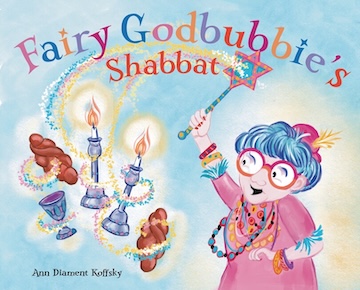
Seattle publisher Intergalactic Afikoman released Fairy GodBubbie’s Shabbat by Ann Diament Koffsky this month. Koffsky has written and illustrated more than 50 kids books, with many about Judaism, its holidays, foods and symbols. Her website is worth checking out: there are reading guides, you can see her many artistic styles, download colouring pages featuring scenes from her books, as well as other images, and, of course, there are links to purchase her books.

In Fairy GodBubbie’s Shabbat, the Mazel family is busy and seems happy enough, Dad on his laptop, Mom on her phone, Sara playing games on a tablet. But, “Why is no one schmoozing?” wonders Fairy GodBubbie. “Noshing?? Kibbitzing!”

“Unlike regular fairy godmothers who come only when called, Fairy GodBubbies just show up to fix things.

“Even when they’re not invited,” writes Koffsky.

So, poof! With a couple of Shabbat candles and a frequency jammer, Fairy GodBubbie helps the Mazels experience a different kind of Shabbat, a much more fulfilling one, a magical one. And readers can create the experience at their own homes, trying out what Koffsky calls a “a Tech Shabbat – a day away from screens.” She asks, “If your family does choose to try out a Tech Shabbat, what would you most like to do during that time?” And offers some choices – “Will you eat a family meal? … Curl up with a good book?” – and encourages readers to come up with their own ideas to make their “next Shabbat feel magical.”

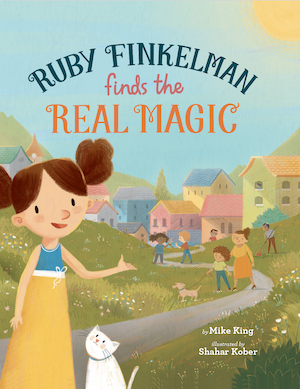
image - Ruby Finkelman Finds the Real Magic book coverThe Collective Book Studio’s Ruby Finkelman Finds the Real Magic, written by Mike King with illustrations by Shahar Kober, which came out earlier this year, also features a young heroine and, as the title indicates, “magic.” But there are no magical GodBubbies; rather, a self-realization that a beautiful village, a beautiful life, don’t just happen by magic – happiness, cleanliness, kindness, etc., require not only effort, but sometimes doing things you don’t enjoy doing. In Ruby’s case, she “especially didn’t like brushing her teeth,” so, one night, she decides, “I’m never going to brush my teeth again.”

Even such seemingly inconsequential actions have repercussions. Other kids stop brushing their teeth. Then they decide not to wash their faces, tidy up after themselves or treat one another kindly. Parents nag, children kvetch. The grownups become so exhausted, they have “no strength left to lift a toothbrush, do the laundry, take out the garbage, and on and on.” Kvellville soon turns into what neighbouring villages start calling “Schmutzville.” A town meeting devolves into several arguments, everyone turning on one another.

Seeing the madness, and realizing how it all started, Ruby sets about to right the situation.

“Mensch is a Yiddish word that means ‘human,’ but when used in the sense of ‘being a mensch,’ it means being a human in the best possible way, or being the best human that you can be,” writes King in an author’s note at the end of the story. “But it’s not only a Jewish thing – it’s a universal value, an idea of how to act in a way that makes the world a better place, simply because you behave in a good and kind way.”

While the toothbrushing premise is a little bit of a stretch, King is a pediatric dentist, so it’s no wonder, and he does manage to make the story work. It’s a wonderful message, of course, and Kober’s artwork is delightful. 

Format ImagePosted on September 12, 2025September 11, 2025Author Cynthia RamsayCategories BooksTags Ann Diament Koffsky, artwork, children's books, Collective Book Studio, Intergalactic Afikoman, kids books, Mike King, Shahar Kober

Posts pagination

Previous page Page 1 … Page 3 Page 4 Page 5 … Page 160 Next page
Proudly powered by WordPress