Skip to content

  • Home
  • Subscribe / donate
  • Events calendar
  • News
    • Local
    • National
    • Israel
    • World
    • עניין בחדשות
      A roundup of news in Canada and further afield, in Hebrew.
  • Opinion
    • From the JI
    • Op-Ed
  • Arts & Culture
    • Performing Arts
    • Music
    • Books
    • Visual Arts
    • TV & Film
  • Life
    • Celebrating the Holidays
    • Travel
    • The Daily Snooze
      Cartoons by Jacob Samuel
    • Mystery Photo
      Help the JI and JMABC fill in the gaps in our archives.
  • Community Links
    • Organizations, Etc.
    • Other News Sources & Blogs
    • Business Directory
  • FAQ
  • JI Chai Celebration
  • JI@88! video
image - Weizmann Canada Physics Tournament 2025
image - The CJN - Visit Us Banner - 300x600 - 101625

Recent Posts

  • Vrba monument is unveiled
  • Music to build bridges
  • A better future possible
  • Anne Frank exhibit on now
  • Human rights in sport
  • Telling the story of an icon
  • Crawl bigger than ever
  • JCC Maccabi in Toronto
  • A way to meet fellow Jews
  • Time to include
  • Add Jewish joy to the mix
  • Reminder of humanity’s light
  • From the archives … editorials
  • Year-round holiday recipes
  • מדוע עזבתי את ישראל ואינני חושב לחזור ארצה
  • OJC hosts Oct. 7 memorial
  • A journey beyond self
  • Antisemitism a problem
  • Young man is missed
  • Orr action sparks complaint
  • Prison sentence for hate
  • Etgar Keret comes to Vancouver
  • New fall lecture series
  • Series explores music
  • Doc on Zapiro screens Nov. 6
  • Joy of shared existence
  • Community milestones … October 2025
  • MAID vs Jewish values
  • Cheshvan a great month, too
  • Bull, bear or bubble?
  • From the archives … a coin, etc.
  • מדוע האנטישמיות הולכת וגואה בעולם
  • New bio gives Vrba his due
  • Joy brighter than ever
  • When approaches differ
  • New leadership at the JCCV

Archives

Follow @JewishIndie

Tag: drawing

Both personal & cosmic

Both personal & cosmic

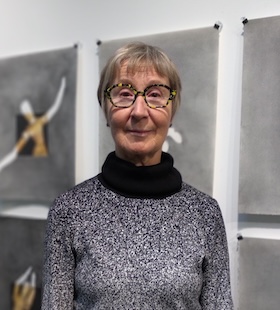
Eric Goldstein and Jenny Judge are different in their backgrounds and creative philosophies, in their media and techniques, but they have two characteristics in common: their images are abstract, and strings drive their artistic perceptions. (photo by Jenny Judge)

A string is a simple, utilitarian object. Usually, it connects things, but rarely is it associated with beauty. However, String Theory, the current two-artist exhibition at the Zack Gallery, definitely brings beauty to gallery patrons.

The artists participating in the show – Jenny Judge and Eric Goldstein – are different in their backgrounds and creative philosophies, in their media and techniques, but they have two characteristics in common: their images are abstract, and strings drive their artistic perceptions.

Judge has been an installation artist for decades.

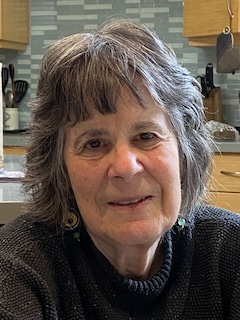
“I received a BFA in sculpture and printmaking in 1983 and completed an MFA in sculpture in 1991,” she told the Independent. “I often integrate a variety of craft-based material and processes in my installations, and I have exhibited them in Canada and abroad, but I have never exhibited my drawings before this show. I’ve been drawing for a long time, but my drawings were never the focus of my art. They were for clearing my head, as was my writing, which is also essential to my practice. Both helped me understand my own concepts better. I guess it is time for my drawings to be in the foreground of a show.”

photo - Jenny Judge
Jenny Judge (photo by Mads Colvin)

Like her installations, Judge’s drawings have depth, displaying multiple layers of texture and meaning.

“The heart of these drawings is transition, the two different sides coming together, connected by lines or strings,” she explained. “Light versus dark. Old age versus youth. Northern hemisphere versus southern. Sky versus water. My family lives in Canada and New Zealand, and I’m often traveling from there to here and back. My drawings help me to make sense of these transitions.”

All her pieces in the show are a wash of muted paint in the background overlaid by a network of strings and nodes in faintly contrasting colours. The web of strings and their junctions is complex and delicate, the lines gossamer-thin, reflecting the artist’s contemplation of belonging to the emotional and physical landscape of both Canada and New Zealand. 

“My drawing are like landscapes,” she said. “There is even a horizon line in most of them, the line where two different worlds meet, the areas of constant shifting and negotiations. But there is much more to the story I want to tell. That’s why I paint in the abstract style. A simple landscape is just that – a landscape, a forest or a mountain. But an abstract picture always leaves room for interpretation. Everyone can come up with their own story.”  

Like her images, Judge’s titles are also open to interpretation: “Crossing,” “Striations,” “Pass Through,” for example.

“They underscore my feelings of not always knowing where I am in time and space, of always seeking connections,” she said.     

Inspired by the concepts of meeting points, of confluence and repetition, Judge also sees parallels between her compositions and knitting.

“I learned to knit from my mother when I was 10. I remember sitting with her as we talked, knitted and counted stitches. I still enjoy knitting. When you knit, you have one string of yarn and you repeat the same pattern over and over again. And, suddenly, you have something else: a scarf or a sweater. That’s what I do when I draw. I repeat endless variations of the same pattern until something meaningful emerges,” she said.  

Another link between her drawings and her knitting is the tool she employs. She draws with a bamboo skewer (very like a knitting needle), dipped in acrylic ink. “It is a very domestic item,” she said. “But it has a sharp point, sharper than any brush. It allows me to draw very thin lines. I build those webs of lines over one another, rows and layers, until I’m satisfied with the result. Sometimes, it takes several layers until the whole starts making sense. Of course, it takes a long time to draw all the lines I visualize for even one painting.”

Perhaps the length of time it takes her to create her pieces contributes to the fact that she doesn’t take commissions. “I tried,” she said. “But I didn’t like the clients’ constant demands. I don’t create art for the money.”     

Goldstein, however, does take commissions and he relishes seeing his pieces in people’s homes.

“I create mixed media collages,” he said. “I use coloured fibres, gold foil, glass, paint, plaster.”

While Judge’s web-like pictures imply multiple dimensions, Goldstein’s fibre string collages tend to one-directional geometries, either horizontal or vertical, their colour patterns cheerful and dazzlingly bright. The gold foil and the glass fragments provide even more pizzazz to his deceptively simple compositions. “I build my canvasses like an architect builds a building,” he said. 

Goldstein came to the visual art from the movie industry. Over the past three decades, he has been the director of photography for more than 75 film projects, from Hollywood features to documentaries. Creating gorgeous, highly decorative fibre collages for the last 15 years has provided him with a different outlet for his artistic vision. 

“I’m inspired by nature, by the West Coast landscape,” he said. “Not as it appears on the surface. Instead, I want to capture how it feels to experience it – often chaotic, often incomprehensible. I try to convey feelings. As a mixed-media artist, I delve into the intricate, visual storytelling of people and the world around us.”  

The pieces Goldstein presents in this show have rather mundane titles, in contrast to the elaborate poetry of the images themselves. “I call my paintings ‘Poetic narratives with kinetic energy,’” he said. 

One of the paintings, “View of the Bay,” is a symphony of blue, where glass tiles twinkle among the strings like windows on the far shore. “No Curtains Needed,” on the other hand, is a subtler image, hinting at an open window and a playful light. The artist offers a short description for every canvas, and this one reads: “The absence of curtains allows for unfiltered light to dance freely upon the walls. It creates a sense of freedom and awe. Reminding us to let go of our barriers, both physical and cerebral, so we can.” 

One of his most notable pieces in the exhibit – the white and blue “What Remains” – feels like a scream of the artist’s soul.

“The colours are the deconstructed Israeli flag,” he said. And his description of the image reads like a part of a poem: “This is my way of bearing witness to the horror unfolding in Israel and Gaza. It expresses my profound sense of conflict and loss of a meaningful identity. This piece isn’t about right or wrong or even resolution; it’s about holding space for complexity, for grief and empathy, and hope that something sacred remains.”  

Goldstein exhibits a lot, and his works are in demand. “Next month, I’ll have a show at the Queen Elizabeth Theatre,” he said. “I’ll have 12 paintings there.”

Judge and Goldstein didn’t know each other before Sarah Dobbs, the gallery curator, decided that their works were complementary. “Together,” she said, “Judge and Goldstein show that both our lives and the universe are shaped by invisible threads – of memory, matter and meaning. String Theory is … about the poetic links between the personal and the cosmic, reminding us that everything is connected.” Both artists agree.  

String Theory is at the Zack Gallery until Sept. 22. To learn more, check the artists’ websites: ericgoldsteinart.com and jennyjudge.com. 

Olga Livshin is a Vancouver freelance writer. She can be reached at [email protected].

Format ImagePosted on September 12, 2025September 11, 2025Author Olga LivshinCategories Visual ArtsTags artwork, drawing, Eric Goldstein, exhibits, Jenny Judge, mixed media, painting, Sarah Dobbs, sketching, string theory, Zack Gallery

Dickinson poem reflects art

The new exhibit at the Zack Gallery, “Hope” is the Thing with Feathers, derives its name from the eponymous poem by Emily Dickinson. Gallery manager Sarah Dobbs, who curated the show, was instrumental in coming up with the name, as well as in bringing together the two artists whose works are on display: Ilze Bebris and Barbara Heller. 

“I’ve known Ilze Bebris for many years,” said Dobbs. “I saw the works she produced during COVID and said she should submit a proposal for an exhibition at the Zack Gallery. When she did, the art committee and I met and decided she should definitely have a show. But there wasn’t enough work for a solo show.”

Bebris’s submission included a series of 19 drawings, called Ballad of Hope and Despair, and a journal with her sketches of feathers. “That journal is a record of found things; of feathers shed by the gulls in my neighbourhood,” Bebris explained. “Each morning, at least one feather landed on my daily walking route.… I collected them and drew them over a period of a month.”

When Dobbs contemplated Bebris’s feathers, another artist who uses feathers extensively came to mind.

“I remembered Barbara Heller instantly,” said Dobbs. “Heller had created many tapestries with birds and feathers, and I thought their art might work well together. However, once I reflected and looked deeper, it occurred to me that they were both talking about isolation and resilience. And the poem by Dickinson, which I used for the title of the show, also speaks of resilience, hope and feathers, even though Dickinson wrote it more than 100 years earlier.”

For the current exhibit, both Bebris and Heller are presenting art that they created during the pandemic. 

photo - Ilze Bebris
Ilze Bebris (photo by Olga Livshin)

“We have a small property on Gabriola Island, a house” Bebris told the Independent. “My husband and I were driving there one day in 2020 when the news of the COVID lockup hit. We became stuck on the island, couldn’t go home or anywhere for months.”

Bebris and several artists she knew who lived or vacationed on Gabriola got in touch with one another and decided to exchange drawings that they would create daily.

“We needed something to do,” she said. “We were all trapped. The news was horrible. My father and stepmother both died from COVID in their care home in Ontario, and I couldn’t go there, could do nothing but wait and hope for a cure or a vaccine.

“I lived in a tumult of emotions: grief, hope, anxiety, boredom,” she shared. “So, I drew. I drew flowers and twigs and rocks I saw on my daily walks; I drew feathers. But, one day, I ran out of things to draw. I had this small wooden mannequin, and I thought: what if I put it into different poses and draw it. Then the black boxes appeared in the images, reflecting our collective feelings of being trapped, isolated. I called the series ‘Ballad of Hope and Despair.’ They were all done during the first summer and fall of the pandemic.”

The 18 images, set in two rows, one above the other, are all the same size and shape. In each frame, there is the grey background, a black box of a window in the middle, and a wooden mannequin inside the window. Every pose is different, like every person is different – different experiences, ages, ethnicities – but the series unites us as human beings. We have the same general body structure and we move in similar ways as the mannequins in those windows. We all went through the pandemic.

There is one additional image beside the original 18.

photo - One of the images in Ilze Bebris’s “Ballad of Hope and Despair” series, now on display at the Zack Gallery
One of the images in Ilze Bebris’s “Ballad of Hope and Despair” series, now on display at the Zack Gallery. (photo courtesy)

“I did it a few months later,” Bebris said. “In the first 18, all the mannequins are trapped inside. But, in the last one, the mannequin is outside the window, finally looking in, reflecting beside the viewers.”

“Hope” is Bebris’s first show at the Zack, while Heller has exhibited in the gallery before. Her contribution to this show includes a series of small tapestries called “We Are All the Same….” Each tapestry shows a couple of bird bones with a feather above or below them. We don’t know what species of birds the bones belong to, and neither do we know from which birds came the feathers – they are bright and colourful but mysterious.

“The entire series includes 16 small tapestries I wove when I stayed home due to COVID,” said Heller. “They are small, because my studio on Granville Island was closed and I only had a small loom at home. The tapestries were a response to the killing of George Floyd and the chaos in the world at the time. Not that it is better now!”

photo - Barbara Heller
Barbara Heller (photo courtesy)

She elaborated in her artist’s statement: “We are all the same under our skin, but by focusing on our differences, we have lost our sense of who we are and how we fit into our shared world. This series shows that … beneath the many colours of our skins and feathers, our bones, our organs and our blood are the same. They are what make us human, while the outward differences, no matter what kind, are invisible and irrelevant beneath our skins.”

In addition to the small tapestries, there are two other works by Heller that catch viewers’ interest. One is a big tapestry of a dead gull, called “The Shaman.” It is a skeleton and residual feathers. About 10 times larger than the small ones, the tapestry is bright with colour and infinitely sad – the memory of a bird rather than a living one.  

“It is from a series of three tapestries I wove after I found a desiccated body of a seagull with its feathers almost intact, while walking to my studio on Granville Island,” Heller explained. “To me, there was such pathos in the creature that I took it home to photograph. And I wove a tapestry to honour its spirit. ‘The Shaman’ dances to warn of our earth in peril. It has included bits of wire and plastic in its nest, and a vessel for life becomes a warning of death.”

photo - “Chance” by Barbara Heller, part of her “Hope” is the Thing with Feathers exhibit with Ilze Bebris
“Chance” by Barbara Heller. (photo courtesy)

Dead birds and feathers have been parts of Heller’s expressive pallete for several decades. They represent the artist’s appeal for change and, to Heller’s chagrin, they are still relevant today, maybe more than ever. But she keeps trying to inspire people to become less destructive, more considerate of one another.   

Heller’s other offering is a real nest abandoned by its avian makers. It is full of feathers she found during her walks. Like Bebris’s journal filled with feather sketches, the nest is a memory. They both tell the same story: the birds were here, but they are not anymore. Should we take such a message as a warning or as an inspiration – each one of us must decide for ourselves.  

“I was amazed and very pleased to see how well Ilze Bebris’s art and mine looked together,” said Heller. “We met for the first time on March 4, when we brought our works in to hang, but we explored the same themes. And the fact that we both have depicted boxes within boxes is fantastic. Both her works and mine deal with COVID and isolation and our relationship with the world. They complement each other and amplify our messages.”

“Hope” is the Thing with Feathers opened at the Zack Gallery on March 5 and will be on display until April 11.  

Olga Livshin is a Vancouver freelance writer. She can be reached at [email protected].

Posted on March 28, 2025March 27, 2025Author Olga LivshinCategories Visual ArtsTags art, Barbara Heller, drawing, Emily Dickinson, Ilze Bebris, painting, Sarah Dobbs, Zack Gallery
Proudly powered by WordPress