Skip to content
  • Home
  • Subscribe / donate
  • Events calendar
  • Business Directory
  • FAQ
  • News
    • Local
    • National
    • Israel
    • World
    • עניין בחדשות
      A roundup of news in Canada and further afield, in Hebrew.
  • Opinion
    • From the JI
    • Op-Ed
  • Arts & Culture
    • Performing Arts
    • Music
    • Books
    • Visual Arts
    • TV & Film
  • Life
    • Celebrating the Holidays
    • Travel
    • The Daily Snooze
      Cartoons by Jacob Samuel
    • Mystery Photo
      Help the JI and JMABC fill in the gaps in our archives.
  • Community Links
    • Organizations, Etc.
    • Other News Sources & Blogs
  • JI Chai Celebration
  • JI@88! video

Recent Posts

  • SFU honours Gloria Gutman
  • Lifting people’s spirits
  • Wedding a ray of light
  • Indigeneity and Zionism
  • Rule of law broken: councilor
  • Football and its roles
  • The burden of defence
  • Fish Café returns after fire
  • All right in what goes wrong
  • Nuns & mermaids at TUTS
  • Camp offers holiday retreat
  • Students and mentors inspire
  • Once-in-a-lifetime trip
  • 100 dancers, one heart
  • Money for the sciences
  • What “Jewish food” means
  • Have a cookie, schnitzel too
  • Federation now across BC
  • Israel fighting for its existence
  • Deal strengthens Iran
  • Patriotic belonging diminishes
  • A campaign to engage
  • Upstanders’ first live event
  • Responding to Carney
  • Having your own home
  • Music a family tradition
  • Musical to warm heart
  • Community milestones … June 2026
  • Sharing her passion for Israel
  • Or Shalom reopens its doors
  • JFS from past to future
  • Need holistic approach
  • Sharing stories, advice
  • Journalist shares fears
  • Skills to live together
  • Road to independence

Archives

Follow @JewishIndie
image - CJN box ad Rockowers 2026

Byline: Lauren Kramer

Making yoga more accessible

Making yoga more accessible

For Miriam Leo-Gindin, founder of the Yoga Buggy, COVID-19 has meant more opportunities to bring her passion for yoga to Vancouver youth – free of charge.

Leo-Gindin, 41, a former school teacher who has taught yoga in various capacities, including at Vancouver Talmud Torah, founded her Vancouver-based nonprofit organization in 2017. Until recently, she was offering free Zoom yoga classes to kids, but, thanks to sponsorship from the Canadian Red Cross, she’s been able to offer physically distanced classes at McSpadden and Woodland parks to local children and their families.
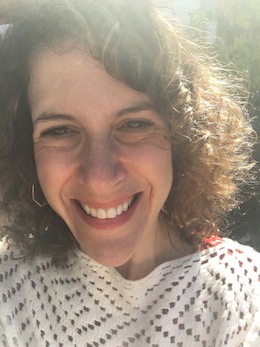
photo - Miriam Leo-Gindin
Miriam Leo-Gindin (photo courtesy)

“I’ve been doing yoga since I was 19 and it helped me get through some of my own health issues,” she told the Independent. “I founded Yoga Buggy to bring yoga to all kids and families, including those who are underserved, have financial difficulties or don’t have access for other reasons.”

The “buggy” part of Yoga Buggy refers to its mobile nature. Leo-Gindin’s classes are portable, so she is able to bring them to before- and after-school programs and to parks, so that families don’t have to travel far to participate. In addition to the Red Cross, her organization also has received funding from the B.C. Recreation and Parks Association.

Pre-pandemic, Leo-Gindin was doing around 25 classes per week all over the city, in Vancouver schools, YMCAs and neighbourhood homes, while also planning expansion into Burnaby, Richmond and Coquitlam. When COVID-19 began, she launched Community Zoom Yoga, offering two sessions a week for 12 weeks. The classes had a variety of themes, from community kindness to staying healthy, and were geared at children ages 5 through 12. There were also classes for preschoolers and teens.

“Yoga is really fun and kids enjoy it,” she reflected. “It brings out their creativity, helps build their attention span, makes them feel more confident, and can play a supportive role in dealing with anxiety, depression and behavioural issues.”

The website notes, “Yoga Buggy’s trauma-aware practitioners strive to offer as welcoming a space as possible. Choice in how to participate is always at the forefront of our classes and events. If there are any sensory, learning or additional supports that could be of benefit to any of the participants, please let us know so that we can offer as hospitable a space as possible. This information is kept private and confidential.”

Yoga Buggy has 15 active teachers and will continue its work through the fall. Leo-Gindin hopes to develop a yoga teacher training program and to start a YouTube channel to increase her reach even further with kids yoga classes. For more information, visit yogabuggy.com.

Lauren Kramer, an award-winning writer and editor, lives in Richmond. To read her work online, visit laurenkramer.net.

***

Note: This article has been updated to make clear that, while Miriam Leo-Gindin taught yoga at Vancouver Talmud Torah, she was not on staff at the school.

Format ImagePosted on August 21, 2020August 27, 2020Author Lauren KramerCategories LocalTags children, coronavirus, COVID-19, education, health, Miriam Leo-Gindin, yoga
Providing comfort and hope

Providing comfort and hope

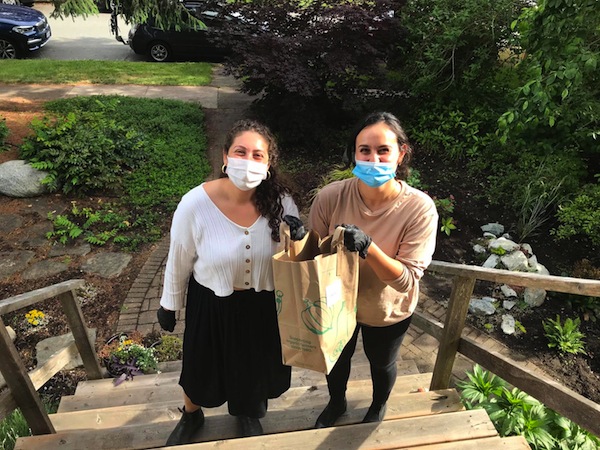
Shiva Delivers organizers Madison Slobin, left, and Becca Schwenk. (photo from Shiva Delivers)

When 25-year-old Vancouverite Becca Schwenk considered how she could make a small impact to reflect Jewish compassion, care and kindness for local Black families during the Black Lives Matter protests, the Jewish ritual of shivah came to mind. She knew the power of shivah meals to soothe people in times of grief, so she and her longtime friend Madison Slobin, 26, decided to coordinate Shiva Delivers, a collective effort whereby Jews would cook a dinner meal for a Black household in Vancouver.

“We hoped it would lighten their load and bring a bit of joy,” Schwenk said. In emails, Facebook and Instagram posts sent to members of the Jewish community, the pair noted that “this past week has been one of grieving for Black folks. Not only have Black lives been disproportionately impacted and lost due to COVID-19, but we have witnessed police officers murder Black people in broad daylight, as well as in their own homes. As Jews, we know what it feels like to experience a collective tragedy, especially in the past two years, as antisemitic violence has been on the rise. We also know how much it has meant to us when other communities have demonstrated their solidarity.”

They encouraged volunteers to “cook with your loved ones, and have critical conversations about unlearning anti-Blackness and racism. It’s a beautiful thing when we can hold one another accountable, free of judgment, and keep our hands busy in some challah dough,” they wrote.

Their message spread quickly through social media and, within 24 hours, they had volunteers signing up to cook meals. Ultimately, they received 90 meals that they were able to deliver to 48 Black families in the Lower Mainland, from Surrey to East Vancouver and the University of British Columbia.

“People made beautiful, multiple course dinners including salmon with dessert, brisket and matzah ball soup, roast chicken with vegetables and delicious cakes,” Schwenk said. “It was really clear that considerable effort went into each dish and we felt really proud to drop these meals off.”

Those preparing the meals represented the diversity of the Vancouver Jewish community and deliveries came from Orthodox Jews, mixed families, rabbis and people from all political spectrums.

“We didn’t explain much about our initiative when we sent out the notification, but people just got it,” Slobin said. “We were unified by the instinct to do tzedakah through our collective love language of delicious food. I found it beautiful that our community is so united about the idea that Black lives matter, and that they really wanted to provide comfort to Black families during this time.”

The two friends are both professionally involved in human rights work. Slobin works for Vancouver Aboriginal Child and Family Services, while Schwenk is a diversity and inclusion consultant for Cicely Blain Consulting. Even though they’re not planning to organize a second Shiva Delivers event immediately, they hope it will inspire members of the Jewish community to do more.

“This was a way for us as a community to say, ‘We know how valuable comfort and nourishment are in moments like these, and we’ve got your back,’” Slobin said. “I want to see how folks draw inspiration from this and tap into the potential for solidarity beyond the Jewish community.” She noted that other Shiva Delivers initiatives were held in other parts of Canada and in the United States.

Feedback from recipients of the meals was overwhelmingly positive and grateful. “Thank you so much for doing this,” one recipient wrote. “We are grieving such a tremendous loss of life in the middle of this pandemic, where we are isolated from our wider community and loved ones. This helps a lot.” Another recipient said the display of kindness and generosity towards the Black community at this time was especially meaningful: “It means so much to be seen in our grief, and held and cared for in this way. Such community-to-community support is so deeply valuable and I truly believe it is our way forward into a collectively liberated world. Thank you for looking out for us and sending us love in my personal favourite love language – good food!”

Reflecting on the power of their event, Schwenk and Slobin said it provided “a glimpse into a hopeful future of what solidarity can look like. It allowed us to imagine a world where traditions are not only respected, but provide cross-cultural comfort.”

Lauren Kramer, an award-winning writer and editor, lives in Richmond. To read her work online, visit laurenkramer.net.

Format ImagePosted on July 10, 2020July 9, 2020Author Lauren KramerCategories LocalTags Becca Schwenk, Black Lives Matter, COVID-19, food, human rights, intercultural, Judaism, Madison Slobin, Shiva Delivers, tikkun olam
Honouring community

Honouring community

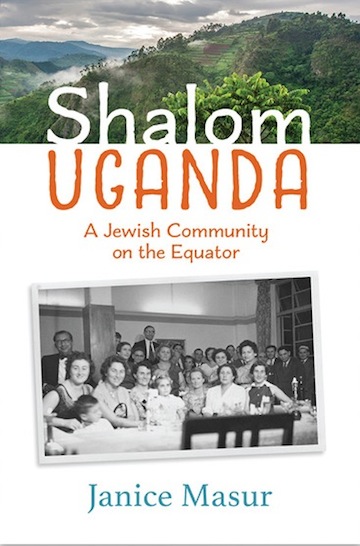
In her recently published book, Shalom Uganda: A Jewish Community on the Equator, Vancouverite Janice Masur writes about her life in Kampala, Uganda, where she moved as a child of 5 and stayed until the age of 17 in 1961, leaving just before Uganda achieved independence in 1962. The small Jewish community of Kampala has been all but forgotten, its history mostly undocumented and lost to time.

JI: How did the idea for this book come about, and when did you begin researching and writing it?

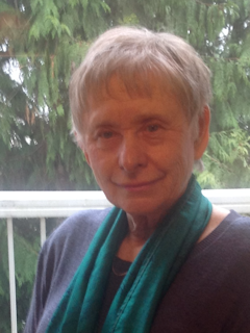
photo - Janice Masur
Janice Masur (photo courtesy)

JM: The idea originated in a modern East African history class I attended at Simon Fraser University. I began writing in 2005, traveling to interview octogenarians and nonagenarians, who [earlier in their lives] had arrived in Kampala. They included Holocaust survivors, individuals who might otherwise have gone to Kenya but could not afford to pay the required head tax, and those who arrived on work contracts of two to four years.

JI: Why was it important for you to try to capture the history of Jewish life in Kampala?

JM: I wanted to both document and honour my small Jewish community on the equator, an imploded star vanished in the diasporic galaxy. While many people are familiar with the Abayudayah who, in 1921, converted to Judaism in passive rebellion against British rule, my community is almost completely forgotten. There’s not even a cemetery to mark the existence of 23 secular families who, without a rabbi, Torah or synagogue managed to create a small, cohesive, but unreligious community. There is a great paucity of research literature on this topic and I have been told that, presently, Shalom Uganda is likely the only scholarship devoted to the Jewish community in Kampala.

JI: How did spending some of your formative years in Kampala leave a lasting imprint on your life?

JM: To this day I love mangos, and growing up in Kampala has made me feel comfortable in the company of all ethnic groups. This long-forgotten colonial world included boarding school attendance and, though much-hated, this education provided me with some excellent life lessons.

JI: Do you have any inclination to return to Uganda to visit or live?

JM: I have not had the courage to return yet, and think that perhaps memories are best left to glitter in the distance. I know that the town is much more densely populated and built up now than it was when I left, and that the red murram country roads are in ill repair.

image - Shalom Uganda book coverJI: Who do you believe will benefit most from reading this book?

JM: My intent is to place this book in all major libraries worldwide. It seems that all who have read Shalom Uganda so far seem to have learnt a new fact, enjoyed the memoir or want to tell me how their life was or wasn’t similar to mine. So, I believe that the book will be well read among a Jewish following or among scholars thirsting for information about Jewish history and life in far-flung places last century. I hope others enjoy reading my writing effort. It is a relief to have the story out in the open.

Lauren Kramer, an award-winning writer and editor, lives in Richmond. To read her work online, visit laurenkramer.net.

Format ImagePosted on July 10, 2020July 9, 2020Author Lauren KramerCategories BooksTags Disapora, history, Janice Masur, memoir, Shalom Uganda
Garden City’s new leadership

Garden City’s new leadership

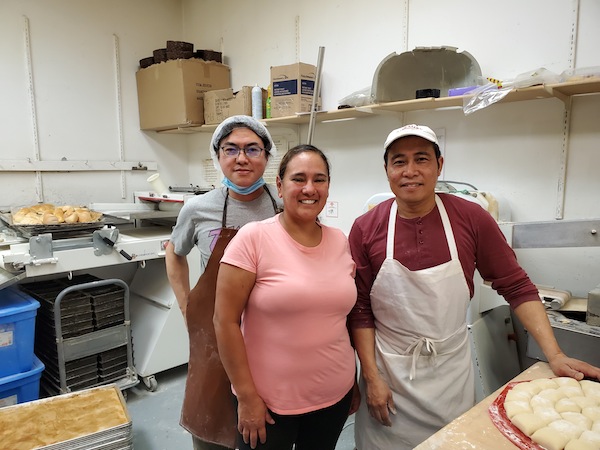
Garden City Bakery owner Steve Uy, right, with store manager Monica Flores and fellow baker Richard Caranto. (photo from Garden City Bakery)

If you’ve not set foot into Garden City Bakery for some time, you’re in for a surprise. The longtime Richmond kosher bakery at Blundell and Garden City roads came under new ownership in December 2019 and Steve Uy has infused the shop with his personal style and charisma. The interior has been updated and the bakery hums with an energy inspired by Uy’s friendliness and business acumen.

A Manila native, Uy moved to Vancouver in 1989 at the age of 20 and studied economics at Simon Fraser University. By 26, he’d returned to the Philippines, first importing Canadian food products and later immersing himself in the kitchen, where he baked steam buns for grocery stores. In 2017, when he returned to Vancouver with his wife and children, he was determined to continue baking for a living. An ingredient supplier introduced Uy to former Garden City Bakery owner Ivan Gerlach and, within two months, the transaction was complete and Uy was at the helm of the business.

“When I took over the shop, the only thing I wanted was an oven to bake things,” he admitted. “I didn’t even know what kosher was!”

Immediately afterwards, though, his kosher education began in earnest, first under Gerlach’s tutelage and then under the instruction of rabbis from BC Kosher. It was a steep learning curve but Uy was fiercely committed to two things: to respect the Jewish traditions of the bakery and to increase the availability of its signature challahs, challah buns, bagels and pita bread.

“Our goal is to be more visible and more available,” he told the Independent.

Expanding the availability of his baked breads wasn’t easy initially and, when Uy first approached Safeway at King Edward Avenue and Oak Street, he wasn’t met with open arms. “I wondered why a Safeway right beside a Jewish school wouldn’t want to carry kosher bread,” he said. It took four months of repeated meetings and encouragement before the grocery store agreed to carry Garden City Bakery challah and buns. But, as soon as they did, the items disappeared fast and the store increased their order. By January 2020, Safeway had invited Uy to set up his own bread rack in the store, where he could sell even more kosher breads, including pita, bagels and rye bread.

Today, Uy’s baked goods are available at Meinhardt Fine Foods, Stong’s Market, two Save-On Foods (Dunbar and Terra Nova), Omnitsky Kosher, Louis Brier Home and Hospital, two Superstore locations (Marine Drive and Richmond) and a FreshCo. And Uy is just getting started on his wholesale journey.

“We intend to expand into more Safeway stores, Superstores and Save-On Foods in the next year or two,” he said. “There’s a gap in the market we can fill here. Grain bread and artisan bread are popular, but I think there’s a market for kosher bread beyond the Jewish community, for anyone who appreciates a good bread. And, personally, I think challah is one of the best, most beautiful breads in the world. The dough itself is just fabulous.”

While expansion plans have been put on hold by the COVID-19 pandemic, Uy’s ambition has not tapered. A hands-on owner, he does much of the mixing and baking himself, “to keep our secret recipes and to ensure consistency of the product.” Uy also handles delivery of the products to the stores.

His baking repertoire remains much the same as it was previous to his leadership, but a couple of new items include a Filipino soft bun called Pandesal, and a sandwich loaf made from the same dough as challah but more suitable as an everyday bread. “The challah and challah buns are our mainstay and we worry that adding too much variety will bog down the bakery in terms of manpower,” he explained.

A great ambassador for the bakery, he emanates positivity and a can-do attitude. “When I bought the business, I could tell that the sales volume was not great, but I’ve always been a risk-taker and I’m confident in my own abilities,” he said. “I’m really enjoying the business, and owning a kosher bakery has exposed me to a new group of people, a different culture and unique traditions I didn’t previously understand.”

He added, “It’s my sales pitch when I go to new stores. I tell them we’re different because we’re kosher. We’re taking one step at a time, but we’re determined to open up more avenues for kosher bread in British Columbia. We know when people start believing in the product, they’ll buy it.”

Lauren Kramer, an award-winning writer and editor, lives in Richmond. To read her work online, visit laurenkramer.net.

Format ImagePosted on May 15, 2020May 14, 2020Author Lauren KramerCategories LocalTags baking, Garden City Bakery, kosher, restaurants, Richmond, Steve Uy
RCMP coins reflect diversity

RCMP coins reflect diversity

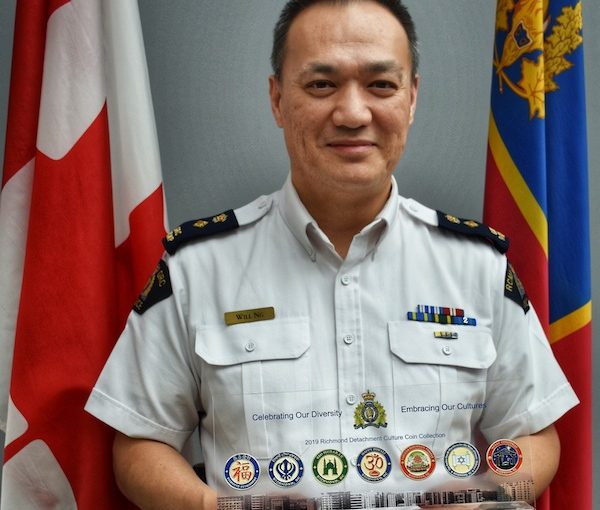
Last year, Richmond RCMP Superintendent Will Ng came up with the idea of creating a challenge coin unique to each of seven communities in Richmond. (photo by Lauren Kramer)

In 2019, Superintendent Will Ng at the Richmond RCMP came up with the idea of creating a “challenge coin” unique to each of seven of Richmond’s larger communities: Jewish, Christian, Buddhist, Hindu, Muslim, Sikh and Chinese. A coin was designed for each with the guidance of the community’s spiritual leaders.

For the Jewish community, the coin was collaboratively designed by Sgt. Kevin Krieger and Congregation Beth Tikvah’s Rabbi Adam Rubin.

“I was genuinely moved and touched when the RCMP approached me to help design the coin,” Rubin told the Independent. “The fact that the RCMP was willing to produce a challenge coin for the Jewish community speaks volumes about its commitment to diversity and inclusion, as well as its commitment to the safety, well-being and flourishing of Jews in the Lower Mainland.”

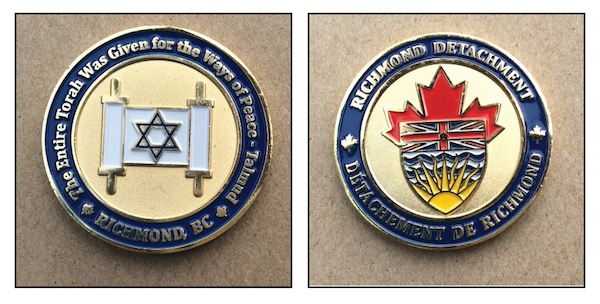
photos - The Jewish challenge coin was designed by Sgt. Kevin Krieger and Rabbi Adam Rubin
The Jewish challenge coin was designed by Sgt. Kevin Krieger and Rabbi Adam Rubin. (photos by Cynthia Ramsay)

The Jewish coin features a quote from the Talmud (in English) and an image of the Star of David and a Torah scroll. Rubin and Krieger both felt that these are widely recognized symbols of Judaism and Jewish life.

“The Torah is at the very heart of our religious life, the core of who we are as a people, while the Star of David connects us to our past and to the state of Israel,” Rubin said. “The excerpt from the Talmud, ‘The entire Torah was given for the ways of peace,’ is a heartfelt expression of an essential teaching of our tradition – that peaceful relations between people is one of the goals of religious life. Given recent events in North America, Europe and elsewhere, that claim is more important than ever.”

Some 400 coins were produced in time for Rosh Hashanah last year and have been handed out by members of the police force at special community events, both in Richmond and beyond.

“The coin represents the fact that we stand in solidarity with our Jewish community against hate and antisemitism,” said Ng. “We will do our best to protect our Jewish community to ensure they feel safe to both live and practise their religion free from hate or prejudice.”

Rubin said he is deeply grateful to the RCMP for producing a coin with such an important message. “I hope and pray that, though this challenge coin may be fairly modest in the grand scheme of things, it plays a part both in ensuring the continued flourishing of Jews in Canada, and in helping to reinforce the crucial value of peace.”

Cpl. Adriana Peralta, who works in Richmond RCMP’s media relations, said the coins are commonly used in the RCMP as a token of appreciation for community service, or as a small gift to individuals who have served their community. “We have a large faith-based community in Richmond and our detachment came up with this particular series of coins as a way to connect with our interfaith partners and celebrate the rich diversity of our cultural groups,” she explained.

The RCMP has created a display of the seven coins at the Richmond detachment, where they are positioned below an image of the Richmond skyline.

Lauren Kramer, an award-winning writer and editor, lives in Richmond. To read her work online, visit laurenkramer.net.

Format ImagePosted on February 28, 2020February 26, 2020Author Lauren KramerCategories LocalTags coins, interfaith, RCMP, Richmond
Goldene Medina comes here

Goldene Medina comes here

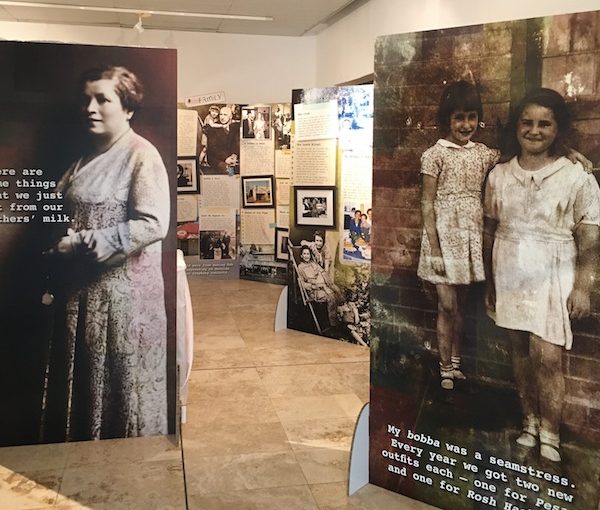
The Goldene Medina exhibit is designed to have the feel of a scrapbook album, to have come from any Jewish South African’s family memoir. (photo from South African Jewish Museum)

The Goldene Medina exhibit arrives in Vancouver July 29 for two weeks. A celebration of 175 years of Jewish life in South Africa, the exhibit was displayed in South Africa, Australia and Israel prior to arriving here, where it is making its North America debut at Congregation Beth Israel. Local Jewish community member Stephen Rom, who is from South Africa, saw it for the first time in Sydney and was instrumental in bringing it to the city.

“You need to remember your past to engage in the present,” reflected Rom. “I was struck by the level of professionalism of this exhibit, which was produced by the South African Jewish Museum in Cape Town. What’s different about it is the way the stories have been written. Nobody is named or personally identified. This is the story of all Jews in South Africa, the community as a whole.”

The Goldene Medina was the Jews’ name for Johannesburg when they arrived during the gold rush in 1886. “This exhibition has soul – it’s not a dry exhibition of facts and figures,” noted Wendy Kahn, national director of the South African Jewish Board of Deputies. “It’s one that tells real stories of families that have been living in South Africa for 175 years.”

“This is a social history,” agreed Gavin Morris, director of the museum, “the story of families and people and their experiences as South Africans and as Jews for 175 years, from our forefathers arriving to contemporary Jewish South Africa. Everything is taken from unpublished memoirs, articles and out-of-print books, to give the exhibit a sense of a scrapbook album, of any Jewish South African’s family memoirs. Our goal was for people to find their own stories in similar stories.”

The stories are excerpts written in the first person and accompanied by photographs old and new. One excerpt, titled “My Mother’s Table,” reads, “At my mother’s table, ‘being full’ was never a reason to stop eating. Some of the many reasons to have some more included: ‘I cooked this especially for you because I know you like it,’ ‘you can’t put so little leftovers back into the fridge,’ ‘it’s freshly made,’ and ‘you don’t like my cooking.’ Refusing more was to snub the generosity and abundance that was on offer. Eating was proof that you were loved and that you knew how to love back.”

Another, titled “Cubs,” reads: “After my mom realized that I only knew Jewish kids, she sent me off to Cubs – not exactly your standard Jewish activity. I came home with my first friend and said, ‘Mom, isn’t it wonderful? Here’s my first friend from Cubs and guess what – we’ve got the same Hebrew teacher!’ He was the only other Jewish kid there and we found each other. My mother gave up after that.”

A third is titled “A Surprise Guest”: “What is the epitome of Jewish chutzpah? Inviting the president of the country to attend your bar mitzvah. And what is Jewish mazel? When the president actually accepts. The bar mitzvah boy delivered his handwritten note to a security guard outside [Nelson] Mandela’s Houghton estate. He hoped to get a card from Mandela in return. Instead, his parents received an official call to say the president will attend. On the day, President Mandela arrived and sat at the main table, between the bar mitzvah boy and his father.”

The excerpts are thought-provoking, poignant, entertaining, informative and never boring. And the photographs are deeply intriguing, telling a story of their own – a timeless Jewish story that has relevance to all Jews whose ancestors have known immigration and resettlement.

Accompanying the Goldene Medina in Vancouver will be the exhibit Shalom Uganda: A European Jewish Community on the Ugandan Equator 1949-1961, curated by Janice Masur.

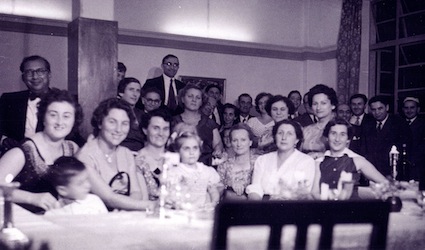
photo - The Kampala Jewish community gathers for visit of Chief Justice Joseph Herbstein from South Africa, 1958. Gifted by Ilsa Dokelman, in 2005
The Kampala Jewish community gathers for visit of Chief Justice Joseph Herbstein from South Africa, 1958. Gifted by Ilsa Dokelman, in 2005. (photo from Janice Masur)

“As a child, I lived in this remote European Jewish community on the shores of Lake Victoria in Kampala, Uganda, under British Imperial rule, with no rabbi or Jewish infrastructure. Yet, this tiny community of 23 families and 20 children (15 of whom were born in Kampala) identified as Jews and formed a cohesive group that celebrated all the Jewish festivals together,” explained Masur. “Now that most references to Jews in Uganda pertain to … Abayudaya Jews, I want this history – my story about my Ashkenazi Jewish community in Kampala – to be remembered in the Jewish Diaspora.”

The photos and stories that comprise the Ugandan display are, said Masur, “a testament to a determined but isolated group of Jews who were secular in a [remote] place but upheld their Jewish identity and traditions as best as was possible,” given the lack of religious, educational or cultural Jewish institutions. (For more about the Ugandan Jewish community in which Masur grew up, click here.)

The July 29 opening night of the Goldene Medina starts at 7:30 p.m. at Beth Israel, where the display will be up until Aug. 14.

Lauren Kramer, an award-winning writer and editor, lives in Richmond. To read her work online, visit laurenkramer.net.

Format ImagePosted on July 12, 2019July 10, 2019Author Lauren KramerCategories LocalTags Beth Israel, Goldene Medina, history, Janice Masur, photography, South Africa, Stephen Rom, Uganda
Jerusalem’s Henderson

Jerusalem’s Henderson

Adam Henderson stars in Jerusalem, at the Jericho Arts Centre June 7-30. (photo from United Players)

The play Jerusalem by Jez Butterworth sees its debut in Vancouver this month at the Jericho Arts Centre and its lead actor, Adam Henderson, is a member of the Vancouver Jewish community.

Henderson grew up in New York City, moved to Winnipeg as a teenager and, after studying and working as an actor in England for 20 years, relocated to Vancouver in 2000. “I wanted to have a more balanced life than was possible in England, with more time to raise a family,” said Henderson, who is married with two children at home ages 5 and 12.

Asked about his Jewish identity, he said he describes himself as “a New York Jew from a mixed upbringing, but Jewish by birth and culturally interested.”

Henderson’s acting career began at the Manitoba Theatre Centre when he was 17 and has taken him all over the world, including to Israel, where he starred in War Shepherds in the 1980s. Today, in addition to doing live theatre, he teaches accents and dialects at the Vancouver Film School, and voice acting at the University of British Columbia. As a dialect coach, he specializes in helping other actors with their accents and dialogues, and he records audiobooks, too. “Vancouver doesn’t easily support actors, so we have to do other things to make our acting happen,” he explained.

As he rehearsed for Jerusalem – a play that references a poem by William Blake and not the holy city of Jerusalem – he was also working on Altered Carbon, a television show for which he’s coaching an actor from Berlin to sound more American. “It’s exciting for me because my family is originally from Berlin and I have a strong connection with the city,” he told the Independent.

Jerusalem, presented by United Players, is about a squatter called Johnny “Rooster” Byron and his retinue, and has a cast of about 16, Henderson said. “It’s quite a remarkable play and was made famous by Mark Rylance, one of my heroes, who played the role of Rooster. It’s a great adventure taking on a role that he’s put his stamp on, and it’s both intimidating and inspiring, because he sets the bar quite high!”

Henderson said anyone who enjoys classical theatre will enjoy Jerusalem, a play rich in language and “quite epic.” As for his lifestyle move to Vancouver almost two decades ago, that’s worked out well, he added.

“I have a successful family and I can organize my schedule to be there to raise my kids. In London, I was constantly busy with my career and, though it’s an exciting place to work, it’s harder in that environment to have a stable life. In Vancouver, I don’t travel much and there’s more contact with nature, which I find calming.”

Jerusalem runs June 7-30 at the Jericho Arts Centre. Tickets, which range from $22-$28, are available at the door or online at unitedplayers.com.

Lauren Kramer, an award-winning writer and editor, lives in Richmond. To read her work online, visit laurenkramer.net.

Format ImagePosted on June 7, 2019June 5, 2019Author Lauren KramerCategories Performing ArtsTags Adam Henderson, Jericho Arts Centre, United Players
Siblings return to Kochi

Siblings return to Kochi

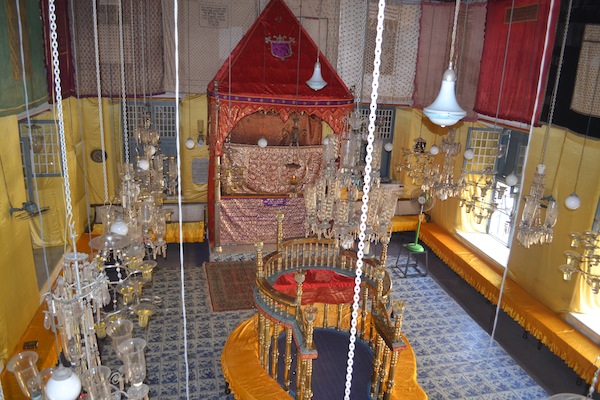
The interior of Paradesi Synagogue in Kochi, India. (photo by Lauren Kramer)

Dec. 6 marked an emotional homecoming for Canadian siblings Linda Hertzman and Kenny Salem. The pair were among some 180 Jews who returned to their birthplace in Kochi, India, to mark the 450th anniversary of the Paradesi Synagogue in the neighbourhood known as Jew Town. Three generations of families gathered from Israel, Australia, Canada and England to celebrate the milestone. They walked the ancient stone pathway of Synagogue Lane, spoke their native tongue of Malayalam and congregated in the synagogue for a festive celebration of the Jewish life that once flourished in this corner of southern India.

The festivities were tinged with sadness, however. For many, it would be their final visit to the beautiful Paradesi Synagogue. The shul is unique for its colourful oil lamps and a Torah scroll decked in a gold crown that was gifted to the community in 1802 by the maharaj of Cochin. (Kochi is the preferred term for the city formerly called Cochin.) The handpainted Chinese tiles on the synagogue floor have long since emptied of worshippers and the Jewish community of Jew Town now numbers just five – the oldest of them age 96. It’s tourists that stand beneath the oil lamps these days, visiting from dawn to dusk to marvel at the ancient Jewish history and try to comprehend its relevance. Opportunities for congregational prayer have been rare since most of the community left for other parts of the world from 1948 onwards.

On the Shabbat following the 450th anniversary, however, tourists were turned away from the Paradesi Synagogue and the sanctuary again echoed with Jewish prayer. The pews were filled with women in colourful dresses, reaching out to touch the ancient Torah scrolls as they were lifted joyfully from the aron hakodesh (holy ark) for morning prayers. Tears streamed down the faces of Jews for whom the synagogue was filled with rich memories. There were children who were seeing their families’ history for the first time and elders who were stepping into the synagogue for the last time. Adults in their 60s recalled their childhood memories of watching their parents pray in the synagogue, of riding their bicycles around the narrow roads of Mattancherry and of the warm, deeply religious and meaningful Jewish life that existed in Jew Town.

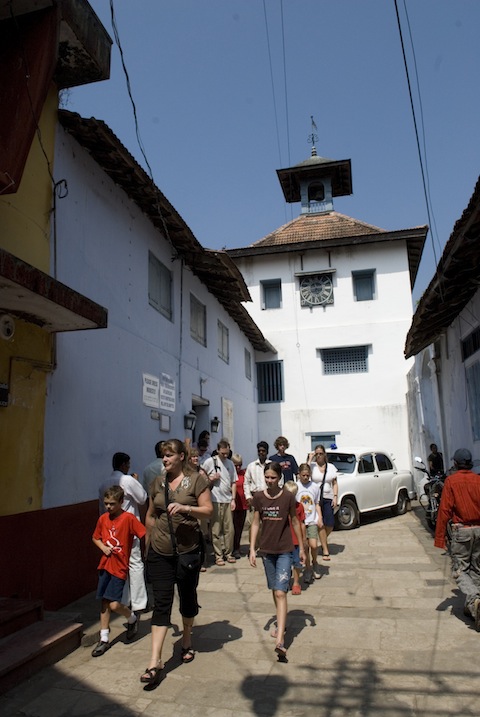
photo - Paradesi Synagogue, also known as Mattancherry Synagogue, is the building in the back
Paradesi Synagogue, also known as Mattancherry Synagogue, is the building in the back. (photo by Lauren Kramer)

The vibrant hub of Jewish life in Kochi, Jew Town was home to three synagogues, each serving different segments of the community. The “synagogue in the middle,” with a star of David still etched in its concrete, is now a repurposed building, while the southernmost shul is a ramshackle 900-year-old structure, its rafters occupied by nesting pigeons. Indentations on the side of many of the doors of homes and businesses in Jew Town mark the spot where mezuzot used to announce a Jewish home and the large Jewish cemetery a few minutes’ walk from the shul is unlikely to be filled with many more graves as the years roll by. The Jewish life that flourished here has become a lucrative business for antique dealers and souvenir shops selling scarves and trinkets, retailers loitering outside and using all their powers of persuasion to bring shoppers in.

Hertzman, who lives in Richmond, B.C., and Salem, from Richmond Hill, Ont., were the first guests to check into what was their family home, recently transformed into a boutique hotel called A.B. Salem House. It was named for their late grandfather, Abraham Barak Salem, an attorney known as the “Jewish Gandhi” for his negotiations with Israel that enabled the Jews of Kochi to make aliyah.

Kenny Salem left Kochi at age 25 in 1987 and returns to the city annually to see his childhood friends. “It was good to have everyone back here in Jew Town,” he said. “Friends and family were walking in and out of our house all day long, just like old times, when my mother had her door open to everyone. But the sad part is that, in the aftermath of the celebrations, Jew Town is silent once again.”

There are plans to fill that silence in the near future. David Hallegua, a spokesperson for the Cochin Synagogue Trust, announced plans to build a museum dedicated to the history of the Kochi Jews in the hall above the synagogue.

“It’s a dwindling community,” admitted Salem. “So, when there are no longer any Jews living here, we will hand the management of the synagogue and cemetery over to the Archeological Department of India. We need to tell the story of the Jewish community that once lived here and pass on this message to future generations.”

Lauren Kramer, an award-winning writer and editor, lives in Richmond. To read her work online, visit laurenkramer.net.

Format ImagePosted on April 12, 2019April 10, 2019Author Lauren KramerCategories TravelTags history, India, Judaism, Kochi, Mattancherry, Paradesi Synagogue
Raising Jews with Israel literacy

Raising Jews with Israel literacy

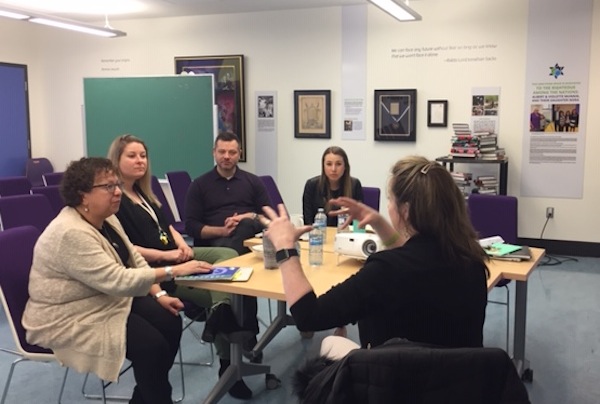
Tal Grinfas-David of the Centre for Israel Education speaks with educators at Vancouver Talmud Torah last month. (photo from VTT)

Educators at Lower Mainland Jewish day schools had the opportunity to consider the relevance of Israel literacy last month, when Tal Grinfas-David, the Centre for Israel Education’s day school specialist, was in town the week of Feb. 18 to deliver a talk on the subject and work with local teachers and administrators. Her keynote speech, titled Teaching Modern Israel – Challenges and Opportunities, was part of a community professional development day.

The CIE, which is based in Atlanta, Ga., received a grant for a three-year initiative to work with nine Jewish day schools across North America and help them enhance their Israel education efforts. Vancouver Talmud Torah and King David High School are two of the nine schools and Grinfas-David spent a day coaching educators at each of them. She will return for the next two years to reinforce the changes CIE is promoting.

The issue, she said, is that, across North America, many graduates of Jewish day school education don’t have enough Israel literacy to grapple with the world, to justify a strong connection to Israel and to inform their Jewish identity.

“The concept we’re promoting is to turn Israel education into something all teachers can support, not just Jewish studies faculty,” she told the Independent. The desire is there, she added. “The Vancouver community is very supportive and wants to see Israel education boosted and incorporated into different subject areas. But it’s going to be a long-term process.”

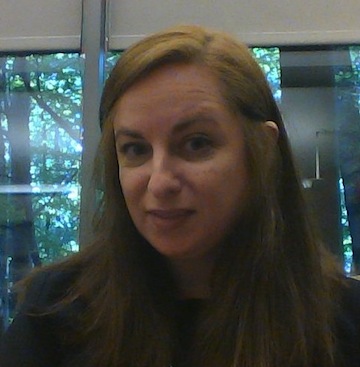
photo - Tal Grinfas-David
Tal Grinfas-David (photo from Centre for Israel Education)

No stranger to education, Grinfas-David comes to her role with a PhD in curriculum and instruction and 25 years as an educator in Israel and the United States. Over the next three years, she will move between Jewish day schools in Denver, Los Angeles, Detroit, New Jersey and Vancouver, coaching their educational teams.

“We’re thrilled to have this grant to visit the individual sites and get to know the different schools’ cultures,” she said. “Each school is different and unique, with strengths and challenges, and this grant allows us to customize and tailor our offerings to specific communities.”

The goal of Israel literacy is to graduate Jewish students who understand the relevance of Israel in their lives and feel confident in their knowledge. They need this, she said, because understanding Judaism means understanding it’s not solely a religion.

“It’s also a belonging to a peoplehood, a nation with a Jewish homeland,” she said. “To understand modern Israel today, we have to see it as a continuation of our Jewish history.”

Grinfas-David said she would need three days to address all the ways that Israel literacy counts significantly in the life of a Jew.

“Israel impacts how Jews live in other countries, like the U.S. and Canada, where we are free. Students at our Jewish day schools have never experienced powerlessness or persecution, as they have the good fortune of being born here and now, with many freedoms. But that’s all the more reason to have them understand it was not always like this for Jews.

“Being part of a nation means there is an obligation to support your people, because of your fortune,” she continued. “There’s a calling to engage and to reflect on what Israel means for these students in their lives. Israel literacy is about having a repertoire of primary sources under your belt, so that when students leave the school setting and hear different narratives, they’ll be critical consumers of information, and they’ll know the facts they need. At CEI, our goal is to give them the ability and the opportunity to have the confidence to be critical consumers.”

Lauren Kramer, an award-winning writer and editor, lives in Richmond. To read her work online, visit laurenkramer.net.

Format ImagePosted on March 8, 2019March 6, 2019Author Lauren KramerCategories WorldTags CIE, Diaspora Jews, education, Israel, King David High School, Tal Grinfas-David, Vancouver Talmud Torah

Helicopter parent’s confession

A couple years ago, I sat smugly through a lecture on helicopter parenting, feeling fully confident that nothing spoken during that time applied to me. Who were these overly involved parents who just couldn’t let go, even once their kids had left for college? They were nothing like me, I thought. I’d been an early advocate of children’s independence in my community, encouraging my kids to navigate Vancouver’s public transit alone at the age of 12. My 9-year-old daughter walks around Steveston Village with her best friend and my 15-year-old girls have flown to the United States on their own. I thought I had the helicopter mom in me under control – until my son left for college.

That’s when my over-protective mama-bear instincts kicked into gear, where they remain on high alert. How do you protect your child when they’re so far from home? And where is the line between supportive help and concern, and running your child’s life instead of allowing them to live it on their own? These days, I ponder these questions a great deal, my stomach churning with anxiety as I contemplate all the unseen dangers my son could encounter in the absence of his mother’s watchful eyes and words of cautious advice.

Yesterday, a phone call. “Mom, the craziest thing happened as I was walking to school this morning,” he declared. “I was crossing the road at the traffic lights when a hard tug on my backpack pulled me backwards. I stepped back just as a car ran a red light, flying past inches away from me. I was so close to being hit!”

The vision torments me as I write this, my child so close to life-threatening danger. I worry now about more cars hurtling at breakneck speed on those icy roads that separate his dorm room from his lecture halls. About his reading break, when he’ll be a passenger on the icy 401, his safety at the mercy of drivers I’ve never met. About his plans to go ice fishing in the Muskokas – what if the ice breaks?

This precious, precious child of mine is so excited to experience the world in all its beauty, to challenge his personal limits and dive deep into the friendships and opportunities that surround him. I want all this for him, of course. He is growing, thriving and learning with every turn in this journey far from home. Yet I cannot stop the worry for his vulnerability, nor the fear of “what if?” that pesters my mind incessantly. If that’s the whirring of helicopter parenting, then I’m guilty as sin.

As parents, it’s not always easy to know when to step back and when to be actively involved, particularly when our children head off to college. It’s natural for us to want to protect our kids, said Julie Lythcott-Haims, who published the book How to Raise an Adult after witnessing years of helicopter parenting when she was dean of freshmen at Stanford University. “We love our children fiercely and we’re fearful about what the world has in store for them. But we make the mistake of … being like a concierge in their lives.” (See jewishindependent.ca/ dont-helicopter-parent.)

If I’m a concierge in my kids’ life, let it be known I’m a darn good one. Case in point: my son recently signed a lease on an apartment with a friend-who-turned-out-not-to-be-a-friend, and needed to get out fast. The management company delivered a virtual shrug when he asked for his money back. “We’re not in a position to do refunds,” they told my 18-year-old. At that age, you don’t necessarily know how to respond to a statement like that. But, when you’re 46, you do. You call the company’s chief financial officer and let them know in no uncertain terms that a refund needs to be forthcoming. Posthaste. Voila, the cheque arrived.

I canvassed a mom’s group to ask for their definitions of helicopter parenting, hoping they might help identify the line between caring, support and over-involvement in the lives of college-age kids. You might be a helicopter parent, they suggested, if:

  • You know your kids’ passwords so you can register them on time for courses.
  • You have been known to call your kids’ instructor/professor, suggest they graded an essay, test or exam unfairly and insist that they reconsider the grade.
  • You proofread and edit your kids’ college essays because you want them to get the best results possible.
  • You feel compelled to step in and prevent your kids from making mistakes.

I suspect we all want to shelter our children from making awful, life-changing mistakes, so we try to gently guide them around the sharp curves of young adulthood, intervening perhaps too often in our efforts to break their fall. There is deep love in this act, a love that stretches way back to their infancy and embeds us with the certainty that our children are our richest legacies, irreplaceable treasures we want and need to hold close. There will be times when we teeter on the line of over-protectiveness, when the whirring sounds of helicopter parenting will be obvious to those around us. But the best we can do is walk the line, treading with the utmost care. Trust me, it’s much harder than it sounds.

Lauren Kramer, an award-winning writer and editor, lives in Richmond. To read her work online, visit laurenkramer.net.

Posted on February 22, 2019February 21, 2019Author Lauren KramerCategories Op-EdTags children, lifestyle, parenting

Posts pagination

Previous page Page 1 … Page 4 Page 5 Page 6 … Page 15 Next page
Proudly powered by WordPress