
Skip to content
  • Home
  • Subscribe / donate
  • Events calendar
  • Business Directory
  • FAQ
  • News
    • Local
    • National
    • Israel
    • World
    • עניין בחדשות
      A roundup of news in Canada and further afield, in Hebrew.
  • Opinion
    • From the JI
    • Op-Ed
  • Arts & Culture
    • Performing Arts
    • Music
    • Books
    • Visual Arts
    • TV & Film
  • Life
    • Celebrating the Holidays
    • Travel
    • The Daily Snooze
      Cartoons by Jacob Samuel
    • Mystery Photo
      Help the JI and JMABC fill in the gaps in our archives.
  • Community Links
    • Organizations, Etc.
    • Other News Sources & Blogs
  • JI Chai Celebration
  • JI@88! video

Recent Posts

  • SFU honours Gloria Gutman
  • Lifting people’s spirits
  • Wedding a ray of light
  • Indigeneity and Zionism
  • Rule of law broken: councilor
  • Football and its roles
  • The burden of defence
  • Fish Café returns after fire
  • All right in what goes wrong
  • Nuns & mermaids at TUTS
  • Camp offers holiday retreat
  • Students and mentors inspire
  • Once-in-a-lifetime trip
  • 100 dancers, one heart
  • Money for the sciences
  • What “Jewish food” means
  • Have a cookie, schnitzel too
  • Federation now across BC
  • Israel fighting for its existence
  • Deal strengthens Iran
  • Patriotic belonging diminishes
  • A campaign to engage
  • Upstanders’ first live event
  • Responding to Carney
  • Having your own home
  • Music a family tradition
  • Musical to warm heart
  • Community milestones … June 2026
  • Sharing her passion for Israel
  • Or Shalom reopens its doors
  • JFS from past to future
  • Need holistic approach
  • Sharing stories, advice
  • Journalist shares fears
  • Skills to live together
  • Road to independence

Archives

Follow @JewishIndie
image - CJN box ad Rockowers 2026

Byline: Lauren Kramer

Raising funds for basics

Raising funds for basics

Phillipa Friedland is trying to raise funds to sustain basic facilities at the Population and Immigration Authority in B’nei Brak, where thousands must go to renew or obtain visas to remain in the country. (photo from gofundme.com/restrooms-for-refugees-israel)

When she left Vancouver for Israel more than a year-and-a-half ago, Phillipa Friedland, 54, became involved in social activism. Today, she is trying to raise funds to sustain basic facilities like toilets and seating at the Population and Immigration Authority (PIBA) in B’nei Brak, where thousands must go to renew or obtain visas to remain in the country. The Independent interviewed Friedland recently to find out more about her involvement.

Jewish Independent: When did you learn about the work of the Population and Immigration Authority?

photo - Phillipa Friedland
Phillipa Friedland (photo courtesy)

Phillipa Friedland: I met an Eritrean refugee at the passport office when my daughter Eli and I lived in Israel in 2014, and we became friends. At the end of February, the Israeli government abruptly closed the South Tel Aviv PIBA office and left a note in Hebrew, not the first language of any refugees, stating that the PIBA office had moved to B’nei Brak, to a very large, barren parking lot in an industrial part of the city. I went with my friend to hand in his form and he waited in line six times, just to hand in the paper.

JI: You’re not happy with the facilities PIBA is providing. Why?

PB: The B’nei Brak municipality refuses to provide shade, toilets, water or seating for those who wait in line. Once refugees gain entry, there are ablution facilities and seating. However, there are approximately 40,000 refugees and the only places to apply for or renew visas are in Eilat and B’nei Brak. Knowing that thousands of people would converge on these centres, the government should have done infrastructural planning to accommodate such numbers.

Activists at the site have confided that, since the government closed the detention centres and refugee prison, they are using PIBA as a “soft” place to repel the refugees. They can no longer threaten them with prison or repatriation to a third African country, since these negotiations fell apart when it was revealed that these are not safe-haven countries for refugees. So, the goal is for the refugees to become so frustrated and disheartened by the visa process that they will voluntarily leave.

JI: How many asylum seekers are using PIBA in B’nei Brak, and where are they from?

PB: Most Sudanese have left Israel, so most of the PIBA users are from Eritrea. Some days, there are over 1,000 people there, though, in recent days [in late May], the number has dropped dramatically, as more refugees are given visas. Families are provided with six-month visas and single men are given two-month visas. They are required to take off work and are not paid when they leave to wait for a visa. By contrast, in many countries, a visa application can be obtained online.

JI: Are these asylum seekers also refugees, or a mixture of both?

PB: The Israeli government says they are all economic migrants. It has granted asylum to 11 people – a very poor showing for a country of refugees ourselves. The government … considers them infiltrators. In fact, the education minister declared openly on public TV that the migrants are infiltrators. It stuns me that a nation that promised to never forget has an education minister that has forgotten the persecution the Jews experienced.

JI: What are you doing at PIBA?

PB: After visiting the PIBA in B’nei Brak, I was compelled to take action. I was reviled by apartheid South Africa, and taught about the perils of discrimination and racism for 15 years at the Vancouver Holocaust Education Centre. I could not just watch quietly.

I decided to sponsor two toilets for a month in the barren parking lot where the refugees line up. These cost $600 per month. I also bought 10 benches, seating for only 50 people. Unfortunately, this is all that I could personally afford.

The toilets were so direly needed that, after three days at the site, I paid additional fees to have them emptied, as the company I lease them from only empties them once a week. Myself and an Eritrean lady, Sabrina, clean them when we are on-site, replenish the toilet paper and spray them with toilet spray.

I realized that I could not sustain this expense every month on my own, as I am an immigrant and earn a salary commensurate with working in a nonprofit organization. So I decided to start a GoFundMe Campaign called “Restrooms for Refugees.” So far, I have raised [almost $3,000]. The Good People Fund run by Naomi Eisenberg in New Jersey is donating $1,800 over three months. [gofundme.com/restrooms-for-refugees-israel]

The B’nei Brak site has been running very effectively thanks to amazing Eritrean volunteers who ensure the lines run smoothly and that people get a turn. One of them is Michael, who left Eritrea after 15 years in forced military conscription; he had 10 years still to complete. His back has many scars from being tortured in the military. He left his wife and four children behind and hopes to come to Canada, where his brother is living.

JI: What do you want Jewish Vancouverites to know about this? Why is it important to you personally, and why should it be important to us?

PB: I believe that, as Diaspora Jews, we have rose-coloured glasses on when it comes to Israel. I love and support Israel, however that does not mean I support racist and discriminatory government policies. Eighteen Jewish U.S. Democratic senators spoke out about Israel’s refugee policy and 400 rabbis, pilots, teachers and other groups spoke out vehemently against the deportation policy the government was adopting. Since Israel first accepted and then rejected the UN’s offer to Israel regarding the refugees, there has been no new Israeli policy. The refugees essentially live in limbo, renewing their visas and being treated with no dignity.

I believe we should treat everyone with dignity. I know that, being such a small country, Israel cannot open its doors to an unlimited number of people. However, those strangers within our Jewish borders should be treated with care, as commanded 37 times in the Torah.

Lauren Kramer, an award-winning writer and editor, lives in Richmond. To read her work online, visit laurenkramer.net.

Format ImagePosted on July 13, 2018July 11, 2018Author Lauren KramerCategories IsraelTags asylum seekers, B'nei Brak, fundraising, human rights, immigration, Israel, refugees
More literary than practical

More literary than practical

As a longtime reviewer of recipe books, I’ve come to realize there are two distinct categories in this genre. One is the practical cookbook you leave open on your kitchen counter while cooking. It delivers bright, inspiring images that lift you out of the doldrums of your everyday repertoire and offers concise, clear instructions using as little text as possible. Bottom line: it’s super-practical. The second kind is more of a bedside reading book, more literature than cooking aid. It comes with lengthy introductions and reflections on what particular recipes mean to the author and it’s not a book to pull out if you need to bake a quick batch of chocolate chip cookies for the last-minute guests about to arrive or the kids coming home from school.

This latter category perfectly fits Daphna Rabinovitch’s cookbook The Baker In Me (Whitecap Books, 2016), which received the top prize in the single subject cookbook category at the Taste Canada Awards earlier this year. The Jewish author of this 478-page tome has superb credentials that include director of Canadian Living magazine’s test kitchen, studies in Italy and co-authoring a host of other books, which have received accolades from culinary and literary critics. In this, her first solo book, she aims squarely at the ordinary baker and spends many pages explaining the basics for successful results making cookies, bars, chocolate, muffins, breads, cakes, pies and other desserts.

You’ll want to read these essays slowly and quietly before you tackle the recipes, which is why I recommend this book as good bedside reading. Thanks to Rabinovitch’s many years in the field, she has a plethora of baking tips and gems to share. She offers pragmatic advice on the art of measuring ingredients, the variety of cooking techniques (convection versus radiant) and what they are best used for, when to use chocolate instead of cocoa powder, and how to make your biscuits flaky.

Jewish readers will enjoy her challah, rugelach, Rosh Hashanah honey cakes and Passover recipes. Kid-size bakers will love the oversized peanut butter and oat cookies, the fudgy brownies and the peek-a-boo chocolate cupcakes. And grownup bakers will enjoy the challenge of a chocolate devil’s food cake with chocolate buttercream, One Damn Good Cookie, and the chocolate truffle pecan tart with spun sugar dome. There is lots here to impress friends and family with special occasion and everyday treats. But, as the title suggests, this cookbook is all about baking, so don’t approach it with a dieter’s caution. This is high-calorie fare. We’re talking the full mix of butter, sugar and chocolate with no concessions for waistlines.

Rabinovitch’s recipes aren’t that complicated or out of reach for a beginner baker, but there’s a fair amount of reading involved if you want to be sure you’re baking them the right way. For bakers who are keen learners, her expert viewpoint and strategic advice will add volumes to their knowledge of baking. For bakers who just want to get straight to the recipe with no lengthy reading process, this may not be the right choice for a handy kitchen companion.

Lauren Kramer, an award-winning writer and editor, lives in Richmond. To read her work online, visit laurenkramer.net.

Format ImagePosted on July 13, 2018July 11, 2018Author Lauren KramerCategories BooksTags baking, cookbook, Daphna Rabinovitch
On a mitzvah mission

On a mitzvah mission

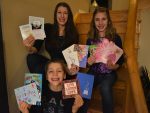
Jessica Cohn and her kids, Tamara and Jeremy, created the Friend Send to help others across Canada. (photo from Jessica Cohn)

Last October, Jessica Cohn, a Vaughan, Ont., mother of 10-year-old twins Tamara and Jeremy, was scrolling through Facebook when she found messages by other mothers that disturbed and saddened her.

“They were saying their kids were down because no one had come to their birthday parties,” Cohn recalled. “I told my kids and they immediately wanted to attend those parties, which was impossible because the children were located all over Canada.” Instead, the trio opted for the next best thing: to send those children birthday cards so they would feel less alone and more cared for. They got to work right away.

That initiative turned into the Friend Send, the Cohns’ personal mitzvah mission, which quickly extended beyond birthday cards to children 12 and under experiencing bullying or feeling friendless and lonely. Cohn and her children have sent 240 cards across the country.

“My kids have written on almost every card, and they love doing this,” she told the Independent. “We have a huge card box and they go through it to select a card they think a particular child would like. Once they’ve written their message, I add my own.”

When Annie Miron first heard about the idea, she was skeptical, but the Nanaimo mom was worried about her daughter, Trinity, 12, who was having a hard time making friends. “People were picking on her behind her back and she was really depressed, thinking all kids are mean,” she said. “A couple months ago, when I told Jessica what Trinity was going through, she sent a card and a letter in the mail.”

The card was deeply meaningful to her daughter, said Miron. “It told her that she mattered and that people cared about her, so she understood there are nice kids out there. After that, her attitude changed drastically and everything turned around for her at school. This positive message really does work and Jessica and her children saved our family.”

Dawn Chouinard, a Westbank, B.C., mother, has also seen a change in her 13-year-old daughter, Kate-lynn Grist, who was being bullied at school and was feeling friendless.

“She was so ecstatic when she received a card and it made such a difference to know that people were rooting for her,” Chouinard told the Independent. “The Friend Send is a really good idea because it can make a big difference to a child when a stranger gives you that boost, and it doesn’t come from mom or dad. Kate-lynn is a little more confident at school now, and I’ve noticed that, if she sees someone else struggling, she might be more inclined to offer them a word of encouragement now.”

Cohn has used Facebook to spread word of the Friend Send, and has heard some heartbreaking stories of children experiencing harrowing times. It’s her hope that the cards will give them the lift they need, the reminder that there are caring people out there offering support and encouragement, and that the bullying or isolation they are experiencing on the playground or sports field are not representative of the world at large.

“What surprised me was how many requests we get for cards for boys – way more than what we get for girls,” she said. She shared the experience of Cody, a child who started playing hockey later in life because his parents couldn’t afford the lessons. He was less skilled than the other kids and, as a result, they wouldn’t let him join their game. “It made me so sad, because he loved the game so much, and for him to be excluded because he was less skilful was heartbreaking,” Cohn said.

“I spend a long time talking with the parents on Facebook, especially the mothers, because I find they often don’t have anyone to support or understand them. People don’t understand how hard it is to see your child coming home crying every day. When their children receive some encouragement, this support means so much to them.”

If there’s one message Cohn wants to convey to parents of children who are being bullied, it’s not to be embarrassed about what is going on. “I wish I could tell every parent out there how special their children are, and how much love and respect they deserve,” Cohn said.

To find out more about the Friend Send, to request a card or to become a card-writer, visit facebook.com/thefriendsend.

Lauren Kramer, an award-winning writer and editor, lives in Richmond. To read her work online, visit laurenkramer.net.

Format ImagePosted on May 18, 2018May 16, 2018Author Lauren KramerCategories NationalTags bullying, Friend Send, Jessica Cohn, tikkun olam
Hope, pride and belonging

Hope, pride and belonging

Twenty-three students from Metro Vancouver joined more than 10,000 other students in this year’s March of the Living. They are pictured here with Jewish Federation of Greater Vancouver board chair Karen James, far left, and trip chaperones Susan Siklos, standing to James’ left, and Charlotte Katzen, standing fourth from the right. (photo by Jennifer Freedman)

Twenty-three Grade 11 and 12 students from Metro Vancouver headed to Poland and Israel on the annual March of the Living last month, and nine of those were students from public schools. In the past, Vancouver has sent about 14 students every couple of years. The increased numbers this year were the result of outreach by a volunteer committee headed by Charlotte Katzen.

“March of the Living is a life transforming experience,” she told the Independent. “Every participant will tell you that. It strengthens students’ Jewish identity, their understanding of who they are as Jews in the world today and their commitment to Israel.”

Katzen helped assemble a video in which march alumni, their parents and Holocaust survivors talked about their experience, the impact of the journey on young people and how important it is for them to become a witness. The committee showed the video in open houses at King David High School and at Jewish afterschool programs and other Jewish venues.

“When march alumni tell their friends, ‘You have no idea how impactful this journey is,’ it’s a powerful message and they want to join,” said Katzen about the video.

March of the Living is not an inexpensive venture, so Katzen worked with Jewish Federation of Greater Vancouver to help secure funding for students who couldn’t afford the trip.

“Federation really came through,” she said. “We’ve not yet reached the point of having sufficient funding, but, this year, Federation made a commitment that no child would be turned away. That commitment enabled us to say, during our outreach, ‘Don’t worry about your financial situation. If you want to go, you will go.’”

Federation offset the cost of the trip by $2,000 for each participant using funds raised by the annual campaign. Scholarships were also offered to families that needed them.

Noa Platner, a Grade 12 student at King David, was one of the participants. She described her time in Poland as “very hard, intense in a way I didn’t expect. We’d go to the camps and hear the story of a specific family, which helped us feel really connected,” she reflected. “But it was very hard, and it crushes you on the inside. I realized all the people who went through the Holocaust had their own individual stories. You always hear the number of people, but you don’t think of the emotions they felt.”

For Trevin Kiel, a Grade 11 student at Hugh Boyd Secondary School in Richmond, the march, which was attended by more than 10,000 Jewish students worldwide this year, was an opportunity to get a sense of the scale of the Holocaust. “I wanted to see what 10,000 Jews looked like, to compare it to six million,” he said. The stories of Nazi brutality were hard to absorb, he admitted, “but we debriefed every night as a group, and it felt reassuring to share our feelings with others and know they were feeling the same way.”

Kiel had visited Israel previously with his family, but said this time was much different. “It was the best trip I’ve ever been on, it was just so much fun and such an eye-opening experience.”

The group was in Israel for Yom Hazikaron and Yom Ha’atzmaut.

“I didn’t expect it would be an emotional time but I was more emotional in Israel than at the camps in Poland,” Platner said. “After all we Jews have been through already, to realize we’re still fighting and innocent people are dying was very crushing. But one of our guides told us we should feel proud that we’re still standing, strong enough to fight this time and do the best we can.”

Katzen helped prepare the students before they left Vancouver and participated in the march as well, co-chaperoning this year’s trip with Susan Siklos; Federation board chair Karen James was also part of the group.

“The students bond with each other and become so close by the end of the trip,” Katzen observed. “We grieve and celebrate collectively and we become one big, beautiful, coherent family. This trip changes them profoundly and makes them stronger, more tolerant of others and of each other.”

Being in Israel for Yom Hazikaron was no minor detail of the itinerary. “They realize, on Yom Hazikaron, that having a homeland comes at a very high cost,” said Katzen. “We can celebrate but we have to be aware that our homeland also has very tragic stories.”

A guide on the trip shared with Vancouver students the story of a friend who was ambushed and killed while serving in the military. “It’s one story of thousands,” Katzen said, “but the kids understood how difficult it is for families to put their own children’s lives at such high risk in order for the country to exist. They got it.”

Kiel and Platner both agreed that their participation in March of the Living has changed them in ways they’re only beginning to understand.

“My Jewish identity has changed,” Platner said. “I feel a stronger sense of purpose to follow the traditions and be a part of my community in honour of those who died and are still dying for our nation.”

Kiel said, prior to the march, if non-Jewish friends at school made jokes about Jews or about the Holocaust he would get angry or frustrated. “Now I feel like I can educate people on why it’s wrong to make jokes like that, and make sure they never tell a joke like that again,” he said. “If they knew the scale of the Holocaust, they wouldn’t make jokes.”

He’s returned with a stronger Jewish identity, he added. “I’ve started to wrap tefillin two to three times a week now. It reminds me of the trip and the memories I made there.”

He said, “I know there are lots of other trips that go to Poland, but not like this one.”

Platner agreed. “March of the Living gave me a sense of hope, pride and belonging.”

For information on joining a future March of the Living trip, contact Federation or visit marchoftheliving.org.

Lauren Kramer, an award-winning writer and editor, lives in Richmond. To read her work online, visit laurenkramer.net.
Format ImagePosted on May 11, 2018May 9, 2018Author Lauren KramerCategories WorldTags Charlotte Katzen, Holocaust, Israel, Jewish Federation, March of the Living, Noa Platner, Trevin Kiel
Zwicker’s one-stop

Zwicker’s one-stop

Jordan Zwicker (photo from JZE)

If there’s one Jewish personality in Vancouver that almost everyone knows, it’s Jordan Zwicker. The man behind many of the city’s Jewish celebrations, Zwicker, 42, has been enlivening Vancouver parties since 2003, when he first arrived here from Toronto, seeking a change of pace. Recently, he rebranded his company as Jordan Zwicker Entertainment and is now exclusively offering interactive parties that promise to get everyone excited, and onto the dance floor.

Previously, Zwicker’s roster of services included DJ-driven events with music but no interactivity with guests. He has changed up the format, with positive results.

“The kids we’re entertaining at most Jewish events are age 12 and they need motivation to create atmosphere and have a great time,” he explained. “In a personality-driven show like ours we bring a motivator who creates an experience that engages everyone. By comparison, a purely DJ-driven event doesn’t lend itself to a great, engaging environment because, without anyone running the show, the kids don’t know what to do.”

Zwicker and his team – five DJs, two dancers and a party planner – have relaunched the company’s crew with a group of dancers from Dance Play who will lead the parties. “We’re coming up with the newest songs and creating our own choreographed moves to teach to kids at parties,” he said. “Every event will have at least one new flavour to distinguish it and we’re constantly coming up with new ideas for games and including them in our shows.”

Thanks to 25 years in the business, a passion for parties and a deep understanding of how they work, Zwicker knows how to engage kids and adults at a party.

“We look at an event as a produced show with lots of elements and coordination required,” he reflected. “There’s dinner, kids’ games, interactive dance sets, slide shows, speeches, dessert and more dancing. We’re always doing something because we’re running the party. We also offer other entertainment options, like photo booths with a magic mirror, a graffiti wall, an airbrush artist and a magician. Basically, we’re a one-stop shop where you can take care of everything with one call.”

Today, bar and bat mitzvahs constitute up to 60% of business, with weddings, corporate events, schools and private events comprising the remaining 40%. Zwicker works in Metro Vancouver, Victoria, Calgary and Winnipeg but says he loves the parties so much, he feels like he’s never worked a day in his life. Getting to know families in the Jewish community is an essential part of his work and one he thoroughly enjoys.

“As an entertainment company, we are friends with the parents and the kids, because the kids are our business. We take the time and effort to get to know them and learn their preferences because, when we do a party, we’re all in this together,” he said. “The kids appreciate the fact that we’re on their level and we ensure that they and their friends enjoy their event and that we don’t lose their attention. We charge what we charge for that very reason: there’s a value behind it – the experience and expertise that’s kept us as the entertainment leader in Vancouver.”

For more information, visit jzentertainment.ca.

Lauren Kramer, an award-winning writer and editor, lives in Richmond. To read her work online, visit laurenkramer.net.

Format ImagePosted on April 27, 2018April 25, 2018Author Lauren KramerCategories LocalTags entertainment, Jordan Zwicker, music, simchot
Success in comedy biz

Success in comedy biz

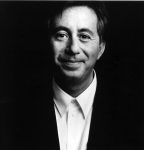
Mark Breslin (photo from Temple Sholom)

Yuk Yuk’s co-founder Mark Breslin is excited to be entertaining Jewish Vancouverites at Temple Sholom’s annual spring fundraiser May 6.

“I can’t get enough Jews in my life,” he told the Independent. “I’m married to a Catholic woman but I’m a Jew through and through. Any time I can talk about Jews and Jewishness, and my unique views on that, I jump at the opportunity because comedy is the jazz of our people. That’s how I express my Jewishness in the biggest way, not by keeping kosher or going to Israel each year, but through comedy.”

Breslin opened his first Yuk Yuk’s location in 1976. Today, he has 15 Yuk Yuk’s franchises across the country, has published four books, produced programs for television and radio, and appeared in theatrical productions. He’s a sought-after public speaker and, in December 2017, he was awarded the Order of Canada.

“Comedy is not usually something people respect, so it’s gratifying that some bureaucrats in Ottawa see what I’ve done with my life and think it has value,” he said. “But all the people I’d like to lord this over are dead now.”

Those people include a high school principal who informed Breslin he was a menace to society, as well as his aunts and uncles, who refused to attend his shows “because they thought I was wasting my life.”

Back when he started Yuk Yuk’s, Breslin said he received no support or encouragement from the people closest to him. “My mother was a child actress in the Yiddish stage in 1920, so you’d think she would be thrilled about what I was trying to build in comedy, but instead she was appalled by it right to the grave. My father was more ambivalent. He respected Yuk Yuk’s as a business and was proud of me, though he didn’t find the comedy funny. Even my friends thought I was nuts.”

When he began the first Yuk Yuk’s location, in Toronto, Breslin said his main goal was to avoid law school. “I thought I’d do comedy for a couple of years and find something else to do when it ran out of steam,” he admitted. “I never thought it would become my life!”

Initially, the Toronto Yuk Yuk’s was known as “that Jewish club,” because the names of the performing comedians were all Jewish. “When standup started, it was a very Jewish thing to do,” explained Breslin. “A lot of the comedians at that time were my friends from high school or university, and they gravitated to Yuk Yuk’s because they knew me.”

Today, standup is a mainstream phenomenon and Yuk Yuk’s is no longer known as a Jewish club. One thing that’s remained unchanged from the get-go, however, is Breslin’s insistence that his clubs be uncensored. “I’ve never censored an act in the 42 years I’ve been in business,” he said. “Being uncensored is important because the clubs are small enough that no one can control them. We have an obligation to be the official opposition and, these days, it’s more important than ever.” While he conceded that most comics exercise their right of free speech to talk about sex, not politics, he said, “Still, the opportunity is there.”

Yuk Yuk’s has two locations in British Columbia: Abbotsford and Vancouver. The Vancouver club opened in 1988 and is located on Cambie Street, near City Hall. It’s always been a success, said Breslin. “I measure success by some level of profitability, but also by how impactful our product is on the wider community and on comedy in general,” he said.

Among the comedians who got their start at Yuk Yuk’s are Russell Peters, Jim Carrey, Howie Mandel, Mike Bullard and Gerry Dee.

Breslin said that, on May 6, at the Temple Sholom event, he plans to talk about how each Jew has their own unique form of Jewishness and how we treat our culture as a Chinese buffet, picking what we want from it.

“I’m going to talk about the golden age of Judaism, 1950 to 1975, when it was cool and sexy to be a Jew,” he said. “I’ll try to figure out what happened between then and now, and why we’re a people in need of a good PR person. I’ll also reveal a lot of fun stuff about my life, my family and things I’ve done, relating that to comedy in general and what it means as a Jewish art form.”

For event details, visit templesholom.ca/inspired. The evening at Performance Works on Granville Island is titled Inspired to Act and includes comedy, music by Adrienne Robles and Liel Amdour, and the 2018 Tikkun Olam Youth Awards.

Lauren Kramer, an award-winning writer and editor, lives in Richmond. To read her work online, visit laurenkramer.net.
Format ImagePosted on April 20, 2018April 18, 2018Author Lauren KramerCategories Performing ArtsTags comedy, Mark Breslin, Temple Sholom, tikkun olam, Yuk Yuk's
Judaica in Metro Vancouver

Judaica in Metro Vancouver

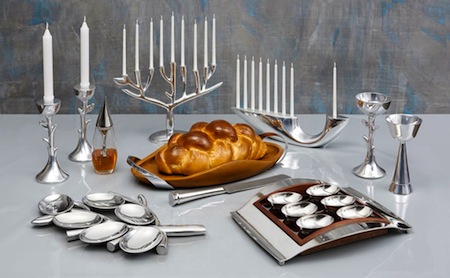
Among the items featured in Buchan’s Judaica section is a set of six hammered liquor cups on a pomegranate branch from Yair Emanuel, for any Shabbat or holiday table. (photo from facebook.com/BuchansKerrisdaleStationery)

If you’re looking for a new menorah or some cool Chanukah gifts over the next few weeks, you’ll want to target your search to three stores that have become the only hotspots for Judaica in the Lower Mainland. Sure, there are items here or there that you can find elsewhere, but not with much selection. And, you can shop online, but the problem with click-and-purchase is you don’t get to hold the weight of an object in your hand, to see the real symmetry of a piece from your screen, how it will fit into your home. Here’s where to go if you’re in the market for Jewish objets d’art.

Buchan’s Kerrisdale Stationery sits right next door to Garden City Bakery in Richmond, the Lower Mainland’s number one challah maker. The store has had a small selection of Judaica for several years but, when Inna Vasilyev took ownership a year ago, she decided to up the ante and significantly increase the variety. Vasilyev, who also owns the original Buchan’s Kerrisdale, on West 41st Avenue in Vancouver, aims to please everyone in her product choices. You’ll find 99 cent Chanukah candy, inexpensive wooden dreidels over which small kids can drizzle candle wax, fancy hand-painted dreidels and the plastic ones that disappear into the corners of a house each year. Buchan’s has Chanukah games, gelt, colouring books, tea towels, napkins with Jewish designs and menorot.

photo - Beth Tikvah’s gift store offers several different styles of menorot and a host of other Chanukah gifts, including shaped cookie cutters, games and books
Beth Tikvah’s gift store offers several different styles of menorot and a host of other Chanukah gifts, including shaped cookie cutters, games and books. (photo from btikvah.ca/support/beth-tikvah-gift-shop)

“We have designer pieces by well-known designers and a good selection of candles, too, from simple ones to deluxe ones that burn for ages and smell beautiful,” she said.

Vasilyev also stocks non-Chanukah-related Judaica like mezuzot and candlesticks. For shoppers averse to crossing the bridge into Vancouver (or into Richmond), this accommodating store owner will transfer product between the stores to make life more convenient. She’s in the throes of updating her website and hopes to eventually display all her products on it.

Also in Richmond is one of the Lower Mainland’s longest-lasting synagogue stores, the gift shop at Beth Tikvah. Vicki Northy has been the manager and chief volunteer for the past seven years.

In the hours the office is open, office staff will gladly open the store to shoppers and handle the transactions. Northy buys new products every year, choosing a variety of fun items like bagel spreaders and mensch mugs, functional items like Kiddush cups, candlesticks and challah boards, and Judaica art by well-known artists including Yair Emanuel, Gary Rosenthal, Lily Art, Adi Sidler and Agayof. The store will be open 11 a.m.-12:30 p.m. on Dec. 3 and 10 this year to accommodate Sunday shoppers.

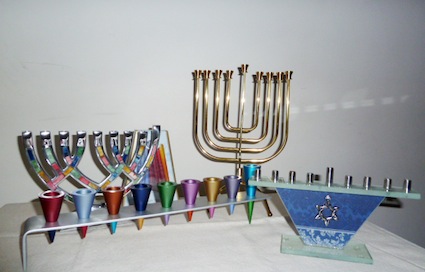
Olive+Wild, the gift and home décor store at 4391 Main St., is quite possibly Vancouver’s only retailer selling Judaica. Owners Simon and Bella Zaidel have 18 different menorah designs in stock right now, ranging from menorot that will get your kids excited about Chanukah to artistic beauties in brass, silver and glass.

photo - Olive+Wild has some 18 different menorot from which to choose, as well as Judaica for Shabbat and other Jewish holidays and occasions
Olive+Wild has some 18 different menorot from which to choose, as well as Judaica for Shabbat and other Jewish holidays and occasions. (photo from oliveandwild.com/collections/judaic)

“We stock Judaica designs by Nambé, Michael Aram, Yair Emmanuel and Carrol Boyes. And, given the demand, we’ve expanded our collection with various price points to make our products available to all different budgets,” Simon Zaidel said. The store opened last September and the response from the community has been “incredible,” he added. “Since Temple Sholom’s gift store closed down, there’s a limited availability of Judaica in Vancouver,” he noted. “We carry Kiddush cups, Shabbat candles, tzedakah boxes, Havdalah sets, challah covers and boards, kippot, tallises, mezuzahs, hamsas and Judaic jewelry, most of the products made in Israel.”

After the sugar-rush from the combination of Chanukah gelt and sufganiyot has worn off and the aroma of frying latkes is leaving your kitchen, you’ll want to begin “the Great Menorah Cleanup.” If there’s candle wax on your glass surface, it’s a relatively easy job involving a dollar store scraper and a hairdryer to melt any stubborn excess wax. Candle wax on silver candlesticks can be harder to eliminate without scratching your metal. Experts suggest placing your candlestick holder or menorah in the freezer for at least 20 minutes and then using your fingernails to flick off the frozen wax. A cotton ball with silver polish or rubbing alcohol can also be a useful resource to swap the area until it’s clean.

Lauren Kramer, an award-winning writer and editor, lives in Richmond. To read her work online, visit laurenkramer.net.
Format ImagePosted on December 1, 2017November 29, 2017Author Lauren KramerCategories Celebrating the HolidaysTags Beth Tikvah, Buchan's, Chanukah, Judaica, Olive+Wild, Shabbat
Two states viable

Two states viable

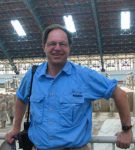
Gershon Shafir was in Vancouver Nov. 9 to discuss some of the issues he raises in his latest book, A Half Century of Occupation. (photo from pages.ucsd.edu/~gshafir)

What does it mean to have a “permanently temporary occupation” in Israel? Gershon Shafir was in Vancouver Nov. 9 to discuss this question. A guest speaker at Simon Fraser University’s School for International Studies, Shafir is an Israeli expat, University of California, Los Angeles, sociology professor and author of the recently released book A Half Century of Occupation: Israel, Palestine and the World’s Most Intractable Conflict.

It’s the 10th book for Shafir and he wrote it specifically for the 50th anniversary of the 1967 war. The permanently temporary occupation is a difficult subject to discuss, he said.

“That’s because the existence of this phenomenon – that Israel is an occupying power – is denied. But what’s going on is an occupation and is considered to be so by the Israeli government itself when arguing in front of the country’s Supreme Court, the international community and the Palestinians that live under it.”

Shafir said the word occupation is a legal term referring to the effective control of a country on a territory over which it has no sovereignty.

“Israel’s occupation is one of the longest belligerent occupations since World War Two and it’s truly exceptional because it’s going into its third generation,” he told the Independent. “In my book, I look at the nature of the occupation, the role played by the Israeli state through settlement, and radicalization by religious settlers. I also study the feasibility of alternative solutions.”

Prior to 1948, Jewish settlement occurred in areas that were least densely populated by Palestinians, allowing the possibility of a separation between the two groups. “But religiously motivated settlers prefer to have their new settlements in the heartland of the most densely populated Palestinian areas, so the settlement process has been radicalized,” said Shafir.

In his lecture, and in more detail in his book, Shafir discussed the extent to which the occupation has transformed the Israeli-Palestinian conflict. As part of his book, he conducted a study that found the built-up area occupied by Israeli settlements is two percent of the West Bank and the demographic ratio of Israeli Jews to Palestinians is 1:7. He questions the widespread consensus that a territorial partition of Palestine and a two-state solution is no longer possible.

“I’ve carefully counted the number of settlers and the places where they reside, and I’ve subdivided settlement into different categories. What you discover is that if you remove 27,000 settlers in the West Bank, a land exchange is possible, as is a territorial partition and a Palestinian state,” he said. “People who say a two-state solution is impossible don’t sufficiently study the feasibility of a one-state solution.”

Shafir added that he’s not advocating a political position in his findings. On the contrary, he’s just suggesting that, based on his research, a two-state solution is still feasible. “Let’s not give up on that idea too soon, because we don’t know what we’ll be walking into,” he advised.

The lecture at SFU was part of a book tour in which Shafir spoke on university campuses in Boston, Seattle, New York and Los Angeles. Shafir comes to this topic with years of pedigree. He was president of the Association for Israel Studies in 2001-2003, and the books he’s authored include Land, Labor and the Origins of the Israeli-Palestinian Conflict, 1882-1914, Being Israeli: The Dynamics of Multiple Citizenship (co-authored with Yoav Peled), which won the Middle Eastern Studies Association’s Albert Hourani Award in 2002, and Struggle and Survival in Palestine/Israel, a collection of life histories, which he co-edited with Mark LeVine.

Lauren Kramer, an award-winning writer and editor, lives in Richmond. To read her work online, visit laurenkramer.net.
Format ImagePosted on November 17, 2017November 15, 2017Author Lauren KramerCategories IsraelTags Gershon Shafir, Israeli-Palestinian conflict, occupation, peace, two-state solution
A fine line we all walk

A fine line we all walk

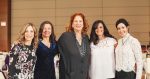
Left to right: Choices co-chair Debra Miller, Choices co-chair Sarah Marel-Schaffer, keynote speaker Lisa Friedman Clark, Choices co-chair Judith Blumenkrans and Jewish Federation of Greater Vancouver women’s philanthropy chair Megan Laskin. (photo from JFGV)

This year marked 13 years since the inception of Choices and some 450 women gathered in the Beth Israel reception hall to mingle over dinner and support Jewish women’s philanthropy. The keynote speaker was Lisa Friedman Clark, a New York native who commanded the floor as soon as she described herself as the “luckiest unlucky woman alive.”

Clark’s story is compelling. Diagnosed in 1995 at age 23 with a rare form of ovarian cancer, she endured chemotherapy and survived the illness against incredible odds. Andy Friedman, her boyfriend at the time, stood by her side throughout and, two years later, the couple married and began what she described as a “storybook life.” The arrival of twin boys completed their new family and both were pursuing successful careers up until Sept. 11, 2001. That morning, Andy went to work on the 92nd floor of One World Trade Centre and never came home.

There were audible gasps from the audience as Friedman Clark described the details of the morning her life changed forever. “He called me after the second plane had hit and said he was in a room with all his colleagues and they had plenty of air,” she recalled. “Later, we found out that the plane had hit one floor above him and the damage to the stairwells was so bad that he and his 68 colleagues could not get down. His floor was the line of demarcation between life and death. Those on floor 92 and above died.”

“I was 39 years old with two 11-year-old boys whose hero had just been killed in one of the most horrific manners one could think of,” she continued. “One minute you’re rushing to get the kids off to school and, in a split second, your husband has been murdered and life as you knew it has ceased to exist.”

Friedman Clark’s message was devoid of self-pity. “We all walk a fine line between being a donor to Federation and being a recipient of its generosity,” she told the crowd. “We never know when our lives will change.”

Federation counselors, social workers and support groups in New York were trained to deal with families affected by terrorism and came directly to the aid of her family and others in the same situation, she said. “They were uniquely able to understand our needs, and they were also there with financial aid for anyone who needed it. This help was invaluable and, had it not been for the many people that helped me at Federation, I’m not sure where I’d be today.”

Another story that touched a chord with Choices attendees was that of Ronit Yona, an Ethiopian Jew who, as a child, was rescued during Operation Moses. She lived in Israel for several years and more recently moved to Vancouver with her husband and two sons. Yona recalled her early years as a child in Ethiopia, growing up in a village that was home to 1,000 Jews and a life that revolved around home, school and synagogue. At the age of 9, everything changed. “The Ethiopian government wouldn’t allow us to practise our customs,” she explained. “I found myself following my father through the jungle at night as he led our donkey and horses, all loaded with our entire life. My father told me that, if the soldiers found us, they would kill us.”

Yona and her family became refugees in Sudan, in a tent camp where there was no sanitation and dysentery was rife. She recalled walking four hours a day to fill heavy jugs with water for the family. Then, at 10 years old, she found herself on an airplane with other Ethiopian families en route to Jerusalem. “What I didn’t know then, as a child, was that we weren’t walking alone on that journey,” she said. “ORT helped my father train as a nurse in Ethiopia and, later, the global Jewish community gave its money, time and energy to the Jewish Agency to rescue the Jews of Ethiopia who were stranded in Sudan.”

“We are all here this evening because we care about the future of the Jewish community, here at home, in Israel and around the world,” Megan Laskin, chair of women’s philanthropy at the Jewish Federation of Greater Vancouver, told attendees. “We’re celebrating making good choices for ourselves as strong women and setting a lasting example of l’dor v’dor. Women’s philanthropy is truly a force and your contributions are changing and saving lives.”

Last year, Choices generated more than $2.1 million. For information on this year’s campaign, visit jewishvancouver.com.

Lauren Kramer, an award-winning writer and editor, lives in Richmond. To read her work online, visit laurenkramer.net.
Format ImagePosted on November 3, 2017November 1, 2017Author Lauren KramerCategories LocalTags 9/11, annual campaign, cancer, Choices, Jewish Federation, Lisa Friedman Clark, philanthropy, terrorism, women
Flowers for fundraising

Flowers for fundraising

Global TV was at Richmond Jewish Day School last week to recognize the efforts of Grade 6 and 7 students who are selling flowers to fundraise for the Variety Club, Richmond Animal Protection Society and the Jewish Food Bank. To date, the students have raised $2,000 for these charities. Pictured, left to right, are Rachel Marliss, Shai Rubin and Nathan Brown. (photo by Lauren Kramer)

Format ImagePosted on November 3, 2017November 1, 2017Author Lauren KramerCategories LocalTags Jewish Food Bank, Richmond Animal Protection Society, Richmond Jewish Day School, RJDS, tzedakah, Variety Club

Posts pagination

Previous page Page 1 … Page 5 Page 6 Page 7 … Page 15 Next page
Proudly powered by WordPress