Whimsical, huggable toys

Lea Bilot with some of her bearded gnomes. (photo from Lea Bilot)

Some artists find their niche, their preferred way of expression, early in life. For others, it takes longer, sometimes decades, to discover their creative outlet. Lea Bilot belongs to the second category. 

For the past few years, Bilot has been knitting and selling her whimsical stuffed toys at fairs and craft markets around Greater Vancouver.

“I was born in Vilnius, Lithuania. That was where I grew up and got married,” she told the Independent. Later, her family immigrated to Israel, where they lived for 26 years. They came to Canada in 2015, following their adult children.  
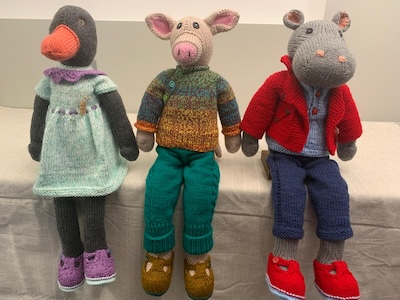
photo - Every one of Lea Bilot’s creations has its own expression
Every one of Lea Bilot’s creations has its own expression. (photo from Lea Bilot)

“I was never artistic before,” she said. Though perhaps she was, without realizing it. Creativity doesn’t usually spring out of nowhere. It surely shimmered inside her all along, finding unconventional channels among the demands of hard work and three growing children.  

“When we came to Vancouver, my husband and I started flipping houses,” she said. “We did it for a few years, but then COVID happened. Everything stopped. I didn’t know what to do. My husband found a job, but I was bored out of my mind.” 

She searched for an avenue to apply her fertile imagination.

“We went to our community centre once, and there was a craft fair there. I liked the knit toys someone was selling, but I thought: I could do better. And the idea stuck.”  

Never having made a knit toy before, Bilot did some research on the internet.

“I don’t speak good English,” she said. “So, I contacted a friend in Israel and asked if she could find me some books in Russian on the subject. She did and sent them.”

Bilot read all the books and then began to experiment.

“At first, I knitted some children’s clothing, but I don’t do that anymore,” she said. “Now, I concentrate on toys. I don’t copy what the books say either. I improve on them, make changes. I might use legs from one toy, hats from another, whatever fits my vision. Sometimes, I just follow my muse. Or I might find something new on the internet. There are several groups on Facebook, and we share information. We also help each other, when one of us hits a snag.”
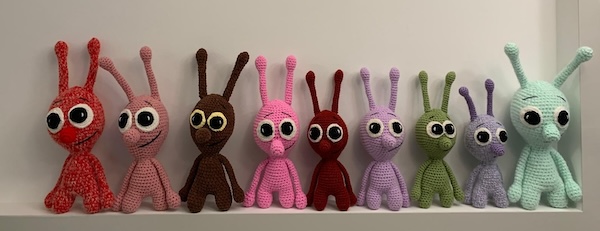
Lea Bilot also makes other creatures, such as aliens
Lea Bilot also makes other creatures, such as aliens. (photo from Lea Bilot)

The variety of toys Bilot creates is astounding. Her output includes some common animals – dogs, cats, bears and rabbits – as well as owls in graduation hats, aliens with antennas and gnomes with beards. Each one has its own expression; no two are identical. For the winter holiday markets, she makes colourful Christmas trees with legs and hats, and snowmen decorated with buttons.

“I don’t knit snowmen – I make them from socks,” she said. “And, for my Christmas trees, I started to crochet. I’ve only been doing it for a few months.”  

She derives her ideas from everywhere.

“I once saw a man on the street with a big bushy beard. He was a short and fat older man, and his beard was white. I thought: that is my gnome.”       

Her home is half living space, half workshop.

“I have so much yarn now, I need to put it somewhere I can easily access,” she explained. “I put all my clothing in cardboard boxes, and my yarn into my dresser’s drawers.”

Most of her yarn is acrylic.

“Some children are allergic to wool. They like to hug their toys, kiss them, sleep with them. I have to use acrylic for the toys,” she said. “And I buy only expensive yarn: from Denmark, from Turkey, from Lithuania. I don’t use cheap local yarn – it doesn’t last long. Children put their toys to hard use. The toys need to be washable and durable.”   
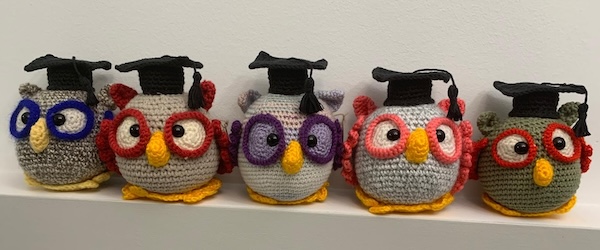
photo - Lea Bilot’s handmade owls
Lea Bilot’s handmade owls. (photo from Lea Bilot)

From design to execution to sales, Bilot enjoys every step of the toy-making process.

“I love making them. Sometimes, when I want to finish one, I wouldn’t sleep for half the night. It is such a joy making all those details – skirts, boots, glasses – and coming up with new concepts, new patterns.”

She loves selling the toys as well.

“People don’t always buy them, but, whenever they pass my table, they smile. Women, children, even men – they all smile. Children are very well behaved, too. They would handle my toys, hug them – I make them soft and extremely huggable – but they don’t demand that parents buy them, don’t throw fits. It’s always a pleasure to be around them. That’s why I don’t offer my toys to any stores. I want to witness those smiles.”

Bilot sells her toys several times a year at craft fairs at community centres, schools and even universities.

“There are websites for artisans like me,” she said. “They list all the fairs. I would drive to those fairs first, see what they are selling, what the conditions are, before applying to them as a vendor for the next time. My husband helps, he drives me around. And my daughter helps with the application process.”

When asked if she gets any income out of her full-time toy-making hobby, Bilot laughed. “I cover the price of yarn,” she said, “and a bit above it, but not much. Mostly, I do it for the fun of it.” 

To see Bilot’s creations and be ready when she next tables at a market, visit instagram.com/leas_knittings. 

Olga Livshin is a Vancouver freelance writer. She can be reached at olgagodim@gmail.com.
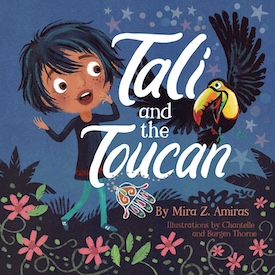
Two great books for giving – Tali and the Toucan & Oy, Santa!

Honestly, I think adults would benefit from reading children’s books, even if they don’t have kids. Generally, the books impart good messages, like how to overcome challenges or be proud of who you are, and their illustrations are works of art. The two I reviewed for this issue of the Jewish Independent are prime examples.

image - Tali and the Toucan book coverTali and the Toucan by writer Mira Z. Amiras and illustrators Chantelle and Burgen Thorne (Collective Book Studio) is set in San Francisco. The young protagonist, Tali, longs to tumble, swing and cartwheel like other kids, and she would love to take martial arts. But she is debilitated by fear – that the world will shatter, that she will break into a million pieces, that she will get hurt. Then, one night, she has a dream. At first, it’s kind of a scary dream, with a storm raging, chickens flapping about. One chicken makes it to the roof, pecks a hole in the window glass, and transforms into a toucan. The colourful-beaked bird teaches Tali how to tumble and soar in the sky. She awakes with new spirit and courage, no longer feeling like a chicken but like a toucan, ready to fly – and fall – with the other kids.

While not spelled out in the story, at the end of the book, there’s a note that explains that Tali’s fear of the world shattering “is taken from Jewish teachings that the world is indeed broken and that our job, called in Hebrew tikkun olam, is to put it back together again – starting with ourselves.” In addition to the “hamsa she wears – an amulet common to peoples of the  Middle East worn to protect children – her dreams lead her to conquer her fears, begin her tikkun and follow the path of Aikido, the Japanese martial art of nonviolence that teaches harmony, mutual assistance and peaceful resolutions to conflict.”

Other than the fact that Tali wants to do martial arts, the text of Tali and the Toucan doesn’t touch upon ideas like multiculturalism, cooperation or what a well-functioning society looks like, but rather expresses these concepts through the artwork. There’s a lot to look at in the illustrations and they beautifully capture Tali’s emotional journey.

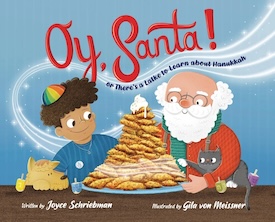
image - Oy, Santa! book coverOy, Santa!, or There’s a Latke to Learn about Hanukkah by writer Joyce Schriebman and illustrator Gil von Meissner (Intergalactic Afikoman) also expresses so much with its artwork. Whereas Tali’s hamsa makes an appearance on almost every page of her book, different kinds of light run through Oy, Santa! – white swirls full of stars, hanukkiyot with candles lit, strings of Christmas lights and exploding fireworks. While Tali and the Toucan only hints at multiculturalism and doesn’t explicitly talk about Judaism, Oy, Santa! puts both topics front and centre.

On Christmas Eve, young Oliver Overstreet writes an email to Santa: “I know you’re busy making toys, so I won’t write much. But I’m Jewish. And that means you don’t have to come down my chimney on Christmas Eve. I just wanna make sure you know.”

And so begins a delightful – and educational – email exchange between Oliver and Santa, who assures Oliver that he knows that both Oliver, and Oliver’s friend Ibrahim, do not celebrate Christmas. Oliver rails at Santa’s signoff, wishing Oliver a “Happy Chrismukkah!”

“Dear Santa,” he writes. “I know you’re still very busy. But please don’t write Chrismukkah. That’s not my holiday. I celebrate HANUKKAH. And Hanukkah and Christmas are different….” Oliver goes on to explain the story of Hanukkah and some of the fun ways the holiday is celebrated.

Santa and Oliver talk about many things in subsequent emails, from elves getting time off to celebrate whatever holidays are in their culture, to miracles and how reindeers fly, to whether it’s acceptable to put ketchup on latkes, and more. The conversation even gets a little heated, but – spoiler alert – Oliver and Santa work things out.

Oy, Santa! is a wonderful read, with lots of humour, fun illustrations, and great takeaways about identity, diversity, culture, civil discourse and friendship. 

המשבר הגדול של מדינת נתניהו יגיע עוד יגיע

לאחרונה דיבר עם חבר מישראל דוד שטויר, כאשר בגילו המתקדם (שבעים פלוס) כבר חווה הכל במדינה. אני הכרתי את דוד בחודשים הראשונים שלי בתהליך התאקלמות בוונקובר, אליה עברתי בחודש פברואר 2005

דוד חזר וציין בפני שאני הייתי “נביא” שראה לאן פני ישראל מועדות והוא עד היום מצטער שלא עזב כמוני את המדינה בה גדלנו, למען עתיד טוב יותר לו ולילדיו. לאור המשבר הקשה בישראל ילדיו של דוד כבר הספיקו לעזוב את ישראל. ולכן שאלתי אותו מה עוד “מחזיק” אותו בישראל? הוא ענה לי כי בתו הצעירה שהשתחחרה לאחרונה ההצבא, נקראה לשירות מילואים דחוף בן מספר חודשים בחיל האוויר. לאחר שתשחרר הבת מהמילואים היא קרוב לוודאי תעבור ללמוד בחו”ל. אז גם הוא יעזוב סוף סוף את ישראל

דוד אומר כי כבר למעלה מחמישים אלף ישראלים עזבו לאחרונה את ישראל. לדבריו מספר העוזבים צפוי אף לגדול לאור המשבר הגדול שישראל נמצאת בו, והוא צפוי להחריף. תשמע רוני הוא אמר לי נחרצות: ישראל היום נשלטת על ידי משפחת פשע הלוא היא משפחת נתניהו. הם עושים מה שהם רוצים, ובעלי התפקידים לצדו של נתניהו הם נוכלים וחסרי כישורים. נתניהו יצר פילוג בעם שאי אפשר לתקנו כך שאי אפשר לגשר בין “הביסיסטים” למתנגדיו של נתניהו

כשאמרתי לדוד כי הכיצד יכול ראש ממשלת ישראל להחזיק בן כלומניק בפלורידה (יאיר נתניהו) שאפילו לא עובד, והמדינה מממנת את שירותי הביטחון שלו שעולים הון ובתקופת מלחמה? דוד קטע את דברי בחריפות: רוני זה כסף קטן לעומת מיליארדי השקלים שנשדדים מקופת המדינה על ידי נתניהו וחבורתו, בין היתר לטובת החרדים שאפילו לא משרתים בצבא.ווהוא (נתניהו) עוד טס מטוס מפואר שעלה מיליארד שקל

לאחר השיחה עם דוד ישבתי וחשבתי לעצמי על ישראל ועתידה ובמחשבותי הצטיירה תמונה עגומה מאוד. אלו שחושבים שבקרוב יפרוץ תהליך שלום חדש בין ישראל למדינות ערב ובעיקר עם סעודיה, חיים בחלום. סעודיה הודיעה כבר מפורשות! שכל תהליך שלום עימה חייבה לכלול פתרון גם לפלסטינים – והוא הקמה מדינה עצמאית עבורם. הימים שישראל תעשה הסכמי שלום בדמות הסכמי אברהם, ללא פתרון הבעייה הפלסטינית עברו מן העולם

יש בישראל כיום שמהללים את נתניהו כביכול על הצלחותיו מול החמאס והחיזבאללה, בזמן שהם שכחו את הכשלונותיו הרבים, שהביאו למחדלי השבעה באוטובר. וכן ויתור על החטופים כדי שיוכל להמשיך ולשבת על כיסא המלך. מבחינתי זה כמו להגיד שלגודלה מאיר היו הצלחות רבות במלחמת יום כיפור מול המצרים והסורים, תוך התעלמות מאחריותה למחדל הנוראי של התקפות הפתע של צבאות האויב על ישראל

בכל מדינה מתוקנת ראש ממשלה היה מתפטר מיד לאחר מחדלי השבעה באוקטובר, ונעלם מהציבור לעולמים, אך כמובן עומד למשפט העם במסגרת ועדה חקירה ממלכתית. אך את נתניהו הנוכל נורמות ויושר אינן תכונות המאפיינות אותו למרות שהוא דורש זאת מאחרים

נתניהו אחראי להעברת מיליארדי דולרים לחמאס מקטאר, והוא אחראי לפגיעה קשה ברשות הפלסטינית. נתניהו חיזק אפוא את הקיצונים בפלסטינים (חמאס) והחליש את המתונים יותר (הרשות). נתניהו אחראי גם על עיבוי והוספת ההתנחלויות בשטחים הכבושים שרק מרחיקים את ישראל מפתרון הסכסוך הממושך עם עולם הערבי והשגת שלום

בתקופת שלטונו הארוכה בת שבעה עשרה השנים של נתניהו, ישראל נחלשה מבפנים בצורה משמעותית. המדינה הפכה למושחתת, יותר דתית משיחית, יותר קפיטליסטית והרבה פחות הומנית

?מדוע אינני חוזר לגור בישראל

אני גר בוונקובר כבר למעלה מתשעה עשרה וחצי שנים ואין לי שום תוכניות לחזור לישראל. הסיבות לכך רבות וברורות מבחינתי. ובעיקר: אינני מוכן לחזור אחורה למציאות כה מורכבת וקשה שכפי שליוותה אותי במרבית חיי בישראל

במלחמת ששת הימים הייתי בן שמונה ואני זוכר כיצד אימי הגיעה לבית הספר כדי לקחת   אותי למקלט של סבא הסמוך לביתנו במרכז ירושלים

מייד לאחר המלחמה הסביר הפרופסור ישעיהו ליבוביץ’ כי כיבוש השטחים בעקבות המלחמה יהיה אסון מבחינת ישראל, ישחית את המדינה ואף יסכן את עתידה. אז עדיין לא הבנתי על מה הוא מדבר. אך כשאשר התבגרתי קלטתי עד כמה דבריו של פרופסור ליבוביץ’ היו ונשארו נכונים עד עצם היום הזה

במלחמת יום כיפור עת הייתי בן ארבע עשרה ההורים היו כרגיל בנסיעה בחו”ל. אחי ואני נשארנו בבית כאשר נשמענו להוראות להפעיל האפלה בשעות הערב. לאחר מספר ימים ההורים הצליחו למצוא טיסה ולחזור מארה”ב לישראל

במלחמת לבנון הראשונה נקראתי לצאת למילואים בלבנון. הייתי בסך הכל פקיד בפלוגת הנדסה, איך כיוון שהם נאלצו לצאת לשטח בלבנון גם אני הצטרפתי אליהם. אנו שרתנו באזור ציר מזבושה תחת אחריותו של המגד בני ברבש. אחרי כחודש מילואים השתחררתי הביתה

לאחר המלחמה נסעתי לטיול מהנה באירופה ומאז ננטע אצלי לראשונה הרצון לעבור ולגור בחו”ל. פשוט לממש חלום ולגור באחת ממדינות המערב

בין לבין חיינו בישראל פיגועים רבים שלצערי הפכו לשגרת חיים. מי שחי בישראל מכיר מלחמות, פיגועים והרבה הרבה ימים לא שקטים. כך היה וכך יהיה

בראשית שנות השמונים התחלתי להבין סוף סוף שאחזקת השטחים הכבושים לא מאפשרת לפלסטינים להקים מדינה עצמאית משלהם. ובמקביל מסכנת את ביטחונה של ישראל. כבר אז ראיתי שישראל מחולקת לשני מחנות ברורים: תומכי השלום והחזרת השטחים ותומכי החלום של ארץ ישראל השלמה שהאמינו שזה דווקא יגביר את הביטחון במדינה. אני כאמור נימנתי על מחנה השלום שלאורך השנים הלך והתכווץ לצערי. לעומתו מחנה של המתנחלים ותומכיהם הלך וגדל. אז התחלתי להרגיש פחות ופחות שייך לישראל

במלחמת המפרץ הראשונה כבר גרתי בתל אביב. לא אשכח לעולם את הלילה הנורא ההוא ביום חמישי בסביבות שתיים לפנות בוקר. צפיתי אז בחדשות בטלוויזיה שתיארו את מהלכי ארה”ב בעיראק ואז נשמעה הסיסמה “נחש צפע” ולאחריה הופעלה אזעקה. אז הופיעה השקופית “בשל התקפת טילים על ישראל הופעלה אזעקת אמת”. ואכן נפל טיל מעיראק בשכונת התקווה, שבקו אווירי קרובה הייתה לביתי במרכז תל אביב. שמעתי היטב את הדי הפיצוץ ונכנסתי ממש לחרדה נוראית. אז אמרתי לעצמי כי הכתובת היא על הקיר ויום אחד יגיעו הטילים האמיתיים מאיראן שהכוונה לטילים אטומיים. הבנתי אז שעלי לעזוב את ישראל ולצערי רק לאחר ארבעה עשרה שנים עשיתי זאת

תוך מספר דקות יצאת את ביתי ונסעתי בטירוף לביתו של חבר כדי שלא להיות לבד. למחרת החבר עזב את תל אביב ונסע למשפחו באילת. ואז החלטתי לנסוע לבית הורי בירושלים, ששם שההיתי בכל תקופת המלחמה. בכל פעם שנשמעה “האזעקה” ממש נכנסתי לחרדה בחרדה ושהייתי עם הורי בחדר האטום

לאחר רצח ראש הממשלה יצחק רבין באמצע שנות התשעים הרגשתי עוד יותר כמה אני לא יכול להשתייך עוד לישראל. אז גם החל לככב בנימין נתניהו האחראי לגל ההסתה נגד רבין. הפכתי לזר בה ועדיף להיות זר בחו”ל. לאחר עשר שנים עזבתי לוונקובר

Ageism is everywhere

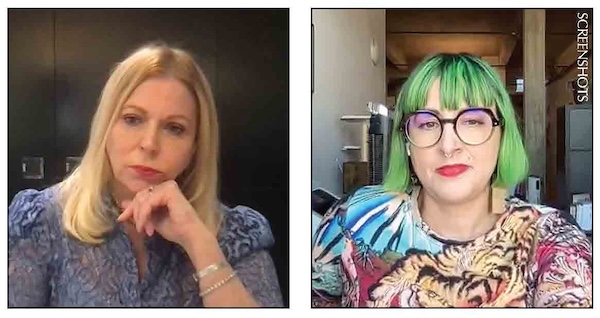
Panelists Margaret Gillis, left, and Dr. Melanie Doucet were the experts featured at this year’s Simces & Rabkin Family Dialogue on Human Rights, which focused on ageism.

“Ageism is anytime we make an assumption, a judgment, a stereotype, or discriminate based on age. And this can go in any direction. You’ve often heard people say, ‘too young to understand,’ ‘too old to understand.’ It can be directed toward oneself. It manifests in our interrelationships with others. And it is evident in our institutions and organizations. In fact, it is everywhere,” said Zena Simces in her remarks at the sixth annual Simces & Rabkin Family Dialogue on Human Rights, which took place over Zoom on Oct. 28.

Ageism impacts many aspects of life, said Dr. Simon Rabkin. “It affects our health, both physical and mental,” he said. “Studies have shown that psychosocial impacts of ageism include low self-esteem, self-exclusion, lack of self-confidence and loss of autonomy, both for older and younger people. The data indicate that workplace ageism is associated with increased depression and long-term illness. Importantly, studies have found that older persons with more negative self-perceptions of aging have significantly reduced longevity.”

Simces and Rabkin set the stage for the dialogue, which was called Too Old, Too Young: A Conversation on Ageism and Human Rights. It featured Margaret Gillis, founding president of the International Longevity Centre Canada (ILCC) and co-president of the International Longevity Centre Global Alliance, and Dr. Melanie Doucet, an associate with the Centre for Research on Children and Families at McGill University, who is a former youth in care. The discussion was moderated by Andrea Reimer, an adjunct professor at the University of British Columbia’s School of Public Policy and Global Affairs, who herself survived as a street-involved youth.

Gillis focused on the impact of ageism on older persons. She gave examples of human rights violations taking place in Canada, including that Canada’s long-term care homes have been under strain and in need of reform for at least two decades. She said an estimated one in 10 older Canadians experiences some form of elder abuse, adding that such abuse is underreported. She spoke about ageist employment practices and negative media representations of older persons.

“Ageism is toxic to the global economy and to health,” she said. “For instance, a US study showed a massive $63 billion per year impact on the economy as a result of ageism in health care. Perhaps one of the most distressing aspects of ageism is its prevalence, the World Health Organization finding one in every two persons is ageist.”

Nonetheless, not much is being done about it, said Gillis.

“I should note that there are protections against ageism in the Canadian Human Rights Code and the provincial human rights codes. But, the problem is, this takes time, money and know-how and our legislation and court process are not well-equipped to remedy complex situations like ageism easily and cost-effectively.”

Gillis encouraged people to join the Canadian Coalition Against Ageism, which she established. It comprises organizations and individuals who are working to confront ageism and bring about changes, based on the WHO global report on ageism. 

She advocates for the adoption of a United Nations Convention on the Rights of Older Persons. 

“In general, a convention is a method to achieve positive change by combating ageism, guiding policy-making and improving the accountability of governments at all levels, which we most certainly need,” said Gillis. “A convention would also educate and empower, and we’d see older people as rights holders with binding protections under international law.”

Doucet spoke about the human rights of younger persons, specifically youth who age out of the care system. She explained that youth age out of care at the age of majority and that, in British Columbia, about 1,000 youth age out annually.

A video Doucet made as part of her doctoral research included data on the difficulties most young people exiting care experience: 200 times the risk of homelessness, post-traumatic stress disorder rates on par with war veterans, and fewer than 50% finish high school.

Statistics Canada Census data from 2016 indicated that nearly 63% of youth ages 20 to 24 were still living with their parents, with almost 50% staying home until the age of 30. “And I’m sure those statistics have even increased since the pandemic,” said Doucet.

“Youth in care don’t have that luxury. They’re legislated to leave the system at age of majority. So, they’re deemed too old to remain in the child-welfare system after they reach age 18 or 19, depending on where they live in Canada, but, yet, too young to be sitting at the table when policy decisions are being made that impact them, sometimes even at their own intervention planning meetings with social workers.”

Additionally, in the last 20 years or so, a new developmental phase – “emerging adulthood,” which occurs between the ages of 19 and 29 – has been acknowledged in the academic literature, said Doucet. “It’s a phase that encompasses young people who are not necessarily children anymore but they’re not quite adults, and it provides room for identity exploration, trial and error, obtaining post-secondary education, and just figuring out one’s own place in the world. Youth in care aren’t able to experience this crucial developmental phase because of the legislated age cutoffs.”

There are studies that measure the benefits to both the youth affected and society at large of extending the age cutoff: “a return of $1.36 for every $1 spent on extending care up to age 25,” Doucet said.

Meanwhile, the cost of not extending care is high. For example, youth in care lose their lives up to five times the rate of their peers in the general population, she said. Poverty is more prevalent, as is homelessness, as previously noted.

“Out of the 36 countries in the global north, Canada is one of the six that does not have federal legislation to protect the rights of youth in care,” said Doucet. “While Canada has ratified the UN Convention on the Rights of the Child [CRC], it only provides human rights protections for children and youth until the age of 18. So, youth in care who are transitioning into adulthood actually don’t fit within the UN CRC because they’re deemed too old, even though they are a vulnerable population that experiences multiple human rights violations. This highlights that age-based discrimination is very much entrenched into the mainstream child welfare system in Canada.”

In the question-and-answer period, Gillis outlined three recommendations in the UN’s report on ageism: education/awareness campaigns; changes to laws, programs and policies, starting with long-term care and other basic human rights; and intergenerational work. We need to look at what other countries are doing, the evidence, best practices, she said, and pensions and other financial programs must keep up with cost-of-living.

Doucet spoke about initiatives she and her colleagues have undertaken.

“We developed what we’re calling the equitable standards for transitions to adulthood for youth in care. We released those in 2021, myself and the National Council of Youth in Care Advocates, which is comprised of people with lived experience from across the country, youth-in-care networks, and a couple of ally organizations, like Away Home Canada and Child Welfare League of Canada. This was our way to provide a step-by-step rights-based approach that centred on lived expertise, research and best practices, to guide how youth in care need to be supported as they transition to adulthood.”

There are eight pillars: financial, educational and professional development, housing, relationships, culture and spirituality, health and well-being, advocacy and rights, emerging adulthood development. And each pillar has an equitable standards evaluation model. For example, about housing: “Every young person should have a place they can call home, without strict rules and conditions to abide by.” 

“The ultimate goal [of] this project for us is, eventually, we are living in a society where the term ‘aging out’ no longer exists for youth in care, that they transition to adulthood based on readiness and developmental capacity instead of an arbitrary age,” said Doucet.

The Simces & Rabkin Family Dialogue on Human Rights was introduced by Angeliki Bogiatji of the Canadian Museum for Human Rights, which is a partner of the annual event. Juanita Gonzalez of Equitas – International Centre for Human Rights Education, also a program partner, closed out the proceedings. 

Learning from her ancestors

Tasha Faye Evans shares a work in progress at Dance in Vancouver. (photo courtesy Scotiabank Dance Centre)

“With everything I do, I always ask myself, what is the medicine of this work? How is this dance, this play, this project, contributing to the greater health and well-being of my community? Who is this character speaking for? Who am I dedicating this work to? Then, when it comes time to perform,” said Tasha Faye Evans, “I am rarely nervous, because it’s not about me and my skills, its more about the work I am doing and who I am doing it for.”

Evans was speaking to the Independent in advance of Dance in Vancouver, which runs Nov. 20-24 at the Scotiabank Dance Centre. The dance and theatre artist, who has Coast Salish, Welsh and European-Jewish grandparents, is presenting t’emək’ʷqən-seed, a work in progress, in a free-to-attend double bill with Starr Muranko/Raven Spirit Dance on Nov. 22, 2 p.m. A moderated conversation with the artists will follow the performances.

“There is not a word in Coast Salish culture for art,” writes Evans on her website. “Our art is functional. Our dances, prayers. Our songs, blessings. I am an artist because I love fiercely and creating work is my way of having hope, preserving the sacred and imagining a better future for all our relations.”

“My own body of work has always been because I am not a blockader, I don’t write the letters to the people in charge, I am weary of shaking my fist in the air,” she told the Independent. “My dance, theatre and community work are my way of addressing a helplessness I feel in the face of the misused powers in the world. My community work is mostly about redress and recalibrating values to align with the original caregivers of these Coast Salish lands and waters. We all share in a sacred responsibility to ensure a future of health and well-being for all our relations, and my work is in service of this sacred responsibility.”

Evans’s choreography has been presented by various companies and she has participated in performances and festivals around the world. She has many projects on the go, in dance and more broadly. One initiative is In the Presence of Ancestors, an exhibition of five Coast Salish House posts being carved and raised in Port Moody along its Shoreline Trail. She was recognized for the 

exhibit with a 2023 Edge Prize, which is given to leaders, or “Edgewalkers,” in the Salmon Nation, described on the prize’s website as “a bioregion defined by the historic range of wild Pacific salmon, from the Salinas River in California, north to the Yukon River in Alaska.”

seed was inspired by a sculpture created by Coast Salish artist James Harry.

“The sculpture was part of KWÍKWI – The Seventh, an exhibit James Harry and his partner Lauren Brevner dedicated to their daughter, the seventh generation born in James’s family since colonization,” said Evans. “seed draws upon what master carver Xwalacktun [James Harry] refers to as the Ancestor’s Eye or the Salish Eye, and the fundamental shapes and teachings of Coast Salish art and design, the sphere, crescent and trigon. The Salish Eye can be found carved into the oldest Coast Salish tools and, for that matter, I refer to these shapes as sxwōxwiyám, part of our original stories, written into the land and shared generation to generation, teaching us how to be human.”

Having collaborated with master carvers for more than a decade now, Evans said her “choreography experiments with how Coast Salish art and design can be expressed in movement, gesture and architecture of the space. I am developing a methodology that is based in the shapes and cultural teachings of the Ancestor’s Eye, the sphere, trigon, crescents, and the space in between. I am passionate about showcasing Coast Salish art form and culture and I am driven to share sxwōxwiyám and invoke a sacred responsibility in my audiences for all our relations.”

photo - Tasha Faye Evans
Tasha Faye Evans (photo by Yasuhiro Okada)

What people will see at Dance in Vancouver is “the tap root of t’emək’ʷqən-seed,” said Evans, “the first part of the work to grow, unfolding itself first towards the earth. I’ll be sharing that vulnerable moment of the creative process where the story is newly manifesting, taking root in the body and just beginning to grow.”

seed was commissioned by Odd Meridian Arts, whose artistic director is Ziyian Kwan. While in residence there, Evans created another work, Song.

“My connection with Odd Meridian Arts began decades ago when I was a shaved-head theatre kid and Ziyian was one of those dancers I’d see on posters and just stare at in awe,” shared Evans. “She’s always represented ambition for me and what a successful career as an artist looks like. (I don’t think I’ve told her this.) Ziyian has always been one of those artists whom I could only aspire to be.”

It was during COVID that Evans said she “got over” herself and responded to a message Kwan had posted on Facebook.

Song was also a seed,” said Evans. “It was a section of a larger piece I am still creating called Cedar Woman. It was a landing piece in my creative process, when I was exploring how to re-member myself to a legacy of Coast Salish women. I follow the song I hear calling me in my heart. The dance is a journey through the song, all the way back in time to my first grandmother, singing the song as prayer for her grandchildren during the great flood. I don’t dance Song the same in Cedar Woman any longer, but the core of Song, is finding itself in seed.”

For Evans, being part of such diverse ancestry, holding space for her Coast Salish, Welsh and Jewish heritage, is challenging. 

“For much of my adult life, it has been learning how to sit in the circle within my Indigenous community,” she said.

“I didn’t grow up in Jewish culture more than our comfort foods like chicken soup, matzah, and lox and cream cheese. We did not practise being Jewish and I learned very little about this part of me other than the trauma we all carry. For years, I wore a Star of David, mostly because it was a gift from my Nana. Sometimes, I feel my Jewish great-grandmother Faye nudging me disgruntledly until I mention her name, too, when I introduce myself. I’m not sure how to hold being Jewish in this body while living here in these Coast Salish lands and waters.

“There is a piece I’d like to create for my GG Faye, actually. I have a long mink coat that reminds me of one of the photos I have of her, taken just before World War II. I know she’d really appreciate that and I welcome the parts of me I would discover dancing for her.”

Her Welsh heritage has also been less explored, but, said Evans, “I have always longed to go to Wales. To dance on those lands and waters and listen to the language calls me for sure.

“While it’s these Coast Salish lands and stories that dance in me the loudest, I do honour that I am the dream of all my ancestors.”

Dance in Vancouver also features a work by Action at a Distance/Vanessa Goodman on Nov. 23 and DIV Unstructured on Nov. 24 includes Idan Cohen/Ne.Sans Opera & Dance. For more information and tickets, visit thedancecentre.ca.

UNRWA faces deadline

Last week, the Israeli government announced that it would ban the operation of the United Nations Relief and Works Agency from operating in Israel, including in East Jerusalem.

For Arab citizens in East Jerusalem, this would mean an end to civic services like garbage pickup, three UNRWA-operated schools, and some health care and social services.

The laws passed by the Knesset would not preclude UNRWA from operating in Palestinian territories, but they would impede their work substantially. And they would eliminate any privileges or assistance UNRWA staff receive from the Israeli government, including easy passage across borders and through checkpoints.

UNRWA is a problematic organization. Begun in 1949, it has been criticized for perpetuating the Palestinian refugee crisis it was ostensibly created to resolve. By preventing Palestinian refugees from being resettled in host countries, UNRWA ensures that the refugees stand as living testament to the presumed injustice of Israel’s founding – the original sin in the anti-Israel narrative.

Through permissions granted by a bloc of Arab, Muslim and nonaligned states at the United Nations, UNRWA has expanded seemingly beyond the control of its larger parent body.

In the most illuminating example of UNRWA exceptionalism, the organization changed the definition of “refugee,” so it applies to Palestinians in ways it applies to no other people on earth. Palestinian refugee status is a heritable right, meaning descendants of the original refugees – now down to the third and fourth generations – are designated refugees when they may never have set foot in their ancestral homeland and may be second- or third-generation, for example, Jordanian- or Lebanese-born non-citizen residents. The objective of this strategy is clear: make the problem grow. The approximately 700,000 refugees of the 1948 war have grown exponentially, to 5.9 million people.

Operating in Gaza, the West Bank, Jordan, Lebanon, and Syria, UNRWA operates more than 700 schools, teaching about 500,000 Palestinian students. UNRWA clinics provide primary health care, mental health support and referrals to specialized medical services. The agency provides food assistance, welfare and other forms of support. During times of war and other crises, UNRWA provides emergency food, shelter and medical services to affected populations. They respond to needs created by violence, displacement and natural disasters. UNRWA is responsible for the most fundamental services in the refugee camps where generations of Palestinians live, including sanitation, water supply and housing.

So why is Israel banning this agency that is so clearly a lifeline to the Palestinian people – especially in a time of catastrophic war?

Israel has provided to the United Nations evidence that some of UNRWA’s 30,000 employees were involved in the Oct. 7 terror attacks and have collaborated with the terrorists before and after that dark day.

There are also older, systemic complaints. For decades, Israelis and others, including the European Union, have complained that the UNRWA-operated Palestinian education system is as much about inculcating antisemitism and a radical political agenda as it is inculcating the three Rs. 

As a politicized arm of the United Nations, UNRWA is both a weapon in the decades-long global campaign against Israel and an agency that provides desperately needed services to Palestinian civilians, never more than in a war that is wreaking destruction and death on the people of Gaza. 

Israel’s move looks punitive and vindictive in a moment when the world sees the humanitarian tragedy in Gaza. This is a bad PR move on the part of a country with a bad PR history. But PR should be among the last concerns in situations where thousands are dying. Banning UNRWA could have disastrous consequences on some of the most vulnerable people.

The Knesset’s vote to ban the organization is set to take place in 90 days. That is not a long time, certainly, but it is a window during which UNRWA and the larger UN apparatus has an opportunity 

to demonstrate goodwill. To date, they have effectively ignored Israel’s decades-long protestations that UNRWA is, for whatever necessary social services it provides, also a provocative source of incitement that promotes dependency rather than initiative and fosters antisemitic and anti-Israel activism and even terrorism.

After years of Israeli complaints and warnings, the Knesset finally put a time-limited threat to their concerns. The UN, NGOs, commentators and much of the world are up in arms over the announcement. Instead, they could be diverting those substantial energies into cleaning up the mess at UNRWA.

Perhaps the Knesset vote is an empty threat. Or rather, it could be an empty threat, if it’s primarily intended to make the larger UN body and the world take seriously the systemic problems UNRWA has exhibited through its long and troubled history. 

If UNRWA demonstrates it is willing to take seriously the rot at the heart of its operation, we hope that Israel will not enact the ban. No one can clean up the panoramic mess in three months, but we hope that evidence of goodwill would be met with flexibility on Israel’s side.

If, in the worst case scenario, the UN does not do what it should have done long ago, Israel has an obligation – humanitarian, moral and legal – to ensure that the necessities of life are provided to the people in territories it occupies. In the absence of the UN behaving responsibly, Israel must. And Israel should absolutely be able to call upon a community of humanitarian nations to assist in that process. The world’s leaders have had a great deal to say about the well-being of Palestinian civilians in the past year. This would be a moment for them to put their money where their mouths are. 

Go on offensive: Levy

Pro-Israel activist Eylon Levy speaks with an audience member before his Oct. 30 talk at Schara Tzedeck, which was presented by StandWithUs Canada. (photo by Pat Johnson)

The terrorists who perpetrated the Oct. 7 attacks were products of schools paid for in part by the Canadian government, according to Eylon Levy, a former Israeli government spokesperson who addressed an audience at Schara Tzedeck Synagogue last week.

“The Oct. 7 terrorists all went to Canadian-funded schools,” he said. “That is outrageous. It’s disgusting. You need to hold [the Canadian government] accountable and say there are consequences.” 

Most schools in Gaza are run by the United Nations Relief and Works Agency (UNRWA), which is funded by UN member-states, including Canada.

Levy spoke here Oct. 30 as part of a cross-Canada tour sponsored by StandWithUs Canada, a pro-Israel educational organization focused on campuses.

Levy said Israel’s recent announcement that it was banning UNRWA from operating in Israel was the right move because the agency exists to perpetuate the Palestinian refugee problem, not resolve it, to keep the Israeli-Arab conflict alive, to indoctrinate Palestinian children and to provide the financial safety net terrorists need to engage in violent attacks like Oct. 7.

Israel has been widely condemned for the imminent ban, which came after Israel repeatedly informed the UN that UNRWA’s staff includes known terrorists, some of whose names were provided to the UN by Israel.

“They just don’t care,” Levy said of the UN’s response that terrorists are on their payroll. “Now they claim UNRWA is irreplaceable. Well, you should have thought about that when Israel gave you the evidence that it is riddled with terrorism and you chose to deny that it was a problem.”

According to Israeli authorities, 12 UNRWA staff members actively participated in the Oct. 7 attacks, with allegations that more than 30 additional UNRWA workers were involved in activities such as facilitating hostage-taking and looting. Israel’s Defence Minister Yoav Gallant has alleged that, of the 13,000 UNRWA employees in Gaza, at least 12% are affiliated with Hamas and Palestinian Islamic Jihad terror groups.

In conversation with Michael Sachs, Western regional director for Friends of the Simon Wiesenthal Centre, Levy said many people are inverting right and wrong when it comes to the Israel-Hamas war and they are trying to sway young people especially. 

“The world is trying to tell them that the cause of their generation, the great cause of this century, is the fight for Palestine, which means the destruction of the state of Israel,” Levy said.

Contesting these messages is tough, he said, especially when the agencies that represent the moral high-ground are on the wrong side.

Levy recalled a debate he had against broadcaster Mehdi Hasan.

“I knew he was going to come on the stage and say, ‘Well, the UN agrees with me, Oxfam agrees with me, Save the Children agrees with me, Red Cross agrees with me. How is it possible the whole world is wrong and you are right?’” Levy said. “That’s Jewish history: the courage to look around and say, ‘You’re all crazy. This isn’t right.’”

Levy noted that UN Secretary-General Antonio Guterres issued a statement on social media mourning the death of Muhammad Abu Atawi, who was killed by the Israel Defence Forces.

Atawi was an employee of UNRWA but, according to Israel, he was also a Hamas terrorist who led the attack on the bomb shelter near the Nova music festival, in which Hersh Goldberg-Polin and others were sheltering. 

“This is a leader I’m supposed to take seriously?” Levy asked. “The Red Cross that hasn’t lifted a finger to try to save the hostages is an organization that I am meant to take seriously? The NGOs that wouldn’t even shed crocodile tears on Oct. 7, that never tried to do any sort of campaign for the hostages, they are the ones I am meant to take seriously?”

Young people and other activists in the West who insist they are anti-Zionist and not antisemitic are deluding themselves, Levy suggested.

“You are expressing a hatred and a prejudice against the same people,” he said. “The fact that they believe that they hate the same people that their grandparents hated but it’s a complete coincidence shows a tragic lack of self-awareness.”

Getting the pro-Israel message out is especially challenging on social media, said Levy, but Jews and their allies can’t give up the battle.

Social media is problematic at the best of times – even when it is not a platform controlled by the Chinese regime, as TikTok is – because it maximizes engagement by provoking outrage and amplifies the most extreme viewpoints.

“We’re not going to win the social media battle,” he said. “But we can’t afford not to fight it.”

If the only thing that people see on social media are anti-Israel messages, what conclusion will people come to? he asked.

“But what if their friend, the person they know is a good, decent person, stands up and presents a contrary view?” said Levy. “Then at least you’ve made that person think this is complicated and there’s a case to be made on the other side. So, it requires all of us to be there, to fight the fight, to be as loud and vocal and produce as much stuff as possible.”

That battle of ideas also needs to be taken offline, he said.

It is further complicated, he added, because the Israeli government has effectively given up communicating to the world.

Levy, who was born in England to Israeli parents and made aliyah as a lone soldier, was effectively conscripted to serve as an English-language spokesperson at the beginning of the war. He was fired after a social media spat with Britain’s then-foreign secretary David Cameron. Levy cofounded the Israeli Citizen Spokespersons’ Office, which tries to fill the information gap he said the Israeli government has left.

Pro-Israel voices in the West need to change tack, according to Levy. Rather than being on the defensive and explaining Israel’s actions, Canadians and others should be calling out governments and NGOs.

“Other people owe us answers,” he said. “UNRWA owes us answers. The Red Cross owes us answers. The UN owes us answers. I think we have to go on the offensive and demand those answers from other people instead of constantly trying to defend ourselves and say, ‘I can explain.’”

Levy dismisses calls for a ceasefire. The war needs to end in the defeat of Hamas – and it’s all over but the surrender, he argued.

“Hamas has lost,” he said. “It’s game over.”

But Hamas needs the world to help it understand that fact. 

“The problem is, when international actors step in to demand a ceasefire, as opposed to Hamas’s surrender, they tell Hamas to keep fighting,” he said. With Hamas on its knees, “It’s outrageous that some countries are trying to get it back up on its feet.”

Hezbollah has also been largely eliminated, according to Levy. 

“All of its top leadership are dead,” he said. “The infrastructure along the border has been destroyed.”

Iran, of course, remains unbowed, even in the face of the damage Israel has inflicted on its proxies.

Levy said one outcome from the current crisis is that Jewish communities have come together. In Israel, individuals instantly mobilized on Oct. 7 to do whatever they could and, in the diaspora, Jews have united as they rarely have before.

“That sense of responsibility, that sense of solidarity, being there for each other and having each other’s backs, I find incredibly inspiring,” he said. “That awakening of responsibility and self-reliance and leadership in Jewish communities around the world has been an inspiration to people in Israel.”

Jesse Primerano, executive director of StandWithUs Canada, which brought Levy to Vancouver, said his group has 106 interns and fellows on campuses across Canada this year – an increase over past years and a happy surprise for Primerano. He was afraid for the organization’s programs this year, he said, concerned that they wouldn’t be able to recruit students to stand for Israel on campuses. The opposite happened.

“Numbers skyrocketed,” he said. “The truth is that they are not scared. They are empowered. They are emboldened … and they are so brave and ready to stand up.” 

SWU has also hired more staff across Canada, including a full-time position in Vancouver funded by the Diamond Foundation.

Three students from Vancouver-area campuses who are part of the SWU Emerson Fellowship program spoke to the audience, drawing ovations. 

A Shylock written for Rubinek 

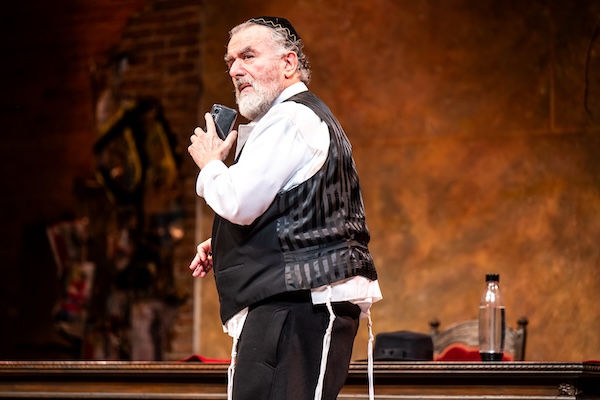
Saul Rubinek in Mark Leiren-Young’s Playing Shylock, which is playing in Toronto. Leiren-Young wrote the work with Rubinek in mind. (photo by Dahlia Katz)

Victoria playwright Mark Leiren-Young spent October in Toronto, where his Playing Shylock is appearing at Berkeley Street Theatre through Nov. 24. The one-man show, which stars Saul Rubinek, is based on the Jewish character in Shakespeare’s The Merchant of Venice.

“I’ve been attending rehearsals, run-throughs and previews as a playwright,” Leiren-Young told the Independent from Toronto before the play’s world premiere. “That means I’m around to work on the script with the actor and director. Since it’s a new script, that means I’m adjusting it to reflect ideas that come up in rehearsals, working with the costumes, the designs and the space. Really, anything that needs doing to get the script as tight and right for the actor and the production as it can be – making sure ideas are clear, jokes land and that Saul is having as much fun as possible.”

photo - Mark Leiren-Young
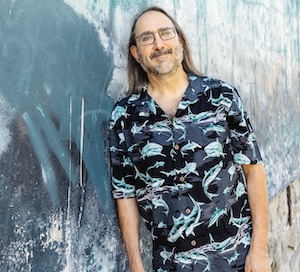
Mark Leiren-Young (photo by Jeffrey Bosdet)

Leiren-Young’s play Shylock first appeared on stage at Bard on the Beach in 1996. Playing Shylock, he said, is an all-new play with the same core premise: a production of The Merchant of Venice has been canceled in mid-run due to a controversy over the production.

“This is a bespoke piece that started during the COVID lockdown and I built it around Saul’s life experiences after studying his voice, his personal history, his greatest roles, his mannerisms,” Leiren-Young said. “This was written to sound like Saul and feel like Saul and not like a character or story created by me.”

In fact, when actor John Huston, who starred in multiple productions of Shylock, touring five provinces, asked Leiren-Young what was recognizable from that first play, the playwright responded, “The lines that Shakespeare wrote.”

“Beyond keeping some of Shylock’s best lines from Merchant of Venice, this is an all-new play because we’re in an all-new world,” said Leiren-Young. “And it’s a new world in so many ways. Think about how controversies played out before social media. Think about how the issues in theatre and society have changed, and the issues the Jewish community is facing.”

According to Leiren-Young, the original draft of Playing Shylock was completed a couple of years ago. Yet, he tries to update his plays to reflect current circumstances.

“This script always included a cancelation letter inspired by an actual cancelation announcement,” said Leiren-Young. “The original draft for Playing Shylock was inspired by a letter announcing the cancelation of a screening of the controversial opera The Death of Klinghoffer about a decade ago.”

The letter now, he said, is largely inspired by the decision of the Belfry Theatre in Victoria to cancel its January production of The Runner after protesters demonstrated and vandalized its property because they objected to a play about an Israeli volunteer with the Orthodox group ZAKA.

“Not just because it’s more current, it’s Canadian and more relevant to the times,” he said, “but because that letter appeared to be used as the template for canceling another play at a theatre across the street from the Belfry.”

Rubinek, a distinguished stage veteran, is widely known to film and television audiences. To name but a few of his credits: Wall Street, Barney’s Version, Frasier. This past June, the Globe and Mail placed Rubinek in the 25th spot on its list of the greatest Canadian actors of all time.

“I believe that if the people who made that list see this show, they’ll want to bump up his ranking by a fair bit. Watching Saul deliver Shakespeare’s lines is amazing. Watching Saul deliver my lines is a dream,” Leiren-Young said. “He’s 76 and he’s better on lines than any other actor I have ever worked with.”

Of the play, Rubinek said Leiren-Young “leaps into the historic controversy about the character of Shylock with gleeful relish and biting humour and then has the chutzpah to create a poignant study of why theatre should matter.”

The actor added, “To collaborate with on a new play – and I’ve done a lot of them – Mark is an actor’s dream: tirelessly inventive, generous, creatively stubborn in all the right places and, best of all, funny.”

This weekend, on Nov. 10, 2 p.m., at Victoria’s Congregation Emanu-El, Leiren-Young will give a talk about Playing Shylock, his original play Shylock, the character of Shylock, the impact and history of The Merchant of Venice and “anything else the audience that day wants to talk about.”

The author of numerous books, Leiren-Young is the only writer to win the Leacock Medal for Humour (Never Shoot a Stampede Queen) and the Science Writers and Communicators Award for Canada’s best science book (The Killer Whale Who Changed the World).

Leiren-Young’s Sharks Forever is a non-fiction book for middle-school readers and features an introduction by environmental activist Paul Watson. His next book, Octopus Oceans, is being released in early 2025. He is currently working on a new book for young readers focusing on how to protect the oceans and the animals who live there.

To follow Leiren-Young online, visit his website, leiren-young.com, and his Substack page, substack.com/@skaanapod?. 

Sam Margolis has written for the Globe and Mail, the National Post, UPI and MSNBC.

Comedy can unite and heal

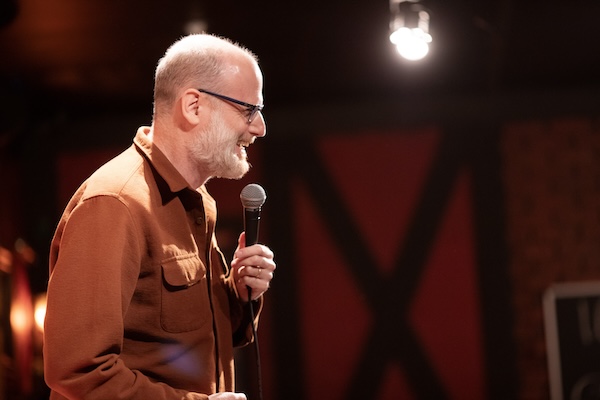
Comedian Erik Angel performs his one-man standup show, Speaking Falafel, at the Jewish Community Centre of Greater Vancouver on Nov. 14. (photo from Erik Angel)

“This year, I discovered even more how comedy is an important tool to bring people together, for release and relief, and I won’t be exaggerating if I say that comedy saved me this year,” Erik Angel told the Independent in an interview in advance of his solo performance Nov. 14, 8 p.m., at the Jewish Community Centre of Greater Vancouver. He’ll also be taking part in a show for students at the University of British Columbia while he’s here.

“This is perhaps the saddest time in my life, with a lot of pain, sorrow and worry, and going on stage night after night and making people laugh, helps me clear my mind and move on,” said Angel of the year since Oct. 7, 2023. “On stage, I deal with my reality today, with antisemitism, but I do it in an entertaining way. They say that comedy is tragedy plus time and I call my performance a humanitarian respite for the soul.”

Angel, who lives in New York, has opened for headliners like Maz Jobrani and Zarna Garg. He’s been part of several comedy festivals and has performed in more than a dozen countries to date. This will be his first time in Vancouver.

Born and raised in Israel, Angel moved to the United States for love, he said, after meeting his bashert at, of all places, the Jewish community centre in Krakow, Poland, in 2015. 

“I went to Krakow for a long weekend and all my life changed completely,” he said. 

Angel has worked in several creative fields. As a singer-songwriter, he released three albums in Israel. He studied drama and worked as an actor for five years. He did some standup comedy in Hebrew at open mics in Israel almost a decade ago, but said he quickly switched to doing routines in English, even while still in Israel.

“Since summer 2016,” he said, “I’ve been doing comedy in English, almost on a daily basis.”

The show that Angel is bringing to the Vancouver JCC next week is the product of a lot of work. 

Speaking Falafel is an hour of comedy that I worked on for seven long years of comedy spots, day after day, and I am very proud of it. It’s a very funny show about my journey since I went on this long weekend in Krakow and met the love of my life. I share the difficulties of becoming a new immigrant, newly married in my 40s, the differences between Israeli culture and other cultures in the world, how to be now ‘the Jew’ everywhere, to live 24/7 with a second language. I tell stories, I speak with the audience, and I even sing a little bit.”

The Nov. 14 show is a bonus for Vancouverites, as Angel’s main purpose for coming to the city is the UBC show, which is the start of a winter tour for Comedy for Peace. 

Angel established Comedy for Peace five years ago.

“I grew up in Israel with two million Muslims. I never met one – not in school, not in my basketball team,” he said. “I started to meet Muslims when I started to travel the world. The meetings were always friendly, and I wanted to do something artistic together. When I moved to New York, I became part of the New York comedy scene. I produced the first show, that was a huge success, and since then we have had shows in more than 50 cities in the US and Canada.

“Comedy for Peace is not a political event,” he stressed. “It’s about different communities who sit together under one roof and have fun. Simple as it sounds, we want to show people how easy it is to collaborate, laugh, learn about each other and discover how much we are more alike than different. Today, we also have a version with Christian comedians that will travel with the West Coast tour. Nov. 9, Comedy for Peace will be part of the New York Comedy Festival for the second time.

“After Oct. 7, a few shows were canceled (and a few not) and very fast we decided that, for us now, it’s more important than ever and this is why we keep going,” added Angel. “There are comedians, mostly Muslim or Christian Arabs, that cut me off and don’t want to be a part of it – it’s painful because I didn’t change – but most of the comedians are still on board. And our goal now is to bring our message everywhere possible, and [I] will never give up and will always believe most of us, the people, just want to live together peacefully.”

Performing alongside Angel at UBC will be Liz Glazer, Gibran Saleem and Paul Schissler.

“From my experience, people that come to support the show support the idea and are not coming to protest or say something against it and I hope it will be the same this time,” said Angel when asked if he was concerned about the protests and vandalism that have taken place at UBC and other universities. “We are a non-political peace show, so it’s crazy for me to think that things will go differently. Until today, the only problem we have had to deal with was people calling/writing or trying to shame online our Muslim/Christian Arab comedians or asking them not to do it anymore. Most of them just want to do it more since then. But still, we have the reality, there are many haters out there and everything can happen. We have a Q&A session at the end and we are open to speaking with reasonable people that will come with an open heart and ask questions they want to speak about or to understand more. This is part of our mission, to be there together on stage.”

To watch some clips of Angel’s performances from around the world, visit his YouTube channel, youtube.com/@erikangelcomedy9702, or his Instagram page, instagram.com/erikangelcomedy/?hl=en. For tickets to Speaking Falafel, go to eventbrite.com.