Skip to content
  • Home
  • Subscribe / donate
  • Events calendar
  • News
    • Local
    • National
    • Israel
    • World
    • עניין בחדשות
      A roundup of news in Canada and further afield, in Hebrew.
  • Opinion
    • From the JI
    • Op-Ed
  • Arts & Culture
    • Performing Arts
    • Music
    • Books
    • Visual Arts
    • TV & Film
  • Life
    • Celebrating the Holidays
    • Travel
    • The Daily Snooze
      Cartoons by Jacob Samuel
    • Mystery Photo
      Help the JI and JMABC fill in the gaps in our archives.
  • Community Links
    • Organizations, Etc.
    • Other News Sources & Blogs
    • Business Directory
  • FAQ
  • JI Chai Celebration
  • JI@88! video

Recent Posts

  • Sharing her testimony
  • Fall fight takes leap forward
  • The balancing of rights
  • Multiple Tony n’ Tina roles
  • Stories of trauma, resilience
  • Celebrate our culture
  • A responsibility to help
  • What wellness means at JCC
  • Together in mourning
  • Downhill after Trump?
  • Birth control even easier now
  • Eco-Sisters mentorship
  • Unexpected discoveries
  • Study’s results hopeful
  • Bad behaviour affects us all
  • Thankful for the police
  • UBC needs a wake-up call
  • Recalling a shining star
  • Sleep well …
  • BGU fosters startup culture
  • Photography and glass
  • Is it the end of an era?
  • Taking life a step at a time
  • Nakba exhibit biased
  • Film festival starts next week
  • Musical with heart and soul
  • Rabbi marks 13 years
  • Keeper of VTT’s history
  • Gala fêtes Infeld’s 20th
  • Building JWest together
  • Challah Mom comes to Vancouver
  • What to do about media bias
  • Education offers hope
  • Remembrance – a moral act
  • What makes us human
  • המלחמות של נתניהו וטראמפ

Archives

Follow @JewishIndie
image - The CJN - Visit Us Banner - 300x600 - 101625

Month: September 2021

Heroic work continues

An important – and surprising – court decision in Poland last month is a small victory in a longer battle over the history of Polish behaviour during the Second World War.

On appeal, two Holocaust scholars had an earlier decision reversed. University of Ottawa professor Jan Grabowski and Barbara Engelking, a Polish historian of the Holocaust, had earlier been ordered to apologize to a Polish woman who brought a suit against the two, arguing that her family’s name had been tarnished by the historians’ depictions of her uncle’s actions during the war. The case was watched closely, and its appeal is significant, as it could portend how Poland’s judiciary approaches a comparatively new law that proscribes negative depictions of Polish complicity during the war.

Poland’s ruling Law and Justice party is a right-wing nationalist movement that seeks to glorify Polish heroism during that era and erase – indeed, outlaw – records that demonstrate the complicity in atrocities by individual Poles and segments of that society during the Holocaust.

Grabowski and Engelking are on the frontlines of that conflict. They head a team of researchers that produced Night Without End: The Fate of Jews in Selected Counties of Occupied Poland, a compendious 1,700-page documentation of Polish atrocities during the war. The researchers, at risk to themselves, delved into often-untouched archival records in small and remote communities across Poland. In a presentation in Vancouver three years ago, Grabowski explained that, after the war, a surprising number of Poles felt no obligation to hide or embroider their activities during that period, content that their neighbours, if not history, would judge them kindly. The researchers plumbed files that had not been opened since 1945 and discovered harrowing tales of neighbour turning on neighbour, of Jews in hiding listening as their former friends pointed out their whereabouts to the Nazis and their collaborators.

The work is monumental and is being translated into English. It also indicates the breadth and depth of Holocaust history that has yet to be even remotely explored. The big picture, certainly, is well known – to the extent that plenty of people complain that it is time to move on from the topic. But the work of Grabowski et al reminds us that, in terms of millions of stories of individuals, heroic and wicked, we have hardly scratched the surface.

This is why the Polish law, and the intent behind it, is so dangerous. The problem is not merely the suppression of what we already know to be true, it is the very tangible possibility that current scholarship will be curtailed and that potential future scholars will choose less arduous fields of study. In either case, the crucial primary research still underway could be squelched.

This urgency was underscored by the publication Tuesday of a new book, Into the Forest: A Holocaust Story of Survival, Triumph and Love by Rebecca Frankel, former executive editor of Foreign Policy magazine. Writing in the New York Times Sunday, Frankel shared the story of one family who survived the war in Poland by hiding in the forests. The “Jews of the forest,” as she calls them, are an example of a massively underexplored facet of Holocaust history. The narratives of these Jews – some of whom survived the war, many or most of whom apparently did not – are absent from most chronologies because, by definition, those who survived (or did not) by disappearing into the forests were not included in the record-keeping of the Nazis and their collaborators.

We know from opinion surveys that there is an enormous amount of ignorance, particularly among the young in North America and Europe, about the Holocaust. In a notable irony, a major survey of European societies discovered that the countries where the largest number of people believes that there is too much emphasis on the Holocaust are the same countries where ignorance of the facts is greatest. In other words, it seems that those who know the least about that history are the ones most determined to close their ears to it.

Prof. Grabowski, who was born in Poland, was evasive in his visit to Vancouver in 2018, deflecting assertions that his work is heroic. Instead, he credited the courage of the on-the-ground researchers in Poland. There should be enough admiration to go around for the researchers, historians, writers and teachers who continue the necessary work of studying and sharing knowledge of that time.

As we have seen from the past seven decades, knowledge of the past does not preclude repetitions of genocide. But ignorance will almost certainly hasten its frequency and severity.
Posted on September 10, 2021September 9, 2021Author The Editorial BoardCategories From the JITags Barbara Engelking, education, education antisemitism, genocide, Holocaust, Jan Grabowski, law, Rebecca Frankel

Relationship with the earth

At the dinner table, I asked my family what I should write. One of my kids, age 10, immediately said, “Climate change. People think the problem’s all hot air, but the problem’s really hot water.” There was a smirk at his joke, but his twin nodded in agreement.

Hurricane Ida’s just made landfall and is churning its way up through swaths of the United States as I write this. Haiti is in shambles from its most recent earthquake, only compounded by the storm that followed. In Manitoba, we’ve lived through a hot, smoky summer, surrounded by wildfires and besieged by drought. When it finally rained, there was so much of it that some places flooded.

The weather has, at times, felt apocalyptic. While I’m not superstitious, the recent uptick in truly awful weather and world events made me think back to Yom Kippur, 20 years ago.

In 2001, my husband and I sat in Yom Kippur services in Durham, N.C., where we lived at the time. Just a little over two weeks after Sept. 11, the terrorist acts in New York, Pennsylvania and at the Pentagon were on most people’s minds in that congregation.

Like many, I have images burned in my brain from that time, as both my family near D.C. and my husband’s in New York City, were alive, thank goodness, but personally affected. At synagogue, when we reached the prayer Unetaneh Tokef, the room fell silent, electrified. This ancient prayer, perhaps written by Yannai in the sixth century, is familiar to most who’ve attended services on the High Holidays or listened to Leonard Cohen:

“On Rosh Hashanah will be inscribed and on Yom Kippur will be sealed – how many will pass from the earth and how many will be created; who will live and who will die; who will die after a long life and who before his time; who by water and who by fire, who by sword and who by beast, who by famine and who by thirst, who by upheaval and who by plague, who by strangling and who by stoning. Who will rest and who will wander, who will live in harmony and who will be harried, who will enjoy tranquility and who will suffer, who will be impoverished and who will be enriched, who will be degraded and who will be exalted. But Repentance, Prayer and Charity mitigate the severity of the Decree.”

In Temple Beth El in Durham, there was loud sobbing and then, the most elemental keening and grief that I’ve ever heard. Twenty years later, I can’t forget my brother-in-law running down Broadway as the second tower fell behind him, covered in its dust as he escaped Manhattan on the Staten Island ferry, or my father-in-law, who walked five miles through Manhattan in the middle of the street, only to stand in Central Park, afraid to go indoors. My father and brother, away from D.C. on business trips, waited days, unable to get home. My sister-in-law, stuck in D.C. overnight, was finally able to leave the city and walked home to her apartment in Virginia, only to suffer through continual sonic booms, as fighter pilots raced overhead, shaking her high-rise building.

I will never hear this prayer, which is primarily part of the Ashkenazi liturgy, without being shaken by that keening sound.

However, just as I remember it, it’s also helpful to keep reading. It says that, by doing repentance, prayer and charity, we can change the severity of the outcome. We’re taught clearly that repentance is not simply feeling badly about past behaviour, it’s about making amends. We must apologize to those we’ve wronged and try to fix our mistakes. Our prayers are not simply rote, but must come from our hearts, with the right kind of kavannah, or intention.

Finally, it mentions we must do tzedakah, which some translate as charity, but really also means righteousness. It is the obligation to do the upstanding, just thing, and to act with integrity.

Although I can’t help but think of this prayer in context of those who died, both on Sept. 11 and those who, each year, aren’t written in the Book of Life for the next year, it’s not just about that. This prayer says we must act now to make change and to stop bad things from happening to us.

Even for those who don’t believe in its literal power, the message is clear. If we want to be able to live with ourselves later, we’re taught that we must repair our relationships promptly, practise introspection through prayer, and make a big effort to step up and do the right thing.

Those who’ve lived through floods, wildfires, earthquakes and hurricanes this summer would argue that bad things are happening. The rest of us, living through the pandemic, would be hard-pressed to disagree. Yet, Jewish tradition teaches us that we aren’t passive observers. We aren’t meant to simply submit and accept this.

More than one rabbi has told the joke about the man on top of his roof in the middle of a flood. He ignores the orders to leave, turns down a neighbour’s offer of a ride, says no to the rescue boat and refuses to be saved by helicopter.

The floodwaters rise higher. He drowns. Then he gets to speak with G-d. He says, “Lord, I believed in you. Why didn’t you save me?” And G-d responds, “Well, I sent you an evacuation order, a carpool, a boat and a helicopter!  What else do you want?”

While we battle a pandemic, forest fires, rising temperatures in ocean waters and on land, it’s helpful to remember that our tradition teaches us that “G-d helps those who help themselves.”

This is a strange year, where some of us, used to sitting in synagogue, will instead be streaming services at home again, or perhaps spending time praying outdoors. It could also be the year where we decide that, upon reflection, it’s important to repair our relationship with the earth and to start doing the right thing personally. Climate change is upon us. It’s going to take everyone’s efforts to make a difference.

Wishing you an easy fast. May you be written for good in the Book of Life.

Joanne Seiff has written regularly for CBC Manitoba and various Jewish publications. She is the author of three books, including From the Outside In: Jewish Post Columns 2015-2016, a collection of essays available for digital download or as a paperback from Amazon. Check her out on Instagram @yrnspinner or at joanneseiff.blogspot.com.

Posted on September 10, 2021September 9, 2021Author Joanne SeiffCategories Op-EdTags 9/11, climate change, High Holidays, repentance, Rosh Hashanah, terrorism, Unetaneh Tokef, Yom Kippur

Controversy over instructor

A proposed fall semester course at the University of Victoria has raised concerns that it will become what B’nai Brith Canada described as “a forum for antisemitism.” The concerns were sparked by inflammatory comments the course’s instructor, Dr. Shamma Boyarin, wrote on social media earlier in the year.

In a May 26 Twitter post, for example, Boyarin used an obscene verb before labeling Abraham Foxman, former president of the Anti-Defamation League, a “Zionist pig.” On June 3, he ridiculed an individual who had been the recipient of a torrent of antisemitic abuse online. This was followed the next day by a post in which Boyarin remarked, “[It’s] hard for North American Jews to admit the truth: What is happening in Israel is ethnic cleansing and slow genocide.”

An online description of the UVic course, entitled Introduction to Antisemitism, has been modified since it was first posted. At an earlier stage, the description began, “What is antisemitism? As soon as one attempts definitions, it becomes clear that even the most fundamental aspects of antisemitism are controversial.” The course’s current title is also different from the original, which was Towards an Understanding of Antisemitism. Gone, too, is a study of present-day antisemitism.

photo - Prof. Shamma Boyarin
Prof. Shamma Boyarin (photo from uvic.ca)

The changes occurred in early August after B’nai Brith, among others, raised objections to UVic about Boyarin teaching a class on modern antisemitism. The course’s subtitle on the UVic website now reads, “A Historical Survey of Key Texts and Moments from Augustine to Luther.” Its description: “What is antisemitism? The term itself was coined in the late 19th century, but when does the phenomenon begin? Is it the same or different from ‘anti-Judaism’? Should we spell it ‘anti-Semitism’ or ‘antisemitism’? Beginning with these basic questions, we will focus on the particular role Christianity has played in developing and sustaining antisemitism in Europe.”

“Moving this course away from modern antisemitism is an important first step,” said Michael Mostyn, chief executive officer of B’nai Brith Canada. “However, we are still concerned that, instead of educating students on the scourge of Jew-hatred, there is a risk, albeit a reduced one, that hostility toward Jews will instead be promoted.

“UVic must provide assurances to the Jewish community that academic freedom will not be used as cover to falsely accuse Jews, as a whole, of contributing to genocide, among other antisemitic canards,” he added.

When contacted by the Independent, UVic expressed the position that it “does not condone antisemitism” and “that it is highly committed to equity, diversity and inclusion and to social justice in its many forms.”

“We are aware that a faculty member has expressed personal views in public communications which are disturbing to people. Those views are personal. They have not been made on behalf of the university or in the context of their work,” said Karen Johnston, a spokesperson for the university.

“Canadians have a constitutional right to free speech, subject to limits under the law,” she said. “And so it cannot be the role of the university to judge or censor its employees’ exercise of free speech in their private lives. While all faculty enjoy the privilege of academic freedom, there are also limitations to this right. In this specific instance, there is no evidence at this time that the faculty member has or will exceed those limitations in teaching this course.”

The university also said it “will act on any allegation that there has been a violation of university policies against discrimination or harassment, which apply to all members of our community.”

Rob Philipp, executive director at Hillel BC, has been monitoring the situation and has spoken with Dr. Kevin Hall, the president of UVic. Philipp said, “If the course does run, we will check to see what the reading material is and what is being taught.” However, he added, while the organization is keeping on top of things, there is not much that can be done to stop the course from going ahead.

Jeff Kushner, president of the Jewish Federation of Victoria and Vancouver Island (JFVVI), said they, too, will be following the UVic course and will remain in contact with senior administration staff.

“The JFVVI does not have any serious concerns about the course material, such as we know it,” said Kushner. “Our concerns are more about the academic and emotional safety of the students enrolled in the course. In this particular case, a professor at UVic made some very objectionable comments on his private Twitter feed. We wish that he had not made such incorrect and inflammatory statements, both in his role as an academic and as a Jew.

“He has not made these comments in any official capacity, and the university has been very clear that these objectionable views are not the views of the university. Our concern is that an individual having these views, and expressing them as he has, may find it difficult to leave them at the classroom door and, through explicit statements or implicit actions, may create an unsafe learning environment for Jewish students holding views contrary to his own.”

In a letter to the university, B’nai Brith urged UVic to publish the syllabus of the revised course online, to cancel the course if it is used to attack the Jewish community in any way and to follow other universities, such as Oxford and Cambridge, in adopting the International Holocaust Remembrance Alliance Working Definition of Antisemitism to “avoid future confusion.”

Boyarin has taught at the University of Victoria since 2008 in religious studies and medieval studies, and in the English department since 2009. According to his profile at UVic, his current research and teaching interests include medieval literature (particularly the literature of Spain and the Near East), comparative literature (particularly Hebrew and Arabic), literature and religion, Jewish studies, and the religious roots of antisemitism. He has additional expertise, his profile continues, in the connections between medieval and contemporary culture, especially as they manifest in heavy metal music and white supremacist ideologies.

The Independent tried to reach Boyarin for comment, but had not heard back from him at the time of publication.

Sam Margolis has written for the Globe and Mail, the National Post, UPI and MSNBC.

Posted on September 10, 2021September 9, 2021Author Sam MargolisCategories LocalTags antisemitism, B'nai B'rith, education, Federation, Jeff Kushner, JFVVI, Karen Johnston, Michael Mostyn, Rob Philipp, Shamma Boyarin, UVic, Victoria
Exploring her family’s past

Exploring her family’s past

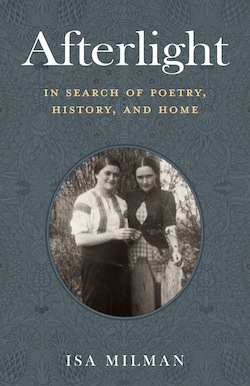
Afterlife is Isa Milman’s first work of nonfiction. (photo by Shea Lowry)

Midway through Isa Milman’s Afterlight, which came out this week, the author cites Reb Nachman of Breslov, who said, “The whole world is a very narrow bridge.” In Victoria-based Milman’s new work, we encounter bridges of various sorts: those that serve as a crucial lifeline to the survival of the denizens of cities, particularly at a time of war, and the bridges that bring together people from different continents in the pursuit of understanding an unconscionably horrific time in Eastern Europe.

And then there are the bridges that link us poignantly to our past – to those we know through words and photos but have never met. In Afterlight, one such bridge connects Milman to her mother’s twin sister, her aunt Basia, who perished in the Holocaust, and who, like Milman, wrote poetry. (Milman is a recipient of the Canadian Jewish Book Award for poetry.)

Milman’s journey began in 2013, when, following her mother’s death, she sought to find Basia’s poems from the 1930s. The book alternates between the present and the past (the war years), as Milman tries to uncover a layered tale. She travels to Europe where, at times, her quest for information leads to dead ends and, at other times, she finds details in unlikely places – a photograph in Amsterdam, for example.

At one stage, Milman finds poetry written in a Polish publication from the 1930s. She writes, “Reading the children’s poems, I felt a terrible nostalgia rise up – a dangerous nostalgia. Even now it hurts too much, this intense longing for a conversation with Basia, for a meeting, a recognition that we’ve lived on the same planet, come from the same earth, share blood and bone. We share a love of poetry, but I shall never know her, not even as smudged ink on a page.”

At one point in her exploration, Milman pens a poem to her aunt. “How many tiny flowers make one lilac sprig? / How many stars in the night sky have names? / How many yet to be seen? They disappear with morning sun too soon but in darkness or in light tucked in their beds they remain,” the poem reads.

image - Afterlife book coverBasia’s story is but one piece of the book. Afterlight also traces the journey of Milman’s parents and her other surviving aunts through the Holocaust and examines questions about the trauma, displacement and identity caused by the Holocaust to succeeding generations.

“I’d lived my life in a black hole of absence, of never having the experience of grandparents, of feeling rooted and at home with extended family. And this was not because of a tsunami, an earthquake, forest fire or plague. It was because of tribal hatred,” Milman writes.

As well, she explores the issue of reconciling the Poland that Jews thought of as their home with rampant antisemitism and the brutality of the war years. “Why couldn’t I choose how to think about Poland, even if it meant going against most everything I’d learned?” Milman asks. “Why couldn’t I revise my notion and accept that Poland is a place that I can love as well as despise and fear? Why must it be either/or? Was it possible to live in the uncomfortable in-between, where both realities coexist?”

Afterlight is Milman’s first work of nonfiction. At first, Milman, whose collections of poetry include Prairie Kaddish, Between the Doorposts and Something Small to Carry Home, was reluctant to write a nonfiction account of the Holocaust. However, recent surges in antisemitism around the world led her to change her mind.

“The lessons of the Holocaust need to be taught, and not just by citing facts and reportage,” she said. “Telling stories about real people and their experiences is the most effective way of reaching and teaching people about how evil can happen, and how we must fight our worst human inclinations and speak out against hatred and inhumanity.”

A big part of her decision to write a memoir was realizing that her family’s story did not match a more common Holocaust narrative. Hers is a lesser-told account of Jews from eastern Poland, some murdered in what’s known as “the Holocaust of Bullets” and others, like her parents, who survived because of deportation by the Soviets to the Gulag.

“I loved entering the world of creative nonfiction,” she said. “Using my imagination to create scenes where I clearly was not present enabled me to inhabit the places and people I needed to describe. Everything became more real as I entered into the minds of my characters, who happened to be my parents and close family.”

Sam Margolis has written for the Globe and Mail, the National Post, UPI and MSNBC.

Format ImagePosted on September 10, 2021September 9, 2021Author Sam MargolisCategories BooksTags Afterlight, history, Holocaust, Isa Milman, memoir, Poland
Several shows to watch at Fringe Fest

Several shows to watch at Fringe Fest

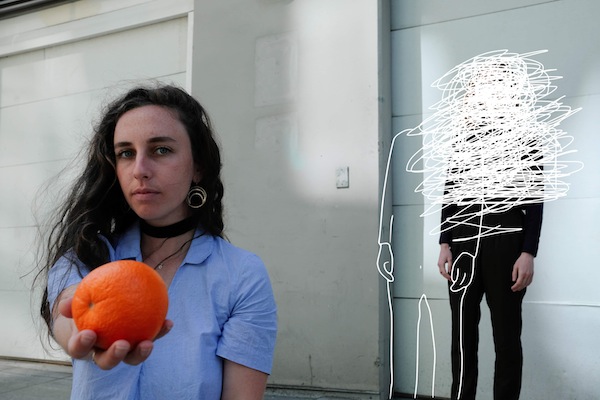
Ariel Martz-Oberlander wrote and co-stars in on behalf. (photo from Julia Lank)

In the Aug. 20 issue of the Jewish Independent, there was a short article on the Vancouver Fringe Festival show A Coveted Wife of East Van, which “tells the story of Samantha Cohen as she navigates friendship, men and dating apps while making some very bad decisions along the way.” Playing at the Picnic Pavilion venue on Granville Island, the creative team includes Jewish community members Marn Norwich (poet), Ariel Martz-Oberlander (director), Itamar Erez (musician) and Hayley Sullivan (actor). Martz-Oberlander is also involved in the show on behalf, with fellow Jewish community members Tamar Tabori and Julia Lank (co-stage manager). And there are other Jewish community members to watch in this year’s festival, as well. Here are the broad strokes of the productions that were in touch with the JI.

on behalf

Martz-Oberlander’s on behalf is a conversational, humorous and lyric conversation between a young woman (Martz-Oberlander) and an ancient goddess (Tabori).

“on behalf challenges assumptions about what it means to survive and to be a survivor,” said Martz-Oberlander. “Rather than framing ‘healing’ as an individual, linear journey, the show frames it as a collective political and cultural act – messy, strange, circular, ancestral, shattering, transformative and ongoing. Our identities affect our visions of justice, and diaspora shapes our ability to find belonging on stolen land and within a system that views justice only as punishment.”

The inspiration behind on behalf came out of Martz-Oberlander’s own healing journey, and lack of a road map. She began looking back into her own cultural inheritance and to mine the stories of women who have survived dispossession and sexual assault across time and space, with bravery, creativity and the strength of rituals.

After three years in development, on behalf has shifted in focus and form many times. Now in a filmic state at the Fringe, it moves again. Shot in a single take with a shifting camera, the show runs less than 20 minutes. The film format invites audiences to engage with the tactile and sensory experiences linked to traditional ritual work – like handwashing and bread baking – to highlight how healing extends beyond the individual, because our wounds too extend beyond the individual experience.

on behalf is a digital presentation and can be watched anytime during the Fringe.

Everybody Knows

photo - Rita Sheena pays homage to Leonard Cohen in Everybody Knows
Rita Sheena pays homage to Leonard Cohen in Everybody Knows. (photo by Kristine Cofsky)

In this semi-autobiographical, one-woman musical, set to nine Leonard Cohen cover songs, Rita Sheena creates a spiraling narrative using contemporary dance, post-modern quirk and the haunting melodies of First Aid Kit’s Who By Fire album, which was released earlier this year.

Everybody Knows is the latest work from Sheena’s Come Emote With Me theatre series. It opens in a bright, primary-coloured hotel room. When we meet the smug captain, we are reminded that “everybody knows the dice are loaded, everybody rolls with their fingers crossed, and everybody knows the war is over, everybody knows the good guys lost….” Next, we meet a woman in a 1960s-style secretary dress who answers every telephone call ringing for death with “… and who shall I say is calling?”

Cohen enthusiasts will appreciate the esoteric nuances that Sheena emotes. Folks who love dance and movement artistry will enjoy the unique style of storytelling.

Everybody Knows is at the Revue Stage on Granville Island Sept. 11-18.

A Toast to Prohibition

photo - Melanie Gall brings her show A Toast to Prohibition to the Fringe
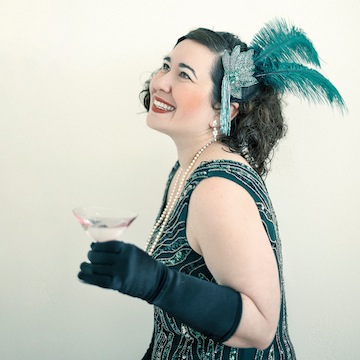
Melanie Gall brings her show A Toast to Prohibition to the Fringe. (photo from Melanie Gall)

International performer Melanie Gall comes to the Vancouver Fringe with her new historic musical, A Toast to Prohibition. Her previous shows include Piaf and Brel and off-Broadway’s Ingénue.

Celebrate the 101st anniversary of Prohibition with flappers, gin fizz and a speakeasy cabaret. Join Gladys in her secret gin joint, the Tipsy Sparrow, as she tells the story of when intoxicating liquor was forbidden and lawlessness ruled the day. From secret cellars and doctor-prescribed alcohol to a teetotaller attacking saloons with a hatchet, there’s a song about it! This show features, among other songs, forgotten 1920s hits “Lips That Touch Liquor Shall Never Touch Mine” and “Everybody Wants a Key to My Cellar.”

Performances of A Toast to Prohibition take place at Performance Works Sept. 10-19.

The Fringe Festival runs until Sept. 19. For tickets and the full schedule, visit vancouverfringe.com.

Format ImagePosted on September 10, 2021September 9, 2021Author Fringe PerformersCategories Performing ArtsTags Ariel Martz-Oberlander, Fringe Festival, Granville Island, Hayley Sullivan, history, identity, Itamar Erez, Julia Lank, Leonard Cohen, Marn Norwich, Melanie Gal, music, politics, Rita Sheena, Tamar Tabori
To do or not to do (the Bard)

To do or not to do (the Bard)

Bard on the Beach’s Done/Undone, written by Kate Besworth, co-stars Harveen Sandhu and Charlie Gallant. (photo from bardonthebeach.org)

Throughout COVID, Vancouver’s Bard on the Beach has been unable to mount its popular summer festival at Vanier Park. However, it is easing its way back into the hearts and minds of Shakespeare fans with its innovative film production Done/Undone, written by Kate Besworth and starring Bard veterans Charlie Gallant and Harveen Sandhu, who take on multiple and diverse roles. The creative team includes community member Mishelle Cuttler as sound designer.

The film raises many probing questions. Is time up for Shakespeare’s works in the #metoo, woke, cancel culture era? Is there room today for plays written 400 years ago that can be interpreted as misogynist (The Taming of the Shrew), racist (Othello) or antisemitic (The Merchant of Venice)? Are the Bard’s works not just the reflections of a white, privileged male, written for colonial audiences to glorify British mores and culture? Or was English writer Ben Johnson, who died in 1637, right when he said Shakespeare was “not a man of his age, but a man for all times?” Should any form of Bardolatry continue or should Shakespeare and his folios be laid to rest as we move forward with contemporary artists telling contemporary stories?

To answer these questions, the film, set against the backdrop of a working theatre, uses snappy vignettes to showcase the pros and cons of the debate with interesting and perhaps unexpected results.

It opens as the two actors arrive at the theatre to prepare for a production of Hamlet, and the question first arises. Sandhu appears as Shakespeare to state that the purpose of writing is to “hold a mirror to humanity,” as she lists off the myriad subjects that the Bard explored – the sea, star-crossed lovers, a donkey in the arms of a fairy queen, an exiled warrior, an emperor of Rome, a triumphant king, how choices matter, and how governments fail us.

We then are spectators to a battle of wits between dueling professors, explaining and emoting from their respective lecterns. Gallant emphatically argues that Shakespeare is a product of a white, patriarchal society, using words as a tool of cultural imperialism written, originally, for white men to perform (women were not allowed to act in Shakespeare’s times, so male actors would take on the female roles) and that there is no place today for his work. Sandhu counters that Shakespeare’s texts still evoke emotions that resonate within the contemporary world – his topics of love, hate, greed and lust are timeless and embedded in the human character, she argues. She sees Shakespeare as remarkably progressive, with many of his characters in gender-fluid roles and with his portrayals of strong women – Rosalind, Cleopatra and Lady Macbeth, to name a few. His works can provide teaching moments, says Sandhu, giving the examples of Taming of the Shrew to show the harm that misogyny causes, King Lear, the scourge of elder abuse, and Othello and Merchant as vehicles to elicit tolerance and empathy in society.

Other vignettes in the film include a Bard board member – a neurosurgeon – who, during an opening night audience address, poignantly recounts the solace he found in the dark spaces of the theatre during a production of King Lear after the loss of a patient. He says that darkness was the escape from the reality of his grief.

Another scenario depicted is a couple taking in a performance of Romeo and Juliet, where the woman is clearly more into it than her male partner, who finds the Shakespearean language highbrow and difficult to understand.

Then there are the gothic, spectre-like creatures who denounce the Bard’s portrayal of women and Blacks in a macabre pas de deux; a talkback session after a Measure for Measure performance, where the female actor embarks on a scathing indictment of colour-blind casting; and the finale, in French, as the two actors attend an inventive Shakespeare festival in Montreal.

Shakespeare’s influence is global. At any given time, somewhere on the planet, one of his plays is being produced, either in its original form or as an adaptation. Do we judge him with our contemporary lens or should we remember the times in which he wrote and appreciate his genius? Done/Undone is a thoughtful and intelligent production that seamlessly blends the worlds of cinema and theatre, and considers some difficult questions. It leaves you to draw your own conclusions.

Done/Undone, with a run time of 76 minutes, is available for streaming online until Sept. 30. Tickets can be purchased at bardonthebeach.org or from the box office at 604-739-0559.

Tova Kornfeld is a Vancouver freelance writer and lawyer.

Format ImagePosted on September 10, 2021September 9, 2021Author Tova KornfeldCategories Performing Arts, TV & FilmTags antisemitism, Bard on the Beach, Charlie Gallant, colonialism, debate, Harveen Sandhu, misogyny, racism, Shakespeare
Challenging VIFF Films

Challenging VIFF Films

Michal Wiets uses her great-grandfather’s diaries as the basis for her film Blue Box. (image courtesy)

At press time, the Vancouver International Film Festival lineup had not yet been announced. But the Independent received the names of some of the movies to be presented, as well as a couple of screeners.

Starting with the more challenging VIFF choices, most Jewish community members will either take a pass – with a roll of the eyes as to what film festivals often consider appropriately provocative fare – or get up the fortitude to watch the disparaging portrayals of Israel, so as to be better prepared to confront the criticisms, and perhaps learn from them. I admit that I have taken both routes in life and it was with great skepticism and high anxiety that I watched Michal Weits’s Blue Box.

Weits is the great-granddaughter of Yosef Weits (aka Weitz), a Russian immigrant to Palestine in the early 1900s who was instrumental in foresting Israel, as well as purchasing land for the Jewish government from the Arabs who owned it at the time (who were mostly absentee landlords and not the people who lived on and worked the land). Depending on one’s point of view, Weits was either a legendary pioneer to be tributed, as “the father of Israel’s forests,” or a notorious pirate of sorts, stealing land from Arabs and expelling them from it, as “the architect of transfer.” His great-granddaughter seems to believe he’s the latter, while he himself was conflicted.

The basis of the documentary is Yosef Weits’s diaries, some 5,000 pages. In them, he expresses his belief in the need for the reestablishment of the Jewish homeland and his fears for Jews’ continued existence (even before the Holocaust). He also details aspects of his work, with whom he negotiated land sales and meetings with David Ben-Gurion and other Israeli leaders. Presciently, he admits to misgivings about the way in which the Arab populations were being treated, predicting that such treatment would end up causing Israel severe problems if not dealt with.

The diary entries are fascinating and reveal some of the complexities of that era and of Yosef Weits’s legacy. The archival footage and photographs are compelling and expertly edited to make clear director Weits’s viewpoint – there is no mention of events that don’t fit her narrative, such as the expulsion of Jews from Arab lands.

Weits interviewed several family members about what she discovered from the diaries and other research. Their reactions are varied, with the generations closer to that of her great-grandfather more defensive and those closer to hers, more questioning, even condemning.

It might be helpful to watch this film with a non-Jew, as I did. In doing so, I found there were a few parts – such as the Israeli government’s relationship with the Jewish National Fund and why Weits named her film after the JNF’s donation box – that could have been better explained to viewers without prior knowledge. As well, a non-Jew is perhaps better able to keep in mind that every country deals with similar issues relating to how they were established, who was displaced, etc., and that Blue Box could be seen not only as a personal tale of one family, but as the beginning of a conversation about nation-building in general rather than as a stifling condemnation of Israel.

The same may or may not be said about The First 54 Years: An Abbreviated Manual for Military Occupation, directed by Avi Mograbi. There was no screener available for this documentary, which is described as “a ‘how-to’ guide to civilian subjugation along ethnic and religious lines, through the example of the Israeli occupation of Palestine. This is jet black, ice-cold political satire. But the harrowing statements of 38 former Israeli military personnel must be taken at face value as eyewitness testimony of decades of state-licensed crimes against humanity.”

Noam Imber plays a pothead teen in Quality Time
Noam Imber plays a pothead teen in Quality Time. (image courtesy)

Thankfully, there are at least a couple of more innocuous films in this year’s VIFF. One is the short Quality Time, written and directed by Omer Ben-David. When mom goes on a brief vacation, father (Shalom Korem) and son (Noam Imber) are left on their own together, and the awkwardness of their relationship is highlighted. Imber plays a pot-dealing and -smoking teen who’s just received his draft notice, while Korem is his recently retired – from the defence ministry – father. Both actors are wonderful and the story is quirky and fun, even if it doesn’t hold up logically at the end. While Israel-specific – a gym bag being blown up by the bomb squad is a key element – it has universal meanings.

The JI always sponsors a film at VIFF and, this year, we’ve chosen the animated feature Charlotte, about Charlotte Salomon, a German-Jewish artist who created her masterpiece work – called Life? Or Theatre? (comprising nearly 800 paintings) – between 1940 and 1942. She died in Auschwitz in 1943, at 26 years old. We’ll review that film next issue.

For more on the festival, visit viff.org.

Format ImagePosted on September 10, 2021May 2, 2024Author Cynthia RamsayCategories TV & FilmTags Adath Israel, Arab-Israeli conflict, David Ben-Gurion, history, Israel, Jewish National Fund, JNF, Michal Weits, Omer Ben-David, politics, Vancouver International Film Festival, VIFF, Yosef Weits
Chutzpah! coming soon

Chutzpah! coming soon

Josh “Socalled” Dolgin leads an evening of Yiddish songs as part of Chutzpah! 2021. (photo from Chutzpah!)

The Chutzpah! Festival returns this November, presenting music, theatre, comedy and dance that reflect the joy of coming back together. For more than two decades, Chutzpah! has been an annual highlight of Greater Vancouver’s arts season. From Nov. 4 to 24, artists will once again grace the stage of the Norman & Annette Rothstein Theatre, the festival’s hub, and share their work in person and online. Tickets go on sale Sept. 15.

The 21st Annual Chutzpah! Festival will include a variety of performances, paired with conversations and opportunities to interact with the artists. Audiences will have the chance to attend in-person shows, with COVID safety protocols in place, or enjoy digital streams from their homes. With an emphasis on artists from across Canada, the festival will also present work from Israel, the United States and the United Kingdom.

“Artists and arts enthusiasts alike have been eagerly awaiting our chance to come back together to share our stories,” said Jessica Mann Gutteridge, artistic managing director. “With the joy of reconnecting comes the knowledge that our lives have profoundly changed over the past year-and-a-half. The Chutzpah! Festival will explore and celebrate the many ways we tell stories now, with a variety of ways to experience and participate in the work.”

The festival opens Nov. 4 with a screening at the Rothstein Theatre of the Marx brothers classic A Night at the Opera, during which City Opera Vancouver will sing the operatic music parodied in the film. The 1930s cinema experience will include festive treats, glamour and a costume contest.

In the comedy realm – all in-person performances at the Rothstein Theatre – Canadian-born, New York-based stand-up comedian, storyteller and writer Ophira Eisenberg, host of NPR’s comedy and trivia show Ask Me Another, performs Nov. 10. Israeli-American stand-up comedian Avi Liberman is joined by special guest Jacob Samuel and host Kyle Berger on Nov. 20. And Iris Bahr, who impressed Chutzpah! audiences in 2020 with her festival hosting and her solo show DAI (enough),  performs her new solo show Nov. 23.

The dance performances at the Rothstein will be in-person events, as well as digitally streamed. Nov. 6 and 7, a Project inTandem double-bill features the works of Calgary producers and choreographers Sylvie Moquin and Meghann Michalsky, which explore the themes of female struggle and empowerment. Nov. 13 and 14, Shay Kuebler/Radical System Art return to Chutzpah! as resident artists with the third “chapter” of Kuebler’s research that began in 2018, after he read about the United Kingdom hiring a minister of loneliness. On Nov. 16 and 18, Ballet BC artist in residence Alexis Fletcher, who was 2019 and 2021 Chutzpah! resident artist, returns to the festival with a solo integrating movement and the visual art of Vancouver painter and HIV/AIDS activist Tiko Kerr, while 2020 and 2021 Chutzpah! resident artist Ne.Sans Opera & Dance, led by Idan Cohen, returns to showcase a new solo drawing inspiration from the myth of Orpheus and Gluck’s opera Orfeo ed Euridice, with co-creator Ted Littlemore (aka Mila Dramatic).

Theatre works featured are Lilach Dekel-Avneri and the Pathos-Mathos Company’s The Eichmann Project – Terminal 1 on Nov. 8 (digital stream available); The Flame – An Evening of Storytelling on Nov. 17, under the stewardship of artistic director Deborah Williams, featuring storytellers including Stephen Aberle, Glenda Zenoff, Eleanor Lipov and Helen Schneiderman, with musical guest Anton Lipovetsky; and Halifax-based Surplus Production Unit’s A Timed Speed-Read of the Triangle Shirtwaist Factory Fire Trial Transcript on Nov. 21 and 22.

Montreal’s Josh “Socalled” Dolgin, accompanied by a local string quartet, leads an evening of rediscovered Yiddish songs, with stories and perhaps a little magic, on Nov. 19, and Israel’s Guy Mintus Trio’s performs A Gershwin Playground Nov. 24. (Digital streams available for both shows.)

Nov. 8-12, Chutzpah! Festival favourite, U.K.-based theatre artist Tamara Micner, transforms her theatrical work-in-progress (workshopped in the 2020 festival) into an audio installation. Audience members will be invited into the Zack Gallery to listen to Micner’s reading of letters written to Paul Simon and Art Garfunkel, reflecting on how their music informs her feelings about friendship, activism, Jewishness and art. There will be opportunities to “meet” the artist via video stream for conversations about her work and ideas.

Throughout the festival, Bahr converses with festival artists, featuring her stand-up and a wide-ranging cast of characters.

Due to COVID-19 safety processes, all tickets must be purchased in advance and will not be available at the door. Visit chutzpahfestival.com starting on Sept. 15 or call 604-257-5145.

– Courtesy Chutzpah! Festival

Format ImagePosted on September 10, 2021September 9, 2021Author Chutzpah! FestivalCategories Performing ArtsTags Chutzpah!, comedy, dance, Iris Bahr, music, storytelling, theatre
Bema mounts Wells’ Mazel Tov, John Lennon

Bema mounts Wells’ Mazel Tov, John Lennon

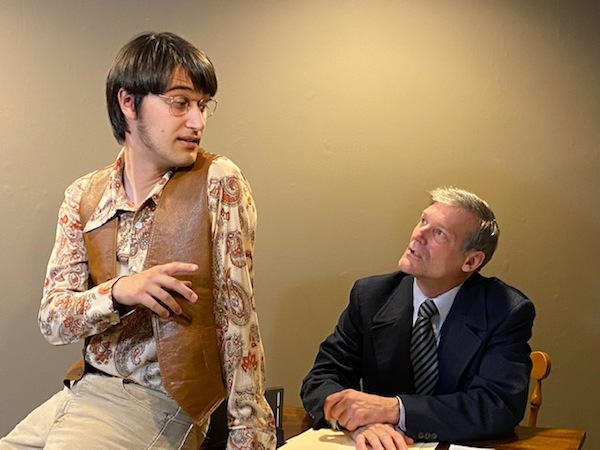
Nicholas Guerriero as John Lennon, left, and Perry Burton as his Jewish lawyer, Leon Wildes, in Bema Productions’ rendition of Mazel Tov, John Lennon by David Wells, which had a virtual run at the Victoria Fringe Festival this year (photo from Bema Productions). Based on the true story of the Nixon administration’s attempt to deport John Lennon because of his political activism against the war in Vietnam, it is a fascinating play about a lesser-known aspect of American history. The years-long case ultimately led to various changes in the country’s immigration laws.

“I was so happy to be back in live rehearsal after a year-and-a-half, and had tears in my eyes at the first rehearsal,” director Zelda Dean told the Independent.  “Of course, we all wore masks until near the end.  This is the 142nd show I have directed in my long career and the first time that I couldn’t see the expression on the actors’ faces while we were working together.  Of course, their masks came off at the last few rehearsals and at the filming of the show [by Jason King] and, by then, everyone was fully vaccinated.  A new experience and I was delighted to learn much and develop new techniques.  I am always grateful to learn from the many skilled artists I am privileged to work with.”

Format ImagePosted on September 10, 2021September 9, 2021Author Cynthia RamsayCategories Performing ArtsTags Bema Productions, David Wells, John Lennon, Leon Wildes, Victoria Fringe, Zelda Dean
Light of holiday meals

Light of holiday meals

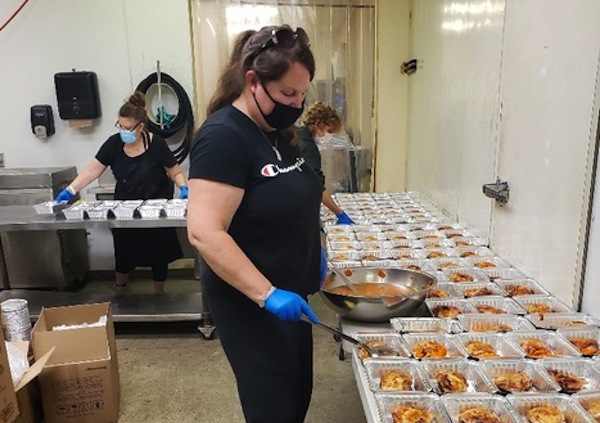
Light of Shabbat Volunteers packaging kosher meals for the High Holidays. (photo from Chabad Richmond)

On Aug. 29, a contingent of 12 Chabad Richmond volunteers worked to ensure that recipients of the Richmond community Light of Shabbat (LOS) meal program would be well fed throughout Rosh Hashanah, Yom Kippur and Sukkot.

The volunteers cooked more than 800 LOS meals in a local kosher commissary. “This is truly a labour of love,” said organizer Chanie Baitelman, co-director of Chabad Richmond. “Our Light of Shabbat participants rely on these meals. It’s not just about feeding individuals and families, it’s about nourishing their souls as well.”

Since 2011, Chabad Richmond has run a community-building program called Light of Shabbat, where volunteers cook and deliver kosher Shabbat meals to old and young, singles and families, the unemployed and working poor, immigrants and born-and-raised community members. The program is run entirely by volunteers, who coordinate, plan, shop, cook, bake, package and deliver full, healthy, kosher meals.

Since the pandemic began, more than 12,000 such meals have been prepared and delivered to people in the Richmond community. All of this is made possible through the generosity of donors, many of whom are LOS volunteers themselves. They know that everyone needs a helping hand at some time in their life.

For more information about Chabad Richmond, visit chabadrichmond.com.

– Courtesy Chabad Richmond

Format ImagePosted on September 10, 2021September 9, 2021Author Chabad RichmondCategories Celebrating the HolidaysTags Light of Shabbat, tikkun olam, volunteering

Posts pagination

Previous page Page 1 Page 2 Page 3 Page 4 Next page
Proudly powered by WordPress