Skip to content
  • Home
  • Subscribe / donate
  • Events calendar
  • News
    • Local
    • National
    • Israel
    • World
    • עניין בחדשות
      A roundup of news in Canada and further afield, in Hebrew.
  • Opinion
    • From the JI
    • Op-Ed
  • Arts & Culture
    • Performing Arts
    • Music
    • Books
    • Visual Arts
    • TV & Film
  • Life
    • Celebrating the Holidays
    • Travel
    • The Daily Snooze
      Cartoons by Jacob Samuel
    • Mystery Photo
      Help the JI and JMABC fill in the gaps in our archives.
  • Community Links
    • Organizations, Etc.
    • Other News Sources & Blogs
    • Business Directory
  • FAQ
  • JI Chai Celebration
  • JI@88! video

Recent Posts

  • Sharing her testimony
  • Fall fight takes leap forward
  • The balancing of rights
  • Multiple Tony n’ Tina roles
  • Stories of trauma, resilience
  • Celebrate our culture
  • A responsibility to help
  • What wellness means at JCC
  • Together in mourning
  • Downhill after Trump?
  • Birth control even easier now
  • Eco-Sisters mentorship
  • Unexpected discoveries
  • Study’s results hopeful
  • Bad behaviour affects us all
  • Thankful for the police
  • UBC needs a wake-up call
  • Recalling a shining star
  • Sleep well …
  • BGU fosters startup culture
  • Photography and glass
  • Is it the end of an era?
  • Taking life a step at a time
  • Nakba exhibit biased
  • Film festival starts next week
  • Musical with heart and soul
  • Rabbi marks 13 years
  • Keeper of VTT’s history
  • Gala fêtes Infeld’s 20th
  • Building JWest together
  • Challah Mom comes to Vancouver
  • What to do about media bias
  • Education offers hope
  • Remembrance – a moral act
  • What makes us human
  • המלחמות של נתניהו וטראמפ

Archives

Follow @JewishIndie
image - The CJN - Visit Us Banner - 300x600 - 101625

Month: September 2021

We share same fate

Do you realize that everyone you know will die? Of course you do. All of us know that. But, most of the time, we don’t think about it. We forget about it insofar as it motivates our actions, our interactions with the people in our lives, and the people we meet. If we were wholly cognizant that some of these people were to be gone tomorrow, or next week, wouldn’t it result in some of our behaviours being modified?

We usually have no inkling of when our time will come, or that of our friends or neighbours. When tragedy strikes and we get the bad news, we often react in a drastic way. If we have hates on, we usually stifle them. If we care, we redouble our efforts to connect in ways that might be more useful to the object of our emotion. Even if we don’t have a real link to the person who has died, we may go out of our way to exhibit some form of kindness. We instinctively feel, there, but for the grace of God, go I. Imagining how we would feel in the same situation, we have the urge to do something, anything, to alleviate the pain, the fear, the horror, of the unknown forthcoming.

When the end comes unheralded, suddenly, without warning, it is a shock to the system. Somehow, that person’s passing puts us, ourselves, right in the target zone. The immediacy of something that could happen to anyone, the result of biology or chance, reminds us we are not ready to go. We are chastened by the event.

Attitudes to our final exit vary widely, and certainly evolve over time. When we see some of the reckless behaviour of young people, we have to believe they feel they are immortal. Many out there have the belief that this current “vale of tears” is but a temporary phenomenon, with the best of existence yet to come. My Jewish background and belief system offers no such panacea. We are enjoined to do all we can to get the most out of our current existence.

In my late 80s, I must, of course, accept that I am much closer to the exit scenario than many of the people on this planet. Acceptance is the closest emotion I can discern, having enjoyed a larger slice of life than most.

The people I know have very mixed feelings about the transition we all face. Many are apprehensive. Most of us are happy to do what we can to put off the “evil” day, worried about the experience, and more than reluctant to give up whatever shred of living that we may have in the now, all of our fleshly and mental pleasures, regardless of our pains, potential and real.

What exercises me much more than some of the above is the greediness I feel about engaging with the spirits of all those still around me. Knowing that the time we share is limited by circumstance, more than anything I want to reach out to those souls whose existence I value.

Many of the people I care about have not shared a word with me for decades. My fault, their fault, who knows what were the forces that caused us to drift apart. How strange might they feel about my making an uninvited approach, out of the blue?

If I were to write them a blog like this as a general invitation to reach out and make a contact, some might respond. We all share a common fate. Maybe we also share a sense of the value of our past contacts. Maybe some of you out there are thinking of doing the same thing, reaching out before it is too late? Every week there are some of my contacts that I must erase from my mailing list. So, here I go: how are things for you today? What’s the story? Will we make contact today before the unknown tomorrow comes?

Max Roytenberg is a Vancouver-based poet, writer and blogger. His book Hero in My Own Eyes: Tripping a Life Fantastic is available from Amazon and other online booksellers.

Posted on September 24, 2021September 23, 2021Author Max RoytenbergCategories Op-EdTags aging, death, friends, lifestyle

Sukkot a time for happiness

As a kid, Sukkot wasn’t a holiday we observed at home. Our congregation was where I decorated and visited a sukkah, but it wasn’t a big festival for us. The temple did feel like an extension of my house since my mom worked full time there – but it wasn’t my house.

By contrast, as a married adult, we’ve really embraced Sukkot at home. We’ve built a sukkah in the backyard of each home we’ve lived in. We’ve more than 20 years now of experience in inviting guests for big sukkah dinner parties and having quiet family meals together, too. We enjoy buying a lulav and etrog so we can “shake it in the sukkah!” on our own.

It’s brought us lots of pleasure, which is apt because Sukkot is the only festival that is labeled “z’man simchateinu” or “our time of happiness.” It’s literally our time to party. In Tractate Sukkah, it describes the special “in the place of the drawing of water” celebrations at the Temple on Sukkot as the party to end all parties. In Tractate Sukkah 51a, it says this twice, in both the Mishnah and Gemara, “One who did not see the celebration … never saw celebration in his days.”  The Gemara goes further to explain: “One who did not see Jerusalem in its glory, never saw a beautiful city. One who did not see the Temple in its constructed state, never saw a magnificent structure.”

Like any spare, ancient text, we can read this several ways. My first tendency is to recall overhearing university acquaintances laughing. When they saw me, as they laughed, they explained that their fraternity bash was “the party to end all parties” and “they were so blasted” and “it’s a shame you weren’t there!” Then I’d feel some shame. I hadn’t been invited, feeling left out and uncomfortable. Then, as an introvert, I’d privately admit relief!  I didn’t have to deal with the noise, drunks, drugs and cigarettes, either.

Yet this is not at all the negative, emotional reading that I think the rabbis intended. The talmudic sages were describing a truly joyous, amazing, mind-blowingly big celebration. It’s hard during the pandemic to wrap my brain around this huge way of celebrating. The Temple in Jerusalem and its way of observing the festivities are also long past, but there are still big sukkahs out there in the world, full of party-goers, no matter the year.

Many of us struggle at times to find the joy in our lives – the world news, natural disaster and ongoing pandemic waves can leave us reeling and wondering when things will get better. When we can gather, many people are flooded with joy at a crowded wedding or a big festive event. However, modern-day Sukkot can bring us joy even without the enormous shindig or party to end all parties at the Temple in Jerusalem.

For me, being outside, at any time of year, helps me find that inner calm, contentment and grounding. I’ve also recently observed moments when I start feeling anxious or sucked into negativity. At those times, I’m consciously trying to step away from the news and the social media feed. I’m giving myself time every day to read a book, cook, study Talmud, knit, and watch my kids and dog play. I need to make space for finding that joy.

This summer, we’ve had a lot of wasps outside in Winnipeg, along with heat, drought and wildfire smoke. It was so bad that our difficult-to-assemble patio table never made it out onto the deck. We used the matching chairs, but gave up on eating outside. I recently tested the waters with my husband, asking if he felt it would be worth it to assemble everything for Sukkot anyway. After all, three out of four family members have gotten wasp stings in the yard so far. It hasn’t been auspicious.

He responded positively, as only a biology professor who studies insects might, noting that wasps weren’t active at night, that cooler temperatures and winds helped, and that we should set things up as usual. He was right. By planning to build a sukkah despite everything, we could optimize our chances at “our time of rejoicing.” Studying Tractate Sukkah this summer made me anticipate the holiday so much that I couldn’t wait for this joyful holiday this time around.

Towards the end of August, the weather started to turn. Our lawns have finally gotten enough rain to turn green again and, as the temperatures drop, the wasps are less active. Winnipeg isn’t a place where many people consider sleeping in the sukkah, or even insist on eating every meal there. It’s often just too cold, but that also kills wasps! Once or twice since we moved here, it’s even snowed during Sukkot.

In Tractate Sukkah 26a, the talmudic rabbi Rava suggests leniency in terms of dwelling in the sukkah. Sick people are exempt from this commandment, but Rava suggests that, if you’re suffering, you too are exempt. His examples include biting flies or a foul-smelling sukkah floor but, when comparing the weather in Israel or Babylonia to Winnipeg, Rava would likely suffer here. Our freezing fall temperatures are sufficiently uncomfortable that many seek only a brief moment in the sukkah rather than a camp out.

I’m still drawn to crisp, clear fall evenings outside in the dark, however. We’ll be wearing our coats and smelling the leaves turning. It’s not the right year to invite lots of guests for parties. We’ve got kids too young to be vaccinated yet. We’re being very cautious.

Still, Sukkot gifts us with excuses to stay up late and enjoy the outdoors each autumn just a little bit longer. The chance to celebrate, this time of our happiness, is upon us. Give yourself that chance to let go of the negativity, worries and anxieties. Have a completely legitimate, Jewishly commanded break outdoors. It’s that time of year to get out into nature and party!  Sukkot is here. Enjoy.

Joanne Seiff has written regularly for CBC Manitoba and various Jewish publications. She is the author of three books, including From the Outside In: Jewish Post Columns 2015-2016, a collection of essays available for digital download or as a paperback from Amazon. Check her out on Instagram @yrnspinner or at joanneseiff.blogspot.com.

Posted on September 24, 2021September 23, 2021Author Joanne SeiffCategories Celebrating the Holidays, Op-EdTags anti-Judaism, Gemara, joy, Judaism, lifestyle, Sukkot

A most ancient dish

“Stuffed vegetables – a most ancient Sukkot dish, probably having its genesis with the grape leaves remaining on the vine after the harvest that were then filled and simmered until tender – are common sights on holiday tables in all communities,” wrote the late Gil Marks. “As there were few or no grapes in much of northern and eastern Europe, the prevalent cabbage became a handy substitute.”

Perhaps we stuff foods on Sukkot to remind us of the harvest and abundance in the fields, as well as the multiple blessings we have been given in life. Here are a few recipes I have in my files.

SHARA’S STUFFED TOMATOES
(This is my daughter’s recipe.)

halved tomatoes
salt and pepper to taste
2 tbsp breadcrumbs
2 tbsp olive oil
1 minced garlic clove
grated Romano cheese
basil

  1. Grease a baking dish. Preheat oven to 300°F.
  2. Place tomato halves in baking dish. Sprinkle with salt and pepper.
  3. Combine breadcrumbs, olive oil and garlic in a bowl. Spoon onto tomato halves.
  4. Sprinkle on cheese and basil.
  5. Bake (or broil) until brown. Serve immediately.

RUTH’S IRAQI STUFFED PUMPKIN
(My longtime friend made this recipe. It makes 4-6 servings.)

2 pounds cleaned pumpkin
margarine pieces
cinnamon for sprinkling
3 cups cooked rice
ginger to taste
1/2 cup raisins
1/4 cup finely chopped nuts
brown sugar

  1. Preheat oven to 350°F. Grease a baking dish.
  2. Place pumpkin in baking dish. Dot with margarine pieces. Sprinkle with cinnamon. Bake for 30 minutes.
  3. In the meantime, oil a frying pan. Fry rice with cinnamon and ginger until brown. Add two cups water and simmer.
  4. Spoon rice into pumpkin and bake one hour.
  5. Fry raisins and nuts a few minutes and add to pumpkin. Sprinkle brown sugar on top. Bake until pumpkin is soft.

STUFFED ZUCCHINI
(makes 6 servings)

1 1/2 pounds zucchini, halved and quartered with pulp removed
1 1/2 cups seasoned breadcrumbs
3 tbsp olive oil
1 1/2 cups tomato sauce with onion
3/4 cup freshly grated Parmesan cheese (optional)

  1. Heat oil in a frying pan, add zucchini quarters, cover and cook until lightly brown. Reduce heat to low, cover and cook 10 minutes more. Transfer to a baking dish.
  2. Place pulp in a bowl and stir in breadcrumbs. Spoon breadcrumbs into the zucchini. Top each with one tablespoon tomato sauce. If using cheese, sprinkle each with one tablespoon cheese.
  3. Broil three inches from heat source for three to four minutes, until sauce bubbles (and cheese melts, if using it).

Sybil Kaplan is a journalist, editor of nine kosher cookbooks (working on a 10th) and a food writer living in Jerusalem. She has written the kosher restaurant features for janglo.net since 2014 and leads weekly English-language Shuk Walks in Machane Yehuda.

Posted on September 24, 2021September 23, 2021Author Sybil KaplanCategories Celebrating the HolidaysTags pumpkin, stuffed vegetables, Sukkot, tomatoes, zucchini
הקוביד מראה את ההבדלים בין קנדה לדרום אמריקה – חלק ב

הקוביד מראה את ההבדלים בין קנדה לדרום אמריקה – חלק ב

המכר של מדרום אמריקה מנסה להסביר לי מדוע עדיף לגור ביבשת שלו ולא במערב. מה הוא אומר: “החיים במערב לחוצים פי כמה מאשר במדינות הלטיניות, זה ברור. אני מדבר על הכלל. אדם צריך לעבוד קשה כדי להתפרנס, מה שלא צריך פה עבור אדם כמוני שבא עם סכום כסף מסוים ולא צריך להיות מודאג כלכלית. אגב, גם אתה כמובן צריך לעבוד לא מעט או קשה, תלוי בהגדרה. כל אחד עושה מה שמתאים לו. אני עצמי לא הייתי עובר לחיות במדינה מערבית ועובד שם קשה. זה לא בשבילי. אני מבהיר מראש שאני לא אומר את זה בנימת ביקורת עליך. זה פשוט לא מתאים לי. אני לא אהגר למדינה אחרת כדי לעבוד קשה יותר מכפי שעבדתי בישראל. היגרתי כדי לשנות לחלוטין את אורח חיי, לחיות בקלות ובנינוחות ובלי לחץ ולהגשים כמה מטרות וחלומות שהיו לי, ואני עושה את זה גם בימי מגפה”. אם כן ידידי הלטיני שכח את מה שהוא מספר לי כל הזמן על המדינות הלטיניות שלו: מדובר במדינות עניות שברובן הדיקטטורות שולטות, בלגן ושחיתות אינסופיים. במדינתו אפילו את התרופות גונבים ואחר כך מוכרים אותן בשוק שחור. הוא לא מפסיק להתלונן על השכנים המרעישים, על רעש קבוע מהרחובות ובקיצור אין דין ואין דיין.

האיש הלטיני מספר לי כי הוא גר במקום יפה עם הרבה טבע נהדר ולי זה נשמע ממש כמו וונקובר. הוא מזכיר סוף סוף גם את המגרעות: “התיירות מביאה איתה דינאמיות אך יותר רעש. התיירות מביאה גם בעיות, כידוע. החיים כאן לא לחוצים בכלל. מאיפה קיבלת את הרושם הזה? הוא חוזר ואומר: בעיר תיירותית יש יתרונות וחסרונות. החסרונות באים לידי ביטוי בימי מגפה, הרבה פחות בימים כתיקונם. מצד שני, אילו הייתי נביא וידעתי שתפרוץ מגפה ספק אם הייתי עובר לכאן, כי התיירות מביאה יותר נדבקים כידוע לכול. באוקטובר 2019 כשאמרת לי בלחץ: תצא מהמדינה לא הבנתי בכלל מה אתה רוצה וממה אתה לחוץ. הייתי יחד עם עוד ידיד איטלקי היחידים בבריכה ושחיתי בכיף. בריכות לא חסרות כאן, מפלים, נחלים. לא היה שום סיכון. ידעתי שזה יימשך שבוע או מקסימום שבועיים, וכך קרה. את דרום אמריקה ויתרונותיה אינך מכיר מספיק. על חסרונותיה בימים אלה דיברנו מספיק. הייתי רוצה להבהיר כשדברתי על “חיים לחוצים” בחייו של המכר מדרום אמריקה, התכוונתי לכך שמפגינים חסמו את כל הכבישים הראשיים ואי אפשר היה לזוז לשום מקום. אלימות קשה. בתקופת הקוביד כל אחד עושה כרצונו, אנשים מסתובבים ברחובות ללא מסכות, כמות הנדבקים עצומה ורוב מוחלט של החיסונים מגיע מסין ומרוסיה וכידוע איכותם נמוכה ביותר. האיש שכח להזכיר שבמשך חודשים ארוכים הוא כמעט ולא יוצא מהבית בגלל המגפה הקשה.

כדי להצדיק מדוע הוא בחר דווקא לגור באחת מהמדינות העניות ביותר ביבשת הדרומית, הוא אומר: “את העולם המערבי אני מכיר היטב. ביקרתי בארצות מערביות לא מעטות. עזבתי את המערב מרצוני וידעתי למה. אם המגפה הזו תימשך אולי אחזור אליו, אבל לא מאהבת מרדכי. המציאות בעולם משתנה כל הזמן ולא לטובה. מה שהתאים לאתמול, לא בהכרח מתאים להיום, ומה שמתאים להיום, לא בהכרח יתאים למחר”. שוב שכח האיש את העובדה שבעולם המערבי יש יציבות בחיים ובמשטרים, לעומת חוסר יציבות קשה מאוד במרבית מדינות הדרום, שזקוקות לעזרה מהמערב כל הזמן.

גבי בעולם הלטיני אומר האיש יש ספרות, תרבות, מחול ומוסיקה ותיאטרון משובח. יצירות לטיניות ומכל העולם, כולל אופרה וכל דבר. אם לא הייתה בו תרבות, הוא לא הייתי נשאר לגור שם. אגב, רמת הספרות במדינות הלטיניות גבוהה מאוד ואתה יכול לפגוש כאן אינטלקטואלים וסופרים מהשורה הראשונה. בדרום אמריקה יש ירידי ספרות יותר מאשר בישראל ובמדינות רבות אחרות. בטוחני שהוא מדייק הפעם לשם שינוי בנושא התרבות, אך אי אפשר לטעון שבעולם המערבי אין יותר תרבות מאשר בדרומי. למשל בוונקובר עד לפריצת המגפה, באופן קבוע הלכתי עם בת זוגתי לקונצרטים, אופרות, הופעות מוסיקליות, סרטים ותערוכות. בתקופת הקוביד אנו ממשיכים מדי מספר שבועות להגיע למועדון הג’אז ‘פרנקי’, והאווירה בו ממש מצוינת ומזכירה מועדונים דומים בארה”ב ואירופה.

המכר חוזר לדבר שוב הפעם על המגפה שממאנת להסתיים והוא אומר: “אתה צודק שחובה להתחסן אבל השאלה מה הלאה. המגפה רחוקה מלהיגמר, אחוזי ההגנה נמוכים יותר מטענת דוברי פייזר, הדלתא גרם לנזק קשה הרבה יותר, כמות הנדבקים גדולה ולא רק בין אנשים שלא התחסנו. שים לב שבישראל היו הרבה מאוד נדבקים. מדינות רבות חוזרות לתקנות חירום, הגבלות ואף סגר כולל ארה”ב. ולגבי חיסון שלישי? ככל הנראה יהיה, וכל זאת בגלל שילוב של התנהלות שלומיאלית של הממשלות, התנהגות שערורייתית של הציבור וכמובן התפשטות וריאנטים. זכותך כמובן לחשוב אחרת אבל המציאות ברורה. טוב לשמוע שבוונקובר המצב טוב. אבל המגפה רחוקה מלהיגמר. גם בישראל המצב היה טוב עד שהדלתא הגיעה לשם. העולם רצה כפר גלובאלי כפי שכתבתי לך פעם וקיבל אותו ישר לפרצוף”. אני אגב מסכים עם המכר שהמגפה רחוקה להסתיים אך לדעתי, שמגובה בעמדת הרופאים הבכירים בעולם, זאת כיוון שאחוז סרבני החיסונים גבוה מאוד. טענתי לפני חודשים ואני טוען גם כיום ביתר שאת כי כולם מחויבים להתחסן, למעט אלה שאסור להם להתחסן מסיבות רפואיות. ומי שלא מוכן להתחסן – יש את הצורך להגבילו. טוב לדעת שמספר הולך וגדל של מדינות מתחילות לנקוט בעמדה תקיפה נגד מתנגדי החיסונים.

האיש הלטיני טען שאני מזלזל במסכות אך הזכרתי לו שרכשתי מאות מסכות כאשר המגפה החלה. הוא ממשיך: “במחוזות רבים בעולם לצערנו המסכות הן חיוניות, לפני מתן החיסונים ולצערנו גם לאחר קבלתם. עד כמה הן עוזרות כפי שאתה כותב, זו שאלה באמת טובה. במשהו הן מן הסתם עוזרות. אבל בוא נגיד לסיכום: להשתמש רק במסכה זה עלול להיות לא להספיק, לסמוך רק על החיסון בלי המסכה, גם זה לא בטוח שיספיק בגלל הבהמות, ואתה יודע יפה שהאנושות היא כרגע הגורם המרכזי של הפצת המגפה”. אני מסכים לחלוטין עם האמירה שבגלל התנהגות רשלנית של תושבי העולם המגפה עדיין חייה וקיימת. אם זאת אחזור ואציין שוב הפעם כי החיסונים הם הפתרון היחידי והקבוע למגפה. אנו נאלצים כיום להתחיל ולקבל חיסון שלישי, כיוון שרבים מסרבים להתחסן. אם מספר המחוסנים לא יעלה משמעותית נאלץ לקבל גם חיסון רביעי וחמישי ויתכן וזה יהפוך לנוהג קבוע – חיסון שנתי לקוביד במקביל לחיסון השנתי להשפעת.

שמח אני לגור בוונקובר ובמחוז בריטיש קולומביה שבו מספר המחוסנים כיום הוא הגבוה בעולם. לא הייתי רוצה היום ובכלל אף פעם לגור באחת ממדינות

דרום אמריקה. הבעיות שם הן כה גדולות, חוסר המשמעת של התושבים, העוני, האלימות והפשע ועוד צרות ללא הפסק. עדיף לגור בבריטיש קולומביה היפה שלנו.

Format ImagePosted on September 15, 2021Author Roni RachmaniCategories עניין בחדשותTags Canada, COVID, health, pandemic, South America, tourism, vaccine, בריאות, דרום אמריקה, חיסון, מגפה, קוביד, קנדה, תיירות
Tzimmes celebrates 35 years

Tzimmes celebrates 35 years

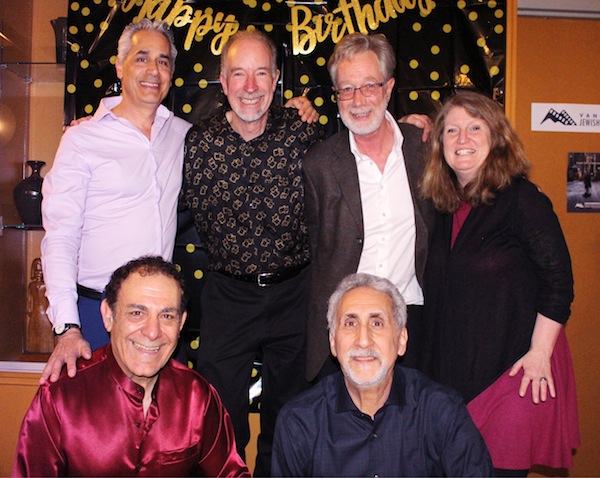
The Tzimmes sextet, in 2019. Left to right are Saul Berson, Phil Belanger, Tim Stacey, Amy Stephen, Yona Bar-Sever and Moshe Denburg. Also part of the ensemble in the new recording, but not pictured here, is Fabiana Katz. (photo from Tzimmes)

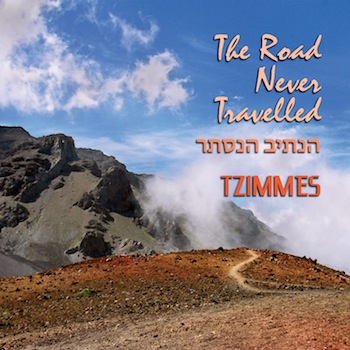
Vancouver Jewish musical ensemble Tzimmes celebrates its 35th anniversary this year. To mark the occasion, the group, led by Moshe Denburg, has released a new album, The Road Never Travelled, its first in 23 years.

Denburg, who is also a classical composer, founded Tzimmes in Victoria in 1986. Throughout that time, the ensemble’s modus operandi has been to incorporate as many types of Jewish music as possible – traditional Ashkenazi, Sephardi and Mizrahi, along with more contemporary and secular styles.

The new album is comprised of two discs. Disc 1 offers secular pieces, while Disc 2, Liturgy Lane, presents listeners with original music based on sacred texts.

The repertoire includes “Hahmi-ini” (“Let Me Hear Your Voice”), which was written in 1966, when Denburg was in his teens; the title track, “The Road Never Travelled,” from 2005; and “other original arrangements of more recent vintage,” such as “Oyfn Veg” (“On the Way”). Some of the songs on Disc 1, including the title track, are English pop/folk/world music. And not all the songs on the album are Jewish. There is, for example, a rendition of the Beatles’ “In My Life.”

image - The Road Never Travelled album coverThe recording and mixing history for the collection stretches 28 years. When it became clear that this was more material than could fit on one album, Denburg decided to turn it into two.

“For a number of years,” he told the Independent, “we had some tracks that were on the back burner, so to speak – unfinished recordings that were begun in 2005-06. Tzimmes kept working in general – some concerts, lots of simchas, but completing a new recording was not in the cards, mainly because my own work was focused on founding and husbanding the Vancouver Inter-Cultural Orchestra (VICO).

“A few years ago, I wound down my administrative duties with the VICO, and started considering, in earnest, completing a new Tzimmes recording. The final impetus occurred when I turned 70, in 2019. I brought the group together, worked on a lot of new, and older, material, and took them into the studio to complete the older tracks and to lay down some fresh ones,” he said.

The Road Never Travelled features many past members, and several other musicians who have collaborated over the past 20 years, to become the Tzimmes of today. Denburg (voice, guitar) is joined by Fabiana Katz (voice), Yona Bar-Sever (lead guitar, voice, electric bass), Saul Berson (clarinet, flute, saxophone), Amy Stephen (voice, accordion, whistle, lever harp), Tim Stacey (bass, electric bass) and Phil Belanger (drums) to form the ensemble. A dozen other musicians, including guitarist Itamar Erez, cellist Finn Manniche and vocalist Myrna Rabinowitz – as well as international instrumentalists Joseph “Pepe” Danza, Yuji Nakagawa and Adel Awad – also appear, among others.

Tzimmes’ last album, KlezMyriad, was released in 1998, though the ensemble has performed at concerts and larger-scale projects since then. While changes have taken place over the past many years, it continues to be a tight-knit group of musicians.

When asked about the ensemble’s longevity and how it has maintained its cohesion, Denburg explained, “I believe Tzimmes has steered clear of the more difficult conflicts that are legion where artistic collaborations are concerned. But, as a bandleader, it has taken the wisdom that comes only with much experience to keep one’s passion alive while allowing for the artistic expression of one’s colleagues. This is what a good bandleader ought to do.

“Tzimmes is more a family than an enterprise, at least that’s the way I look at it,” he continued. “So, as in all families, there is the joy of knowing that everyone is basically rooting for each other and, yet, at the same time, conflicts do occur. We have lived long enough together, and have matured as people together, to have buried most of the hatchets and be guided by our natural affections for each other, and our love of our common purpose – the making of music.”

About the ensemble’s history, Denburg said, “Over 35 years, ensemble members come and go, and, actually, no one who was with me in 1986, when Tzimmes was formed in Victoria, is with me today. Tzimmes has changed and evolved over the years. Of today’s members, some have been with the ensemble for 30 years, some for over 20, and others are newer additions. One of the hallmarks of the new recording is that almost all Tzimmes members, of yesterday and today, are part of the recording.

“Tzimmes has always been dedicated to presenting Jewish music in all its facets,” Denburg concluded. “The challenge has always been to deal with the variety of these musical expressions in a non-superficial way, to make an original contribution to Jewish music-making.”

As the pandemic eventually fades, there are plans for a concert to herald the release of the CD and celebrate the ensemble’s 35 years. And Denburg sees many possibilities in providing musical services of various kinds.

“Speaking for myself, in the longer term, it would be nice to see Tzimmes continue with some next-generation musicians,” he said, “to carry on the tradition of original Jewish music-making in Vancouver.”

For information on buying tracks and sheet music, visit tzimmes.net.

Sam Margolis has written for the Globe and Mail, the National Post, UPI and MSNBC.

Format ImagePosted on September 10, 2021September 9, 2021Author Sam MargolisCategories MusicTags Jewish music, milestones, Moshe Denburg, Tzimmes

Election amid chaggim

Much has been made of the challenges facing Canadians as the country engages in its 44th federal general election while still in the grips of a pandemic. For Jewish voters, the succession of holidays in the weeks leading up to the Sept. 20 election makes scheduling events like community forums with candidates extra confounding.

Nevertheless, the Centre for Israel and Jewish Affairs (CIJA), along with partner agencies, will present a number of events across the country. Here in Metro Vancouver, there will be a virtual town hall on Sept. 14, 4 p.m., co-presented, as is tradition, with SUCCESS, the United Chinese Community Enrichment Services Society. Topics addressed will include racism and hate crimes; seniors’ care; post-pandemic economic recovery; immigrants and refugees; safe and healthy communities; and the sustainability of charitable and nonprofit organizations.

Two days earlier, on Sept. 12, a Richmond-focused virtual town hall will take place at 5 p.m., co-presented by CIJA and the Kehila Society of Richmond.

Tucked in between, on Sept. 13, is a national town hall, presented virtually from Toronto, again hosted by CIJA, this time in partnership with The CJN. All events are accessible from the website cija.ca/election.

Locally on Sept. 13, there is an all-candidates meeting on seniors issues for the ridings of Vancouver Granville and Vancouver South, co-hosted by Jewish Seniors Alliance. To register for it, visit jsalliance.org.

CIJA also has released a federal issues guide, outlining what it considers to be priorities on matters of domestic and foreign policy.

Among the recommendations is a request to supplement the Security Infrastructure Program, which provides funds to enhance security at institutions such as synagogues and community centres, with a program modeled after the Community Security Trust in the United Kingdom, which trains volunteers to provide patrols, situational awareness and threat prevention.

The guide urges amending the criminal code to make Holocaust denial an indictable offence and developing a standardized national social studies curriculum on antisemitism and the Holocaust.

The document, which is downloadable from the CIJA website, calls on the next government to address online hate through education and enforcement, including a social literacy campaign to “sensitize Canadians to the potent role social media plays in bullying, harassment, intimidation, dissemination of hate, and threats.” It calls for reestablishing provisions in the Canadian Human Rights Act to combat hate speech and strengthening Canadian tax laws to prohibit charities from promoting or inciting antisemitism or violent extremism.

The foreign affairs section calls on the government to ensure that Canadian humanitarian aid to Palestinians “goes where it is intended” and to oppose one-sided United Nations resolutions singling out Israel. It also calls on the government to demand that the Palestinian Authority stop the “paid to slay” program that rewards terrorism. It also calls for putting pressure on Iran until it “demonstrates meaningful improvements in comes into full compliance with its international obligations.”

Other CIJA recommendations include:

  • Implementing the United Nations Declaration on the Rights of Indigenous Peoples “as an important step toward truth and reconciliation.”
  • Putting pressure on Eastern European countries “that have evaded their responsibility to pass meaningful restitution laws” for Holocaust survivors and their descendants.
  • Strengthening immigration and refugee policies particularly to support those targeted for their identity, such as Christians and Yazidis in Iraq, LGBTQ2+ people in Chechnya and Iran, and Rohingyas in Myanmar.
  • Reintroducing the question about religion in the census “to prevent continued underreporting of Jewish Canadians.”
  • Ending the three-month celibacy requirement for LGBTQ2+ blood donors.

The full document is downloadable at cija.ca/election.

The Canadian Jewish Political Affairs Committee (CJPAC) is also busy during the campaign.

CJPAC engages “Jewish and pro-Israel Canadians in the democratic process” and helps community members build relationships within the Canadian political arena. Their website, cjpac.ca, has links to all major political parties, as well as links to volunteering and getting involved in campaigns. There is a final volunteer training webinar available at noon Pacific time on Sept. 13.

For information on your riding, where to vote and a list of candidates, go to the Elections Canada website at elections.ca.

Posted on September 10, 2021September 9, 2021Author Pat JohnsonCategories Local, NationalTags Canada, Canadian Jewish Political Affairs Committee, Centre for Israel and Jewish Affairs, CIJA, CJPAC, elections, Jewish Seniors Alliance, JSA, politics
Two Jews are on ballot

Two Jews are on ballot

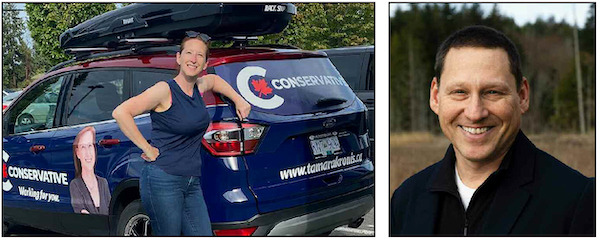
Jewish community members Tamara Kronis (Conservative party) and Avi Lewis (NDP) are running in the upcoming federal election. (photos from candidates)

British Columbia’s comparatively small Jewish community has produced a number of senior political figures, including the province’s first Jewish premier, Dave Barrett, and the current minister of finance, Selina Robinson, and minister of environment and climate change strategy, George Heyman. In this federal election, there appear to be just two candidates in British Columbia who are Jewish.

Tamara Kronis is the Conservative Party of Canada candidate for Nanaimo-Ladysmith. The riding is being closely watched by national observers as it is home to one of only two Green party MPs. Paul Manly, the incumbent, once sought an NDP nomination but was rejected by the party, apparently due to controversy over his positions on Israel and Palestine. While the other Green MP, former leader Elizabeth May, is seen as safe in her riding of Saanich-Gulf Islands, Manly appears to be in (at least) a three-way race with Kronis and New Democrat Lisa Marie Barron. Michelle Corfield is the Liberal candidate.

Kronis is a lawyer and heads a jewelry manufacturing and retail business. Until last month, she was associate chair of the Ontario Human Rights Tribunal and an independent director of Toronto Hydro. Earlier in her career, she served as director of advocacy for EGALE Canada, the national LGBTQ+ organization. She was a trial assistant at the International Criminal Tribunal for the former Yugoslavia.

Across the water and across the spectrum, Avi Lewis is the New Democratic Party candidate in West Vancouver-Sunshine Coast-Sea-to-Sky Country. A scion of Canada’s left-wing dynasty, Lewis is the son of journalist Michele Landsberg and Stephen Lewis, a former Ontario NDP leader and Canadian ambassador to the United Nations. His grandfather, David Lewis, was the leader of Canada’s NDP, from 1971 to 1975.

Avi Lewis is a journalist and activist who recently produced and co-wrote the Emmy-nominated animated short film about the Green New Deal, Message from the Future, with U.S. Representative Alexandria Ocasio-Cortez.

Lewis co-authored “The Leap Manifesto,” which was “a call to action on climate and inequality that was launched by an historic coalition of Indigenous leaders, unions and environmentalists, and signed by more than 50,000 Canadians,” according to Lewis’s website.

Lewis has an uphill climb. The riding, which straddles some of Canada’s wealthiest voters and the disparate communities along Howe Sound, has back-and-forthed between the Liberals and Conservatives in recent years. It is held by two-term Liberal MP Patrick Weiler, who is beating back a challenge from former Conservative MP John Weston. In 2019, the NDP candidate came fourth, well behind the Green party.

Format ImagePosted on September 10, 2021September 9, 2021Author Pat JohnsonCategories Local, NationalTags Avi Lewis, British Columbia, Canada, elections, politics, Tamara Kronis
Environment a Jewish issue

Environment a Jewish issue

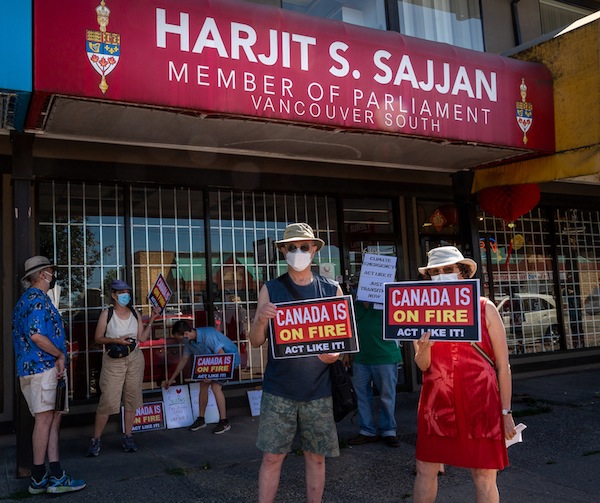
Or Shalom members Lorne Malliin and Marianne Rev organized a demonstration at the office of Harjit Sajjan, federal minister of national defence and MP for Vancouver South. (photo from Lorne Mallin)

The heat dome that sent much of British Columbia into an unprecedented spell of sweltering weather, followed by wildfires that have destroyed vast swaths of western North America, including the B.C. town of Lytton, and extreme weather events like Hurricane Ida have put climate and the environment at the top of many people’s priorities. With the federal election now days away, all federal parties have honed their pitches to voters on issues of the environment.

Jewish activists have been vocal on these issues recently, reflecting the growing realization that impacts of climate change are not a remote future potential but an immediate and measurable phenomenon.

Marianne Rev, a member of the tikkun olam committee at Or Shalom synagogue, was one of many Jewish people who participated in a series of demonstrations at the offices of scores of members of Parliament on July 29. With her friend and fellow Or Shalom member Lorne Mallin, Rev organized an event at the office of Harjit Sajjan, federal minister of national defence and MP for Vancouver South. Other local demonstrations took place at the offices of Vancouver Quadra MP Joyce Murray and North Vancouver MP Jonathan Wilkinson, who is also the federal minister of environment and climate change.

“It was part of an action organized by 350.org,” Rev told the Independent. The organization 350.org was founded in 2008 to build a global climate movement and was so named because 350 parts per million is the safe concentration of carbon dioxide in the atmosphere. (Concentrations are now 414.6 parts per million.)

“I’ve been increasingly involved in climate action, political action, climate justice,” said Rev, a retired physician.

While she was told in advance that Sajjan would not be available to meet on July 29, Rev was disappointed that, when her group of about 25 activists arrived at the office, it was closed. Nevertheless, she and a small group of others met with the minister on Aug. 9.

“We had an excellent meeting,” she said. “There were two very specific asks.”

Her group, as well as those participating across the country, asked MPs for a moratorium on all new or expanded production and transporting of fossil fuels, including the Trans Mountain Pipeline expansion. Second, they demanded a “just transition” away from fossil fuels to allow workers in those industries to shift to other sectors.

Rev said the response her group got from Sajjan was voiced by Wilkinson in the media.

“He blurted out the party line, which, shockingly, Wilkinson repeated many times over on the morning of the ninth, when the [Intergovernmental Panel on Climate Change] put out their report saying that we are code red for humanity,” she said. “[The government says] that we need the TMX to fund the transition to renewables. As such, it’s completely false.… It’s totally fallacious political B.S. that has been put out on the population for decades. Renewable energy is free. It’s not free to get there, but wind and sun is free.”

Rev gives credit to Adam v’Adamah, one of British Columbia’s pioneering Jewish environmental groups, and said that the environment and climate are logical concerns for Jews.

“Jews have always been very interested and driven regarding social justice, and the environment and climate are very much climate justice issues,” she said.

Rabbi Dan Moskovitz, senior rabbi at Temple Sholom, concurs.

“I’ve been involved with [environmental issues] informally for my entire life, but formally, as a congregation, three years ago we launched an initiative to make clear that the climate and the environment is a Jewish issue,” he said. “I see it in very religious terms in the sense that we are commanded to be guardians of the earth, stewards of the earth. So, it’s a mitzvah, a religious obligation, to be good stewards of the earth. I challenged my congregation to join me in that effort and I challenged our Jewish community and they’ve responded, to put this on our community agenda, to see this as a pressing concern for the Jewish community and for the Jewish people. The Jewish Federation has an environmental task force now. We have been talking with CIJA [the Centre for Israel and Jewish Affairs] to get it on their list of priorities and to get the politics out of it and to see it for what it is, which is an existential threat to this world that we are commanded to be caretakers and stewards of.”

As Jewish voters ponder their ballot choices, Moskovitz has some thoughts.

“Rhetoric is lovely and nice and, for the most part, all the campaigns, as I hear them, say basically the right things about the environment,” he said. “But who is doing something or who is in a position to do something? The time for talking is over.… If you don’t do what you’re preaching or praying for, then it’s just noise and we can’t afford more noise because, if we’ve seen anything over this past summer, with the fires here and in the States, and, as we saw the impact of what staying home during the early part of COVID did for our environment in allowing it to rest and to have its own sabbatical year … we can see that we can’t keep using and abusing this God-given gift, which is the world we live in. We are just renters here. We don’t own it.”

Format ImagePosted on September 10, 2021September 9, 2021Author Pat JohnsonCategories Local, NationalTags 350.org, Canada, climate change, Dan Moskovitz, demonstrations, elections, environment, Lorne Mallin, Marianne Rev, Or Shalom, politics, Temple Sholom, tikkun olam

Parties back JCC plan

The leading federal political parties have pledged their support to the redevelopment of the Jewish Community Centre of Greater Vancouver. Kailin Che, the Conservative Candidate for Vancouver Granville, issued a release Sept. 1, saying that a Conservative government would commit to the redevelopment of the facility. The Conservative campaign did not commit to a dollar amount.

The federal Liberals also made a commitment. Taleeb Noormohamad, the Liberal candidate in Vancouver Granville, announced the next day that a reelected Liberal government would contribute $25 million to the project – the same contribution that the province has committed to and the amount JCC officials requested.

The entire project is budgeted at $427 million, including $155 for a new community centre, childcare spaces and seniors care and $272 million to construct 500 to 600 units of mixed-use rental housing. The new centre is estimated for completion in late 2024 and the housing component is anticipated in 2027-28.

Posted on September 10, 2021September 9, 2021Author Pat JohnsonCategories LocalTags Canada, elections, JCC, Jewish Community Centre, politics, redevelopment

Volunteer during election

Oct. 21, 2019, seems like a lifetime ago, doesn’t it? That was the date of the last Canadian federal election. Since then, it’s been a world of endless uncertainties and instability.

The Jewish community has witnessed levels of antisemitism that haven’t been seen for decades. Hate crime numbers are way up. The aura of anti-Israel sentiment, especially following the conflict earlier this year in Gaza, has created an environment that has many feeling unsafe and anxious. The silence of many within the political sector has been cause for concern. On top of all of this, the havoc of the COVID pandemic is still felt daily.

Let’s be real: people are upset and worried. The past 22 months since the last election have presented incredible challenges to our well-being and shown that nothing is guaranteed. The Canadian Jewish community has demonstrated its resilience and fortitude but there is a lot more to do, especially when it comes to elections. We’ve seen firsthand what an important role the government plays in our lives, especially regarding the pandemic, so it’s vital that we extend our efforts more effectively in the political realm.

The Jewish community makes up less than 1.1% of the population and is concentrated in just a handful of ridings – 10 out of 338. That’s only three percent. Our numbers are continuing to decline. In politics, relationships matter. If we limit ourselves to involvement in only three percent of ridings and three percent of candidates, we are at a major disadvantage when it comes to our community and the things we care about.

To ensure our voices are heard, members of the Jewish community must continue to build relationships and educate MPs in ridings from coast to coast. This starts with political engagement, and it starts with each of us. As Rabbi Tarfon said, “It is not your duty to finish the work, but neither are you at liberty to neglect it.”

The good news is that we have the tools to get engaged so we can work beyond the local ridings where we vote. While the Canadian Jewish Political Affairs Committee (CJPAC) does not engage in or facilitate lobbying and advocacy, we do act as a concierge, helping members of our community to get engaged politically.

Another important factor is that change is inevitable with elections. In 2019, 98 first-time MPs (27%) were elected, 60 of whom were in ridings that flipped seats. A third of those 60 MPs defeated the second-place finisher by less than five percent of the vote. As for this election, at the time we wrote this, 26 incumbents had decided not to run for reelection. Many more ridings will change hands. This means that, no matter which way the election goes, our community will need to build new relationships with new parliamentarians.

We can jumpstart that process. Community members like you can volunteer and acquaint yourselves with candidates from beyond your own riding and across the country. Every campaign is in dire need of volunteers, and even just a few hours can be a huge help. Often just a few more volunteers can make the difference between winning and losing a race. Plus, the appreciation for a volunteer’s work – no matter how big or small – is something that’s not easily forgotten.

There is, of course, one element that’s changed the game with this election: COVID. While it’s still possible to engage in traditional methods of volunteering – door-knocking, handing out literature in the community, putting up lawn signs or working in a polling station – understandably, some are hesitant to participate under pandemic circumstances.

But fear not: there are many physically distanced ways to volunteer, including from your own home. And you don’t have to be politically experienced to do it. All you have to do is raise your hand and show up. CJPAC will connect you to the campaign of your choice.

For those who feel more comfortable with a bit of instruction, CJPAC’s team makes it simple by training you on the basics of campaign volunteering. You can volunteer in your local riding or in one of the other many ridings where a strong Jewish presence is absent. Perhaps that means traveling 20 to 30 minutes away from your home or simply making phone calls from your couch for a candidate in a more remote part of the country.

The first step is to sign up at cjpac.ca/volunteer, and CJPAC will connect you with the campaign or candidate of your choice.

As Jews, we are committed to community service and contributing to the greater society. While it’s been a rough several months, we don’t have to stand alone. It doesn’t matter what party you align with: it’s vital to the health and safety of the Canadian Jewish community to build relationships with all parties. We can accomplish that together by getting engaged.

Jeffrey Feldman is chair of the Canadian Jewish Political Affairs Committee and Mark Waldman is the executive director of CJPAC. This op-ed was first published on thecjn.ca.

Posted on September 10, 2021September 9, 2021Author Jeffrey Feldman & Mark Waldman CJPACCategories NationalTags Canada, Canadian Jewish Political Affairs Committee, CJPAC, democracy, elections, politics, volunteering

Posts pagination

Previous page Page 1 Page 2 Page 3 Page 4 Next page
Proudly powered by WordPress