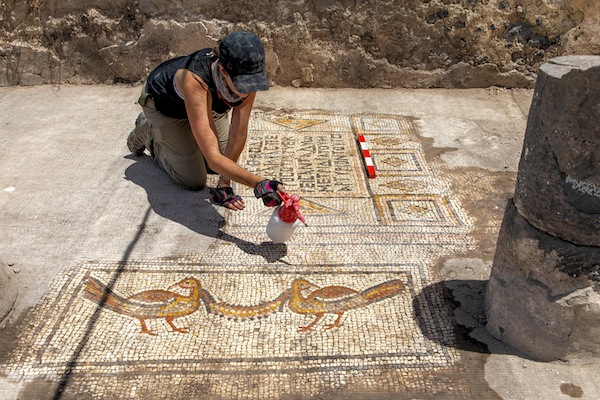
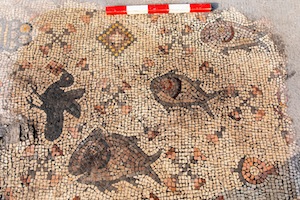
A mosaic revealed during the excavation of the “Burnt Church” in Hippos. (photos by Michael Eisenberg via Ashernet)
A mosaic was revealed during the excavation of the “Burnt Church” in Hippos, which was built in the second half of the fifth or in the early sixth century CE and was probably burnt down during the Sasanian conquest in the beginning of the seventh century. According to the researchers, the descriptions in the mosaic, along with the location of the church, overlooking the Sea of Galilee, raise the connection to the “Feeding the Multitude,” the miracle performed by Jesus in the area, according to the New Testament. “There can certainly be different explanations to the descriptions of loaves and fish in the mosaic, but you cannot ignore the similarity to the description in the New Testament: for example, from the fact that the New Testament has a description of five loaves in a basket, or the two fish depicted in the apse, as we find in the mosaic,” said Dr. Michael Eisenberg, head of the excavation team in Hippos on behalf of the Institute of Archeology at the University of Haifa, along with colleague Arleta Kowalewska. The excavation of the church specifically was placed in the hands of Jessica Rentz from the United States, who has exposed its entire internal area.
During the preservation process, headed by Yana Vitkalov from the Israel Antiquities Authority, most of the mosaic area was cleaned and preserved, and most of its decorations and two inscriptions in Greek were exposed. The first one tells about the two fathers of the church, Theodoros and Petros, constructing a sanctuary for a martyr, while the second one, which is located inside a medallion at the centre of the mosaic, exposes the name of the martyr, Theodoros. An initial reading of the inscriptions was done by Dr. Gregor Staab from the University of Cologne in Germany, expedition epigraphist.
Eisenberg continues to be cautious about the interpretation of the new mosaic. “Nowadays, we tend to regard the Church of the Multiplication in Tabgha, on the northwest of the Sea of Galilee, as the location of the miracle, but with careful reading of the New Testament, it is evident that it might have taken place north of Hippos within the city’s region.”
לדף בפייסבוק של הליכוד בקנדה יש מעט מאוד תומכים. כך עולה ערב הבחירות הכלליות בישראל שיערכו ביום שלישי הקרוב (השבעה עשר בספטמבר).
דף הליכוד קנדה שהפרסום בו נכתב בעברית ואנגלית כאחד מיועד בעיקר לתמוך בראש הממשלה וראש הליכוד, בנימין נתניהו. מספר העוקבים אחרי פרסומי הליכוד בקנדה עומד על שלושים ותשעה בסך הכל, ומספר “הלייקס” עומד על ארבעים בסך הכל. התמונות האחרונות שפורסמו בדף של הארגון הן מלפני יותר מארבע החודשים (מהעשרים ותשע באפריל).
גם האתר של הליכוד קנדה שמקושר ישירות לאתר של הליכוד בישראל, לא פעיל במיוחד. החלק של “מי אנחנו” ריק לחלוטין, בחלק של “תוכנית ואירועים” – האירוע האחרון הוא משנת אלפיים ושלוש, ואילו חלק של “הודעות לעיתונות” – המידע האחרון משנת אלפיים ושבע.
בדברי ההסבר לפעילות הליכוד בקנדה נאמר בין היתר כי: הליכוד קנדה מחוייב לתמוך בישראל חזקה ובמאמצים החלוציים של המתנחלים ביהודה ושומרון. הליכוד קנדה יפעל בצורה אגרסיבית נגד האנטישמיות, כולל בארגונים ניאו-נאצים, אסלמיסטים קיצונים וגורמים בקהילה היהודית “הסובלים” משנאה עצמית. הארגון יעזור לסטודנטים היהודים בקאמפוסים השונים להתמודד מול אנשי השמאל המתנגדים לישראל ותומכים בתנועת הבי.די.אס.
הליכוד בקנדה מתגאה בפעילותו ובארגונים השונים הקשורים בו ובהם: הארגון הרוויזיוניסטי הציוני, נשות חרות, חרות הצעירה, בית”ר ותגר. הארגון תומך ותמך בקרן תל חי, כפר הנוער על שם יוהנה ז’בוטינסקי, המערכה הארוכה לשחרור היהודים מברית המועצות לשעבר, קרן קיימת לישראל וההסתדרות הציונית העולמית.
רשימת נשיאי העבר של הליכוד קנדה כוללת בין היתר את השמות הבאים: נתן סילבר, סם שיינהואס, סם סוקולוב, בן מילנר והארי וול. רשימת המנהיגים של הליכוד בקנדה כוללת בין היתר את השמות הבאים: מוריס פיינשטיין, אייב מונק, נתן בלנקרוט, מוריס דיאמנט, ג’ק רפופורט, יחיאל הברמן, מוריס מלוטק, לואיס מוזס, שלדון לרמן, טוביה שוורץ ומוריס לקס.
הליכוד קנדה מפרסם בימים אלה בנארים במספר אתרים הקשורים לישראל והקהילה היהודית כאן, לקראת הבחירות בישראל. במודעות נכתב בין היתר כי התומכים בליכוד קנדה הם חלק מארגון קהילתי המייצג את האידאליזם של הציונית המרכז-ימנית. המצטרפים יודעים שמדובר בארגון יהודי פעיל אחראי, המתחייב לתת מענה נמרץ לאנטי-ציונות בזירה הציבורית, באוניברסיטאות ובחוגים היהודים המתקדמים. המצטרפים תומכים בתוכנית של ההסתדרות הציונית העולמית.
במודעות יש מידע בדבר תוכנית ירושלים: אחדות העם היהודי, הקשר של העם היהודי למולדתו ההיסטורית היא ארץ ישראל. וכן מרכזיותיה של מדינת ישראל ובירתה ירושלים המאוחדת בחיי האומה. ובנוסף: תמיכה בעלייה לישראל מכל מדינות העולם, חיזוקה של ישראל כמדינה ציונית ודמוקרטית ועצוב המדינה כחברה מופתית בעלת אופי מוסרי ורוחני יחודי, המאופיין בכבוד הדדי לעם היהודי, תוך חתירה לשלום ותרומה לשיפור העולם. יש להבטיח את עתידו והייחוד של עם ישראל על ידי קידום החינוך היהודי, העברי והציוני, טיפוח ערכים רוחניים ותרבותיים, והוראת השפה העברית כשפה לאומית. עוד נאמר כי יש ליישב את המדינה כביטוי לציונות המעשית, יש לטפח אחריות יהודית הדדית, להגן על זכויות היהודים כיחידים וכאומה, וכן לייצג את האינטרסים הציוניים-לאומיים של העם היהודי ולהיאבק בכל גילויי האנטישמיות.
עלות הצטרפות לליכוד קנדה עולה חמישה דולרים, היא מיועדת רק לבני שמונה עשרה פלוס, ומותנית בקבלת תוכנית ירושלים ותמיכה באג’נדה של הליכוד שהיא מדינה יהודית חזקה ובטוחה. מספר הטלפון מטורונטו המצורף למודעה שייך לפרנק דיאמנט, לשעבר מנכ”ל בני ברית קנדה (שפעל בארגון במשך כשלושים שש שנים).
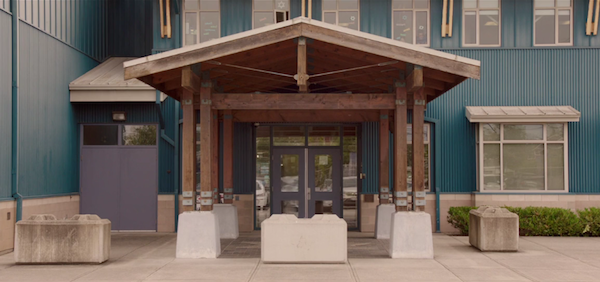
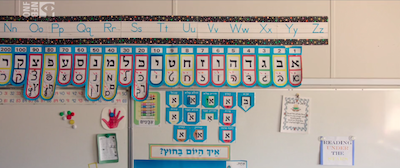
Stills from the NFB’s Highway to Heaven: A Mosaic in One Mile. Richmond Jewish Day School is one of the institutions featured in the short film, which screens at this year’s Vancouver International Film Festival.
The National Film Board short Highway to Heaven: A Mosaic in One Mile, written and directed by Sandra Ignagni, is visually striking. For the most part, it lets the images do the talking, communicating more about cultural diversity than words could.
Part of this year’s Vancouver International Film Festival, Highway to Heaven introduces viewers to the multiple faith groups and institutions along a mile-long section of No. 5 Road in Richmond, which includes Richmond Jewish Day School. In the 17-minute documentary, this strip of road – which has been called “Highway to Heaven” – appears both full of colour and action, as well as remote and removed, not just geographically but with chain link fencing and other security measures.
“We share a world grappling with ethnic and racial tensions, religious xenophobia and violence,” writes Ignagni in her director’s notes. “Such realities are not limited to the world’s conflict zones – they are a part of everyday life, even in the most advanced democracies such as Canada. It was in this context that I was drawn to the peculiar landscape of No. 5 Road … where multiple cultural and religious groups share a short stretch of suburban road. I was curious about how groups pitted against each other in so many corners of the world appeared to be living relatively peacefully with one another, and in very close proximity, in an ordinary Canadian suburb.”
In showing the beauty of the area – both in landscape and in cultural acceptance – Ignagni also captures some of the tensions that exist. The camera jumps from a lush orchard to a mansion mid-construction to a for-sale sign in front of what seems to be part of a forest. In one scene, which looks like it was filmed at RJDS, police in full gear – bulletproof vest and holstered weapons – address RJDS and Az-Zahraa Islamic Academy students, introducing themselves so that the kids should feel comfortable going to the police if they have a problem. The police then referee the kids in a game of ball hockey – boys against the boys, girls against the girls – throwing in questions about boundaries and other issues for the kids to consider.
Referring to the police presence on the road, Ignagni writes that it could “be variously interpreted as bridge-building, protection or surveillance. I learned that, for more than one decade, the Richmond Jewish Day School did not have an exterior sign for fear of antisemitic attacks against its schoolchildren. And, in recent years, the secular residential community that surrounds No. 5 Road launched a major campaign opposing the proposed expansion of a Pure Land Buddhist temple, using the pejorative moniker ‘Buddha Disneyland’ to describe the proposed building in local media and public debates. The mere fact that zoning by-laws have ordered these communities – the majority of which play a critical role in new immigrant and refugee resettlement – to the fringe of suburban land is also ripe for reflection.”
The minimal use of narration or interviews in the film was a deliberate choice. To do otherwise, Ignagni notes, “would be an exercise in public relations, reducing complex issues to soundbites and polemics. Instead, I wanted to make a film that would at once capture the remarkable – because it is truly remarkable – diversity on No. 5 Road, as it actually exists, while gesturing to some of the unresolved issues that underlie Canadian multiculturalism. The film is, therefore, constructed as a ‘mosaic’ – defined by writer and activist Terry Williams as ‘a conversation between what is broken.’”
While she doesn’t rely on words to tell this story, sound plays an integral role in the film: calls to prayer, monks chanting, different languages being spoken (and not translated), kids playing, school bells ringing.
“My film invites audiences to sit with what is unknown, different, raw or only partially visible,” says Ignagni. “To me, a mosaic captures perfectly the subtle tensions one finds on No. 5 Road, where custom and ritual, language and cultural diversity are practised under surveillance cameras and behind locked doors and gates. In making this film, I am asking audiences to look with open eyes and hearts – with a spirit of curiosity – at themselves and their neighbours, and simply reflect on multiculturalism as an unfinished project in need of attention in Canada and around the world.”
In addition to RJDS and Az-Zahraa, the list of participating neighbours includes the Evangelical Formosan Church of Greater Vancouver, India Cultural Centre of Canada/Gurdwara Nanak Niwas, Kingswood Pub, Lingyen Mountain Temple, Mylora Executive Golf Course, Royal Canadian Mounted Police (Richmond detachment), Thrangu Tibetan Buddhist Monastery, Trinity Pacific Church, and Vedic Centre.
At VIFF, Ignagni will participate in one of a series of panel discussions presented by Storyhive on Totally Indie Day, Sept. 28, at Vancity Theatre. She will be on the hour-long panel called Not Short on Talent: The Rise of the Short Form Documentary, which starts at 3:45 p.m. For the full film festival lineup, including, eventually, the not-yet-listed screening time of Highway to Heaven – which was an Official Selection at this year’s Toronto International Film Festival – visit viff.org.
Dr. Daniel Matt will speak in Vancouver at Or Shalom over Selichot, Sept. 20-21. (photo from Or Shalom)
Even one of the world’s leading authorities on kabbalah has felt lost in the study of Jewish mysticism.
Dr. Daniel Matt began studying the Zohar, the central text of kabbalah, on a one-year exchange at the Hebrew University in Jerusalem. “Knowing that I had just one year there, I decided to take both Beginning Zohar and Advanced Zohar simultaneously,” he recalled. “I felt somewhat lost in Advanced Zohar, but that didn’t really matter, because I also felt somewhat lost in Beginning Zohar!”
His first book, his PhD dissertation, was a scholarly edition of the first translation of the Zohar: The Book of Mirrors by Rabbi David ben Yehudah he-Hasid, composed in the 14th century. He then taught at the Graduate Theological Union in Berkeley, Calif., for two decades and spent as many years translating the most authoritative English translation of the Zohar. Matt, who will be in Vancouver Sept. 19-21, has become a preeminent scholar of the text.
In the mid-1990s, Matt was approached by Margot Pritzker – of the family who owns the Hyatt hotel chain – to produce a comprehensive English translation of the 700-year-old Zohar from the original Aramaic manuscripts.
Knowing the importance of the project, Matt agreed. “The Zohar was the only Jewish classic that had never been adequately translated,” he said.
The Zohar: Pritzker Edition was published in its completion in 2018. The 12-volume set, of which Matt translated and annotated the first nine, took 18 years to complete. For the feat, he received the National Jewish Book Award and the Koret Jewish Book Award, the latter calling his translation “a monumental contribution to the history of Jewish thought.”
The honour “was thrilling,” Matt said. The actual process of completing the translation, however, was at times grueling. “I basically restructured my life so that I could stay focused on this immense project without burning out,” he explained. “I started each day with a walk in the Berkeley Hills, then worked for five hours, then went for a swim, then rested and did some prep for the next day’s adventure.”
A major challenge was that, over the centuries, scribes who copied out Zohar manuscripts made changes to the text, meaning that an accurate version of the original was hard to find. “They added explanations, simplified the unruly Aramaic, deleted erotic descriptions or difficult – or invented – words and phrases,” Matt said.
Previous English translations of the Zohar were based on printed versions that, in Matt’s view, did not reflect the original writings. But, early in his process, he came upon manuscripts from the 14th to 16th centuries that he considered superior to the printed ones. To produce a “more authentic and poetic version,” he first reconstructed an Aramaic text from those manuscripts so he could build his English translation with it and, ultimately, share that artistry with a new audience.
“It is a treasure not just of Jewish literature, but of world literature, hidden away in an Aramaic vault for 700 years,” he said.
For the past year, Matt has taught an online Zohar course and has had more than 500 students, both Jewish and otherwise, from all over the world. He has found it gratifying to see “how eager people are to find personal meaning within Judaism, to explore and challenge the traditional understanding of God and Torah.
“I find that many folks are amazed to see that what they believe most deeply has been expressed by the mystics hundreds of years ago, or what they have stumbled across in Buddhism or other spiritual teachings is right there in our own tradition, hidden for too long.”
What Matt impresses on his students, both beginner and advanced, about the Zohar is how it goes beyond the literal meaning of the Torah. “It challenges our normal ways of making sense and reveals a radically new conception of God,” he said. “God is not a bearded man up in heaven who runs the show. God is infinity. At the same time, God is equally female and male, and the feminine half of God (Shekhinah) is perhaps the greatest contribution of the Zohar.
“All of Western religion is dominated by the masculine description of God, which has influenced our culture tremendously and left us with an imbalanced view of our own human nature.” Shekhinah, he said, “helps us realize that God embraces both the feminine and the masculine realms, though ultimately God is beyond gender.”
Matt’s Vancouver visit will include a vegetarian potluck at Or Shalom on Sept. 20, after which he will talk on Shekhinah. On Sept. 21, he will present the talk How Kabbalah Can Stimulate Us to Renew Our Lives, which will include songs on the theme of yearning to join with the One and meditation led by the synagogue’s Rabbi Hannah Dresner. Program details and registration are available via orshalom.ca/selichot.
Shelley Stein-Wotten is a freelance journalist and comedy writer. She has won awards for her creative non-fiction and screenwriting and enjoys writing about the arts and environmental issues. She is based on Vancouver Island.
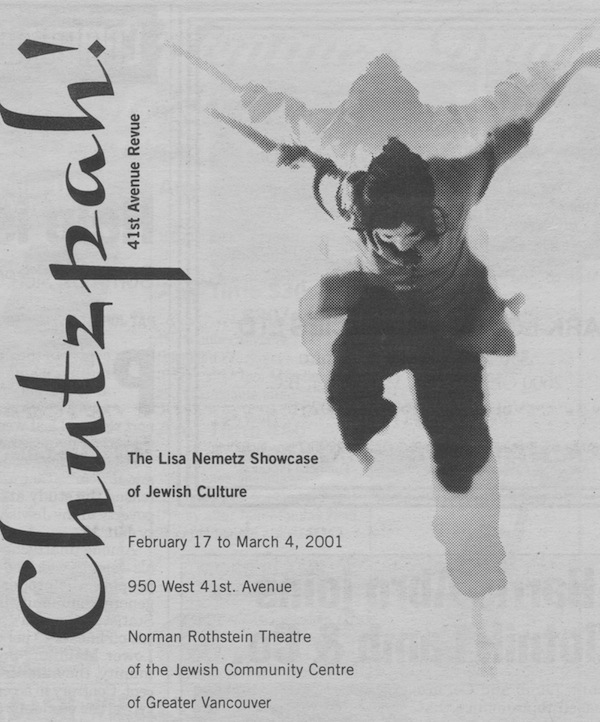
Mary-Louise Albert was not only a dancer in the first-ever Chutzpah! Festival, but its poster model (see image below).
As the 19th annual Chutzpah! Festival approaches, ready to embrace its new season – no longer a spring festival but a fall one – it will have to loosen its embrace on its artistic managing director, Mary-Louise Albert. After 15 years heading Chutzpah!, this is her last. Albert is moving on to the next part of her creative and personal journey, and the Jewish Independent spoke to her about the festival, its legacy and what might lie ahead for her.
JI: What do you think the main impact of the Chutzpah! Festival has been for the Jewish and general communities and the relationship between the two?
MA: Presenting and facilitating the growth of professional performing arts is an exciting and multi-layered approach to uniting communities. I am very proud that we have brought the festival to a point of national and international recognition, as well as being one of the flagship Jewish festivals in North America.
Through the insistence of high standards and by supporting new work, the festival has increased an understanding and appreciation of programming that embraces an eclectic range that is Jewish arts and culture, in particular from a Canadian perspective. Expanding on this programming, Jewish and non-Jewish artists share our stages, increasing our ability to bring many Canadian and North American premières to Lower Mainland audiences. Seeing, over the past 15 years, audiences from all walks of life and backgrounds embracing the festival is particularly rewarding.
JI: Have you accomplished what you set out to do when you took over the festival 15 years ago?
MA: Yes, which feels very satisfying to be able to say. I wanted the festival to not only survive but thrive in a very competitive local and national performing arts scene, which is tricky given a cultural umbrella. This meant attaining an international standard – not just a couple of high-profile shows, but across the board. It also meant the dance and music programming had to expand, which has in particular allowed for funding opportunities and artist growth.
An area I’m very proud of is connecting urban and rural communities through creation residencies. Many B.C.-based Chutzpah! artists have had creation residencies in both the North Island region and in the Norman and Annette Rothstein Theatre, resulting in world premières, with these productions going on to tour nationally and internationally. For example, this year, Geoff Berner, T.J. Dawe, Toby Berner, Tallulah Winkelman and Jack Garten will be Chutzpah! artists-in-residence for a week in Sointula, Malcolm Island, where they will perform as well. Chutzpah! will be sending UNA dance company from New York City to perform in Sointula, Port McNeil and in Alert Bay with the N’amgis nation directly before their Vancouver performances, which is a rare and meaningful opportunity for all involved. Sharing artistic wealth with underserved regions of B.C. is and has been an important aspect of the festival for the past few years. It is also in keeping with the times.
JI: In a couple of interviews I’ve read, you speak about how your training and working as a dancer was helpful to you in running Chutzpah! Could you speak a bit to that?
MA: I was trained in ballet and contemporary, danced professionally for 20 years and, within this time period, became a mother of two children. I was 45 when I stopped performing and, through support from the Dancers Transition Resource Centre, embarked on a new adventure of being the oldest “kid” in the class for a few years at Capilano U and BCIT’s Business School.
I was then hired by Gerry Zipursky [then-executive director of the Jewish Community Centre of Greater Vancouver, which is home to the Rothstein Theatre] and an inquisitive hiring committee (who I will always be grateful to) … and embarked on this job where I needed to come in running and move things forward. All this took stamina, tunnel vision, a somewhat sharp brain (and elbows), nerviness, flexibility and passion – things that a combination of dance training and a professional dance career prepares you for.
JI: In relation to Chutzpah!, what are one or two of your “I’m most proud of” moments?
MA: There are so many that I am proud of, but I would have to say the festival has been a trailblazer in presenting Israeli artists – and often in their first Canadian or North American appearances. Artists such as the Idan Raichel Project, Kibbutz Contemporary Dance Company, Batsheva Dance Company, Balkan Beat Box, Yemen Blues, Idan Sharabi, Roy Assaf, Avishai Cohen Quartet, Itamar Borochov Quartet, Dudu Tassa, Diwan Saz, Maria Kong, Baladino, Victoria Hana, David Broza and Mira Awad, A-WA and many more. And continuing this year with AvevA, Yemen Blues, Guy Mintus Trio, and Rami Kleinstein.
As well, I’m very proud of the growth of the dance and music programming and how this growth has affected positively and in a multi-faceted way the artistic development of many artists.
JI: What’s next for you?
MA: I live in both Burnaby and in Sointula on Malcolm Island. Development of contemporary dance, rural B.C. and social causes are beckoning. At 64, I still have a bit of “oomph” left to pursue.
JI: If there is anything else you’d like to add, please do.
MA: I’m honoured and thankful to have worked with so many excellent professional colleagues in the arts world and at the JCC in accomplishing the festival’s achievements, as well as working with some wonderful volunteers. However, there are two volunteers in particular who I want to give a special thank you to. People with integrity and grace who have stuck by me and the festival from the very beginning – Harriet Wolfe and Lloyd Baron.”
Rabbi Lynn Greenhough represents a series of firsts for the Victoria Jewish community. (photo from Kolot Mayim)
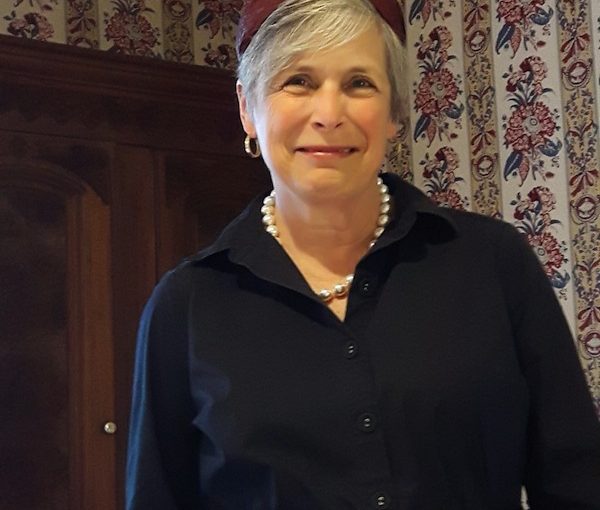
When Lynn Greenhough is officially installed as rabbi of Kolot Mayim Reform Temple in Victoria tonight, Sept. 6, she will bring with her a series of firsts to the city’s Jewish community: its first rabbi born on Vancouver Island, its first Canadian-born rabbi, its first full-time female rabbi with her own congregation and its first rabbi who was not born into Judaism.
A stalwart in Victoria’s Jewish life for nearly 30 years, Greenhough has been Kolot Mayim’s spiritual leader since 2017, while simultaneously completing her rabbinical studies at the program offered by the Jewish Spiritual Leaders Institute (JSLI) in New York.
For someone born and raised in Happy Valley – 15 kilometres west of Victoria – at a time when the area was still a farming community, the rabbinate was not a calling many in the community, or indeed on the Island, might have considered.
Her first taste of Judaism, and some of the recent history of the Jewish people, came in Grade 5, when she found a copy of William L. Shirer’s The Rise and Fall of the Third Reich in her schoolroom library, and her curiosity and sense of connection to Judaism ensued. She recognized that justice had tragically failed Jews during the Holocaust and she felt a need to be part of rebuilding a world where such a failure could never happen again.
“I consciously gravitated towards Judaism because of its inherent sense of justice,” Greenhough told the Independent. “At that early point, I realized, I would be a Jew.”
Life, jobs and family followed. She finished school, married and had a son, helped open Everywoman’s Books in Victoria and then worked for Canada Post as a truck driver for 20 years.
In the 1980s, Greenhough attended a few Jewish events at Victoria’s Congregation Emanu-El. She began to light candles and tried to build a sense of Shabbat into her week. She also looked for a Jewish partner who could help her build a Jewish home. Yet, it wasn’t until she was in her late 30s that she was determined – accompanied by now-husband Aaron Devor – to convert. Devor grew up in a Jewish neighbourhood on Long Island, but was not a regular synagogue attendee. Along the way, the couple became deeply engaged in Jewish life.
By 1992, Greenhough’s conversion was complete and, from then, it was full-on immersion to the point where she became a leader and educator. At Emanu-El, she guided historical tours, joined the board of directors, led services, including chanting Haftarot and Torah, joined the Chevra Kadisha (Burial Society) and served as a funeral officiant.
In 1996, she served as an instructor at the synagogue’s Hebrew school and then began teaching and coordinating b’nai mitzvah classes. In 1998, she began to teach Torah and Haftorah studies for adults and, in 1999, taught an introduction to Judaism course for those interested in conversion.
However, it was the Chevra Kadisha that became her passion. In 2000, Greenhough completed her master’s degree at Royal Roads University under the supervision of Dr. Rabbi Neil Gillman, z”l, from the Jewish Theological Seminary in New York. Her thesis – We Do the Best We Can: Chevra Kadisha in Small Jewish Communities in North America – looked at both the history of Jewish models for care of the dead, and present-day practices and training models from 16 different small Jewish communities.
This work led to further connections. Greenhough, along with Rena Boroditsky of Winnipeg, Man., and David Zinner of Maryland, worked together to organize the first of now 16 international conferences dedicated to learning about these burial practices.
Greenhough has also taught Judaism in the University of Victoria’s religious studies program (2007-09), was scholar-in-residence at Temple Beth Shalom in Phoenix, Ariz. (2009) and taught courses in academic writing at Royal Roads (2012-16).
In 2014, she joined Kolot Mayim as a member and led Torah studies and Shabbat and holiday services as needed, before becoming its spiritual leader in September 2017. Synagogue members are glowing in their praise of Greenhough as their choice.
“She brings a richness of experience as a born and raised ‘Island Girl.’ Indeed, she has attracted, and continues to attract, new members through her wisdom, spirituality, empathy, knowledge and quirky sense of humour,” said Sharon Shalinsky, president of Kolot Mayim.
Kolot Mayim was founded in 1998 by a small group of individuals and families, initially meeting monthly at the Victoria Jewish Community Centre. As the congregation grew, the frequency of services increased, ultimately to a weekly schedule. The synagogue has struggled to find a permanent rabbi and has, at times, been challenged in terms of membership recruitment and retention. The past year, though, it has seen a 70% increase in membership.
To mark the installation of a new rabbi at its westernmost location, Dr. Pekka Sinervo, the head of the Canadian Council of Reform Judaism, will be on hand at the ceremony, as will Rabbi Allan Finkel, who, along with Greenhough, is a 2019 graduate of the JSLI program and now leads services at Temple Shalom in Winnipeg.
Ahead of the occasion, Greenhough reflected, “This was not a career move, but the fulfilment of a dream.”
Sam Margolishas written for the Globe and Mail, the National Post, UPI and MSNBC.
Left to right, Sasha Gerson, Joanna Wasel and Frances Belzberg will be honoured by CHW on Sept. 22. (photos from CHW Vancouver)
Welcome to September! A few signals that summertime is ending are the kids going back to school, the Jewish holidays quickly approaching and the return of Jewish community gatherings like the upcoming Canadian Hadassah-WIZO (CHW) Vancouver luncheon.
On Sept. 22 at the Richmond Country Club, CHW is holding an event to honour exceptional volunteers. As a volunteer organization driven by women, which focuses on the welfare of children and women in Israel but is also concerned with the health care of all Israelis, CHW often chooses to recognize the contributions of local women who make a difference to the lives of those in our local community.
This year, the organizing committee of the luncheon, headed by CHW volunteer Toby Rubin, selected three visionaries who have put their considerable talents as organizers, motivators and mentors to work to improve various areas of Jewish life in Vancouver. Sasha Gerson, Joanna Wasel and Frances Belzberg represent three different generations of volunteers and all contribute in diverse ways to the community.
Gerson is well known in the Russian-Jewish community. For years, she helped immigrants settle in Vancouver through her work at Jewish Family Services. Her most public role is as an award-winning radio host. Twelve years ago, she and her partner, Dmitry Shiglik, launched Radio VERA, a weekly Russian-English talk show. Her motivation is to bring Jews together, and her volunteer activities through the radio have included organizing trips to Israel, festivals for children and music events. She interviews people primarily in Vancouver but has guests from Russia and Israel on her show. She is also a CHW volunteer, currently serving as treasurer of CHW Vancouver.
Familiar to those who are connected in any way to Camp Hatikvah, Wasel is known as a volunteer extraordinaire. She is currently serving her fifth year as president of the Camp Hatikvah board and, during her presidency, she has expanded participation in the camp’s programming. One of her most important legacies is the introduction of Family Camp, which was first held eight years ago. This program has brought a camp experience to more than 220 people every year since its inception.
“You’re never too old or too young to be a camper!” said Wasel of Family Camp. She sees the weekend-long experience as a chance for adults to make new friends. “People bond and it establishes a foundation for the Camp Hatikvah community. In addition to being good, quality family time, we see it as a community-building experience,” she said.
Camp Hatikvah is associated with the Young Judaea movement, a Zionist organization that dates back to 1917. Historically, CHW has been associated with Young Judaea, as well, providing funding for national programs including Biluim Canada and Israel.
The third honouree, Belzberg, has had a life-long commitment to philanthropy and Jewish community building. She has been involved with CHW for 67 years, most of those in Vancouver. Having contributed in the early years of her marriage to Hadassah in Edmonton, Belzberg knew that joining a Hadassah chapter when she moved to Vancouver would help establish close friendships in a new city. She continued as a volunteer in many leadership roles, including chair of the Hadassah Bazaar, and on the national board as well.
Belzberg’s dedication to community extends beyond CHW. She also has served as Jewish Federation of Greater Vancouver’s first women’s division chair and has held many other leading fundraising roles, including with St. Paul’s, B.C. Children’s and Vancouver General hospitals. She was a founder of the Dystonian Medical Research Foundation and was recognized for her diverse and numerous efforts with the Order of Canada in 1995. Belzberg has given countless hours as a volunteer, driven by a belief she explained this way: “Without community involvement,” she said, “there will be no future for the Jewish people. It is up to us to combat antisemitism and make sure our communal organizations remain strong.”
Those who attend the Sept. 22 luncheon, 11 a.m. to 2 p.m., will have the opportunity to hear a short address by each of the honourees. Proceeds from the event will benefit one of the many educational projects CHW supports in Israel – the CHW Centre for Clinical Training and Community Care, Hadassah Academic College in Jerusalem, is one of the fastest-growing institutions of higher learning in Israel. It is a pluralistic college with a range of undergraduate and graduate degrees, from health and life sciences to information and computer technology.
Luncheon tickets are selling fast, said Rubin. With more than 100 already sold and capacity at 150, those interested should purchase tickets soon. For more information or to register, call the CHW office at 604-257-5160.
Michelle Dodekis a freelance writer living in Vancouver.
One of the most important issues we should be grappling with nowadays is the preservation of our habitat. At the forefront of the nature preservation movement are photographers and one of them is Liron Gertsman, a young, award-winning local nature photographer whose solo show, Essence of Earth, is at the Zack Gallery until Sept. 22.
The show is sponsored by Esther Chetner.
“Eldad Goldfarb, executive director of the Jewish Community Centre of Greater Vancouver, approached me about this upcoming sponsorship opportunity, aware of my own concern about climate change and my passion for photography,” Chetner told the Independent. “Though I’ve traipsed parts of the globe enjoying the wonders that photo details can deliver, I’m not at all technically trained nor technologically nimble…. I recognize the remarkable quality of Liron’s images, and see value in making his work accessible to others.”
Calling Gertsman a “rising star,” Chetner said, “Encouraging this type of exquisite work is another way to help people appreciate our natural world more deeply and then, hopefully, to work toward preserving such essential global health and diversity. The more we see and appreciate about our natural environment, the more we will all be inclined to proactively protect it.
“Jewish values are quite aligned with environmental stewardship, and so having Liron’s work displayed at the JCC seems like an appropriate fit.”
Part of the proceeds of the exhibit will benefit the gallery, and another part will go to the Nature Trust of British Columbia.
“There are several charities concerned with nature preservation in B.C.,” Gertsman said, “but I like the Nature Trust because they purchase land specifically to build and maintain a treasury of wild areas.”
Liron Gertsman has loved nature and photography all his life. (photo by Ian Harland)
“I’ve loved nature and taking photographs all my life,” he told the Independent. “Recently, I started moving toward doing it professionally, like giving photography workshops or guiding people on their bird-watching expeditions.”
His photographs are like a guided tour. “I want people to witness nature,” he said. “I want to share with them what I see, even if they can’t travel themselves.”
To cover some of his costs, he has, at times, formed partnerships with companies and organizations.
“I choose companies focused on nature conservation,” he explained. “They would subsidize some aspects of my trip, or sometimes an entire trip, in exchange for photo use and social media marketing, usually through my Instagram account, which has close to 50,000 followers.”
For instance, in May and August of this year, Gertsman partnered with Ocean Outfitters, an ecotourism company based in Tofino.
“They are Tofino’s first carbon-neutral ecotourism company, and they have committed to donating $200,000 a year for multiple years towards restoration of the Tranquil Watershed,” he said.
Gertsman’s photos at the Zack Gallery are full of life and colour. His birds seem to soar through the gallery space. His landscapes are like windows, looking out into the British Columbia wilderness. Stars twinkle in the night sky. Pink crags reflect in the still surface of the lake. Waterfall gurgles across the boulders. Owls hide in the grass, and gulls skim over the rippling wavelets. But the beauty and serenity of his images filled me with apprehension. Could we lose all of this gorgeousness? The night after I visited his show, I had a dream, and Gertsman’s imagery figured heavily in my dreamscape.
* * *
“What is it, Grandpa?” a girl asked.
“A picture archive,” the old man replied.
“But it’s not a memory crystal.”
“No, it’s from the 21st century, an antique. Two hundred years old,” he said, inserting an outmoded device into a slot of his com-link and opening the files. Hundreds of pictures appeared on his screen. Nature, when it flourished.
“Oh,” his granddaughter said with interest. “What are those?”
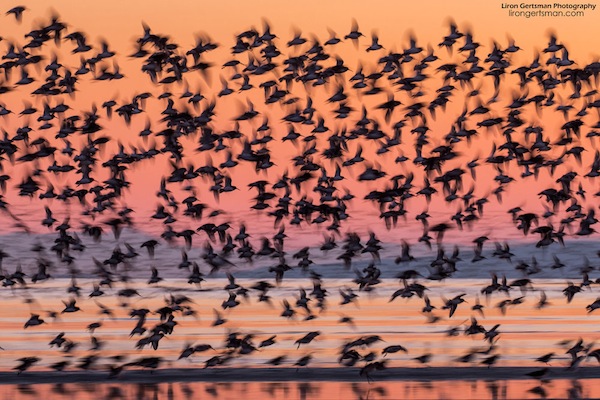
“Birds,” he whispered reverently. In the image, hundreds of small dark bodies hurtle across the peachy sky, their wings pumping so rapidly, the image blurred.
“Like a hologram in a museum?”
“Yes. Only they were alive. Flying.”
“But why is the wall pink? Why would they paint it pink?”
“Sandpiper Sunset,” photo by Liron Gertsman.
The old man glanced at the wall of the cave that housed the archives. Nobody lived on the surface of the earth anymore. Nobody could survive the toxic environment. People inhabited underground caverns such as this one and, mostly, they didn’t bother painting the walls. There were few resources anymore.
“It’s not a wall, it’s the sky,” he said. He had been very young when the last of humanity had moved underground, but he still remembered the sky. Scientists said that, in a few more generations, they could live outside again, but he wasn’t sure his granddaughter would last that long. He certainly wouldn’t.
“Our teacher said the sky should be blue,” the girl insisted.
“The sky could be any colour. This is probably sunset.”
“What is sunset?” She had never seen the sun.
He sighed, but, before he could explain, her gaze had skipped to another image.
“It looks like a fountain,” she marveled, “but what are these green blobs?”
The old man winced. “Trees. Bushes. It’s not a fountain. It’s a waterfall.”
Her finger zeroed in on another image. “I know,” she said triumphantly. “These are dogs. Strange dogs, though.”
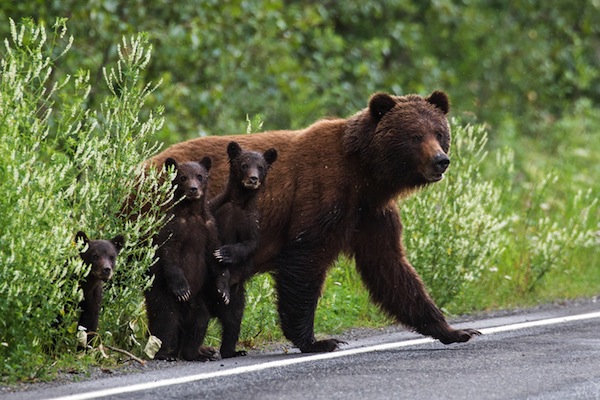
“These are not dogs. These are bears. The mother bear is….” He contemplated the animals on the screen, trying to remember his own textbooks. He had never seen a living bear either. “I think she is as big as I am,” he said at last. “Maybe bigger. And the little bears are probably your size.”
“So huge?” She eyed him with doubt. “They lived outside, too?”
He nodded.
“I don’t think I’d like it outside,” she said. “Everything is different. I like it better here.” She climbed off her chair and started to leave. “We have everything here.” She went out into the corridor. “I think it’s all fairy tales anyway,” she called back.
The old man remained still, staring at the closed door with sadness.
* * *
Essence of Earth opened at the Zack Gallery. To see more of Gertsman’s work, visit lirongertsman.com or instagram.com/liron_gertsman_photography.
Olga Livshin is a Vancouver freelance writer. She can be reached at olgagodim@gmail.com.
It is the season of new beginnings: new school year, newly turning leaves and a new Jewish year. On a leisurely drive on Labour Day Monday in suburban Vancouver, bright orange pumpkins that weren’t there last time we passed had suddenly exploded into full-sized squash seemingly overnight. Summer, of course, is officially with us until Sept. 23, but, especially if your household has kids (or teachers), summer unofficially ended when the first school bell rang on Tuesday.
This is the time of year for reflecting back and looking forward. The promise and excitement of the new mixes with nostalgia and other emotions about the passage of time and memories – good or bad – of what we leave behind.
This coming Monday, we will hear from four speakers at FEDtalks, the launch of the Jewish Federation of Greater Vancouver’s annual campaign. Among them is Isaac Herzog, head of the Jewish Agency for Israel who (in last week’s Independent) acknowledged that one of the challenges our global Jewish community faces is engaging and involving young Jewish people. As students return to post-secondary campuses in British Columbia, across Canada and around the world, we can anticipate the usual challenges – some years better or worse than others – of campaigns, referenda and assorted political shenanigans that have particular impacts on Jewish students.
Understandably, young people who have grown up with connections to Judaism, Jewish peoplehood and Israel will take exception to some of the things they will face. Some will rise admirably in these encounters, as we have seen year after year, when students at Hillel, Chabad and some ad hoc Jewish and Zionist organizations have spoken out against misleading and false expressions on their campuses. Others, also understandably, will avoid such unpleasant controversies and focus on less polarized topics and activities. Those who take up the frontlines in these battles deserve our community’s support.
There are broader issues than Zionism on campus. Free expression is top of mind for many professors, students, parents and other interested parties. A particular flare-up over the summer involved the Vancouver Pride Society (VPS), which puts on the city’s largest annual event, banning the University of British Columbia and the Vancouver Public Library from participating in the Pride parade because they both provided space for presentations by speakers who are virulently vocal against the rights of transgender people. It was a rock and a hard place for many. The Pride society certainly has the right to welcome or exclude anyone they choose (although the amount of public funding and in-kind support they receive should require a degree of public accountability). But, seeing the province’s largest university and largest library system excluded from any event, for whatever reason, is upsetting. If ideas, however odious, cannot be discussed on a university campus or at a library, they cannot be openly discussed anywhere. Driving ugly ideas underground is not a solution. The answer to hate speech is anti-hate speech. And if, as critics said, the messages of the speakers were so insidious that they could lead to violence, then that was a job for the RCMP to confront, not, perhaps, the VPS.
A 2017 poll indicated that 69% of American students say that conservatives can “freely and openly” express their views on campuses, while 92% say the same about liberals. What the poll indicates, probably, is that being a conservative on campus today is more unpopular than being a liberal. Likewise, it is probably easier on most campuses to speak against Israel rather than for Israel. But does this mean an individual’s rights are being infringed? Unless there is a systematic and official injunction against the ideas someone expresses, the issue is probably not the right to speak freely and openly, but the courage and, not inconsequently, the privilege to do so.
Pro-Israel students have demonstrated courage in defending Israel against bad-faith campaigns and insinuations. In a significant number of cases, it has resulted in young adults who have become masters of community organizing and experts in responding to attacks – and, if they were not natural leaders before, they have developed skills that will advance them throughout their lives. Our instincts, as their elders, may be to shield them from the sometimes hateful ideas they will encounter. Instead, we should be supporting and encouraging them in confronting and contesting these ideas.
To all who are embarking on new adventures – and, especially at this time of year, aren’t all of us in some way? – may we be strengthened by courage, determination and the support of one another.
For many of us, it’s the beginning of the year. Not the year that starts with Rosh Hashanah. I mean, the academic year. If you’re a student, a student’s parent or a teacher, professor or other education professional, the beginning of September can mean only one thing. It’s time to get back to the grind.
This is both exciting and a nerve-racking time. You want people to like you and appreciate your skills, talents and special gifts. You want to feel welcome and make others feel welcome, too. Seeking approval is an important part of life. We all do it, right?
As overachievers, my husband and I try to start early. He mentioned that some new colleagues were moving in down the street at the beginning of August. They were moving from another country, so we should try to help, we figured. The wait for one’s belongings to arrive and pass through customs can be awhile. (For us, it took 10 days.)
My husband was out of town when they arrived, so I sprang into action. We loaned them a picnic basket filled with dishes, silverware and cups, some patio chairs and, when they asked, even a broom and dustpan.
A few days later, my husband home, we enjoyed a Saturday together out in the sunshine. When we checked our email again, we found that our new neighbour had asked us to loan more items. We apologized, but explained we weren’t usually online on Saturdays. “Oh!” she replied, “Do you do a tech Sabbath?” I had to look this up, but this term was coined in 2010 by Tiffany Shlain, an internet pioneer, and her husband, Ken Goldberg, a robotics professor. It is based loosely on the notion of unplugging from technology on a traditional Sabbath.
I was flummoxed. There seemed to be no nice way to say, “Uh, no, I do real Shabbat.” So, I thought, OK, I will try to explain. I said something like: “In the safety of Canadian diversity, we observe real Shabbat, not just ‘tech Shabbat.’
“We are Jewish and try to take the day off from Friday night to Saturday night. So, we have a big family dinner on Friday nights, we go to synagogue on Saturdays many weeks and we spend the day together, sometimes with friends. However, if you need to reach us, you can always call the landline or walk over and knock on the door. We use the phone when necessary, drive, turn on lights, etc. We are not very strict in our observance; sometimes, we spend the day as a family outside, at a farm or doing an outing together. We just try to rest and not to work.
“We hope your belongings will arrive soon!”
Her response? I kid you not – she said, “Thanks for sharing.”
I felt completely uncomfortable and embarrassed. This was from a new neighbour, someone to whom we offered the loan of various items and tried to welcome. I left it there, I had nothing else to say. My partner was somewhat more hopeful, that perhaps they were just clueless. He tried to explain how hard it is sometimes to be a minority in this way.
In the end, I realized that this fit right into the “new school year, new school experience.” Many of us are seeking approval from peers, colleagues, family members and friends. We jostle and jockey for position. We want others to admire us or, at the least, accept who we are. Then, in an effort to bond or make connections we maybe overshare with people who couldn’t care less.
At the start of the new school year, I’m often keen to make new connections, but it would have been altogether possible for me to say nothing about who we were or why we weren’t online on Saturdays. We might even have saved ourselves the trouble by not offering to loan things in the first place. However, in the interest of being welcoming to strangers and reaching out to make friends, I ended up feeling embarrassed and self-conscious rather than proud. I didn’t like it.
Before I moved to Canada, I lived in the southern United States in a place where I had good reason to feel wary about revealing too much about my religious life. We knew it could be an issue; it wasn’t an especially tolerant place.
Based on recent news events – a swastika painted on a car in a Winnipeg neighbourhood, an election scheduled for Shemini Atzeret – I have to conclude that maybe it’s time to be more careful here.
Sadly, for the first time in 10 years in Canada, I’m wondering if I would have been better off to keep my Jewish practice to myself, and reveal less. Maybe if I were hip, I’d be considering a tech Sabbath, but no. I’m connected to something that’s perhaps less popular, but a lot deeper. Sometimes, sharing this is important, even if it isn’t always the cool answer.
Joanne Seiffhas written regularly for CBC Manitoba and various Jewish publications. She is the author of three books, including From the Outside In: Jewish Post Columns 2015-2016, a collection of essays available for digital download or as a paperback from Amazon. See more about her at joanneseiff.blogspot.com.

 During the preservation process, headed by Yana Vitkalov from the Israel Antiquities Authority, most of the mosaic area was cleaned and preserved, and most of its decorations and two inscriptions in Greek were exposed. The first one tells about the two fathers of the church, Theodoros and Petros, constructing a sanctuary for a martyr, while the second one, which is located inside a medallion at the centre of the mosaic, exposes the name of the martyr, Theodoros. An initial reading of the inscriptions was done by Dr. Gregor Staab from the University of Cologne in Germany, expedition epigraphist.