Mystery photos … June 28/19

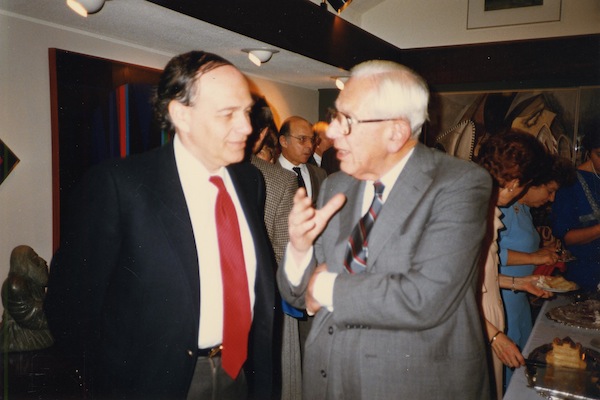
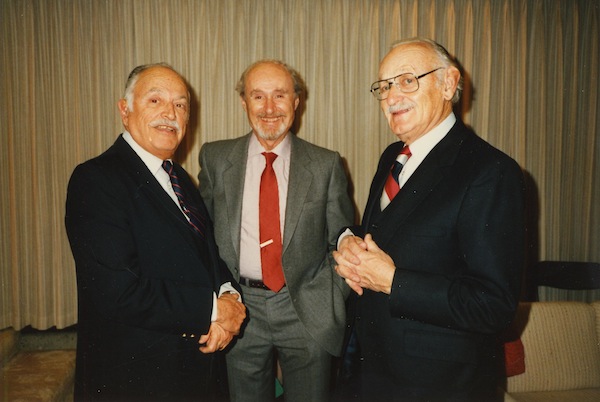
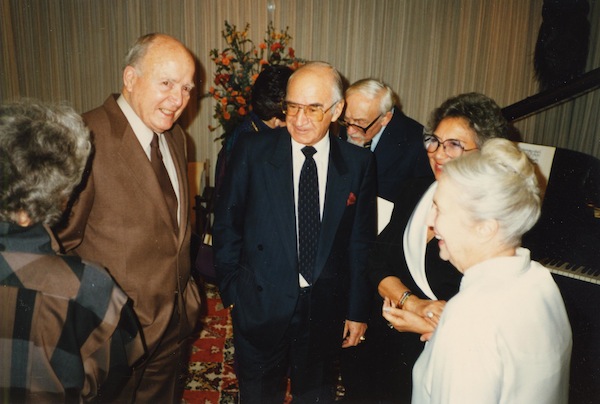
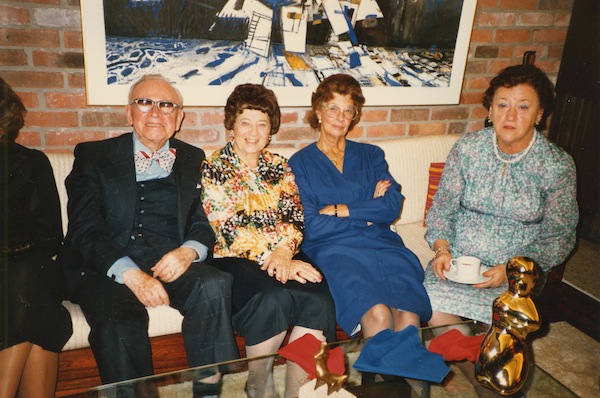
In the photo above and those below: People socializing at an unidentified event, possibly a University of British Columbia event in honour of Harry Adaskin, 1985. (The above photo is from JWB fonds, JMABC L.13764)

If you know someone in these photos, please help the JI fill the gaps of its predecessor’s (the Jewish Western Bulletin’s) collection at the Jewish Museum and Archives of B.C. by contacting archives@jewishmuseum.ca or 604-257-5199. To find out who has been identified in the photos, visit jewishmuseum.ca/blog.

photo - JWB fonds, JMABC L.13784
(photo from JWB fonds, JMABC L.13784)
photo - JWB fonds, JMABC L.13775
(photo from JWB fonds, JMABC L.13775)
photo - JWB fonds, JMABC L.13762
Sol Kort, middle. (photo from JWB fonds, JMABC L.13762)

החוק החדש בקוויבק

(Paul VanDerWerf)

חוק עשרים ואחד כך קוראים במחוז קוויבק לחוק החדש שעבר לאחרונה בפרלמנט של קוויבק, שישפיע משמעותית על אורח החיים של שומרי המסורת במחוז, יהודים ומוסלמים כאחד. החוק החדש אוסר על כל מי מאלה שעובדים במשרות הציבוריים ללבוש בגדים או לענוד מסמלים הקשורים בדת כלשהי, בשעה שהם מבצעים את תפקידיהם הציבוריים. יש לזכור שקוויבק היא המחוז השני בגודלו בקנדה ובעיר המרכזית והגדולה שלה – מונטריאול גרים יהודים ומוסלמים רבים

ומי יסבול בעיקר מחוק מהפכני זה: יהודים אשר הם חובשי הכיפות, מוסלמים אשר הם חובשי חיג’אב, סיקים והודים אשר הם חובשי טורבנים. האיסור עלול להשפיע קרוב לוודאי גם על נוצרים שעונדים צלבים. החוק יכול על כל העובדים הנושאים במשרות הציבוריות.ובהם בין היתר: אנשי כוחות האכיפה והשוטרים, תובעים ציבוריים, שופטים ומורים בבתי ספר ציבוריים.

הצעת החוק עברה בפרלמנט של קוויבק לאור כך שהמפלגה השלטת החדשה – מפלגת הקואליציה למען העתיד של קוויבק, הבטיחה לבוחריה בבחירות האחרונות (שנערכו בחודש אוקטובר אשתקד) ליישמו מהר ככל הניתן.

המושל של קוויבק, פרנסואה לגולט, ציין בהודעה לעיתונות כי בניגוד לביקורת הקשה נגד החוק, הוא אינו מנוגד לחופש הדת. וכן הגיע הזמן לקבוע כללים חדשים בנושא.

חשוב לדעת שחוק עשרים ואחד נקרא כך משום שהוא אינו משפיע ולא ישפיע על העובדים הנוכחיים, שעובדים במגזר הציבורי. הוא יחול על כל העובדים החדשים שיצטרפו למגזר זה. לפי ההערכות אוכלסיית קוויבק מונה כיום כשישה מיליון איש, בהם כתשעים אלף אלף מוסלמים וכשבעים וחמישה אלף יהודים.

דובר משרד ההגירה וההכללה של קוויבק, מארק-אנדרה גוסלין, הסביר את הצורך הדרוש בחוק החדש: אנחנו מאמינים כי אלה פונקציות מאד ספציפיות והן צריכות להיות ניטרליות לחלוטין. זאת על מנת להבטיח שירות ניטרלי

מהמדינה לאזרחיה. לדבריו הממשלה לא מכוונת לדת אחת בלבד וכי כל הדתות שוות ובאותה מידה.

ומי נמנה על רשימת המתנגדים לחוק זה: כארבעים אחוז מהמצביעים בקוויבק, חברי מועצת העיר מונטריאל וכן גם פקידים רשמיים של בתי הספר במונטריאל. כידוע גם ראש ממשלת קנדה הליברלי, ג’סטין טרודו, הביע ביקורת חריפה על הצעת החוק.

הצעת החוק נכתבה בצורה כזאת שהיא מוגנת לכאורה מפני אתגרים חוקתיים במשך חמש השנים הבאות. שתי הדרכים המשפטיות שעליהן ניתן להתבסס מבחינה של עתירה משפטית נגד החוק, הן של החוקה של קנדה ואמנת זכויות האדם והחופש של קוויבק. עם זאת נראה כי מנסחי החוק כיסו את עצמם מכל זווית אפשרית שתמנע מהמתנגדים לנסות ופסול אותו.

הצעת החוק אינה מגדירה בדיוק את מהו סמל דתי. ומה עם קעקוע או עגיל? האם עובד ציבור יהודי יכול ללבוש ציצית? האם הצעת החוק אוסרת על החסידים שיעבדו במשרות ציבוריות לגדל פאות?

כדי לטעון שהחוק אוסר על כל הסמלים הדתיים כאחד ואינו מפלה – הממשלה החדשה החליטה להסיר צלב קתולי שתלוי כבר שמונים ושלוש שנים בבית המחוקקים של קוויבק.

מסקר שנערך בחודש מאי האחרון בו השתתפו יותר מאלף ומאתיים מתושבי קוויבק (נערך בחסות האגודה ללימודים קנדיים), עולה כי רוב התומכים בהצעת החוק מנמקים זאת בשל רגשות שליליים כלפי מוסלמים ויהודים. על פי הסקר יותר מחמישים אחוז מהנשאלים אמרו כי מקובל על מורים בבתי הספר הציבוריים ללבוש צלב נוצרי, רק כשלושים אחוז ציינו כי מקובל על מורה בית ספר ציבורי לחבוש כיפה, ורק כשניים עשר אחוז הצביעו כי מקובל על מורה ללבוש כיסוי ראש מוסלמי.

Try to make the world better

Jewish Family Services Innovators Lunch committee, left to right: Sherri Wise, Tamar Bakonyi, Candice Thal and Shannon Ezekiel. (photo from JFS)

On May 14, Jewish Family Services held its 15th annual Innovators Lunch at the Hyatt Regency downtown. The sold-out event was hosted by CBC broadcaster Gloria Macarenko and featured keynote speaker Lane Merrifield of CBC’s Dragons’ Den. Attended by 620 donors, partners, sponsors and volunteers, it raised an unprecedented $380,000 towards programs and services designed to improve quality of life for 2,000 Lower Mainland residents.

This year’s theme at JFS is “community.” At the luncheon, Richard Fruchter, the agency’s chief executive officer, spoke of JFS’s mission to provide life’s necessities: “food, shelter, accessibility and emotional stability.”

The audience was shown a video presentation created by Michael Millman, which revealed the wide-ranging benefits of JFS’s work. A single mother spoke candidly and with feeling about her struggles. “Before I reached out to JFS, I struggled with everything. We lived on almost nothing,” she said. JFS staff provided housing, food and food vouchers, as well as trauma counseling. JFS partner agency Tikva Housing provided the family with a townhouse in a new development. “It’s a beautiful place, right on the Fraser River … a lovely home for us to have for many years,” she said, adding, “JFS has given us a life. A way to be happy. It’s just been a huge blessing for us.”

A senior with disabilities spoke about how a spinal cord injury felled him at the age of 36. JFS has helped him remain independent with its Better at Home program. In the video, Cindy MacMillan, director of senior services at JFS, explained that a grant from the United Way made it possible for the senior to remain at home. Now he has a housekeeper come in to look after his home, and also enjoys companionship with weekly visits from a JFS volunteer. “It’s working out, I look forward to them!” he said.

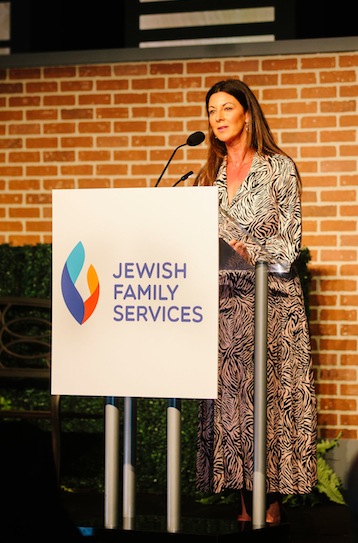
photo - JFS board member Jody Dales spoke about her own family’s struggles
JFS board member Jody Dales spoke about her own family’s struggles. (photo from JFS)

“It’s helped him realize that people in his community care about him,” said MacMillan. “It’s really Jewish values in action, in the broader community. Those values of caring and healing happen every time we make a match with a volunteer.”

JFS board member Jody Dales gave a passionate speech about her own family’s struggles. Dales saw her grandmother turn away help when she was struggling with poverty. Having survived the Holocaust, her grandmother still felt that others needed the help more than she did, Dales explained. As a result, Dales said she applauds anyone who comes forward to seek support. Rather than being a sign of weakness, she said, “Only the courageous are able to say, ‘Help me.’” She acknowledged that people tend to experience “a sense of shame in asking for help. But nothing is certain. It could be any of us at any time.”

Dales also explained how big a difference can be made by even a small donation and told the audience, “Let your empathy guide your decisions.”

Merrifield, co-creator of Club Penguin, an online community for kids, spoke about building community in the business world. Designed to be a safe, collaborative environment for play and learning, Club Penguin is founded on an ethos of mutual reliance and philanthropy. Eventually sold to Disney for $350 million, Disney recruited Merrifield to lead the project, ensuring that Club Penguin maintained the integrity of its original goal, “inspiring change in the world.”

Merrifield urged people to work towards social entrepreneurship, where human concerns guide business decisions. Rather than focusing on capital investment, he advised the audience to “invest in people because that’s what keeps us healthy. Revenue is not what you chase for its own sake,” he said. “It is the by-product of creating a great product with a great team.”

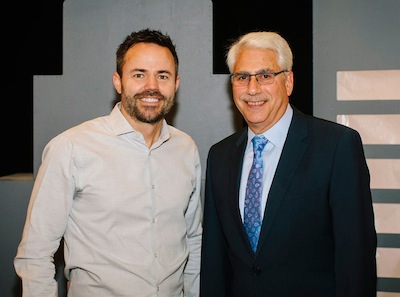
photo - Keynote speaker Lane Merrifield, left, and JFS chief executive officer Richard Fruchter
Keynote speaker Lane Merrifield, left, and JFS chief executive officer Richard Fruchter. (photo from JFS)

Right from the beginning, the business plan for Club Penguin was based on philanthropy. A portion of subscriptions went to families that live on less than $51 per day, he said. But “there was no fanfare,” said Merrifield. “We didn’t want this to look like a gimmick.” In the first year, the company gave away hundreds of thousands of dollars.

Merrifield spoke of the need to galvanize the community of kids, teaching them to invest in their community with a “coins for change” program. This virtual fundraiser even allowed children to “ring bells” to attract the attention of other subscribers. Over one billion digital coins were donated annually, for a range of humanitarian causes. Self-organizing kids formed virtual marches, becoming activists in their own right; held candlelit vigils and themed parties.

Merrifield brings the same spirit of social responsibility to his work on Dragons’ Den. He and his fellow panelists (“dragons”) hear pitches by entrepreneurs who are looking for investment and choose which ones to support. Merrifield said he looks for companies that “use recycled materials, hire disabled applicants, plant trees, and make an effort to reduce waste in their packaging and lower their fuel costs.” So far, he has not been disappointed. “Most companies have pretty good answers and that gives me hope,” he said.

On the subject of giving back, Merrifield encouraged people to consider donations – such as those to JFS – not as losses to oneself, but as “investments in the future, to individuals who continue to pay it forward.”

He also asked the audience to engage everyone they could to further the cause of fearless generosity. “Use your collective strength and influence to create change for good,” he said.

He advised, “Pool your talents and leave this world far better than it was when we came into it.”

Shula Klinger is an author and journalist living in North Vancouver. Find out more at shulaklinger.com.

Using AI in health care

Prof. Yuval Shahar, left, and David Berson with Dr. Rachael Ritchie of Vancouver Coastal Health. (photo by Shula Klinger)

The use of artificial intelligence is intended “to harness the power of computers with math and statistics theory to improve the diagnosis and care of patients,” according to Dr. Yuval Shahar, professor of Ben-Gurion University of the Negev’s software and information systems engineering department.

Between May 23 and 30, Canadian Associates of BGU, B.C. and Alberta Region, hosted a visit from Shahar, whose research explores how information technologies can be used to improve numerous aspects of healthcare.

Shahar has spent 30 years working in digital medicine, gained his bachelor and medical degrees from the Hebrew University, and a master’s in computer science from Yale University. He did his doctorate at Stanford University, where he also spent 10 years as a faculty member in the computer science and medicine department. He founded BGU’s Medical Informatics Research Centre in 2000 and, in 2017, was elected as a founding member of the International Academy of Health Sciences Informatics.

During his time in Vancouver, Shahar presented his work to full lecture halls across town, including at Simon Fraser University, University of British Columbia, various government offices, Vancouver General Hospital, Pacific Blue Cross and some start-ups.

The program with which Shahar works requires patients to wear an ECG (echocardiographic) belt around their chest to monitor their heart, as well as a blood pressure cuff. This allows a patient to receive care 24 hours a day. Using Bluetooth, the data collected from these devices are sent to the patient’s cellphone and then to the program’s server in Israel.

MobiGuide was developed with 13 partners in Europe, including Italy, Spain, the Netherlands and Austria. Even with 63 other projects competing for funding – including teams at Oxford and Cambridge universities – the MobiGuide team received seven million euros. “Ben-Gurion already had the necessary technology working,” said Shahar.

The program is led by an Israeli team in the main technology centre at BGU, with the partners from across Europe. Shahar explained how the system works, using the analogy of today’s mapping software. “It’s like a medical version of GPS,” he said. Right now, the program’s focus is on diabetes and hypertension.

One advantage of MobiGuide is the way the server handles massive amounts of clinical research, explained Shahar. For instance, when international guidelines for treating hypertension change, you can update that information in one place and it will be reflected throughout the entire system. That information is then immediately available to all patients and their physicians on the MobiGuide system.

“There are millions of patients on the system now,” said Shahar. “Each cellphone has a customized version of the guidelines in the program so the phone alerts the ‘mothership’ and the server examines the data for anomalies. The mothership knows the full patient history and clinical guidelines.”

The server in Israel also reminds patients to make adjustments, such as to their diet. A phone can contact the mothership to ask for advice, and recommendations are customized for each individual. Personal preferences can be adjusted depending on the patient – for example, when they prefer to be alerted to take their medications. If they are on vacation, they can ask the system not to alert them as frequently.

The system can also be notified to anticipate spikes in blood glucose. For instance, if a patient is attending a wedding and expects to eat rich food, she can tell the system first that it need not be concerned about this. Likewise, if a patient lives alone and has nobody to rely on for support with their health, the system can issue different instructions than for someone with a companion.

Humans are, however, still essential to the smooth running of the system. Shahar relies on “medical-knowledge engineers, graduate students,” who digitize clinical knowledge so that it can be applied on the system. But, he said, “It’s a sign of the future. Chronic patients won’t need to be in clinics all of the time. You want to be there only if there’s no other way.” It is cheaper to offer care in the community, especially in remote areas, even while offering round-the-clock observation.

To date, feedback from patients and the professional community has been consistently good. Compliance with clinical guidelines by physicians has improved, preventing a great deal of human error and possibly fatal mistakes, said Shahar. Likewise, he said, “Compliance was very high, we saw real patient empowerment.”

Patients “said that their quality of life had improved, they felt more secure and safe,” said Shahar. This is important, he explained, because AI in healthcare is not just about technology – human psychology has a huge impact on both patient treatment and outcomes.

As an example of the program’s success, Shahar said, in Barcelona, pregnant women with gestational diabetes were studied. The blood pressure of the research patients was significantly lower than in the control group, who attended in-person clinics. Shahar explained that these data were accompanied by a sense that a “benevolent big brother was monitoring them, and someone was sending alerts and recommendations every few days.”

After a four-year evaluation hosted by a veterans hospital in Palo Alto, Calif., there is evidence that the software developed by Shahar’s team has helped physicians manage oncology data better than before. With only seven to 10 minutes to give to each patient, physicians simply do not have the time to review all the material they need to, while considering its application and significance to individual patients.

In his talk at the Eye Care Centre at VGH, Shahar recalled asking a patient if she minded getting numerous texts from MobiGuide every day. “She laughed, I get 50 texts from my friends, what’s another 20?” he said. But, in reality, she clarified, “How could I mind? This is about the health of my baby.” Shahar added, “They feel that someone knows them deeply.”

According to David Berson, regional executive director of CABGU, Shahar’s visit was a success. He said BGU will examine how Shahar’s research in medical informatics can dovetail with local efforts to revolutionize healthcare, exploring the potential for “patient empowerment, remote monitoring, decision-making support and beyond.”

BGU board member and innovation expert Jonathan Miodowski said there was a need to balance between “blue-sky research and practical solutions” to real-world problems. “Multidisciplinary approach is a hot topic for universities these days – it is critical to bring different perspectives to the research,” he said.

Miodowski described Israel as a world leader in innovation. Last year, Canada raised $4.7 billion in start-up capital, he said, noting that Israeli start-ups, by contrast, raised $10 billion. “For a country that is two-thirds the size of Vancouver Island, that’s pretty significant,” he said. “In a sense, the size of the territory is very convenient. Cross-pollination of ideas is inevitable.”

Miodowski also spoke well of the Vancouver visit. “We planted some seeds on both sides,” he said. “It was very positive. There was real interest in Yuval’s research, real appreciation for what Israel has done in terms of its innovation ecosystem.”

Shula Klinger is an author and journalist living in North Vancouver. Find out more at shulaklinger.com.
The will of “the people”

The deed is finally done. For years, Quebec politicians have been talking about secularism, or laïcité, proposing a range of actions to ban the presence of visible religious symbols among government employees. On Sunday, following a weekend of almost round-the-clock debate, the Coalition Avenir Québec majority in the National Assembly passed Bill 21. The law bans symbols such as the crucifix, turban, hijab and kippah for provincial employees in positions of authority, such as judges, police, prosecutors, court clerks and schoolteachers.

The bill was met with lamentations and anger from the opposition. Catherine Dorion, a member of the National Assembly representing the left-wing party Québec solidaire spoke powerfully in favour of individual liberty and the right to exhibit religious identity.

“Each person in this room who will vote for Bill 21 will bear the responsibility for this first great breach in the dike we had proudly erected to protect the fundamental rights of all Quebecers,” she said.

The vote came a day after a similarly contentious debate on another bill, which addresses the province’s agreement with the federal government over immigration to Quebec. On the one hand, the bill aims to ensure that immigration reflects the province’s labour requirements, which is justifiable. On the other hand, the bill also permits the creation of a “values test” that new Quebecers would have to pass before admission to permanent residency. A test of this nature is one thing in theory – extreme examples like female genital mutilation are raised as justifications – but it is something else in practice.

Government measures to adjudicate an individual’s beliefs is a recipe for disaster. Certainly we would like to see people with hateful or violent attitudes toward particular cultural groups prevented from entering the country, or rehabilitated if they are already here. There are programs and policies in Canada to address this problem and they should be strengthened. But applying what amounts to a form of prior restraint on the ideas and beliefs of new Canadians by a government with limited respect for civil liberties crosses a perilous line.

The religious symbols law parallels the immigration law in its flouting of civil liberties, but diverges importantly in a number of ways. It applies to people who are already Canadian (for the most part, at least), which is a more grievous affront than putting up barriers for non-citizens.

In responding to criticism, Quebec Premier François Legault declared: “Someone once said, beware of those who say they like the people but do not listen to what the people want.”

This language reflects a populism we have seen in Europe as well as North America, but which has been thankfully rare in this country. The idea that governments should do whatever “the people” want invites a tyranny of the majority that is almost destined to trample on individual rights, especially the rights of members of minority communities. It bears stating that, in Quebec, in order to deliver the will of the people, the assembly had to clip the wings of democracy not once but twice, invoking closure on debate on both bills and, in the case of Bill 21, promising to use the Canadian Constitution’s Notwithstanding Clause to override what even the government of Quebec acknowledges is a unconstitutional infringement on individual rights.

We are seeing flare-ups elsewhere in Canada of how some of “the people” would like to see public policy progress. On the same busy weekend, a rally in downtown Vancouver against transgender rights and opposing the province’s progressive sexual education agenda turned nasty (if the mission of the event wasn’t nasty enough) when counter-protesters showed up to confront them. At the rally were the Soldiers of Odin, a far-right group, people wearing yellow vests, the symbol of an amorphous movement that began in France and has attracted extremists, and at least one leading member of the People’s Party of Canada, a new populist party that seems determined to stoke a range of fears and prejudices in the lead-up to the federal election this fall.

Violence also erupted last weekend at a pride parade in Hamilton, Ont., when protesters showed up at the celebration. A local politician laid blame for the violence, which included punching and choking, on “far-right evangelicals” who he said were “just there to sucker-punch people.”

All of this is to say that Canada is not immune to extremism or even politically motivated violence. There is, of course, an important line between the violence in Hamilton and the laws that were rammed through Quebec’s legislature. Violence deserves universal condemnation while passionate disagreements over politics – even laws we see as repressive and excessive – are justifiable and welcome. Still, these incidents all reflect different approaches to “othering” – the idea that “we” are under threat from “them.”

What is encouraging is hearing the voices of those forced to defend the values of inclusion and respect for diversity. There was eloquence on the opposition side of Quebec’s National Assembly last weekend and, in response to the altercations in Hamilton and Vancouver, admirable recommitment by many to the values that we genuinely hope will represent the Canada we hope to create. This is also a reminder to speak up, so that when politicians say they are doing what “the people” want, what they mean is the will of people who pursue inclusion, acceptance and diversity.

Being positive can be hard

My Southern friends and family often joke, “The Lord works in mysterious ways.” This morning, I wondered what I would write for this column. I was walking dogs in the sunshine and things were mostly going well.

Except, right after 8 a.m., as I set up the slow cooker for dinner, my husband returned to the back door. He’d just left for work, but announced, “Change of plans.” Why? He’d just discovered that my car had another window smashed. It was the second time in eight days.

This column could be a real downer. There’s plenty to write about the rise in vandalism and crime, the current meth and opioid addiction crisis, the lack of mental health supports and addiction counseling; there’s a lot to say. Since we’re commanded to care for the sick and the homeless, well, it’s all a Jewish topic. (Yes, Jews struggle with mental health issues, commit crimes and take drugs.)

However, I’m going to look at something else that happened instead. When the first window broke, we thought it might be from vandalism, but it was just as likely that the vibrations from nearby construction broke the glass. I tried to come up with a positive narrative.

Sad to say, the second broken window was clearly smashed by a person, who then scattered our (totally worthless) belongings around in the car. We came to the inevitable conclusion – this wasn’t just an accident. Someone was trying to steal but couldn’t find much in there of value.

It’s easy to get stuck in a negative feedback loop here. If you spend a lot of time complaining, focusing on the negative, and repeating what happened, it’s bound to get you down. Yet, it takes work to be positive sometimes.

My kids are the lucky recipients of PJ Library books each month. Every generation of Jewish kids is offered the folk story where someone comes to the rabbi to complain about his house. The rabbi usually tells the man to get a dog, then a chicken, a duck, then a goat, cow and horse … put them all in the house.

Of course, it’s a chaotic, messy, loud experience. The poor complainer comes back to the rabbi saying, “Rabbi, why did you suggest this?” And the rabbi tells the man to give away or sell all the animals. Suddenly, when his little house is empty and quiet again? It’s a palace.

I won’t lie, we all have many things to kvetch over. Things don’t go well, or things that we want that cost too much money, or seem beyond reach. The truth is that we’ve been struggling with this, as a people, for as long as we’ve been around. In the Torah portion Sh’lach L’cha (Numbers 13:1-15:41) which happens around this time of year, we read about how scouts were sent out to check out the Promised Land. How they describe it – good (who doesn’t like milk and honey?) but with significant downsides. It’s settled by giants! They will eat us!

As a result, aside from Caleb and Joshua, G-d doesn’t let anyone in who was enslaved in Egypt, essentially sending a new generation into the land of Israel. Some read this as punishment for all the negativity and things that went wrong. Others see it as something of a narrative “refresh” button. Want to get rid of the negative feedback loop? Start with people who see things in a positive light, and don’t let them focus on what is going badly.

Is it possible to cut out all negativity? In my opinion, I think that’s naïve. The world is a challenging place. There are going to be difficult experiences and bad days. However, we also need to consciously work to be grateful for what we have. Like the man with the livestock in his house, we may not realize how good we have it until things get much, much worse.

Recently someone commented that she was amazed to see me smiling and present when I was actually quite tired. (Plus, I was struggling with some bad stuff, but I kept it to myself. She didn’t even know about that.) Sometimes, we have to “fake it until we make it.” As a mom with grade school kids, I don’t get many breaks. There are times when a kid or dog is sick and wakes me up at night, when street construction is terribly loud or, heck, my car keeps getting vandalized. However, if I give in to the negative feelings and list all the complaints, I get stuck on that same problematic negative narrative, like the aforementioned Torah portion, when those folks in the desert got frightened and suggested they should go back to Egypt.

This portion also mentions a list of physical things we can do to remind ourselves of our positive connection to G-d and Judaism, such as wearing tzitzit and taking a portion of our baking as a gift to G-d. It was a good reminder. Today, I’m making a big batch of challah – and I said the blessing as I sectioned off a portion of the dough.

It takes a brave leap some days to be positive and seek out the things for which we are grateful. Yes, my windows were smashed. I’m hoping all will be repaired by the time you read this column. In the meanwhile, I focus on how good that challah will taste and – maybe? – how quiet it will be when the construction is over.

Seeing life’s challenges as the glass half-full rather than half-empty can be hard work. However, that work is a conscious (and a Jewish) choice.

Joanne Seiff has written regularly for CBC Manitoba and various Jewish publications. She is the author of three books, including From the Outside In: Jewish Post Columns 2015-2016, a collection of essays available for digital download or as a paperback from Amazon. See more about her at joanneseiff.blogspot.com.

Masks, stories and dance

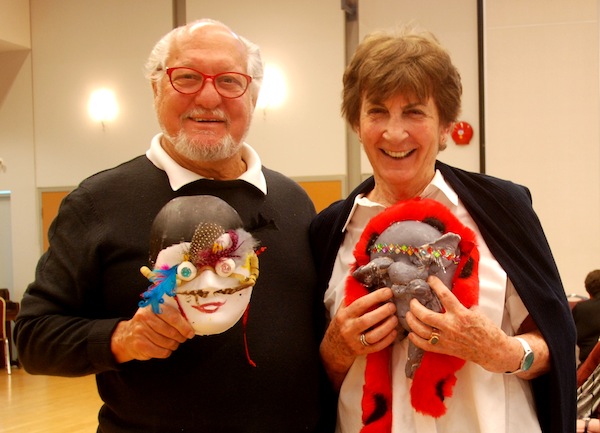
George and Tamara Frankel at Masks, Revelations and Selfhood, the spring forum of Jewish Seniors Alliance, in partnership with the Louis Brier Home and Hospital, which was held May 26 at the Peretz Centre. (photo from JSA)

Since August 2018, Louis Brier Home and Hospital residents have explored themes of personhood and creative expression, crafting masks, narratives and original dances with expressive arts therapist Calla Power and choreographer Lee Kwidzinski. The whole process was filmed by Jay Fox for a documentary.

Power, Kwidzinski and Fox, as well as Louis Brier resident Jennifer Young, who participated in the project, shared their experiences with guests at Masks, Revelations and Selfhood, the spring forum of Jewish Seniors Alliance, in partnership with the Louis Brier. The forum was held May 26 at the Peretz Centre for Secular Jewish Culture.

The four presenters brought with them many of the masks that were made by the Louis Brier residents, which they placed on tables near the audience. Everyone could examine them up close and try them on. This allowed people to experience the changes one feels when masked, hidden from others.

JSA president Ken Levitt welcomed everyone and spoke about JSA’s motto, “Seniors Stronger Together,” noting that JSA’s free peer support programs – which require the financial support of the community to continue – exemplify the power of older adults assisting other older adults. He then introduced Power, who has been working with residents at the Louis Brier for about five years.

The Masks Project lasted seven months, culminating in a program that includes masks, stories, poems, drama and dance. In her summary of the history of masks, Power said the oldest masks, dating from the Neolithic period, were found near Jerusalem several years ago. She explained that masks are used in many cultures as part of religious and/or spiritual ceremonies. In a slide presentation, she showcased masks from different cultures, including African, Indian and local indigenous cultures. Frequently, she said, those wearing the masks would represent “the gods” and be a conduit for messages from above.

Ginger Lerner, Louis Brier recreation therapist, had approached Power about making masks for Purim, obtaining a donation from the estate of Frank and Rosie Nelson that facilitated the project. Power did some research on Purim and discovered that many of the characters were masked; for example, Esther, who masked her origins, and Vashti, who refused to be unmasked. As residents engaged with the project, they discussed such topics as what parts of ourselves do we keep hidden behind a mask.

Kwidzinski, who specializes in dance movement, has 30 years of experience working with older adults, mainly those with dementia and those who are in wheelchairs. She has a dance company in Mission, and the dancers worked with the mask makers to create movements related to the masks and the residents’ ideas. The dancers became the bodies of the mask makers, who chose the movements and the music. The mask makers came on stage with the dancers for the performance.

Young, one of the mask makers, expressed how moving the entire experience had been. She said the group became close, even though they hadn’t known each other well before.

Young said she had been reluctant about the dance aspect but felt that the dancers were extremely supportive and, at the end, she said she found the movements liberating, as if she were also dancing. She said she gained energy and willpower from the experience, and thanked Power, Kwidzinski and Fox for giving her the ability and opportunity to “get up and keep going.”

Fox has produced award-winning films, documentaries, music videos and public service announcements. He was involved in the Masks Project from the beginning. He felt that the journey was as important as the film and the art produced. The film was screened at the forum, and can be viewed at youtube.com/watch?v=YspYE6juiy0.

Gyda Chud, JSA first vice-president, led the question-and-answer session. Members of the audience expressed their appreciation for the information and the beauty of the project. It was suggested that advocacy was needed to have this type of project adopted by other care homes and adult day-care centres.

I wrapped up the afternoon event with a thank you to the presenters, which was followed by snacks provided by Gala Catering.

Shanie Levin is an executive board member of Jewish Seniors Alliance and on the editorial board of Senior Line magazine.

Teens bring Israel to Vancouver

Israelis Ofir Gadi and Or Aharoni are rounding up their year of volunteering in Metro Vancouver. (photo from Jewish Federation of Greater Vancouver)

In Israel, high school graduates can go straight into the Israel Defence Forces (IDF) or opt to do a shnat sherut (year of service, for which the acronym is shinshin). The vast majority of 18-year-olds who do a shnat sherut do so inside Israel, volunteering with a variety of social welfare and other nonprofit organizations throughout the country. But, through the Jewish Agency, approximately 100 teens do their year of volunteering in Jewish communities around the world.

Vancouver began to take part in the program in 2015. In August of that year, Jewish Federation of Greater Vancouver brought three young women to split their time between Vancouver Talmud Torah, Richmond Jewish Day School, King David High School, Beth Israel, Temple Sholom, Beth Tikvah and the Jewish Community Centre of Greater Vancouver. The final quarter of the year was spent volunteering at camps Hatikvah and Miriam and the JCC day camp. Each agency contributed a portion of money to cover the expenses needed to bring the shinshiniot (female plural for shinshin) here from Israel and to contribute to a small monthly stipend. Host families, who welcomed an 18-year-old Israeli into their family for a period of three months, took care of living arrangements and meals.

Nearly four years later, all of the original host organizations continue to participate in the program. Shinshin coordinator Dan Stern helps make the connections between the organizations and the volunteers as smooth as possible. The main challenge continues to be finding host families. While it is a significant responsibility, the fact that many host families have hosted volunteers multiple times speaks to the rewards of doing so.

This year, for the first time, Vancouver picked one male and one female shinshin. Ofir Gadi and Or Aharoni arrived in early September and settled in right away. They spent two days each week at VTT, interacting with students through activities including song, dance, multimedia presentations focusing on Israel, Israeli-style Jewish holiday celebrations, and Hebrew. RJDS had them once a week for similar activities and the pair helped at the JCC with teen programming. On Sundays, they split up to give a special Israeli flavour to various synagogue religious schools. Federation also has had them working at many community events and its outreach program, Connect Me In, which services Squamish, Langley and Burquest. Additionally, the two have helped make other community-wide celebrations special, including making a presentation at this year’s Yom Ha’atzmaut celebration at the Chan Centre for the Performing Arts.

Gadi and Aharoni have proven to have complementary personalities. They have worked together, smiling through the challenges they have faced and thoroughly enjoying almost everything they’ve encountered here.

“Vancouver is my favourite city in the world,” said Aharoni with her typical warm smile. “The weather is much better than what the other Canadian shinshinim have and the people we have met here have been so welcoming and amazing. Also, being here, I’m not the only one saying thank you on the bus!”

Gadi has also had terrific experiences. “We have worked a lot in many areas of the Vancouver Jewish community and the good thing about that is we have met so many wonderful people,” he said.

While they were prepared to a certain degree about what to expect, both Aharoni and Gadi have said being in Vancouver has exceeded their expectations. “We both love it here and plan to return,” said Gadi.

The biggest surprise for Aharoni was that she felt at home as soon as she arrived. “I didn’t know that it would be such a good fit,” she said. “I was positive coming in but I have found the energy and the vibe of the students amazing and the community, host families and friends I’ve made have been so special.”

Although she has traveled outside of Israel, she said she didn’t know anything about what it is like to live as a Jewish person outside of Israel. She comes from a secular Israeli family and, she said, living here has brought up questions about Jewish identity that had never been an issue before.

“Firstly, I am an Israeli. Secondly, I feel fully Jewish even though I am not at all religious,” she said. “I see that it’s important to live the Jewish life the way you want. I also understand that going to synagogue is important here in order to be part of something, and being part of a community is very special.”

Both teens have stayed with families with whom they have deeply connected. “It’s been great to be part of a different family every few months,” said Gadi. “I have enjoyed my host siblings and I hope our connection will continue and my family in Israel will have a chance to host my families from here.”

Gadi is from a small community near Modi’in called Reut and Aharoni’s family lives on a moshav called Aviel, near Caesarea. Both shinshinim expect visitors, as host families and friends of past shinshiniot have kept in touch and visited when in Israel.

“The connections with people makes this experience more powerful and meaningful. Both Ofir and I have made so many special connections with students, families and the Vancouver Jewish community,” said Aharoni.

Up next for both shinshinim is summer camp. Aharoni will help augment the Israel programming at Camp Hatikvah and Gadi will be at Camp Miriam lending an additional Israeli vibe to the camp.

For more information about the shinshin program or how to host one of the two shinshinim who will arrive in September, contact Jewish Federation at 604-257-5100.

Michelle Dodek is a freelance writer living in Vancouver.

Israel honours Trump with a settlement

(photos by Kobi Gideon / IGPO via Ashernet)

photo - A special cabinet meeting was convened in the Golan Heights on June 16 to name a new settlement there in honour of U.S. President Donald Trump
A special cabinet meeting was convened in the Golan Heights on June 16 to name a new settlement there in honour of U.S. President Donald Trump.

A special cabinet meeting was convened in the Golan Heights on June 16 to name a new settlement there in honour of U.S. President Donald Trump. Israeli Prime Minister Binyamin Netanyahu, together with U.S. Ambassador David Friedman, attended the special meeting, unveiling a sign reading Ramat Trump (Trump Heights) in Hebrew and English. The decision to name the settlement after the U.S. president was as a sign of appreciation for the Trump administration’s support of Israel. While Ramat Trump does not presently exist, the planned location is next to an isolated outpost with no more than 10 residents. It appears on paper that the plan is to build some 110 new homes. The Golan Heights is of strategic importance to Israel – before 1967, when Syria had control of the area, the Kinneret (Sea of Galilee), which is located below the heights, was constantly being fired upon from Syrian positions, making life unbearable for the residents of that part of the Galilee.


קנדה רוצה מהגרים נוספים

קנדה רוצה מיליון מהגרים נוספים בשלוש השנים הקרובות

קנדה מונה למעלה משלושים ושמונה תושבים החיים בשטח ענקי המשתרע על פני כעשרה מיליון קמ”ר. מדובר בשטח אף גדול מזה של ארצות הברית (רק רוסיה מחזיקה בשטח הגדול מזה של קנדה). קנדה מבקשת להכניס לשטחה מיליון מהגרים עד סוף שנת אלפים עשרים ואחד.

“במידה רבה, הודות לאזרחים חדשים שקיבלנו בברכה במהלך ההיסטוריה שלנו, קנדה התפתחה לכדי מדינה חזקה ותוססת שכולנו נהנים ממנה”, אומר שר ההגירה, הפליטים והאזרחות, אחמד חוסיין. זאת במסגרת דין וחשבון שנתי על ההגירה לקנדה, שהוגש בראשית השנה לפרלמנט. במדד הפיתוח האנושי (האיץ’. די.איי) קנדה מדורגת במקום השניים עשר והמכובד בעולם, מתוך מאה שמונים ותשעה מדינות.

הדו”ח השנתי בנושאי הגירה מבליט שלא במקרה את הצלחת המהגרים המגיעים לקנדה. כיום כעשרים אחוז מתושבי קנדה נחשבים למהגרים (נולדו בארץ אחרת המחוצה לה). זאת לעומת פחות מארבעה עשר אחוז של מהגרים בארה”ב השכנה. בשני העשורים האחרונים הגיעו לקנדה כשישה מיליון מהגרים. לדברי שר ההגירה, הפליטים והאזרחות הקנדי, המדינה אינה מפלה מהגרים על בסיס גזע, לאום, מוצא אתני, דת או כל מגדר אחר. הוא מציין כי קנדה כיום היא המדינה המובילה בעולם בניהול מהלך ההגירה המורכב. השר חוסיין אומר כי קנדה בהצלחה מרובה בוחרת את המהגרים שתורמים לה ביותר, לעומת אלה שלא יתרמו לה.

מערך ההגירה הקנדי מבוסס על שיטת ניקוד (הנקראת סי.אר.אס) לפי מספר קריטוריונים. בהם: גיל, השכלה, שפה, ניסיון בעבודה וקשרים בקנדה (בתחומי משפחה, עבודה או לימודים). בשל הביקוש הגדול להגר לקנדה הדירוג המינימלי של שיטת הניקוד עלה בראשית השנה מרמה של ארבע מאות ארבעים ותשעה לרמה של ארבע מאות ושבעים. בכל מקרה הניקוד המקסימלי למגישי הבקשה להגר מגיע לאלף ומאתיים.

מנסיוני האישי בהגירה מישראל לקנדה

עזבתי את תל אביב ועברתי לוונקובר לפני כארבע עשרה שנים. תמיד חלמתי לגור בחו”ל. במהלך השנים הבנתי שיהיה קל יותר להגר לקנדה. מה גם שחבר טוב שלי מישראל עבר לוונקובר כארבע שנים לפני.

בדקתי באתר רשות ההגירה הקנדי באם יש לי מספיק נקודות להתחיל בהליך ההגירה. בעזרת ההשכלה הגבוהה שרכשתי בישראל, ניסיוני הממושך בעבודה בעיתונות ושליטה בשפה האנגלית – התברר לי שאני עומד במכסת הנקודות הרצויה להגירה.

הגשתי את מסמכי ההגירה לקונסוליה הקנדית בתל אביב והמתנתי לבאות. לא שיערתי בנפשי כי אאלץ להמתין זמן רב עד קבלת האישור להגר. מתברר שבאותם ימים החליטה מחלקת ההגירה הקנדית להקשיח את תנאי ההגירה. לכן שונתה שיטת הניקוד והתווספו תנאים חדשים. אך כאן נוצרה בעייה קשה באשמת מחלקת ההגירה הקנדית: היא החליטה להטיל את התנאים החדשים גם על אלה שכבר פתחו בהליכי ההגירה. זה כלל כמובן גם אותי. בפועל מדובר בהחלטה שמנוגדת לחוק כיוון שאי אפשר להחיל תנאים חדשים על מי שכבר פועל לפי תנאים קודמים. אמר לי בזמנו עורך דין קנדי שאני יכול לתבוע את ממשלת קנדה בנושא. אני וויתרתי אך נדמה לי שיש אחרים שאכן תבעו את הממשלה.

מכל מקום בעקבות שינוי שיטת הניקוד נוצר בלגאן גדול במערכת ההגירה. אפילו בקונסוליה הקנדית בתל אביב לא ידעו מה להגיד בנושא. לבסוף לאור התנאים החדשים נאלצתי לעבור מבחן באנגלית, ברמה של מי שמתעד ללמוד באחת ממוסדות הלימוד בחו”ל. הליך ההגירה התעקב ונמשך בסופו של דבר כשלוש שנים, עד ליום המיוחל שבו קיבלתי את האישור להגר לכאן.