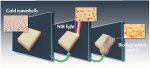
Technion-Israel Institute of Technology doctoral candidate Alona Shagan and assistant professor Boaz Mizrahi have developed a technology that enables drugs to be delivered and released only to the diseased tissue that a drug is targeting. Researchers designed the one-of-a-kind delivery method to release under long wave light (near-infrared, NIR). The light warms the gold nanoshells, melting the polymer packaging, and releasing the drug. The primary advantage of NIR light is its ability to penetrate bodily tissues without harming them. The researchers believe this new technology can be used for a variety of other applications, such as the sealing of internal and external injuries, temporary holding of tissue during surgery, or as biodegradable scaffolds for growing transplant organs.
One of Ormat Technologies’ geothermal power plants. (photo from Ormat)
Could Israel be the country that finally puts fossil fuels to rest with the dinosaurs? “When we talk about killing fossil fuels, Israel is not yet seen as tops in the world, as we are in water or cyber technologies. But in each related niche – solar energy, battery technologies and electric car components – there is tremendous respect for Israeli companies,” according to clean-energy activist Yosef Abramowitz, aka “Kaptain Sunshine,” whose Energiya Global social development company is bringing solar power to Africa.
Two early solar-energy pioneers founded in Israel, BrightSource Energy and Ormat Technologies, are now headquartered in the United States with myriad international projects to their credit. BrightSource built the world’s largest solar electricity generation installation, in California, using nanoparticle coatings developed at the Hebrew University of Jerusalem. Ormat built one of the world’s first solar-power fields, near the Dead Sea, and is a leading geothermal and recovered-energy generation producer.
Although Israeli electric-vehicle (EV) network Better Place had great disruptive potential, its bankruptcy in May 2013 dashed those hopes. Yet Abramowitz believes the mega-fail led to something positive. “Better Place spawned a whole industry of 500 [Israeli] startups in the automotive sector, largely related to electric cars and the software and hardware that will kill the combustion engine,” he told Israel21c.
In 2011, the Israeli Prime Minister’s Office launched its Alternative Fuels Administration and Fuel Choices Initiative, aiming to implement government policy and support for fuel alternatives research and industry that can serve as a model for other countries while helping reduce Israel’s dependence on oil for transportation. Since then, the number of alternative fuel research groups in Israel has grown from 40 to about 220 and the number of companies in this field to about 500. Globally, renewable energy is a $359 billion business. Here are 10 Israeli companies trying to accelerate the end of fossil fuels.
Aquarius Engines. The lightweight Aquarius engine has a single-piston linear engine. A cylinder moves the fuel from side to side to generate electrical current, much like sea waves can do through an up-and-down movement. A car fitted with the Aquarius engine would have a range of 1,200 kilometres per 50-litre tank, which would have to be filled every five or six weeks. Aquarius is working with Peugeot to test its engine in a concept car. The company also is developing a lightweight portable generator based on its technology.
Brenmiller Energy. Founded in 2012 in Rosh Ha’ayin, Brenmiller Energy has created products for renewable energy including a thermal storage system that hybridizes any power source – wind, solar, biomass, nuclear, natural gas – to provide reliable, clean energy anywhere. The B-Gen unit’s first cycle transfers the heat coming from different sources; the discharging cycle delivers steam on demand on a megawatt or gigawatt scale. Commercial projects are underway in several countries. Founder Avi Brenmiller was involved in solar power plant design in Spain and in the United States through the Israeli company Luz Industries, acquired by Solel and then by Siemens.
Doral Renewable Energy Resources Group. Doral, in Ramat Gan, was the first company to connect a solar photovoltaic (PV) system to the national electricity grid, back in 2008. Its several branches operate renewable energy projects (natural gas, biogas, wind, solar) throughout Israel, especially in kibbutzim in the periphery and in rural areas, including what will be the largest (170 megawatts) PV power plant in Israel. Doral recently entered a joint venture agreement with Invenergy, the largest privately held electricity producer in the United States. Doral is planning to introduce advanced means of electricity production, storage and smart-grid solutions to eliminate the need for external electricity suppliers.
Eco Wave Power. The Tel Aviv-based company’s proprietary technology extracts energy from ocean and sea waves and converts it into affordable, zero-emission renewable electric power. EWP has projects in various stages in the United Kingdom, Gibraltar, China, Chile, Israel and Mexico.
ElectRoad. Founded in 2013, ElectRoad of Rosh Ha’ayin develops underground electric coils that recharge EVs wirelessly as they travel. Copper-and-rubber electromagnetic induction strips are installed inside the asphalt and smart inverters are installed on the sides of the road. A coil unit is attached beneath any kind of EV to receive the power over a small air gap for safety. ElectRoad plans pilot projects on a short public bus route in Tel Aviv and in a European city.
Energiya Global. This Jerusalem-based renewable-energy developer will invest $1 billion over the next four years to advance green power projects across 15 West African countries. Energiya Global and its associated companies developed the first commercial-scale solar field in sub-Sahara Africa, in Rwanda, and broke ground on a similar plant in Burundi that will supply 15% of the country’s power. Energiya Global now has fields at various stages of development in 10 African countries.
H2 Energy Now. This company is building a prototype battery-free solution for storing and increasing the usability of alternative energy from intermittent sources – sun and wind – to meet times of peak demand reliably. Radio waves separate water into hydrogen and oxygen and then recombine them in a fuel cell when energy is needed. As last year came to an end, H2 Energy Now was in the finals for several contests and was in talks with worldwide energy corporations. In addition, the company was one of four winners of the AES Corporation’s 2017 Open Innovation Contest, held in Washington, D.C., for designing a ceramic drone enabling unmanned inspection solutions for extreme heat environments in the global power industry.
New CO2 Fuels. Founded in 2011, NCF is raising funds toward a working model of its technology to transform two waste streams – industrial water and carbon dioxide – into a hydrogen-carbon monoxide synthetic gas, which is then turned into liquid fuels, plastics and fertilizer. The conversion process is fueled by concentrated solar energy or byproduct heat from the industries themselves. NCF signed a cooperative agreement with Sinopec Ningbo Engineering to address carbon dioxide pollution in China.
Solaris Synergy. Based in Jerusalem, Solaris Synergy developed a solar-on-water power plant that converts a water surface into a cost-effective and reliable solar-energy platform. Solaris and Pristine Sun of San Francisco received a BIRD grant to collaborate on a utility-scale floating PV solar energy system to be installed in California. In October 2016, Solaris installed a 100kWp Floating PV system on a reservoir in Singapore. Recently, Solaris formed a partnership with Electra Energy to plan large projects in Israel.
StoreDot. Electric vehicles can never be mass marketed unless they have batteries that store a charge longer, weigh less and charge up faster. StoreDot of Herzliya concentrates on fast charging. It is developing a pack for EVs comprised of hundreds of its proprietary EV FlashBattery cells. Together, the cells take only five minutes to charge fully and provide up to 480 kilometres of driving distance. In addition, FlashBattery is environmentally safer than a lithium-ion battery, using organic compounds and a water-based manufacturing process.
Israel21cis a nonprofit educational foundation with a mission to focus media and public attention on the 21st-century Israel that exists beyond the conflict. For more, or to donate, visit israel21c.org.
ORT Vancouver will honour Rabbi Dr. Yosef Wosk and Shelley Lederman on Oct. 18 at Congregation Schara Tzedeck. (photos from ORT)
For nearly 140 years, ORT has been equipping people around the world with skills to succeed. The history of the organization in Canada is being celebrated at a gala luncheon next month honouring Rabbi Dr. Yosef Wosk and Shelley Lederman.
The Vancouver region of ORT began in the 1970s and was led by Lederman, who served successive terms as president of the local region and later became co-president of ORT Canada. Carrie Katz, who was Lederman’s co-president, will be the keynote speaker at the event on Wednesday, Oct. 18.
ORT (a Russian-language acronym sometimes translated as the Organization for Rehabilitation through Training) is the world’s largest Jewish education and vocational training nongovernmental organization. Beginning in Russia in 1880, World ORT now operates in 37 countries and engages 300,000 students per year. Originally focused on developing skilled trades among the people, the organization now focuses on high-tech education.
It is ORT’s origin and history – and his own family’s roots – that attracted Wosk to support the organization.
“My father’s family is from Odessa, so I felt a personal connection to the history of the organization and the people they help,” Wosk told the Independent. “Also, the appreciation for the memory of the Jewish community who would not abandon others who needed assistance.”
ORT is founded on the axiom that if you give a man a fish he will eat for a day but if you teach him how to fish he will eat for a lifetime. This is another factor that appealed to Wosk.
“What I was impressed with historically was that it’s not just giving funds,” he said. “It was also educating the people, whether in agriculture or trades and other skills, so that they would be able to eventually help take care of themselves and sustain themselves.”
Local regions, like Vancouver’s, raise funds for ORT educational initiatives in Metro Vancouver, in Israel and around the world.
When Lederman was founding president of the region, there were actually three local branches created, including a Hebrew-speaking group and a Spanish-speaking cohort.
“We created a very strong organization here in Vancouver,” said Lederman, adding that local regions support vital initiatives worldwide, projects that change according to needs over time.
“When people were under duress in Europe during the war and they couldn’t sustain themselves, ORT teachers taught them how to survive as tailors, electricians, as plumbers,” Lederman told the Independent. “And then, in Israel, ORT schools continue to do the same thing. They are teaching those who weren’t going to university but who wanted to come out of high school and be able to support themselves and their families. ORT schools provide education plus trade teachings.”
While she herself did not go to an ORT school, she saw the good works the organization does while growing up in Israel. Being honoured by the organization now means a lot, she said.
“It means a lot because being recognized by your friends and fellow members is really a recognition of all of us,” she said. “By recognizing one person, it’s recognizing the many people who contributed to the success of ORT in Vancouver.”
The honourary chair of the Oct. 18 ORT gala is Dr. Saul Isserow. (photo from ORT)
The theme of the gala is Building Minds Through Inspiration. While ORT began as an educational body teaching skilled trades and crafts, it is now a leader in high-technological training and education. Keeping with this commitment, a percentage of the revenue from the gala will support an ongoing Smart Classrooms initiative at Richmond Jewish Day School (RJDS), as well as provide scholarships for students at the Technological College of Beersheva, in Israel.
Smart Classrooms integrate learning technologies that allow increased interactivity. “The investment by ORT is about allowing Jewish day schools and Jewish schools in Israel to keep pace with technology,” said Abba Brodt, principal of RJDS. “It allows us to marry the best of educational practice with the best of technology for the best possible outcome for students.”
Without the Smart Classrooms funded by ORT, he said, “our students will get a great education but would not be as technologically literate as they should or could be, and they would not be keeping up with changes.”
The gala luncheon takes place at on Oct. 18, 11 a.m., at Congregation Schara Tzedeck. Honourary chair is Dr. Saul Isserow. Master of ceremonies will be Howard Jampolsky. Tickets are available from 604-276-9282 or [email protected].
Pat Johnsonis on the organizing committee for the ORT gala.
We are taught from an early age that giving, repairing the world and being kind are the tenets of living a Jewish life. In our community we don’t have to look very far to find people who fit this description. One of the latest projects that has come to fruition is the Diamond Residences in the Storeys complex in Richmond. Thanks to the generosity of the Diamond Foundation, Tikva Housing Society now owns 18 (chai!) units that are being rented at below-market rates to people in the community for whom stable, safe housing was unpredictable and unaffordable, at best.
Tikva Housing partnered with four nonprofit societies and the City of Richmond to build these and other apartments. Tikva worked hand in hand with community agencies such as the Jewish Family Service Agency to place tenants in need in these units, as well as with the Jewish Federation of Greater Vancouver and B.C. Housing. Most of the tenants will have moved into their units by the end of this month.
The Diamond Residences will house six singles and, of those, five are seniors. Also, 12 families and a total of 22 children will be living there. One 83-year-old woman cried when she was told she would be moving into a studio unit, as she has not had a place to live for years and was sleeping on someone’s couch. A single Israeli mother with two children is moving into a three-bedroom unit; her kids have never had their own rooms. Another single mother with three children has been sharing a two-bedroom place and has not had her own room in two years. One family has moved to Greater Vancouver from out of town and can now attend Shabbat services, be close to their family and the Jewish community. There are many more such stories.
– Courtesy of Tikva Housing Society
* * *
Simon Fraser University recognized four distinguished alumni on Sept. 13 at Four Seasons Hotel. Among them was Gary Cristall, co-creator of the Vancouver Folk Festival.
The annual awards, presented by SFU and the Alumni Association, recognize those whose accomplishments and contributions reflect the university’s mandate of engaging the world. An advocate for the arts and human rights, Cristall has been a cultural groundbreaker, having co-founded the Vancouver Folk Music Festival in 1978. In an industry plagued with an unscrupulous reputation, Cristall has been instrumental in fighting for the rights of artists to be treated professionally and with respect while also defending their rights to fair performance fees and copyright ownership.
Cristall served as acting head of the music section of the Canada Council for the Arts and was the founding president of the Public Service Alliance of Canada, the first union at the Canada Council. Today, Cristall continues to serve as a prominent mentor and educator, assisting artists in building their careers and guiding communities in enhancing dynamic cultural interactions that enrich and benefit a healthy, democratic society.
* * *
After a grueling 33 hours of programming, DragonFruit – Benjamin Segall, Jacy Mark, Viniel Kumar and Pritpal Chauhan – completed StoryTree and demonstrated it live to a panel of judges at Hack the North, an international student hackathon held at the University of Waterloo in Ontario, which this year took place Sept. 15-17.
Canada’s biggest hackathon, Hack the North was founded and is organized by Techyon, a student-run nonprofit organization, in partnership with Waterloo Engineering. The event brings together 1,000 students from top universities across 22 countries in the world. Students collaborate and create impactful new hardware projects or mobile and web applications of their own design for a weekend at the University of Waterloo, all expenses paid.
DragonFruit’s StoryTree was one of the 14 projects chosen out of the more than 250 demonstrated at Hack the North. StoryTree is an online workspace for aspiring authors to collaborate on books together. All you have to do is write a paragraph or a chapter, or even just a sentence, and, as more and more people add or branch off from a story, that story you’ve always wanted to write becomes a reality.
DragonFruit will be continuing the project and are looking for alpha testers for January 2018. If anyone is interested in being a part of this project or for more information on it, contact them via facebook.com/dragonfruitcode or dragonfruitcode.com.
* * *
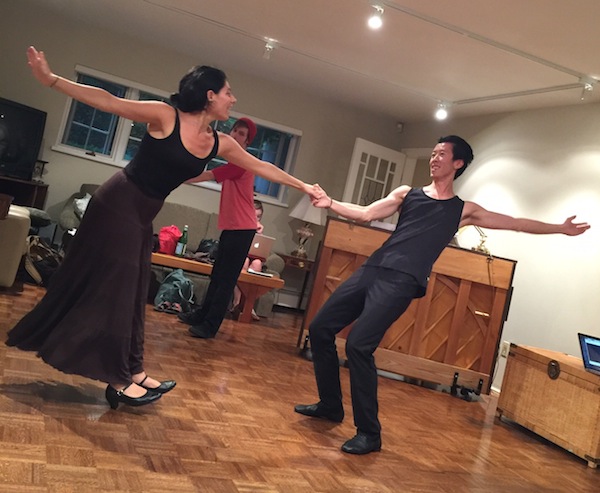
Swinging Sylvia rehearsals: Advah Soudack and Sky Kao create a whirlwind of action in rehearsal of the second one-act play that comprises Two Views from the Sylvia. (photo by Sue Cohene)
Rehearsals have started for Two Views from the Sylvia, a new musical theatre production by Kol Halev Performance Society. This original production – which will be at Waterfront Theatre Nov. 8-12 – tells the story of the iconic Sylvia Hotel and its historic connection to the local Jewish community and the city of Vancouver.
Two Views from the Sylvia comprises two one-act plays.
The first play, Sylvia’s Hotel, is set in Vancouver in 1912. It brings to life the origin of the Sylvia Hotel, named for Sylvia Goldstein (Ablowitz) and the story of the Goldstein family who built it. Young Sylvia Goldstein and the legendary Joe Fortes, the beloved English Bay lifeguard, develop a bond that helps Sylvia realize her dreams.
In the second play, The Hotel Sylvia, the story continues as we meet the characters whose lives and loves became interwoven with the story of the Sylvia over her 100-year history. It includes vignettes revealed to the production’s researchers by Huguette, the front desk clerk who worked at the Sylvia for 35 years.
Jewish community members play key roles in both plays. In the lead roles are Advah Soudack (as Sylvia) and Adam Abrams (as Abraham Goldstein); Anna-Mae Wiesenthal and Joyce Gordon are cast in important supporting roles. Behind the scenes are Sue Cohene (producer) and Heather Martin (associate producer), as well as Gordon (assistant producer) and Abrams (graphic designer and webmaster) and Gwen Epstein (production team). Marcy Babins and Michael Schwartz collaborate in their roles at the Jewish Museum and Archives of British Columbia, which has created an historical photo display to accompany the production.
Two Views from the Sylvia is a project of Kol Halev in partnership with the B.C. Arts Council, Government of British Columbia, City of Vancouver, Granville Island Cultural Society, CMHC Granville Island and the JMABC. For information and tickets ($28), visit sylviamusical.com.
– Courtesy of Kol Halev
* * *
Bema Productions’ Victoria Fringe Festival play Horowitz and Mrs. Washington was a great success. All seven performances at Bema’s Black Box Theatre at Congregation Emanu-El were sold out and the production company’s work was once again as one of the best dramas in the Victoria Fringe.
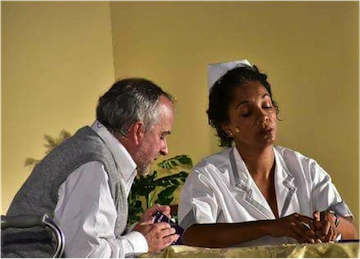
Bema Productions’ Victoria Fringe Festival play Horowitz and Mrs. Washington was a great success. (photo from Bema)
Mrs. Washington is hired to nurse Sam Horowitz, who’s been mugged and had a stroke. She’s a determined tyrant and he’s a bigoted Jewish widower. The two must find a mutually beneficial relationship when his daughter tries to make him leave his home. The play by Henry Denker reflects the attitudes of the 1970s and illuminates the power to be found in ordinary lives.
“The electric performance of the actors enabled the audience to visit uninhibitedly the issues of racism, stroke recovery and aging in place,” reads the review “Bravo Bema!” on Emanu-El’s website.
“For the most part,” said the review, “the actors were provided with a very humorous script that relied on stereotyping but went beyond it for its punchlines. The audience was asked to stretch their imaginations – who would have considered invoking Michelangelo to explain why the naming of a grandson ‘Douglas’ instead of ‘David’ was inappropriate? There were a few moments when the pace flagged but very few.”
While the play “revealed little about the face of contemporary racism,” the “potential disempowering of aging adults by their loving offspring is an issue of contemporary concern.”
The Bema production was directed by Zelda Dean and Angela Henry and was performed by David Macpherson, Rosemary Jeffery, Christine Upright, Alf Small, Cole Deo and Graham Croft.
– Courtesy of Bema Productions
* * *
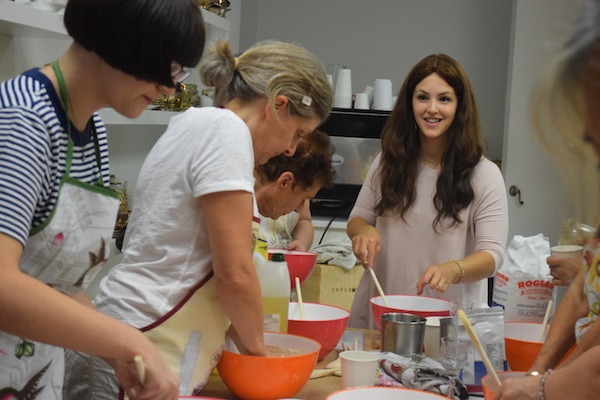
Miki Mochkin teaches a class on baking challah. (photo by Shula Klinger)
Chabad North Shore hosted a challah bake at Mia Claman’s store in West Vancouver on the night of Sept. 6. Miki Mochkin taught a class on baking challah to local women. While the bread was rising, she explained the significance of each ingredient for Jewish women. From the sweetness of the honey to the harshness of the salt, every element serves to remind the baker of its symbolic role in our lives as women and mothers.
– Courtesy of Shula Klinger
* * *
Panelists at Congregation Beth Israel discuss the topic Our Leaders: Are They Above the Law? (photo by Cynthia Ramsay)
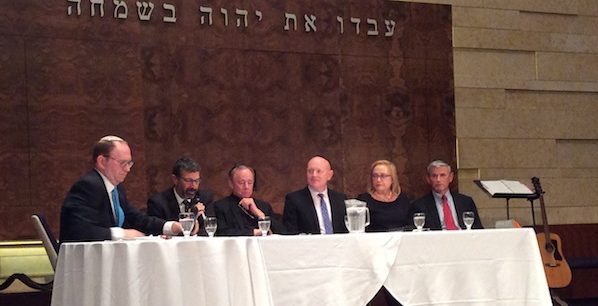
In the photo, left to right, are Congregation Beth Israel Rabbi Jonathan Infeld, King David High School head of school Russ Klein, Vancouver Catholic Diocese Archbishop Michael Miller, Vancouver Police Chief Constable Adam Palmer, B.C. Court of Appeal Justice Sunni Stromberg-Stein and MLA Andrew Wilkinson. On Saturday night, Sept. 16, at the synagogue, this panel of speakers took on the topic Our Leaders: Are They Above the Law? Infeld framed the contemporary discussion around a talmudic discussion regarding an important rabbi in a community, rumours surrounding his conduct and whether the rabbi should be excommunicated. The panelists took this starting point to talk about their own professions, present-day accountability standards and various other issues.
Left to right: Bernard Bressler, Bill Barrable, Prof. Yaakov Nahmias, the Hon. Jody Wilson-Raybould, Jonathan Miodowski, Dina Wachtel, the Hon. Bruce Ralston and Rick Glumac. (photo from Rick Hansen Institute)
On Aug. 25 in Vancouver, the Rick Hansen Institute (RHI) announced a new partnership with the Hebrew University’s Alexander Grass Centre for Bioengineering. The first of its kind in the world, this partnership will fast-track the development of products designed to improve the lives of people who have been devastated by spinal cord injuries (SCI).
Bioengineering uses scientific concepts and methods to find practical, cost-effective solutions to problems in the life sciences. Researchers investigate ways to regenerate damaged tissue, grow new organs or mimic the systems and processes of the human body with synthetic tools. In the case of individuals with SCI, this means combating the paralysis caused by a serious injury.
According to the RHI, in British Columbia alone, there are 12,000 people living with an SCI. “The economic burden is an estimated $372 million a year for new traumatic spinal cord injuries: this figure includes direct healthcare (59%) as well as indirect morbidity and mortality related (41%) costs,” says the RHI. “Secondary complications such as pressure ulcers, neuropathic pain, urinary tract infections and pneumonia cost an estimated $70 million in direct costs to B.C.’s healthcare system annually.”
The Grass Centre’s Biodesign program teaches researchers, business and bioengineering graduates how to make medical innovations commercially available. Recent innovations at the centre include a device that inserts chest tubes. The device prevents lung collapse in under a minute and saves lives in the battlefield and the emergency room. The centre also has developed pressure-sensing socks that can tell when patients with diabetes are in pain, prevent foot ulcers and communicate health data to smartphones. More than 130 million people suffer from diabetes-related pain worldwide.
Bill Barrable, chief executive officer of the RHI, described Rick Hansen’s long association and warm relationship with Israel. Hansen traveled there on his Man in Motion tour many years ago and he also received an honorary degree from the Hebrew University. Barrable accompanied Hansen on that latter visit.
Barrable spoke of the new partnership as being designed to “grow the next generation of medical research entrepreneurs.” These entrepreneurs will create intellectual property that can be sold commercially within one year, a goal he described as “extraordinary.” In addition to the profound impact it will have on patients, Barrable sees the project as a way to strengthen innovation in British Columbia.
Prof. Yaakov Nahmias is the director of the Grass Centre. After co-founding the Biodesign program at HU with Hadassah Medical Centre and Stanford University, four new medical devices were launched under his leadership – in the program’s first year. Referencing Israel’s reputation as a “start-up nation,” Nahmias touched on the 2009 book Start-up Nation by Dan Senor and Saul Singer, which explores how it is that a small, embattled country like Israel has more tech start-ups than any other. Speaking of the student body at the Grass Centre, Nahmias described a population that is mature, self-sufficient and has a rich life experience. Having completed school and their mandatory military service, Israeli grads also have traveled the world and worked while pursuing their undergraduate studies. He described a group that did not want to continue their research work as academics, but as entrepreneurs. The Biodesign program enabled them to do this. Its multi-disciplinary, team-based approach to medical innovation is also unique, according to Nahmias, “because it leverages the diversity we see in Israel.” The program is host to groups led by Palestinians from East Jerusalem and ultra-Orthodox rabbis alike, he said. The program’s success, he added, was owed to the creativity and talent of this diverse group.
In concert with the fiery, boundary-pushing Israelis, Nahmias said Canadian researchers would bring “people with vision, people who would set the course and know how to treat patients and solve problems in everyday life. But we also want to have agitators, people who would rock the bridge and say, ‘that’s not good enough!’ These are the people we have in Israel. And this is why this partnership is unique.”
B.C. Minister of Jobs, Trade and Technology Bruce Ralston spoke highly of Israel’s capacity for innovation. Looking forward to seeing stronger ties develop between the technology sectors of Israel and British Columbia, Ralston said he sees this partnership as a way to “restore and bolster our commitment to research in a way that attracts top-flight talent back to B.C.”
Also joining in the announcement, which was made at the Blusson Spinal Cord Centre, at Vancouver General Hospital was the Hon. Jody Wilson-Raybould. In her capacity as federal justice minister, she applauded the new initiative, describing SCI patient care as “a human rights issue.”
Also in attendance was Bernard Bressler, director of the board of Canada-Israel Industrial Research and Development Foundation. Bressler praised the partners for going beyond academic research to make life-altering technologies. “The partnership creates an environment where creative ideas, difficult problems and entrepreneurial mentorship can interact in a structured way,” he said.
Speaking after the event, John Chernesky, RHI’s consumer engagement lead, commented, “What excites me most is the prospect of new devices that allow people with paralysis to complete ordinary tasks, even something as simple as using an arm to manipulate their environment. Spinal cord injuries can affect every part of a person’s body. The implications [of a program like this] are tremendous.”
Dina Wachtel, executive director of Canadian Friends of Hebrew University, Western Region, said the program created “a living bridge upon which a scientist from Canada will spend time in Israel with the start-up nation and, once they trigger the process, as a team, and have the beginning of a device, they can bring it back to B.C. for further development.”
Shula Klingeris an author, illustrator and journalist living in North Vancouver. Find out more at niftyscissors.com.
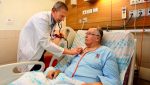
Cardiologist Gil Bolotin checks patient Robert MacLachlan, the first in the world to receive the CORolla implant, at Rambam hospital. (photo by Pioter Fliter/RHCC)
A 72-year-old Canadian man has become the world’s first recipient of an Israeli-developed implant to treat diastolic heart failure, a fairly common condition for which there is no effective long-term treatment.
The minimally invasive surgery was performed on July 26 at Rambam Health Care Campus, a medical centre in Haifa, by a multidisciplinary team led by cardiologists Gil Bolotin, director of cardiac surgery, and Arthur Kerner, senior physician in the interventional cardiology unit.
The implant, called CORolla, was developed by Israeli startup CorAssist Cardiovascular of Haifa. The elastic device is implanted inside the left ventricle of the heart and can improve cardiac diastolic function by applying direct expansion force on the ventricle wall to help the heart fill with blood. The CorAssist technology was invented by Dr. Yair Feld, a Rambam cardiologist, with doctors Yotam Reisner and Shay Dubi.
The patient, Robert MacLachlan, explained that he had run out of treatment options in Canada for his diastolic heart failure. His wife had read about the CORolla implant on the internet and contacted Dr. Karen Bitton Worms, head of research in the department of cardiac surgery at Rambam. MacLachlan’s cardiologist encouraged him to apply to have the experimental procedure in Israel.
Bolotin said that, while many potential applicants were interested in the procedure, no one wanted to be first until MacLachlan came along.
“I am proud that Rambam offers treatments to patients not available anywhere else in the world,” said Dr. Rafi Beyar, director and chief executive officer of Rambam.
The hospital did not comment on the condition of the patient, but, in a video released a month after the procedure, MacLachlan said he already feels better and has noticed that his skin colour looks healthy for the first time in a long time.
The Israel Ministry of Health has authorized up to 10 clinical trials at Rambam to test the efficacy of cardiac catheterization for placement of the CORolla implant. The potential market for the device is large. It is estimated that more than 23 million people worldwide suffer from heart failure, a condition in which the heart fails to pump sufficient oxygenated blood to meet the body’s needs. Approximately half of heart failure patients suffer from diastolic heart failure, in which the left ventricle fails to relax and adequately refill with blood, resulting in a high filling pressure, congestion and shortness of breath. This is the condition for which the CORolla device was invented.
Israel21c is a nonprofit educational foundation with a mission to focus media and public attention on the 21st-century Israel that exists beyond the conflict. For more, or to donate, visit israel21c.org.
The black dial phone in the Jerusalem residence of former prime minister Levi Eshkol. (photo by Sharon Altshul)
Around Rosh Hashanah, some of us do this back-and-forth dance, reflecting on things past while looking ahead. As I live in Israel, I am going “to dance” to what I believe is the most pervasive part of our daily existence – our (some would say obsessive) phone use.
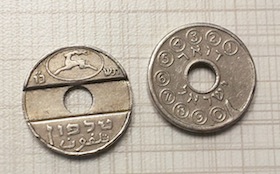
In the days prior to Israel’s becoming a “start-up nation,” telephone service was in pretty sad shape. For many years, most Israelis did not have phones in their homes. So, in the evening, you would wash up, dress up and go outside to use a public telephone. To make your call, you would load your pockets with asimonim, round, grooved, metal tokens. If you were calling someone outside your area code, you would hope that the weight of all the necessary asimonim would not tear your pockets.
In the old days, Israelis would need to gather up their asimonim and head to the public payphone to make a call. (photo by Hidro for Creative Commons)
Talking on payphones was fraught with problems. For starters, how would the person at the other end know you wanted to chat? Answer: the call had to be carefully arranged in advance, with both sides knowing the time, location and telephone numbers of the public telephones that were to be used.
It was an event requiring lots of patience. You had to stand in line with your neighbours, who also wanted to use the phone. You had to ignore the pressure from those behind you, telling you to hurry up and let someone else have a turn. Loud “discussions” occasionally broke out. People claimed they had a dahuf (urgent) call to make or receive. (In Israel, the term dahuf is thrown around a lot.) Thus, the beginning of the Israeli telecommunication era is essentially a study in how people function in groups.
Moreover, Israeli payphones seemed to have a mind of their own. You would be talking when, suddenly, in one big gulp, the telephone cruelly swallowed all your tokens. No amount of whacking the sides of the phone box or banging the receiver in its cradle would return the tokens. You were simply finished for the night. Talking on a payphone was such a tricky business, people would resort to sending postcards, as it was an easier way to relay a message.
By and large, Israeli households did not have telephones until the 1960s – as late as 1964, 55,800 Israeli homes were waiting for phones. If someone had acquired a telephone before the sixties, the person was either suspected of, or envied for, his or her protectzia, the fact that s/he “knew” somebody.
After a long wait – possibly for years – the phone company gave a household a black stationary phone with a short cord. Meaning that, to talk, you had to stay in one place. If you were lucky, nobody’s line would cross yours. If it did, you were stuck listening to their private affairs. People didn’t hang up right away because they didn’t know how long it would take to reconnect with friends. And, while on the subject of talking on the phone, to counter the high cost of doing so, employers with chatty employees or families with talkative children (or adult family members) went to the extreme of putting a lock on their dial phone.
After the implementation of the black telephones, changes came faster. Although the colour choice remained limited, Israelis could choose something other than a phone. They could also order a long phone cord or a press-button phone. Likewise, people could have phones in more than one room. Some advances have gone smoother than others. For example, fax installation and transmission continues to gravely challenge Bezek (the Israeli telephone company, established in 1984) and Bezek users.
In the international sphere, things also changed, albeit unevenly. In the late 1950s, Israel got hooked up to five continents. To place or receive an overseas call, you had to go to the central post office. You sat in a special glassed-in wooden booth while a special operator made the connection.
After a period of time, there were telecartim, or insertable phone cards for public phones. These cards became quite popular and many Israelis became phone card collectors and traders. I remember attending a telecart exhibit in Tel Aviv.
There are a few remaining payphones in Israel. (photo by Deborah Rubin Fields)
What feels like light years later, Israelis started equipping themselves with cellphones and, not long after that, with ear sets. Suddenly, it seemed that many people were experiencing severe mental health problems. In public, flaying arms and shouting at invisible people became rampant. I remember the first time I spotted a person exhibiting this behaviour. Only when he drew near did I see a thin black wire around his jaw and ear. I sighed, “another cellphone casualty.”
Israelis are apparently now making up for lost time by being glued to their mobile phones. They converse everywhere (on dates, in toilets, on trains and buses) about everything.
Some of the usage issues are (pretty close to being) unique to Israel. If you were under the impression that kashrut (kosher) is a food-related concept, think again. In Israel, as well as in a few Western countries, there are kosher cellphones. While they are not edible, they have been a boon to Israel’s ultra-Orthodox community. According to Cellular Israel, “a kosher phone is any phone that is approved and certified by vaad harabonim” (the rabbinic committee for matters of communications).
A kosher phone can only make and receive voice calls. Text messaging and emails will not work on a kosher phone. Moreover, for health, security, public services, water and electricity personnel, there is even a kosher phone designed to avoid breaking the laws of Shabbat. Technically, this mobile device may be dialed without connecting. There is even a kosher de-smarted (meaning that it has no web-browsing capability) smartphone.
Not all the changes appear to be positive. While more studies need to be done, Israeli researchers are beginning to think there is a real downside to cellphone use – it might even interfere with the biblical injunction to “be fruitful and multiply.”
As reported in Reproductive BioMedicine Online, there appears to be an association between higher rates of abnormal semen concentration and talking on cellphones for an hour or more a day, and talking on the devices as they are being charged. Among men who reported holding their phones within 50 centimetres of their groin, a higher rate of abnormal sperm concentration was found. Semen concentration was abnormal among 47% of those who stored their phone in their pants pockets, while it was abnormal in only 11% of the general male population. In brief, Israeli men might need to curb their cellphone use.
There might be another advantage to having an alternative to cellphones. Several years ago, when there was a wave of terrorism, having old-fashioned payphones around turned out to be beneficial. When an attack occurred, Jerusalemites whipped out their cellphones “to report in” with their families. With so many people simultaneously calling, the system crashed. It was the city’s remaining public phones that allowed people to reassure worried loved ones.
Admittedly, many of the above changes likewise happened elsewhere in the Western world; the telecommunication revolution has been a global revolution, after all. But, for many in Israel, each change or step of the way was met with a kind of curiosity or wonder that may have been singular to Israel. Today, that innocence has disappeared. For better or for worse, I’m not sure.
Deborah Rubin Fieldsis an Israel-based features writer. She is also the author of Take a Peek Inside: A Child’s Guide to Radiology Exams, published in English, Hebrew and Arabic.
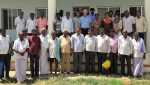
Biofeed’s Nimrod Israely, top centre, with mango growers in Karnataka, India. (photo from Biofeed via Israel21c)
Shortly before Indian Prime Minister Narendra Modi’s visit to Israel in early July, Indian diplomats in Israel heard about a revolutionary no-spray, environmentally friendly solution against the Oriental fruit fly (Bactrocera dorsalis) made by Biofeed, a 10-employee ag-tech company. They invited Biofeed to be one of six innovative Israeli companies meeting with Modi and Israeli Prime Minister Binyamin Netanyahu.
The company’s founder and chief executive officer, Nimrod Israely, who has a PhD in fruit-fly ecology, told the two leaders that Biofeed’s product can protect Indian farmers against fruit flies like the Iron Dome system protects the people of Israel against missiles. The Oriental fruit fly has been decimating 300 fruit species in India and in 65 other countries in Asia, Africa and the Americas and is considered to be the most destructive, invasive and widespread of all fruit flies.
Biofeed’s lures, hung on trees, contain an organic customized mix of food, feeding stimulants and control or therapeutic agents delivered by a patented gravity-controlled fluid release platform. Attracted by the odour, the fly takes a sip and soon dies – without any chemicals reaching the fruit, air or soil.
The launch of Biofeed’s first-in-class attractant for female Oriental fruit flies results from 15 years of development of the core platform and more than a year of development and testing in Israel and Karnataka, India. Mango farmers on four Indian orchards saw an overall decrease of fruit-fly infestation from 95% to less than five percent.
“We were hoping to bring a solution that will replace spraying and increase productivity by 50%,” Israely told Israel21c. “I am excited by the results, demonstrating the future potential for some farmers to bring about 900 times more marketable produce to market.”
A fruit fly feeding in a Biofeed lure. (photo from Biofeed via Israel21c)
One farmer in the Biofeed pilot explained that previously he had used a trap that attracted only male fruit flies, with limited success. “If you cut 25 fruits, we were getting only one good fruit; 24 were infected,” he said.
K. Srinivas Gowda, president of the 70,000-farmer Karnataka Mango Growers Association, wrote in a letter presented to Modi and Netanyahu that he “would like to have this [Biofeed] technology implemented to all the mango farmers through the government of India. This technology can be used to develop pest-free zones in the mango-growing belts in India.”
The pilot project started after Biofeed won a Grand Challenges Israel grant last year from the Israel Innovation Authority and the Foreign Ministry’s international development agency, Mashav.
“We don’t have the Oriental fruit fly in Israel. However, until now there was no solution for this problem. So, we took the challenge and chose to focus on India,” Israely said. The company worked with Kempmann Bioorganics in Bangalore to carry out the trial.
Biofeed’s products are used in many Israeli fruit orchards against the Mediterranean fruit fly and other common pests, including the olive fruit fly and the peach fruit fly (Bactrocera zonata).
“Bactrocera zonata is the number two pest in India. There are three main pests in India, so now we’ve given, within two years, a solution for the two most devastating fruit flies in India and in other parts of the world,” said Israely.
“We are the only company in the world with a solution for those two pests and both solutions are harmless to the environment,” he added. “We estimate the annual market potential of these two pest segments to be well over $1 billion.”
The Biofeed platform is effective with as few as 10 units per hectare and for a period of nearly a year before the dispenser needs replacing.
Biofeed, founded in 2005, also has a formula targeting mosquitoes that bear viruses such as Zika.
“Evolution has given insects an elaborate sense of smell, which they utilize to find mates, food, egg-laying sites and more,” Israely told Israel21c last year. “The company has developed a liquid formula that ‘knows’ how to tie different kinds of smells to other materials, as the need arises. The result is a special ‘decoy’ that draws the target insect through smell. The decoy is slow-released from a device over the course of a year. The insect is drawn to the decoy, feeds off it and dies shortly after.”
Headquartered in Kfar Truman, Biofeed sees the future of agriculture in developing countries such as India and China.
“We want to bring something that is extremely easy to use: you don’t need tractors, you don’t need to remember to spray once a week, you don’t need to put yourself in danger with sprays, there’s no safety equipment. This is something that can make a dramatic change in agriculture and human health,” said Israely.
Israel21cis a nonprofit educational foundation with a mission to focus media and public attention on the 21st-century Israel that exists beyond the conflict. For more, or to donate, visit israel21c.org.

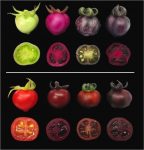
Unripe (top) and ripe (bottom) tomatoes. Regular tomatoes (far left) start out green (far left top) and turn red when ripe (far left bottom). In contrast, genetically engineered tomatoes assume different shades of red-violet, depending on whether they produce betalains (the column second from left), pigments called anthocyanins (second from right) or betalains together with anthocyanins (far right). (photo from wis-wander.weizmann.ac.il)
Colour in the plant kingdom is not merely a joy to the eye. Coloured pigments attract pollinating insects, they protect plants against disease, and they confer health benefits and are used in the food and drug industries. A new study conducted at the Weizmann Institute of Science, published in Proceedings of the National Academy of Sciences, USA, has opened the way to numerous potential uses of betalains, the highly nutritious red-violet and yellow pigments known for their antioxidant properties and commonly used as food dyes.
Betalains are made by cactus fruit, flowers such as bougainvillea and certain edible plants – most notably, beets. They are relatively rare in nature, compared to the two other major groups of plant pigments and, until recently, their synthesis in plants was poorly understood. Prof. Asaph Aharoni of Weizmann’s plant and environmental sciences department and Dr. Guy Polturak, then a research student, along with other team members, used two betalain-producing plants – red beet (Beta vulgaris) and four o’clock flowers (Mirabilis jalapa) – in their analysis. Using next-generation RNA sequencing and other advanced technologies, the researchers identified a previously unknown gene involved in betalain synthesis and revealed which biochemical reactions plants use to convert the amino acid tyrosine into betalains.
To test their findings they genetically engineered yeast to produce betalains. They then tackled the ultimate challenge: reproducing betalain synthesis in edible plants that do not normally make these pigments.
Tomatoes that have been genetically engineered to produce betalains only in the fruit, but not elsewhere in the plant. (photo from wis-wander.weizmann.ac.il)
The success announced itself in living colour. The researchers produced potatoes, tomatoes and eggplants with red-violet flesh and skin. They also managed to control the exact location of betalain production by, for example, causing the pigment to be made only in the fruit of the tomato plant but not in the leaves or stem.
Using the same approach, the scientists caused white petunias to produce pale violet flowers, and tobacco plants to flower in hues varying from yellow to orange pink. They were able to achieve a desired hue by causing the relevant genes to be expressed in different combinations during the course of betalain synthesis. These findings may be used to create ornamental plants with colours that can be altered on demand.
But a change in colour was not the only outcome. Healthy antioxidant activity was 60% higher in betalain-producing tomatoes than in average ones. “Our findings may in the future be used to fortify a wide variety of crops with betalains in order to increase their nutritional value,” said Aharoni.
An additional benefit is that the researchers discovered that betalains protect plants against grey mold, Botrytis cinerea, which annually causes losses of agricultural crops worth billions of dollars. The study showed that resistance to grey mold rose by a whopping 90% in plants engineered to make betalains.
The scientists produced versions of betalain that do not exist in nature. “Some of these new pigments may potentially prove more stable than the naturally occurring betalains,” said Polturak. “This can be of major significance in the food industry, which makes extensive use of betalains as natural food dyes, for example, in strawberry yogurts.”
Furthermore, the findings of the study may be used by the drug industry. When plants start manufacturing betalains, the first step is conversion of tyrosine into an intermediate product, the chemical called L-dopa. Not only is this chemical itself used as a drug, it also serves as a starting material in the manufacture of additional drugs, particularly opiates such as morphine. Plants and microbes engineered to convert tyrosine into L-dopa may, therefore, serve as a source of this valuable material.
The research team included Noam Grossman, Dr. Yonghui Dong, Margarita Pliner and Dr. Ilana Rogachev of Weizmann’s plant and environmental sciences department, and Dr. Maggie Levy, Dr. David Vela-Corcia and Adi Nudel of the Hebrew University of Jerusalem. Aharoni’s research is supported by the John and Vera Schwartz Centre for Metabolomics, which he heads; the Leona M. and Harry B. Helmsley Charitable Trust; the Adelis Foundation; the Lerner Family Plant Science Research Fund; the Monroe and Marjorie Burk Fund for Alternative Energy Studies; the Sheri and David E. Stone Fund for Microbiota Research; Dana and Yossie Hollander, Israel; the AMN Fund for the Promotion of Science, Culture and Arts in Israel; and the Tom and Sondra Rykoff Family Foundation. Aharoni is the recipient of the André Deloro Prize, and the incumbent of the Peter J. Cohn Professorial Chair.
For more on the research being conducted at the Weizmann Institute, visit wis-wander.weizmann.ac.il.
Kara Mintzberg, left, and Dana Troster at the Community Hackathon. (photo from Jewish Federation of Greater Vancouver)
On a sunny Sunday, June 25, 40 Jewish young adults gave up a day at the beach and devoted themselves to building a better community. And three teams within this group saw their ideas chosen to be developed and piloted.
Led by Jewish Federation of Greater Vancouver’s young adult program Axis, the goal of the Community Hackathon is a more connected community whose members design the programs and services they wish to see. This is the second phase of the project, which began in January, when a core group of Jewish young adults convened for a pre-Hackathon workshop focused on improving the Jewish experience for young adults and young parents.
“Jewish Federation has demonstrated that they are committed to engaging the next generation of Jewish leaders,” said Bryan Hack, chair of the Axis steering committee. “We’ve seen that in how they’ve included young adult engagement as a key element of their 2020 Strategic Priorities and in creating opportunities like the Community Hackathon, that are platforms for the involvement and leadership of young Jewish adults.”
Jewish Federation is one of only three organizations in North America to host a Community Hackathon. They received a grant from the PresenTense Group and the Covenant Foundation to facilitate the program and to fund the ideas generated through it.
The Community Hackathon was a full-day event at the Museum of Vancouver. Participants used design thinking to generate and prototype project ideas to tackle this challenge: “How to identify what people find meaningful in Jewish connection and then respond with appropriate experiences, infrastructure and communication.” Using this question as a framework, participants worked collaboratively in smaller teams to come up with tangible and sustainable solutions. They were led through the process by a facilitator from UpStart, an organization committed to being an engine for Jewish innovation.
Three of the teams will see their ideas piloted, using seed grants of $2,500 US each plus training and mentorship from UpStart and local coaches over the months to follow. The selected proposals were:
Shabbat Share (Adina Goldberg, Elliot Cheng, Jonathan Polak, Rebecca Denham, Bryan Hack and others), with the idea to create crowdsourced Shabbat dinners;
Shmooz (Rebecca Shaw, Gabby Switzer, Ali De Levie, Courtney Cohen, Kathleen Muir and Tamir Barzelai), which proposes the creation of a personalized interface that represents current events in the community, along with opportunities and a directory in a consolidated format with map and calendar capabilities; and
Treehouse Mentorship (Simone Landa, Lia Hershkovitz, Shayna Goldberg, Genna Cohen, Noah Kass and Dave Elezam), which will connect established Jewish mentors and community leaders with young professionals and newcomers to Vancouver to build a stronger community.
For more about Axis and to become involved, visit axisvancouver.com.