Skip to content
  • Home
  • Subscribe / donate
  • Events calendar
  • Business Directory
  • FAQ
  • News
    • Local
    • National
    • Israel
    • World
    • עניין בחדשות
      A roundup of news in Canada and further afield, in Hebrew.
  • Opinion
    • From the JI
    • Op-Ed
  • Arts & Culture
    • Performing Arts
    • Music
    • Books
    • Visual Arts
    • TV & Film
  • Life
    • Celebrating the Holidays
    • Travel
    • The Daily Snooze
      Cartoons by Jacob Samuel
    • Mystery Photo
      Help the JI and JMABC fill in the gaps in our archives.
  • Community Links
    • Organizations, Etc.
    • Other News Sources & Blogs
  • JI Chai Celebration
  • JI@88! video

Recent Posts

  • SFU honours Gloria Gutman
  • Lifting people’s spirits
  • Wedding a ray of light
  • Indigeneity and Zionism
  • Rule of law broken: councilor
  • Football and its roles
  • The burden of defence
  • Fish Café returns after fire
  • All right in what goes wrong
  • Nuns & mermaids at TUTS
  • Camp offers holiday retreat
  • Students and mentors inspire
  • Once-in-a-lifetime trip
  • 100 dancers, one heart
  • Money for the sciences
  • What “Jewish food” means
  • Have a cookie, schnitzel too
  • Federation now across BC
  • Israel fighting for its existence
  • Deal strengthens Iran
  • Patriotic belonging diminishes
  • A campaign to engage
  • Upstanders’ first live event
  • Responding to Carney
  • Having your own home
  • Music a family tradition
  • Musical to warm heart
  • Community milestones … June 2026
  • Sharing her passion for Israel
  • Or Shalom reopens its doors
  • JFS from past to future
  • Need holistic approach
  • Sharing stories, advice
  • Journalist shares fears
  • Skills to live together
  • Road to independence

Archives

Follow @JewishIndie
image - CJN box ad Rockowers 2026

Tag: Passover

PJ Library resources

PJ Library resources

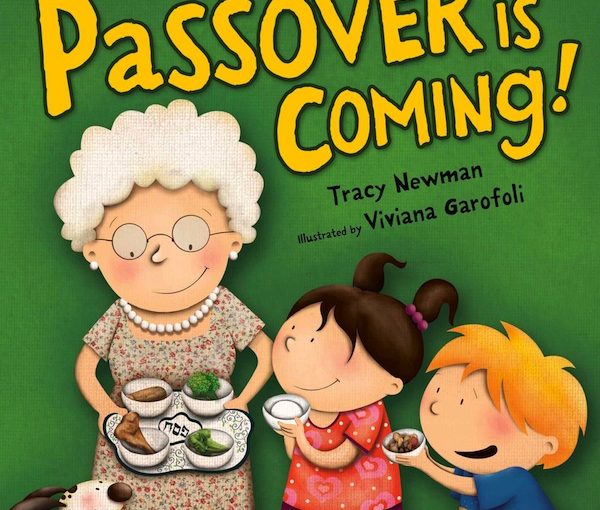
One PJ Library holiday offering is Passover is Coming by Tracy Newman and Viviana Garofoli.

Long a trusted resource for Jewish families in more than 35 countries around the world who receive their free books each month, PJ Library offers fresh reading, audio stories and tasty treats for families celebrating Passover this year, April 15 to 23.

Hundreds of thousands of children are receiving new books this month, each providing a carefully curated selection of age-appropriate reading related to Passover. New this year, families will also receive a colourful illustrated “Matzah Mania” fold-out that includes recipes for homemade matzah, matzah trail mix, and matzah pizza lasagna, along with ideas for serving a seder grazing board. The keepsake fold-out includes culturally inclusive information about seder traditions, and the Four Questions of the seder, which are printed in English and Hebrew.

image - In Every Generation Haggadah cover English
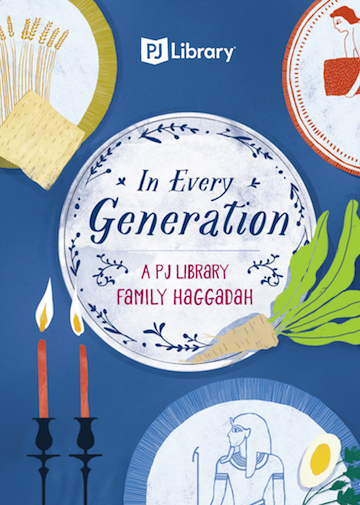
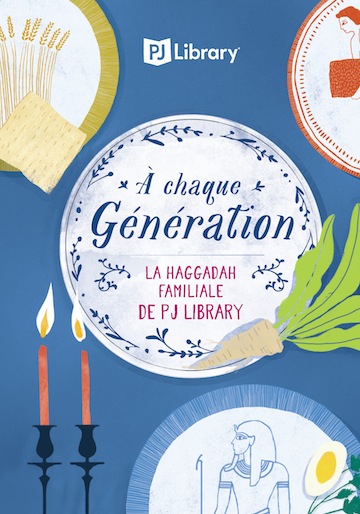
PJ Library’s Haggadah is available in five languages, including English and French. As well, PJ Library has many other Passover resources, such as children’s books about the holiday.

In the PJ Library program, which was created by the Harold Grinspoon Foundation, families who sign up may receive free books for children from birth through age 8. For kids ages 9 and up, PJ Our Way allows kids to select and review books on their own each month.

In April, two new Passover-themed episodes of the PJ Library Presents podcast network will launch. These new podcasts bring Jewish traditions, culture, holidays and values to life through audio storytelling. On April 4, Kiddo Learns about Passover will be the latest Afternoons with Mimi audio story, and Humpty Dumpty and the Passover Feast will be the newest tale in the Beyond the Bookcase series. Families may listen to the award-winning podcasts on all major streaming sources, and more information is at pjlibrary.org/podcast.

image - image - In Every Generation Haggadah cover FrenchPJ Library has become one of the leading sources for family-friendly Haggadot, with its illustrated In Every Generation: A PJ Library Family Haggadah. Since 2018, the organization has shipped more than 675,000 individual Haggadot to more than 110,000 PJ Library families for free. (For non-subscribers, the printed Haggadah is available for purchase via Amazon.) PJ Library also offers a digital version that can be downloaded in five languages: English, Spanish, Portuguese, Russian and French. This Haggadah is filled with songs, blessings and explanations and is available as a free printable PDF from pjlibrary.org/haggadah.
This year, PJ Library has updated its Passover hub – pjlibrary.org/passover – with new book lists and dozens of fresh ideas and resources for families, including stories and songs, games, activities and recipes.

– Courtesy PJ Library

Format ImagePosted on March 25, 2022March 24, 2022Author PJ LibraryCategories Celebrating the HolidaysTags children's books, Haggadah, Judaism, parenting, Passover, PJ Library

Why is night different?

It was the first night of Passover and I was feeling miserable. By now, I recognize the ache. It’s the one I get when I am thousands of miles away from my family.

Away from the days of being young and just naturally assuming there would be a seder night with family. Away from old familiar melodies and reminders. I remembered when my mum would say a prayer in a funny British accent, or how we would all be tapping our hands vigorously on the table while singing. I’d be sitting with siblings and cousins, playing games with the matzah, sneaking a sip or three of heavily sweetened kosher red wine and counting down the time until we could eat.

Forty years ago, after leaving Israel, I moved to London, where there were always relatives to fill that gap. However, back in the younger days, my Jewish identity took something of a back seat. As a teen in Israel, I always wondered why I wasn’t allowed to join my friends at the beach on Shabbat. As a child, we were raised as Orthodox Jews but, when we immigrated to Israel, some of the traditions, sadly fell by the wayside.

Vancouver eventually became my permanent home and, initially, I’d always worry where I would be spending the Jewish holidays. Frequently, friends and kind strangers invited us to their homes. It only seemed to deepen the family longing pangs.

When I became a parent, my husband and I began to host our own celebrations and seders and we always included strangers and synagogue friends. Fortunately, when my oldest son was 3, we became friends with another family. They knew some family-less people and it wasn’t long before we all celebrated the Jewish holidays together, a tradition which has continued – until recently.

When the pandemic began and social distancing became necessary, holiday gatherings were cancelled. Zooming on our phones became the norm. It was different. Something of a novelty.

A few days before Pesach this year, I glanced at the secular calendar, which indicated Sunday as the eve of Pesach, so I arranged for our kids and partners to come Sunday night. It wasn’t until mid-afternoon Saturday that I realized I had goofed and Pesach commenced that night. By 4 p.m., the sadness had crept in. My sister had phoned from Israel and filled me in on the lovely seder she had attended.

My brother had sent photos. All the well-wishers had phoned and sent greetings.

For the first time in many years, my husband and I would be all alone and unprepared. There was little motivation to do anything. We ordered an Indian (vegan) meal to be delivered. I forced myself to light the festival candles and mutter some prayers. Then, the phone rang for the first time in hours.

It was a good friend. She sounded excited. Although she had hosted many a seder elsewhere, she was holding her first with her daughter in Vancouver, rather than attending an organization’s or other event via Zoom.

“You must come over and see my table! It’s so beautiful! Even just for a few minutes,” she said.

I begged off because we would be seeing our infant grandson the following afternoon and just couldn’t take the chance. Besides, our delivery would be arriving any minute. “Cancel it! We have lots of food here!”

I would have dearly loved to have dropped everything and gone to her house. I recalled how, some 20 years earlier, she and her daughter had attended our seder. We settled on a FaceTime call and sang the Shehecheyanu blessing together.

A knock at the door; our food had arrived. We said goodbye. But my friend’s enthusiasm was infectious. Her phone call, when I so needed to be remembered, reminded me that we weren’t, in fact, alone in the world.

We pulled out Haggadot and some of the seder plate preparations for the following day. Miraculously, there was enough kosher wine to get us to the third glass of wine and the spilling of the wine for the 10 plagues. My husband and I took turns reading while the candles flickered.

Unlike most of our past seders, it was quiet and peaceful.

This year, I really asked myself: “Why is this night different?”

The answer could be lengthy but I do know that, on this particular night, there was a little soul intervention.

Jenny Wright is a writer, music therapist, children’s musician and recording artist.

Posted on May 28, 2021May 27, 2021Author Jenny WrightCategories Celebrating the HolidaysTags coronavirus, COVID-19, family, mental health, Passover, seder

Can we learn from COVID?

Spring and the holiday of Passover are all about renewal and hope. This year, as our elders begin receiving the coronavirus vaccines and our economy appears to be recovering from the most critical disruption in living memory, things seem promising. We anticipate fleeing our bondage of social isolation and being transported to a land, if not of milk and honey, at least to a place of mixing and hugging.

We have (hopefully) learned a great deal. There have been many opportunities to benefit from the disruption in our lives. At the individual level, we may have learned new skills or crafts – like cross stitch or baking sourdough! – or used the time to study new fields or languages. On the collective level, we have learned that the entire world, regardless of governance, religion, language and every other difference, could mobilize (albeit not equally well) to respond to a crisis.

We also learned that, when necessary, many governments and societies could rise to the occasion (again, with different levels of competence) to save lives. Billions of dollars were “found” to save potentially devastated economies and support businesses and households. Scientists and medical professionals cooperated across boundaries to search for vaccines and to care for the ill. Ordinary people – not just first responders and others in the direct line of care but grocery clerks and those who provide services previously taken for granted – became heroes of the moment.

As the months dragged on, divisions emerged. People and their governments sometimes differed on the best responses, or any response at all. A cohort emerged questioning everything, from the best ways to stop the spread of the virus to the very existence of the virus that has infected more than 100 million and killed more than 2.5 million.

As we hopefully approach the beginning of the end of this extraordinary era, let us remember its beginning – not the fear of the unknown that engulfed us, but the unity the world seemed to exhibit in coming together to confront a danger that knows no borders.

Imagine the challenges we might be able to face and resolve if we could mobilize the world the way we did in those earliest moments of the pandemic. Can we come together to finally confront the climate emergency, which could be every bit as fatal as an unchecked virus if not addressed? Can we unite to overcome racial divisions and inequality? Can we even marginally close the chasm between richest and poorest in Canada and across the planet?

The incredible hurdle that was thrown across our civilization’s path a year ago showed our capacity for coming together when the stakes were high enough.

There are a lot of areas where the stakes are high. Can we take the lessons we’ve learned over the past 12 months and apply them there?

Posted on March 19, 2021March 18, 2021Author The Editorial BoardCategories From the JITags anti-racism, climate crisis, coronavirus, COVID-19, equality, inclusion, Judaism, lifestyle, Passover, racism

Judaism and addiction

When we think of Pesach, the theme that emerges is: “We were slaves of Pharaoh in Egypt, but the Lord brought us out of Egypt with a mighty hand.” As slaves, we endured years of torture and hardship, with no choice but to obey the edicts of the Pharaoh. In essence, we were powerless. Those addicted to either drugs, alcohol or a behaviour (think gaming, gambling) are slaves as well. They are chained to a disease that has control over their lives – their brain has been kidnapped into thinking “this is what I need to live, to survive.” They no longer have freedom. Often, the notion that they can break free is beyond what they can envision.

When the Jews left Egypt, their days in the desert were a struggle. Some wondered why they left what they knew for the unknown. Yet, here they were. With manna for food, a cloud for protection, they wandered for 40 years: a long, hard journey to learn how to live with their new-found freedom.

When someone initially breaks the chains of addiction, the struggles they face are no less daunting. There is fear, a sense of loss; a feeling of, will this work? Can I be successful? Will I be better off? In essence, they can feel like they are in a desert.

To assist individuals in the precarious time of new-found freedom, JACS Vancouver has launched the Sustaining Recovery program: a wrap-around service that supports clients with individual counseling, assessment and program planning.

Working with our client, we together build and implement a personalized set of supports and tools that focus on where they are in their journey, and what specific supports they need. When the opportunity arises, we help them focus on identifying the forces, triggers and/or messages that are beneath the surface of their addiction. They learn how to make different choices, where to go for help and how to recognize that life is better, health is possible.

The path to freedom, as our ancestors found out, was not easy – nor is it for those wanting to sustain recovery from addiction. With personal willingness and commitment, and solid and constant support, success and a purposeful life is within reach.

Shelley Karrel is a registered clinical counselor, and is manager of counseling and community education at JACS Vancouver. For more information about JACS, contact [email protected].

Posted on March 19, 2021March 18, 2021Author Shelley KarrelCategories Op-EdTags addiction, healing, health, JACS, Judaism, Passover

Change can be a good thing

One of my twins is always looking for something new to learn online. For awhile, he was fascinated by a Massachusetts service dog project, where Great Danes are trained to provide support to those with balance and mobility impediments. He found this amazing service dog program through the website explore.org. It has live cams of animals all over the world. While we’re not traveling anywhere, my kid is bird watching, seeing service dogs, polar bears, and more. When we least expect it, he rushes up with his iPad and demands that I admire a nesting owl, or that his biologist dad identify an animal he’s never seen before.

This kind of intellectual curiosity is something I’m excited to see. Open-ended questioning about the world and how it works is a special kind of Jewish exploration. This intensity and enthusiasm is how we delve into studying Torah and Talmud, or how we engage with the world in general.

Passover is an obvious time to think about questions and how we approach and answer them. Our families have been telling the Exodus and “Once we were slaves and now we are free” story for thousands of years! Still, our questioning can’t just stick to the Four Questions and be done. Sometimes, even with good intentions, we get hung up on the rote narrative of the seder. We know we have to get through it. We start at the beginning and head to the end. It’s a yearly ritual routine, punctuated by matzah, lots of other foods, wine, and, in normal times, family and guests.

When we were first married, I once attended a smaller seder with some of my husband’s family. I was excited and nervous to engage over the Haggadah’s ideas – but it didn’t turn out as I expected. The family was committed to getting through the ritual traditionally and to the food part. They looked uncomfortable when I tried to talk about ideas or ask questions. In retrospect, I realized I knocked them off their game. There was a seder routine – and I wasn’t following theirs.

My other twin is also learning. He’s not into the animal live cams. Instead, he comes up with questions about school projects. He brainstorms and makes suggestions, even when they’re not welcome. The remote learning teacher suggested he limit his research on one social studies project to their “class time” online rather than do more research later.

Of course, the minute he logs off, I help him look up his questions and learn – whenever he wants. His teacher maybe wants to slow down the group learning, or avoid making more social studies lesson plans, but feeding intense curiosity with knowledge helps enthusiastic learners blossom. In my experience, putting somebody off when they want to learn more feels negative and does the opposite.

For many people, the pandemic has knocked them off their game. Losing regular routines may have felt negative. As people anticipate getting vaccinated, they talk more about which things they miss the most and long to do when things return to “normal.” For another view, I recently read a CBC news article that quoted David Eagleman, a neuroscientist.

Eagleman suggested that, in fact, the pandemic might be good for people’s brains, because the huge lifestyle changes we’ve experienced have forced us off our “path of least resistance.” We’ve been forced to be more flexible and innovate. This can be positive for our brain health. In some cases, forcing our brains to adapt may result in positive growth and changes in our work or home lives.

In a Jewish context though, when we consider our ritual routines, we must balance the comfort of what’s familiar with the opportunity to learn. Questioning and continuing to grow intellectually are valuable, particularly during Passover.

In the talmudic tractate of Pesachim, on page 105a, there’s a discussion about when to say certain blessings such as the Kiddush. Should we interrupt a meal in the middle to do Kiddush? Rav Hamnuna the Elder says, “You don’t need to do this, because Shabbat establishes itself.” In other words, our holidays, like Shabbat or Pesach, will happen whether we are ready or not. We must automatically rise to the obligations associated with them. So, yes, we do a lot of things by rote and habit.

Even so, the next page, Pesachim 106, teaches that there are times where leaders must do things extemporaneously, or work to learn more to figure out what to do. A good leader both continues with the routines and remains able to ask questions, be flexible and learn.

It’s too early for me to conclude whether our freeform research online this year has helped my twins become lifelong learners. (I hope so!) I don’t know if observing animals via live cam will result in a career like field biologist or even a hobby like bird-watching. Whatever they choose, creating a routine-based learning environment that encourages and cultivates questioning, improvisational thinking and flexibility may go a long way towards helping them succeed later on.

It’s true, as Rav Hamnuna the Elder explains, that holidays happen whether or not we’re ready for them. As Rabbi Sari Laufer explains on My Jewish Learning’s explanation of Pesachim 105, “Kiddush doesn’t make Shabbat begin, we make Kiddush because Shabbat has begun.” Yet, once our holidays begin, it’s our obligation to engage with them, to learn and to question.

“Due to the pandemic” is a phrase we’ve heard too often, usually in relation to cancelations or programs offered exclusively online. Perhaps we might add a positive “due to the pandemic” twist. We’re forced to be more flexible thinkers in our ritual routines, too. We can question why we always did them this way. In the end, we might be all the better for that brain jostling and chance for intellectual inquiry.

My family and I wish you a wonderful, thoughtful, questioning Passover, full of joy this year, however different it may be from your usual routines. Chag sameach.

Joanne Seiff has written regularly for CBC Manitoba and various Jewish publications. She is the author of three books, including From the Outside In: Jewish Post Columns 2015-2016, a collection of essays available for digital download or as a paperback from Amazon. Check her out on Instagram @yrnspinner or at joanneseiff.blogspot.com.

Posted on March 19, 2021March 18, 2021Author Joanne SeiffCategories Op-EdTags coronavirus, COVID-19, education, family, Judaism, learning, lifestyle, parenting, Passover, seder
Make memorable meals

Make memorable meals

Sweet Potato Wedges with Avocado Drizzle, as made by Miriam Pascal, author of More Real Life Kosher Cooking. (photo by Miriam Pascal)

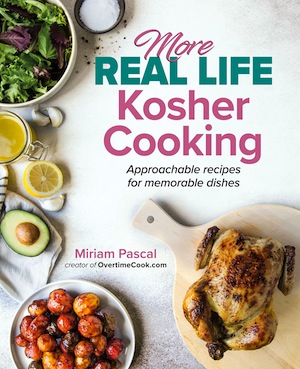
Many people have probably never heard of Miriam Pascal. I was one of them, but now am happily a fan. She describes herself as a 20-something Jewish gal from New York, a self-taught cook. She founded overtimecook.com, a popular kosher recipe blog, and More Real Life Kosher Cooking: Approachable Recipes for Memorable Dishes (Art Scroll, 2019) is her third cookbook.

More Real Life Kosher Cooking has many positive aspects – an introductory remark for each recipe; ingredients in the left column and numbered directions on the right; and a full-page, full-colour photograph for each recipe, including photographs of four dishes before each of the 10 chapters. In the introduction, Pascal recalls memories connected to various recipes and says her goal is to make the recipes in this cookbook “approachable and doable,” as the book’s subtitle states. She wants to help her readers “create delicious food and special moments.”

image - More Real Life Kosher Cooking book cover
More Real Life Kosher Cooking book cover

There are some 200 photographs and 139 recipes in this cookbook, plus directions for 22 sauces and dressings, which can be used with other creations. Chapters are Breakfasts and Breads, Appetizers and Snacks, Salads and Spreads, Soups and Stews, Meat and Poultry, Dairy and Meatless, Vegetables and Sides, Desserts and Drinks, Baked Goods and Pastries, and Sauces and Staples. Among the recipes are Puff Pastry Breakfast Pizza, Crispy Onion Strings, Meaty Root Vegetable Soup, Caramelized Onion and Cheese Manicotti, Two-Ingredient Chocolate Mousse and No-Bake S’mores Cheesecake.

Of the 139 basic recipes, 46 are listed in the Pesach guide at the end. Here are four from the book.

SWEET POTATO WEDGES WITH AVOCADO DRIZZLE
(pareve, makes six servings)

3 sweet potatoes
3 tbsp oil
1 tsp kosher salt
1/4 tsp black pepper
* * *
1 avocado
1/2 cup mayonnaise
1/2 tsp kosher salt
1 tsp garlic powder
2 tsp lemon juice

  1. Preheat oven to 425°F. Line two baking sheets with parchment paper; set aside.
  2. Peel sweet potatoes and cut into wedges. Place into a large bowl; add oil, salt and pepper. Toss to coat.
  3. Place wedges in a single layer on prepared baking sheet. Bake for about 50 minutes, until the outsides are starting to brown.
  4. Meanwhile, prepare the avocado drizzle. Place peeled and pitted avocado into a bowl; mash until smooth. Add remaining ingredients; stir to combine.
  5. Remove roasted sweet potato from oven; allow to cool slightly. Just before serving, drizzle avocado mixture over wedges.

The avocado drizzle can be prepared two to three days ahead. Due to the acid in the recipe, it should not turn brown. Sweet potato wedges are best fresh, but can be prepared a day or two ahead and served at room temperature.

MATBUCHA BRISKET
(meat, makes six to eight servings)

1 (about 3 lb) second cut brisket (see Note)
kosher salt, for sprinkling
black pepper, for sprinkling
3 tbsp oil
2 onions, sliced
2 tsp kosher salt, divided
3 bell peppers, sliced, preferably different colours
2 plum tomatoes, diced
5 cloves garlic, minced
1/2 jalapeño pepper, minced
2 tsp cumin
1 tsp chili powder
1 (28-ounce) can diced tomatoes

photo - Miriam Pascal’s Matbucha Brisket
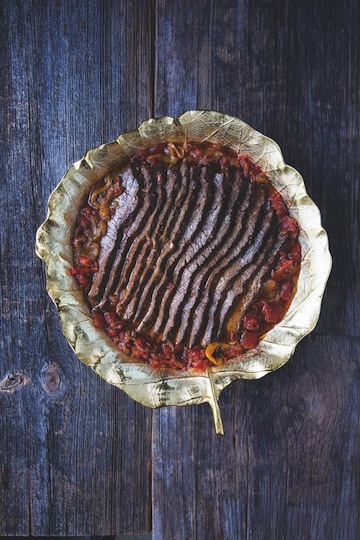
Miriam Pascal’s Matbucha Brisket. (photo by Miriam Pascal)
  1. Preheat oven to 325°F.
  2. Sprinkle salt and pepper over both sides of roast. Heat a large, deep frying pan over high heat. Add roast; sear for two to three minutes per side, until browned on the outside. Transfer to a roasting pan; set aside.
  3. Turn heat under the frying pan to medium; add oil, onions and one teaspoon salt. Cook for about five minutes, until softened
  4. Add peppers, tomatoes, garlic, jalapeño and remaining teaspoon salt. Cook for eight to 10 minutes, until softened.
  5. Raise heat to high. Add cumin, chili powder and diced tomatoes with their liquid. Cook until mixture starts to bubble around the edges. Pour vegetable mixture over the meat.
  6. Cover roasting pan tightly; bake for 40-50 minutes per pound, until meat is soft and tender.

Note: Instead of a brisket, you can use any other cut of meat that does well when cooked low and slow.

The meat freezes well in the sauce, wrapped and airtight. Reheat, covered, until warmed through.

ROASTED VEGETABLE SOUP
(pareve, makes six to eight servings)

2 large zucchini, diced
3 medium yellow squash, diced
2 red bell peppers, diced
2 onions, diced
1 lb frozen cauliflower florets, defrosted
1/4 cup oil
1 tbsp kosher salt
1/2 tsp black pepper
* * *
4 cups vegetable broth
about 6 cups water
2 bay leaves
1 tbsp kosher salt

  1. Preheat oven to 400°F. Line two baking sheets with parchment paper.
  2. Place vegetables, oil, salt and pepper into a bowl. Toss to combine. Divide between prepared baking sheets. Roast for 50-60 minutes, until vegetables are starting to brown.
  3. Place roasted vegetables, along with any juices, into a large soup pot. Add soup ingredients; bring to a boil.
  4. Simmer for about one hour. Discard bay leaves. Using an immersion blender, blend soup well, for about three minutes, until fully smooth. Adjust salt and pepper to taste.

This soup can be prepared ahead of time, and frozen in an airtight container.

Sybil Kaplan is a journalist, lecturer, book reviewer and food writer in Jerusalem. She created and leads weekly English-language Shuk Walks in Machane Yehuda, she has compiled and edited nine kosher cookbooks, and is working on a 10th. She also writes restaurant features for janglo.net.

Format ImagePosted on March 19, 2021March 18, 2021Author Sybil KaplanCategories BooksTags brisket, cookbook, cooking, kosher, Miriam Pascal, Passover, potatoes, soup
This year’s Passover cover

This year’s Passover cover

image - JI March 19/21 Passover cover
image - JI April 3/20 Passover cover

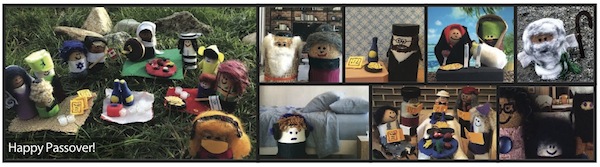
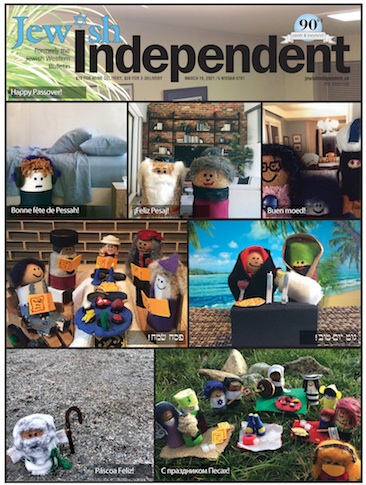
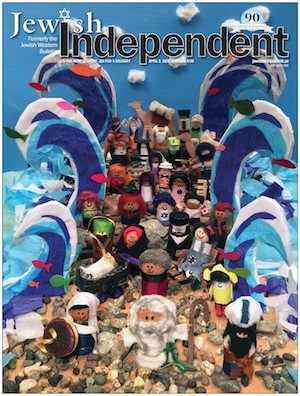
Having spent so much time with my Israelites for last year’s Passover cover photo shoot, I thought it would be nice to see where they ended up. They successfully exodused from Metaphorical Egypt, as COVID was just getting started, and are now living in various places around the world. With the exception of Moses, who is still wandering the desert (but with good wi-fi), they all have solid roofs over their heads and are relatively sedentary, especially now, during COVID. They’ve kept in touch and are marking their one-year anniversary in freedom with a Zoom seder, as depicted on this year’s Passover cover. They offer holiday greetings in English, French, Spanish, Judesmo (or Judeo-Spanish), Hebrew, Yiddish, Portuguese and Russian.

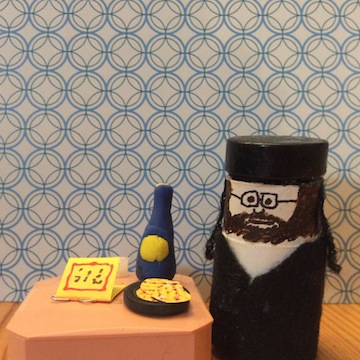
photo - Chassid Passover 2021While one of the Israelites couldn’t join the online gathering for the first night of Passover, as he doesn’t Zoom on the holy days, he does send his best wishes in the language of your choosing. My hope for them is my wish for all of us – that, next year, we can all gather together in-person with our loved ones, whether they be in Jerusalem, Vancouver or anywhere in between. And that we can do so without the need for masks, sanitizer or social distancing.

Format ImagePosted on March 19, 2021March 18, 2021Author Cynthia RamsayCategories From the JITags art, Exodus, Passover
Childhood memories

Childhood memories

Chicken soup with matzah balls is a staple of the Ashkenazi Passover seder; for meat-eaters, at least. (photo from onceuponachef.com)

My father used to start the seder with a joke. One I remember was: Abe goes to see his boss and says: “We’re doing some heavy house-cleaning at home tomorrow for Pesach. My wife says she needs me to move all the heavy furniture, clean the stove and even clean out the garage.” “We’re short-handed Abe,” the boss replies, “I just can’t give you the day off.” “Thanks boss,” says Abe. “I knew I could count on you!”

Passover was both an exciting and an embarrassing time for me. Both my parents were born in Australia in the late 19th century, when Jews were quite a rarity there. The influx of Jews from Europe to Australia only began after the Second World War, when those lucky enough to survive the Holocaust reached our shores. Back then, I was the only Jewish child in my school, so I had no Jewish friends and, apart from some family members, neither did my parents. Of necessity, we were quite assimilated, as there were few facilities available for Jews in those far-off days.

Still, we adhered to some traditions, and one was the seder. As a child aged 7, it was exciting for lots of reasons, but I had no one to share it with except my two brothers and two sisters, all much older than I was. Our family of seven would sit around the table with Great-Aunt Frances and Uncle Dave, and some of our non-Jewish neighbours, who looked forward to being invited to join us in this, to them, odd ceremony every year. One of them was Penelope, who had a daily radio show and, the next day, she would relate to her listeners all the details that she understood and that seemed to fascinate her.

The table would be set with a white tablecloth and all the traditional seder trappings, with a big decanter of raisin wine my mother had made. I was wearing my “best” dress, which I loved. Like most people during those Depression years, we had very little money, so most of my clothes were hand-me-downs from my sisters. But this one had been bought especially for me and I loved it – pink velvet, with puff sleeves and a lace collar. It broke my heart when I outgrew it.

My father, of course, sat at the head of the table, a big pillow on his chair for reclining. Dad was a man of enormous contrasts, something of a genius. He knew Hebrew, Latin and Greek and thought no one could call themselves educated without an acquaintance of these classical languages. But he was also very modest, rarely let it be known that he was a scholar, and had a fund of off-colour stories that always made me blush and resulted in my being very prudish well into adulthood.

He would conduct the service from the Haggadah in Hebrew, giving explanations in English all the way through. He said that the Wise Son who asked questions at the seder was so intelligent that no one had the faintest idea what he was talking about. The Wicked Son had to be excluded from the table, so he went back to work and got paid double-time for working on Pesach. When the Simple Son asks, “What is this?” you just tell him, “It’s dinner.” And, as for the one who does not know how to ask, you go and wake him up and say, “Next year, remember to come to the table.”

When it came to the Four Questions, Dad had transliterated the “Ma Nishtana” for me in big English letters and the guests all thought I was very clever to be reciting something in Hebrew when I was only 7. I did nothing to disillusion them. I loved the singing and so did our guests, who, after some coaching from Dad, sang along with us heartily, with mostly mispronounced words. I remember we always sang one song in English, “Chad Gadya”: “Only one kid, which my father bought for two zuzim….”

A good meal followed, although my mother – a great cook of Australian dishes – didn’t do too well with Pesach recipes, as her own mother had died when she was my age, so she didn’t have the benefit of learning from her mom. But she tried valiantly. The chicken soup was good, apart from the matzah balls, which were as tough as bullets; and her gefilte fish I won’t attempt to describe. Our guests probably thought we were meant to suffer, and this was just another punishment like having to eat matzot for a week.

Just as I couldn’t share my friends’ Christmas and Easter festivities, I didn’t even tell them about our seder. But now I realize how special it was. When I close my eyes, my family are with me again. Maybe that seder was the last time we were all together in person, as my two brothers soon went overseas with the Royal Australian Air Force. The younger one, shot down over Rommel’s lines in Tobruk, never returned. Over the intervening eight-plus decades, the losses have multiplied. There is only one beloved sister left, and she is in Australia.

I would love my parents to be able to see my family at a seder in Israel. We are more than 50 people now, including all the grandchildren and great-grandchildren. I am sure we observe it more authentically today, but there is something special I have lost that can never be replicated – the family I once had, who gave a little girl love, safety and security.

When I think about our seder table back then, it’s not just about the matzot, shankbone, roasted egg, bitter herbs and charoset. I see the family I have loved and lost, and hear the jokes and the songs and the laughter. I have come a long way since then, both spiritually and physically, but the seeds were planted back then, at the seder table with my family, who will never be forgotten.

Dvora Waysman is a Jerusalem-based author. She has written 14 books, including The Pomegranate Pendant, which was made into a movie, and her latest novella, Searching for Sarah. She can be contacted at [email protected] or through her blog dvorawaysman.com.

Format ImagePosted on March 19, 2021March 18, 2021Author Dvora WaysmanCategories Celebrating the HolidaysTags Australia, chlidhood, family, history, memoir, Passover, seder
Symbolisms of the afikoman

Symbolisms of the afikoman

Ask any young child, and even some of the older ones, what is the best part of the seder, and the answer will probably be – looking for the afikoman.

The afikoman is the name of the middle of the three portions of matzah that accompany the seder plate. As part of the seder, the leader breaks the middle matzah into two pieces, and the larger portion becomes the afikoman.

Several interpretations of this word have developed over the years. One is that it is of Greek origin, possibly from the word epikomas or epikomios, which could mean after-meal songs and entertainment or dessert. This meaning would then be the basis for the custom that one is prohibited from eating or drinking after tasting the afikoman – to prevent emulation of the Greek custom of going to parties after plentiful meals. Afiko means remove and mane means dishes. In other words, we have finished, so let’s go to another place and continue celebrating.

Abraham Chill, in his book The Minhagim (customs), writes that, in ancient times, after concluding a meal, people would call out “afikoman,” a combination of the words afiko, take out, and man, meaning sweets. Since the afikoman matzah symbolized the paschal lamb, this referred to the idea that, by eating the afikoman, it would be the last taste in our mouths after the seder, and one would continue to think and talk about the Exodus.

The Mishnah says, “One may not add afikoman after paschal meal.” Chill relates that the lamb was the last portion of food eaten at the seder. Since the destruction of the Temple, the afikoman became the symbol of the paschal sacrifice, which took place in Temple times on Passover night.

Before the end of the seder, it is customary for the leader to hide the afikoman. After the meal, the children try to find it and ransom it back for money or presents. Tradition also says the idea was a gimmick to encourage children to stay awake during the seder.

Jews of Iran, Afghanistan, Greece, Kurdistan and Bukharia keep a piece of the afikoman matzah to protect against the “evil eye,” and for good luck.

Among some Jewish groups, pregnant women carry a piece of the afikoman with salt and coral to hold during delivery.

In Iraq and other Middle Eastern countries, during the seder, children wrap the afikoman in a piece of material and tie it to their backs. They leave the room and pretend to be travelers. When they return, the seder leader asks: where are you coming from? They reply, “Egypt.” The leader then asks, “And where are you going?” And they respond, “Jerusalem.”

Some Sephardi groups and others do not follow the custom of “stealing” the afikoman for ransom from the children. Yemenites also do not participate in this custom. They say the Hebrew letters in the word afikoman – aleph, peh, yud, kaf, vav, mem, nun – stand for the following words: aleph for egozim (nuts); peh for payrote (fruit); yud for yayin (wine); kaf for keliyot (granules of grain); vav for u’vasar (and meat); mem for mayim (water); and nun sofit for nehrd (spices).

Whatever your customary rituals for the holiday, may you have a happy one.

Sybil Kaplan is a journalist, lecturer, book reviewer and food writer in Jerusalem. She created and leads the weekly English-language Shuk Walks in Machane Yehuda, she has compiled and edited nine kosher cookbooks, and is the author of Witness to History: Ten Years as a Woman Journalist in Israel.

Format ImagePosted on March 19, 2021March 18, 2021Author Sybil KaplanCategories Celebrating the HolidaysTags afikoman, Judaism, Passover
A Pesach like never before

A Pesach like never before

Cabbage matzah never tasted so … good? (photo from pixabay.com)

Have you ever eaten cabbage matzah? Probably not. But, in Chelm, the village of fools, they still talk about it….

Many winters ago, to battle an outburst of influenza, the villagers of Chelm used all their chickens and most of their vegetables to feed their sick neighbours in Smyrna a healing chicken soup. The Smyrnans got better, but, in Chelm, all that was left was cabbage.

Because of this food shortage, the Chelmener ate cabbage for breakfast, lunch and dinner. Mrs. Chaipul in her restaurant served cabbage porridge, cabbage stew, cabbage stuffed with cabbage, cabbage brisket (don’t ask) and cabbage cake for dessert.

No one was happy. The children whined, teenagers complained, fathers groused and mothers growled and snapped. Only Doodle the orphan, who had an unfathomable love of cabbage, enjoyed the food. But, he quickly learned to keep his appreciation to himself.

Reb Cantor the merchant had hoped for a delivery, but supplies were not expected to arrive until after Passover.

One morning, there was a timid knock on the door to Rabbi Kibbitz’s study.

“Go away!” The learned man was cranky from excessive consumption of cabbage.

Rabbi Abrahms nudged Reb Stein the baker into the room. “We’ve come up with a solution.”

“Rye bread?” Rabbi Kibbitz’s eyes gleamed hungrily. “Challah? Babke? Strudel?”

“Stop it! No!” Reb Stein cried. “You’re making me hungry. I have invented cabbage matzah.”

The wise rabbi stared at his friend the baker. “That sounds horrible.”

“It is,” Reb Stein admitted.

“But it’s kosher for Passover!” explained Rabbi Abrahms, the mashgiach responsible for everything kosher.

“No one is going to want it.” The poor baker was near tears.

“Bake it anyway,” sighed Rabbi Kibbitz. “I’ll pay for it out of the discretionary fund.”

Reb Stein nodded glumly and returned to his bakery.

The weather was fine that year, so the villagers planned the community seder to be outdoors in the round village square.

“The menu is a marvel,” Mrs. Chaipul sarcastically explained to Rabbi Kibbitz. “Cabbage ball soup, chopped cabbage liver, poached cabbage, braised cabbage, cabbage charoses and, of course, Reb Stein’s cabbage matzah for the afikomen.”

Rabbi Kibbitz suppressed a wave of nausea. “At least we’ll be outside, so we won’t smell it.”

Aside from young Doodle, no one was looking forward to Passover.

On erev Pesach, everyone trudged to the round village square to commemorate the Exodus from Egypt. With a sigh and a blessing, the service began.

The wine flowed. Reb Cantor the merchant had opened a locked cellar and rolled five barrels of “I don’t know what vintage it is, but it’s not cabbage” to the round square.

“This is truly the bread of affliction,” Rabbi Kibbitz said as the thick brassica afikomen snapped with a resonating crack!

Reb Stein looked doleful.

At last, after the Hamotzi, everyone tasted the so-called matzah.

It was revolting. Not only was the greenish cabbage matzah bitter and sour and cabbage-flavoured, it was dry and stuck to the roof of your mouth and your teeth like grout on tile.

Everyone quickly mumbled another blessing, and gulped down another cup of wine.

Through his tears, Reb Stein the baker, who was a craftsman at heart, began to laugh. His laughter spread around the table. It grew loud. It grew raucous.

Young Doodle took the opportunity to jump up onto a table and bang his glass with a spoon.

Quickly the laughter died down. Such behaviour in the middle of a seder had never been seen! Fortunately, Doodle had taken off his shoes and wore clean socks because Mrs. Kimmelman never would have forgiven him for getting dirty footprints on her best tablecloth.

Doodle began, “I know that you all hate cabbage!”

There were cheers and boos and applause.

“But,” he continued, “I look around and see my whole community gathered together and I can’t help but think how grateful I am. We have our health. We have our homes. We have one another to support us.”

It is rare for the villagers of Chelm (or indeed any gathering of Jews at mealtime) to fall quiet, but a hush spread.

“We are blessed that we live in peace and freedom, and are not enslaved.”

Now there was nodding and shouts of, “Amen!”

“Raise a glass with me,” Doodle said.

All glasses were held high.

“For this cabbage that we eat tonight,” Doodle said, “represents the hope that, one day, all women, all men, all people will be freed from oppression and slavery.”

“And freed from more cabbage!” heckled Adam and Abraham Schlemiel together.

“May we all live in peace!” shouted Rabbi Kibbitz, who had gotten completely caught up in the moment.

Then, with a rousing “Mazel tov!” the villagers of Chelm toasted, drank and ate with gusto.

The next morning, Rabbi Kibbitz realized something as he talked with Mrs. Chaipul.

“Actually, that was one of the best seders ever. And the food.…” The wise old man looked around the restaurant to make sure no one else was listening. “The food was delicious.”

The wise old woman smiled, thought about it, nodded and asked, “So, shall I order some cabbage matzah for next year?”

“No,” laughed the rabbi. “Never again!”

Mark Binder is the author of The Misadventures of Rabbi Kibbitz and Mrs. Chaipul, Matzah Misugas, and many other “Life in Chelm” stories. Visit his website at markbinderbooks.com.

* * *

Reb Stein’s Kroyt Matzah

  • Grind one large dried cabbage very fine.
  • Stir in just enough water, so it forms a gruel-like slurry.
  • No salt. No yeast!
  • Spread it thickly with a trowel on a baking sheet.
  • Bake in a really hot oven until crisp but not black.
  • Serve with cabbage butter, chopped cabbage livers (don’t ask) and cabbage jam.
  • Enjoy with friends and family.
Format ImagePosted on March 19, 2021March 18, 2021Author Mark BinderCategories Celebrating the HolidaysTags cabbage, Chelm, matzah, Passover, seder, storytelling

Posts pagination

Previous page Page 1 … Page 4 Page 5 Page 6 … Page 12 Next page
Proudly powered by WordPress