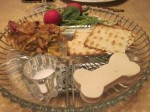
We all were once strangers

A boat of new immigrants arrives in pre-state Israel on Oct. 2, 1947. (photo from the Palmach Archive via PikiWiki Israel)

The Passover seder begins by welcoming anyone who is hungry, an idea that comes straight from the Book of Exodus (23:9), which states, “You shall not oppress a stranger, since you yourselves know the feelings of a stranger, for you also were strangers in the land of Egypt.”

Later in the Torah, Leviticus 19:33 says, “When a stranger resides with you in your land, you shall not do him wrong.” Leviticus 19:34 repeats this refrain, “The stranger who resides with you shall be to you as the native among you, and you shall love him as yourself, for you were aliens in the land of Egypt; I am the Lord your God.”

Over the generations, the Jewish people have been “aliens” more than once. Well-known examples of Jews leaving their perceived homeland include the Jewish exile to Babylonia after the destruction for the first Temple, those who were fortunate enough to escape Nazi persecution for Israel or the United States, expelled Middle Eastern Jews who were moved to Israel after its founding, or residents of the former Soviet Union who left a life of religious oppression.

The immigrant experience is different for everyone, said Aaron Gershowitz, senior director for U.S. programs at the Hebrew Immigrant Aid Society (HIAS). He told this reporter that the challenges of an individual’s journey often depend on the environment they are leaving and the community to which they are relocating.

Take Inge “Irene” Brenner. She escaped from Nazi Germany on Dec. 28, 1938, for Havana, Cuba. From there, she traveled to the United States, arriving to join her husband in April 1939 at age 19. She immediately took up work at a small factory where she steamed hat plumes. Her employer provided her with the required documentation to book passage for her mother, father and sister to the United States. Due to a lack of funds, the family all lived together in a tiny apartment in New York.

“When I left Berlin, I was 19 and completely single-minded, [telling myself] ‘I must get out and save myself and my parents,’” Brenner said. “We just couldn’t have existed anymore. That is what happened to the rest of my family that didn’t get out – all of them were murdered in the gas chambers. There was nothing else I could do but make it. You just had to make it.”

Gershowitz said that “the economics of surviving” often mark the first several years (or longer) of the immigrant experience. It is only after that period that immigrants become more like others – more focused on family life, a career and a future for their children.

Over time, this was the case for Brenner. Once she and her husband could afford to leave the rest of the family and live on their own, they had two daughters who they raised to be American Jews, as opposed to Jewish Americans. Brenner said she wanted to leave her horrible past behind for a new life, which she feels she received “by the grace of God.”

“She was always proud to be Jewish, but it was always extremely hard for her to talk about how she got here,” said Benjamin Kopelman, Brenner’s grandson.
photo - Lev Golinkin
Lev Golinkin (photo by Diana P. Lang)

Lev Golinkin, author of a memoir on the immigrant experience titled A Backpack, a Bear and Eight Crates of Vodka, noted the irony that Soviet Jews came to the United States in search of religious freedom, yet many of them choose not to practise Jewish traditions, his family included.

“As soon as we could, we got away from the synagogue and Jewish organizations and melded into the secular American world,” he said.

Golinkin, who arrived in the United States from eastern Ukraine in 1989 at the age of 9, surmised that people turned away from religious observance because it was precisely the Jewish faith that made them targets for persecution in the former Soviet Union. Before escaping, Golinkin was being homeschooled because he had been regularly teased and beaten for his Judaism. Religion, therefore, was nothing to celebrate for him.

“I wanted nothing to do with that. I saw being a Jew as a stigma, a disability,” said Golinkin.

But as he grew up, Golinkin’s opinion changed.

“I think it is interesting that the Israelites stayed in the desert and didn’t start over until that generation had passed away. They needed a clean slate, they needed people whose memories are formed in the new land with the new traditions,” he said.

Read more at jns.org.

Maayan Jaffe is an Overland Park-based freelance writer. Reach her at jaffemaayan@gmail.com or follow her on Twitter, @MaayanJaffe.
Ancient message of Jewish unity

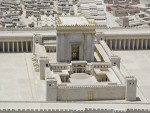
A model of King Herod I’s renovated version of the Second Temple in Jerusalem. (photo from Ariely via Wikimedia Commons)

Between 19 BCE and 4 BCE, King Herod I renovated the Jewish Temple in Jerusalem, enlarging and beautifying it. It is during this same period that we first learn of the Jewish pilgrimages to Jerusalem on what are known as the shalosh regalim, the three pilgrimage festivals.

All of the festivals – Passover, Shavuot and Sukkot – centre around the story of the Exodus in some way. But Passover is the first and foremost of the bunch.

Jerusalem always held a special place in the hearts of the Jewish people, but as the Romans built roads and as Herod expanded the Temple, the pilgrimage to Jerusalem became commonplace and served as a message of unity – “one Temple, one God, one Passover” – for all Jews, said Prof. Jonathan Klawans of Boston University’s department of religion.

Yet, detailed writings about what the pilgrimage festivals may have looked like during Temple times don’t exist. According to talmudic scholar Dr. Joshua Kulp, author of Schechter Haggadah: Art, History and Commentary, most knowledge on the subject comes from the works of the ancient historian Josephus. While later writings (such as the New Testament) describe what it was like in Jerusalem during the Second Temple era, those works were written at a much later time and some scholars doubt their accuracy.

It isn’t known where people stayed or slept when they were in Jerusalem, or how many people showed up (though most assume a large number), or what people felt at that time. What is known, Klawans explained, is that the pilgrimages were a social experience that pulled the Jewish people together.

It’s also clear that, for Passover, pilgrimage participants ate in Jerusalem as family units. A representative from each family would take an animal, bring it up to the Temple, and have it slaughtered. Then, the representative would bring the animal back, and the family would cook and eat the sacrificial meat. During this festive meal, families also drank wine, but not a specific number of glasses. They sang songs – specifically, the Hallel prayers, which is also part of the modern Passover seder.

Read more at jns.org.

Maayan Jaffe is an Overland Park-based freelance writer. Reach her at jaffemaayan@gmail.com or follow her on Twitter, @MaayanJaffe.
Elijah in New York City

(photo from PikiWiki Israel)

Her name was Rachel, his was Nathan. And even though separated by two bar stools, they struggled through 20 minutes of awkward conversation before their last names were spoken. Greenberg went with Rachel; Cohen with Nathan.

“Hey, you must be Jewish,” blurted out Nathan, a lonely bachelor whose only other date was Channel 15 on a cold, rainy night in April.

“I bet you’re Jewish, too,”she responded.

Well, things were looking up. Nathan now sat beside her and she responded with a smile at his aggressive move. He’s Jewish, no stranger, she thought.

“What a night for two Jewish buckaroos to be sitting in a western bar in the middle of Manhattan,” said Rachel. “It’s the first night of Passover, you know.”

“Yeah. I’m afraid I’ve neglected ‘my heritage,’ as my father puts it. He lives here in the city – only a few blocks down 57th. My family has a seder every year. They sit around the table – sing childish songs – stuff themselves on a five-course meal and wait for Elijah, the heavenly visitor to drop by. I go to a bar. Usually the one over on 52nd and 8th. This year, my mood took me here. Don’t know why. It’s a heck of a coincidence that I’m sitting next to you.”

“Well, I’m alone in the city. My family is back home in Louisville, Kentucky. Like yours, about now they’re sitting down to a huge meal with a week’s supply of calories and cholesterol. Kosher, but still deadly. And I’m sure they’re singing silly songs, as you put it. Wish I was there.”

“How seriously do they play out the Elijah game? You know the legend. His visit to every Jewish home on seder night. I remember my old man. He’d put down his wine glass, get all serious and open the front door. ‘Hey Pop,’ the 8-year-old who was then me, would shout, ‘If Elijah can pop up at 10 million Jewish homes in a single night, he can get through that wood-paneled front door without your help. A decent burglar can do it in a few minutes. Why not challenge the prophet?’ My old man hated it.”

An old gentleman at the end of the bar looked up with a pained expression.

“I guess so,” remarked Rachel. “Sure I know the Elijah story – our rabbi calls it a midrash – a rabbinic parable – which elevates it a level or two above a legend. It’s one of those unifying articles of faith that every Jew – even the lost ones – enjoys believing. A sweet story, you know. In fact, my rabbi believes that besides visiting many millions of seders on the first night of Pesach, he’s there – on Passover night – wherever two or more Jews are together.”

She had been a little loud. She noticed the old gentleman at the end of the bar had looked up from his drink, a dark purple wine in an ornate silver wine glass. Wonder what they called that drink? Wonder if you got to keep the glass?

Nathan, his arms folded loosely across his chest, had fixed his eyes on her as she talked. She’s got some spirit, he reflected. How his father’s eyes would gleam with passion to hear her declarations of faith.

Rachel brushed her hair back from her face. “Sorry, I got a little carried away – didn’t mean to preach to you. Let’s talk about something else.”

“No, no, I understand. That first night of Pesach is magic, my old man used to say. Makes you remember who you are. Every Jew, he used to say, had a progenitor – an ancestor – in his direct line who walked dry shod on the bed of the Red Sea. If he had perished under Egyptian whips or drowned beneath the waves, I, for example, wouldn’t be sitting at this glitzy bar in 21st-century America talking to a young Jewish lady who believes in a resuscitated prophet who makes a million house calls on one spring night.”

“You know what?” she said suddenly. “I’d love to go to a seder tonight. And there’s no lamb shank, charoset, parsley or bitter herb at your place or mine – but there is at your father’s place. Why don’t we surprise him? We’ll be just in time to greet Elijah.”

Nathan blinked, and nodded. With her, he had a chance. So, linking his arm in hers, he set out on the longest journey any man can undertake. A journey home.

And, at the end of the bar, the dignified but poorly dressed patron held up his wine goblet. “There are no coincidences,” he whispered to the goblet. He glanced hurriedly at his watch and left. He had many calls to make.

Ted Roberts is a freelance writer and humorist living in Huntsville, Ala.

About the 2015 Passover cover

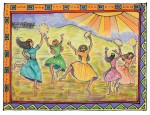
The illustration on this year’s Passover cover, “Miriam Dances,” was created by artist Carol Racklin-Siegel for the book Let My People Go (EKS Publishing, 2011). In this hand-painted silk art, Racklin-Siegel depicts the joy of Miriam the Prophetess leading the women in song and dance after reaching dry land: “Miriam the prophetess, the sister of Aaron, took her drum in her hand and all the women went forth after her with drums and with dances.” (Exodus 15:20)

Racklin-Siegel is an award-winning textile artist and illustrator focusing on custom hand-painted textiles, Judaic textiles, paintings and illustrations. She expresses the spirituality of Judaism by incorporating her textile designs and fabric painting techniques to Judaic and biblical themes. She has illustrated a series of books for children, based on the stories in Genesis, for EKS Publishing Co. in Oakland, Calif. She resides with her family in Israel. Her work can be viewed at pomegranatestudios.com.

A secret Pesach gift awaits

Daffodils herald the springtime – and the approach of Passover. (photo from commons.wikimedia.org)

I had not seen him check into the inn. And I did not see him that night as we travelers exchanged vodka toasts to Pesach – only 10 days away. But here he was this morning, awaiting the same coach that would take me to my daughter’s seder table. I like to get there early and remind her that her papa – who gave her life, in

cooperation with her mama – loves being in her home, made gefilte fish and is more than willing to evaluate her Pesach culinary efforts.

Anyhow, awaiting the carriage, we clustered together – exulting in a glorious spring day under the giant willow that shaded the station showing off her spring-new leaves as though she was competing with her neighbor, an old, mottled-bark sycamore. Aged, but still capable of spring whimsy. She seemed even showier when the newcomer leaned against her and I could swear the light green of her new leaves gleamed even greener by contrast.

The mysterious stranger glanced at me. I checked him out, too. A stern face, whose only laughter was in his eyes. He was dressed like the rest of us, except he had a jonquil in his lapel. We seated ourselves opposite each other in the coach.

He was the first to speak. “How do you do?” he said, “My name, I’m sure you know, is Elijah. And, I’m sure you know, I’m beginning my Passover planning.”

I involuntarily rose from my seat like I was sitting on a hot, pot-bellied stove and banged my head on the top of the coach. Elijah, Grand Master of the Prophetic Fraternity, sitting with an undistinguished shtetle Jew – me!

“Can you imagine,” he said, “I visit every seder from Chicago to Katmandu. Roughly,” he continued, “we’re talking millions of homes. And on the same night. The same night,” he repeated. “And nobody says, ‘Ellie (that’s what my friends upstairs call me), good job! Great job, Ellie.’ They’re all too busy being impressed with that watery miracle. They’ve talked for 3,300 years now about a breeze that allowed you Israelites to wade across the Red Sea. And they think it’s a miracle that the Master caused a bunch of birds to fall out of the sky to feed you guys. I’ve tasted ’em. Oily, tough, need a ton of spices to get ’em down. Big deal! And that manna. Ever tasted it? Like raw oatmeal. And me? The showpiece of Pesach? I’m hustling to a few million seders. And you think I can drop in – say hello and run next door? No way. I gotta have a shot of wine – a few million sips of wine. You wouldn’t believe my headache the next day.”

I listened. Shocked. Even the Prophetic Master, semi-human/ semi-angel, had the ego of our coach driver, who prided himself in making the run to Minsk in under six hours.

But Elijah wasn’t through. “And that’s not all. Unknown to a cold and frigid world, there’s a precious little secret that only the angels know. On Pesach – if the year has been a sweet one wherein mankind has controlled his hybrid heart – I beckon to springtime, which is waiting in the wings of winter for my call. It’s the great gift the Master has bestowed upon me. It’s my dividend, as you say down here, for my Pesach duties. I call, and nature, everywhere, listens. Springs into action. (I never could resist a good pun.) Timing? It depends on those 36 Tzadiks – God’s spies we call them – who roam the world and annually report. Mankind behaving? Following Torah? I beckon – spring does her thing. It all hangs on human behavior. Sometimes the earth is only gilded with a pale reflection of a bountiful spring.”

He stopped, turned his head to stare at the passing parade of dreary woodlands and grey vales and brown meadows. But I could see red and yellow tulips dancing in his eyes.

By the time I reached Minsk and burst into a living room full of expectantly waiting kids and grandkids – over their hugs and kisses, I could see the daffodils blooming through the living room windows. We must have behaved.

Ted Roberts is a freelance writer and humorist living in Huntsville, Ala.

Whipping Man a must-see

Left to right, Carl Kennedy, Tom Pickett and Giovanni Mocibob hold a seder in The Whipping Man. The symbolism of Passover is an integral part of Matthew Lopez’s play. (photo by Emily Cooper)

On April 9, 1865, the day before erev Passover, General Robert E. Lee surrendered his Confederate troops to the Union Army’s General Ulysses S. Grant at Appomattox, Va., ending the four-year American Civil War and setting the stage for the emancipation of African Americans. This intersection of events forms the backdrop of award-winning playwright Matthew Lopez’s powerful three-person drama The Whipping Man, currently at Pacific Theatre. The play, now one of the most produced dramas in America, is a searing exploration of family, friends, faith and freedom.

There were approximately 50,000 Jews in the South at the beginning of the Civil War. Their sons fought for the confederacy. Many of the families were successful and owned slaves. The Whipping Man is the story of one such family, the DeLeons of Richmond, Va.

The play opens on a stormy night with scion Caleb DeLeon (Giovanni Mocibob) returning in defeat from war to find his family’s mansion ransacked and all the slaves gone except for faithful old retainer Simon (Tom Pickett), who has remained to protect the premises and await the return of his wife and daughter. Another slave returns that night, John (Carl Kennedy), who was raised with Caleb – they are like “two peas in a pod,” according to Simon.

John has been on one of his forays, “liberating” food, utensils and other items from abandoned mansions in the area. He returns to find an injured Caleb, whose gangrenous leg needs to be amputated below the knee. Caleb’s refusal to go to the hospital means that Simon, aided by John, must perform the operation. Especially in the intimate space of Pacific Theatre, the intense, bloody scene, where the protagonists are fueled by whiskey and courage, is not for the faint-hearted, even though a judicious lighting cue takes some sting out of the visceral moment.

It was common for slaves to take the religion of their owners and to learn the customs and the rituals of their adopted faith, so, for Passover, Simon decides they need to have a seder. He sets about to find appropriate items for the seder plate from what little is left after the war: collard greens instead of bitter herbs, small squares of hardtack military ration as matzah, and the shank bone of Caleb’s dead horse, all to be accompanied by the requisite cups of (stolen) wine.

As the three sit among the ruins of the home that connects them, the words and songs of the Haggadah, celebrating the delivery of the Jews from bondage in Egypt, take on new meaning. Simon and John are now no longer slaves; Caleb is not anyone’s master. All three men are presumably equal and the interpersonal dynamics shift. Simon declares to Caleb at one point, “You don’t tell me what to do anymore, you ask me.” Each character must grapple with the upheaval of their world and the new freedom and responsibilities that it brings. As they work through their angst, secrets are disclosed that will forever change their lives.

The acting in this production is sublime. All three men give riveting performances, along with respectable southern accents.

Mocibob, who spends most of the time immobilized under a blanket on the stage – his leg having been amputated – peels away at the layers of his character, who has lost his faith, both literally and figuratively, during the years of war and who faces a moral conundrum regarding his family’s ownership of slaves, which, of course, affects his relationships to John and to Simon and his family.

Kennedy hits the right balance of pathos and anger in his portrayal of the young self-educated slave John, his experiences with the whipping man (a white man to whom Caleb’s father and other slave owners would send their slaves to be punished with lashings from a bull whip) and his slow acceptance of the reality of a crime he has committed.

But it is Pickett who really shines, as the wise old man who has seen it all and yet somehow remains unjaded. He infuses a majestic calmness into the role of Simon. We hear the heartbreaking recollection of Simon’s own whippings and the physical and emotional scars they left behind. We witness his stoicism when he receives news of the death of beloved “Father Abraham” (Abraham Lincoln, the “American Moses”) and hears of the fate of his family.

The set of The Whipping Man is appropriately dark and ominous. Fallen bricks and broken floorboards are set off with shadowy blue lighting and the glow of candlelight; the sound design is a mournful mix of rain and thunder. The shabby costumes add to the grit and desperation of the story. Together, the visual and audio serve as metaphors for the postwar devastation and confusion.

The play, while set more than 150 years ago, is still vitally relevant for contemporary audiences. Slavery, sadly, still exists and The Whipping Man program contains some data on modern-day slavery; hopefully, the play will encourage discussion about and involvement in combating it.

Theatre does not get much better than this – our attention is completely absorbed and we are transported to another time and place, yet by material that speaks to issues with which we still wrestle. There are Jessies on the horizon for this production.

Tickets for The Whipping Man, which runs until March 21, are available at pacifictheatre.org and 604-731-5518. The show is not suitable for children.

Tova Kornfeld is a Vancouver freelance writer and lawyer.

Trepidation of the world

“Therefore, the Lord, blessed be He, decreed that we count these days in order that we remember the trepidation of the world.”

– Rabbi Moses ben Abraham of Premysl

We count 50 days between Passover and Shavuot, officially called the Omer. Traditionally, this is regarded as a time of mourning because of the infighting and death of thousands of students in the talmudic era and the fact that the Omer sacrifice, which was brought to the Temple in Jerusalem on Shavuot, could not be given once the Temple was destroyed.

The Omer, however, originated as a biblical concept before there was an actual Temple or any rabbinic scholars: “You shall count from the day after the Sabbath, from the day that you bring the sheaf of the wave offering [the Omer] … you shall count 50 days until the day after the seventh week; then you shall present a wheat offering of new grain … as first fruits to the Lord.” (Leviticus 23:15-17)

Spring naturally gets our attention as the weather and the plant life around us change. If we were farmers, we would be even more cognizant of our surroundings, counting the days until the harvest. With the harvest came our economic security for the year. On Passover, we recite the blessing for dew as a way to replenish the world with moisture, and we recite the Song of Songs, which takes us deep into the lush world of fruit and fragrance. The book, too, notes the changes: “For now the winter is past, the rains are over and gone. The blossoms have appeared in the land, the time of pruning has come.” (2:11-12)

Between Passover and Shavuot, new grain was harvested and people brought baskets of new produce to the Temple as a way of thanking God for their bounty. The grain offering was one of joy precisely because it meant that we had sustenance for the year ahead. We also had taxes connected to this bounty. Before we could partake of our own food, we had to take off a portion for the poor, the priests and, of course, bring an offering to God. We sanctify the fruit of our labors so that we understand that we work not only for ourselves.

But the joy we experience upon bringing the offering represents the end of weeks of tension, hinted at in the quote above. Rabbi Moshe (d. 1606), the scholar cited above, wrote a work called Mateh Moshe, mostly about customs and laws observed by Polish Jewry. He calls the countdown between Passover and Shavuot “days of trepidation,” probably based on his reading of a midrash (Midrash Yalkut Shimoni, Emor 23:654). He understood that farmers felt themselves to be in peril until they were sure that the harvest would be plentiful in any particular year. The economic insecurity had an impact on their spiritual life. Counting for them was not only about waiting to relive the giving of the Torah on Shavuot; it was about the fiscal expectations and the worries connected to farming.

Nogah Hareuveni, in Nature in Our Biblical Heritage, sensitizes us to some of the natural phenomena that would have made Middle Eastern farmers anxious: “Each of these 50 days can bear either blessing to the crops or irreparable disaster. It was natural that the farmers of the Land of Israel should count off each day with great trepidation and with prayers to get through these 50 days without crop damage.” Rain or harsh eastern winds could wreak havoc on the harvest.

Shavuot is the only one of our three pilgrimage holidays (Passover, Shavuot and Sukkot) that is not marked by a specific date but is dependent on our act of counting. Some believe that this counting connected Shavuot to Passover in powerful spiritual ways, averting pagan celebrations that had to do with marking agricultural accomplishments alone. Seeking to spiritualize economic stresses and economic gains, we think of Passover and Shavuot within fiscal terms and religious frameworks, elevating pure agricultural anxieties and expressions of happiness to a spiritual art form.

We know all about economic downturns. We know about the 99 percent and Wall Street bonuses. What we don’t always appreciate are the spiritual, emotional and psychic costs of changing economies and how important it is to acknowledge trepidation within a religious framework. Money is powerfully connected to identity. Our capacity to count down or count up means something more if we see it within a sacred lens. Trepidation can be paralyzing, but sometimes it gives way to joy. And when it does, we count the days for the blessing they are.

Happy counting, and happy Shavuot.

Dr. Erica Brown is a writer and educator who works as the scholar-in-residence for the Jewish Federation of Greater Washington and consults for the Jewish Agency and other Jewish nonprofits. She is the author of In the Narrow Places (OU Press/Maggid), Inspired Jewish Leadership, a National Jewish Book Award finalist, Spiritual Boredom and Confronting Scandal. Subscribe to her Weekly Jewish Wisdom list at leadingwithmeaning.com.

“Chad Gadya”: an ecologist’s favorite seder song

Passover is soon upon us, and many Jews will celebrate by singing rounds of their favorite classic Passover songs. “Chad Gadya” is a song that ensnares the singer in an increasingly complex chain of causality. Starting with one’s father who buys a goat that gets eaten by a cat that is bitten by a dog that is beaten by a stick, etc., etc. But “Chad Gadya” is not simply an incredibly fun shanty, it is also a great lesson in food chain ecology.

A food chain describes the complex interconnections that occur in nature from different organisms that eat each other. At the start are plants that absorb energy from the sun. The plants are then eaten by herbivores, that are then eaten by predators, that are then eaten by higher-level predators and so on. Each step up the food chain is called a trophic level, from the Greek word trophikos, meaning food.

One phenomenon documented by ecologists is called a trophic cascade. When you remove a key species from the food chain, say from the top, the effects will cascade down the food chain, affecting every organism along the way. One classic example involves the sea otter, a charismatic marine mammal that lived off the coasts of North America as far south as California. Unfortunately, the sea otter was once prized for its lovely fur and, by the early 20th century, they had become extinct south of Alaska.

Sea otters happen to eat a lot of sea urchins. Sea urchins eat a lot of kelp. When the sea otters disappeared, the effect cascaded down the food chain. Sea urchin populations skyrocketed, and began feasting on the kelp. Entire forests of kelp began to disappear, only to be replaced by barren underwater fields full of spiky urchins. This spelled trouble for the many fish and other animals that depended on the kelp forests for shelter and food. Bald eagles, for instance, would normally eat fish hiding in the kelp forests. Without those fish, the eagles had to search elsewhere for food.

Fortunately, sea otter hunting was banned, and populations from Alaska were shipped in. Those new immigrant sea otters have begun to repopulate our coasts, restoring the kelp forests and returning balance to the ecosystem.

Understanding how ecosystems work can be very helpful. For instance, in Israel, on Kibbutz Sde Eliyahu, they grow many useful crops, such as alfalfa and oats. But voles (a type of rodent) can be a huge pest problem. Thousands of burrow openings can accumulate per hectare, causing severe damage to their crops. Poisons are expensive, can be dangerous for consumption and for other animals, and are often ineffective anyway because more voles can just immigrate from nearby fields. Barn owls eat voles, but they only nest in pre-existing cavities, so farmers began putting up nesting boxes to encourage the owls. The strategy worked, the owls keep the voles under control, and they end up being more cost effective than poisons. Manipulating ecological systems for pest management in agriculture – known as biocontrol – is an increasingly common strategy used around the world to improve yields.

So, when sitting down for your Passover seder, eating your favorite foods, reclining and singing your beloved songs, take a moment to reflect on the complex chains of events that brought that food to your table.

Ben Leyland is an ecologist at Simon Fraser University, a musician and an Israeli-Canadian resident of Vancouver.

A vegan Passover

A vegan seder plate. (photo by Gene Blalok)

Veganism is about much more than dietary choice. It is an ethical philosophy based on the belief that other animals are not ours to use. Like humans, animals are sentient: they experience pain and pleasure, they suffer and they form deep emotional bonds with others in their families and communities. Vegans do not use animals for food, clothing, entertainment or animal experimentation regardless of taste, pleasure or tradition. Being a vegan is also much more commonplace today, as is following a vegan diet for health reasons. This means it might not be unusual to find a vegan at your table on Passover.

For the fourth year in a row, my wife and I will be hosting an all-vegan Passover seder, or “veder,” as we call it. We started this tradition after a group of Jewish vegan friends expressed how alienating it can be to celebrate the holiday in the traditional way. As ethical vegans, it is difficult to sit at a table laden with the body parts of the nonhuman animals that we are working to protect and rescue. Many had stopped attending their family dinners, and one friend was no longer invited simply because others felt uncomfortable when she passed up most of the food on the table. But our hunger for the Jewish tradition of Passover remained.

The Passover seder commemorates our liberation from Pharaoh and the larger issue of the immorality of slavery. As Jews, we have a long history of suffering, oppression and slavery and, as animal activists, this has informed our choices to work to help others end their own oppression – including animals. It’s no wonder Jews have played key roles in other movements such as civil rights, women’s rights, gay rights and animal rights. The liberation of animals is another social justice movement for which the Jewish community should naturally feel empathy. Jews and vegans share common values such as justice, fairness, equality and compassion.

How we as animal activists celebrate the meaning of the Passover seder is to remember the evils of the past and to expand our circles of compassion and justice so that no group, human or nonhuman, need experience the suffering and exploitation of being different or unequal. Passover is a great opportunity to reflect on how we can create less suffering for all those who are oppressed through our personal behaviors and choices.

Simply adding vegan foods and vegan versions of traditional dishes to the table is a way of making a statement that we include the most vulnerable and innocent among us when we celebrate this holiday. These days, it’s as simple as Googling “vegan [whatever dish] recipe,” vegan or “vegan Passover recipes,” and thousands of animal-free options will magically appear. At our veder, we serve all of the traditional dishes we grew up eating – matzah brie, brisket, gefilte fish, potato latkes, matzah ball soup, kugel, macaroons – in veganized versions without meat, dairy or eggs.

With a little effort and creativity, your entire seder dinner can be made vegan. We even have an animal-friendly seder plate. Instead of a lamb shank bone, we use a dog cookie-cutter to make a playful bone-shaped piece of tofu. Instead of an egg, we use a small dab of commercial “egg replacer” used in vegan baking. I encourage all Jews to embrace the meaning and tradition of the holiday while also incorporating new traditions that reflect values of justice, ethics and compassion. When we can celebrate the holiday without doing any harm to others, why wouldn’t we?

VEGAN CHOPPED LIVER

Adapted from The Jewish Vegetarian Year Cookbook by Roberta Kalechofsky and Roda Rasiel (Micah Publications, 1997).

1/2 lb brown lentils
1 large onion, diced
2 tbsp olive oil
1 cup walnuts
salt and pepper to taste

1. Put lentils in a two- or three-quart pot and cover with water. Bring to a boil, partially cover and simmer until tender, about 30-40 minutes. Check occasionally to make sure water has not boiled off, and add water as needed.

2. Sauté onions in olive oil until golden and tender. Allow to cool slightly.

3. Drain lentils and blend, along with the walnuts and onions, in a food processor until homogenized, but leave some of the texture intact.

4. Add salt and pepper to taste. Chill about two hours.

Gary Smith, co-founder of Evolotus, a PR agency working for a better world, blogs at thethinkingvegan.com and has written for many publications. He and his wife are ethical vegans and live in Los Angeles with their cat Chloe and two beagles rescued from an animal testing laboratory, Frederick and Douglass.

(Editor’s note: Some vegan recipes will contain ingredients that are not strictly kosher for Passover. For those who are less strict, the options abound. For more strict kosher diets, incorporate dishes that are heavier on fruits and vegetables, and avoid using legumes, like lentils, or products that contain wheat or gluten. Also, only certain egg substitutes are kosher for Passover, and many Ashkenazi Jews abstain from eating kitniyot on Passover; tofu is made from soybeans, and is considered to be kitniyot.)