Skip to content
  • Home
  • Subscribe / donate
  • Events calendar
  • Business Directory
  • FAQ
  • News
    • Local
    • National
    • Israel
    • World
    • עניין בחדשות
      A roundup of news in Canada and further afield, in Hebrew.
  • Opinion
    • From the JI
    • Op-Ed
  • Arts & Culture
    • Performing Arts
    • Music
    • Books
    • Visual Arts
    • TV & Film
  • Life
    • Celebrating the Holidays
    • Travel
    • The Daily Snooze
      Cartoons by Jacob Samuel
    • Mystery Photo
      Help the JI and JMABC fill in the gaps in our archives.
  • Community Links
    • Organizations, Etc.
    • Other News Sources & Blogs
  • JI Chai Celebration
  • JI@88! video

Recent Posts

  • SFU honours Gloria Gutman
  • Lifting people’s spirits
  • Wedding a ray of light
  • Indigeneity and Zionism
  • Rule of law broken: councilor
  • Football and its roles
  • The burden of defence
  • Fish Café returns after fire
  • All right in what goes wrong
  • Nuns & mermaids at TUTS
  • Camp offers holiday retreat
  • Students and mentors inspire
  • Once-in-a-lifetime trip
  • 100 dancers, one heart
  • Money for the sciences
  • What “Jewish food” means
  • Have a cookie, schnitzel too
  • Federation now across BC
  • Israel fighting for its existence
  • Deal strengthens Iran
  • Patriotic belonging diminishes
  • A campaign to engage
  • Upstanders’ first live event
  • Responding to Carney
  • Having your own home
  • Music a family tradition
  • Musical to warm heart
  • Community milestones … June 2026
  • Sharing her passion for Israel
  • Or Shalom reopens its doors
  • JFS from past to future
  • Need holistic approach
  • Sharing stories, advice
  • Journalist shares fears
  • Skills to live together
  • Road to independence

Archives

Follow @JewishIndie
image - CJN box ad Rockowers 2026

Tag: Passover

Pyramids on the Mind

Pyramids on the Mind

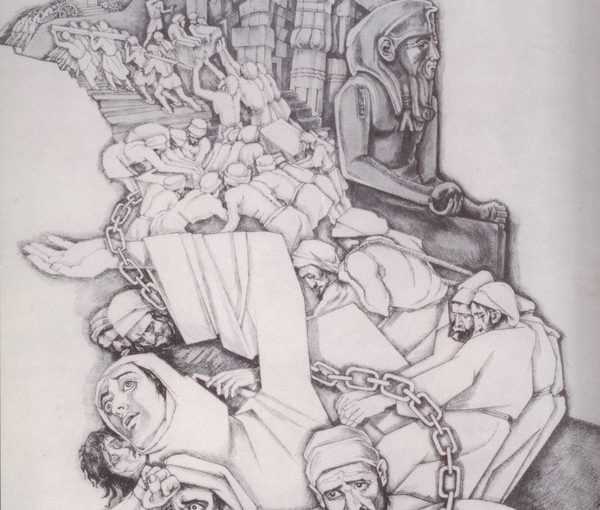
An image from the author’s 1941 Passover Haggadah by Saul Raskin.

Although they are not specifically mentioned in either the Haggadah or in the Torah, Egyptian pyramids have come to be associated with the Pesach story. That many modern Haggadot include illustrations of the pyramids points to how these structures play a key role in our collective memory.

At the Pesach seder, we say, “tze u l’mad,” “go out and learn.” In A Haggadah Happening, Rabbi Shlomo Riskin explains the idea as, “make sure your learning accompanies you wherever you go.” So what better way is there to appreciate the Hebrew slaves’ hardships than to visually present them by tangible symbols, such as the items on the seder plate, as well as the Four Sons, songs like “Ehad Mi Yodaya” (“Who Knows One”) and, of course, the pyramids?

But what specifically drew the Haggadah compilers to the pyramids? First of all, for a period of time, the Hebrews did live in Egypt. Thus, in Exodus, Chapter 5, we read about their involvement in Egyptian construction, where they are portrayed primarily as Egyptian brick-makers, not as builders: “‘Ye shall no more give the people straw to make brick, as heretofore. Let them go and gather straw for themselves.’ And the taskmasters of the people went out, and their officers, and they spoke to the people, saying: ‘Thus saith Pharaoh: “I will not give you straw.”’ So the people were scattered abroad throughout all the land of Egypt to gather stubble for straw. And the taskmasters were urgent, saying: ‘Fulfil your work, your daily task, as when there was straw.’”

Archeologists maintain that, in antiquity, Egyptian homes were constructed from mud bricks. Pyramids, however, were reportedly built of quarried, hewn stone and mud bricks. So, the more persuasive answer as to why modern Jews include pyramids in their Haggadot seems to be the pyramids’ sheer durability. That there are extant pyramids carries tremendous weight when retelling the story of the Hebrews’ time in Egypt – it connects us to our past.

Furthermore, that pyramids are still viewable is not a chance happening, apparently. According to freelance science writer Dr. Craig Freudenrich, the pharaohs built the pyramids knowing that the pyramid, with its square base and four equilateral triangular sides, is “the most structurally stable shape for projects involving large amounts of stone or masonry.”

Moreover, Donald Redford, a professor at Penn State University, reports that the ancient Egyptians probably chose that distinctive form for their pharaohs’ tombs because of their solar religion. The Egyptian sun god Ra, considered the father of all pharaohs, was said to have created himself from a pyramid-shaped mound of earth before creating all the other gods. The pyramid’s shape is thought to have symbolized the sun’s rays.

The shape of the pyramids was carefully chosen to reflect underlying aspects of divine unity. The pyramid has four faces: three faces to the heavens and one face to the earth. Architecture-by-astronomy was common in the ancient world, says archeoastronomer Giulio Magli. The Great Pyramid of Giza, for example, is aligned with amazing precision along the compass points, which would have required the use of the stars as reference points.

Three pyramids were built at Giza, and many smaller pyramids were constructed around the Nile Valley. The tallest of the Great Pyramids reaches nearly 500 feet into the sky and spans an area greater than 13 acres.

What is truly startling is that, with no connection to Egypt, other ancient cultures built pyramids in such far away places as Latin America and in what is, today, southern Illinois, in the United States. Like the ancient Egyptians, these other cultures understood the power and sway the pyramid structure had over the general population. According to history.com editors: “The Americas actually contain more pyramid structures than the rest of the planet combined. Civilizations like the Olmec, Maya, Aztec and Inca all built pyramids to house their deities, as well as to bury their kings. In many of their great city-states, temple-pyramids formed the centre of public life and were the site of holy rituals, including human sacrifice.”

While Egyptian pyramids are closely connected to the sun, Peruvian pyramids were considered to be replicas of mountains; they were thought to possess all the powers the mountains themselves possessed.

Twenty minutes away from St. Louis, Mo., are the remains of the United States’ first high-rises. They are more than 850 years old, constructed by the Cahokia Indians of Illinois. At 5,000 square feet, the house of the great chief or high priest (or another type of leader, since we really don’t know) was the most impressive of all the buildings. From the flat top of this colossus, with a footprint of 14 acres, it is larger at its base than the Great Pyramid of Khufu, Egypt’s largest.

So important is the pyramid as a symbol that it was used on the U.S. one dollar bill. According to the bill’s designer, the pyramid was used because it “signifies strength and duration … a new order of the ages.”

According to Bill Ellis, a professor emeritus of American studies at Penn State, “The pyramid was seen as the kind of human structure that lasted out the ages.” He said America’s Founding Fathers wanted the country to last as long as the pyramid – though the pyramid didn’t show up on the dollar bill until 1935, when Franklin Delano Roosevelt’s administration added them. “New order” is printed in Latin, under the pyramid, and historians say this refers to the birth of a new country and FDR liked the way it synced with his New Deal program.

Whether, in fact, the Hebrew slaves actually built the Egyptian pyramids is of secondary importance, as so many freedom struggles have been based on the tale that the Hebrews had to construct these mammoth buildings until they fled the slavery of Egypt.

Deborah Rubin Fields is an Israel-based features writer. She is also the author of Take a Peek Inside: A Child’s Guide to Radiology Exams, published in English, Hebrew and Arabic.

Format ImagePosted on March 19, 2021March 18, 2021Author Deborah Rubin FieldsCategories Celebrating the HolidaysTags history, Passover, pyramids
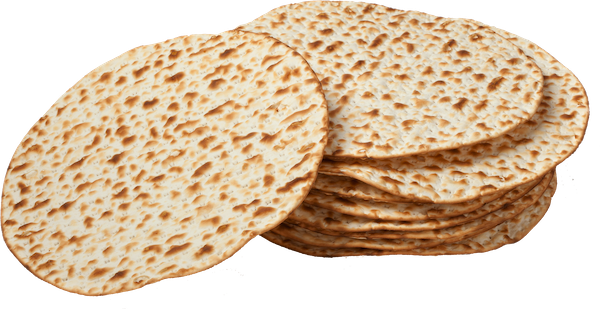
When we unmask matzah

When we unmask matzah

(photo from pngkey.com)

Imagine that you are sitting at your kitchen table, sewing masks for your family so that you can go outside. There are no more masks left in stock in any store near you so you are left to make them on your own. Suddenly, as you attach a button to the fabric, you hear loud shouting outside. You run to your door and cautiously peek out to see what has caused all the uproar.

You are confronted by an extraordinary sight: people are filling the streets, singing, dancing and embracing. You put on your unfinished mask and venture a little closer, but still six feet away, and ask one of the revelers what happened. She replies: “They found a cure for coronavirus. It is going to be available immediately. Everyone who is sick will immediately recover, and a vaccine will protect the rest of us.”

You stuff your half-finished mask into your pocket and join the revelry, rejoicing that the coronavirus nightmare has come to an end.

When you come back into your home the next day, you carefully place your mask on the mantel. In later years, when visitors ask why you have a piece of fabric with one button and a rubber band featured prominently in your living room, you tell them your story of how you found out that you were saved from the coronavirus pandemic, and how the fear and anxiety completely dissolved. Every time you look at that piece of fabric, you remember that your situation can change in an instant, that fear and loss can be replaced by comfort and hope.

This story may seem like wishful thinking, but it is the story we tell at our seder every Passover. Our ancestors were slaves, oppressed and fearful. They suffered and thought their suffering would never end. And then everything changed.

We recite at the seder: “This matzah – why do we eat it? To remind ourselves that, even before the dough of our ancestors in Egypt had time to rise and become leavened, the King of Kings, the Holy One Blessed be He, was revealed and redeemed them.” In less than the time it would take to bake a loaf of bread, our ancestors’ lives were totally transformed. The mightiest empire in the world was defeated by the slaves’ G-d. They became free people, about to leave their land of oppression for their own land. The bread that they had started baking in captivity became the bread that they would always associate with their liberation.

We can relate to this experience of life-altering moments in our personal lives. Think of a moment when you received a phone call or met someone and your life immediately changed. Sometimes, yes, the phone call or encounter brought sorrow or pain. But, sometimes, it brought new opportunities for joy or freedom that you never expected, and your life was never the same. Maybe, the day after despairing you would ever find a soulmate, you met the person with whom you would spend the rest of your life. Or perhaps you were at a professional crossroads and an opportunity came your way out of the blue.

Of course, the mask sitting on your mantel is not a simple thing to contemplate. It invites much more than joy. Your thoughts are so complex when you look at it. On one hand, it symbolizes recovery and deliverance and, sometimes, when asked about it, you tell about the magical moment when you learned that a cure had been found. But, other times, you recall the dark days of the virus, the many people we lost, the overwhelmed emergency rooms, our crumbled illusions that our technological competence could protect us from epidemic.

The matzah, too, is complex. The Talmud, in Pesachim, suggests that matzah is called lechem oni because it is bread that invites much discussion: “lechem she’onim alav devarim harbeh,” “bread about which we answer many things.” There is so much to say about it because it brings up so many conflicting thoughts and emotions. It reminds us of our slavery in Egypt, when we had no control over what happened to us or to the people we loved. And it also reminds us that our lives can turn around in an instant, in less than the space of time that it takes for dough to rise. It is at once both liberating and deeply unsettling. It gives us hope and it frightens us. It forces us to acknowledge that we have but an illusion of control.

At our Pesach seder, we model to the next generation how to respond to a world that is beyond our control. We try to create structure and order (seder). We acknowledge our vulnerability (“ha lachma anya” – “this is the bread of our affliction”). We help others in need, feeding them and including them at our table (“kol difchin yetei veyechol” – “all who are in need, come eat with us”).

We fight against oppression (the episode of the five rabbis in Bnei Brak). We express gratitude for all the good we have in our lives (“Dayenu”). We delve deeply into these questions and reaffirm the possibility of redemption (“and, even if we are all wise, it is still incumbent upon us to tell the story”) and share our wisdom with our children (“vehigadeta l’vincha” – “and you shall tell your children”).

We commit ourselves to building a redeemed world (“l’shana haba’ah beyerushalayim” – “next year in Jerusalem”). And, as we eat our matzah, we acknowledge with faith and humility, that we never know what will come next.

Aliza Sperling teaches Talmud at the Yeshivat Maharat/Yeshiva Chovevei Torah Beit Midrash Program and directs Svivah’s HerTorah, an inclusive and open women’s learning community. She serves as a Shalom Hartman Institute research fellow and a Wexner faculty member, and articles by Sperling and other institute scholars can be found at shalomhartman.org. This article was originally published on blogs.timesofisrael.com.

Format ImagePosted on March 19, 2021March 18, 2021Author Aliza Sperling SHICategories Celebrating the HolidaysTags coronavirus, COVID-19, Judaism, Passover, Shalom Hartman Institute, slavery

Passover’s second chances

Passover is coming! I’m actually looking forward to this second chance at the pandemic seder. Sounds crazy, perhaps, but the rabbis in talmudic times believed in second chances, and this is one of them – an opportunity to make a smaller holiday experience meaningful.

The second-chance concept has a long history. Have you ever noticed Pesach Sheini on the Jewish calendar and wondered? Well, a month after Passover started, there was a second opportunity. Those who’d been impure (interacted with a corpse, for instance) or been on a distant journey, could still potentially sacrifice the Paschal lamb at the Temple on this second Passover date.

This second Passover was not a huge, inclusive repeat opportunity. The Jewish community was required to plan ahead. It wasn’t acceptable to say, “Oops, I missed #1, so now I have a free do-over.” The only opportunities to do Pesach Sheini were spelled out very clearly. Most of those who messed up the first time weren’t eligible for the second round.

Planning ahead for the Passover sacrifice was spelled out in the Talmud. It struck me as interesting because, even now, like many big Jewish holidays, Passover requires a ton of planning. Even when the Temple was standing, one had to “register” to sacrifice a lamb. For Passover, everyone needed to do it, so imagine that version of old-fashioned registration, long before curbside pickup, cellphones, computers or online platforms came on the scene!

We all know many people who are more “in the moment” and aren’t good at the planning-ahead parts of life. Whether it’s a holiday, a big winter storm or a pandemic, some people are just better able to prepare in advance. This isn’t a modern issue, it’s a human one. It’s something akin to Aesop’s poem about the ant and the cricket. While the cricket sings and dances away the summer, the ant prepares for winter.

In some ways, my household was oddly ready for a pandemic. To clarify, no one is really ready for emergencies like this. However, our household had an odd assortment of skills that allowed us to make the best of a difficult situation. I’m not making light of the situation, not at all – having lost a relative during this time, we know the virus means business. Even with such a serious challenge, however, it’s possible to see things that worked out.

For one thing, I’m married to a biology professor. Although he scared the pants off me in early 2020, I can’t say I wasn’t warned about what might happen as the coronavirus spread. It gave me an early warning system that worked, although it was hard to manage my anxiety at the beginning, too, since no one else seemed as alarmed.

We might have been practically prepared in some ways. We have always tried to eat carefully, with homemade local foods. We had full freezers. Our canning closet was stocked with homemade jams, pickles, and more. We had homebody skills, too. I’ve been making bread (and not just challah!) for years. We were fine in the food department.

The transition to learning and staying at home involved screaming, upset twin 8-year-olds at first. Again, though, we felt oddly lucky. I used to be a teacher and, while that never involved grade school students for anything other than religious school, we got into the swing of things. “Once a teacher, always a teacher” is apparently true. I wasn’t swayed by the screaming – I taught high school and community college in urban U.S. environments, where occasional weapons (and screams) weren’t unusual. I’ve figured it out. We’re still voluntarily remote schooling. It has worked for us.

We’re also mostly introverted. As creative folk, our stash of things to do has kept us sustained. There’s been lots of reading, as well as sewing, knitting, weaving and spinning, as well as coin collecting and building with Lego, and we’ve made good use of the kids’ art supplies. We’ve felt well-occupied.

Yet, the story of “second Passover” and planning ahead struck hard these past few weeks. We had a serious issue with our car. Then our boiler needed repairs during a frigid part of Winnipeg’s winter. And our hot water heater needed replacing.

When the weather began to warm up, we glibly thought we’d solved all the hard stuff. Whew. Never think that! On a Sunday evening, my husband went to the basement to get the dog food. He heard a trickling sound. In short order, he was dismantling part of the basement. We had a radiator pipe that froze and then burst as things warmed up. This cued yet another round of emergency plumbers’ visits during a pandemic, with the kind of repairs for which you just can’t plan ahead.

All this led me to thinking about our second, upcoming pandemic Passover. Passover is always a home-based holiday. We can make plans. We can save up and attempt to make everything work. Yet, some things are like the Yiddish saying, “Man plans. G-d laughs.” Even so, we keep trying. My parents in Virginia have already told us that they plan to join us (via Zoom) for the first seder. Our twins seem surprisingly motivated to clean up a mountain of toys, as we tidy the house before the holiday. We’re getting ready.

These days, Jews mostly don’t observe Pesach Sheini, but I’m really hopeful about enjoying another “first” Passover while apart. For months to come, a continuation of the Purim “everything’s upside down” spirit will be normal. We’re not done with this pandemic yet, so we must both plan ahead – and be grateful for flexibility and all these second chances.

Joanne Seiff has written regularly for CBC Manitoba and various Jewish publications. She is the author of three books, including From the Outside In: Jewish Post Columns 2015-2016, a collection of essays available for digital download or as a paperback from Amazon. Check her out on Instagram @yrnspinner or at joanneseiff.blogspot.com.

Posted on March 5, 2021March 4, 2021Author Joanne SeiffCategories Op-EdTags coronavirus, COVID-19, Judaism, lifestyle, Passover, Pesach Sheini
The home comfort of soup

The home comfort of soup

Cookie + Kate’s creamy roasted carrot soup, as made by the Accidental Balabusta. (photo by Shelley Civkin)

Nothing screams for comfort food quite like a COVID-19 pandemic. And nothing spells comfort food quite like soup. So, while the spirit of sharing is upon me, I present to you: roasted carrot soup. I’d love to say I made the recipe up, but you know I’d be lying. Credit where credit is due, and all that. It’s a recipe by blogger Kate, who, along with her canine sidekick, Cookie, make up the duo Cookie + Kate. (Why the dog gets top billing, I don’t know. Maybe he’s the taste-tester?)

I suppose it was one of these endless pandemic days where I was stumped for dinner ideas and thought – soup. It’s filling, especially if you add a nice sourdough or baguette, and you don’t need to make a bunch of other stuff, really. A salad, maybe? Perfect for lazy cooks.

The Cookie + Kate recipe is easy, if time-consuming, but you won’t regret it, I promise. And it’s creamy and dreamy, with no dairy in it at all. Prosaic as it sounds, this soup is like hitting the culinary lottery. Don’t be put off by the multitude of instructions; it’s worth every single one. Being a lover of platitudes, you know what they say – the journey of a thousand miles begins with a single step.

CREAMY ROASTED CARROT SOUP

2 pounds carrots
3 tbsp extra-virgin olive oil, divided
3/4 tsp fine sea salt, divided
1 medium yellow onion, chopped
2 cloves minced garlic
1/2 tsp ground coriander
1/4 tsp ground cumin
4 cups chicken broth or vegetable broth
2 cups water
1 to 2 tbsp unsalted butter
1 to 1 1/2 tsp lemon juice, to taste
freshly ground black pepper, to taste

  1. Preheat oven to 400ºF. Line a large rimmed baking sheet with parchment paper.
  2. Peel carrots then cut them on the diagonal so each piece is about a half-inch thick at the widest part.
  3. Place carrots in a plastic bag with two tablespoons olive oil and half teaspoon salt. Massage them so all carrots are coated in oil. Arrange on the baking sheet in a single layer.
  4. Roast carrots until they’re caramelized on the edges and easily pierced with a fork, 35 to 40 minutes, flipping halfway.
  5. Once the carrots are almost done, warm the remaining one tablespoon olive oil in a soup pot over medium heat until shimmering. Add the onion and quarter teaspoon salt. Cook, stirring occasionally, until the onion is soft and turning translucent, five to seven minutes.
  6. Add the garlic, coriander and cumin. Cook until fragrant while stirring constantly, about 30 seconds to one minute. Pour in the vegetable broth and water, while scraping up any browned bits on the bottom with a wooden spoon.
  7. Add the roasted carrots to the pot once they’re cooked. Add the butter, lemon juice and pepper. Bring the mixture to a boil over high heat, then reduce the heat to maintain a gentle simmer. Cook for 15 minutes.
  8. Once the soup is done cooking, remove the pot from the heat and let it cool for a few minutes. Then, carefully transfer the hot soup to a blender, working in batches if necessary. (Don’t fill past the maximum fill line.)
  9. Blend until completely smooth. Add additional salt and pepper if necessary. It’s ready to serve.
  10. Keeps well in the refrigerator, covered, for about four days, or for several months in the freezer. But, believe me, it won’t make it to the freezer.

APPLE RUM NOODLE KUGEL
(Since it is mere weeks until Pesach, now is the time to get your kugel on. This one is a boozy take on the traditional apple noodle kugel. It’s sweet, slightly alcoholic and scrumptious.)

2 tbsp unsalted butter
3 large apples, peeled, cored and diced into 1/4” to 1/2” pieces
12 oz curly broad egg noodles
4 eggs
1/2 cup brown sugar
1 tsp vanilla extract
2 tbsp rum
1/2 tsp ground cinnamon

  1. Preheat oven to 350ºF. Grease a 9”-by-13” baking dish.
  2. Begin heating a large pot of water.
  3. Melt one tablespoon butter over medium-high heat in a large skillet and add the apples. Cook, tossing in the pan, until they begin to colour and are slightly tender, about five minutes. Remove from heat.
  4. When the water comes to a boil, add the noodles. Cook as per the package instructions, then drain through a colander and add them to the pan with the apples. Add the remaining tablespoon butter and toss together until the butter melts. Set aside to cool.
  5. Beat the eggs in a large bowl. Add the sugar and beat together. Beat in the vanilla, rum and cinnamon.
  6. Add the noodles and apples and fold everything together. Pour into the prepared baking dish.
  7. Bake covered with foil, for approximately 20 minutes, then uncovered for the remaining 20-25 minutes, until the kugel is set and the sides are browned. If you like the noodles crispier on top, remove the foil a bit earlier. Allow to sit for at least 10 minutes before serving.

The rum makes it just a little naughty, and exceedingly rich-tasting. Definitely company-worthy. Not that we can have people over during a pandemic, but still. Like my father Sidney, alav hashalom, used to say: “I’m the most important company in my own home!” That, by the way, was his standard response whenever anyone asked him why he always used a linen napkin (even at breakfast). The fact was, the paper ones slipped off his lap, but never mind. He deserved the best.

When everything you need to know about 2020 (and 2021, so far) can be summed up by Velcro, Spandex, Zoom and facemasks, it’s nice to kick it up a notch just for, well, no good reason at all, except that you can. So, treat yourself to a little mid-week decadence and throw in that kugel rum. You might even want to indulge in a little shot glass of the stuff before dinner, just to round out the meal. Or not.

Shelley Civkin, aka the Accidental Balabusta, is a happily retired librarian and communications officer. For 17 years, she wrote a weekly book review column for the Richmond Review. She’s currently a freelance writer and volunteer.

Format ImagePosted on March 5, 2021March 4, 2021Author Shelley CivkinCategories LifeTags Accidental Balabusta, comfort food, Cookie + Kate, food, kugel, Passover, recipes, soup
Community milestones … Lubavitch seders, JCC Jewish Book Award nominees

Community milestones … Lubavitch seders, JCC Jewish Book Award nominees

Ezra Shanken, executive director of Jewish Federation of Greater Vancouver, and Rabbi Chalom Loeub, chaplain of Chabad Jewish Student Centre, Vancouver, help with the delivery of seder meals. (photo from Lubavitch BC)

Lubavitch BC had its largest communal seder ever, with more than 1,000 participants. Families in Vancouver, Richmond, Surrey, Langley, Coquitlam, Burnaby, the North Shore and other areas of the province, enjoyed a complete seder with all the trimmings. And now is the time to say thank you to everyone who made this happen.

Firstly, Rabbi Yitzchak and Henia Wineberg, Rabbi Schneur and Shainy Wineberg, Rabbi Dovid and Chaya Rosenfeld thank Chabad of Richmond and the Community Kollel for partnering with Lubavitch BC to ensure that this project reached the largest number of people; Maple Grill, FortyOne Catering, Miriam Sklar and Lizzy Vaknin for their help with the organization and logistics; Sklar and Meir Jerbi for their help with packing and distribution; David and Diana Benjamin, Ezra Shanken, Glenn Berlow and numerous others for their help with the deliveries; and Rabbi Falik and Rebbetzin Simie Schtroks for coordinating the Langley and Surrey pickups and deliveries.

This project was not easy to accomplish in a short time. Extra amounts of matzah, wine, Haggadot, seder plates and Kiddush cups had to be sourced; ingredients and merchandise had to be purchased; and 1,000 meals had to be cooked and packed under the strict protocols of health and safety during COVID-19. Dozens of heartfelt notes of appreciation were received from members of the community, who shared how the project allowed them to have a wonderful Pesach under these difficult circumstances.

* * *

A program of the JCC Jewish Book Festival, the Western Canada Jewish Book Awards celebrate excellence in writing on Jewish themes and the achievements of authors from Western Canada. The shortlist for the 2020 honours was recently released. The winners were to be announced at a ceremony April 23, but that celebration has been postponed till later in the fall. The nominees are as follows.

  • The Nancy Richler Memorial Prize for Fiction: Daniel Goodwin (The Art of Being Lewis), Alex Leslie (We All Need to Eat) and Rhea Tregebov (Rue des Rosiers).
  • The Pinsky Givon Family Prize for Non-Fiction: Allan Levine (Seeking the Fabled City), Naomi K. Lewis (Tiny Lights for Travellers) and Heidi J.S. Tworek (News from Germany).
  • The Diamond Foundation Prize for Children/Youth: Jackie Mills (Little Synagogue on the Prairie), Ellen Schwartz (The Princess Dolls) and Harriet Zaidman (City on Strike).
  • The Lohn Foundation Prize for Poetry: Alex Leslie (Vancouver for Beginners), Dave Margoshes (Calendar of Reckoning) and Tom Wayman (Helpless Angels).
  • The Kahn Family Foundation Prize for writing on the Holocaust: Olga Campbell (A Whisper Across Time), Susan Garfield (Too Many Goodbyes) and Martha Salcudean (In Search of Light).
Format ImagePosted on April 24, 2020April 24, 2020Author Community members/organizationsCategories LocalTags books, JCC Jewish Book Festival, Jewish Community Centre, Lubavitch BC, Passover, tikkun olam, Western Canada Jewish Book Awards
Sidewalk Seder

Sidewalk Seder

(photo by Avi Dolgin)

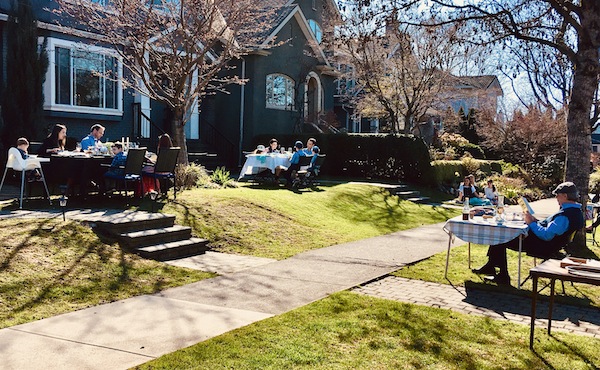
Families on 23rd Avenue in Vancouver found an innovative way to celebrate Passover. Each family brought their own meal and, while there was no sharing of dishes, everyone participated in reciting the blessings, reading from the Haggadah and singing together. The gathering was organized by Talia and Josh Bender, top left with their children, and Elana and Brian Jacobson, top right with their children.


Format ImagePosted on April 24, 2020April 24, 2020Author The Editorial BoardCategories Celebrating the HolidaysTags COVID-19, Passover

We are shaped by history

A few weeks ago, my husband got an email out of the blue from a distant relative in Israel. This Israeli was working on some family genealogy. He was stunned to discover that he had many U.S. relatives he never knew about. Together, my husband and this distant relative took on a big extended family project, even as COVID-19 shut down borders and isolated us in our homes.

Suddenly, my husband in Winnipeg and his dad, aunts, uncles and cousins in New Jersey were emailing, sending photos and stories to one another. They tried to iron out all the stories they’d heard and fit the puzzle pieces together. My husband’s paternal grandparents (z”l) were from Mezritch, Poland. They spent the Second World War on the run. They were in a Siberian Gulag work camp. Then, they lived in a shantytown near Tashkent, Uzbekistan. After the war, they stayed in a series of displaced persons camps in Germany before U.S. relatives found them. They arrived in the United States, with their three children, in 1950.

Discovering what may have happened to each relative 75 years ago, and documenting it, has taken on an urgency for both my husband and this “new” Israeli relative. In part, it’s because his oldest aunt, who was 9 when she came to the United States, remembered it all and discussed it with her mother in detail, over and over, as those who’ve gone through huge upheaval sometimes do. For my husband’s aunt, this childhood experience defines much of her worldview. Now, though, her mother, my husband’s grandmother, has died. His aunt is still alive, but unwell. She’s unable to recount the stories or identify the people in photos anymore. The family is racing to record as much of their family history as they can before even more of the pieces are lost forever.

In the midst of this nightly family email exchange, I read a book called Gateway to the Moon by Mary Morris. This novel makes connections between the Sephardi Jews who fled Spain after the Inquisition, the crypto-Jews of New Mexico and the history behind the family connections and modern-day Jewish practice. The author explained that the idea for the book came to her when she met someone long ago. This New Mexican seemed convinced that his family had been Jewish. Indeed, now we know through DNA analysis that many Spanish-speaking people throughout the world have Sephardi Jewish roots.

Gateway to the Moon was graphic, full of historically correct violence, and direct. It took me a long time to get through. It was powerful, but also hard to grasp the scope of the suffering faced during the Inquisition. This religious violence chased Jewish families for hundreds of years through Spain, Portugal, Mexico and beyond.

Morris does a good job of connecting people throughout history in her narrative. This was particularly powerful when a character tastes a lamb dish in Morocco, on vacation, and is instantly transported to her grandmother’s table in New Mexico. Even as their identity was hidden or forgotten, familiar recipes remained. Just the taste of that lamb stew connected the character to the family’s lost past and their Sephardi Jewish identity.

The ramifications of these huge experiences – violence, trauma, colonization, wars, genocides, terrorist attacks and pandemics – will shape us and future generations. We, as Jews, and as people, are forever shaped by these things. We’re about to celebrate Passover. It recounts a huge event in our people’s story – slavery, freedom and migration. This experience shapes us, though it happened (if it happened) long ago. As we say at the seder, Avadim hayinu: Once we were slaves in Egypt, and now we are free. We’re commanded to remember this as though we personally left Egypt.

As I write this, we’re suffering a pandemic, another huge, worldwide and scary experience. My husband and I are Gen Xers. We’ve been shaped by the Holocaust experiences of our families and friends. We were raised hearing their stories and traumas, and it was part of who they, and we, are.

Now, I pray that we, and all our families, and everyone in our community, live to think about what the ramifications of this next event will be. It will impact us all.

My family and I wish you everything good – a chag sameach, zissen Pesach – a happy holiday. Most importantly, may you enjoy it in good health.

Joanne Seiff has written regularly for CBC Manitoba and various Jewish publications. She is the author of three books, including From the Outside In: Jewish Post Columns 2015-2016, a collection of essays available for digital download or as a paperback from Amazon. Check her out on Instagram @yrnspinner or at joanneseiff.blogspot.com.

Posted on April 3, 2020April 2, 2020Author Joanne SeiffCategories Op-EdTags Diaspora, genealogy, history, Holocaust, lifestyle, pandemic, Passover
About the Passover cover art

About the Passover cover art

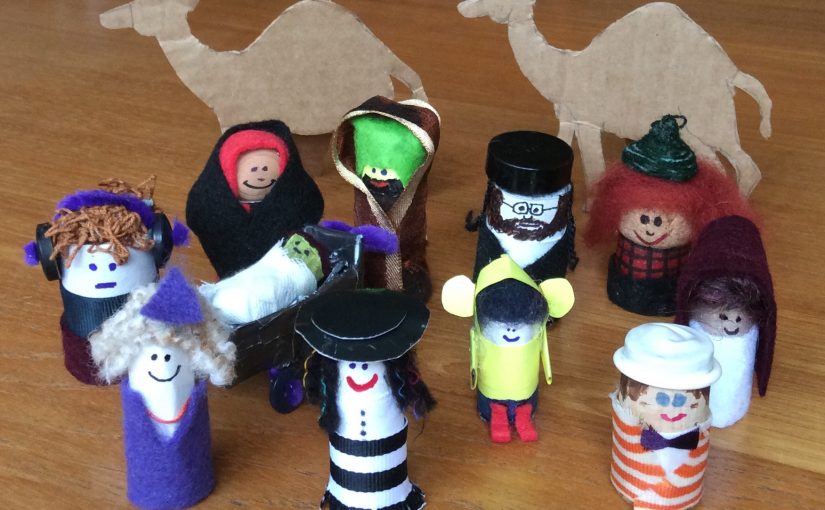
As I always do in anticipation of needing an image for the Jewish Independent’s Passover issue, I started with an internet search. This Passover, I was led to creativejewishmom.com, which features creative projects parents can do with their kids. The Crossing the Red Sea Kid’s Craft captured my imagination. Not one to let the lack of children in my immediate vicinity stop me, I collected the materials necessary and learned to use a glue gun. Through the generosity of a few friends, I didn’t have to buy anything to make the diorama on this issue’s cover.

To capture the notion that, in every generation, we are to regard ourselves as if we personally left Egypt, I created a variety of Israelites, from Moses, Miriam and Aaron leading the group, to a Middle Eastern family from an indeterminate era to a 1920s dandy, a Mary Poppins-inspired woman in a fancy black hat and a Chassid. A teen wears headphones, a toddler wears a mouse-ear raincoat and a girl in a wheelchair negotiates the streambed with the help of a Beatnik.

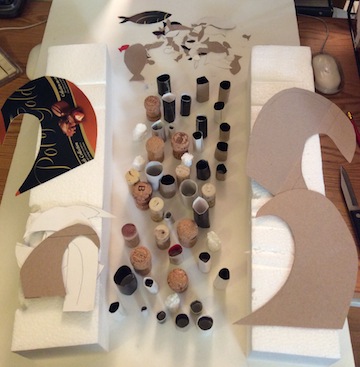
Early stages: Cut cardboard waves and fish. Prepare the toilet paper rolls (before the COVID-19-induced shortage) and corks that will become the Israelites.
photo - Intermediary stages: Make the Israelites and tissue paper the waves. Make a “staircase” so that all the Israelites can be seen in the photo
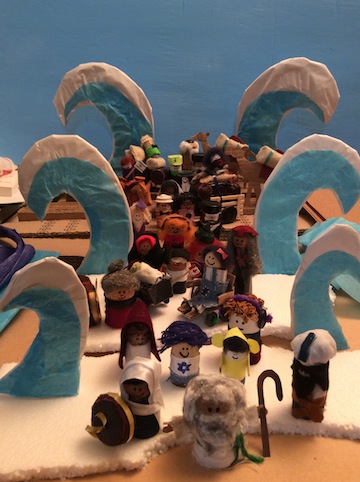
Intermediary stages: Make the Israelites and tissue paper the waves. Make a “staircase” so that all the Israelites can be seen in the photo.
photo - Final stages: Have JI logo join the exodus to freedom, but scrap the idea because many in the “focus group” interpret the falling letters to symbolize the world falling apart, given COVID-19
Final stages: Have JI logo join the exodus to freedom, but scrap the idea because many in the “focus group” interpret the falling letters to symbolize the world falling apart, given COVID-19.


The project took hours. The logistics of taking a photo that would fit within the parameters of the newspaper’s cover took almost as long to figure out as did the creation of the 29 Israelites, two load-carrying camels, two carts full of supplies, six waves and one streambed “staircase.” The wooden donkey near the back of the image is the only figure I did not make – JI production manager Josie Tonio McCarthy donated it to the effort; she bought the carving on a trip to Israel and we both thought it was appropriate to include, as the travelers’ destination is, of course, the Promised Land.

Wishes for a healthy and meaningful Passover, and a chag sameach.

Just a reminder: The Jewish Independent is now on a publishing hiatus. Our next issue will be April 24 or May 1, depending on the COVID-19 situation. Email [email protected] with story ideas and [email protected] for ad bookings.

Format ImagePosted on April 3, 2020April 2, 2020Author Cynthia RamsayCategories Celebrating the HolidaysTags creativejewishmom.com, kids arts and craft, Passover
Nieces enjoy new kids books

Nieces enjoy new kids books

I review a lot of books for the Jewish Independent. Over the years, that has included many children’s books. I do my best in these instances but, as much as I like to let my inner child run free occasionally and as much as I’d one day like to create a children’s book or two, I’m a grown-up. What do I really know about how enjoyable the single-digit-age set will find a publication? Well, for my latest two reviews, I turned to a couple of experts for advice.

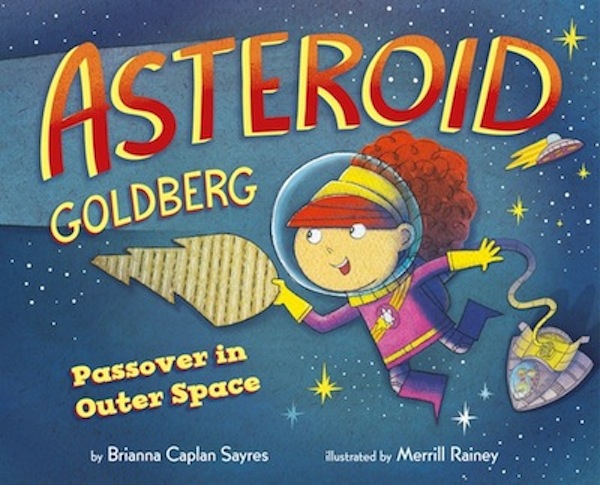
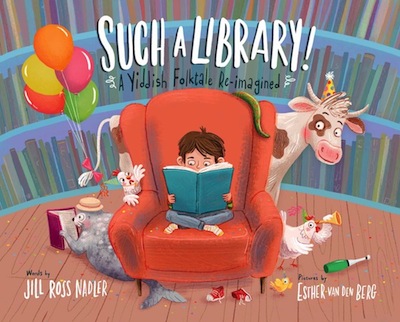
With COVID-19 causing the shutdown of schools, my youngest nieces – Fae, 8, and Charlotte, 6 – were suddenly available to be put to work. With their parents’ blessing, nay, encouragement, I scanned and emailed them two recent books published by Intergalactic Afikoman (see jewishindependent.ca/new-publisher-set-to-launch). The assignment was to read Asteroid Goldberg: Passover in Outer Space by Brianna Caplan Sayres and illustrator Merrill Rainey and Such a Library! A Yiddish Folktale Re-imagined by Jill Ross Nadler and illustrator Esther van den Berg. As my nieces were new to the reviewing world, I gave them a handful of questions to answer: What did you like about the books? What did you not like? What did you learn? Would you recommend the books to your friends?

Their mother, Deborah Weiss, sent me summaries of their answers, as well as Fae’s handwritten responses – I’d asked her to be the family’s scribe for the job.

They started with Asteroid Goldberg, which features Asteroid and her parents on their way home from Pluto for the Passover seder. When the family gets to earth’s orbit, they are not allowed to land (for an unstated reason), so they must make alternate seder plans on the fly (pun intended). A few of Jupiter’s moons for kneidl, a piece of Saturn’s rings for matzah, the Milky Way as their pantry. Who to invite? Family members close by, including Grandma Luna, who was biking on Venus, and Uncle Cosmos, who was hiking on Mars. When they come to the Mah Nishtanah, Asteroid asks, “What makes this night so different?” to which the answer is “Everything!” Caplan Sayres couldn’t have known how relevant her Passover story would be this year.

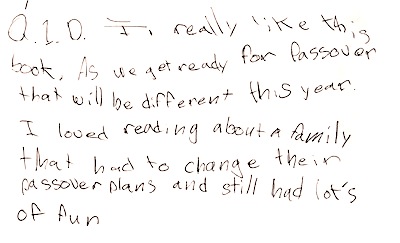
photo - Fae’s note on what her mother, Deborah (D.), thought of the book Asteroid Goldberg: Passover in Outer Space
Fae’s note on what her mother, Deborah (D.), thought of the book Asteroid Goldberg: Passover in Outer Space.

Both Fae and Charlotte loved the story and the artwork. Even though Charlotte found it a bit too long, Fae recommended it for kids 7 and under.

“I like this book because it was a rhyming book and because it had lots of play-along words,” wrote Fae, who explained to her mom that “play-along words are words with multiple meanings.”

As for lessons learned, Fae “did not learn anything.” However, her sister, who can be a pistol, said she learned that one should “never go on a rocket before Passover.”

As for their mom’s thoughts, Deb said, “I really liked this book. As we get ready for a Passover that will be very different this year, I loved reading about a family that had to change their Passover plans and still had lots of fun and found new ways to celebrate. This really resonated with me!”

Deb and the girls also enjoyed Such a Library! “I thought this was a really clever and imaginative take on a well-known folktale,” said Deb, who noted, “Both girls liked the funny text, the story and the artwork. We also liked the clever name of the librarian.”

In Such a Library!, Stevie heads to the public library to read his book – “With three brothers, two sisters and a baby at home, Stevie’s house was never quiet.” As he starts to read, though, he hears pages turning, computer keys tapping. He tiptoes to the librarian, Miss Understood, and says, “This library is too noisy.” He tells her, “It’s like a party in here.” Thinking that a party sounds like a wonderful idea, she opens a book: “Hundreds of colourful balloons flew from the pages, followed by party hats and horns.”

image - Such a Library! book coverEach time Stevie goes to Miss Understood to complain, she opens another book and the library becomes a zoo, then a circus, as the characters jump out of the pages of the books she opens and take over the library. Only once the characters are all returned to their books can Stevie enjoy reading his, to the relatively quiet sounds of the pages turning, computer keys tapping.

Such a Library! is an interpretation of the Yiddish folktale about a man who thinks that his small house is too crowded with his wife and many children. The rabbi recommends that the man also bring into the house the family’s cow, chickens, goats, geese and ducks. When the man can’t take it anymore, the rabbi tells him to kick out all the animals, after which, the small house seems quite big and spacious.

Fae would recommend Such a Library!, once again, to kids age 7 and under, while Charlotte really liked it and would recommend it to anyone.

As for what the girls learned, Deb said, quoting Charlotte, “We learned that, if you’re looking for a quiet place to read, to not to go to the library when it’s full of acrobats!”

To order either book, visit intergalacticafikoman.com/books.

Format ImagePosted on April 3, 2020April 2, 2020Author Cynthia Ramsay with Fae and Charlotte Ramsay and Deborah WeissCategories BooksTags children's books, Intergalactic Afikoman, libraries, Passover, Yiddish

Post-seder meat dishes

After eating all our wonderful family tradition seder dishes, I find it fun to try out meals that I haven’t before and that are not from my cultural background. Here are some you might want to try.

MATZAH MEAT PIE

(Egyptian-born Claudia Roden is the master of Middle Eastern food and author of 20 cookbooks. Now 84 years old, she lives in London. I met her in the 1970s, when she came to Israel and we had a wonderful visit. This is her recipe from the New York Times Passover Cookbook, adapted from The Book of Jewish Foods, which she wrote. It makes four to six servings.)

1 large chopped onion
3 tbsp vegetable oil
1 1/2 pounds ground lamb or beef
salt and pepper to taste
1 tsp cinnamon
1/2 tsp allspice
2 tbsp raisins
2 tbsp pine nuts or walnuts
1 cup warm beef stock
5-6 matzot
1 small egg, beaten

  1. Preheat oven to 375˚F. Spray a pie plate with vegetable spray.
  2. Heat two tablespoons oil in a frying pan and fry onion over medium heat for 10 minutes, until golden. Add ground meat, salt, pepper, cinnamon and allspice. Cook, stirring until meat has browned but is still moist, about 10 minutes. Add raisins.
  3. In another pan, fry the nuts in one tablespoon oil for one minute, stirring until nuts are lightly coloured. Add to meat mixture and stir.
  4. Place beef stock in a large, shallow rectangular pan. Soak matzot one at a time, pressing them gently to absorb the liquid.
  5. Press two or three softened matzot into a pie plate. Place meat mixture on top of matzot. Cover pie with remaining matzot. Brush top with beaten egg. Bake for 30 minutes or until top is golden.

KABSAH
(This recipe comes from It Tastes Too Good to be Kosher by Peter A. Weissenstein and is a Lebanese dish, good for using up leftover lamb or chicken.)

1 pound ground lamb
1 pound ground chicken
4 minced garlic cloves
salt to taste
2 medium, diced onions
1 finely diced large tomato
2 tsp cumin
4 tbsp minced parsley
oil

  1. In a bowl, combine lamb, chicken, garlic, salt, onions, tomato, cumin and parsley and blend.
  2. Heat oil in a frying pan. Spoon mixture into frying pan and fry until well heated. Serve with Israeli salad.

BRISKET MEATBALLS IN TOMATO PASSATA
(Passata is Italian for “go through,” i.e. the cooked tomato puree goes through a special machine. This Italian-influenced dish was created by Hillary Sterling for Vic’s, her New York City restaurant. It makes four servings.)

Meatballs:
1 1/2 cups crumbled, unsalted matzah
2 1/2 tbsp water
1 1/4 pounds ground brisket
1 large egg
1 tbsp olive oil
salt to taste
1 1/2 tsp ground fennel seeds (optional)
1/2 tsp crushed red pepper
pepper to taste

Passata:
1/4 cup sliced garlic
1 1/2 tbsp olive oil
1 28-ounce can crushed, drained plum tomatoes
1/8 cup fresh marjoram leaves
2 1/2 four-by-one-inch orange peel strips
salt and pepper to taste

  1. Preheat oven to 425˚F. Set a wire rack inside a large baking sheet and spray with vegetable oil.
  2. Combine crumbled matzah and water in a bowl. Add brisket, egg, oil, salt, fennel (if using), red pepper and black pepper. Mix with hands until combined. Shape into eight meatballs. Arrange meatballs on sprayed wire rack. Bake until browned, about 22 minutes.
  3. Meanwhile, in a frying pan, cook garlic and oil for passata, stirring often, a minute and a half. Add crushed tomatoes, marjoram leaves, orange peel strips, salt and red pepper. Bring to a boil then remove from heat.
  4. Transfer meatballs to tomato passata in frying pan. Garnish with crumbled matzot, fresh marjoram leaves and chile oil. Serve warm.

Sybil Kaplan is a journalist, lecturer, book reviewer and food writer in Jerusalem. She created and leads the weekly English-language Shuk Walks in Machane Yehuda, she has compiled and edited nine kosher cookbooks, and is the author of Witness to History: Ten Years as a Woman Journalist in Israel.

Posted on April 3, 2020April 2, 2020Author Sybil KaplanCategories Celebrating the HolidaysTags cooking, Passover

Posts pagination

Previous page Page 1 … Page 5 Page 6 Page 7 … Page 12 Next page
Proudly powered by WordPress