Skip to content
  • Home
  • Subscribe / donate
  • Events calendar
  • Business Directory
  • FAQ
  • News
    • Local
    • National
    • Israel
    • World
    • עניין בחדשות
      A roundup of news in Canada and further afield, in Hebrew.
  • Opinion
    • From the JI
    • Op-Ed
  • Arts & Culture
    • Performing Arts
    • Music
    • Books
    • Visual Arts
    • TV & Film
  • Life
    • Celebrating the Holidays
    • Travel
    • The Daily Snooze
      Cartoons by Jacob Samuel
    • Mystery Photo
      Help the JI and JMABC fill in the gaps in our archives.
  • Community Links
    • Organizations, Etc.
    • Other News Sources & Blogs
  • JI Chai Celebration
  • JI@88! video

Recent Posts

  • SFU honours Gloria Gutman
  • Lifting people’s spirits
  • Wedding a ray of light
  • Indigeneity and Zionism
  • Rule of law broken: councilor
  • Football and its roles
  • The burden of defence
  • Fish Café returns after fire
  • All right in what goes wrong
  • Nuns & mermaids at TUTS
  • Camp offers holiday retreat
  • Students and mentors inspire
  • Once-in-a-lifetime trip
  • 100 dancers, one heart
  • Money for the sciences
  • What “Jewish food” means
  • Have a cookie, schnitzel too
  • Federation now across BC
  • Israel fighting for its existence
  • Deal strengthens Iran
  • Patriotic belonging diminishes
  • A campaign to engage
  • Upstanders’ first live event
  • Responding to Carney
  • Having your own home
  • Music a family tradition
  • Musical to warm heart
  • Community milestones … June 2026
  • Sharing her passion for Israel
  • Or Shalom reopens its doors
  • JFS from past to future
  • Need holistic approach
  • Sharing stories, advice
  • Journalist shares fears
  • Skills to live together
  • Road to independence

Archives

Follow @JewishIndie
image - CJN box ad Rockowers 2026

Tag: Passover

Importance of this tradition thing

Importance of this tradition thing

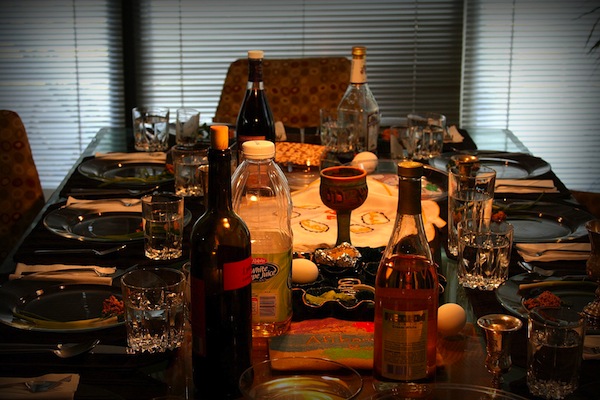
Passover traditions like the seder connect family and friends, and remind us who we are. (photo from flickr.com)

“I know I read an article somewhere that the greatest number of suicides happen on holidays,” Naomi said to her mother.

Rebecca ignored her. “Just keep lining the shelves.”

“But it makes sense, truly it does. Why are we taking this perfectly clean kitchen apart and practically rebuilding it? Does it say anywhere in the Bible that you go straight to hell if you don’t drop with exhaustion the week before Pesach?”

“This is the way my mother did it, and her mother did it, and one day you’ll do it for your kids, too.”

“You’re kidding yourself. If you think I’d ever inflict all this work on my daughter, you’re crazy. And why doesn’t Joe have to help?”

“He will. He’ll kosher the stove and the sinks.”

“And that’s another thing. Two minutes with a blowtorch and then he’ll pour a kettle of water. Big deal. And Dad doesn’t even do that.”

“He conducts the seder.”

“Another big deal. We take the place apart, vacuum chairs and wash curtains and change over dishes, not to mention 40 kilos of kneidl and all that stuff that gives you indigestion. What am I saying, indigestion? All those eggs – you’re probably giving us a gift of coronary heart disease. Jesus!”

“Naomi, stop it.”

“I’m sick of it. I want to escape like Faye.”

Rebecca’s lips tightened. “Fagie’s coming to the seder, too.”

But Naomi was not to be sidetracked. “Fagie, what a name! No wonder she rebelled. Naomi and Joseph, they’re bad enough. But Fagie, what were you thinking of?”

“It’s a good Jewish name. I was thinking of my grandmother. If you and your sister could have known her, you’d understand. The least I could do was keep her name alive.”

The spotless refrigerator was being polished within an inch of its life. Naomi sat down and watched her mother.

“I thought Passover celebrated freedom from slavery. But every year, you become a slave and you make me one, too. If you think you’re giving me wonderful memories, forget it. As soon as I can leave home, I will. Faye told me the best thing about marriage was being able to run her house like the 20th century. Now we’re in the 21st, for chrissake.”

“I hate it when you talk like that.”

“Like what?”

“So tough. All those profanities. What happened to femininity?” she asked her daughter sadly.

“Feminism came along, only you’ve never heard of it. Dad and Joe get out of everything ’cos they’re men. You’re the biggest chauvinist ever, because you not only condone this status quo, you actually perpetuate it.”

Rebecca sighed. “You don’t understand. Neither does Fagie.”

“You bet we don’t. Here, I’ve lined the last bloody shelf. I’m going out.”

“Where?”

“Out, as in O-U-T.”

“When will you be back?”

“If I had my way, it’d be around May or June – after Pesach.” She slammed the door. Rebecca heard the car start up. Her eyes filled with tears. She was exhausted. “This is gratitude,” she thought bitterly. “Here’s Naomi, barely 18, with her own car. We were married six years before we had one.”

Fagie started her marriage with all the things that she and Sam still don’t have after 27 years. And look how she is bringing up Brendan. Brendan! What sort of name is that? No wonder Fagie and Joel hadn’t wanted to give him a brit. If she and Sam hadn’t insisted, their grandson wouldn’t even have had that. They’d treated his Hebrew name, Baruch, as some sort of joke. Well, maybe in their circles it sounded strange. But at least among the family…. Everything with Fagie was a war. If she bought the child a kippah, Fagie would get upset. If she wouldn’t eat in her daughter’s treif house, it meant another argument. What did you have children for?

She heard loud music from upstairs. The Grateful Dead. No wonder they were grateful – they can’t hear the cacophony, she surmised.

When the key turned in the lock, she didn’t have the strength even to go and say hello to Sam. He wandered into the kitchen. “It looks beautiful,” he said, patting her shoulder and taking in the sparkling clean room.

“To us, maybe.”

“What’s wrong? Fagie been getting to you?”

“Not just her. Naomi’s just as bad now.”

Sam sat down heavily. “I don’t understand it. We sent them to day school – forked out in a year more than our education cost in a lifetime. And what do they give back? Where’s Joe?”

“Can’t you hear? He’s studying. That’s his usual accompaniment.”

“Even so, he’s a good student. He’ll make us proud one day. He’s talking about medicine or law, maybe architecture….”

“We’re kidding ourselves, Sam. Even if we’re proud of him, he’ll be ashamed of us.”

“No, not Joe. Why do you say that?”

“Because we’re fighting a losing battle. The things that are important to us are hateful to them.”

Sam’s shoulders sagged. “Joe’s turning his back on our traditions, too?”

“Not yet. He’s only 14. But he will – give him a few years.”

Wearily, Rebecca made dinner. The three of them ate in near silence. Joe had a book next to his plate and didn’t seem to notice. He had already left for school next morning when Rebecca, Sam and Naomi sat down for breakfast. Naomi avoided her mother’s eyes. “I’m sorry about yesterday.”

“No, you’re not,” Rebecca answered, “you meant it.”

“I just wanted you to understand….”

“Oh, I understand. Your father and I made a decision last night. You tell her Sam.”

He cleared his throat. “Naomi, since Pesach is so distasteful to you, you can go and stay with your sister. Your mother and I are taking Joe and going away for the week. That kosher guest house in the mountains –”

“You mean no seder?”

“What for? For Fagie’s family, who barely tolerate it. For you, who finds it such a chore? You know what it says in the Zohar? It says a little hurt from kin is worse than a big hurt from a stranger. Who needs it?” He pushed his chair back abruptly and, a minute later, they heard the front door close.

Naomi pushed the food around on her plate. “I think you’re overreacting. We always have a seder.”

“We always used to have a seder. We’re not going to do it any more. I didn’t care about the work, the exhaustion, because I thought it meant something. If it doesn’t, there’s no point.”

“It meant something to you and Dad.”

“So, we’ll sit at someone else’s seder. Naomi, go to university. You’ll be late for class.”

An hour later, the telephone rang. “Mum, it’s Fagie.”

“Oh, it’s Fagie today. What happened to Faye?”

“Don’t be sarcastic Mum – it doesn’t suit you. Listen, are you home? Can I come round?”

“What for?”

“I need to talk to you.”

“I’m not babysitting if that’s what you want.”

“Brendan’s at play group. I just want to talk to you.”

“I don’t think there’s anything to talk about. But come if you want.”

Thirty minutes later, Fagie’s car drew up. Rebecca poured her a coffee and pushed it towards her.

“So?”

“It’s about the seder.”

“Naomi didn’t waste much time. What’s wrong? You don’t want your sister’s company for a week?”

“Please listen. It’s not right what you’re doing.”

“Not right? For whom?”

“For anyone. Dad will hate not conducting the seder.”

“He’ll survive.”

Fagie’s voice trembled. “Maybe we won’t.”

“What does that mean?”

“I don’t know how to say this. It’s just….”

Rebecca remained silent, not attempting to help.

“It did mean something to us – me and Naomi – even Joel.”

“What did it mean?”

“It meant we were a family. It kind of bound us together. We need it. Brendan needs it. That once a year at least – to remind us who we are.”

“Who are you exactly? You can go and celebrate Easter. It’s all the same to you.”

Fagie’s voice trembled. “You’re making it hard for me. Mum, it’s true we don’t keep all the things you and Dad do. Most people don’t anymore.”

“And that makes it right?”

“Yes – no – I don’t know. It’s hard for us, to be different from our friends. But we need something. We need to know it’s there for us.”

“Not good enough. What happens when we go?”

“Maybe we’ll take it on then. When there’s no one else.”

“Why would you want to do that, if it’s not meaningful now?”

“For our children. I can’t explain. We can only give up these – traditions – because we know you still keep them. That they’re there for us to come back to. Sure, we ridicule them, but it’s like a family. We insult one another all the time because it’s easier than saying, ‘I love you and I need you.’ Do you understand me?”

Fagie was crying openly now. Rebecca didn’t trust herself to speak.

Three nights later, the candles were lit in the candelabra in Rebecca’s dining room, the flames casting shadows on the snowy white tablecloth. Sam sat at the head of the table and inspected the seder plate with its three matzot, the parsley, saltwater, horseradish, charoset, shank bone and roasted egg. He planned where to hide the afikoman, so that it would not be too hard for Brendan to find. Joe was filling the wine glasses, with the extra big one for the prophet Elijah, while Naomi handed out Haggadot. His grandson sat between Fagie and Joel, his face flushed with excitement. Sam’s eyes met his wife’s, which were moist with unshed tears, as were his.

“Baruch atah,” he began. “Blessed art Thou, O Lord our God, King of the Universe, who created the fruit of the vine.”

Dvora Waysman is a Jerusalem-based author. She has written 14 books, including The Pomegranate Pendant, which was made into a movie, and her latest novella, Searching for Sarah. She can be contacted at [email protected] or through her blog dvorawaysman.com.

Format ImagePosted on April 3, 2020April 2, 2020Author Dvora WaysmanCategories Celebrating the HolidaysTags family life, Judaism, Passover, tradition
Pesach: a tale of two stories

Pesach: a tale of two stories

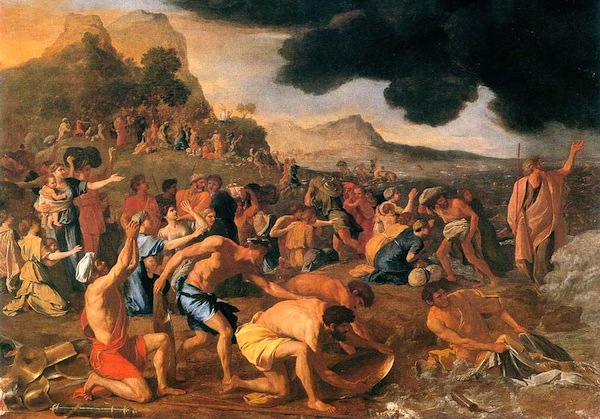
“The Crossing of the Red Sea” by Nicolas Poussin, 1634. (photo from wikimedia)

We are a people with many memories, many stories, and who we are has been shaped by the stories we remember and tell.

More than any other holiday, Pesach is about remembering and passing that memory down to the next generation. Every Jew is commanded to see themselves as if they came out of Egypt, and to tell their Egypt story to their children. The telling of this story is not mediated by teachers or rabbis, nor is it told in a communal framework. The setting of the seder is one of family and immediate friends, and the responsibility is upon every one of us to decide how we convey the story.

What makes this particularly challenging is that, beyond the complicated family dynamics, a Haggadah that is deeply problematic and different sensibilities with regard to what needs to be done, we have inherited two different stories. The challenge is not merely how to tell the story, but which story to tell.

One story, which dominates much of the Haggadah, not to speak of the story as told in the Torah, focuses on Pesach as a story of exodus, of the Jewish people being freed by God from the slavery of Egypt. “I am the Lord. I will free you from the labours of the Egyptians and deliver you from their bondage. I will redeem you with an outstretched arm and through extraordinary chastisements. And I will take you to be my people, and I will be your God.” (Exodus 6:6-7)

More than freedom and salvation, Pesach is a story of the election of the Jewish people, as God pours down God’s wrath on those who enslave the chosen ones and redeems us out of the hands of Egypt to be God’s chosen people. Each plague, told and magnified, is an expression of love, a gift of betrothal of God to us, an offering that bonds us to one another. “I the Lord am your God who brought you out of the land of Egypt, the house of bondage: you shall have no other gods besides me.” (Exodus 20:2-3)

One of the core consequences of this election narrative under Jewish law is the sanctioned discrimination between Jew and non-Jew, between the Children of Israel and the nations of the world. Because God saved us, all of us, from the slavery of Egypt, Jews are all equal, and no Jew can take another Jew as a slave. However, those who are not the recipients of the gift of exodus, the non-Jews, can become our slaves (Leviticus 25). When we go to war, even wars of aggression, the God who took us out of Egypt will always fight on our side, because the moment of election creates an us-them dichotomy in which God is always with us (Deuteronomy 20). Idolatry is neither false nor futile. It is the worship allotted by God to the non-elected. We, the chosen people, are alone commanded to worship God. The God who saved us in Egypt is our God alone (Deuteronomy 4).

This tale of the story of Egypt finds its culmination in our traditional Haggadah, in which one of its concluding prayers is a petition to God to “Pour out your wrath on the nations that do not know you…. Pursue them with anger and destroy them from beneath the heavens of the Lord.”

There is a second story of Pesach, a story in which neither the exodus nor its accompanying plagues takes central stage, but rather the hundreds of years of our subjugation in Egypt. It is to this memory that the core symbols of the holiday – matzah, the poor person’s bread, charoset, the paste that resembles mortar, and maror, the bitter herb, which cause us to relive the experience of pain – all direct us.

It is this memory that shapes the most-repeated commandment in the Torah: “The stranger who resides with you shall be to you as one of your citizens: you shall love him as yourself, for you were strangers in the Land of Egypt.” (Leviticus 19) The story of Egypt is not one of us-them, but of us being them, of us being members of the community of the downtrodden, and the subsequent obligation to treat all who are in need, Jew and non-Jew alike, as equal members of our society.

In an interesting twist on this story, the Ten Commandments obligate us to rest on the Sabbath, “so that your male and female slave may rest as you do. Remember that you were a slave in the Land of Egypt, and the Lord your God freed you from there with a mighty hand and an outstretched arm: therefore, the Lord your God has commanded you to observe the Sabbath day.” (Deuteronomy 5)

It is not merely that because we once were slaves we are bonded to all those in need. The redemption from Egypt is no longer exclusively the moment of election of us, but rather an expression of God’s care and compassion for all who are enslaved. Both our slavery and our salvation unite us with God, in a common mission to bring freedom and equality to our world.

It is with this idea that we begin to tell the story of Egypt in the traditional Haggadah. “This is the bread of affliction that our forefathers ate in the Land of Egypt. All who are hungry let them come and eat.” All, and not merely fellow Jews.

Pesach is a tale of two stories. Each has shaped who we are. As we tell our stories and pass them down to the next generation, it is our obligation to take responsibility for what will define us in the future and what will determine our religious and national identity. The choice is ours. As you tell the stories this year, choose wisely. Our future and the future of Israel depend on it.

Rabbi Dr. Donniel Hartman is president of the Shalom Hartman Institute and author of the 2016 book Putting God Second: How to Save Religion from Itself. Articles by Hartman and other institute scholars can be found at shalomhartman.org.

Format ImagePosted on April 3, 2020April 2, 2020Author Rabbi Dr. Donniel Hartman SHICategories Celebrating the HolidaysTags immigrants, Judaism, migration, Passover, Shalom Hartman Institute

We must continue to ask

Probably every action or event has unintended consequences. The more significant the initial act, the more dramatic the consequences, for better or worse.

Significant historical events illustrate a few of these. Income tax, for example, was an outcome of the First World War, which was, like all wars of course, cataclysmic to individuals and countries.

The Depression resulted, again among many other things, in public acceptance of vast government interventions into the economy through programs like the New Deal in the United States, and similar initiatives in Canada and elsewhere.

The Second World War, one of the worst human catastrophes ever known, was accompanied by a universe of social and economic changes, including the effective nationalization of critical industries to support the war effort. That period of social upheaval – during which personnel of all races served side by side and women entered the workforce in large numbers to fill the places of men at war – contained the seeds of social revolutions to follow, including the civil rights movement and the transformation of the role of women in society. The war was also a direct antecedent to formal decolonization in the developing world.

In other words, some terrible events can result in transformative consequences. This is not to play the ethics game and ask, if we could reverse history and prevent this act, would we do so, knowing that some positive byproducts would likewise be erased. It is merely to draw attention to the consequential moment in which we find ourselves.

The terror attacks of Sept. 11, 2001, are perhaps the freshest parallel for most of the current generation. On that day, we understood that everything had changed but we could only imagine in what ways. Wars would soon begin that continue to this day and, closer to home, social schisms between groups, including the rise of Islamophobia, emerged.

Political debates shifted dramatically to erstwhile largely dormant issues like government surveillance, balancing collective security with individual rights, the use of enhanced interrogation – torture, that is – and the thing that affects most of us most obviously: massive changes in airport security processes.

Since then, we have seen the rise of social and economic inequality and the attendant antisemitism and xenophobia it has engendered. Such shocks to the system produce reverberating impacts, often felt by more vulnerable and marginalized groups, Jews included, and we know that the consequences of any one shock can compound the waves of others in ways expected and unexpected.

We have plenty to worry about right now, with the immediacy of the pandemic. But we should also make time to consider potential unintended outcomes from this experience.

We have seen already, as we mentioned here a very long week ago, a vast outpouring of social unity. On social media, Vancouverites are coming together in mutual support. At 7 p.m. each night, for example, many are joining together to cheer frontline healthcare workers in a small but meaningful act of solidarity and hope. Most people, with notable exceptions that are being rightly called out, are responding appropriately to the advice of experts.

But consider the small, perhaps less obvious ways this experience could impact us. When it’s all over, will we be more reticent to shake hands, to hug? Will we be more attuned to the reality that we are each a part of an inseparable collective humanity, regardless of human-created boundaries?

More substantively, might we see the early reports of decreased air pollution due to this situation continue for the weeks or months this endures and realize that substantive progress on climate change is possible if we recognize the difference between essential and non-essential carbon-consuming activities? Could the once-unimaginable international coordination we are witnessing rekindle our collective hope in unified action for any number of good causes? If we can come together against a threat to us all, could world peace be less remote a dream than we might think?

Conversely, we should be cognizant, as well, that the vast power of the state – our state, every state – to effectively shut down entire societies and economies represents a unique global event. It is done in this case, of course, for the right reasons. But could a less-than-benevolent leader, tasting this level of control, envision ways to use it for their own purposes and against the common good? Might one use coronavirus as justification to delay or cancel elections?

There are a great number of question marks in this week’s editorial. The point here is not to play Nostradamus but to remind ourselves to question. At Passover, in whatever virtual or altered form we celebrate this year, we will ask questions for which we know the answers, and have been pondering for millennia. As this unprecedented time of humankind proceeds, we should remember to continue asking. How will this experience change us? What good might come of it? How can we ameliorate the terrible things that seem to be nearing their peak? Who might be trying to exploit this situation for ill and who is modeling the best of human kindness?

For more information and updates from the B.C. Centre for Disease Control and Canada’s public health authorities, visit covid-19.bccdc.ca and canada.ca/en/public-health/services/diseases/2019-novel-coronavirus-infection/prevention-risks.html, respectively.

Posted on March 27, 2020March 26, 2020Author The Editorial BoardCategories From the JITags coronavirus, COVID-19, liefstyle, Passover
Spring cleaning

Spring cleaning

Crews from the office of the Rabbi of the Western Wall remove tens of thousands of written prayers from the Western Wall. (photo by Gil Zohar)

On April 10, equipped with long sticks, crews from the office of the Rabbi of the Western Wall removed tens of thousands of written prayers, which worshippers had wedged into crevices at the holy site over the previous half year. The painstaking work is done twice annually, in advance of Passover in April and Rosh Hashanah in September, to ensure space for new prayers. The notes that are removed are buried in Mount of Olives Cemetery.

The origin of the practice of placing small folded sheets of paper between the cracks of the 2,000-year-old ashlars is unclear. According to tradition, God’s female presence (Shechinah), has never left the holy site.

A retaining wall of the Temple Mount, built by King Solomon circa 960 BCE and destroyed by the Romans in 70 CE, the Kotel Maaravi (Western Wall) stands today beneath a religious plaza known in Arabic to Muslims as al-Haram ash-Sharif (the Noble Sanctuary). Jews believe the holy hill marks the navel of the world from where God began his creation 5779 years ago; the site also marks where Abraham brought his son Isaac to offer him up as a sacrifice. Muslims consider the Western Wall to be where Muhammad tethered his winged steed al-Burak when he ascended to the Seventh Heaven. And Christians believe Jesus was one of the millions of Jewish pilgrims in antiquity who came here during the festivals of Passover, Tabernacles and Pentecost.

From 1948 until 1967, when East Jerusalem was under the control of Jordan, Israelis were prohibited from visiting the site.

Gil Zohar is a journalist based in Jerusalem.

Format ImagePosted on April 19, 2019April 17, 2019Author Gil ZoharCategories Celebrating the Holidays, IsraelTags Christianity, Islam, Israel, Jerusalem, Judaism, Kotel, Passover, Western Wall

Together on path to freedom

Passover is coming! As we prepare, we think of what it means to be enslaved and to be free. Some seders focus on human rights. Others read and discuss Jewish texts about how to understand the holiday. Every year, we re-examine not only how good the foods are, but the ideas around slavery and redemption.

At one of my first Jewish events in Winnipeg, 10 years ago, I heard racist comments about indigenous Canadians. I was really upset by the incident. I was so uncomfortable that I still remember the experience in detail, even though I’ve forgotten a lot of other things over time.

I recently attended some of the lectures in an extremely worthwhile series put on by Westworth United Church called Interfaith Dialogue on Truth and Reconciliation. Each year, in the springtime during Lent, this church offers some of the best adult education programming I’ve ever attended and they welcome the entire community. The topics are thoughtful but, even more important, participants come ready to wrestle with hard intellectual and emotional ideas. I was introduced to it because Dr. Ruth Ashrafi has been a speaker as part of this programming more than once, and I’m hooked.

This year, the series was held in four different locations throughout the community, including Congregation Etz Chayim, Westworth United Church, as well as at one of the mosques and at a Buddhist Temple. It was so well attended that it filled the pews – wherever it was held.

Each session, a religious leader spoke, but he or she spoke at the lectern of a different congregation. Dr. Shahina Siddiqui spoke at Etz Chayim. Ashrafi spoke at Westworth United. It was powerful to see people of different faiths take to different pulpits. These leaders spoke, in the context of their religious traditions, on their status as Canadians or newcomers to a place with a heavy past of racism toward and discrimination and neglect of its indigenous people.

The most shattering part of the series was to hear from indigenous elders. I only attended two of the events, and heard Theodore Fontaine and Chickadee Richard speak. I cried while I listened to them. Their powerful personal, political and religious stories shook me.

These were bright, strong leaders with absolutely valid points about how they and their communities have been affected and mistreated by Canadian law and society. Their beliefs and prayers – about caring for Mother Earth, about protecting water and guarding the lives of those they love – are no different than those of other religious traditions in Canada. Yet, there are still indigenous communities who are forced to live in terrible conditions, without access to clean water and without adequate education or health care. How can people of faith accept this dichotomy? How is it that the first people in Canada don’t have access to the basic human rights that most of the rest of us enjoy?

After each set of lectures, we were sorted into random discussion groups. In the first event, we were asked to imagine what it might have been like to experience residential school and how we felt we would have reacted. What would that have been like?

All around me, I heard older Canadians mention how they didn’t know, and that their history classes didn’t teach them what had happened. They struggled with this part of Canadian history. It’s a denial that seemed familiar from German accounts of the Second World War, when people said “they didn’t know” what was happening to the Jewish people in their communities.

I could see many parallels between the stories Theodore Fontaine told, of “going to the moon” and escaping the abuse by disassociating and going somewhere else in his mind, and the novel The Painted Bird, by Jerzy Kosinski, which describes the horrors experienced by a Jewish child during the Holocaust. Trauma causes us (humans) to do many of the same things, even if our religious and ethnic identities differ.

Many of us know that the trauma of the Holocaust doesn’t go away in one or two generations. Those indigenous Canadians who were sent away from their families to residential schools, where they were abused, fed poorly and otherwise mistreated – their trauma has affected their families for generations. Jerzy Kosinski dealt with his childhood Holocaust trauma through substance abuse and, eventually, suicide. It’s no wonder that many indigenous survivors do the same.

Passover is a time of year, like the High Holidays, where we throw off wrongs and bitterness in the hope of embracing new growth and change. We can throw off the bondage of old biases or ideas that have enslaved us. Prejudice against indigenous people, their traditions and the burden of past abuses needs to be addressed – by all of us.

At the end of the lecture series, the facilitators asked variants of this question: “What will you do in the next year to address reconciliation, promote diversity and inclusion, and to make change?” My commitment was to be brave in speaking out about these issues.

Now, I’m turning over the question to you. What will you do, as a person of faith, to make change? Start by reading the 94 recommendations of the Truth and Reconciliation Call to Action. Write to your politicians to protect the water, the earth and the peoples who came to Canada first. Go to a powwow or a reconciliation discussion. Look others, no matter who they are, in the eye and greet them with loving kindness. In short – do more. It’s the Jewish thing to do.

Remember – we were slaves in the land of Egypt and now we’re free. Free to step up, speak up and help others along the path to equal rights, respect and freedom.

Joanne Seiff has written regularly for CBC Manitoba and various Jewish publications. She is the author of three books, including From the Outside In: Jewish Post Columns 2015-2016, a collection of essays available for digital download or as a paperback from Amazon. See more about her at joanneseiff.blogspot.com.

Posted on April 12, 2019April 10, 2019Author Joanne SeiffCategories Op-EdTags First Nations, Passover, racism, reconciliation, tikkun olam

Balabusta preps for Pesach

Harvey’s charoset pyramid. (photo by Shelley Civkin)

As the Torah commands us, we tell the story of Passover and the Israelites’ exodus from slavery in Egypt to our children and ourselves every year, by reading from the Haggadah. Coming from a secular home, I don’t recall our family owning a single Haggadah. Instead, my father had a little black notebook in which he wrote down the story of Passover and the Jews’ exodus from Egypt. It took about five minutes for Dad to read it, and then we had our seder. It wasn’t particularly traditional, but it was meaningful nonetheless.

On the all-encompassing journey called Yiddishkeit, preparing for Passover scores about an 18/10 on the commitment scale. Between the feathers and flashlights, flourless sponge cakes and briskets, a balabusta has her work cut out for her. And then some.

As an accidental balabusta and relative neophyte to traditional Passover preparations, I want to get with the program as much as possible. I scared myself the other day though, by reading articles about what goes into getting ready for this significant holiday. One such article – called “Cook your Pesach while you sleep” – was particularly troubling. It seems to me that a Pesadik balabusta requires at least 36 hours in every day to prepare her food for the seder, a month ahead of time. She might also require a housekeeper to do all the laundry and clean the house while she’s tethered to the kitchen, cutting, peeling, blanching, baking and roasting the eight-course meals she’ll serve to her 42 guests over the two nights of Passover. Oh, and did I mention the other two minor meals she needs to organize daily for her family during the eight days of the holiday? Holy flourless kugel, Batman!

And then there’s the issue of finding and removing all the chametz from your home. Let me confess something right from the get-go: I am not an observant Jew in the strict sense of the word. I do observe certain things, like going to synagogue every Shabbat, lighting Shabbat candles, doing the odd mitzvah, and studying a little Torah. That’s about the extent of it. I refrain from eating chametz during Pesach, but I have never actually removed all the chametz from my home before the holiday. And I don’t keep kosher. However, I do eat matzah religiously during Pesach. And I kind of have a crush on shmurah matzah.

As for that age-old shmurah versus Manischewitz matzah debate … I wholeheartedly throw my vote behind shmurah. Yes, it’s expensive, but it’s so worth it. Having visited Kfar Chabad on our trip to Israel last year, we went to their shmurah matzah factory and witnessed how the matzah is made by hand. Seeing the meticulous precision with which everything is measured, timed and baked, it was a fascinating and educational experience. And did I mention its unique flavour and round shape? Sure, parts of it can be burnt, but that just enhances the taste. Once you go shmurah, you’ll never go back.

I’m the kind of accidental balabusta that, instead of making matzah ball soup, brisket, tzimmes and macaroons for Pesach, I’m inclined to make hotel reservations in Whistler and call it a day. There’s no need for me to be Jewish Wonder Woman. Gal Godot has that covered. I know, not every woman who prepares for Pesach considers herself Wonder Woman. But, given the magnitude of preparation that must get done in advance – and done to rigorous standards – I’m pretty sure that devotedly observant women qualify for that title. As for me, I’ll do the best I can to honour the traditions, prepare a welcoming and tasty seder for my family, then enjoy a plotzfest.

Preparing for Pesach can be dangerous though. A couple of years ago, I decided to forgo the store-bought chrain (horseradish) and make my own. I found a recipe, then went out and bought the fresh horseradish root. It looked innocent enough. From a distance. Nobody told me that taking a close-up whiff of newly pulverized horseradish root is akin to inhaling mustard gas. I thought I’d burned my lungs. Sure, it produced that unrivaled heat I always admire in a memorable horseradish. However, it almost knocked me out. This Pesach, I plan to simplify the process by buying horseradish. And saving my lungs for more important things … like breathing.

On the topic of food … my husband Harvey makes the ultimate Passover crowd-pleaser: a visually stunning, delicious pyramid-shaped charoset. He got the recipe decades ago from the L.A. Times. It never fails to impress guests. Here’s the recipe.

HARVEY’S CHAROSET PYRAMID

1 unpeeled pear, cored and chopped roughly
1 unpeeled apple, cored and chopped roughly
1 cup chopped walnuts
1 cup chopped almonds
1 cup chopped hazelnuts
1 cup chopped pistachios
1 cup chopped pitted dates
1 cup chopped raisins
2 tsp ground cinnamon
2 tsp grated fresh ginger
1 tbsp apple cider vinegar
sweet wine, preferably Manischewitz (about 1/4 cup)
extra dates to decorate the plate

  1. Put all the nuts in food processor and chop, but not too finely. Place in a bowl.
  2. Put dates and raisins in food processor and chop, but not too finely. Place in separate bowl.
  3. Core and roughly chop apple and pear by hand, then put in the food processor, along with the nuts, and the raisin and date mixture. Add cinnamon, ginger, apple cider vinegar and wine. Chop till it’s all mixed together. Be careful not to overdo it – you don’t want it mushy.
  4. Remove it all from the food processor and shape it into a pyramid with a spatula. Then use a small, sharp knife to lightly make “brick” shapes in the pyramid. Refrigerate. Put whole dates around the outside before serving.

For another Passover culinary experience, check out Jamie Geller’s recipe for potato kugel cups at joyofkosher.com/recipes/potato-kugel-cups. You can YouTube it, too. If you’re not afraid of hot oil in a 425°F oven, this recipe will knock your Pesach socks off. Personally, scorching hot oil makes me a bit skittish. But the result is potato heaven.

As Pesach approaches, it’s a time to clean house, both literally and spiritually. It’s a time to remember how blessed we are in our freedom as Jews today. And it’s a time to hold close our traditions, pass along the story of our exodus from Egypt to the younger generation, and be thankful for where we are now.

So, eat the matzah and bitter herbs and drink those four cups of wine. Then go out and buy lots of Metamucil. Because you’re going to need it after eight days of matzah. But check with your rabbi first to make sure Metamucil is kosher for Pesach.

Wishing you all a meaningful and freilach Pesach.

Shelley Civkin, aka the Accidental Balabusta, is a happily retired librarian and communications officer. For 17 years, she wrote a weekly book review column for the Richmond Review, and currently writes a bi-weekly column about retirement for the Richmond News.

Format ImagePosted on April 12, 2019April 2, 2020Author Shelley CivkinCategories Celebrating the Holidays, LifeTags cooking, Judaism, lifestyle, Passover
About the cover art – Passover 2019

About the cover art – Passover 2019

Moses and Aaron lead the Israelites to the Red Sea in this still from Nina Paley’s feature-length animated film Seder-Masochism, which screened at the Vancouver International Film Festival last year and is available to view for free online at archive.org/details/sedermasochism. Being in the public domain means that all of Paley’s animation and images are free for anyone to use. Nonetheless, the Jewish Independent requested and received her blessing to run the images from the film that grace the cover of this issue and its Passover section.

According to sedermasochism.com, the film “loosely follows the Passover seder story, with events from the Book of Exodus retold by Moses, Aharon, the Angel of Death, Jesus and the director’s father. The film puts a twist on the traditional biblical story by including a female deity perspective – the Goddess – in a tragic struggle against the forces of patriarchy.”

The feature was “in the works since 2012, when Paley first animated a scene called This Land Is Mine, a parody about never-ending conflict in the Levant, which has been viewed over 10 million times on various online channels.” Paley has written and designed a companion book, The Seder-Masochism: A Haggadah and Anti-Haggadah, which can be purchased through Amazon.

Paley is also the creator of the animated musical feature film Sita Sings the Blues, which, her bio at palegraylabs.com notes, “has screened in over 150 film festivals and won over 35 international awards.” It continues: “Her adventures in our broken copyright system led her to join questioncopyright.org as artist-in-residence in 2008. Prior to becoming an animator, Nina was a syndicated cartoonist. A 2006 Guggenheim Fellow, she also produced a series of animated shorts about intellectual freedom called Minute Memes. Nina began quilting in 2011 as a way to do something real with her hands after years of pushing pixels.”

Readers can find out more about Paley at blog.ninapaley.com.

Format ImagePosted on April 12, 2019April 12, 2019Author The Editorial BoardCategories Celebrating the HolidaysTags art, film, Nina Paley, Passover, Seder-Masochism

Enjoy these Pesach desserts

In Jerusalem, as soon as Purim is over, everyone begins to get ready for Pesach. Two-and-a-half weeks ahead, macaroons are already in the stores, as well as various other products for the holiday. Here are a few desserts you can make at home, from traditional to unusual.

CLASSIC ALMOND MACAROONS
Makes 20 macaroons. This recipe is adapted from an American food magazine (not sure which).

1 1/2 cups blanched almonds
1/4 cup sugar
2 egg whites
1/4 tsp almond extract
3/4 cup sugar
4 tsp confectioners sugar

  1. Place almonds in a pan, cover with water and bring to a boil. Boil 10 seconds. Remove one almond and see if it slips out of its skin. If not, boil a few seconds more. Spread on paper towels and pat dry once ready.
  2. Preheat oven to 325 °F. Line a baking sheet with parchment or wax paper.
  3. Grind almonds with 1/4 cup sugar in processor. Add egg whites and extract and blend 20 seconds. Add the 3/4 cup sugar in two batches, blending 10 seconds after each addition.
  4. Roll one tablespoon of mixture between moistened palms into ball. Repeat until all mixture is used, spacing cookies one inch apart on the prepared cookie sheet. Flatten each to half-an-inch high. Brush each with water. Sift confectioners sugar over each. Bake for 25 minutes.
  5. Lift one end of parchment paper and pour two tablespoons water onto cookie sheet. Lift other end and pour two tablespoons water under. Tilt to spread water. When water stops boiling, remove macaroons.

CHOCOLATE BISCOTTI
3/4 cup margarine or butter
2 1/8 cup sugar
6 eggs
2 tbsp vanilla extract
3 1/2 cups matzah flour
1 1/4 cups potato flour
3/4 cup cocoa
1 tbsp Passover baking powder
5/8 cup ground almonds
2 cups chocolate chips

  1. Preheat oven to 375°F. Spray a cookie sheet.
  2. In a bowl, cream margarine or butter and sugar. Add eggs and vanilla.
  3. In another bowl, combine matzah flour, potato flour, cocoa and baking powder. Gradually add to batter.
  4. Add nuts and chocolate chips and combine.
  5. Form into two logs and place on cookie sheet. Bake for 30 minutes. Let cool.
  6. Slice. Return slices to cookie sheet and bake 15 minutes.

TOFFEE MATZAH
This is my favourite sweet for Pesach but this version is an Andrew Zimmern contribution from Food & Wine magazine with a few of my changes.

1 cup salted butter or margarine
5 pieces of matzah
1 cup packed brown sugar
2 cups chocolate chips
1 cup mixed chopped nuts

  1. Preheat oven to 350°F. Line a cookie sheet with foil and spray with vegetable spray. Line with parchment paper and spray again.
  2. Arrange a layer of matzah on the sheet.
  3. Melt butter or margarine with brown sugar in a saucepan. Cook five minutes. Pour over matzah. Bake five to eight minutes, until bubbling.
  4. Remove from oven and spread chocolate chips on top, letting them melt for five minutes. Sprinkle nuts on top. Let cool or refrigerate to cool. Break into pieces.

MARILYN’S CHOCOLATE BRANDIED CANDY
Marilyn is a longtime friend of mine who came from the Boston area and has lived in Israel since 1949.

3 1/2 ounces bittersweet chocolate (a candy bar works fine)
1 cup raisins, soaked in cherry brandy
1 cup chopped walnuts
1 cup matzah pieces

  1. Melt chocolate in a saucepan. Add raisins, walnuts and matzah and mix well.
  2. Drop by tablespoon into small cupcake papers. Refrigerate.

Sybil Kaplan is a journalist, lecturer, book reviewer and food writer in Jerusalem. She created and leads the weekly English-language Shuk Walks in Machane Yehuda, she has compiled and edited nine kosher cookbooks, and is the author of Witness to History: Ten Years as a Woman Journalist in Israel.

Format ImagePosted on April 12, 2019April 10, 2019Author Sybil KaplanCategories Celebrating the HolidaysTags baking, biscotti, macaroons, matzah, Passover, recipes

The great matzah ball debate

What food eaten during Pesach causes the most debates? If you guessed matzah balls, you’re right. Should they be hard or light? Big or small? What secret ingredient should be added to them?

From where did matzah balls, or kneidlach, originate? German Jews had a dumpling that they put into their soup called knodel. From this came the Yiddish term kneydl, singular, or kneydlach, in the plural. In Czech, it is known as knedliky. Dumplings have been in Central European cookery since the Middle Ages and then they came to Germany and Eastern Europe later.

So, just how many ways are there to make matzah balls?

Joan Nathan, a friend of mine, who has written a number of cookbooks and is considered a maven of American Jewish cooking, proposes adding chicken fat or vegetable oil plus seltzer, club soda or chicken broth, to make them light and airy. In Jewish Cooking in America, she also relates that some matzah balls, originating in Lithuania, use chicken fat or vegetable shortening and contain a filling made of onion, oil or chicken fat, matzah meal, egg yolk, salt, pepper and cinnamon. The filling is then placed in the middle of the matzah ball before they are cooked in salt water. After cooking in salt water, they are baked 30 minutes then placed in the soup for serving. Joan also has a recipe for matzah balls made in the southern United States, using pecans. In my research, I discovered that some Louisiana Jews add green onions and cayenne pepper.

In her cookbook Quiches, Kugels and Couscous: My Search for Jewish Cooking in France, Joan explains that, in France, matzah balls are called boulettes de paque, krepfle or kneipflich. They are the size of walnuts and not fluffy. They are made from stale bread or matzah soaked in water and dried, and they contain rendered goose fat, vegetable oil or beef marrow, eggs, water or chicken broth, matzah meal, salt, pepper, ginger and nutmeg.

In The New York Times Passover Cookbook, edited by Linda Amster, among the recipes for matzah balls is one by Mimi Sheraton, Times food critic at the time, who used chicken fat and cold water. Another is from Joan’s cookbook Jewish Holiday Kitchen, and she uses ginger and nutmeg. The winning recipe for the first Matzah Bowl contest in New York at the time the Times cookbook was published used vodka and club soda. A low-fat, low-salt version is made with egg whites and vegetable oil. Another style, which is airy, is made with beef marrow, instead of chicken fat, plus nutmeg.

Refrigeration and the temperature of the liquid seem to be key common denominators in many recipes.

Nina Rousso, an Israeli, in her book The Passover Gourmet, uses beaten egg yolks, lukewarm water, melted margarine, salt, parsley, matzah meal and stiffly beaten egg whites folded in. The mixture is refrigerated two hours before making.

In Passover Lite, Gail Ashkenazi-Hankin, an American, combines egg yolks, onion powder, salt, pepper, matzah meal, water and beaten egg whites and chills the mixture 30 minutes.

Zell Schulman, the American author of Let My People Eat, says the key to making light, melt-in-your-mouth, floating matzah balls is to beat egg whites until stiff then fold into the yolks with salt, pepper, cinnamon, matzah meal and optional parsley and refrigerate 15 minutes. A second version combines matzah meal with only the beaten egg whites until they hold peaks, plus parsley, cinnamon, grated carrot and oil, but no egg yolks.

Susan Friedland, the American author of The Passover Table, combines whole eggs with seltzer, salt, pepper, matzah meal and schmaltz, which she refrigerates for one hour. The schmaltz adds the flavour.

Marlene Sorosky, American author of Fast and Festive Meals for the Jewish Holidays, provides a recipe using ground almonds, ginger and chopped parsley. She chills the matzah balls for one hour.

Edda Servi Machlin, whose family has 2,000-year-old roots in Italy, says her family serves a mix between Italian Passover soup and Ashkenazi chicken soup. Her matzah balls are made of chopped chicken, egg, broth, olive oil, salt, pepper, nutmeg and matzah meal. The batter is refrigerated one hour before making.

Other Italian Jews, who call the matzah balls gnocchi di azzaima, add onions or mashed potatoes to the dough or grated lemon rind.

An aside: In 2001, Ariel Toaff, a professor at Bar-Ilan University, who is the son of Rome’s chief rabbi, came out with a book called Mangiare alla Giudia (Eating the Jewish Way). He devotes a chapter to Passover traditions, and writes that matzah was so popular that the Catholic authorities banned Jews from selling matzah to non-Jews and banned Christians from eating it.

Italian bakers also baked different kinds of matzah: plain for intermediate days, shmurah matzah for the sederim, and matzah made with white wine, eggs, sugar, anise and goose fat for those with more rich tastes.

Jews of Italy even developed sfoglietti or foglietti, a kosher-for-Passover pasta made with flour and eggs, which was then quickly dried and baked in a hot oven and served in soup or with a sauce.

Joyce Goldstein, an American fascinated by Italian Jewish cuisine, describes, in Cucina Ebraica, a combination of ground chicken, egg, matzah meal, salt, pepper and cinnamon, which she refrigerates before cooking in soup, but she does not say for how long.

Sonia Levy, a native of Zimbabwe, wrote a cookbook of her community, called Traditions. She describes luft kneidlach, light matzah balls, made with matzah meal, water, salt, nutmeg, cinnamon or ginger, eggs and oil. These must be refrigerated at least half a day. She adds that you can also make a pit with a finger and insert chopped meat that has been mixed with fried onions and spices. Another Zimbabwe version uses egg, cold water, chicken fat, salt, pepper, ginger and matzah meal.

Ruth Sirkis, an Israeli, in A Taste of Tradition, says “air” matzah balls have eggs, matzah meal, salt, chicken soup and chicken fat and are refrigerated two hours.

Another version, by Anya von Bemzen and John Welchman in Please to the Table: A Russian Cookbook, has walnut balls for soup, which are made by the Georgian Jews using ground walnuts, onion, egg, matzah meal, oregano, salt, pepper and a froth egg white.

A couple of last pieces of matzah ball trivia. In 2008, a New York kosher delicatessen held its annual matzah ball-eating competition to raise money for a shelter for the homeless. The winner ate 78 matzah balls in eight minutes. Although not in the Guinness Book of World Records, a few years ago, the largest matzah ball was measured at 17.75 inches across and weighed more than 33 pounds.

And, lastly, among some ultra-Orthodox Jews, matzah balls are not eaten because they expand when they cook, and they consider this reaction a form of leavening.

Regardless of the style of matzah balls you prefer, just make plenty for your guests!

Sybil Kaplan is a journalist, lecturer, book reviewer and food writer in Jerusalem. She created and leads the weekly English-language Shuk Walks in Machane Yehuda, she has compiled and edited nine kosher cookbooks, and is the author of Witness to History: Ten Years as a Woman Journalist in Israel.

Posted on April 12, 2019April 10, 2019Author Sybil KaplanCategories Celebrating the HolidaysTags books, cooking, culture, history, matzah, Passover
Pesach: story of a people’s birth

Pesach: story of a people’s birth

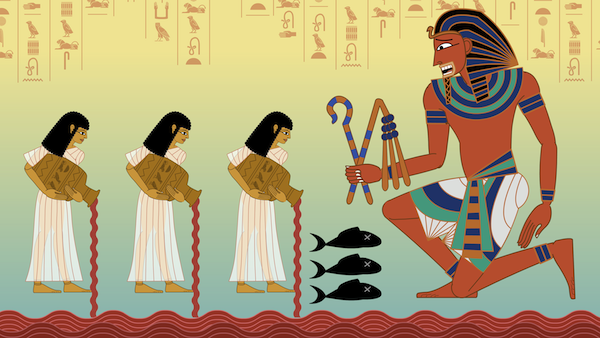
God Almighty Herself induces Egypt to give birth. We simply need to listen for the birth mother’s screams in the delivery room. We hear the screams throughout the plagues, as they become increasingly intensive, starting with the first plague, blood. (illustration by Nina Paley)

The idea of the Exodus as a birth story begins as Shemot (Exodus) begins. The first chapter brings us into the atmosphere of a giant delivery room. Things have gotten out of control: “And the Israelites were fruitful and increased abundantly and multiplied and grew exceedingly strong and the land was filled with them.” (Shemot 1:7)

The Israelites are having children all the time. There’s this anonymous, collective mass of people that are steadily spreading out. The only two figures mentioned by name are the midwives, Shifra and Pua, and there’s a reason for that. The book is telling us: “Pay attention, readers. We are entering a delivery room, and so the most important figures are the midwives. You will feel this sense of birth.”

If one didn’t get this sense from Chapter 1, take a look at Chapter 2. It begins with the personal birth story of Moses, the story of a natural, biological birth, in which a woman becomes pregnant and has a son. A few verses later, the mother places the baby in an ark, or basket, and, when Pharaoh’s daughter comes by, she takes him in and becomes his adoptive mother. She, too, has a birth story. There’s a womb – the ark. There’s water – the Nile. She sees the womb, the ark. She opens it and she sees the baby. She, too, is portrayed as having given birth. If we saw a portrait of the natural, biological birth by the Hebrew mother, we also have a portrait of the Egyptian adoptive mother who takes the child.

This “birth” mindset will intensify and be actualized through this grand metaphoric story we call the story of the Exodus from Egypt. There was a famine in Canaan, so the Israelites went to Egypt to buy grain and find seed. They stayed. Scripture tells us how they “were fruitful and increased abundantly and multiplied and grew exceedingly strong, and the land was filled with them.”

This little nucleus, the embryo that first descended, is developing within this large Egyptian womb, Israel’s “surrogate mother,” which nourishes this fetus. The time comes for the birth. As in any case of surrogate motherhood, there is difficulty. On one hand, it’s not my baby. I want it out. On the other hand, there’s emotional difficulty. I nourished that child. He’s part of my body.

From the perspective of the child, there will be problems, or challenges, of attraction and repulsion toward the surrogate mother in whom he developed. The Children of Israel grew and developed in that womb, and it must be taken out. But the Egyptian mother refuses to begin the birthing process.

Enter the most powerful midwife imaginable – God Almighty Herself. She induces Egypt to give birth. The entire story is described in this manner. We simply need to listen for the birth mother’s screams in the delivery room. We hear the screams throughout the plagues, as they become increasingly intensive. Blood. Frogs. Lice. Beasts. Pestilence. Boils.

We’re standing next to the birth mother, saying, “Push! Push! Scream! Scream! Let this baby out!” Just before the birth, a moment before the Children of Israel emerge, they are commanded to paint the doorposts with blood. Soon after, this people will pass through this doorway.

They will reach the waters. And the waters will descend, as well. Then the sea will split in two, and the Children of Israel will pass through the waters on dry land, through the birth canal that has opened for them. At the end of the birth canal, who will be waiting for them? The midwife, ready to grasp them and teach them to walk.

This story, this birth story, is the powerful story of the birth of a people. But, beyond the importance of hearing this story, it can also explain what happens later, during their travels in the desert.

Like any newborn baby, the people will cry and scream for their most immediate needs – water, food. Moses and God will provide for them because that’s how you take care of an infant. You give water and food. You can’t expect anything else. Slowly but surely, he will be taught to walk. Slowly, he will learn rules. He will be given laws to follow.

When we meet this child in Bamidbar (Numbers), once he has grown, he will make the same requests that he made in Shemot as an infant: water and food. But God’s response will be different, because we don’t have the same expectations of a little baby that we have from a growing child. We expect something different.

How do we connect this to the seder night? The Exodus, first, is a story. There is a strong emphasis on telling the story. It has all the detail it needs, and all the drama we want. These are what make this story a foundational story, one that can be transmitted generation after generation.

We sit around and tell our birth as a people. We try to impart it to the next generation. When we tell the story with all its detail, it excites us once more. But why is this done over matzah?

God planned the Exodus from the time of Abraham: “Know that your seed will be a sojourned in a land not theirs; they will serve them and be tormented by them for 400 years. But then they will go out with great wealth.”

It’s all planned, down to the moment. God tells them to have their loins girded, their bags packed and their food prepared and, when I say so, leave. Everything had been planned. So what happened? Why couldn’t the dough rise? Why couldn’t they have fresh rolls?

This is a precise dramatization of a birth story. If you want it to be credible, it has to be exact. As in the story of any birth, everything is planned. There’s a due date. There’s a packed suitcase, a list of phone numbers to call. If it’s not the first birth, there are arrangements for the older kids.

Yet labour will always be unexpected. It’s always sudden. The water breaks suddenly. Contractions come suddenly. Suddenly, it’s time to go. That’s birth. Everything is planned, but the moment arrives suddenly. This is the meaning of eating matzah. It’s as if we are saying, everything was there, everything was planned. This birth was a major event and, like every other birth, it was unexpected. Despite all the preparations, we had to run, we had to leave. The dough did not have a chance to rise. All that could be made from it was matzah.

Ilana Pardes’s book The Biography of Ancient Israel describes this as the story of a collective persona, the people of Israel: “The Israelites are delivered collectively out of the womb of Egypt. National birth, much like individual births (and all the more so in ancient times), takes place on a delicate border between life and death. It involves the transformation of blood from a signifier of death to a signifier of life. It also involves the successful opening of the womb, the prevention of the womb’s turning into a tomb…. God performs a variety of wonders in Egypt (the 10 plagues in fact are perceived as such), but the parting of the Red Sea seems to surpass them all. It marks the nation’s first breath – out in the open air – and serves as a distinct reminder of the miraculous character of the birth. Where there was nothing, a living creature emerges all of a sudden….”

As we sit around the seder table, around the matzah, telling the story of our birth each year, you may want to read from the poem, “Miracles,” by Yehuda Amichai: “From a distance everything looks like a miracle / But up close even a miracle doesn’t appear so. / Even someone who crossed the Red Sea when it split only saw the sweaty back of the one in front of him.”

Ask every participant at the seder to think of something that happened to them during the year, something that, because the individual was part of it, they “only saw the sweaty back of the one in front of him.” If we were to take a step back and look at things from a distance, we could have said to ourselves: “I’m living through a miracle. I’m passing through the sea, on dry land. I’m undergoing the process of birth, right now.”

It is worthwhile, and it even brings joy, to mention this miracle and think about it at this event celebrating the great miracle of the nation’s birth.

Dr. Orit Avnery is a research fellow at the Shalom Hartman Institute. She received her PhD in Bible studies at Bar-Ilan University. Her dissertation is entitled The Threefold Cord: Interrelations between the Books of Samuel, Ruth and Esther. This article is based on a talk she gave in Hebrew. Articles by Avnery and other institute scholars can be found at shalomhartman.org.

Format ImagePosted on April 12, 2019April 10, 2019Author Dr. Orit Avnery SHICategories Celebrating the HolidaysTags childbirth, history, Judaism, Passover, Shalom Hartman Institute, women

Posts pagination

Previous page Page 1 … Page 6 Page 7 Page 8 … Page 12 Next page
Proudly powered by WordPress