More than an edgy cabaret

Left to right: Shane Baker, Sasha Lurje and Michael Wex in The Last Night at the Cabaret Yitesh (Di Letste Nakht Baym Yitesh), which closes this year’s Chutzpah! Festival Nov. 9-10. (photo by Shendl Copitman)

“The final sketch in the show, ‘The Last Jew in Poland,’ is based on a real 1930s cabaret sketch of the same name that got Ararat, the famous Yiddish cabaret, closed down,” said creator Michael Wex of The Last Night at the Cabaret Yitesh (Di Letste Nakht Baym Yitesh), which plays at the Rothstein Theatre Nov. 9-10 as part of the Chutzpah! Festival.

“The sketch, however, hasn’t survived,” he continued. “Shimon Dzigan (of Dzigan and Shumacher), who was a member of the troupe, describes the general set-up of the piece in his autobiography, but doesn’t give many details, except to say that everybody involved expected to be arrested the next day (and was surprised not to be). I’ve tried to reconstruct something that would have bothered the censors of the 1930s as much as the original.

“‘Di Endekuvne,’ one of the genuine old songs in the show, was actually banned following its first performance,” he said.

The Last Night at the Cabaret Yitesh is set in Poland in the spring of 1938. With only one performance left before the censor’s office closes the cabaret, and with their visas secured to leave the country, the performers decide to put on a show of forbidden material and greatest hits.

The idea for The Last Night at the Cabaret Yitesh came from Andreas Schmitges of Germany’s Yiddish Summer Weimar, who called Wex with a request.

“Since 2019 was the 100th anniversary of the Weimar Republic, Yiddish Summer was planning a commemorative program and Andreas wanted to know if I could put together a Yiddish-language cabaret revue that would reflect the way Yiddish culture absorbed and was influenced by the zeitgeist of the Weimar era,” said Wex.
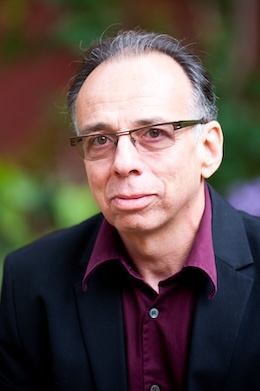
photo - Michael Wex
Michael Wex (photo by Zoe Gemelli)

Wex, who is Canadian, is an internationally recognized expert on Yiddish. He has many nonfiction books to his name, including Born to Kvetch: Yiddish Language and Culture in All of Its Moods, on the history of Yiddish, and Rhapsody in Schmaltz: Yiddish Food and Why We Can’t Stop Eating It. He’s also a translator, novelist, playwright, columnist, public speaker and performer. His creative process involves much research. For Schmitges’ proposed project, Wex first sought out surviving Yiddish cabaret material.

“I dove into scores of books, listened to even more recordings, in search of authentic material that would still resonate with a 21st-century audience,” he said. “Much of the older material just didn’t ‘read’ anymore: there were a lot of jokes about local politics and references to long-forgotten celebrities. There was fairly strong political censorship in interwar Poland, especially in the years following the Nazi takeover of Germany, which means that much of the surviving satirical material is pretty bland. I deliberately sought out lesser-known Yiddish cabaret songs, including at least one that was never recorded.

“My next resort was to see what was going on in non-Yiddish Polish culture at the time. I went through newspapers from the period to try to figure out how much international pop culture was available in 1920s and ’30s Poland and was delighted to find that Hollywood movies that would have played in Vancouver in, say, 1934, were playing in Warsaw at pretty much the same time, and that Louis Armstrong records were on sale in Warsaw record stores. I looked at the pop music charts: the most popular song in Poland in 1928 was ‘Ain’t She Sweet’ translated into Polish. This information widened the range of material that could plausibly be presented as being performed at the time and gave me the licence I needed to adapt and translate some well-known pop songs of the era into Yiddish.”
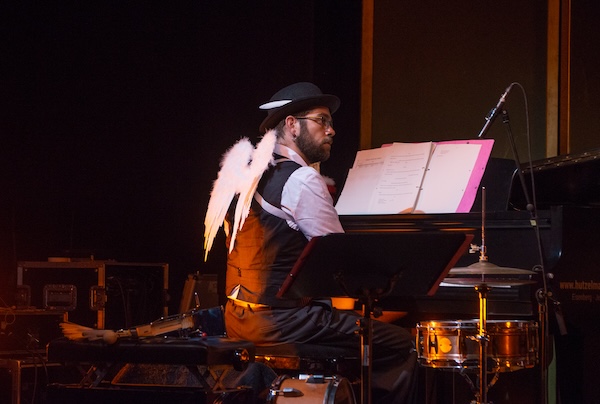
photo - Patrick Farrell in The Last Night at the Cabaret Yitesh (Di Letste Nakht Baym Yitesh), which is at the Rothstein Theatre Nov. 9-10
Patrick Farrell in The Last Night at the Cabaret Yitesh (Di Letste Nakht Baym Yitesh), which is at the Rothstein Theatre Nov. 9-10. (photo by Shendl Copitman)

Wex wrote some songs and sketches to round out the show, then came up with the storyline that adds context: the performers whose cabaret is about to be closed, but who have ship tickets and visas to leave the country.

“Suddenly, they’re free to perform what they want to, not only what they’re allowed to,” said Wex, who also directs and acts in The Last Night at the Cabaret Yitesh.

The other people involved – Shane Baker (United States; co-director, performer), Patrick Farrell (US/Germany; original music, arrangements, piano, accordion, percussion), Regina Hopfgartner (Austria; vocals), Daniel Kahn (US/Germany; vocals) and Sasha Lurje (Latvia/Germany; vocals) – “are the people for whom the show was written,” Wex said. “It’s like an A-list of contemporary Yiddish performers and I recall telling Andreas that I wouldn’t do the show without them. It was my one diva moment – but I think it worked.”

The current incarnation of the show premièred at the Ashkenaz Festival in Toronto in 2022. It had changed so much from the 2019 Yiddish Summer Weimar production that, Wex said, “Weimar could almost be seen as a workshop.”

For Wex, giving audiences an idea of what 1938 Poland was like is important “because the whole world is looking more like 1938 Poland with every passing day.”

“Arts and culture,” he said, “including but not limited to comedy and music, is really the best way we have of trying to find a common ground from which to understand conflict, stand up to tragedy and, ultimately, seek out ways to mitigate or ameliorate the feelings and attitudes from which such conflicts and their accompanying tragedies have grown. As we see every day, shouting slogans might make us feel good and brave and involved but it does nothing to establish the common ground necessary to arrive at any kind of understanding with our opponents. Arts and culture, comedy and music – they’re all bulwarks against dehumanization.”

The Last Night at the Cabaret Yitesh is in Yiddish with English supertitles. For tickets, go to chutzpahfestival.com – where you’ll find the whole Chutzpah! lineup – or call 604-257-5145. The festival runs Nov. 1-10. 
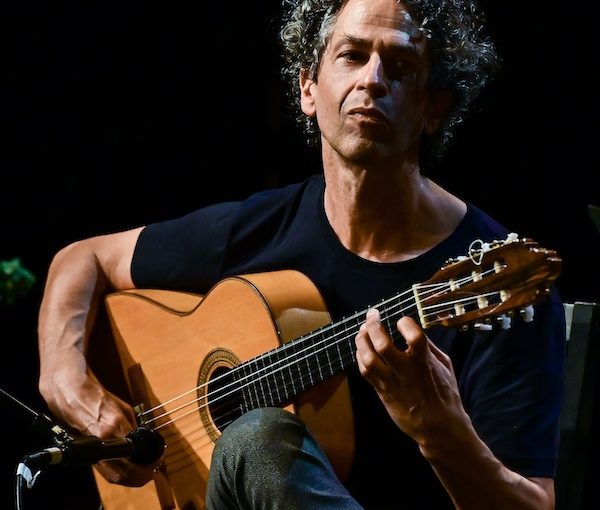
Itamar Erez Trio takes Chutzpah! stage

Itamar Erez will be joined by special guests at the Nov. 5 Chutzpah! Festival concert featuring a dynamic fusion of Middle Eastern, Indian and jazz music. (photo by Diane Smithers)

Due to unforeseen circumstances related to flight restrictions, the Chutzpah! Festival must postpone Yamma Ensemble’s performances, originally scheduled for Nov. 4-5. The ensemble will now be featured during Chutzpah’s spring mini-festival, taking place March 19-23, 2025.

However, the festival has found a vibrant alternative for Nov. 5! The evening will now feature a dynamic fusion of Middle Eastern, Indian and jazz music, with a special performance by the Itamar Erez Trio , joined by guest artists Yonnie Dror (Middle Eastern and Western wind instruments), Kalya Ramu (vocals) and Shruti Ramani (vocals).

Erez, an internationally acclaimed composer, guitarist and pianist, is renowned for his powerful and emotive performances across the globe. Joining him, Dror brings his expertise on diverse wind instruments, Ramu adds her smooth jazz vocals and Ramani infuses a unique blend of Indian and jazz traditions.

Tickets purchased for Yamma Ensemble’s Nov. 5 concert will be valid for this new program. Patrons can also choose to transfer their tickets to any other Chutzpah! Festival event. Ticket holders for the Nov. 4 matinee concert will be contacted by the box office to explore alternative options.

For any questions or ticket inquiries, reach out to the box office at 604-257-5145 or via email at nrt@jccgv.bc.ca.

The Chutzpah! Festival runs Nov. 1-10. For the full lineup and tickets, visit chutzpahfestival.com.

– Courtesy Chutzpah! Festival

Heart of the City tribute

Actor Kieran Sequoia (Breaking Bad, Disney’s Night at the Museum) is one of the performers in The Keep It Raw Cabaret: A Tribute to Jay Hamburger, co-presented by the Heart of the City Festival and Theatre in the Raw on Nov. 9 at Russian Hall (photo by Katie Keaveny)

Guided by the theme “Threads of Connection,” the 21st annual Downtown Eastside Heart of the City Festival takes place Oct. 30-Nov. 10, with more than 100 events throughout the Downtown Eastside and online. Several members of the Jewish community are involved.

The festival opens Oct. 30, 2 p.m., at Carnegie Community Centre Theatre with co-founders Terry Hunter and Savannah Walling as they reflect on their 21-year history with the festival, express gratitude to fellow artists, residents and organizations, and “pass the paddle” to new leadership. Special guests include, among others, Bob Baker/S7aplek (Squamish Nation); Chinese-Canadian rap artist Gerry Sung (Scope G), who is also a cast member of Props Master’s Dream, which is part of the festival offerings; Pavel Rhyzlovsky (accordion) and Leonard Chokroun (violin), from Strathcona’s Ukrainian Hall; and grass dancers Larissa Healey and Pavel Desjarlais. 

Jewish community member Itai Erdal is the lighting designer for The Prop Master’s Dream, which takes place Nov. 2, 2 p.m. and 7 p.m., at Vancouver Playhouse (tickets: bit.ly/3B8rO0w).

This fusion opera produced by Vancouver Cantonese Opera is inspired by the true-life story of Wah-Kwan Gwan (1929-2000), a little-known Chinese opera performer and prop master born to a local Chinese father and Indigenous mother. The Cantonese Opera cast is joined by Sung and Haudenosaunee/Irish actress and singer Cheri Maracle, and features projections by filmmaker Anthony Lee.

photo - Counselor and stand-up comic David Granirer will be joined by comedians from Stand Up for Mental Health on Nov. 2 for a Heart of the City Festival show at Carnegie Theatre
Counselor and stand-up comic David Granirer will be joined by comedians from Stand Up for Mental Health on Nov. 2 for a Heart of the City Festival show at Carnegie Theatre. (photo from Heart of the City Festival)

Also on Nov. 2 – at Carnegie Theatre, 4 p.m. – is Funny Side Up: Stand Up for Mental Health. Counselor and stand-up comic David Granirer will be joined by comedians from Stand Up for Mental Health, to look at the lighter side of taking meds, seeing counselors, getting diagnosed and surviving the mental health system. Jewish community member Granirer’s Stand Up for Mental Health teaches stand-up comedy to people with mental illness. This event is one of the festival’s many free offerings.

On Nov. 9, 8 p.m., at Russian Hall, the festival honours Jewish community member Jay Hamburger, who died earlier this year. Hamburger was a beloved teacher, political activist, radio host and artistic director of Theatre in the Raw, which is co-presenting the event (tickets: bit.ly/4eqs3Cu).

The Keep It Raw Cabaret: A Tribute to Jay Hamburger features choral singers, stand-up comedy, staged theatrical surprises, a taste of Hamburger’s original poetry and writings, and more. Among the participants are Jewish community members Stephen Aberle and Hamburger’s son, Sylvan Hamburger.

The Heart of the City Festival is presented by Vancouver Moving Theatre in association with the Carnegie Community Centre and the Association of United Ukrainian Canadians and a host of community partners. The festival works with, for and about the Downtown Eastside community to carry forward the area community’s stories, ancestral memory, cultural traditions, lived experiences and artistic processes to illuminate pathways of resistance and resilience. For the full lineup and other information, visit heartofthecityfestival.com. 

– Courtesy Heart of the City

Virtuoso musician, impresario

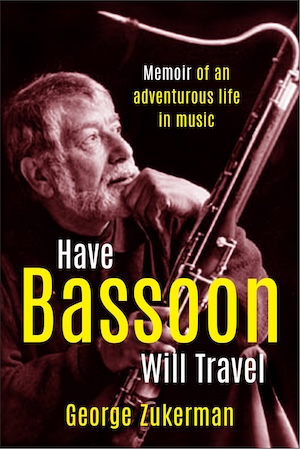
The reasons why Wendy Atkinson, who owns Ronsdale Press, wanted to publish Have Bassoon Will Travel: Memoir of an Adventurous Life in Music by the late George Zukerman, are the reasons people should read it. Zukerman had a long and impressive solo career as a bassoonist, was a pioneer in organizing concerts and tours, and gave remote communities across Canada the rare chance to hear classical music performed live. 

“She recognized that his anecdotes capture a vital period in Canada’s musical history and are vivid reminders of the lengths musicians will go to tour our vast country,” reads the afterword. “George’s memoirs go beyond simply capturing a life. He expanded the cultural reach of classical music in Canada; no small feat and Canada is better for it.”

image - Have Bassoon Will Travel book coverHow Zukerman’s memoir came to be is an example of the communities he created in his life. When he died Feb. 1, 2023, in White Rock, the manuscript had been written, but it took several volunteers – each with their own connections – to bring it to publication quality and get it printed. After reading Have Bassoon Will Travel, you will know why they did it. Not only was Zukerman a world-class musician and impresario, but he was a world-class human being: humble, funny, innovative, hardworking, fairness-driven, adventuresome, the list goes on.

Zukerman was born in London, England, on Feb. 22, 1927. Well into the book he talks about how he never liked his name, George – his parents, both American citizens living abroad, named him after the United States’ first president, George Washington. His middle name, Benedict, was in honour of 17th-century Jewish philosopher Baruch (Benedict) Spinoza, who was expelled by his community for his ideas. Zukerman also discusses his surname, the spelling of which differs across family thanks to the North American melting pot. There is something to be said about living up to one’s name, and Zukerman certainly was a leader in his fields of music, both as performer and impresario; he certainly forged his own path, uplifting the place of the bassoon in the orchestral world, creating opportunities for fellow musicians to perform and bringing classical music to the remotest of areas; and he lived in several places and traveled, mostly for work, around the world.

It is incredible how much of life is directed by (seeming) happenstance. Zukerman’s first encounter with the bassoon was at 11-and-a-half years of age. It was an accidental meeting, as his older brother showed him around the London prep school Zukerman was about to attend.

“We wandered past the windows of a basement chapel and glanced down to where an orchestra was rehearsing,” writes Zukerman. “A row of tall pipes seemed to reach for the ceiling. I could see and hear very little through the moss-covered stone walls and grimy opaque windows of the old school, and I wondered what on earth these strange-looking instruments were. My brother, already in Form IV, authority on much, including most musical matters, declared them to be bassoons, and the piece in rehearsal the annual Messiah. We walked on to explore my new school, and any awareness that I would spend my life playing that instrument would have been uncannily prescient. The bassoon remained buried deep among early memories.”

His next encounter was as random. As the Second World War began, the family – less Zukerman’s journalist father, who joined later – left London for New York City. There, Zukerman attended the newly established High School of Music and Art. 

“By way of an audition,” he shares, “I played [on the piano] my one and only party piece (a simple Beethoven sonatina). To my surprise as much as anyone else’s, I was admitted to the class of 1940! Dare I suspect that my acceptance had as much to do with short pants and an English accent as with any evident musical skill?”

On the first day of school, the kids were told to pick an instrument. “No British prep school could have readied me for such democratic and independent action, so I hesitated,” writes Zukerman. “On all sides of me, the pushy American kids ran furiously and grasped what they could most easily identify. The violins, clarinets, flutes, trumpets, cellos and drums disappeared into groping hands. When I finally reached the shelf, all that remained was an anonymous black box. I lifted it gently and carried it toward a teacher standing nearby. ‘Excuse me, Sir,’ I asked timidly, ‘but what is this?’

“He looked down, and a broad smile covered his face. ‘Why, you are our bassoonist!’ he declared.”

With faint remembrance of the tour with his brother, he thought, “Was I now going to play such an instrument?”

Indeed, he was, and to eventual great acclaim, both as part of orchestras and as a soloist. But, as you can imagine, bassoonist was not exactly a living-wage career, at least not in Zukerman’s time, and his parallel career arose from a need for more work. Having learned during his time with the St. Louis Sinfonietta in the 1940s about community concerts – where money was raised in advance through subscriptions rather than individual ticket sales, and no contracts were signed until the money to pay for everything had been raised – Zukerman, who was by then living in Vancouver, brought the idea to Canada. His offer to an American company to be their representative here declined, Zukerman decided to do it on his own. 

“Canada was coming of age, and Canadian communities were ready to make their own concert plans and to welcome Canadian groups and soloists, even if at the time they were equally unknown,” he writes. “Within a decade, Maclean’s magazine would write that I had successfully outsmarted the Americans at their own game.”

It is fascinating to read of Zukerman’s efforts to expand the reach of classical music in Canada and other countries – he visited the Soviet Union eight times between 1971 and 1992, as performer and concert organizer, and brought Soviet musicians to Canada to tour. Decades earlier, he spent a year-plus in Israel, part of the nascent Israel Philharmonic. He was also part of the Vancouver Symphony Orchestra in its early days, and of the Vancouver Jewish community – Abe Arnold, publisher of the Jewish Independent’s predecessor, the Jewish Western Bulletin, had a small but notable impact on Zukerman’s life.

Have Bassoon Will Travel is a truly engaging read. The way in which Zukerman writes is like how he would have spoken, though likely more concise and organized. The effect is that we the reader are having a chat with him, reminiscing. We get a feel for what life was like back in the day for a musician and entrepreneur. We feel nostalgia for a time many of us never experienced personally.

Ari’s Theme opens VIFF

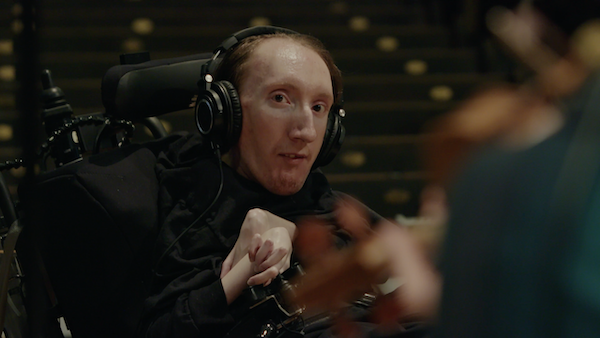
Ari Kinarthy’s nightmare before the live recording session. (screenshot from Salazar Film)

The 43rd Vancouver International Film Festival (VIFF) officially opens Sept. 26 with the screening of Ari’s Theme, a TELUS original feature documentary about local composer Ari Kinarthy by local filmmakers Jeff Lee Petry and Nathan Drillot, who run Salazar Film.

Jewish Independent readers will be familiar with all three creatives, who will attend both VIFF screenings, ready to answer audience questions, as well as participate in a panel discussion.

Sam Margolis first wrote about Victoria Jewish community member Kinarthy in 2020 – Kinarthy, 30 years old at the time, had released two albums, won an international music competition and was looking for people who might want original music for a project they were working on.

“I create all my music entirely with the computer,” he told the Independent. “Sometimes, I will have access to a guitar player or singer but normally the music will be all done by the samples I use. I usually start with just piano and sometimes will write out a score. I think of a melody and/or harmony and continue from there. I love making themes.”

Kinarthy uses a special computer system to record his music, as he has spinal muscular atrophy type 2, a symptom of which is worsening muscle weakness.

When Margolis interviewed Kinarthy a second time for the Independent, it was because Ari’s Theme was about to première at Toronto’s Hot Docs Film Festival. In the article, which was published in April, the filmmakers share that the documentary was inspired by the first JI article.

“We hired Vaka Street Casting to help find us subjects for potential documentaries. They found the JI article while searching for individuals with unique stories,” Drillot told the Independent in an interview last week.

Drillot said the number one factor he and Petry look for in possible documentary subjects is that the individual has a unique perspective – “You’ve got to be an outside the box thinker,” he said, “which Ari most definitely is.”

“As we learned more about Ari’s story, we thought about how interesting it would be to work with a composer like Ari, who has a very particular life experience, and ask him to compose music about the most impactful moments, dreams and experiences of his life and let us create cinematic scenes around them,” Petry told the Independent in April.

It was hard to imagine just how Petry and Drillot would create those scenes and how Kinarthy would not only choose the times in his life to highlight, but be able to compose the music to accompany those emotional times. We learn in the film that Kinarthy doesn’t just want to write any song – he wants to leave a legacy, to make an impact on the world, so that his life will have been, in his words, “worth it.”

screenshot - Ari Kinarthy in a recording session with musicians at the Alix Goolden Performance Hal
Ari Kinarthy in a recording session with musicians at the Alix Goolden Performance Hall. (screenshot from Salazar Film)

Kinarthy’s honesty with his feelings, fears and ambitions, is remarkable. He undergoes a transformation during the film. His physical challenges and the dangers to his health if he gets sick have led to him being isolated for much of his life, relying on a few key caregivers and his parents. He is mentally strong, though, and this is made clear as he questions the walls he has built to protect himself and as he lives seemingly at peace with his limitations, while also knowing what he is capable of beyond them. That he allows the filmmakers – and us – to see just how vulnerable he is, is proof of his sheer strength.

“Watching Ari go through the process of making the film was incredibly rewarding,” said Drillot. “He overcame a lot of creative obstacles and consistently impressed the whole filmmaking team with his drive, determination and creativity. Personally seeing him watch the footage in the movie theatre was the most impactful. It’s a very unique experience to sit in a movie theatre and see your life reflected back at you. I really have a lot of respect for Ari for trusting the process and for constantly rising to the occasion.”

Kinarthy opens himself up creatively in ways even he may have thought not possible. We see him working with fellow musicians Allan Slade and Johannes Winkler, who provide feedback and guidance, and help him translate his vision into reality. It is in these scenes that we witness both Kinarthy’s confidence and anxiety, and the filmmakers capture it incredibly well, unobtrusively filming the men creating together, with other shots of Kinarthy talking about the process. There is an especially powerful scene, where Kinarthy sits alone in the Alix Goolden Performance Hall, on stage, as pages of music swirl madly about him.

Ari’s Theme uses such special effects, as well as animation and reenactments, to help tell Kinarthy’s story. There are home videos of Kinarthy and his family, and it is so moving to hear him talk about his family – describing his sister as a drum, driving him to enjoy himself; his dad as a cello, supporting from the background; and his mom as a piano, providing the strong underlying cords binding the family together. “And then there was me. I was a flute,” he says. “A little sound that would come in and out. I wasn’t integral to the song, but I added something unique. I often miss that version of myself, when life was expanding, free of concern and anxiety. As I’ve gotten older, these memories have become more and more important to me.”

In the film, Kinarthy questions whether other people will be interested in his memories. Anyone who sees the documentary will likely respond with a resounding, yes! Not only interested in the memories, but inspired by the man who shared them and the man who created their impressive soundtrack. 

Passages of that soundtrack will be performed live at the opening event by members of the Vancouver Symphony Orchestra. For tickets to either screening of Ari’s Theme (Sept. 26 or 28) and any other VIFF offerings, visit viff.org. The festival runs to Oct. 6. 

Living amid continuing war

Band-aids – check. Bottled water – check. Tinned foods – wait. No sooner do I buy canned tuna, pickles, corn and peas and they’re eaten. Need to refresh that one. Flashlight – check. Portable radio – check. Now, this is a cool one. While not available in the groovy colours of the 1970s – bought it in a staid brown – the small, palm-sized handheld radio conjures up fond memories of those catchy songs from Billboard’s Top 10. Although the reason for the checklist is anything but fanciful. With the Islamic Republic of Iran and Lebanon’s Hezbollah threatening a major reprisal attack.

In the Star Trek movie Wrath of Khan, the Klingons said “revenge is a dish best served cold.” I can certainly attest to that. As can my more than 9.5 million fellow Israelis. It feels like an eternity since the ayatollahs promised mighty revenge for Israel’s assassination of Hezbollah’s military chief, Fuad Shukr, and Hamas’s military chief, Mohammed Deif, and the alleged Israeli assassination of Hamas’s politburo chief, Ismail Haniyeh. When Iran’s authoritarian regime said at a place and time of their choosing, they weren’t kidding. We are still waiting…. Actually, I think the Klingons were probably quoting Pierre Ambroise François Choderlos de Laclos, the 18th-century French novelist and army general who is credited with first analogizing revenge as a cold dish.

Speaking of proverbs, I think its origin is Chinese, some claim Yiddish. Regardless, whoever said “may you live in interesting times” was certainly cursing someone. Give me boring. Give me dull. Give me mundane. Give me monotonous. Give me colourless and bland. You can keep the gripping. The riveting. The fascinating. The stimulating. I just want to wake up to another simple day.

This waiting game is immensely stressful. It has the whole world on edge, with an alliance being built between Israel, the United States, Britain, France and Italy to thwart a second potential direct attack on my little shtetl. The first attack – of some 300 drones – was launched against Israel in April. We went to bed facing potential Armageddon and, thankfully, woke up able to just go to work, as Israel, with the help of its allies, knocked each drone out of sky before they reached Tel Aviv and Haifa.

Speaking of work, I am a self-confessed workaholic. And I find myself working even more during this very stressful period, where I fear my fate is out of my control. Will Iran attack? Where? And when? And how? No idea. No authority. No power. Simply unable to influence, in any way. Whereas work, which I am pretty good at, gives me all those things. I am largely in control, able to influence within my environment. Work gives me a calming sense and, if nothing else, allows me to escape into my purchasing processes and contracts. This is my own industrial and organizational psychotherapy. As good an excuse as any for my wife, when she again finds me tapping away at my keyboard at all hours or in another early morning or late evening Teams meeting.

As for preparations, I find myself obsessed with buying bottled water, toilet paper and Ajax. The first couple of items, you probably understand. But floor cleaner? I think it’s the Jewish mother in me. I don’t want to leave behind a dirty home. Kind of like Golda from Fiddler on the Roof, who insisted on sweeping their little Anatevka farmhouse before leaving. Although – and I say this loud and clear – we ain’t  going nowhere!

Another quirk in dealing with the stress is that I love the music from the hippie generation. For the longest time after that dreadful Oct. 7, I wouldn’t – couldn’t – listen to music. I felt a very deep sadness. Maybe a type of mourning. But now, over the last few days, I find myself blaring my tunes. One of the first songs to pop up in my feed just after Iran’s rulers made their threat of retribution was “Bad Moon Rising” by Creedence Clearwater Revival. How foreboding can you get? “I hear hurricanes a blowin’. I know the end is comin’ soon.… I hear the voice of rage and ruin. Don’t go around tonight. Well, it’s bound to take your life. There’s a bad moon on the rise, alright.”

And, I find myself listening again and again – at pretty high volume – to the dark and wonderful song by our own Edan Golan, “October Rain,” otherwise known to the world as “Hurricane”: “Every day, I’m losing my mind…. Dancing in this storm, I’ve got nothing left to hide….  Baby, promise me you’ll hold me again.… I’m still broken from this hurricane….” And then, with hope: “Don’t have words. Just prayers. Even if it’s hard to see, you always leave me one small light.”

On another music note, I find myself chanting, to no one in particular, that snappy little line “From the river to the sea, Palestine will be free.” Now, why can’t we come up with something as catchy? With an impressive gene pool of great Jewish songwriters: George Gershwin, Irving Berlin, Burt Bacharach, Carole King, Neil Diamond, Leonard Cohen, Bob Dylan, Paul Simon, Amy Winehouse, Gene Simmons. Come on! And still, gornisht, nothing. No wonder we’re losing the global PR battle.

Please continue donating to the war and revival efforts. You may have given earlier, when hostilities first erupted and the Gaza war was headline news. Almost 10 months later, war continues – on several fronts. Sderot and Metula – and maybe Tel Aviv and Haifa – are Israel’s front line and Israel is the diaspora’s front line. Am Yisrael chai (yeah, that’s the extent of our solidarity anthem). Bring them home now! 

Bruce Brown, a Canadian-Israeli, made aliyah more than 25 years ago. He works in high-tech and is happily married, with two kids. He is the winner of a 2019 American Jewish Press Association Simon Rockower Award for excellence in Jewish writing.

Diverse & happy show

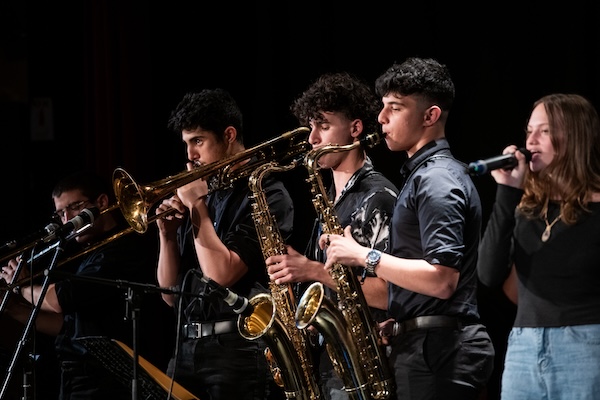
Members of the Clore & Roll Ensemble will perform in Vancouver on May 13. (photo from Clore Centre)

Every year, it is sobering to experience the transition from Yom Hazikaron, the day of remembrance for Israel’s fallen soldiers and victims of terrorism, into Yom Ha’atzmaut, the celebration of Israel’s Independence Day. This year, it will be even more so. And it will be especially poignant, given that the musical group headlining the local community gathering on May 13 is an ensemble from Kfar Blum, a kibbutz in the Galilee Panhandle, in northern Israel, where some 60,000 people have been evacuated because of the threats posed by Hezbollah in Lebanon.

The Clore & Roll Ensemble is an initiative of the music school of the Clore Centre for the Performing Arts, which also has a dance and theatre school. The centre was established in 1996 and approximately 1,000 students (which include adults) study there. They come from kibbutzim and moshavim in the area, as well as Druze and Arab towns.

“I’m glad to say that the conflict doesn’t get inside the centre,” Telem Chorin, chief executive officer of the Clore Centre and director of the ensemble, told the Independent. “Music is an international language and also an emotional language that connects people,” he said.

While the Clore Centre’s offerings remain afterschool programs, the centre has played a more important role in students’ lives since the Oct. 7 terror attacks that led to the current war.

“For some kids, the Clore is like a second home,” said Chorin. “Because, for some students, it is a more stable place than the hotel they were evacuated to, or the school that is currently closed or working partially.”

Despite being displaced, ensemble members have been coming together weekly to practise for the show in Vancouver. Rehearsals are at the centre.

“Last week, we had matriculation exams in dance and, during April and May, we will have matriculation exams in music playing,” said Chorin. “It is interesting to see how committed the students are to performing arts subjects even in such a period, and how much effort they have to invest – time, long journeys, sometimes even risking [their safety] and coming to Kfar Blum, even though it is relatively more dangerous here than in their homes or the hotels they have moved to. This shows how important it is to them and how much they don’t give up on it despite everything, and maybe even this is what keeps them ‘sane’ amidst all the chaos currently prevailing in the north.”

Some members of the ensemble have been playing together for more than five years in different capacities, but the group that is coming to Vancouver has only been playing together for the past three months, said Chorin. Due to the war and the evacuations, the group had to rebuild. “We’ve added additional musicians to the band so that you will have an amazing show!” he said.

Coming to Vancouver are Menachem Ofri (17, singer), Yaron Shir (18, singer), Kachtan Aviv (17, flute), Maman Moria (17, alto saxophone), Moyal Ido (17, tenor saxophone), Shem Tov Ido (19, trombone), Kovesh Gil (24, drums), Primor Adi (17, electric guitar), Fitzer Tal (16, piano) and Deutscher Goni (16, bass guitar). Also coming are Ziv Greenberg (music director), Ferry Stefan (dance teacher and dancer), Malki Smadar (administrative manager) and Kashri Noam (technical manager). 

“Ofri, Ido Shem-Tov, Aviv and Noam were evacuated from their homes, and they are coming from all over the country to the rehearsals at the centre – sometimes, under rocket attacks!” said Chorin, who will join the band in the performance, on clarinet. 

“Some of the students have already appeared in Edmonton and Calgary,” he said. “I have performed in Edmonton, Calgary, Windsor and Hamilton, but this is my first time in Vancouver and I am very excited! Some of the students were in Vancouver on student exchanges with their schools in Israel.”

Of what it means for the Clore & Roll ensemble to play a Yom Ha’atzmaut concert in the diaspora, Chorin said, “It is a great pride and honour to represent the state of Israel in general, and the Upper Galilee in particular, in such a show, on the eve of Independence Day, in a challenging time like now.”

The ensemble will present a wide-ranging repertoire.

“We are going to play modern Israeli songs (Idan Raichel, Mizrachit [Israeli pop]), classic Israeli songs and also some songs in English,” said Chorin. “A very diverse and happy program.”

“Bringing the Clore ensemble serves as a reminder of the unbreakable bond we share across borders,” said Dafna Silberstein, associate director of Israel connections and partnerships at the Jewish Federation of Greater Vancouver. “It is also an amazing opportunity for the ensemble of teens and young adults to take a break from what they have been through for the past six months. And, for us, it feels like it is exactly what we need this year: coming together as a community united for and with our brothers and sisters in Israel.”

Jewish Federation has supported the Clore Centre as part of the Coast-to-Coast Federations’ Collective and independently, “as the centre is in our partnership region of Kiryat Shmona and the Galilee Panhandle,” explained Silberstein.

“We have wanted to bring the Clore ensemble for awhile now, to showcase the impact our support has had on its students and have been waiting for the right opportunity,” she said, noting that it is “with mixed emotions” that Oct. 7 created that opportunity.

“This year, the commemoration of Israel’s 76th Independence Day holds an even deeper meaning and significance,” said Silberstein. “It is an opportunity to stand together in solidarity and celebrate our shared values. Considering the spike in antisemitism, the need for community unity has become more important than ever.”

For tickets ($18) to the May 13, 7:30 p.m., concert at Congregation Beth Israel, as well as information about other Israel@76 activities, visit jewishvancouver.com/israelhere. 

Songs released since Oct. 7 

At Beth Tikvah Synagogue on April 2, Israeli music expert and radio personality Josh Shron will present A Musical Hug from Israel. (photo from Josh Shron)

Beth Tikvah Synagogue in Richmond welcomes Israeli music expert and radio personality Josh Shron on April 2. Shron, longtime host of the radio show and podcast Israel Hour Radio, will be in Calgary and Vancouver as part of a North American tour. He will present A Musical Hug from Israel, which explores songs that have been released in Israel since Oct. 7.

For Shron, Israeli music has always meant more than just nice tunes in Hebrew. It’s been a window into Israeli society, providing a meaningful glimpse into the heart and soul of the Jewish state. “I’ve long believed that Israeli music has the power to connect us to our homeland unlike anything else,” Shron said. “The songs are great, but the stories behind them often teach us a great deal about the amazing spirit of Israel.”

It’s that amazing spirit that has enabled Israelis to cope with the horrific events of Oct.7.  Music has been a large part of the healing process.

“The music that’s emerged from this tragedy has been nothing short of inspirational,” said Shron. “It makes us cry, makes us sigh and makes us proud to be supporters of Israel – sometimes all in the same song.”

The presentation will feature a selection of Israeli songs, seen on video with English subtitles. The music will highlight the unity, optimism and determination that have characterized the Israeli people throughout this challenging period, showcasing the resilience and strength that unite them in the face of adversity. The repertoire will include songs that touch on themes of sadness and death. Other songs will shed light on the plight of Israeli hostages in Gaza, serving as a reminder of the desperation felt around the world to bring them all home.

Several Vancouverites have previewed Shron’s presentation and agree that it is a powerful and unique way for the local community to understand the rollercoaster of emotions that Israelis and other Jews around the world have been experiencing.

A former resident of New Jersey, Shron recently fulfilled a lifelong dream by making aliyah with his wife and four of his five children, moving to Modi’in in August 2023.

“I’ve immersed myself in Israeli music for more than 25 years,” he said, “and the more I listened, the more I felt like I belonged there. We put it off for years, but, with our kids getting older, we realized it’s now or never – and we weren’t prepared to say never. Obviously, we wish the circumstances were different, but, during this challenging time, it just feels right to be there. It’s only been a few months, but we can’t imagine living anywhere else.”

Thanks to sponsor support from the Kehila Society, Richmond Jewish Day School and the Vancouver Israeli Folkdance Society, tickets to A Musical Hug at Beth Tikvah April 2, 7 p.m., are only $10 each. As part of the event, Hadas Klinger will lead an Israeli dance session immediately following Shron’s presentation.

The event is for adults 19+ and registration is recommended, as space is limited. Visit tinyurl.com/28anpjab. 

– Courtesy Beth Tikvah

Drama & more at film fest

Yoav Brill’s documentary Apples and Oranges, about a moment in the history of the kibbutz movement, is mesmerizing. (photo by Avraham Eilat)

The 2024 Vancouver Jewish Film Festival takes place in person April 4-14 and online April 15-19. As usual, a diversity of offerings is included in this year’s festival and the Independent will review several films in this and upcoming issues. The Vancouver Jewish Film Centre also sponsors events throughout the year and some screenings take place before the annual festival begins. Full festival details will be online at vjff.org as April approaches.

Idealism remembered

Amid the euphoric aftermath of the 1967 war and the enduring popularity of the 1958 Leon Uris book Exodus (and its 1960 film incarnation), thousands of Jews and non-Jews descended on Israel to volunteer on kibbutzim.

They came to experience and emulate “the embodiment of man’s highest ideals – the kibbutznik,” as an apparently promotional film clip declares in Yoav Brill’s mesmerizing documentary Apples and Oranges. In just one particular spurt, 7,000 volunteers arrived in Israel en masse from around the world.

Through the recollections of aging Scandinavians, Brits, South Africans and others, and with nostalgia-inducing archival footage, the documentary shines a light on the socialist idealism and hippie adventurism that motivated these people to travel to the farming communities of rural Israel. Many returned, to Sweden, Denmark, wherever, and formed associations to support the kibbutzim and drum up more volunteers. So successful were they that the supply exceeded the demand. One group chartered a jumbo jet to go from Stockholm to Tel Aviv but the Israelis had to admit they had no use for 340 volunteers.

Generally, the spirit of the overseas visitors was welcomed, though the social impacts were not negligible. The temporary nature of their visits was disrupting. A middle-aged man reflects on his perspective as a kid on a kibbutz, welcoming all the strangers who became like big brothers and sisters, only to have his heart broken every time the groups departed from what he calls “the kibbutz fantasy.”

Strangers from another world – blond, exotic, sophisticated and drinking milk with their meals – descended on a cloistered society where all the teens had been together since kindergarten, introducing predictable social and hormonal disruptions. For their parts, many of the volunteers soon discovered they had no aptitude for the tasks to which they were set, although at least one Brit made use of his talents performing Shakespeare for an audience of cattle.

Many of the overseas youngsters were unabashedly out for sex, drugs and rock ’n’ roll. As one woman interviewed in the documentary says, “If there weren’t female volunteers at [Kibbutz] Mishmar HaSharon, many of our boys would still be virgins.”

In one incident that apparently caused national outrage, a group distributed hashish-laden brownies to an entire community, including at least one 8-year-old child, a crime that is not the least bit funny – but, of course, is hilarious when recounted by octogenarians who experienced it. 

With their Cat Stevens and Bob Dylan LPs, the foreigners brought a little bit of Woodstock with them, and took away some Israeli dance routines. But the adventure, as the viewer knows more than do the figures in the old footage, would not end well. Terrorism, including a highly publicized attack in which a volunteer was murdered, would strangle the flow of future volunteers.

The documentary is a masterpiece of the genre, capturing the joy and exuberance of the experience for both Israelis and the visitors, but addressing the serious problems the interactions raised. The clash of cultures introduced existential issues, including around conversion, mixed marriages, secularization and, of course, the collapse of the traditional kibbutz. 

The apples and oranges of the title, we are to understand, are the people who came together on the kibbutzim, as much as the produce they harvested.

Critics of the volunteer phenomenon seem to place some of the blame for the collapse of the kibbutz system on the labour underclass they represented, which undermined the egalitarian foundations of the movement.

The kibbutz network has largely petered out, almost entirely in spirit if not completely in form, and some of the Jews and non-Jews who came during the heyday have remained and integrated to varying degrees in the society that Israel has become. In one instance, an aging, bearded former volunteer actualizes his idealism by leading a ukulele orchestra.

The collapse of the idealistic experiment that the end of the film documents is expected but no less depressing for that. The slice of history and the magnificence of the story, so vividly told in the film, will stay with the viewer.

Transcendence of song

photo - In Less than Kosher, the real star is the voice of Shaina Silver-Baird as Viv, an atheist turned cantor
In Less than Kosher, the real star is the voice of Shaina Silver-Baird as Viv, an atheist turned cantor. (photo from Menemsha Films)

In Less than Kosher, a number of fairly two-dimensional character sketches come together – but with a redeeming twist.

A feature film that began its life as serialized online videos has the feel of excellent amateurism. Wayward Jewish girl meets rabbi’s bad boy son. Overbearing Jewish mother, well-intentioned buffoonish rabbi, go-along-to-get-along intermarried stepdad and hyper-chatty high school friend flesh out the cast.

Sitcom-like circumstances turn the atheist young woman into unlikely cantor. But the outstanding component of the film, the real star, is the voice of Shaina Silver-Baird, the lead actor and co-producer (with Michael Goldlist) of this cute confection.

The unlikely cantor Viv, whose once-promising pop music career is on the skids, has the voice of an angel and the story is less about her family or her romance with the (married) rabbi’s son than about the transcendent power of song. When she opens her lungs, Viv ushers in a changed world – and Silver-Baird’s voice invites the viewer into it. Music video-style segments, which Viv is dismayed to have dubbed “Judeopop,” raise the film to a different level. Liturgical music goes Broadway. Amy Winehouse does “Shalom Aleichem.”

A tiki-themed shiva is truly the icing on the sheet cake. 

Mysterious case

photo - The Goldman Case is a dramatic reenactment of the case of Pierre Goldman
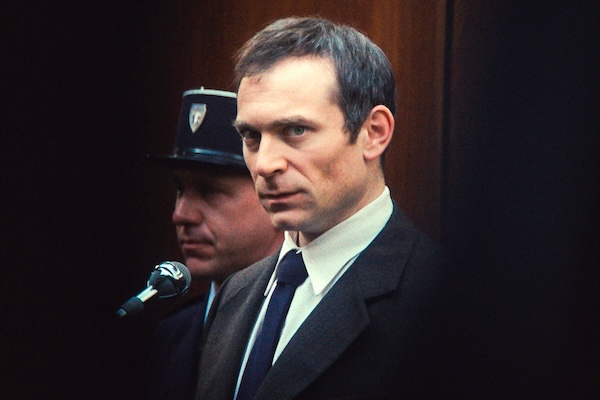
The Goldman Case is a dramatic reenactment of the case of Pierre Goldman. (photo from Menemsha Films)

He was guilty of much, but was he guilty of murder? Pierre Goldman maintained he was innocent of the latter charges and a based-on-a-true-story film explores not only a man’s possible guilt but the intergenerational impacts of Polish-French Jewish life in the mid-20th century and their potential explanations for some unusual behaviours.

The Goldman Case is a dramatic reenactment of a famous (in France, at least) case of the Jewish son of Polish resistance heroes, whose own life was impacted by an apparent need to fill the giant shoes of his parents. The son wanted to be “a Jewish warrior” and so became a communist revolutionary, traveling to Latin America, Prague and elsewhere in search of opportunities for valour. 

Charged with a series of crimes, including the murder during a holdup of two pharmacists, Goldman was convicted in 1974 and sentenced to life imprisonment, though he maintained he was innocent in the two deaths. Following the 1975 publication of his memoirs, the judicial system reconsidered his case and major French voices, including Jean-Paul Sartre, took up his cause. This film is a (massively condensed) court procedural of that retrial.

Goldman’s Jewishness was not on trial but, interestingly, his defence team built their case partly around his family’s experiences.

The case – and the film – end with a new verdict. But the dramatic story would continue. Audiences will no doubt race to Google more about Goldman and his crimes and punishments. Enduring mysteries, though, will make the search necessarily unsatisfying. This cannot be said of the film, though, which is a gripping enactment, enlivened by the extremely animated courtroom drama, which suggests the French judicial system tolerates a great deal more outbursts than we expect in Hollywood depictions of North American judicial proceedings. 

Trio launches campaign

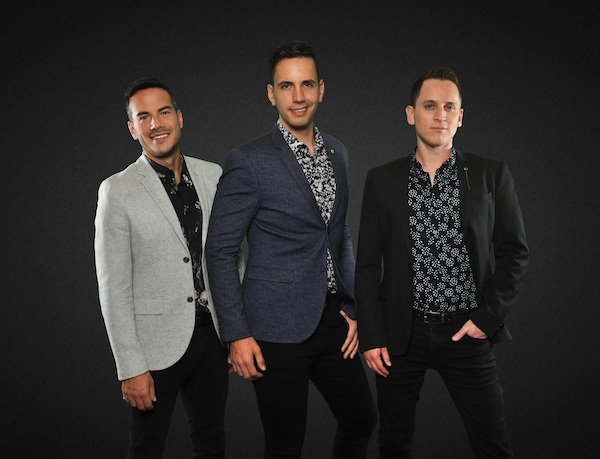
Citizen West performs at the Jewish Federation of Greater Vancouver annual campaign launch Sept. 10, 7 p.m., at Congregation Schara Tzedeck. (photo from Citizen West)

The word “fun” came up more than once in the Jewish Independent’s interview with the three tenors who comprise Citizen West. The group will help launch this year’s Jewish Federation of Greater Vancouver annual campaign on Sept. 10, and the audience should expect a wide range of music, an abundance of positivity and a high-energy – and fun – performance.

Marc Devigne, Cody Karey and Omer Shaish are all accomplished musicians in their own right. Internationally renowned individually, together they have entertained audiences in more than 150 countries. With their multilingual repertoire, their message is that “we are all global citizens and, through music, we can connect with individuals of all cultures and backgrounds.”

“Music unites and connects us through harmony and a common rhythm and is spiritual in its nature,” Karey told the Independent. “I feel my most spiritually connected when experiencing a profound shared moment, and singing or performing from a stage, especially with such amazing company, really does that for me.”

Karey, who is based in Vancouver, explained how he, Toronto-based Devigne and Miami-based Shaish, came together.

“Citizen West is the product of all of us colliding at slightly different times over the last several years,” he said. “We all set out as solo artists and ended up having parallel careers. Initially, we were competitive rivals, but, as we all became connected and got to know each other, it was clear to us that we could really do something special if we combined our efforts and worked together. The three of us have been officially performing as Citizen West since 2020, but our individual connections and the idea of Citizen West go back years earlier. Our pianist, Trevor [Hoffmann], was instrumental (pun intended) in the earliest days of Citizen West as we developed our repertoire and arrangements, so this reunion performance alongside him will be a little extra special.” (Hoffmann is from Maple Ridge.)

While living in different places and following their own professional paths, Shaish said the trio see each other relatively often.

“We perform a lot as headliners on cruise ships,” he said, “so we get to sing together and travel the world together. It’s a lot of fun! The ships have brought us to some really interesting places, such as Alaska, Easter Island and even Antarctica. Those were great experiences to share with these two. We also perform on land, of course, and we come up with new repertoire all the time. We have four produced sets and, on top of that, we try to cater to our clients’ vision and needs.”

Regarding that, campaign director Gayle Morris shared with the Independent Federation’s vision of the Sept. 10 event. “This year, we wanted to try something fresh, drawing upon the incredible success and positivity of last year’s ‘Amazing Happens’ campaign,” she said. “We want our community to leave the evening inspired and excited by a creative approach to campaign opening. Citizen West are an incredible trio of tenors and a

pianist, whose extensive repertoire of music means there’s something for everyone to enjoy!”

When asked for a hint about the repertoire they will perform at the launch, Shaish said, “I don’t want to give away too many spoilers, but I can say that there’s going to be a wide variety of genres, from classical music and Broadway to pop music, rock and even a splash of Hebrew!”

For Shaish, who is from Tel Aviv originally and grew up in Israel, this show will be special.

“Living in the U.S., I often find myself shifting between my roots (Jewish/Israeli music) and my other passion toward pop music and musical theatre,” he said. “I’m truly excited about this performance, because this is the first time that these two worlds collide.”

“There’s always so much more to learn, live and experience, and I feel that it’s with this outlook that Citizen West can explore and take stylistic chances with many genres,” added Devigne, who grew up in a small French community in Manitoba. Karey grew up in Fort St. James, B.C.

“There is a fraternal sense of camaraderie and connection when we work together,” said Karey. “Our slightly different quirks and styles complement each other well and create a compelling blend. The experience of being on the road is very different when you have good people to share that with. It’s also quite fun!”

Devigne echoed this sentiment. “There’s a sense of brotherhood that comes with being in a group,” he said. “It opens up more creative opportunities as an artist and brings more colour, layers and texture to songs. It’s a nice feeling to be on stage and know you have people you can rely on to support and elevate a performance. We feed on each other’s energy on stage and it makes for a great time. We draw inspiration from each other and I truly believe it lifts us all to be better artists and performers when we perform together.”

“I think it goes with the theme of this event,” said Shaish, referring to the Federation campaign launch. “We all discovered the ‘power of community’ or the ‘power of together.’ There’s something very special and powerful in sharing the stage. When the three of us blend with harmonies and our unique chemistry, it feels like true magic.”

The campaign’s opening event – “Celebrate the Power of Community” – takes place Sept. 10, 7 p.m., at Schara Tzedeck Synagogue. It also features Eric Fingerhut, president and chief executive officer of the Jewish Federations of North America, as keynote speaker; Barak Loozon, strategic advisor to the office of Israeli President Isaac Herzog, speaking about Herzog’s dialogue initiatives; and campaign chair Shay Keil, a senior wealth advisor at ScotiaMcLeod and supporter of many Jewish community organizations and initiatives, sharing his story about how Federation campaign donors helped inspire his Jewish journey. For tickets ($18), visit jewishvancouver.com.