Skip to content
  • Home
  • Subscribe / donate
  • Events calendar
  • News
    • Local
    • National
    • Israel
    • World
    • עניין בחדשות
      A roundup of news in Canada and further afield, in Hebrew.
  • Opinion
    • From the JI
    • Op-Ed
  • Arts & Culture
    • Performing Arts
    • Music
    • Books
    • Visual Arts
    • TV & Film
  • Life
    • Celebrating the Holidays
    • Travel
    • The Daily Snooze
      Cartoons by Jacob Samuel
    • Mystery Photo
      Help the JI and JMABC fill in the gaps in our archives.
  • Community Links
    • Organizations, Etc.
    • Other News Sources & Blogs
    • Business Directory
  • FAQ
  • JI Chai Celebration
  • JI@88! video

Recent Posts

  • BGU fosters startup culture
  • Photography and glass
  • Is it the end of an era?
  • Taking life a step at a time
  • Nakba exhibit biased
  • Film festival starts next week
  • Musical with heart and soul
  • Rabbi marks 13 years
  • Keeper of VTT’s history
  • Gala fêtes Infeld’s 20th
  • Building JWest together
  • Challah Mom comes to Vancouver
  • What to do about media bias
  • Education offers hope
  • Remembrance – a moral act
  • What makes us human
  • המלחמות של נתניהו וטראמפ
  • Zionism wins big in Vegas
  • Different but connected
  • Survival not passive
  • Musical celebration of Israel
  • Shoppe celebrates 25 years
  • Human “book” event
  • Reclaiming Jewish stories
  • Bema presents Perseverance
  • CSS honours Bellas z”l
  • Sheba Promise here May 7
  • Reflections from Be’eri
  • New law a desecration
  • Resilient joy in tough times
  • Rescue dog brings joy
  • Art chosen for new museum
  • Reminder of hope, resilience
  • The national food of Israel?
  • Story of Israel’s north
  • Sheltering in train stations

Archives

Follow @JewishIndie
image - The CJN - Visit Us Banner - 300x600 - 101625

Tag: memoir

Awards all round

Awards all round

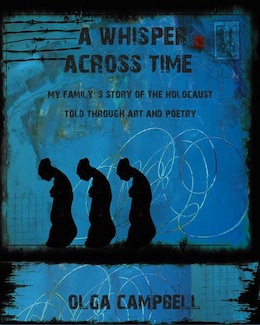
Each year, the Eric Hoffer Award presents the da Vinci Eye (named after Leonardo da Vinci) to books with superior cover artwork. Cover art is judged on both content and style and, among this year’s winners is Olga Campbell’s Whisper Across Time: My Family’s Story of the Holocaust Told Through Art and Poetry (Jujabi Press). The book is still being considered for category, press and grand prizes.

Whisper Across Time also won the Ippy Award for independent self-published authors. Campbell’s book was selected as one of the 2019 Independent Publisher Book Awards’ Outstanding Books of the Year under the freedom fighter category. Campbell planned on attending the May 28 gala event in New York.

(For a review of the book, see jewishindependent.ca/a-story-told-in-art-and-poetry.)

* * *

Julia Ivanova’s National Film Board documentary Limit is the Sky saw its Toronto première on May 2 in the retrospective of the largest documentary film festival in North America, Hot Docs. Ivanova is one of only three directors from British Columbia who have received a Focus On retrospective at Hot Docs since 2002 – the others are John Zaritsky and Nettie Wild.

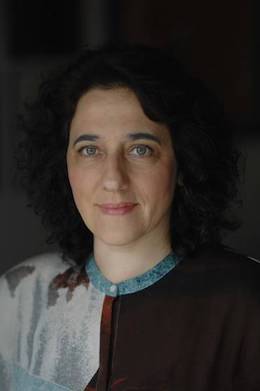
photo - Julia Ivanova
Julia Ivanova (photo from NFB)

Ivanova, the director, cinematographer and editor of Limit is the Sky is a Russian-Canadian filmmaker. She came to Canada at the age of 30, became a filmmaker in Vancouver and captured Canada from within but with the ability to look at the country from a distance. She has made documentaries for the NFB, CBC, Knowledge Network, played Sundance and won many awards for her films.

The screening of Limit is the Sky, the NFB film about the Fort McMurray boom-bust-fire circle and the winner of the Colin Low Best Canadian Feature Award at DOXA 2017, commemorates the third anniversary since the worst wildfire and the worst natural disaster in Canada’s history devastated the capital of the oil sands. (See jewishindependent.ca/diverse-doxa-festival-offerings.)

The Hot Docs Focus On retrospective of her work includes the world première of her new film, My Dads, My Moms and Me, a film about the joy and turmoil of parenting in the modern family, including same-sex partners, surrogates, adoption and combinations that break the old conventions. The film follows three families, filmed twice, 12 years apart – in 2007 and in 2019.

* * *

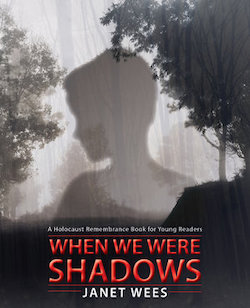
image - When We Were Shadows book coverMore than 250,000 children participated in the Ontario Library Association’s annual Forest of Reading program and have helped choose the best Canadian authors and illustrators. On May 14 and 15, thousands gathered at the annual Festival of Trees, an annual rock concert of reading, hosted at the Harbourfront Centre, where winners of the 2019 Forest of Reading program were announced. Among the books awarded honours was When We Were Shadows by Janet Wees, published by Second Story Press. (For more on Wees and the book, visit jewishindependent.ca/saved-by-dutch-resistance.)

* * *

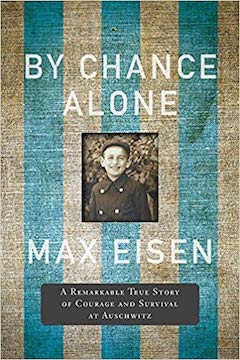
By Chance Alone: A Remarkable True Story of Courage and Survival at Auschwitz by Max Eisen (HarperCollins) won Canada Reads 2019. The book was championed by TV host and science broadcaster and author Ziya Tong, and was chosen by the five panelists as the book for Canadians to read in 2019. This year’s title fight asked the question: What is the one book to move you?

image - By Chance Alone: A Remarkable True Story of Courage and Survival at Auschwitz book coverAfter four days of debate in front of live audiences, Tong and By Chance Alone survived the final vote to be crowned this year’s winner. The runner-up was Homes by Abu Bakr al Rabeeah and Winnie Yeung (Freehand Books), which was defended by Simple Plan drummer Chuck Comeau. Audiences can catch up on all of the debates on demand on CBC Gem or by downloading the Canada Reads podcast from CBC or iTunes.

“Before 2016, I don’t remember seeing swastikas, but these days I see them often – in the news and on social media. But here’s something even more shocking: one in five Canadian young people have not even heard of the Holocaust. They don’t know what it is, ” said Tong.

This year’s debates took place March 25-28 and were hosted by actor, stand-up comedian and host of CBC Radio’s Laugh Out Loud, Ali Hassan.

Format ImagePosted on May 31, 2019May 30, 2019Author Community members/organizationsCategories NationalTags art, books, Canada Reads, CBC, documentaries, Holocaust, Janet Wees, Julia Ivanova, Max Eisen, memoir, National Film Board, NFB, Olga Campbell, Ontario Library Association
A story told in art and poetry

A story told in art and poetry

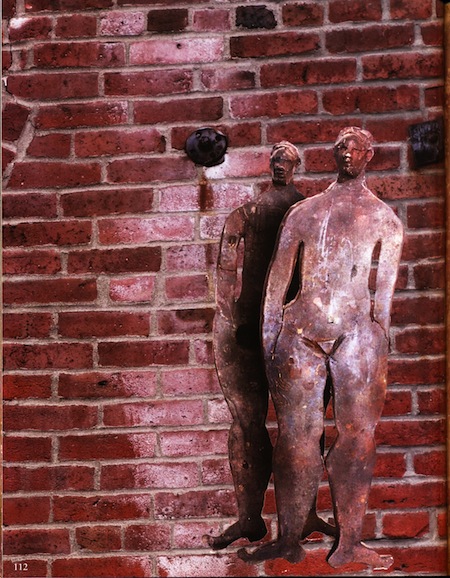
Olga Campbell’s acrylic painting “Remembering,” above, and bronze sculpture “Twins II” are just two of many artworks she includes in A Whisper Across Time.

Grief is many-faceted. Sometimes, we’re not even aware for what we’re grieving. One of the most beautiful passages in Olga Campbell’s A Whisper Across Time: My Family’s Story of the Holocaust Told Through Art and Poetry (Jujabi Press, 2018) is the following poem:

“I was born with a very deep sadness / a sadness and an anger / as a child I didn’t question this / it was the way it was / when I got older my mother had cancer / she died when I was twenty-two / I thought that my sadness was caused by her death / I had no idea that it was caused by her life.”

book cover - A Whisper Across Time“A Whisper Across Time is a heart-warming, emotional journey that reminds us of the suffering and pain that war, intolerance and persecutions create, not only for those who had to endure atrocities but also for the children of the survivors,” notes Dr. David Lee Sheng Tin, author of two books on spiritual health and growth, in the foreword.

In A Whisper Across Time, Campbell gives clear voice to the whispers in her ear, “whispers across time.”

“This is the story of one family out of millions of families who went through the Holocaust,” writes the artist, whose mother lost all of her family during the Second World War. It is “the story of survival and death,” “of how trauma of such magnitude is passed from one generation to another to another….” It is also an ardent call for readers to remember Rwanda, Rohingya, Bosnia, Syria, Afghanistan, Sudan, Iraq, Cambodia…. “[O]ne of every 113 people on the planet is a refugee,” writes Campbell, noting, “by the end of 2016, there were 65.6 million refugees, asylum seekers and internally displaced people in the world” and that “racism, antisemitism and ultra-nationalism are on the rise.” She pleads, “eighty years ago, the world looked away / we must not look away now.”

In an interview with the Jewish Independent last November about the exhibit of the same name that helped launch the book, Campbell updated that statistic. “Our world is a chaotic place right now, somewhat reminiscent of the period before the war,” she told writer Olga Livshin. “There are over 68 million people around the world that are refugees or displaced. My book is not only about my family. It is a cautionary tale. It is about intergenerational trauma and its repercussions across time.” (See jewishindependent.ca/whisper-across-time.)

In 2005, Campbell mounted the exhibit Whispers Across Time. “This art show dealt with memories and losses,” she writes in the book. “Many of the pieces in the show were fragmented, partial in appearance, reflecting both a presence and an absence.”

image - “Twins II” by Olga Campbell
“Twins II” by Olga Campbell.

The exhibit featured masks, rusted metal figures, ceramic sculptures, photographs, mixed media and texts that, explains Campbell, “echoed the same theme of loss and regeneration – a life spirit which emerged from the devastation of the past.” Even reduced in size to fit on the pages of a book and taken out of a gallery setting, this artwork is powerful.

In A Whisper Across Time, Campbell shares some of what she has discovered about her mother, Tania, and father, Klimek Dekler, as well as about her maternal grandmother, Ola Akselrod, and her mother’s identical twin sister, Mania, and brother-in-law, who was also an identical twin, but Campbell hasn’t been able to determine which brother – Manasze or Efraim Seidenbeutel – her aunt married. Campbell recounts how her parents met, the atmosphere leading up to the war, and how her parents survived. Her father’s family also survived. There are no records, says Campbell, of what happened to her grandparents or her aunt during the Holocaust; the Seidenbeutel brothers were murdered at Stutthof concentration camp, a few days before it was liberated.

“My mother must have been completely traumatized by her experiences and her losses,” writes Campbell. “She lived and worked and loved, she still danced … sometimes. But the joy in her heart was not so big. The light inside was dim. And, at night, when she was alone in her room, she cried.”

In A Whisper Across Time, Campbell also talks about preparing for the 2005 exhibition, and some of the strange happenings that occurred, such as how multiple attempts to photograph the art failed – a broken camera, saved images that wouldn’t open on the computer. Her use of language, both in poetry and prose, is emotive without being overly sentimental. And her artwork evokes an emotional reaction, often involving some sadness and always demanding contemplation.

For more on Campbell and to purchase A Whisper Across Time, visit olgacampbell.com.

Format ImagePosted on April 12, 2019April 10, 2019Author Cynthia RamsayCategories Books, Visual ArtsTags art, Holocaust, memoir, Olga Campbell
Persistence a common theme

Persistence a common theme

There is a bounty of books to read and review at the Jewish Independent. One of the many perks of my job is that I have so much culture literally at my fingertips. But, given the weekly deadlines and other demands of running a newspaper, I can’t always be au courant. So, hopefully I will be forgiven for reviewing four books published last year for this Passover issue: a memoir, a work of fiction (perhaps 😉 and two young adult novels. I’m excited to report that two of the books were written by people who have written for the JI and one was written by a local community member.

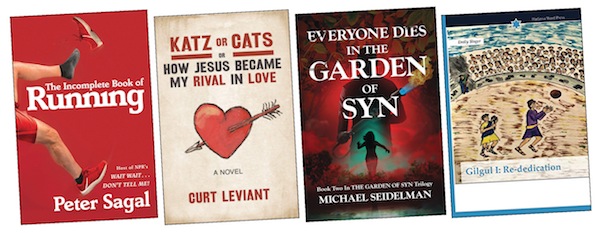
My favourite podcast is Wait Wait … Don’t Tell Me! And, even though I don’t run, one of my favourite magazines is Running Room. I’m not sure how I got onto their mailing list, but I always enjoy reading people’s inspirational stories of why they started running, I like the recipes and nutritional advice and the training tips, which are useful for other types of exercise. Anyway, all that to say I was excited when the host of Wait Wait, Peter Sagal, who is Jewish, came out with his new book, The Incomplete Book of Running (Simon & Schuster, 2018).
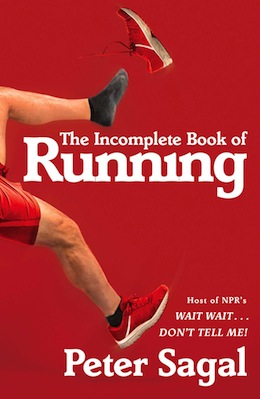
book cover - The Incomplete Book of RunningSagal shares personal stories about why he started running, some of the marathons in which he has participated and people he has met along the way, notably a couple of runners who were blind (or almost), for whom he acted as a guide. Scattered throughout, he offers various facts and figures about running; its health benefits, as well as its downsides (I did not know about, to put it delicately, the digestive issues long-distance runners can face). He speaks somewhat vaguely but openly about the dissolution of his first marriage and he is refreshingly honest about his struggle with depression.

Running has helped Sagal deal with difficult circumstances, and continues to not only be a form of exercise for him, but something that informs how he lives. Among other things, running has taught him persistence and has made him more courageous; it has contributed to his “faith in the possibility of positive change” and his realization of just how enduring is love.

I admit that, despite Sagal’s enthusiasm, reading about multiple marathon experiences, as a non-runner, got a little tiresome. And the book isn’t chronological, so I wasn’t always sure of what point we were at in Sagal’s life. But, those minor criticisms aside, I enjoyed the book a lot, especially Sagal’s conversational style of writing and his humour. Having listened to him almost every week for so many years, it felt, at times, that he was right there, telling me his story; that I was listening to him, rather than reading him.

* * *

There is no doubting that Curt Leviant is a talented writer, that he has a wicked sense of humour and a heightened sense of observation and awareness. Katz or Cats; Or, How Jesus Became My Rival in Love (Dzanc Books, 2018) is his most recent of many novels and fans will not be disappointed.

A book editor, John, and a writer, Katz, meet on the subway. On their commutes into New York, Katz shares what is ostensibly his brother’s love story, though it may be Katz’s. Part of the novel’s plot revolves around just how true, or fictional, is the story of Katz’s brother, who also goes just by his surname, Katz.
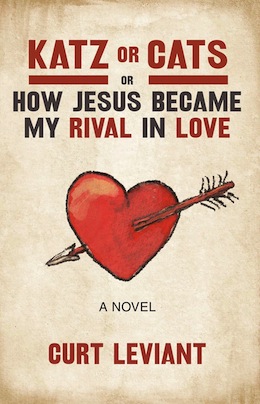
book cover - Katz or CatsAs the story goes, Katz (or Katz) meets a woman on a train. Maria is supposedly a devout Christian, but she has no trouble permitting a stranger to put his arm around her on first meeting, nor having sex pretty soon thereafter with said stranger, Katz, who she thinks might be married. Their relationship – and the novel – comprises much sex, a lot of talking about sex and many discussions about religion – Jesus, specifically, and Maria’s recurring feelings of guilt for not being what she thinks a good Christian should be.

As Katz relates the tale to John, the editor interjects every once in awhile to question apparent contradictions or errors in the telling. Some aspects – Katz’s marital status, for instance – remain unclear, and purposefully so.

Ironically, perhaps, given that the premise of the novel is a writer telling a story to an editor, Katz or Cats would have benefited from some tighter editing. More than one topic recurs and some points are made multiple times. While Katz’s wit and intelligence provide much to think about, I didn’t find him to be a sympathetic character, so “listening” to him became difficult. And, while I’m not a huge fan of political correctness, I found his treatment of Maria to be condescending and rude at times, and some of his quips to be on the edge of disrespectful towards other cultures. Though Katz refers to Maria more than once as smart, her waffling and some of her responses to Katz – and his reactions to her – don’t really support that notion.

Overall, while provocative in many ways, I found Katz or Cats to read like a book from another era. Many male writers, from Seneca to Henrik Ibsen to Thomas Mann to Leviant himself, come up in conversations in the novel, reinforcing my feeling that this book would be most appreciated by older, male readers. But I could be wrong. When I shared my views with Leviant – who regularly writes for the Jewish Independent’s holiday issues (see page 34 of this issue, for instance) – he shared that a similar novel of his, translated into French, got great reviews from young women critics.

* * *

Ever since reading No One Dies in the Garden of Syn in 2016, I have been waiting for the second book of local writer Michael Seidelman’s trilogy featuring teenage heroine Syn. And, late last year, my wait was over.
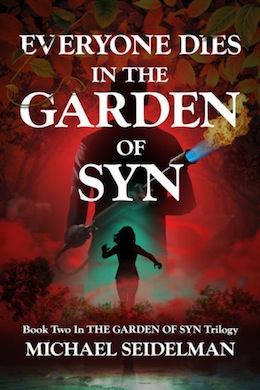
book cover - Everyone Dies in the Garden of SynEveryone Dies in the Garden of Syn (Chewed Pencil Press, 2018) starts with a violent prologue that both heralds what’s to come and starts to explain the “Creepers” – weird-looking creatures that seem to be combinations of two people or a person and an animal or insect – we met in the first novel.

In the introductory pages of Everyone Dies, Seidelman, in addition to moving the story along, reminds readers of what has come before. The action in this book centres around Syn’s need to rescue her sister, who has been kidnapped by Cole, a “boy” who befriended and then betrayed Syn – or, from his point of view, was befriended and betrayed by Syn.

Still missing as Everyone Dies starts are Syn’s parents, who disappeared when she was 5. Because of Syn’s actions in the first book, the garden, which once had healing powers – “no one dies” – has lost them, so now “everyone dies,” or can die, in the garden. Therefore, the situation is that much more dangerous now for Syn, who suffers from cystic fibrosis. Whereas she didn’t have to worry about her health in the first novel, it becomes another thing she has to battle in the second.

And there is many a battle in Everyone Dies, and lots of running and chasing. There were a few times I lost track of which universe (there are multiple) we were in, and, sometimes, who was fighting whom, but the action moves along and the tension builds. There’s a wonderfully satisfying twist at the end. And so begins the wait for Book 3.

To read more about Seidelman’s first Syn novel, visit jewishindependent.ca/first-book-of-trilogy-now-out.

* * *

“When my 13-year-old son devoured Bulfinch’s Mythology after reading Rick Riordan’s Percy Jackson, I realized we need an exciting, thought-provoking series based on Jewish history, something that will send our kids reaching for a Torah, a Talmud or a Book of the Apocrypha,” wrote Emily Singer to the Jewish Independent in an email about her new book, Gilgul I: Rededication (Hadassa Word Press, 2018).

Singer, who lives in Israel, is a writer and a high school teacher. When she and her family lived here, she taught at Vancouver Talmud Torah. She has written several articles for the Jewish Independent so, when she contacted the paper about Gilgul, I happily agreed to review it.
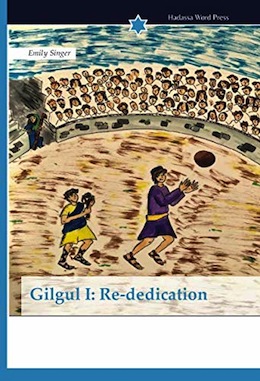
book cover - Gilgul INot surprisingly, knowing Singer’s skill as a writer, Gilgul is a compelling and radical take on the Chanukah story. While all the book’s hero David wanted to do was to play the game skyros with his friends, the game takes on a deadly seriousness for the 15-year-old when King Antiochus sacks the Temple and starts a war against the Jews.

David must be smart, brave, strong and compassionate to stay alive and save his family and his people. He must figure out who to trust, and the fact that it’s not always clear who the good guys and bad guys are adds tension and meaning to the novel. Even with the help of his equally heroic sister Leya, some unexpected courageous allies and a little magic, David has his work cut out for him. Gilgul will leave readers thinking anew about Chanukah, the rededication of the Second Temple, the Maccabees, the miracle of oil, and more.

Format ImagePosted on April 12, 2019April 17, 2019Author Cynthia RamsayCategories BooksTags Curt Leviant, Emily Singer, fiction, Gilgul, memoir, Michael Seidelman, Peter Sagal, Syn, writing, young adults
Audiences share own stories

Audiences share own stories

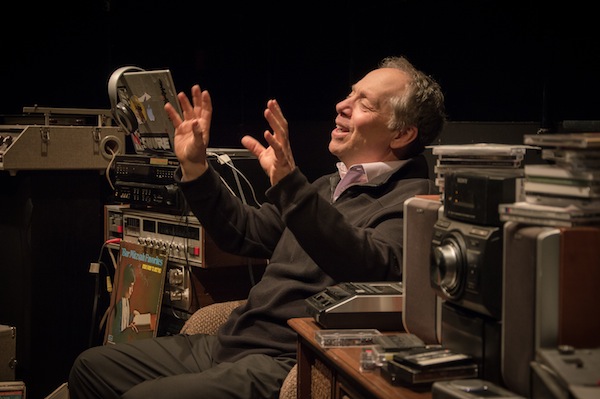
Brian Linds reminisces about his bar mitzvah in Reverberations, which is at Presentation House Theatre until March 17. (photo from Courtesy PHT)

“There are so many wonderful, heartfelt moments in the stories that are told,” Brian Linds told the Independent about Reverberations. “Some are sad. Some are funny. But these same moments have been shared by us all.”

Reverberations opened March 7 at Presentation House Theatre. Created by Linds, a sound designer and an actor, it is co-produced by the theatre and Reverberations Collective with Mortal Coil Performance. Based on Linds’ life, some of the moments he shares with the audience are “his parents’ love story, a childhood act of betrayal, his bar mitzvah, his mother’s Alzheimer’s diagnosis and a moment of lucidity his mother experienced while in the late stages of the disease.”

“The idea for Reverberations came to me after I had created a couple of 10-minute sound performance pieces for pre-events during the SPARK Festival at the Belfry Theatre in Victoria where I live,” said Linds. “I created stories using only sound. These sound performances would play in unusual spaces in and around the theatre.

“I was so pleased with the results that I created three more mini shows and I came up with the concept of Reverberations as a full 90-minute show, using five spaces and four actors who interact with the soundscapes. The production premièred in 2017 as a main stage production of the SPARK Festival.”

The audience, divided into smaller groups of 20, also moves through the five performance spaces. About the première, which took place at Belfry Theatre, Lind remarks in the Vancouver show’s press material that “audiences enjoyed the novelty of moving from space to space and loved the idea that each group’s journey was a unique unfolding of the story told. They were also inspired to share with the performers and audience members their own experiences of loss, betrayal and love. It was deeply touching for our team to experience.”

photo - The role of Brian Linds’ mother, who suffered from Alzheimer’s disease, is played by Nicola Lipman
The role of Brian Linds’ mother, who suffered from Alzheimer’s disease, is played by Nicola Lipman. (photo by Angela Henry)

It was the “immersive, personal and celebratory” experience that attracted Presentation House artistic director Kim Selody to Reverberations. “His creation honours the life of his mother, and what it feels like to lose someone to Alzheimer’s disease,” notes Selody. “Having lost my own mother in the same way, I was deeply touched by how Brian approached his experiences. His choice to end with a celebration is a touch of genius.”

During the writing process, Linds himself had revelations about aspects of his life.

“While I was creating a segment for Reverberations about my bar mitzvah,” he shared, “I found myself thinking about what it means for me to be Jewish. I discovered that who I am was formed and shaped because I was born Jewish. I like being Jewish. I’m a part of something pretty special. Come see the play and you will see.”

Some people will also want to come to the show for a touch of nostalgia, as Reverberations features a range of sound technology, from digital recordings to LPs and cassettes, reel-to-reel and 8-track tapes.

Linds came into sound design kind of by accident.

“I had been working as a professional actor for 25 years but, one day during a show, I was backstage with an actor who knew of my love of music and he asked me to design the sound for his play. It came very naturally to me and I haven’t stopped for 15 years,” he said.

“My favourite part of working on sound is that it gives me a chance to be on the other side of the footlights and work with directors in a completely different way. I love working with directors who collaborate and show me new ways to use my talent.”

The production at Presentation House Theatre is directed by Mindy Parfitt and is performed by Linds, Nicola Lipman, Victor Mariano and Jan Wood. Set and costume designer is Catherine Hahn, lighting designer John Webber and stage manager Heidi Quick.

Reverberations runs until March 17 and tickets start at $15. For more information, visit phtheatre.org/event/reverberations or call 604-990-3474.

Format ImagePosted on March 8, 2019March 6, 2019Author Cynthia RamsayCategories Performing ArtsTags Brian Linds, memoir, music, Presentation House, theatre
Architect of bestselling book

Architect of bestselling book

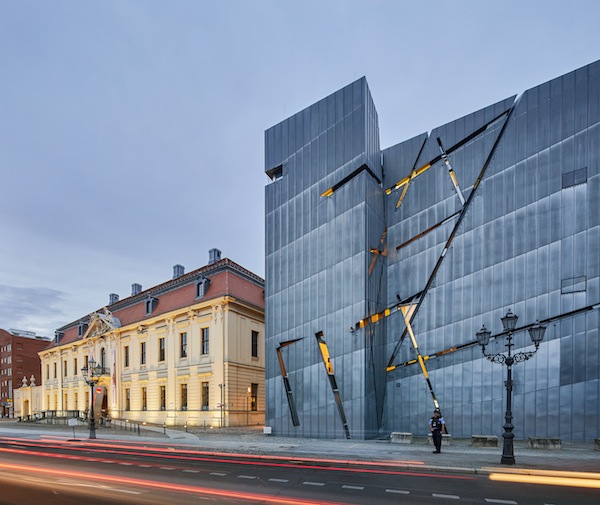
Daniel Libeskind designed the Jewish Museum in Berlin. (photo ©Hufton+Crow)

A gifted musician turned world-renowned architect, Daniel Libeskind can now add bestselling author to his list of accomplishments, with his unique book Edge of Order (Clarkson Potter, 2018), written with Tim McKeough.

Libeskind was born in Poland to Holocaust survivor parents. He spent his first 11 years in a communist, totalitarian state.

“I was born in a homeless shelter right after the war, and we were then lucky to be able to leave the first time the Iron Curtain opened,” Libeskind told the Independent. “We were able to go to my first paradise, which was Israel. Israel was only 8 years old at that time. It was amazing to go from black-and-white to full colour and the beauty of liberty.”

Of Libeskind’s father’s large family, his only surviving sister, who survived Auschwitz, was living in New York. So, after only two-and-a half years in Israel, the Libeskinds made their way to the United States.

But, before leaving Israel, Libeskind was an accordion virtuoso, at only 13 years old. Winning a competition with Itzhak Perlman, he had the opportunity to play for Isaac Stern. After hearing him, Stern suggested that Libeskind transition into playing piano, but Libeskind found the adjustment too difficult.

“Maybe that’s why I became an architect,” he said. “If I hadn’t played the accordion, I would have never been an architect, I would have become a famous pianist. I have to say that Isaac Stern, who I knew subsequently, told me I was the only person that they ever gave this [honour] to that didn’t become famous in music.”

In the United States, Libeskind’s family settled in the Bronx. When it came time for him to choose a career path, he didn’t know what to do, as he excelled in math, science and art.

“I really wasn’t sure because, in my life, I had never met an architect, an engineer, a doctor…. I had little idea of so-called professions that existed in a world somewhere beyond the Bronx,” he said. “I discovered that architecture combined all my interests – painting, drawing, mathematics, science … all the things I loved to do.”

Libeskind tried working for some well-known architects, but felt uninspired. So, for many years, he worked as a professor of architecture at various universities around the world and then as head of a school of architecture.

image - Edge of Order book cover“I really invented a path of architecture through my drawings,” he said. “My drawings were not figurative drawings of imaginary buildings. I drew the internal structure of architecture, what architecture is when you don’t have a client. I drew these drawings almost like musical scores.

“For many years, I did that and I was considered, like some others, as a paper architect … somebody who’s just on paper. But, then I won the competition for what later became the Jewish Museum in Berlin…. It was not originally called the Jewish Museum, it was called the Berlin Museum with a Jewish department, but I negated that, as I never believed Jews should be a department….”

It took more than 10 years to build the Jewish Museum in Berlin. It was scheduled to open the fall of 2001, but then 9-11 happened, so the opening was delayed.

Libeskind felt the need to go to New York. When construction on the World Trade Centre site was being considered, Libeskind was asked to be a judge of the entries. He could not make it to the judging on time, so instead entered his own design idea. He won the competition and became the master planner of the project.

In writing Edge of Order, Libeskind wanted to share his creative process and how he approaches architecture.

“I believe every member of the public is capable … of not only appreciating design and architecture but of participating in it, hands-on,” he said. “I always say, ‘Every human being can pick up a brush and start painting. Anybody can sit down and write a poem. Anybody can take their iPhone and make a film. Anybody can sit down and write a melody. But, when it comes to architecture, they think it’s a world of the impossible.”

photo - Daniel Libeskind’s book, Edge of Order, which he wrote with Tim McKeough, is a bestseller
Daniel Libeskind’s book, Edge of Order, which he wrote with Tim McKeough, is a bestseller. (photo by Stefan Ruiz)

In Edge of Order, Libeskind shows how architecture is just another artistic field that anyone can do, explaining how buildings are not made by some abstract hieroglyphic methodology, but are part of culture, just like music and geometry. The book encourages people to participate and engage with architecture directly where they live.

“Most people think … everything is irreversible, that you’re born with it and that’s that. People don’t realize that they can change,” said Libeskind. “They can make the world a better place, a more meaningful place.

“Architecture is such an important aspect of the world,” he continued. “We take it for granted, but it’s what the world looks like to us, the window we have to the world.”

Libeskind wrote Edge of Order with the hope of inspiring people to think about how they can do things, instead of feeling like they don’t have the credentials or know-how to design their dreams. He thinks that everyone is an architect and he wants to help people realize that they, too, can build.

“My ideal reader could be a young person who doesn’t know what they want to do, or it can be an older person who had always wished to be an architect,” said Libeskind. “My point is that everybody can be, and that everybody already knows so much more about architecture than about anything else … because we all live somewhere … even if you’re homeless.”

He said his idea is about freedom – “freedom to build, to really direct the world to a better way.”

In Edge of Order, Libeskind also talks about the importance of embracing democracy and that we need to be vigilant against forces that would impoverish the human potential.

“When I see what is happening in the world … of course, we see the evils around us and we have to fight against them … and have the sense that the world is a better place than we see on television or on the news,” he said.

Currently, Libeskind is working on dozens of museums around the world, spanning all the continents.

“I’m such a lucky architect on every continent,” he said, adding, “I’m a very fortunate person.”

Rebeca Kuropatwa is a Winnipeg freelance writer.

Format ImagePosted on March 8, 2019March 6, 2019Author Rebeca KuropatwaCategories BooksTags architecture, Daniel Libeskind, design, memoir
Mizrahi to perform here

Mizrahi to perform here

Isaac Mizrahi’s cabaret show, which is at the Rio Theatre on March 18, is a preview of his new book I.M.: A Memoir. (photo by Britt Kubat)

Celebrated fashion icon Isaac Mizrahi is bringing his multiple talents to Vancouver. On March 18 at the Rio Theatre, he will be performing his cabaret show I & Me, accompanied by the Ben Waltzer Jazz Quartet.

Mizrahi’s North American tour is timed with the release of his new book, I.M.: A Memoir (Flatiron Books). The show, which includes poignant stories and fun songs, covers anecdotes about his life, his mother, what it was like growing up in an Orthodox Jewish Syrian community in Brooklyn, the challenge of being gay, and rising to the top of the fashion world. “It’s done with a lot of humour,” he told the Independent. “I hope it’s compelling, amusing and resonates with the audience.”

The songs, he explained, go along with the story. “I chose songs that can dramatize the story,” said Mizrahi, who has performed with Waltzer in clubs for more than 20 years. “My opening number is ‘I feel Pretty’ and, believe it or not, I am not singing it with irony.”

Mizrahi also delivers his own rendition of Cole Porter’s “You’re the Top.”

The first time Mizrahi showed off his talents in front of a crowd was in elementary school, when he started doing impressions for his peers.

“When I was about 7 years old, I went to see Funny Girl with my family and was so inspired by [Barbra] Streisand I started imitating her. Then I impersonated Judy Garland and Liza Minnelli,” recalled Mizrahi, who attended yeshivah from kindergarten through eighth grade. “I would do these female impressions inappropriately in places like the lobby of shul!”

But it was designing clothes for the rich and famous that made Mizrahi a household name. When he entered High School of Performing Arts in New York City, he had planned on going into show business. However, by the time he was a junior, he switched gears and found a better way to express himself. “I realized all my friends were gorgeous, thin, blond and movie-star types, and I was fat and I didn’t have that self-image,” he said. “So, I re-thought my career and decided to work in the fashion industry. It enriched me so much, and gave my life a different kind of story and platform.”

His interest in the world of fashion didn’t come from out of the blue. His father was a children’s clothing manufacturer and Mizrahi, who was obsessed with reading fashion magazines, had sewing machines at his disposal. “I started to make puppets and sew clothes for them,” said Mizrahi, who added that he liked doodling sketches of outfits in the margins of his Hebrew books. “By the time I was 10, I had this big puppet theatre in the garage and I made their clothes. My father had sewing machines everywhere and he taught me how to sew. By the time I was 13, I was a really good sewer and I started making clothes for my mom and myself. It became this fun, compelling thing. My mom, who is now 91 years old, was really into fashion and encouraged my interest.”

After high school, Mizrahi attended Parson’s School of Design in New York City. His first fashion job was working at Perry Ellis, then with designer Jeffrey Banks, and then Calvin Klein. Along the way, he honed his skills, in such areas as selecting fabric, sketching clothes and participating in design meetings. By the time he was 26, he went out on his own.

In 1989, he presented his first show, which catapulted him into fame and his couture soon dominated the fashion mags. He dressed celebs for red carpets, and his clients included Michelle Obama, Meryl Streep, Hillary Clinton and Oprah Winfrey.

“Designing for Michelle Obama was such a thrill,” he said. “And Barbra Streisand was so lovely. I tailored a suit for her and Women’s Wear Daily erroneously attributed it to Donna Karan. Barbra wrote me a note saying, ‘We know who really made this suit!’”

But Mizrahi’s successful journey has had its lows. While he made countless guest appearances on television and in movies, earned an Emmy nomination for best costume design for his work in Liza Minnelli Live and was the subject of the acclaimed documentary film Unzipped, which chronicled his 1994 collection, his company was losing money and closed after his fall 1998 collection.

He returned to fashion in 2002, teaming up with Target and becoming one of the first high-end designers to create affordable clothes for the general public. In 2009, he launched his lifestyle brand Isaac Mizrahi Live!, sold exclusively on QVC. In 2011, he sold his trademark to Xcel Brands. Among his many credits, he hosted his own television talk show, The Isaac Mizrahi Show, for seven years; he wrote two books; and he narrated his production of the children’s classic Peter and the Wolf at the Guggenheim Museum. In 2016, he had an exhibition of his designs at the Jewish Museum in New York. Currently, he sells on QVC and via Lord & Taylor, and serves as a judge on Project Runway: All Stars.

Throughout all of his fashion endeavours, he has found time to be on stage. Mizrahi, who is a charming storyteller, said he loves doing live cabaret. “I hope the audience will really enjoy themselves when they see my show, and laugh and enjoy the music,” he said. “I want them to get the idea who I am and how I got there – and I want them to know the story of my life.”

When asked what he’d like his legacy to be, the designer, entertainer and showman referred to his Judaism. “My name is Isaac, which means laughter in Hebrew,” said Mizrahi, who considers himself a cultural Jew. “I think, most importantly, I want my legacy to be about humour.”

Tickets to I & Me at the Rio Theatre are $58 in advance and $60 at the door. They can be purchased at riotheatre.ca/event/isaac-mizrahi-i-me. The March 18 show starts at 8 p.m.

Alice Burdick Schweiger is a New York City-based freelance writer who has written for many national magazines, including Good Housekeeping, Family Circle, Woman’s Day and The Grand Magazine. She specializes in writing about Broadway, entertainment, travel and health, and covers Broadway for the Jewish News. She is co-author of the 2004 book Secrets of the Sexually Satisfied Woman, with Jennifer Berman and Laura Berman.

Format ImagePosted on March 1, 2019February 27, 2019Author Alice Burdick SchweigerCategories Books, Performing ArtsTags Cabaret, design, fashion, Isaac Mizrahi, memoir, music, Rio Theatre
Retirement offers new path – the Accidental Balabusta

Retirement offers new path – the Accidental Balabusta

It was an uber-yummy pot roast that spawned the Accidental Balabusta. (photo by Shelley Civkin)

The definition of balabusta goes like this: 1) an impressively competent homemaker; 2) female head of household.

I recently saw balabusta used in a sentence: “She’s such a balabusta, she can make Shabbos for 20 in one afternoon.” Seriously? In which galaxy could anybody (never mind a balabusta) make any meal for 20 in one afternoon? I’m pretty sure that’s called hyperbole, or straight up bovine caca. Maybe I’m just not aware of the superpowers of real-life balabustas; the ones who sport red aprons and rule the domestic world. Personally, I couldn’t even make mac and cheese for 20 in one afternoon.

According to the Jewish Chronicle, “Balaboosters [sic] are rather out of fashion these days, victims of feminism and women’s magazines. Still, at least according to family myth, all of our grandmothers were balaboosters – heroic homemakers who raised large numbers of children in straitened circumstances and made real gefilte fish from a carp that swam about in the bathtub.” Not my Jewish grandmothers! Mine were neither spectacular cooks, nor did they have a bathtub filled with fish.

I don’t buy the idea that balabustas are out of fashion these days. I believe they’re just contemporary versions of the old-time balabustas. We hold down jobs, raise kids – well, not me, personally, but millions of other modern balabustas – and we’re active in our communities. And we just happen to bake, cook, do the laundry, clean the house and more. I, for one, am flattered to be called a balabusta. Even an accidental one. I feel like it puts me squarely in the category with other competent Jewish women, who juggle multiple tasks and are the glue that holds their families together.

So, how did I come to be crowned “the Accidental Balabusta”? It was the day I made a textbook perfect, uber-yummy pot roast. My husband Harvey took one bite and proclaimed me the Accidental Balabusta. Just like that! To substantiate his declaration, a week later I baked a batch of kalamata olive and rosemary challah buns (recipe from Rising: The Book of Challah by Rochie Pinson). They were exquisite. Or so I’m told. For the record, there was no bread machine or KitchenAid dough hook within 100 metres of my tiny galley kitchen. Just me, a 13-litre stainless steel bowl and enough flour to coat a bison.

For an encore, I made a handmade, painted challah cover. Next thing you know, I’ll be herding sheep. Anyway, that’s how the new moniker stuck.

Regarding the definition of balabusta, I might qualify as the “female head of household,” depending on whom you ask. As for being a remarkably skilled homemaker … well, the jury’s still out on that one. Way out. Truth to tell, most people I know would unequivocally classify me as the anti-balabusta. “That Shelley Civkin is a real balabusta!” Said nobody. Ever.

It’s not for lack of trying. OK, for about 50 years, it was. I simply wasn’t interested in cooking and cleaning. I was single and worked full-time. Since I only got married at age 53, the childbearing train had left the station. Empty. I was zero for three.

Then heaven happened: I retired three years ago. I took the advice of a wise rabbi, who told me that retirement doesn’t mean just sleeping in and doing nothing. It means helping others, doing mitzvot and finding your purpose in life. Did I mention I regularly volunteer to bake challah for seniors? I took the rabbi’s words to heart, and here I am today, the Accidental Balabusta. I’m sure my family and friends are laughing their tucheses off right now. “Shelley, a balabusta? You gotta be kidding?” For most of my life I was a water-burner.

If you ask Harvey, he’ll tell you I’m a great cook. To wit, he’ll eat anything. Exhibit A: the fish fiasco. A year or two into our relationship, I decided to make breaded snapper. So, I used my father’s recipe and coated the fish in flour, eggs and breadcrumbs. While it was frying, a tiny piece of breading came off, so I popped it my mouth. Something didn’t taste right. I checked the expiry date on the egg container – it was fine. Then I put my finger in the bread crumbs to taste them – they were good. Finally, I put my finger in the jar of flour. Only to realize that I’d just coated all my fish in icing sugar. Harvey, G-d bless him, ate the icing-sugar-coated fish. I went out for sushi.

Then there was the infamous lamb debacle. It was New Year’s Eve and I decided to go for broke, so I made a rack of lamb. I covered the lamb in my usual Dijon mustard, lemon and garlic mixture and put it in the oven. Our first bite in, both of us noted the unusually strong lemon flavour. But it was tasty.

An hour later, it wasn’t. Harvey ended up in the bathroom driving the big, white porcelain bus. Several hours later, I landed in the hospital emergency department having three bags of IV fluids pumped into me. Let’s just say I got very dehydrated, and leave it at that.

As for being a great homemaker, that’s not my strong suit. What I mean to say is this: I am not on a first-name basis with my vacuum cleaner. In fact, I couldn’t tell you the brand if my life depended on it. I am to housecleaning what porcupines are to Winnebagos. If tchotchkes aren’t screaming out to be dusted, leave well enough alone. Let me clarify: I’m not dirty. I’m just a little messy. I figure there are more important things to do than clean house. Like read. Or eat chips. When guests come over, though, I pull out all the stops. OK, I pull out the fancy hand towels. Actually, Harvey pulls them out. I watch.

The last time I did anything domestic was in Grade 3 Hebrew school, when our teacher had all the girls embroider kippot for the boys. The boys’ assignment – wait for it – was to wear the kippot. No sexism there. Of course, it was the early 1960s. So, you’re welcome, boys.

But back to the balabusta thing. It turns out that I actually enjoy cooking and baking. Who knew? With nothing but free time on my hands now (except for my volunteer activities), I can kick back, put my hair up and tie one on. An apron, that is.

Stay tuned for more Accidental Balabusta.

Shelley Civkin, aka the Accidental Balabusta, is a happily retired librarian and communications officer. For 17 years, she wrote a weekly book review column for the Richmond Review, and currently writes a bi-weekly column about retirement for the Richmond News.

Format ImagePosted on February 22, 2019April 2, 2020Author Shelley CivkinCategories LifeTags Accidental Balabusta, Judaism, lifestyle, memoir, retirement
Meet new or favourite writers

Meet new or favourite writers

The Cherie Smith JCC Jewish Book Festival starts this Saturday night (Feb. 9) with Joshua Cohen, author of Moving Kings and ATTENTION: Dispatches from a Land of Distraction. It continues for five literary-filled days at the Jewish Community Centre of Greater Vancouver, and here’s a sampling of books you might want to add to your reading list, and authors you might like to meet.

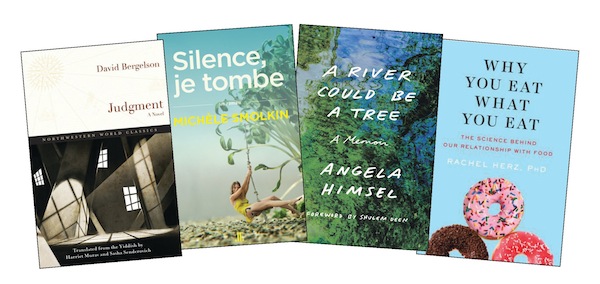
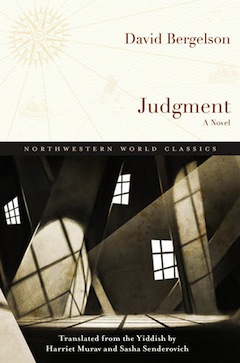
book cover - JudgmentSet in 1920, in the fictional shtetl of Golikhovke during the Russian civil war, Judgment, by David Bergelson (1884-1952), is a melancholic novel about humanity in a time of uncertainty, where different political factions are warring, each under their own ultimately meaningless banner; neighbours cannot trust one another, let alone strangers; and justice is meted out randomly by a cruel, indifferent force.

Stationed in an also fictitious abandoned monastery called Kamino-Balke, near Golikhovke, the sickly Bolshevik Filipov is in control of the area along the Ukraine-Poland border. There are smugglers who travel across the border for commercial reasons and Socialist Revolutionaries who travel across it in preparation for an uprising against the Bolsheviks. Jews and non-Jews live together in relative tolerance but political loyalties, ethnic ties and differing ideas of morality ensure a constant tension. All live in fear of being captured by one of Filipov’s agents, as guilt of a crime does not need to be proven for a person to be beaten, imprisoned and/or shot.

What makes this novel beautiful is Bergelson’s prose. Imaginative metaphors: “Large, invisible hands merrily picked up whole heaps of snow and just as merrily released them.” Animated objects: “… the coat lay there bent over, dejected, as if it had made a long, pointless, idiotic journey” and “The cannons’ muzzles – black, fat and eyeless – stared longingly in the direction of the forests around Moshne….” Humour: “Stone fences suited the inhabitants of Yanovo, for all of them were as stubborn as their stone fences: stone upon stone.” And empathy, in this case, for the undercover agent Yokhelzon, whose “eyes (which inspected everything, people said) had already taken in the horror of death – they winked joyfully, so that the horror would not show afterward.”

As should be obvious, Harriet Murav and Sasha Senderovich have done a masterful job of translating Judgment from Yiddish to English. They also provide a fascinating introduction to the novel, its historical context, the author and his other works (Bergelson was executed in 1952, on Stalin’s orders), the book’s title, form, themes and use of language.

Senderovich will be at the book festival on Feb. 10, 3:30 p.m.

***

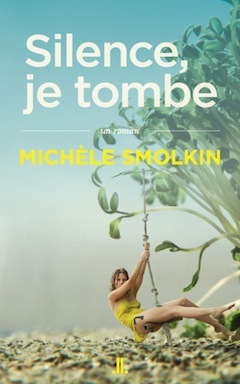
book cover - Silence, je tombeMichèle Smolkin’s novel Silence, je tombe is a witty, philosophical novel that explores how people can become isolated from one another, including themselves. Told from the perspectives of a few protagonists, readers will likely relate to many of the feelings expressed.

The novel starts with a pregnant Tania, as she, her husband Paul and their toddler Margot are making the drive to their new home in “Manhattan, Kansas, The Little Apple,” from Vancouver. Tania’s disenchantment is obvious and she expresses her anger towards her husband – who, as a professor of philosophy, couldn’t find a job elsewhere – with vicious (and very funny) sarcasm, mostly in her thoughts, but aloud, as well. She had imagined a different life for herself – living in New York, the Big Apple, for one thing; and certainly not in the Bible Belt. As a Francophone Jew, she anticipates that fitting in might be a problem.

As the book progresses, we get to know Tania, Paul and a disturbed man named Kevin, plus a couple of other minor but important characters. Through them, we contemplate love, what attracts people to one another and what forces them apart, what happiness is, what actions might be unforgivable, how our childhoods influence our adulthoods, and, of course, the inadequacy of words for certain situations, and understanding why, sometimes, silence is the only possible response.

Smolkin’s talk – the book festival’s first-ever French-language event – will take place Feb. 10, 5 p.m. (Note: Festival program shows incorrect time.)

***

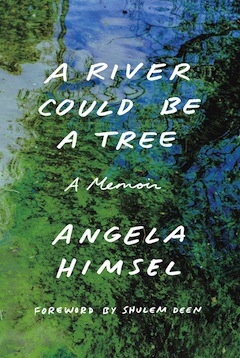
book cover - A River Could Be a TreeA River Could Be a Tree is, thankfully, not the memoir of a person who goes from believing fanatically in one religion to being swept away as unquestioningly into another, though it might seem like it would be, given some aspects of the press material. “How does a woman who grew up in rural Indiana in a fundamentalist Christian cult end up a practising Jew in New York?” asks part of the blurb on the book flap. Well, for starters, Angela Himsel seems to always have been an inquisitive person, and never an avid follower of Herbert Armstrong’s Worldwide Church of God. She was an obedient child, but is still struggling with understanding how her parents believed so much in the church doctrine that they didn’t give her sister the care that might have prevented her death at a young age.

A River Could Be a Tree is a measured, often humourous, always intelligent memoir. Himsel starts with a prologue that gives readers a very large hint as to what led her to ultimately convert to Judaism: she and her boyfriend Selig were, “just once … careless about birth control.”

But the journey to that point is long and more complicated, and Himsel takes readers through it with the benefit of hindsight, hard-won insights and a writing style that is serious, honest but unsentimental, and filled with initially unexpected levity. As but one example, a mere three paragraphs into Chapter 1, in which Himsel talks about her parents’ religious heritage, Roman Catholicism and Lutheranism, she writes about Martin Luther, that, at age 41, he “married a nun, a woman he had helped smuggle out of a convent in a herring barrel. While irrelevant to Luther’s religious beliefs, a nun in a herring barrel is always worth mentioning.”

And A River Could Be a Tree is well worth reading. Himsel will speak at the book festival on Feb. 11, 7:30 p.m.

***

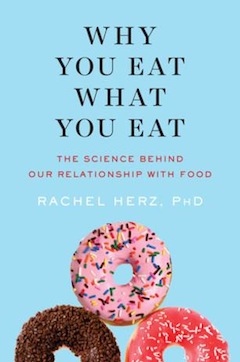
book cover - Why You Eat What You EatThere is so much information in Why You Eat What You Eat: The Science Behind Our Relationship With Food by Rachel Herz. And a refreshing aspect of the book is that it’s not written from a dogmatic, all-knowing viewpoint. Herz acknowledges that sometimes studies come to different conclusions, sometimes scientific progress means that what was once thought true is disproven, and that different people will experience food, exercise and other things differently. Readers looking for certainty might be disappointed, but those wanting to learn will learn a lot. Who doesn’t want to know, for example, why tomato juice is one of the most popular drink orders on planes? Does sugar really help the medicine go down, so to speak, i.e. reduce the effects of pain? And why can buying ethically branded or organic products make us less charitable?

But Why You Eat What You Eat is more than an amalgamation of trivia. Herz has compiled a very readable and relatively comprehensive resource that will, as the title promises, help explain why we eat what we eat; how all of our senses – taste, smell, sight, touch and hearing – affect how we experience food. And knowing these things just might make us feel better about ourselves, and make choices that would serve us better.

Herz will be at the book festival on Feb. 13, 6 p.m.

Format ImagePosted on February 8, 2019February 7, 2019Author Cynthia RamsayCategories BooksTags Angela Himsel, Cherie Smith JCC Jewish Book Festival, David Bergelson, fiction, food, French, memoir, Michèle Smolkin, non-fiction, Rachel Herz, science, translation, Yiddish
Sharing their stories

Sharing their stories

Makeda Zook, left, and Sadie Epstein-Fine, editors of Spawning Generations. (photo from Demeter Press)

Sadie Epstein-Fine and Makeda Zook will be in Vancouver for the Jan. 17 launch of Spawning Generations: Rants and Reflections on Growing Up with LGBTQ+ Parents (Demeter Press, 2018), which they co-edited.

“It is really important to us that this book was written and edited by queerspawn. So often our stories are told for and on behalf of us by researchers, journalists and academics,” Epstein-Fine told the Independent. “Our intimate, personal family lives have been under the microscope for our entire lives, proving to the world that we turned out all right. By curating stories from our community, including our own stories, Makeda and I ensured that we were not, as we like to call it, airbrushing our stories, but that we were allowing our contributors to tell the nitty gritty, the details of their stories that they have never been able to tell.”

In the book’s introduction, Epstein-Fine and Zook explain that the term queerspawn to describe someone who has one or more LGBTQ+ parents was coined by Stefan Lynch, the first director of COLAGE, an American “network dedicated to connecting and supporting queerspawn,” which has one chapter in Canada (in Toronto).

book cover - Spawning Generations

“By giving a name to our identities and experiences, he laid the foundation for connecting and politicizing queerspawn; Lynch gave us a term to organize around,” they write, acknowledging that the term “is not without controversy. Although some people feel empowered by reclaiming both words (‘queer’ and ‘spawn’), others do not like the association with ‘spawn of the devil.’” Another term, “gayby,” also has its proponents and its critics, those who “find it infantilizing and only representative of people whose parents identify as gay,” note Epstein-Fine and Zook.

Ultimately, the editors chose to use queerspawn for the anthology because it is “unapologetic and bold.” As well, it is “the word most often used in Canada and the United States and, as such, it helps us find each other; it is a common word we can rally around. We often feel highly visible in straight communities and invisible in queer ones. The term ‘queerspawn’ creates a space for us, and helps us to feel strength in numbers and a sense of belonging at times when we feel all too visible. When we feel invisible, naming ourselves as queerspawn tells the queer community that we are still here, even if we have grown up.”

Epstein-Fine was born in Toronto in 1992 to two moms, in an activist home, “surrounded by 11 other women.” She carries on her family’s activist tradition and describes herself as a queer(spawn)-political theatre maker.

According to her bio, Zook “was born in Vancouver in 1986 to her two lesbian feminist moms. She was raised in a mixed-race family surrounded by anti-oppression politics and her OWLs (older, wiser lesbians).” She works in sexual health promotion for a feminist nongovernmental organization.

Epstein-Fine shared with the Independent how she and Zook came to be the editors of Spawning Generations.

“Demeter Press approached Makeda and I to edit the anthology because they saw a gap in their literature,” she explained. “They mostly publish books about motherhood, through a feminist lens, and they realized that, while they had a lot of literature about queer parenthood, they didn’t have anything from the children. This is a trend in the majority of queer parenting literature – we hear a lot from the parents, but rarely from the kids raised in queer households.

“Yes, it’s true, Makeda’s and my primary focus is not editing. Previous to editing this anthology we were both writers, which is how we got connected to this book. Our (queerspawn) community is small and disparate, there is not a plethora of options available. When Demeter first approached me with this project, I tried to think of folks who could do this project, and there was no obvious answer.

“Makeda and I learned to be editors in trial by fire,” she admitted. “We always say that we didn’t just grow alongside this project, but that this project grew us. After three years of working on this project, we now feel confident in our editing skills, which we didn’t feel previously.”

And the pair has done a commendable job in keeping the essays on point. The editing is such that each contributor maintains their own voice, which adds to the book’s readability and interest. Contributors range in age, from 9 years old, to teenagers, to 20-somethings and older queerspawn. And the writers come from all over the world, from as far away as London, England, and as close as Victoria; one was born in Vancouver but seems not to live here anymore. While all the contributors have being the child of one or more LGBTQ+ parents in common and have shared some similar experiences, each story is unique.

“There was a call for writers, which we spread as far as we could,” Epstein-Fine explained about how the essays for the anthology were chosen. She said they asked COLAGE and several organizations and people they know in Canada to publicize the call, which went out in the winter of 2015, with a due date of May 1 that year.

“We received 25 submissions and we took every single one,” she said. “We thought that each person had an interesting story to tell and we were committed to helping them tell their story the way they wanted it to be told. We initially thought that we wanted to be more selective and, if we had received more submissions, we would have been forced to be. However, the wonderful result of us taking everyone is that our book is not just filled with works from professional writers, but we have contributors with a range of experiences – from people who have never written a personal essay to professional writers. It gives a real scope of our community.”

The Spawning Generations book launch takes place Jan. 17, 7 p.m., at Massy Books, 229 East Georgia St., in Vancouver. For more information, visit facebook.com/spawninggenerations.

Format ImagePosted on January 11, 2019January 9, 2019Author Cynthia RamsayCategories BooksTags identity, LGBTQ, memoir, queerspawn
Moving but challenging book

Moving but challenging book

There are many puzzling things about the book God is in the Crowd. It is published by a prominent Canadian publishing house (McClelland and Stewart) but was printed in the United States. It is written by an American-Israeli, Tal Keinan, who was the beneficiary of a first-class prep school education, Exeter, in New England, and was the recipient of an MBA from Harvard. His book is, in some ways, a hodgepodge of personal reminiscences of life in a broken family in America, encounters with various strands of American Judaism, and a passage to Israel, where he beat the odds and became a fighter pilot in the Israeli air force.

Keinan’s English prose style is exceptionally moving, literate and attractive. This is especially true in the section where he describes the rigours of his training and, later, in a discourse filled with self-reproach when he discovers that he has bombed the wrong target during an attack in Lebanon. The author’s thoughts on flying and his lyrical, almost poetical, style reminds this reviewer of French author Antoine de Saint Exupery’s book Night Flight, in which the rhapsody of flying is celebrated with fervour and a certain panache.

Among the many subjects that Keinan tackles in this strangely compelling personal journal is the current configuration of Israel’s population, which he sees as a tripartite collective composed of territorialists, theocrats and secularists. Although his predilection is for the third category, he has much to say about the religious origins of Israel and the Jewish people. In fact, he credits Rabbi Yehudah Hanassi with resuscitating Judaism after the destruction of the Great Temple of Jerusalem through his compilation of the Mishnah in the first century of the Common Era.

Because he finds the world Jewish community dangerously fragmented, and Israel unresponsive to smaller start-up enterprises, Keinan, who founded Koret, a fund for small businesses, and who is active in the Steinhardt Foundation (Birthright), proposes a very ambitious program to galvanize young Jews through, among other things, a vibrant Jewish summer camp experience, higher education in Jewish sources and a commitment to financial obligations to sustain these three essentials. His ideas are complex but he does provide extensive details to buttress his argument.

image - God is in the Crowd book coverThose who look for logical and sequential ideas in this challenging book will be somewhat disappointed in its title, which claims that “God is in the crowd,” an idea the author promotes in ways that are not entirely clear despite the praise heaped on Keinan by six distinguished commentators whose views are on the back of the book jacket, as well as an endorsement on the front of the jacket by Lord Jonathan Sacks. This reviewer must have missed something in his reading of the chapters in which the author talks about “crowd wisdom.”

Based on an experiment to discern how many gum balls were displayed in a large glass container at one of his investment shows, Keinan suggests that the collective guesses were closer to the correct number than individual number choices and, from this observation, the author leaps into generalizations about how Jewish unity among Diaspora Jews was secured by “crowd wisdom,” no matter the geographical, religious or cultural disposition of the disparate communities. Keinan tends to annoy the reader by discoursing on this idea and then abruptly changing his agenda by addressing other concerns, and then returning to the “crowd wisdom” theme.

Despite the ambiguities in his discussion of “crowd wisdom,” Keinan has one section in this autobiographical memoir that merits high praise. During his service in the Israeli air force, the author developed a friendship and admiration for a fellow pilot – a secular kibbutznik who was a model for Keinan both in terms of aeronautics and moral compass. The friendship continued after their air force service and then, one day, years later, Keinan saw that his old buddy was wearing a kippah. Keinan writes with a heavy heart that the longtime friendship dwindled slowly and finally dissolved.

Arnold Ages is distinguished emeritus professor at the University of Waterloo in Ontario.

Format ImagePosted on November 30, 2018November 29, 2018Author Arnold AgesCategories BooksTags Israel, memoir, Tal Keinan

Posts pagination

Previous page Page 1 … Page 9 Page 10 Page 11 … Page 13 Next page
Proudly powered by WordPress