Skip to content
  • Home
  • Subscribe / donate
  • Events calendar
  • Business Directory
  • FAQ
  • News
    • Local
    • National
    • Israel
    • World
    • עניין בחדשות
      A roundup of news in Canada and further afield, in Hebrew.
  • Opinion
    • From the JI
    • Op-Ed
  • Arts & Culture
    • Performing Arts
    • Music
    • Books
    • Visual Arts
    • TV & Film
  • Life
    • Celebrating the Holidays
    • Travel
    • The Daily Snooze
      Cartoons by Jacob Samuel
    • Mystery Photo
      Help the JI and JMABC fill in the gaps in our archives.
  • Community Links
    • Organizations, Etc.
    • Other News Sources & Blogs
  • JI Chai Celebration
  • JI@88! video

Recent Posts

  • SFU honours Gloria Gutman
  • Lifting people’s spirits
  • Wedding a ray of light
  • Indigeneity and Zionism
  • Rule of law broken: councilor
  • Football and its roles
  • The burden of defence
  • Fish Café returns after fire
  • All right in what goes wrong
  • Nuns & mermaids at TUTS
  • Camp offers holiday retreat
  • Students and mentors inspire
  • Once-in-a-lifetime trip
  • 100 dancers, one heart
  • Money for the sciences
  • What “Jewish food” means
  • Have a cookie, schnitzel too
  • Federation now across BC
  • Israel fighting for its existence
  • Deal strengthens Iran
  • Patriotic belonging diminishes
  • A campaign to engage
  • Upstanders’ first live event
  • Responding to Carney
  • Having your own home
  • Music a family tradition
  • Musical to warm heart
  • Community milestones … June 2026
  • Sharing her passion for Israel
  • Or Shalom reopens its doors
  • JFS from past to future
  • Need holistic approach
  • Sharing stories, advice
  • Journalist shares fears
  • Skills to live together
  • Road to independence

Archives

Follow @JewishIndie
image - CJN box ad Rockowers 2026

Tag: lifestyle

פרידה מחבר יקר

פרידה מחבר יקר

.שכונת הווסט אנד בוונקובר (Francisco Anzola)

ביום רביעי בבוקר אחרי ארוחת הבוקר ישבתי למספר דקות על הספה בסלון הגדול שלי בוונקובר, כדי לתכנן בקפידות את יום העבודה שלי. צריך להכניס תיקונים בסיפור על דני וילדותו מירושלים, להמשיך בהכנות ליריד הספרים הקרב וממשמש וכמובן בעיקר – לכתוב סוף סוף את הסיפור הזוי על ישראלי שהכיר לטינית בת”א, שכעובדת זרה טיפלה בקשישים. השניים התאהבו, עקרו ליבשת הצפון אמריקנית ומאז הם חיים באושר ואושר.

הסתכלתי על כתמי הרטיבות בסלוני כתוצאה מהדליפות הבלתי פוסקות. כידוע יורד הרבה גם בוונקובר וזה המחיר של החיים הרטובים כאן. אני עוד אתן בראש לבעל הבית שעד לרגע זה לא תיקן את הדרוש. מתי אוכל להינות מדירתי החדשה ללא מפריע שאלתי את עצמי ביאוש מה? לא רוצה ביורוקרטיות, לא רוצה רעש מהשכנים, לא רוצה מים בסלון. לא רוצה ולא רוצה.

בעודי מסיים את פרק המחשבות המייאש על צרותי, נכנסת פתאם לסלון במהירות של פרארי חדישה בת זוגתי שתחייה. בוודאי תבקש משהו ממני לשם שינוי מילמתי לעצמי. “רונימו יקירי”, אמרה בקול החיבתי שלה. “האם תוכל ללת לי כסף לרכישת פירות בשוק? אתה הרי כל כך אוהב לאכול את הפירות העסיסיים כאן. זה עושה לך כל כך טוב בבטן החמודה והרגישה שלך. ואני כל כך אוהבת לראות אותך מאושר כל כך יקירי אהובי”. הבנתי שלא אוכל להימלט שוב מהדרישה לתת לה כסף. זהו! הפעם שום תירוץ לא יעבוד כאשר מדובר בפירות שאני אוכל כל היום, כל יום. היא נגעה בנקודה מאוד רגישה בחיי – פירות חיי. הכנסתי את ידי לכיס שזו הפעולה הכי שנואה עלי בחיים. חשבתי לא פעם לתפור את הכיס ולסגור אותו לתמיד, כך שארנקי שהוא קודש הקודשים שלי, ינוח לו לעולמים ללא מטרד. הוצאתי את הארנק המקופל שהרהרתי שעתה הגיע הזמן להכניס בו קיפולים נוספים. שלפתי ממנו באיטיות ובעצבות שטר של חמישה דולר כחולים חדשים. הסתכלתי בצער רב על הפרידה הבלתי נמענת מחברי היקר והרגשתי שכל עולמי קורס בבת אחת. הפרידות האלה גומרות אותי והורסות את בריאותי. ביקשתי עוד דקה להחזיק בשטרי היקר וקירבתי אותו לליבי שפעם כתחנת כוח שעומדת לקרוס מהעומס. מהלב שלי החלש משהו העברתי את השטר לפי כדי שאוכל להעניק לו נשיקת פרידה אחרונה. פתאם אני שומע את בת זוגתי צווחת ליד הדלת הפתוחה: “יקירי! אינני יכולה להמתין כל היום בשביל הפירות שלך. בניגוד אליך יש לי גם עסק לנהל. מדוע שלא תקנה את הפירות בעצמך?” הבנתי שהפרידה זו היא סופית ומוחלטת והעברתי לה בצער רב את שטר חמשת הדולרים המסכן שלי. זו ממש התעללות חסרת רחמים בי ובו. עם סיום טקס העברת השטר מיד ליד שדאגתי שיהיה איטי ככל הניתן, אמרתי לה בתקיפות מהולה בכעס ותסכול: “אני מצפה לקבל בחזרה עודף והרבה. את קולטת?!” בעוד היא סוגרת את הדלת ואני שומע את צעדיה המהירים במדרגות התלולות מטה, מילמתי לעצמי “שעדיף שתחזיר לי מספר מטבעות מצלצלים זכר לשטר האבוד שלי”.

הרמתי ידיים: אאלץ להתמודד עם הרטיבות כיאה לוונקובר ועם אובדן חמשת הדולרים שלי, כיאה לדן פזרן. התיישבתי מול המחשב וניסיתי להירגע ולארגן את מחשבותי מחדש. כיצד אתחיל את הסיפור על העובדת הזרה שהכירה בישראל גבר והשניים במסגרת אהבתם עקרו לוונקובר הקרה והרחוקה? אולי אתחיל דווקא בדירה עם הסלון הגדול שהם שכרו בשכונת הווסט אנד?

Format ImagePosted on November 27, 2019November 26, 2019Author Roni RachmaniCategories עניין בחדשותTags immigration, lifestyle, relationships, Vancouver, ונקובר, מערכות יחסים, סגנון חיים, עלייה

Coping with life’s challenges

Starting Nov. 20, Rabbi Yechiel Baitelman of Chabad Richmond will be leading Worrier to Warrior, a new six-session course offered by the Rohr Jewish Learning Institute (JLI), to help people deal with life’s challenges by accepting themselves and finding meaning in adversity.

Participants will examine factors that prevent us from achieving a more positive outlook – guilt, shame and fear of inauthenticity – in light of the notion that a purposeful life provides the key to well-being. Like all JLI programs, this course is designed for people at all levels of knowledge, including those without any prior experience or background in Jewish learning. All JLI courses are open to the public.

“Everyone faces personal challenges in life, whether physical, emotional, professional, familial, social or otherwise,” said Baitelman. “How we deal with these issues is crucial for our ability to achieve lasting satisfaction in life. By finding meaning in personal challenges – that is, seeing them as opportunities – we come to accept ourselves and are emboldened to move forward.”

Worrier to Warrior combines positive psychology with Jewish wisdom to explore questions such as, Is there a meaning to life that makes even our difficulties purposeful? Am I just what happens to me or do I have a deeper core? How can I get off the “hedonism treadmill” and the sense that even life’s successes ring hollow?

“All too often people are thrown off their path in life by hardships that sink them into negative emotions or anxiety,” explained Rabbi Naftali Silberberg of JLI’s Brooklyn headquarters. “In this course, we learn to face our challenges by understanding our lives in a deeper context.”

Prof. Steven M. Southwick, MD, of the department of psychiatry at the Yale University School of Medicine has endorsed this course, saying, “It is well known that positive emotions rest at the heart of overall well-being and happiness, but how to effectively enhance positive emotion remains challenging. Worrier to Warrior approaches this challenge from an insightful perspective grounded in contemporary psychology and Jewish literature.” Worrier to Warrior is accredited in British Columbia for mental health professionals seeking to fulfil their continuing education requirements.

The course starts Wednesday, Nov. 20, 7:30 p.m., at Chabad Richmond. To register and for more information, call 604-277-6427. The cost is $95/person or $160/couple and includes textbook. Classes are 1.5 hours long.

Worrier to Warrior course is also being offered at the Lubavitch Centre (604-266-1313) in Vancouver, beginning Nov. 13, 7:30 p.m., and at Chabad of Nanaimo (250-797-7877), starting Nov. 12, 7 p.m.

Registration for all of these courses is possible at myjli.com.


Posted on November 8, 2019November 6, 2019Author Chabad RichmondCategories LocalTags Chabad, education, Judaism, lifestyle, Lubavitch, psychology, Yechiel Baitelman
Turning FOMO into JOMO

Turning FOMO into JOMO

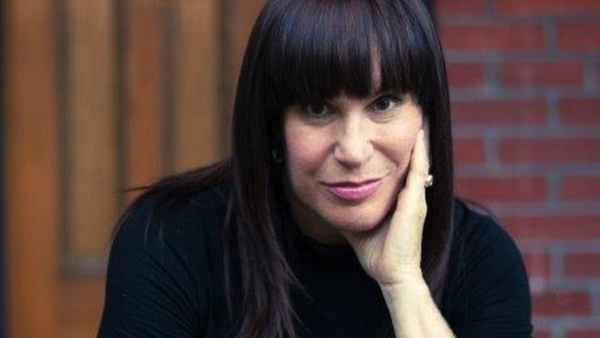
Adrienne Gold is a participant in this year’s international Shabbat Project, Nov. 15-16. (photo from Shabbat Project)

FOMO: fear of missing out. Four letters that encapsulate the human hankering for absolute control, and the profound anxiety we suffer from knowing we will simply never satisfy it.

FOMO is an impulse exacerbated by social media, by scrolling through the Facebook, Instagram and Snapchat lives of others, consciously and unconsciously measuring ourselves up to their non-existent standard of living. Comparing our brats to their seraphs, our tiresome drudgery to their idyllic island getaways, our 1980s-style kitchens to their gleaming open-plan masterpieces. And, while social media does not itself cause narcissism, it certainly can help flick the switch of those tendencies latent within us. Especially those of us who suffer from FOMO by nature.

When I was a young girl, I constantly worried that I had missed something, anything that would change the tone and balance of my carefully curated life. In our family, kids came in for the night “when the lights went on” in the street. Many of my neighbourhood friends could stay out later than that, and I remember like it was yesterday sitting in my room fretting over the potential new allegiances that would be formed without me; the stories and games and fun that I would not be privy to. I would be gripped by a terror that things would not be “as I left them” and that the next day would begin leaving me in the dark.

This mindset remained with me through my teens. Wherever I was, I wondered what was happening somewhere else. Whoever I was speaking with, at whatever party, my eyes roved the room to see what else was happening, who else was there? It was as though I had internalized that whatever I was engaged in could not possibly be where the “action” was; that I was missing something that could only happen if I were not there. And this unease continued into my dating life and well into my 20s. There was no me without my agitating the universe, without my scrambling and “hustling for worthiness.”

So, imagine my horror when, many years later, I learned about Shabbat. No phone. No computer. No car. No shopping. No way! What possible benefit could there be in living 24/6 in a 24/7 world? And what if someone needed to reach me? What would I fill those gaping 24 hours with? I was a human doing, with no clue how to be. Or who to be.

Yet, in that struggle with the very idea of Shabbat came the deep epiphany that radically changed not just my world, but my psyche. In advance of this year’s international Shabbat Project, which will be taking place in cities around the world Nov. 15-16, I’m inspired to share this journey.

I was 40 when I started to keep Shabbat. (How that came about is too lengthy and labyrinthine a tale for this space.) Married with two children, deep into my career and as afflicted by FOMO as ever. Nevertheless, I was determined to do this. While the anxiety clung in the early stages of my “disconnecting in order to connect,” it was less than a year before I began to understand something that had eluded me my entire life – apparently, the world turned and ran quite nicely without my help. The control I was seeking could be found by relinquishing it. The Mishnah tells it straight when it says, “Who is rich? He who rejoices in his lot.” I learned to be still, to rejoice in my lot, to be in the moment. I felt rich.

In short, Shabbat forced me to stop trying to play God, to stop long enough to recognize that He did just fine without me. I discovered that “letting go and letting God” gave me the freedom to find value and purpose, and even joy – not in productivity but in simply being. I felt in touch with my soul and grasped in a deep sense its primacy over the body.

Over 20 years have passed since the therapeutic benefits of Shabbat first liberated me from my FOMO and gifted me perspective and clarity on what it means to be a human being; since I first tasted the indescribable spiritual delights of the Jewish day of rest.

Today, I have the pleasure and the privilege of introducing thousands of women every year to Shabbat and more. Momentum – formerly known as the Jewish Women’s Renaissance Project – has, to date, taken more than 18,000 women from 27 countries on an eight-day journey to Israel to grow as people, connect to Jewish values, engage with the Jewish homeland, foster unity not uniformity, and return to take action as leaders in their communities.

As a leader on these trips, I have seen thousands of women try to make Shabbat more meaningful in some way or another. These women saw the power of what disconnecting in order to connect might do for their families, and for themselves.

Shabbat is the only mitzvah described in the Torah as a “gift.” Tragically, it’s a gift that too many of us never take the time to unwrap. I was one of them. What I didn’t understand was that ceasing to create would make me more creative, that not exerting myself would give me more strength, that being where I am, limited, constrained, here and nowhere else, has alerted me to the joy in my heart and in my life.

You were wondering about that pesky FOMO? It has become JOMO: joy of missing out.

Adrienne Gold, a participant in this year’s international Shabbat Project, was a fixture on Canadian television for more than 15 years, hosting her own daily fashion and beauty program. Today, she is a trip leader for Momentum (formerly, the Jewish Women’s Renaissance Project).

Format ImagePosted on November 8, 2019November 6, 2019Author Adrienne GoldCategories Op-EdTags Judaism, lifestyle, Shabbat Project, women

From beginning again

Recently, I decided to conquer an inner anxiety and do something new. It wasn’t skydiving or anything dangerous. I was hoping to follow a pattern and sew myself some clothes. I write knitting patterns, so am very familiar with the notion of “winging it” and making my own design, but I needed to go back to the beginning with sewing.

As a teen, my mom insisted I take sewing lessons and my dad did them with me. (My dad was good at it and made himself a bathrobe and the upholstery for a convertible he restored!) The sewing assignment was to counteract my terrifying enthusiasm for my mom’s fabric and yarn stash. I’d dive into her stuff, grab scissors, cut fabric up and make things. For instance, I made myself shorts out of some old Winnie-the-Pooh curtains – and my mom was livid. Why? Well, she’d sewn those curtains for me as a kid in the first place. As a teenager, I couldn’t figure what she was saving them for, and I likely upset her by “taking her stuff” and hurting her feelings. She made something, and I remade it without asking. Worse than that, I didn’t use a pattern to do it!

My mom’s discipline as a seamstress came from required dressmaker/tailoring coursework she’d taken at Cornell University. When she was a student there, young women had to take home economics. My mom already could sew like nobody’s business, but she learned a lot from those required courses. It made her crazy to see me break all the rules.

Her reaction to my freeform creativity is probably what made me so anxious about my ability to follow a pattern as an adult. It was a mental block. Even though I am fully capable of it, I still feel anxiety when I face the tissue paper cutouts and instructions.

Now that I have sewn one dress, following a pattern exactly, I’ll let the truth out. I’m halfway through a second sort of vest/tunic based on the first dress pattern, and I’m already winging it. Once I started again from the beginning, I regained my crazy freeform gusto. I can’t hold back!

Each year, we, as a Jewish people, start something right from the beginning. We begin reading the Torah, starting with the creation of the world. We jump into B’reishit, Genesis, and we hear a familiar story. Some people roll their eyes, saying, I’ve heard this before. However, like learning anything new (sewing, for instance), the learning curve is steep. There is a lot in there.

As a sewer, I saw things I missed the first time I followed a pattern. I didn’t do something wrong, I was just less practised before; I was a beginner. Those of us who have been studying Jewish texts every year, reading the Torah portion or commentaries or Midrash – well, we all start out as beginners and eventually become more immersed in the material. There is always something rich, new and different to consider or pursue as we read it again.

It’s like rereading a favourite novel. Now that I know how it’s going to end, I don’t have to rush. I can enjoy all the twists, the foreshadowing, the way the writer uses the language in telling us the story. I see and understand things that I might have missed in a first reading.

I’m not going to lie. Just like sewing, knitting, cooking or building something you’ve made before, rereading the text can feel rote, like you are on autopilot. Sometimes reading a familiar text is actually an opportunity to meditate on something different altogether.

This morning, I dug into making that vest because I needed something with pockets to go with my Shabbat skirts or dress pants. I wanted to make something that would come out OK in a life or world that sometimes seems very unpredictable.

By the time you read this, Simchat Torah and the Canadian federal election will be weeks over, but our new year is really just beginning. It’s a time of great potential, even as the light fades earlier each day. We have so much good and creative work ahead of us. Rereading B’reishit gives a chance to relive something magical and important to our identity as Jewish people – an origin story. At the same time, the characters of Genesis offer us insights into today, into our lives, identities, families and communities.

It’s true that sewing is an old-fashioned skill that I’m getting a hold of again. However, like Genesis, we can say “Look! Everything old is new again!” and jump into learning with emotion – and enthusiasm.

Joanne Seiff has written regularly for CBC Manitoba and various Jewish publications. She is the author of three books, including From the Outside In: Jewish Post Columns 2015-2016, a collection of essays available for digital download or as a paperback from Amazon. See more about her at joanneseiff.blogspot.com.


Posted on November 8, 2019November 6, 2019Author Joanne SeiffCategories Op-EdTags Jewish calendar, Judaism, knitting, lifestyle, sewing, Torah

The knowledge that we die

Shabbat, Oct. 26
B’reishit, Genesis 1:1-6:8
Haftarah, Isaiah 42:5-43:10

One Yom Kippur, a rabbi was warning his congregation about the fragility of life.

“One day, everyone in this congregation is going to die,” he thundered from the bimah.

Seated in the front row was an elderly woman who laughed out loud when she heard this.

Irritated, the rabbi said, “What’s so funny?”

“Well!” she said, “I’m not a member of this congregation.”

Membership and affiliation aside, the most important lesson we learn in life is that one day it will end: one day we are going to die.

This is the great lesson and gift of the parashah B’reishit, with its iconic tale of Adam and Eve in the Garden of Eden.

Amid all the lush greenery, flowing rivers and natural beauty of the garden, at its centre stood two trees. All of the trees and their fruits were permitted to human beings as food, except for the Tree of All Knowledge and the Tree of Life. We read: “God Eternal then commanded the man, saying, ‘You may eat all you like of every tree in the garden – but of the Tree of All Knowledge you may not eat, for the moment you eat of it you shall be doomed to die.’” (Genesis 2:16-17)

When they eat from the Tree of All Knowledge, the knowledge they get is that, one day, they are going to die. Before the forbidden fruit, they didn’t even know death was part of the equation. Now they know and it scares them – to death. They like the garden: life there is beautiful, they don’t want it to end and, standing right next to the Tree of All Knowledge, is the answer to their anxiety – the Tree of Life. One bite from that fruit and they will live forever. This terrifies God. We read: “God Eternal then said, ‘Look, the humans are like us, knowing all things. Now they may even reach out to take fruit from the Tree of Life and eat, and live forever!’ So the Eternal God drove them out of the Garden of Eden to work the soil from which they had been taken.” (Genesis 3:22-23)

God kicks them out of the garden – not as punishment, but as a blessing. If they think they will never die, then how will they truly live? If you have eternity, then there is no urgency for anything; with unlimited tomorrows, everything can wait.

The German existentialist Martin Heidegger, in his masterwork Being and Time, taught this: he said that, in order to truly live authentically, we have to confront death head-on. In other words, knowing that I am going to die is what allows me to truly live. Heidegger wrote: “If I take death into my life, acknowledge it and face it squarely, I will free myself from the anxiety of death and the pettiness of life – and only then will I be free to become myself.”

But, as Ernest Becker wrote in his Pulitzer Prize-winning masterwork The Denial of Death, even though we objectively know that we are all going to die, we don’t actually believe what we know to be true.

Becker’s work is important because of his astute observation that our obsession with not dying actually gets in the way of our fully living.

We are so focused on outwitting, outlasting and outplaying death, staying in our own Garden of Eden, that we make amazingly selfish choices in life. We set up what Becker calls “immortality systems” – non-rational belief structures that give way to the belief that we are immortal.

For example, we try to buy immortality by accumulating possessions and wealth, as if our things will somehow protect us when death comes knocking. We take on heroic roles in our business or our household: we think that, if we make ourselves indispensable, death can’t touch us. “I can’t die this week; I have a sales meeting on Thursday.”

Judaism suggests a different approach to death and to life. Rather than deny death, Jewish tradition instructs us to embrace it. Judaism teaches that we should live each day as if it is our last because we don’t know, it very well may be (Babylonian Talmud, Shabbat 153a).

Imagine, as God does in this parashah, if human beings directed all the energy they focus on not dying toward the more sacred goal of truly living. How would you fill each moment of every day if you truly knew and understood that you will never get that moment back once it has passed; that it is gone forever?

The psalmist declares: “The span of our life is 70 years or, given the strength, 80 years … and they pass by speedily and we are in darkness; teach us to count our days rightly, that we may attain a wise heart.” (Psalm 90:10, 12)

The wise person, our rabbis teach, counts each day and makes each day count. Knowing that our days are numbered helps us clarify our priorities and our purpose. Our most precious possession is not money or things: you can always get more of those. No, our most precious and finite possession is time.

Henry David Thoreau wrote: “I went to the woods because I wished to live deliberately…. I wanted to live deep and suck out all the marrow of life, to put to rout all that was not life, and not, when I had come to die, discover that I had not lived.” (Walden, reissue edition, Princeton University Press, 2016)

When Adam and Eve are kicked out of the garden, the Torah records the very first thing they do. “And Adam knew his wife Eve and she bore him a son.” (Genesis 4:1) They have a child: the very realization of “I’m not going to live forever” is answered with our best attempt at immortality – progeny.

And so, a final question remains. Where is the true paradise? Is it in the Garden of Eden where no one ever dies and time is limitless? Or is it East of Eden, outside the garden, where every moment is precious, every decision is life-changing and the fruit, sometimes bitter, compels us to appreciate the sweet?

Rabbi Dan Moskovitz is senior rabbi at Temple Sholom and author of The Men’s Seder (MRJ Publishing). He is also chair of the Reform Rabbis of Canada. His writing and perspective on Judaism appear in major print and digital media internationally. This article originally appeared on reformjudaism.org.

Posted on November 1, 2019October 30, 2019Author Rabbi Dan MoskovitzCategories Op-EdTags dying, Ernest Becker, Henry David Thoreau, lifestyle, Martin Heidegger, philosophy, psalms, Reform Judaism, Talmud, Torah

A dose of humility, gratitude

Between Rosh Hashanah and Yom Kippur, there were lots of opportunities for reflection and self-examination. I had a helpful reminder when I recently taught a workshop on recycling and reuse in fibre arts.

I worked as an English, writing and adult education teacher when I was in my 20s, and I’ve taught off and on ever since. Lately, I’ve mostly taught fibre arts, but I enjoy teaching in general. Often, as we moved for my husband’s academic life, I’d give up my teaching job, uproot myself and try again in the next place we lived. It was a challenging situation. A couple of moves ago, I switched over to writing, editing and design, and only occasional teaching. Now it all has to fit in around my kids’ needs as well, so I’ve taught a lot less in recent years.

My wake-up call came when I checked in at a teaching venue. About six years ago, I helped create the festival that hosted my workshop. First, the volunteer asked who I was and what I needed. I pointed to the class list and said I was teaching. The volunteers started chatting with me, “Oh,” they asked, “Do you knit?”

“Well yes,” I replied. “I write knitting patterns.”

It went from there. They had no idea who I was at all. I explained that I had been a teacher at the festival more than once. It came up that I’d written books on the subject and, if they couldn’t take my class, as they were volunteering, they could download my designs online and learn that way.

It continued when they rushed into my classroom five minutes into the workshop to hand out name tags. (They’d forgotten them.) I smiled and said we already had them. “Oh,” they responded, “someone else gave them to her!” I had to smile back and say, “I brought them myself – something I’d learned from helping to start this festival.”

We live in an age of constant social media bombardment and self-marketing. If we aren’t always in our profession’s limelight somehow, it’s possible that no one will know us; that anything we’ve accomplished is irrelevant if we’re not at the top of somebody’s Instagram or social media feed.

This encounter reminded me that, even if I’m teaching, being paid and my bio is up on the website, well, I’m a nobody like everybody else. We all put on our pants one leg at a time. We may think a lot of ourselves, and that’s well and good, but is there any reason to think that? (In my case, not really!)

From Selichot up to Yom Kippur is when we’re supposed to focus on self-examination and make apologies. We make space and time to think about when we missed the mark and how we can do more. We have to reflect on whether we have run away from our responsibilities or failed in our lives. How can we do better at keeping our promises, and go beyond?

On Yom Kippur, we read the Haftorah portion of the story of Jonah (Jonah 1:1-4:11). This is a hard story to hear and I always find myself with conflicting emotions. I mean, who thinks they can get a direct order from the Almighty and then take a boat ride in the opposite direction? Is it normal to get thrown overboard and swallowed by a whale? Not so much. (It’s a whale of a tale!)

Once Jonah gets to Nineveh, he does what he is asked to do – and the people respond. They atone. This doesn’t please Jonah either. Jonah wishes that they were punished rather than forgiven for their previous bad behaviour. He wants retribution rather than compassion.

Jonah is human, like all of us. He learns what it means, eventually, to lose everything. He is abased and despondent. It’s miserable, but he learns a lot.

After my class, which went very well, by the way, and was a lot of fun, I realized that I was pitying myself, like Jonah. I spent time thinking, I’ve lost everything, nobody’s heard of me anymore.

Avoiding the great big pity party, I resolved that I should be grateful. I’d had fun and earned money in my classroom. When others recognized me later that day, I felt grateful and tried to celebrate the connections I had made in previous years.

For me, having twins and some health challenges has meant that I’ve had to adjust my worldview. Like Jonah, I’ve had to learn that I’m just not in control. Instead of running away from Nineveh, I gave up some volunteer activities, work commitments and other things when I discovered that I couldn’t manage it. Like Jonah, I can’t blame others who flourished in the meanwhile. Jonah had to sweat it out in the heat, alone, to learn this, but here it is: we’re not in control.

Instead of feeling angry that we’re not recognized or that Nineveh wasn’t punished appropriately for its mistakes, let’s turn the story around. It’s great that there’s a divine power at work who saves Nineveh and Jonah, and teaches him (and me) important lessons about compassion. I hope I didn’t embarrass those volunteers.

A little navel-gazing helped me realize what I needed for 5780: an increased dose of humility and gratitude.

Joanne Seiff has written regularly for CBC Manitoba and various Jewish publications. She is the author of three books, including From the Outside In: Jewish Post Columns 2015-2016, a collection of essays available for digital download or as a paperback from Amazon. See more about her at joanneseiff.blogspot.com.

Posted on October 11, 2019October 10, 2019Author Joanne SeiffCategories Op-EdTags gratitude, High Holidays, Judaism, lifestyle
Compassion over hate

Compassion over hate

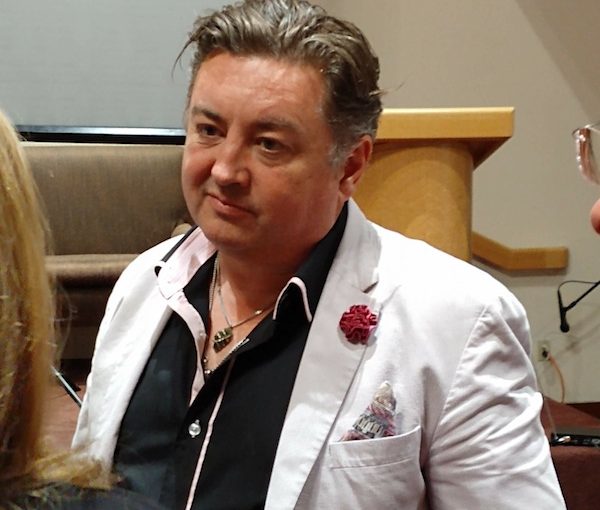
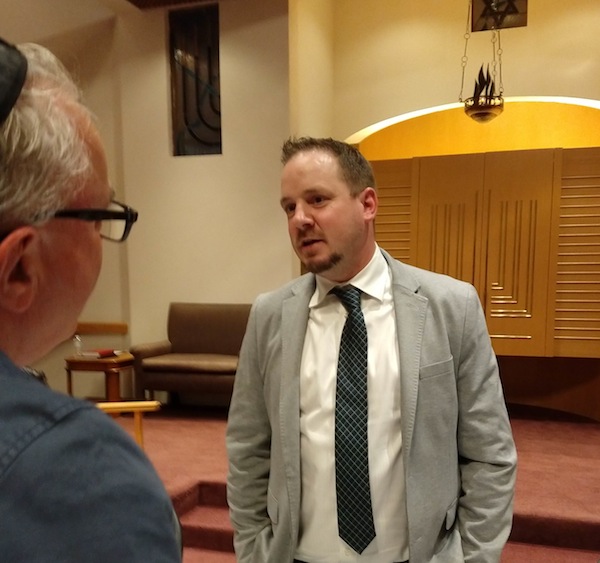
Tony McAleer, who helped found the organization Life After Hate, spoke at Congregation Beth Tikvah last month, along with fellow Life After Hate member Brad Galloway. (photo by Pat Johnson)

A former leader in Canada’s far-right white nationalist movements says targets of white supremacist extremism should not be expected to “hug a Nazi.” But, as difficult as it may be, seeing the humanity in everyone and finding compassion for people who lack compassion may be key to reducing the problem of racist extremism.

Tony McAleer was a member of the so-called White Aryan Resistance and his early embrace of technology and the internet helped propel that movement into the digital age. He later helped found the organization Life After Hate and now works with others who want to leave the neo-Nazi movement. He shared his personal history at Beth Tikvah synagogue, in Richmond, on Sept. 8. He has also spoken at other synagogues and venues in recent weeks.

“While we condemn the activities, while we condemn the ideology, we don’t condemn the human being,” McAleer said of his organization’s strategy. “It’s coming from that place of compassion.… The hardest thing to do in the world is to have compassion for people who don’t have compassion. We do that as harm reduction – hurt people hurt people, and we can bring them back from that place of hurt so they don’t do it anymore.”

McAleer grew up in a stable, comfortable Dunbar home, which contradicts some stereotypes, he said. He attended private Catholic school but lost respect for authority figures when he caught his father with a woman who was not McAleer’s mother.

“Can anyone remember the day when God fell off the pedestal?” he asked. His grades fell, his behaviour deteriorated and he was regularly sent to the principal’s office for canings.

“When I look back on it, I don’t think that I’ve ever felt more powerless than I did in that office time after time after time after time,” he said. “It didn’t make my grades go up. I continued to tune out.… I went from listening to Elton John and Queen to the Clash and the Sex Pistols. I was angry and the music I listened to was angry. It eventually led me down the road into the punk scene and later into the skinhead scene. And, in the skinhead scene, I found an outlet for my anger.”

Ideology is secondary, at best, as an attractant to racist groups, he said.

“What we find in the young men and women who are drawn to these movements is there’s an underlying rage, underlying vulnerability that makes the ideology so seductive,” he said. “I want to be very clear here. I’m not for a minute blaming anything I did on my childhood. Everything I did I chose to do and I take accountability for that and I always will. I work for Life After Hate, do things like this to pay back for that.”

He shares the story of his early life as an explanation, not as a justification, he said.

“What I found in the movement, what I found from being a skinhead – I found a sense of power, a sense of purpose, a sense of meaning,” McAleer said. “I got power when I felt powerless. I got attention when I felt invisible and I got brotherhood, camaraderie and acceptance when I felt unlovable.… Those are the vulnerabilities that make the ideologies so seductive. If you have those in a healthy way, the ideology doesn’t make sense to you. But, for somebody craving those things, the ideology becomes something powerful, a false seduction.”

When he was 21 years old, McAleer’s girlfriend gave birth to a baby girl.

“For the first time, I connected to another human being. Up until that point, I was completely cut off from my heart, I was completely dehumanized,” he said. “I believe that the level to which we dehumanize other human beings is a mirror reflection of how internally disconnected and dehumanized that we are.”

That began the transformation. He had a son months later and was soon a single father being assisted by his mother who, he said, “never gave up on me.”

“It’s safe to love a child,” he said. “They see the magnificence in us when we can’t see it ourselves when we look in the mirror…. The more I can connect to my humanity, the more I can connect to the rest of humanity. I couldn’t connect to the rest of humanity because I couldn’t connect to myself.”

Though he was heavily involved in antisemitism, it wasn’t about Jews, he said.

“I was projecting my crap and I had a vehicle to project it onto – the Jewish people – and that’s what I did.”

The compassion Life After Hate promotes must be accompanied by healthy boundaries and consequences, he said.

“It doesn’t mean we let people off the hook. It doesn’t mean we don’t hold people accountable,” he said. “We do hold them accountable. It’s like tough love. But we need to see the humanity, even in someone whose heart is filled with hate. I don’t think we can afford to dehumanize anybody regardless of how inhuman their behaviour. I believe that nobody is irredeemable. It’s tough work.”

Brad Galloway, who is also a member of Life After Hate, joined McAleer at the event. Also a former white supremacist, Galloway is now completing a degree in the school of criminology and criminal justice at the University of the Fraser Valley. He researches extremism and participates in interventions with members of hate groups to help them leave the movements.

Galloway too came from a middle- to upper-class home. After a fairly typical adolescence and a period of struggling to find his identity, he ran into a childhood friend who was involved in the white power movement.

“I was looking for an identity,” said Galloway. “I was looking for something to belong to, something that I can call my own. He gave me the chance. We’ll give you brotherhood, we’ll back you up, we’ll be there for you … some sort of pseudo-support network which never, never came to fruition. They never provided any of those things for me.”

photo - Brad Galloway
Brad Galloway (photo by Pat Johnson)

Like McAleer, it was fatherhood that made Galloway realize his extremism was putting his family at risk.

He also reflects on compassion he received from police and others during his time in the far-right.

“Why do these people care about me?” he wondered, adding that he began to recognize that individuals who were kindest to him were often members of the very cultural groups he demonized. After a gang brawl where Galloway was nearly killed, he saw compassion in action.

“I ended up in a hospital and I’m lying on the table and a doctor walks in and he’s an Orthodox Jew. I’m lying there with a swastika shirt on, blood all over me, thinking this guy should not help me. I do not deserve to be helped at all right now…. I felt like I was a terrible person and I didn’t feel I deserved this person’s time,” said Galloway. “He did not mention anything about me. He just did his job as a doctor and provided me exactly what I needed. That moment made me start to think about all these different times when minority communities had been good to me.”

Since the racist rally in Charlottesville, Va., in 2017, Life After Hate has been inundated with requests for help. About 300 new cases have opened, about half of which are people trying to leave the movement, the other half family seeking help to extricate their loved ones.

Cpl. Anthony Statham, one of two members of the RCMP’s B.C. Hate Crimes Unit also spoke, outlining the legal strategies employed to fight extremism.

McAleer’s book, The Cure for Hate: A Former White Supremacist’s Journey from Violent Extremism to Radical Compassion has just been released by Arsenal Pulp Press.

Format ImagePosted on October 11, 2019October 11, 2019Author Pat JohnsonCategories LocalTags antisemitism, Beth Tikvah, books, Brad Galloway, lifestyle, racism, The Cure for Hate, tikkun olam, Tony McAleer, white supremacism
Cultivating self-awareness

Cultivating self-awareness

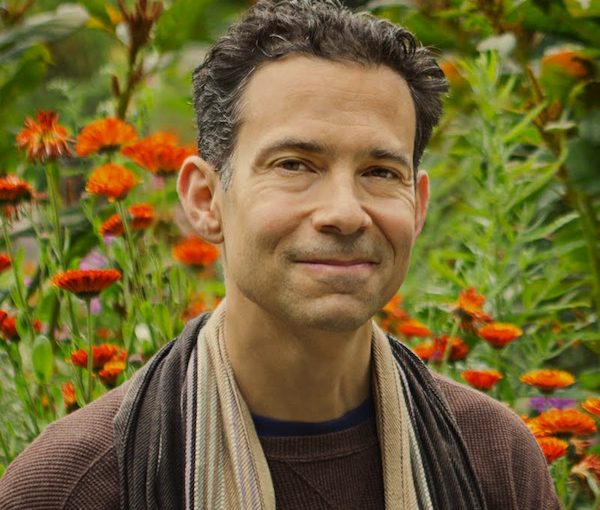
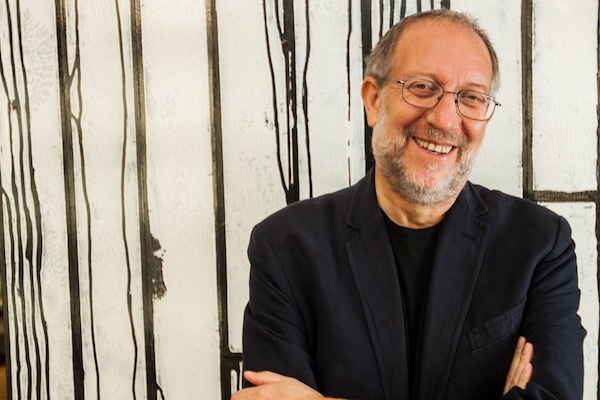
Oren Jay Sofer believes that, with nonviolent communication, a person can learn “how to identify what is most important to you and what’s more important to someone else … and, then, how to come up with more solutions and ideas for complex situations.” (photo from Oren Jay Sofer)

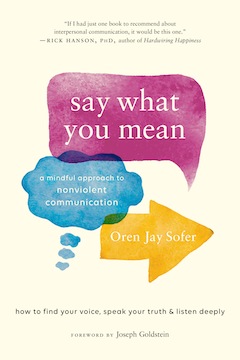
Oren Jay Sofer, author of Say What You Mean: A Mindful Approach to Nonviolent Communication, took a longer route to finding his connection to Judaism. “Probably,” he said, “most of it was because the teachings weren’t really available for me growing up – the more mystical or spiritual teachings of Judaism.”

The Buddhist practice of meditation resonated with Sofer. Then, he happened upon Dr. Marshall Rosenberg’s practice of nonviolent communication. Through learning about it, Sofer gained an accessible and practical complement to the inner transformation of meditation. “The two really started to work together in a synergistic fashion – in my personal transformation, in my relationships and in my direction in life,” said Sofer. “That, over time, led me to the work I’m doing today.”

A couple of years ago, Sofer was approached by a publisher about writing a book on his practices. He jumped at the opportunity to share what he had learned from integrating meditation practice, nonviolent communication and other concepts through Dr. Peter Levine’s work of somatic experiencing, a way of healing trauma through the nervous system.

“I was getting feedback [from students] that there was something unique about bringing these systems together, that people found really helpful,” said Sofer. “So, I wanted to reach more people, to write it down in a way that other people can go through this sort of progress of learning that I’ve put together – that could be of great benefit to them personally and for our society, in terms of the kinds of divisiveness and polarization people are experiencing around the world in so many places.

“I wanted to reach more people and help them have the tools to have more meaningful conversations in their life,” he added.

Sofer has found that communication and mindfulness are effective vehicles for aligning one’s life with one’s values, insofar as the choices we make, the work we do and the conversations and relationships we have.

This way of communication is accessible to anyone, no matter what age, religious belief, race, gender, or otherwise. “It’s for anyone who wants to improve their communication and have better conversations – parents, employees, supervisors, spiritual seekers, students, anyone – that is something I find so powerful and gratifying about this work, that it unites us as human beings,” said Sofer.

“We all communicate. And, we do it pretty much all day long in every area of our life. Even when we are alone, we have that inner voice going. So, the audience isn’t limited in any way, because we all depend on communication in our lives and it’s one of the things that determines our happiness. I really see this as a life skill that’s important for everyone.”

According to recent research conducted by Shawn Achor and others, the social relationships and connections we foster are one of the greatest predictors of long-term happiness, as well as of many different health markers. And, the quality of our relationships, to a large degree, is determined by our communication skills.

image - Say What You Mean book coverThe book is set up rather like a field guide of how to communicate and converse. So, it’s not the kind of book you will read over one weekend or week. It is one you can read over several months, taking a few pages at a time, with exercises and principles interspersed throughout to work on and absorb.

“You can’t learn to swim by reading a swimming manual, right?” said Sofer. “You need to get into the water. You can’t learn to communicate from a book. You have to do it. But, the book can tell you how to do it in a way that you’re running experiments that will give you the information you need to figure out what will work best in your life and relationships. It’s really meant to be applied in a step-by-step way. And, it takes people through a whole arc of training with specific foundations to integrate into their lives.”

The book’s first foundation is to “Lead with Presence,” which Sofer views as an essential prerequisite for any effective conversation or meaningful relationship.

“We need to be here to have more self-awareness if we’re going to navigate the complex terrain of human interaction with any skill or clarity,” said Sofer. “So, there’s a whole section about what it means to have more self-awareness, how to cultivate it and how to bring it into our relationships and conversations.

“And, there are all kinds of practices, skills and pointers – everything from pausing, to developing more embodied self-awareness, to developing what I call ‘relational awareness,’ which is the capacity to be not just aware of yourself, but of the other person, space and energy between you.

“Then, the book looks at our intentions, which is a huge component of human interaction, happening beneath the words. Our non-verbal communication is, to a large degree, shaped by our intentions.”

With the goals of building the kind of goodwill, trust and collaboration that lead to more satisfying connections, Sofer guides the reader through a self-reflection about their habits, training, family, culture and society, to help them determine which parts need improvement.

“There are many different stories I tell about the power of intention in conversation,” he said. “The third section really looks at how we navigate conversations themselves – in terms of where we place our intentions, how we say what we really mean, how we know what we mean, how we come to more clarity about ourselves about what’s happening, and how we hear others more clearly, even when they’re speaking to us in ways that are critical.

“This section is really where the training in nonviolent communication comes in, looking at the mechanics of the conversation, how to become more skilful, how to identify what is most important to you and what’s more important to someone else … and, then, how to come up with more solutions and ideas for complex situations.”

According to Sofer, one of the roots of violence stems from our relationship to emotional and psychological pain, and the views and beliefs we hold about their origins.

“If I believe that you caused my pain, then there is a very short distance to the assumption that you deserve to be punished or to have retribution, being the cause of my pain,” said Sofer. “In nonviolent communication, we differentiate between the cause and the stimulus. Obviously, we affect one another in this world. We stimulate pain, but we don’t directly cause it. This is a very radical concept in many ways for people to take in.

“When we examine it, we start to see the truth of it, which begs the question if anyone can actually make you feel some way. And, you know, two different people will respond to the same event completely differently. One person will respond completely differently on two different days.

“So, the nonviolent component, in one way, is pointing to this link between our language and our willingness to use physical violence to accomplish our aims or meet our needs. When we think and speak in ways that are connected to our shared humanity, one of the aims of nonviolent communication is that violence no longer makes sense, as we’re in touch with a deeper layer of our existence.”

Sofer also speaks about the origins of nonviolent communication as a tool to create social change, noting “Without transforming our outlook, interactions and consciousness, it’s impossible to transform our society for the better.”

Sofer’s book, Say What You Mean: A Mindful Approach to Nonviolent Communication, is sold by many vendors, but there is a free gift offer when it is purchased from the author’s page, orenjaysofer.com/book.

Rebeca Kuropatwa is a Winnipeg freelance writer.

Format ImagePosted on September 20, 2019September 17, 2019Author Rebeca KuropatwaCategories BooksTags lifestyle, nonviolent communication, Oren Jay Sofer, relationships
Laying out Israel’s case

Laying out Israel’s case

Yossi Klein Halevi’s Letters to My Palestinian Neighbour is recently out in paperback. (photo by Ilir Bajraktari / The Tower)

Yossi Klein Halevi grew up in the right-wing Zionist youth movement Betar, the ideological stream of Ze’ev Jabotinsky and Menachem Begin. As a youth, he wore a silver outline of the land of Israel “as we understood it” that included not only the West Bank but also the area that became the kingdom of Jordan, which the British had severed from historic Palestine. As he’s aged, he’s emphatically mellowed.

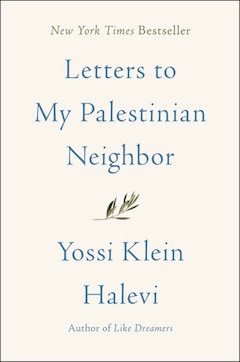
His book Letters to My Palestinian Neighbour, recently out in paperback, is, he writes, “an attempt to explain the Jewish story and the significance of Israel in Jewish identity to Palestinians who are my next-door neighbours.”

He lives in the French Hill neighbourhood of Jerusalem and repeatedly throughout the book reflects on how he is face-to-face with the division between their places.

Each chapter – essay, really – begins with “Dear neighbour.”

image - Letters to My Palestinian Neighbour book cover“From my apartment, I can just barely see the checkpoint you must cross – if you have a permit at all – to enter Jerusalem.” He talks about when, “before the wall was built, before so much else that went wrong, I tried to get to know you.”

In 1998, he set out on a pilgrimage into Islam and Christianity, a religious Jew “seeking not so much to understand your theology as to experience something of your devotional life. I wanted to learn how you pray, how you encounter God in your most intimate moments.”

During those comparatively placid times, he recalls, Israelis made little effort to accommodate their neighbours.

“For many years we in Israel ignored you, treated you as invisible, transparent. Just as the Arab world denied the right of the Jews to define themselves as a people deserving national sovereignty, so we denied the Palestinians the right to define themselves as a distinct people within the Arab nation, and likewise deserving national sovereignty. To solve our conflict, we must recognize not only each other’s right to self-determination but also each side’s right to self-definition.”

Klein Halevi made aliyah from the United States in 1982. Now a senior fellow of the Shalom Hartman Institute – “Israel’s preeminent centre for pluralistic Jewish research and education” – he co-directs the institute’s Muslim Leadership Initiative, is the author of numerous books and is a prolific commentator and former contributing editor of the New Republic. He has made the book’s Arabic translation available to download for free.

He argues that each side must be allowed to define themselves.

“So who are the Jews? A religion? A people? An ethnicity? A race?… That question impacts directly on our conflict. It goes to the heart of the Arab world’s rejection of Israel’s legitimacy as the nation-state of the Jewish people,” Klein Halevi writes. “Even Palestinian moderates I’ve known who want to end the bloodshed tend to deny that the Jews are an authentic nation. So long as Palestinian leaders insist on defining the Jews as a religion rather than allowing us to define ourselves as we have since ancient times – as a people with a particular faith – then Israel will continue to be seen as illegitimate, its existence an open question.”

He acknowledges that the problem occurs on both sides.

“Some Jews continue to try to ‘prove’ that Palestinian national identity is a fiction, that you are a contrived people. Of course you are – and so are we. All national identities are, by definition, contrived: at a certain point, groups of people determine that they share more in common than apart and invent themselves as a nation, with a common language, memory and evolving story. The emergence of a nation is an inherently subjective process.”

But he attempts to disabuse Palestinians and Arabic readers of the idea that Israel can be overcome.

“I’ve often heard from Palestinians that, just as the Ottoman Turks came here and left, and the British came here and left, so, too, will the Zionists one day leave. That analogy ignores Zionism’s singular achievement. None of those invaders founded a thriving society, let alone a sovereign state. They eventually went back to their own homelands. More than anything else, I need you to understand this: the Jews succeeded where the Crusaders and the Ottomans and the British failed because we didn’t merely come here. We returned.”

This sense of destiny is evocatively expressed when Klein Halevi writes about the War of Independence.

“Our side began the war with three tanks and four combat planes. And we were alone. That, as it turned out, was a crucial advantage, because desperation forced us to mobilize our entire society for a war of survival. If your side had prevailed, few if any Jews would have been left here. As a result, the Jews fought with such determination that only a handful of our communities fell. There was nowhere left to run; we’d reached the final shore of Jewish history.”

But the author makes an effort to acknowledge some of the harsh realities of that victory and the subsequent Israeli control of Palestinian areas and its effect on people. He recalls a moment during a call-up during his reserve service.

“A chubby teenage Palestinian boy, accused of stone throwing, was brought, blindfolded, into our tent camp. A group of soldiers from the border police unit gathered around. One said to him in Arabic: ‘Repeat after me: one order of hummus, one order of fava beans, I love the border police.’ The young man dutifully repeated the rhymed Arabic ditty. There was laughter.… That last story haunts me most of all. It is, seemingly, insignificant. The prisoner wasn’t physically abused; his captors, young soldiers under enormous strain, shared a joke. But that incident embodies for me the corruption of occupation. When my son was about to be drafted into the army I told him: there are times when as a soldier you may have to kill. But you are never permitted, under any circumstances, to humiliate another human being. That is a core Jewish principle.”

He acknowledges his pain over an eventual partition that would, for example, see the Jewish holy city of Hebron as part of an independent Palestine. But, he says: “The only solution worse than dividing this land into two states is creating one state that would devour itself. No two peoples who fought a 100-year existential war can share the intimate workings of government. The current conflict between us would pale beside the rage that would erupt when competing for the same means of power. The most likely model is the disintegration of Yugoslavia into warring ethnic and religious factions – perhaps even worse. A one-state solution would condemn us to a nightmare entwinement – and deprive us both of that which justice requires: self-determination, to be free peoples in our own sovereign homelands.… If Jaffa belongs to you and Hebron belongs to me, then we have two options. We can continue fighting for another 100 years, in the hope that one side or the other will prevail. Or we can accept the solution that has been on the table almost since the conflict began, and divide the land between us. In accepting partition we are not betraying our histories, neighbour; we are conceding that history has given us no real choice.”

Near the end, Klein Halevi reflects that some simple human goodness could have made a massive historic difference.

“Israel is a restless society of uprooted and re-rooted refugees and children of refugees, and the dark side of our vitality is a frankness that can easily become rudeness, the antithesis of Arab decorousness. Israelis often don’t know how to treat each other with respect, let alone those we are occupying. We are a people in a hurry to compensate for our lost centuries of nationhood, a people that doesn’t pay attention to niceties. Sometimes I think that, if only we’d known how to show your people simple respect, so much could have been different here.”

The new paperback edition includes an epilogue of “letters” in response to his neighbourly missives. Some, the author admits, are predictably harsh, dismissive and threatening. But many are long, thoughtful and inspiring. Klein Halevi has started a conversation. It is invigorating and heartily recommended to be a part of it as a reader.

Format ImagePosted on September 20, 2019September 17, 2019Author Pat JohnsonCategories BooksTags civil society, history, Israel, Israeli-Palestinian conflict, lifestyle, philosophy, Yossi Klein Halevi

Need earth-friendly policies

We are now well into the Hebrew month of Elul, which provides an incentive for heightened introspection, a chance to practise teshuvah, changes in our lives, before the Days of Awe, the Days of Judgment, the High Holidays of Rosh Hashanah and Yom Kippur. The shofar is blown every morning (except on Shabbat) in synagogues during the month of Elul to awaken us from slumber, to remind us to consider where we are in our lives and to urge us to consider positive changes.

How should we respond to Elul today? How should we respond when we hear reports almost daily of severe, often record-breaking, heat waves, droughts, wildfires, floods and storms; when July 2019 was the hottest year since temperature records were kept in 1880; when 18 years in this century are among the 19 hottest years and 2014, 2015 and 2016 successively broke temperature records; when polar ice caps and glaciers are melting far faster than projections of climate experts; when climate scientists are warning that we could be close to an irreversible tipping point when climate change could spiral out of control with disastrous consequences, unless major changes are soon made; when we appear to also be on the brink of major food, water and energy scarcities; and when, despite all of the above, so many people are in denial, and almost all of us seem to be, in effect, rearranging the deck chairs on the Titanic as we approach a giant iceberg?

Israel is especially threatened by climate change since, among other dangers, a rising Mediterranean Sea could inundate the coastal plain, which contains much of Israel’s population and infrastructure; and the hotter, drier Middle East projected by climate experts makes terrorism and war more likely, according to military experts.

It is well known that one is not to shout fire in a crowded theatre – except if there actually is a fire. The many examples of severe climate change indicate that the world is on fire today. Therefore, we should make it a priority to do all that we can to awaken the world to the dangers and the urgency of doing everything possible to shift our imperiled planet onto a sustainable path.

We should urge that tikkun olam (the repair of the world) be a central focus in all aspects of Jewish life today. We should contact rabbis, Jewish educators and other Jewish leaders and ask that they increase awareness of the threats and how Jewish teachings can be applied to avert impending disasters. We should write letters to editors, call talk shows, question politicians and, in every other way possible, stress that we can’t continue the policies that have been so disastrous.

As president emeritus of Jewish Veg, formerly Jewish Vegetarians of North America, I want to stress that shifting toward a vegan diet is something that everyone can do right away. It would significantly reduce greenhouse gas emissions and it would be consistent with Jewish teachings on preserving human health, treating animals with compassion, protecting the environment, conserving natural resources, and helping hungry people.

The afternoon service for Yom Kippur includes the book of Jonah, who was sent by God to Nineveh to urge the people to repent and change their evil ways to avoid their destruction. Today, the whole world is Nineveh, in danger of annihilation and in need of repentance and redemption, and each one of us must be a Jonah, with a mission to warn the world that it must turn from greed, injustice and idolatry, so that we can avoid a global catastrophe.

Richard H. Schwartz, PhD, is professor emeritus, College of Staten Island, president emeritus of Jewish Veg and president of Society of Ethical and Religious Vegetarians. He is the author of several books, including Judaism and Vegetarianism and Who Stole My Religion? Revitalizing Judaism and Applying Jewish Values to Help Heal Our Imperiled Planet, and more than 250 articles at jewishveg.org/schwartz. He was associate producer of the documentary A Sacred Duty: Applying Jewish Values to Help Heal the World.

Posted on September 20, 2019September 17, 2019Author Richard H. SchwartzCategories Op-EdTags climate change, Elul, environment, lifestyle, Rosh Hashanah, tikkun olam

Posts pagination

Previous page Page 1 … Page 17 Page 18 Page 19 … Page 24 Next page
Proudly powered by WordPress