Skip to content
  • Home
  • Subscribe / donate
  • Events calendar
  • Business Directory
  • FAQ
  • News
    • Local
    • National
    • Israel
    • World
    • עניין בחדשות
      A roundup of news in Canada and further afield, in Hebrew.
  • Opinion
    • From the JI
    • Op-Ed
  • Arts & Culture
    • Performing Arts
    • Music
    • Books
    • Visual Arts
    • TV & Film
  • Life
    • Celebrating the Holidays
    • Travel
    • The Daily Snooze
      Cartoons by Jacob Samuel
    • Mystery Photo
      Help the JI and JMABC fill in the gaps in our archives.
  • Community Links
    • Organizations, Etc.
    • Other News Sources & Blogs
  • JI Chai Celebration
  • JI@88! video

Recent Posts

  • Federation now across BC
  • Israel fighting for its existence
  • Deal strengthens Iran
  • Patriotic belonging diminishes
  • A campaign to engage
  • Upstanders’ first live event
  • Responding to Carney
  • Having your own home
  • Music a family tradition
  • Musical to warm heart
  • Community milestones … June 2026
  • Sharing her passion for Israel
  • Or Shalom reopens its doors
  • JFS from past to future
  • Need holistic approach
  • Sharing stories, advice
  • Journalist shares fears
  • Skills to live together
  • Road to independence
  • Cutting grass with scissors
  • Zionism as a solution
  • Deceit, desire & the divine
  • Reclaiming sacredness
  • Creative project ideas
  • Summer squares and cobbler
  • Thou shalt … summer commandments
  • Legal help for students
  • Revisiting myth of Lilith
  • Wrong person rebuked
  • Canada’s mixed messages
  • Questions for museum
  • Symposium on antizionism
  • Making soccer political
  • CJPAC lauds Pulver’s impact
  • City recognizes Vrba’s legacy  
  • Organ donation saves lives

Archives

Follow @JewishIndie
image - CJN box ad Rockowers 2026

Tag: Israel

Successful launch of Ofek 16

Successful launch of Ofek 16

(photo from Ashernet)

On July 6, using a Shavit-2 rocket, Israel successfully launched the Ofek 16 reconnaissance satellite into Earth’s orbit. The first Israeli satellite (Ofek 1) was launched in 1988. Investment in this field produces strategic defence systems, but also innovations that assist industries in coping with various technological obstacles. Israel is one of 13 countries in the world with full space capabilities (launching satellites), alongside the United States, Italy, France, Japan, India, the United Kingdom, Ukraine, China, Russia, Iran, North Korea and South Korea.

Format ImagePosted on July 10, 2020July 9, 2020Author Edgar AsherCategories IsraelTags astronomy, Israel, science

Canada fails to get seat

There is no way to determine definitively why Canada failed to secure a temporary seat on the United Nations Security Council last week.

Since the UN was created after the Second World War, Canada had generally been elected to one of the temporary seats once per decade. This ended in 2010, when Canada lost its bid, and last Wednesday’s vote represents the second decade of Canadian absence from the prestigious council.

Prime Minister Justin Trudeau contended that the successful countries – Ireland and Norway – had been campaigning longer. Also significant may have been the fact that Canada’s contributions to foreign aid and UN peacekeeping efforts have declined in recent years. Not to be dismissed also is the perception of Canada as an ally of Israel.

Since 2006, under Conservative and Liberal governments, Canada has voted against or abstained from the annual litany of 16 recurring anti-Israel resolutions at the UN General Assembly. That trend was broken last winter, when Canada unexpectedly endorsed a resolution condemning Israel.

Jewish and other pro-Israel Canadians have viewed Canada’s pro-Israel UN votes since 2006 as a principled position in the face of a global dogpiling – the votes are routinely passed with numbers like 160 to six, with Israel, the United States and American-aligned South Pacific micro-nations in the minority. No other country is singled out with such multiple routine censures.

Canada’s abrupt reversal of this stand last year was seen by some as an effort to distance Canada from Israel in advance of last week’s vote, particularly among the nearly 60 Arab and Muslim countries in the General Assembly.

While Trudeau made the case that Canada’s principled voice was necessary for the world in this challenging time, Opposition voices, like Conservative (and former Liberal) MP Leona Alleslev, argued that the government had betrayed its principles and, as a result, undermined its own argument for putting a Canadian representative on the Security Council.

The point is fair. To base our country’s campaign for the seat (at least partly) on the idea that we are a principled voice on the world stage and then do a 180 puts the whole venture into a weird light. For those countries who dislike our history of pro-Israel votes, the last-minute reversal must have seemed too little too late. For those (admittedly few) who admired our chutzpah, the recent vote must have been a disappointment, if not a betrayal. It’s almost a wonder that we got as many votes as we did.

Posted on June 26, 2020June 24, 2020Author The Editorial BoardCategories From the JITags Canada, Israel, politics, Security Council, UN, United Nations
גזענות ואפלייה גם בקנדה

גזענות ואפלייה גם בקנדה

בשבועות האחרונים מפגינים רבים יוצאים לרחובות בערים שונות ברחבי קנדה כדי למחות נגד הגעזנות והאפלייה בארה”ב, קנדה ובעולם כולו.
(רוני רחמני)

קנדה התמודדה בשבוע שעבר עם פרשה הקשורה להפעלת כוח מופרז על-ידי שוטרים נגד בני מיעוטים. ראש הממשלה הקנדי, ג’סטין טרודו, הביע זעזוע עמוק מסרטון וידאו שפורסם ברבים ובו נראים שוטרים עוצרים תוך שימוש באלימות, את הצ’יף של הקהילה האינדיאנית האנדבוריג’ינית במחוז אלבטרה.

בסרטון, שאורכו שתיים עשרה דקות, נראים השוטרים בין השאר מכים את האיש, אלן אדם, בראשו. טרודו ציין לאחר שצפה בסרט כי יש לו שאלות רציניות בנוגע למה שקרה. הוא הוסיף שהחקירה העצמאית חייבת להיות שקופה ולהיעשות כך שנקבל תשובות. בה בעת שכולם יודעים שזה לא מקרה בודד. לדברי טרודו יותר מדי קנדים שחורים וילידים אינם מרגישים בטוחים בסביבת שוטרים. זה בלתי מתקבל על הדעת והממשלה חייבת לשנות את המצב הזה.

המחלקה האחראית על חקירת שוטרים במשטרת אלברטה בודקת כעת את האירוע. המשטרה הגישה נגד אדם כתב אישום בגין התנגדות למעצר ותקיפת שוטר. לדברי עורך דינו של הצ’יף, העימות כולו החל בגלל שפג התוקף של לוחית רישוי של רכבו.

בשבועות האחרונים מפגינים רבים יוצאים לרחובות בערים שונות ברחבי קנדה כדי למחות נגד הגעזנות והאפלייה בארה”ב, קנדה ובעולם כולו.

קנדה מתנגדת לתוכנית הסיפוח של ממשלת ישראל

סוכנות הידיעות הפלסטינית הרשמית (וופא) דיווחה לאחרונה כי קנדה הבהירה לרשות הפלסטינית, כי מתנגדת לתוכנית הסיפוח הישראלית של השטחים הכבושים. זאת כיוון שהסיפוח עומד בסתירה לחוק הבינלאומי.

על פי הדיווח של סוכנות הידיעות הפלסטינית, עמדת קנדה נגד הסיפוח נמסרה בשיחה בין שר החוץ של קנדה, פיליפ שמפיין, לבין שר החוץ הפלסטיני, ריאד אל-מאליכי.

שר החוץ הקנדי ציין כי אם קנדה תיבחר לחברה זמנית במועצת הביטחון של האו”ם, היא לא תחריש אלא תשמיע את קולה כדי לשמור על השלום והיציבות במזרח התיכון. וכן תפעל מול ישראל והפלסטינים כדי להשכין שלום בין הצדדים. בהקשר זה, קרא שר החוץ הפלסטיני לקנדה להמשיך בלחץ על ישראל כדי לסכל את תוכנית סיפוח השטחים, כולל באמצעות איום בסנקציות נגדה.

ראש ממשלת קנדה, ג’סטין טרודו, אמר לא מכבר כי העביר מסר ברור להנהגה בישראל בנוגע לתוכנית סיפוח השטחים הכבושים בציינו, כי קנדה סבורה שמהלך זה עלול לעכב את האפשרות להגיע לשלום בר קיימא במזרח התיכון ועל כן היא מודאגת מאוד מכך.

קנדה האריכה את איסור כניסת אוניות נוסעים לשטחה עד לסוף חודש אוקטובר

ממשלת קנדה האריכה את האיסור על פעילות אניות תענוגות בשטחה עד השלושים ואחד באוקטובר שנה זו. זאת עקב מגיפת הקורונה העולמית. שר התחבורה, מארק גארנו, הודיע על הצעדים המעודכנים בנוגע לאוניות התענוגות וספינות הנוסעים, וציין כי הממשלה מחויבת להגן על אזרחי קנדה, במיוחד בתקופה מאתגרת זאת. מסיבה זו הוא הכריז על צעדים עדכניים עבור אוניות תענוגות ואניות נוסעים אחרות בקנדה, שכוללים איסור פעילות של אוניות תענוגות גדולות במים קנדיים עד סוף חודש אוקטובר שנה זו.

על פי התקנות, אוניות נוסעים המובילות מעל למאה איש על סיפונן עם מקומות לינה לא יורשו להיכנס למים הקנדיים כאמור עד סוף אוקטובר. בנוסף אוניות נוסעים עם יותר משניים עשר איש לא יורשו גם להיכנס למימי החופים בקנדה (הארקטי, נונאציאווט, נונאוויק ולברדור) גם כן עד סוף חודש אוקטובר.

מעבורות, מוניות מים ואוניות נוסעים חיוניות אחרות צריכות ליישם התקנות חדשות, שלפיהן הן יפעלו עם מספר מופחת של נוסעים. ובנוסף עליהן לנקוט באמצעים שונים להתגוננות מפני המגיפה.

Format ImagePosted on June 17, 2020July 2, 2020Author Roni RachmaniCategories עניין בחדשותTags annexation plan, Canada, coronavirus, COVID-19, cruise ships, Israel, Palestinian Authority, police, protesters, racism, אוניות נוסעים, גזענות, ישראל, מגיפת הקורונה, מפגינים, קנדה, רשות הפלסטינית, שוטרים, תוכנית הסיפוח
Reflections of a lone soldier

Reflections of a lone soldier

Joel Chasnoff spoke at a Zoom event presented by Jewish National Fund of Canada on June 1 and he’ll speak at a CHW Montreal Zoom event on June 21. (photo from APB Speakers)

Michael Levin grew up in Philadelphia, joined the Israel Defence Forces as a lone soldier and died in a battle with Hezbollah in southern Lebanon in 2006. At that time, most Israelis weren’t familiar with the concept of a lone soldier – a legal term for a volunteer, usually (but not always) from outside Israel, who enlists to defend the Jewish state.

Levin’s death at 22 came just days after he returned hastily from his leave back home in the United States when he learned of the start of the Second Lebanon War. He flew back to Israel, hitched a ride to his platoon in Lebanon and took up the fight against the Iranian-backed terrorists. He was killed in an intense firefight in the Hezbollah-controlled village of Aita al-Shaab.

His grieving mother, Harriet Levin, was concerned that her son’s funeral would not have a minyan to say Kaddish and so, on arriving in Israel, she asked a few people to come to the military cemetery to ensure a proper Jewish burial. On her way to Mount Herzl, traffic was so congested she feared she would be late for her son’s funeral but, when she did get there, she discovered that the few people she had asked to spread the appeal for a minyan had shared the news widely. Media picked it up and more than 10,000 Israelis showed up to pay their respects.

It was a turning point in the Israeli consciousness, according to Joel Chasnoff.

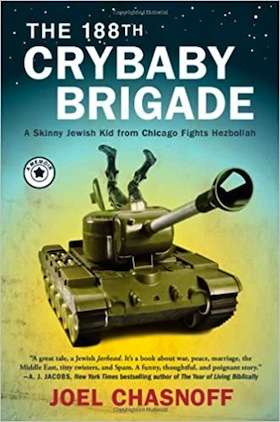
Chasnoff is a stand-up comedian and writer who shared his own story of leaving his Chicago-area home two decades ago to become a lone soldier. In a Zoom event presented by Jewish National Fund of Canada June 1, Chasnoff, who now lives in Israel, spoke of the changing understanding of lone soldiers – and his reflections on now being the father of soldiers. A decade ago, he chronicled his experiences as an IDF volunteer in the book The 188th Crybaby Brigade: A Skinny Jewish Kid from Chicago Fights Hezbollah.

Today, lone soldiers are a better understood phenomenon in Israel and supports are in place that were not when Chasnoff volunteered in 1997. There is now a network of Lone Soldiers Centres – commonly called Michael Levin Centres – around Israel, to help overseas volunteers adapt and smooth their way to a successful integration, coordinate holiday and Shabbat homestays and deal with the myriad complications that arise for a newcomer to Israel.

image - The 188th Crybaby Brigade book coverChasnoff shared comedic experiences, including the challenge of proving he was indeed a lone soldier without Israeli parents, when government officials insisted that Levin’s father had never left Israel after his first visit in 1976. The stakes were basic – a lone soldier’s salary at the time was $160 a month instead of $80, plus a few privileges. But it required a sheath of documents from the States to prove that his father was indeed an Illinoisan, not an Israeli.

“Never mind that he had raised me in the U.S. and I have a very strong and good relationship with my dad. The Israelis believed that my dad was actually living in Israel the whole time and I was just trying to pretend that I was a lone soldier to get the extra $80 a month,” Chasnoff said.

His decision to join the IDF was sparked by a visit to Israel as a teenager.

“I got off the plane,” he said, “and, you know, you’re 17, your hormones are raging. What’s the first thing you notice being a teenager coming to Israel? How beautiful the Israelis are. The women were all tan and fit, the men were these hunks with muscles and crew cuts. It’s so odd because they have the same roots as we do, right? Except they look like supermodels and we look like Jews. How does that happen? That’s not fair.”

The soldiers he met were just a year older than he was.

“They were 18, and they had machine guns and berets and Ray-Ban sunglasses and forearms like bricks,” said Chasnoff. “And then there was me, slathered in sunscreen, wearing a fanny pack … stuffed with lactose pills.”

One of the eye-opening things Chasnoff discovered about the Israeli army, he said, is how democratic it was.

“I would even say insanely democratic,” he said, noting that soldiers argued about orders and fought with their superiors. “People ask me what’s it like in the Israeli army. I think the best way to describe it is, imagine a bunch of Israelis running an army. That is the Israeli army.”

This is why one of his platoon-mates was a darling among commanders: he didn’t speak Hebrew. The young man was raised in an evangelical Christian home in Oklahoma, but, at a certain age, learned that his mother had converted from Judaism. One thing led to another and he volunteered for the IDF.

“So, they made him a tank gunner,” Chasnoff said, “because, to be a tank gunner, you basically need to know six words – stop, go, left, right, forward, back. Tim was one of the best soldiers in our platoon because he didn’t have the Hebrew to argue back. When the commander would give orders, the guys would argue. Tim, by not having Hebrew, just did what he was told. And was an excellent soldier for that reason and one of our commander’s favourites.”

Unfortunately, a lack of Hebrew can be deadly in moments of military conflict. Chasnoff said some casualties in conflicts in Gaza may have resulted from linguistic challenges and he believes the military is doing a better job ensuring fluency in such situations.

While lone soldiers is a term associated with overseas volunteers, Chasnoff said that about half of the 6,000 lone soldiers are Israelis, mostly Charedim whose volunteer service or other factors estrange them from their families.

While lone soldiers were not so much in the Israeli consciousness a few decades ago, they are now a welcome oddity.

“I think, when you get a lone soldier in your platoon, people are very excited about it,” Chasnoff said. “Everyone wants to bring him or her home to show the family the sort of strange character who came all the way from New York City or Sydney, Australia, or whatever. People are really interested in what motivates them to serve, so they are invited. It’s very, very different than the old days.”

Addressing the broader differences between Israelis and Diaspora Jews, Chasnoff riffed like the comic he is.

“We grow up with this myth that Israelis are, you know, just like us. They are Jews and we are Jews and we’re one big happy family. And then you get to Israel and you realize the Israelis are nothing like the American Jew. They speak their minds. They shout. They argue,” he said. “You’ll never be with an Israeli and wonder to yourself, ‘I wonder what she really thinks about me right now.’ I’m married to an Israeli for 21 years and I can honestly say that once in those 21 years has my Israeli wife apologized to me because, in the Middle East, apologies make you look weak and nobody wants to look weak. We had one huge fight where she actually apologized and it wasn’t even a real apology, it was an Israeli apology: she came up to me a few days later and said, ‘Yoeli, motek, I am sorry you’re such an idiot.’”

He also has plenty of material about growing up Jewish in America.

“My mom was actually one of these Jewish mothers who – let’s be honest – they have a special ability to worry about every situation,” he said. “You give them any scenario, they will figure out the potential thing that could hurt you in that scenario.”

For their annual family visit to Texas to see his paternal grandparents, Chasnoff’s mother would book the family on two separate flights so that, if a plane went down, the entire family wouldn’t be lost.

“That’s a typical Jewish upbringing,” he said.

When his zaidie gave him a jersey with the number of his favourite player and his own name, Joel, on the back, Chasnoff’s mother refused to let him wear it outside the house because a stranger would know his name.

“And, because he knew my name, I would think he knew me, so I would go with him,” he said. “You know why? Because I’m an idiot. That’s why there are no Jewish athletes. Not that we’re bad at sports, our mothers won’t let us wear the jersey.”

Readers will have another chance to hear Chasnoff speak this month. CHW Montreal is hosting a Zoom BBQ with the comedian on Father’s Day, June 21, at noon, Pacific time. Visit facebook.com/chwmontreal and click on Events for details. Funds raised benefit hospital workers at the Shamir Medical Centre and Hadassah Hospital in Israel.

Format ImagePosted on June 12, 2020June 11, 2020Author Pat JohnsonCategories IsraelTags army, comedy, IDF, Israel, Jewish life, Jewish National Fund, JNF, memoir
Boy makes historical find

Boy makes historical find

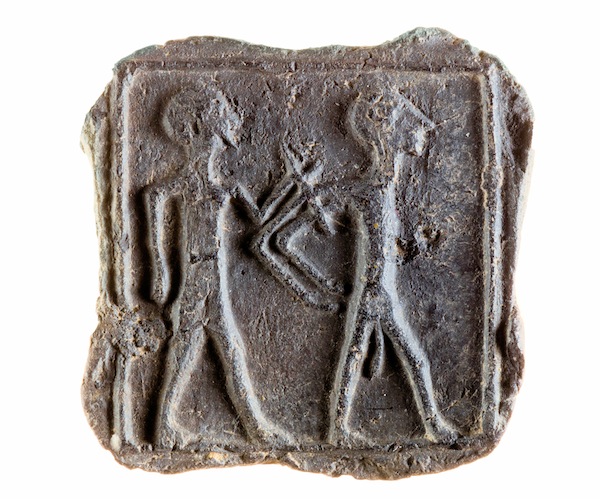
The tablet found by Imri Elya. (photo by IAA via Ashernet)

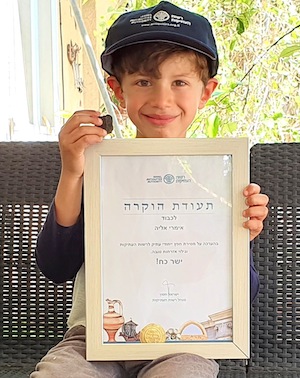
Imri Elya was on an outing with his parents at Tel Jemmeh archeological site near Kibbutz Re’im when he picked up the square clay object. His parents contacted the Israel Antiquities Authority (IAA) and they handed over the item to the authority’s National Treasures Department.

photo - Imri Elya, 6, from Kibbutz Nirim, near the Gaza Strip, holds his certificate of good citizenship and the tablet he found
Imri Elya, 6, from Kibbutz Nirim, near the Gaza Strip, holds his certificate of good citizenship and the tablet he found. (photo by IAA via Ashernet)

According to archeologists Saar Ganor, Itamar Weissbein and Oren Shmueli of the IAA, the artifact was imprinted in a carved pattern, and the artist’s fingerprints even survived on the back. The tablet depicts the scene of a man leading a captive. According to the researchers, “The artist who created this tablet appeared to have been influenced by similar representations known in Ancient Near East art. The way in which the captive is bound has been seen previously in reliefs and artifacts found in Egypt and northern Sinai.”

They date the artifact to the Late Bronze Age (between the 12th and 15th centuries BCE) and believe that the scene depicted symbolically describes the power struggles between the city of Yurza – with which Tel Jemmeh is identified – and one of the cities close to the Tel, possibly Gaza, Ashkelon or Lachish, or the struggle of a nomadic population residing in the Negev. The researchers believe that the scene is taken from descriptions of victory parades; hence, the tablet should be identified as a story depicting the ruler’s power over his enemies. This opens a visual window to understanding the struggle for dominance in the south of the country during the Canaanite period.

Format ImagePosted on June 12, 2020June 11, 2020Author Edgar AsherCategories IsraelTags archeology, history, IAA, Imri Elya, Israel, Israel Antiquities Authority
הרבה הלוויות וחתונה אחת

הרבה הלוויות וחתונה אחת

ראש הממשלה בנימין נתניהו
(U.S. Department of State)

המראות הקשים מהחדשות האחרונות העיבו על רוחי. המגפה הנוראית הזו גבתה את חייהם של רבים בקנדה ובעולם כולו.

מה עושים שאלתי את עצמי מספר פעמים עד שעלה במוחי רעיון מעולה. דבר שישמח את כולם. קודם כל את בת זוגתי אהובתי שתחיה, וכן השכנים, תושבי ונקובר ואולי המדינה כולה. רעיון מבריק, רעיון נפלא – התחלתי לדקלם לעצמי.

כתבתי מספר מילים על פתק קטן כדי שבטעות לא אשכח מה להגיד ברגע המתאים. רצתי בעליזות מרובה למטבח והצלחתי איכשהו לעלות על השולחן הרעוע ולעמוד עליו ביציבות לא יציבה. הוצאתי את הפתק מכיס חולצתי והתחלתי להקריא בקול חזק ורם כיאה לאיש חזק ודומיננטי כמוני. הרמתי את ידי למעלה ממש כמנהיג המטבח בדקות חשובות אלה. וכך אמרתי בהתרגשות רבתי תוך דמעות חונקות את גרוני: “אהובתי, יקירתי, אהבת חיי לנצח נצחים. אני מכריז בזאת כי לאחר שימצא החיסון למגפה שנפלה עלינו משמיים, אציע לך באופן רשמי נישואין. לאחר מכן נצא לירח דבש באחד המקומות האהובים עלינו בטבע. רק את ואני, יד ביד, לחי ללחי. אני בטוח אהובתי שהצעתי תשמח אותך, ואולי אף תרים את המורל השפוף של רבים רבים הסובלים עתה ממראות המגפה”.

לאחר סיום הנאום הצלחתי בכוחות אחרונים לרדת מהשולחן וכמעט התהפכנו שנינו. לאחר שנעמדתי על הרצפה היציבה מזיע ונושף ארוכות, הבחנתי לצערי שאהובתי כלל לא מגיבה בשמחה נוכח הצעתי הנדיבה. היא המשיכה לבהות מול מסך הטלוויזיה. באותו זמן הוקרנה סדרת טלוויזיה באנימציה שנוצרה לאחרונה בישראל. הספקתי להציץ במסך ולראות תמונה הזויה לחלוטין. ראש ממשלה מקומי שמחזיק בקרנות השלטון כעשרים שנה הצליח שוב להקים ממשלה והפעם כיאה לו היא רחבה וגדולה מאוד. האופוזיצה כך מתברר במקום להתנגד לו התחברה אליו. כך שהוא ימשיך לשבת על כיסא המלך למרות כתב אישום חמור נגדו. יקירתי נאותה סוף סוף להוריד את העיניים מהמסך ולהסתכל אלי ישירות. וכך אמרה לי בכעס רב: “נו באמת האם אתה חושב שאני טיפשה מטופשת. מחר ימצא חיסון וניתחתן? הרי זה ייקח שנים על גבי שנים. וחוץ מזה אתה חושב שאני יכולה להאמין לישראלים שכמוך. תראה על המסך איך אתם עובדים אחד על השני. וראש הממשלה שלכם עובד על כולם שוב ושוב”.

ולסיום דבר מה שכתבתי לאחרונה על ישראל:

ביבי גרם לנו אנחה ארוכה ארוכה.
ואולי בעצם הרבה אנחות או שמוטב אפילו להגיד אין ספור אנחות.
זהו שיר שלי למחות על מה שעושה ראש הממשלה הנצחי של ישראל לנצח ישראל.
כפי שאמר היוצר שלום חינוך בשירו המעולה והרלונטי היום יותר מאי פעם: “הציבור מטומטם ולכן הציבור משלם” – מה עוד צריך לקרות שבישראל יתעוררו ויבינו שראש הממשלה הוא בעצם ראש כת (משפחת נתניהו המלכותית) שמהלכת אימים על רבים ובעיקר על חלשים ועניים.
מה עוד צריך לקרות שהאזרחים יקראו את הכתובת על הקיר ויבינו שהממשלה הרחבה הנוכחית היא יריקה בפרצופם של משלמי המיסים.
לא נשכח שמתנהל משפט על חלק מחטאי ראש הממשלה והגיע הזמן שהוא ישלם מחיר על מה שעשה כי אחרת – הוא ימשיך לעשות עוד ועוד לכיסו המנופח.
אפשר להגיד את זה באנגלית או בעברית: הראש מושחת והשחיתות משתלטת על כל חלקה טובה מרחוב בלפור והלאה.

למי שגר כאן בקנדה הבעיות בישראל נראות רחוקות ואולי אף הזויות

לכן אנו גרים כאן ולא שם ולכן אנו רחוקים.

Format ImagePosted on June 3, 2020July 2, 2020Author Roni RachmaniCategories עניין בחדשותTags coronavirus, corruption, Israel, Netanyahu, trial, השחיתות, חיידק הקורונה, ישראל, משפט, נתניהו, קנדה

Favourable position

British Columbians, like others in much of the world, are stepping gingerly into what may be a post-pandemic period – or an “inter-pandemic” phase, if the predicted second wave bears out. Our daily briefings from Dr. Bonnie Henry, the provincial health officer, and Health Minister Adrian Dix are cautiously optimistic, tempered with the reality that some people, given an inch, will take a mile. Confusion around, or contempt for, changing social distancing guidelines has meant numerous instances of inappropriate gatherings.

All in all, though, British Columbians have so far experienced among the lowest proportions of COVID-related illnesses and deaths than almost any jurisdiction in the developed world. Each death is a tragedy, yet we should be grateful for those who have recovered and the fact that so many of us have remained healthy so far. Thanks should go to all those who have helped others make it through, including first responders, healthcare professionals and also those irreplaceable workers we used to take for granted: retail and service employees and others who have allowed most of us to live through this with comparatively minimal disruptions.

In our Jewish community, so many individuals and institutions have done so much, from delivering challah to providing emergency financial and other supports for those affected by the economic impacts of the pandemic.

Canadians, in general, seem to be making it through this time as well as can be expected. Polls indicate that Canadians are overwhelmingly supportive of the actions our governments have taken during the coronavirus pandemic. How the federal and provincial governments manage the continuing economic repercussions and the potential resurgence of infections in coming months will determine long-term consequences both for us and for their popularity.

In signs that things are returning to something akin to pre-pandemic normal, Binyamin Netanyahu, Israel’s once-and-still-prime minister, is complaining about a “left-wing coup” and asserting that “the entire right” is on trial. In fact, it is not an entire wing of the Israeli political spectrum that is on trial, but Netanyahu himself, for bribery, breach of trust and fraud. He is accused of exchanging favours to friends and allies in return for hundreds of thousands of dollars in trinkets like cigars and champagne, and favourable coverage in media. Whatever strategy his team has for inside the courtroom, his PR strategy is pure deflection: blame the media, the court system, political opponents. He’s fighting two trials: the one in the justice system and the one in the court of public opinion. Netanyahu has managed to save his political hide thus far, through three successive elections and a year of coalition-building and horse trading. Predicting what might happen next is a popular but fruitless pastime.

More signs that things are not so different came from U.S. President Donald Trump on the weekend. As the death toll in the United States approached 100,000, Trump took time off from golfing to deliver Twitter rants, including retweets calling Hillary Clinton a “skank” and smearing other female Democrats for their appearance. Trump also insinuated that MSNBC TV host Joe Scarborough is a murderer.

Sitting (mostly) comfortably in our homes watching such things from afar, it’s no wonder Canadians are feeling good about the way our various governments – federal and provincial, of all political stripes – are behaving these days.

Posted on May 29, 2020May 28, 2020Author The Editorial BoardCategories From the JITags British Columbia, Canada, coronavirus, COVID-19, Israel, Netanyahu, politics, Trump, United States
Song of healing is a hit

Song of healing is a hit

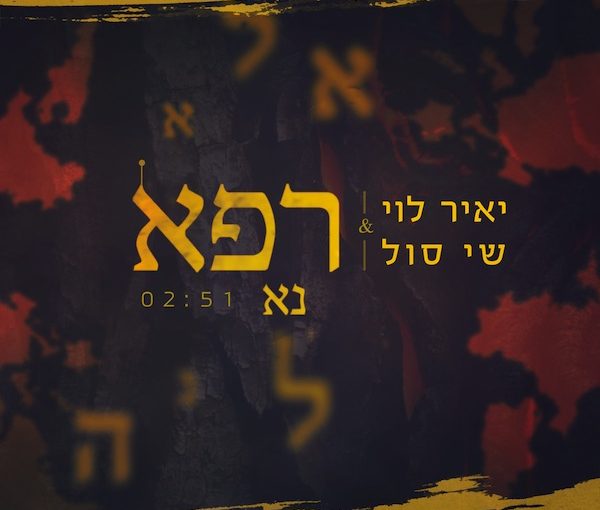
Israeli artists Yair Levi and Shai Sol sing Moses’s prayer to heal his sister Miriam of leprosy. The song, “Refa Na,” has resonated with people during the pandemic.

The song “Refa Na” (“Heal Her Now’”) by Israeli composer Yair Levi, together with vocalist Shai Sol, has become a global hit during the current COVID-19 pandemic.

Based on Moses’s prayer to heal his sister Miriam after she contracted leprosy, the song was released on Levi’s Facebook page April 6. The lyrics include the words, “O Lord, heal her now. O Lord, I beseech thee. Then we will be strengthened and healed” (Numbers 12:13) and Levi’s original is in multiple languages: Hebrew, as well as English, Spanish, French, German, Chinese, Arabic, Russian, Hindi and Swahili. The song has been picked up in dozens of covers, from Lebanon to Argentina.

When Levi’s grandmother fell ill, he composed a tune incorporating Moses’s prayer for his sister’s wellbeing. The song has resonated throughout the world during the current pandemic, garnering hundreds of thousands of views and shares.

“My grandmother had an illness unrelated to coronavirus, but the pandemic obviously affected everyone, myself included,” Levi, 31, told Ynet news portal. “Due to the epidemic, I received the names of people in need of prayer and a list of about 20 names accumulated on my fridge. Every day, I would say a prayer for the sick, and I searched for words and a tune related to medicine.”

Then Levi remembered the “Al na refa la” prayer in Numbers.

“I took my guitar and composed the music for it on the spot and, since I have a recording studio in my home, I recorded the song within a week.”

Levi then approached Sol, a vocalist with Miqedem, a band that composes and sings Psalms all around the world.

“In quarantine and with no way to actually meet, she recorded herself,” Levi said.

After posting the song on social media, he said, “It was amazing. We received many responses and translations. Immediately after we released the song, it was shared online by evangelist Christians, Jewish communities, and even the Friends of the IDF organization.”

But not only the obvious audiences were enthusiastic.

“We have received cover versions from all over the world, including from a Lebanese singer, and, on Saturday evening, I received three new covers from Namibia … India and a Brazilian singer, Fortunee Joyce Safdie, who performed the song live on her Instagram page,” he said.

“Getting so many messages from people all around the world is incredible,” he added. “If I have the privilege to spread prayer around the world, to me, it’s just crazy. When people from all over the world translate and sing a prayer for health, it feels like it is literally the End of Times.”

During his three-year service in the Israel Defence Forces, Levi – who grew up in Israel’s secular mainstream – became intrigued by traditional Judaism. A turning point in his life came on May 31, 2010. Serving as a naval commando, his elite unit stormed the MV Mavi Marmara, one of six ships in the Gaza Freedom Flotilla attempting to breach Israel’s blockade of the coastal enclave. Nine Turkish activists were killed in the incident, while 10 IDF soldiers from Levi’s unit were wounded. After the sea battle, Levi was determined to join an IDF officer course. But, at the age of 26, he decided to pursue a musical rather than military career.

“I spoke with my commander, who told me people often regret what they had not done,” Levi said. “It opened my eyes and I realized that the flotilla incident pushed me in the direction of the course, but my real dream was to make music and become a singer.”

Levi has released two albums, Breathing Again (2016) and Let Go (2017).

“People see me as a religious person but I don’t like labels,” he said of his oeuvre.

To hear more of Levi’s music, visit yairlevi.bandcamp.com/releases.

Gil Zohar is a writer and tour guide in Jerusalem.

Format ImagePosted on May 29, 2020May 28, 2020Author Gil ZoharCategories MusicTags culture, healing, Israel, Judaism, Refa Na, Shai Sol, Torah, Yair Levi

Keeping busy in lockdown

When someone suggested this as the title of an article I should write, I roared with laughter. Me, who has been climbing the walls, thinking of taking to drink, or killing myself or others. But, after all, I pride myself on being creative, so I decided to have a stab at it.

I am very communal-minded, so I thought I should entertain the neighbours. I don’t play any instrument, but I know hundreds of songs dating back to the 1940s. In my imagination, I saw all my Jerusalem neighbours coming out to join in, sending their children to the street below to dance, keeping their social distance, of course. Well, that’s not exactly what happened. After I began singing – I chose my favourite aria from Madame Butterfly, “One Fine Day” – what I heard was doors being closed with great force and windows being slammed down. But, I persevered, until all the birds in the trees outside my balcony decided to migrate early this year and flew off to Australia or Siberia (whichever was the furthest), and even the cats that hang around our building also disappeared.

I next decided I could keep busy by tidying up my office. I know I have a very nice writing desk. I haven’t actually seen it for a few years because my printer sits on it, plus a pile of ideas for articles and stories that I intend to use one day. I decided to be ruthless and get rid of them, but then I thought I should read them first, after which I decided maybe to keep them for happier times. At least, this activity kept me busy for a couple of hours.

By then, it was lunch time, and I decided to use my creativity to prepare a gourmet meal for my husband from the ingredients I could find, after not having gone shopping for about five weeks. I put things on the kitchen counter and looked at them: one sad-looking turnip, some potatoes, three packets of desiccated coconut (where did they come from?), a tin of chickpeas and a packet of potato flour left over from Pesach. This assortment really taxed my imagination, especially as my husband, these last few days, has been giving me looks that say, “You don’t really expect me to eat this!” I haven’t done violence to him yet, which is a tribute to my self-restraint. Oh, I’ve thought about it, and I think a good lawyer could get me acquitted if I did – I’m sure there’s something called “justifiable homicide.”

I did the laundry, and then made the mistake of looking in the mirror. My hair hasn’t had the tender ministrations of a hairdresser for more than a month. I’m reminded of the song “The Surrey with the Fringe on Top” from the musical Oklahoma. I now have a fringe – or “bangs,” as I think North Americans say – and a strange triangle of hair that sticks out on the side. It is very depressing, but, if I put on my facemask and use the elastic to push it away, it doesn’t look too bad. In fact, when I wear the facemask, I look quite good.

So, I guess I am keeping busy under lockdown after all. I would like to say that I keep a balanced diet – a block of dark chocolate in one hand and a block of milk chocolate in the other – but I don’t actually have any chocolate. I like the story of a doctor who told his elderly patient that it would be a good idea if she put a bar in her shower, and she did – with bottles of whiskey, brandy, wine and vodka. I can’t do it though, because my soap holder won’t support even a bottle of wine.

Nonetheless, I hope I’ve given readers some ideas of how to keep busy under the restrictions that COVID-19 requires. It’s just a matter of initiative and creativity, and the time will pass constructively. I wish everyone good health until this traumatic time comes to an end.

Dvora Waysman is a Jerusalem-based author. She has written 14 books, including The Pomegranate Pendant, which was made into a movie, and her latest novella, Searching for Sarah. She can be contacted at [email protected] or through her blog dvorawaysman.com.

Posted on May 29, 2020May 28, 2020Author Dvora WaysmanCategories Op-EdTags coronavirus, COVID-19, Israel, lifestyle, work
Feeding the body and mind

Feeding the body and mind

National Hebrew Book Week has taken place every year in June. Its fate for this year, in light of the COVID-19 pandemic, is unclear. (photo from gojerusalem.com)

In Israel, you know Shavuot is approaching when you see the grocery stores setting up displays of pasta and spaghetti sauce. The pandemic shouldn’t change that.

Israelis are obsessed with the thought of eating non-meat meals on Shavuot. I suspect that at the heart of this obsession is the feeling that, even today, many people still consider eating a non-meat meal equivalent to eating less than a full meal. Hence, the worry that there really will be a satisfying meal to appropriately celebrate the holiday.

While there are many lovely explanations about why we eat dairy on Shavuot, they seem to be secondary to some practical considerations. As Rabbi Prof. David Golinkin points out, in the late spring, young calves, lambs and kids are weaned. Thus, historically at this time in Europe, there was an abundance of milk. Bear in mind that refrigeration is a fairly new process and that, prior to refrigeration, farmers needed to move fast with perishable milk. They made cheese and butter, which, likewise, needed to be consumed relatively fast. This dairy excess may have motivated some Jews to eat dairy on Shavuot. (See the article “Why do Jews Eat Milk and Dairy Products on Shavuot?” on the Schechter Institutes’ website, schechter.edu.)

But, eating a non-meat meal on Shavuot is not restricted to the customs of European Jewry. As Jewish food expert Claudia Roden notes in The Book of Jewish Food: An Odyssey from Samarkand to New York, Sephardi Jews in Syria made cheese pies called sambousak bi jibn, Tunisian Jews had a special dairy couscous recipe and, in places like Turkey and the Balkans, Jews prepared a milk pudding called sutlage for Shavuot. (If you don’t want to eat animal-based foods, you don’t need to feel left out. The United Kingdom’s Jewish Vegetarian Society helps you enjoy a variety of traditional, but vegan, cheesecake recipes.)

So from where did all this dairy focus originate? One appealing explanation reminds us of what was supposed to have happened on Shavuot, namely that the Jewish people received the Torah. In Gematria, the Hebrew word for milk (chalav) adds up to 40, the number of days on which Moses stayed on Mount Sinai in order to receive the Torah.

Significantly, studying the Torah and other Jewish texts on Shavuot eve has become a major trend in Israel, as well as in the Diaspora. The big Israeli cities offer any number of options for participating in a tikkun leil Shavuot. These free learning sessions welcome the participation of all of Israeli society, from the religious to the secular, and everyone in between. Those living in smaller towns and on kibbutzim and moshavim likewise hold study sessions on the night of the holiday.

The idea of all-night studying originates with the kabbalists. The earliest members of this group apparently studied with Rabbi Shimon bar Yochai, the author of the Zohar, who lived in the second-century CE. It was this scholar (also known by his initials, as Rashbi) who stated: “G-d forbid that the Torah shall ever be forgotten!” (See the Babylonian Talmud Tractate Shabbat 138b.) By the Middle Ages, the kabbalistic all-night Shavuot study had really picked up steam in places such as Safed.

photo - Studying the Torah and other Jewish texts on Shavuot eve has become a major trend in Israel, as well as in the Diaspora
Studying the Torah and other Jewish texts on Shavuot eve has become a major trend in Israel, as well as in the Diaspora. (photo from pexels.com)

Some claim the reason for studying during the night is found in the midrash stating that it was a way to correct for the Children of Israel’s mistake of oversleeping on the morning they were meant to receive the Torah. Others claim, however, that the Hebrew word tikkun should not be translated as correction, but rather as adorning or decorating the bride. The bride in this instance is the people of Israel and the groom is either G-d and/or the Torah.

According to a late 17th-century Libyan tradition, Shavuot symbolizes the wedding day between the people of Israel and the Torah. According to this tradition, the Torah is the bride, which explains the title of the Libyan Shavuot text entitled Tikkun Kallah. Accordingly, those who read this tikkun are likened to bridal attendants.

The importance of studying on Shavuot is bolstered by the fact that Israel’s Hebrew Book Week (or, in some places, Book Month) begins right after Shavuot. I do not believe this occurrence is coincidental, but rather links us to the idea that we are still the People of the Book and a people of books.

The Israeli book fair has been running for many years. This year, 2020, would mark the 59th annual celebration of Hebrew Book Week and the fair’s age is all the more impressive when you recall how shaky was the Israeli state’s start as an independent entity. Recent years’ events have included Israeli authors appearing in coffee houses, story hours and plays for children, guided walks in Israel’s National Library, the more traditional book signings and, of course, the possibility of thumbing through thousands of Hebrew books.

In brief, our spring holiday offers opportunities for both spiritual and physical nourishment.

Deborah Rubin Fields is an Israel-based features writer. She is also the author of Take a Peek Inside: A Child’s Guide to Radiology Exams, published in English, Hebrew and Arabic.

Format ImagePosted on May 15, 2020May 14, 2020Author Deborah Rubin FieldsCategories Celebrating the HolidaysTags books, education, history, Israel, Judaism, kabbalah, Shavuot, Torah

Posts pagination

Previous page Page 1 … Page 44 Page 45 Page 46 … Page 111 Next page
Proudly powered by WordPress