The lights of allyship

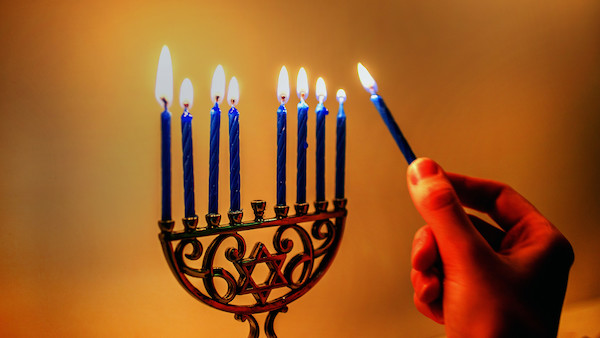
This Chanukah, kindle the light of liberation, not just for you and your loved ones, but for all people whose freedom of expression is threatened. (photo by Robert Couse-Baker / flickr.com)

In a time of identity searching, introspection and anticipation, Chanukah can be an inviting space to reflect and refract the light before us. From the Chanukah that was to the Chanukah we arrive at, the world has shifted and we are not the same. This holiday of chocolate, oil and games of dreidel beckons us into a moment of contemplation.

Chanukah expresses a language of novelty, innovation and a miraculous expansion from what we thought was possible. The ease and accessibility, the simplicity of candles, the sense that Chanukah is predictable and performative belies the very creative, radical nature of the Festival of Lights.

The annual Chanukah experience, at its core, is an opportunity to receive new insight, empowerment and opportunity to overcome the forces that oppress, debase and deny our most essential identities. Had the few Maccabees not searched to provide that light for the many, none of us would have a miracle to celebrate today. Even though we are privileged to be able to publicly observe our traditions, Chanukah reminds us that our work is not complete until everyone can safely and freely express their identities.

Visibility and proximity

One of the unique aspects of Chanukah is that it is the only festival that occurs in two different months. It is literally positioned between Kislev and Tevet to help us be aware and adapt to changing times. In the light of the candles, it is possible to see our roles anew, clarifying our commitment to ensuring that the privilege and expression of being is available to everyone.

When the Talmud explores modalities of the mitzvah of lighting the chanukiyah, it says that each and every person should have a candle. It continues to explain that an even greater beautification of the mitzvah is when everyone is able to increase the light with each additional day. When everyone has their own chanukiyah, when everyone is able to light all the candles on each night, then everyone is bringing the fullest light possible. This is the hope: with so much light, the world is relieved of darkness.

Our rabbis teach that this attribute of adding is connected to Joseph, whose story we read on Shabbat Chanukah. Joseph’s name means to increase, and his story reveals the relationship between proximity and visibility. The Talmud, Shabbat 22a, juxtaposes the narrative of Joseph being thrown into a pit with the laws detailing the proper placement of the menorah and the limits on how far off the ground it can be.

In Genesis 37:18, Joseph’s brothers “saw [Joseph] from afar … and they conspired against him.” They throw him into a pit, which Genesis 37:24 says “was empty and didn’t have water.” But the rabbis disagree, arguing that, while “empty” implies that the pit didn’t have water in it, it was not without venomous pit-dwellers. There were snakes and scorpions that the brothers didn’t know about, because they were not close enough to the pit to see.

Moreover, the distance at which the brothers first saw Joseph approaching made it easy for them to plot against him. In not one, but two cases, the brothers’ lack of proximity leads to actions that degrade and humiliate. If only they waited to see their little brother up close before acting, they might have changed their plan. If only they approached the pit to look inside, they might have seen the snakes and scorpions. The Torah is clear: proximity and visibility lead to responsibility.

It is for that reason the Talmud instructs us that we cannot place a menorah too far off of the ground – we must be close enough to see and be affected by the candles. If the menorah can’t be seen, we miss the message of the miracle, and the opportunity to take responsibility is lost.

The Hasmoneans were descendants of Aaron, who, the Mishnah tells us, was a lover of peace, pursuer of peace and lover of peoples.

Judaism is a religion of action, and we must be practitioners of our tradition’s wisdom by taking responsibility.

Today, even with technologies that keep us connected across oceans and continents, we understand the challenge and, more so, the threat of being too distant. Jews have a response to prevent the dehumanization that often comes when we are distanced from the lived experience of others – draw in close.

A great miracle happens with allyship

The Hebrew words behind the story of Chanukah and Joseph also reaffirm the holiday’s charge to increase visibility, to be an ally. The rabbis saw our world as created through speech and language and, thus, all Hebrew letters represent hidden truths. Just like the story of Joseph in the pit, the closer you look, the more that is revealed.

The mystics teach that the Hebrew letters for Greece (Yavan is spelled yud, vav, nun) are three lines that descend as the word progresses. The great and mighty culture that claimed elite thought and refinement was in fact a culture that debased and denigrated. Greek leadership prioritized the body over the spirit; what was seen on the outside was of greater value than that which was within. Thus, it could be said that Greece, by elevating the external, actually debases it, a message hidden within the descending letters: yud, vav, nun.

The Hebrew word for Joseph, Yosef, begins with the same first two letters. But the third letter is where the comparison is stark. Instead of a nun sofit (a nun at the end of a word), which is a straight line going down, we have the round letter samech, a symbol for equality. Unlike the hierarchy of the nun, the circle of the samech allows every point on its circumference to be equidistant to the centre. Joseph chooses to chaver (friend) up and stops the descent by treating others as equals.

The nun and samech form the word miracle, nes. The first letter, nun, is the only letter in Hebrew that doesn’t appear in the alphabetical acrostic of the prayer Ashrei. Our rabbis explain that this letter stands for nefela, falling, and, therefore, is omitted. The next letter in the alphabet is the samech and it starts the Ashrei verse, “samech l’chol hanoflim,” “supporting all those who have fallen.” Jews in those days, as in ours, had a choice between the “nun” and the “samech” – to align with the oppressors and feel secure or to ally with those who needed support. In choosing the latter, a great miracle (nes) happened there.

Kindling the light

As the story and words of Chanukah convey, the Jewish response to oppression is not just to be free but to dismantle the system of oppression and provide equality for others. Today, we place a menorah in the window in order to publicize our engagement in the ancient and ongoing story of this struggle. We stand up in broken places of despair and hopelessness to rededicate ourselves and our institutions to this cause. Now, when we see an injustice, when we are proximate to the dehumanization of a child of G-d, we not only see the unholy act itself but also we recognize the imperative to respond.

This Chanukah, kindle the light of liberation, not just for you and your loved ones, but for all people whose freedom of expression is threatened. Kindle a light to banish the darkness of hatred, racism, transphobia and misogyny. Kindle a light that signals to outsiders that you are a home (or an organization) committed to rededication and the recreation of holy space, particularly in the most broken of places.

Chanukah was not immediately established as a holiday. The Talmud teaches that the rabbis waited until the following year to institute a permanent commemoration. When they realized that the miracle could be replicated – that, in every generation, Jews could learn to take the little they had and turn it into something miraculous – they created the holiday. That is the holy ask of Chanukah: to be the light that can extend and expand, to be the miracle that someone else needs.

Michael Walzer writes that “wherever we go, it is eternally Egypt,” but that there is a Promised Land, and the only way to make it across the wilderness is by “joining hands, marching together.” The story of oppression and liberation is also a story of allyship. We will not survive without hands to support and guide us, to hold and elevate us. This year, on Chanukah, be the light and bring the light out of the closet and into the world.

Rabbi Mike Moskowitz is scholar-in-residence of trans and queer Jewish studies at Congregation Beit Simchat Torah in New York and Rabbi Dara Frimmer is senior rabbi at Temple Isaiah in Los Angeles. This article was originally published in the Jewish Journal and articles by other Shalom Hartman Institute scholars can be found at shalomhartman.org.
Diverse learning series

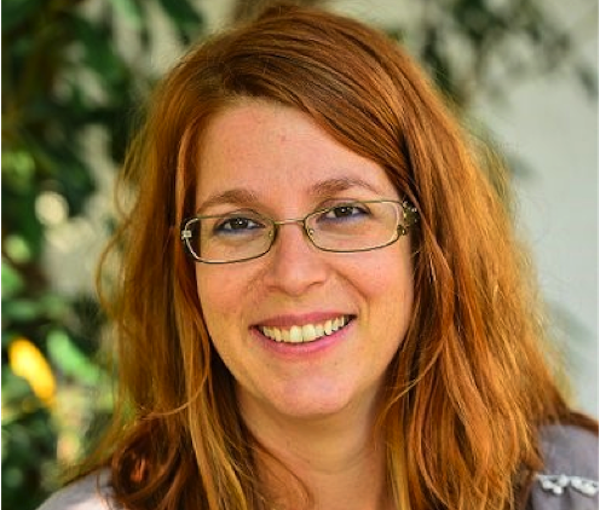
Rabbi Gila Caine (photo from Kolot Mayim)

Kolot Mayim Reform Temple in Victoria welcomes back Rabbi Gila Caine, spiritual leader of Temple Beth Ora in Edmonton, to speak on the topic Toratah/Her Torah: Women Rabbis Revealing the Goddess in Torah.

The Nov. 7, 11 a.m., lecture on Zoom kicks off a six-part series of talks called Building Bridges: Celebrating Diversity in Jewish Life. The community is invited to listen and learn from Indigenous, Black, Asian, feminist and differently-gendered and differently-abled advocates who are working to make our world a better place.

As a people who have experienced the devastating impact of antisemitism and hatred, Judaism commits us to the responsibility of tikkun olam (repairing our world). In that spirit, Kolot Mayim’s series of speakers will lead attendees on a journey to deepen their understanding of these contemporary issues and how they can support those who do not feel included.

Kolot Mayim’s Rabbi Lynn Greenough describes the series as “an opportunity to build bridges – bridges that enable us to link to what is and what can be, to step beyond our own particular experiences.” The Hebrew word for bridge is gesher, she explained, pointing to the song, “Kol Ha’Olam Kulo,” “the whole world is a very narrow bridge; the important thing is not to be afraid.”

In the series opener, Caine will explore how, throughout the millennia, rabbinic tradition, and especially written tradition, was composed from within a man-focused and -experienced perspective. Now, after around half a century of ordaining women, there is a growing corpus of documented writing flowing from within woman’s experiences and interpretations of Torah and life. In her talk, Caine will read a few Torah commentaries written by (women) rabbis from North America and Israel, as examples of weaving together rabbinic and women’s experience into something new.

Born and raised in Jerusalem, Caine graduated Hebrew University with a master’s in contemporary Judaism and received her rabbinic ordination at the Hebrew Union College-Jewish Institute of Religion’s Israeli program in 2011. Her rabbinic thesis explored liturgical, spiritual and ceremonial aspects of birth in Jewish tradition and contemporary practice.

Stemming from that, as well as her years as a volunteer at a rape crisis centre, Caine is one of the founders of the Israeli rabbinic women’s group B’not Dinah, creating a female and feminist rabbinic tradition of healing after sexual trauma. She now serves as rabbi at Temple Beth Ora and her Building Bridges talk is co-sponsored with her shul.

Other speakers in the 2021/22 series are:

  • Carmel Tanaka, founder and executive director of JQT Vancouver (Jewish Queer and Trans Vancouver) on A Day in the Life of a Queer, Neurodivergent, Jewpanese Millennial (Dec. 5);
  • Rivka Campbell, executive director of Jews of Colour Canada, on Harmony in a Divided Identity: A Minority Within a Minority (Jan. 9);
  • Joy Ladin, poet, author and first openly transgender professor at a Jewish institution, on Jonah, God and Other Strangers: Reading the Torah from a Trans Perspective (Feb. 6);
  • Reverend Hazan Daniel Benlolo, director of the Shira Choir, Spanish & Portuguese Synagogue, Montreal, on The Power of Music: In Honour of Jewish Disability Awareness and Inclusion Month (Feb. 13); and
  • Patricia June Vickers, Indigenous artist and independent consultant, and Rabbi Adam Cutler, senior rabbi of Adath Israel Congregation in Toronto, on An Indigenous and Jewish Dialogue on Truth and Reconciliation (March 20).

Kolot Mayim has been active for 20 years and this is the fourth year that the synagogue is offering this speaker series. Talks are free and held on the scheduled Sundays from 11 a.m. to 12:15 p.m. PST. To register, visit kolotmayimreformtemple.com.

– Courtesy Kolot Mayim

Security tops JFNA agenda

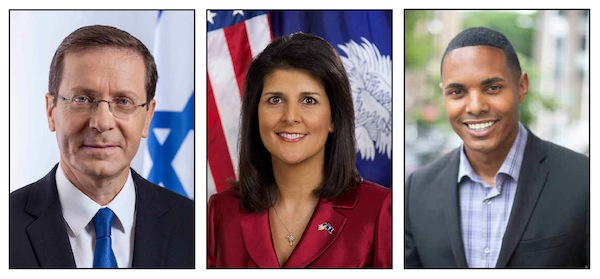
Israeli President Isaac Herzog, left, former U.S. ambassador to the United Nations Nikki Haley and U.S. Congressman Ritchie Torres all spoke on Sunday at the General Assembly of the Jewish Federations of North America. (PR photos)

Antisemitism, community security, caring for the most vulnerable and relations between Jews in Israel and in the Diaspora were among the topics highlighted at the 2021 General Assembly of the Jewish Federations of North America. Normally a multi-day gathering, this year’s conference was a virtual event condensed into 90 minutes on Oct. 3.

Jewish Federations of North America (JFNA) is the umbrella agency representing 146 independent federations and 300 smaller communities across the continent.

Eric Fingerhut, president and chief executive officer of JFNA, credited federations and their supporters for turning a matching grant of $18 million into $62 million to fund frontline Jewish social services organizations during the pandemic.

While the challenges of the pandemic absorbed resources during the past year and a half, Fingerhut addressed a range of issues, noting that it is not easy being an optimist right now.

“We face enormous challenges, which can make it difficult to maintain a positive outlook,” he said. On top of the pandemic and urgent issues of racial justice, Jewish communities across the continent have been confronted by the most sustained and virulent antisemitism in recent memory.

He also addressed the challenges of being an inclusive Jewish community.

“I’m not naïve,” said Fingerhut. “I know that our communities are not now, nor have they ever been, perfect. We have let too many people slip through the cracks unnoticed or unserved. We have not always been there when people needed us the most. We have sometimes struggled to keep up with the ever-changing character of the Jewish community.”

Fingerhut was not the only president to address the truncated assembly. Israel’s President Isaac Herzog emphasized the need to continue building bridges between Israel and the Diaspora, working together to reignite a passion for Zionism among North American youth and instil in Israeli young people awareness of and connections to Diaspora Jews.

“Too many American Jewish youth are disinterested in what being Jewish means and in a complex understanding of the realities and challenges facing Israel,” Herzog said. “Some of them, a very small minority, are too willing to accept distorted labels and libels against the Jewish state. At the same time, on the other side of the ocean, far too many Israelis show too little interest in Jewish life outside of Israel and lack a nuanced understanding of their sisters and brothers in the Diaspora.”

He stressed that, as president of the state of Israel, he makes it his personal mission to strengthen the lines of communication and reinforce the underlying bond and mutual responsibility.

The theme of mutual responsibility was echoed by Mark Wilf, chair of JFNA’s board of directors. When thousands of rockets rained down on Israel last May, he said, federations in North America mobilized to repair and rebuild damaged infrastructure in Israel.

Confronting security issues closer to home was another theme running through the event. Wilf noted that 45 federations have adopted and enhanced community security initiatives and the goal is for every federation and Jewish community on the continent to meet best practices in community safety protocols.

The annual General Assembly events generally attract a raft of Israeli, American and Canadian politicians and elected officials. Due to the unique circumstances, American politicians were limited to one Republican and one Democrat.

Nikki Haley, former governor of South Carolina and President Donald Trump’s appointee as United States ambassador to the United Nations from 2017 to 2019, said the “ancient evil of antisemitism is on the rise.”

“I encountered the sad reality at the United Nations,” she said. “Hateful governments, like Iran, didn’t even bother to hide their hostility toward Jews. I heard it in their words, I saw it in their deeds. Other countries were more subtle. They didn’t go after the Jewish people. Instead, they went after the Jewish state. No other country faces so many insults, no other country is singled out for such attack. Of course, they say, it’s just about opposing Zionism. Well, you and I know the truth. Anti-Zionism is antisemitism.”

She took a swipe at the BDS movement, which seeks to boycott, divest from and sanction Israel.

“While BDS claims to be about justice, it’s a blatant attempt to starve Israel of funding, friends and a future,” she said, noting that she was the first U.S. governor to prohibit public entities in her state from doing business with companies engaged in “discriminatory” boycotts.

She lauded the Abraham Accords, which have led to normalized relations between Israel and the United Arab Emirates, Sudan, Morocco, Oman and Bahrain.

“There were those who said it couldn’t be done,” said the former ambassador and potential Republican presidential candidate. “Now it’s happening before our eyes. Israel is bravely leading the Middle East into a brighter future.”

Also addressing the virtual assembly was Democratic Congressman Ritchie Torres. While a first-term representative elected less than a year ago, the 33-year-old from the south Bronx in New York City has gained attention as a gay, Afro-Caribbean American. Representing the economically poorest district in the country, Torres, a former New York city councilor, is a strong progressive voice on social issues including public housing, predatory loans and gang violence. He has gained notice in the Jewish community and among pro-Israel voters for distancing himself from other progressive Democrats by being an articulate and unapologetic supporter of Israel.

“I feel like all of us in public life have an obligation to speak out forcefully against extremism, no matter what form it takes,” he said. “The rise of a demagogue like [former British Labour Party leader] Jeremy Corbyn is cautionary tale of what could happen when antisemitism infects the bloodstream of a nation’s politics. All of us have an obligation to ensure that extremism is fought at every turn and in every form.”

The idea that it is incompatible to be progressive and pro-Israel is, he said, “a vicious lie.”

He condemned anti-Israel organizations in the United States for co-opting important issues like police violence and immigration and turning them into battering rams against Israel.

Like Haley, he slammed the BDS movement. The contributions of Jewish activists working in partnership with other social justice movements are threatened by litmus tests that seek to prevent pro-Israel Jews from participating in those movements, said Torres.

The antisemitic violence and vandalism that spiked in the spring of this year is “a wake-up call that the Jewish community cannot afford to be complacent about,” he said.

Listening and learning

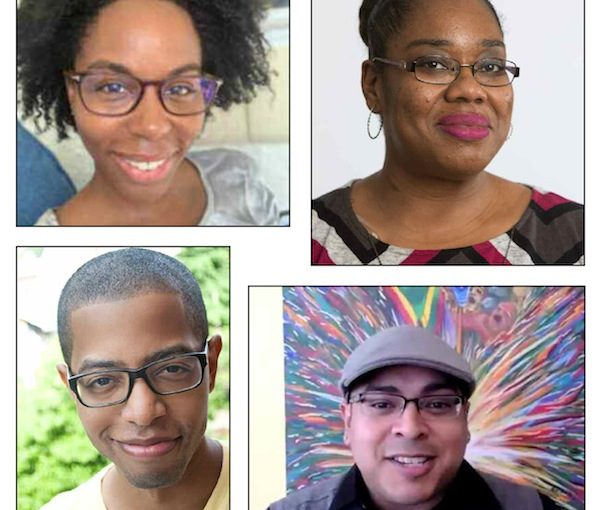
Juneteenth webinar panelists (clockwise from top left) Heather Miller, Dr. Tameika Minor, Rafi Forbush and Kendell Pinkney. (photos from internet)

The United Synagogues of Conservative Judaism (USCJ) held a webinar entitled Juneteenth Through the Eyes of Jews of Colour: Sharing Stories and Perspectives on June 17, the same day the United States declared Juneteenth (June 19) a federal holiday. Slaves were freed from Texas, the last Confederate state with institutionalized slavery, on June 19, 1865.

The objectives of the evening were to establish better dialogue, to create a space to honour the Jewish and Black communities, to learn about the challenges people of colour have in the Jewish community, and to find the means by which people of colour can feel welcome in the Jewish community. Marques Hollie, a theatre artist, storyteller and musician, led the evening with a rendition of the post-Civil War song “Oh Freedom.”

“Our people crossed the Red Sea. People of colour are still in Egypt. For Black people, freedom has not come fast enough and not in a straight line,” said Ruth Messinger, a former politician and head of the American Jewish World Service, in opening remarks that preceded the introduction of the panel discussion.

The four panelists were Heather Miller, Dr. Tameika Minor, Kendell Pinkney and Rafi Forbush. Rabbi Ari Lucas of Congregation Agudath Israel in Caldwell, N.J., moderated the event. Lucas encouraged the audience to listen before asking questions.

“In a lot of ways, I feel like I came out as a Black person last year,” said Miller, president of the Jewish Centre in Brooklyn and a future rabbi. “In the Jewish spaces I have been in, people have tried not to see my colour. The stakes are different for us than the majority of people in this Zoom room. I was afraid this would just be a moment for everyone else and that the world would go back to not seeing this stuff again after the pandemic. I was afraid of being left exposed without a community.”

Minor, a professor in clinical mental health counseling and rehabilitation counseling at Rutgers University, said she would like to see Juneteenth become a day of reflection and not just celebration. “Reflection of where we have come from and how far we have to go,” she said. “It’s not a day we should sit back and not look at the wealth gap, mass incarceration and police brutality. Now it is a federal holiday, and yet so many states are banning critical race theory in schools.”

“For me, the question isn’t what does Juneteenth mean to me now but what might it mean to us moving forward,” said Pinkney, a Brooklyn-based theatre writer, Jewish-life consultant and rabbinical student at the Jewish Theological Seminary. “The Jewish people are so, so good at crafting stories, creating rituals. What rituals might be created 20 years from now around Juneteenth? Which stories and voices will we finally open our ears to?”

He added, “I like to think of it more as a promise of what might be and what we might become as a Jewish community.”

Rounding out the panel was Forbush, youth director at Beth Jacob Congregation in Mendota Heights (St. Paul) and founder of the Multiracial Jewish Association of Minnesota, which focuses on creating space for Jews of colour to connect to one another, through the community, education and advocacy.

“If you had told me that our community would be having this conversation at the beginning of the pandemic, I would have laughed at you,” said Forbush. “There is a bright light in our community starting to see outside of ourselves. If we are a people and not a race, then we owe it to each other to get to know who we are. The idea here is, extend the tent and not move it to exclude somebody else.”

Like Pinkney, Forbush spoke of the potential the holiday holds for the future and the sense of inclusion it can bring to the entire community. He pointed out that young Jews of colour often feel excluded.

Throughout the webinar, the panelists touched on various points of exclusion they feel as part of a community – of not believing they are entirely heard and of the microaggressions that occur in Jewish spaces, such as being quizzed on aspects of Jewish life or being viewed as staff and not a member of the community. Understandably, these are the sorts of issues that drive Jews of colour away from synagogues and other Jewish institutions.

The hope was expressed that Jews of colour could achieve more positions of leadership within Jewish organizations. There was also a sense that the community as a whole is not achieving its full potential without engaging more actively and openly with Jews of colour.

“This year, as we expand upon the understandings of diversity and inclusion, we have, despite COVID, actively widened the doors to our tent so to speak,” said Rabbi Susan Tendler of Richmond’s Congregation Beth Tikvah, which has been promoting the recent USCJ webinars on reaching out to interracial families and building a larger sense of inclusion for all Jews.

“We have actively listened and considered with compassion the feelings of people who may want to enter and yet find barriers to feeling authentically accepted within the larger Jewish community,” she told theIndependent. “United Synagogue’s program on Juneteenth is one example of many in which we have taken the opportunity to listen and learn.”

Sam Margolis has written for the Globe and Mail, the National Post, UPI and MSNBC.

COVID’s impacts on mental health

(image from bastamanography)

Purim 2020, which took place in early March, brought with it added significance. For some, it represented the last time they gathered in a Jewish setting in person, outside the home. For others, it was the first “live” service to be canceled as a result of SARS-CoV-2. In the days that ensued, lives changed as the perils of the coronavirus became apparent. School, work and religious services all moved online; personal contact with friends and family became exceedingly limited; travel, for most people, ceased.

Among the societal issues compounded by the pandemic have been increased isolation, drug dependence, and food and job insecurity. Underlying these problems has been COVID-19’s effect on mental health, including within the local Jewish community. As a result, numerous groups have stepped up their efforts to help the most vulnerable, and all those who have been impacted by the pandemic. During the past weeks, as the first anniversary of COVID-19 came and went, the Jewish Independent spoke with several people at the forefront of handling the Greater Vancouver Jewish community’s response.

At Jewish Family Services (jfsvancouver.ca), efforts to tackle mental health issues have widened, as more people have been seeking the agency’s support. Early on, JFS opened a crisis line that runs seven days a week, from 9 a.m. to 9 p.m. (604-588-5719 or communitycare@jfsvancouver.ca, with the promise to respond within 24 hours).

“People are struggling, without a concrete end to the restrictions, and so demand for emotional support and learning different coping skills has surged. Our crisis line is always there for people who need immediate help and, for many community members, this is the easy way to connect with a counselor. If someone wants to remain anonymous, that is absolutely an option, we do not require a caller to identify themselves,” JFS chief executive officer Tanja Demajo told the Independent.

From its launch at the start of the pandemic to August 2020, the JFS Community Crisis Line received 955 calls, serving 494 individuals. Case workers spent 2,052 hours on the line. Additionally, 166 individuals accessed free programs offered by the JFS mental health and wellness team via telehealth and video conference – a 40% increase compared to pre-COVID times.

“Many are struggling with the added role of being a caregiver in the pandemic context, as well as dealing with their own emotions, so our workshops and support groups provide a community where people are able to vent, talk and support one another. We also connect people with friendly callers. These services have been a lifeline for many of our clients,” Demajo said.

A report released by the JFS client advisory committee last summer highlighted many ongoing concerns. One alarming quote from a client cited in the report reads, “COVID-19 has been depressing and frightening for me. My anxiety has been through the roof and I’ve had an increased number of panic attacks and migraines. My chronic health conditions have increased in severity and I have new ones. My nightmares and terrors have also increased.”

Prior to the pandemic, some JFS clients were already battling with mental health issues, often severe, which have been aggravated by the need to now cope with unaccustomed fears and anxieties. Some people, according to JFS, have refused to go outside, whether it be to the grocery store or outside for a walk. This problem is often felt by seniors, who, like everyone, need exercise and who confront serious health conditions such as heart disease, diabetes and high blood pressure.

Many housebound JFS clients depended on family and friends visiting for social and emotional connection before COVID hit and have been feeling deeply alone since the pandemic began. Irritability and anger are rising. Senior clients who were used to spending significant time with their grandchildren are missing them desperately. “I miss hugging my grandchildren,” is a common refrain.

Since mid-May of last year, there have been weekly depression and anxiety support group meetings with JFS’s mental health outreach therapist, Kevin Campbell. Run on Zoom, the 90-minute sessions teach coping skills and allow a safe place to talk and share. The group focuses on cognitive behavioural therapy and mindfulness techniques. JFS also has an active seniors caregivers support group led by Lily Shalev.

Not all COVID-19 developments in connection to mental health are grim, JFS notes. Due to technological developments, some of those experiencing isolation are able to access telehealth, work from home, get home deliveries and view a variety of educational and cultural offerings online, including many synagogue activities.

Jewish Addiction Community Services Vancouver (jacsvancouver.com), an organization that helps community members navigate the troubles of various substance abuse issues, has held one-on-one meetings on Zoom ever since COVID started.

“Clients seem to like this kind of individual counseling better, as it allows for greater intimacy, even though it is on Zoom,” said Shelley Karrel, manager of counseling and community education at JACS. “What people liked most about the group meeting was the getting together physically.”

To help those who would prefer to meet in person, Karrel has arranged for one-on-one socially distant coffee meetings. “What JACS has done is to make ourselves more available to someone when they want to talk, and to be able to schedule a meeting fairly quickly. As a registered clinical counselor, I am able to offer clients tools and exercises for managing their symptoms and for exploring the root causes when the issues of anxiety and depression are evident. Some of my clients are finding AA meetings helpful online. And, like with our clients, some are not using that medium for the same reason – it’s not personal enough.”

For ongoing support, JACS has a monthly email that lists many resources for people, if they want to reach out for specific help. JACS is also beginning a new program, Sustaining Recovery, that offers additional support in the form of a structured plan to help someone develop goals and be able to keep track of their progress. This plan, JACS finds, is very useful in creating accountability and support.

Inclusion services at the Jewish Community Centre of Greater Vancouver (jccgv.com/inclusion) continues to provide a number of targeted social and recreational programs intended to engage, educate and provide meaningful lifelong learning opportunities, as well as engage individuals with diverse needs. The programs are rooted in Jewish values and the principles of social connection, community building and belonging.

“Social isolation is a prevalent issue for individuals with diverse abilities [and] this reality was exacerbated by the COVID-19 shutdown,” explained Leamore Cohen, coordinator of inclusion services. “These communities have been particularly impacted by the loneliness, uncertainty and economic hardships caused by the global pandemic, leaving these individuals at higher risk for numerous health challenges. The work we do in the inclusion services department creates the needed awareness of the individuals we support. But, now more than ever, community members are looking to us for routine and engagement at a time when they are most vulnerable.”

As people have settled into life with COVID-19, “these individuals continue to be shut in and vulnerable to mental health challenges,” she added. “In response, we offer a hybrid of virtual and in-person programming throughout the week that is both accessible and safe. In-person programs adhere to best COVID practices, and our virtual offerings allow for those who are unable to attend in person to access programming and community virtually.”

The Bagel Social Club, for example, met weekly in pre-COVID times as a means to increase avenues for integration, self-reliance and wellness. The program has shifted to weekly social clubs over Zoom and a weekly Relax and Just Breathe class, which includes gentle stretching, breathing exercises and visualizations.

As the lockdown took effect last year, Jewish Federation of Greater Vancouver (jewishvancouver.com) began convening multiple stakeholder groups to determine the pandemic’s impact on many aspects of Jewish communal life. A common thread during these discussions involved concerns about the impacts of increased social isolation on seniors, families and youth. Federation also hosted several webinars on mental health for community members, related to the impacts of COVID-19.

“Through this work, we were able to identify a number of key initiatives that we could support both financially and organizationally,” said Shelley Rivkin, vice-president of global and local engagement at Federation. “These include over $170,000 in emergency funds to Jewish Family Services, part of which was used to support the emergency care line; funds for Jewish Seniors Alliance to expand their peer support program; and the organization of several webinars with community psychologists directed toward young adults, families and teens.

“The Jewish Community Foundation, Federation’s endowment program, has also supported a number of projects to enable community agencies to undertake mental health initiatives,” she added. “Support for mental health issues for both agency employees and leaders was also identified as a priority for the community recovery task force when they launched their first grant round. It will continue to be highlighted as we move into the next grant round.”

Last December, youth workers voiced concern about the mental well-being of youth and young adults. Consequently, Federation hosted a roundtable with key leaders to ascertain how community members in this age range are faring, especially when faced with so many disappointments and cancellations over the past year. Based on these conversations and others, Federation will be collaborating with these agencies to develop a community mental health strategy for children and youth.

Sam Margolis has written for the Globe and Mail, the National Post, UPI and MSNBC.

Navigating gender, sexuality

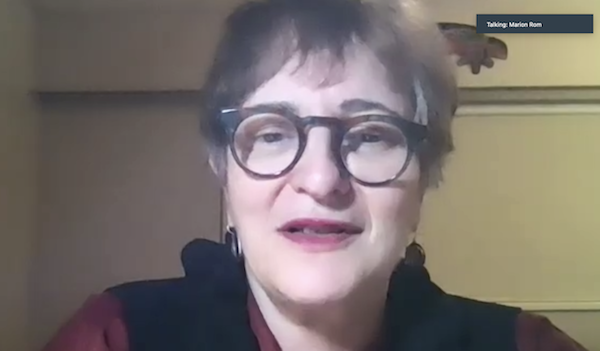
Marion Rom, who works with gender-diverse youth, spoke as part of a Beth Tikvah-hosted panel on the topic Navigating Gender and Sexuality in the 21st Century. (screenshot)

“Almost one-third of people who have gender dysphoria will attempt suicide and have mental health issues, and that’s why we often have such a high rate of kids with eating disorders who are transgender,” said Marion Rom, a counselor who works with gender-diverse youth in the Lower Mainland.

Rom was speaking as part of a March 11 panel on the topic Navigating Gender and Sexuality in the 21st Century. She defined gender dysphoria as when “your body doesn’t match the sense of who you are.” She also explained to the 65-plus attendees of the discussion the difference between sex and gender, some of the terminology around gender, and a few resources for those who want to learn more.

The panel, which was hosted by Beth Tikvah Congregation, also included Dean Kaplan, who joined the conversation from Washington, D.C., and the Abelson family – Kay, Bernard and their son Jason – who live here. The discussion was started by the congregation’s spiritual leader, Rabbi Susie Tendler.

“I think that we have a special mission, as the Jewish people, of finding people who have a potential to be marginalized and always elevating them, along with elevating everyone, to ensure that we are all in a sacred space,” said Tendler. She described her rabbinate as being “about opening doors” and a kehila kedosha, holy community, as one that creates pathways for everyone to be welcome in sacred spaces. She thanked the Zoom participants for their efforts in opening the door of community wider to “welcome everyone as their authentic selves because that’s the only way that, I believe, we really approach God.”

Rom was asked to speak by BT congregant Linda Steiner, who had heard Rom’s talk at a Habonim alumni meeting last year. The presentation was geared to older people, like Rom herself, who is 63.

She defined sexuality, and explained several terms, including lesbian (a female attracted to another female), heterosexual (females attracted to males and vice versa), bisexual (someone attracted to both males and females) and pansexual (someone attracted simply to the person, irrespective of gender). She broke down the acronym LGBTQ+ (lesbian, gay, bisexual, transgender, queer; with the plus including but not limited to asexual, two spirit, and allies). She also went through some of the gender terminology, such as cisgender (“either male or female”) and transgender (someone whose sense of self doesn’t match their birth gender). She spoke briefly about hormone therapy and gender reassignment surgery.

For people wanting to start learning more about gender and sexuality, Rom suggested the books Love Lives Here by Amanda Jette Knox and Transgender Children and Youth: Cultivating Pride and Joy with Families in Transition by Elijah Nealy, the Israeli documentary Family in Transition and the narrative film The Danish Girl (or the book from which it was adapted, written by David Ebershoff).

Dean Kaplan, 28, who goes by the pronouns they, them and their, came out as non-binary a couple of years ago. They spoke about how they see themselves and their relationship to how the world sees people like them. Describing themselves as Jewish, white and having grown up upper-middle-class and with privilege, Kaplan acknowledged that these factors have “contributed to me being able to live as myself comfortably.”

Despite that comfort, Kaplan first came out as queer in terms of their sexuality, at the age of 17 or 18, before identifying as gender-nonconforming.

“An important part of identifying as queer in almost any part of the world,” said Kaplan, “is not only understanding who you are, but also, in some ways, accepting this label as ‘deviant’ by society.”

In their early 20s, Kaplan began to realize “I very much enjoy connecting with parts of myself that would be considered feminine,” such as having longer hair and wearing tights.

From a young age, they said, “I’ve had this latent sense of difference in how I want to emotionally connect with people and that played a lot into my sense that I was gender-nonconforming. I think also a little bit of it is this sense that I want to live in a world and exist in space without a lot the negative aspects of masculinity that I was raised to cherish in a lot of ways. I’m still aware of the fact that almost all of my male friends are embarrassed to cry, even alone; it’s a sign of anti-masculinity. And so, being non-binary for me is very freeing in a lot of ways. I can be who I want to be and who I feel I am without the kind of embarrassment or labels that go with certain actions for certain genders.”

That said, the reactions to their coming out were mixed and some were hurtful. They get misgendered every day – “sometimes I correct, sometimes I don’t,” said Kaplan. That will depend, for example, on whether the person making the mistake is a superior at work or a peer. “Power and economics play into my ability to be myself in the spaces I happen to be in,” they said.

Jason Abelson, 24, started his transition in 2012, but his first memory of wanting to be a boy goes back to a gymnastics class when he was in preschool, so 4 or 5 years old. Initially, he attended an Orthodox elementary school in South Africa, where he was born, but his parents switched him to a public school. He used the fact that he was a swimmer to cut his hair short in Grade 4. He hated it when his parents would correct people who would mistake him for being a boy. “I just wanted to go and hide somewhere,” he said.

When his chest began to develop in puberty, he would try and hide it, but, eventually, he quit swimming. He has since picked the sport up again, and has joined an LGBTQ+ team.

When he was younger, he said, “I didn’t know what transgender was. I didn’t know that you could transition, that the feelings I had for wanting to be a boy were experienced by anyone else until an Oprah show that my mom was watching one summer’s afternoon. In that Oprah show, they had a transgender guy and his family, and shared his story.”

Seeing the possibilities for himself, Abelson thought about next steps and started the process of transitioning, one part of which is convincing a psychologist “that you are transgender.” He then saw an endocrinologist. In Grade 10 at the time, he stayed at the same school throughout. “I finished the first semester as a girl; came back five days later as a boy,” he said. “All we did was we changed the name on the class list.”

While he was given a key to the teacher’s washroom, he didn’t want to call attention to himself, so he avoided using the facilities. “Bathrooms still do give me a little bit of anxiety,” he said.

He started hormones nine years ago, at age 15. About a year after that, he had top surgery – prior to that he had used binders to keep his chest down.

With respect to going to an Orthodox shul after he started his transition, Abelson was told that he could come to services but would have to sit in the women’s section. Even now, attending a new synagogue and sitting on the men’s side, he said, “I don’t feel like I have a place in the shul. Being gay as well, I can’t get married in that shul, so that’s still a world that is being navigated.”

Kay Abelson spoke about both the emotional journey and the “very practical life journey.” She said she struggled with those early years when her son was asserting his identity – in his clothing choices and in his desire to cut his hair short, for example.

“I found it really hard, as a mother,” she acknowledged. “And it did cause some conflict in our family.” However, she noted, “For me, the time before Jason’s transition was more of a struggle than once he transitioned…. I found the earlier time hard, before we knew what we were dealing with. Bernard and I both always had a sense that there was something with Jason when he was growing up, but we just could not put our finger on it. And so, that moment of him watching the Oprah show and having that ah-ha moment was a huge turning point for all of us.”

It took time for her and her husband to understand and digest what was happening. She had fears about what people would think and say, but people were supportive and accepting, she said.

“When you start thinking about the history and the background about all those situations that Jason mentioned,” said Bernard Abelson, such as the first time he cut his hair short. “All I wanted to do was get him earrings so that he could look more feminine.” When people would refer to his son, “I was immediately defending, ‘This is my daughter.’… I thought I was

defending him. That’s the irony of all that, is that, as a parent, you think you’re doing the right thing by

defending them … but, at the end of the day, for him, as you’ve heard, it wasn’t working for him at all.”

One thing that helped the family was watching the documentary Becoming Chaz, about Chaz Bono’s transition. Watching it helped Bernard Abelson to accept, “This is real.”

“It’s been an incredible, incredible journey for all of us,” said Kate Abelson.

While some parents go through a mourning period for the son or daughter they once had, Kay Abelson said, “I never felt like I lost anything. In fact, I actually gained something through the process because, before Jason’s transition, as you heard in his story, he never felt comfortable with who he was. He was always yearning to be someone different, so he was never really happy within himself…. When he transitioned and he could actually stand loud and proud and be who he was … it was just so exciting.”

Rom reentered the conversation by stressing that the level of grieving varies among families. She then opened the question-and-answer session that included Dean Kaplan’s dad, Des Kaplan, talking about some of his challenges in understanding his child’s gender and sexuality. There was also discussion about Jewish tradition, which identifies at least six genders, and that some Jewish communities have changed the b’nai mitzvah rituals to be more gender-inclusive.

To watch the panel discussion, without the Q&A, visit btikvah.ca/inclusion-and-diversity.

Artists rise to challenge

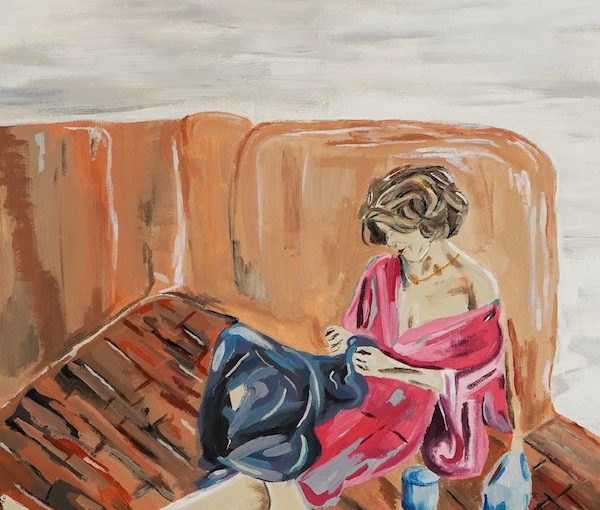
“Sometimes Being Human … Can Be Hard” by August Bramhoff.

The Jewish Community Centre of Greater Vancouver’s inclusion services’ third annual art exhibit at the Zack Gallery is on display this month. And people can meet the artists at a March 23 virtual reception.

“For the last two years, the JCC has celebrated Jewish Disability Awareness and Inclusion Month through an art exhibit that interrogated and explored themes of community longing and belonging,” Leamore Cohen, inclusion services coordinator, told the Independent. “We asked artists of mixed ability: How do we make meaning of the concept of community, the real and the imagined spaces we inhabit? What does community longing look like and what are the possibilities for belonging in an ever-changing world?”

This past year, the world has changed almost beyond recognition. “In Vancouver, we are nearing a year since the COVID pandemic shut down our city and transformed all aspects of our social world,” acknowledged Cohen. “However, while we were isolated, we also saw our creativity flourish.”

In the two previous exhibits, artists responded enthusiastically to inclusion services’ challenge, unfolding a fascinating slice of society through their art, and both shows were successful, well-attended cultural events. Unfortunately, the pandemic has moved most of our interactions online, and so it is with this new show, though it is also available to view in-person by appointment.

The participating artists are of differing abilities and artistic levels, so the artforms vary. There are paintings and multimedia collages, figurative and abstract imagery, landscapes and still life. Some pictures are disturbing in their naked emotional pain. Others are quietly sad, or funny, or absurd. One thing is universal: the artists’ willingness to express their feelings, both in their art and in words, as each piece is accompanied by its creator’s short writeup.

It is impossible to mention all 57 pieces on display, but here are a select few to represent this multifaceted show.

August Bramhoff’s painting “Sometimes Being Human … Can Be Hard” depicts a woman sitting, alone. She is sewing or knitting. The painting’s muted colours permit no joy. There is obviously no one there with her, even beyond the edges of the painting. The woman’s isolation and loneliness are palpable despite the spare simplicity of the image.

The artist wrote about his painting: “My main practice is analogue photography, with a focus on street photography…. This is the first painting I’ve created in over 10 years. The inspiration for this work is from a feature film. It captures the sense of longing and displacement we all seem to be juggling during the COVID shutdown.”

In contrast, Tracy-Lynn Chernaske’s “Whispers” is a dreamy landscape. The moon shines over the night forest and a trail of shiny fog weaves its way between earth and sky. Maybe it is just the weather. Or maybe the fog illustrates our mutual desire to connect with one another. Maybe it is a whisper of our souls.

The artist explained: “Community is … a place and a way to tell stories and journeys so they can be witnessed, heard and held. They are a way of bonding together … and the need to push away and seek out new and more fitting spaces.” According to Chernaske, we all nourish “the invisible threads of relationships that cross borders, land, sea and time.”

In Evelyn Finchman’s “Roots” – an abstract composition in the earthy colours of brown and beige – interconnected spirals, lines and shapes allow the viewer’s imagination to stir. Is it food? Is it a surreal terrain? A carpenter’s schematics?

“Belonging to a community is much more than interacting with our societies and being accepted by our peers,” mused Finchman. “This year, I realized how important it is to coexist within the nature that surrounds us…. There is no human life if we don’t respect all living beings on our planet and understand that we are part of the whole environment.”

image - “Roots” by Evelyn Finchmann
“Roots” by Evelyn Finchmann.

Another artist who touched on the theme of nature and its connection with humanity is Peggy Logan. Her painting “Flowers Adrift” shows single blooms, all different – a tulip, an orchid, a daffodil, a daisy – but all similarly pale and faded, bobbing on the blue background. The image seems dejected and symbolic.

“The piece of work I have created,” said Logan, “is about that sense of disconnection that exists now with friends and family with restrictions on travel, social distancing, and isolating inside. This image is about the lack of roots the flowers have as they float over the water via the internet.”

Symbolism is also the main approach of Theresa Moleski in her painting “Life In and Beyond our Bubble.” The painting is dark, almost black and white. A tree is imprisoned inside a sharply delineated bubble, striving to get free. But there is something vaguely optimistic outside the bubble, too. And the artist expressed herself in no uncertain terms in her writeup: “COVID or not, I will continue my journey as an artist!”

While most of the images in this show are serious in tone, a few offer a humorous slant on our very human follies. Danielle Haslip’s painting “First Date Red Flags” is a tongue-in-cheek exploration of dating. Its style – childlike and undeniably funny – includes a figure with lots of teeth. You see it and you know: something is gonna bite.

“Reflecting on my own personal growth, as I wait for conditions to be safer for meeting people, I thought I’d be cheeky and depict an exaggerated vision of dating, in which we can either fall prey to manipulative people, who mean us harm, or attempt to force a connection with someone who is not a good fit for us,” wrote Haslip.

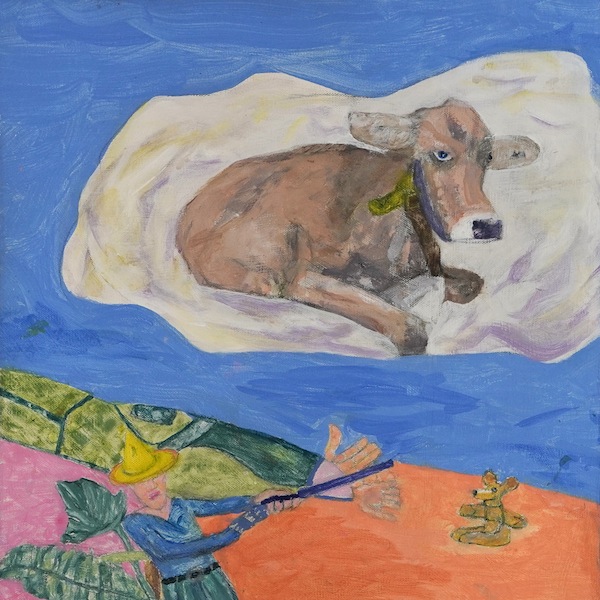
Another smile-inspiring work is Paul Leighton’s “Not Over the Moon Yet.” On the painting, a sad cow is floating on a cloud. Or is it an island? The style is two-dimensional, but the meaning is much deeper. Is the poor cow attempting to fly away from stupid humans? The artist thinks so: “My approach to the theme of longing and belonging is to use oblique humour to ponder unfathomable human global problems through the lens of the preposterous…. An individual, no matter how earnest, can’t solve all the interrelated problems of the Anthropocene or rescue a cow fleeing into the clouds,” said Leighton. “However, social pressure and citizens’ assembly can help.”

image - “Not Over the Moon Yet” by Paul Leighton
“Not Over the Moon Yet” by Paul Leighton.

And then there are paintings like Gail Rudin’s “Home is Where the Heart Is.” Folk art in style, it is heart-warming in its essence. It reminds all of us of the importance of home.

The show is on display at the gallery until April 2. To view the exhibit anytime or attend the March 23, 5 p.m., reception, visit jccgv.com/community-longing-and-belonging.

Olga Livshin is a Vancouver freelance writer. She can be reached at olgagodim@gmail.com.

Can we learn from COVID?

Spring and the holiday of Passover are all about renewal and hope. This year, as our elders begin receiving the coronavirus vaccines and our economy appears to be recovering from the most critical disruption in living memory, things seem promising. We anticipate fleeing our bondage of social isolation and being transported to a land, if not of milk and honey, at least to a place of mixing and hugging.

We have (hopefully) learned a great deal. There have been many opportunities to benefit from the disruption in our lives. At the individual level, we may have learned new skills or crafts – like cross stitch or baking sourdough! – or used the time to study new fields or languages. On the collective level, we have learned that the entire world, regardless of governance, religion, language and every other difference, could mobilize (albeit not equally well) to respond to a crisis.

We also learned that, when necessary, many governments and societies could rise to the occasion (again, with different levels of competence) to save lives. Billions of dollars were “found” to save potentially devastated economies and support businesses and households. Scientists and medical professionals cooperated across boundaries to search for vaccines and to care for the ill. Ordinary people – not just first responders and others in the direct line of care but grocery clerks and those who provide services previously taken for granted – became heroes of the moment.

As the months dragged on, divisions emerged. People and their governments sometimes differed on the best responses, or any response at all. A cohort emerged questioning everything, from the best ways to stop the spread of the virus to the very existence of the virus that has infected more than 100 million and killed more than 2.5 million.

As we hopefully approach the beginning of the end of this extraordinary era, let us remember its beginning – not the fear of the unknown that engulfed us, but the unity the world seemed to exhibit in coming together to confront a danger that knows no borders.

Imagine the challenges we might be able to face and resolve if we could mobilize the world the way we did in those earliest moments of the pandemic. Can we come together to finally confront the climate emergency, which could be every bit as fatal as an unchecked virus if not addressed? Can we unite to overcome racial divisions and inequality? Can we even marginally close the chasm between richest and poorest in Canada and across the planet?

The incredible hurdle that was thrown across our civilization’s path a year ago showed our capacity for coming together when the stakes were high enough.

There are a lot of areas where the stakes are high. Can we take the lessons we’ve learned over the past 12 months and apply them there?

Tale of transformation

Near the beginning of her acting career more than 50 years ago, Beth Kaplan wanted to improve the world through art. “I believe in the theatre as a tool for social change,” she told the director of the London Academy of Music and Dramatic Art when she arrived for a one-year program. “I’d like to touch people’s lives as a force for good.” His reaction? “Well,” he said, standing up. “I do hope you have a fruitful year. Best of luck.”

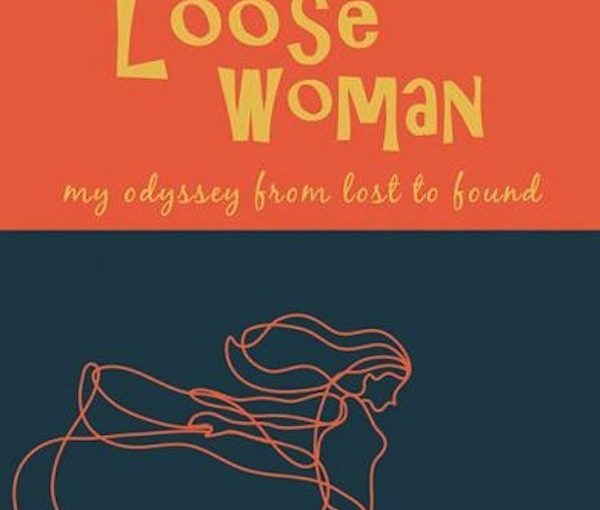
Kaplan writes about her journey from acting to writing, from youth to adulthood, from insecurities to self-acceptance, and more, in her memoir Loose Woman: My Odyssey from Lost to Found. Local JI readers may recall her name, as she was a part of the Vancouver theatre scene in the 1970s. But a 1979 trip that included a visit to France to see her best friend, who had moved there, changed Kaplan’s life.

Through her friend’s husband, Kaplan ended up for a spell living and working in a L’Arche community, which brings people with and without intellectual disabilities together. Initially uncomfortable there, the experience and the slower pace allowed her to learn about herself, and to not treat life as a performance. From her time at L’Arche, she sees how, “in one way or another, we are all handicapped.”

In telling her story, Kaplan seems to rely mainly on thoughts she committed to her diaries over the years. She’s kept one ever since her first, which was a gift when she was 9 years old. Some of the terms she uses, like handicapped, hearken back to that time, and it’s a choice Kaplan makes, “to be true to the time, hoping that readers understand that what is offensive now was not so then.” Indeed, through some of the language and the stories of her objectively wild life during the 1970s, Kaplan highlights the advances that have been made in areas like women’s rights and inclusion.

Loose Woman is an interesting book, even though Kaplan is not a completely likeable heroine, despite it being her own story. Some readers might chafe at her harsh judgments (even when she is the target) and her self-acknowledged mix of confidence (some might say arrogance) and insecurity. But others might revel in her tales of debauchery and her resolute openness.

More bless same-sex unions

Rabbi Steven Wernick (photo from cjnews.com)

Toronto’s Beth Tzedec Congregation, one of the largest Conservative synagogues in Canada, announced last month that its rabbis will officiate at same-sex marriages.

While Beth Tzedec is not the first Conservative synagogue in Canada to sanctify same-sex weddings – Beth David and Beth Tikvah, also in Toronto, have already done so – the development has generated a surprising amount of interest, said synagogue president Debbie Rothstein.

Reaction from synagogue members has been “overwhelmingly positive,” she told The CJN soon after the announcement was made. “I’ve received a couple of concerns; we know change is hard. It’s not even been 24 hours, but (reactions) have been unbelievably positive and supportive.”

In fact, Rothstein said she had heard from members who were surprised this was not already a policy at the synagogue. “People were ready for this change to be made,” she said.

The decision is the culmination of decades of study by the Conservative movement and the synagogue, said Beth Tzedec’s senior rabbi, Steven Wernick.

In 2006, the Conservative movement passed a number of resolutions welcoming LGBTQ Jews into the community, and lifted a ban on ordaining gays and lesbians, based on the principle of kavod habriut, honouring all God’s creations, Wernick said. “Halachah is a living, evolving process of living a meaningful Jewish life. In 2021, to be fully welcoming of the LGBTQ community, to be willing to welcome and officiate at same-sex weddings, is a moral imperative,” he said in an interview.

In 2012, the Conservative movement’s committee on Jewish law and standards approved two model wedding ceremonies, as well as guidelines for a same-sex divorce. Rabbis can adapt the marriage ceremonies for the couples.

In 2017, as part of its strategic planning process, Beth Tzedec formed a task force for LGBTQ inclusion. It has participated in Pride Shabbat, Pride Month and other programs.

Beth Tzedec now has gender-neutral bathrooms, and has worked with Keshet, an international organization that advocates for LGBTQ equality in Jewish life, to examine its policies and the language it uses.

Officiating at same-sex weddings is the culmination of the task force’s work, Wernick said. “One of the things that we heard loud and clear is that you can’t claim to be fully welcoming until you’re doing same-sex weddings,” he said.

The same-sex weddings will differ slightly, and will be called brit ahavim – a covenant of love – rather than the traditional term, kiddushin (betrothal).

Even in a double-ring ceremony, kiddushin is not an egalitarian framework, and so the Conservative movement has developed other “covenantal ceremonies” that are more appropriate to same-sex weddings, Wernick said.

But there will still be all the trappings of a traditional wedding: a chuppah (canopy), a ketubah (marriage contract), wine, blessings and the breaking of a glass. “It’s going to be a holy and wholly Jewish ceremony, in both senses of the word,” he said.

Same-sex weddings will only be offered to couples who are both Jewish, Wernick said, pointing out this was not a decision about interfaith marriages.

Since the recent announcement was made, the rabbi said he has received several emails from families who are personally affected. Some shared that they were not able to get married in the synagogue, as they might have wished. The parent of a transgender child expressed to the rabbi how “meaningful it was that his child now had a place at Beth Tzedec where he can be validated and loved as a child of God.”

While Beth Tzedec is not, as mentioned, the first Conservative synagogue to bless same-sex marriages, Wernick said he expects it will also not be the last. “Beth Tzedec has traditionally been considered one of the leading congregations both in Canada and around the world. I would imagine we will be influencing other congregations to do the same.”

In early 2012, Congegation Shaarey Zedek in Winnipeg became what was believed to be the first Conservative shul in Canada to host a same-sex marriage.

For years at Toronto’s Beth Sholom Synagogue, “our stated position, once egalitarianism was adopted, is to do weddings without concern for gender,” said the congregation’s Rabbi Aaron Flanzraich, adding – likely echoing the policy at other Conservative synagogues – “provided both persons were Jewish.”

The Ontario region of the Rabbinical Assembly, the international association of Conservative rabbis, which Flanzraich chairs, is populated by autonomous congregations, and “each makes their policies in accordance with the wishes and traditions of their respective communities.”

Justine Apple, who was executive director of Kulanu Toronto, a now-defunct group for LGBTQ Jews, called Beth Tzedec’s decision “a very important step.”

“The Conservative movement is finally stepping up and opening its doors to the legitimacy of same-sex marriage,” said Apple. “Something many of our LGBTQ members and their families have been waiting for, for a long time.”

This article originally was published on facebook.com/TheCJN, and includes reporting by Ron Csillag. For local perspectives on this topic, in the context of transgender rights, see jewishindependent.ca/affirming-transgender-rights.