Inclusion matters – always

I was talking to my mother on the phone when she told me about one of her committee projects. At her congregation in Virginia, there’s an outdoor space, in the woods. It’s used as a learning environment and sanctuary, with play space, too.

While it may be a charming and rustic foray into nature, it’s also something else. It’s inaccessible to those with disabilities. My mom described how a group home brought some of its residents to an outdoor service, only to discover that, in fact, the residents couldn’t attend, because they use wheelchairs. The trails, filled with rocks and tree roots, are too difficult for those wheelchairs to navigate.

My mom is on the “inclusion committee” at her synagogue. In part, she joined because she cares about everybody at her congregation. She wants to practise “audacious hospitality” and “radical inclusion.” The other part is more personal. My nephew uses a wheelchair. Of course, she wants to help him have a full and meaningful Jewish experience.

These bumpy trails are a physical barrier to inclusion. Our Jewish communities are full of physical barriers. These can be things like having only one staircase as an access point into a building – and no ramp. It can mean having no accessible bathroom, or no place for a mom to breastfeed. It could be lacking a way to invite a person in a wheelchair onto the pulpit, because there’s no ramp, or even no handrail for those who might not be stable on their feet.

Physical barriers aren’t just stairs, of course. What about large-print prayer books or documents that work with text-to-speech software for those who have visual impairments? What about an amplification system, sign-language interpreter or closed captioning for those with an audio disability?

Even beyond this, there are those whose differing abilities aren’t visible. Is there a quiet room available and unlocked for those who have sensory challenges? Many might need a break from loud music at a bar mitzvah or during a raucous Simchat Torah celebration. Is there a way that those who have mental health challenges or intellectual disabilities can be offered support if they need it while at a synagogue event?

February is Jewish Disability Awareness and Inclusion Month, or JDAIM. If this were a committee meeting, this is when, inevitably, someone would speak out. “Whoa,” this person might say. “We’re just a small congregation with limited funds. We simply can’t do all this. We can’t be all things for all people.”

This is the second barrier to break down. It’s an attitudinal barrier. When someone’s attitude gets in the way of helping practise radical inclusion, it stops us from meeting every Jewish person’s needs in the community. This attitude adjustment is necessary when, for example:

  • a baby starts to fuss and a parent works to quiet the baby and feed him,
  • a nonverbal person makes noises during services,
  • a person needs to stand or sit during services because of pain or disability when everyone else is doing the opposite,
  • a person who cannot hear turns to her spouse to ask, “What page are we on?” in that loud voice.

The list could be a mile long. I’ve seen somebody cast a fish-eye at every one of these people. Given how many of us struggle with disabilities, well, let’s just say it’s high time for a change in attitude.

To the person who says, “We’re a small congregation, we can’t do all this,” be ready to stand up and say, “Did you ever wonder why it’s such a small shul? This is why. This attitude. This inability to try and include everybody and to work to meet their needs.”

It doesn’t cost a lot to build a portable ramp for the bima (pulpit). Sometimes, funds can be raised in creative ways to fix physical barriers. What’s harder? Working to change our conscious and unconscious attitudes about disability and inclusion.

Disability will affect all of us or our loved ones at some point in our lives. Please, don’t wait until you break your leg to acknowledge this. It’s really important to bring JDAIM up, but it shouldn’t be a once-a-year discussion.

In the portion Yitro, which we read in synagogues at the beginning of February this year, G-d speaks to Moses and to all the people at once. They all hear the Ten Commandments together in Exodus 20:1-14. Rabbi Ana Bonnheim’s commentary on this portion uses the phrase “radical inclusion.” Moses prepares the people to hear from the Almighty, and they all receive this revelation together – each in his or her own way. Rabbi Bonnheim reminds us that inclusivity, this frequent repetition of “ha-am”, “the people,” is essential to Jewish tradition.

On Shavuot, when we gather again to hear the Ten Commandments, everyone is supposed to be there. If we want a Jewish gathering where everyone physically can be there, it’s time to start an inclusion committee, if your community doesn’t have one. If you already have that committee, remember the public relations campaign that must accompany any initiatives, so that attitudinal barriers change as well as physical ones. The truth is that, even if everyone can physically be present, if your community projects a bad attitude, those with disabilities won’t want to be there.

As for me, I received a “save the date” card for my nephew’s bar mitzvah recently. I cannot wait to see him, using his assistive speaking device, leading the service. Of course, there’s a closed border and a pandemic in the way, too, but their congregation works so hard to include everyone that I know that, in the worst-case scenario, I’ll be there virtually, through livestreaming. Jewish celebrations, like every other kind of Jewish gathering, are for all of us. That’s why inclusion matters.

Joanne Seiff has written regularly for CBC Manitoba and various Jewish publications. She is the author of three books, including From the Outside In: Jewish Post Columns 2015-2016, a collection of essays available for digital download or as a paperback from Amazon. Check her out on Instagram @yrnspinner or at joanneseiff.blogspot.com.
 

The “choosing people”

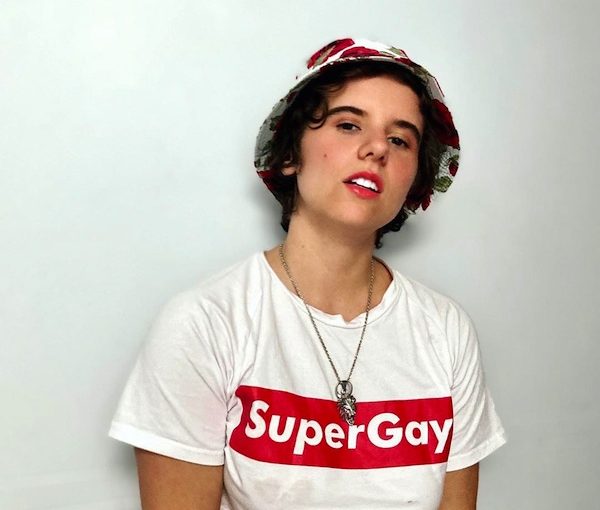
Angelica Poversky (photo from Angelica Poversky)

Temple Sholom Sisterhood’s social action committee invited members of the community to broaden their understanding of who is Jewish and consider how expansive the community could be in the first of its Tikkun Atzmi Series: Healing Ourselves to Heal the World. The Feb. 4 Zoom event featured panelists Carmel Tanaka, a community engagement professional, and poet Angelica Poversky.

Tikkun atzmi, to repair oneself, is considered the first step on the path towards tikkun olam, repair of the world. Along the way, there are also tikkun bayit, strengthening the family, and tikkun kahal, healing the community.

Tikkun atzmi implies looking inwards and reflecting on what should be taking place within the Jewish community, particularly as it pertains to marginalized groups, such as people of colour, LGBTQ+ individuals and others who consider themselves distanced from the tribe. The past year, the organizers said, has highlighted “so many of the inequities that persist in our world.”

“Not only am I deeply invested in making our Judaism grounded in social justice any opportunity I get, I know and love many Jews who feel as though they didn’t have a home in the community and I am invested in changing that,” moderator Dalya Israel began.

Tanaka spoke about coming to terms with the descriptions that derive from being the child of a multi-racial marriage. Often, she would refer to herself as half-Jewish and half-Japanese. “It wasn’t until years later that I realized I am not half of anything – I am fully Jewish and fully Japanese-Canadian. I can be all of these things and celebrate all of these things,” she told the Zoom audience.

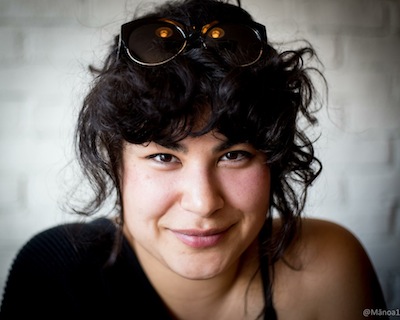
photo - Carmel Tanaka
Carmel Tanaka (photo by Manoa1)

Tanaka recalled experiences of her time as director of the University of Victoria Hillel, where she encountered several students who felt alienated from the community because they were not halachically Jewish. Realizing that it can be traumatic for someone to be told they don’t belong in a group, she endeavoured to create a safe space at UVic for anyone who may be Jewish, Jew-ish or Jew-curious.

Poversky referenced the exclusion that some Jews within the LGBTQ+ community have endured. “It is horrible that people are not fully accepted,” they said. “What is our goal if not to uplift everyone? Why create barriers? Those feelings of persecution can be very painful, so why place them on others?”

The discussion touched on the causes for the limited presence of younger and/or marginalized people in synagogues and other areas of Jewish life. Tanaka recounted a story about her mother who, years ago, was told by a synagogue that she was welcome to come to services but was asked to leave her husband at home.

While attitudes may have improved since then, there is still much more room available for inclusion and diversity, said Tanaka. “I feel, in order for the term Jewish to be more expansive, it needs to expand far enough to be a safe space for anyone who wants to identify as Jewish,” she said.

Israel, citing Sarah Hurwitz’s 2019 book Here All Along: Finding Meaning, Spirituality and a Deeper Connection to Life – in Judaism (After Finally Choosing to Look There), put forward the notion that, instead of thinking of themselves as the “Chosen People,” Jews could be the “choosing people.”

“Every day, we wake and choose to be Jews, and the way we live our life,” Israel said.

“Community happens when we complete ourselves,” Poversky added. They spoke about moving away from “action-based” assumptions about Judaism or sexual identity and attaching more importance to the declaration of one’s identity. That is, one can say they are Jewish without the acts of celebrating Chanukah or reading Torah. Implicit in Poversky’s statement was the “restrictive construct” within institutions that defines or even “polices” the identity of another individual because that person belongs to a marginalized group.

Tanaka shared experiences of visiting synagogues and being asked about her name, her lineage and her proficiency in Hebrew. This line of questioning to Jews of colour and others, she believes, is what has caused people to distance themselves from the Jewish community.

“It is the dance of having to prove who you are through actions,” Tanaka explained. “It is what we call microaggressions. When you have this happen over and over again, it can be emotionally exhausting.”

Tanaka, a queer Jewpanese woman of colour, is founder of JQT Vancouver (pronounced “J-Cutie”), Vancouver’s Jewish queer trans nonprofit. She also leads a monthly Zoom call for Jewpanese and their families from all over the world.

Poversky is a queer non-binary Russian-Jewish poet who has more than seven years of facilitation experience. They’ve taught poetry workshops in schools, in libraries, with youth groups, in community centres, and at dozens of festivals across North America. Much of their activism has been devoted to queer and trans celebration.

The Sisterhood’s three Tikkun Atzmi panels are designed to fuel the action committee’s dedication to social justice. Future panels will invite participants to elucidate on ways of bringing awareness to systemic inequity and its impacts on the Jewish community. They will also delve into their Judaism and explore sacred teachings for guidance in caring for and making space for one another.

Sam Margolis has written for the Globe and Mail, the National Post, UPI and MSNBC.

***

To watch the entire Tikkun Atzmi panel discussion, click here (the passcode for the video is !*n?RC1s).

Arts enhance inclusion

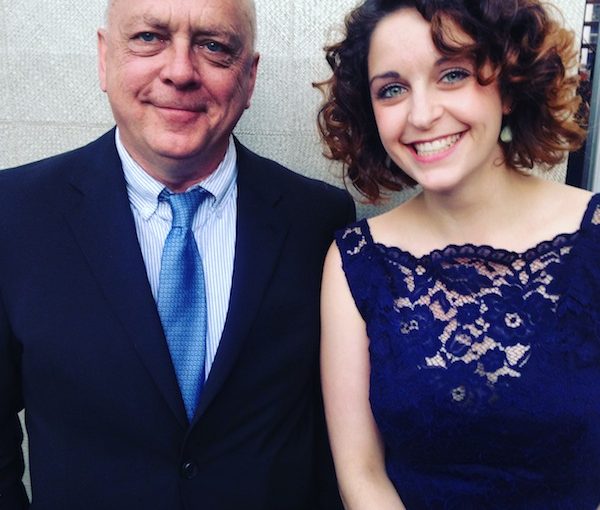
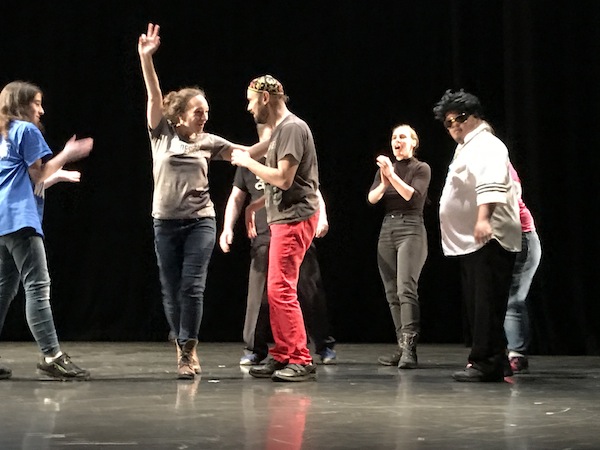
Matthew Tom-Wing, right, dressed as Elvis, was one of the participants in the 2019 Chutzpah! Festival finale. His mother, Elizabeth Tom-Wing, recalled it as a “standout moment for our community and for our son!” (photo from JCC)

February is Jewish Disability Awareness and Inclusion Month (JDAIM). It offers a wonderful time to look back at some of our community achievements in fostering inclusion at the Jewish Community Centre of Greater Vancouver; in particular, the 2019 Chutzpah! Festival’s Inclusion Project.

Mary-Louise Albert was artistic and managing director of Chutzpah! and the Rothstein Theatre for 15 years. Before she retired, she and I had many spirited conversations about the importance of creating access for local community members in all areas of Jewish communal life and at the JCC, which is the home of the festival and the theatre, and where I am the coordinator of inclusion services.

We believed that the arts are an important avenue for personal growth and skills development, and that they also bolster visibility and foster true belonging. We hoped that the JCC’s inclusion services and Chutzpah! could collaborate in some way and, through our conversations and Mary-Louise’s vision and expertise, the Chutzpah Inclusion Project crystalized.

After months of planning, in November 2019, members of the local community took to the Rothstein stage to participate in a first-ever Inclusion Project performance – an evening of dance and comedy with international inclusion advocate Pamela Schuller and professional dancers Troy Ogilvie and Rebecca Margolick. The event was the finale of the 2019 Chutzpah! Festival and a highlight of Albert’s final year with Chutzpah!

In preparation to take to the stage, participants had a yearlong introduction to theatre, including low-barrier and free classes with a specialist through the JCC’s Theatre Lab program. Participants attended many local productions through the JCC’s social club, and spent hours rehearsing and co-creating with Ogilvie, Margolick and Schuller over a series of workshops that would not have been possible without community partners and friends.

The 2019 performance received a standing ovation from the audience. The feeling of solidarity and acceptance between the audience and the performers was palpable. What was most amazing, Elizabeth Tom-Wing recalled, is that her son had the opportunity to “train and perform on stage with the professional dancers, along with his friends, and close off the three-week-long 2019 Chutzpah! Festival.” She recalled it as a “standout moment for our community and for our son!”

This project demonstrated that artists of mixed ability and skill can create a powerful and moving performance. Moreover, it reminds us that it is only through equity and action that belonging can be fostered. As diversity, equity and inclusion strategist Arthur Chan explains: “Diversity is a fact. Equity is a choice. Inclusion is an action. Belonging is the outcome.”

Leamore Cohen is inclusion services coordinator at the Jewish Community Centre of Greater Vancouver.

Making safe, inclusive space

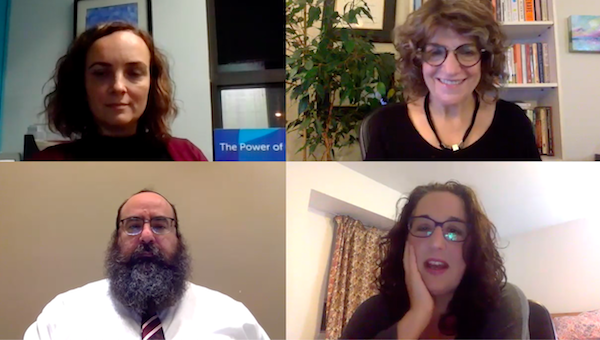
Clockwise from the top left: Tanja Demajo, Shelley Karrel, Amanda Haymond Malul and Rabbi Yechiel Baitelman participate in a JACS Vancouver panel discussion Oct. 15.

“When someone comes through the door and says, ‘I’m an addict. I’m a recovering addict,’ do they feel judged or do they feel accepted? Do they feel that we are putting them in a box, giving them a label?” asked Rabbi Yechiel Baitelman in a recent community discussion. “We have to identify the illness, there’s no question about that. But, is that the only way to view a human being? I think to respect every human being for their humanity, that’s what people are really craving – respect and love.”

Baitelman, director of Chabad Richmond, was one of three panelists on the topic Building Safe and Inclusive Spaces for Those Affected by Addiction and Mental Illness. He was joined by Tanja Demajo, chief executive officer of Jewish Family Services (JFS), and Amanda Haymond Malul, a community member in recovery, in the Oct. 15 event presented by Jewish Addiction Community Services (JACS) Vancouver. JACS Vancouver’s Shelley Karrel moderated the conversation.

Haymond Malul would like to see more community discussions on addiction and people being taught acceptance. She spoke of the need to “have support from the religious leaders of the community, from every single agency in the community, to start talking about it – make it acceptable, educate.” (See jewishindependent.ca/help-repair-the-world.)

And we need to ensure that what we are teaching is in line with our actions, said Demajo. “If we talk to children about acceptance, but we don’t actually practise that, that’s creating double standards where we talk about certain things, but that’s not what people experience,” she said. This could be damaging, she said, to people who “really need that support and want to trust.”

We must see each member of the community as a human being, said Baitelman. Love is important, but, he said, “Love is on my terms, respect is on your terms. If I love you, it’s more a reflection of who I am. But, if I respect you, it’s more of a reflection of how I see you, what you are about – and I think that’s really important. Respect the humanity. If you can love them, that’s even greater. But respect is more fundamental.”

When Karrel asked panelists for tangible ways in which people could be more accepting and inclusive, with love and respect, Demajo said agencies are overwhelmed with the number of people needing support. She said it is up to each of us to connect on a personal level with others, accepting that it will take time for them to trust us enough to share.

“You have to build a relationship, and a relationship is not built overnight,” said Demajo. “I had a client who I often think of, a person who spent a number of years [in the] Downtown Eastside being homeless, not having pretty much anything in his life…. He would come to see me … and we would speak about books, because he was a huge reader and I love reading. It took him six months until he really started talking about things that were going on in his life and what he actually needed, and we started working from there. Now, he has a regular life. He has a home. He brought his family back. He is working. So, things are in a place that he wanted … a number of years ago. Recovery is a process of being vulnerable and, so, if social services don’t have the time to invest in people, I think we are setting ourselves up for a really huge failure.”

All panelists agreed that having a drop-in centre with people who understand is absolutely essential and that, while professional support would be ideal, it is not essential. To be kind, respectful and loving, you do not need to be a professional, they said.

While there are recovery clubs in the general community, Haymond Malul said it would be great if there were also one in the Jewish community – “having a safe place for people to come and be able to drop in, and know that this is the Hillel House of Recovery,” she said.

However, having a community place might inhibit some people from coming out, due to fear of being exposed, warned Demajo. “The other piece is that I do feel that what Amanda has done tonight, speaking of her own experience and being in the community, and [talking about] some of the things that were helpful for her, is important to start with; having those opportunities to open up the conversation – not just for me, in a professional role, but from a personal place – because that is where the relationship happens. I do believe that is the core of whatever we come up with – the core is the relationship.”

Each of us is deserving of respect, regardless of our achievements, successes, failures or addictions, stressed Baitelman. “The fact that you were created by G-d makes you worthy of the highest form of respect and no judgment,” he said.

“Why would I not be involved with somebody who’s in recovery?” asked the rabbi. “After all, these people are accountable. They’re working on character development and are improving certain areas of their lives that they have the courage to acknowledge need to be corrected. They’re actively making amends with people around them. They are working on a conscious relationship with G-d rather than on other forms of success that society often judges success by. This is really an achievement.

“How many of us would like to change even one iota of our character, and people in recovery have changed more than one iota. They have made an incredible change, which is so admirable and should command respect. I think that’s part of the attitude that should be helpful in the broader community, and how we act with people, and the stigma.”

Karrel closed the discussion by giving a brief synopsis of JACS and its services. “We are working to diminish the stigma of addiction,” she told the Independent after the event. “Let’s keep this conversation going so we all feel we belong in our community.”

Rebeca Kuropatwa is a Winnipeg freelance writer.

Community milestones … Green Thumb & Klein

Patrick McDonald will hand the artistic reins of Green Thumb Theatre to Rachel Aberle in January. (photo from Green Thumb Theatre)

After a distinguished 32-year tenure, Patrick McDonald recently announced that he will be stepping aside as artistic director of Green Thumb Theatre at the end of 2020. After several seasons working closely with McDonald, Green Thumb’s associate artistic director and award-winning theatre artist, Rachel Aberle, will assume the role, effective Jan. 1, 2021.

McDonald has led Green Thumb Theatre since 1988. The theatre organization, which was founded in 1975, tours to schools and other venues across the country and internationally. McDonald’s dedication to placing youth engagement and artistic integrity on an even plane has underpinned the organization’s mission of providing socially engaged professional live performance to young people, regardless of geographic or economic status.

“I am proud of how, as a company, we have stayed to course over the last three decades continuing to create new, engaging and challenging work about the issues young audiences are dealing with,” said McDonald. “ I am especially proud of the number of scripts we have brought forward that are now a part of the growing canon of theatre for young audience scripts produced worldwide.”

As performing arts organizations across the globe face uncertainty and calls for innovative programming, McDonald is confident he is leaving the theatre in good hands, stating: “Rachel Aberle, in collaboration with general manager Breanne Harmon and our current staff, will, without doubt, continue this legacy and meet the current challenges head-on. They are ready, and they will do well.”

Aberle, who made her professional performance debut with the company, has penned two critically acclaimed plays for the organization. Her play Still/Falling, which explores themes of adolescent mental health, premièred in 2015 and has been performed more than 180 times across North America and received a Jessie Richardson Theatre Award for significant artistic achievement. The Code, which explores themes of consent and cyberbullying, premièred in 2018 and was recognized with a Jessie Award for outstanding production, the Sydney J. Risk Prize for outstanding original script by an emerging writer, and was included on Tapeworthy blog’s Best of Stage 2018 – selected out of almost 200 shows worldwide. Aberle has held the position of associate artistic director with Green Thumb since 2017.

“I am humbled and honoured to be asked to serve as Green Thumb’s next artistic director,” remarked Aberle, who is a member of the Jewish community. “I have grown up at Green Thumb, under the mentorship and guidance of Patrick McDonald. During these difficult times, I take this role on with a deep appreciation of the complex challenges the company faces. I believe that now, more than ever, young people deserve opportunities to explore the struggles they face on a daily basis. This is the work that Green Thumb has always done, and work that I am excited to continue to do.”

During his tenure, McDonald has commissioned more than 50 new plays from emerging and established playwrights, and has directed more than 75 productions. He has been recognized for his work, including the 2009 Jessie for career achievement and, in 2013, the Vancouver Mayor’s Arts Award. In addition to the school touring program, McDonald established mainstage production partnerships with more than 20 arts organizations nationwide and internationally.

“We are humbled to have worked with Patrick and marvel at his creativity and tenacity in moving youth theatre forward,” said Cheryle Beaumont, chair of the board. “With a long and committed history with Green Thumb and a wealth of experience to bring to her new role, we are most pleased to welcome Rachel Aberle to the position of artistic director this coming January.”

Harmon, said, “Patrick’s long history at Green Thumb has seen him mentor hundreds of emerging artists, administrators and playwrights, offering endless opportunities and truly elevating theatre for young people across the country. He will be leaving Green Thumb with a strong legacy.”

Looking to the future, Harmon, who is also a member of the Jewish community, added, “Rachel is passionate, knowledgeable and a true champion of ensuring young voices are represented truthfully. I look forward to our new partnership.”

***

photo - Alison Klein
Alison Klein

Alison Klein has been accepted to the master of arts, interdisciplinary studies, in the faculty of humanities and social sciences at the University of Athabasca. The focus of her learning is disability and how services are offered to persons with disability in Canada. She plans to use her studies to inform her work on The Self Advocate, her podcast featuring people with cognitive disabilities who advocate for themselves.

No Silence on Race

An open letter from Black Jews, non-Black Jews of colour and our allies to Jewish congregations, federations, foundations, organizations, nonprofits and initiatives, dated June 30, 2020.

We write this letter as proud members of the Canadian Jewish community. We are Black Jews and non-Black Jews of colour. We are Jewish community board members, educators and leaders. We write from a place of love for our Jewish identities and community, while also grappling with the cultural erasure, exclusion and structural racism that we experience in Jewish spaces. Nevertheless, we are compelled to be in Jewish community because it is who we are.

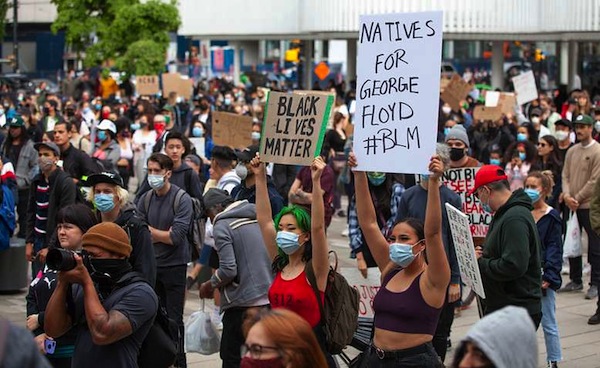
Over the past month, we have witnessed a racial reckoning within Canadian institutions. Police violence against Black and Indigenous people has continued unabated, with numerous deaths, including that of D’Andre Campbell, Eishia Hudson, Jason Collins, Regis Korchinski Paquet, Everett Patrick, Chantel Moore, Rodney Levi, Ejaz Ahmed Choudry and countless others. In the United States, the tragic murders of Ahmaud Arbery, Tony McDade, Breonna Taylor, Sean Reed, George Floyd, David McAtee and Rayshard Brooks have gripped the collective consciousness and have been the catalyst for a global call to action. We have witnessed and participated in protests and in conversations for structural change across all sectors and our Jewish community is not exempt from this dialogue.

No Silence on Race is born out of the necessity for inclusivity and racial equity in Jewish spaces. We acknowledge and are grateful for the longstanding work that Jews of colour and Jewish allies in Canada and the United States have dedicated themselves to in addressing structural racism within the Jewish community.

In this letter, we call on our Jewish community to uphold the tenets of justice and equality and to commit to the creation of a truly anti-racist, inclusive and equitable Jewish community.

The work that needs to be done to achieve this vision must happen collectively and systematically. To guide its implementation, we have devised nine pillars outlined below. These pillars are intended to support Jewish congregations, federations, foundations, organizations, nonprofits and initiatives in their transformation towards greater inclusivity and equity.

If you are aligned with the creation of an anti-racist, inclusive and equitable Jewish community, we ask that you sign this letter in support [at nosilenceonrace.ca]. If you are an organization, we ask that, in addition to signing your name, you write a public statement expressing your commitment to achieving this vision.

The nine pillars are:

1) Allyship: creating anti-racist, inclusive and equitable Jewish spaces begins with each individual. We call on everyone within their organizations to make a personal pledge to the work of allyship and to devise a personal plan of 10-15 comprehensive ways they will work towards becoming strong allies and leaders in the creation of more inclusive and equitable Jewish spaces.

2) Education: engage external facilitators for organization-wide anti-racism and anti-oppression education and training led by Black Jews, Jews of colour or people of colour consultants or consulting organizations.

3) Indigenous education and relationship building: engage in education about Indigenous peoples in Canada and cultural competency training. Build meaningful relationships with local Indigenous communities.

4) Equity consultancy: work with an equity consultant with a specialization in anti-racist work to formulate a multi-year strategic plan for your organization to create a roadmap towards inclusion, equity and anti-racist practices. This includes implementing non-discrimination policies, equitable hiring policies, anti-racist frameworks for organizational decision-making and a procedure to report and investigate any breaches of this policy.

5) Employment and recruitment: implement strategies to ensure equitable representation in your staffing, as well as development and retention planning to ensure these practices are adequately conducted.

6) Equity, inclusion, anti-racism advisory: accountability is essential. Create an advisory group to ensure that the equity-and-inclusion policy and strategies implemented are upheld at all levels of the organization. Create metrics to track ongoing anti-racism work.

7) Jews of colour leadership strategy: invest in a leadership strategy to ensure that Jews of colour are poised to be adequately represented in leadership roles in the community. This can include mentorships, educational scholarships and project grants.

8) Programming/events/partnerships: commit to more programming and partnerships with cultural institutions, with the goal of engaging in and elevating a diverse range of Jewish diasporas and histories.

9) Amplify the voices of Jews of colour in Canada: demonstrate explicit support for Jews of colour community groups and active initiatives. Engage in substantial outreach efforts.

We acknowledge that change takes time and recommend Jewish organizations create their own timelines for achieving the nine proposed pillars. We have designed these pillars as a guideline and we encourage all organizations to be intentional and creative in their implementation. While organizational priorities may have shifted amidst the realities of COVID-19, it is imperative that our community does not remain silent about how racial inequity plagues Jewish spaces. We look to the entire Jewish community in Canada to challenge ourselves to do more and to envision the path forward.

Jewish scholars as far back as Rabbeinu Bachya ben Asher, a significant rabbi and scholar from 13th-century Spain, call us to seek “Justice whether to your profit or loss, whether in word or action, whether to Jew or non-Jew.” So, we set our sights on July 9, which this year mark[ed] the fast of the 17th of Tammuz, where we begin the three-week period of mourning leading up to Tisha b’Av.

Tisha b’Av commemorates the destruction of the Temple. It is a time where we reflect on the divisions within our community. But, more importantly, it is a time to reflect on the cost of allowing those divisions to persist. During this holiday, we recognize the importance of taking a more active role in challenging each other and of doing more to make amends. It is in this spirit that we invite Jewish organizations across the country to engage in listening, introspection and action.

Creating anti-racist, inclusive and equitable Jewish spaces will require deep self-reflection, difficult conversations and an ongoing commitment to reimagining what the Jewish community can look like. Above all, it must be guided by the celebration of Jewish culture and a love for one another.

For individuals and organizations who believe in this movement, we invite you to join us in action by adding your name to this letter. We call on organizations to sign their name with the intention to issue a public statement by July 29, outlining your commitment to the vision of creating a more inclusive Jewish community.

The ground is shifting beneath us in ways that are undeniable and it is incumbent on each of us to play a role in shaping our collective future. When we honour our commitment to each other as Jews, our communities will reflect the beauty and diversity that truly exists within our culture.

Sara Yacobi-Harris, Akilah Allen-Silverstein and Daisy Moriyama

Culture & accessibility

Visitors to Masada learn more about the site through Gadi Mathov’s miniature model of the landmark. (photo from Mathov Design)

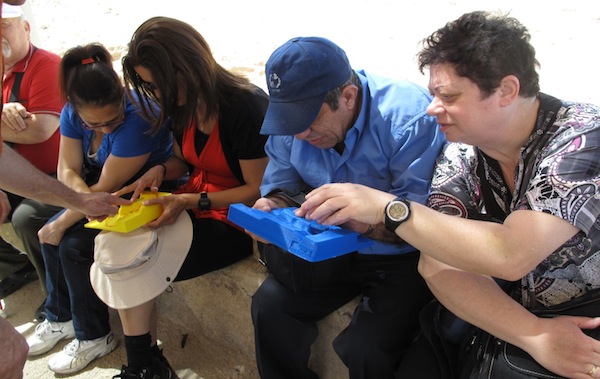
What would it take to make museums, cultural sites and tourist attractions more accessible to people with visual, intellectual or developmental disabilities? For the past 25 years, Israeli professional miniaturist Gadi Mathov has been working on solving this problem using models.

At Masada National Park, for example, people with visual impairment can understand the site’s unique topographical structure and history through Mathov’s 3D tactile models.

“We also created for them miniature models of siege vessels that illustrate the Roman siege of Masada,” he explained. “The way I define it, a model is a physical representation of a product or an idea. A model is a medium that allows people to communicate and pass along ideas between them.”

Mathov Design models are used in leading cultural institutions such as the Israel Museum and sites managed by the Israel Antiquities Authority and the Israel Nature and Parks Authority. Mathov also cooperates with the Commission for Equal Rights of Persons with Disabilities, the National Insurance Institute and the Access Israel nonprofit organization.

Mathov Design’s 100-square-metre model of Jerusalem, featuring the Temple Mount, the Tower of David, the Knesset, the new Jerusalem Light Rail and other iconic structures, can be seen in Times Square in New York City as part of the Gulliver’s Gate project.

Birdwatching via models

Agamon Hula, a must-visit birdwatching and natural beauty attraction in northern Israel, is also enhanced by Mathov’s models. Here, he cooperated with Pnina Ceizler, Keren Kayemeth LeIsrael-Jewish National Fund’s northern region projects and accessibility coordinator, and KKL-JNF’s chief ornithologist Yaron Charka to make the site’s research station a place of interest for people with disabilities – visitors can see and/or feel models of the birds that migrate in the area, as well as special globes and maps that highlight migratory routes.

“There are quite a few models that we’ve created to enhance the experience for people with visual impairments,” said Ceizler. “We see that it’s useful for everyone, also for children with disabilities or with autism.”

The accessible experience at the research station has proved to be a huge hit, she told Israel21c. She tried it out on a group of people with visual impairments before opening it up to private visitors and organized trips for schools and people with special needs.

“They enjoyed this whole experience up close. They were impressed and admired everything,” she said of the accessible centre’s first visitors.

Back to the future

Mathov has worked in his profession for 37 years, but it came about quite by accident. “It was a temporary job while I was an architecture student, and then I found out that I liked it better,” he recounted.

Decades later, he’s still in love with the job. “They’ll have to take me out of here in a coffin,” he joked, speaking of his workshop in the central city of Lod.

Along with cultural institutions, his clients include the defence establishment and medical instrumentation companies.

Mathov is not worried about work drying up in the age of technological advancement. “There’s nothing more comfortable or clearer than a model,” he said. “There are dozens if not thousands of uses.”

Lately, it’s become much easier and cheaper to create a model. “The biggest development was the introduction of what we call computerized production,” Mathov explained, citing 3D printers, lasers and CNC (computer numerical control) machines. “Each of these technologies helps us create a much more complex and higher-quality product in less time and for a cheaper price.”

Mathov hopes that, one day, people will be able to print out models at home of the places they’re planning on visiting. “Today, no one goes to the store to buy music; no one goes to Blockbuster to watch a movie. I imagine that, when you’ll want a miniature model, you won’t go to a miniaturist. You’ll be able to download them and print them by yourself,” he explained.

However, printing is only the end of a process that begins with human creativity. Mathov said a model should contain “the human spark of the soul of the person who created it.”

And, while he mourns the disappearance of craftsmanship, Mathov is a firm believer in advancement. “You have to keep on looking forward,” he said. “To understand what the technologies are and where they’re heading; how to adopt them or compete against them or circumvent them.”

For more information, visit mathov.co.il/English.aspx.

Israel21c is a nonprofit educational foundation with a mission to focus media and public attention on the 21st-century Israel that exists beyond the conflict. For more, or to donate, visit israel21c.org.


Artistic visions on belonging

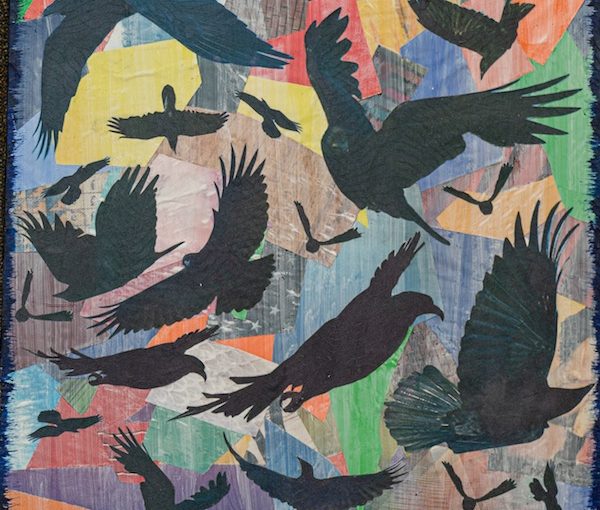
“We are Family” by Cat L’Hirondelle is now on exhibit at the Zack Gallery, as part of he group show Community Longing and Belonging, which runs to March 29.

The new group show at the Zack Gallery, Community Longing and Belonging, is the second annual exhibit in celebration of Jewish Disability Awareness, Acceptance and Inclusion Month. Organized by Jewish Community Centre of Greater Vancouver’s inclusion services and its coordinator, Leamore Cohen, the show is a silent auction. Half of the proceeds will go to the artists, and the other half will be divided between inclusion services and the gallery.

The show consists of 50 paintings by different artists. The size and shape of all the paintings are the same – small rectangles – but the contents and media used are vastly different, indicative of the artists’ various styles and training levels. Some are highly professional. Some are figurative; others abstract. But all reflect their creators’ need to belong, to be part of a community. Each painting tells a story.

One of the prevalent themes of the show is flight. Wings appear on several paintings, emphasizing the yearning for the freedom flight entails, but also for the brotherhood of other fliers. The white ornamental wings on Mikaela Zitron’s multimedia piece are bigger than the background board. They take the artist into the sky, into a joyful aerial dance, while Jamie Drie’s feathers, drifting in a sad emptiness, invoke the feeling of disconnection.

The murder of crows in Cat L’Hirondelle’s painting relates yet a different story. “I am a feminist,” said L’Hirondelle. “I was thinking about the importance of being part of a community of like-minded women. My group of longtime women friends is my family, my tribe and, like the crows, I know that they will always be there for me. Since I became disabled, I have felt more and more disassociated with the able-bodied-centric society in general. Just look at the history of people with disabilities in different societies – genocide, forced sterilizations, segregation, isolation, etc. I would love to feel that people with disabilities belong in the world. My piece is trying to impart that sense of longing to be included in general community and how crow communities seem to include everyone: the old, the disabled, the young. I have lived in the crow flight path for many years and have been watching crows’ behaviour; sometimes, I wished people were more like crows.”

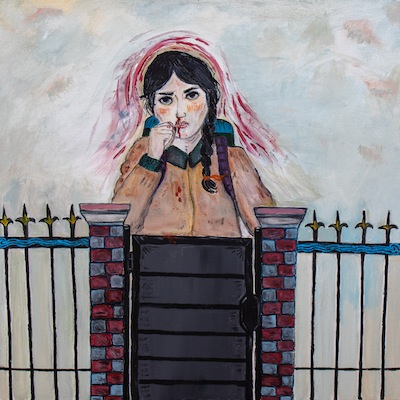
image - “Leaving for Awhile” by Daniel Malenica
“Leaving for Awhile” by Daniel Malenica

The second recurring motif in the show is loneliness, the sense of separation. Daniel Malenica’s image is distinctive among such pictures. The woman in the painting stands behind closed garden gates. She gazes at us from the painting, and the naked longing in her eyes is painful to behold. She desperately wants to open that gate and step through, to join us, but she lacks the courage. What if the people inside reject her? So, she just lingers outside, desolate and alone, waiting for an invitation.

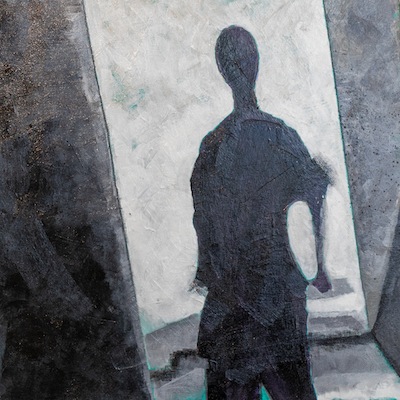
Another outstanding piece on the same theme is Estelle Liebenberg’s black and white painting “Solitude Standing.” She told the Independent, “I work primarily as a potter and a metalsmith, but I accepted the challenge to paint something for the exhibition because I’ve had wonderful times working as a substitute art instructor at the JCC. I chose the monochromatic colour palette because, at the moment, I am quite fascinated by shadows, specifically how they change the shape of objects but still remain recognizable.”

image - Estelle Liebenberg’s “Solitude Standing”
Estelle Liebenberg’s “Solitude Standing.”

Her focus for the piece was the idea of a community in general. “I’ve spent my life dealing with different communities and, I guess, for me, the lines have softened over time,” she said. “We spend so much time in our lives working on belonging, or longing to belong somewhere, to someone or something. It’s an integral part of the beauty, the joy, the frustration and the heartbreak of life. For me, this was longing and belonging as an immigrant, as an introvert, as a mother of grown children, as a single person living in a city.”

She explained the title of her painting: “It is a hat tip to a song by Suzanne Vega. For me, her words truly encapsulate the feeling of longing to belong somewhere: ‘Solitude stands in the doorway / And I’m struck once again by her black silhouette / By her long cool stare and her silence / I suddenly remember each time we’ve met.’”

Different artists explore different aspects of community and belonging, and not all the communities are small or local. For Marcie Levitt-Cooper, the community in her painting is the universe, the earth and stars encompassed by love. Esther Tennenhouse, on the other hand, contemplates the darker side of belonging.

“My piece is a photocopy from a pre-World War Two Jewish encyclopedia, Allgemeine Ensiklopedya,” Tennenhouse explained. “It was labeled in Yiddish and issued in New York in 1940, the year Germany occupied France. On first seeing this old map, I found it very poignant. The map had to fit the 16-by-16 canvas given to all participants. The format left space, and I filled it with the music of two nigguns and lyrics of six Yiddish songs.”

That colourful map with Hebrew lettering, published just before the Nazis unleashed the full horrors of the Holocaust on European Jews, made for a tragic, frightening image, despite its bright and cheery appearance.

While the exhibit includes other figurative paintings, the majority of the pictures are abstract, either simple swirls of paint or complex geometric patterns, like Daniel Wajsman’s piece – two irregular overlapping rectangles.

“I wanted to emphasize that we should bring everyone in, not leave anyone out,” he said.

Community Longing and Belonging runs to March 29.

Olga Livshin is a Vancouver freelance writer. She can be reached at olgagodim@gmail.com.

Tips for inclusivity

If you’ve got a kid with special needs, it can be hard to find the right learning experiences and it can require extra work to make them accessible. (image from clker-free-vector-images (pixabay.com))

All Jewish kids deserve to have access to wonderful summer camp experiences. However, if you’ve got a kid with special needs, it can be hard to find the right learning experiences and it can require extra work to make them accessible. Every kid is different, so these tips are only a start, and from just one parent. Here’s to hoping your child has a great experience with Jewish camping, and that you do, too.

Start early. Finding the right situation takes research. For us, the best advice came from the parents of other special needs kids. Every special needs parent I’ve met wants to help others, as well. Taking care of a kid with challenges can be a struggle.

Even if your child isn’t ready for camp now, listen carefully, as advice may make it easier when the time comes. Starting early might mean gathering information years in advance or just signing up early in the new year to get into the summer program that is the best fit for your kid.

Ask for more information. Many camps say they work to meet every kid’s needs, but their program descriptions may not offer details. Contact the camp office to ask how they can meet your specific child’s needs. Be polite and detailed. The camp director should demonstrate professional competence that shows they can rise to any challenges that may occur.

Ask for a tour. If a child has physical disabilities or sensory challenges, for example, the physical environment can make or break the kid’s experience. Some places give lip-service to accessibility but haven’t tested it. Maybe a kid using a wheelchair can’t use the bathroom, or the hiking trails are too rugged for the wheelchair to manage. If a child uses an iPad assistive communication device that requires charging, check that the camp’s got adequate plugs to recharge it.

Walk through the grounds. Imagine your child on a camp day. If your child is open to it, bring the kid along. How will this environment work physically for him or her? Is it truly accessible?

Ask about professional supports. Many camps are staffed with eager but inexperienced young adults. These counselors are often full of energy and great ideas but many have never encountered special needs situations. Does this camp have a professional on staff who works with kids with challenges? Does this person have any training or experience?

In some school environments, even the teachers aren’t expected to have special education training. If it isn’t required at school, it may not be available at camp.

While professionals are essential, sometimes the best support can be an older student or even another parent who has experience with a sibling, child or friend with special needs. If the camp looks like a possibility, see if your child can be paired with an assistant who really knows what she or he is doing. Sometimes, you need to pay extra to get this help.

Good communication is key. A camp that doesn’t respond to questions isn’t likely to work out well. This is particularly true if your child isn’t verbal or can’t advocate for themself. You should feel reassured that, from start to finish, the camp is willing and able to connect with you, let you know about the successes and difficulties each day, and even ask you for advice about your kid.

It doesn’t have to be formal, it can be a few words at pick up and drop off, but communication needs to be good to keep your kid safe.

Ask if you can observe or drop in. If you can see camp in session, with or without your camper present, you may have a much better idea of whether it will work. For instance, a kid who is sensitive to noise may need accommodation to cope with common camp experiences like bunk cheers or song sessions, as these frequently offer an opportunity for over-the-top yelling. You cannot hear that noise unless you are there when the campers and counselors are, too.

Compromise. The best Jewish environment for your child may not be the one you planned on. If your family is traditional but the Reform day camp has the most accessible campus, you might choose that camp. Or, if your local Chabad provides the most supportive environment in terms of counselor/camper ratio, but you’re raising an egalitarian Conservative family, you may need to decide which values are most important. For many, there are the things that their special needs camper must have, and then there are many other compromises along the way. Do what is best for your child. Sort out the theological discrepancies later.

Trust your gut. Sometimes, we don’t have all the information in advance, but we know the people involved and their good relationship with our children. If you feel confident and trust those in charge, that’s a great start. On the other hand, if you get a bad feeling from an interaction, pay attention! Your child is dependent on the adults in charge at camp. If you doubt their ability to meet your kid’s needs, don’t sign up, or take your kid out of the camp.

Your kid (and every kid) is precious. Do your homework. A good camp is more than daycare. It’s powerful enrichment that boosts Jewish identity and enthusiasm for the whole year.

Joanne Seiff has written regularly for CBC Manitoba and various Jewish publications. She is the author of three books, including From the Outside In: Jewish Post Columns 2015-2016, a collection of essays available for digital download or as a paperback from Amazon. Check her out on Instagram @yrnspinner or at joanneseiff.blogspot.com.
Doing work he believes holy

Irwin Keller will share some of his eclectic interests at Limmud Vancouver in March. (photo from Limmud Vancouver)

Irwin Keller is the kind of person most of us would like to be: curious about everything, smart, creative, always learning, always teaching. As one of the invited presenters for Limmud Vancouver ’20, he’ll be sharing some of his interests with the local community.

Keller’s first career was a long stint as a human rights lawyer specializing in AIDS and HIV-related discrimination. But, as a lifelong amateur musician, he also co-created the drag group the Kinsey Sicks. In 2006, he ended up serving as a lay leader for his congregation, which finally pushed him to go to rabbinical school, where he is now finishing up his training.

“I had always wanted to be a rabbi. When I had finished my undergraduate and was looking at applying to rabbinical school, in those days, there were no seminaries that accepted openly gay students,” Keller said. “I couldn’t do it unless I was willing to go back in the closet that I had just come out of – the closet was still warm – and I wasn’t willing to. It felt wrong. It was important for me to be in the rabbinate as who I was.”

Within just a year of deciding he couldn’t be a closeted rabbi, the AIDS epidemic began to tear through the gay community, and Keller began working on civil rights cases.

“Things can happen to people whether they’re legal or not. Often through some sort of ruse, or subterfuge,” he said. “As long as people didn’t want people with AIDS renting from them or working for them, they were going to find some way to get rid of them. That was our work.”

This work, which Keller describes as both holy and harrowing, led to the creation of the Kinsey Sicks. “Our community needed to laugh, needed to be delighted out of what we were experiencing every day.”

Momentum built and, after a few years, the group had an offer to produce their show off-Broadway.

“That was the point when we all quit our jobs. That was the last I ever practised law,” he said.

In all, Keller performed with the group for 21 years. Along the way, he taught himself enough Yiddish to be able to bring Yiddish music into the show, to both hilarious and touching effect. He had a recording of his great-grandmother singing the heart-tugging “Papirosn,” about an orphan boy trying to get by selling cigarettes on a street corner. Usually sung by women performers to mimic a child’s voice, Keller performed it in his drag persona Winnie, channeling the spirit of his great-grandmother and Yiddish theatre divas of a bygone era. You can watch it on YouTube: Keller playing a much older Jewish woman playing a young boy – gender collapses à la Victor/Victoria.

“Over the course of the maybe 18 years that I performed it, it was the most commented-on piece of music that we performed,” he said. “People were so moved – including non-Jews – that they were getting a window into Jewish culture that they were not getting from modern American culture.”

Keller’s U-turn into the rabbinate is perhaps long in coming, but not surprising. He describes both his civil rights law career and his drag performing career as holy work: the yin and yang of what a gay community needed at a devastating moment in its history. Moving onto the pulpit only took that energy to a different place.

“I moved to Sonoma County and joined a synagogue whose rabbi was in the process of leaving and there was a lot of turmoil. I volunteered to do some of the rabbinical work while they were searching,” he said. “But what came out of me was a lifetime of longing.”

And the congregation needed his brand of leadership, too. “I think my being the singing drag queen rabbi gave people a different kind of welcome,” he said.

At Limmud Vancouver, Keller will be sharing two more of his interests: Yiddish poetry, and queer readings of Torah. In a session on the Yiddish poet Itsik Manger, Keller will lead discussion on the playful Bible-inspired poem cycle known as the “Khumesh lider.”

“The way he plays with the looping of time, the anachronisms, in a way that is also invited by rabbinic tradition – there is no before or after Torah, everything can take place in any order,” explained Keller. “So you can get the Turkish sultan visiting Hagar, you can get Ruth and Polish peasants, and it’s still Torah.”

Keller’s other Limmud seminar will examine the story of Joseph.

“I try to identify where there are queer currents running through Torah,” he said. “I don’t specifically mean exclusively gay-themed moments, but moments that seem to suggest a certain kind of outsiderness and outsider outlook and alternative biography from what you’ve come to expect from ancient tales.”

Joseph falls into this category because of his distance from the normative family. Joseph spends most of his life at odds with a family that made him unsafe. His power comes when he is able to be away from this family and incognito, and his unmasking is both dangerous and liberating.

“What’s interesting to me here,” said Keller, “is that the rabbinic tradition finds him to be problematic. They have a tendency to locate his problematicity in his gender and sexuality. So, it’s not like we as modern people are for the first time noticing that there might be a queer angle to this story. For 1,000 years he’s been alarming the rabbis.”

Keller speaks of human rights, Jewish drag, Yiddish poetry and queer Torah with unflagging energy. But this isn’t even all. Get Keller talking about angels in the Jewish imagination, and it’s off to the races again: “There is a tradition around angels who densely populate all our mystical texts, as well as running rampant through Torah,” he said. “It’s interesting to me the worldview that holds angels as present in every space and every function. Every natural force is controlled by an angel, every period of time. Every hour of the day has an angel that oversees it.”

Perhaps another year, Keller will share more at Limmud about angels. In the meanwhile, his joyous brand of learning and thinking will be available in two presentations on March 1 at Limmud Vancouver, held at Congregation Beth Israel. Registration is now open at limmudvancouver.ca.

Faith Jones is a librarian and Yiddish translator in Vancouver. She is a regular teacher and attendee at Limmud Vancouver.