Fostering literacy, education

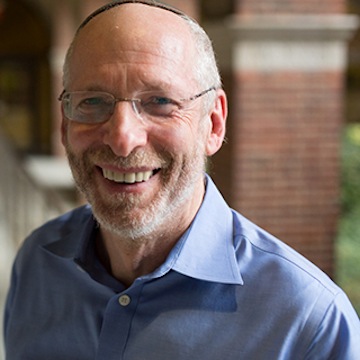
Aaron Friedland will be the keynote speaker at this year’s King David High School Golden Thread Gala. (photo from goldenthreadgala.com)

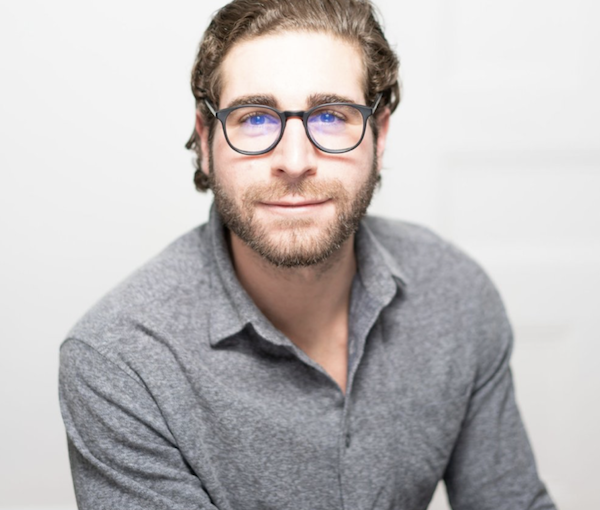
King David High School’s Second Annual Golden Thread Gala takes place May 12. For an event that celebrates the story of KDHS, who better to represent King David’s success than one of its alumni. The night’s keynote speaker will be Aaron Friedland, Class of 2010.

Friedland is a National Geographic Explorer, a sustainable development practitioner and a PhD candidate.

In 2010, while Friedland was attending King David High School, he and his family visited Uganda’s Abayudaya Jewish community on a voluntourism project that would change his life and inspire the Walking School Bus. The Walking School Bus’s mission is to enhance access to education in low-income communities globally.

His research in the field of econometrics is focused on the intersection of economics and education, and his research-based interventions have helped more than 35,000 learners in Uganda and India improve their literacy – and literacy is the number one predictor of academic success.

Friedland also founded Simbi Foundation, an organization that creates solar-powered learning labs from shipping containers, in Uganda and India, providing access to quality educational tools in low-resource communities and UNHCR refugee settlements. His foundation was also the winner of the MBR Prosperity Grant to build BrightBox solar-power classrooms. Each BrightBox includes a shipping container with solar panels, laptops, projectors and digital aids, as well as all the installation costs at its destination. In 2016, Friedland received the Next Einstein Award for his work in furthering access to education.

This year’s Golden Thread Gala committee is co-chaired by Heidi Seidman and Sherri Wise; sponsorship chair is Brett Sandler. Committee members are Cyndi Ankenman, Dalia Bressler, Chana Charach, Nicole Ginsberg, Alain Guez and Margaret Hemingson. The development team is comprised of Esther Mogyoros, Justine Folk and Michele Zychlinski.

The event, which will be held at Congregation Beth Israel, will be emceed by KDHS head of school Russ Klein and Howard Blank will be the auctioneer. There will be a live and silent auction, as well as dinner and entertainment, a portraiture studio and more.

For tickets and other information, visit goldenthreadgala.com.

– Courtesy King David High School

Revitalizing community

Torah West wants to make Metro Vancouver a destination for more Orthodox newcomers. (photo by Cynthia Ramsay)

A new initiative, called Torah West, aims to grow Metro Vancouver’s Jewish population and make it more attractive to Orthodox newcomers – a goal that proponents say will strengthen every component of the community.

Torah West is focused on three Rs: retain, recruit and revitalize. It seeks to stanch the departure of Orthodox families from the region, recruit newcomers and, in the process, revitalize not only the institutions that serve specifically Orthodox families but increase demand and support for services that enhance life for all Jewish British Columbians.

“The more people who come, the more services we’re going to need to be able to sustain those people,” said Dr. Jonathon Leipsic, who co-chairs Torah West with Hodie Kahn. “More kosher restaurants, more people availing themselves of kosher food, more camps, more campers, more kids in Jewish day schools, more synagogue memberships, more Jewish community members, more people taking leadership roles in the community, more people investing in the community and on and on and on.”

Among many other community roles, Leipsic is president of Congregation Schara Tzedeck and Kahn is a past president. Together, they saw a growing challenge in the community and decided to act. They credit the Diamond Foundation for funding a 2020 study of the challenges facing the Orthodox community here, and the Jewish Federation of Greater Vancouver, especially vice-president Shelley Rivkin, for taking Torah West under their umbrella. The initiative will not see brick-and-mortar projects, but rather seeks to close gaps that make observing an Orthodox life in the city challenging.

Facilitating relocation to British Columbia might mean something as simple and comparatively affordable as helping a family with first and last months’ rent. If families want to live in Vancouver but send their kids to yeshivah in Las Vegas or Denver or elsewhere, Torah West can help fund flights home for the holidays, for example, if that tips the scales for the family’s place-of-residence decision. Other angles might include deferred membership fees to synagogues, the Jewish Community Centre of Greater Vancouver or other institutions. The community has systems in place to make Jewish summer camps accessible for all families and, if helping fund travel to the East or to the United States to access another form of camp would encourage families to relocate here, Torah West would support that.

Torah West will work with the Provincial Nominee Program, in which the federal government invites provinces to designate streams of immigrants that fill regional needs. Guiding newcomers through the immigration process, helping them get their credentials assessed and assisting in finding employment will ease some of the logistical challenges of relocation.

The initiative is loosely based on GROWWINNIPEG, a project of Manitoba’s Jewish community that has helped facilitate as many as 1,800 Jewish families migrating there, although there are distinct differences – cost of living, notably – that require unique responses.

Part of the motivation for Torah West was the loss of the Pacific Torah Institute yeshivah and limited Orthodox educational options in the city. But that is merely part of a longer trajectory. In her lifetime, Kahn said, she has witnessed waves in the community, in which there were more or fewer Orthodox families and, in turn, educators and infrastructure to serve them. The end of PTI was just part of a trend, she said, but it was a big blow.

“As they say, every crisis is an opportunity,” she said. “This crisis is that opportunity. Torah West is the response to that opportunity.”

Kahn said a notable aspect of Torah West is the buy-in from every single Orthodox group in the region.

“What’s innovative and fresh about the initiative is that it was developed collaboratively with all the Orthodox institutions and the Chabad centres across the Lower Mainland,” she said. “It’s very groundbreaking in that sense.”

That sort of collegiality is symptomatic not only of the Orthodox community but of the entire Vancouver Jewish community, Kahn said, something she sees as remarkable.

“Granted, we all have our little tiny silos of religious observance, which is reflected in the religious institutions that we choose to align ourselves with,” said Kahn. “But when it comes to the community, Orthodox rabbis play with Reform rabbis … Conservative rabbis play with Chabad. It’s a very unique kind of cultural experience that we have here and it’s reflected in the individuals who share the community and build the community. In a lot of other communities, those silos are very wide and very deep and they do not cross-pollinate or necessarily engage with one another to the extent that we do here.”

Both Kahn and Leipsic stress that a larger Orthodox community means a strengthening of every aspect of the community, to the benefit of all.

“We need to look at undergirding the Orthodox community because, at the end of the day, they provide the Jewish educators for our community, they provide the consumers for Jewish infrastructure like kosher restaurants or other services that are not just Orthodox-centric, they are Jewish-centric,” Kahn said. “That is what our vision is, to make sure that we have the proper foundation that will accrue to the benefit of the entire community at large.”

Similarly, while Torah West aims to draw new Orthodox families, the services the program provides will be available to anyone across the spectrum.

“We welcome everybody,” said Kahn. “There’s nobody who is going to, as they say, measure the length of your tzitzit. But we do have a hope and a dream and maybe some expectation that, if you become part of the Torah West initiative, you will, in turn, become part of the initiative in every respect. That means becoming a member of a synagogue, becoming a consumer of the kosher restaurant, or start another kosher restaurant, ensuring that the kosher butcher can stay in business.… We have a dream that we can create in Vancouver a nexus that combines the gloriousness of life in Vancouver with the ability to sustain a Torah lifestyle and the infrastructure that makes that possible.”

Nobody can talk about migrating to Vancouver without addressing the economic elephant in the room.

“The cost of living in Vancouver obviously has an impact,” said Leipsic, adding that the community is addressing macroeconomic issues and will continue to do so. “As far as people we want to recruit, we think that there are a number of people with capacity, who seek freedom and the opportunity to live a Torah-observant life or a traditional life in a nonjudgmental, diverse community with a lot of richness in it.”

Economic, political and social challenges in South America make that a target market of Torah West. In these cases, migration may be less an economic decision than one based on a desire for political stability.

Not coincidentally, the manager and community liaison of Torah West, Amanda Aron Chimanovitch, is herself a Brazilian-Canadian who came here via the Winnipeg project.

“Our goal is to make sure that there are economic and social and other supports for families who do want to come here,” said Kahn. “Ideally, families that are self-sustaining is a fantastic thing; it’s fantastic for all of us. But we’re not about to turn ourselves blind to the idea that, if you’re a Jewish educator, as an example, Vancouver is a very challenging place to be able to live independently without some support. I think we’re looking to help bridge that gap a little bit.”

Torah West is a three-year pilot project that Kahn and Leipsic are hopeful will prove permanent. Just putting Vancouver on the map as a possible home will be a success.

“When people are thinking about relocating, Vancouver is not even in their consciousness,” Kahn said of many Orthodox families. “Our goal is to create Vancouver as an option for them – whether it becomes the ultimate choice, we can’t control that. But we at least want to put Vancouver on the map.… You need a little bit of pioneer spirit to come here. If you’re looking for a place that’s already got all the amenities and got all the infrastructure, Vancouver is probably not your place. If you’re looking for a place of insurmountable geographical beauty and a real special feeling in the community and the landscape upon which you can plant your own trees and nurture them and make them part of the forest, this is the place for you.”

Rivkin, vice-president of planning, allocations and community affairs at the Jewish Federation, credits the Winnipeg project as a model but acknowledged differences. While Winnipeg was experiencing a declining Jewish population, that is not the case in Vancouver. This is one of North America’s fastest-growing Jewish communities.

“We don’t actually have a diminishing Jewish community, we have a diminishing community of people who are traditional or Orthodox,” said Rivkin. The reasons are straightforward. “We don’t have a yeshivah anymore, we don’t have summer camps that meet the needs of the Orthodox community, we don’t have a nice [kosher] restaurant here anymore.”

Rivkin said studies indicate that new Canadians tend to earn lower salaries than other Canadians in a similar role for up to 10 years after arrival. Helping people through the first challenging years is part of Torah West’s mission.

Kahn summed it up simply.

“There’s something very beautiful about a small community, something especially beautiful about the Vancouver Jewish community,” she said. “What we would love to see is just more opportunity for people who are seeking a halachic Torah lifestyle to be able to do that in Vancouver.”

Criminalize Holocaust denial?

Criminalizing Holocaust denial would draw a moral line in the sand, say two advocates for legal action, but a lawyer and Canadian-Israeli former member of the Knesset has reservations.

Michal Cotler-Wunsh, head of the Nefesh B’Nefesh Institute for Aliyah Policy and Strategy and a former Israeli parliamentarian, acknowledged free speech concerns but focused more on the need for evidence-based decision-making before criminalizing those who question historical facts around the Shoah. She also noted that the countries that have adopted criminal sanctions against those who spread historical fabrications – Germany and France, for example – are among the very places where antisemitism is at its worst.

Sacha Ghozlan, a French legal expert and former president of the Union des étudiants juifs de France (Union of French Jewish Students), dismissed free speech concerns and warned against confusing cause and correlation between antisemitism and legal proscriptions.

“I don’t think you can draw a line between rising antisemitism in its new forms and the fact that a country has developed legislation to address rising Holocaust denial,” Ghozlan said.

Dr. Carson Phillips, managing director of the Neuberger Holocaust Education Centre, in Toronto, generally agreed with Ghozlan. Holocaust denial and expressions of hatred should not be protected grounds based on free speech arguments, he said.

“I don’t see this so much as a freedom of speech,” he said. “This is really an abuse of speech.… Does the listener have to be exposed to hate speech and an abuse of free speech?”

He argued that “putting a fence around free speech” is legitimate in cases where historical revisionism can lead to expressions of hatred.

The three speakers were panelists in an event presented by the Centre for Israel and Jewish Affairs (CIJA) March 29, titled Perspectives on Criminalizing Holocaust Denial.

A private member’s bill introduced in Parliament by Saskatchewan Conservative MP Kevin Waugh would amend the Criminal Code section that prohibits inciting hatred “against an identifiable group” to include “communication of statements, other than in private conversation, that wilfully promote antisemitism by condoning, denying or downplaying the Holocaust.”

Phillips contextualized Holocaust denial as a threat to Canadian society.

“The Holocaust is often [viewed] as being one of the foundational cornerstones of modern human rights and an attack on the Holocaust is certainly an attack on Canadian values and Canadian democracy and it needs to be taken very seriously,” he said.

While he supports criminalization, he acknowledged that this is only a part of the solution.

“I am an educator,” he said, adding that education has to exist alongside legal prohibitions.

“To me, it’s not an either/or situation, it’s a combination,” he said. “I see this as really strengthening and working together.”

Legislating against Holocaust denial would send a societal message, Phillips argued.

“It’s really important to draw a moral line,” he said. “In Canada, where we are a pluralistic society with strong democratic values, I think this is one example of a way of being able to draw a moral line in the sand and being able to say there are certain abuses of free speech that will not be tolerated and for very good reasons because we know where this can lead – obviously, to the Holocaust. But also looking at it from the perspective that Holocaust denial is a form [of], and leads to, antisemitism but it is also an attack on democratic values, which we value so much within the Canadian context.”

Ghozlan said that social media companies have faced calls to pull down expressions of hatred and Holocaust denial, but have often demurred based on the free speech assurances of the U.S. Constitution.

“But it’s not freedom of speech, it’s fake news,” he said. Advocates need to “level up pressure on social media, explaining to them that Holocaust denial is not about freedom of speech but it’s about an abuse of freedom of speech,” he said.

Cotler-Wunsh, former Blue and White party member of the Knesset and Canadian-raised step-daughter of legal scholar and former Canadian justice minister Irwin Cotler, said she has always been a fighter against antisemitism. But she raised red flags around the issue of free expression and focused more narrowly on whether a prohibition on Holocaust denial would have the desired outcome.

“Does the criminalization of Holocaust denial in fact meet the goal of combating antisemitism?” she asked. Banning Holocaust denial – which is easily debunked – may simply be a feel-good act that is “low-hanging fruit” in the battle against anti-Jewish hate and might detract from the bigger responsibility to remain vigilant, contest mistruths in the marketplace of ideas and educate, rather than merely seek to silence, she said.

Canada already has fairly robust legal consequences for hate expressions and Cotler-Wunsh warned that new laws that are difficult to administer, or that sit on the books without being enforced, could have the opposite of the intended effect.

By example, she said, a recent controversy around the Holocaust represents a missed opportunity. After Whoopi Goldberg said on the TV show The View that the Holocaust “was not about race,” she was suspended from the show for a period.

“I would have argued, if anybody would have asked me, that that was a great, great missed opportunity,” said Cotler-Wunsh. It was “exactly the moment to educate the millions of viewers of that show and be able to utilize that opportunity to engage in what the Holocaust was about.”

Education, while slow, is the only answer, she contended.

“At the end of the day, education is the key and that is one of the hardest things to say because it actually is the longest process,” said Cotler-Wunsh. “There is no quick fix in education.”

Where compulsion should be exercised, she said, is on social media platforms, which she said should adopt and implement the International Holocaust Remembrance Alliance Working Definition of Antisemitism.

She worries that passing legislation against Holocaust denial might let elected officials off the hook. She imagines legislators thinking, “Oh we’ve done something. We confronted antisemitism, when in fact data and empirics may show that criminalizing Holocaust denial hasn’t actually made a dent in the rising antisemitism in Europe 30 years [after some countries criminalized it].”

Cotler-Wunsh, Ghozlan and Phillips were in discussion with Emmanuelle Amar, director of policy and research in CIJA’s Quebec office. The event was opened and closed by Jeff Rosenthal, co-chair of the national board of CIJA.

Catch cancer before it starts

Today’s ancestry services, like 23andMe, have made us more aware than ever of our genes and just how important they are, for both our own health and the health of our children. Celebrities like Angelina Jolie and Matthew Knowles (Beyoncé’s father) have highlighted the importance of two genes specifically – the BRCA genes – and their role in the development of hereditary breast and ovarian cancers. Even so, with the risk of carrying these genes in the general population only estimated between 1/400 and 1/1,000, for most of us, these genes seem like someone else’s problem. But, a few years ago, I learned that people of certain backgrounds, specifically those with Ashkenazi Jewish heritage, are actually at 10 times the risk of the general population (one in 40) for carrying these BRCA genes. I then learned that I was BRCA1 positive. I am an Ashkenazi Jewish woman.

In the 1970s, my paternal grandmother, then a young woman, was treated for breast cancer and made a full recovery. She passed away in 2014. When she died, I requested to be tested for BRCA through the B.C. Cancer Agency’s Hereditary Cancer Program. At the time, I was not prioritized for the test because no one in my immediate family had had a cancer that would directly link me to the gene. I was not seen at the time as being “high enough” risk.

But, in December 2017, I received a phone call that changed everything. It was from my older sister. She had recently volunteered to join something called the Screen Project study at Women’s College Hospital in Toronto, which included testing for the BRCA gene mutations. She had received her results and had tested positive for the BRCA1 gene mutation. I immediately registered for my own test. The test eventually came in the mail, I spit in the cup and sent it back. A month later, I received my own call from the study.

I was told that I was also positive for the BRCA1 gene mutation and that my chances of getting breast cancer and/or ovarian cancer were extremely high – about 70% lifetime risk. I was told that I would need to make some urgent decisions about having more children because regular screenings and preventable surgeries were now available to me. It was recommended that I take action immediately because of my age. The study connected me back to the B.C. Cancer Agency’s Hereditary Cancer Program, which would connect me with my medical care team.

The next year would prove to be a whirlwind for our family. Within a month, I was pregnant with my third child. I planned to have a surgery to remove my ovaries and fallopian tubes (a salpingo-oophorectomy) the following year. While all of this was taking place, my sister had gone for her first mammogram. It initially was clear, but more intensive screening (available in priority to BRCA carriers) revealed cancer. I then had to witness my beautiful older sister battle breast cancer and go through a full double mastectomy. She luckily made a full recovery. We then celebrated the end of her battle with the birth of my own child, followed soon after by my own salpingo-oophorectomy, the day before my sister’s reconstructive surgery.

As devastating as those phone calls were, one thing is clear to me – that my sister is now cancer-free and alive because she learned she was BRCA1 positive. I also know that my own BRCA status has afforded me the ability to make life decisions, have preventive surgeries and avoid cancer now and in the future. Although scary to consider, the knowledge of the BRCA1 gene in our family has been invaluable and saved lives.

I now volunteer for a committee in British Columbia called BRCAinBC, which is working to improve awareness of and access to testing for the BRCA genes in people of Ashkenazi Jewish heritage in the province. It is our message that all people with Jewish heritage should consider getting tested for BRCA genes, as new studies show that only half of all Ashkenazi Jewish carriers have the requisite history of cancer in the family that would indicate risk for carrying a BRCA gene.

We also let people know that the best time to get tested is when they are young and healthy – before cancer strikes! Testing for BRCA in your 20s and 30s provides people with many more options to prevent and manage their risk of cancer. Testing is quick, simple, easy and cheap (or free in many cases).

It is just as important for men to get tested as it is for women – BRCA genes are better known for their role in breast and ovarian cancers, but they also significantly increase the risk of many other cancers that affect men, including aggressive prostate cancers, pancreatic cancers and melanoma.

Learning your BRCA status can, of course, be overwhelming, but it also can provide you and your family with the tools to stop cancer before it starts. That’s what it did for me.

Tovah Carr is a member of the BRCAinBC committee in British Columbia. BRCAinBC is an initiative to increase awareness and understanding of genetic cancer risk in the Jewish community and provide support for those who want to get tested and for people found to carry the BRCA genes. For more information, visit brcainbc.ca. For more information on the Screen Project, go to thescreenproject.ca.

BI scholar-in-residence

Rabbi Eliezer Diamond (photo from jtsa.edu)

“I am particularly interested in the way that Torah can help us look inward. Each of the topics is about religious character formation, various ways in which we create a more godly character and personality,” said Rabbi Eliezer Diamond in a Zoom conversation with the Jewish Independent ahead of his visit to Vancouver next month.

Congregation Beth Israel will be hosting Diamond as its scholar-in-residence for three in-person talks under the collective title Making a Life of Meaning. A professor of Talmud and rabbinics at the Jewish Theological Seminary of America, in New York, Diamond will speak on Addiction and Judaism (April 28, 7:30 p.m.), the Power of Gratitude (April 29, 6 p.m., with a dinner to follow) and Seeking and Granting Forgiveness (April 30, 9:30 a.m.).

In regard to addiction, the rabbi compares the 12-step process of Alcoholics Anonymous with the laws of repentance by Maimonides and notes the parallel paths taken towards sobriety and repentance: acknowledgement, regret and acceptance.

“Not drinking and being sober are not the same thing. To recover from alcoholism, one has to change one’s way of living and thinking,” said Diamond, who discusses addiction from both a personal and professional perspective.

“I am a recovering alcoholic and I know about addiction from the inside,” he said. “Even though I am not a therapist or addiction counselor, what I can do is help people to be honest with themselves and say ‘I have a problem,’ which is an acknowledgement of the sin and a step towards repentance. It is important to help people see where they are at so that they can begin to make changes.”

It is also helpful, he added, for his rabbinical students to know that their teacher is a recovering alcoholic because there is frequently a shame involved in addiction and a sense that one is a diminished person as a result.

“I am there to say to them, those may be the cards one has been dealt. You can still be a productive human being and, if you take the steps you need to take to deal with addiction, there is no reason for shame. On the contrary, there is a reason for pride. You have been faced with a challenge and you have addressed it,” he said.

Diamond pointed out that, in a broad sense, there has been an acknowledgement in the past couple of decades within the Jewish community that Jews, like everyone else, have problems with addiction.

“We are not immune to addiction, as people think or would like to think,” he said. “In my own lifetime, the community has become more open. The founding of Jewish Addiction Community Services [JACS] is an example of that.”

In addition to Congregation Beth Israel, Diamond’s talks in Vancouver are being sponsored by JACS Vancouver, Jewish Family Services Vancouver and Jewish Federation of Greater Vancouver.

Diamond’s discussion on gratitude is tied to the teachings of Rabbi Eliyahu Eliezer Dessler, an early 20th-century leader in the mussar (Jewish ethics or values) movement, who saw giving as being at the heart of the religious personality. In Dessler’s teachings, God, by providing life, is the ultimate giver. Therefore, to follow in God’s path, we must be givers ourselves. There are times, however, when we must also be receivers, and the best way to receive is through gratitude, Diamond explained.

Expanding on the theme of gratitude, Diamond added, “Ultimately, whether or not we experience ourselves as wealthy or poor is intimately connected to finding happiness and satisfaction with what we have. If we focus on what we have and the happiness that it can bring us, then we can feel wealthy. This is a choice that all of us, especially in a first-world situation, have.”

On forgiveness, the rabbi cited Christian theologian C.S. Lewis, who spoke of the human desire to seek forgiveness yet the difficulty humans have in granting it.

“Forgiving is a hard thing to do,” said Diamond. “What does it actually mean to forgive someone? Because, unless we lobotomize ourselves, we are not going to forget what happened. The essence of what I will be talking about is the relationship between forgiveness and recognizing the essential humanity of every human being, including those who have wronged us.”

What often stands in the way of forgiveness, he said, is the inability to view another person as anything other than evil, and not as a flawed individual who has stumbled, as we all stumble. The path towards forgiveness, according to Diamond, is to make that distinction.

Amid social and political divisiveness, which causes rifts in families and communities, Diamond further emphasized the importance of being able to listen to and appreciate the inherent humanity and sincerity in belief of those with whom we may strongly disagree.

“Rabbi Diamond is one of most well-respected scholars in the Conservative movement today,” said Beth Israel’s Rabbi Jonathan Infeld. “He is exceedingly bright, knowledgeable and eloquent. He is also passionate about the human value of gratitude and the importance of recovery. Considering the fact that drug and alcohol addictions and overdoses have been less spoken about during the pandemic, we knew that Rabbi Diamond should be our first in-person scholar-in-residence since the beginning of COVID-19. We are so happy that other community agencies are joining us. We look forward to welcoming Rabbi Diamond to Vancouver and learning from this incredible rabbi.”

To register for the April 29 dinner, visit bethisrael.ca.

Sam Margolis has written for the Globe and Mail, the National Post, UPI and MSNBC.

The ideologies of war

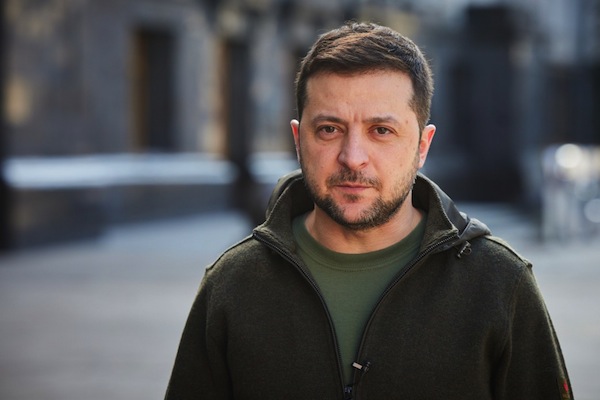
Hebrew University academic Samuel Barnai said Ukrainian unity extends beyond political parties and politicians, such as President Volodymyr Zelensky (pictured here), and the war is viewed as a great patriotic fight for Ukraine. (photo from president.gov.ua)

In the July 12, 2021, essay “On the Historical Unity of Russians and Ukrainians,” Russian President Vladimir Putin declares, “I am confident that true sovereignty of Ukraine is possible only in partnership with Russia. Our spiritual, human and civilizational ties formed for centuries and have their origins in the same sources. They have been hardened by common trials, achievements and victories. Our kinship has been transmitted from generation to generation. It is in the hearts and the memory of people living in modern Russia and Ukraine, in the blood ties that unite millions of our families. Together we have always been and will be many times stronger and more successful. For we are one people.”

This quote from Putin’s 2021 essay was shared by Prof. Yitzhak Brudny at a March 15 Hebrew University of Jerusalem webinar focused on “the ideological sources of the Russian-Ukrainian War.” The webinar featured Brudny, a professor of political science and history, and Samuel Barnai, an adjunct lecturer at the European Forum and at the HU’s Rothberg International School.

Brudny explained that Putin went even further in his claims just over a year after that essay. On Feb. 21, 2022, three days prior to the Russian invasion of Ukraine, Putin stated that “modern Ukraine was entirely created by Russia, more precisely, by the Bolshevik, communist Russia. This process began almost immediately after the 1917 revolution” and “Ukraine never had a tradition of genuine statehood.” Later in the speech, Putin points to Russia as being the main enemy in the eyes of the United States and NATO.

According to Brudny, these statements show a denial by Putin of Ukraine’s right to exist without an alliance with Russia and that the current Ukraine state is a “forepost of NATO” run by an “illegitimate, puppet government.” In Putin’s mind, he can justify the war because he sees it as rectifying an historical injustice caused more than a century ago, as well as remedying the security issues posed by a NATO-friendly state as Russia’s neighbour.

Brudny outlined the more recent history of Ukraine, from its 1991 independence from the Soviet Union (during its dissolution) to the present day. Ukraine stands in stark contrast to Russia in that it has accepted democratic electoral processes. Russia, meanwhile, has grown increasingly authoritarian and views a democratic state positioned between it and NATO countries, especially those that were part of the former Eastern Bloc, as a threat.

Barnai spoke to Russia’s military goals at the outset of the current conflict: destruction of Ukrainian air forces, destruction of Ukraine’s military headquarters, the besiegement of the capital Kyiv and the creation of a puppet government.

“Now that we are talking on the 20th day of the war, none of the targets have been reached,” said Barnai. “How can this be explained? In my opinion, one of the main reasons is the consolidation of Ukrainian society. There is widespread support for the president [Volodymyr Zelensky] and the government, which was not even the case two months ago. There is also support for accession to the EU and NATO, even in the Russian-speaking parts of Ukraine, which were less sympathetic to joining these alliances before,” he said.

In Barnai’s view, the present state of Ukrainian unity extends beyond current political parties and politicians, such as Zelensky, and the war is viewed as a great patriotic fight for Ukraine.

Barnai added that Putin, who has led Russia since Dec. 31, 1999, may have fallen victim to his own propaganda, “that Ukrainian-ness is an artificial tool to cause damage to the Russian people.”

The belief that Ukrainian culture is dangerous and must be eliminated runs deep in the Russian collective consciousness. Barnai gave several historical examples that illustrate this point. There was the suppression of the Ukrainian language by Czar Peter I in 1720. In 1763, Catherine the Great issued a decree banning the teaching of the Ukrainian language at the Kyiv-Mohyla Academy. In 1876, Alexander II prohibited the printing of all Ukrainian literature within the Russian Empire. And, in 1914, there was a decree by the last czar, Nicholas II, prohibiting the Ukrainian press. Despite a range of views on other historical matters, these and other Russian leaders shared a common desire to suppress Ukrainian cultural identity.

Barnai explained that there are close ties – historical, religious, and personal – between Russians and Ukrainians, and many have family connections to both countries. He said the real threat to Putin today is not NATO or the European Union, but “the success, even if it is limited success, of political and economic reform in Ukraine.”

This threat, Barnai concluded, plays out in the lack of true participation the Russians have in the political and economic processes of their country. “The main struggle of Putin for the last 22 years,” said Barnai, “has been to deprive Russians of their rights in the political arena.”

Sam Margolis has written for the Globe and Mail, the National Post, UPI and MSNBC.

The excitement of holidays

As meaningful and fun as most of the Jewish holidays are, there’s a lot of running around, cleaning, cooking and other preparation that generally goes into them. Three recently published children’s books – two about Passover and one on Shabbat – capture the joys of the holidays, and the craziness that can sometimes precede them.

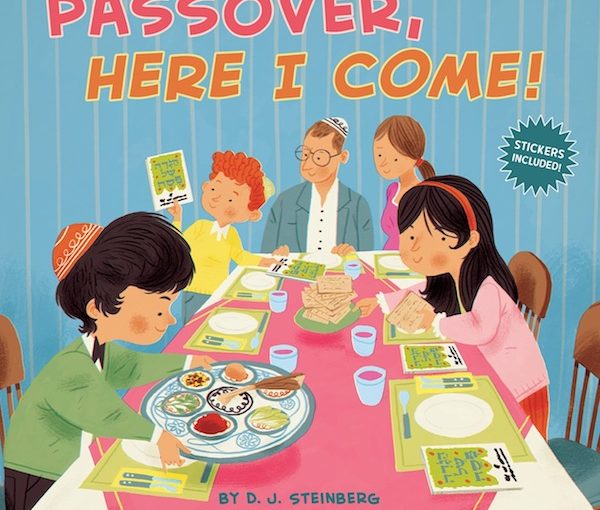
Passover, Here I Come!, written by D.J. Steinberg and illustrated by Emanuel Wiemans was put out this year by Grosset & Dunlap. It’s a compilation of short poems, all related to Passover, from “Scrub-A-Dub-Dub!” preparations to “Bye-bye, Bread!” and “Hello, Matzoh!” it goes through pretty much every aspect, including the Passover story, what’s for dinner and the search for the afikomen.

“Made by Me!” is about making up the seder plate, and all the plate’s items and their symbols are noted alongside the illustration. For the poem “Our Magic Table,” the drawings and words again combine to wonderful effect. We see the tables from set-up to guest-filled, and the typesetting, leaving gaps between the letters forming the words “g r o w s   a n d    g  r  o  w  s,” communicate the truly magic nature of a Pesach table that does seem to fit an enormous number of people, when we’re lucky to have many friends and family join in our celebrations.

Steinberg’s verse and Wiemans’ drawings work well together, simultaneously entertaining and teaching. The basics of Passover are all covered in Passover, Here I Come! which even includes a recipe for Mom’s Matzoh Brei after the four-line poem “World’s Best Breakfast.”

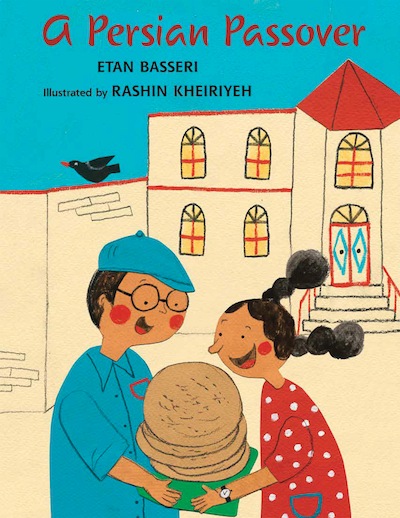
A Persian Passover (Kalaniot Books) by Etan Basseri with illustrations by Rashin Kheiriyeh, also contains a recipe – for hallaq, which is Persian-style charoset. In addition, the end of the book features a brief description of Passover and what goes on the seder plate, a glossary of Persian and Hebrew words used in the story, and a couple of paragraphs on Jews in Persia, known today as Iran, though, notes Basseri, “the culture and main language of this region is still called ‘Persian.’”

image - A Persian Passover book cover

Set in Iran in the 1950s, A Persian Passover follows siblings Ezra and Roza, who are helping their family get ready for the holiday. Everyone is put to work and Roza is finally old to enough to accompany older brother Ezra to the synagogue, where families bring their own flour “to be mixed, rolled and baked into soft, delicious matzah.” Though older, Ezra is not necessarily wiser and he’s still a kid, with energy to burn. Not having learned from an earlier collision with a neighbour – as he ran a lap around the house, being timed by Roza – Ezra once again asks Roza to measure how fast he can run to the next street corner, freshly baked matzah in hand.

“But he didn’t see the rut in the road up ahead. ‘Oof!’ yelped Ezra as he tripped and fell. Splat! went the bag of matzah as it dropped into a puddle.

“‘The matzah!’ they exclaimed together.

“‘That was all the matzah we had for the week. Now it’s gone. What will we tell Mama and Baba?’ asked Roza.” (The glossary notes that baba means dad in Persian.)

Ezra and Roza set out to find replacement matzah before the seder starts, and we meet more of the neighbourhood folk. Hopefully, it won’t be too much of a spoiler to know that the kids succeed – not only receiving kindness, but also showing kindness to others along the way.

The last book that recently came out has to do with matzah, but not with Passover, which is why it’s included in this brief roundup even though it’s about Shabbat. Good for year-round reading, Bubbe and Bart’s Matzoh Ball Mayhem, written by Bonnie Grubman and illustrated by Deborah Melmon, was published by Seattle’s Intergalactic Afikoman last November. Created by two dog lovers, it begins, “This is Bubbe’s story. Believe me that it’s true. Her puppy loved each Friday night like Jewish puppies do.

image - Bubbe and Bart’s Matzoh Ball Mayhem book cover

“When Bubbe made her matzoh balls, Bart was at her feet, waiting for a ball to fall, and not some doggie treat.”

While Bart’s begging doesn’t achieve the desired result, he does get to eat all the matzah balls he’s able to catch. Bubbling away in the pot on the stove, the matzah balls grow so large that they blow off the lid and zoom all over the room. Not to be held back by “a better lid, and some very sticky tape,” the balls continue to fly. And we get to count them as they do. (Another spoiler alert: Bart gets to eat an awful lot of matzah.)

Eventually, with a little magic, calmness is restored and dog and house are cleaned up in time for Shabbat dinner with the family.

Bubbe and Bart’s Matzoh Ball Mayhem ends with a couple of paragraphs about Shabbat, “a very special day of the week,” and a short glossary.

New school lunch pilot

Food insecurity by province or territory, using data from Statistics Canada’s Canadian Community Health Survey, 2017-18. (image from proof.utoronto.ca/food-insecurity)

Jewish Family Services Vancouver (JFS), Richmond Jewish Day School (RJDS) and Kehila Society of Richmond are piloting a new food program to enhance students’ access to healthy and nutritious food in a way that promotes privacy, availability and inclusiveness.

When RJDS needed support with their school lunch program after a contract with a former caterer ended, Kehila Society saw an opportunity to work with JFS and create a food program that benefits all families throughout the week, regardless of income.

With start-up funds provided by Jewish Federation of Greater Vancouver, once a week, JFS delivers hot meals to RJDS at no cost to the students or their families. These meals are healthy, plant-based, and available to all students. In addition, a community fridge and pantry program is in operation throughout the week. The start-up funds provided to the Kehila Society enabled the purchase of a fridge and pantry cupboard, which JFS, the Kehila Society and Richmond Food Bank keep stocked. Students and their families can access healthy snacks, dry goods, fresh produce and meals during school hours.

“The students at Richmond Jewish Day School have absolutely loved the weekly hot lunches sponsored through JFS and the Kehila Society,” said Sabrina Bhojani, principal of RJDS. “Our parents have also expressed their delight with this program, knowing that their children are receiving a warm, healthy and nutritious meal at school. The research is clear – good nutrition helps our children to focus, concentrate and self-regulate, which, in turn, results in improved learning and student performance.”

Proper nutrition plays a central part in learning, yet one in eight households in Canada struggle to access nutritious food, according to PROOF, a research program investigating household food insecurity – defined as “the inadequate or insecure access to food due to financial constraints” – across the country (proof.utoronto.ca). That amounts to “4.4 million people, including more than 1.2 million children living in food-insecure households.”

Healthy, universal school meal programs play an important role in giving children and families access to nutritious and safe food in a non-stigmatizing manner when they need the support.

“School meal programs can play a crucial role in ensuring that all children … can eat healthy and nutritious foods – which, in turn, supports their ability to learn,” said Lynne Fader, co-director of the Kehila Society. “School meal programs are uniquely placed to address under-nutrition, by promoting healthy diets. Serving a free school meal increases children’s intake of healthy foods, especially among children with lower socioeconomic status.”

“All students deserve access to healthy, safe, nutritious and easily accessible food,” said Ilana Labow, director of food security, JFS Vancouver. “We are inspired by this vision and are committed to helping uplift students’ lives through delicious, good food. We look forward to nourishing this program together and watching it thrive and grow.”

– Courtesy JFS Vancouver

New lessons in everything

All over social media, we’re reminded to “Learn something new each day!” Even before the internet, I remember similar aphorisms – and then “Heck, if you’re lucky, learn two!” Attached to these reminders was the message that each experience and, yes, especially the awful ones, offered us learning opportunities.

While encountering this social media push for self-improvement, I happened to study, from the Babylonian Talmud, Chagigah 3a&b. This page of Talmud points out something that never occurred to me before. This message about lifelong learning is both a Jewish and ancient one. In the second century CE, in Peki’in, Rabbi Yohanan ben Beroka and Rabbi Elazar ben Hisma went to greet Rabbi Yohoshua. Rabbi Yehoshua asked them what new thing they’d learned that day in the study hall. They suggested they were his students and learned directly from him – how could they present him with something new?

Rabbi Yehoshua responded there couldn’t be a study hall without “novelty.” He went on to ask them who had lectured that week. Upon learning that Rabbi Elazar ben Azarya had taught them, he coaxed them for information. Then, he learned something new from the students.

This sounded just like when we greet our kids as they get off the school bus, or ask students (of any age) what they are learning from other teachers. Inevitably, there is something to learn. This bit of wisdom goes further. The Gemara (later commentators) add that the Torah is like a goad. It pushes us on to learn more. Like a sharp nail or cattle prod, it forces us to keep moving onward and learning from new and different circumstances. Torah, the rabbis conclude, doesn’t just have a single, immovable or simple answer for us.

OK then, I thought, what are some of the lessons we’re able to draw from the pandemic and the political upheaval around us? Many feel as though the pandemic is over, just because we’re tired of it but, practically, this virus will “be over” only when it’s ready to be. In an effort to get past this world-weary reaction, I thought about some of what we’ve learned so far.

1) Since Omicron’s arrival, we’ve realized, more than ever, that we must do our own cautious self-management of health. For awhile, in our North American culture, we expected a doctor to diagnose every illness; our workplaces required a doctor’s note. However, when the level of sickness around us is overwhelming, we’re required to examine and diagnose ourselves. This actually returns us to the world of the rabbis in some sense, where bloodletting, herbs and other cures were advised. Much like Ivermectin, some of these did more harm than good.

2) We should stay home when sick. We’ve all felt forced by the culture around us to work through illness even when it would be best to stay home. Yet, highly contagious illnesses mean we need to protect others to keep sickness from spreading. Again, we’ve lived in a “modern” bubble here for awhile. We’ve had fewer contagions and better vaccines and medical care that allowed us to circulate even when we were probably sick. For centuries, people have fought terrible illness by isolating. A quick example would be that of leprosy – we learn from the Torah and the Talmud that those afflicted must stay outside “the camp” and away from others. Self-isolating is the modern equivalent.

3) With the requirement to stay home came widespread acknowledgement of inequity. Many low-income people can’t afford to stay home. Their jobs don’t allow for it. Without paid sick leave, people can’t rest at home. Jewish tradition suggests we should visit or bring food for the sick. We should care for those less fortunate in our communities, such as widows and orphans. While our political advocacy may involve supporting food banks or homeless shelters, does our contemporary Jewish community focus on fixing inequity? We no longer have a Shmita year that forgives debt and evens the playing field. Is the Canadian answer something like universal basic income or the $10-a-day childcare plan?

4) Change isn’t always bad. Career changes, whether forced or chosen, can be positive. Our educational systems shifted enormously to deliver remote learning and accommodate COVID protocols. Our elder-care facilities are in dire need of improvement. Our hospitals need more capacity and redundancy, in both staff and space, so that even pandemics can be managed.

5) Scientists predicted that with climate change, pandemics may become more frequent. Planning to alleviate some of the effects of climate change has been a rocky path. So many governments get swept up in politics and make no policy adjustments. Our current COVID situation is a reminder that climate change, long predicted, is now here. Leaders must arm themselves with science rather than politics to save lives. Saving lives and caring for the earth are Jewish imperatives. This pandemic has been a frightening wake up call.

We can learn from every situation. The rabbis in the talmudic tractate of Chagigah at first assumed their mentors and leaders knew everything. This offered me a lesson too. Good leaders pursue lifelong learning because they are humble enough to know they will never know it all. Facing challenging experiences and learning from them can goad us so that we grow to be better people. The huge number of deaths, chronic illness and hospitalizations from COVID is devastating. If we try hard, we can find lessons here for a better future.

Joanne Seiff has written regularly for CBC Manitoba and various Jewish publications. She is the author of three books, including From the Outside In: Jewish Post Columns 2015-2016, a collection of essays available for digital download or as a paperback from Amazon. Check her out on Instagram @yrnspinner or at joanneseiff.blogspot.com.

Leading amid change

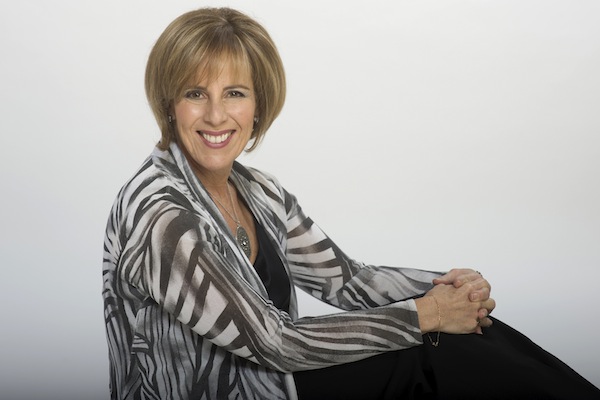
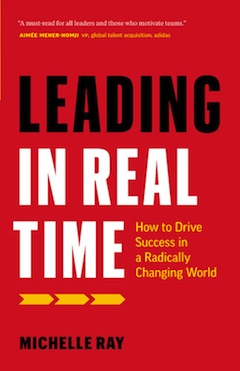
Michelle Ray’s latest book is Leading in Real Time: How to Drive Success in a Radically Changing World. (photo from espeakers.com)

Michelle Ray was recently inducted into the Canadian Speaking Hall of Fame, which is bestowed, in part, for excellence in “educating others to excel.” Of course, it is awarded to exemplary speakers, but Ray also educates using the written word. Her articles have appeared in various publications and she is now the author of two books: Lead Yourself First! Indispensable Lessons in Business and in Life, which was released in 2014, and Leading in Real Time: How to Drive Success in a Radically Changing World, which just came out in the fall of 2021.

Originally from Australia, Ray started her career in media and advertising while living there. She established her own business – as a professional speaker, leadership educator and consultant – in 1995, after she settled in Vancouver. In the conclusion of her new book, she shares what she learned from her parents, who were Holocaust survivors and faced several other challenges in their lives. Though they passed away many years ago, Ray writes, “the enormity of their respective losses is still with me…. They were truly my greatest mentors, and I believe there will never be another generation like theirs. As leaders, we have much to learn, appreciate and apply from their timeless legacy.”

The three lessons Ray highlights in this chapter are to be prepared for unanticipated events, to be optimistic and resilient in the face of difficulties, and to control what you can: “The now is all we know. It’s what we have. It’s the sum total of present moments and what we choose to do with them that prepares us for the unknown.”

image - Leading in Real Time book coverRay started writing Real Time in 2018, taking notes while traveling for speaking engagements and doing other work. Her schedule got so busy that the book project was set aside until January 2020. “Several months into the process,” she writes, as the pandemic hit, “it occurred to me that my teachings about leaders remaining relevant, flexible and open to new ideas applied to me. Realizing that the world had forever changed, I found myself questioning not only what lay ahead, but my own identity as a leadership expert and whether or not I had the energy to persevere in the face of so much uncertainty. I developed a deeper affinity with the challenges and struggles my clients faced, wanting to explore them further. I became more intrigued by their passion, ongoing success and commitment to the well-being of their workforce during a very difficult period.”

There are eight traits of a “real-time leader,” according to Ray. A real-time leader is transformative, emotionally intelligent, open-minded, humble, exceptional at listening, optimistic, consistent and trustworthy, and authentic. She explains each of these characteristics in more depth and examines the ways in which the workplace, workers and the economy have changed, and continue to change. She offers takeaways at the end of every chapter, as well as some homework, or what she calls real-time action steps. She suggests ways in which leaders having trouble with any aspect of leadership can improve, including hiring a coach or working with a mentor.

It’s not just a matter of personal growth. “There is a high cost to poor leadership choices,” she writes. “Especially when rolling the dice on leaders who are unprepared or who are incapable of immediately assessing real-time situations, including ongoing volatility, pressure from key stakeholders, and shifts in employee expectations.”

And yet, according to Gallup research cited by Ray, “companies in an array of industries put the wrong leaders into the wrong job over 80% of the time” and “65% of managers are not engaged or are actively disengaged. That’s not the workforce,” she writes. “That’s the leadership.”

It might sound obvious that disengagement compromises employee retention but Ray notes how often leaders do not move with the times, and hold on to outdated approaches. She recommends change management education so that leaders can model behaviour for their team regarding adapting to such things as technological innovation, as well as social advances, like women’s equality. Accountability is key and Ray offers readers of her book many ways “to recognize when they have a me problem rather than a we problem.” For example, do you step in to help when needed, are you respectful of others, do you keep your promises?

In the chapter on the human factors at play in running a business, Ray notes that “intelligence and self-awareness are traits that do not always come hand in hand.” But being self-aware and capable of learning – from experiences and from other people, including those working for you – is vital for someone wanting to be a capable leader.

For more on Ray, her books and learning programs, visit michelleray.com.