Skip to content
  • Home
  • Subscribe / donate
  • Events calendar
  • News
    • Local
    • National
    • Israel
    • World
    • עניין בחדשות
      A roundup of news in Canada and further afield, in Hebrew.
  • Opinion
    • From the JI
    • Op-Ed
  • Arts & Culture
    • Performing Arts
    • Music
    • Books
    • Visual Arts
    • TV & Film
  • Life
    • Celebrating the Holidays
    • Travel
    • The Daily Snooze
      Cartoons by Jacob Samuel
    • Mystery Photo
      Help the JI and JMABC fill in the gaps in our archives.
  • Community Links
    • Organizations, Etc.
    • Other News Sources & Blogs
    • Business Directory
  • FAQ
  • JI Chai Celebration
  • JI@88! video

Recent Posts

  • Sharing her testimony
  • Fall fight takes leap forward
  • The balancing of rights
  • Multiple Tony n’ Tina roles
  • Stories of trauma, resilience
  • Celebrate our culture
  • A responsibility to help
  • What wellness means at JCC
  • Together in mourning
  • Downhill after Trump?
  • Birth control even easier now
  • Eco-Sisters mentorship
  • Unexpected discoveries
  • Study’s results hopeful
  • Bad behaviour affects us all
  • Thankful for the police
  • UBC needs a wake-up call
  • Recalling a shining star
  • Sleep well …
  • BGU fosters startup culture
  • Photography and glass
  • Is it the end of an era?
  • Taking life a step at a time
  • Nakba exhibit biased
  • Film festival starts next week
  • Musical with heart and soul
  • Rabbi marks 13 years
  • Keeper of VTT’s history
  • Gala fêtes Infeld’s 20th
  • Building JWest together
  • Challah Mom comes to Vancouver
  • What to do about media bias
  • Education offers hope
  • Remembrance – a moral act
  • What makes us human
  • המלחמות של נתניהו וטראמפ

Archives

Follow @JewishIndie
image - The CJN - Visit Us Banner - 300x600 - 101625

Tag: disability awareness

Accessibility seems improved

Accessibility seems improved

(image from flickr / Province of British Columbia)

Last November, the American advocacy organization Respect Ability announced some good news. New research it had conducted in 2021 suggested that disability awareness and inclusion was improving in Jewish communities across North America and Israel. According to its most recent survey, more synagogues, Jewish community centres, schools and private institutions are designing programs that consider the needs of people with disabilities. And more individuals are able to find Jewish organizations that support individuals with invisible disabilities like autism and attention-deficit/hyperactivity disorders.

Respect Ability’s goal for the survey was to determine the health of disability rights in diverse Jewish communities, particularly in countries where there were laws against employment and housing discrimination. Its last survey had been in 2018, and researchers wanted to know whether accessibility and acceptance had improved in the past three years.

There were just over 2,000 respondents in total, primarily from Canada, the United States and Israel. The overall message was that inclusion and accommodation was expanding. Accessibility for wheelchairs and improved opportunities for individuals with sight or hearing challenges were on the rise, as were outreach efforts for individuals with disabilities in general.

What is more, the number of faith organizations hiring rabbis and staff who had disabilities and, therefore, understood firsthand the challenges of a physical or cognitive disability, had increased by more than 73%. More than half (57%) of the survey-takers also said that the organizations had made public commitments to support diversity.

But the survey also identified a key obstacle: many community leaders wanted to help expand opportunities for inclusion, but “didn’t know how.” Roughly one-fifth of all respondents said that expanding opportunities in their faith communities was limited by leaders’ lack of knowledge or experience in making settings more accessible. This meant, in some cases, that members with invisible disabilities like autism or ADHD didn’t have access to resources or were turned away from programs and activities.

Most of the responses to the survey came from Respect Ability’s home base: U.S. states like California and New York, where laws and advocacy initiatives are different from those in Canada. Only about 7% of the responses came from Canada, where disability rights are protected by the federal Charter of Rights and Freedoms. The survey also did not reveal how much, or if any, of the Canadian data came from the Vancouver area. So, are the survey’s findings reflective of diversity inclusion here?

The last three years have been challenging for many, but particularly for organizations that rely on in-person community participation. The 2020 shutdown of schools, synagogues and community centres due to COVID forced many organizations in the Vancouver area to suspend programs that offered disability-inclusive services. Still, the Jewish Independent found that a number of organizations were able to develop creative ways to maintain their inclusive classes and programs.

Trying to inspire inclusion

In 2018, the Jewish Federation of Greater Vancouver launched its Inspiring Inclusion grant program to assist community organizations in designing or improving inclusive programs. The grant competition was created as part of its 2020 Strategic Priorities, and it offered up to $2,500 to organizations that developed a new program or idea that would expand disability inclusion.

Four one-year grants, which were awarded in 2020, went to Vancouver and Richmond applicants. Each offered a unique way for engagement, ranging from new educational strategies that catered to individual learning approaches to special equipment that helped expand creative participation in the classroom.

The Jewish Community Centre of Greater Vancouver’s Family Yoga Fundamentals program was designed to appeal to a variety of abilities and offered options for in-person family participation. It later gave rise to a virtual format that attendees could link up with from home. According to the JCC’s adult programs coordinator, Lisa Cohen Quay, Family Yoga Fundamentals integrates adaptable exercises that are non-stigmatizing and fit a variety of abilities. Quay said the program has also been shown to help with pandemic stress and loneliness.

Richmond Jewish Day School turned to music as a way to inspire inclusion. According to principal Sabrina Bhojani, the grant provided funding for specially adapted Orff percussion instruments, or xylophones that could be used by students with special needs. “Music education is an integral component of both our B.C. and Hebrew curriculum at RJDS,” Bhojani said. “Weaving music into [the] curriculum is a meaningful way to help our students develop their Jewish identity and better understand their culture.”

Congregation Beth Tikvah used the funding to help develop Kavod. According to Rabbi Susan Tendler, the program aims to ensure that the synagogue’s services and activities are open to everyone, “regardless of personal physical, financial, or accessibility limitations.” Kavod’s development is ongoing.

Congregation Beth Israel received a grant to create new Hebrew school programming. Beth Israel’s director of youth engagement, Rabbi David Bluman, said the funding helped make the Hebrew reading program more inclusive to children with learning challenges. “We always strive to be [as inclusive] as we can,” he said, adding that many of Beth Israel’s youth programs are adaptable to students’ abilities, such as the use of “shadow” companions who function as a “big brother or big sister” for a child during activities and lessons. The shadow program can be used for age levels. “We want our teens to be as independent as possible,” Bluman said.

B’nai mitzvah programs

Both Beth Israel and Temple Sholom tailor their b’nai mitzvah programs to meet the specific abilities of the child. Temple Sholom School’s principal, Jen Jaffe, said about 10% of the student body have varying needs.

“All b’nai mitzvah-aged children are given the opportunity to have a b’nai mitzvah, and the clergy works with each family to make sure expectations and goals are feasible and met. Each child is given the chance to shine regardless of any disabilities,” Jaffe said. The school also trains madrachim, or helper students, to support students with invisible disabilities.

Beth Israel is also known for its inclusive b’nai mitzvah program, which is led by ba’allat tefilla Debby Fenson. She said the program is designed to ensure that a child, irrespective of ability, can participate in the service: “I think that the expectation is that every child should be called up to [the bimah]. It’s not about how well they read the Torah, it’s about welcoming them into the community.”

Fenson said the community has celebrated more than one b’nai mitzvah in which a child’s medical challenges needed to be considered. In one case, the child, who was nonverbal, was aided by his mother in saying the Shema. “There was clear understanding on his part,” Fenson said. “His mother helped him in forming the words and saying along with him. He was welcomed into the community.”

Leadership by inclusion

Respect Ability’s survey of North American and Israeli Jewish communities highlighted two factors that are often important to creating inclusiveness: the top-down commitment to diversity and a leader’s personal experience. All of the above synagogues, schools and community services – as well as others – benefit from clear initiatives that attract families with accessibility needs and see inclusion as an expanding mission. In some cases, they also benefit from leadership that is open about their own health challenges as well.

Beth Israel Rabbi Jonathan Infeld said he is aware that his willingness to talk openly about his own challenges can help create a supportive environment for others. Infeld was born with a congenital heart defect.

“Unfortunately, I have firsthand experience with health issues that I am happy to share with people about, certainly because I want to be transparent about who I am as a human being…. I would hope, had I been born with a whole heart and not a hole in it, that I would still have a whole heart,” he said, noting that when we’re forced to reflect on our own abilities and limitations, it can inspire empathy for others faced with similar challenges.

One area that was not addressed in the survey was accessible housing, which helps expand disability inclusion. Tikva Housing Society’s very first housing project in 2008 contained accessible units. The organization’s third inclusive property, Dogwood Gardens, opens this year in the West End. This will be the subject of a future story in the Jewish Independent.

Jan Lee is an award-winning editorial writer whose articles and op-eds have been published in B’nai B’rith Magazine, Voices of Conservative and Masorti Judaism and Baltimore Jewish Times, as well as a number of business, environmental and travel publications. Her blog can be found at multiculturaljew.polestarpassages.com.
Format ImagePosted on February 25, 2022February 23, 2022Author Jan LeeCategories LocalTags b'nai mitzvah, Beth Israel, Beth Tikvah, Debby Fenson, disability awareness, health, inclusion, JCC, JDAIM, Jen Jaffe, Jewish Community Centre of Greater Vancouver, Jewish Federation, Jonathan Infeld, Lisa Cohen Quay, music, Respect Ability, Richmond Jewish Day School, RJDS, Sabrina Bhojani, survey, Susan Tendler, Temple Sholom, Tikva Housing
Freedom found in art

Freedom found in art

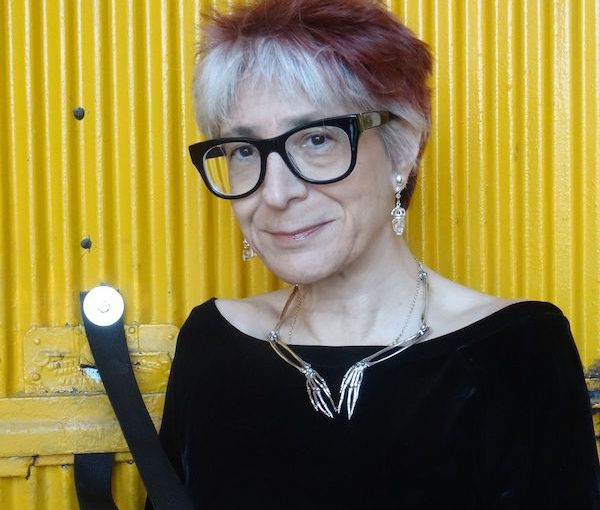
Riva Lehrer, author of Golem Girl, recently spoke on the topic Art Celebrating JDAIM (Jewish Disability Awareness, Acceptance and Inclusion Month). (photo from JBF)

Artist, writer and curator Riva Lehrer spoke at this month’s Cherie Smith JCC Jewish Book Festival on the topic Art Celebrating JDAIM (Jewish Disability Awareness, Acceptance and Inclusion Month). Lehrer’s work focuses on issues of “physical identity and the socially challenged body.”

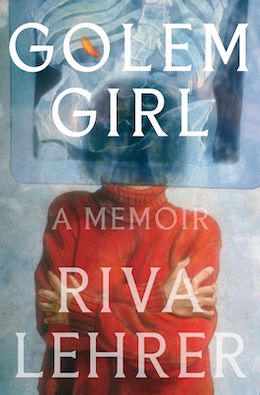
In the Feb. 7 Zoom talk from her home in Chicago, Lehrer discussed her 2020 illustrated memoir, Golem Girl,and her life as an artist born with disabilities into a world determined to “fix” her. Later in life, she found freedom through the flourishing disability arts movement.

Lehrer was born in 1958 with spina bifida. Throughout her early years, the message she received from those around her was that she was broken and would never have a job, a romantic relationship, or an independent life.

The memoir is comprised of two parts. The first deals with growing up in a time when people with disabilities were supposed to be hidden away from the rest of the world. The second looks at reaching adulthood after being raised to think that she was a mistake.

“I grew up thinking I was always wrong and always needed to be fixed, not just from medical professionals, but from everyone in society, who treated me like something to stare at or feel pity for. A lot of the book is taking that apart and addressing why people are stigmatized,” she said.

During Lehrer’s youth in Cincinnati, most children with a condition like hers were institutionalized. There was not a lot of modeling as to how to parent a child with disabilities. Lehrer, however, does credit her mother, who had worked as a medical researcher, for being much less fearful of the situation than an average parent might have been and for refusing the inclination to have her institutionalized.

Lehrer attended a school for children with impairments. “When you are surrounded with others like you, you are just a kid. You stop thinking you are different,” she recalled. The downside, however, was that kids at the time were not encouraged to imagine what they could be as far as a career, and high schools and colleges were not obligated to admit people with disabilities.

“The force of the message that I was a mistake was pretty powerful. By the time I was 12, I knew I was going to live in a body like this forever,” she said.

A resulting feeling of self-loathing persisted until her mid-30s, when novelist and disability rights activist Susan Nussbaum invited her to meet with a group of artists in Cincinnati. Lehrer reluctantly agreed to go and found it a life-changing experience.

“The sight of a lot of disabled people who were not hiding, and who were also funny and bright, gave me a way to understand my life and not just endure it,” she said.

The group showed Lehrer that disability is an opportunity for creativity and resistance. Finding inspiration and empowerment from people in the group, Lehrer asked them if she could paint their portraits. Even though she worked in portraiture, she “was very aware that she never saw images of people with disabilities ever, in museums or classes, only in telethons. It was never anything good.”

image - Golem Girl book coverNowadays, she said, her main interest is how people deal with and survive stigmatization. These are at the forefront of the 65 images contained in her book. Among the works she shared at the talk were a charcoal portrait of Nomy Lamm, an amputee musician, political activist and director of Sins Invalid in the Bay Area; a charcoal image of Mat Fraser, a British actor, writer and performance artist who was a regular cast member in American Horror Story: Freak Show television series; and a painting of Liz Carr, a British comedian, broadcaster and international disability rights activist.

“There is such a story behind each of these people,” Lehrer reflected.

As for the title, Golem Girl, Lehrer revealed a lifelong fascination with monsters. “One of the things monsters do is that they break boundaries,” she said. “Dead and moving, animal, person, person and machine, there is always something that violates a boundary. I was thinking how much this is like disability, that people don’t understand the disabled body. They think it is not human in some way. It is treated like it is alien.”

Lehrer is a faculty member of the School of the Art Institute of Chicago, and an instructor in medical humanities at Northwestern University.

The discussion was moderated by book festival director Dana Camil Hewitt.

Sam Margolis has written for the Globe and Mail, the National Post, UPI and MSNBC.

Format ImagePosted on February 25, 2022February 23, 2022Author Sam MargolisCategories BooksTags art, disability awareness, Golem Girl, JCC Jewish Book Festival, Riva Lehrer, stigma
ADI Race for Inclusion

ADI Race for Inclusion

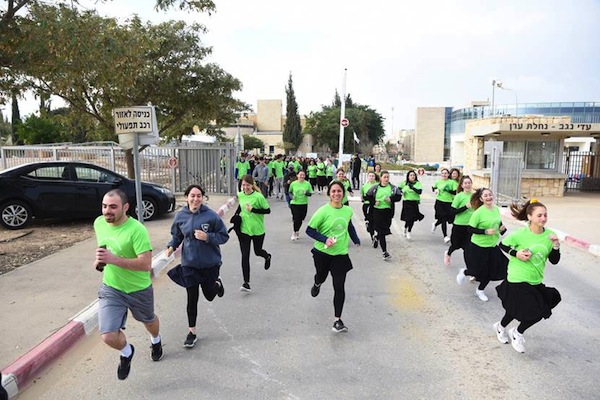
Vancouverite Vida Sussman (centre) was among those who pounded the pavement at ADI Negev-Nahalat Eran rehabilitation village to raise disability awareness at ADI’s first annual Race for Inclusion, which took place Dec. 29. (photo from ADI)

On the morning of Dec. 29, following a week of gloomy weather, the clouds gave way to sunshine as ADI, one of Israel’s most comprehensive providers of residential and rehabilitative care for individuals with severe disabilities, hosted its first annual Race for Inclusion. The 2.5-kilometre fun run highlighted the importance of disability inclusion while also raising more than $14,000 US to enhance ADI’s respiratory therapy and hydrotherapy programs.

More than 250 runners of varied ages, backgrounds and levels of ability ran together along a fully-accessible track that encircled ADI Negev-Nahalat Eran, the 25-acre rehabilitation village. This newest iteration of ADI Fleet – the organization’s inclusive running team – featured ADI residents, special education students and international volunteers, as well as nearly 180 North American gap year students studying at Israeli yeshivot and seminaries, including Mechinat Ruach HaNegev, Torah Tech, Tiferet, Yeshivat Ashreinu, Yeshivat Torat Shraga and Amudim. Among the runners was Vancouverite Vida Sussman, who is studying at Amudim this year.

Elie Klein, ADI’s North American director of development, said, “There is something very special and wonderfully symbolic about others coming to meet our residents and special education students where they are. ADI works so hard to ensure that every man, woman and child has tangible opportunities for encountering disability and promoting acceptance, and moments like these prove that we are on the right track and making serious strides for inclusion.”

At the conclusion of the race, all of the runners gathered in the village’s amphitheatre for a celebration featuring food, live music and speeches from special guests and ADI’s leadership. Three finalists from Israel Ninja Warrior received cheers after calling those assembled “heroic.”

“We thought we were strong,” said Israeli athlete Gur Arad. “But after seeing all of you running together today, we know that you are the strong ones.”

Sussman, one of eight Canadians who participated in the event, also volunteers one day a week at ADI Jerusalem, the organization’s residential and rehabilitative centre in Israel’s capital.  She describes the atmosphere as “loving, familial and an incredible learning experience,” noting that she jumped at the opportunity to do more for the organization.

“I feel very lucky to be volunteering at ADI, and I was so excited to participate in the Race for Inclusion. The energy that everyone brought to the event was incredible, and it made me so happy to see all the participants from different levels of ability having so much fun together,” said Sussman.

“This amazing event highlights exactly why supporting ADI is so important to me,” she added. “Not only are they committed to providing the best medical and rehabilitative care for their residents and special education students, but they do everything possible to advocate for them and infuse their lives with joy. I look forward to continuing to be a part of the ADI family and supporting the important work they do for years to come.”

Maj.-Gen.  (Res.) Doron Almog, the founder and chair of ADI Negev-Nahalat Eran, closed out the event by thanking the gap year students for raising disability awareness and encouraging them to continue “carrying the message of inclusion and love.”

“Always remember that we are all just temporary creatures. We come one day and we pass the next, and we need to give meaning to our lives in between. We do that by taking responsibility for one another, especially those with severe disabilities who need extra love and care,” said Almog. “By coming here today to participate in ADI’s Race for Inclusion, you fulfilled the most noble of responsibilities, to truly ‘care for your neighbour as yourself.’”

To learn more about ADI, visit adi-israel.org.

– Courtesy ADI


Format ImagePosted on January 28, 2022January 27, 2022Author ADICategories IsraelTags ADI, disability awareness, Doron Almog, fun run, inclusion, Israel, tikkun olam, Vida Sussman
Artists rise to challenge

Artists rise to challenge

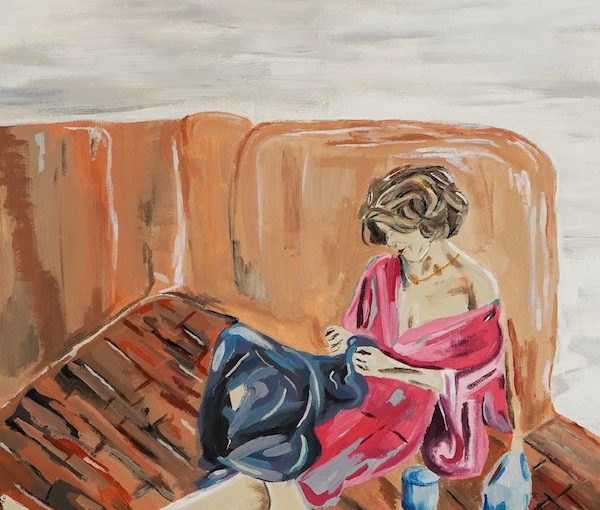
“Sometimes Being Human … Can Be Hard” by August Bramhoff.

The Jewish Community Centre of Greater Vancouver’s inclusion services’ third annual art exhibit at the Zack Gallery is on display this month. And people can meet the artists at a March 23 virtual reception.

“For the last two years, the JCC has celebrated Jewish Disability Awareness and Inclusion Month through an art exhibit that interrogated and explored themes of community longing and belonging,” Leamore Cohen, inclusion services coordinator, told the Independent. “We asked artists of mixed ability: How do we make meaning of the concept of community, the real and the imagined spaces we inhabit? What does community longing look like and what are the possibilities for belonging in an ever-changing world?”

This past year, the world has changed almost beyond recognition. “In Vancouver, we are nearing a year since the COVID pandemic shut down our city and transformed all aspects of our social world,” acknowledged Cohen. “However, while we were isolated, we also saw our creativity flourish.”

In the two previous exhibits, artists responded enthusiastically to inclusion services’ challenge, unfolding a fascinating slice of society through their art, and both shows were successful, well-attended cultural events. Unfortunately, the pandemic has moved most of our interactions online, and so it is with this new show, though it is also available to view in-person by appointment.

The participating artists are of differing abilities and artistic levels, so the artforms vary. There are paintings and multimedia collages, figurative and abstract imagery, landscapes and still life. Some pictures are disturbing in their naked emotional pain. Others are quietly sad, or funny, or absurd. One thing is universal: the artists’ willingness to express their feelings, both in their art and in words, as each piece is accompanied by its creator’s short writeup.

It is impossible to mention all 57 pieces on display, but here are a select few to represent this multifaceted show.

August Bramhoff’s painting “Sometimes Being Human … Can Be Hard” depicts a woman sitting, alone. She is sewing or knitting. The painting’s muted colours permit no joy. There is obviously no one there with her, even beyond the edges of the painting. The woman’s isolation and loneliness are palpable despite the spare simplicity of the image.

The artist wrote about his painting: “My main practice is analogue photography, with a focus on street photography…. This is the first painting I’ve created in over 10 years. The inspiration for this work is from a feature film. It captures the sense of longing and displacement we all seem to be juggling during the COVID shutdown.”

In contrast, Tracy-Lynn Chernaske’s “Whispers” is a dreamy landscape. The moon shines over the night forest and a trail of shiny fog weaves its way between earth and sky. Maybe it is just the weather. Or maybe the fog illustrates our mutual desire to connect with one another. Maybe it is a whisper of our souls.

The artist explained: “Community is … a place and a way to tell stories and journeys so they can be witnessed, heard and held. They are a way of bonding together … and the need to push away and seek out new and more fitting spaces.” According to Chernaske, we all nourish “the invisible threads of relationships that cross borders, land, sea and time.”

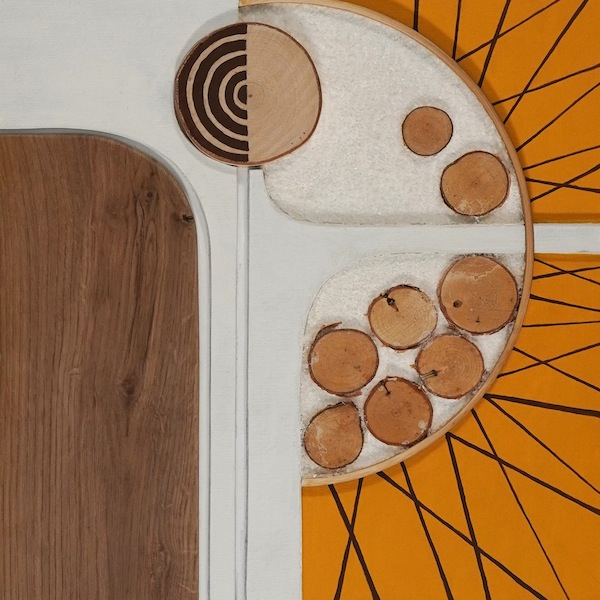
In Evelyn Finchman’s “Roots” – an abstract composition in the earthy colours of brown and beige – interconnected spirals, lines and shapes allow the viewer’s imagination to stir. Is it food? Is it a surreal terrain? A carpenter’s schematics?

“Belonging to a community is much more than interacting with our societies and being accepted by our peers,” mused Finchman. “This year, I realized how important it is to coexist within the nature that surrounds us…. There is no human life if we don’t respect all living beings on our planet and understand that we are part of the whole environment.”

image - “Roots” by Evelyn Finchmann
“Roots” by Evelyn Finchmann.

Another artist who touched on the theme of nature and its connection with humanity is Peggy Logan. Her painting “Flowers Adrift” shows single blooms, all different – a tulip, an orchid, a daffodil, a daisy – but all similarly pale and faded, bobbing on the blue background. The image seems dejected and symbolic.

“The piece of work I have created,” said Logan, “is about that sense of disconnection that exists now with friends and family with restrictions on travel, social distancing, and isolating inside. This image is about the lack of roots the flowers have as they float over the water via the internet.”

Symbolism is also the main approach of Theresa Moleski in her painting “Life In and Beyond our Bubble.” The painting is dark, almost black and white. A tree is imprisoned inside a sharply delineated bubble, striving to get free. But there is something vaguely optimistic outside the bubble, too. And the artist expressed herself in no uncertain terms in her writeup: “COVID or not, I will continue my journey as an artist!”

While most of the images in this show are serious in tone, a few offer a humorous slant on our very human follies. Danielle Haslip’s painting “First Date Red Flags” is a tongue-in-cheek exploration of dating. Its style – childlike and undeniably funny – includes a figure with lots of teeth. You see it and you know: something is gonna bite.

“Reflecting on my own personal growth, as I wait for conditions to be safer for meeting people, I thought I’d be cheeky and depict an exaggerated vision of dating, in which we can either fall prey to manipulative people, who mean us harm, or attempt to force a connection with someone who is not a good fit for us,” wrote Haslip.

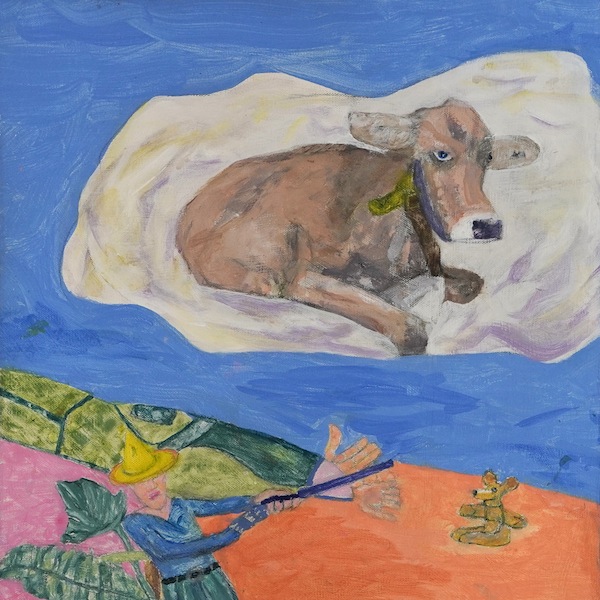
Another smile-inspiring work is Paul Leighton’s “Not Over the Moon Yet.” On the painting, a sad cow is floating on a cloud. Or is it an island? The style is two-dimensional, but the meaning is much deeper. Is the poor cow attempting to fly away from stupid humans? The artist thinks so: “My approach to the theme of longing and belonging is to use oblique humour to ponder unfathomable human global problems through the lens of the preposterous…. An individual, no matter how earnest, can’t solve all the interrelated problems of the Anthropocene or rescue a cow fleeing into the clouds,” said Leighton. “However, social pressure and citizens’ assembly can help.”

image - “Not Over the Moon Yet” by Paul Leighton
“Not Over the Moon Yet” by Paul Leighton.

And then there are paintings like Gail Rudin’s “Home is Where the Heart Is.” Folk art in style, it is heart-warming in its essence. It reminds all of us of the importance of home.

The show is on display at the gallery until April 2. To view the exhibit anytime or attend the March 23, 5 p.m., reception, visit jccgv.com/community-longing-and-belonging.

Olga Livshin is a Vancouver freelance writer. She can be reached at [email protected].

Format ImagePosted on March 19, 2021March 18, 2021Author Olga LivshinCategories Visual ArtsTags art, disability awareness, inclusion, JCC, JDAIM, Jewish Community Centre, Leamore Cohen, painting, Zack Gallery
Tale of transformation

Tale of transformation

Near the beginning of her acting career more than 50 years ago, Beth Kaplan wanted to improve the world through art. “I believe in the theatre as a tool for social change,” she told the director of the London Academy of Music and Dramatic Art when she arrived for a one-year program. “I’d like to touch people’s lives as a force for good.” His reaction? “Well,” he said, standing up. “I do hope you have a fruitful year. Best of luck.”

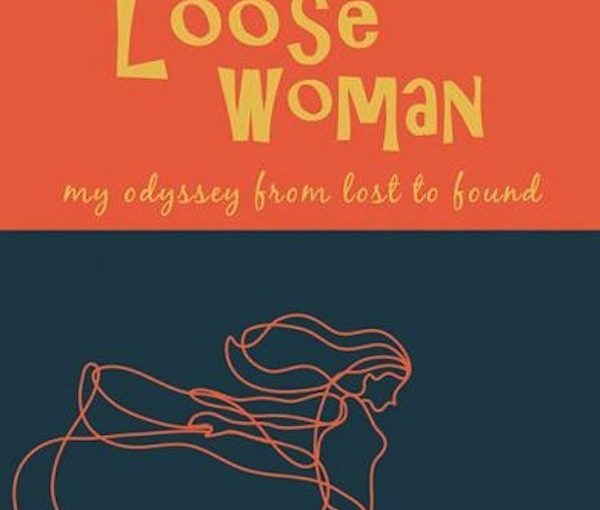
Kaplan writes about her journey from acting to writing, from youth to adulthood, from insecurities to self-acceptance, and more, in her memoir Loose Woman: My Odyssey from Lost to Found. Local JI readers may recall her name, as she was a part of the Vancouver theatre scene in the 1970s. But a 1979 trip that included a visit to France to see her best friend, who had moved there, changed Kaplan’s life.

Through her friend’s husband, Kaplan ended up for a spell living and working in a L’Arche community, which brings people with and without intellectual disabilities together. Initially uncomfortable there, the experience and the slower pace allowed her to learn about herself, and to not treat life as a performance. From her time at L’Arche, she sees how, “in one way or another, we are all handicapped.”

In telling her story, Kaplan seems to rely mainly on thoughts she committed to her diaries over the years. She’s kept one ever since her first, which was a gift when she was 9 years old. Some of the terms she uses, like handicapped, hearken back to that time, and it’s a choice Kaplan makes, “to be true to the time, hoping that readers understand that what is offensive now was not so then.” Indeed, through some of the language and the stories of her objectively wild life during the 1970s, Kaplan highlights the advances that have been made in areas like women’s rights and inclusion.

Loose Woman is an interesting book, even though Kaplan is not a completely likeable heroine, despite it being her own story. Some readers might chafe at her harsh judgments (even when she is the target) and her self-acknowledged mix of confidence (some might say arrogance) and insecurity. But others might revel in her tales of debauchery and her resolute openness.

Format ImagePosted on March 19, 2021March 18, 2021Author Cynthia RamsayCategories BooksTags acting, Beth Kaplan, disability awareness, inclusion, L'Arche, memoir

Inclusion matters – always

I was talking to my mother on the phone when she told me about one of her committee projects. At her congregation in Virginia, there’s an outdoor space, in the woods. It’s used as a learning environment and sanctuary, with play space, too.

While it may be a charming and rustic foray into nature, it’s also something else. It’s inaccessible to those with disabilities. My mom described how a group home brought some of its residents to an outdoor service, only to discover that, in fact, the residents couldn’t attend, because they use wheelchairs. The trails, filled with rocks and tree roots, are too difficult for those wheelchairs to navigate.

My mom is on the “inclusion committee” at her synagogue. In part, she joined because she cares about everybody at her congregation. She wants to practise “audacious hospitality” and “radical inclusion.” The other part is more personal. My nephew uses a wheelchair. Of course, she wants to help him have a full and meaningful Jewish experience.

These bumpy trails are a physical barrier to inclusion. Our Jewish communities are full of physical barriers. These can be things like having only one staircase as an access point into a building – and no ramp. It can mean having no accessible bathroom, or no place for a mom to breastfeed. It could be lacking a way to invite a person in a wheelchair onto the pulpit, because there’s no ramp, or even no handrail for those who might not be stable on their feet.

Physical barriers aren’t just stairs, of course. What about large-print prayer books or documents that work with text-to-speech software for those who have visual impairments? What about an amplification system, sign-language interpreter or closed captioning for those with an audio disability?

Even beyond this, there are those whose differing abilities aren’t visible. Is there a quiet room available and unlocked for those who have sensory challenges? Many might need a break from loud music at a bar mitzvah or during a raucous Simchat Torah celebration. Is there a way that those who have mental health challenges or intellectual disabilities can be offered support if they need it while at a synagogue event?

February is Jewish Disability Awareness and Inclusion Month, or JDAIM. If this were a committee meeting, this is when, inevitably, someone would speak out. “Whoa,” this person might say. “We’re just a small congregation with limited funds. We simply can’t do all this. We can’t be all things for all people.”

This is the second barrier to break down. It’s an attitudinal barrier. When someone’s attitude gets in the way of helping practise radical inclusion, it stops us from meeting every Jewish person’s needs in the community. This attitude adjustment is necessary when, for example:

  • a baby starts to fuss and a parent works to quiet the baby and feed him,
  • a nonverbal person makes noises during services,
  • a person needs to stand or sit during services because of pain or disability when everyone else is doing the opposite,
  • a person who cannot hear turns to her spouse to ask, “What page are we on?” in that loud voice.

The list could be a mile long. I’ve seen somebody cast a fish-eye at every one of these people. Given how many of us struggle with disabilities, well, let’s just say it’s high time for a change in attitude.

To the person who says, “We’re a small congregation, we can’t do all this,” be ready to stand up and say, “Did you ever wonder why it’s such a small shul? This is why. This attitude. This inability to try and include everybody and to work to meet their needs.”

It doesn’t cost a lot to build a portable ramp for the bima (pulpit). Sometimes, funds can be raised in creative ways to fix physical barriers. What’s harder? Working to change our conscious and unconscious attitudes about disability and inclusion.

Disability will affect all of us or our loved ones at some point in our lives. Please, don’t wait until you break your leg to acknowledge this. It’s really important to bring JDAIM up, but it shouldn’t be a once-a-year discussion.

In the portion Yitro, which we read in synagogues at the beginning of February this year, G-d speaks to Moses and to all the people at once. They all hear the Ten Commandments together in Exodus 20:1-14. Rabbi Ana Bonnheim’s commentary on this portion uses the phrase “radical inclusion.” Moses prepares the people to hear from the Almighty, and they all receive this revelation together – each in his or her own way. Rabbi Bonnheim reminds us that inclusivity, this frequent repetition of “ha-am”, “the people,” is essential to Jewish tradition.

On Shavuot, when we gather again to hear the Ten Commandments, everyone is supposed to be there. If we want a Jewish gathering where everyone physically can be there, it’s time to start an inclusion committee, if your community doesn’t have one. If you already have that committee, remember the public relations campaign that must accompany any initiatives, so that attitudinal barriers change as well as physical ones. The truth is that, even if everyone can physically be present, if your community projects a bad attitude, those with disabilities won’t want to be there.

As for me, I received a “save the date” card for my nephew’s bar mitzvah recently. I cannot wait to see him, using his assistive speaking device, leading the service. Of course, there’s a closed border and a pandemic in the way, too, but their congregation works so hard to include everyone that I know that, in the worst-case scenario, I’ll be there virtually, through livestreaming. Jewish celebrations, like every other kind of Jewish gathering, are for all of us. That’s why inclusion matters.

Joanne Seiff has written regularly for CBC Manitoba and various Jewish publications. She is the author of three books, including From the Outside In: Jewish Post Columns 2015-2016, a collection of essays available for digital download or as a paperback from Amazon. Check her out on Instagram @yrnspinner or at joanneseiff.blogspot.com.


Posted on February 26, 2021February 24, 2021Author Joanne SeiffCategories Op-EdTags disability awareness, inclusion, JDAIM, Judaism, mental health, Torah
Arts enhance inclusion

Arts enhance inclusion

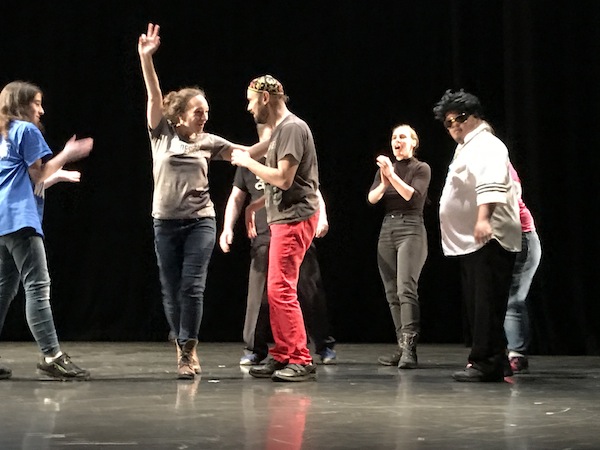
Matthew Tom-Wing, right, dressed as Elvis, was one of the participants in the 2019 Chutzpah! Festival finale. His mother, Elizabeth Tom-Wing, recalled it as a “standout moment for our community and for our son!” (photo from JCC)

February is Jewish Disability Awareness and Inclusion Month (JDAIM). It offers a wonderful time to look back at some of our community achievements in fostering inclusion at the Jewish Community Centre of Greater Vancouver; in particular, the 2019 Chutzpah! Festival’s Inclusion Project.

Mary-Louise Albert was artistic and managing director of Chutzpah! and the Rothstein Theatre for 15 years. Before she retired, she and I had many spirited conversations about the importance of creating access for local community members in all areas of Jewish communal life and at the JCC, which is the home of the festival and the theatre, and where I am the coordinator of inclusion services.

We believed that the arts are an important avenue for personal growth and skills development, and that they also bolster visibility and foster true belonging. We hoped that the JCC’s inclusion services and Chutzpah! could collaborate in some way and, through our conversations and Mary-Louise’s vision and expertise, the Chutzpah Inclusion Project crystalized.

After months of planning, in November 2019, members of the local community took to the Rothstein stage to participate in a first-ever Inclusion Project performance – an evening of dance and comedy with international inclusion advocate Pamela Schuller and professional dancers Troy Ogilvie and Rebecca Margolick. The event was the finale of the 2019 Chutzpah! Festival and a highlight of Albert’s final year with Chutzpah!

In preparation to take to the stage, participants had a yearlong introduction to theatre, including low-barrier and free classes with a specialist through the JCC’s Theatre Lab program. Participants attended many local productions through the JCC’s social club, and spent hours rehearsing and co-creating with Ogilvie, Margolick and Schuller over a series of workshops that would not have been possible without community partners and friends.

The 2019 performance received a standing ovation from the audience. The feeling of solidarity and acceptance between the audience and the performers was palpable. What was most amazing, Elizabeth Tom-Wing recalled, is that her son had the opportunity to “train and perform on stage with the professional dancers, along with his friends, and close off the three-week-long 2019 Chutzpah! Festival.” She recalled it as a “standout moment for our community and for our son!”

This project demonstrated that artists of mixed ability and skill can create a powerful and moving performance. Moreover, it reminds us that it is only through equity and action that belonging can be fostered. As diversity, equity and inclusion strategist Arthur Chan explains: “Diversity is a fact. Equity is a choice. Inclusion is an action. Belonging is the outcome.”

Leamore Cohen is inclusion services coordinator at the Jewish Community Centre of Greater Vancouver.

Format ImagePosted on February 26, 2021February 24, 2021Author Leamore CohenCategories Performing ArtsTags Chutzpah!, disability awareness, diversity, equity, inclusion, JCC, JDAIM, Mary-Louise Albert, theatre
Artistic visions on belonging

Artistic visions on belonging

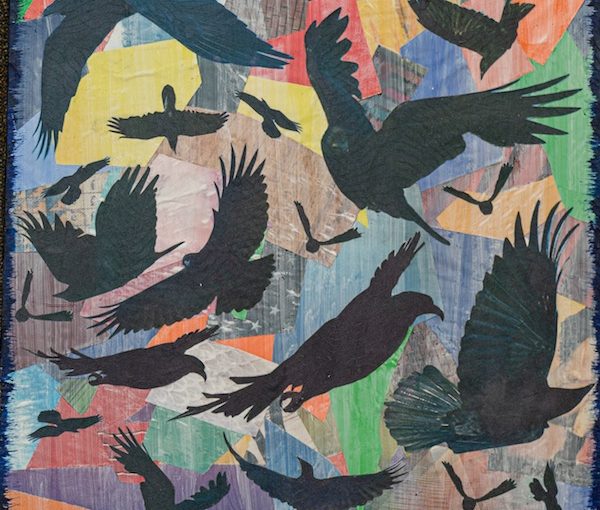
“We are Family” by Cat L’Hirondelle is now on exhibit at the Zack Gallery, as part of he group show Community Longing and Belonging, which runs to March 29.

The new group show at the Zack Gallery, Community Longing and Belonging, is the second annual exhibit in celebration of Jewish Disability Awareness, Acceptance and Inclusion Month. Organized by Jewish Community Centre of Greater Vancouver’s inclusion services and its coordinator, Leamore Cohen, the show is a silent auction. Half of the proceeds will go to the artists, and the other half will be divided between inclusion services and the gallery.

The show consists of 50 paintings by different artists. The size and shape of all the paintings are the same – small rectangles – but the contents and media used are vastly different, indicative of the artists’ various styles and training levels. Some are highly professional. Some are figurative; others abstract. But all reflect their creators’ need to belong, to be part of a community. Each painting tells a story.

One of the prevalent themes of the show is flight. Wings appear on several paintings, emphasizing the yearning for the freedom flight entails, but also for the brotherhood of other fliers. The white ornamental wings on Mikaela Zitron’s multimedia piece are bigger than the background board. They take the artist into the sky, into a joyful aerial dance, while Jamie Drie’s feathers, drifting in a sad emptiness, invoke the feeling of disconnection.

The murder of crows in Cat L’Hirondelle’s painting relates yet a different story. “I am a feminist,” said L’Hirondelle. “I was thinking about the importance of being part of a community of like-minded women. My group of longtime women friends is my family, my tribe and, like the crows, I know that they will always be there for me. Since I became disabled, I have felt more and more disassociated with the able-bodied-centric society in general. Just look at the history of people with disabilities in different societies – genocide, forced sterilizations, segregation, isolation, etc. I would love to feel that people with disabilities belong in the world. My piece is trying to impart that sense of longing to be included in general community and how crow communities seem to include everyone: the old, the disabled, the young. I have lived in the crow flight path for many years and have been watching crows’ behaviour; sometimes, I wished people were more like crows.”

image - “Leaving for Awhile” by Daniel Malenica
“Leaving for Awhile” by Daniel Malenica

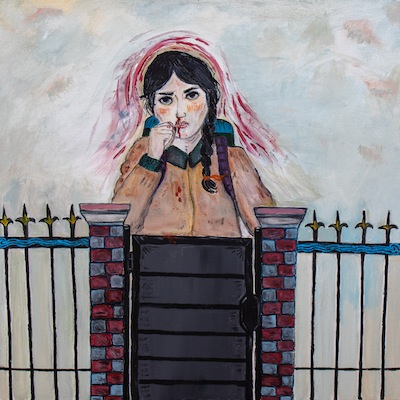
The second recurring motif in the show is loneliness, the sense of separation. Daniel Malenica’s image is distinctive among such pictures. The woman in the painting stands behind closed garden gates. She gazes at us from the painting, and the naked longing in her eyes is painful to behold. She desperately wants to open that gate and step through, to join us, but she lacks the courage. What if the people inside reject her? So, she just lingers outside, desolate and alone, waiting for an invitation.

Another outstanding piece on the same theme is Estelle Liebenberg’s black and white painting “Solitude Standing.” She told the Independent, “I work primarily as a potter and a metalsmith, but I accepted the challenge to paint something for the exhibition because I’ve had wonderful times working as a substitute art instructor at the JCC. I chose the monochromatic colour palette because, at the moment, I am quite fascinated by shadows, specifically how they change the shape of objects but still remain recognizable.”

image - Estelle Liebenberg’s “Solitude Standing”
Estelle Liebenberg’s “Solitude Standing.”

Her focus for the piece was the idea of a community in general. “I’ve spent my life dealing with different communities and, I guess, for me, the lines have softened over time,” she said. “We spend so much time in our lives working on belonging, or longing to belong somewhere, to someone or something. It’s an integral part of the beauty, the joy, the frustration and the heartbreak of life. For me, this was longing and belonging as an immigrant, as an introvert, as a mother of grown children, as a single person living in a city.”

She explained the title of her painting: “It is a hat tip to a song by Suzanne Vega. For me, her words truly encapsulate the feeling of longing to belong somewhere: ‘Solitude stands in the doorway / And I’m struck once again by her black silhouette / By her long cool stare and her silence / I suddenly remember each time we’ve met.’”

Different artists explore different aspects of community and belonging, and not all the communities are small or local. For Marcie Levitt-Cooper, the community in her painting is the universe, the earth and stars encompassed by love. Esther Tennenhouse, on the other hand, contemplates the darker side of belonging.

“My piece is a photocopy from a pre-World War Two Jewish encyclopedia, Allgemeine Ensiklopedya,” Tennenhouse explained. “It was labeled in Yiddish and issued in New York in 1940, the year Germany occupied France. On first seeing this old map, I found it very poignant. The map had to fit the 16-by-16 canvas given to all participants. The format left space, and I filled it with the music of two nigguns and lyrics of six Yiddish songs.”

That colourful map with Hebrew lettering, published just before the Nazis unleashed the full horrors of the Holocaust on European Jews, made for a tragic, frightening image, despite its bright and cheery appearance.

While the exhibit includes other figurative paintings, the majority of the pictures are abstract, either simple swirls of paint or complex geometric patterns, like Daniel Wajsman’s piece – two irregular overlapping rectangles.

“I wanted to emphasize that we should bring everyone in, not leave anyone out,” he said.

Community Longing and Belonging runs to March 29.

Olga Livshin is a Vancouver freelance writer. She can be reached at [email protected].

Format ImagePosted on March 6, 2020March 4, 2020Author Olga LivshinCategories Visual ArtsTags art, Cat L’Hirondelle, Daniel Wajsman, disability awareness, Estelle Liebenberg, Esther Tennenhouse, inclusion, JCC, Jewish Community Centre, Leamore Cohen, painting

Posts pagination

Previous page Page 1 Page 2
Proudly powered by WordPress